GLOSSARY (continued 4)
Reading edition
To enumerate the classes of ware with black transfer-printing is to make a catalogue of the principal events which stirred the heart of the people. It must be borne in mind that this school was working side by side with the makers of fine stoneware and of jasper ware with classic subjects, but it is, after all, to the black-printed ware that one turns most lovingly as being more human.
It will suffice, perhaps, if we quote a few examples and stir the enthusiasm of the reader to pursue the collection of these really historic records which have something more endearing in them than the relics of Napoleon or the shoestrings of some of the Stuart monarchs.
There is a fine flavour of patriotism, of conviviality, and of homely sentiment in some of the following:—
On a bowl, salt-glazed ware, with Admiral Vernon and his fleet is inscribed "The British Glory revived by Admiral Vernon. He took Porto Bello with Six Ships only. Nov. ye 22 1739." A cream-ware jug printed, with medallion portrait of Earl Howe, is inscribed "Long Live Earl Howe, Commander-in-Chief of the Victorious British Fleet. In the ever memorable engagement on the Glorious First of June, 1794." On a cream-ware jug about 1800 with a view of Greenwich Hospital, and entitled "The Sailor's Adieu," the following lines are inscribed: "What should tear me from the arms of my Dearest Polly but the undeniable calls of my country in whose cause I have engag'd my Honour and my Life." This in date is the last year of the eighteenth century.
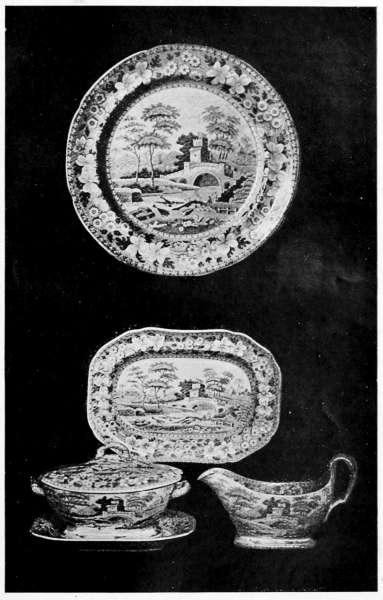
OLD SPODE BLUE PRINTED WARE. "Tower pattern." (In the collection of Mrs. Herman Liebstein.)
"The Sailor's Farewell and Return" are rather frequent, and Charles Dibdin's verses appear on some of these jugs and mugs. There is one interesting jug in the form of a sailor seated on a chest, coloured earthenware about 1770, with a breezy inscription, "Hullo, Brother Briton, whoever Thou be, Sit down on that chest of Hard Dollars by me, and drink a health to all sailors bold."
Another cream-ware jug, partly printed and touched by colour representing a man-of-war towing a frigate, has the inscription:
"A sailor's life's a pleasant life; He freely roams from shore to shore, In every port he finds a wife, What can a sailor wish for more?"
A red earthenware mug with white slip may be mentioned here as having a characteristic motto:
"From rocks and sands and barren lands Good Fortune sets me free; And from great Guns and Women's tongues, Good Lord, deliver me."
A Staffordshire blue-printed jug, made in 1793, shows the execution of Louis XVI. At the beginning of the nineteenth century there was quite a burst of Napoleonic jugs and mugs and busts, and some of Gillray's caricatures find themselves on earthenware. There is one lustre earthenware jug printed and coloured with caricatures entitled "Jack Frost attacking 'Bony' in Russia" and "Little 'Bony' sneaking into Paris with a white feather in his tail." This is in date about 1813.
A cover of an earthenware jar has the inscription printed in violet within a wreath, "Peace! May its duration equal the years of War."
The relations between England and America received attention at the Staffordshire potters' hands. There are cream-ware mugs and jugs and plates with portraits of Washington in date from 1785 to 1790. On one the inscription runs, "Success to the United States, America."
Prize-fighting, bear-baiting, cock-fighting, racing, coaching, all received their records on the earthenware of the late eighteenth century. Stag hunting, fox hunting, coursing, come as ready subjects to the transfer-printer. Cricket is recorded in earthenware on a printed mug representing the "Grand Cricket Match played in Lord's Ground, Mary-le-bone, June 20 and following day between the Earls of Winchester and Darnley for 1,000 guineas." The date of this is 1790. Even the velocipede and the balloon are not disregarded.
This list is but a rough outline of the mission of the transfer-printer in recording current events on his earthenware, for the pleasure of his own contemporaries and for the information and delectation of succeeding generations of collectors who may be something other than connoisseurs of pastes and bodies, and have learned to read aright the story of the china-shelf and enjoy to the full the secret pleasures in the byeways of collecting.
Types of Blue-printed Ware.—The black over-glaze transfer-printing came into Staffordshire in imitation of the transfer-printed delft tiles of Liverpool. But it rapidly acquired a strength and originality of its own. It lacked the delicacy of the transfer-printed black porcelain of Worcester, but its virility more than made up for its artistic defects.
Under-glaze blue-printed ware was an imitation from the porcelain printed at Caughley. Here again it may be said to have outstripped by new departures and broader effects the under-glaze blue-printing of the early china factories. In common with them its inspiration was from the Chinese. We illustrate (p. 327) four examples of Chinese porcelain plates, which are types of the Oriental china designs which served as models both for the English porcelain makers and for the earthenware of Staffordshire.
The lower left-hand plate is evidently the Chinese design from which the English potters derived the well-known and favourite "willow pattern." After Thomas Turner, of Caughley, had printed it on china in 1780, and Josiah Spode in 1784 had employed it on his earthenware in Staffordshire, all the other potters commenced to make the same design with slightly different details, mainly in the fret border. The other plate on the right hand is the well-known "aster" pattern, so frequently adopted by English potters in blue-printed cream ware. The two upper octagonal plates show the two styles of dark blue and light blue under-glaze painting employed by the Chinese; and the Staffordshire potter, true to his models, followed in his under-glaze blue-printing these tones. The period when the rich deep dark-blue-printed ware was in vogue is from the early nineteenth century to about 1825. Light blue printing was employed from 1790 till the deep blue supplanted it, and when the craze for deep blue had spent itself the light blue again became fashionable until printing in colour in the middle period of the nineteenth century came to be largely practised.
In the treatment of the border in the Oriental example we illustrate, it will be noticed how Josiah Spode and others, including the fine school at Leeds, who were printing in under-glaze blue in 1790, and the potters at Swansea, followed this decorative treatment. Spode in particular had a great fondness for Chinese subjects. We illustrate (p. 345) a blue-printed dish by him, where, as was his wont, he introduced, quite incongruously, a Gothic castle. The fine, rich colouring of this dish is most noticeable.
In the Spode earthenware Jug and Plate illustrated (p. 331), it will be seen that the plate, known as the "Bridge" pattern, closely follows the design of the Chinese porcelain plate (p. 327), and the jug is decorated with the familiar "Willow" pattern. Another variation of the "Willow" design is found on the Turner Cream-ware Dish, illustrated, having a band of embossed wickerwork and a pierced border. This piece has the impressed mark Turner.
A similar Oriental influence is seen in the dark blue transfer-printed dish by William Adams, of Greengates (see illustration, p. 341). The inclination here is towards figure subjects, and the decorative use of the exotic bird, as shown in the centre panel of this dish, finds a place on some of Mason's early blue-printed dishes. Of the colour of the dishes of William Adams, of Greengates, it may be remarked that for richness of tone in the under-glaze blue he introduced in 1787 they have never been surpassed.
What is the Willow pattern?—The name "willow-pattern" has been so frequently mentioned in connection with the subject of old English earthenware and china that it will be of service to state something of the details of the history of this particular pattern, which seems to have unaccountably seized hold of popular imagination.
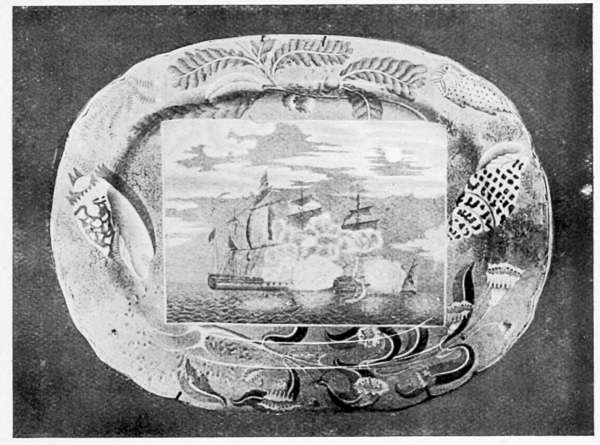
DISH, TRANSFER-PRINTED IN DEEP BLUE, BY ROGERS. Subject—the Naval Fight between the Chesapeake and Shannon. (In the collection of Miss Feilden.)
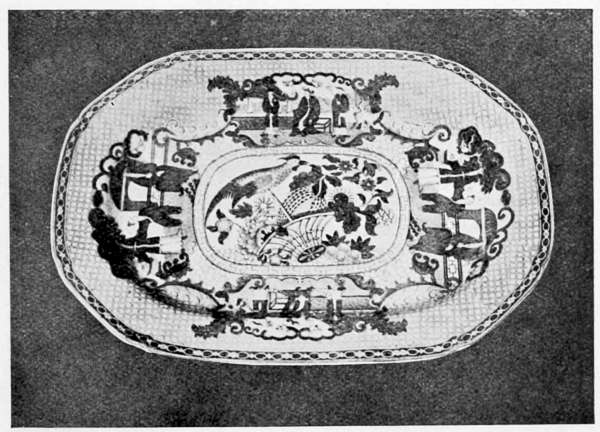
DISH, TRANSFER-PRINTED IN BLUE. Mark impressed "Adams" (of Greengates). (In the collection of Mr. Russell Allan.)
By the courtesy of Mr. Percy W. L. Adams. From "William Adams. An Old English Potter."
The Caughley pattern, which some authorities believe was engraved by Minton when he was an apprentice there, was closely followed by Spode, Adams, Wedgwood, Davenport, Clews, Leeds, the Don Pottery, and Swansea. The differences are slight mainly in the treatment of the fretted border, either a lattice-work or conventional butterfly being used, and details of the fence in the foreground differing.
The term "Willow" is applied in a general way to many of the copies of the blue-and-white Oriental porcelain imported from China during the last half the eighteenth century.
But the "willow pattern," to which a story is attached, is of the same design as the Chinese plate illustrated (p. 327), which Caughley copied. This popular adaptation appears as a decoration on the covers of this volume.
Whether the story was invented by some ingenious person to fit the plate we do not know; but there is strong probability that this is so. On Chinese plates the dramatis personæ are missing. The willow has ever been a sad tree, whereof such as have lost their love make their mourning garlands. "I offered him my company to a willow-tree ... to make him a garland, as being forsaken," says Benedick in Much Ado about Nothing.
This is the love-story that is told concerning the "willow" plate. Chang, the secretary of a mandarin whose house is on the right of the plate, dared to love his master's daughter, Li-chi. But the mandarin had other designs, and his daughter was promised to an old but wealthy suitor. In order to prevent the lovers from meeting, the mandarin imprisoned his daughter in a room in his house overlooking the water. A correspondence ensued, so the story goes, between the lovers, and the lady sent a poetical message, in a cocoa-nut shell, floating down the river, that she expected Chang when the willow-leaf commenced to fall. By the connivance of a gardener, who apparently lived in the small cottage on the left, overshadowed by a fir-tree, the lovers escaped, and are depicted as fleeing over the bridge—the mandarin behind with a whip in his hand, the lady in front, and Chang in the middle carrying her jewel-box! The individual in the junk, higher up, is intended to denote that they fled to the island in the north-west of the plate. They lived happy until Fate, in the shape of the wealthy lover, overtook them and burned their house to ashes. But the gods changed them into two doves, which, of course, figure prominently in the design.
This tragic story of disastrous love has clung to the willow-pattern plates, and nobody can shake the belief of owners of indifferent specimens of middle-nineteenth century days that these plates are of great value. As a matter of fact, apart from the eighteenth-century examples, anything else is not worth the attention of the serious collector.
We have alluded to the historic character of the black transfer-printed ware, but sometimes similar subjects were attempted in the blue ware. We illustrate a dish known as the "Chesapeake and Shannon" dish, depicting the famous naval encounter between these two vessels.
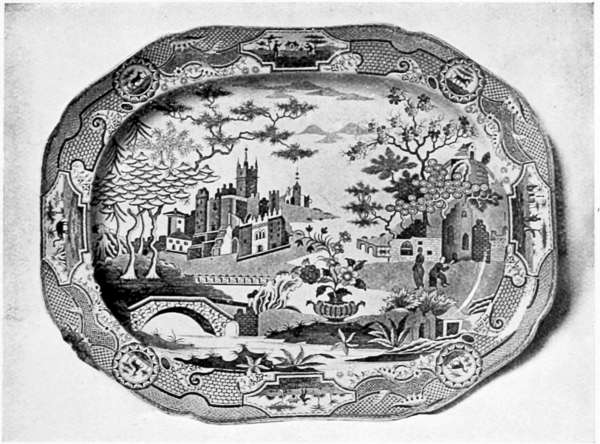
SPODE DISH. Transfer-printed in deep blue under-glaze.
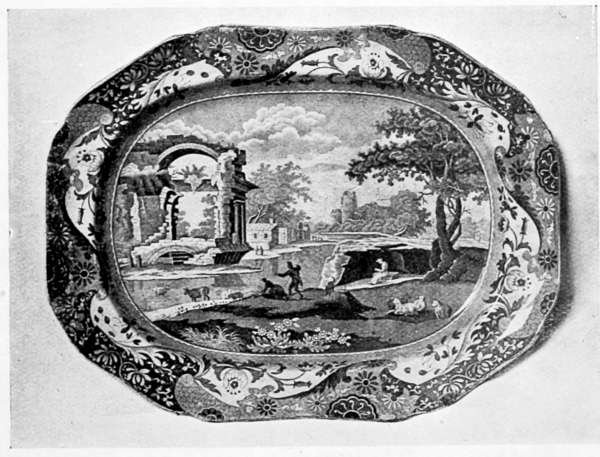
DISH WITH LANDSCAPE SUBJECT IN STYLE OF CLAUDE. Transfer-printed in deep blue under-glaze. (In the possession of Mr. S. G. Fenton.)
At a time when the school of landscape engravers dearly loved a classic ruin or the broken arch of a temple in the composition of the scene, it is only natural to find this class of subject on the printed ware. We illustrate a typical under-glaze blue-printed dish with fine contrasts showing very accurately what excellent decoration was employed in this engraved work. The school of Claude landscapes found its votaries, and some strong engraving by Brookes and others was done for this old blue earthenware. It is pictorial, and betrays an attempt to break new ground and get away from the conventions of Oriental design, but the border in the dish we illustrate (p. 345) shows the strong Japanese spirit which had inspired Spode, and this touch of incongruity makes it more than probable that this dish is of Spode origin.
There are many other phases of printed ware that can only be alluded to in passing. The transfer printing in outline, the colour being added by hand, was the beginning of the establishment of all the modern methods for china and earthenware as commonly in use. Something, too, should be said of "bat" printing. This was the use of a block of glue instead of transfer-paper to receive the inked impression from the copper plate and transfer it to the body of the earthenware. William Adams, of Cobridge, in 1775 first introduced "bat" printing into Staffordshire. Of the various types of engraving, such as line, and stipple, and aquatint, and, later, lithography, there is no space to deal. But enough has been said in connection with the various types of printed ware to show that when pursued in a special manner it may be found to be of exceptional interest to the collector.
MARKS. Transfer-printed Earthenware.
Many printed examples are unmarked, both of the early transfer-printing in black over the glaze, and of the latter under-glaze blue-printed ware, but over a wide period the following names are found as marks upon various transfer-printed specimens.
It will be observed that in addition many of these potters made stoneware, following the Wedgwood influence.[5]
William Adams (of Greengates) 1787–1805 Blue-printed under-glaze (marked Adams).
Benjamin Adams (of Greengates) 1805–1820 Blue-printed under-glaze (marked B. Adams).
William Adams & Sons (of Stoke) 1804–1835 Dark blue-printed under-glaze and black over-glaze (marked Adams). (Marked "Close & Co., late William Adams & Sons, Stoke on Trent"—after 1843.)
William Adams & Sons (of Burslem) 1830–1840 Black over-glazed printing.
Wedgwood (of Etruria) 1795–1845 Blue-printed ware introduced (The second shortly after the death of Josiah Wedgwood Wedgwood in 1795. Black transfer-printed period) views after 1830.
Wedgwood & Co (of Burslem) 1790–1796 Ralph Wedgwood. Black transfer-printing over-glaze.
Josiah Spode the Second (of Stoke) 1798–1827 Blue under-glaze printing of great variety.
Thomas Minton (of Stoke) 1790–1836 Blue under-glaze printing, Oriental and other patterns.
John Davenport (of Longport) 1793–1834 Under-glaze blue-printing (marked Davenport, Longport).
Henry and William Davenport 1835–1869
John Turner (of Lane End) 1762–1786 Oriental patterns, under-glaze blue (impressed mark, Turner).
William & John Turner (sons of above) 1786–1803
John Aynsley (of Lane End) 1790–1826 Masonic plates printed in outline over-glaze and coloured.
T. Fletcher & Co. (of Shelton) 1786–1810 Black transfer-printed sporting subjects, sometimes under-glaze.
Shorthose & Co. (of Hanley) 1783–1802 Red over-glaze printed fancy subjects.
Andrew Stevenson (of Cobridge) 1810–1818 Black over-glaze printing tinted in colours (marked A. Stevenson, with crown in circle).
Joseph Stubbs (of Longport) 1798–1829 Dark blue under-glaze printing (marked Joseph Stubbs in circle. Longport impressed).
James Clews (of Cobridge) 1814–1836 Black under-glaze after 1825. American views of Hudson River, &c.
John and Richard Riley (of Burslem) 1820–1827 Blue under-glaze printing. Picturesque views.
Miles Mason(of Lane Delph) 1813–1851 Rich blue under-glaze printing; Oriental subjects and birds.
Enoch Wood & Sons (of Burslem) 1820–1846 Deep blue under-glaze printing.
R. & J. Baddeley (of Shelton) 1780–1806 Transfer printing from the earliest date, both over-glaze and under-glaze. Marked I. E. B., or full names, or R. M. W. & Co. Deep dark blue under-glaze printing. "Beauties of America," and other views.
J. & E. Baddeley
Hicks & Meigh (of Shelton) 1806–1820
Hicks, Meigh & Johnson (of Shelton) 1820–1836
John and William Ridgway (of Shelton) 1824–1836
Ridgway, Morley, Wear & Co. (of Shelton) 1836–1854
Leeds 1790–1878 Over-glaze black printing (little practised), under-glaze blue, Oriental subjects (marked Leeds Pottery).
Don Pottery (near Doncaster) 1790–1834 Under-glaze blue, Oriental subjects (marked Don Pottery or Barker—the latter after 1834).
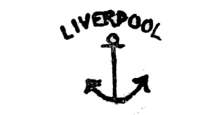
Liverpool (Herculaneum) 1796–1841 Deep under-glaze blue-printed; Oriental subjects (marked Herculaneum).
Swansea (Cambrian Pottery) 1802–1870 Under-glaze blue-printing and over-glaze, black and brown printing (marked Dillwyn & Co.). (See group illustrated, p. 397.)
Derby (Cockpit Hill Factory) 1780–1785 Over-glaze black printing of figure subjects (marked Derby Pot Works).
Caughley (Salopian) 1780–1799 Under the management of Thomas Turner. Dark blue under-glaze printing; Oriental subjects (marked in blue C).
Sunderland and Newcastle 1790–1850 Black transfer-printed mugs and jugs of crude decoration. Various firms. Sunderland.—Scott Brothers, Brunton & Co., Moore & Co. (1803), Phillips. Newcastle.—Dixon, Austin, & Co., Dawson & Co., Fell & Co. (1817), marked with F and anchor, Sewells & Donkin.
Middlesborough Pottery (Yorkshire) 1831–1850 Blue-printed ware (marked with impressed anchor and Middlesbro' Pottery, or with the word London and anchor, about 1848, or M.P. Co).
PRICES—TRANSFER-PRINTED WARE.
£s.d.
Transfer-printed Jug with ship on one side and mariner's compass on reverse; another Jug with Sailor and his Lass. Sotheby, November, 1904 1 18 0
Transfer-printed Jug with portrait of Lord Nelson on one side, and plan of Battle of Trafalgar on reverse. Sotheby, November, 1904 3 15 0
Transfer-printed Jug with "Britannia weeping over the ashes of Her Matchless Hero, Lord Nelson," and a sailing ship on reverse, with motto "Success to Trade." Sotheby, November, 1904 3 8 0
Transfer-printed Jug with Subject relating to the Independence of America; rare. Sotheby, November, 1904 3 3 0
Twelve Plates, transfer-printed, with farmyard scenes in blue, and large dish similar. Sotheby, May, 1907 1 10 0
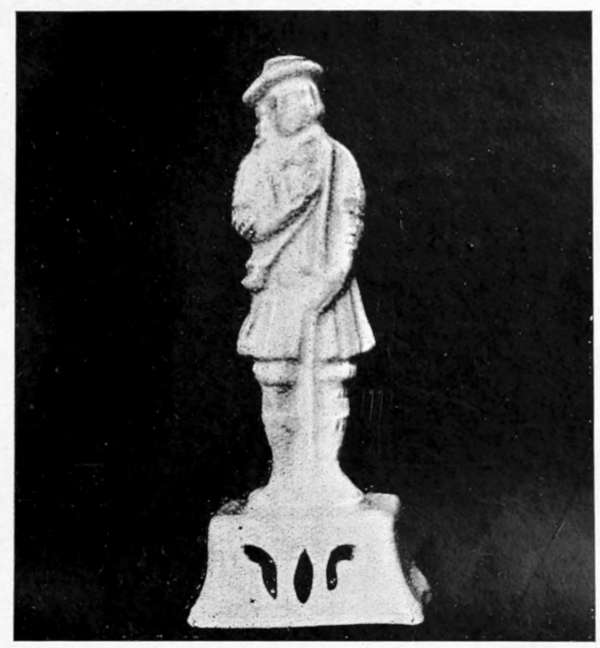
STAFFORDSHIRE FIGURE, SALT-GLAZED. Touched in parts with blue. (Height 5⅛ inches.) (In the collection of Mr. Robert Bruce Wallis.)
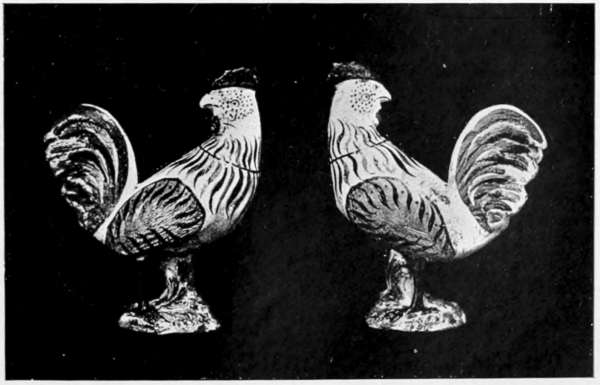
STAFFORDSHIRE EARTHENWARE FIGURE OF COCK. Tail feathers enamelled in dark blue. (Height 8 inches.) Marked R Wood. (In the collection of Mr. Robert Bruce Wallis.)
XI STAFFORDSHIRE FIGURES
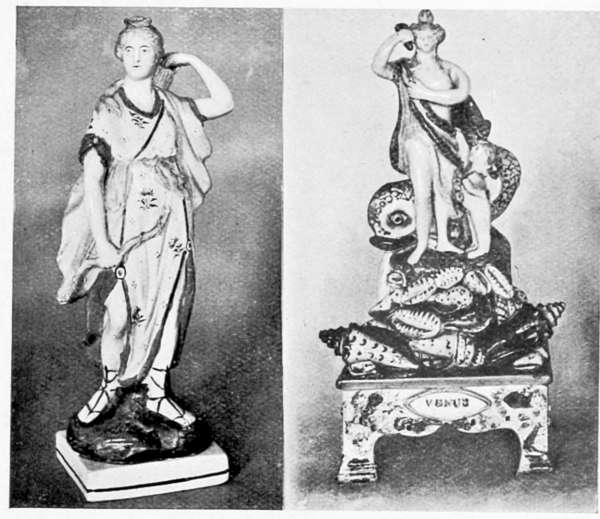
Old Staffordshire Figures. DIANA. BIRTH OF VENUS. Modelled from the Plymouth porcelain group. (In the collection of Miss Feilden.)
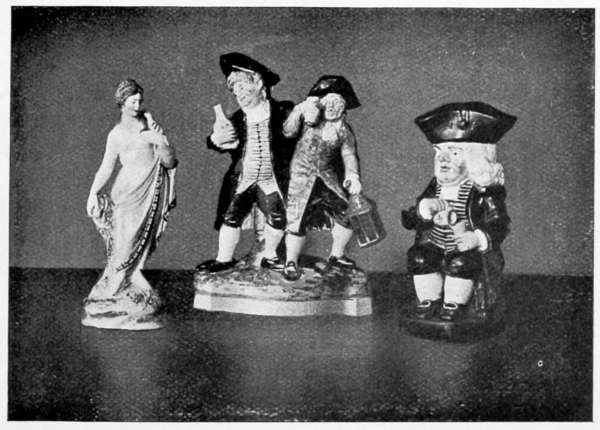
Group of Staffordshire Figures. MINERVA. PARSON AND CLERK. All marked Neale & Co. TOBY JUG. Finely modelled. (In the collection of Col. and Mrs. Dickson.)
CHAPTER XI STAFFORDSHIRE FIGURES
Early Period (1675–1725): Slip, Agate, and Astbury Figures—Best Period (1725–1760): Fine Modelling and Reticent Colouring, Ralph Wood the elder, Aaron Wood, Thomas Wheildon—Classic Period (1760–1785): Wedgwood, Neale, Voyez, Ralph Wood, junior, Enoch Wood, Lakin and Poole—Decadent Period (1785–1830): Walton, Scott, Bott, Lockett, Dale, and imitative school.
In attempting to classify the great array of Staffordshire figures and groups, extending over a period of a century and a half, no little difficulty has been experienced. The number of unmarked specimens is very great, and in many cases, owing to trade rivalry, models were so extensively imitated that it is impossible to say who was the first modeller. These Staffordshire figures, except in the instances of the highest modelling and restrained under-glaze colouring of the best period, cannot be regarded as ceramic triumphs. But they are highly valuable, although not from an artistic point of view, as illustrative of the character of the common folk in England, and exemplifying their tastes and their sentiments.
Ornament, even in the humblest articles of daily use, has its meaning and can tell its story, to those who read aright, of the feeling of the man who produced it; whether he took a pleasure in making the article, or whether he was a machine, human or other, producing only a thin echo of art. Practically it may be asserted that from middle eighteenth-century days to middle nineteenth-century days ceramic art was steadily deteriorating. Applied art had practically ceased to exist in the early nineteenth century. It is said that men's eyes were first opened to this fact by the cumulative hideousness of the Great Exhibition of 1851, and certainly a perusal of the illustrated catalogue of that Exhibition is a saddening occupation.
In the study of the china shelf this decadence must always be considered, and it is fully borne out by a close study of the subject of Staffordshire figures. Practically, the crude agate cat and the little mannikin of early days playing bagpipes found replicas in crudity and poverty of invention in the spotted poodle dog or the kilted Scotsman, the common cottage ornaments of a century later. And between these two dates, with the exception of an outburst which promised to develop into something really great and almost did so, there was, owing to want of artistic instinct and general lack of culture, a fairly rapid degeneration into the hideous nightmare of the Toby jug and all the awful insularities of the late Staffordshire period.
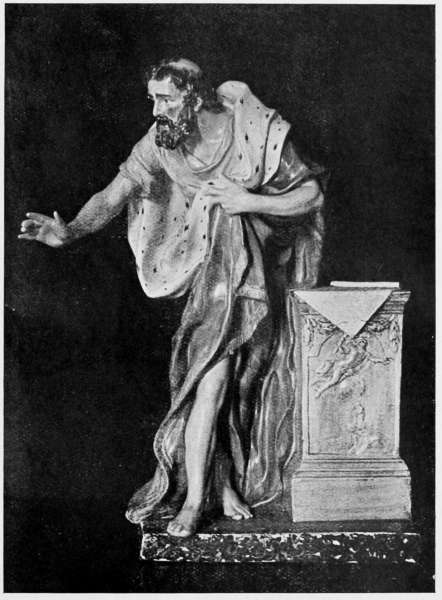
STAFFORDSHIRE FIGURE OF ELOQUENCE. (Sometimes known as St. Paul Preaching at Athens.) In coloured earthenware. (Height 18 inches.) Similar to figure in Schreiber Collection by Enoch Wood. (In the collection of Col. and Mrs. Dickson.)
Early Period (1675–1725).—The method of slip decoration has already been described, and to this period, when Toft and his school had implanted their quaint and original taste upon the common people, these early figures belong. Among the best-known figures of this early date are small Cats of stoneware or earthenware body, coated with white and ornamented with spots in brown slip. Ducks are sometimes found similarly ornamented in spots and wavy lines. These figures are only 3 inches in height. To these days belong the solid agate Cats made of two or three clays of different colours intermingled, and highly glazed. These are some 5 or 6 inches in height. We give an illustration of this type of ware (p. 171). Bears in agate ware the same nature, and small figures of doll-like individuals are also found.
The elder Astbury (1736–1743) has been credited with a series of figures of men, some 6 inches in height, playing bagpipes or other instruments. They are splashed with green and brown, and have yellow slip ornament, their lead glazing is warm and rich. The beady eyes of some of these tiny figures is suggestive of the Toft slip applied figure on some of his dishes, and was produced by the use of manganese.
Among early figures those of salt-glaze are rare and of exceptional interest, and the figure illustrated (p. 351), stands as a typical example of a class not frequently met with, and highly prized by collectors.
We have seen in the chapter dealing with Whieldon and his influence that he commenced potting before 1740 and continued till 1780, and although none of his figures is marked it is tolerably certain that he produced some fine work in which he introduced the beautiful tortoiseshell glazings, which characteristic is found on figures attributed to him. Obviously over a period of nearly half a century Whieldon ware varies in quality. The following class of figures may be attributed to the early Whieldon period, that is, before 1760. Actor, with turban and flowing mantle, hand resting on dagger; tortoiseshell ware, brown and green glazing; height, 5½ inches. Diana, with dog, on square hollow pedestal made of buff clay; brown and grey glazings, eyes of brown clay; height, 7 inches. Venus, with bow, on irregular base, eyes brown clay; height, 5½ inches. Figure of Sphinx, coloured with brown and green glazings; height, 3½ inches. Monkey, eyes, black; height, 4 inches. Other animals, such as Lion, height, 3¼ inches; Squirrel, height, 7 inches; Cock, height, 7¼ inches; Cow, in form of small jug with woman milking, height, 5½ inches; Dog, with brown glazing, height, 3¾ inches. Other figures of this early period are Summer and Winter, each 4½ inches high; sauceboats in form of Duck and Drake, coloured glazings, height, 4½ inches.
(We have illustrated several types of these figures, pp. 171, 175).
The Best Period (1735–1760).—This is known to collectors as the Wood School. Briefly, the history of the Wood family is as follows, and will be of interest to collectors of Staffordshire figures. So strong and original is the work of the modeller Ralph Wood the elder, that connoisseurs recognise the class of face in his work. Aaron Wood and Ralph Wood were the sons of the old Ralph Wood, a miller. They were both modellers of distinction. Aaron is mainly known as a block-cutter of salt-glaze moulds. Ralph Wood (1750–1772) made figures and other rustic groups at his own factory at Burslem. His models are straightforward and homely and strongly English, not greatly influenced by any extraneous classic models. He modelled the celebrated "Vicar and Moses," which for quaint humour is inimitable. It has been copied by all the potters, and much of its strength and simplicity of modelling has been lost, while its restraint in colouring disappeared in the copies upon which enamel colours were lavishly laid.
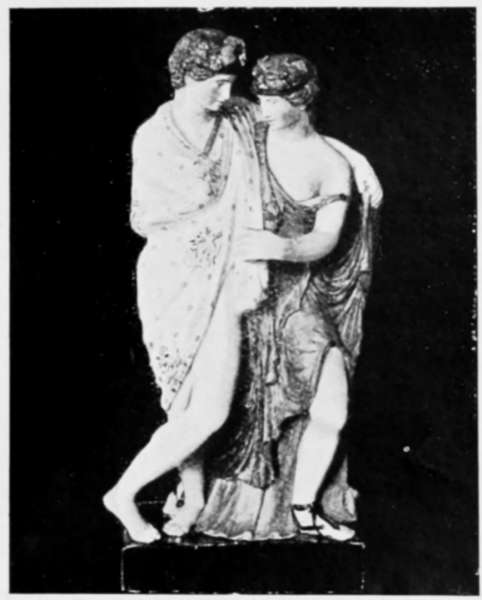
OLD STAFFORDSHIRE GROUP, BACCHUS AND ARIADNE. By Enoch Wood. Enamelled in colours. (Height 24 inches.) (In the collection of Col. and Mrs. Dickson.)
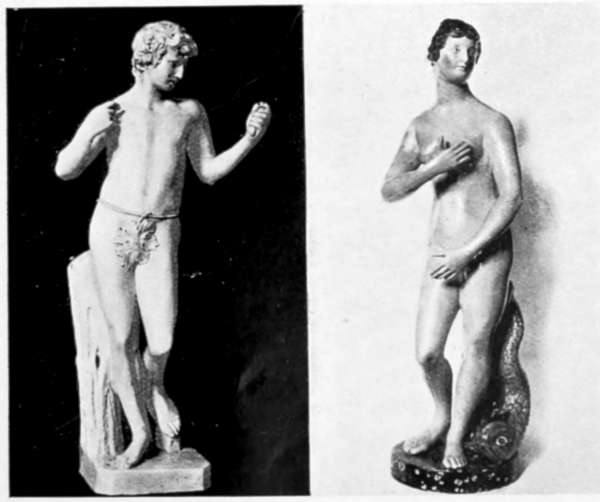
Old Staffordshire Earthenware Figures. ADONIS (after the antique). (Height 23 inches.) VENUS. (Height 24 inches.) (In the possession of Mr. S. G. Fenton.)
There was a strong Quaker element in Staffordshire, and the Established Church was the subject of a good deal of satire by the potter. The Parson and Clerk returning home after a carousal, The Tithe Pig and other subjects exemplify this. Fielding published "Joseph Andrews" in 1742, and it appears that parson-baiting was a familiar form of amusement. Probably there were a good many abuses in the Church that were evident. The hunting parson was often the boon companion of the drinking squire. At any rate the Ralph Wood group, entitled The Vicar and Moses,[6] showing the sleeping vicar, with full-bottomed wig, and Moses, the clerk, seated underneath the pulpit exhorting the congregation with uplifted hand, is a masterly piece of modelling. In colour the original Ralph Wood examples are light purplish throbbing brown in the pulpit and desk, and carved cherubs, green in the canopy behind the vicar, and who has a white cassock, and the coat of Moses is a slatey blue. The flesh tints are low in tone.
To return to Aaron Wood, the brother of Ralph Wood, he was the father of William Wood, who became one of Wedgwood's modellers, and of Enoch Wood, who went to Palmer as modeller for some years. In 1784 Enoch Wood commenced business for himself. He produced cream ware and black basalt and, what most interests us here, he made some excellent figures, including a bust of John Wesley. In 1790 he entered into partnership with James Caldwell. The ware is marked "Wood and Caldwell" till 1818, when the firm became "Enoch Wood and Sons," till 1866.
In regard to Ralph Wood, the elder, he appears to have engaged his son in his pottery, so that prior to his death, in 1772, we do not know which Ralph Wood modelled some of the figures; but from 1772 to 1797 Ralph Wood, junior, was responsible for the factory, and there seems to have been business connection, about 1786, between him and his cousin Enoch Wood.
Concerning the figures of Ralph Wood, father and son, it may be said that they were the first to impress their names upon Staffordshire figures. Some of the pieces are marked with impressed mark R. Wood, Ra Wood, Burslem (impressed on Vicar and Moses). This mark is found on some of the finest and earliest Toby jugs. It is believed, though not proved, that "Ra Wood" is the mark adopted by Ralph Wood, junior.
That the Woods reflected English feeling and sentiment and did not go to the classics for their inspiration is shown by their fine model of Hudibras upon his horse, in the act of drawing his sword.
"The trenchant blade, Toledo trusty, For want of fighting was grown rusty, And ate into itself, for lack Of some body to hew and hack."
The horse of Hudibras is as famed in story as Rosinante, the famous charger of Don Quixote, and in fine satire Butler enumerates his points.
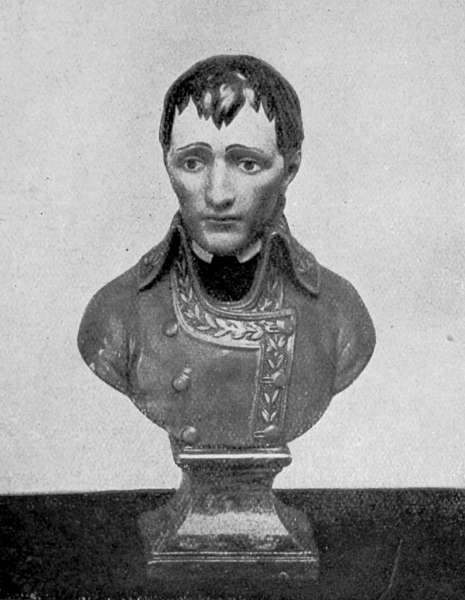
BUST OF BONAPARTE. Coloured earthenware. By Enoch Wood. (Height 9½ inches.) (In the collection of Mr. Robert Bruce Wallis.)
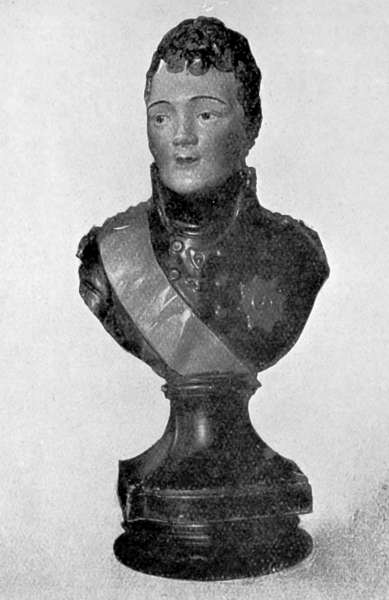
BUST OF ALEXANDER, CZAR OF RUSSIA. Coloured earthenware. By Wood & Caldwell. (In the collection of Col. and Mrs. Dickson.)
It is not too much to aver that, if it were not known that the Wood model bore the title Hudibras, the source of inspiration would go unknown. Similarly it may not be impossible, since no title appears on the famous Toby Philpot jug, that it may be derived from the character of Uncle Toby in Sterne's "Tristram Shandy," which was published in nine volumes from 1759 to 1767. The type of blunt, jovial, rubicund Englishman was beginning to become as pronounced in Bunbury and other caricaturists as it became later on the china shelf.
Among other noticeable figures of the Ralph Wood period the pair of figures are the Haymakers, separate figures (7½ inches high each, impressed R. Wood), a youth and maiden leaning against tree trunks. A bust of Milton, cream ware, uncoloured, is impressed Ra. Wood, Burslem; height, 9 inches. Old Age is represented by a rustic figure of an old man leaning upon a stick and a crutch. Neptune and Venus and Apollo betray the contemporary classic influence.
In examining the figures of the elder Ralph Wood they will be found in parts, though hardly perceptible, to be unglazed. This is owing to the fact that he applied his glaze with a brush. In the figures of the best period the colouring is extremely delicate, and the flesh tints do not approach the rosy pink associated with other figure work. It is difficult to describe them, but they approximate to a biscuit-coloured grey. But there are the usual exceptions to all rules. In one case in particular the colouring is more pronounced—the bust of Handel, who died in 1759. It is marked "Ra. Wood." It is finely modelled and bright in colouring. A figure of a Cock, marked R. Wood, is illustrated (p. 351). It is 8 inches in height. The body is light in colour, with light and dark brown decoration about the neck. The wings are yellow, with brown stripes, the tail brown and dark-blue enamel colours. Legs dark brown and green and splashed base. This specimen is in one piece, not having any joint at neck.
The fine coloured large figure (18 inches in height) of Eloquence, known also as St. Paul preaching at Athens, is by Enoch Wood, after a model by Sir H. Cheere. There is a similar figure in the Schreiber Collection at the Victoria and Albert Museum. But it must be admitted that some of these large figures bear a strong resemblance in technique and modelling to those of Wedgwood. The Bacchus and Ariadne group was most certainly reproduced by Enoch Wood, who signed it. So that the difficulty in such cases of determining which was the original model becomes very great.
The Classic Period (1760–1785).—It appears that Josiah Wedgwood, when under the influence of Whieldon and before he embarked upon his classic ornamentation under the guidance of Bentley, modelled some very fine figures which are unmarked, but exhibit considerable strength and beauty. There are three figures, Faith, Hope, and Charity, in date about 1770, in the Willett Collection marked Wedgwood. Other figures are the large ones of Fortitude and Prudence (height 21 inches). But these symbolistic figures betray the classic influence. They are magnificent pieces of modelling. Then there is the fine group of Bacchus and Ariadne, the same height. The specimen at the British Museum is cream colour, but later imitators adopted the same modelling and added colour to the decoration. A copy of this group so treated, possibly by Enoch Wood, is illustrated (p. 363).
Other busts of Wedgwood in coloured cream ware of Voltaire and Rousseau will be found illustrated on p. 233.
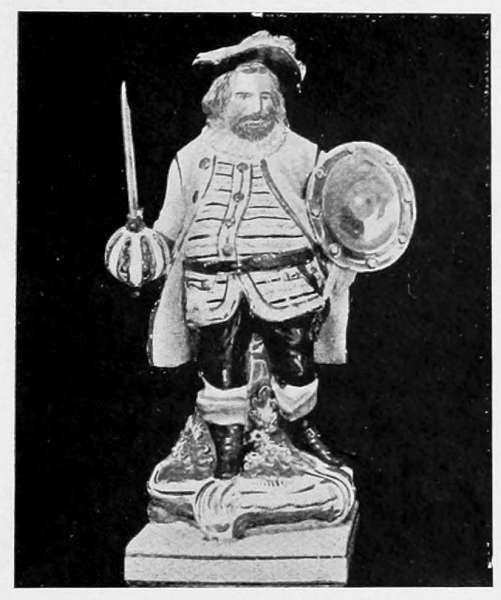
STAFFORDSHIRE EARTHENWARE FIGURE OF FALSTAFF. Shield decorated in silver lustre. Marked Wood & Caldwell. (In the collection of Mr. F. W. Philips, Hitchin.)
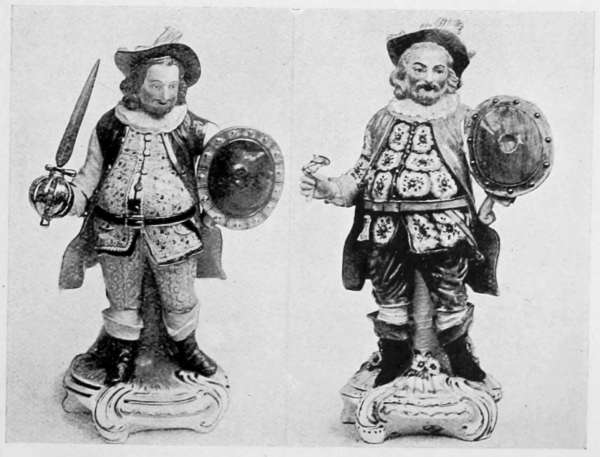
DERBY PORCELAIN FIGURE OF FALSTAFF. CHELSEA PORCELAIN FIGURE OF FALSTAFF.
Neale & Co. betray classic influence in much of their work, and as Voyez, the Frenchman, was their modeller, this is not hard to understand. Among their well-known figures are Flora (12½ inches high) and Diana (5 inches high), and they were large makers of Toby jugs. We give an illustration (p. 355) of a group of finely modelled ware by Neale & Co., including a Toby jug copied from the Ralph Wood model and impressed Naele & Co., and the familiar group of the Parson and Clerk copied by them after the well-known Chelsea-Derby porcelain model of the same subject, and reproduced as an earthenware group by many other Staffordshire potters. It is often attributed to Ralph Wood the younger. It is interesting to compare the Minerva with the Diana illustrated above. The same classic spirit was the inspiration of the two modellers, and in the case of unmarked classic figures there always exists considerable difficulty in definitely assigning their origin.
In regard to all these coloured Staffordshire figures it should be borne in mind that, until well towards the close of the eighteenth century, they were coloured by the use of pigments under the glaze, which gave a low-toned effect of very delicate character. Later, enamel colours were used with lurid effect, and much of the beauty of the old school vanished.
Enoch Wood (1783–1840), Wood and Caldwell (1790–1818).—Of this school there are several fine examples. There is no doubt that the ease with which classic prototypes could be copied and porcelain figures imitated began to tell upon the originality of most of the modellers. The Bacchus and Ariadne (illustrated p. 363), with the vine leaf wreaths in green around the heads and the finely coloured drapery, is by Enoch Wood. There is a specimen in a private collection at Eccles signed "E. Wood, Sculp. and Hewitt Pinxt." (the height of this example is 27 inches), in spite of the similar uncoloured group at the British Museum marked Wedgwood.
Enoch Wood is best known for his portrait busts of John Wesley and of George Whitfield. The former who stayed at his house in the Potteries sat for this bust, which is a fine piece of portraiture. This is marked "E. Wood," and sometimes "Enoch Wood, Sculp., Burslem 1781." George Whitfield was probably modelled at a later date. There is a fine equestrian statuette of St. George and the Dragon, sometimes signed "E. Wood," similar in modelling to the Whieldon mottled tortoiseshell coloured specimen (illustrated p. 175).
There are other busts by Enoch Wood which are noteworthy. There is the fine bust of Bonaparte as First Consul in coloured earthenware, with blue coat with yellow border, and having marbled base. The height of this is 9½ inches, and it is marked "E. Wood." This is in date about 1802. A bust of Alexander I. of Russia, in highly coloured earthenware, in military costume, marked Wood & Caldwell. The date of this is later than the Bonaparte, an inscription on the back on some examples runs "Alexander Aet. 35. Moscow burnt. Europe preserved 1812."
Another well-known figure by Wood and Caldwell is the figure of Quin as Falstaff. By the illustrations we have given (p. 371) it will be seen that this model was in direct imitation of the similar figures in porcelain at Derby and Chelsea. The colouring is different, the shield is silver lustre, the costume consists of red breeches, striped yellow and white surtout; but these colours are a feeble imitation of the finer enamel work on the china models from which they have been copied.
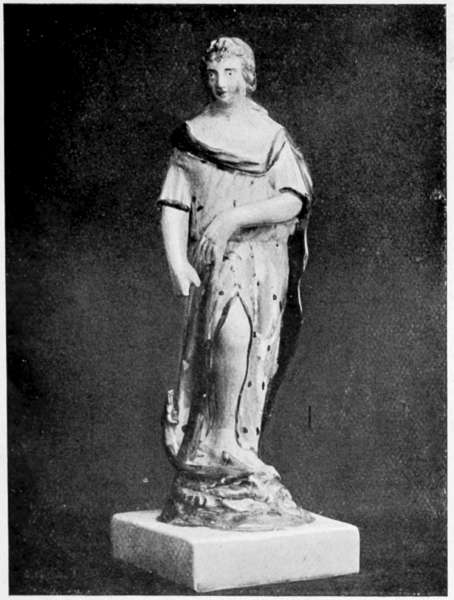
STAFFORDSHIRE FIGURE. (About 1790.) Decorated and refired by Absolon, of Yarmouth.
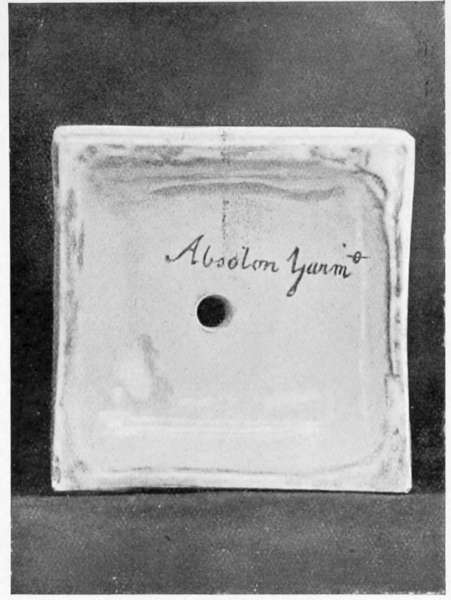
BASE OF FIGURE. (Enlarged.) Showing painted mark "Absolon Yarm."
(In the collection of Mr. F. I. Burwood.)
The group of Toby Jugs illustrated (p. 383), exhibit the best known models of a much collected variety of earthenware. These examples are collectors' specimens, but later models may be said to be like—
The grand old name of gentleman, Defamed by every charlatan, And soil'd with all ignoble use.
That it was not infrequent to take a model bodily from English porcelain is shown by the group entitled the Birth of Venus, which is taken from a Plymouth group of the same subject (illustrated p. 355), this apparently belongs to the Enoch Wood period.
In the figures of children we illustrate p. 387, the figures of Flower Boys, some 4½ inches high, are evidently inspired by some of the Chelsea-Derby figures which in their turn were under strong French influence. The middle figure of the trio is one of a pair by Wood and Caldwell. The figure of Cupid above is a fine specimen, standing 17½ inches in height. Cupid is fully armed with his deadly bow and arrow, which by the way are decorated in silver lustre, suggestive of the Falstaff shield of Wood and Caldwell, and at his feet are two lions crouching in subjugation, and he holds the torch of Hymen in his hand. This is a remarkably fine modelled figure representing this contemporary foreign influence upon Staffordshire figures at its best.
In regard to the strong classic influence the two figures (illustrated p. 363) are in white earthenware. That on the left, of Adonis, is obviously taken direct from the antique, while the Venus is a fine Staffordshire adaptation of a well-known classic statue in the pose and in the dolphin by her side. The only touch of colour is the darkening of the hair. It is a magnificent piece of modelling something in the nature of the classic art seen through French eyes. To find this in Staffordshire is as though one found La Source of Ingres in the Royal Academy of the year 1856. The date of this Staffordshire Venus cannot be stated. It is an important figure, being 24 inches in height and exhibits something so strikingly realistic that it must be assigned a high place among the figures.
We illustrate a Staffordshire figure belonging to this period, which is signed "Absalon, Yarmouth." Towards the end of the eighteenth century, as in the latter days of Lowestoft, a factory termed "The Ovens" at Yarmouth carried on a decorating business, receiving the ware from Leeds and from Staffordshire, and decorating and refiring it in the glost oven. The date of the figure illustrated is about 1790. On some of the pieces decorated by Absalon, the name of the Staffordshire maker, Turner, appears as an impressed mark. Turner, who carried on an extensive trade with the Baltic and Northern Europe, no doubt readily came into touch with these East Anglian decorators.
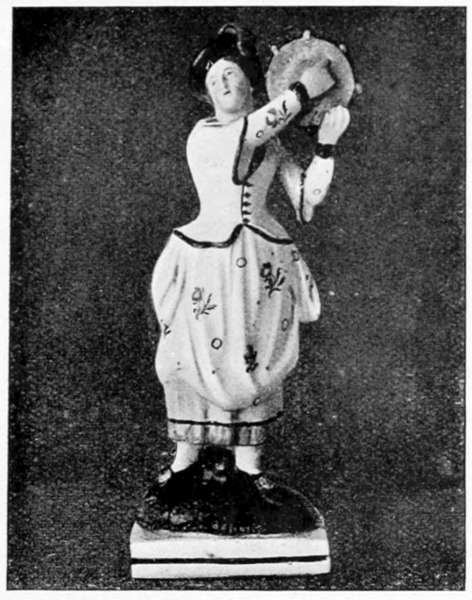
GIRL WITH TAMBOURINE. Coloured Staffordshire figure.
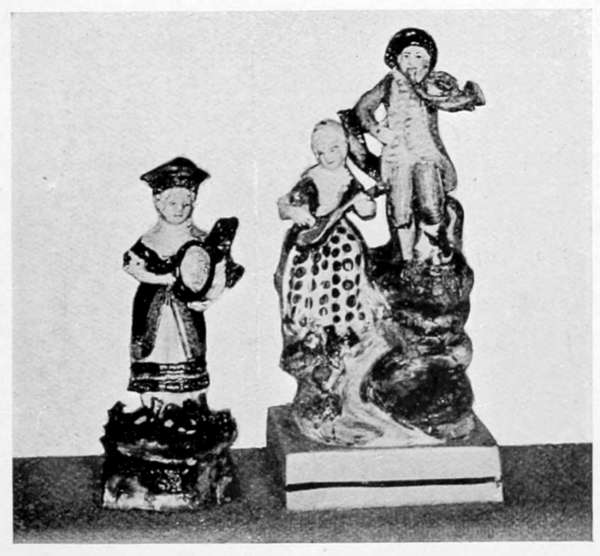
Coloured Staffordshire Figures. TAMBOURINE PLAYER (marked Salt) AND MUSICIANS. (In the collection of Miss Feilden.)
The Decadent Period (1785–1830).—It is impossible to keep exactly to dates in any of these periods of rough classification. But in general the later period becomes more homely and a great number of mantel ornaments of a simple nature with rustic subjects were made for the homes of cottagers. These have trees as background and are Arcadian in subject. They are, when in this style, of the finnicking school of the Chelsea shepherds and shepherdesses known as of the boscage school. John Walton (1790–1839), made a great many figures in this manner, accompanied by a lamb, as well as a great number of Toby jugs. Another potter is Ralph Salt (1812–1840), whose name appears on the little Tambourine Player (p. 379), and probably the Musicians of the adjacent group are by him too. A larger figure of the Girl with Tambourine above is of the same period, though its maker cannot be identified.
We illustrate (p. 391) two later figures, The Fishwife and Mother Goose. Both are well modelled, and were evidently intended to meet the popular taste. The days of gods and goddesses were over, and figures and groups begin to grow commonplace. In Mother Goose the nursery rhyme is substituted for the mythology of the Greeks.
Among other names found on these later figures are Lakin and Poole, Dale (mark usually impressed I. Dale Burslem), and Edge and Grocott, who made figures of boys partly draped holding baskets of flowers. It is possible that they made the two outside figures of Flower Boys (illustrated p. 387).
There is to lovers of the ultra-aesthetic something which appears to be trivial and insipid in this peasant pottery of the later date. But in spite of its defects, it holds, to those who read between the lines and can add that necessary touch of human interest to their collecting, a charm on account of its quaintness. Those who have sought these old cottage treasures high and low and secured from far-away habitations snug in the hills or lone huts on the wolds, or from the dim-lit cabins of fisher folk these relics of byegone days, read into their newly acquired possessions something of the life history in their old environment, lying perdu these many years, perched aloft on the high mantel or hidden in the cupboard recess silently listening to the old tales of the strange men and women who live apart from the hum of cities.
Chelsea we know, Derby we know, Bow we know, with their dainty china shepherdesses minding impossible sheep, and with gallants prinked out in all the colours of the humming-bird. These were the trifles in porcelain that my dear Lady Disdain in a waft of bergamot set apart in her glazed case by Sheraton. In the days of paint and patch and of the revels at Vauxhall and Ranelagh, virtuosos drowsily passed comment on my lady's latest acquisition just to please her passing whim and wean her from the vapours.
These earthenware figures "in homespun hose and russet brown" suggest the old world nooks of other days. Give Chelsea and Bow to the town. This homely art of Staffordshire became English after all. It was found in thatched cottages "with breath of thyme and bees that hum." These boscage shepherds and shepherdesses, these rustic musicians, lusty post-boys, and the family of Toby Philpots, found kinship in the miller and the farmer, the herdsman and the milkmaid, the gamekeeper and the woodman, the ostler and the waggoner—simple, kind-hearted folk, the children of nature uncloyed by the subtleties of art. Red-cheeked lasses and wrinkled crook-backed old dames, mother and daughter and granddaughter, toilers and sufferers, who chose the warm west window seat in the sun and the ingle nook by the fireside—these were the whilom owners of the old Staffordshire figures. Somehow, nor is the fancy a foolish one, one likes to associate these diminutive figures with the old gardens of England set in sweet places where one
"Can watch the sunlight fall Athwart the ivied orchard wall; Or pause to catch the cuckoo's call Beyond the beeches."
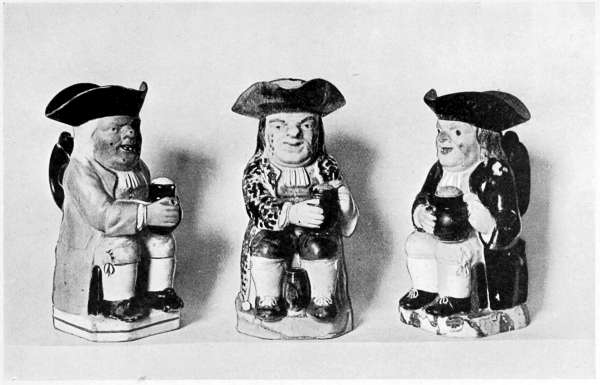
GROUP OF FINELY COLOURED TOBY JUGS. (Date 1790–1810.) (In the possession of Mr. S. G. Fenton.)
There seems to be something added to old Staffordshire figures which have steeped themselves in somnolent repose these many years till they have become invested with a subtle human interest not easily disassociated from them.
The squire had his services of Worcester and of Crown-Derby, and the nobleman relegated his cases of fine porcelain to the care of his housekeeper, to dust and to safeguard till he came again to hunt and to shoot. But the cottager's Staffordshire figures were lovingly handled when the good wife furbished up her brass candlesticks, and they insensibly became part of the environment of the cottage home.
Here, then, is the key to the charm and magic which goes to the collecting of old Staffordshire figures, even of the decadent period. There is within them and around them and about them something redolent of a sturdy peasantry, something sad, something tinged with autumn days and autumn mists because they belong to days that have faded, and almost to a race that is extinct.
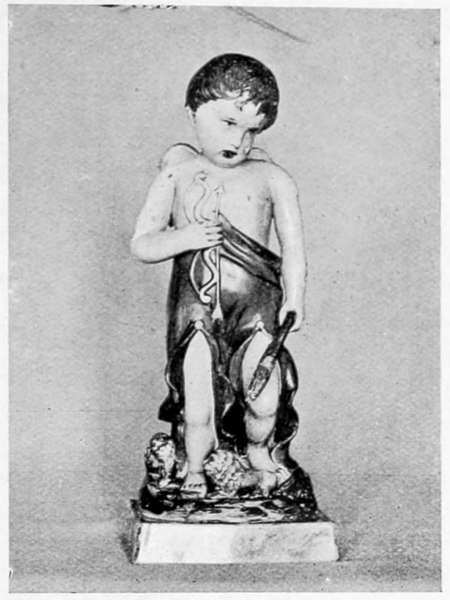
CUPID Large coloured Staffordshire figure. (Height 17½ inches.) Bow and arrow in silver lustre. (In the collection of Miss Feilden.)
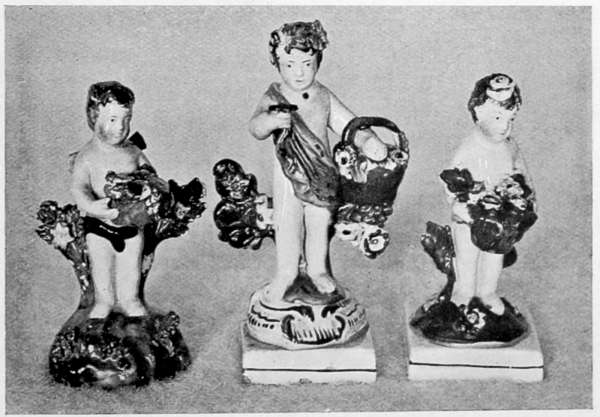
COLOURED STAFFORDSHIRE FIGURES OF FLOWER BOYS. Pair 4½ inches. Centre figure one of pair by Wood & Caldwell. (In the collection of Miss Feilden.)
PRICES.
Leeds Figures.£s.d.
Pair of Leeds cream-ware Figures of Musicians, Youth and Girl; rare. Marked "Leeds Pottery." Sotheby, November, 1904 6 6 0
Staffordshire Figures.
Group of Madonna and Child (probably Wedgwood), illustrated in "English Earthenware" (Professor Church). Sotheby, February, 1906 8 0 0
Staffordshire Models of Cottages (some porcelain), encrusted with flowers. Christie, January, 1906 (59 models). 31 10 0
"Vicar and Moses," group, decorated in translucent colours. Sotheby, June 1906 35 10 0
"Vicar and Moses," group, decorated in translucent colours. Sotheby, November, 1906 8 10 0
Bacchus and Ariadne, large; brown glaze; 25 in. high. Christie, November, 1906 13 2 6
Toby Philpot jugs (four male and one female), grotesque models. Christie, November, 1906 30 9 0
Falstaff, two examples, on plinths, encrusted with flowers; 9 in. high. Christie, November, 1906 5 15 6
"Elijah," "The Widow," and "Virgin and Child"; three figures. Puttick and Simpson, March, 1907 3 12 6
Busts of Milton and Handel, impressed mark, "Ra Wood Burslem"; white: 9 in. high. Sotheby, July, 1907 6 0 0
Figure of Gamekeeper: white; 8½ in. high. Sotheby, July, 1907 2 0 0
Figure of Lost Sheep; white; 8¾ in. high. Sotheby, July, 1907 2 18 0
Figure of Girl Haymaker; white; 7¾ in. high. Sotheby, July, 1907 3 0 0
Figures, Chaucer and Sir Isaac Newton, decorated in colours; marked "Ra Wood"; impressed "Burslem." 12½ in. high. Sotheby, 1907 12 10 0
Figures, Cobbler and his Wife, pair, large, seated; 12½ in. high. Christie, January, 1908 13 2 6
Figures, reclining, Cleopatra, 8½ in. high, and Antony, 8 in. high. Christie, January, 1908 14 14 0
"Bacchus and Ariadne," 25 in. high; Female, holding dove, 25 in. high. Christie, January, 1908 16 16 0
Figures, pair, Boy and Girl harvesting, square base, one marked "R. Wood." Sotheby, May, 1908 10 5 0
"Vicar and Moses," in Whieldon colours (attributed to R. Wood), yellow, green, brown, manganese purple, &c. Sotheby, May, 1908 15 0 0
Shepherd and Shepherdess, seated, with dog, lamb, and goat; shepherd playing flute; Whieldon colouring (attributed to R. Wood). Sotheby, May, 1908 12 0 0
"St. George and Dragon" in Whieldon colouring (attributed to Ralph Wood) Sotheby, May, 1908 14 0 0
Toby Jug, representing man seated with jug on knee (attributed to R. Wood). Sotheby, May, 1908 6 6 0
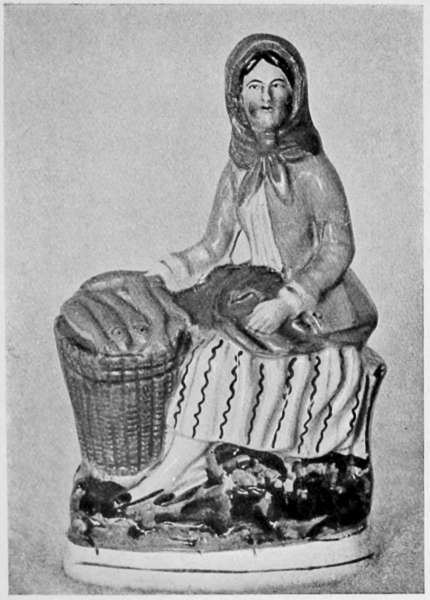
FIGURE OF FISHWIFE. (Late Staffordshire.) (In the collection of Miss Feilden.)
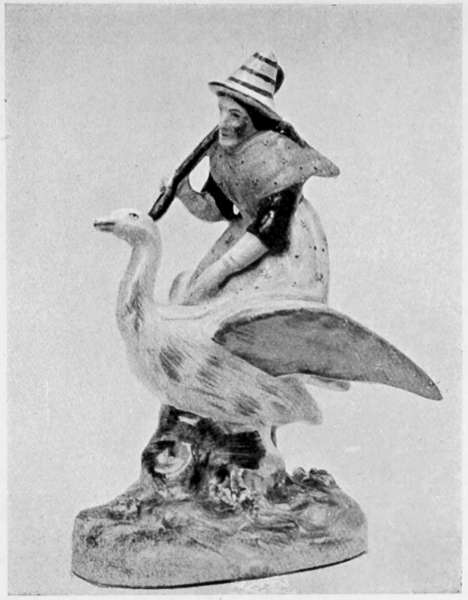
FIGURE OF MOTHER GOOSE. (Staffordshire, early nineteenth century.) (In the collection of the Author.)
XII SWANSEA AND OTHER FACTORIES
CHAPTER XII SWANSEA AND OTHER FACTORIES
Swansea—The Cambrian Pottery—Opaque china—Etruscan Ware—Lowesby Pottery (Leicestershire)—Liverpool, Herculaneum (1794–1841)—Bristol, Joseph Ring (1784–1825)—Caughley or Salopian (1751–1775)—Derby, John and Christopher Heath (1758–1780)—Isleworth, Shore & Goulding (1760–1830)—Marks—Prices.
Undoubtedly the earthenware productions at Swansea are of a high artistic order. For a century, from 1768 to about 1870, the Cambrian Pottery at Swansea manufactured ware bearing various marks and comprising a wide range of examples. During part of the time a rival factory at Glamorgan, which existed from 1814, to 1839, produced "opaque china" and cream ware in common with Swansea.
Practically the history of the Cambrian Pottery dates from 1790, when George Haynes bought the factory. Fine black basalt ware was produced. There are two recumbent figures of Antony and Cleopatra, the latter in the Victoria and Albert Museum having the impressed mark Swansea, and the former in the possession of Mr. C. F. Cox, and marked with the name of the modeller, "G. Bentley, Swansea, 22 May, 1791." The length of these figures is 12 inches. Two somewhat similar recumbent figures of Antony and Cleopatra in colours have been attributed to Lowestoft (see "Lowestoft China," by W. W. R. Spelman, Jarrold & Sons, Norwich, 1905). But these more properly belong to the Staffordshire school, and are probably by Neale and Palmer.
Under-glaze blue-printed ware, notably "willow pattern" from Caughley, had been made at Swansea probably before Haynes bought the factory, certainly not later than 1790, when Leeds commenced similar imitations of Turner's "willow patterns." Salt-glazed ware, some marked "Cambrian Pottery," but mostly unmarked, was made and decorated in enamel colours with figure subjects, landscapes, and flowers.
The transfer-printed ware is of great variety and is excellently finished, and compares very favourably with the best of the Staffordshire cream ware similarly decorated, or with the highest productions of Leeds in the same manner. We illustrate (p. 405) a group of various types of transfer-printed ware in black and brown, and blue under-glaze transfer-printing. As will be noticed, the Oriental influence from Caughley and the china factories was very strong, but in the print of the ship there is something suggestive of Liverpool.
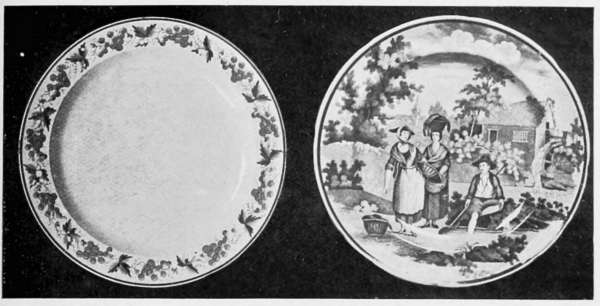
SWANSEA PLATES. 1. Cream ware, rim painted in green and violet with vine pattern. Mark impressed Swansea. 2. Earthenware, black transfer-printed. Mark impressed Dillwyn & Co. Swansea. (In the Royal Scottish Museum, Edinburgh.)
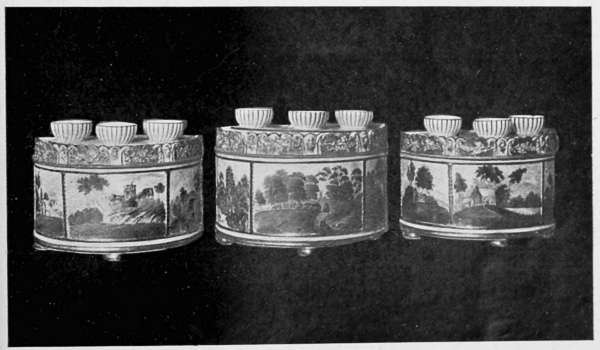
SET OF FINELY PAINTED SWANSEA BULB POTS. (In the collection of Col. and Mrs. Dickson.)
A very fine transfer-printed plate in black is illustrated (p. 397), showing something higher in engraving than Staffordshire had attempted. It stands, leaving out the delicate black transfer-printing done on the Worcester porcelain, as an exceptionally artistic piece of work. The adjacent plate in the illustration at once shows the source of its inspiration. It follows one of Wedgwood's Queen's ware patterns painted in green and violet of the grape pattern, although it must be admitted that the Swansea adaptation is richer than the somewhat thinner design found on old Wedgwood plates.
One of the most interesting features in the history of the Swansea factory is the introduction by Haynes of a ware termed "opaque china," which was in reality a finer and whiter kind of cream ware, and eminently suitable for the painted decorations by W. W. Young, an artist from the Bristol factory, who painted from about 1803 to 1806, flowers and butterflies and shells with great fidelity. He was followed by another artist Thomas Pardoe, from the Derby factory, who brought more poetry into his floral subjects. Another artist named Evans painted flower-pieces with almost equal beauty. We illustrate a fine Cambrian vase painted by Pardoe, and a Swansea jug painted by Evans (p. 401).
There is no doubt that a very high standard of painting on the Swansea ware prevailed during the best period, and the illustration of a set of three Swansea-ware bulb pots (see p. 397) shows that landscape painters of no mean gifts were employed. It is this picturesque quality of decoration (dependent in a great measure on the fact that from 1814 to 1824 porcelain was made too), together with the equally fine quality of the ware itself, that has placed Swansea well to the front among the collectors of artistic earthenware.
We have alluded to Haynes the proprietor who first brought the factory into prominence. This was in 1790. But in 1802 it passed into the hands of Lewis Weston Dillwyn, and it was during this period that W. W. Young did the work we have alluded to. In 1817 the factory passed into the hands of the Bevingtons, and in 1824 it again came into the possession of the Dillwyn family, who held it till about 1850, when the firm was known as Evans and Glasson, and later as D. J. Evans & Co. until its close in 1870. During this long period the marks assumed various characters. We have at the end of this chapter given most of the more important to enable collectors to identify the period of their Swansea ware—when marked.
Another ware greatly collected must be alluded to, of which an illustration is given (p. 405). This Etruscan ware, following the early example set by Wedgwood, was an attempt to copy some of the Greek vases which were painted red on a black body.
In "Dillwyn's Etruscan Ware," made only for three years from 1847 to 1850, the body was a warm red, and the design was impressed thereon either by means of black transfer-printing or outline, and the background was then painted and the classic figures heightened. This ware is not always marked, but when the mark appears it is in a scroll, as given in the list of marks (p. 416).
Lowesby Pottery.—There is very little to be said about this pottery in Leicestershire, which was conducted under the auspices of Sir Francis Fowke about 1835. The mark is always puzzling to collectors which is a fleur-de-lis with the name Lowesby, both impressed. The ware usually made at this small pottery was red terra cotta coated with a dull black upon which were flowers and butterflies painted in bright enamel colours. This decoration was done elsewhere, probably in London.
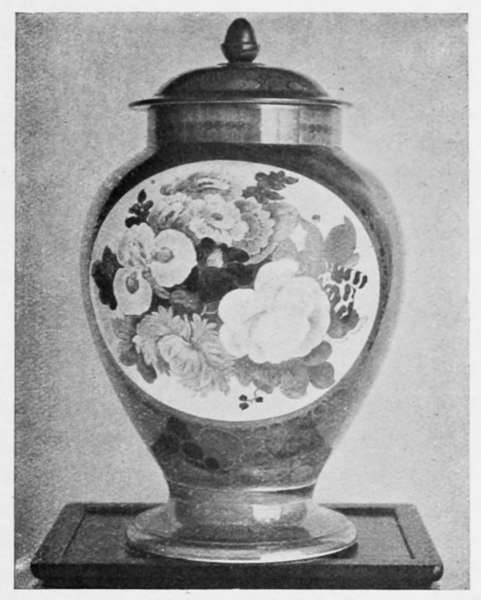
CAMBRIAN VASE. Painted by Pardoe. (In the collection of Mr. A. Duncan.)
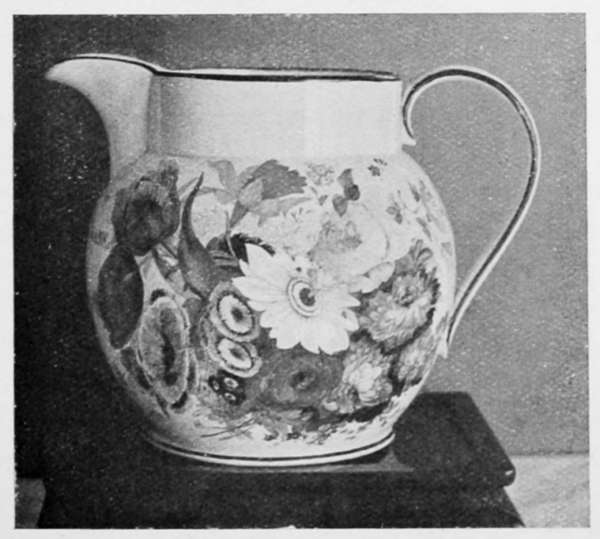
SWANSEA JUG. Painted by Evans. (In the collection of Mr. A. Duncan.)
Liverpool.—We have already alluded to the Liverpool delft, but the story of Liverpool as a potting centre is not yet complete. There was, of course, the enormous business in transfer-printing on Staffordshire cream ware established by Sadler and Green. But they made cream ware themselves as well as decorated it for others. Cream ware was produced at the factories of Chaffers, Barnes, Pennington, and others. And at a date immediately prior to the cream ware, Shaw, of Liverpool, had made "Astbury" and "Whieldon" and salt-glaze wares. So that here at once is a difficulty, and a very great one, in identifying with exactitude the origin of some of these wares. There is a great deal yet to be discovered concerning the long line of Liverpool factories, and if only as much special attention had been given to this locality as has been given to the much smaller factory of Lowestoft, original research might disentangle many a ceramic puzzle.
W. Reid & Co.—These potters made artistic earthenware from about 1754 to 1760, another firm established by Richard Abbey about 1793 continued till 1796 to make cream ware of a high order. This pottery, bought by Messrs. Worthington, was named Herculaneum Pottery.
The Herculaneum Pottery (1796–1841).—At first, when a band of Staffordshire potters came over to the new works, stoneware and black and red unglazed ware in the Wedgwood manner were made. Later a considerable amount of cream ware of pleasing character was turned out. The various marks found on the ware of this factory are given at the end of this chapter. Shortly after the end of the eighteenth century porcelain was made here, and some of the examples are of a very high quality both in potting and in decoration. From 1836 to 1841 the proprietors were Messrs. Close, Mort & Co.
Until more facts come to light and trained research is applied to all classes of Liverpool ware nothing definitely can be stated. But it is certain that some of the Liverpool ware is so fine in character as even to confuse old collectors who have never seen specimens before.
We illustrate a Liverpool plate (p. 409) with the usual Oriental design, and having no special feature about it which many another factory could not have produced. Its blue is fine and its potting is excellent, but it is not exceptional. The illustration beside it (p. 409) is of an earthenware mug some 5 inches in height which undoubtedly is a puzzle to experts. The exquisitely-painted exotic birds in rich colouring are not less perfect than those painted on Worcester vases or on Chelsea dishes. Indeed, it seems to show very strong traces of the style of Worcester painting. One is inclined to attribute it to Liverpool with the proviso that it must have been painted by some artist who had been trained at Worcester. It will thus be seen by this case that in unmarked earthenware there are exceptional difficulties in correctly placing examples where so much cream ware was made not very dissimilar in character, and where artists, as we have seen at Swansea, came over from other factories, apparently to the confoundment of the present-day collector.
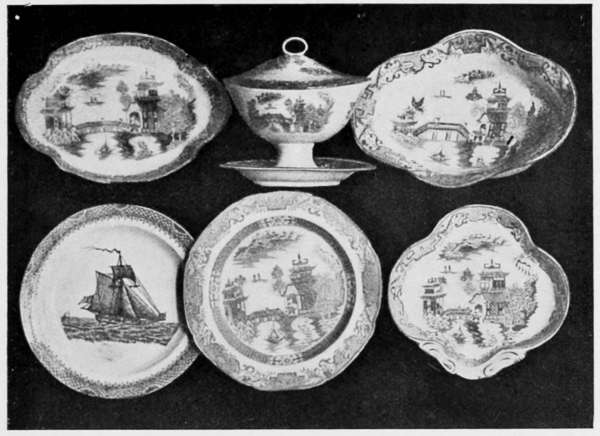
GROUP OF SWANSEA WARE. Transfer-printed in blue, black, and brown. (In the collection of Mr. A. Duncan.)
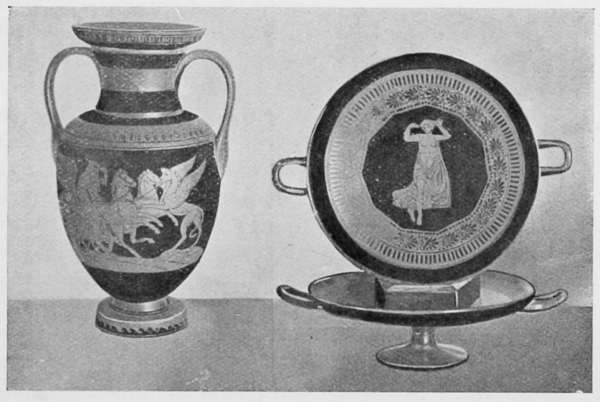
Dillwyn's Etruscan Ware. VASE. With Warriors in Chariot and Pegasus. (Height 14 inches.) TAZZA. With Dancing Girl (side view and interior). (10½ inches diameter.) (In the collection of Mr. A. Duncan.)
Bristol.—Joseph Ring in 1786 commenced to make a cream ware with the assistance of potters he engaged from Shelton in Staffordshire. In colour it was a warm cream due to the glaze and not to the body of the ware itself. Connected with this factory are some finely painted flower-pieces in enamel colours by William Fifield (born in 1777, and died in 1857), and his son, John Fifield. The factory changed hands in 1825, and became Pountney and Allies and Pountney & Co. until 1872. Many of Fifield's decorated pieces with floral works bear the name and date of the person for whom they were made. These are quite characteristic of the pottery, and occur after 1820 and in the Pountney and Allies period. There is a strong similarity in these chains of flowers and garlands to the Oriental ware, and its later French imitation which poses as Lowestoft. Much of this Bristol earthenware is confounded with somewhat similar New Hall porcelain, and is termed by very inexperienced buyers and sellers as "cottage Worcester." "Cottage" it may be, but it has no relationship with Worcester.
Caughley or Salopian.—The Caughley under-glaze blue-printed ware with its rich almost purplish blue is well known, but the various tints of this blue employed in the porcelain are not so well known varying as they do from this deep blue to a fairly light slate blue—but that concerns china and is another story. The Coalport factory china mark at the present day has the date 1750, proudly going back to these early days. Of Salopian earthenware not too much is known, it is eclipsed by the porcelain which Thomas Turner commenced to make at Caughley in 1772.
But earthenware was made at the factory from 1750 to 1775 by Browne, the owner of the factory, whose niece Thomas Turner married and took over the pottery in 1772. There are, belonging to this early period, some exceedingly well-modelled Caughley figures which are equal to the finest work of the Staffordshire potters. Some of these figures are 20 inches in height, and among those attributed to this Salopian pottery are the following: Prudence, holding a mirror, draped classical figure with figured gown; and Fortitude, a companion figure. Antony and Cleopatra are also believed to belong to this factory by some collectors. Caughley pottery is sometimes, though rarely, marked with the word Salopian or with the initials S or C in blue under the glaze. A considerable doubt still exists as to what is and what is not Salopian or Caughley earthenware, and an opinion should not be hastily arrived at on superficial examination. Many of the early under-glaze blue-printed porcelain cups and saucers with Oriental designs similar in character to the "willow pattern" bear a mark of a blue crescent not unlike that of the Worcester factory. When such specimens in earthenware are found thus marked in under-glaze blue with the crescent they may certainly be pronounced to be Caughley, in date about 1772 to 1785. Some of the octagonal dark blue-printed Caughley earthenware plates are of similar shape to the Oriental porcelain model (illustrated p. 327), and the design especially in the treatment of the border is handled in the same manner except that Turner was fonder of more crowded detail.
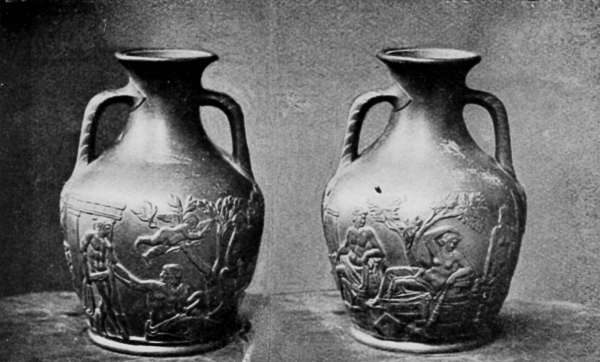
COPY OF PORTLAND VASE. In red ware Isleworth. (Early nineteenth century.) Marked S & G. (Height 7¾ inches.) (In the collection of Mr. W. G. Honey.)
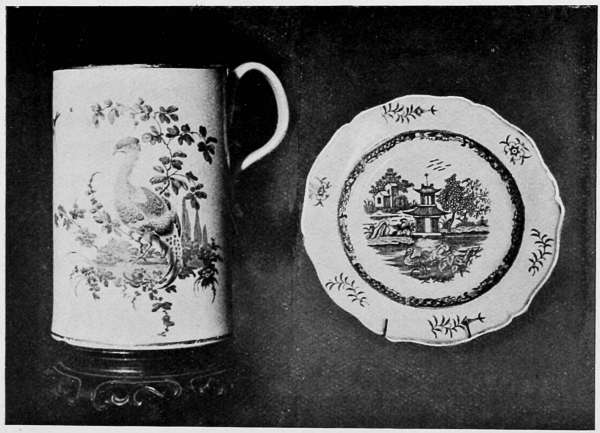
FINE EARTHENWARE MUG. Exquisitely painted with exotic birds in Worcester style (attributed to Liverpool). (In the collection of Col. and Mrs. Dickson.) LIVERPOOL CREAM WARE PLATE.With Oriental decoration in blue. (In the collection of Miss Feilden.)
Derby Earthenware.—Derby porcelain is well known. But it is not so well known that Derby earthenware is worth considering from a collecting point of view. There is a certain amount of obscurity surrounding the early ware made at Cockpit Hill. Slip ware was made in early days and delft appears to have been made there at the beginning of the eighteenth century. In 1772 the Derby pot-works, in the hands of the Heath family who were bankers, produced cream ware, though not equal to the Staffordshire products. Messrs. John and Christopher Heath, of Derby, are described as "bankrupts" in 1780, and a great sale of the earthenware in stock took place. The collector has mainly to rely on dated examples, which are very rare, or on pieces bearing local allusions to elections which may be safely attributed to Derby, but like so many of the extinct factories the ware has not received special attention in regard to its identification, nor is the task an easy one owing to cream ware being of very general manufacture.
Isleworth.—There is not much known about this factory established by Joseph Shore, who appears to have come from Worcester in 1760. The ware later is marked with the initials S. & G. after the firm became Shore and Goulding. The factory was never very large, and employed only twenty hands at the most. We illustrate (p. 409) a copy of the celebrated Portland Vase in red ware marked S. & G., and although some of the Isleworth ware appears to have been coarse earthenware to which the term "Welsh ware" was applied, some of it reverting to the old method of slip decoration, yet it must be admitted that certain pieces in red unglazed earthenware are of a high artistic character. There is a very fine teapot of this red ware in exact imitation of the Oriental style, being hexagonal in form, and having embossed decorations on the panels, the lid being surmounted with a Chinese grotesque animal, such as never was designed in Europe. The potting of such pieces as these has directed the attention of connoisseurs to this obscure factory.
There is no doubt that some of the finer pieces of Isleworth red ware have passed as Elers ware, but the former has a slight glaze and the handles are moulded. It is heavier in weight, and the teapots, &c., by Elers were undoubtedly of small dimensions.
It appears that "hound jugs" were made at Isleworth too. They were made at Brampton and elsewhere, but in those illustrated (p. 413) the mark is S. & G. They are brown stoneware with subjects of game in high relief, and are early nineteenth century in date.
In the second illustration it will be seen that the handle of the hound jug shows a later stage in its development. The reason is not far to seek, the awkward points of the hound handle were found to be in the way when Betsy Prue drew the beer. Any projection of this nature is distinctly out of place in earthenware for everyday use. This the potter readily recognised, and pattern number two was the result. Here he followed, without knowing it, the practice of the Japanese, who in their finely-carved ivory netsukes, so much collected nowadays, which were used as buttons and fastenings for dresses, always took care to leave no projecting points—the sleeping mouse has his tail well coiled around him—the dwarf mime has a smooth head and a figure as rotund as a miniature barrel.
It will be seen in this second illustration that the hound is still discernible in the handle, but probably only to those who have seen him in his former state. He has now become a clumsy, twisted handle with less meaning. It is here that his delicately balanced proportions when he was leaping over the brim with outstretched limbs—the attitude to the life of a hound when attempting to get through a fence—became a mere symbol in this later stage of his ceramic existence.
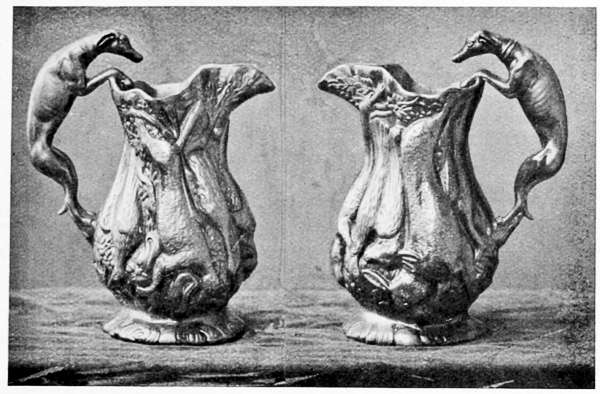
BROWN STONEWARE JUGS. Decorated with game in high relief. Shore & Goulding (Isleworth). Marked S & G. (Height 7½ inches.) (In the collection of Mr. W. G. Honey.)
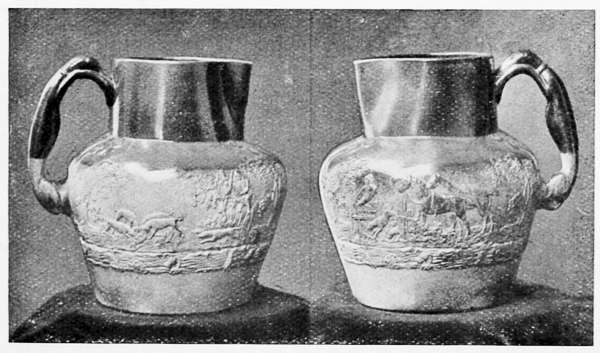
BROWN STONEWARE JUGS. With sporting subjects in relief, the handles showing a debased form of the "hound" handles. (In the collection of Mr. W. G. Honey.)
The pictorial history of the evolution is not a pretty one. It shows how the rushing need of the public for "more pots" destroyed the craft of the potter. It was far easier, since the demand was for pots, to turn out hasty work, and to let the modelling take care of itself. For this reason the mug degenerated into a mere commonplace mug, such as Staffordshire could produce quite as cheaply by the ton. So the factory put out its furnaces for ever.
MARKS USED AT SWANSEA, LOWESBY, LIVERPOOL, CAUGHLEY, DERBY, AND ISLEWORTH.
Swansea. Established 1769, works closed 1870. Cambrian Pottery, after 1780. A large number of marks employed. Sometimes the marks were impressed, but more often painted or stamped in red.
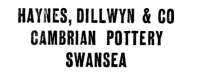
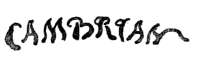
The word "Cambrian" as a mark is very uncommon.
Used on the improved white hard earthenware invented by Haynes at the end of eighteenth century.

Stone china was made from 1810–1830, and on some pieces this mark is found.
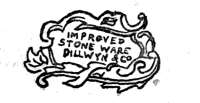
Other of Dillwyn's Marks, from 1802–1817, are given here.

Swansea porcelain, with its finely painted flowers, was produced from 1814 to 1817.

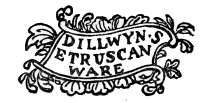
The celebrated "Etruscan Ware" was made by Dillwyn from 1847 to 1850, and it generally bears this printed mark.
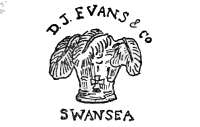
From 1850 to 1870 the firm was Evans & Glasson, and D. J. Evans & Co., and some of the later marks printed on the Swansea ware of this period are reproduced.
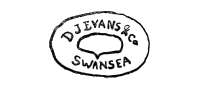
This Prince of Wales' Feathers mark was often accompanied by the fancy name of the particular pattern on which it appeared.
Lowesby. The mark of this small Leicestershire factory often puzzles collectors, and it is given here. In date it is about 1835, and it only existed for a few years.

Liverpool. The marks of Liverpool are of exceptional interest. Sadler & Green (except in rare instances, when they signed their tiles) did not use a mark. Seth Pennington (1760–1790), celebrated for punch bowls of rich blue decoration, may have used the mark here given.
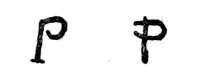
The Herculaneum Pottery (1794–1841) (which produced porcelain too, in 1800, as did W. Reid & Co. (1754–1760) of fine quality, but unmarked).

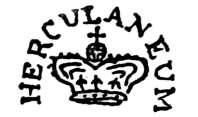
The Herculaneum marks are various on earthenware, and when the mark of the bird, the "Liver," appears, it may be attributed to Herculaneum.
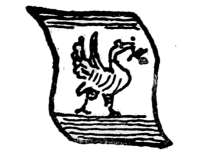
Caughley or Salopian (1751–1775). As a china factory Caughley is well known, and is the parent of the Coalport porcelain factory.

In its early days nothing was marked, but from 1772 to 1775, under Thomas Turner, Salopian figures, some of large size, were made, and a great deal of under-glaze blue-printed earthenware produced. The word Salopian sometimes appears, and Turner is impressed on cream-ware plates (often ascribed to John Turner, of Lane End, Staffordshire).

Sometimes the letters S or C appear in blue under the glaze. These marks appear also in Salopian porcelain.

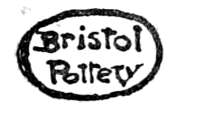
Bristol. The pottery at Bristol has a history extending from seventeenth-century days down to 1820. Its delft frequently had dates inscribed, and sometimes initials of potters. Its later ware was rarely marked. But sometimes a blue cross appears, and we give a late mark, found infrequently.
Isleworth (1760–1830). As much of the red ware of Messrs. Shore and Golding passes as Elers ware, the mark should be of interest to collectors. It is very small and impressed sometimes at the side of the piece near the base.

PRICES.
Swansea Earthenware.£s.d.
Dillwyn. Dinner service decorated with figures, and quantity of tea and breakfast ware similar (60 pieces in all). Leeder, Swansea, September, 1906 7 18 6
Etruscan ware Drinking Cup, formed as horse's head. Sotheby, February, 1908 2 0 0
Liverpool.
Cream-ware Punch Bowl, printed outside with figure subjects and inside with ship in full sail, in colours, and inscribed "Success to the Glory 1783." Sotheby, February, 1906 2 18 0
Bowl with ship inside, inscribed "Success to William and Nancy," dated 1776. Sotheby, November, 1906 3 0 0
Mug, with painted portrait of William Pitt. Sotheby, November, 1906 2 8 0
Caughley or Salopian Earthenware.
Figures, reclining, Cleopatra and Antony, on oblong blue plinths (19½ in.). Christie, January, 1908 15 15 0
Isleworth.
Ewer, decorated with Etruscan figures, rare, marked. Sotheby, November, 1907 1 2 0
Bristol Earthenware.
Jug with inscription and landscape in blueand white. Sotheby, February, 1907 1 8 0
Lowesby.
Basket of tortoiseshell ware, another of stoneware, another of red ware, marked "Lowesby," illustrated in Queen, January 26, 1907. Sotheby, December, 1908 2 0 0
Vase of red ware and two bottle-shaped vases, decorated with flowers in colours, marked "Lowesby." Sotheby, December, 1908 4 6 0
XIII LUSTRE WARE
CHAPTER XIII LUSTRE WARE
Early crude Copper Lustre (Brislington)—Gold Lustre, pink and purple Wedgwood, Leeds, Swansea, Sunderland—Platinum Lustre (termed "silver lustre").—Thomas Wedgwood (1791), Spode, E. Mayer, Wood and Caldwell, Leeds, Castleford, Swansea, and others—Lustre in combination as a decoration—"Resist" Lustre—Copper or Bronze Lustre—Marked Lustre Ware—Prices.
The collection of lustre ware is comparatively modern. In common with salt-glaze ware which was not thought much of in the auction-room some few years ago, lustre-ware has been studied and collected with avidity, and a good deal has been discovered concerning its origin.
It may be said at the outset that lustre varies very considerably in quality, and the plain undecorated platinum or "silver" lustre is being produced at the present day in teapots and cream-jugs in simulation of the old Georgian silver patterns.
So great is its variety and quality that some collectors have confined themselves specially to the collection of what is known as silver lustre "resist" style, and others have specialised in the pink or gold purple, with veined effects, of the Wedgwood school.
Lustre ware may be divided into the following classes:—
1. Early brown copper lustre, crude in style, made by Frank, of Brislington, near Bristol, about 1770.
2. Gold lustre, probably invented by Josiah Wedgwood, about 1792 (not to be confounded with gilding). The effect varies from pink to purple, and in the early pieces a combination was effected of gold, yellow, and purple, iridescent in varying lights.
3. Platinum or "silver" lustre (discovered by Thomas Wedgwood, the youngest son of Josiah Wedgwood, about 1791), imitations of silver ware, busts, &c.
4. Copper or bronze lustre (differing from the coarse early ware of Brislington), plain or undecorated.
5. Gold or purple lustre used as an adjunct or decoration, either around band or rim, as at Sunderland, &c.
6. Platinum or "silver" lustre used as an adjunct or slight decoration such as in the Falstaff figure (illustrated p. 371), or in the figure of Cupid (illustrated p. 387).
7. Platinum or "silver" lustre in combination with other painted decoration: (a) Birds, foliage, &c., painted in silver lustre on a ground of another colour; (b) Silver lustre "resist" style when the ground is platinum and the ornamentation is white, blue, or yellow.
8. Copper or bronze lustre in combination with painted designs.
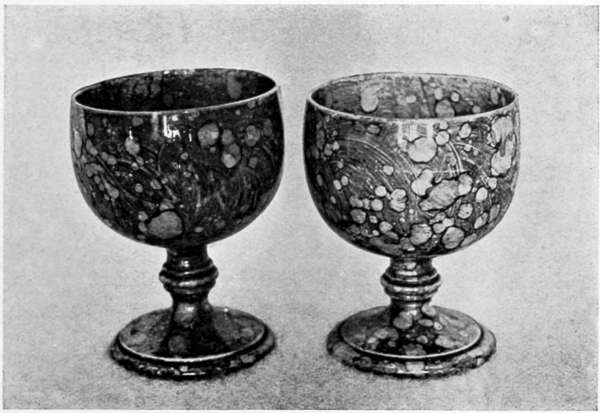
PAIR OF MOTTLED PINK GOLD LUSTRE GOBLETS. (In the collection of Miss Feilden.)
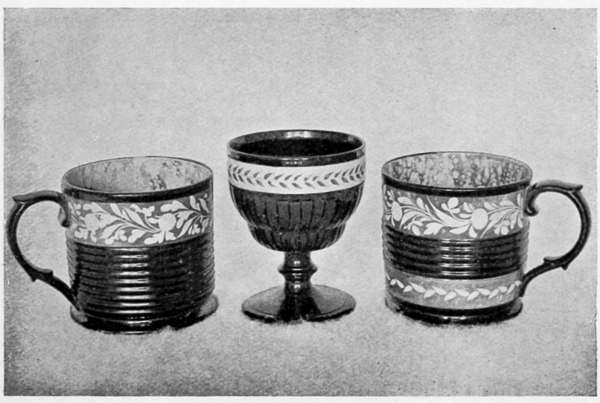
GOBLET AND GOLD LUSTRE MUGS WITH MOTTLED INTERIORS. (In the collection of Miss Feilden.)
Early Lustre (Brislington).—Richard Frank, the delft potter, of Bristol, produced a crude ware composed of a hard body coated with a yellow dip resembling delft in character, and, upon this surface, ornamentation in copper lustre was made which gave it the appearance of burnished copper. It has been most inaptly compared with the Hispano-Mauro ware, with its rich arabesque ornamentation. There is nothing in common between the two except that they are both lustrous, and here the similarity ends. The Brislington colour was crude and the lustre ornaments extremely inartistic, and only suitable for the baking-dishes and mere utilitarian articles rudely and sufficiently decorated. Finer and thinner lustre ware found in the vicinity of Bristol can more safely be attributed to Swansea.
Gold Lustre.—As may readily be imagined, the amount of gold in the lustre decoration is very small. Gold lustre is not heavy English gilding. As early as 1776 Josiah Wedgwood obtained a formula from Dr. Fothergill, a Fellow of the Royal Society, of which he himself was a Fellow, which induced him to experiment with gold in order to produce lustrous effects. The Purple of Cassius was employed with great success in obtaining marbling and veining, but it was not till late in his career, about 1792, that he produced the gold lustre in its happiest combination in connection with the fine Pearl Ware shell dessert-services. We have already alluded to the thin wash of yellow and pink which was applied to these dishes to represent the interior of the shell, but the addition of gold lustre was the finishing touch, and such pieces are remarkably rare. They glow with fleeting colours as the light plays upon their surface.
In regard to this gold lustre, it should be stated that it varied, and varied most considerably, according to the character of the body not only subjacent to it, that is upon which it was placed, but owing to its filmy and translucent character it received reflection from adjacent surfaces. On a brown body the same effect is different from that on a white or cream body. This must be borne in mind to a smaller extent in platinum lustres. The warmer the body beneath, the richer the lustre and the greater its similarity to the silver which it is intended to imitate.
We illustrate two very fine mottled pink and gold lustre goblets which belong to the Wedgwood period and are very light and of very fine lustrous appearance (p. 425). In certain districts these are termed "Funeral cups," and whether they were used only on those solemn occasions or not, we cannot say.
It appears that gold lustre was sometimes used in combination with copper or bronze. In the two mugs illustrated (p. 425), the interiors are finely mottled in purple and gold, and suggest by the beautiful potting the work of the goldsmith in their sharp contour. They may be attributed to the best period, as, too, may the goblet in the centre which glows like gold. Incidentally it may be remarked that the photographs used for these illustrations cannot convey the rich and glorious colouring of these examples.
The writer knows of a cup and saucer marked "Dawson." There was a Samuel Dawson in 1802, a Staffordshire potter, and there is Dawson of Sunderland, a better-known maker of ware, which has lustre decoration, to which latter pottery this may more safely be attributed. In general effect the scheme of colour is ambitious. The centre panel is painted in red enamel colours over the glaze. The borders have a highly lustrous gold floral decoration on a ground of pink.
In regard to Sunderland and Newcastle, as a rule, the ware is crude and may be readily dismissed, but not too hurriedly. The rough bands of purple lustre inartistically painted as borders to the transfer-printed jugs and mugs with nautical subjects are well known. In broad effect on a jug or a punch bowl, this class of pink or purple lustre decoration is seen at its best. On a jug of this nature with bands and rough spongings of purple lustre appear the verses—
"The man doomed to sail With the blast of the gale, Through billows Atlantic to steer, As he bends o'er the wave Which may soon be his grave Remembers his home with a tear."
It is not a happy sentiment and suggests more the landsman's views of the sea than those of the sailor. The following has a truer ring, but it was not put on jugs to be sold to sailors' wives:—
"Go patter to lubbers and swabs, d'ye see, 'Bout danger and fear and the like; A tight water-boat and good sea room give me, And it ain't to a little I'll strike."
Platinum or Silver Lustre.—It is not definitely known who was the first potter to adopt this decoration. Obviously it could not be earlier in date than the year that platinum was discovered as a new metal. Its chemical individuality and qualities were established by the successive researches of Scheffer (1752), Marggraft (1757), Bergmann (1777). In 1784 the first platinum crucible was made by Achard. In 1800 Knight, of London, published all that was known concerning the use of platinum in manufacture. Thomas Wedgwood, the youngest son of Josiah, employed it as early as 1791, but it is claimed that John Hancock (born 1757, died 1847), first employed gold, silver, and steel lustres at Messrs. Spode's factory at Stoke for Messrs. Daniel and Brown, who were decorating Spode ware at that date. That is his own account when he was eighty-nine years of age. But he was employed at Etruria. At any rate Hancock did not retain the secret, for among contemporary potters John Gardner, of Stoke, Sparkes, of Hanley, and Horobin, of Tunstall, seem to have practised it. At the beginning of the nineteenth century other potters were making lustre. In 1804 John Aynsley, of Lane End, and in 1810 Peter Warburton, of Lane End, who took out a patent for "decorating china, porcelain, earthenware, and glass with native pure or unadulterated gold, silver, platina, or other metals fluxed or lowered with lead or any other substance which invention or new method leaves the metals, after being burned, in their metallic state."
Pieces of silver lustre occur with the name Wood and Caldwell impressed on them. This was the style of the firm from 1790 to 1818. Such pieces may have been made during the last years of the factory's existence. But we know that it was made in 1810, for a painted lustre jug bears the inscription "Richard Bacchus, 1810." Another name which the writer has seen impressed on plain silver lustre ware of Early-Georgian shape is E. Mayer, who commenced as a potter in 1770, and died in 1818. It thus appears that at present, until more marked pieces turn up, the exact date within a few years of the manufacture of platinum or silver lustre in its first form is not determinable.
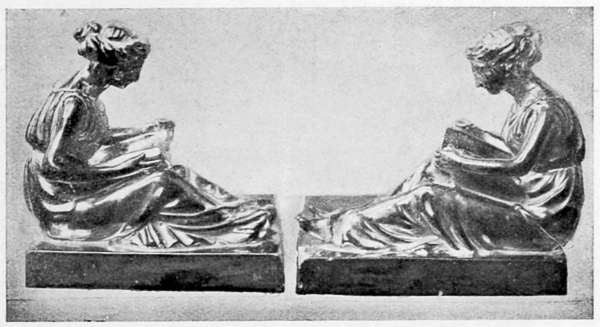
PAIR OF SILVER LUSTRE FIGURES. By Wood & Caldwell. (Height 6¼ inches.) (From the collection of Mr. W. G. Honey.)
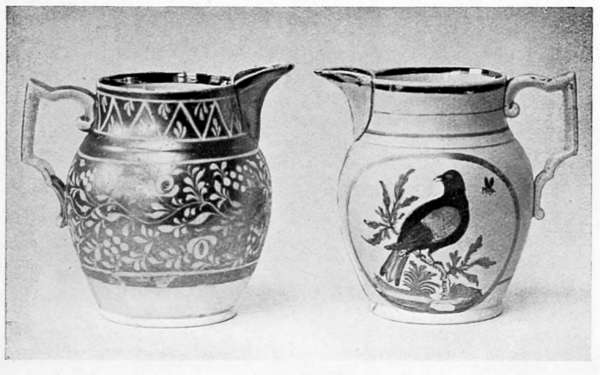
SILVER LUSTRE JUGS. 1. "Resist" style, with stencilled decorations. 2. Bird painted in red, foliage in green in panel, silver lustre painted bands and borders. (In the possession of Mr. Hubert Gould.)
Among makers known to have produced silver lustre are Robert Wilson, of Hanley, who was in partnership with Neale prior to the manufacture of this ware. His brother David Wilson, in the opening years of the nineteenth century, made silver lustre goblets and figures. There is a mounted figure of a hussar with uplifted sword attributed to the Wilsons, at the British Museum. The Wilsons also made copper or bronze lustre ware. Lakin and Poole is the name of another firm, and Spode, and it is believed Davenport embarked on this popular ware also. It is known, too, that Leeds made silver lustre ware of fine quality, that has stood the test of time; and gold lustre in imitation of Wedgwood's "Pearl Ware" lustrous decorations was made in early nineteenth-century days. Swansea is credited with similar productions of gold and gold-purple lustre on a marbled ground, although none of its silver-lustre ware is marked.
Probably the earliest use of silver lustre was when it was employed as an adjunct to figures in subsidiary portions in lieu of gilding. But most certainly it began to simulate the silver ware at an early date. This early type is undecorated, and was also used in busts or statuettes of classical form. We illustrate a pair of silver-lustre figures by Wood and Caldwell. There is another pair of children in silver lustre, marked Wood & Caldwell, which are colourable imitation of the figures of "children reading" made by Dwight (illustrated, p. 139).
In regard to decorated silver lustre we give two examples which are fairly typical of a large class. The illustration (p. 431) shows a jug decorated in enamel colours. The bird is in red and the foliage in green, on a cream ground. The border of the panel is in silver lustre and the rim of the jug and the bands around neck are also silver lustre.
This decorated silver-lustre ware is of two classes. The first class comprises patterns painted in silver lustre on a white ground, the foliage and birds and other patterns being in silver lustre, carefully painted over the white. As a rule in such pieces there is more white showing, and the lustre silver is palpably a decorative effect.
In the second class the silver lustre appears as a background, and the ornamental decoration is in white, covering the piece in most elaborate designs. This is known as "resist" ware, and on account of the great beauty and variety of its ornamentation, has strongly appealed to latter-day collectors. The pattern twining its way over the silver-lustre background may be white, blue, canary colour, pink, apricot, or turquoise-blue. White is most frequently found.
This second style is capable of the most intricate designs varying from farmyard and hunting scenes to ordinary conventional floral arrangements almost resembling the Japanese stencilled work in another field of art.
How "resist" ware is made.—If a white design is intended the ware is left white, but if any other colour, such as those we have mentioned, that colour is laid as a body or ground colour on the specimen to be lustred. The next step is to paint the exact design which later is to appear white, or blue, or yellow, on the surface of the vessel. This pattern is painted or stencilled on the ware with a substance composed of a glucose matter such as glycerine. The next stage is to apply the silver lustre to the whole surface which is allowed partially to dry. On its immersion in water the pattern painted previously to the addition of lustre peels off being on a soluble ground. The result is that the background of white or yellow or blue is laid bare, and the rest of the vessel is covered permanently with silver lustre. The adhesive lustre "resists" the water, adhering to the surface by means of its resinous nature, except in the pattern which peels off. Hence the term "resist" ware.
We illustrate one specimen of this silver-lustre "resist" ware (p. 431). It is of the ordinary floral conventional pattern probably stencilled on as described above. Some of the more elaborate specimens are painted. One of the finest collections of "Resist Silver Lustre" is that of Mr. William Ward, at the Kennels, Mellor, near Blackburn. It comprises examples that one may search for in vain in any of the museums. Many of the examples are marked such as "Warburton," or with the letter "W" impressed, and one specimen is marked "Leeds" a rare mark. The subjects of some of these jugs and mugs relate to the Napoleonic wars, and are dated. There is one rare jug entitled "Boney escaping through a Window," and in combination with this "resist" style are examples finely painted or transfer-printed in colours.
Copper or Bronze Lustre.—This class of lustre is generally held to be later (excepting of course the early attempts at Brislington which stand by themselves). It is held too by collectors up to the present not to offer such artistic possibilities as the "resist" silver lustre. This is amply borne out by the prices obtained at auction. But it must not be forgotten that this bronze or copper lustre varies very considerably. It may be and often is very coarse brown ordinary ware, and it may be very thin and delicate as to tempt the connoisseur to regard it with more than a passing glance.
In the highest forms of copper or bronze lustre, painted views appear in panels against the lustrous background, and such views are of a high order of merit. They may in all probability have been executed at Swansea. We illustrate a fine example (p. 437) of a large copper lustre mug with painted panel of landscape and other panels of fruit.
Very frequently in this copper lustre the jugs and mugs have ornamentation in relief which is enamelled in vivid colours. This is a fairly common form, and has been reproduced in very coarse examples, not to be confounded with the finer and thinner copper lustre at its best. We illustrate a copper lustre jug (p. 437) with serpent handle and Bellarmine mask spout, decorated in turquoise blue, and with basket of flowers in relief. The Goblet to the right is of similar decoration, and that on the left is of conventional coloured design on a mottled pink lustred band.
Marked Lustre Ware.—We have already mentioned a number of potters who are known to have made lustre ware, but the following names have been found impressed on the ware in various collections throughout the country, and may be of interest to collectors who have specimens either by these potters or by other makers not on this list. Wedgwood, Wilson, Warburton, Bailey and Batkin, J. Lockett & Sons, E. Mayer, Mayer & Newbold, E. Wood, Wood & Caldwell, Minton, Bott & Co., P. & U. (Poole & Unwin), Meigh, C. Meigh & Sons, Copeland & Garrett, and Leeds Pottery.
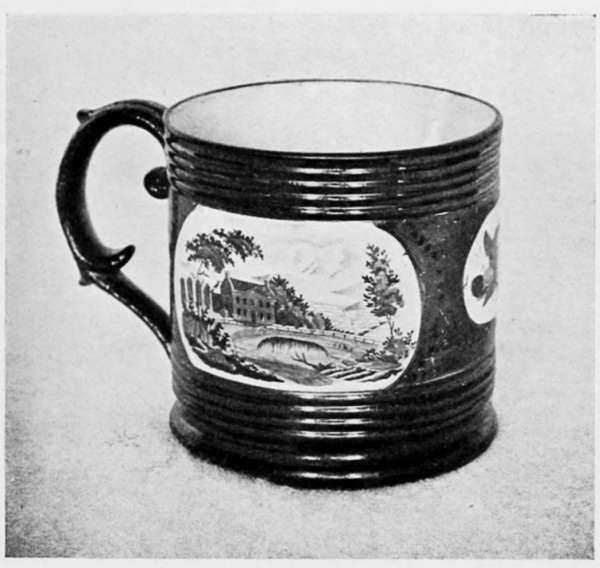
LARGE COPPER LUSTRE MUG. Panels painted with landscapes and flowers in colours. (In the collection of Miss Feilden.)
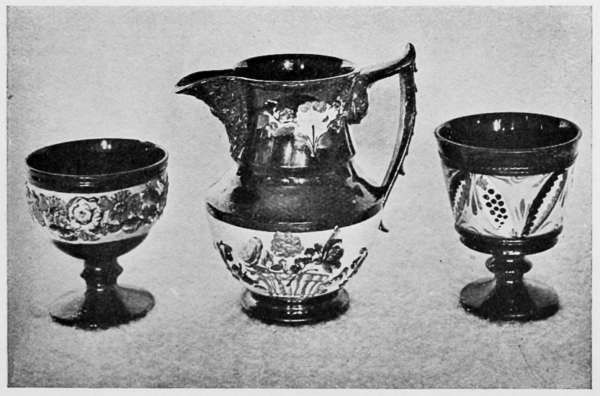
GROUP OF COLOURED COPPER LUSTRE. Goblet with enamelled decoration in relief. Jug with Bellarmine mask and spout and decorated in turquoise blue. (In the collection of Miss Feilden.)
PRICES.
Lustre Ware.£s.d.
Silver lustre Barber's jug with medallion of Barber and Customer, inscribed "William Freeman, 1809"; 6¾ in. high. Bond, Ipswich, April, 1906 5 0 0
Silver lustre "resist" pattern jug with grape and barley design. Sotheby, June, 1906 2 0 0
Nelson & Hill jug in silver lustre and decorated in red and black. Sotheby, June, 1906 1 10 0
Silver lustre jug, decorated with bird and flowers, and inscribed "J. Simpson, original Staffordshire Warehouse, 1791." Christie, January, 1908 14 14 0
Lustre decorated, Sunderland figures of Seasons (four) decorated in colours and purple lustre; all impressed, mark "Dixon, Austin & Co." Sotheby, February, 1908 10 0 0
Copper lustre pair of five-fingered flower vases marked Sewell. Sotheby, November, 1905 4 15 0
XIV LATE STAFFORDSHIRE WARE
CHAPTER XIV LATE STAFFORDSHIRE WARE
The School of Colour—Josiah Spode the Second (1798–1827)—Davenport (1793–1880)—Thomas Minton—Semi-porcelain—Ironstone China—The Masons—Early nineteenth-century Commemorative Ware—The revival of Stoneware—Messrs. Doulton—The twentieth-century Collector—Table of Marks—Prices.
The latest phases of earthenware are mainly concerned with the school of colourists, the chief of which was Josiah Spode the Second, who controlled the factory on the death of Josiah his father, in 1797, and took William Copeland as partner. It was this Spode who introduced into earthenware decorative patterns of Japanese colouring in which reds and yellows and dark cobalt blue predominate, following the style of the Crown-Derby Japan style. About 1800 Spode commenced the manufacture of porcelain as well as earthenware, and his richly gilded Japan patterns began to rival those of Derby. In regard to the light-blue-printed ware of a fine quality turned out by Spode, an illustration is given in the chapter on Transfer-printed Ware (p. 331). It was this second Josiah Spode who standardised the body used in English porcelain, which is to-day practically the same as Spode's formula. It may be said, roughly, to consist of the constituents of true porcelain plus a proportion of bone ash. Enoch Wood, when an apprentice with Palmer, was the first to use bone with earthenware, about 1770.
It is obvious that with these rich colours of Staffordshire porcelain side by side in the same factory, with earthenware, the latter began to assume all the decorative appearance of porcelain. A reign of colour set in. Earthenware was as lavishly decorated in colours, and as richly gilded as any of the contemporary porcelains, and in putting on these colours it lost all its old characteristic features and became an echo of porcelain.
Before leaving the Spode family, it may be mentioned that Josiah Spode the second, who died in 1827, aged seventy-three, was succeeded by his son, Josiah Spode the third, who died within two years.
William Copeland had died in 1826, and in 1833 the factory at Stoke came into the hands of W. T. Copeland, known as Alderman Copeland, as he then was, of the City of London. He became Lord Mayor of London in 1835, and in that year took Thomas Garrett into partnership. Copeland and Garrett is the name of the firm till 1847. For twenty years it was known as "W. T. Copeland, late Spode," and is now at the present day Messrs. W. T. Copeland & Sons.
The marks belonging to the firm at various dates are given at the end of this chapter. We illustrate a row of five remarkably fine earthenware vases decorated in rich colour in the Derby style, so perfectly simulating the brush work of that famous porcelain factory, that upon a hasty examination they would pass for Crown-Derby. They evidently belong to the days when Josiah Spode was turning out at Stoke more Japan patterns than were produced at Derby.
At the same time a good deal of less ornate earthenware for cottage use was being made, and specimens may frequently be met with, such as tea-sets with old-fashioned teapot and two-handled sugar-bowl made about 1825. Their homely English rural subjects are very pleasing, and show that there was still a large market in the country for simple ware without any great pretensions to foreign taste. It was the last stage of the great tradition of old English earthenware.
Davenport (1793–1880).—John Davenport, of Longport in Staffordshire, began potting in 1793. There is no doubt that he was a great potter with artistic instincts. He went to France prior to 1800, and on his return introduced a porcelain body superior to anything then produced in England. With Josiah Spode the second he claims more attention as a maker of porcelain than of earthenware. But his earthenware is highly prized by collectors. His blue-printed ware was exceptionally fine, and he followed in his plates and dishes the style of Turner and of Minton in the perforated rims. His stone china is well potted and carefully painted, and in design he was not loth to follow Mason of whom we shall speak later. Many specimens of the familiar type of jug associated with Mason's name, of octagonal shape are found in porcelain. Some collectors noticing the great similarity to Mason have been inclined to attribute these porcelain jugs to him, and doubtless, as Mason made china, many are his, but Davenport who made replicas of the Mason stoneware jugs, being a maker of porcelain too, is likely to have produced these porcelain replicas also. None of these porcelain jugs appears to be marked.
Davenport ware is strong in colour, and follows the rich designs of Spode. Some pieces of stoneware are richly gilt, and have finely painted fruit-pieces and landscapes, some probably by Steel from the Derby factory. The illustration (p. 447) of the highest flight of Mason typifies this class of landscape ware. Swansea, in common with Staffordshire, had not hesitated in painting earthenware with landscape subjects hitherto employed only by artists who decorated porcelain.
The Davenport marks are given at the end of this chapter, and are always prized when found on specimens, as Davenport did not mark his ware so freely as did Spode. From 1835 the firm became "William Davenport & Co.," and later "Davenport & Co.," and ceased about 1880.
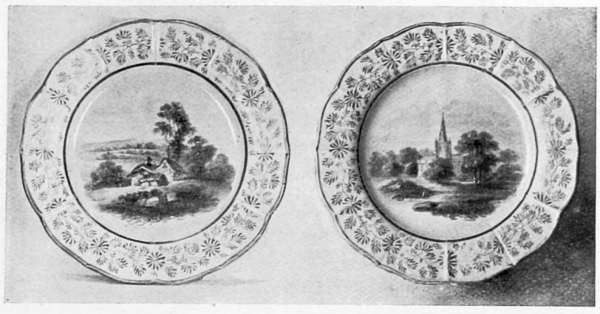
DESSERT PLATES. With border richly gilded with floral design. Impressed mark Mason's Patent Ironstone China. (In collection of Author.)
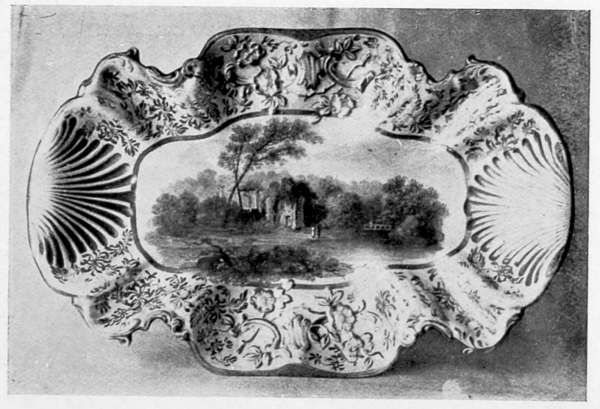
DESSERT DISH. Richly gilded border with landscape painted in colours. Impressed mark Mason's Patent Ironstone China.
Semi-porcelain.—This is found as a term in some of the marks of the early-Victorian period; sometimes the title "opaque china" appears. These descriptions are always puzzling to the collector. As a matter of fact they tell of the later and more modern development of earthenware. It had snatched the china glaze, it had employed the enamel colours, and had adopted the designs of the English porcelain factories. The rivalry of the Staffordshire potters and the English porcelain factories was coming to an end. This stage of semi-porcelain and semi-china represented the last word of earthenware. It now simulated porcelain in its body, with one drawback, it was not translucent as is porcelain. It was naïvely termed "opaque china." But the potters were proud of their latest achievement, and accordingly marked their wares with the above terms. As has been shown, Swansea came to the front, and Haynes in the closing years of the eighteenth century produced a hard, white earthenware termed "opaque-china," and Riley's "semi-china" about 1800 was the Staffordshire equivalent.
But, as we have seen, the Staffordshire potters not only imitated porcelain, continuing a long trade rivalry extending over nearly a century, but many of them had commenced to make porcelain themselves. Even the firm of Wedgwood succumbed to the temptation, and made porcelain from 1805 till 1815, which manufacture was revived again in 1878.
Thomas Minton (1765–1836).—Minton was one of Spode's engravers, and commenced as a master potter at Stoke in 1793.
Minton had been apprenticed to Thomas Turner, of Caughley, as an engraver, and it was he who designed the celebrated "Broseley dragon" pattern on the Caughley porcelain, and it is held by some authorities that Minton engraved the "willow pattern" too. At first, at Stoke, he made only earthenware, and his blue and white ware in imitation of the Nankin porcelain won him distinction. About 1800 porcelain was made and was continued throughout the nineteenth century. His son, Herbert Minton in 1836, took into partnership John Boyle, who joined the Wedgwoods in 1842. Herbert Minton raised the quality of the productions, being one of the greatest of the Staffordshire modern potters.
In the latter half of the century Mintons obtained a world-wide reputation. From 1850 to 1870 a band of French modellers and painters executed some fine work, but this trespasses on the field of porcelain.
Among the earthenware of Minton some of the early pieces such as plates and dishes enamelled in colours with Chinese subjects, are marked with the letter M in blue and a number. Some of the earliest-known examples in earthenware of the celebrated "willow pattern," such as plates with perforated edges (similar to that illustrated, p. 331) and baskets, are by Thomas Minton.
Ironstone China.—This again is a term used by Mason and others in regard to an earthenware body for which the firm of Mason, of Lane Delph, took out a patent in 1813. It is a ware, heavy in weight, and possessing great strength. In pieces of important size, such as punch bowls of huge proportions, and posts for old-fashioned bedsteads this was of no little value. We have already alluded to the Mason series of octagonal-shaped jugs of pleasing shape, undoubtedly following the Spode scheme of colour in Japanese style, but lacking the finer finish of Spode ware. Although undoubtedly original in design, these jugs were easily excelled in potting and colouring by copyists such as Davenport. But Mason's blue in his imitations of old Nankin ware is exceptionally fine. There are dinner-services consisting of a great number of pieces painted in under-glaze blue which are very rich in tone, and stand comparison with any of the blues of Staffordshire, not excepting those of Adams and Minton.