Diseases and their Remedies
Reading edition
Under this head it is proposed to notice such diseases as are most common among cattle, together with their symptoms, and to suggest such treatment of the same as has been found in the practice of the author, in the main, effective. He is aware that much more space might have been appropriated to this head, as has been the case in other treatises of this class; but he doubts the propriety of multiplying words about diseases which are of very rare occurrence, deeming it more fitting to leave such instances exclusively to the intelligent consideration of the reliable veterinary practitioner.
For convenience of reference, the diseases here noticed have been arranged in alphabetical order; the whole concluding with information as to two or three operations which cannot be uninteresting to, or unprofitable for, the reader.
ABORTION.
The cow is, more than any other animal, subject to abortion, or slinking, which takes place at different periods of pregnancy, from half of the usual time to the seventh, or almost to the eighth month. The symptoms of the approach of abortion, unless the breeder is very much among his stock, are not often perceived; or, if perceived, they are concealed by the person in charge, lest he should be accused of neglect or improper treatment.
The cow is somewhat off her feed—rumination ceases—she is listless and dull—the milk diminishes or dries up—the motions of the fœtus become more feeble, and at length cease altogether—there is a slight degree of enlargement of the belly—there is a little staggering in her walk—when she is down she lies longer than usual, and when she gets up she stands for a longer time motionless.
As the abortion approaches, a yellow or red glairy fluid runs from the vagina (this is a symptom, which rarely, or never, deceives) her breathing becomes laborious and slightly convulsive. The belly has for several days lost its natural rotundity, and has been evidently falling,—she begins to moan,—the pulse becomes small, wiry, and intermittent. At length labor comes on, and is often attended with much difficulty and danger.
If the abortion has been caused by blows or violence, whether from brutality, or the animal's having been teased by other cows in season, or by oxen, the symptoms are more intense. The animal suddenly ceases to eat and to ruminate—is uneasy, paws the ground, rests her head on the manger while she is standing, and on her flank when she is lying down—hemorrhage frequently comes on from the uterus, or when this is not the case the mouth of that organ is spasmodically contracted. The throes come on, are distressingly violent, and continue until the womb is ruptured. If all these circumstances be not observed, still the labor is protracted and dangerous.
Abortion is sometimes singularly frequent in particular districts, or on particular farms, appearing to assume an epizoötic or epidemic form. This has been accounted for in various ways. Some have imagined it to be contagious. It is, indeed, destructively propagated among the cows, but this is probably to be explained on a different principle from that of contagion. The cow is a considerably imaginative animal, and highly irritable during the period of pregnancy. In abortion, the fœtus is often putrid before it is discharged; and the placenta, or after-birth, rarely or never follows it, but becomes decomposed, and, as it drops away in fragments, emits a peculiar and most noisome smell. This smell seems to be peculiarly annoying to the other cows: they sniff at it and then run bellowing about. Some sympathetic influence is exercised on their uterine organs, and in a few days a greater or less number of those that had pastured together likewise abort. Hence arises the rapidity with which the fœtus is usually taken away and buried deeply, and far from the cows; and hence the more effectual preventive of smearing the parts of the cow with tar or stinking oils, in order to conceal or subdue the smell; and hence, too, the inefficacy, as a preventive, of removing her to a far-distant pasture.
The pastures on which the blood or inflammatory fever is most prevalent are those on which the cows oftenest slink their calves. Whatever can become a source of general excitation and fever is likely, during pregnancy, to produce inflammation of the womb; or whatever would, under other circumstances, excite inflammation of almost any organ, has at that time its injurious effect determined to this particular one.
Every farmer is aware of the injurious effect of the coarse, rank herbage of low, marshy, and woody countries, and he regards these districts as the chosen residence of red water; it may be added, that they are also the chosen residence of abortion. Hard and mineral waters are justly considered as laying the foundation of many diseases among cattle, and of abortion among the rest.
Some careful observers have occasionally attributed abortion to disproportion in size between the male and the female. Farmers were formerly too fond of selecting a great overgrown bull to serve their dairy or breeding cows, and many a heifer, or little cow, was seriously injured; and she either cast her calf, or was lost in parturition. The breeders of cattle in later years are beginning to act more wisely in this matter.
Cows that are degenerating into consumption are exceedingly subject to abortion. They are continually in heat; they rarely become pregnant, or if they do, a great proportion of them cast their calves. Abortion, also, often follows a sudden change from poor to luxuriant food. Cows that have been out, half-starved in the winter, when incautiously turned on rich pasture in the spring, are too apt to cast their calves from the undue general or local excitation that is set up. Hence it is, that when this disposition to abort first appears in a herd, it is naturally in a cow that has been lately purchased. Fright, from whatever cause, may produce this trouble. There are singular cases on record of whole herds of cows slinking their calves after having been terrified by an unusually violent thunder-storm. Commerce with the bull soon after conception is also a frequent cause, as well as putrid smells—other than those already noticed—and the use of a diseased bull. Besides these tangible causes of abortion, there is the mysterious agency of the atmosphere. There are certain seasons when abortion is strangely frequent, and fatal; while at other times it disappears in a manner for several successive years.
The consequences of premature calving are frequently of a very serious nature; and even when the case is more favorable, the results are, nevertheless, very annoying. The animal very soon goes again to heat, but in a great many cases she fails to become pregnant; she almost invariably does so, if she is put to the bull during the first heat after abortion. If she should come in calf again during that season, it is very probable that at about the same period of gestation, or a little later, she will again abort: or that when she becomes in calf the following year, the same fatality will attend her. Some say that this disposition to cast her young gradually ceases; that if she does miscarry, it is at a later and still later period of pregnancy; and that, in about three or four years, she may be depended upon as a tolerably safe breeder. He, however, would be sadly inattentive to his own interests who keeps a profitless beast so long.
The calf very rarely lives, and in the majority of cases it is born dead or putrid. If there should appear to be any chance of saving it, it should be washed with warm water, carefully dried, and fed frequently with small quantities of new milk, mixed, according to the apparent weakness of the animal, either with raw eggs or good gruel; while the bowels should, if occasion requires, be opened by means of small doses of castor-oil. If any considerable period is to elapse before the natural time of pregnancy would have expired, it will usually be necessary to bring up the little animal entirely by hand.
The treatment of abortion differs but little from that of parturition. If the farmer has once been tormented by this pest in his dairy, he should carefully watch the approaching symptoms of casting the calf, and as soon as he perceives them, should remove the animal from the pasture to a comfortable cow-house or shed. If the discharge be glairy, but not offensive, he may hope that the calf is not dead; he will be assured of this by the motion of the fœtus, and then it is possible that the abortion may still be avoided. He should hasten to bleed her, and that copiously, in proportion to her age, size, condition, and the state of excitation in which he may find her; and he should give a dose of physic immediately after the bleeding. When the physic begins to operate, he should administer half a drachm of opium and half an ounce of sweet spirits of nitre. Unless she is in a state of great debility, he should allow nothing but gruel, and she should be kept as quiet as possible. By these means he may occasionally allay the general or local irritation that precedes or causes the abortion, and the cow may yet go to her full time.
Should, however, the discharge be fetid, the conclusion will be that the fœtus is dead, and must be got rid of, and that as speedily as possible. Bleeding may even then be requisite if much fever exists; or, perhaps, if there is debility, some stimulating drink may not be out of place. In other respects the animal must be treated as if her usual time of pregnancy had been accomplished.
Much may be done in the way of preventing this habit of abortion among cows. The fœtus must be got rid of immediately. It should be buried deep, and far from the cow-pasture. Proper means should be taken to hasten the expulsion of the placenta. A dose of physic should be given; ergot of rye administered; the hand should be introduced, and an effort made, cautiously and gently, to detach the placenta; all violence, however, should be carefully avoided; for considerable and fatal hemorrhage may be speedily produced. The parts of the cow should be well washed with a solution of the chloride of lime, which should be injected up the vagina, and also given internally. In the mean time, and especially after the expulsion of the placenta, the cow-house should be well washed with the same solution.
The cow, when beginning to recover, should be fattened and sold. This is the first and the grand step toward the prevention of abortion, and he is unwise who does not immediately adopt it. All other means are comparatively inefficient and worthless. Should the owner be reluctant to part with her, two months, at least, should pass before she is permitted to return to her companions. Prudence would probably dictate that she should never return to them, but be kept, if possible, on some distant part of the farm.
Abortion having once occurred among the herd, the breeding cows should be carefully watched. Although they should be well fed, they should not be suffered to get into too high condition. Unless they are decidedly poor and weak, they should be bled between the third and fourth months of pregnancy, and a mild dose of physic administered to each. If the pest continues to reappear, the owner should most carefully examine how far any of the causes of abortion that have been detected, may exist on his farm, and exert himself to thoroughly remove them.
An interesting paper upon this subject may be found in the Veterinary Review, vol. 1., p. 434, communicated by Prof. Henry Tanner, of Queen's College, Birmingham, England. As it suggests a theory as to the origin of this disease which is, to say the least, quite plausible, we transfer the article:—
"I shall not go into any notice of the general subject of abortion, but rather restrict my remarks to a cause which is very much overlooked, and yet which is probably more influential than all other causes combined. I refer to the growth of ergotized grass-seeds in our pastures.
"The action of ergot of rye (secale cornutum) upon the womb is well known as an excitant to powerful action, which usually terminates in the expulsion of the fœtus. We have a similar disease appearing on the seeds of our grasses, but especially on the rye grass, and thus we have an ergot of the seeds of rye grass produced, possessing similar exciting powers upon the womb to those produced by the ergot of rye.
"Two conditions are necessary for the production of this ergot upon the seed of rye grass. The first is, the grass must be allowed to run to seed; and the second is, that the climate must be favorable for encouraging the development of the ergot.
"In practice, we find that on land which has been fed on during the summer, unless it has been grazed with unusual care, much of the grass throws up seed-stalks and produces seed. In districts where the climate is humid and rain abundant, as well as in very wet seasons, these seeds become liable to the growth of this ergot. Cattle appear to eat it with a relish, and the result is that abortion spreads rapidly through the herd. Heifers and cows, which, up to the appearance of the ergot, have held in calf, are excited to cast their calves by consuming it in their food. The abortion having once commenced, we know that the peculiarly sensitive condition of the breeding animal will cause its extension, even where the original cause may not be in operation; but their combined action renders the loss far more serious. If we add to this the tendency which an animal receives from her first abortion, to repeat it when next in calf, we see how seriously the mischief becomes multiplied.
"A somewhat extended observation, added to my own experience, has led me to the conviction that very much of the loss arising from abortion in our cows may be traced to the cause I have named. I feel assured the influence is even more extended than I have stated; for not only would the fœtus be thrown off in its advanced stage, but also in its earlier growth, thus causing great trouble to breeders of high-bred stock, the repeated turning of cows to the bull, and at most irregular intervals.
"The remedy differs in no respect from the ordinary mode of treatment, except that it compels a removal of the stock from the influence of the cause. Much, however, may be done by way of prevention; and this I shall briefly notice.
"It simply consists in keeping breeding cows and heifers upon land free from these seeds. Grass which has been grazed during the summer, will very generally, in a humid climate, have some of this ergotized seed; but I have not observed it produced before the end of July, or early in August; and I doubt its existence, to any injurious degree, up to this time. We may, therefore, consider such ground safe up to this period. If the breeding stock are then removed to grass land which, having been mown for this operation is a guaranty against any seeds remaining, it will seldom, if ever, happen that any injury will result from the production of ergotized grass later in the season.
"I will not venture to say that such will not appear in some cases where the grass has been cut early and has been followed by a rapid growth; but, at any rate, we have grazing land free from this excitant from July until September; and in the grass which has been mown late, I do not consider that there is the least fear of ergot's being again formed in that season. In this manner a farmer may keep grass land for his breeding stock entirely free from ergotized grass; and, consequently, so far as this cause is concerned, they will be free from abortion. How far young heifers may be prejudicially influenced, before they are used for breeding, by an excitement of the womb, appears to me to be a subject worthy of some attention on the part of the veterinary profession."
APOPLEXY.
This is a determination of blood to the head, causing pressure upon the brain. Animals attacked with this disease are generally in a plethoric condition. The usual symptoms are coma (a sleepy state), eyes protruding, respiration accelerated; finally, the animal falls, struggles, and dies.
In such cases, bleeding should be resorted to at an early period; give in drink one pound of Epsom-salts.
BLACK WATER.
This is simply an exaggerated stage of the disease known as Red Water,—to which the reader is referred in its appropriate place,—the urine being darker in color in consequence of the admixture of venous blood.
The symptoms are similar, though more acute. There is constipation at first, which is followed by diarrhœa, large quantities of blood passing away with the evacuations from the bowels; symptoms of abdominal pain are present; the loins become extremely tender; and the animal dies in a greatly prostrated condition.
The treatment does not differ from that prescribed in case of Red Water.
BRONCHITIS.
The trachea and bronchial tubes are frequently the seat of inflammation, especially in the spring of the year,—the symptoms of which are often confounded with those of other pulmonary diseases. This inflammation is frequently preceded by catarrhal affections; cough is often present for a long time before the more acute symptoms are observed. Bronchitis occasionally makes its appearance in an epizoötic form.
Symptoms.—A peculiarly anxious expression of the countenance will be observed; respiration laborious; a husky, wheezing, painful cough; on placing the ear to the windpipe a sonorous râle is heard; symptomatic fever also prevails to a greater or less extent.
Treatment.—Counter-irritation should be early resorted to; strong mustard, mixed with equal parts of spirits of hartshorn and water, and made into a thin paste, should be applied all along the neck, over the windpipe, and to the sides, and should be well rubbed in; or, the tincture of cantharides, with ten drops of castor-oil to each ounce, applied in the same manner as the former, will be found equally effective. Give internally ten drops of Fleming's tincture of aconite every four hours, until five or six doses have been given; after which give one of the following powders twice a day: nitrate of potash, one ounce; Barbadoes aloes, one ounce; Jamaica ginger, half an ounce; pulverized-gentian root, one ounce; mix and divide into eight powders. If necessary a pound of salts may be given.
CONSUMPTION.
This affection—technically known as phthisis pulmonalis—is the termination of chronic disease of the lungs. These organs become filled with many little cysts, or sacks, containing a yellowish or yellowish-white fluid, which in time is hardened, producing a condition of the lungs known as tuberculous. These tubercles in turn undergo another change, becoming soft in the centre and gradually involving the whole of the hardened parts, which, uniting with adjoining ones, soon forms cysts of considerable size. These cysts are known as abscesses.
No treatment will be of much service here. It is, therefore, better, if the animal is not too poor in flesh, to have it slaughtered.
CORYZA.
In the spring, and late in the fall, catarrhal affections are quite common, occurring frequently in a epizoötic form. Coryza, or nasal catarrh,—commonly called a cold in the head,—is not very common among cows. As its name implies, it is a local disease, confined to the lining membrane of the nose; and, consequently, the general system is not usually disturbed.
Symptoms.—The animal will be observed to sneeze; the Schneiderian membrane (membrane of the nose) is heightened in color; cough sometimes accompanies; there is also a muco-purulent discharge from the nose. Neglect to attend to these early symptoms frequently occasions disease of a more serious nature; in fact, coryza may be regarded as the forerunner of all epizoötic pulmonary disorders.
A CHAT ON THE ROAD.
Treatment.—The animal should be kept on a low diet for a few days; the nostrils occasionally steamed, and one of the following powders given night and morning, which, in most cases, will be all the medicine required: nitrate of potassa, one ounce; digitalis leaves pulverized and tartrate of antimony, of each one drachm; sulphate of copper, two drachms; mix, and divide into eight powders. Should the disease prove obstinate, give for two or three days two ounces of Epsom-salts at a dose, dissolved in water, three times a day.
COW-POX.
Two varieties of sore teats occur in the cow, in the form of pustular eruptions. They first appear as small vesicles containing a purulent matter, and subsequently assume a scabby appearance, or small ulcers remain, which often prove troublesome to heal. This latter is the cow-pox, from which Jenner derived the vaccine matter.
Treatment.—Foment the teats well with warm water and Castile-soap; after which, wipe the bag dry, and dress with citrine ointment. The preparations of iodine have also been recommended, and they are very serviceable.
DIARRHŒA.
Cattle are frequently subject to this disease, particularly in the spring of the year when the grass is young and soft. Occasionally it assumes a very obstinate form in consequence of the imperfect secretion of gastric juice; the fæces are thin, watery, and fetid, followed by very great prostration of the animal.
The symptoms of diarrhœa are too well known to require any detailed description.
Treatment.—If in a mild form, the diet should be low; give two ounces of Epsom-salts, twice a day. In a more obstinate form, give two drachms of carbonate of soda in the food. Oak-bark tea will be found very useful in these cases; or one of the following powders, twice a day, will be found very advantageous: pulverized opium and catechu, each one and a half ounces; prepared chalk, one drachm; to be given in the feed.
Calves are particularly subject to this disease, and it often proves fatal to them. It sometimes assumes an epizoötic form, when it is generally of a mild character. So long as the calf is lively and feeds well, the farmer should entertain no fear for him; but if he mopes about, refuses his food, ceases to ruminate, wastes in flesh, passes mucus and blood with the fæces, and exhibits symptoms of pain, the case is a dangerous one.
In such an emergency, lose no time, but give two or three ounces of Castor-oil with flour-gruel, or two ounces of salts at a dose, followed with small draughts of oak-bark tea; or give, twice a day, one of the following powders: pulverized catechu, opium, and Jamaca ginger, of each half an ounce; prepared chalk, one ounce; mix, and divide into twelve powders. Bran washes, green food, and flour-gruel should be given, with plenty of salt.
DYSENTERY.
This disease is very frequently confounded with the foregoing. A distinction, however, exists,—since inflammation appears in this disease, while it is absent in the former. In this affection, inflammation of the large intestines takes place, which is attended with diarrhœa. The fæces are covered with blood; the animal rapidly becomes prostrated, and death frequently comes to his relief.
Youatt says: "It is, however, with dysentery that the practitioner is most loth to cope,—a disease that betrays thousands of cattle. This, also, may be either acute or chronic. Its causes are too often buried in obscurity, and its premonitory symptoms are disregarded or unknown. There appears to be a strong predisposition in cattle to take on this disease. It seems to be the winding-up of many serious complaints, and the foundation of it is sometimes laid by those that appear to be of the most trifling nature. It is that in cattle which glanders and farcy are in the horse,—the breaking up of the constitution.
"Dysentery may be a symptom and concomitant of other diseases. It is one of the most fearful characteristics of murrain; it is the destructive accompaniment, or consequence, of phthisis. It is produced by the sudden disappearance of a cutaneous eruption; it follows the cessation of chronic hoose; it is the consequence of the natural or artificial suspension of every secretion. Were any secretion to be particularly selected, the repression of which would produce dysentery, it would be that of the milk. How often does the farmer observe that no sooner does a milch cow cease her usual supply of milk than she begins to purge! There may not appear to be any thing else the matter with her; but she purges, and, in the majority of cases, that purging is fatal.
"It may, sometimes, however, be traced to sufficient causes, exclusive of previous disease. Unwholesome food—exposure to cold—neglect at the time of calving—low and marshy situations—the feeding in meadows that have been flooded, where it is peculiarly fatal—the grazing (according to Mr. Leigh, and our experience confirms his statement) upon the clays lying over the blue lias rock—the neighborhood of woods and of half-stagnant rivers—the continuation of unusually sultry weather—overwork, and all the causes of acute dysentery, may produce that of a chronic nature; an acute dysentery—neglected, or badly, or even most skillfully treated—may degenerate into an incurable chronic affection. Half starve a cow, or over-feed her, milk her to exhaustion, or dry her milk too rapidly—and dysentery may follow.
"The following will, probably, be the order of the symptoms, if they are carefully observed: There will be a little dullness or anxiety of countenance, the muzzle becoming short or contracted; a slight shrinking when the loins are pressed upon; the skin a little harsh and dry; the hair a little rough; there will be a slight degree of uneasiness and shivering that scarcely attracts attention; then—except it be the degeneracy of acute into chronic dysentery—constipation may be perceived. It will be to a certain extent, obstinate; the excrement will voided with pain; it will be dry, hard, and expelled in small quantities. In other cases, perhaps, purging will be present from the beginning; the animal will be tormented with tenesmus, or frequent desire to void its excrement, and that act attended by straining and pain, by soreness about the anus, and protrusion of the rectum, and sometimes by severe colicky spasms. In many cases, however, and in those of a chronic form, few of these distressing symptoms are observed, even at the commencement of the disease; but the animal voids her fæces oftener than it is natural that she should, and they are more fluid than in a state of health; while at the same time she loses her appetite and spirits and condition, and is evidently wasting away."
Treatment.—Give one drachm of the extract of belladonna, three times a day, dissolved in water; or calomel and powdered opium, of each one drachm three times daily. As soon as the inflammatory stage passes by, give one of the following three times daily, in their gruel: nitrate of potash pulverized, gentian-root pulverized, of each one ounce; pulverized Jamaica ginger, one half an ounce; pulverized caraway, or anise-seed, six drachms. A bottle of porter given once or twice a day, will be found of very great advantage.
ENTERITIS.
This is an inflammation of the external or internal coat of the intestines, sometimes attended with violent purging, especially when it is confined to the internal coats. Oxen in good condition are more subject to this disease than are cows. It most frequently occurs in dry, hot weather. It is sudden in its attacks, and often fatal in its termination.
Symptoms.—The animal is dull, and not disposed to move about; the muzzle is dry, and the coat staring; the animal yields, on pressure of the loins; a weak, staggering gait, when forced to move; respiration hurried; pulse accelerated but small; eyes red, full and fiery; head protruding; mouth, ears, and horns hot; appetite bad; rumination ceases; the bowels become constipated; the animal moans continually, and froths at the mouth. These symptoms violently increase as the disease advances. The animal becomes more depressed and feeble, grinds his teeth, and appears half unconscious, and dies in convulsions.
Of the causes of this disease, Youatt, who is almost the only authority we have upon this subject, says: "It seems occasionally to be epidemic; for several instances of it occur, of the same character, and in the same district. M. Cruzel gives an illustration of this in his description of the disease that destroyed so many cattle, in the years 1826 to 1827, in the Department de la Nievre. Out of two hundred and eighteen cattle belonging to three farmers, one hundred and thirteen were attacked by this disease, and eighty-three of them died. One farmer in a neighboring district had nineteen head of cattle, all of which sickened, but only three were lost. These were unusually hot summers. The upland pasture was burnt up, or what remained of it was rendered unusually stimulating; and the acrid plants of the marshes and low grounds acquired additional deleterious agency.
"When isolated cases occur, they may generally be attributed to mismanagement. Exposure to cold, or the drinking of cold water when overheated with work; too hard work in sultry weather; the use of water stagnant, impure, or containing any considerable quantity of metallic salts; the sudden revulsion of some cutaneous eruption; the crowding of animals into a confined place; too luxuriant and stimulating food generally; and the mildewed and unwholesome food on which cattle are too often kept, are fruitful sources of this complaint."
Treatment.—In the early stage of the disease, give an active purge, and follow it with ten drops of Fleming's tincture of aconite, four times daily, for two days; then give drachm doses of the extract of belladonna; give no food for twenty-four or forty-eight hours, according to circumstances. Bleeding, if done early, is often beneficial. Counter-irritants to the belly are also recommended; the best are mustard, hartshorn, and water, mixed together—or tincture of cantharides, with one drachm of croton-oil added to every ounce.
EPIZOÖTICS.
Diseases of this class have the same relation to the inferior animals that epidemic diseases have to man. Of course, they assume a very pestilential character. Scarcely a year passes away without diseases of this nature making their appearance in some parts of the world. They occur at all seasons of the year, but more generally prevail in the spring and fall. The period of their duration varies from months to years. They are, at times, mild in their attacks, and yield readily to proper treatment; at other times, they become painful pestilences, destroying every thing in their course.
The causes are generally sought for in some peculiar condition of the atmosphere. The use of the milk and flesh of diseased cattle has frequently been productive of malignant diseases in the human family.
Silius Italicus describes a fearful epizoötic, which first attacked the dog, then the feathered biped, then horses, and cattle, and, last of all, the human being.
"On mules and dogs the infection first began, And, last, the vengeful arrows fixed in man."
Epizoötics, occurring in rats, cats, dogs, horses, and cattle, which were followed in the succeeding years by more fearful ones which attacked the human family, are numerously recorded. These scourges have appeared in all ages of the world; but, as time and space will not allow our entering upon an extended consideration of them,—however interesting they might be to the general reader,—we shall content ourselves by quoting, somewhat in brief, from the lectures of the late William Youatt on these fatal maladies:—
"In the year 801, and at the commencement of the reign of Charlemagne, an epidemic disease devastated a great portion of his dominions. This was attributed to the villainy of the Duke of Benevento, who was said to have employed a great many persons in scattering an enchanted powder over the fields, which destroyed both the cattle and the food of the cattle. M. Paulet seems inclined to give full credence to this, and says that history offers many proofs of this destructive and diabolical practice. He affirms that many persons were punished in Germany, France, and, particularly, at Toulouse, for the commission of this crime. Several of the suspected agents of these atrocities were put to the torture and made full confession of their crime.
"Of the occurrence of these diseases from the year 800 to 1316,—an interval of mental darkness, and of horrors and calamities of every kind,—history records twenty cases, more or less destructive, and extending, with greater or less devastation, over France and Germany, Italy and England. Of these twenty, four date their origin from an excessive moisture in the air, accompanied by almost continual rains, and flooding the country to a considerable extent. One was supposed to be the consequence of long-continued drought and excessive heat; one was traced to the influence of an eclipse of the sun; another, to a comet; and a fourth, to a most unusually stormy winter. The reader will have the kindness to remember that we are here expressing the opinions of the writers of the day, and by no means, our own belief of the matter.
"Of the four which trace their origin to extreme wet and its consequences, the first occurred in France, in 820, after a long continuance of rain; and it was equally fatal to men and cattle. The second, which was equally fatal to both, appeared in Lorraine, in 889. The third broke out among the cavalry of the army of Arnoul, in its passage over the Alps, on its return to Italy. The fourth pervaded the whole of England in 1125, and was equally fatal to the biped and the quadruped.
"That which followed excessive heat and drought, was generally prevalent throughout Europe, but especially so in Germany. It attacked oxen, sheep, and pigs. It appeared in 994, and lasted six months.
"The one which was attributed to the comet, and which principally attacked cattle, appeared in France in 943 Almost every animal perished.
"Another, that was supposed to be connected with an eclipse of the sun, was prevalent throughout the greater part of Germany, among men and animals, in 989.
"The disease, which was the consequence of a cold and boisterous winter, was principally prevalent in France, in 887, and committed sad ravages among the herds of cattle and sheep.
"Of the twelve others, of which, authors do not indicate the cause, the first was in France, in 810, and principally among cattle. The second was also in France, in 850, and almost depopulated the country of cattle. The third, in 868, was common to all animals in France. The fourth, in 870, was in the same country, and caused severe loss among cattle. The fifth prevailed on the Rhine and in Germany, and destroyed an almost incalculable number of cattle. The sixth attacked the horses of the army of Arnoul in Lorraine, in 888. The seventh, in 940, destroyed a vast number of cattle in France, Italy, and Germany. The eighth and ninth were in France, in 941 and 942, and almost all the cattle in the country perished. The tenth pestilence broke out in England, in the year 1041, and frightful was its devastation among all animals, and, particularly, horned cattle. The eleventh also devastated our country, in 1103, and the ravages were dreadful. The twelfth was chiefly fatal in Germany, and particularly in Gueldres, in 1149.
"These twenty pestilences occurred in the space of 506 years. Five or six of them were most prevalent among cattle; two were almost confined to horses; twelve included, to a greater or less degree, almost every species of quadrupeds; and four extended to the human being. Among these the ravages of eight were most destructive in France; as many in Germany; and four in Italy and England.
"As far as we have hitherto proceeded, it will also appear that cattle are more subject to these diseases than any other species of domesticated animals, and that the pestilence is always most fearful among them. It is also evident that the maladies which proceed from cold or humidity are more frequent in the temperate and southern parts of Europe than those which depend upon drought, or almost any other cause.
"The malady lingers in different countries, in proportion to its want of power to accomplish at once all its devastation.
"After this time, there are few satisfactory accounts of these diseases for more than five centuries. We only know that, occasionally suspending their ravages,—or, rather, visiting new districts when they had ceased to desolate others—they have continued to be objects of terror and instruments of devastation, even unto the present day; and it is only within a few years that they have been really understood, and have become, to a certain degree, manageable."
In the United States, epizoötic diseases have been of frequent occurrence; but, owing to the want of properly qualified veterinary surgeons, they have not, until within a very recent period, been properly described or understood. The day however, is fast approaching when this void will be filled, and when epizoötic and other diseases will be correctly noted and recorded. The necessity for this must have been forcibly impressed upon the minds of the inhabitants of our country from the experience of the last ten or twelve years.
Respecting the late epizoötic among cattle in Portage County, Ohio, William Pierce, V.S., of Ravenna, thus describes the symptoms as they appeared, in a letter to the author: "A highly-colored appearance of the sclerotic coat of the eye, also of the conjunctiva (a lining membrane of the eyelid) and the Schneiderian membrane of the nose; a high animal heat about the head and horns; a highly inflammatory condition of the blood; contraction of all the abdominal viscera; hurried respiration; great prostration and nervous debility; lameness; followed by gangrene of the extremity of the tail, and the hind-feet; terminating in mortification and death."
Mr. Pierce is convinced that these symptoms are produced by the continued use of the ergot, or spur of the June grass,—the effects being similar to those produced upon the human family by long-continued use of ergot of rye. This disease assumes both an acute and chronic form.
The same gentleman also says: "Ordinary observers, as well as those who claim to be scientific, have entertained very conflicting opinions as to its general character; some regarding it as epizoötic, others as contagious; some attributing it to atmospheric influence, others to foulings in the stable or yard. Others, again, attribute it to freezing of the feet in winter. Cattle-doctors in a majority of cases, fail to cure it. I have, however, by a simple course of treatment, effected many signal cures. Some parties are so confident of the contagious character of the disease that they refuse to drive cattle along a road where it is known to exist. They even, oftentimes, wash their boots previous to entering their barnyards, after walking over the ground where such diseased cattle have been running.
"Caution is both proper and commendable. I do not, however, regard it as a contagious disease, nor can it be transmitted by inoculation. The calf is carried during the progress of the disease, and delivered in apparently good health. The milk of the cow appears to be unaffected and harmless. I call this disease sphacial fever, or gangrenous fever.
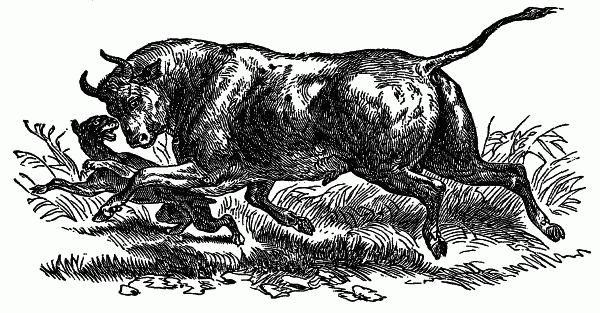
THE MAD BULL.
"The ergot, or spur of the hay, is confined to the June grass, as far as my observation extends; owing, probably, to its early maturity. Most other kinds of grass are cut before the seeds have matured sufficiently to produce the spur. I was suspicious of the foulness of the feed before I examined any hay, and have found the spur in the hay wherever the disease is found.
"Mr. Sanford, of Edinburgh, Ohio, purchased one half of a mow of hay from Mr. Bassett, of Randolph, which was removed to his farm in Randolph, eight miles distant. Of this hay, Mr. Sanford fed eleven cows some six or eight weeks. Mr. Bassett had been feeding the same to four cows. At about the same time, both heads began to show lameness. I visited Mr. S. after he had lost six cows, and examined the remaining five, four of which were lame and the other showed symptoms of the disease. He had two other cows, one of which was loaned to a neighbor, and the other was fed upon different hay, for convenience. The loaned cow was returned about the first of March,—the two then running with the ailing ones until the 24th of April, when I saw them sound and in good health.
"I then visited Mr. Bassett's stock, which I found infected with the same disease,—he having lost one, and the remaining three being lame, and much debilitated. The hoofs were sloughing off. Some of the same hay remained in the snow, which, upon examination, exhibited an abundance of the spur. Upon inquiry, I found that no such disease existed between the two farms, or in the neighborhood of either Mr. S. or Mr. B. The peculiarity of this circumstance at once swept away the last vestige of doubt from my mind. Mr. E. Chapman, of Rootstown, accompanied me, and can vouch for the correctness of these statements.
"He hooted at my opinions, asserting that he understood the disease, and that it was caused by the freezing of the feet. He has since, however, abandoned that idea, and honestly 'acknowledged the corn.' This ergot is regarded by some as a parasitic fungus, formed in other grains, an abundant vegeto-animal substance, and much disposed to putrefaction. We appear to be in the dark regarding its real composition. The little which has been written upon the subject, appears to be founded upon hypothesis, and that the most obscure. The articles to which I refer may differ in quality or property to a considerable extent, and we may forever remain in the dark, unless chemical investigation be instituted.
"In this particular disease, there appears to be singularity in the symptoms through all its various stages, which is likely to originate in the peculiarity of the cause which produces them. The effects and symptoms arising from the continued use of the ergot of rye, as manifested in the human system, have been but briefly hinted at by authors, and, probably, some of them are only reasonable conjectures. All they say is, that it produces violent headache, spaculation in the extremities, and death. Hitherto, its effects upon the inferior animal have been subjected to no investigation, and its peculiarity in the symptoms, differing from like phenomena by other causes, may yet be demonstrated. I am not alone in my opinion of this disease. I have taken counsel of those whose judgment cannot be questioned. Whatever difference of opinion exists is attributable to a want of investigation, and it will continue to exist until this singular phenomenon is clearly accounted for. Every opinion should be thoroughly criticized till facts are obtained. Every man's opinion is sacred to himself, but we should yield to conviction.
"Two classes of this disease are exhibited: one, of irritation, and the other, of debility; one, an acute, the other, a chronic form. The point at which it assumes the chronic form is between congestion and gangrene. By close observation we can discover these to be different and higher degrees of the same disease. All subsequent degrees are dependent upon the first.
"The first symptom, or degree, is, probably, an attack upon the systematic circulation, produced by a certain medicinal and deleterious property existing in the ergot, and communicated to the blood through the absorption of the tongue. This is more evident from the fact that the digestive organs retain their normal condition till the last stages of the chronic form. The blood in the first two stages is healthy, and the peculiar influence is only apparent in the subsequent stages; as evidenced by the fact that the muscles and general good appearance, as well as life itself, last longer than could be possible, if this deleterious influence were exhausted upon the digestive organs and the blood, in its first stages. And, as we suppose that fever and congestion constitute an attack upon the red blood, which is exhibited by hurried pulsation, we might rationally infer that the next degree would be gangrene of the globule, causing sloughing, the same as if it were carried to the muscles, or surface. This sloughing of the globule would be the same as if exhibited on any other part of the organization, for the fibrin is identical with muscle, as albumen is identical with the white of an egg; and since congestion is the forerunner of gangrene at the extremities, or on the surface, so fever and quick pulsation are the forerunners of congestion of the blood. Gangrene cannot ensue without obstruction in the blood-vessels; and congestion cannot take place without obstruction in that which sustains the globule. As gangrene, then, is the first stage of decomposition of animal matter, so is congestion the first stage of decomposition of the globule; and as mortification is death in the organized body, so is congestion death in the organized globule.
"It appears evident that this disease, in all its forms and degrees of intensity, seeks vent or release; in other words, Nature conflicting with it, throws it off its track, or balance, and offers means of escape, or shows it a door by which it may make its exit. In the first stage of the disease, the dermoid (skin) tissues make the effort. In the inflammatory, the serous, and the congestive, the mucous gangrene seeks vent; if obtained, mortification is prevented; if not, mortification directly supervenes, and death terminates the case.
"In the case to which I refer, observation confirms my opinion that absolute mortification without vent determines the gangrene of the blood, and is hardly curable; but that gangrene's finding vent determines it to be curable, and the recovery highly probable."
EPIZOÖTIC CATARRH.
Catarrh frequently assumes an epizoötic form of a very virulent character, originating spontaneously and extending over a large section of country at or about the same time. A cold spring succeeding a mild winter, is peculiarly productive of malignant catarrh. This is one of the most distressing and fatal diseases to which cattle are subject.
Symptoms.—The animal appears dull, and unwilling to move about, staggering when forced to do so; obstinate costiveness is usually one of the earliest symptoms, succeeded by diarrhœa, which is equally difficult of management; sometimes, however, diarrhœa is present from the first; the animal loses flesh rapidly; the coat is staring; appetite is lost; tumors form about the head, neck, back, and joints, which appear to be filled with air, and upon pressure cause a crepitating sound; saliva flows from the mouth, becoming very fetid as the disease progresses. The animal always dies of putrefaction.
Treatment.—This disease should be treated early, or not at all. Good nursing is very essential. When costiveness is present, give Barbadoes aloes, one ounce; croton-oil, ten drops; mix together; or give one pint of linseed-oil, to which add from ten to twenty drops of castor-oil. If the bowels are not open in twenty-four hours, give four ounces of sulphate of magnesia every six hours until they are opened. Follow this with tincture of aconite, ten drops in water, every four hours, until the fever has abated.
Bleeding has been recommended by some writers; but the author has failed to experience any benefit from resorting to it, but, on the contrary, has seen much injury result from the use—or, rather, the abuse—of the lancet. He is, indeed, inclined to attribute much of the fatality attending this disease to indiscriminate blood-letting.
When much debility exists, the animal should be sustained by tonics and stimulants. One ounce of nitric ether and half an ounce of tincture of opium, given in a little water, will be found beneficial. It should be given twice a day. Pulverized gentian-root, one ounce; Jamaica ginger, half an ounce; pulverized cloves, half an ounce; mixed, and divided into four powders, one to be given at night and at morning; will be found useful, in place of the opium and ether.
FARDEL.
This disease is properly known by the name of clue-bound. The manyplus, or omasum (third stomach), frequently becomes so choked up with food that it is hard and dry, and the operation of the digestive organs is very seriously impaired. The animal eats voraciously, for a time, but stops suddenly and trembles; the countenance assumes a peculiarly haggard appearance; there is a wild expression of the eye; a foaming at the mouth; a tendency to pitch forward, and at times a falling head-foremost to the ground. Occasionally, the symptoms are very active, speedily terminating in death. There are few diseases of a constitutional character in which the stomach is not, more or less, sympathetically involved.
"Toward the end of September, 1746, a great number of cows died at Osterwich, in the principality of Halberstadt. Lieberkuhn, a celebrated physician,—there were no veterinary surgeons at that time,—was sent to examine into the nature of the disease, which was supposed to be one of the species of murrain that was then committing such ravages among the cattle in various parts of the Continent. There were none of the tumors, or pestilential buboes, that, in an earlier or later period of the malady, usually accompanied and characterized murrain; but upon inspection of the dead bodies, considerable peritoneal inflammation was found; the first and second stomachs were filled with food, but the third stomach was the palpable seat of the disease; its leaves were black and gangrened. The mass contained between the leaves was black, dry, and so hard that it could scarcely be cut with a scalpel. It intercepted the passage of the food from the first two stomachs to the fourth; and this latter stomach was empty and much inflamed. Neither the heart, nor the lungs, nor the intestines exhibited any trace of disease. Twelve cows were opened, and the appearances were nearly the same in all of them."
Treatment.—Give one and a half pounds of Epsom-salts, dissolved in three pints of water; or one quart of potash, three times daily, dissolved in water, will be found useful in this disease.
FOUL IN THE FOOT.
This is caused by hard or irritating substances making their way in between the claws of the foot, causing inflammation, and sometimes ulceration, in the parts. The pasterns swell, and the animal becomes lame.
The foot should be thoroughly washed, and all foreign substances removed. A pledget of tow, saturated with tar and sprinkled with powdered sulphate of copper, should be inserted between the claws. This usually requires but one or two applications.
GARGET.
This is a hard, knotty condition of the udder, which sometimes follows calving, in consequence of the sudden distention of the bag with milk; and the inflammation which supervenes causes a congealed or coagulated condition of the milk to take place, of which, if neglected, suppuration and abscesses are the result.
Treatment.—Let the calf suck the dam as speedily as possible, and, if the hardness is not then removed, foment the udder with warm water; after which, wipe it dry, and apply to the entire surface melted lard as hot as the animal will bear. This is, generally, all that is required, the most obstinate cases yielding to it. If abscesses form, they should be lanced.
GASTRO-ENTERITIS.
This disease—otherwise known as wood-evil, or moor-ill—arises from eating the buds of oak, young ash, and other trees, which are of a very highly stimulating or irritating character. As the intestinal canal is liable to inflammatory action from irritant substances admitted into it, animals are found to become diseased from eating too freely of these vegetable substances.
Symptoms.—Loss of appetite and suspended rumination; mouth hot; skin dry; pulse from sixty to seventy; swelling and pain of the belly; obstinate constipation; fæces hard and covered with blood; urine of a strong odor, highly colored, and voided with difficulty.
Treatment.—The animal should be bled, and a strong purgative administered, followed by aconite and belladonna, as in enteritis. Injections of Castile-soap and water should be freely used; the application of the mustard, hartshorn, and water to the belly will also be found very beneficial.
HOOSE.
This disease—known also as catarrh—is occasionally the sequence of coryza, but more frequently it arises from an impure atmosphere; consequently, in cow-houses where animals are crowded together in numbers, it is most frequently found. Scanty provender, and of an inferior quality, is among the exciting causes of hoose, producing, as it does, a debilitated state of the system, which, upon exposure of the animal to cold, or wet, hastens the disorder. Some breeds of cattle are peculiarly liable to this disease, which, if not arrested in its early stage, runs on, involving the lungs, and frequently terminating in consumption. Of all our domestic animals, neat cattle are most subject to pulmonary diseases. This is attributable to the neglect and exposure which are far too often their lot. Butchers will testify that a large portion of all cattle slaughtered have abscesses and other diseases of the lungs.
Symptoms.—Loss of appetite; muzzle dry; coat rough, or staring; respiration quickened; horns hot; ears, nose, and legs cold; husky cough; pulse from sixty to seventy, small and thready; bowels frequently constipated.
Treatment.—Give one ounce of the following powders every six hours, until the bowels are opened: Barbadoes aloes, one and half ounces; nitrate of potassa, half an ounce; ginger, six drachms; mix and divide into six powders. Setons in the dewlap are often of great benefit.
HOOVE.
Hoove, or blown, so common, and often so speedily fatal in cattle, is the result of fermentation in the rumen, or paunch, in consequence of the animal's having eaten large quantities of wet grass, luxuriant clover, turnips, etc. An accumulation of gas is the result of this fermentation, which greatly disturbs the haunch and left side of the belly, causing much pain to the animal, and frequently threatening suffocation.
Treatment.—Drench the animal with one ounce of spirits of hartshorn in one quart of water, the object being to neutralize the gas which is present in the rumen; or, two ounces of table salt dissolved in one quart of water will be found very effectual. If these do not speedily give relief, an active purge should be given. Injections of soap and water should be freely used. If the case still proves obstinate, and the life of the animal is threatened, the paunch should be punctured. For this purpose, the trochar—an instrument specially adapted—should be used; but, in the absence of an instrument, an ordinary pocket-knife may be employed, taking care not to make a large opening. The proper point to operate is midway between the last rib and the prominent point of the hip-bone, about twelve inches from the centre of the back or loins. Few cases have a fatal termination where this operation has been properly performed.
HYDATIDS.
Worms in the brain occasionally occur, causing great uneasiness to the animal and generally proving fatal.
The symptoms are, loss of appetite; suspended rumination; a fevered condition of the system; horns and ears hot; respiration disturbed; coat staring, etc. No course of treatment will prove efficacious in this disease.
Pressure on the brain may occur from an accumulation of water, tumors, bruises, etc., in the cranial case. In either case, the same effects are produced as are observed in apoplexy.
INFLAMMATION OF THE BLADDER.
Inflammation of the bladder generally accompanies inflammation of the kidneys, though it is sometimes found disconnected and alone. It is occasionally caused by calculous concretions in the bladder,—which should be removed,—causing very acute abdominal pain to the animal. She makes frequent efforts to stale, passing but a few drops of urine at a time. The pulse is full and rapid; mouth clammy; nose dry; eyes bloodshot; appetite lost; moaning, and walking with a staggering gait.
Treatment.—Inject into the bladder one quart of tepid water, and from one to two ounces of tincture of opium mixed together. Give internally one of the following powders every hour until relieved; nitrate of potassa, one ounce; tartrate of antimony, and pulverized digitalis leaves, each one drachm; mix, and divide into six powders. Mucilaginous draughts should be freely given.
Rupture of the bladder sometimes occurs, but there are no symptoms by which it may be known; and, if there were, no service could be rendered in the way of repairing the injury; the animal must die.
INFLAMMATION OF THE HAW.
The ox, like the horse, has a membrane of semilunar form in the inner corner of the eye, which is capable of being thrown over the entire eyeball, for the purpose of cleansing the eye from any foreign substance which may get into it. This membrane is commonly called the haw, and is susceptible of attacks of inflammation, which cause it to swell, frequently even closing up the eye.
Treatment.—Give a dose of physic, and, if the animal is plethoric, extract a little blood from the vein on the same side as the affected eye. Apply to the eye either of the following washes: tincture of opium, one ounce; rain-water, one pint; or, tincture of aconite, one drachm, to one pint of water. Bathe two or three times a day.
INFLAMMATION OF THE KIDNEYS.
This disease—sometimes called nephritis—occurs occasionally in cattle in consequence of their eating bad or unwholesome food, or of the abuse of diuretics, etc.
The symptoms are very insidious in their approach. The loins are very tender upon pressure; the urine is voided in small quantities. As the disease advances, the symptoms become more marked and acute. The animal is dull, and feeds daintily; the evacuation of urine is attended with increased pain, and the urine is highly colored and bloody; the nose is dry; the horns, ears, and extremities are cold; respiration hurried; the pulse full, hard, and throbbing.
Treatment.—Give one pint of linseed-oil and ten drops of castor-oil, mixed together; follow this with small doses of salts once a day, for three or four days; give injections of water, one half a gallon to two ounces of tincture of arnica. Mustard applications to the loins are also very useful.
INFLAMMATION OF THE LIVER.
Diseases of the liver are of very common occurrence,—a fact with which all beef-butchers are familiar. Perhaps no organ in the animal economy is so liable to disease. The obscurity of the symptoms and the good condition of the animal prevent its discovery, as a general thing, during its lifetime. When, however, the disease assumes an active form,—known as the yellows, jaundice, or inflammation of the liver,—the symptoms are more readily detected.
Symptoms.—A yellowish color of the eye will be observed; skin, urine, etc., highly colored; soreness, on pressure, on the right side; loss of appetite; dullness; constipation of the bowels, etc.
Treatment.—Calomel is the most reliable medicine known to practitioners for diseases of the liver. Its abuse, however, has brought it into disrepute. Yet, as with ordinary care it may be advantageously used, we will prescribe it as that upon which the most dependence is to be placed, and in doing so, will endeavor to have it used safely. Bleeding has been recommended: but the author has never found any benefit resulting. Give Epsom-salts, in doses of four ounces each, every night, with one scruple of calomel, until the animal is relieved. Mustard and water should be frequently applied to the right side, and well rubbed in.
LARYNGITIS.
This disease is of rare occurrence in cattle. In it, the mucous membrane lining the larynx is in a very irritable condition; the least pressure upon the parts affected causes intensely excruciating pain; the respiration becomes quick, painful, and laborious; the animal often appears to be hungry, yet does not eat much, in consequence of the pain occasioned by the act of swallowing.
Treatment.—Apply to the throat externally strong mustard, mixed, with equal parts of aqua ammonia and water, to a thin paste, every hour, until it produces an effect upon the skin; sponging the parts each time with warm water before applying the mustard. The animal should not be bled. Give upon the tongue, or in drink, half-drachm doses of nitrate of potassa, every three or four hours, until relief is obtained. If suffocation threatens, the operation of tracheotomy is the only resort.
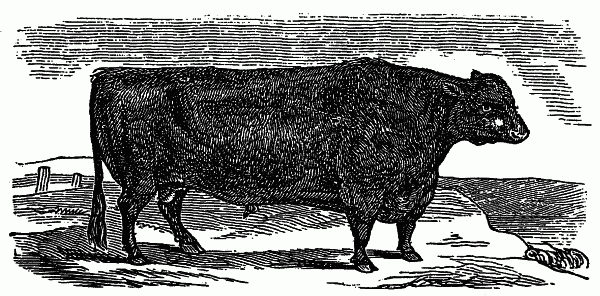
AN ABERDEENSHIRE POLLED BULL.
Cloths saturated with cold water, wrapped around the neck so as to cover the larynx, frequently afford relief. A purgative will also be found useful.
LICE.
Cattle are very subject to lice, particularly when they are neglected, half-starved, and in poor condition. Good care and good feeding—in connection with the treatment recommended in mange, to which the reader is referred—will comprise all that is requisite.
MANGE.
Mange, or leprosy, is one of the most unpleasant and difficult diseases to manage of all the ailments to which cattle are subject requiring the nicest care and attention to render it easy of cure. An animal badly nursed will not, under the most skillful treatment, quickly recover. Its causes are in the main, due to poor food, which produces a debilitated condition of the system, and in connection with a want of cleanliness, causes a development of the acari, or minute insects, exciting very great irritation upon the skin and causing the cow to rub herself against every object with which she comes in contact. The hair falls off; a scurfy appearance of the skin is perceptible; and the animal is poor in condition and in milk. The great trouble in treating this disease springs from its contagious character; for, no sooner is the animal, oftentimes, once free from the acari than it comes in contact with some object against which it has previously been rubbing, when the acari which were left upon that object are again brought in contact with the animal, and the disease is reproduced. If, immediately after the proper applications are made, the animal is removed to other quarters, and not allowed to return to the former ones for six or eight weeks, there is, generally speaking, but little trouble in treating the disease.
Take the animal upon a warm, sunny day, and with a scrubbing-brush cleanse the skin thoroughly with Castile-soap and water; when dry, apply in the same manner the following mixture; white hellebore, one ounce; sulphur flower, three ounces; gas-water, one quart; mix all well together. One or two applications are, generally, all that will be required. Give internally one of the following powders in the feed, night and morning: flowers of sulphur, two ounces; black antimony, one ounce; nitrate of potassa, one ounce; mix, and divide into eight powders.
MURRAIN.
This is one of the most malignant diseases to which cattle are liable. Fortunately, however, true murrain is comparatively rare in this great stock-raising country.
The entire system seems to partake of the disease. The first indication of its approach is a feverish condition of the system, attended with a frequent and painful cough; the pulse is small, hard, and rapid. As the disease advances, the respiration becomes disturbed; the flanks heave; vesicular eruption is observed upon the teats, mouth, and feet; the horns are cold; the animal is sometimes lame; constipation and, sometimes, diarrhœa are accompanying symptoms; fæces black and fetid; the eyes weep and become much swollen; great tenderness along the spine; a brown or bloody discharge from the nose and mouth; the animal moans incessantly, grinds his teeth, rarely lies down, but to get up again quickly; finally, the breath becomes very offensive; tumors make their appearance in various parts of the body, which, in favorable cases, suppurate, and discharge a fetid matter.
Treatment.—Give one fourth of a pound of Epsom-salts, with one drachm of Jamaica ginger, twice a day, for two or three days. A bottle of porter, twice a day, will be found serviceable. Very little medicine is required internally in this disease, but much depends upon good nursing. External applications are chiefly to be depended upon. A solution of chloride of lime should be applied to the eruptions, or a solution of the chloride of zinc, twenty grains to an ounce of water; or, of sulphate of zinc, two drachms to a pint of water; or pulverized charcoal applied to the parts will be found useful.
NAVEL-ILL.
Inflammation of the navel in calves occasionally occurs, causing redness, pain, and sudden swelling in the part affected. This disease, if not promptly attended to, speedily carries off the creature.
Treatment.—Foment the part well with warm hop-tea; after which, the application of a cloth, well saturated with lead-water and secured by bandages, should be applied. Internally, doses of Epsom-salts, of two ounces each, dissolved in half a pint of water, should be given until the bowels are acted upon. After the inflammation has subsided, to counteract the weakness which may follow, give a bottle of porter two or three times a day.
OBSTRUCTIONS IN THE ŒSOPHAGUS.
Choking in cattle is of common occurrence, in consequence of turnips, potatoes, carrots, or other hard substances, becoming lodged in the œsophagus, or gullet.
These obstructions can sometimes be removed by careful manipulations with the hand; but, where this can not be accomplished, the flexible probang should be employed. This is a long India-rubber tube, with a whalebone stillet running through it, so as to stiffen it when in use. This instrument is passed down the animal's throat, and the offending substance is thus pushed down into the stomach.
OPEN JOINTS.
Opening of the joint generally results from accidents, from puncturing with sharp substances, from kicks, blows, etc. These injuries cause considerable nervous irritation in the system, and sometimes cause lock-jaw and death.
Treatment.—Close up the wound as speedily as possible. The firing-iron will sometimes answer the purpose very well. The author depends more upon the application of collodion—as recommended in his work upon "The Horse and His Diseases" for the same trouble—than upon any other remedy. It requires care in its application, in order to make it adhere firmly. Shoemakers'-wax, melted and applied, answers a very good purpose.
PARTURITION.
In natural labor—as has been suggested in a former part of this work—the aid of man is rarely required in bringing away the calf. But it not infrequently happens that, from malformation or wrong presentation, our assistance is required in order to deliver the animal.
The brute force, which has been far too often heretofore resorted to, should no longer be tolerated, since the lives of many valuable animals have been sacrificed by such treatment. Very often, by gentle manipulation with the greased hand, the womb can be so dilated as to afford a comparatively easy exit for the fœtus.
If, however, the calf is presented wrong, it must be pushed back and placed in its proper position, if possible. In natural labor, the fore-legs, with the head lying between them, are presented; in which position—unless deformity, either in the pelvis of the cow, or in the fœtus, exists—the calf is passed with little difficulty, and without assistance. It sometimes happens that the head of the fœtus is turned backward. When this happens, the attendant should at once strip himself to the waist, bathe his arms, and hands with a little sweet-oil, or lard, and introduce them into the vagina, placing a cord around both fore-feet, and then, pushing them back, search for the head, which is to be brought forward to its proper position. The feet are next to be brought up with it. No force should be used, except when the cow herself makes the effort to expel the calf; otherwise, more harm than good may be done.
A case of this kind recently occurred in the author's practice, being the third within a year. The subject was a cow belonging to William Hance, Esq., of Bordentown, New Jersey. After she had been in labor for some twenty hours, he was called upon to see her. Upon inquiry, he found that several persons had been trying, without success, to relieve her. She was very much prostrated, and would, doubtless, have died within two or three hours, had no relief been afforded. The legs of the fœtus protruded as far as the knees; the head was turned backward, and with the body, pressed firmly into the vagina, so that it was impossible to return it, or to bring the head forward. The operation of embryotomy was, therefore, at once performed, by cutting away the right shoulder, which enabled the operator, with the aid of his appropriate hooks, to bring the head forward, when the calf came away without further trouble,—the whole operation not requiring fifteen minutes. The uterus was then washed out, and the animal placed in as comfortable a position as possible, and a stimulating draught given, composed of two ounces of nitric ether, one ounce of tincture of opium, and a half pint of water. This was followed with a few doses of Fleming's tincture of aconite, ten drops in a little water, every few hours. In a few days the animal had entirely recovered.
Occasionally, the head comes first, or the head and one leg. In such cases, a cord should be slipped around the jaw and leg, and these then pushed back, so as to allow the other leg to be brought up. When this cannot be done, the fœtus can, in most cases, be removed in the original position.
Breech, side, back, and other presentations sometimes occur; in all of which instances, the fœtus must be turned in such a position that it can be brought away with as little trouble as possible. When this cannot be accomplished, the only resort is embryotomy, or cutting up of the fœtus, which operation can only be safely performed by the qualified veterinary surgeon.
Since writing the above, another case has occurred in the author's practice. The cow—belonging to Samuel Barton, Esq., near Bordentown, New Jersey—had been in labor some eighteen hours; upon an examination of the animal, the calf was found to be very much deformed, presenting backwards,—one of the hind-legs having been pulled off by the person or persons assisting her previous to the author's arrival. Finding it impossible to deliver her in the usual way, embryotomy was in this instance employed. By this means, after taking out the intestines, lungs, etc., of the fœtus, and cutting away its hind-quarters, the fore-parts were brought away. The head presented a singular appearance; the under jaw was so twisted as to bring the front teeth on the side of the face; the spinal column or back-bone, was turned twice around, resembling a spiral string; the front legs were over the back; the ribs were much contorted; the hind-parts were as much deformed; and, taken altogether, the deformity was the most singular which has been brought under the author's observation.
Free Martins.—It has long been supposed by stockbreeders, that if a cow produce twins, one of which is a male and the other a female, the female is incapable of producing young, but that the male may be a useful animal for breeding purposes. Many instances have occurred when the twin sister of a bull has never shown the least desire for the male.
This indifference to sexual commerce arises, doubtless, from the animal's being but imperfectly developed in the organs of generation. This fact has been established by the investigations of Mr. John Hunter, who had three of these animals slaughtered for anatomical examination. The result is thus reported: "The external parts were rather smaller than is customary in the cow. The vagina passed on, as in the cow, to the opening of the urethra, and then it began to contract into a small canal, which passed on into the division of the uterus into the two horns; each horn passed along the edge of the broad ligament laterally toward the ovaria.
"At the termination of these horns were placed both the ovaries and the testicles. Both were nearly of the same size, which was about as large as a small nutmeg. To the ovaria, I could not find any Fallopian tube.
"To the testicles were vasa deferentia, but they were imperfect. The left one did not come near the testicle; the right one only came close to it, but did not terminate in the body called the epididymis. They were both pervious and opened into the vagina, near the opening of the urethra.
"On the posterior surface of the bladder, or between the uterus and the bladder, were the two bags, called vesiculæ seminales in the male, but much smaller than they are in the bull. The ducts opened along with the vasa deferentia. This animal, then, had a mixture of all the parts, but all of them were imperfect."
Well-authenticated cases have, however, occurred where the female has bred, and the offspring proved to be good milkers. There are several instances on record of cows' giving birth to three, four, and even five calves at a time. There were on exhibition, in 1862, at Bordentown, New Jersey, three free martins, two sisters and a brother, which were beautiful animals. These were from a cow belonging to Mr. Joab Mershon, residing on Biles Island, situated in the Delaware River, a short distance above Bordentown. They were calved November 1st, 1858, and were therefore nearly four years of age. They had never shown the least desire for copulation. Their aggregate weight was 4300 pounds.
We extract the following from the London Veterinarian, for 1854:—"A cow, belonging to Mr. John Marshall, of Repton, on Wednesday last, gave birth to five, live healthy calves, all of which are, at the time I write, alive and vigorous, and have every appearance of continuing so. They are all nearly of a size, and are larger and stronger than could be supposed. Four of them are bull-calves.
"The dam is by no means a large one, is eleven years old, of a mongrel breed, and has never produced more than one offspring at any previous gestation. I saw her two days after she had calved, at which time she was ruminating, and did not manifest any unusual symptoms of exhaustion. I may mention that the first four calves presented naturally; the fifth was a breech-presentation."
Cleansing.—The placenta, or after-birth, by which the fœtus is nourished while in embryo, should be removed soon after calving. Generally, it will come away without any assistance. This is what is called "cleansing after calving." When, however, it remains for some time, its function having been performed, it becomes a foreign body, exciting uterine contractions, and therefore injurious. The sooner, then, it is removed, the better for the animal as well as the owner. To accomplish this, the hand should be introduced, and, by pulling gently in various directions, it will soon yield and come away. Should it be allowed to remain, it rapidly decomposes, producing a low, feverish condition of the system, which greatly interferes with the general health of the animal.
Inversion of the Uterus.—The uterus is sometimes turned inside out after calving. This is, generally, the result of debility, or severe labor. The uterus should be replaced as carefully as possible with the hands, care being taken that no dirt, straw, or other foreign substance adheres to it. Should it again be expelled, it would be advisable to quiet the system by the use of an anæsthetic, as chloroform, or—which is much safer—chloric ether. As soon as the animal is under the influence of this, the uterus may be again replaced. The hind-quarters should be raised as high as possible, in order to favor its retention. The animal should have a little gruel and a bottle of porter given to her every five or six hours, and the vulva should be bathed frequently with cold water.
PHRENITIS.
Inflammation of the brain is one of those dreadful diseases to which all animals are liable. It is known to the farmer as frenzy, mad staggers, etc.
The active symptoms are preceded by stupor; the animal stubbornly stands in one position; the eyes are full, red, and fiery; respiration rapid; delirium soon succeeds; the animal, bellowing, dashes wildly about, and seems bent on mischief, rushing madly at every object which comes in its way.
The causes of this disease are overwork in warm weather, a plethoric condition of the system, and too stimulating food. Prof. Gamgee, of the Edinburgh Veterinary College, relates a case resulting from the presence within the external meatus of a mass of concrete cerumen, or wax, which induced inflammation of the ear, extending to the brain.
Treatment.—As this is attended with considerable risk, unless it is taken prior to the frenzied stage, bleeding almost to fainting should be resorted to, and followed by a brisk purge. Take one ounce of Barbadoes aloes, and ten to fifteen drops of Croton-oil; mix the aloes with one pint of water and the oil, using the mixture as a drench. One pound of Epsom-salts will answer the purpose very well, in cases where the aloes and oil cannot be readily obtained. Application of bags of broken ice to the head, is very beneficial. Spirits of turpentine, or mustard, together with spirits of hartshorn and water should be well rubbed in along the spine, from the neck to the tail.
PLEURISY.
This is an inflammation of the pleura, or the serous membrane which lines the cavity of the chest, and which is deflected over the lungs. Inflammation of this membrane rarely occurs in a pure form, but is more generally associated with inflammation of the tissue of the lungs. If this disease is not attended to at an early period, its usual termination is in hydrothorax, or dropsy of the chest. The same causes which produce inflammation of the lungs, of the bronchia, and of the other respiratory organs, produce also pleurisy.
Symptoms.—The respiration is quick, short, and painful; pressure between the ribs produces much pain; a low, short, painful cough is present; the respiratory murmur is much diminished,—in fact, it is scarcely audible. This condition is rapidly followed by effusion, which may be detected from the dullness of the sounds, on applying the ear to the lower part of the lungs. The febrile symptoms disappear; the animal for a few days appears to improve, but soon becomes weak, languid, and often exhausted from the slightest exertion.
Treatment.—The same treatment in the early stage is enjoined as in inflammatory pneumonia, which the reader will consult—counter-irritation and purgatives. Bleeding never should be resorted to. When effusion takes place, it is necessary to puncture the sides with a trochar, and draw away the fluid, giving internally one of the following purges three times a day: rosin, eight ounces; saltpetre, two ounces, mix, and divide into eight powders. Half-drachm doses of the iodide of potash, dissolved in water, to be given three times daily, will be found useful in this disease.
PLEURO-PNEUMONIA.
This disease, as its name implies, is an inflammatory condition of the lungs and the pleura, or the enveloping membrane of the lungs and the lining membrane of the chest. It is sometimes called contagious, infectious, and epizoötic pleuro-pneumonia,—contagious or infectious, from its supposed property of transmission from the diseased to the healthy animal.
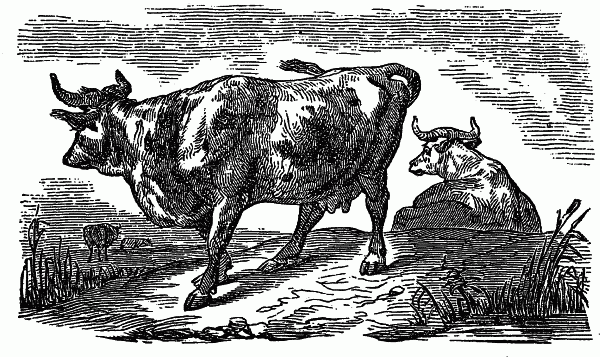
TAKING AN OBSERVATION.
A contagious character the author is not ready to assign to it,—contagious, as he understands it, being strictly applicable to those diseases which depend upon actual contact with the poison that it may be communicated from one animal to another. This does not necessarily imply the actual touching of the animals themselves; for it may be communicated from the poison left in the trough, or other places where the diseased animal has been brought in contact with some object, as is often the case in glanders in the horse; the matter discharged from the nose, and left upon the manger, readily communicating that disease to healthy animals coming in contact with it. Contagious diseases, therefore, travel very slowly, starting, as they do, at one point, and gradually spreading over a large district, or section of country.
This disease is, however, regarded by the author as infectious; by which term is meant that it is capable of being communicated from the diseased to the healthy animal through the medium of the air, which has become contaminated by the exhalations of poisonous matter. The ability to inoculate other animals in this way is necessarily confined to a limited space, sometimes not extending more than a few yards. Infectious diseases, accordingly, spread with more rapidity than contagious ones, and are, consequently, more to be dreaded; since we can avoid the one with comparatively little trouble, while the other often steals upon us when we regard ourselves as beyond its influence, carrying death and destruction in its course.
The term by which this disease is known, is a misnomer. Pleuro-pneumonia proper is neither a contagious, nor an infectious disease; hence, the denial of medical men that this so-called pleuro-pneumonia is a contagious, or infectious disease, has been the means of unnecessarily exposing many animals to its poisonous influence.
In the Recuéil de Médécine Vétérinaire, for 1833, will be found a very interesting description of this fatal malady. The author, M. Lecoy, Assistant Professor at the Veterinary School of Lyons, France, says: "There are few districts in the arrondissement of Avesnes where more cattle are fattened than in that of Soire-le-Chateau. The farmers being unable to obtain a sufficient supply of cattle in the district, are obliged to purchase the greater part of them from other provinces; and they procure a great number for grazing from Franche Comté. The cattle of this country are very handsome; their forms are compact; they fatten rapidly; and they are a kind of cattle from which the grazer would derive most advantage, were it not that certain diseases absorb, by the loss of some of the animals, the profits of the rest of the herd. Amongst the diseases which most frequently attack the cattle which are brought from the North, there is one very prevalent in some years, and which is the more to be dreaded as it is generally incurable; and the slaughter of the animal, before he is perceptibly wasted, is the only means by which the farmer can avoid losing the whole value of the beast.
"This disease is chronic pleuro-pneumonia. The symptoms are scarcely recognizable at first, and often the beast is ill for a long time without its being perceived. He fattens well, and when he is slaughtered the owner is astonished to find scarcely half of the lungs capable of discharging the function of respiration. When, however, the ox has not sufficient strength of constitution to resist the ravages of disease, the first symptom which is observed is diminution, or irregularity of appetite. Soon afterwards, a frequent, dry cough is heard, which becomes feeble and painful as the disease proceeds. The dorso-lumbar portion of the spine (loins) grows tender; the animal flinches when the part is pressed upon, and utters a peculiar groan, or grunt, which the graziers regard as decisive of the malady.
"Quickly after this, the movements of the flanks become irregular and accelerated, and the act of respiration is accompanied by a kind of balancing motion of the whole body. The sides of the chest become as tender as the loins, or more so; for the animal immediately throws himself down, if pressed upon with any force. The elbows become, in many subjects, more and more separated from the sides of the chest. The pulse is smaller than natural, and not considerably increased. The muzzle is hot and dry, alternately. The animal lies down as in a healthy state, but rumination is partially or entirely suspended. The fæces are harder than they should be; the urine is of its natural color and quantity; the mouth is often dry; and the horns and ears retain their natural temperature.
"This first stage of the disease sometimes continues during a month, or more, and then, if the animal is to recover, or at least, apparently so, the symptoms gradually disappear. First of all, the appetite returns, and the beast begins to acquire a little flesh. The proprietor should then make haste and get rid of him; for it is very rare that the malady, however it may be palliated for a while, does not reappear with greater intensity than before.
"In most cases, the disease continues to pursue its course toward its termination without any remission,—every symptom gradually increasing in intensity. The respiration becomes more painful; the head is more extended; the eyes are brilliant; every expiration is accompanied with a grunt, and by a kind of puckering of the angles of the lips; the cough becomes smaller, more suppressed, and more painful; the tongue protrudes from the mouth, and a frothy mucus is abundantly discharged; the breath becomes offensive; a purulent fluid of a bloody color escapes from the nostrils; diarrhœa, profuse and fetid, succeeds to the constipation; the animal becomes rapidly weaker; he is a complete skeleton, and at length he dies.
"Examination after death discloses slight traces of inflammation in the intestines, discoloration of the liver, and a hard, dry substance contained in the manyplus. The lungs adhere to the sides and to the diaphragm by numerous bands, evidently old and very firm. The substance of the lungs often presents a reddish-gray hepatization throughout almost its whole extent. At other times, there are tubercles in almost every state of hardness, and in that of suppuration. The portion of the lungs that is not hepatized is red, and gorged with blood. Besides the old adhesions, there are numerous ones of recent date. The pleura is not much reddened, but by its thickness in some points, its adhesion in others, and the effusion of a serous fluid, it proves how much and how long it has participated in the inflammatory action. The trachea and the bronchia are slightly red, and the right side of the head is gorged with blood.
"In a subject in which, during life, I could scarcely feel the beating of the heart, I found the whole of the left lobe of the lungs adhering to the sides, and completely hepatized. In another, that had presented no sign of disease of the chest, and that for some days before his death vomited the little fodder which he could take, the whole of that portion of the œsophagus that passed through the chest was surrounded with dense false membranes, of a yellowish hue, ranging from light to dark, and being in some parts more than an inch in thickness, and adhering closely to the muscular membrane of the tube, without allowing any trace to be perceived of that portion of the mediastinal pleura on which this unnatural covering was fixed and developed.
"The cattle purchased in Franche Comté are brought to Avesnes at two periods of the year—in autumn and in the spring. Those which are brought in autumn are much more subject to the disease than those which have arrived in the spring; and it almost always happens that the years in which it shows itself most generally are those in which the weather was most unfavorable while the cattle were on the road. The journey is performed by two different routes,—through Lorraine and through Champagne,—and the disease frequently appears in cattle that have arrived by one of these routes. The manner in which the beasts are treated, on their arrival, may contribute not a little to the development of the malady. These animals, which have been driven long distances in bad weather, and frequently half starved, arrived famished, and therefore the more fatigued, and some of them lame. Calculating on their ravenous appetite, the graziers, instead of giving them wholesome food, make them consume the worst that the farm contains,—musty and mouldy fodder; and it is usually by the cough, which the eating of such food necessarily produces, that the disease is discovered and first developed.
"Is chronic pleuro-pneumonia contagious? The farmers believe that it is, and I am partly of their opinion. When an animal falls sick in the pasture, the others, after his removal, go and smell at the grass where he has lain, and which he has covered with his saliva, and, after that, new cases succeed to the first. It is true that this fact is not conclusive, since the disease also appears in a great number of animals that have been widely separated from each other. But I have myself seen three cases in which the cattle of the country, perfectly well before, have fallen ill, and died with the same symptoms, excepting that they have been more acute, after they have been kept with cattle affected with this disease. This circumstance inclines me to think that the disease is contagious; or, at least, that, in the progress of it, the breath infects the cow-house in which there are other animals already predisposed to the same disease. I am induced to believe that most of the serious internal diseases are communicated in this manner, and particularly those which affect the organs of respiration, when the animals are shut up in close, low, and badly-ventilated cow-houses." [Rec. de Méd. Vét. Mai, 1833.]
No malady can be more terrible and ruinous than this among dairy-stock; and its spread all over the country, together with its continuance with scarcely any abatement, must be attributed to the combination of various causes. The chief are: first, the very contagious or infectious nature of the disorder; second, inattention on the part of Government to the importation and subsequent sale of diseased animals; and, third, the recklessness of purchasers of dairy or feeding cattle.
This disease may be defined as an acute inflammation of the organs of the chest, with the development of a peculiar and characteristic poison, which is the active element of infection or contagion. It is a disease peculiar to the cattle tribe, notwithstanding occasional assertions regarding observations of the disease among horses, sheep, and other animals,—which pretended observations have not been well attested.
The infectious, or contagious nature of this virulent malady is incontestibly substantiated by an overwhelming amount of evidence, which cannot be adduced at full length here, but which may be classified under the following heads: first, the constant spreading of the disease from countries in which it rages to others which, previously to the importation of diseased animals, had been perfectly free from it. This may be proved in the case of England, into which country it was carried in 1842, by affected animals from Holland. Twelve months after, it spread from England to Scotland, by means of some cattle sold at All-Hallow Fair, and it was only twelve months afterward that cattle imported as far north as Inverness took the disease there. Lately, a cow taken from England to Australia was observed to be diseased upon landing, and the evil results were limited to her owner's stock, who gave the alarm, and ensured an effectual remedy against a wider spread. Besides, the recent importation of pleuro-pneumonia into the United States from Holland appears to have awakened our agricultural press generally, and to have convinced them of the stubborn fact that our cattle have been decimated by a fearfully infectious, through probably preventable, plague. A letter from this country to an English author says: "Its (pleuro-pneumonia's) contagious character seems to be settled beyond a doubt, though some of the V.S. practitioners deny it, which is almost as reasonable as it would be to deny any other well-authenticated historic fact. Every case of the disease is traceable to one of two sources; either to Mr. Chenery's stock in Belmont (near Boston, Massachusetts), into which the disease was introduced by his importation of four Dutch cows from Holland, which arrived here the 23d of last May; or else to one of the three calves which he sold to a farmer in North Brookfield, Massachusetts, last June."
2dly. Apart from the importation into countries, we have this certain proof—to which special attention was drawn several years ago—that cattle-dealers' farms, and public markets, constitute the busy centres of infection. Most anxious and careful inquiries have established the proposition that in breeding-districts, where the proprietors of extensive dairies—as in Dumfries, Scotland, and other places—abstain from buying, except from their neighbors, who have never had diseases of the lungs amongst their stock, pleuro-pneumonia has not been seen. There is a wide district in the Vicinity of Abington, England, and in the parish of Crawford, which has not been visited by this plague, with the exception of two farms, into which market-cattle had been imported and thus brought the disease.
3dly. In 1854 appeared a Report of the Researches on Pleuro-Pneumonia, by a scientific commission, instituted by the Minister of Agriculture in France. This very able pamphlet was edited by Prof. Bouley, of Alfort, France. The members of the commission belonged to the most eminent veterinarians and agriculturists in France. Magendie was President; Regnal, Secretary; besides Rayer, the renowned comparative pathologist; Yvart, the Inspector-General of the Imperial Veterinary Schools; Renault, Inspector of the Imperial Veterinary Schools; Delafond, Director of Alfort College; Bouley, Lassaigne, Baudemont, Doyére, Manny de Morny, and a few others representing the public. If such a commission were occasionally appointed in this country for similar purposes, how much light would be thrown on subjects of paramount importance to the agricultural community!
Conclusions arrived at by the commission are too important to be overlooked in this connection. The reader must peruse the Report itself, if he needs to satisfy himself as to the care taken in conducting the investigations: but the foregoing names sufficiently attest the indisputable nature of the facts alluded to.
In instituting its experiments, the commission had in view the solving of the following questions:—
1stly. Is the epizoötic pleuro-pneumonia of cattle susceptible of being transmitted from diseased to healthy animals by cohabitation?
2dly. In the event of such contagion's existing, would all the animals become affected, or what proportion would resist the disease?
3dly. Amongst the animals attacked by the disease, how many recover, and under what circumstances? How many succumb?
4thly. Are there any animals of the ox species decidedly free from any susceptibility of being affected from the contagion of pleuro-pneumonia?
5thly. Do the animals, which have been once affected by a mild form of the disease, enjoy immunity from subsequent attacks?
6thly. Do the animals, which have once been affected by the disease in its active form, enjoy such immunity?
To determine these questions, the commission submitted at different times to the influence of cohabitation with diseased animals forty-six perfectly healthy ones, chosen from districts in which they had never been exposed to a similar influence.
Of these forty-six animals, twenty were experimented on at Pomeraye, two at Charentonneau, thirteen at Alfort, and eleven, in the fourth experiment, at Charentonneau.
Of this number, twenty-one animals resisted the disease when first submitted to the influence of cohabitation, ten suffered slightly, and fifteen took the disease. Of the fifteen affected, four died, and eleven recovered. Consequently, the animals which apparently escaped the disease at the first trial amounted to 45.65 per cent., and those affected to 21.73 per cent. Of these, 23.91 per cent. recovered, and 8.69 per cent. died. But the external appearances in some instances proved deceptive, and six of the eleven animals of the last experiment, which were regarded as having escaped free, were found, on being destroyed, to bear distinct evidence of having been affected. This, therefore, modifies the foregoing calculations, and the numbers should stand thus:—