Interpretation of Styles
Reading edition
ALDINE OR ITALIAN
Ornaments of solid face without any shading whatever, such as used by Aldus and other early Italian printers. The ornaments are of Arabic character. A style appropriate for early printed literature.
GROLIER
An interlaced framework of geometrical figures—circles, squares, and diamonds—with scrollwork running through it, the ornaments which are of Moresque character, generally azured in whole or in part, sometimes in outline only. Parts of the design are often studded with gold dots. Time, first half of the 16th century.
MAIOLI
A style prior to and contemporary with the early (Italian) examples of the Grolier. Generally composed of a framework of shields or medallions, with a design of scrollwork flowing through it. Portions of the design are usually studded with gold dots. Ornaments are of Moresque character.
ÈVE
A framework of various geometrical-shaped compartments linked together by interlaced circles; the centers of the compartments are filled with small floral ornaments, and the irregular spaces surrounding them, with circular scrolls and branches of laurel and palm. An elaborate style used at the end of the 16th and beginning of the 17th century.
MOSAIC
A design inlaid with different colors. The cover may be of any shade, but the style is especially effective when the cover is of white vellum in imitation of illuminated manuscripts.
LE GASCON
The distinguishing feature of this style is the dotted face of the ornaments instead of the continuous or solid line. In vogue the first half of the 17th century, immediately succeeding the period of Nicholas and Clovis Ève.
DEROME
This style has ornaments of a leafy character, with a more solid face, though lightly shaded by the graver and is best exemplified in borders. The ornaments are often styled Renaissance, being an entire change from the Gascon. Time, 18th century.
ROGER PAYNE
The ornaments of this style are easily identified, being free and flowing in stem and flower; whereas before Payne's time they had been stiff and formal. The honeysuckle is a customary ornament. The impressions of the tools are usually studded round with gold dots, whether used in borders, corners, or center pieces.
JANSEN
Without line or ornament either in blank or gold. It permits decoration on the inside of the cover, but demands absolute plainness on the outside, with the exception of lettering. It is only appropriate for crushed levant, being dependent for its beauty on the polished surface of the leather. It takes its name from the followers of Jansenius, Bishop of Ypres, who were advocates of plainness in worship.
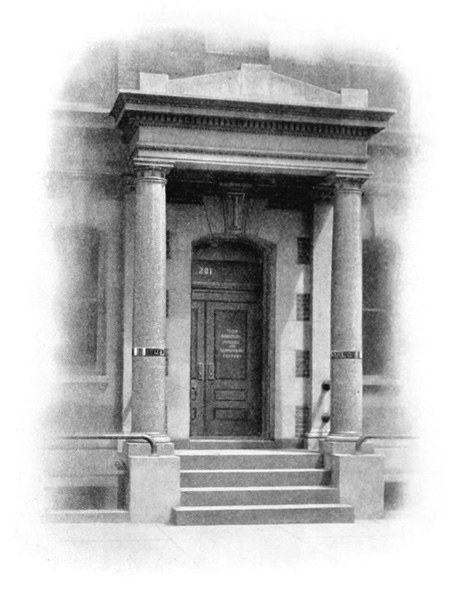
Trow Directory, Printing and Bookbinding Company 201–213 East 12th Street New York City