Volume 4 — PLATE XXX.
Reading edition
FIG.
1. Brain, spinal chord and ganglions of a full-grown caterpillar of Pontia Brassicæ. a. The brain. b. The double spinal chord. c d. Ganglions with a portion of their nerves.
2. Brain, spinal chord and ganglions, after two days, when the chord is shortened.
3. ——————————————— when the animal is become a pupa.
4. ——————————————— when it has been a pupa six days.
5. ——————————————— just before it assumes the imago.
6. ——————————————— when it has become a butterfly. Vol. IV. p. 24—.
7. Intestinal canal of the caterpillar. a. Saliva vessel. b. Silk reservoir. c. Gullet or œsophagus. d. Stomach. e e e. Bile vessels. f. Large intestine. g. Rectum.
8. —————————————— after it has assumed the pupa two days.
9. —————————————— after eight days. a. Crop or honey-stomach, first showing by the dilatation of the base of the œsophagus.
10. —————————————— a. Honey-stomach become a lateral appendage of the œsophagus b.
11. ——————- of the butterfly. a. Honey-stomach. b. Œsophagus. c. Small intestine become very long. d. Rectum. Vol. IV. p. 118.
12. Anal portion of the interior of the female butterfly. a. Ovaries. b. Oviduct. c. Colleterium or varnish secretor. d. Spermatheca or sperm receptacle. e. Part of the spinal chord. f. Rectum. g. A secretory organ filled with a thick white fluid, which is supposed to lubricate the passage. Vol. IV. p. 132, 152.
PLATE XXI
PLATE XXII
PLATE XXIII
PLATE XXIV
PLATE XXV
PLATE XXVI
PLATE XXVII
PLATE XXVIII
PLATE XXIX
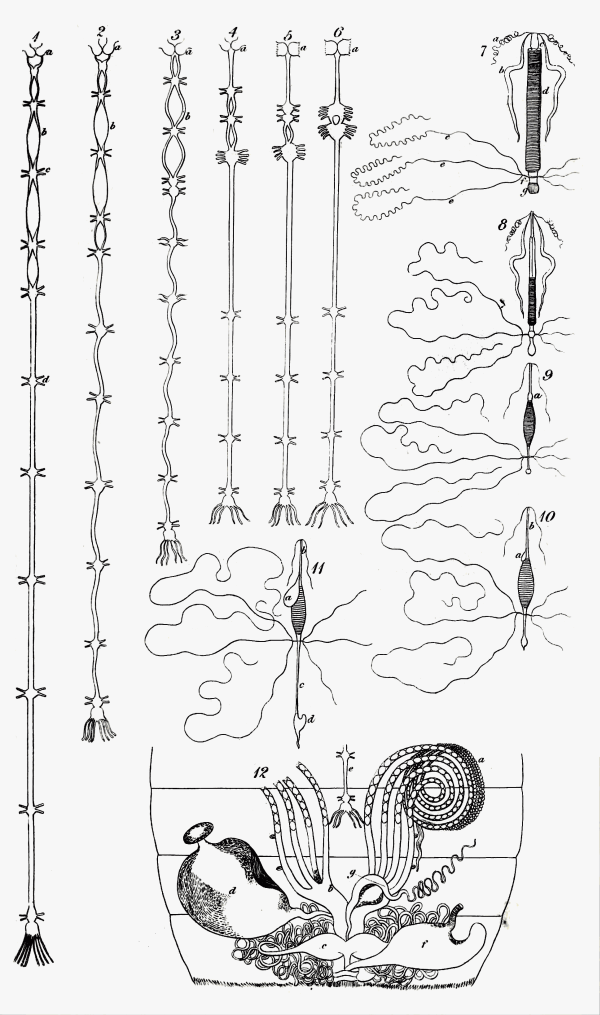
PLATE XXX