LIST OF MAPS (continued 2)
Reading edition
But not all of the Indian neighbors were so friendly as Massasoit and his tribe. Canonicus, chief of the Narragansetts, sent to Plymouth an insolent greeting in the form of a number of arrows tied with a snake's skin. The Pilgrims on their part stuffed the snake's skin full of powder and bullets, and in defiance sent it back to Canonicus. So deeply impressed were the Indians by this fearless act that they let the whites alone.
Believing it wise to be prepared against Indian attacks, however, the Pilgrims surrounded the settlement with palisades, and erected on "Burial Hill" a building, on the flat roof of which cannon were placed, the room downstairs serving as a meeting-house.
Pilgrims Returning from Church.
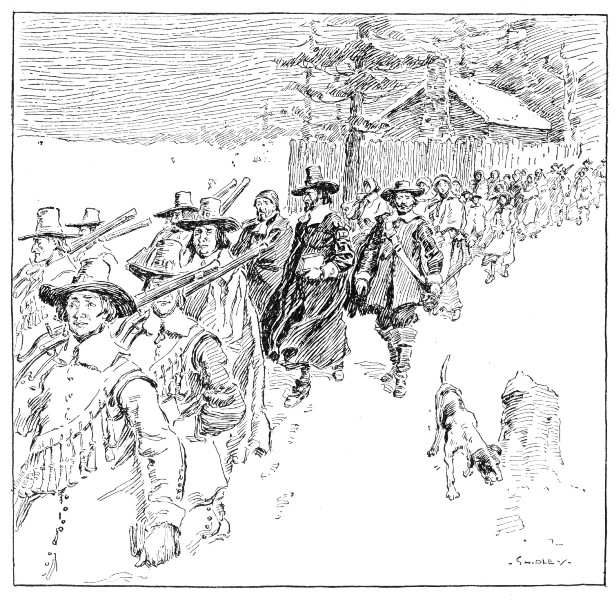
Energetic in practical affairs, they were equally zealous in religious observance; for they were very regular in their church attendance. Their Sabbaths began with sundown on Saturday and lasted until sundown on Sunday. The beating of a drum on Sunday morning was the signal for the men to meet at the door of Captain Miles Standish's house, from which they marched three abreast, followed by their governor in a long robe, with the minister on his right and Miles Standish on his left.
After the men came the women, then the children, and last of all the servants. On entering the church they sat in order of rank, the old men in one part of the church, the young men in another, mothers with their little children in a third, young women in a fourth, and the boys in a fifth.
The services lasted all the morning; then, after an intermission for lunch at noon, they began again and continuing all the afternoon. But on the coldest days of winter only foot-stoves were used to heat the meeting-house. Nor was this the only discomfort the Pilgrims had in their church worship. For even these good people found it sometimes hard to remain awake during the long services. And it was the duty of the constable to see that all kept their eyes open. If this official saw a boy asleep he rapped him with the end of a wand; if he saw a woman nodding he brushed her gently with a hare's foot, which was on the other end of the wand.
The Pilgrims held their town meetings in the meeting-house, where they held their religious services. At town meetings all the men wore their hats. In voting they used corn and beans, a grain of corn meaning yes and a bean meaning no.
Such was the life of the little company of true-hearted men and women at Plymouth. Small in number as they were, they remained brave in spirit, amid surroundings which tested all their powers of endurance. For several years Miles Standish did valiant service there, and then went to live at Duxbury, where he was soon joined by some of his Pilgrim friends, among whom was John Alden. Here the good captain remained the rest of his life, except when he was needed as military leader by the colony. He died many years later,—in 1656,—leaving behind him a good name with the Pilgrims and the rest of the world.
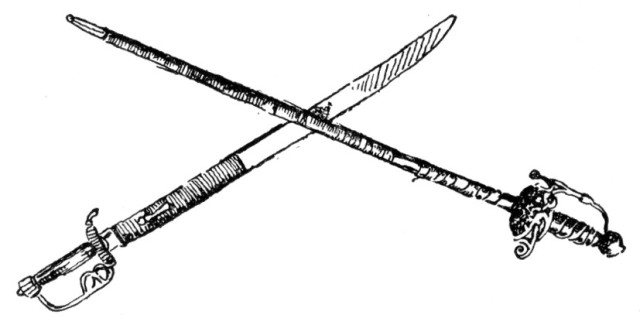
Brewster's and Standish's Swords.
REVIEW OUTLINE
The Englishmen who settled in New England. Puritans and Separatists. The Separatists escape to Holland. The Pilgrims leave Holland for America. Difficulties in their way. The voyage of the Mayflower. Miles Standish made military leader. The stout-hearted Captain Miles Standish. The grim Pilgrim soldiers. Captain Miles Standish heads a second exploring party. Indian mounds; Bradford in the deer-trap. A dangerous expedition. A night in the woods; Indians. A struggle for life on the storm-swept sea. A suitable place for settlement. Landing of the Pilgrim Fathers at Plymouth. The busy builders of log-houses. In the homes of the Pilgrims. The suffering Pilgrims. Samoset; Squanto; Massasoit visits the Pilgrims. A Thanksgiving feast. Indian enemies. The Pilgrims at church services. The meeting-house. Death of Captain Miles Standish.
TO THE PUPIL
1. What do you admire in the character of Miles Standish, and what did he do for the Pilgrims at Plymouth?
2. Trace on the map the wanderings of the Pilgrims.
3. Write an account of the "Dangerous Expedition" of the ten picked men who set out on December 16th, in search of a place for settlement. Picture to yourself the following: the party lying by the big fire under the trees with the barricade about them; the Pilgrims on their way to church; and Massasoit entertained by Governor Carver.
4. Describe a Pilgrim dwelling and its furniture.
5. Compare the Pilgrims with the Jamestown settlers.
CHAPTER VII Roger Williams and the Puritans
[1599-1683]
For years after the landing of the Pilgrims at Plymouth (1620) their number grew so slowly that by 1630 the population was only three hundred. After that year they began to increase more rapidly, by reason of neighboring settlements made by the Puritans at various places on the Massachusetts coast.
We have already seen that the Puritans in England were dissatisfied with the English Church, and that they wished to purify some of its forms and beliefs. But they did not succeed in their purpose because the Stuart Kings of England, James I. and Charles I., bitterly opposed the Puritan movement. For a long time the Puritans held their meetings secretly in such out-of-the-way places as private houses and barns. At length, encouraged by the success of the Pilgrims at Plymouth, they decided to leave their homes in old England and try to form a new England across the Atlantic.
These Puritans were not, like the Pilgrims, poor men of little influence, for some of them had been educated at Oxford or Cambridge, some were wealthy, and some were connected with distinguished families. All were of sterling character, ready to undergo hardship for the sake of their religion.
In 1628, therefore, some of the leading Puritans formed a trading company and, having bought a tract of land in America from the Plymouth Company, sent out settlers to occupy it. The first settlement was at Salem with Endicott as leader. Two years later eleven vessels sailed with nearly 1,000 Puritans, bringing with them horses, cattle, and stores of various kinds. They located at Boston, Dorchester, Charlestown, and other towns near Boston. John Winthrop, their leader, was the first governor.
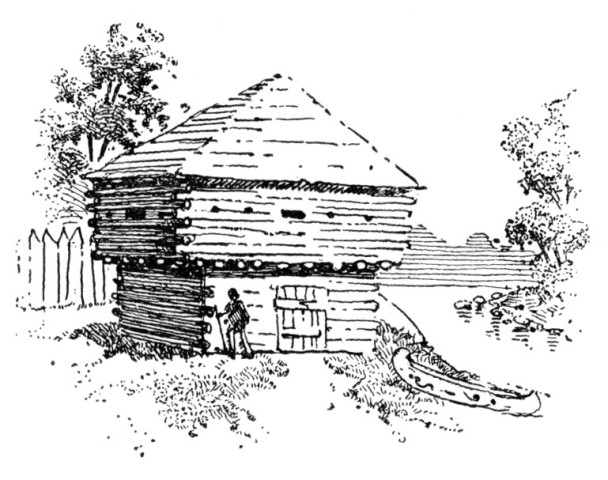
Each of these settlements constituted a township, which usually included an area of from forty to sixty square miles. Within this tract settlers lived in villages, in the centre of which stood their meeting-house, used not only for a place of worship but for all kinds of public meetings. Near the meeting-house stood the block-house. This was a rude, strongly built structure, where the people of the village could take refuge in case of attack from Indians.
Extending through each village was a long street, and on either side of it stood the settlers' dwellings with their small farms stretching back in the rear. These dwellings, which in early years were only log huts, afterward gave place to high-roofed frame houses. All were simple, solid, and neat.
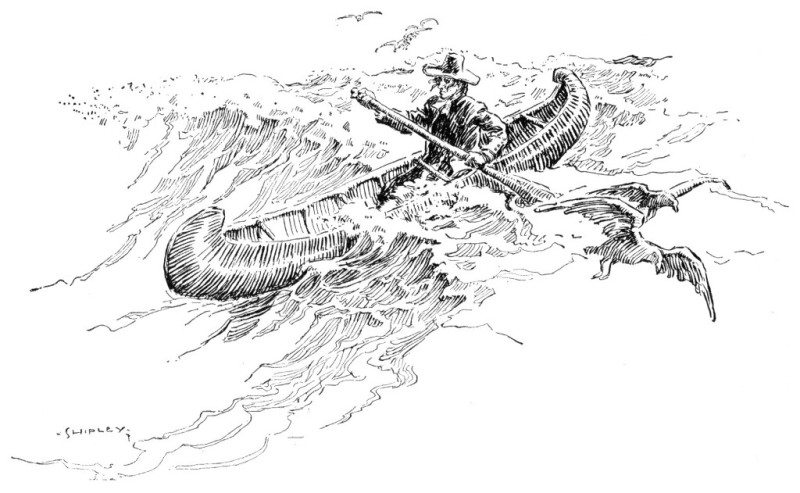
Roger Williams on his Way to Visit the Chief of the Narragansett Indians.
Upon entering one of these early Puritan homes we should find two principal rooms, the "best room" and the kitchen. In the kitchen the thing of special interest to us would be the fireplace, large enough for a back-log five or six feet long and two or three feet thick. In this great fireplace a Puritan housewife could roast an entire sheep. As stoves were unknown in these olden days, all cooking was done at this open fire, and it was by such firesides that the Puritan boys and girls used to spend the long winter evenings. While the logs blazed the mother and daughters would knit, or spin, or quilt, and the father would read his Bible or smoke his pipe. At this family hearth there was also much good cheer in cider-drinking, nut-cracking, and story-telling, especially when the family was fortunate enough to have a stranger present as a guest. At such times the children were always good listeners.
Block House
But much as it was prized, a visit from a stranger was a rare occurrence, for as there were no carriages or public conveyances of any kind, long journeys were seldom made. When travelling by land the settlers sometimes went on foot and sometimes on horseback. In the latter case the men sat in front and the women on a pillion behind. For carrying supplies, sleds were used in winter and ox-carts in summer.
Since travel was so difficult, there was very little communication between distant villages unless they happened to touch upon the sea. But frequently this was not the case, for many of the settlements, following the courses of rivers, extended inland rather than along the coast.
When a stranger did appear, however, he was always welcome, for he was sure to bring some bit of news from the world outside. Perhaps, if he had travelled through the woods, he might tell of some dangerous adventure with wild beasts or Indians. If in midwinter he dared to make the journey, he might tell how he spent a cold night in some deserted wigwam, into which he had been driven by howling wolves. Such thrilling chapters from the book of every-day life were of special interest to people whose experience was very narrow and monotonous. For in those days there were no newspapers and few books.
We should make a great mistake, however, were we to imagine that the Puritans did not value books and reading. They appreciated reading and education so much that every town was required to have a school. As a consequence of this excellent system, there were very few people who could not read and write.
Roger Williams's Meeting-House.
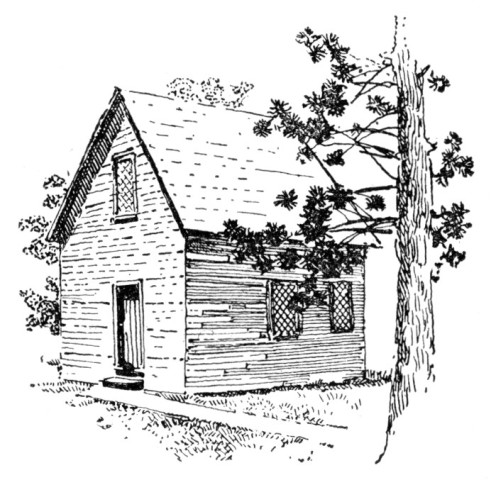
The study of the Bible was an important feature in all this school training, and absorbed much of the thought of the Puritan mind, especially on the Sabbath. The Puritan Sabbath, which began at sunset on Saturday and ended at sunset on Sunday, was largely given up to church worship. All work and travel, not absolutely necessary, were suspended, and no playing on a musical instrument was allowed. Two instances will illustrate the severity of the Puritan ideas of Sabbath observation. The first is that of two lovers, who were brought to trial because they were seen sitting together on the Lord's Day under an apple-tree. The second tells us of a Boston sea-captain who was put into the public stocks for two hours because he kissed his wife on the Sabbath Day upon the doorsteps of his house. He had just returned after a two years' absence on a sea-voyage.
In all this strictness about Sabbath observance, the Puritans were wholly sincere. To them purity of religion was the supreme interest of life. They had left their old homes in England that they might worship according to their own belief in a community under the control of Puritan ideas.
But it was no easy matter for them to arrange the affairs of Church and State just as they wished, even in this new Puritan commonwealth. For they found some of the settlers unwilling to believe and act in accordance with Puritan ideas of right and wrong.
One of these troublesome persons was a young man who came with his bride to Salem in 1631. This young man was Roger Williams. He was born in England in 1599. An Englishman of influence secured for the clever lad a scholarship in the Charter-House school, from which young Roger later went to Cambridge University. Having become a Puritan, Roger Williams, like so many others of his faith, found it wise to leave England. He came to America in order that he might escape religious persecution and enjoy religious freedom.
A Puritan Fireplace.
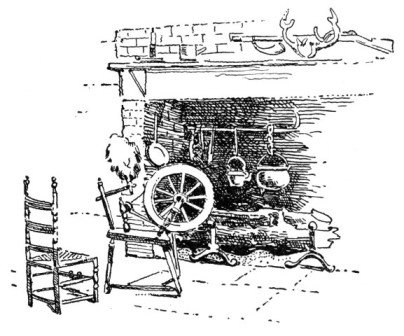
On reaching New England he went to Salem, and was there appointed a minister of the church. After a very short time he left Salem, and went with his family to Plymouth. Remaining there for two years, he became deeply interested in the Indians, and began the difficult task of learning their language. He wrote afterward, "God was pleased to give me a painful, patient spirit to lodge with them in their filthy, smoky holes to gain their tongue."
In this way he acquired a good knowledge of the Indians, whom he learned to love and who learned to love him. Little did he realize that this warm friendship would in after years save not only his own life but also the lives of many other Puritans.
While winning the friendship of the Indians, Roger Williams incensed the Puritans by saying in strong language that they had no just claim to the lands they were living on. He said that the King had no right to grant to any company these lands, because they had never belonged to him. The Indians, and only the Indians, owned them. It is needless to say that such arguments made many bitter enemies for the youthful preacher.
Of course he could not continue in this severe criticism of matters so important to the Puritan heart without losing many of his friends. The wrath of the Puritans at length became so great that they tried him in court and banished him from Massachusetts. As he became ill about this time, however, he was told that he might remain in the colony through the winter if he would not preach. But as soon as he grew better his friends, who were very fond of him, began to spend much time in talking with him at his home in Salem, where he now lived. The Puritans, fearing his influence, determined to send him at once to England.
The Rhode Island Settlement.
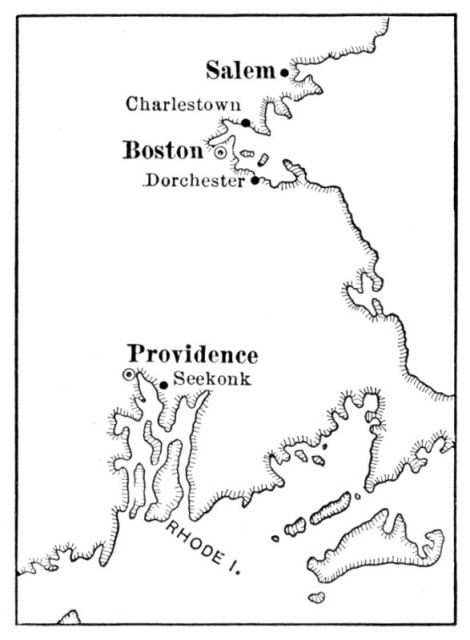
When the heroic young minister heard of this, he hastily said good-by to his wife and two children—one of whom was a little girl two years old and the other a baby—and looked for safety in the home of his old friend Massasoit, living near Mount Hope, seventy or eighty miles away.
The outlook was dreary enough. It was midwinter (January, 1636), and the snow was lying deep upon the ground. As there was no road cut through the forest, Roger Williams had to depend upon his compass for a guide. To keep himself from freezing, he carried with him a hatchet to chop kindling wood, and a flint and steel to kindle it into flame. Thus fitted out, he started, though still weak from his recent illness, with a staff in his hand and a pack on his back, to look for his dusky friend, Massasoit. This long journey in the bitter weather of a New England winter was indeed a trying experience to the lonely traveller. He wrote long afterward, "Steering my course, in winter snow, I was sorely tossed for one fourteen weeks in a bitter winter season, not knowing what bed or bread did mean." Having found Massasoit, he spent much of the winter in the wigwam kindly furnished him by the Indian chief.
In the spring he began to erect buildings at Seekonk on land given him by the Indians. But his friend, Governor Winthrop, having secretly sent him word that Seekonk was in the territory belonging to the Massachusetts colony, he decided to go elsewhere.
Accordingly, he and five of his friends rowed down the river and, landing at a place pointed out by the Indians as having a spring of good water, made a settlement, which they called Providence, in token of God's watchful care over them. This was the beginning of Rhode Island, a colony where all men, whatever their religious belief might be, were welcome. Men who had been persecuted elsewhere on account of their religion were glad to go to Rhode Island, where they were allowed to worship as they pleased. And thus it soon grew to be a prosperous settlement.
Roger Williams was a man of pure and noble soul. He did not seem to bear any grudge against the people of Massachusetts. For when, in 1637, the Pequots tried to get the Narragansett Indians to join them in a general uprising against the whites, and especially against those living in Massachusetts, he did all he could to frustrate their plans. At this time he set out one stormy day in his canoe to visit Canonicus, chief of the Narragansetts, and succeeded, at the risk of his life, in preventing the union of the two tribes against the whites.
He died in 1683 at the age of eighty-four years. Although his judgment was not always wise, his motives were upright. In his struggle with the Puritans he was ahead of his age, which was not yet ready for such advanced ideas of religious toleration.
REVIEW OUTLINE
Small number of Pilgrims at Plymouth. The Puritans decide to go to America. They are people of influence in England. The Puritan settlers in Massachusetts. The New England village. The meeting-house; the block-house; the great fireplace. Modes of travel. The stranger welcomed. Education. Puritan ideas of Sabbath observance and religious worship. Roger Williams comes to New England. He wins the friendship of the Indians. He makes Puritan enemies. The Puritans banish Roger Williams. He escapes in midwinter. A lonely journey through the forest. Roger Williams makes a settlement at Providence. He prevents the Narragansetts from joining the Pequots in their war. Death of Roger Williams.
TO THE PUPIL
1. Picture to yourself the New England village; also the big fire-place with the Puritan family gathered about the blazing fire at night.
2. What do you admire in Roger Williams? How did he make many Puritan enemies?
3. Write an account of his midwinter journey through the woods.
4. Tell how he befriended the people of Massachusetts at the outbreak of the Pequot War.
5. How did the people of Providence feel about religious freedom?
William Penn.
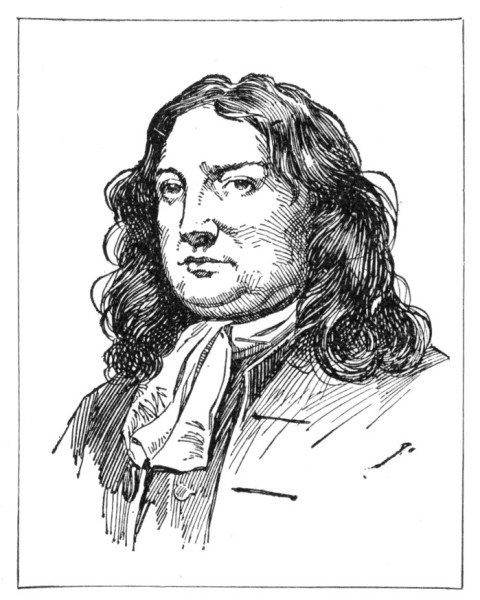
CHAPTER VIII William Penn and the Settlement of Pennsylvania
[1644-1718]
The Pilgrims and Puritans were not the only people who had to suffer persecution in England because they did not believe in the doctrines and forms of worship of the Established Church. Under the leadership of George Fox there sprang up (about 1669) a peculiar religious sect called by themselves Friends and by others Quakers. These people were severely punished on account of their religious ideas.
The central doctrine of their creed was that they were in all things led by the "inner light," as they called conscience, which revealed to them the will of God. Believing that all men were equal before the law, the Quaker always kept his hat on in public places as a sign of equality, refusing to uncover even in the presence of royalty. Other peculiar tenets of the Quakers were their unwillingness to take an oath in court; to go to war; to pay taxes in support of war; the use of "thee" and "thou" in addressing one another; and, as a protest against the rich and elegant dress of their time, the wearing of plain clothes of sober colors.
Their disdain of familiar customs made them appear very eccentric, and their boldness of speech and action frequently brought upon them the punishment of the law. But they were fearless in their defiance, and even eager to suffer for the sake of their religious belief, some being fined, some cast into prison, some whipped, and some put to death. Not only in England, but in Massachusetts also, they were treated like criminals. The Puritan fathers hated and feared them so much that they banished Quakers from their colony, and even put some of them to death on account of their views on religion and government. But, as always, persecution only seemed to spread the faith, and soon this derided and abused sect included eminent converts.
Among the most prominent was William Penn, who was born in London in 1644, the son of Sir William Penn, a wealthy admiral in the British Navy. Conspicuous service to his country had won him great esteem at Court, and he naturally desired to give his son the best possible advantages.
At the early age of sixteen, young William was sent to Oxford, where his studious habits and fine scholarship soon distinguished him. He became proficient in Greek and Latin, and learned to speak with ease the modern languages, French, German, Italian, and Dutch. Devoting a part of his time to athletics, he became a skilful oarsman and a leader in various out-door sports.
While he was at Oxford, Penn heard Thomas Loe, a travelling Quaker, preach. The new doctrines, as expounded by Loe, took so deep a hold upon him, that he refused to attend the religious services of his college.[7] For this irregularity he was fined, together with some of his companions who were of the same mind. Disregarding the reproof, these conscientious young men even refused to wear the required college gown, and committed a yet graver offence against their college by tearing off the gowns from some of their fellow-students.
By reason of these bold and unruly proceedings the college authorities expelled Penn in disgrace. His father was very angry at what he deemed his son's folly, and knowing that neither rebuke nor persuasion was likely to swerve the young man from his purpose, Admiral Penn decided to send William to Paris, with the hope that in the gay life of the French capital he might forget his Quaker ideas.
Penn was now a strongly built young man of eighteen, with large eyes and long dark hair falling in curls about his shoulders. For a brief time he gave himself up to the fashionable social life of Paris. Later he engaged in study at school for something like a year, and then spent another year in travelling through France and Italy. When he returned to England after two years' absence, he was a cultivated young gentleman, very different from the sober youth who on leaving Oxford had been called by his companions "a Quaker or some other melancholy thing."
WILLIAM PENN'S FAMOUS TREATY WITH THE INDIANS.
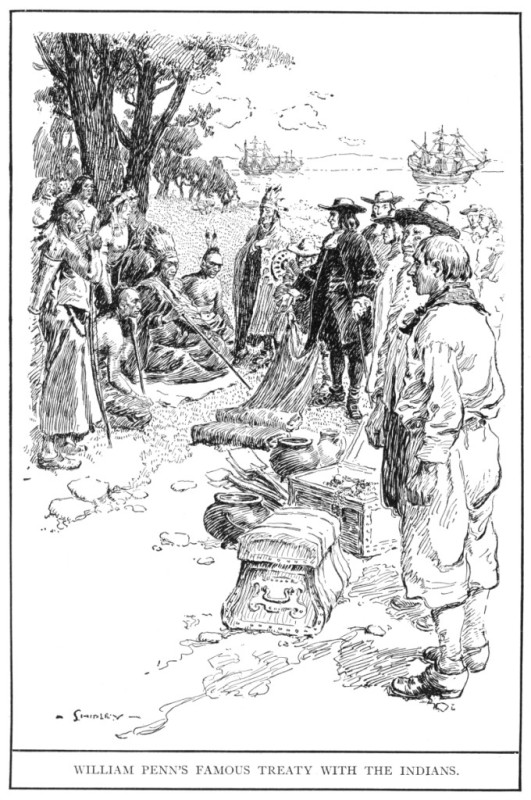
The following year, however, Penn's gay spirits were disturbed by the awful plague that fell upon London. The Admiral, noting the serious look and manner of his son, again sent him from home—this time to Ireland—for diversion. While Penn was in Ireland an insurrection broke out, and he volunteered as a soldier. Military life evidently appealed to him, for he caused a portrait of himself to be painted, in full armor.
While still serving as a soldier, Penn learned that the Quaker, Thomas Loe, was preaching near by, and went to hear him once more. The Quaker ideas now took complete possession of him, and he embraced the new religion with his whole heart. A little later, when he was arrested in a Quaker meeting-house and thrown into prison, his father was indignant because William had brought upon his family such humiliating disgrace.
After William's release from prison, however, the stern old Admiral in his great love for his son said he would forgive his peculiar customs if only he would remove his hat to his father, to the King, or to the Duke of York. But on praying over the matter, Penn said he could not do it. One day, on meeting the King, he had the boldness to stand with his hat on in the royal presence. Instead of getting angry, the fun-loving King Charles laughed and took off his own hat. "Why dost thou remove thy hat, friend Charles?" said William Penn. "Because," answered the King, "wherever I am it is customary for one to remain uncovered."
But the Admiral's patience was by this time exhausted. He drove his wilful son from his presence, and told him to begone for all time. Fortunately for William, his mother begged for him, and so did others who recognized the earnest and sincere purpose of the young Quaker. His father therefore forgave him once more, and allowed him to return home.
The Pennsylvania Settlement.
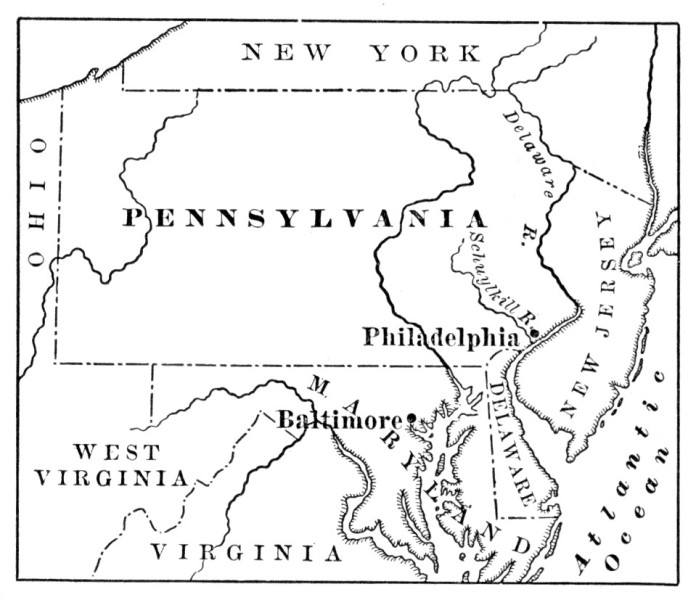
From this time on William Penn used his influence—which was by no means small—in behalf of the persecuted Quakers; but he had to suffer the consequences of his own fearlessness. Many times was he thrown into prison, there to remain, it might be, for months. Yet even in prison he spent his time in writing books and pamphlets, explaining and defending the Quaker religion. Indeed, his labors were unceasing, so firm was his faith in Quaker ideas.
Soon his power for doing good was immensely increased. In 1670 his father died and left him a princely fortune which, true to his generous nature, he determined to use for the good of others, and especially for the good of the despised and persecuted Quakers.
The Crown owed Penn's father about £16,000, which the King, with his extravagant habits, was not likely to pay for many a day. William Penn, therefore, decided to ask the King to pay the debt not in money but in land. The good-natured Charles, thinking this was an easy way to cancel the obligation, readily granted to William Penn an extensive tract of land lying on the west side of the Delaware River.
Penn's Slate-roof House, Philadelphia.
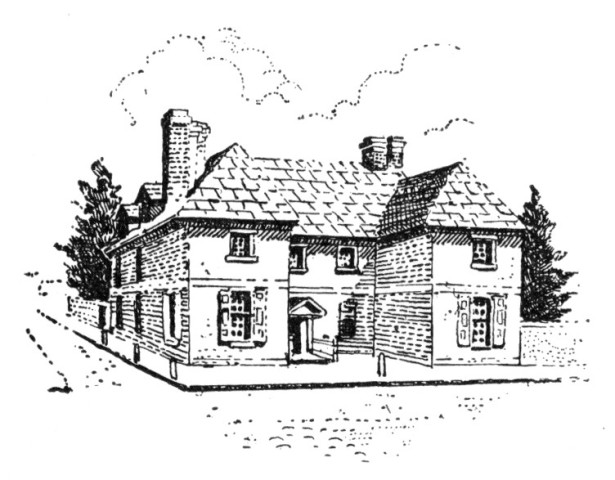
Penn wished his new possession to be called Sylvania, or Woodland, but the King insisted upon calling it Pennsylvania, in honor of Penn's father. Upon receiving his grant, Penn at once sent word to the Quakers that in Pennsylvania they could find a home and a resting-place from their troubles.
Penn's leading aim was to plant a self-governing colony, whose people should have justice and religious freedom. Hundreds of Quakers eagerly took advantage of the favorable opportunity which Penn thus offered to them. During the year 1681, when the first settlement was planted in Pennsylvania, something like 3,000 of them sailed for the Delaware River. The next year Penn himself sailed for America, although he left his wife and children behind.
He selected the junction of the Delaware and Schuylkill rivers as the site for his city, and called it Philadelphia, or the City of Brotherly Love, in token of the spirit which he hoped might prevail throughout his colony. He laid out the city most carefully, giving the streets such names as Pine, Cedar, Mulberry, Walnut, and Chestnut, after the trees he found growing there.
When the first settlers came to Philadelphia, some of them lived in caves which they dug in the high river-banks. The first houses, built of logs, were very simple, containing only two rooms and having no floor except the earth. Philadelphia grew so fast, however, that by 1684 it had 357 houses, many of which were three stories high, with cellars and balconies.
A Belt of Wampum Given to Penn by the Indians.
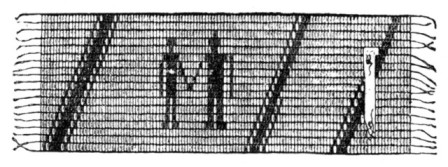
As we might expect from a man of his even temper and unselfish spirit, Penn treated the Indians with kindness and justice, and won their friendship from the first. Although he held the land by a grant from the King of England, still he wished to satisfy the natives by paying them for their claims to the land. Accordingly, he called a council under the spreading branches of a now famous elm-tree, where he met the red men as friends, giving them knives, kettles, axes, beads, and various other things in exchange for the land. He declared that he was of the same flesh and blood as they; and highly pleased, the Indians in return declared that they would live in love with William Penn as long as the sun and moon should shine.
Penn paid the Indians friendly visits, ate their roasted acorns and hominy, and joined them in their sports. One day while they were leaping and jumping in his presence, he suddenly "sprang up and beat them all."
Penn soon returned to England, but many years later (1699) he came back to Pennsylvania with his wife and one daughter. As he was very wealthy, he had two homes, one in the city and another in the country. His country home, which was northeast of the city on the Delaware River, cost him $35,000. In this house were elegant furnishings, and here, in his large dining-hall, Penn lavishly entertained Englishmen, Swedes, Indians, negroes, and passing strangers who called at his door. We are told that his table was so bountiful that at one of his feasts the guests ate a hundred roast turkeys. The grounds about his country home were magnificent, containing various kinds of fruits and flowers, and in his stables were many horses.
But notwithstanding these material blessings, Penn's life was not without trials and disappointments, which it is needless to dwell upon. Owing to his warm friendship for King James, he was suspected of plotting in his favor after the King was forced to leave England in 1688. He was therefore more than once arrested, but in every case he was set free for lack of evidence against him. Many years later, on his refusal to pay a false claim made by his steward, he was thrown into prison, where his health was broken by confinement. He died in 1718. His life had been a hard struggle, but it had been successful, and had come to an honorable close.
REVIEW OUTLINE
The Quakers and their peculiar ideas. Punishment of the Quakers in England and in Massachusetts. William Penn's father, Admiral Penn. William Penn at Oxford University. He turns Quaker. Admiral Penn sends his son To Paris. William Penn returns to England. He becomes a soldier in Ireland. He is thrown into prison. The stubborn young Quaker. Penn's mother begs for him. The King's grant to William Penn. The Quakers settle in Pennsylvania. The City of Brotherly Love. Penn's kind and just treatment of the Indians. His home life. His last days.
TO THE PUPIL
1. Give some of the peculiar ideas of the Quakers.
2. Why was Penn thrown into prison? In what ways did he give evidence of his stubbornness?
3. Why did he wish to settle Pennsylvania? Imagine the scene when under the elm-tree Penn met the Indians and made a treaty with them.
4. Tell something about his home life.
5. What do you admire in Penn's character?
6. When did the Quakers settle Pennsylvania?
Cavelier De La Salle.
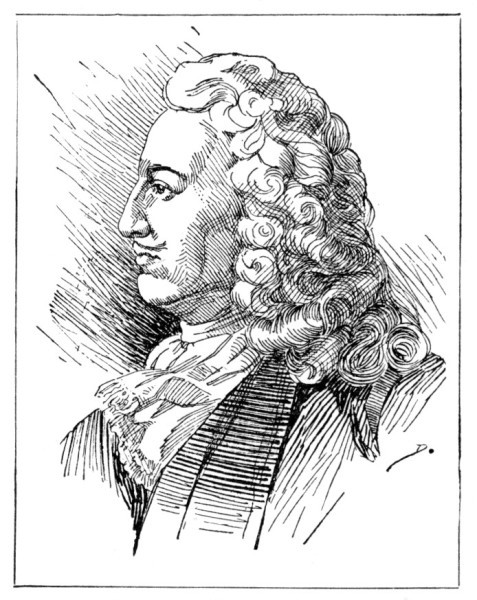
CHAPTER IX Cavelier De La Salle and the French in the Mississippi Valley
[1643-1687]
The same year in which William Penn laid out Philadelphia and there made a treaty with the Indians, a noted Frenchman sailed down the Mississippi River, exploring it in the interests of France. This man was Robert Cavelier, Better known as La Salle, who, like many of his countrymen, was trying, just as the Spaniards and Englishmen had tried, to find or do something in America that would not only bring glory to his own name, but also wealth and honor to his fatherland. We have now to consider the work of the French in America.
In 1534 Cartier, a French explorer, discovered the St. Lawrence, and sailed up the river as far as an Indian village on the present site of Montreal. He took possession of Canada in the name of the French King, and his favorable reports led to several unsuccessful attempts to plant settlements there.
More than seventy years after the discovery of the St. Lawrence, another French explorer, Samuel de Champlain, sailed up the noble river. Much impressed with the great beauty of the St. Lawrence Valley and its wealth of forests and furs, he longed to bring all this vast new country under the control of France. In 1608 he planted the first permanent French settlement in Canada, at Quebec, and the following year discovered the lake which bears his name.
Although Champlain loved his country and desired to increase its glory and power, he made an unfortunate blunder, which proved fatal to the best interests of France in the New World. In planting the settlement at Quebec, in 1608, he found that the neighboring tribes of Algonquin Indians were bitter enemies of the Mohawks, one of the Five Nations, or Iroquois, who lived in New York.
Long House of the Iroquois.
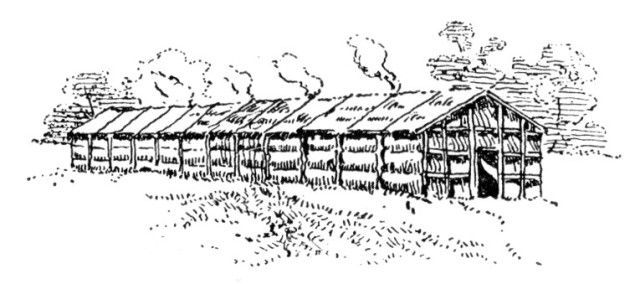
The Algonquins begged him to join them in an attack upon the Mohawks, and he unwisely consented. Having gone up Lake Champlain with a canoe-party of sixty Indians, he landed near the site of Ticonderoga to fight a battle with two hundred hardy Mohawk warriors. Champlain, clad in light armor and gun in hand, advanced at the head of his war-party and, shooting into the ranks of the astonished Mohawks, who stood in battle array, brought to the earth two of their chiefs. The others fled in terror and confusion, while their enemies, Champlain's dusky allies, yelled with joy, and filled the woods with their terrible warwhoops.
From that day, however, the Iroquois were the bitter enemies of the French, and this enmity seriously interfered with the successful carrying out of French plans. Having control of the St. Lawrence River, France greatly desired to get control of the Mississippi River as well. Once securing possession of these two great streams, she would come into possession of the wealth of the North American Continent.
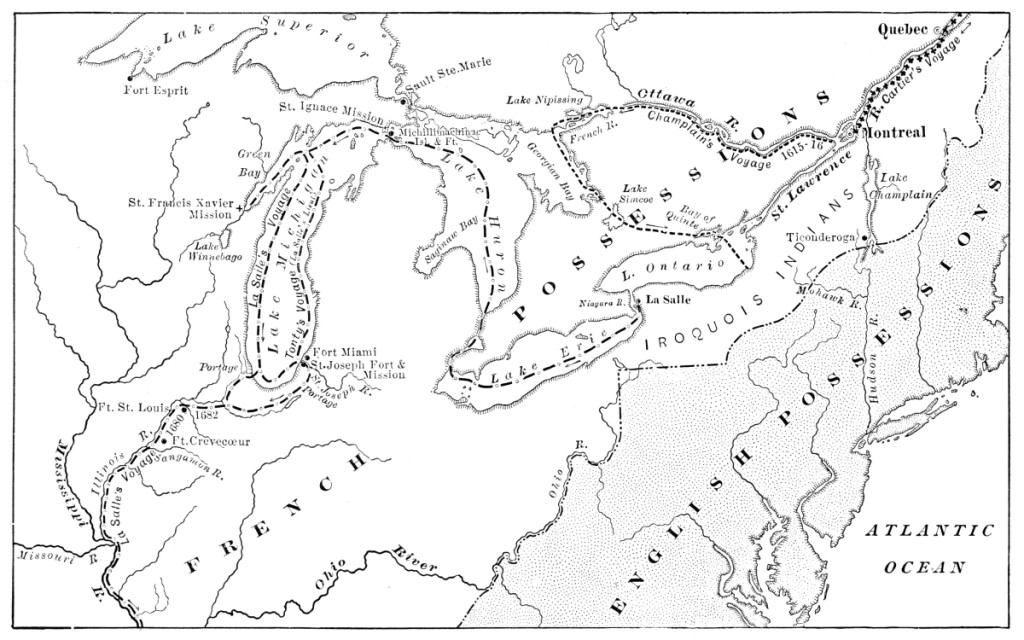
But the Iroquois Indians were strongly posted in the Mohawk River Valley, and thus held the key to the situation. In this way they blocked the path of the French, who wished to reach the Ohio and the Mississippi through Lake Erie and Lake Ontario. So the French were driven to seek a route farther north, a route which was much longer and more difficult. It would be well for you to trace on your map this roundabout way, which extended up the Ottawa River into Georgian Bay, through Lake Huron and Lake Michigan, across into the Illinois River, and through that into the Mississippi.
In the same year that Champlain made the Iroquois bitter enemies of the French, Henry Hudson won their lasting friendship for the Dutch. About the time the Frenchman was fighting in the battle against the Mohawks at Ticonderoga, Hudson, with a crew of twenty men in the Half Moon, was sailing up the river that now bears his name. Instead of finding the short passage to the Pacific, for which he was searching in the interests of the Dutch, he discovered the great water-way to the interior. Having received just treatment from him, the Iroquois Indians became his friends and the friends of the Dutch settlers and traders that came later.
From that time, in fact, these Iroquois Indians were as ready to sell their furs to the Dutch and to the English, who in 1664 took New York away from the Dutch, as they were to oppose the French and compel them to go many hundred miles out of their way in the tedious explorations in search of the Mississippi.
This toilsome work of exploration was largely accomplished by the Jesuit missionaries. Fearless in their heroic efforts to advance their faith, they suffered all sorts of hardships, many being put to death, in their earnest struggle to bring religious truth to the ignorant red men of the woods. In their journeys through the forests and over the lakes, these Jesuit Fathers made many valuable discoveries and explorations which they carefully recorded in their journals.
It was one of these missionaries, Father Marquette, who succeeded in reaching the waters of the Mississippi. Attended by Joliet and five other Frenchmen, he went, in 1673, as far down the mighty river as the mouth of the Arkansas. This was sixty-five years after Champlain made his settlement at Quebec.
Map Showing Routes of Cartier, Champlain, and La Salle, also French and English Possessions at the Time of the Last French War.
But the most important of all the French explorations were made by the daring and tireless La Salle. He was born in France in 1643, and belonged to an old and rich family. Strong in mind and character, he received a good education, and became an earnest Catholic. With a heart ready to brave any danger in the achievement of glory for himself and for France, this young man at the age of twenty-three sailed for Canada.
His plans, as finally worked out, were twofold: (1) To build forts and trading centres at various points along the St. Lawrence, the Great Lakes, and the Mississippi; and (2) to plant a colony at the mouth of the Mississippi. Wishing to get control of the rich fur trade for France, his forts and his colony would help to protect and further this trade, which could be carried on more easily by way of the Mississippi, than by way of the Great Lakes and the St. Lawrence. For along the latter route lay the hostile Iroquois, who were friendly to the Dutch and the English; and, moreover, the St. Lawrence was ice-bound nearly one-half of the year.
Early in August, 1679, after long and weary efforts spent in preparation, La Salle launched on the Niagara River above the Falls, his little vessel, the Griffin, of forty tons burden, which was to bear him through the lakes on his way to the Mississippi.
Nearly a year before starting, La Salle had sent up the lakes fifteen men to trade for furs. He expected them to have ready, against the time of his arrival, a cargo of furs to be sent back to Canada. For La Salle needed a great deal of money with which to buy provisions, ammunition, and tools, and to pay his men for their services. Besides, he wished to get cables, anchors, and rigging for a new vessel to be built on the Illinois River, for the purpose of making his expedition to the mouth of the Mississippi. The expected cargo of furs, taken back and sold in Canada, would give him the money he needed to carry out his plans.
Having arrived at the head of Lake Huron, therefore, he collected the cargo awaiting him, loaded the Griffin with furs, and on September 18, 1679, despatched it in charge of six men to Niagara. La Salle himself pushed on to the mouth of the St. Joseph River, where he built a fort, and waited long and anxiously for the Griffin's return. But he waited in vain, for he never heard from his vessel again. It was a great loss and a keen disappointment. After waiting long he continued his way, careworn and weary, with eight canoes and a party of thirty-three men.
They rowed up the St. Joseph in search of the carrying-place leading to the head-waters of the Illinois River. On landing, La Salle started off alone to look for the pathway. In the midst of a blinding snow-storm he lost his bearings in the dense forest, and wandered until about two o'clock in the morning, when he found himself once more at the river, and fired his gun as a signal to the party.
Then his eyes caught the welcome sight of a fire burning in the woods. Believing he was near his friends, he quickened his steps, only to find himself mistaken. Near the fire, under a tree, was a bed of dried grass which was still warm, and showed plainly that a man had but a few minutes before been lying there. Very likely the man was an Indian, who had been frightened off by the sound of the gun. La Salle carefully placed brush for a sort of barricade on each side of the newly found bed, and then lay down by the blazing fire and slept till daybreak. He did not find his friends until four o'clock next afternoon.
On rejoining his party they made their way down the Illinois River, until their eyes fell upon some Indian wigwams on the forest-covered bank. The Indians, being friendly, received the Frenchmen with generous hospitality. They urged La Salle not to go down the Mississippi. They indeed said so much of the danger of the journey that six of La Salle's followers deserted, and another tried to poison him. These were sad days for La Salle and, like all his days, were beset with troubles and dangers. To protect himself from attack during the winter, he now planned the building of a fort which he called Crèvecœur, the French word for heartbreak, surely a fitting name.
Up to this time the iron-willed La Salle had not given up hope of hearing from the Griffin, but now he decided that his vessel was lost. There was but one thing to do. He must make an overland journey to Canada, 1,500 miles away, to get supplies for his expedition down the Mississippi. It was a dangerous undertaking. But on March 1, 1680, with an Indian hunter and four Frenchmen, the dauntless explorer started in two canoes.
The season was the worst in the year for such a journey. The ground was covered with melting snow, and the rivers in many places were frozen with ice, too thick to be broken by the boats. Much of the time the party had to pull the canoes on rough sleds overland or carry them on their shoulders until, a few days after starting, they hid them in the woods and pushed forward on foot to the head of Lake Michigan.
Reaching that point, it was now necessary for them to thread their toilsome way through the deep forests of Southern Michigan to the head of Lake Erie. For three days the undergrowth was so thick with thorns that it tore their clothing into shreds, and scratched their faces until they were covered with blood. Another three days were spent in wading, sometimes up to their waists, in the mud and water of the flood-covered marshes. At night they would take off their clothing and, covering their bodies with blankets, lie down to sleep on some dry hillock. One frosty night their clothes froze so stiff that in the morning they had to be thawed by the fireside before they could be put on. Amid such exposure some of the men fell sick, and thus delayed the party. But early in May, at the end of sixty-five days, they reached Canada.
As soon as he could arrange his affairs in Canada, La Salle again returned to the Illinois River and reached its mouth. But owing to fresh disappointments, he had to make still another journey through the wilderness to the base of his supplies on the St. Lawrence.
Not until February 6, 1682, two years and a half after he first started out in the Griffin, and after three attempts to build a suitable vessel for the journey, did he float out upon the waters of the Mississippi to explore it; and at last he was obliged to make the journey in canoes. This time his party included fifty-four people—eighteen Indian warriors, ten squaws, three Indian children, and twenty-three Frenchmen. On reaching the mouth of the river he planted a column bearing the arms of France, and then, with imposing ceremonies, took possession of the great Mississippi Valley in the name of the French King, Louis XIV., after whom he named the country Louisiana.
By building forts and trading centres along his route, La Salle had carried out the first part of his plan. He now resolved to go to France and get men for a colony which he wished to plant at the mouth of the Mississippi, and thus carry out the second part.
Having succeeded in France in fitting out this colony, he sailed with four vessels early in July, 1684, in search of the Mississippi River by way of the Gulf of Mexico. With his usual bad fortune, however, he missed its mouth and landed at Matagorda Bay, 400 miles to the west. Then followed many disasters, among which were loss of vessels and supplies, lack of food, sickness and death, and attacks by unfriendly Indians. For two years the wretched little colony struggled for life. La Salle was in sore distress. He knew he had many enemies among his men who would gladly take his life, but he hoped for help from France. No help came. It was plain to La Salle that he could save the suffering colony only by making his way to Canada. He therefore started out on January 12, 1687, with a party of seventeen men and five horses, on another long and dangerous journey through the dense forests—this time from the Gulf of Mexico to Canada.
The Murder of La Salle by his Followers.
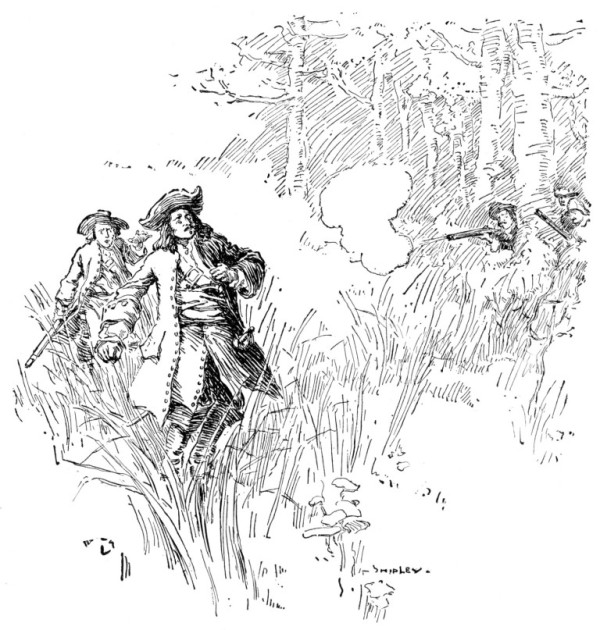
Travelling north, the party crossed the Brazos River and toiled onward to the Trinity River. But La Salle's men were tired of travelling through the forests, and some of them were thirsting for his blood. They were waiting only for a suitable opportunity to carry out their murderous purpose. On the morning of March 19th they lay in ambush, and shot him dead as he approached, probably not far from the Trinity River.
La Salle's life was one of storm and peril; but he was as fearless as a lion. Ambitious for himself and for his country, he had room for little else in his life, His repeated failures brought criticism and lack of confidence from men who had loaned him large sums of money, and these criticisms hardened his spirit. Many enemies making him suspicious, he seemed to lose sympathy with his men, and became harsh in his treatment of them. But he did a great work for France, a work which entitles him to be regarded as one of the most remarkable of all the explorers of America.
REVIEW OUTLINE
The coming of the French to America. Cartier discovers the St. Lawrence. Champlain explores for France. Champlain's fatal gunshot. The Iroquois become bitter enemies of the French. The Iroquois force the French to seek a roundabout route to the Mississippi River. Henry Hudson wins for the Dutch the friendship of the Iroquois. Valuable work of the Jesuit missionaries. Father Marquette goes down the Mississippi. The daring and tireless La Salle. His twofold plans. His voyage to Lake Michigan in the Griffin. The Griffin sails back to Canada with a cargo of furs. La Salle lost in the forest. With friendly indians on the banks of the Illinois River. Sad days for La Salle. He decides to make an overland journey to Canada. Travel in the deep forests. La Salle at last reaches the mouth of the Mississippi. He goes to France. His colony fails. A long journey begun. La Salle murdered by his men. His character and his work.
TO THE PUPIL
1. What did Champlain accomplish? When? Why did the Iroquois become bitter enemies of the French and warm friends of the Dutch?
2. What were La Salle's twofold plans? Trace his route through the lakes to the mouth of the Mississippi.
3. Picture him lost in the forest, and spending the night alone.
4. Describe his overland journey to Canada.
5. How did his colony suffer? What do you admire in La Salle's character?
6. What do the following dates mean: 1492, 1541, 1607, 1629, 1676, 1682?
George Washington.
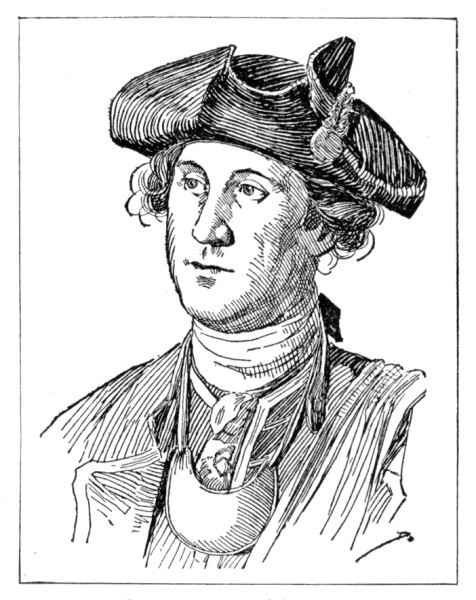
CHAPTER X George Washington, the Boy Surveyor and Young Soldier
[1732-1799]
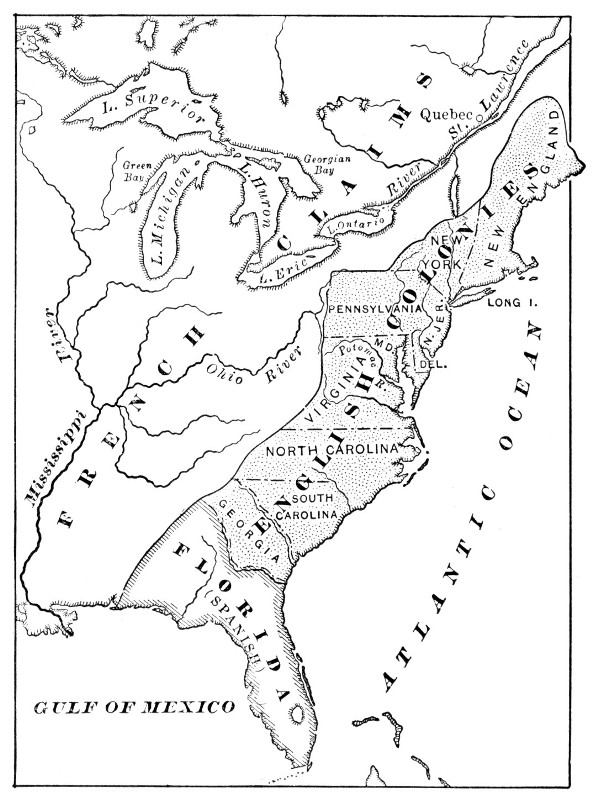
As a pioneer in leading the way along the Ohio and the Mississippi, La Salle did much for France. He hoped to do far more. His cherished dream was to build up in this vast and fertile territory an empire for France. But the French King foolishly feared that planting colonies in America would take too many of his subjects out of France, and refused to do that which might have made his new possessions secure. The opportunity thus neglected was seized fifty years later by the hardy English settlers who pushed westward across the Alleghany Mountains. This movement brought on a struggle between the two nations, a few events of which are important to mention.
You will remember that two years after the coming of John Smith to Jamestown, Champlain sailed up the St. Lawrence and settled Quebec for the French. You will also recall that the French explorers, priests, and traders had been gradually making their way into the heart of the continent, by way of the Great Lakes, until at last La Salle glided down to the mouth of the Mississippi, and took possession of the land in the name of the French King. This was in 1681, the year the Quakers were settling Pennsylvania and fifty-two years before the settlement of Georgia, the youngest of the thirteen original colonies.
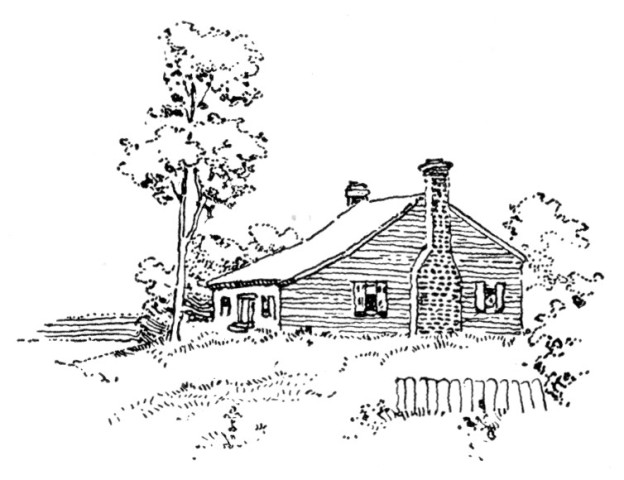
Just one year before this last settlement there was born in Westmoreland County, Va., a boy who was to play a large part in the history not only of the Ohio and Mississippi valleys, but of the whole country. This boy was George Washington. He was born on February 22, 1732, in an old-fashioned Virginia farm-house, near the Potomac River, on what was known as Bridge's Creek Plantation. The house had four rooms on the ground floor, with an attic of long sloping roofs and an enormous brick chimney at each end.
Washington's Birthplace.
George's father was a wealthy planter, owning land in four counties, more than 5,000 acres in all. Some of his lands were on the banks of the Rappahannock River, near which he had money invested in iron-mines. To this plantation the family removed when George was seven years old, the new home being nearly opposite Fredericksburg, then a small village.
Here he was sent to a small school and taught by a man named Hobby, a sexton of the church and tenant of George's father. It was a simple sort of training the boy received from such a school-master. He learned a little reading, a little writing, and a little ciphering, but that was about all. Later in life he became a fairly good penman, writing a neat round hand; but he never became a good speller.
When George was eleven years old his father died, leaving to him the home where they lived on the Rappahannock, and to his brother Lawrence the great plantation on the Potomac afterward called Mount Vernon. Lawrence went to live at Mount Vernon, while George remained with his mother at the house opposite Fredericksburg.
Now left without a father, George received his home training from his mother. Fortunate, indeed, was he to have such a mother to teach him; for she was kind, firm, and had a strong practical sense. She loved her son, and he deeply appreciated her fond care of him. Some of George's youthful letters to his mother are full of interest. After the manner of the time he addressed her formally as "Honored Madam," and signed himself "Your dutiful son."
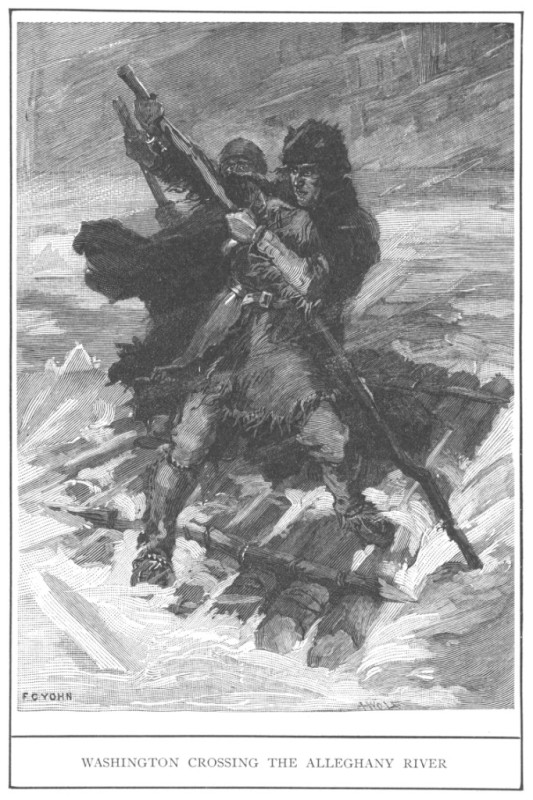
WASHINGTON CROSSING THE ALLEGHANY RIVER
Nor was his mother the only strong and wholesome influence over his home life. His eldest brother, Lawrence, played an important part in shaping his character. According to the custom of those days, Lawrence, as the eldest son of a Virginia planter, would inherit the bulk of his father's estate. He was therefore sent to an excellent school in England, to receive the training which would fit him to be a gentleman and a leader in social life. For learning was not held in such high esteem as ability to look after the business of a large plantation and take a leading part in the public life of the county and the colony.
With such a training Lawrence returned from England, a young man of culture and fine manners and well fitted to be a man of affairs. From this time on George, now only seven or eight years old, looked up to his brother, fourteen years his senior, with cordial admiration. Lawrence became George's model of manhood, and returned his younger brother's devotion with a tender love.
Soon after the death of his father, the boy went to live with his brother Augustine on the Bridge's Creek Plantation, in order to have the advantages of a good school there. Many of his copy-books and books of exercises, containing such legal forms as receipts, bills and deeds, as well as pictures of birds and faces, have been preserved. In these books there are, also, his rules of conduct, maxims which he kept before him as aids to good behavior. The following are a few of them:
The English Colonies and the French Claims in 1754.
"Every action in company ought to be with some sign of respect to those present.
"When a man does all he can, though it succeeds not well, blame not him that did it.
"Undertake not what you cannot perform, but be careful to keep your promise.
"Speak not evil of the absent: for it is unjust.
"Labor to keep alive in your breast that little spark of celestial fire called conscience."
In George's school-days he heard many stories about wars with the Indians and about troubles between the English and the French colonies. Moreover, his brother Lawrence had been a soldier in the West Indies in a war between England and Spain, from which he had returned full of enthusiasm about what he had felt and seen. It was at this time that Lawrence changed the name of his plantation on the Potomac to Mount Vernon, in honor of Admiral Vernon, under whose command he had fought.
Catching his brother's military spirit, George organized his boy friends into little military companies, and, as their commander, drilled them, paraded them, and led them in their sham battles in the school-yard.
Naturally the boys looked to him as leader, for he was strong in mind and body, and fond of athletic sports. It is said that no boy of his age was his match in running, leaping, wrestling, and pitching quoits. His athletic skill expressed itself also in his fearless horsemanship. The story is told that he once mounted a colt that had successfully resisted all attempts to remain on his back. But George held on until the spirited animal, in a frenzy of effort to throw off the persistent young rider, reared, broke a blood-vessel, and fell dead. His keen enjoyment of a spirited horse, and of hunting in the freedom of woods and fields for such game as foxes, deer, and wild-cats, lasted to a late period of his life.
George's good qualities were not confined to out-door sports requiring skill and physical strength alone. He was a manly boy, stout-hearted and truthful. All the boys trusted him because they knew he was fair-minded, and often called upon him to settle their disputes.
But we must not think of him as a perfect boy, finding it easy always to do the right thing. George Washington had his faults, as some of the rest of us have. For instance, he had a quick temper which he found it hard to control. In fact, he found this a harder thing to do than many brave deeds for which he became famous in his manhood.
The humdrum quiet of a Virginia plantation did not satisfy this alert boy longing for a life of action. He had heard from Lawrence about life on a war-vessel, and had also seen, year after year, the annual return to the plantation wharf of the vessel that carried a cargo of tobacco to England and brought back in exchange such goods as the planter needed.
The French in the Ohio Valley.
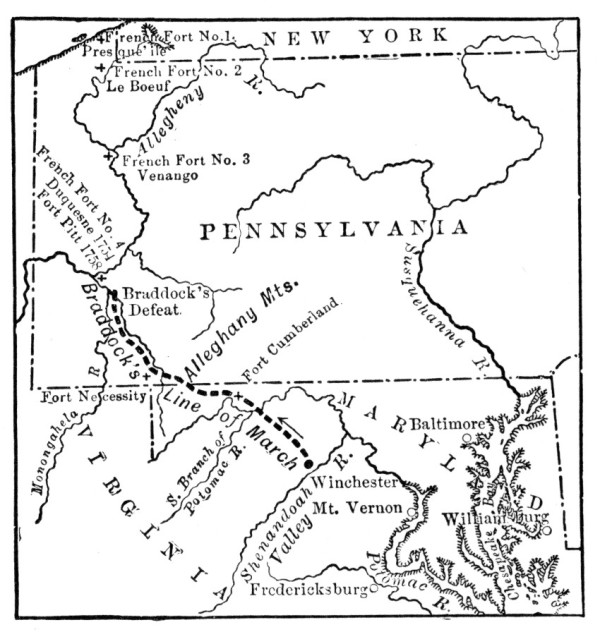
Eager for a change of surroundings, he made all his plans to go to sea. The chest containing his clothing had been packed and sent down to the wharf, but at the last moment he yielded to his mother's persuasion, and gave up his cherished plan of becoming a sailor-boy. He was then fourteen years old.
Returning to school, George continued to be careful and exact in all his work, his motto being "Whatever is worth doing at all is worth doing well." He was also methodical, and herein lay one of the secrets of his ability to accomplish so much when he came to manhood.
His love of out-door sport gave him a natural bent for surveying, to the study of which he applied himself diligently. He soon became proficient enough to command confidence in his ability as a trustworthy surveyor.
In the autumn of his sixteenth year he went to live with his brother Lawrence on the Mount Vernon plantation, where he spent much of his time in surveying. Here he met a man who exerted a large influence on his later life. This man was Lord Fairfax, a tall, courtly, white-haired English gentleman of about sixty years of age, who was living at Belvoir, a large plantation a few miles from Mount Vernon.
At this time George was a shy, awkward youth, somewhat overgrown for his age, with long arms, and a tall, large frame. But in his serious face there was a sign of quiet self-control and firm purpose.
The provincial youth of fifteen and the cultured English lord of sixty, though so far apart in age and experience, soon became close friends. They were much together. Sometimes they would spend the morning in surveying, and start out in the afternoon on their horses for a gay time in fox-hunting. They doubtless talked freely to each other, and as Lord Fairfax had seen much of the best English life and had read some of the best English books, he was an interesting companion to his earnest and thoughtful young friend.
This warm friendship soon had a practical turn. Lord Fairfax owned an immense tract of country in the Shenandoah Valley—by some said to be as much as one-fifth of the present State of Virginia. Wishing to learn more about it and observing George to be exceedingly careful and accurate in his surveying, he decided to send him over the Blue Ridge into the wild region to find out and report to him something about the lands there.
He was to have only one companion, George William Fairfax, who was the eldest son of Lord Fairfax's cousin, and was then about twenty-two years old. About the middle of March, 1748, when George Washington was barely sixteen years old, these two young fellows started out together on horseback, to travel through the forest a distance of 100 miles before they reached the Shenandoah Valley. They carried guns in their hands, for until their return about a month later they would have to depend mainly upon hunting for their supply of food. The account which George himself has left enables us to picture them riding alone through the forest with no road except perhaps, at times, a path made by Indians or wild animals.
After reaching the wild country they had to live in the most primitive fashion. For instance, Washington tells of a night in a woodman's cabin when he had nothing but a mat of straw for his bed, with but a single blanket for cover, and that alive with vermin. He wrote in his diary: "I made a promise to sleep so no more, choosing rather to sleep in the open air before the fire."
Again, in a letter to a friend, he says: "I have not slept above three or four nights in a bed, but, after walking a good deal all day, I have lain down before the fire upon a little hay, straw, fodder, or a bear-skin, with man, wife and children, like dogs and cats; and happy is he who gets the berth nearest the fire."
Sometimes they tried life in a tent. Once in a storm the tent was blown over, and at another time the smoke from the fire drove the occupants out of doors. One night, according to the same diary, "we camped in the woods, and after we had pitched our tent, and made a large fire, we pulled out our knapsacks to recruit ourselves. Every one was his own cook. Our spits were forked sticks; our plates were large chips." As for bread, most of the time, if not all, they had none, and they drank only pure water from running streams.
On another occasion they fell in with a war-party of painted warriors whom Washington and his friend Fairfax fearlessly joined, all gathering about a huge fire built under the trees. As the great logs blazed in the midst of the dark forest, the Indians joined in one of their wild, weird dances. They leaped to and fro, whooped and shrieked like mad beings, while one of their companions thumped upon a drum made by drawing a deer-skin across a pot filled with water, and another rattled a gourd containing shot and decorated with a horse's tail, "to make it look fine."
It was a strange experience which these two youths had that month. But Washington was well paid, earning from $7 to $21 a day. On the return of the young surveyor to Mount Vernon his employer, Lord Fairfax, was so much pleased with the report that he secured his appointment as public surveyor. For the next three years George lived the life of a surveyor, spending much of his time with Lord Fairfax at his wilderness home, Greenway Court, not far from Winchester.
During this time George was gaining valuable knowledge of the forest, and becoming so intimate with Indian life that, as people said, he came to walk like an Indian. His life in the woods developed fearlessness, patience, and self-reliance, qualities which, joined to his ability and character, inspired men's confidence and established his leadership. Governor Dinwiddie, of Virginia, appointed him an officer in the State militia, with the rank of major. And as an officer, his influence continued to increase.
Some two years afterward his brother Lawrence died and left the Mount Vernon estate to his daughter, with George Washington as guardian. On her death, a little later, Washington became owner of the immense plantation at Mount Vernon, and hence a wealthy man.
Fortune had favored him, and he might have chosen to enter upon a life of ease, but events soon occurred which called into action all his heroic qualities. The strife between the English and the French for control in the Ohio and Mississippi valleys was advancing rapidly toward war.
The French had long considered this territory their own. We recall that La Salle had explored it, and attempted to plant colonies here. For many years, French explorers, priests, and traders had toiled on, patiently pushing their way through the forests, and planting stronghold after stronghold. At length, pressing closer on the English border, they began to build forts between Lake Erie and the head of the Ohio. For the English also had their eyes on the fertile valley of the Ohio, and were beginning to occupy it.
At once a company composed largely of Virginia planters was organized for the purpose of making settlements in the Ohio Valley. Before they could do much, however, the French had boldly advanced far into territory claimed by England.
The people of Virginia in alarm, said, "This advance must stop. What can be the plans of the French? How many are already in the forts lying between Lake Erie and the Ohio River?" Governor Dinwiddie and other Virginia gentlemen grew excited as they asked such questions. They decided, therefore, to send out to the French commander in the fort near Lake Erie, a trusty messenger who should ask by what right the French were invading a country belonging to England. This messenger was also to find out what he could about the forces of the French in that vicinity, and about their plans. Moreover, he was to make a strong effort to win over to the English the Indians, whose friendship the French were trying to gain. As a suitable man for this dangerous enterprise, all eyes turned to George Washington, still only twenty-one years of age.
THE DEATH OF BRADDOCK.
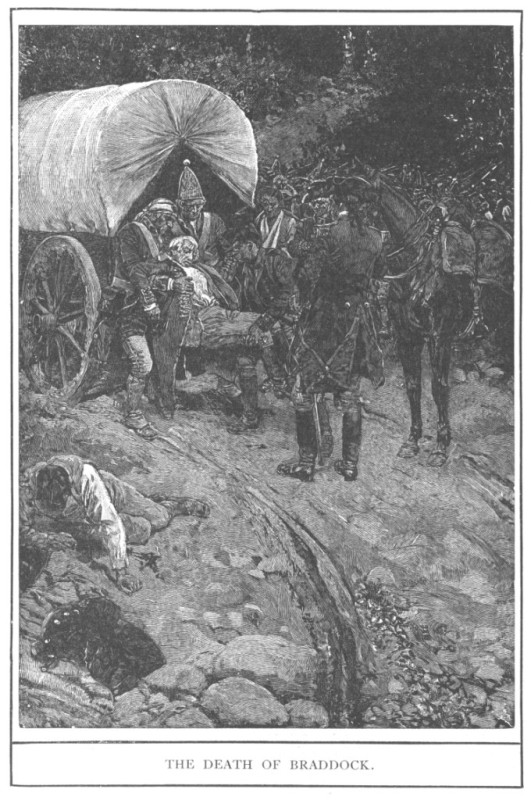
The journey of 1,000 miles through trackless forests, in the bitter cold of Winter, did not offer a cheerful outlook. But on October 30, 1753, with seven companions, including an Indian and a French interpreter, George Washington started from Williamsburg. Stopping at Fredericksburg to bid good-by to his mother, he went on by way of Alexandria to Winchester, the familiar spot where he had spent many happy days with Lord Fairfax. Here he got horses and various supplies needed for his journey.
From Winchester the little band of men moved forward to Will's Creek (now Cumberland, Md.), and then plunged boldly into the forest. From that time on, the difficulties of the journey were wellnigh overwhelming; but by perseverance in climbing lofty mountains and in swimming rivers swollen by heavy rains, the end of their journey was at last reached.
On receiving an answer from the French commander, who promised nothing, Washington started back home. The horses soon proved too weak to make much headway through the dense forests and deep snow, and it seemed best to push on without them. He also left behind him all of his party except a trusty woodsman. Then putting on an Indian costume with a heavy cloak drawn over it, he strapped upon his back the pack containing his papers and, gun in hand, started off. A little later they were joined by an Indian guide, who soon gave evidence of his treachery by suddenly turning and discharging his gun at Washington.
Washington had another narrow escape from death. He had expected on reaching the Alleghany River to cross on the ice, but to his dismay he found the ice broken up and the stream filled with whirling blocks. There was no way of getting over except on a raft which he and his companion had to make with a single hatchet. Having at last finished it, they pushed off, and then began a desperate struggle with the current and, great blocks of floating ice. Washington, in trying to guide the raft with a pole, was thrown violently into the water. By catching hold of one of the raft logs he recovered himself, and by heroic effort succeeded in reaching an island nearby. Here the travellers suffered through a night of intense cold, not daring to kindle a fire for fear of the Indians.
On January 16th they reached Williamsburg, where Washington delivered to Governor Dinwiddie the unsatisfactory letter he had brought from the French commander. Although the result of the expedition was not what the Virginians had hoped for, Washington had so well succeeded in carrying out his perilous mission that he was highly praised for his effort.
The defiant answer of the French commander made it seem probable to the people of Virginia that war would follow. Therefore a company of men was sent out to build a fort at the place where the Alleghany and Monongahela rivers unite to form the Ohio. Washington's quick eye had noted the importance of this site, afterward known as the "Gateway of the West."
In the meantime Washington was drilling men for service, and in April he set out with the rank of lieutenant-colonel with two companies for the frontier. He had not gone very far when he learned that the French had driven off with a large force the men who had been sent to the head of the Ohio to build a fort; but he continued his march. When a little later the approach of a small body of French was reported, the Virginians surprised them, killing, wounding, or capturing all but one. Colonel Washington was in the thickest of the fight, and wrote in a letter, "I heard the bullets whistle and, believe me, there is something charming in the sound."
After this fight, which began the war, Washington returned to Great Meadows, and, learning that a large body of French were marching against him, hastily threw up rough earthworks, which he called Fort Necessity. When attacked soon after by two or three times his own number, the brave young colonel did not shrink. For nine hours, in a heavy downpour of rain, he and his sturdy followers stood up to their knees in mud and water in the trenches. Being so greatly outnumbered, his troops were of course defeated, but the House of Burgesses gave their commander a vote of thanks in recognition of his bravery.
The war now began in bitter earnest, and England promptly sent over troops, with General Braddock in command. When on reaching Virginia he heard of Colonel Washington, Braddock appointed him a member of his staff. Colonel Washington soon discovered that General Braddock was not the man to handle an army in woodland warfare. He would gladly have advised him, but the haughty British general would hear no suggestions from a colonial officer.
With 2,000 soldiers, General Braddock marched against the French, stationed at Fort Duquesne at the head of the Ohio. On the morning of July 9th, when the army was only eight miles from the fort, it was suddenly attacked by the French and Indians, who lay in ambush in the thick forest. The English soldiers, standing in solid masses, were shot down by squads, but the Virginians fought from behind trees in true Indian fashion.
Braddock, who has been rightly called a gallant bull-dog, rode madly to and fro, giving orders to his men, but in vain. He shortly fell from his horse, with a mortal wound. The manly figure of Colonel Washington was a conspicuous mark for the enemy's guns. Two horses fell under him; four bullets tore through his clothing; but he escaped injury.
The result was a sore defeat for the English army. It lost 700 men out of 2,000, and three-fourths of its officers. Nothing but retreat could be thought of. The brave but narrow-minded Braddock had made an enormous and expensive blunder.
After Braddock's defeat Washington was given command of the Virginia troops. Later in the war he led an expedition against Fort Duquesne, as Braddock had done. But on hearing of his approach the French fled. The war having subsided in the Ohio Valley, Washington resigned his commission, returned to Mount Vernon, and soon afterward married Mrs. Martha Custis, a rich young widow.
We have seen him first as a robust lad, then as a fearless woodsman, and later as a brave soldier. We will leave him for a while at Mount Vernon, where in the refined society of old Virginia he came to be equally well known as a high-bred gentleman.
REVIEW OUTLINE
La Salle's dream. The French and the English colonies. George Washington's early home. His school-training. George and his mother. Influence upon George of his brother Lawrence. George's rules of conduct. The boy soldier. The young athlete. The fair-minded, truthful boy. George's self-control. His longing to become a sailor boy. Exactness and method in work. The young surveyor. The shy, awkward youth and Lord Fairfax. Surveying in the forests of the Shenandoah Valley. Life in the woods; an Indian dance. With Lord Fairfax at Greenway Court. Washington, the young soldier. Washington becomes a wealthy planter. The French advance into the Ohio Valley. Washington's perilous journey. The return on foot; two narrow escapes. Washington in the fight that begins the war. His defeat at Great Meadows. A member of Braddock's staff. Braddock's crushing defeat. Washington retires to Mount Vernon.
TO THE PUPIL
1. Write on the following topics, using a paragraph for each: George Washington's early home; his school-training; George and his mother; the boy soldier; the young athlete; the truthful boy.
2. It would be well for you to commit to memory George's rules of conduct.
3. Give an account of the young surveyor's life in the woods out in the Shenandoah Valley. Imagine the two young fellows riding alone through the forest, and the scene in the woods when the Indians danced by the huge fire.
4. Trace on your map Washington's perilous journey to the French forts. What was the purpose of this journey? Travel in imagination with Washington on his return to Williamsburg, and tell, in the first person, some of your experiences.
5. What do you think of General Braddock? In what way was he defeated? This was one of the battles of the Last French War. What caused this war?
6. Find as many words as you can that describe George Washington.
James Wolfe.
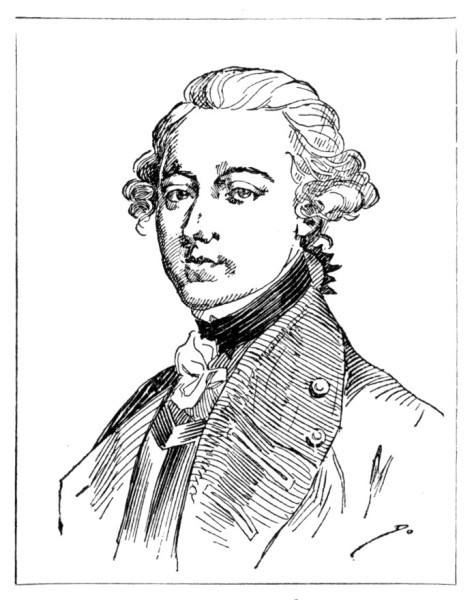
CHAPTER XI James Wolfe, the Hero of Quebec
[1727-1759]
We have just seen how the English and the French struggled to get control of the Ohio Valley. But the fighting in the Last French War was not confined to this region. Many of the battles were fought to secure control of two waterways. One of these was the route to Canada, including Lakes George and Champlain, and the other was the St. Lawrence River. Indeed, the crowning feature of the Last French War was the heroic effort made by a young English general to capture Quebec.
This young general was James Wolfe. He was born in the southeastern part of England in 1727. From his father, who was an officer in the English army, he inherited a love for the soldier's life. But in all the trials and dangers to which he was exposed in his short and stormy career, he continued to be a devoted son, his love for his mother being especially tender and sincere. With her he kept up a regular correspondence, in which he freely expressed his inmost thoughts and feelings.
When only sixteen years of age he was sent to Flanders as an adjutant in a regiment of the English army. Here, by faithful and thorough work, he won promotion and soon, through bravery and skill, received an appointment as brigadier-general. At the age of thirty-two he was sent to America to assist in an expedition to Louisburg, and played a large part in the capture of that stronghold.
He presented an awkward figure. At that time he was tall and slender, with long limbs, narrow shoulders, and red hair tied in a queue behind. His face was plain, with receding chin and forehead, and up-turned nose. But his keen, bright eyes, full of energy and fearlessness, gave him an attractive countenance and revealed a heroic nature.
His health was never robust. As a child he was delicate, and as a youth he had frequent attacks of illness. But his resolute will and his high ideals enabled him to do what others of a different mould would never have attempted. He was governed, too, by an overmastering sense of duty, which was his most striking trait.
Quebec and Surroundings.
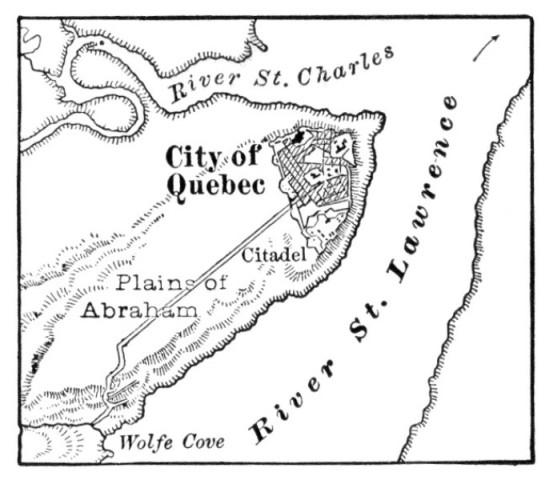
Although at times extremely impatient, his tenderness and frankness of nature easily won enduring friendships. His soldiers loved him so dearly that they were willing to follow him through any dangers to victory or death.
After the capture of Louisburg, Wolfe was so worn by the demands upon his strength that he returned to England and went to Bath for treatment. At this time he met Miss Katherine Lowther, to whom he soon became engaged.
But he was not long to remain inactive, for his country needed him. The great William Pitt, who had now become the head of affairs in England, saw in this fearless young general a fitting leader for a dangerous and difficult enterprise. This was an expedition against Quebec, the strongest and most important position held by the French in America.
The French army at Quebec, commanded by General Montcalm, numbered more than 16,000 men, consisting of Frenchmen, Canadians, and Indians. But some were boys of fifteen, and others old men of eighty. Here they awaited Wolfe, whose army numbered 9,000.
By June 21, 1759, Wolfe's fleet lay at anchor in the north channel of the island of Orleans, not far below Quebec. Then began a time of trial and discouragement to the young commander, who vainly looked for a point from which he might hope to make a successful attack.
In the meantime his soldiers were suffering from intense heat and drenching rains. Much sickness was the natural result. Wolfe, anxious with doubt, himself fell a victim to a burning fever. But he would not give up. He said to his physician, "I know perfectly well you cannot cure me. But pray make me up so that I can be without pain for a few days, and able to do my duty. That is all I want." Although racked with pain, he went from tent to tent among his men, trying to encourage them.
General Montcalm.
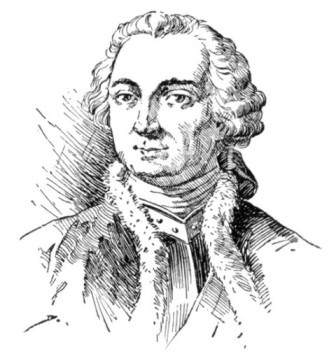
During several weeks there was fighting now and then in the neighborhood of Quebec. On July 31st Wolfe's troops made a determined attack upon the French on the heights just north of the Montmorency River. The English advanced, in the face of a heavy, blinding rain, with great heroism, but were forced to retire without having gained a foothold.
Thus the summer wore on near to its close. In desperation, Wolfe decided upon a bold move. He determined to sail up the river, land above Quebec, scale the steep and rugged cliffs there, and compel the French to fight a battle or surrender the city.
The most serious difficulty was to find a way to scale the cliffs. At last one day came a glimmer of hope. For looking through a telescope from the south side of the river, the resolute young commander discovered a narrow path leading up the frowning heights not far from the town. "Here," he quickly decided, "I will land my men."
Promptly, eagerly, he began to lay his plans. On the morning of September 7th, in order to conceal from Montcalm their real purpose, the British, in gay red uniforms, embarked and sailed up and down the St. Lawrence, as if looking for a landing-place. On September 12th, the fatal time set for decisive action, some of the English vessels, with a large body of troops on board, hovered about the shore below Quebec, as if to force a landing there. Montcalm was completely deceived. The ruse had succeeded.
Meanwhile the main body of English troops, which was to make ready a landing, was quietly anchored in the river above Quebec. Twenty-four brave men volunteered as leaders to scale the cliffs. These men took their places in the foremost boat.
At two o'clock in the morning Wolfe gave the order to advance. It was a starlit night, but as there was no moon, it was dark enough to conceal the movements of the English. For two hours the long procession of boats filled with soldiers floated silently down the river. The brave young Wolfe, calm and masterful, was in one of the foremost boats. Fully expecting to be killed in the coming battle, he had, earlier in the evening, given to an old school-friend the portrait of his betrothed, Miss Lowther, which he had long worn about his neck. He said to his friend, "Give this to Miss Lowther, if I am killed."
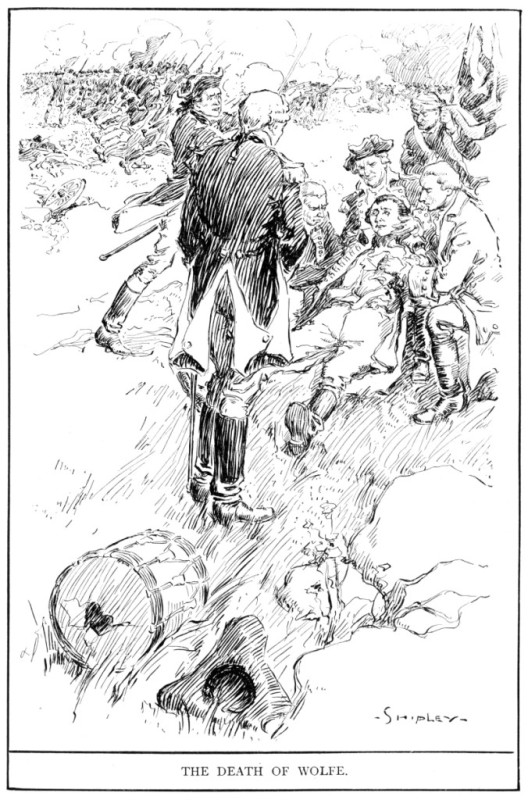
THE DEATH OF WOLFE.
We can imagine the strain upon Wolfe's feelings during the two hours in which the boats floated downstream. Perhaps it was to relieve this strain that he repeated in a quiet voice Gray's "Elegy in a Country Churchyard." He seemed to dwell with peculiar feeling upon the last line in the following stanza:
The boast of heraldry, the pomp of power, And all that beauty, all that wealth e'er gave, Await alike the inevitable hour, The paths of glory lead but to the grave.
On coming to the end of the poem, he said, "Gentlemen, I would rather have written those lines than take Quebec."
When they had almost reached their landing-place they heard a sudden call from a French sentry, "Qui vive!" "France," replied one of Wolfe's officers, who spoke French. "A quel régiment?" "De la Reine," was the reply, and thinking the boats were under the control of Frenchmen carrying provisions to Montcalm, the sentry let them pass. Later when challenged by another sentry, the same English officer said in French: "Provision-boats. Don't make a noise—the English will hear us."
At length they came to the spot since called Wolfe's Cove, and there landed. The twenty-four volunteers clambered up the path in the darkness and, reaching the top, surprised the small number of Frenchmen stationed there, and quickly overpowered them. It was with much difficulty that Wolfe's army succeeded, by seizing hold of trees and bushes, in getting to the top with muskets, cannons, and supplies.
At daybreak, Wolfe chose as the field of battle the Plains of Abraham, a high stretch of land extending along the river just above the town.
The brave Montcalm, in doubt and perplexity, had spent a sleepless night pacing to and fro. When told of the landing of the English troops he rode up from his camp to see what was going on. Amazed at the "silent wall of red" presented by the English army drawn up in battle array, he said, "This is a serious business."
Wolfe, anxious but calm, rode to and fro, inspiring his soldiers with confidence. "Victory or death" was their watchword, for in case of failure retreat was impossible.
By ten o'clock the French were in line of battle, ready for the onset. With loud shouts, they rushed upon the English. But the latter, waiting quietly until the enemy was only forty paces away, met them with a withering fire that strewed the ground with dead and dying men. While the French were wavering, the English fired another deadly volley, and then with victorious shouts rushed headlong upon the confused ranks.
The fighting was stubborn and furious, and Wolfe was in the thickest of the fray. While he was leading a charge, a bullet tore through his wrist. Quickly wrapping his handkerchief about the wound, he dashed forward until he was for the third time struck by a bullet, this time receiving a mortal wound. Four of his men bore him in their arms to the rear, and wished to send for a surgeon; but Wolfe said, "There's no need; it's all over with me." A little later, hearing someone cry "They run; see how they run!" he asked, "Who runs?" "The enemy, sir. Egad, they give way everywhere!" Then said Wolfe in his last moments, "Now, God be praised. I will die in peace."
Montcalm, too, died like a hero. Shot through the body, he was supported on either side as he passed through the town; but when he heard cries of distress and pity from his friends and followers, he said, "It's nothing, it's nothing; don't be troubled for me, good friends." Being told that he could not live many hours, he exclaimed, "Thank God, I shall not live to see Quebec surrendered." A few days later Quebec came into the hands of the English. Its fall meant the loss to France of all her possessions in North America except two small islands for fishing-stations in the Gulf of St. Lawrence.
The treaty of peace at the end of the war, called the Last French War,[8] was signed at Paris in 1763. By this treaty France ceded to Spain all the territory between the Mississippi River and the Rocky Mountains; also the town of New Orleans, controlling the navigation of the Mississippi. To England she gave Canada and all the territory east of the Mississippi. Thus by a single final blow did Wolfe so weaken the hold of the French upon North America, as to compel them to give up practically all they had there.
REVIEW OUTLINE
The crowning feature of the Last French War. Wolfe's love for his mother. The young soldier. Wolfe's personal appearance. His character. Wolfe sent on an expedition against Quebec. His trials and difficulties. He discovers a steep pathway. He deceives Montcalm. His army floats down the river. The English reach the rocky heights. "Victory or death!" The clash of battle. Wolfe and Montcalm receive mortal wounds. The French surrender Quebec. End of the last French War.
TO THE PUPIL
1. How did Wolfe look, and what were his most striking personal traits?
2. What were his trials and difficulties at Quebec?
3. Picture his army floating down the river on the way to the battle-field; also the soldiers climbing the steep heights.
4. Describe the battle, going in imagination with Wolfe at the head of his men.
5. Why was the capture of Quebec by the English so important?
6. Are you forming the habit of looking up on your map all the places mentioned in the text? If you wish to become strong in history, such a habit will be invaluable.
7. Remember that the Last French War began in 1756 and ended in 1763.
Patrick Henry.
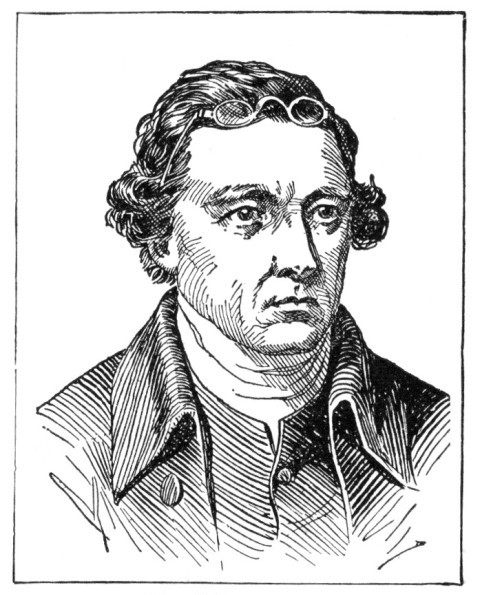
CHAPTER XII Patrick Henry and the Stamp Act
[1736-1799]
With the fall of Quebec, France lost her hold of nearly all the territory in North America that she had acquired through the energy and heroism of her explorers. England profited by this loss, but England herself had soon to meet with a misfortune far heavier—the loss of all her colonies east of the Alleghanies and along the Atlantic coast. Very soon after the close of the Last French War, she began, under the lead of the dull-witted King George, to treat them with so much injustice and oppression that in self-defence they were driven to take up arms for the security of their rights as a free-born people. The result was the American Revolution, which began in 1775 and ended in 1783. How this Revolution came to be, is one of the most interesting chapters in our history. Let us now trace the course of events leading to its outbreak.
After the close of the Last French War, England was heavily in debt. As this debt had been incurred largely in defence of the English colonies in America, George III., King of England, believed that the colonies should help to carry the burden. Moreover, as he intended to send them a standing army for their protection, he deemed it wise to levy upon them a tax for its support.
Parliament, therefore, which was composed largely of the King's friends, ready to do his bidding, passed a law called the Stamp Act. This required the colonists to use stamps upon their newspapers and upon legal documents, the price of stamps ranging from a half-penny to twelve pounds. The King thought this tax would be just because it would fall upon all the colonists alike.
But the colonists were of a different mind; for England had not fought the Last French War so much to defend them as to protect her own trade. Besides, they had already paid a reasonable share of the war expenses, and had furnished a fair proportion of soldiers for battle. They had always given their share toward the expenses of their defence, and were still willing to do so. If the King would ask them for a definite sum, they would raise it through their Colonial Assemblies. But they strongly objected to any English tax.
These Colonial Assemblies were composed of men who represented the colonists and made laws for the colonists. Therefore the colonists were willing to pay any taxes levied by the Assemblies. As free-born Englishmen they objected to paying taxes levied by Parliament, which did not represent them. Parliament might levy taxes upon the people of England, whom it did represent. But only the Colonial Assemblies could tax the colonists, because they alone represented the colonists. In other words, as James Otis in a stirring speech had declared, there must be "No taxation without representation."
George III. could not understand the feelings of the colonists, and he had no sympathy with their views. His mother had said to him when he was crowned, "George, be King," and this advice had pleased him. For he was wilful, and desired to have his own way as a ruler. Thus far he had shown little respect for the British Parliament, and he felt even less for Colonial Assemblies. Certainly if he was to rule in his own way in England, he must compel the obedience of the stubborn colonists in America. The standing army which the King wished to send to America was designed not so much to protect the colonies as to enforce the will of the King, and this the colonists knew. They therefore opposed with bitter indignation the payment of taxes levied for the army's support.
George III.
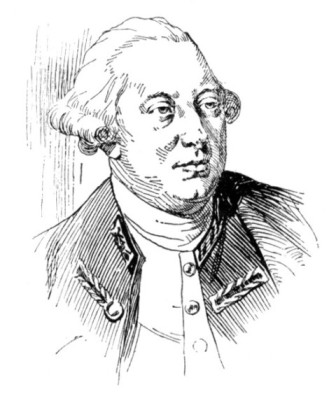
Patrick Henry was one of many who were willing to risk everything in their earnest struggle against the tyrannical schemes of King George. Patrick Henry was born in 1736 in Hanover County, Va. His father was a lawyer of much intelligence, and his mother belonged to a fine old Welsh family. As a boy, Patrick's advantages at school were meagre, and even these he did not appreciate. Books were far less attractive to him than his gun and fishing-rod. With these he delighted to wander through the woods searching for game, or to sit on the bank of some stream fishing by the hour. When out-door sports failed, he found delight at home in his violin.
When he was fifteen years old, his father put him into a country store, where he remained a year. He then began business for himself, but he gave so little attention to it that he soon failed. He next tried farming, and afterward storekeeping again, but without success.
At length he decided to practise law, and after six months' study applied for admission to the bar. Although he had much difficulty in passing the examination, he had at last found a vocation which suited him. He did well in his law practice; but we must pass over this part of his life in order that we may go with him to Williamsburg. He went there in 1765, soon after the passage of the Stamp Act by the English Parliament, to attend the session of the Virginia House of Burgesses, of which he had been elected a member.
We get a vivid picture of our hero at this period of his career as he rides on horseback toward Williamsburg, carrying his papers in his saddle-bags. John Esten Cooke says of him: "He was at this time just twenty-nine, tall in figure, but stooping, with a grim expression, small blue eyes which had a peculiar twinkle, and wore a brown wig without powder, a 'peach-blossom coat,' leather knee-breeches, and yarn stockings."
There was great excitement in Williamsburg, and it was a time of grave doubt. What should be done about the Stamp Act? Should the people of Virginia tamely submit to it and say nothing? Should they urge Parliament to repeal it? or should they cry out against it in open defiance?
Most of the members were wealthy planters, men of dignity and influence. These men spoke of England as the "Mother" of the colonies, and were so loyal in their attachment that the idea of war was hateful to them. Certainly, the thought of separation from England they could not entertain for a moment.
But Patrick Henry was eager for prompt and decisive action. Having hastily written, on a blank leaf taken from a law-book, a series of resolutions, he rose and offered them to the assembly. One of these resolutions declared that the General Assembly of the colony had the sole right and power of laying taxes in the colony.
A hot debate followed, in the course of which Patrick Henry, ablaze with indignation, arose and addressed the body. His speech closed with these thrilling words: "Cæsar had his Brutus, Charles the First his Cromwell, and George the Third—" "Treason! Treason!" shouted voices from the stormy assembly. Pausing a moment in a fearless attitude, the young orator calmly added, "may profit from their example. If this be treason make the most of it." The resolutions were passed.
It was a great triumph for the young orator, who now became the "idol of the people." As he was going out of the door at the close of the session, one of the plain people gave him a slap on the shoulder, saying, "Stick to us, old fellow, or we are gone!"
The note of defiance sounded by Patrick Henry at this time vibrated throughout America, and encouraged the colonists to unite against the oppressive taxation imposed upon them through the influence of the stubborn and misguided King George.
But the English people as a whole did not support the King. Many of them, among whom were some of England's wisest statesmen, believed he was making a great mistake in trying to tax the Americans without their consent. Said William Pitt, in a stirring speech in the House of Commons: "Sir, I rejoice that America has resisted. Three millions[9] of people so dead to all the feelings of liberty as voluntarily to submit to be slaves, would have been fit instruments to make slaves of all the rest."
In the ten years following the passage of the Stamp Act, events in America moved rapidly. Some of these we shall learn more about a little later. It is sufficient here to say that the colonial merchants refused to import goods so long as the Stamp Act was in effect; that their action caused the merchants, manufacturers, and ship-owners in England to lose money heavily; that these merchants and ship-owners at once begged Parliament to repeal the Stamp Act; and that Parliament did repeal it one year after its passage.
St. John's Church, Richmond.
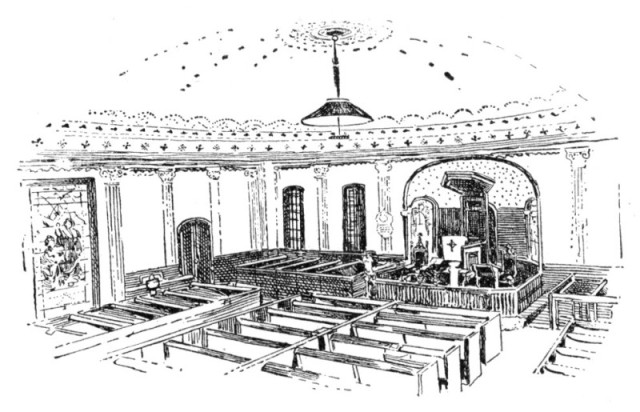
Ten years after Patrick Henry's eloquent speech at Williamsburg against the Stamp Act, the people of Virginia were again deeply aroused; for King George, acting through Parliament, had sent 3,000 soldiers to Boston to force her unruly people and those of Massachusetts to obey certain of his commands. Virginia having given her hearty support to the people of Massachusetts, the royal Governor of Virginia drove the Colonial Assembly away from Williamsburg. But the people of Virginia, resolute in defence of their rights, elected a convention of their leading men, who met at old St. John's Church in Richmond, a church which is yet standing. Excitement was widespread, and thoughtful men grew serious at the war-cloud growing blacker every hour.
Virginians had already begun to make preparations to fight if they must. But many still hoped that the disagreements between the Americans and King George might be settled, and therefore believed that they should act with great caution. Patrick Henry thought differently. He was persuaded that the time had come when talk should give place to prompt, energetic, decisive action. The war was at hand. It could not be avoided. The Americans must fight, or tamely submit to be slaves.
Believing these things with all the intensity of his nature, he offered a resolution that Virginia should at once prepare to defend herself. Many of the leading men stoutly opposed this resolution as rash and unwise.