MEMORIES OF THE BOOT POND PLACE[36]
Reading edition
MEMORIES OF THE BOOT POND PLACE[36]
By SUSAN H. BURGESS
Long long ago before there were any automobiles and airplanes had not been thot of, when steam engines were considered very swift and steam boats were slow but sure, everybody had horses and carriages.
Then it was that a family of eight children lived in a small house hardly big enough to hold so many. Because their house was so small they lived out of doors most of the time.
There was room enough out of doors in those days. The streets and roads into the country even were not crowded as they are now and people spent a great deal of time indoors.
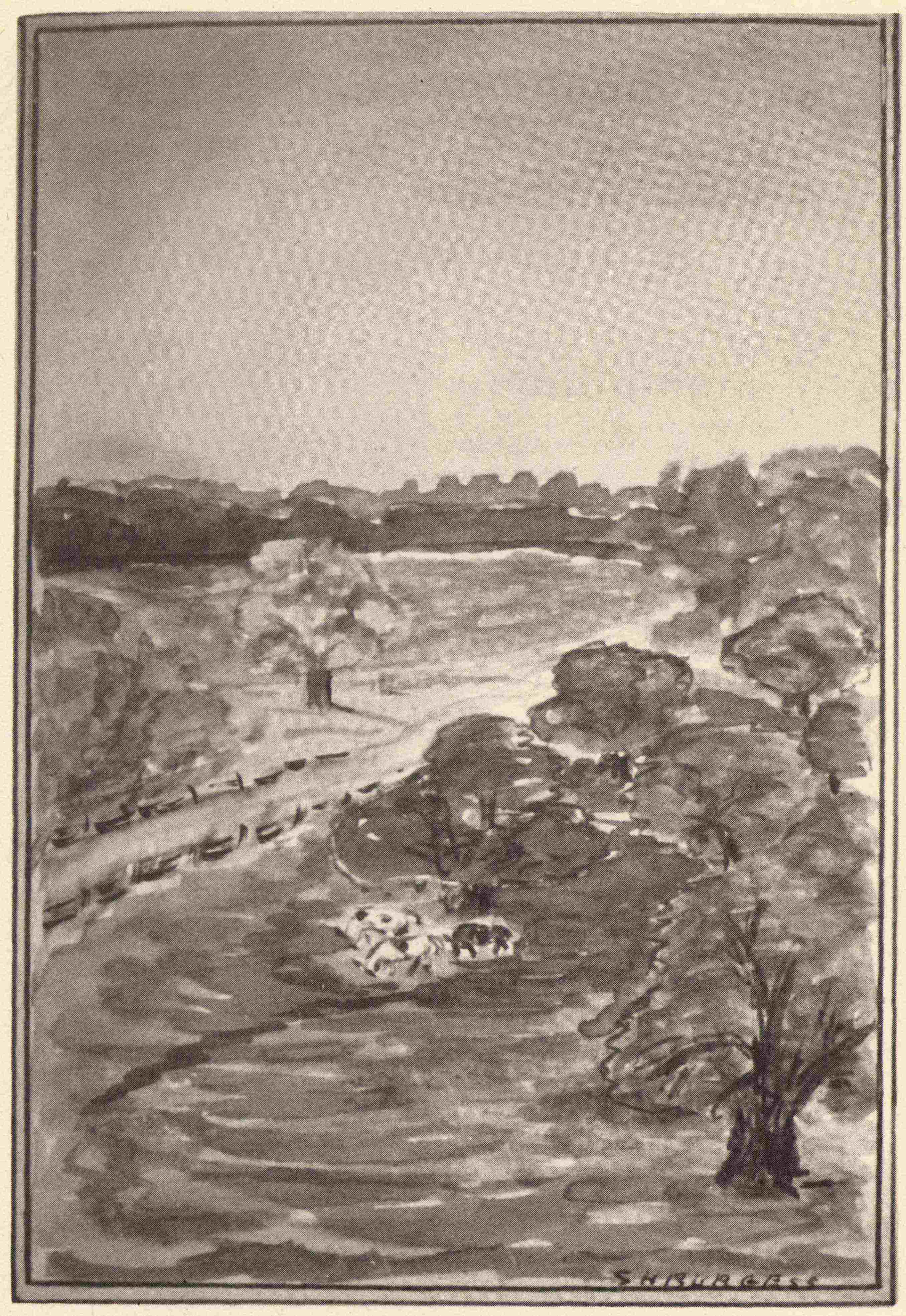
Horses got very tired travelling long distances over poor roads. People enjoyed riding then even as they do now, and this family of eight children used to love to drive with their father or mother through the woods over a crooked road to their grandparent’s big farm house which stood between two lovely lakes.
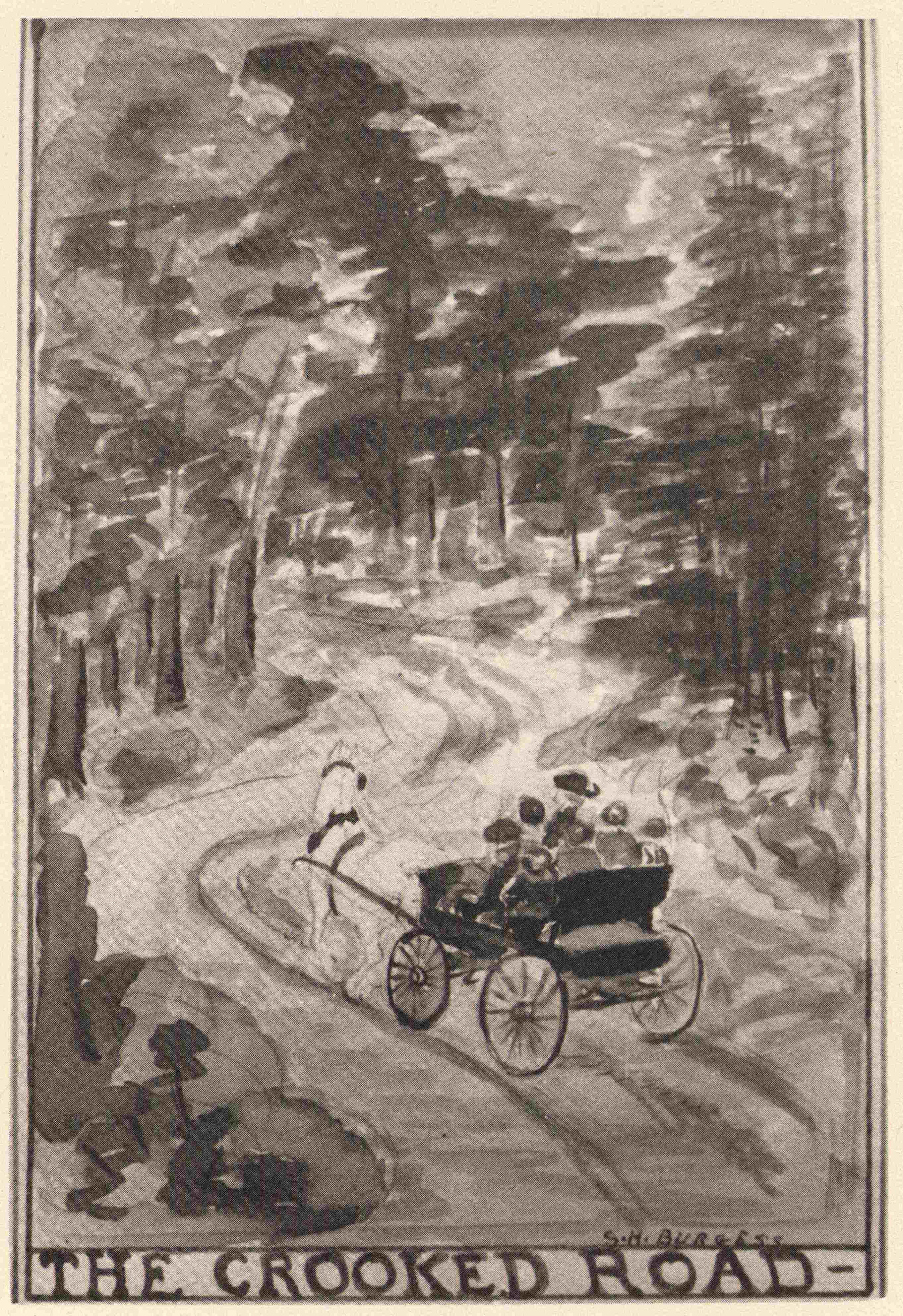
THE CROOKED ROAD
At every turn and bend in the road were surprises or things to be remembered, from other drives such as the spots where the pinkest Mayflowers had been found in the spring or the birds nests or where a black snake had once crossed over, or where the biggest blueberries grew and best of all at the end of the trip at the last bend of the road the fun of seeing the farm house first and if you weren’t the first to see the house perhaps with standing up you could be first to see the lakes. But even if you didn’t see any of the things first it was nice to see them anyway the new and the old. There was always so much new to be found, new flowers, bugs, birds, berries and everything just lovely and woodsey and at grandfather’s farm it was always a time for something—cherry time, strawberrie time or watermelon time and if it wasn’t a time for a fruit or vegetable it was a party time like Thanksgiving—Christmas—or just a summer picnic, and always a happy time in such a happy place
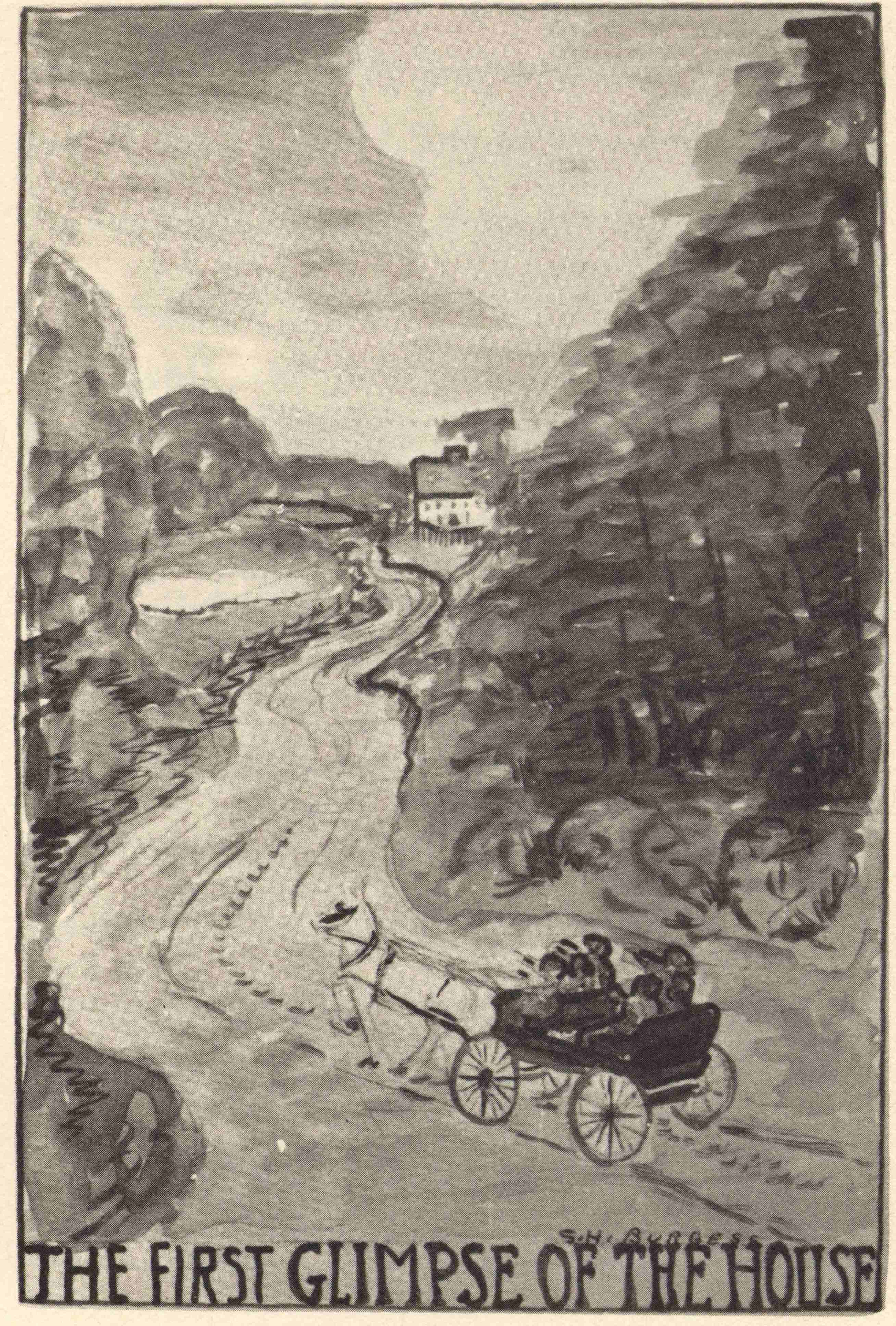
THE FIRST GLIMPSE OF THE HOUSE
Grandfather and Grandmother had horses and carriages but the horses travelled very slowly and the carryalls were covered and not like the democrat wagon the eight children were used to and liked because it was open and they could see so much. Buggys and carryalls were not bad for old folks and rainy days. Hay wagons and truck carts were jolly fun and rides on the backs of fat farm horses from the field to barn were worth waiting for and then to slide off over the round fat side and to run quickly from the hoofs that could sometimes kick. To run and offer a few whisps of hay or an apple as reward for the ride and not get nipped by those big rows of teeth, that was fun.
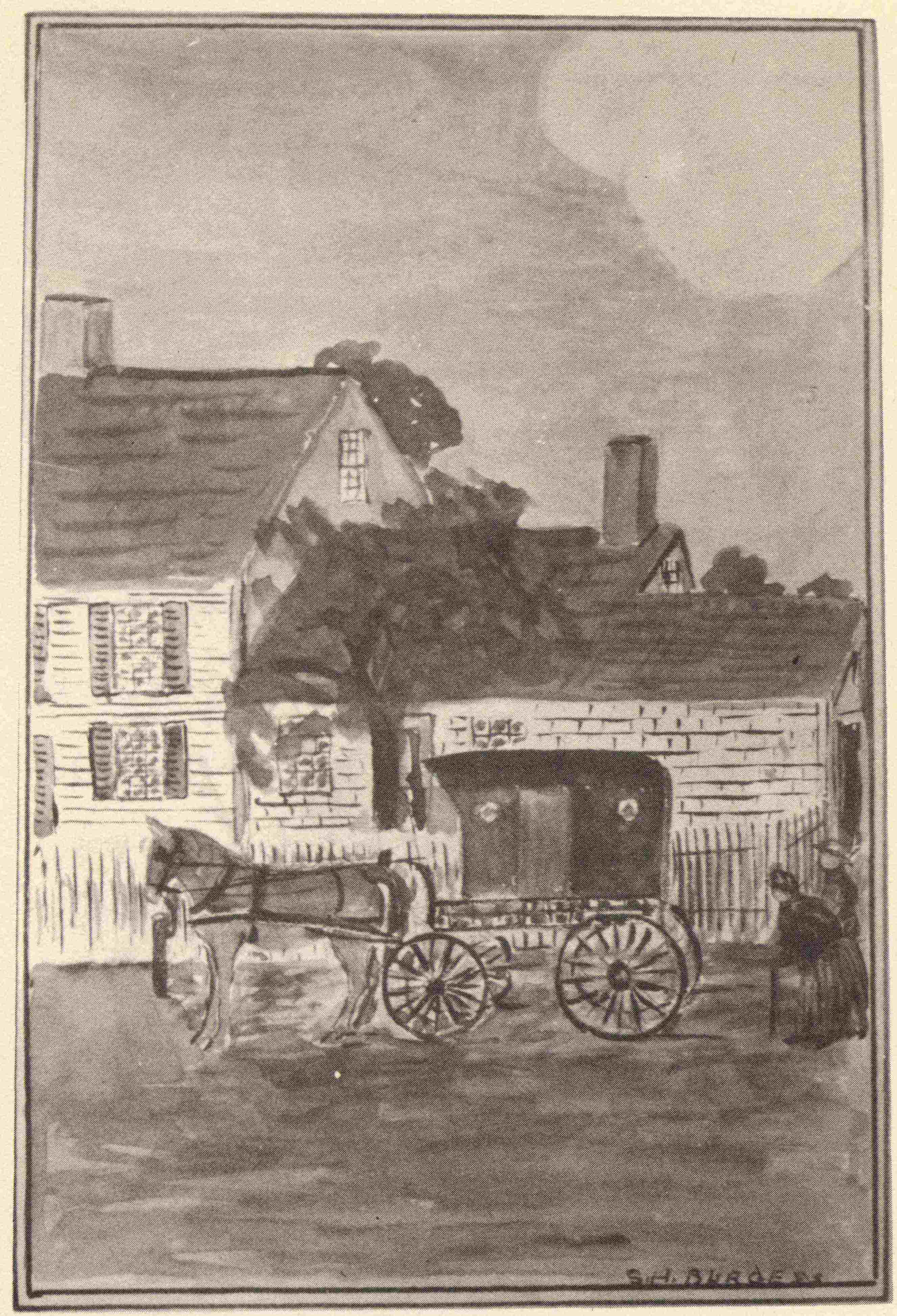
Grandmother was most always at home and busy, but pleased to have company, tho she didn’t stop being busy for company. She would spin or weave or make cakes or pies and company could help and when dinner time came she said they had earned their dinner. Such platters of fried fish, rye bread and Indian meal cakes and puddings with pumpkin pies so large and deep, a dinner to be earned and remembered
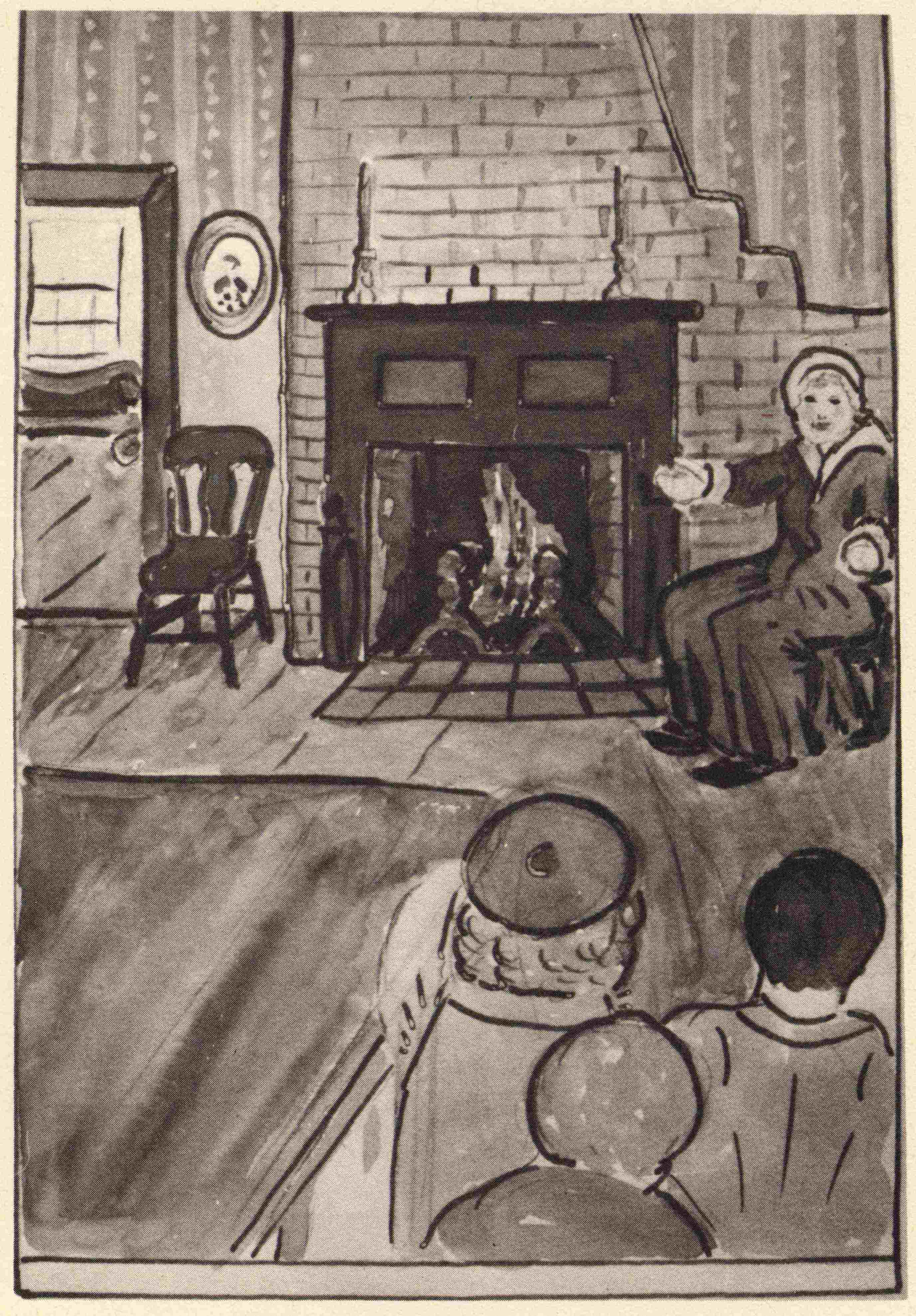
In cool weather there was wood to be brought in for the fireplace and children were handy in gathering pine cones to start a quick blaze. In warm weather sweet smelling green bay branches had to be picked to fill the fireplaces to keep flies and mosquitoes from coming in through The chimneys. There was butter to churn and water to pump. There were no faucets all the water had to be pumped up from wells. Grandmother was lame and had to have many things done for her. The floors were uneven the boards were very wide with big knots which made bumps. Such floors were hard on lame people but to children it made just one more thing different and better than any other house. The stairways were crooked too. There were four of them, the fourth leading to the big attic at the top of the house, a place where children could be forgotten for a while like all the other attic things. While the children were being forgotten they made the attic treasures live again. From hair chests, sea chests and boxes were dragged forth hoop skirts, bustles, bonnets, veils, mits, cloth shoes and costumes of stiff silk or stiffer calico or print
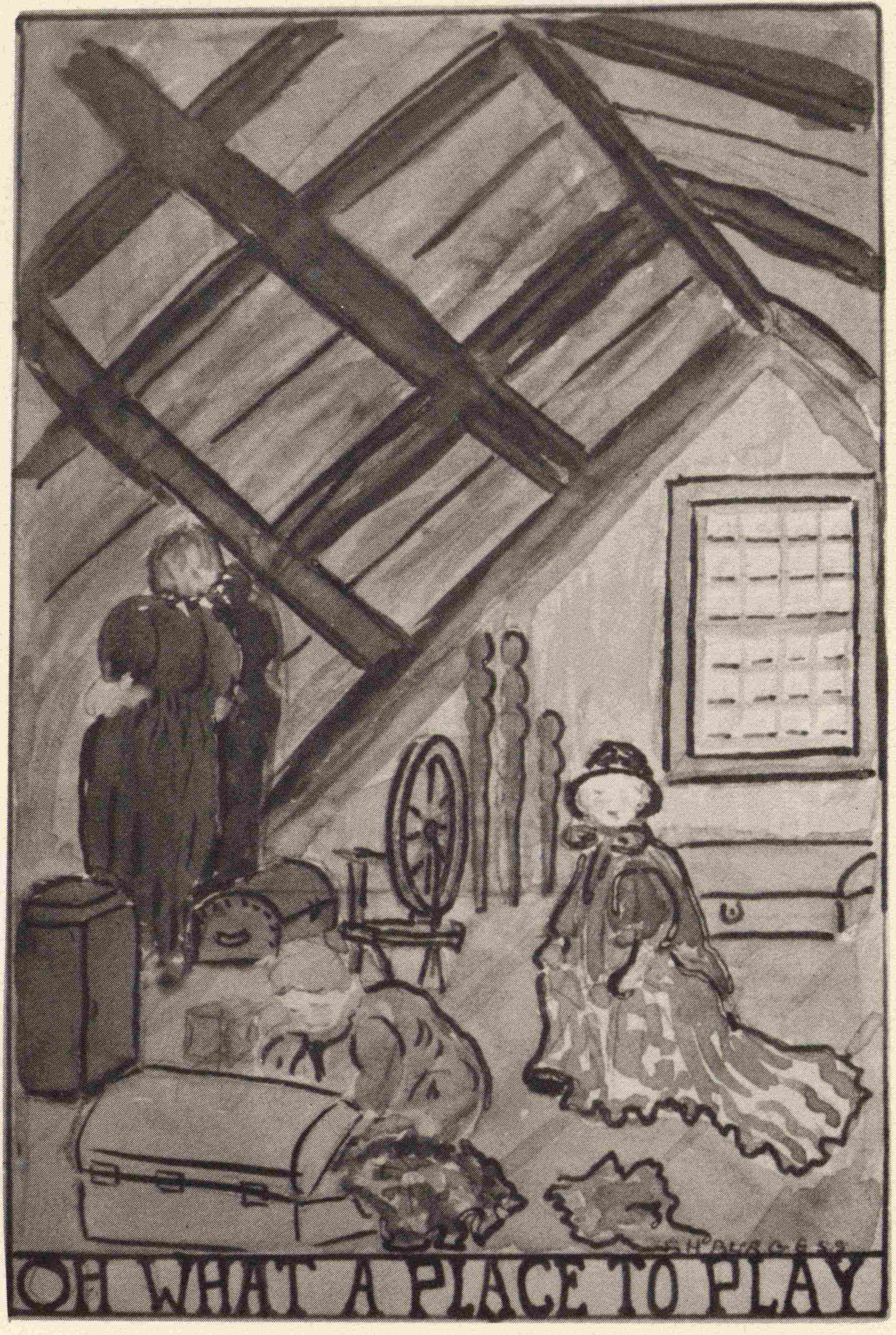
OH WHAT A PLACE TO PLAY
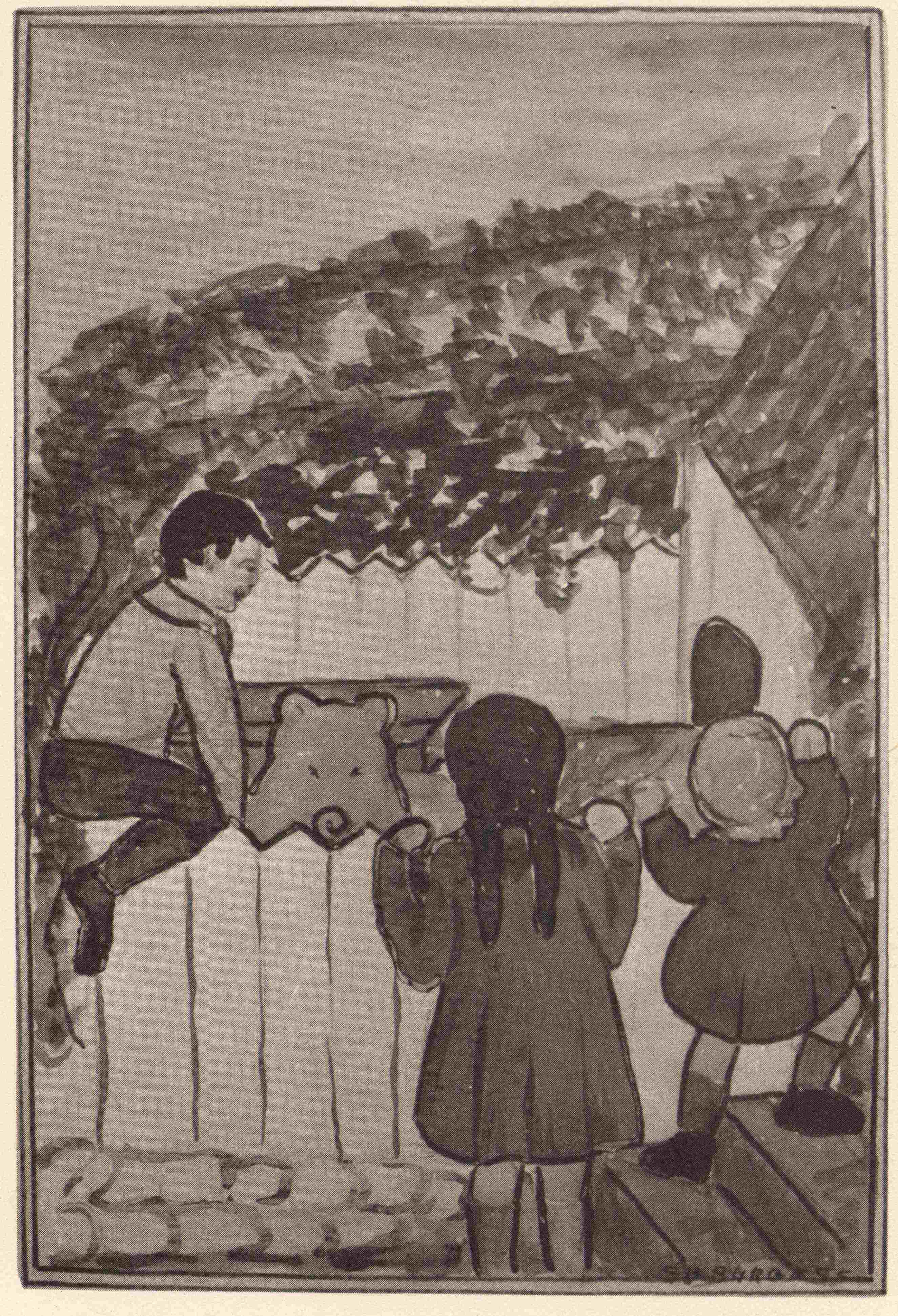
Following such a happy airing of honorable and ancient treasures swift and sure came discovery and a quick exit while back with skillful hands went the joys of other days forbidden joys of children’s ways The attic once more resumed its quiet, broken only by an angry wasp dashing his wrath against a dusty window pane. Retreating footsteps down the stairs and through the house with an echo of chagrin found pause beside the pig pen and near tragedy was turned to comedy. The pig at grandmothers always had a lovely home with clean white-washed pen with fresh straw on the floor, a trumpet vine shading it, and the pig himself scrubbed clean every week. Still he would be a pig and would get into his trough feet and all. He enjoyed having his back scratched but his ears were ticklish.
Pig weed and sweet apples would tempt him to rise when first offered but he preferred to eat them lying down and a pig lying down isn’t much fun to gather apples or pig weed for. The best time of all to visit the pig pen was when there was a litter of little pigs. How they could run and how they could squeal Always up to little tricks it payed to fix a seat and stay and watch them for a while.
The big barn door was usually open wide. The hay from the mows was within easy reach of cows and horses in their stalls a fact to be noticed before taking a slide down one of them.
The barn had a shop with a bench and tools, big wooden planes, curious things for mending wagons and harness, a shoe maker’s bench with a draw filled with wooden pegs and shoe lasts. There was room for almost every thing you could think of in the barn, and room enough too for almost every kind of a game you could think of to play rain or shine, and then when you were tired of play to come upon a family of pretty kittens in a hidden corner was a happy surprise.
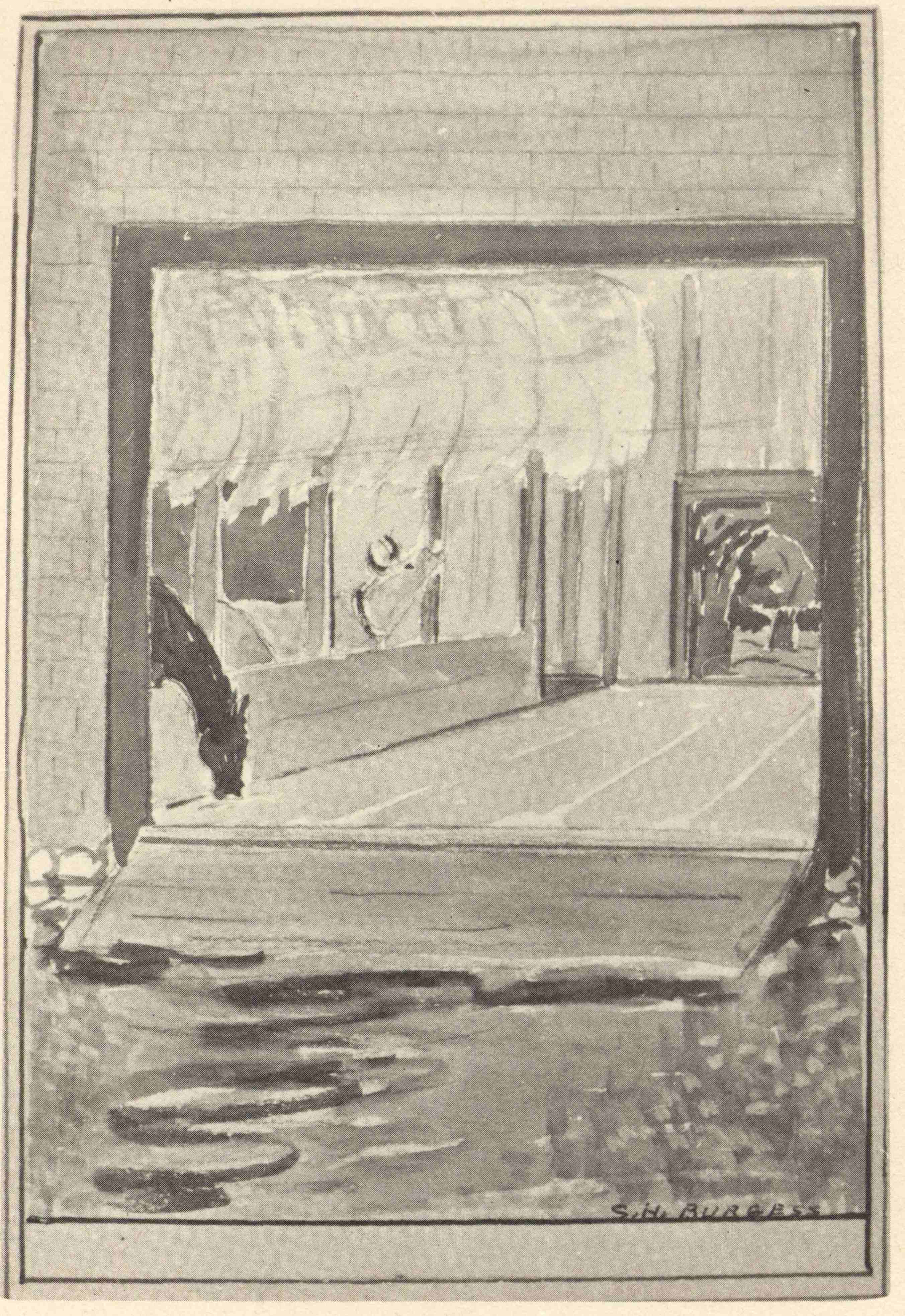
The big barn door faced the road to town but the small door opposite it looked out into the orchard and the lakes beyond. A vista of alluring temptations, fruit trees, berry bushes kitchen garden, flowers and last but not least the lakes with boats and fishing and sandy beach, not forgetting the big swing in the big oak tree. The ice house was under the big oak. You could play that goblins lived in it, goblins that could fly out the door so high up and who didn’t need any windows (there weren’t any windows)
It was hard to decide just what to play first down at the lakes. The big red boat, the middle sized white boat or the little green punt were such fun and the wharf that didn’t reach out into the water deep enough and had to have a plank added to the end, a plank that teetered with too many on it.
The sand beach and the clear cool lake were perhaps most tempting of all the temptations. Hours and hours of happy splashings and moulding of sand castles and sailing of ships with the sun shining hotly and the water swishing cool and clean around ones feet. To fall in all over was not that wrong, but rather a clumsy accident, and in winter when thin ice proved a temptation to daring skaters and the ice gave way it was also considered an act of very poor judgement. The chilly bath scalding ginger tea and bed were enough punishment.
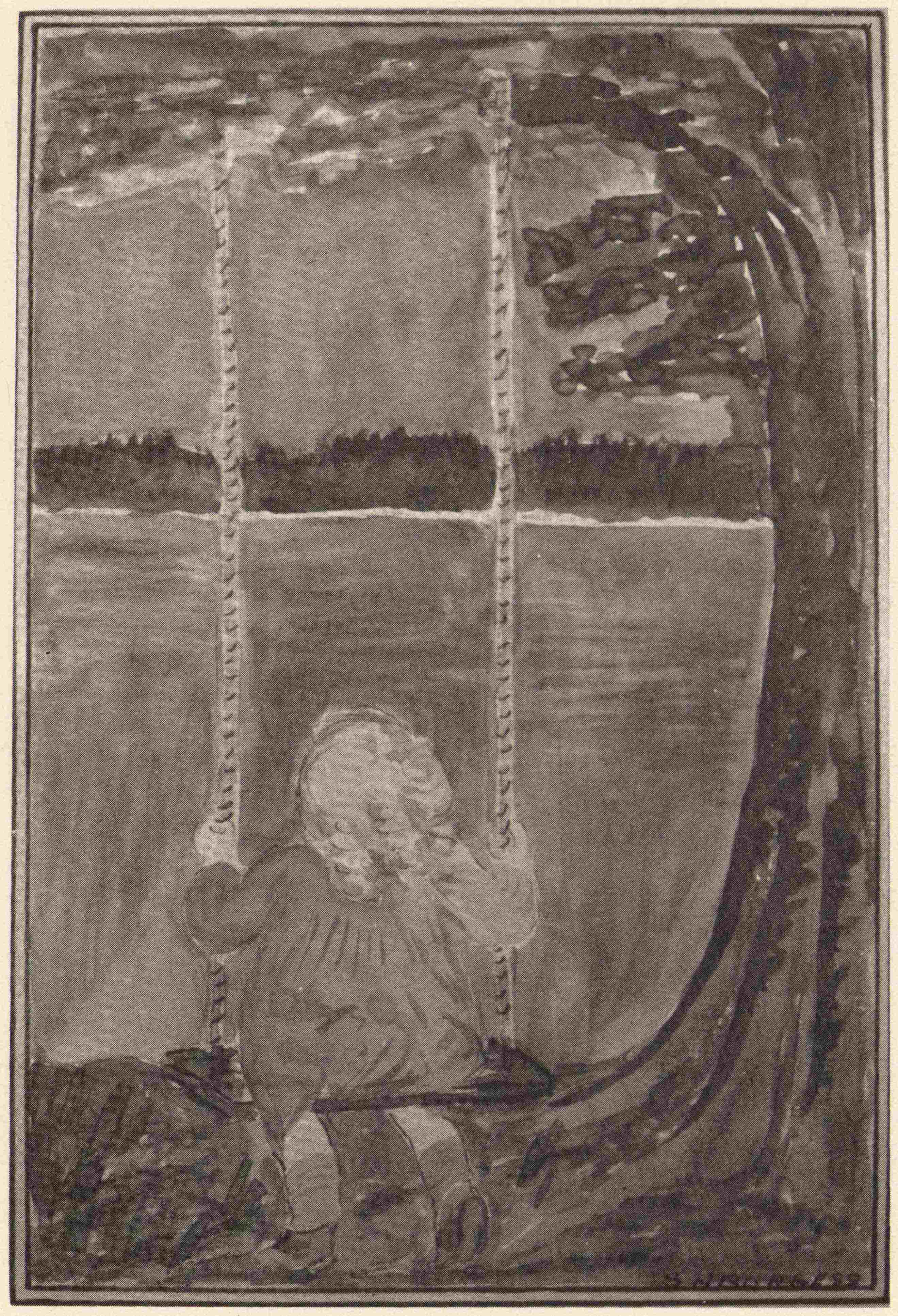
The swing in the oak Tree was so near the lake that a big push would make it go out over it. The pusher could run down the bank to the water and it wasn’t easy to keep from running right in To swing higher and higher out over the water until your feet could touch the branches of the oak tree. then to let the old cat die and your turn was up.
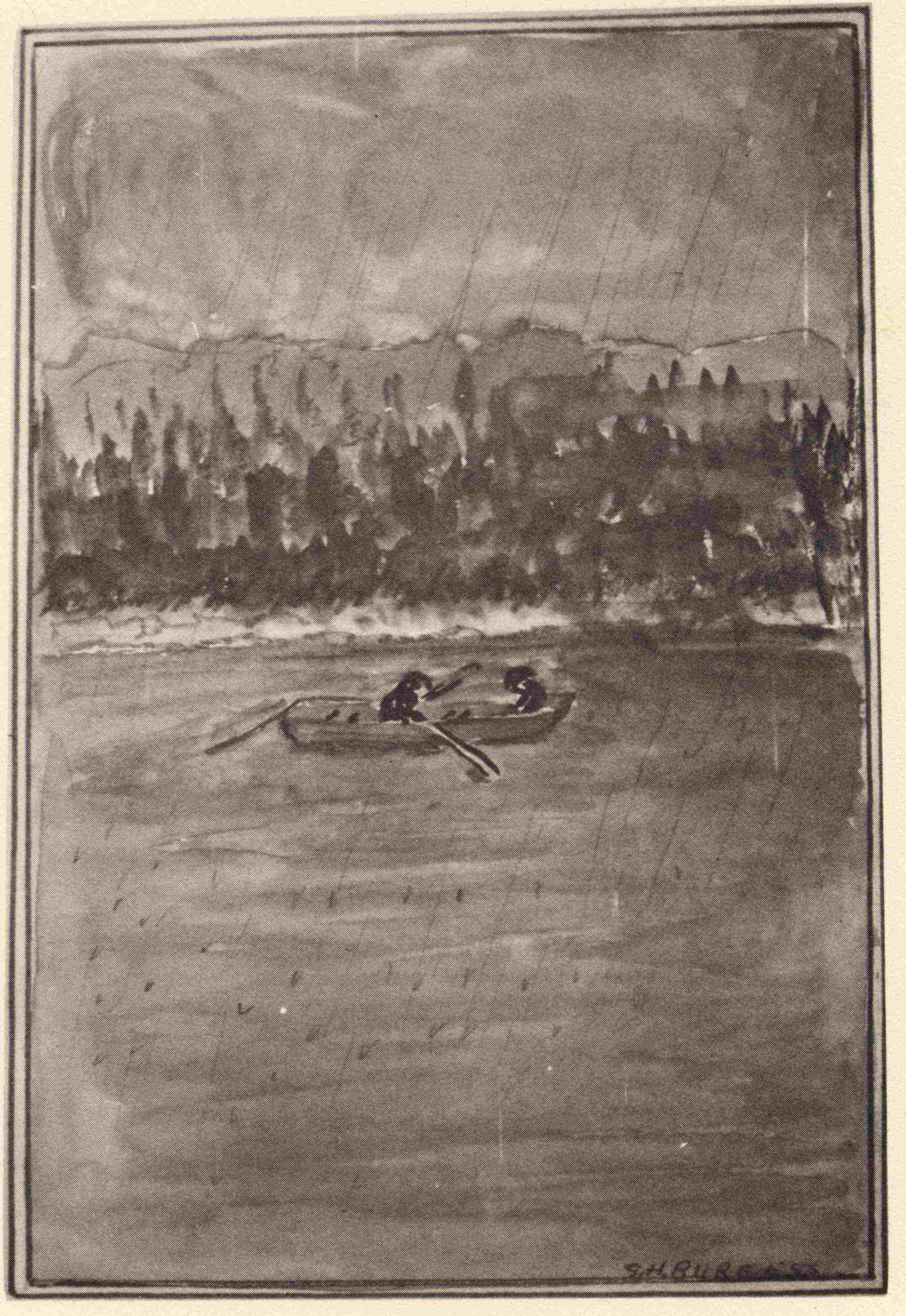
Learning to row a boat with heavy oars was safest with the anchor out. It wasn’t hard to learn and then there were coves to explore and thrilling adventures out of sight of house and farm. The toot toot toot of a real Fourth of July horn was the call to hasten home. Pulling oars on the home stretch was not so easy as going on the adventure.
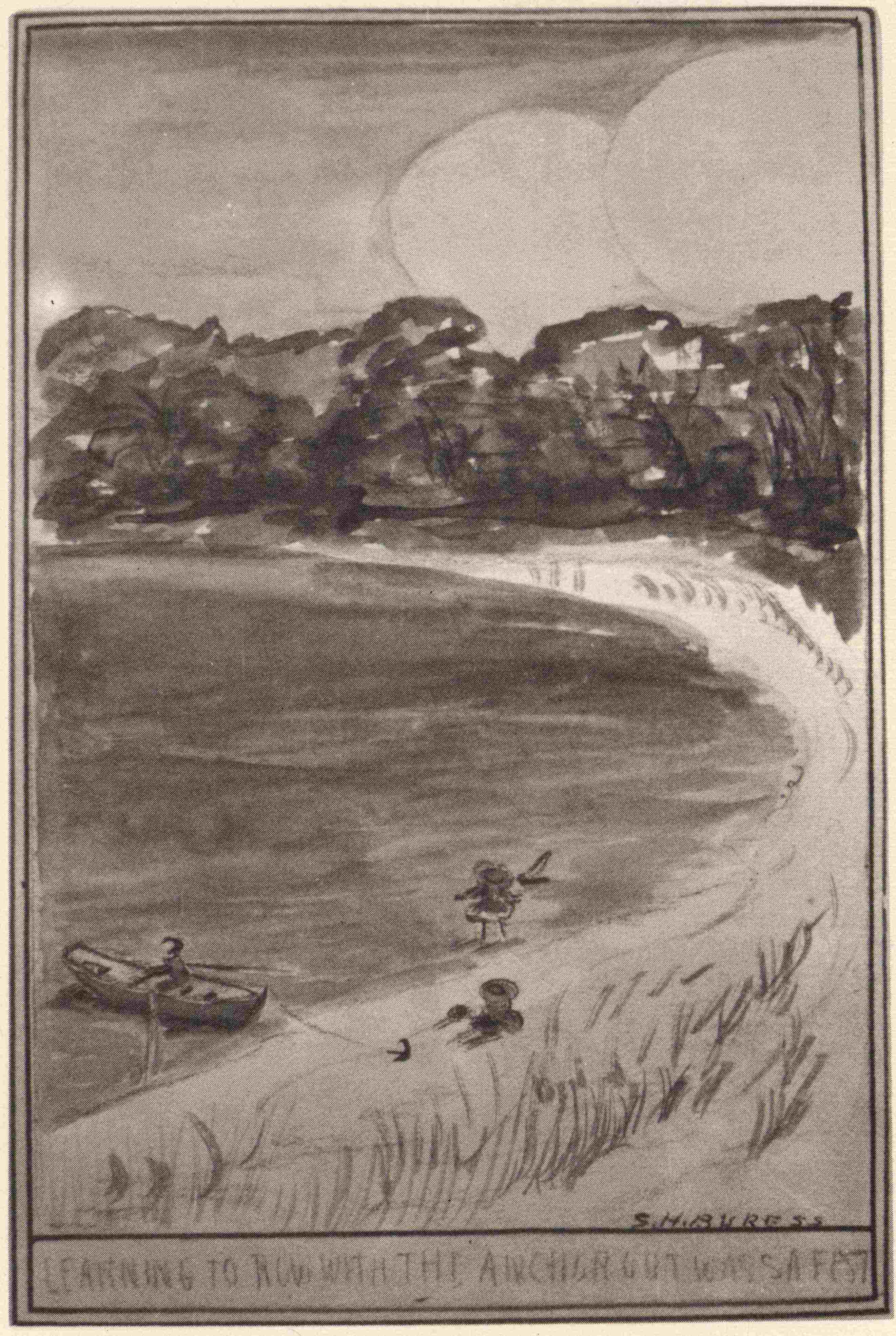
LEARNING TO ROW WITH THE ANCHOR OUT WAS SAFEST
The call of home while most always an interruption and an unwelcome one was usually in the end a pleasant experience especially at the end of a day of play. Cleaning up for supper meant clean hands and face and nails, shoes and stockings on again, hair brushed and voices suitable. It was nice to be ready and hungry for supper and it was nice to play a game of checkers after or to hear a good story read.
Bed time and dreams of other and better adventures to come and then the awaking to a new day. Like magic itself was the growing up of each child with each adventure forgetting yesterday, in dreams running to meet tomorrow, yet truly living every moment that passed.
Rainy tomorrows were not spent in regret for lack of sun. Fish always bit best on rainy days and rubber boots and slickers were inventions fit for the imaginations of a lively family of eight to whom weather time and place were always right for living adventures.
Perhaps the crooked road the old house and barn and all they held, the woods the lakes and fields had much to do with making such a happy family, at any rate—there they were.