Introductory material
Reading edition
I would like to express my thanks and appreciation to Arthur Pyle and my son, Daniel F. Daley, for their valuable suggestions after reading my first effort.
Also to Miss Mary Burgess, Miss Rose Briggs, John Lord, Ellis Brewster, and Ruth Gardner Steinway for their readings and helpful comments.
Miss Minnie Burgess has been most helpful and I am indebted to Frances Burgess O’Keeffe for calling my attention and allowing me to examine the book Memories of the Boot Pond Place by her aunt, Susan H. Burgess.
My thanks to Pamela Brougham for her assistance with old photographs, and especially to my friend, Chip Vincent for his recent photographs here. Also to Robert Crowley for his photographic work.
I appreciate the help given me by many kind persons.
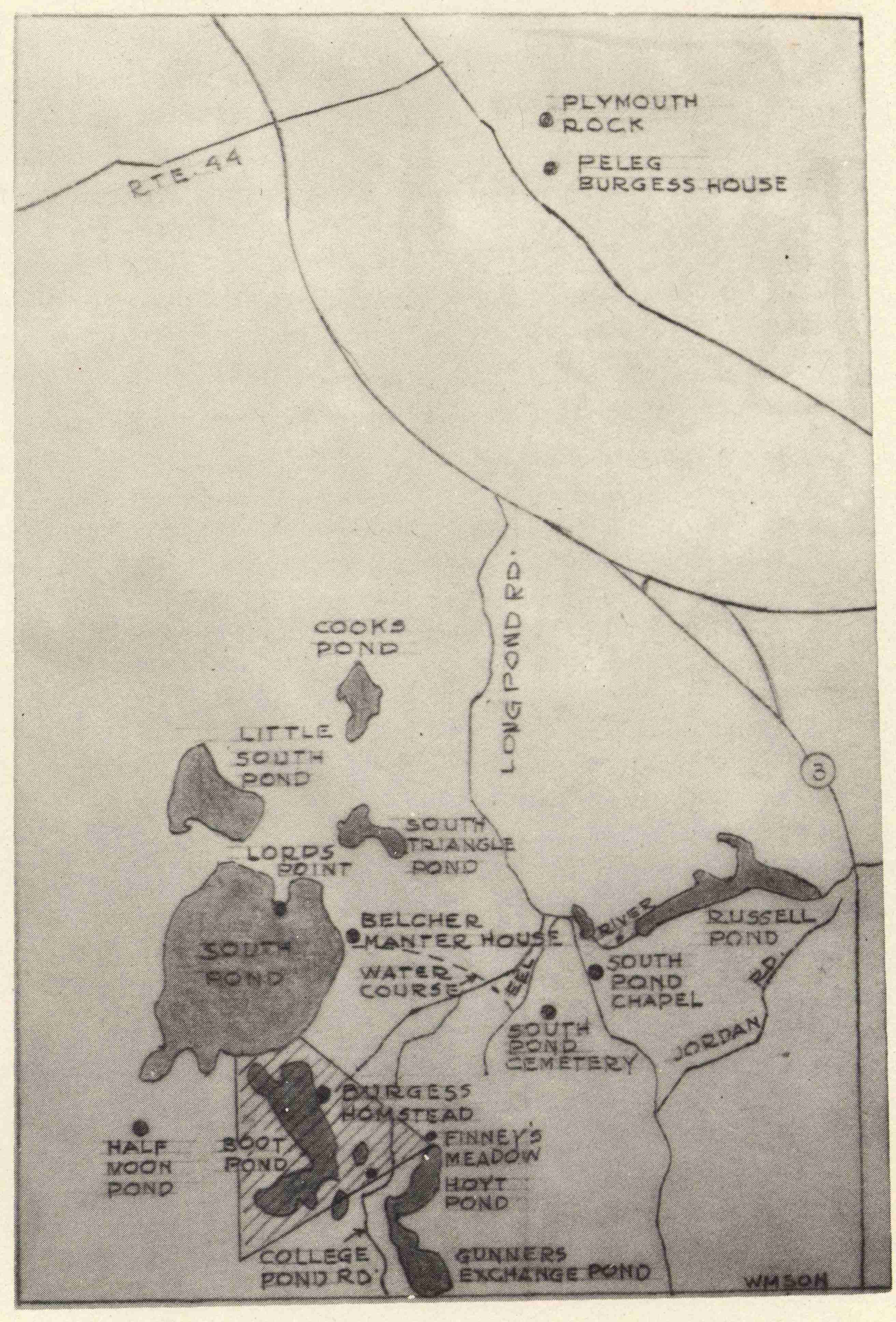
Carroll F. Daley Boot Pond Plymouth, Massachusetts 1974
Dogen-zenji said, “Time goes from present to past.” This is absurd, but in our practice sometimes it is true. Instead of time progressing from past to present, it goes backwards from present to past. Yoshitsune was a famous warrior who lived in medieval Japan. Because of the situation of the country at that time, he was sent to the northern provinces, where he was killed. Before he left he bade farewell to his wife, and soon after she wrote in poem, “Just as you unreel the thread from a spool, I want the past to become the present.” When she said this, actually she made past time present. In her mind the past became alive and was the present. So as Dogen said, “Time goes from present to past.” This is not true in our logical mind, but it is in the actual experience of making past time present. There we have poetry, and there we have human life.
Shunryu Suzuki