Chapter VII · THE SUCCESSIVE MAMMALIAN FAUNAS OF NORTH AND SOUTH AMERICA (continued 2)
Reading edition
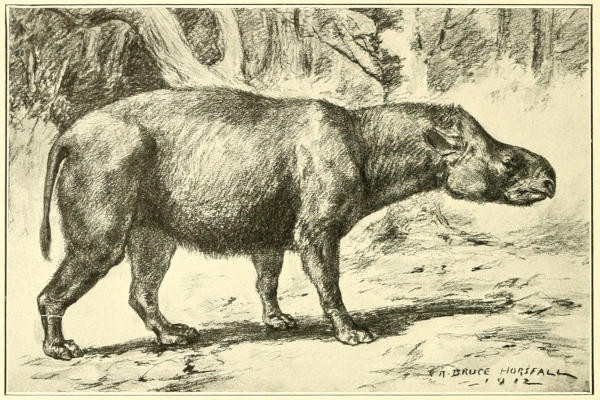
Fig. 135.—†Hornless rhinoceros (†Cænopus tridactylus) of the White River stage. Restored from a skeleton in the American Museum.
Of the horses there was no great variety and all the species so far discovered are included in a single genus (†Mesohippus), though there was a decided increment in the size of the successive species from the earlier to the later portion of the stage. Looked at superficially, it seems absurd to call these little creatures “horses” at all and the term can be justified only as implying that they were ancestral members of the family. The largest of the White River species hardly exceeded a sheep in size and all of them had comparatively short necks, long and slender legs and three-toed feet. The low-crowned grinding teeth show that they were browsers, not grazers. The abundant Eocene family of the †Lophiodontidæ made its last appearance in the White River, where it was scantily represented by slender, long-legged animals (†Colodon), with feet singularly like those of the contemporary horses, except that there were four toes in the front foot. Tapirs (†Protapirus) were very much less common than rhinoceroses or horses and were hardly half as large as the existing species of the family and of relatively far more slender form; the development of the proboscis had already begun. Lastly, the presence of the clawed †chalicotheres has been reported from the lower Oligocene of Canada, but the material is too fragmentary for generic reference.
Though the number of artiodactyl families yet identified among the White River fossils is no larger than that of the perissodactyl families, the artiodactyls greatly preponderated in individual abundance. The peccaries, which were fairly common, resembled those of the John Day, but were considerably smaller. Of the camels, there were two series, one of which (†Eotylopus), lately described by Dr. Matthew, is of yet unknown significance, while the other (†Poëbrotherium) was apparently the ancestor common to all the subsequent phyla of camels and llamas. This extremely interesting genus had species which ranged in size from a gazelle to a sheep, had two toes in each foot, a moderately elongate neck and teeth which were beginning to assume the high-crowned character. From this it may be inferred that those animals were, partly at least, of grazing habit, which was rare among White River ungulates, most of which fed upon leaves and soft and succulent plants. An extinct family, the †Hypertragulidæ, were a greatly diversified group of dainty little creatures, one of which (†Hypisodus) was no larger than a rabbit and had high-crowned teeth. The other genera (†Leptomeryx, †Hypertragulus) must have resembled in form and proportions the tiny little chevrotains or “mouse-deer” of the East Indian islands. Late in the age arose a larger form of this family, nearly equalling the Musk-Deer in size, the extraordinary genus †Protoceras, which was, especially the males, a grotesque object. The males had a pair of upper canine tusks and two pairs of prominent long protuberances on the skull. This, or some similar form, must have been the ancestor of the still more bizarre †Syndyoceras of the lower Miocene.
The †oreodonts were by far the commonest of White River mammals, and evidently they roamed the woods and plains in great herds. There were several species, larger and smaller, of the abundant genus (†Merycoidodon) but the largest did not surpass a modern peccary in size and was somewhat like that animal in appearance, but had a shorter head and much longer tail. In the upper substage appeared a very peculiar genus of this family (†Leptauchenia), animals with short, deep, almost monkey-like heads, and presumably aquatic in habits. The †agriochœrids were very much less common; they may be described roughly as †oreodonts with very long, cat-like tails and clawed feet.
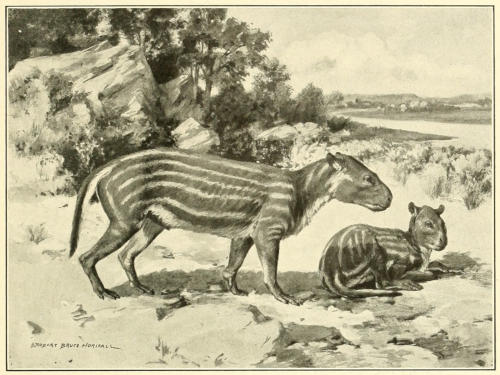
Fig. 136.—†Merycoidodon culbertsoni, the most abundant of White River †oreodonts. Restored from a skeleton in the American Museum of Natural History.
All of the foregoing artiodactyl families were exclusively North American in Oligocene distribution; even the camels did not reach Asia till the Pliocene, and the other families never invaded the Old World at all. There were, however, two additional families, which also occurred in the eastern hemisphere, whence one of them, and possibly the other, was derived. The unquestionably Old World family, that of the †anthracotheres, was represented in the White River by two genera (†Bothriodon and †Anthracotherium), which were short-legged, long-snouted, swine-like animals, which have no near relations in the modern world. The other family, the †giant pigs, which we have already met with in the lower Miocene and upper Oligocene, is of doubtful origin, and nothing has yet been found in the preceding formations of either North America or Europe which can be regarded as ancestral to them. The White River genus (†Archæotherium) was very like the John Day and Arikaree genera, but most of the species were much smaller and some were not so large as a domestic pig. In the uppermost beds, however, are found huge species, which rivalled those of the subsequent formations. That these strange animals were rooters and diggers and therefore pig-like in habits is indicated by the manner in which the teeth are worn.
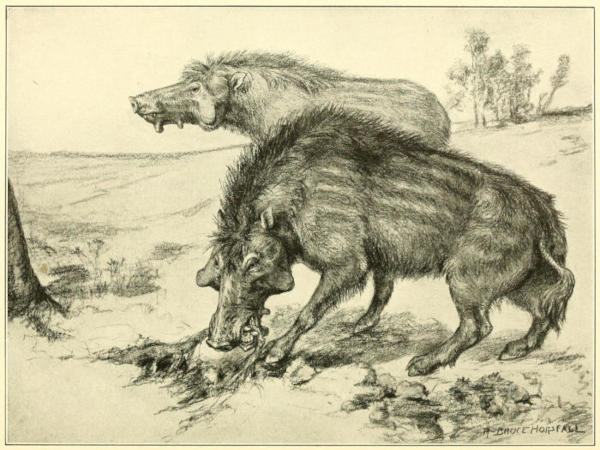
Fig. 137.—†Giant pig (†Archæotherium ingens) from the lower White River stage. Restored from a skeleton in the museum of Princeton University.
South America.—The older continental Tertiary formations of South America cannot be correlated with those of North America or Europe, because they have nothing in common. Difficult as it is to give a correct and adequate conception of the Tertiary mammalian life of the northern hemisphere to one who has not made a study of it, it is far more difficult in the case of South America. The stock of adjectives, such as “peculiar,” “bizarre,” “grotesque” and the like, already overworked in dealing with northern forms, is quite hopelessly inadequate where everything is strange. In addition to this, we are seriously handicapped in treating of the Oligocene and Eocene of South America by very incomplete knowledge. Many fossils have been collected and named, but the great majority of these are known only from teeth; a few skulls and limb-bones have been described, but no skeletons, and therefore much is very uncertain regarding these faunas.
The Deseado formation (Pyrotherium Beds) has been variously referred by different writers from the upper Cretaceous to the lower Miocene, but its most probable correlation is with the Oligocene. Though most of the mammalian groups are the same as those of the Santa Cruz, the proportions of the various orders in the two faunas are very different, but, to some extent, the difference is probably illusory and due to the conditions of fossilization, for, as a rule, the small mammals are much less frequent and well preserved in the older beds. As in the Santa Cruz, the marsupials were the only predaceous mammals, and some of them attained gigantic size; but no such variety of these beasts of prey has been found in these beds as occurred in the middle Miocene. In addition, there were numerous small herbivorous marsupials. One of the most striking differences from the Santa Cruz fauna was in the very much smaller number of Edentata, which, instead of being extremely common, are quite rare among the fossils. No doubt there was a real and substantial difference in this respect, but it was probably not so great as it seems, and the same three suborders are found in both formations. One of the few †ground-sloths that have been obtained was very large (†Octodontherium crassidens), a much larger animal than any species of the suborder that is known from the Santa Cruz. The †glyptodonts were also rare, and only two genera and species have been described from very scanty remains. Armadillos, on the other hand, were much more common, and no less than eleven genera have been named, three of which occurred also in the Santa Cruz. Among these was the remarkable genus †Peltephilus, in which the anterior two pairs of plates of the head shield were modified into horn-like spines.
Equally striking was the remarkable diminution of the Rodentia, as compared with those of the Santa Cruz, though, of course, this is an inaccurate mode of stating the truth, occasioned by the fact that we are following the history in reverse order. It would be preferable to say that the rodents underwent a remarkable expansion in the Santa Cruz. These rodents of the Deseado stage are the most ancient yet discovered in South America and represent only two families, both belonging to the Hystricomorpha, or porcupine group. If, as Dr. Schlosser and other European palæontologists maintain, the Hystricomorpha were all derived from a family of the European Eocene, this would necessitate a land-connection between South America and the Old World independent of North America, for the latter continent had no hystricomorph rodents until the connection between the two Americas was established.
The great bulk of the Deseado fauna is made up, so far as individual abundance is concerned, of hoofed animals belonging to the typically South American groups. The †Toxodonta were represented partly by genera which were the direct ancestors of the common Santa Cruz genera (†Pronesodon, †Proadinotherium), and, more numerously, by a very peculiar family, the †Notohippidæ, which had highly complex, cement-covered grinding teeth. Still a third family of this suborder, the †Leontiniidæ, was highly characteristic of the Deseado fauna and is not known from the Santa Cruz. These were large animals, with a small horn on the tip of the nose and low-crowned, comparatively simple grinding teeth. Even more abundant were the †Typotheria, small forms which were ancestral to the Santa Cruz genera, larger ones which died out without leaving successors and one quite large animal (†Eutrachytherus) which seems to have been the ancestor of the Pliocene and Pleistocene †Typotherium. This series is not known to have been represented in the Santa Cruz and may have withdrawn from Patagonia at the end of the Deseado stage.
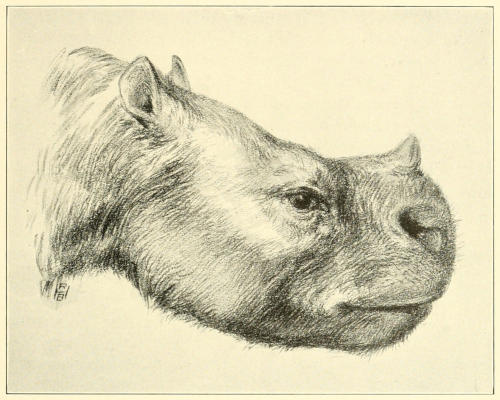
Fig. 138.—Horned †toxodont (†Leontinia gaudryi), Deseado stage. Restored from a skull in the Ameghino collection.
The †Entelonychia, those strange toxodont-like animals with claws instead of hoofs, were much more numerous and varied than they were afterward in the Santa Cruz, when they were on the verge of extinction, and included both very small and very large species. The †Pyrotheria, a suborder which is not met with in the Santa Cruz or later formations, likewise included some very large forms. The typical genus, †Pyrotherium, included large, relatively short-legged and very massive animals; the upper incisors formed two pairs of short, downwardly directed tusks, and in the lower jaw was a single pair of horizontally directed tusks; the grinding teeth were low-crowned and had each two simple, transverse crests. These grinding teeth and the lower tusks so resemble those of the ancestral Proboscidea in the Oligocene of Egypt, that the †pyrotheres have actually been regarded as the beginnings of the †mastodons and elephants, but this is undoubtedly an error. The †Astrapotheria, another group which became extinct at or soon after the end of the Santa Cruz, were relatively abundant in the Deseado and counted some very large species. Finally, the †Litopterna were represented by the same two families as continued through the Pliocene and one of them far into the Pleistocene. The horse-like †proterotheres were present, but not enough of them has been obtained to show whether or not they were in a notably less advanced stage of development than those of the Santa Cruz. The †macrauchenids were quite similar to those of the latter formation, though considerably smaller. In addition, there were a few genera, survivals from earlier times, which were not referable to either of these families.
The large number of genera, especially among the †toxodonts and †typotheres, which had high-crowned, cement-covered teeth, may be taken as an indication that grazing habits had already begun to be prevalent.
Of this wonderful assemblage of hoofed animals, divisible into six separate groups, whether of ordinal or subordinal rank, not a trace remains to-day. Not only are all the species, genera and families extinct, but the suborders and orders also. Further, this was a very strictly autochthonous fauna, so far as the hoofed animals were concerned, and no member of any of the six groups has ever been found outside of the Neotropical region.
4. Eocene
North America.—In the western interior of North America the Oligocene followed so gradually upon the Eocene, that there is great difficulty in demarcating them and much difference of opinion and practice obtains as to where the boundary line should be drawn. Not to depart too widely from the scheme used by Professor Osborn, the Uinta stage is here treated as uppermost Eocene, though this is a debatable procedure. For several reasons, the extraordinarily interesting and significant Uinta fauna is far less completely known than that of the preceding Bridger and succeeding White River stages. For one thing, it has been much less thoroughly explored, and it may be confidently expected that future exploration will greatly enlarge our knowledge.
The smaller mammals of the Uinta are particularly ill-known. No Insectivora have yet been found, though this gap will assuredly be filled; rodents are scanty in the collections and include only two families, one the †ischyromyids, which were still common in the White River, the other of doubtful position, but not improbably to be considered as the beginning of the pocket-gophers (Geomyidæ). The archaic flesh-eaters, or †Creodonta, were represented by two families, one comprising smaller animals with somewhat cat-like, shearing teeth (†Oxyænidæ), the other, very large beasts with crushing teeth (†Mesonychidæ), neither of which continued into the White River. As compared with the middle and lower Eocene, the †creodonts had greatly diminished and, to replace them, the true Carnivora were beginning to come in. As yet, however, only small and very primitive dog-like forms are known and no trace of †sabre-tooths or mustelines has been found. Indeed, it is very doubtful whether members of these families ever will be found in the Uinta, for their presence in the succeeding White River was probably due to immigration.
The Perissodactyla were the preponderant type of hoofed animals, and ancestral forms of most of the White River genera have already been identified. The †titanotheres (†Diplacodon, †Protitanotherium) were much smaller and lighter than those of the lower White River and had much shorter horns. The †hyracodonts, the lightly built, cursorial rhinoceroses, were represented by a genus (†Triplopus) which was smaller and more slender than the White River form (†Hyracodon) and its teeth were of distinctly more primitive character. The heavy, massive and presumably aquatic †amynodonts (†Amynodon) were likewise smaller and less specialized than their descendants of the Oligocene. No member of the true rhinoceros series has yet been identified in the Uinta, but there is some reason to think that they were nevertheless present. Tapirs are distinctly indicated by certain fossils, but they are still too incompletely known to make possible any statement as to their degree of development. The horses (†Epihippus), like the other families mentioned, were much smaller and distinctly more primitive than their successors in the Oligocene.
The Artiodactyla were, for the first time in the history of North America, as numerous and as varied as the perissodactyls and, with the exception of the peccaries and †anthracotheres, representatives of all the White River families are known. The finding of the peccaries is merely a question of further exploration, but the †anthracotheres were migrants from the Old World, and there is no likelihood that they will be discovered in the Uinta at any future time. Fairly large, pig-like animals, probably referable to the †giant-pigs or †entelodonts, occurred, but nothing has yet been found which can be considered as the direct ancestor of the White River genus. As was true of the perissodactyls, the Uinta artiodactyls were nearly all much smaller and more primitive than their Oligocene descendants and the differences are most interesting from the evolutionary point of view. The ancestral camel (†Protylopus) was a little creature no bigger than a fox-terrier, though the †hypertragulids (†Leptotragulus) were as large as †Leptomeryx and †Hypertragulus of the White River. The most ancient known members of the †oreodonts (†Protoreodon) and the †agriochœrids (†Protagriochœrus) are found in the Uinta.
The middle Eocene fauna, Bridger stage, though it passed upward very gradually into that of the Uinta, was yet, on the whole, very different from the latter. It was exclusively indigenous and so radically distinct from the mammals of corresponding date in Europe as to preclude the possibility of a land-bridge with that continent. In the lower Eocene, as will be shown in a subsequent page, the communication between the two continents was broadly open and the faunas of the two continents were much more closely similar than they have ever been since. It is really remarkable to see with what comparative rapidity the two regions, when severed, developed different mammals under the operation of divergent evolution. Had the separation continued throughout the Tertiary and Quaternary periods, North America would now have been as peculiar zoölogically as South America is, a result which has been prevented by the repeated renewal of the connection.
The characteristic features of the Bridger mammalian fauna were chiefly due to the great expansion and diversification of certain families, which began their career at an earlier stage, and to the disappearance of many archaic groups which had marked the more ancient faunas. Other archaic groups, however, survived and even flourished in the Bridger, and of these it is particularly difficult to convey a correct notion to the reader, because they were so utterly unlike anything that now lives. One of these orders, the †Tæniodontia, which had so many points of resemblance to the †ground-sloths that several writers have not hesitated to include them in the Edentata, survived only into the older Bridger, but the equally problematical †Tillodontia then reached their culmination, though they were not very numerous. Though not at all related to that group, the †tillodonts looked like huge rodents, with their chisel-like incisor teeth. There was a remarkable assemblage of Insectivora, more numerous and varied than in any subsequent formation, no less than six families being known. One of these somewhat doubtfully represented the moles and two others modern Asiatic groups. The very unexpected discovery of an armadillo in the Bridger has been reported, but the propriety of referring this animal to the armadillos, or even to the edentates, has not yet been proved, and it would therefore be premature to discuss its significance. The only marsupials were opossums.
So far as our information extends, there were no true Carnivora in the Bridger, all the beasts of prey of the time belonging to the archaic †Creodonta, which then reached their maximum development in numbers and diversity. One family (†Oxyænidæ) included large and powerful flesh-eaters, with cat-like dentition and short, rounded, lion-like heads, long bodies and tails and short, heavy limbs, giving them the proportions of otters. Another (the †Hyænodontidæ) comprised small, long-headed, fox-like and weasel-like animals, which doubtless preyed upon small mammals and birds. A third family (†Mesonychidæ) was made up of moderate-sized, long-jawed creatures, which must have resembled, rather remotely, short-legged and long-tailed wolves and hyenas. Their habits and mode of life are somewhat problematical, for their grinding teeth were blunt, not adapted to the shearing of flesh, and their claws were broad, almost hoof-like. Such creatures could hardly have subsisted by the pursuit of living prey and were probably carrion-feeders and more or less omnivorous. The †Miacidæ, a family which connected the †creodonts and true carnivores and might almost equally well be placed in either group, were externally much like the small †hyænodonts, but were more efficiently equipped for the capture and devouring of prey.
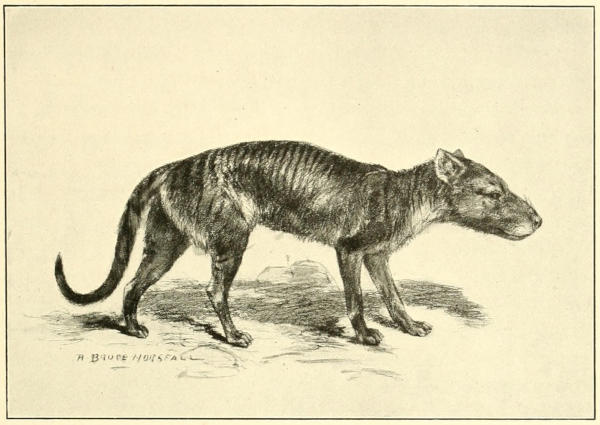
Fig. 139.—A mesonychid †creodont (†Dromocyon velox) of the Bridger stage. Restored from a skeleton in the Museum of Yale University.
Of the archaic and extinct orders of hoofed animals, the only one which persisted from earlier times into the Bridger and greatly flourished there was the †Amblypoda, one family of which (†Uintatheriidæ) was preëminently characteristic of middle Eocene life, becoming very rare and then dying out in the upper Eocene. The †uintatheres of the Bridger underwent considerable modification in size and appearance within the limits of the stage, the larger and stranger species appearing toward the end of the time. Most of these great creatures may fairly be called gigantic, for they equalled the largest modern rhinoceroses and smaller elephants in size. The body, limbs and feet were so elephantine in character that they were once believed to be ancestral Proboscidea, but the teeth and the fantastic skull were so radically different that this belief was long ago abandoned. The upper canine teeth were converted, in the males, into formidable spear-like or scimitar-like tusks, protected by great flange-shaped expansions of the lower jaw; bony knobs on the end of the nose probably supported a pair of dermal horns like those of a rhinoceros and, in addition, a pair of high, cylindrical, horn-like, bony protuberances arose above the eyes and another, more massive pair, near the back of the head. It would be difficult to imagine more extraordinary creatures than the †uintatheres, which were the largest land-mammals of their time. The family was entirely confined to North America, no trace of them having been found in any other continent.
While the backward and archaic orders, most of which have left no descendants in the modern world, had thus a stately representation in Bridger times, they were outnumbered in genera, species and individuals by the progressive orders, which are still in more or less flourishing existence. The Primates, whether lemurs or monkeys, were numerous, and this, so far as is definitely known, was their last appearance in extra-tropical North America. They may at any time be found in the Uinta, but there is small probability that they will ever turn up in the White River or later formations. The many rodents all belonged to the †ischyromyids, an extinct family which, there is much reason to believe, was ancestral to many families of the squirrel-like suborder of Sciuromorpha. Most of them were species of a single genus (†Paramys) and varied in size from a mouse to a beaver, or even larger.
The Perissodactyla may be said, in one sense, to have reached their culmination in the Bridger; not that many of them, such as the horses and rhinoceroses, did not advance far beyond their state of development in the Eocene, but at no subsequent time did the order as a whole possess such dominating importance. There were five or six families of perissodactyls in the Bridger, and their remains are much the most abundant fossils found there. Individually, the commonest perissodactyls of the time were the †titanotheres, of which there were several genera and many species, differing chiefly in size and proportions, though the largest hardly exceeded a modern tapir in stature and was not dissimilar in appearance. These Bridger †titanotheres were considerably smaller than those of the Uinta and therefore very much more so than the White River forms; it was not till the latter stage that the family lived up to its name of “titanic beasts.” By far the commonest of the genera in the middle and lower Bridger was †Palæosyops, which was hornless, while in the upper part of the beds are found genera (e.g. †Manteoceras and †Dolichorhinus) in which the horns were just beginning to appear. Another extinct family, the †Lophiodontidæ, which was very abundant in the European Eocene, formed a very subordinate element in this fauna and included a number of small tapiroid genera (e.g. †Helaletes).
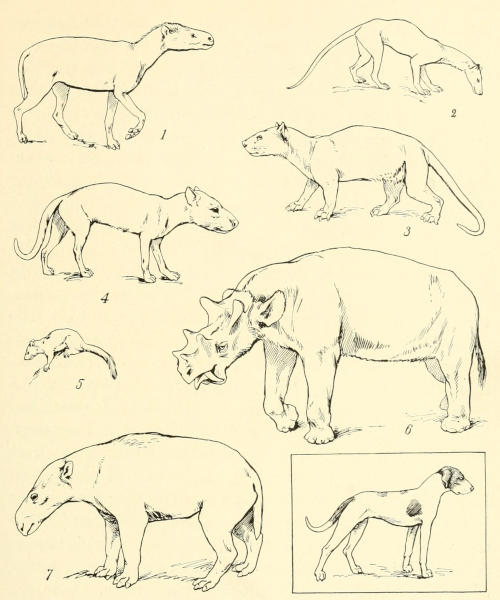
Fig. 140.—Some characteristic mammals of the Bridger Eocene reduced to a uniform scale, with a pointer dog, in frame, for comparison. 1. Primitive rhinoceros (†Hyrachyus eximius). 2. †Tritemnodon agilis. 3. †Patriofelis ferox, and 4, †Dromocyon velox, †creodonts. 5. Primitive rodent (†Paramys delicatior). 6. †Uintatherium alticeps. 7. †Titanothere (†Mesatirhinus superior).
The horses (†Orohippus) were very small and primitive creatures, no bigger than a fox, with four toes in the front foot and three in the hind. So completely different in appearance and proportions were these little animals from any of the modern horses, that it requires an effort of the imagination to think of them as belonging to the same family, and it is only by employing the family to designate a genetic series that such a classification can be justified. The †hyracodonts, or cursorial rhinoceroses, were very abundantly represented by a number of small and medium-sized animals (†Hyrachyus) which had less specialized teeth, shorter neck and limbs than their upper Eocene and Oligocene successors, and four toes in the front foot; one genus (†Colonoceras) had a pair of nasal horns, but would seem to have died out without leaving descendants. In the upper part of the beds is found the Uinta genus †Triplopus, with three-toed fore foot; and in the same division occurs another Uinta genus, †Amynodon, the most ancient known species of the supposedly aquatic rhinoceroses. True rhinoceroses, that is animals which were directly ancestral to the modern members of the family, have not been identified and may not have been present in North America; that is still an open question. Tapirs, all of them quite small, were relatively common, but are still very incompletely known. The earliest known members of the clawed †chalicotheres were of Bridger date.
It is worth remarking that, except a single genus in the upper and later portion of the stage (†Triplopus), all of the Bridger perissodactyls had four toes in the front foot and three in the hind, while in the White River beds above the lowest substage the number three in both fore and hind feet was almost equally universal.
One of the most radical and striking differences between the Uinta and Bridger faunas was the rarity of Artiodactyla in the latter, which is in almost equally strong contrast with their abundance in the middle Eocene of Europe. Most significant of these rare Bridger artiodactyls were the little creatures (†Homacodon), hardly so large as a domestic cat, which may fairly be regarded as a very early stage, if not the actual beginning, of the great camel family, which was destined to play so conspicuous a part in the life of America, North and South. Small pig-like animals (†Helohyus) which were no doubt ancestral to the peccaries, were fairly common and there were, in addition, relatively large animals (†Achænodon) allied, but not ancestral, to the †giant-pigs of the Oligocene; some of these were considerably larger than a full-grown Wild Boar (Sus scrofa).
Among all the many hoofed mammals of the Uinta and Bridger there was not a single one that had the high-crowned, persistently growing teeth of the grazers; all of them must have had browsing habits and have fed upon such soft vegetable tissue as did not rapidly abrade the teeth. The same statement applies, à fortiori, to the stages antecedent to the Bridger and therefore to the entire Eocene and Paleocene. From these facts it may be inferred that the grasses had not yet taken possession of wide areas. Concerning the Bridger fauna, Professor Osborn, who has done so much to elucidate it, says: “On the whole, it is a very imposing, diversified and well-balanced fauna, with an equal distribution of arboreal, cursorial, aquatic, fossorial, carnivorous and herbivorous types.”
The lower Eocene is divisible into two stages, in descending order, the Wind River and Wasatch, both extensively exposed in central Wyoming. As would be expected from its stratigraphical position, the Wind River fauna was largely transitional between that of the Bridger above and that of the Wasatch below. Unfortunately, the fossils are far less numerous than those of the Bridger and not so well preserved, and therefore give us a less adequate conception of the life of that time. The archaic, non-progressive orders were strongly represented, but already the progressive groups were in a numerical majority of species; most of these archaic orders may be most advantageously described in connection with the Wasatch. Opossums were almost certainly present, though the available specimens are too fragmentary for assured determination. The †tillodonts, †tæniodonts and insectivores differed little from the Wasatch representatives of these orders, except that the Bridger †tæniodont, †Stylinodon, which had rootless, persistently growing teeth, was associated with the Wasatch genus †Calamodon. On the other hand, the primitive flesh-eaters, or †creodonts, which were referable to Wasatch families, were less numerous and varied and formed a mixture of Bridger and Wasatch genera. The †Oxyænidæ, the family with cat-like teeth and head, had both the smaller Wasatch genus †Oxyæna and the very large Bridge †Patriofelis. Of the blunt-toothed †Mesonychidæ, one very large animal (†Pachyæna) survived from the Wasatch. The small forms of the family †Hyænodontidæ were common, and there were numerous species of the progressive family †Miacidæ.
Among the hoofed animals there were two of the antique orders which became extinct before the end of the Eocene, indeed, one of these groups, the †Condylarthra, made its last appearance in the Wind River. This extremely primitive group, which, in a sense, connected the hoofed with the clawed mammals, will be described under the more ancient faunas. The other order, the †Amblypoda, was represented by two very different families, one of which, the †uintatheres, was so flourishing in the Bridger, where it formed the most characteristic and by far the most striking element of the fauna. The Wind River genus (†Bathyopsis) was a very much smaller animal than any of the Bridger forms and its horn-like protuberances were in an incipient state, while in various other respects it was decidedly more primitive than its successors. The second family was represented by the genus †Coryphodon, which did not survive into the Bridger, but was especially characteristic of the Wasatch fauna, with which it will be described.
Turning now to the progressive orders, we note that the rodents, lemurs and monkeys were very similar to those of the Bridger and belonged to the same families, but were decidedly less numerous. This difference, however, may be rather apparent than real and due to the much more favourable conditions for the preservation of small mammals in the middle Eocene. Among the Perissodactyla, the horses were intermediate in size and structure between those of the Bridger and those of the Wasatch, but were decidedly nearer to the latter. The †lophiodonts, so far as known, were represented by a single genus (†Heptodon) which also occurred in the Wasatch. The modest beginnings of the †titanotheres, the family which became so very conspicuous in the middle and upper Eocene and lowest Oligocene, may be noted in the Wind River fauna, in which there were two genera. One of these (†Eotitanops), the very probable ancestor of all the subsequent genera, was quite small, about two-thirds the size of a modern tapir, while the other (†Lambdotherium) was a much smaller, lighter and more slender animal and apparently belonged to an abortive, short-lived phylum. Then, too, the first of the †hyracodonts, or cursorial rhinoceroses, made their appearance here in the genus †Hyrachyus, which was afterward so common in the Bridger.
No Artiodactyla have yet been found in the Wind River, though there can be little doubt that they then inhabited North America, as they did both before and afterward.
The Wind River fauna was of so much less peculiar and isolated character than that of the Bridger as to suggest a connection with the eastern hemisphere, a suggestion which is strengthened by the unheralded appearance of the †titanotheres and †hyracodonts, of which no forerunners have been found in the Wasatch.
The lowest and most ancient of the Eocene faunas is that of the Wasatch formation, which is extensively developed in central and southern Wyoming, Utah and New Mexico. The fauna of this stage is plainly divisible into two groups: (1) those types which were the descendants of American Paleocene mammals and were therefore indigenous, and (2) the immigrants from other continents. The indigenous mammals, which almost all belonged to orders now extinct, few of which survived later than the Eocene, must have given a very bizarre appearance to the assemblage, especially as they were more numerous, varied and, for the most part, larger and more conspicuous than the newcomers. Marsupials have not yet been found, but the occurrence of opossums in the Bridger and probably in the Wind River gives some reason to believe that they were in North America during Wasatch times also. The †Tæniodontia, which bore a certain resemblance to South American edentates, had one pair of incisor teeth above and below enlarged and chisel-shaped, somewhat like those of rodents. The †Tillodontia were much smaller than those of the Bridger, and their incisors were only beginning to take on the chisel-like form. Insectivora were quite abundant, and three, or perhaps four, families were represented in the Wasatch; some of these resembled the modern aquatic insectivores of the west African rivers and others were more like European hedgehogs.
The flesh-eaters all belonged to the †Creodonta, and, though rather less diversified than those of the Bridger, were yet relatively abundant. In size, they ranged from little creatures not larger than a weasel up to truly enormous beasts, and differed, no doubt, largely in habits and manner of life. For the most part, the families were the same as those of the Bridger †creodonts, but the genera all were different. The †oxyænids (†Oxyæna) were much smaller and lighter than the large and massive representatives found in the middle Eocene, and their teeth were not so cat-like. Another group of predaceous animals (†Palæonictis) which also inhabited Europe, but did not survive the lower Eocene in either continent, had short, broad and very cat-like heads. The †mesonychids were far larger than those of the Bridger, a departure from the ordinary rule, and the several species of the common Wasatch genus (†Pachyæna) had grotesquely large heads. A family (†Arctocyonidæ), of very extensive geographical range and great antiquity, had its last representatives here in a very curious animal (†Anacodon) which had the flat-crowned, tuberculated grinding teeth of the bears and the enlarged, scimitar-like upper canines of the †sabre-tooth cats. Such a combination seems utterly incongruous and no one would have ventured to predict it. The progressive family of †creodonts (†Miacidæ) was already quite numerously represented, but only by small forms, which must have preyed upon small mammals, birds and lizards.
Two archaic orders of hoofed mammals were fairly numerous. One, the †Condylarthra, comprised quite small, five-toed animals, with long tails and short feet and extremely primitive in structure. A genus (†Phenacodus) of this order was long regarded as being ancestral to most of the higher orders of ungulates, but this belief has proved to be untenable. More numerous were the †Amblypoda, one genus of which (†Coryphodon), though persisting into the Wind River, was especially characteristic of the Wasatch. The †coryphodonts were the largest of lower Eocene mammals, and some of the species equalled a tapir or small rhinoceros in length and height, but had heavier limbs; as the skeleton conclusively shows, these must have been heavy, clumsy and exceptionally ugly brutes, with formidable tusks, large head, but relatively more slender body, short and massive limbs and elephantine feet. In appearance, these strange beasts were not altogether unlike the Hippopotamus and were perhaps more or less amphibious in habits. The other family of †Amblypoda, the †uintatheres, have not yet been registered from the Wasatch, but they will undoubtedly be found there, as they were unquestionably present at that time.
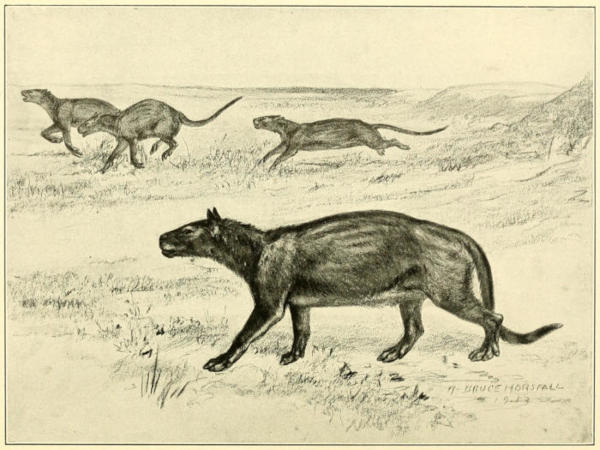
Fig. 141.—†Phenacodus primævus, the best known Wasatch representative of the †Condylarthra. Restored from a skeleton in the American Museum of Natural History.
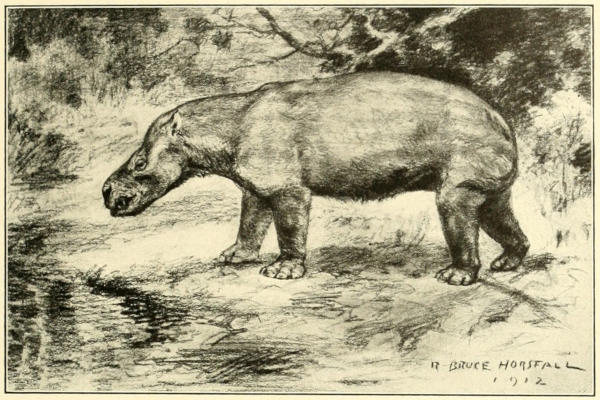
Fig. 142.—The commonest of Wasatch ungulates, the †amblypod, †Coryphodon testis. Restored from a skeleton in the American Museum of Natural History.
All of the preceding groups were of the archaic, non-progressive type and have long been extinct. With the sole exception of one †creodont family (†Miacidæ) and perhaps some of the insectivores, they have no descendants or representatives in the modern world. All of them appear to have been indigenous and derived from North American ancestors, though it is possible that a few were immigrants. We now turn to the orders which were more significant of the future, because they had within them the potency of a far higher development. These progressive groups were all immigrants, coming to North America from some region which cannot yet be positively identified, but most probably was Asia. From the same region and at a corresponding period of time Europe received many of the same forms, and so many genera were at that time common to the latter continent and North America that a broad and easy way of intermigration must have been open.
One of these immigrant orders, the Rodentia, the most ancient known members of which were these species from the North American Wasatch, was represented by the same family (†Ischyromyidæ) and some of the same genera (†Paramys, †Sciuravus) as throve also in the Bridger stage.
There were two orders of hoofed mammals, which were newcomers to the western world, Perissodactyla and Artiodactyla. Of the former was a genus (†Eohippus) of the most ancient American horses. These most interesting little animals, no larger than small foxes and domestic cats, would hardly be called horses, were it not for the long series of gradual and successive modifications which led from †Eohippus up to the modern horses. The graceful little creatures had a short neck, curved back, and relatively short, slender limbs, with four functional toes in the front foot and three in the hind; and, though they differed from existing horses in almost every detail of teeth and skeleton, there was something unmistakably equine about them. From the abundance of their remains it may be inferred that herds of them swarmed in the forests and glades of Wasatch times. The second perissodactyl family, the †Lophiodontidæ, which comprised considerably larger animals, never attained to importance in America, but flourished and became greatly diversified in Europe. What are believed to be the most ancient tapirs yet discovered (†Systemodon) were individually very common in the Wasatch. This tapir was no larger than a Coyote, had no proboscis and was so little like a tapir in outward appearance that an observer might well be pardoned for overlooking the relationship; even the skeleton is of so indifferent a character that the reference of this genus to the tapirs cannot be positively made.
Of equal significance for the future was the arrival of the Artiodactyla, of which there were members of three families in the Wasatch, though individually they were much less common than the horses. These were geologically the oldest known artiodactyls, Europe having yielded none of this date, and are still too imperfectly known to justify any very positive statements about them. One genus, however (†Trigonolestes), tiny little creatures, like rabbits in size, would seem to represent the beginnings of the great ruminant tribe, now so very important a factor in the life of the world. A second genus (†Eohyus), considerably larger, is very doubtfully referable to the pigs; while a third (†Parahyus), still larger, was the first in the short-faced series of the †entelodonts, which persisted in ever increasing size through the whole Eocene, but could hardly have been ancestral to the true †entelodonts, or †giant-pigs, of the Oligocene, the place and time of whose origin are unknown.
Another immigrant order of great interest, since we ourselves belong to it, the Primates, made its first appearance in North America in the Wasatch, but was not destined to long life or great importance in this continent, where it did not survive the Eocene. Several different kinds of small, lemur-like and monkey-like creatures dwelt in the tree-tops of the Wasatch forests. One genus (†Anaptomorphus) had a remarkable likeness to the modern Tarsier (Tarsius spectrum) of the Malay peninsula and islands.
South America.—The Eocene of South America, referred by some writers to the upper Cretaceous, is very incompletely and unsatisfactorily known. The Casa Mayor formation (or Notostylops Beds), which has yielded a great variety of mammals, for the most part very fragmentary, probably contains not one but several successive faunas which have not yet been fully discriminated, and that of the next succeeding Astraponotus Beds is still but a scanty list. This list, however, includes the most ancient †glyptodonts yet discovered and the most ancient †astrapotheres in the narrow sense of the term. The Astraponotus Beds may be either Eocene or Oligocene in date.
Taking the Casa Mayor faunas as a whole, they were a very numerous and diversified assemblage of small mammals, without a single large one among them. There were no monkeys or rodents; otherwise, the orders were in almost all cases the same as those which made up the Santa Cruz fauna. The marsupials were represented by the opossums and by several of the carnivorous kinds, the only beasts of prey that South America had until the migrations from the north brought in the true Carnivora, late in the Miocene or very early in the Pliocene. There were also numerous small marsupials of peculiar type, of which the last living survivor is Cænolestes, of Ecuador. Throughout the stage, armadillos were present in considerable variety, but are known only from the bony plates of the carapace, and therefore little can be determined as to their relationships to the modern families. Only a single and very problematical genus of the †ground-sloths, which afterwards throve so mightily in the Miocene and Pliocene, has been obtained and that in the later portion of the stage.
The orders of hoofed mammals were represented by many small animals, most of which are known only from the teeth, which show these Casa Mayor genera to have been far more primitive and less specialized than their descendants in the Deseado and Santa Cruz stages. All of them had the low-crowned grinding teeth of the browsers, and no grazers were then in existence, so far as is known. No †toxodonts, in the more restricted sense of that term, have been found, but the two allied suborders of the †Typotheria and †Entelonychia were numerously represented. Of the former there were two families and of the latter three, which is more than in the Deseado or Santa Cruz formations. One of the families of the †Entelonychia (†Notostylopidæ) consisted of very small, rodent-like animals, with a pair of chisel-shaped incisors in upper and lower jaw, and a second family (†Homalodontotheriidæ) contained genera which would seem to have been directly ancestral to those of the Santa Cruz, but were very much smaller than their successors. The very large and massive †Pyrotheria of the Deseado stage were represented by small animals, in which the grinding teeth had two pairs of conical tubercles, not yet united into transverse crests. Two families of the †astrapotheres, in the broad sense, were far smaller than their Oligocene and Miocene descendants. To the †Litopterna are referred a number of genera, in which the grinding teeth were tuberculated and had very imperfectly developed crests, so as strongly to suggest the teeth of the †Condylarthra. However, until something is ascertained regarding the skeleton, especially the feet, of these animals, their relationships will remain more or less doubtful.
It will be observed that these Casa Mayor faunas not only were made up exclusively of small animals, but also that they already were typically and characteristically South American and bore the stamp which remained essentially the same until the successive waves of migration from the north so greatly modified the composition of the Neotropical fauna. The absence of rodents and monkeys and the comparative unimportance of the Edentata gave a somewhat different character to these ancient faunas from those of the Santa Cruz and later formations.
5. Paleocene
North America.—A very important discovery is one lately made by American Museum parties of a formation intermediate between the Wasatch and Torrejon. The interesting fauna of these beds has not yet been described, but it may be remarked that it contained none of the immigrant orders.
The vegetation of the Paleocene was already very modern in character, and nearly all of the common forest-trees were represented by species which differed but slightly from those of the present. The grasses were already in existence, but, there is good reason to believe, they had not attained to much importance and did not cover the plains and open spaces as they did in the Miocene and still continue to do. As the grasses afford the principal food-supply of so many grazing animals, the matter of their abundance and extension is a very significant one in the history of mammalian development, and, as we have already learned, eventually led to widespread and profound modifications of structure, especially of the teeth. While there is thus nothing very strange about the plant-world of Paleocene times, the higher animal life was almost totally different from that of modern times and made up a most curious and bizarre assemblage, from which nearly all the familiar Recent types were absent. The reptiles had been greatly impoverished by the world-wide and, as yet, unexplained destruction which overtook them at the end of the Mesozoic era, but it is possible that in both North and South America a few of the huge Dinosaurs survived the decimation of the class. Very characteristic of the Paleocene in North America and Europe were large, lizard-like reptiles, allied to the New Zealand Tuatara, while crocodiles and tortoises abounded; snakes were present, but do not appear to have been very common.
It is the mammals which were the strangest element of Paleocene life, and our imaginary observer would find no creature that he had ever seen before. The difference from modern mammalian life was not merely one of species, genera or even families, but of orders, for only one, or at most two, of the orders now living were then to be found in North America, and both of these (marsupials and insectivores) were primitive and archaic groups, which seem like belated survivals in the modern world. There were no rodents, or true carnivores, no lemurs, monkeys, artiodactyls, perissodactyls or proboscideans.
In the Torrejon, or upper Paleocene, there were many herbivorous marsupials, with very complex grinding teeth and chisel-like incisors, but no carnivorous or insectivorous members of the order have been found. Insectivora were present. Of the †creodonts, or primitive flesh-eaters, there were no less than five families; the bear-like †Arctocyonidæ, which died out in the Wasatch, were quite numerous, and the problematical †Mesonychidæ were much smaller and more primitive mammals than those of the Eocene. Passing over two families which did not survive the Torrejon, we may note the first of the †Miacidæ, the progressive family which led eventually to the true Carnivora. The hoofed animals all belonged to the archaic †Condylarthra and †Amblypoda; of the former there were many genera and species referable to three families, one of which contained the forerunners of the Wasatch †Phenacodus. The genus †Pantolambda of the Amblypoda may well have been ancestral to both the †coryphodonts and the †uintatheres of the Eocene.
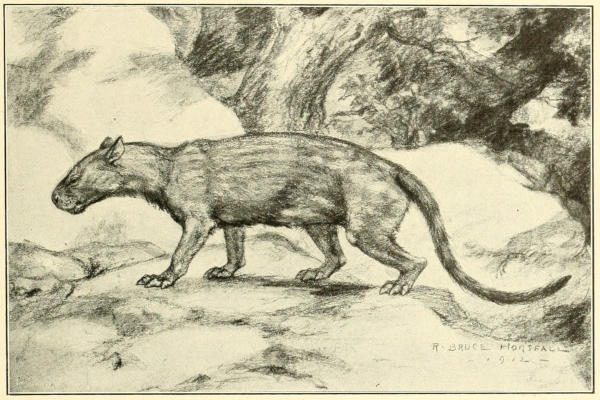
Fig. 143.—The Torrejon forerunner (†Pantolambda bathmodon) of †Coryphodon. Restored from a skeleton in the American Museum of Natural History.
The Puerco fauna was much like that of the Torrejon, but even less advanced and diversified. The herbivorous marsupials were more abundant, and some of them (†Polymastodon) larger than those of the Torrejon; Insectivora may have been present, but this is doubtful. The †creodonts, so far as they have been discovered, were less numerous, varied and specialized than those of the Torrejon and included but one of the families which passed over into the Eocene. The †Condylarthra were much less common and the †Amblypoda but doubtfully represented, but the edentate-like †Tæniodontia were conspicuous.
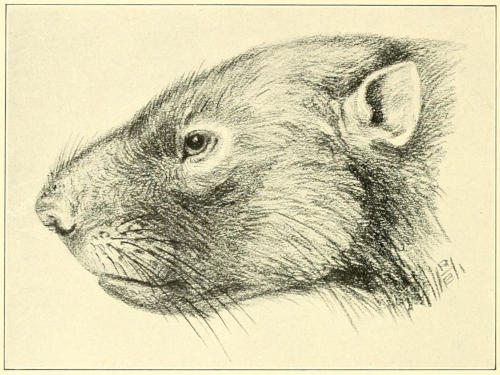
Fig. 144.—Head of an †allotherian marsupial (†Polymastodon taöensis) from the Puerco stage. Restored from a skull in the American Museum of Natural History.
Not only were the Paleocene faunas radically different from the mammals of our time, but they could not have been ancestral to the latter, being hardly more than an advanced and diversified Mesozoic assemblage. It is true that some of its elements, such as the †Condylarthra, †Amblypoda and †Creodonta, developed greatly and played an important part in the life of the Eocene, but of these only a few †creodonts continued into the Oligocene and all became extinct without leaving any descendants behind them. Another curious fact concerning the Paleocene mammalian faunas is that they were made up entirely of small and very small animals; not a single mammal as large as a sheep has yet been found in these beds, and the same is true of Europe.
That a land-connection with the Old World existed during the Paleocene epoch, is indicated by the similarity of the faunas of North America and Europe.