Chapter XVI
Reading edition
Beginning of the end of lotteries—Curious handbills.
56 Geo. III. c. 61, passed June 20, was the Act for the lottery of 1816, in which the prizes were £609,730, and the profit £164,686 15s. 8d. Year after year the introduction of the annual Lottery Act was the occasion of an endeavour to induce the Chancellor of the Exchequer to discontinue the practice of raising revenue by this means; but, for a long time, all such pleadings were ineffectual. The reply vouchsafed was invariably to the same effect, that it was impossible for the Chancellor of the Exchequer to consent to renounce a sum which must be supplied by some other tax, which would in all probability operate even more oppressively on the people.
And now we come to a very singular series of handbills, which are so curious that I am loth to leave out one. Some are undoubtedly issued by Bish, and I should feel inclined to ascribe the others to him, only they are too modest in not making full use of his name.
FORTUNE’S TRAIN, OR THE ROAD TO RICHES!
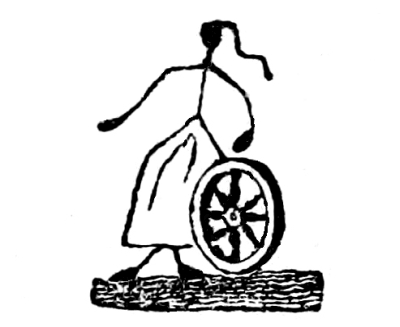
Go where Fortune leads the way, Gain her favours while you may.
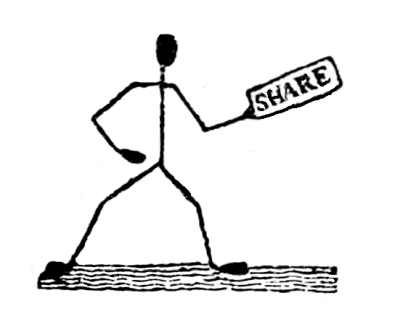
I’m the wisest, you’ll declare, For I have bought of BISH a share.
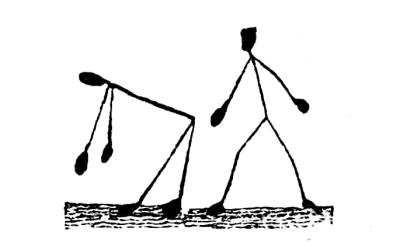
At your feet a suppliant pair, Lott’ry riches hope to share.
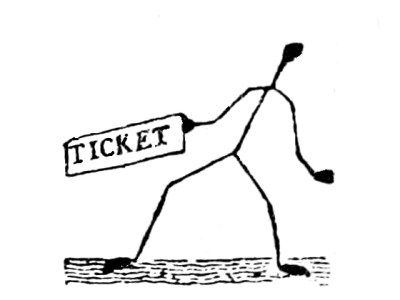
I’m the wisest of the Two, A Ticket here behold to view.
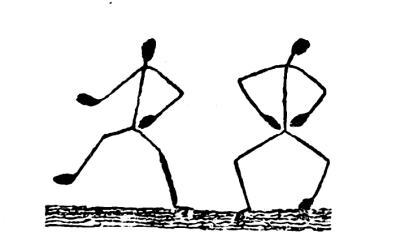
While other people make wry faces, We’ll dance ourselves in Fortune’s graces.
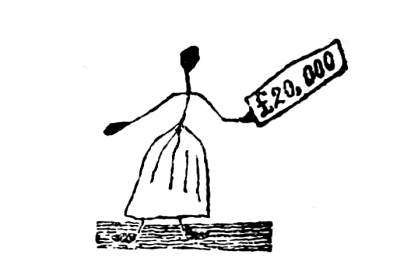
I’m the luckiest of the Three, A £20,000 he sold me!
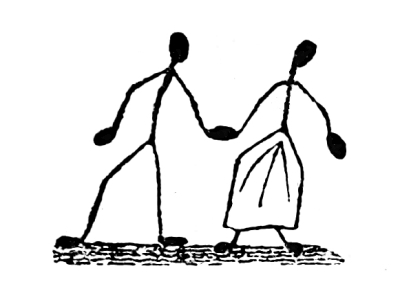
Madam, will you join the Train? Fortune’s never sued in vain.
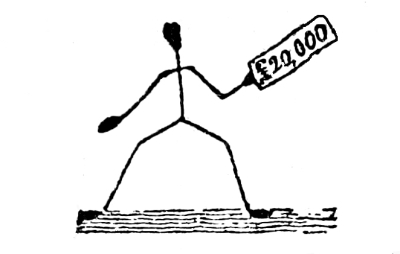
The same to me, but best of all, For another I shall call.
The Lottery Act for 1817 was passed on May 23 (57 Geo. III. c. 31), when £599,643 1s. 5d. was distributed in prizes, at a profit to Government of £217,966 5s.
Here is a rather clever skit on the newspapers of the day.
“WAYS AND MEANS; Or, Fortune’s Budget. Tune—'Lunnun is the Devil.’ Times are hard, they say, Gazette’s with Bankrupts full, Sir, The Patriot mourns the Day, And pities Johnny Bull, Sir, The Englishman complains Bad debts his Ledger fill, Sir, And all the Statesman’s pains, Can’t remedy the ill, Sir. But search the Globe around, The Traveller will tell us, Examiners have found Worse woes than have befel us; And all this Hue and Cry A keen Observer'll find, Sir, Is spread by some deep Spy, Who wants to raise the wind, Sir. But Echo spreads the News, September’s Fortune’s Budget; Dispatch, then prithee use, Express to BISH’S trudge it; For Fortune’s Herald, BISH, Your Oracle, advises, If opulence you wish, Take Post, and buy his prizes. Review the Scheme, say I, Of wealth its Advertiser, Your lucky Star then try, And BISH’S Tickets buy, Sir; Each Journal tells his name, To Luck he is conductor, He’ll Pilot you to Fame; Take him as your Instructor. Buy Shares, if wealth you wish Of Fortune’s own Selector; A Phœnix, Sir, is BISH, Of Prizes, he’s Inspector; Try him, if wind you’d raise, A Monitor advises— His Register displays A Chronicle of Prizes.”