A GIRL’S LIFE EIGHTY YEARS AGO (continued 3)
Reading edition
Eliza.
Ballston Springs, August 22, 1802.
My Dearest Mother:
I feel at this moment as if I could fly! so far from home, received no letters, yet at Albany I expect to find them, let me at least hope what ’twill delight me so much to realize. I sometimes almost fear to receive a letter from home,—yet my indulgent Parents will pardon the liberty I took in coming this journey, as I trust they are convinced by my past life, that I would not for the universe act in opposition to what I knew they approved. I am convinced when you know Mr. and Mrs. Derby you will feel that I was both secure and honored in their protection. I cannot tell you half I owe them, never in my life was I treated with more affectionate attention. They appear as much interested in all I do as if I were their daughter. You know my heart, my dearest Mother, you know it never was insensible to the smallest favor, what then must be its sensation when it is thus overpowered by affectionate kindness. I long to convince them how much I feel, but words are inadequate. My Father has seen Mr. D., I wish he would write to him, I think it would be no more than just to thank him for the care he has taken of his daughter. It seems as if he had a right to expect something of the kind. They are the finest couple I know of, so different from what I expected to find them. I thought Mr. Derby a gay gallant man like Mr. Davis, but he is a plain, noble-hearted, sincere, generous man,—talks very little and one of the pleasantest dispositions in the world. In Mrs. Derby I thought to find a gay woman of fashion, but not a soul that ever knew her could help loving her. I never saw a person so universally beloved. We have been here at Ballston a fortnight to-morrow. It has been one continued scene of idleness and dissipation—have a ball every other night, ride, walk, stroll about the piazzas, dress,—indeed we do nothing that seems like improvement. But still I think there is no place where one may study the different characters and dispositions to greater advantage. You meet here the most genteel people from every part of our country,—ceremony is thrown off and you are acquainted very soon. You may select those you please for intimates, and among so many you certainly will find some agreeable, amiable companions. For a week we sat down at the table every day with 60 or 70 persons, to-day we were all speaking of the latter being very thin because we had only 40. There are as many more at the other boarding house, continually going and coming, and now there is scarcely 10 persons here that were here when we came. We went last week to Lake George, about 40 miles from here,—made up a party and went on Tuesday, breakfasted at Saratoga, where the Springs formerly most celebrated were, and dined about 14 miles this side the lake, at the most beautiful place I ever saw. Perhaps you have heard of Glens-Falls; they are said to exceed in beauty the Falls of Niagara—tho’ in sublimity must fall far short. I never imagined anything so picturesque, sublime and beautiful as the scenery around this enchanting place. The rocks on the shores have exactly the appearance of elegant, magnificent ruins, they are entirely of slate, and seem piled in regular forms with shrubs and grass growing in between. I looked around me for an hour and I every moment discovered something new to admire,—nothing could exceed the beautiful variety of the scenery. I left this elegant place with painful regret. About sunset we came in view of the Lake, it is a most beautiful sheet of water, Morse says 36 miles long and from one to 7 broad, full of beautiful Islands, 365 in all and of every size and shape. It is surrounded by very high hills and mountains rising one above the other in majestic grandeur. In the morning we went out to fish, sailed about 4 miles on the lake to a little Island where we went on shore,—nothing could exceed the beautiful grandeur of the prospect; we anchored off,—I found it very charming fishing, the water so perfectly transparent that we could see the fish swimming around the dock. Our first intention was to sail down the lake to Lake Champlain and visit the ruins of the fortifications at Ticonderoga, but some of our party dissuaded us from it. We saw the ruins of Fort George and the bloody pond—where so many poor wretches were thrown. We stopt on our return at the field where Burgoyne surrendered his army; it is now covered with corn and nothing to distinguish it from the surrounding fields; we returned by a different route, for 10 miles we rode directly on the banks of the Hudson river, nothing could be more delightful, our road wound with the river which was beautifully overhung with trees; we returned here Thursday night, found them dancing. I joined, and the next night we had a ball at the other house; there again I danced till 12 o’clock and the next morning got up quite sick,—to-day I am finely again and have made a resolution not to dance again whilst I stay here. This all think I can’t keep, but they shall see I can. Col. Boyd came here last week but went away while we were gone to Lake George—to Canada I believe. He says you had not heard of my coming when he left Portland, so he could tell me nothing new. We shall probably leave here on Tuesday or Wednesday, stay at Albany a few days and go to Lebanon again, perhaps to Williamston Commencement. We are engaged to spend the day at Mr. Rensselaer’s, the former L Governor, and one at Mr. Rensselaer’s—his brother, who is Mayor of the City. I know not how long ’twill be before we return to Salem, but I really begin to think of home with a great deal of anxiety. Tell Octavia I never go into the Ball room to dance without wishing for her; how delighted should I be if Horatio and Octavia were here with me! How charming will it be when I get home again! Believe me, my Dear Mother, I shall love home more than ever. I long to sit me down by the instrument some evening after the business of the day is over, with you, my Father, and all round me, or to hear Octavia sing and play. This scene of dissipation may please for a while by its novelty, but it soon satiates—no regular employment, I have never been in the habit of spending my time in idleness; and they say here that the Southern ladies seem more at home here than the Northern ladies and do not appear to think industry necessary to happiness. I hope to find many letters at Albany. I have kept a regular journal which will assist my memory in relating my adventures, when I return home again. I wrote Horatio last week and told him to send the letter home for you to read. I look forward to returning with the greatest pleasure. I suppose you are fixed upon a house and will move by the time I return, let me know as I am anxious to hear about it. Give my best love to all my friends and tell Octavia I have more to say to her than I can gabble in a month. Oh I long to get home again. I find no time to write, if I lock myself in my chamber I have so many knocks at the door—Miss Southgate go and walk—go down to the spring—somebody wants you below,—so many interruptions, ’tis almost impossible. After I retire for the night I am so tired and sleepy and my chamber is so hot, I cannot write; ’tis Sunday to-day (tho’ all days are alike here) and I have determined I would write home. I wonder how it was possible for Martha to write so much,—I hear of her from all the Southern people, they all speak in raptures. Give my love to Mrs. Coffin and kiss all the children—Mamy particularly, what would I give to hear her open my door and run in this moment. Mrs. Derby says I get low-spirited when I write home, the only way is to think as little of it as possible whilst I am so far off. I shall write again from Albany, where I hope to find letters.
Ever your affectionate Eliza.
To the care of Robert Southgate,
Scarborough,
(District of Maine.)
130
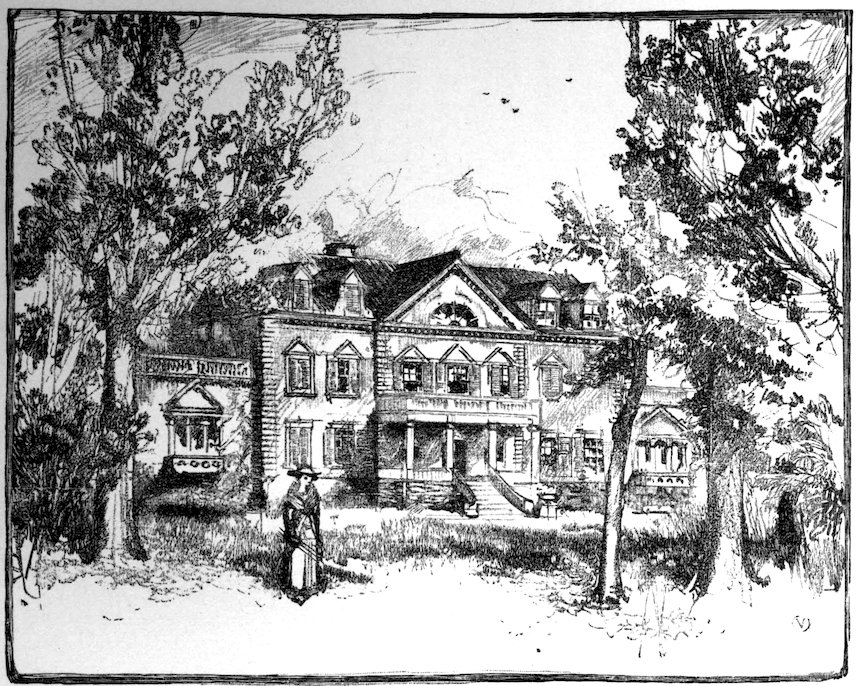
THE VAN RENSSELAER MANOR HOUSE
Albany, August 8, 1802.
Thus far, my dear Ellen, have we proceeded without any thing to mortify or disappoint us; I wrote you the night I arrived at Lebanon, the next morning the bell rang and we all assembled to breakfast; there were about thirty ladies, much dressed, looking very handsome, it seemed more like a ball room than a breakfasting room. We were the last that came in, and all eyes were fixed upon us. Lady Nesbert and the Allston family from Carolina were opposite. This daughter of Col. Burr is a little, smart-looking woman, very learned they say, understands the dead languages—not pedantic, rather reserved—Lady Nesbert,[35] a most interesting woman, full black eyes with a wild melancholy expression and a voice so sweet and plaintive, you would think it melancholy music. I never heard her speak a dozen times since I have been here and rarely ever smile. Old Mrs. Allston, the mother, is a sour-looking woman, nothing affable or condescending. Miss Allston, they say, is a romp, though her mother restrains her so much you would not suspect it. Old Mr. Allston[36] is affable and agreeable. We had likewise there a Mr. Constable[37] of N. Y.; has lived in great style,—very much the gentleman.
Miss —— from N. Y. whom I mentioned in my last is a truly fashionable City Belle. She is a fortune, but I believe not of family. The Gentleman she calls her father and whose name she takes ’tis said was hired by a British officer, her real father, to marry the mother and adopt the daughter, and a very large sum was given him. He appears an abandoned old rake, pale and sallow. Oh! he is a horrid-looking object, in a deep consumption I imagine; she is very attentive. But, good heavens! Ellen, I had no idea of a fashionable girl before—one that devotes her whole attention to fashion. I have much to tell you when I return, about the Miss Ashleys’ french style of dress. Mr. and Mrs. Ransselear[38] left Lebanon the day before we did with Mr. and Miss Westelo,[39] Mr. Welsh,[40] the Miss Stevensons, and Miss Livingston the Albany Belle,—all belong to Albany. Mr. and Miss Westelo, Miss Beakman, and Mr. Ransselear, who is Mayor of the City, called last evening and we all went to walk—went into Miss Westelo’s and spent a charming hour; all returned with us, and we engaged to go to meeting with Mr. and Miss Westelo and take tea at the Mayor’s this afternoon. Mr. Westelo is going to Balston in company with us and a Mr. Kane[41] of N. Y. whom we met at the Coffee House—very genteel man. Another little lawyer from Litchfield, who came in from Lebanon with us, is likewise, on Monday; so we shall have a very pleasant party. Mr. Kane says I shall meet one of their genteelest N. Y. beaux at Balston, Mr. Bowne. I wonder if it is the same I have heard you mention. I shall find out. About eleven o’clock, or rather twelve, I was surprised by some delightful music, a number of instruments, and most elegantly playing “Rise! Cynthia! rise!” I jumped up and by the light of the moon saw five gentlemen under the window. To Mr. Westelo I suppose we are indebted. “Washington March,” “Blue Bells of Scotland,” “Taste Life’s glad moments,” “Boston March,” and many other charming tunes—played most delightfully. I have heard no music since I left Salem till this, and I was really charmed. The bell will ring soon and I must finish this after meeting.—Sunday afternoon. The dinner was brought on the table just as the bell rang for meeting, so that we were obliged to stay at home this afternoon, and tell Mr. Westelo and his sister, who called again for me, as Mrs. Derby did not go out, that I would go to Mrs. Ranselear’s after meeting. In the morning, Mr. Derby and myself went to the New Dutch Church with Mr. and Miss Westelo and sat with them next pew to the Patroon’s, whom you saw in Salem with his beautiful wife.
After meeting, Mr. Westelo came with the Patroon and his wife to see us. She is really beautiful, dressed very plain; cotton cambric morning gown, white sarsnet cloak, hair plain, and black veil thrown carelessly over her head. They urged our dining there to-morrow, but Mr. Derby is determined to set out in the morning for Balston—the waters, all tell him, will be of great service—when we return we shall go and see them. A great number of elegant gentlemen are here in this house, many from N. Y., some going to the springs. Your Boston Mr. Amory and Mr. Lee would look rusty long side them. Hush, not a word!—Mr. Kane of N. Y., whose sister married Robert Morris, is here, will set out for the springs in company with us, Mr. Westelo and some others. We shall go to Lake George and probably make a party from Balston. Mrs. Derby has insisted on my wearing the sarsnet dress to-day as we shall drink tea at the Mayor’s, where the Patroon and wife will probably be. I am every moment reminded of your affectionate kindness, which I hope never to be insensible to.
You wrote Mamma, I suppose. I have not received a line from anybody; shall depend on finding letters at Pittsfield or Lebanon; do write me everything. I have so much to tell you that I cannot write. Mrs. Derby, I cannot tell you how much I owe her. She treats me with so much affection, and she says she believes Mr. Derby feels as much interest in me as if I were his daughter—wishes everything I wear should be becoming, and indeed they both treat me with all the attention and affection my most sanguine expectation could desire. I do not wish to be treated with more affection; think then, dear Ellen! how sensibly I must feel it, how gratifying to my feelings. I can never forget the obligation I owe to you and them. My best love to your husband; tell him when I return I shall have a whole world of news for him. I long to hear from you, do write soon. At Balston I will write again. Many people will be talking about my going this journey; many will censure me perhaps; if you, dear Ellen, should hear any of their ill-natured remarks you could not do me a greater favor than to vindicate my conduct. I have never for one moment since I left Salem regretted I came. The affectionate attention of Mr. and Mrs. Derby delights my very heart, ’twas more than I had a right to expect. I have received much delight in this tour, seen much elegant company, variety of character and manners. I am sensible it will be a source of great improvement, as well as pleasure. I shall have seen that style and splendor, which has so many magic charms when viewed at a distance, divested of its false place, we find it mingled with as many pains as any other situation in life, nay, more poignant pain. I feel that I shall not be at all injured by this life; though I enjoy myself highly and mingle with these people with much delight, I shall return happy and content. Mr. Derby is quite unwell, has taken nothing but milk since we left Salem, his stomach refuses everything else. I have strong hopes that the Balston waters will have a good effect. Everyone tells him so. A gentleman just from Balston says there is a great deal of company at the Springs, dance every other night. If the waters agree with Mr. Derby we shall stay a week or ten days. I have written home a number of times, which together with my journal take up all my leisure time, and that is stolen from the hrs. devoted to sleep. I would give anything for one line from you this moment. How delighted I shall be when I return! Any news from Martha? If any letter arrives for me send it on to Pittsfield. How charming it would be if we were all together going to the Springs! I have not time to write anything about Albany fine society—I believe full of Dutch houses. Adieu, love to all friends.
Eliza.
Mrs. Eleanor Coffin.
Salem, September 9, 1802.
My Dearest Mother:
Once more I am safe in Salem and my first thoughts turn toward home. I arrived last night. The attention I have received from Mr. and Mrs. Derby has been of a kind that I shall look forward with delight to a time when I may be able to return it as I wish. I am in perfect health and spirits and have enjoyed the journey more than I can express to you. I don’t know that I have had an unpleasant hour since I have been gone, and what is still more pleasing, I look back on every scene without regret or pain. At Leicester I went to Uncle Southgate’s, and Cousin William helped me into the carriage when I left the tavern the next morning. We did not return thro’ North-Hampton, and I consequently missed seeing Aunt Dickenson. I regret it extremely, but Mr. Derby was in such haste to return, that he left us at Worcester and took the stage. I therefore could not say a word of Hadley. I found two letters from Octavia on my return here; felt really grieved at Eliza Wait’s death; she must feel it sensibly as they were such intimate friends, yet time blunts the sharp pangs of affection, and when I return she will feel that happiness has only fled for a while to make its return more delightful. I have received more attentions at the Springs than in my whole life before, I know not why it was, but I went under every advantage. Mr. Derby is so well known and respected, and they are such charming people and treated me with so much affection, it could not be otherwise! Among the many gentlemen I have become acquainted and who have been attentive, one I believe is serious. I know not, my dearest Mother, how to introduce this subject, yet as I fear you may hear it from others and feel anxious for my welfare, I consider it a duty to tell you all. At Albany, on our way to Ballston, we put up at the same house with a Mr. Bowne from New York; he went on to the Springs the same day we did, and from that time was particularly attentive to me; he was always of our parties to ride, went to Lake George in company with us, and came on to Lebanon when we did,—for 4 weeks I saw him every day and probably had a better opportunity of knowing him than if I had seen him as a common acquaintance in town for years. I felt cautious of encouraging his attentions, tho’ I did not wish to discourage it,—there were so many New Yorkers at the Springs who knew him perfectly that I easily learnt his character and reputation; he is a man of business, uniform in his conduct and very much respected; all this we knew from report. Mr. and Mrs. Derby were very much pleased with him, but conducted towards me with peculiar delicacy, left me entirely to myself, as on a subject of so much importance they scarcely dared give an opinion. I left myself in a situation truly embarrassing. At such a distance from all my friends,—my Father and Mother a perfect stranger to the person,—and prepossessed in his favor as much as so short an acquaintance would sanction,—his conduct was such as I shall ever reflect on with the greatest pleasure,—open, candid, generous, and delicate. He is a man in whom I could place the most unbounded confidence, nothing rash or impetuous in his disposition, but weighs maturely every circumstance; he knew I was not at liberty to encourage his addresses without the approbation of my Parents, and appeared as solicitous that I should act with strict propriety as one of my most disinterested friends. He advised me like a friend and would not have suffered me to do anything improper. He only required I would not discourage his addresses till he had an opportunity of making known to my Parents his character and wishes—this I promised and went so far as to tell him I approved him as far as I knew him, but the decision must rest with my Parents, their wishes were my law. He insisted upon coming on immediately: that I absolutely refused to consent to. But all my persuasion to wait till winter had no effect; the first of October he will come. I could not prevent it without a positive refusal; this I felt no disposition to give. And now, my dearest Mother, I submit myself wholly to the wishes of my Father and you, convinced that my happiness is your warmest wish, and to promote it has ever been your study. That I feel deeply interested in Mr. Bowne I candidly acknowledge, and from the knowledge I have of his heart and character I think him better calculated to promote my happiness than any person I have yet seen; he is a firm, steady, serious man, nothing light or trifling in his character, and I have every reason to think he has well weighed his sentiments towards me,—nothing rash or premature. I have referred him wholly to you, and you, my dearest Parents, must decide. Octavia mentioned nothing about moving, but I am extremely anxious to know how soon we go into Portland and what house we shall have. Write me immediately on the subject, and let me know if you approve my conduct. Mr. Bowne wishes me to remain here until he comes on and then let him carry me home: this I objected to, but will depend on your advice. I shall be obliged to stay a few weeks longer,—Harriet Howards expects me a week in Cambridge, Mrs. Sumner a week in Boston, and Mrs. Hasket Derby another week. I am now with Ellen and shall stay till Mrs. Coffin comes up, then according to promise go to Mrs. Lucy Derby’s. I feel extremely anxious to hear you have moved into town, and shall most probably be here until then; write me immediately. If you wish any furniture, Mrs. Sumner will assist me in purchasing whatever you wish. I mentioned in my letter, when I set out on this journey I borrowed 15 dollars of Ellen; I wish you to send it to me immediately after receiving this, if you have not already sent it. I shall likewise stand in need of a little, as I have unavoidably incurred many expenses in this journey which I should not otherwise have done. Mr. Derby has loaded me with obligations, all my expenses he defrayed as if I was his daughter, and in such a manner as endears him more than I can express. You cannot imagine how interested they both are in the subject I have been writing you upon,—my nearest friends cannot feel more, they have witnessed the whole progress, and if you knew them, would be convinced they would not have let me act improperly, they both approve my conduct. I wish my Father would write to Mr. Derby and know what he says of Mr. B.’s character. I don’t know but ’tis a subject too delicate to give his opinion, but I can conceive that my Father might request it without any impropriety; and do, my Dear Mother, beg him to say any thing in his power to convince him that we all feel sensibly their great attention to me. You know not how anxious I feel for my Father to write him something of that kind, not that they appear to expect it, but on the contrary insist that they have been more obliged than I have, and really seem to think so; but this rather strengthens than lessens the obligation, nothing should have induced me to receive such from people who felt they were conferring favors. I long to hear when we move into Portland, do write me. My best love to Horatio and Octavia, and tell them I shall write as soon as possible. I found a large packet of 5 sheets from Martha, dated Paris, June 28th; tells me every thing, speaks almost in raptures of Buonaparte, says Uncle Rufus has a little son[42] about 12 years old at school there, one of the finest boys she ever saw. I find most of the Southern people whom we met at the Springs, think Uncle Rufus stands as good a chance of being President as any one spoken of. I have listened for hours to his praises when not one knew how much I was interested; it was known from Mrs. Derby I was his niece, and it really gave me great consequence. I thought of Mrs. Dewitt and laughed. Judge Sedgwick told me had letters from him as late as June, and that he was determined on returning in the Spring. I long to hear from home. My love to all my friends, and believe me, with every sentiment of duty and affection,
Your daughter Eliza.
140
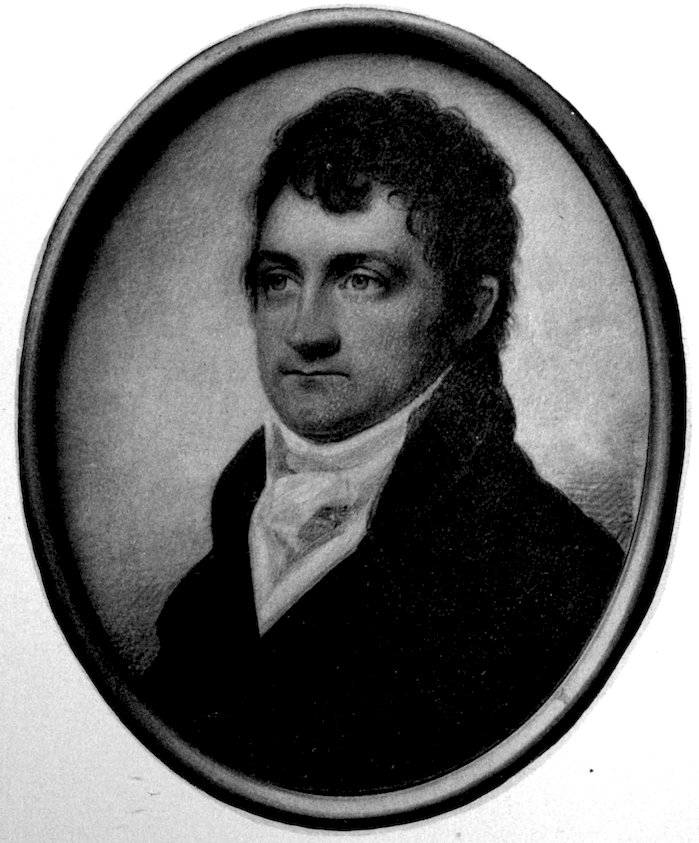
Mr. WALTER BOWNE From a miniature by Malbone, in possession of W. B. Lawrence ARTOTYPE. E BIERSTADT, N. Y.
Martha sent me a most elegant Indispensable, white lutestring spangled with silver, and a beautiful bracelet for the arm made of her hair; she is too good—to love me as she says, more than ever.
Portland, Nov. — Friday, — 1802.
Mr. Davis is going on to Boston and will have a letter for you. I am delighted to hear that Mamma is better. I send you some of Miss Homer’s wedding cake; married on Monday. You say Rufus Emerson has returned and tells them a great many stories; when you write next tell me what he says, and where he heard, and all about it, for everything interests me. Mr. Bowne has not arrived, I am out of all patience, cannot imagine what detains him,—4 weeks to-morrow since he took Mr. Codman’s letter. These Quakers are governed by such a slow spirit—I wish the deuce had them. I shall be really uneasy if he don’t come soon. I want some money, my last dollar I gave Horatio to buy Mamma’s oranges. I have written to Mrs. Derby to buy me a winter gown; in her last she says she has bought it but does not mention the price. I wish the money to send to her soon as I hear; a little likewise for occasional expenses, ’tis not pleasant to be without. I have been in but one party since Mamma’s sickness; shall certainly not go out more than I can possibly avoid. Mrs. Derby is quite out at Mr. B.’s not coming. I’ll not be so ungenerous as to condemn him without giving an opportunity of vindicating himself, some circumstances I know not of may detain him. All our friends are well. Send me the money as soon as possible; and don’t forget to tell particularly what Rufus says, whom he saw, what they told him, and when he heard all. In some cases trifles acquire importance—mole hills become mountains. Adieu.
Eliza.
Love to Mamma, and tell her I am out of all patience.
Miss Octavia Southgate.
Boston, May 30, 1803.
Here we are, my dear Octavia, at Mrs. Carter’s Boarding House, and tho’ we have endeavored to keep ourselves as much out of the way as possible, a great many people have called to pay their respects to Mr. and Mrs. Bowne. The first person we met driving thro’ Salem was Mr. Lee just coming in town; he bowed very low and pass’d. We went to a public house and had not been there 3 minutes before Mr. Lee came in determined to be the first to call on us; he shook hands very cordially, congratulated us, and went with us up to Ellen’s. We promised to drive with Ellen, and went to see Mrs. H. Derby; spent a charming hour and returned to Ellen’s, dined, and all went to Lucy Derby’s to tea, Mr. Lee and a dozen others. Mr. Bowne and myself called on Mrs. Grey, and after a very pleasant day returned to Ellen’s and stayed the night, and the next morning, which was Wednesday, came into Boston,—’twas election day and all the world was in motion. I could not bear to come to Mrs. Carter’s, but Mr. Bowne thought he ought to. Mr. Lee got to Boston as soon as we did and came immediately to see us and offer his services; he has been here again this morning and is going to ride into the country with us to show us some fine seats. Doctor Boice, Mr. Davis, Mr. Cabot, Charles Bradbury, Tom Coffin and a dozen other gentlemen, whose names I have forgot, and who came with the Miss Lowells and Miss Russells. We have prevented all invitations on, by constantly saying we were going out of town immediately. Mr. Lee insisted, when I expressed a wish to see Miss Wyre, on letting her know I was in town,—he went and she came immediately back. I was very glad to see her and she appeared so herself at seeing me. Some ladies and gentlemen came in; and after they were gone, Alicia, Mr. B. and myself went a-shopping;—the fashions for bonnets, Octavia, are very ugly; Alicia had a large, white glazed cambric one made without pasteboard. But I have not told you how Gen. Knox[43] found us out at Newburyport. We always kept by ourselves, but in passing the entry Gen’l Knox, who had just come in the stage, met Mr. B. and asked where he was from—(Mr. Bowne kept here with Mrs. Carter when Gen’l Knox was here last winter); he told him from the Eastward.—Alone?—no.—Who is with you?—Mrs. Bowne. So plump a question he could not evade, so the General insisted on being introduced to the bride. I was walking the room and reading, perfectly unsuspicious, when the opening of the door and Mr. Bowne’s voice—“Gen’l Knox, my love,” quite roused me; he came up, took my hand very gracefully, pres’t it to his lips and begged leave to congratulate me on the event that had lately taken place. After a few minutes’ conversation—“And pray, sir,” said he, turning to Mr. Bowne—“when did this happy event take place?” I felt my face glow, but Mr. Bowne, always delicate and collected, said—“’Tis not a fortnight since, Sir.” The stage drove to the door, and after hoping to see us at Mrs. Carter’s he took his leave, and this morning—(he was out all day yesterday)—I found him waiting in the breakfast room to see me. He introduced me to General Pinckney[44] and his family from Carolina,—Gen’l Pinckney, they say, is to be our next President. “Mr. Bowne,” said Gen’l Knox to Gen. P., “has done us the honor to come to the District of Maine for a bud to transplant in New York.” He was very polite and said “he must find us out in New York.” Only think, I never thought of the wedding-cake when I was at Salem. You would laugh to hear “Mrs. Bowne” and “Miss Southgate” all in a breath—“How do you do, Miss Southgate?”—“I beg pardon, Mrs. Bowne,” and do it on purpose I believe; when I hear an old acquaintance call me “Mrs. Bowne” it really makes me stare at first, it sounds so very odd. Mr. B. will be in, in a moment—and if I don’t seal my letter, he will insist on seeing it, so love to all. I depend on finding letters at New Haven. I have a thousand things to say,—(some ladies enquire for Mrs. Bowne, so says the servant,—I’ll tell you who they are when I come up,)—Mrs. Bartlett and Alicia; they insist on our taking tea and spending the evening; we promised if we did not leave town after dinner that we would. Adieu, adieu. Mr. Bowne sends a great deal of love.
Your affectionate sister,
Eliza Bowne.
148
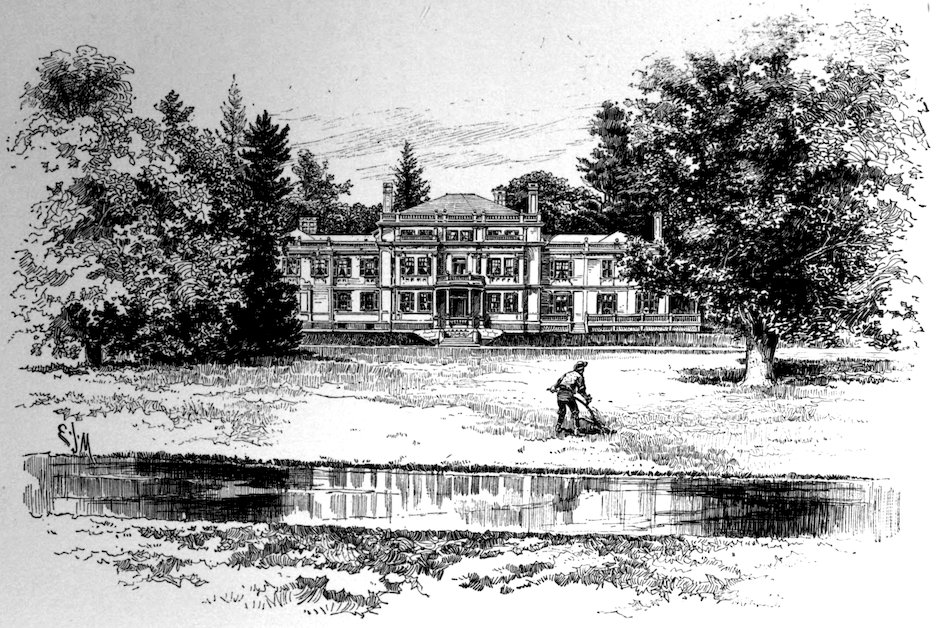
THE LYMAN PLACE—WALTHAM
New Haven, June 1, 1803.
Your letter, my dear Octavia, was the first thing to welcome me on my arrival at this City. I cannot describe to you my sensations when it came. I can rarely think of home without more pain than pleasure, and yet if there is a being on earth perfectly blest ’tis your sister Eliza. How infinitely more happy than when I left you. You cannot imagine how delightful has been our journey. We have stop’t at every pleasant place, enjoyed all the beauties of the Spring in the richest and most luxuriant country I ever saw. I wrote you last from Boston.—The afternoon following Mr. Lee called to accompany us a few miles out of town; he had requested Mr. Lyman’s permission to go out to his seat in Waltham that Mr. Bowne and myself might have an opportunity to see it, as it is the most beautiful place round Boston. We set out about 4 o’clock—had a most charming ride. Mr. Lee was remarkably sociable, attentive and polite, both to Mr. Bowne and myself. He talks just as sociably, and called me “Miss Southgate” and “Mrs. B.” all in a breath as fast as he could talk. I have no time to tell you of this elegant place of Mr. Lyman’s, great taste in laying out the grounds. It surpasses everything of the kind I ever saw; beautiful serpentine river or brook thickly planted with trees, and elegant swans swimming about—you can’t imagine—’twas almost like enchantment. After Mr. Lee had gathered me a bouquet large enough to supply a ballroom—of the most elegant and rare flowers,—full blown roses—buds—everything beautiful, we jumped into the carriage, he shook us cordially by the hand, wished us every happiness, and hoped to see us in New York ere long. Sunday morning we got to Springfield, stayed the day, it recalled so many pleasing sensations. When we parted there—how different were our feelings—our happiness was augmented by the contrast. From Springfield to Hartford was charming; much pleased with Hartford, stayed a day and night there. From Hartford to New Haven is the most elegant ride you can possibly imagine,—a fine turnpike about 30 miles, and such a picturesque, rich, luxuriant country, such variety and beauty—oh ’twas charming! Mr. Bowne is waiting for me this full hour to walk in the Mall,—What shall I do, he hurries so? Well, I never saw a place so charming as New Haven; we have been all over it,—visited the College, everything, and I give it the preference to any place I know of—a particular description I defer. I have no time to say a word of your letter; write me immediately on receiving this to New York, where we shall be on Saturday. Mr. Bowne’s best love with mine to all the family. Adieu—I have ten thousand things more to say but can’t. Write me immediately.
Ever your affectionate
Eliza Bowne.
New York, June 6, 1803.
I sit down to catch a moment to tell you all I have to before another interruption. I have so much to say, where shall I begin—my head is most turned, and yet I am very happy; I am enraptured with New York. You cannot imagine anything half so beautiful as Broadway, and I am sure you would say I was more romantic than ever if I should attempt to describe the Battery,—the elegant water prospect,—you can have no idea how refreshing in a warm evening. The gardens we have not yet visited; indeed we have so many delightful things ’twill take me forever; and my husband declares he takes as much pleasure in showing them to me as I do in seeing them; you would believe it if you saw him. Did I tell you anything of Brother John? handsome young man, great literary taste; he is one of the family; nothing of the appearance of a Quaker. Mrs. King, another sister, they all say looks like me. Mrs. Murray, who is very sick now, has a daughter, a charming, lively girl, about 19, and the little witch introduced me in a laughing way last night to some of her friends as Aunt Eliza. I protest against that; her brother Robert 17 years old too; I positively must declare off from being Aunt to them. Caroline and I went a-shopping yesterday, and ’tis a fact that the little white satin quaker bonnets, cap-crowns, are the most fashionable that are worn—lined with pink or blue or white; but I’ll not have one, for if any of my old acquaintance should meet me in the street they would laugh, I would if I were them. I mean to send sister Boyd a quaker cap, the first tasty one I see; Caroline’s are too plain, but she has promised to get me a more fashionable pattern. ’Tis the fashion. I see nothing new or pretty,—large sheer muslin shawls put on as Sally Weeks wears hers are much worn, they show the form thro’ and look pretty; silk nabobs, plaided, colored and white, are much worn, very short waists, hair very plain. Maria Denning has been to see me, I was very happy,—several spring acquaintance. Expect Eliza Watts and Jane every moment, they did not know where I was to be found. Last night we were at the play—“The way to get married.” Mr. Hodgkinson[45] in Tangent is inimitable. Mrs. Johnson a sweet, interesting actress in Julia, and Jefferson,[46] a great comic player, were all that were particularly pleasing; house was very thin so late in the season. Mr. and Mrs. Codman[47] came to see me. I should have known her in a moment from her resemblance to Ellen and the family,—appeared very happy to see me,—Mr. Codman was happy, Mrs. Codman would now have somebody to call her friend, etc., etc. Maria Denning told me Uncle Rufus [King] was expected every day; we have such contradictory accounts, we hardly know what to believe. As to housekeeping, we don’t begin to talk anything of it yet. Mr. Bowne says not till October, however you shall hear all our plans. I anticipate so much happiness; I am sure if any body ought to I may. My heart is full sometimes when I think how much more blest I am than most of the world. At this moment there is not a single circumstance presents itself to my mind that I feel unpleasant to reflect on: the sweet tranquillity of my feelings—so different from any thing I ever before felt—such a confidence—my every feeling reciprocated and every wish anticipated.—I write to you what would appear singular to any other.—You can easily imagine my feelings.—I see Mr. B. now where he is universally known and respected, and every hour see some new proof how much he is honored and esteemed here; the most gratifying to the heart you can imagine, cannot but make an impression on mine. We talk of you when we get to housekeeping, how delightful ’twill be—what a sweet domestic circle!—I must leave you; Caty says—“Mrs. Walter (for so the servants call me to distinguish), a gentleman below wishes to see you.” Adieu. Who can this said gentleman be?
Mr. Rodman was below, whom I saw at the Springs, and for these two hours there has been so many calling I thought I should never get up to finish my letter. Mrs. Henderson,[48] whom I mentioned to you as one of the most elegant women in New York, and Maria Denning, her sister, came in soon after. Engaged to Mrs. Henderson’s for Friday.
Thursday Morning:—I have been to two of the Gardens, Columbia,[49] near the Battery, a most romantic beautiful place; ’tis enclosed in a circular form and little rooms and boxes all around, with tables and chairs, these full of company; the trees all interspersed with lamps twinkling thro’ the branches; in the centre a pretty little building with a fountain playing continually, the rays of the lamps on the drops of water gave it a cool sparkling appearance that was delightful. This little building, which has a kind of canopy and pillars all round the garden, had festoons of colored lamps that at a distance looked like large brilliant stars seen thro’ the branches, and placed all round are marble busts, beautiful little figures of Diana, Cupid, Venus, by the glimmering of the lamps, which are partly concealed by the foliage, give you an idea of enchantment. Here we strolled among the trees and every moment meet some walking from the thick shade unexpectedly, and come upon us before we heard a sound, ’twas delightful! We passed a box that Miss Watts was in; she called us, and we went in and had a charming, refreshing glass of ice cream, which has chilled me ever since. They have a fine orchestra and have concerts here sometimes. I can conceive of nothing more charming than this must be.
We went on to the Battery: this is a large promenade by the shore of the North River; very extensive rows and clusters of trees in every part, and a large walk along the shore, almost over the water, gives you such a fresh, delightful air, that every evening in summer it is crowded with company. Here too they have music playing on the water in boats of a moonlight night. Last night we went to a garden[50] a little out of town, Mount Vernon garden,—this too is surrounded by boxes of the same kind, with a walk on top of them. You can see the gardens all below; but ’tis a summer playhouse—pit and boxes, stage and all, but open on top; from this there are doors opening into the garden, which is similar to Columbia Garden, lamps among the trees, large mineral fountain, delightful swings, two at a time,—I was in raptures as you may imagine, and if I had not grown sober before I came to this wonderful place ’twould have turned my head. But I have filled my letter and not told you half—of the Park—the public buildings,—I have so much to tell you, and of those that have called on me—I have no room to say half. Yesterday Mrs. Henderson came again to see me and brought two of my Aunt King’s most intimate friends to introduce—Mrs. Delafield[51] and Miss Lucy Bull. Mr. and Mrs. Delafield are Uncle and Aunt’s very intimate friends, she is called the most elegant woman in New York. I was delighted with her and very much gratified at Mrs. Henderson’s attention in coming again on purpose to introduce them, they were so attentive, so polite, and Mrs. Delafield said so many things of Aunt King, how delighted they would be to find me settled near them, how much I should love them and everything of the kind, that was very gratifying to me. Miss Denning has been to see me 3 or 4 times; several invitations to tea, but we declined as our family friends were visiting us this week. This morning we go to make calls. I have got a list of names that most frightens me. All our brothers and sisters say—“Why, Eliza does not seem at all like a stranger to us,”—indeed I feel as easy and happy among them as possible, which astonishes me, as I have been so unaccustomed to Quakers, but their manners are so affectionate and soft, you cannot help it. Mrs. King (sister) is a beauty—She would be very handsome in a different dress; she looks so much like Alicia Wyer, you would love her,—just such full sweet blue eyes, charming complexion and sweet expression, and her little quaker cap gives her such an innocent, simple appearance, I imagine Alicia with a quaker dress—and you will see her exactly. Adieu. I am expecting to hear from you every day. Mr. Bowne is out, would send a great deal of love if he were here. Kiss dear little Mary and all the children. I never go by a toy shop, or confectionery, without longing to have them here. Love to all. Our best love to my Father and Mother, Horatio, Isabella and all. I mean to write as soon as I am settled a little. Adieu.
Miss Southgate.
New York, June 18, 1803.
I am just going to set off for Long Island and therefore promise but a short letter. I have a mantua maker here making you a gown which I hope to have finished to send by Mrs. Rodman. The fashions are remarkably plain, sleeves much longer than ours, and half handkerchiefs are universally worn. At Mrs. Henderson’s party there was but one lady except myself without a handkerchief,—dressed as plain as possible, the most fashionable women the plainest. I have got you a pretty India spotted muslin,—’tis fashionable here. My husband sends a great deal of love, says we shall be travelling about all Summer, settle down soberly in October, and depend on seeing you as soon as we are at housekeeping. Sister Caroline has made Sister Boyd a tasty quaker cap, which I shall send with the gown. How could you mistake what I said of Caroline so much? Far from being “stiff and rigid,” she is most affectionate, attentive and obliging,—nothing was more foreign to my thoughts, and you must have taken your idea from what I said of her dress, which, you may depend upon it, with quakers is no criterion to judge by. I never was more disappointed in my life—to find such a stiff, forbidding external covered so much affability and sweetness.
You must give my love to Miranda. I wish I had time to write to her, Horatio, my Mother and all, but I expect the carriage every moment. Tell Horatio he must write to me. At present my letters to you must answer for all, till I am more settled. Mrs. Codman has promised to call at our house and tell you all about me. Malbone[52] has just finished my picture; I have done sitting; he was not willing I should see it, as ’tis unfinished. When you return ’twill be done, then I’ll tell you whether ’tis like. I have told you in a former letter we shall go to Bethlehem, Philadelphia, and perhaps to the Springs. My trunk arrived safe. I shall send a little ring to Cousin Mary Porter; ’tis not the kind I wanted, but I had not time to have one made to send by Mrs. C. Is mine with sister Mary’s hair done? Send it to her by the first opportunity. Adieu. Best love to all friends, and all the children. Tell mamma I mean to write her as soon as I have leisure, that I am very, very happy, that Uncle Rufus has not arrived, tho’ every day expected, and that I look to the time when we shall see her and my Father in New York. Mr. Bowne and myself both will be delighted. Give my best love to Lucia,[53] Zilpah and John, and ask the latter if he has discovered on whom my mantle rested. Tell Zilpah we pass her friend Mrs. Bogert’s house every day, and never without thinking of her. The City air has not stolen my country bloom yet, for every one says—“I need not ask you how you do, Mrs. Bowne, you look in such fine health.” Dr. Moore[54] would not inoculate me for the Small Pox, after examining my arm, as he was sure from what I told him I had had the Kine Pox well, and he would insure me against the Small Pox. But Mr. Bowne seems to wish I should be inoculated, tho’ I care nothing about it now. Adieu. My best love to Aunt Porter and Nancy, Mary Porter and all the other friends. We are going to Flushing to see our cousins before we return; you know how Mary laughed about the name. Yesterday we were at Belvidere, the most beautiful place, the finest view in the world, the greatest variety. I never shall have done. Kiss dear little Mary; I think of her every time I see a sweet little sight.
Your affectionate sister Eliza S. Bowne.
P. S. Remember and put an S in my name to distinguish; there are 2 or 3 Eliza Bownes in the family.
159
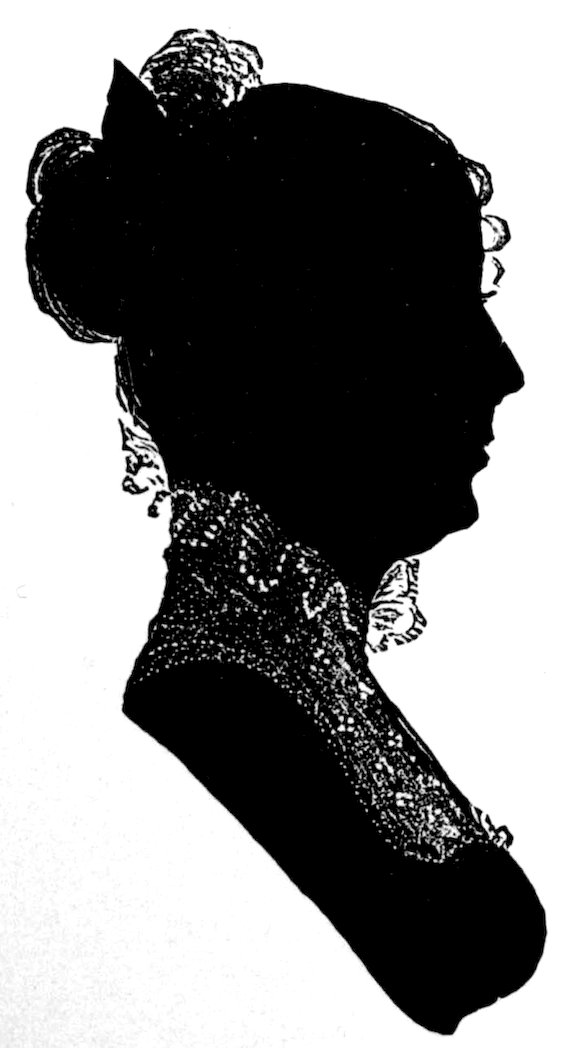
LUCIA WADSWORTH
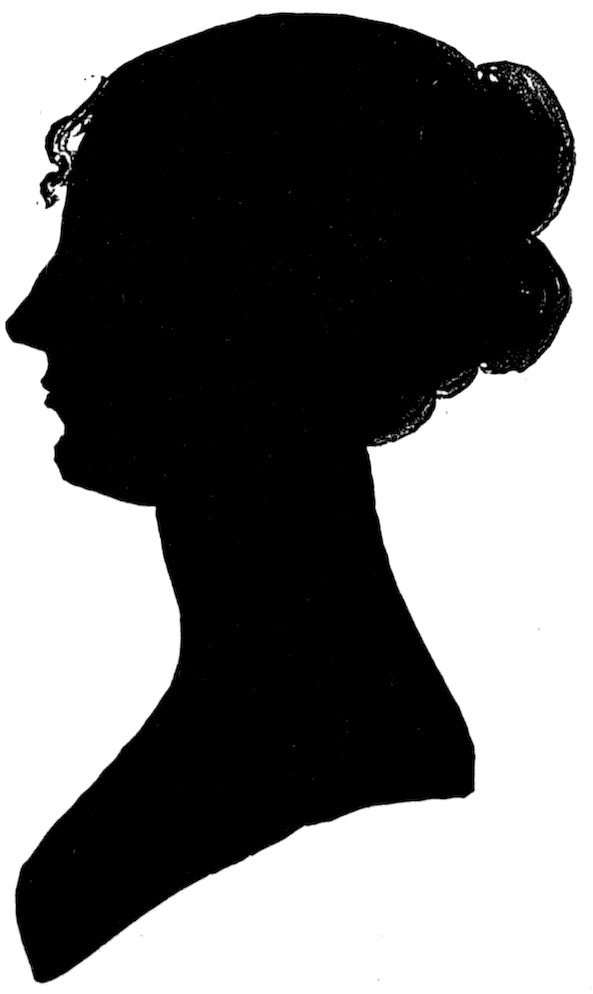
ZILPAH WADSWORTH
New York, June 30, 1803.
Uncle Rufus[55] has just landed. The Hussas have ceased, the populace retired, and I hasten to give you the earliest information. Several thousand people were on the wharf when he landed, my Husband among the number. As he stept from the vessel they gave 3 cheers and escorted him up into Broadway to a Mr. Nicholas Lowe’s[56] (his friend); then three more cheers as he entered the door. He stood at the door, bowed, and they dispersed—all but a dozen particular friends, who accompanied him into the house, and Mr. Bowne with them. Was introduced by Mr. Watson,[57] and immediately after Mr. Henderson[58] said, “A niece of yours, Mr. King, was lately married in New York to Mr. Bowne.” My Uncle immediately came up to him, shook hands a second time, and said, “Miss Southgate, I presume.”—He staid but a few moments; the acclamations of the people had rather embarrassed him (uncle). Aunt King had not landed. This evening we are going to see them. Imagine me entering, presented by Mrs. Henderson, Miss Bull, or Mrs. Delafield,—all her intimate friends; think what a mixture of sensations! I’ll tell you all about it. I returned from Long Island this morning: delightful sail, beautiful country, and pleasant visit. Malbone has finished my picture, but is unwilling we should have it as the likeness is not striking,—he says not handsome enough—so says Mr. B. But I think ’tis in some things much flattered. It looks too serious, pensive, soft,—that’s not my style at all. But perhaps ’twill look different; ’twas not quite finished when I saw it; however, he insists on taking it again as soon as he returns from the Southward, and told Mr. Bowne, if he must have one he might keep this till he returned and he would try again. Uncle Rufus brings news that war has actually taken place, hostilities commenced. The King[59] on the 14th sent a message to Parliament that he was determined to use every effort to repress the overbearing power of France, and hoped for their united assistance and exertions.—So much for Father.—The whole City seems alive, nothing else talked of but the arrival of Mr. King and the news of War. Adieu. I’ll write again soon. Best love to all the family.
We are in expectation of great entertainment on fourth of July—Independent day! as they laugh at us Yankees for calling it,—the gardens, the Battery, and every thing to be illuminated, fire-works, music, etc., etc. Col. Boyd called to see me; and Mr. Grelett, whom I was introduced to in Boston, brought the handsome Miss Pemberton, whom you have heard Col. B. speak of—to call on me; she’s from Philadelphia. I was out. I hope none of my acquaintance will come to New York, pass thro’, or any thing, without finding me out. I just begin to make memorandums of tables and chairs, spoons and beds, and everything else; most turns my brain, so many things to think of; but I am well and happy, and ’tis a pleasant task. Adieu.
Yours affectionately, Eliza S. Bowne.
10 o’clock, evening.
Just returned from Uncle Rufus’. Mr. B. introduced me to Uncle; he took my hand, introduced us to his wife, and they both seemed much pleased to see us. Uncle is so easy and graceful and pleasing, I was delighted with him. Looks very like Mr. Parker instead of Mr. Davis; enquired particularly after the family; was surprised at my being here,—said everything that was pleasant, hoped we should be very sociable, etc., etc.; and after a pleasant half-hour we returned home. I broke the seal of my letter to tell you; ’tis late, I can’t be particular.
E. S. B.
Miss Southgate, Portland.
New York, July 4, 1803.
Dear Mother:
I have written generally to Octavia, but as I meant my letters for the family, ’tis not much matter to whom they were directed. I wrote you of Uncle Rufus’ arrival and our calling on them the evening after. Sunday they called on us with Mr. and Mrs. Lowe, their friends, with whom they are staying till their own house is ready. They both kissed me very affectionately, said everything that pleased me, and were very solicitous that we might get houses near each other in the winter, that we might be sociable neighbors. Uncle Rufus says I remind him of Martha very much; he inquired particularly after all the family, and asked if I did not expect you would come on to see me, and both appeared much pleased when I assured them I depended on seeing you here. Aunt King told Mr. Bowne he must bring me to see them very often, and look upon her as a Mother.
July 8.
My letter will be an old date before I finish it. You must have perceived, my Dear Mother, from my letters, that I am much pleased with New York. I was never in a place that I should prefer as a situation for life, and nothing but the distance from my friends can render it other than delightful. We have thus far spent the summer delightfully: we have been no very long journeys, but been on a number of little excursions of 20 or 40 miles to see whatever is pleasant in the neighborhood. Mr. Bowne’s friends, tho’ all very plain, are very amiable and affectionate, and I receive every attention from them I wish. I have a great many people call on me, and shall have it in my power to select just such a circle of acquaintance as suits my taste,—few people whose prospects of happiness exceed mine, which I often think of with grateful sensations. Mr. Bowne’s situation in life is equal to my most sanguine expectations, and it is a peculiar gratification to me to find him so much and so universally esteemed and respected. This would be ridiculous from me to any but my Mother, but I know it must be pleasing to you to know that I realize all the happiness you can wish me. I have not a wish that is not gratified as soon as ’tis known. We intend going to Bethlehem, Philadelphia, and a watering place, similar to the Springs, about 30 miles beyond Philadelphia; shall probably set out the latter part of this month. At present we have done nothing toward housekeeping, and Mr. Bowne won’t let me do the least thing towards it, lest I get my mind engaged and not enjoy the pleasure of our journeys.—’Tis very different here from most any place, for there is no article but you can find ready made to your taste, excepting table linen, bedding, etc., etc. One poor bed quilt is all I have towards housekeeping, and been married two months almost. I am sadly off, to be sure. We have not yet found a house that suits us. Mr. Bowne don’t like any of his own, and wishes to hire one for the present until he can build, which he intends doing next season; which I am very glad of, as I never liked living in a hired house and changing about so often. Uncle and Aunt King want we should get near them; they have hired a ready furnished house about 2 miles out of the city for the summer, and intend hiring a house in town in the winter. I have been very busy with my mantua-maker, as I am having a dress made to wear to Mrs. Delafield’s to dine on Sunday; they have a most superb country seat on Long Island, opposite Hell-Gate;—he is Uncle Rufus’ most intimate friend and a very intimate one of Mr. Bowne’s. We shall probably meet them there; I have not seen them to ask. My picture is done, but I am disappointed in it. Malbone says he has not done me justice, so says Mr. Bowne; but I think, tho’ the features are striking, he has not caught the expression, particularly of the eyes, which are excessively pensive: would do for Sterne’s Maria. The mouth laughs a little and they all say is good,—all the lower part of the face; but the eyes not the thing. He wants me to sit again, so does Mr. Bowne. Malbone thinks he could do much better in another position. I get so tired, I am quite reluctant about sitting again. However, we intend showing it to some of our friends before we determine. How do all our friends at Saco and Topsham do? I often think of them, and Mr. Bowne and myself are talking of coming to see you next summer very seriously. How comes on the new house? We are to come as soon as ever that is finished. If you choose to send so far, I will purchase any kind of furniture you wish, perhaps cheaper and better than you can get elsewhere. Adieu. Remember me to all the children. Dear little Mary,—I can’t help crying sometimes, with all my pleasures and amusements; ’tis impossible to be at once reconciled to quitting all one’s friends. I thought a great deal of the children. I never thought I loved them so much; I never pass a toy-shop or confectionery without wishing them here. How does Horatio succeed in business, as well as he expected? How comes on Father’s turnpike and diking? Tell him I yesterday met a woman full broke out with the small-pox; I was within a yard of her before I perceived it; the first sensation was terror, and I ran several paces before I recollected myself. As soon as I arrived in town Doctor Moore examined my arm, enquired the particulars, and refused to inoculate me again; that he would venture to insure me from the small-pox; that he had inoculated hundreds and never had one take the small-pox after the kine-pox. Adieu.
Your affectionate daughter
Eliza S. Bowne.
P. S. All the family desire to be remembered particularly. Mr. B. is out to dine.
Mrs. Southgate, Scarborough, District of Maine.
167
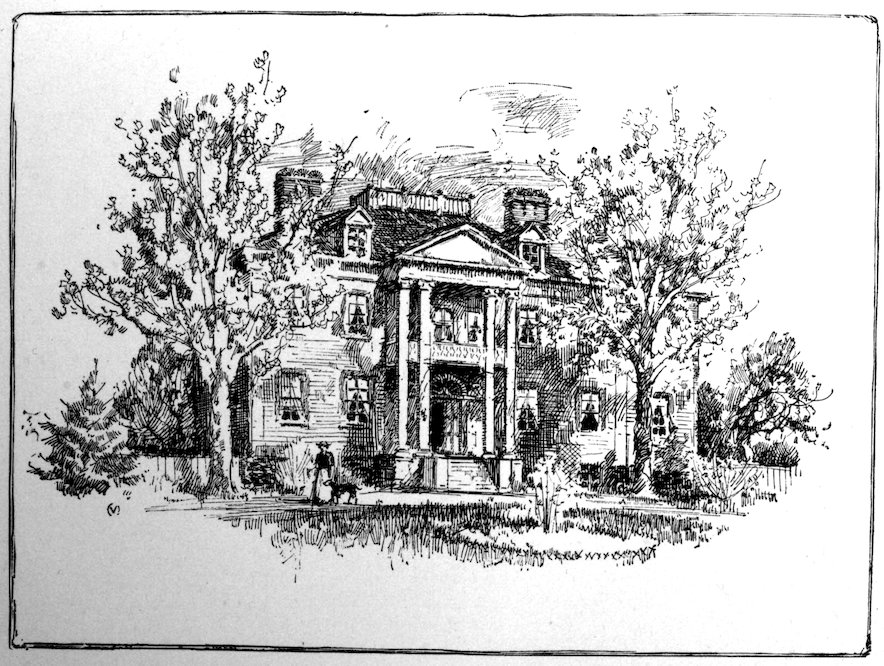
SUNSWICK—THE DELAFIELD HOUSE Hell Gate, Long Island
New York, July 14.
Friend Greene from Portland is here and will dine with us to-day; a fine opportunity for me to write to my friends. I have quite a packet of newspapers which I shall send by him to amuse you; they contain all the public amusements and shows in celebration of 4th July. The Procession passed our house and was very elegant. In the evening we were at Davis Hall Gardens; the entertainment there you will see by the papers; ’twas supposed there were 4,000 people there; tickets half a dollar; and ’tis said he made very little money, so you may think what the entertainment was. Indeed there is every day something new and amusing to me. Whenever we have nothing particular in view, in the cool of the evening we walk down to the Battery, go into the garden, sit half an hour, eat ice-cream, drink lemonade, hear fine music, see a variety of people, and return home happy and refreshed. Sunday we dined at Mr. Delafield’s near Hell Gate, Long Island; the most superb, magnificent place I ever saw, situated directly on the East river, the finest view you can imagine. I was delighted with our visit, so much ease, elegance and hospitality. I am very glad you liked your gown. Long sleeves are very much worn, made like mitts; crosswise, only one seam and that in the back of the arm, and a half drawn sleeve over and a close, very short one up high, drawn up with a cord. I have just been having one made so. All Mrs. Delafield’s daughters, even to little Caroline, no older than our Mary, had their frocks made exactly like the gown I sent you, only cut open in the back, a piece of bone each side and eyelet holes laced,—long sleeves as I mentioned above; short sleeves and open behind. I should admire to be in Portland, now all the Coffin family are there. Give my best love to Mrs. Coffin and Ellen Foster; the others will have returned. I am astonished at what you say about my calling on Mrs. Sumner, and what Mrs. Coffin said. When I got to Boston I determined to call nowhere but at Mrs. Sumner’s, as my intimacy in the family was such and I was fearful she might not hear of my being in town and should not see her; accordingly the day I got in town we went out purposely to call there, and to prevent any one calling on us (for I did not wish to see much company) we said we expected to go out of town immediately. However, there were a great many called to see me notwithstanding. In Cap hill we met Mr. Sumner. I introduced Mr. Bowne, said we were just going to call on Mrs. Sumner, enquired how she did, etc., and Mr. Sumner said they were just going out to ride, but if I would go immediately with him I could see her. I was fearful of detaining them, and thought I should certainly see her, now she knew I was in town and had set out to call on her; and Mr. Sumner particularly asked where we were to be found,—we told him Mrs. Carter’s, and parted. From that time, every time I heard the bell, I supposed ’twas Mrs. Sumner. We staid 2 days, and neither Mr. nor Mrs. Sumner called. I felt amazingly hurt, as so many ladies I was very little acquainted with called on me immediately. Late in the evening before we left town, Tom Coffin called in, appeared rather formal, never mentioned Mrs. Sumner or any reason why they did not call, nor any apology. As I could no way account for such mysterious conduct, it greatly mortified me. This is the true statement, which you may mention to Mrs. Coffin, and then ask her who has a right to feel offended. The great dinner given in honor of Uncle Rufus I have not yet mentioned; ’twas very superb, and 200 of the most respectable citizens of New York attended. Mr. Bowne says, tho’ he has been at many entertainments given in honor of particular persons, yet he never saw one that was so complimentary, and never a person conduct himself on such an occasion with such ease, elegance, and dignity in his life. He returned quite in raptures,—such insinuating manners—such ease in receiving those presented and introduced,—he is a most amazing favorite here. Democrats and Federalists and all parties attended. French Consul on his right—English Consul on his left. When Mr. Bowne went up, he held out his hand with all the ease of an old friend, without even bowing, and said, “How! is it Bowne? How’s your wife?”—so familiar. I went to see the tables: very novel and elegant—there was one the whole length of the Hall and 4 branches from it; there was an enclosure about 2 feet wide, filled with earth, and railed in with a little white fence, and little gates every yard or two ran thro’ the centre of all the tables, and on each side were the plates and dishes. In this enclosure there were lakes, and swans swimming, little mounds covered with goats among little trees,—some places flocks of sheep, some cows laying down, beautiful little arches and arbors covered with green,—figures of Apollo, Ceres, Flora, little white pyramids with earth and sprigs of myrtle, orange, lemon, flowers in imitation of hothouse plants,—nothing could have a more beautiful effect in the hot weather; those opposite to you were divided, their plates quite hidden. Adieu; some ladies have just called. We are going about 20 miles to enjoy the sea, Rockaway, a place of fashionable resort; ’tis intensely hot, exceeded only by Ballston Springs. We don’t go to Bethlehem till the last of the month. Mr. Bowne’s business detains him in the City only one or two days in a week perhaps, yet prevents a long journey just now. We ride out every day or two, go into the baths whenever we please, they have very fine public ones. Adieu. The ladies will think I am Yankee. Love to all.
Eliza S. Bowne.
Sally Weeks remember me to—and all other friends; Betsey Tappan—tell her Mr. Bowne often speaks of that sweet little Miss Tappan. How comes on Father’s house, Octavia? We both depend on its being finished next season. We think very seriously of coming next summer. Mr. Bowne wants to go almost as much as myself.
Love to Sister, hope she is well again. Uncle Rufus told me Mr. Boyd had been very sick, but I did not mention it, lest it might alarm sister. Adieu. Love to Zilpah and Lucia. Tell Zilpah Mrs. Bogert came to see me last week and is in hopes she will come on with her father. Remember me affectionately to all Mrs. Davis’ family. I sometimes treat myself with telling my Husband all about our charming frolics. Does not Mr. Davis talk anything of coming to New York? Louise is quite a belle I suppose.
Miss Southgate.
New York, July 23, 1803.
I have sent a few sugar toys to the children, which you must divide,—the cradle for Mary, the basket for Arixene, etc., etc.,—pair shoes apiece, two little dogs I put up in the music—one looks like Sancho; a little frock I send as a pattern for Miranda, Arixene, and Mary, long or short sleeves as you please, whalebone in the back, laced. I have sent another box of things to Isabella’s children: the paper box I mean for them; two little fans for Arixene and Mary, with their names on them, you’ll find in the bottom of the box. The two songs I sent you are all I could find that struck me; for the “Death of Allen,” I never heard it, and bought it because it was a composition of Floyd’s; “The Wounded Hussar” I admired and knew you could not get it set for the Piano,—I don’t know but ’tis different from Miss Sandford’s. I write in great haste—we are going to dine at Uncle Rufus’ out of town; ’tis past eleven. They have a delightful place on the North River; took tea there last week. Mr. Bowne joins me in love to Father and Mother and all. How comes on the house, Octavia?—we want to come very much next Summer. Adieu.
Yours, E. S. B.
P. S. I have some fine peaches and apricots on the table before me; Mr. Bowne brings me a pocketful of fruit every time he comes home. I have ate as many as I want to, and have been thinking how much I would give to get them to you, but this early fruit won’t keep at all. I was at the theatre night before last—at Mount Vernon Garden; Hodgkinson is a fine fellow. We commence our Southern journey in about 10 days. Oh, I am sorry—Mr. Bowne just came to tell me the vessel has sailed—well, I must wait for another. Love to Mary Porter, and give her the ring I enclose of my hair; tell her I long to see her, and ask if she means to be Mary Porter when I next come to the Eastward. Love to all friends.
Eliza S. Bowne.
Miss Octavia Southgate.
Bethlehem, August 9, 1803.
I intended writing before I left New York, but was so much engaged in preparing for our journey, I had no time. My great wish to see this famous Bethlehem[60] is at length gratified. You can scarcely imagine any thing more novel and delightful than every thing about here, so entirely different from any place in New England. Indeed, in travelling thro’ the State of Pennsylvania, the cultivation, buildings, and every thing are entirely different from ours,—highly cultivated country, looks like excellent farmers. Barns twice as large as the houses, all built of stone; no white painted houses, as in New England. We crossed the famous Delaware at Easton. It separates New Jersey and Pennsylvania. We saw some beautiful little towns in New Jersey likewise, but in Pennsylvania the villages look so many clusters of jails, and the public buildings like the Bastile, or, to come nearer home, like the New York State prison,—all of stone, so strong, heavy, and gloomy, I could not bear them; the inhabitants most all Dutch, and such jargon as you hear in every entry or corner makes you fancy yourself in a foreign country. These Bethlehemites are all Germans, and retain many of the peculiarities of their country—such as their great fondness for music. It is delightful: there is scarcely a house in the place without a Piano-forte; the Post Master has an elegant grand Piano. The Barber plays on almost every kind of music. Sunday afternoon we went to the Young Men’s house to hear some sacred music. We went into a hall, which was hung round with Musical Instruments, and about 20 musicians of the Brethren were playing in concert,—an organ, 2 bass viols, 4 violins, two flutes, two French horns, two clarionets, bassoon, and an Instrument I never heard before, made up the Band; they all seemed animated and interested. It was delightful to see these men, who are accustomed to laborious employments, all kinds of mechanics, and so perfect in so refined an art as music. One man appeared to take the lead and played on several different instruments, and to my great astonishment I saw the famous musician enter the breakfast room this morning with the razor-box in his hand to shave some of the gentlemen. Judge of my surprise; and some one mentioned he had just been fixing a watch down-stairs. Yesterday, Daddy Thomas (who is a head one, and who comes to the tavern every few hours to see if there are any strangers who wish to visit the buildings) conducted us all round. We went to the Schools,—first was merely a sewing school, little children, and a pretty single sister about 30, with her white skirt, white, short, tight waistcoat, nice handkerchief pinned outside, a muslin apron and a close cambric cap, of the most singular form you can imagine. I can’t describe it; the hair is all put out of sight, turned back before, and no border to the cap, very unbecoming but very singular, tied under the chin with a pink ribbon,—blue for the married, white for the widows. Here was a Piano-forte, and another sister teaching a little girl music. We went thro’ all the different schoolrooms—some misses of 16,—their teachers were very agreeable and easy, and in every room was a Piano. I never saw any embroidery so beautiful; Muslin they don’t work. Make artificial flowers very handsome, paper baskets, etc. At the single Sisters’ house we were conducted round by a fine lady-like woman, who answered our questions with great intelligence and affability. I think there were 130 in this house; their apartments were perfectly neat,—the Dormitory or sleeping-room is a large room in the upper part of the building, with “Dormont” opposite the whole length. A lamp suspended in the middle of the ceiling, which is kept lighted all night; and there were 40 beds, in rows, only one person in each,—they were of a singular shape, high and covered, and struck me like people laid out—dreadful! the lamp and altogether seemed more like a nunnery than any thing I had seen. One sister walks these sleeping-rooms once an hour thro’ the night. We went to a room where they keep their work for sale,—pocket-books, pin balls, Toilette cushions, baskets, artificial flowers, etc., etc. We bought a box full of things, and left them much pleased with the neatness and order which appeared thro’out. The situation of the place is delightful. The walks on the banks of the Lehigh and the mountains surrounding—’tis really beautiful. The widows’ house and young men’s is similar to the one described; there were many children at the school, from Georgia, Montreal, and many other places as far. There are some genteel people from Georgia at the tavern where we are, and Philadelphia. We intended leaving here for Philadelphia to-day, but it rains. We shall spend a few days there and go to Long Branch. If the alarm of the fever[61] continues in New York we shall not return there again, but go in the neighborhood. Send in for a trunk, which I packed up for the purpose, in case I feared going in the City—and set off for the Springs or somewhere else. ’Tis very uncertain when we go to housekeeping; the alarm of the Fever hurried us out of town without any arrangement towards it, and may, if it continues, keep us out till middle of Autumn. But at any rate you must spend the winter with us, we both depend on it. You can certainly find some opportunity. Give my best love to all friends, and expect to hear from me frequently while I am rambling about. My husband is so fond of roving, I don’t know but he’ll spoil me. We both enjoy travelling very much, and surely it is never so delightful as in company with those we love. Only think, ’tis just a year to-day since we first saw each other, and here we are, Married, happy, and enjoying ourselves in Bethlehem. Memorable day! Horatio’s and Frederick’s birthday, too; mine will soon be here. I long to see you all more than you can imagine; hope to, next summer, and depend on your spending the winter with us. Love to Miranda, when you write, and tell her I mean to write myself. Mr. B—— often talks of her. Is Mr. Boyd[62] arrived? I want much to hear. Love to Sister[63] and the children. Adieu.
Affectionately,
Eliza S. Bowne.
Mrs. Southgate, Scarborough.
Ballston Springs, Sept. 4, 1803.
Once more do I write you from the Springs, where I enjoyed so many delightful moments last year. We recall so many charming things to our recollection by this visit to the Springs that ’tis of all places the most pleasant for us to visit. A description of the place, amusements, etc. I gave you last year; they are the same now. We arrived yesterday morning, found the place much crowded, and were fearful of not getting good accommodations, but in that respect were agreeably disappointed. They dance much as usual; a fine ball to-morrow evening. I wish you were here to help us dance,—a great many New Yorkers have taken refuge here from the fever. I was quite sorry when I found Mr. Derby had been here and gone again. Tell Louise the Bussey family from Boston are here, and Miss Putnam appears as much delighted with the picturesque steeps of Ballston as she was with those of Freeport, and with about as much reason. We have an abundance of queer, smart people here. Last night at tea I found myself seated alongside Beau Dawson,[64] “Nancy Dawson,”—our envoy to France—you remember! Gen. Smith of Baltimore and family, who it was said would succeed Uncle Rufus; Mr. Harper and wife—the fine speaker in Congress; Herssa Madame Somebody—French lady; and a nobleman from nobody knows where, and a parcel of strange people, making a variety that I like once in a while. But, let me see, I have hurried you along to the Springs from Long Branch in a much easier manner than I got here myself. Oh the tremendous Highlands![65] I thought to my soul I should never hold out to get over them—such roads! But I lived over it, tho’ it made me sick fairly, with fatigue. I went to see Maria Denning, whose father’s country seat, Beverly, is in the midst of the Highlands—on the North River, directly opposite West Point. It does not look much like Louisa’s picture; ’twould make one of the most sublime and beautiful pictures imaginable if the objects were selected with judgment. It rises with sublime and picturesque grandeur directly from the North River. Who would have thought of taking a view of it without water?—that is the greatest beauty when united with the others. We got to Mr. Denning’s Saturday night,—left the neighborhood of New York, Thursday,—where we staid only one night, dined at Uncle’s, drank tea at Sister Murray’s, and set off that evening for the Springs. The romantic and beautiful scenery on the North River as we rode up was most charming to me. I admire the wild diversity of nature—here we had it in perfection. I am sure the Hudson wants nothing but a Poet to celebrate it. The Thames and the Tiber have been sung by Homers and Popes, but I don’t believe there can be a greater variety, more sublimity or more beauty, than are to be found on the banks of the Hudson. The Delaware did not strike me at all—I crossed it several times. We were in hopes Uncle and Aunt would come here with us, but Uncle said he must go East if anywhere, but he wanted to be at rest a few months, now he was settled. Mrs. Codman told me she saw you all; we called a moment to see her. Mrs. Sumner has a son too. Poor Mrs. Davis, how much sickness she has! On our return from Long Branch we went to Passaic Falls with a Baltimore family; had a charming little jaunt about 20 miles from New York. The falls—the rocks—the whole scenery partakes more of the sublime—almost terrific—than Glens Falls, but not so beautiful. I am much delighted to hear of Mr. Boyd’s arrival; Sister must be very happy. Martha is coming this month; the fever would prevent her coming to New York—I am sorry. Love to Mrs. Coffin. My mother is quite well, Mrs. Codman tells me. Horatio,—Miranda, there’s half a dozen wild girls here that would romp to beat her—they are as old as you, but sad romps. We shall stay here about a week, then go to Lebanon, where I wish you to direct a letter to me immediately on the receipt of this. I want to hear much, so does Mr. Bowne. He teases me to death to write home that we may hear from you. We depend on your coming on this winter. When we shall be to housekeeping Heaven knows; not even a napkin made, just getting a woman to work,—fixed the things already, when the fever came and we all left the city; so here I am—perfectly unprepared as possible. Adieu. Tell Horatio he has more time than I have, he ought to write me immediately to Lebanon. Lebanon has been quite deserted. Poor Hannah Hamilton’s Mamma died three or four weeks since. The servants at the other house where I kept last summer, wished me joy,—heard Miss Southgate was married to Mr. Bowne. Oh, I have not told you!—saw the tree Major Andre was taken under, and the house where Arnold fled from, left his wife and family,—indeed, ’tis the very house Maria lives in. We staid two nights there and promised to go and see them on our return; charming place, such fruit, ’tis delicious. In the Jerseys,—don’t laugh at travellers’ stories,—but we really rode over the peaches in the road; we always kept our case full, William brought us some off the finest trees that hung over the road. Peaches and cream!—they laugh and say Boston people cry out, “’tis so good!” Well, what have I not wrote about? A little of everything but sentiment; a dash of that to complete. I am most tired of jaunting; the mind becomes satiated with variety and description and pants for a little respite of domestic tranquillity. I’ve done; I have most forgot how to write sentiment. I have had no time to think since I was married. I don’t expect to, this 2 or 3 months, so good-bye.
Eliza S. Bowne.
Miss Octavia Southgate.
Lebanon Springs, Sept. 24, 1803.
Your letter, my dear Octavia, has set my head to planning at a great rate. By all means come on with Mr. Cutts; I am impatient to see you, and I cannot give up the pleasure of having you with me this winter. We shall be at Housekeeping as soon as possible after the fever subsides. My husband thinks the plan a very good one. I will write immediately to Aunt King, say that it is uncertain when you arrive, but I have taken the liberty to request Mr. Cutts to leave you with her until I demand you. This settled, I proceed. Tell my good Mother not to be afraid. I am as anxious as herself to be settled at home. I am most tired of roving; it begins to grow cold, and I long for a comfortable fireside of my own. What a sweet circle! Octavia, my dear Husband, and myself; when we are alone we’ll read, and work like old times. I have spent a most delightful 3 weeks at Ballston and Lebanon. We had a charming company at Ballston, danced a few nights after I wrote you, and I was complimented as Bride again.—Manager bro’t me No. 1,—quite time I was out of date.
Lebanon is delightful as ever; we have a small party, ride to see the Shakers, walk, and play at Billiards, work, read, or anything. Tell Mamma, Eunice Loring that was, is here,—she talks a great deal of my Mother and Aunt Porter, wants to see them very much, etc., etc. She is married to a Mr. Neufville of Carolina. She is much out of health, talks of going to England in the Spring. She wants to see you, as she says my Mother talk’d of naming you for her; she wishes she had, as she has no children. The box I mentioned was full of sugar things, toys for the children; two little fans—a little frock for a pattern, and another for Isabella’s children, The Children of the Abbey, and Caroline of Lichfield for Mamma,—all in a package together; a letter for Mrs. Coffin and several others. When we left New York Mr. Bowne sent it to a Commission Merchant who does business for several Portland people, and requested him to send it by the first vessel. As you haven’t received it, I suppose the fever which broke out immediately after induced him to shut up his store, or perhaps prevented any Portland vessel from coming near the City, and that it now lies in his store. Write me when you set out, and when ’tis probable you will be in New York; direct to New York, probably I shall be near New York in a fortnight. I have but a few moments to write as the stage passes the village at 11. You alarm me about Ellen; pray enquire particularly and tell me all; go to see yourself, and tell her I can imagine no reason why I have never received a line from her since I have been in New York,—nor Lucy Derby, neither Mrs. Coffin. I wrote to, but it seems she did not receive my letter; love to her and all Portland friends. I am expecting every day to hear Martha has arrived. My best love to Sister Boyd and husband. I wrote a line of congratulation to her, but that too is in the package. Adieu. I shall soon see you, and then we will talk what I have not time to write. My husband’s best love.
Yours, Eliza S. Bowne.
New York, October 23, 1803.
I have waited till my patience is quite exhausted. What can have kept you so long in Boston? Mr. Bowne has been at the Stage Office a dozen times, and I have staid at home every forenoon this week to receive your ladyship. I expect to get to housekeeping next week; and am so busy. Mercy on me, what work this housekeeping makes! I am half crazed with sempstresses, waiters, chambermaids, and every thing else—calling to be hired, enquiring characters, such a fuss. I cannot possibly imagine why you are not here. I should have wrote immediately after receiving your letter, but Mr. Bowne was sure you would be here in less than a week. It is possible you may be in Boston to receive this; if not, you will be here or on the way. If you are troubled about a Protector, Mr. Bowne says there has been several married gentlemen come on lately, which if you had known of, would have been proper. Perhaps Mr. Davis may hear of some one. At any rate come as soon as possible, for I am very impatient to see you. My best love to Louisa; tell her I should be much delighted to see her in New York this winter, and my Husband frequently says he should like to have Mr. Davis’ family near us in New York. I am sure I should with all my heart. Say everything to Mr. and Mrs. Davis for me that bespeaks esteem.
Adieu. Yours always,
Eliza S. Bowne.
Miss Octavia Southgate.
Bloomingdale, Nov. 2, 1803.[66]
Mr. Bowne has just bro’t me a letter from you in which you mention coming on with Mr. Wood. I am fearful my answer will arrive too late, as your letter has been written nearly a fortnight. At any rate, come on with Mr. Wood if he has not set out. You should not wait for an answer from me—I shall be ready to receive you at any time, at housekeeping or not. We go in town next Monday, every body is moving in; for the last 3 days there has been no death, and for 5 no new cases. If, unfortunately, Mr. Wood should have gone and you not accepted of his protection, come the very next opportunity without consulting me or waiting a moment. I hope to get to housekeeping very soon. We have just returned from Uncle’s, where we had been to meet Mr. and Mrs. Paine (Mrs. Doble) from Boston; she is less beautiful than I expected,—charming little daughter. I am more and more delighted with Aunt King, she is so unaffected, easy and ladylike. Margaret and Mr. Duncan married? I expect to hear still stranger things from Portland—now Ellen Foster is married. I suppose she is, tho’ I have not heard. I am hourly and impatiently expecting to hear from Martha. How unfortunate! What would I give to be nearer! Adieu: ’tis late; come as soon as possible. Give my love to all friends.
Yours affectionately, Eliza S. Bowne.
New York, Dec. 24, 1803.[67]
My Dear Mother:
Eliza received a letter yesterday from you, where you say you have not received a letter from either of us a long time. I am really surprised at it, as I wrote you very frequently from Boston, and am determined to let you have a letter now every fortnight to let you know what we are doing and whether I am happy. I begin to feel quite at home and certainly never was happier in my life. It is true I sometimes sigh for home, but it is generally when I am in a crowd that I am most there in imagination. But when I am here and none but our own family, I have not a single wish ungratified. I am much more pleased with New York on every account than with Boston. As a City it is much superior, the situation is every way as delightful as possible. The inhabitants to me are much more pleasing, more ease, more sociability and elegance, yet not so ostentatious,—they dress with remarkable simplicity; and I think I could spend the winter here and not expend half the money that I must unavoidably do in Boston. There every one dresses, and a person would look singular not to conform; but here there is such a variety, and the most genteel people dress so plain that one never appears singular. To-morrow is Christmas and we dine at Uncle’s; he is a charming man, looks amazingly like you, so much so that I admire to look at him. She is a very affable, pleasing woman, and they both appear to be fond of Eliza. We were at a concert last evening; the most delightful music I ever heard. We wished for Horatio all the evening. There is not much gaiety, they tell me, till after the holydays, that is Christmas and New Year. We have been into no parties yet, but have made many sociable visits, which I very much admire. I am very much pleased with all the friends we have visited. Old Mrs. Bowne is a fine, motherly old lady; she treats Eliza with as much affection as an own mother,—they all appear to be very glad to see me, and I really feel sometimes as though I was at home; how I long to see you all! How is Arixene and Mary? How I want to see them! How is Papa this winter? Ah! if you were all here! But next spring we shall all be with you. I am afraid you are solitary—if you are, do, my Dear Mother, tell me, find any opportunity, and I’ll be with you as soon as you say,—depend on it, I shall never get so attached either to the inhabitants or the gaieties of New York, as to feel reluctant to return home; even in my happiest hours I think of the time with extreme pleasure. This family is the only thing that would root me to the spot, and there is a charm in that which nothing but home can equal. I have promised Eliza a page for you, so I suppose I must close. Give my best love to Father and the children, and believe me your affectionate child,
Octavia Southgate.
Octavia has reserved me a page in her letter which I hasten to improve. I thank you, my Dear Mother, for yours, and beg you will often write me, now Octavia is with me and cannot tell me about home. I am at length settled at housekeeping very pleasantly, and do not find it such a tremendous undertaking. I have been fortunate in servants, which makes it much less troublesome; the house we have taken does not altogether please us, but at any time but May ’tis extremely difficult to get a house. In the Spring we shall be able to suit ourselves. Mr. Bowne wishes to build and is trying to find a lot that suits him,—if so, we shall build the next season. Almost everybody in New York hire houses, but I think it much pleasanter living in one’s own. I am more and more pleased with New York, there is more ease and sociability than I expected. I admire Uncle and Aunt more and more every day, and Mr. Bowne thinks there never was Uncle’s equal,—such a character as he had often imagined, though not supposed existed. I believe I shan’t go to the next Assembly; Octavia will go with Aunt King. You say Mr. Bowne must write you, and as a subject mention the dividends from the Insurance Office. In the Summer there was no dividend, no profits; the next dividend will be soon. Mr. Codman thinks there will be a tolerable one,—you shall hear as soon as it takes place; we have received nothing as yet. Uncle and Aunt always inquire particularly about you, and desire to be mentioned. Make my best love to all friends, kiss the children and tell them not to forget sister Eliza. I live in the hope of seeing you next Autumn—Heaven grant I may not be disappointed! Remember me with my best love to my Father and all the family. Adieu; write me soon, and believe me
Your affectionate Eliza S. Bowne.
Mrs. Robert Southgate.
New York, March.
Dear Miranda:
I have been talking of writing to you so long that I think it is quite time I should talk no longer, but act; but you should not have waited for me to write. You knew both Mr. Bowne and myself would have been very glad to have heard from you,—all about your school, your acquaintance, amusements or anything, and I have a thousand things to take up my attention that you have not. Do you return home this Spring? We shall find you at home when we come. I have got one or two trifles I want to send you, but can’t find an opportunity; there are so few people from our way come to New York, that ’tis very difficult to send anything. I hear a strange story about Isabella Porter: she is a silly little girl, and when she is older, will think she acted very foolishly,—one ought to know more of the world before she decides on a thing of so much importance; she is a mere baby and has seen nothing of life. Do you often hear of Caroline, Miranda? I feel anxious lest she should not conduct with as much discretion as she ought, as she never knew the blessing of having a kind, indulgent mother to watch over her and guard her from harm.
When I was in Bethlehem last summer, I got some little caps such as the girls at school wear, and such as the sisters of members of the Society wear. I want to find an opportunity to send them to you. Did you ever read a description of Bethlehem? If you never did, you may find one in some of the Boston Magazines. We had a little book called a “Tour to Bethlehem,” which if I can find I will send you. It will give you a very correct idea of the place, society and customs. When I was there, there were 83 girls, from 4 to 16, at the school, from almost every part of the United States. They all wear these little caps tied with a pink ribbon, which looks very pretty where you see so many of them together,—they learn music, embroidery, and all the useful branches of education,—likewise to make artificial flowers and many little things of that kind. Do you ever attempt painting?—’tis a charming accomplishment, and if you have any taste for it, should certainly cultivate it. Write me soon, and tell me when you are going home and of anything else that interests you. Mr. Bowne often talks of you and now desires to be particularly remembered.