LIST OF PHOTOGRAVURES (continued 7)
Reading edition
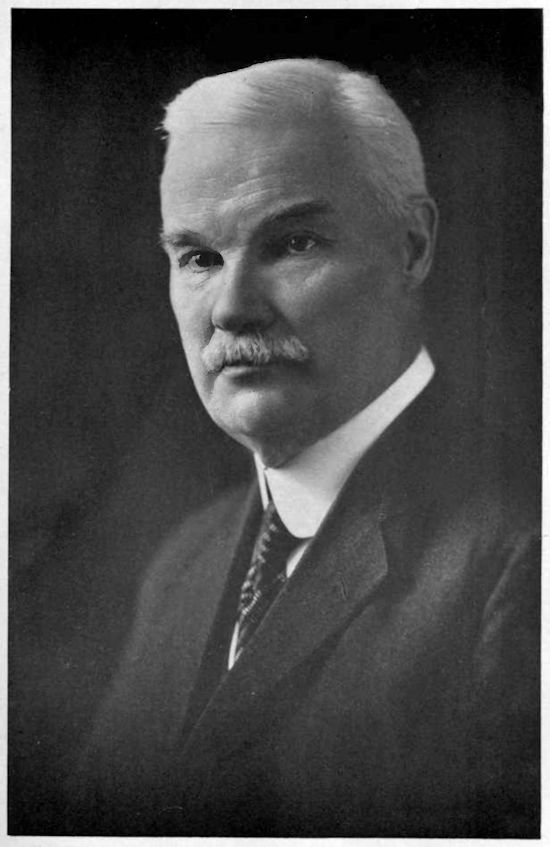
T. B. MACAULAY Montreal
Hogg, Andrew Brydon, Barrister (Lethbridge, Alberta), was born at Flesherton, Ont., on January 24, 1883. Educated at the Public and High Schools of Toronto and Toronto University, at which latter seat of learning he graduated with the degree of B.A. in 1904 and in 1916 received the degree of LL.B. from Alberta University. Studied law with the Hon. Arthur Meighen, Portage la Prairie, Manitoba, afterwards Solicitor-General of Canada, with whom he subsequently formed a partnership, and with whom he practised law from 1908-10, the firm being known as Meighen and Hogg. From 1910-14 he practised alone at Carmangay, Alberta. In 1914 he formed a partnership with Mr. Russel, the firm name being known as Hogg & Russel, removing to Lethbridge in 1916, where he practised alone, and in 1917 he formed a partnership with C. F. Jamieson, the firm style being Hogg and Jamieson. On May 10, 1917, he married Ada Wright, adopted daughter of D. H. Elton, Barrister, Lethbridge. He is an adherent of the Presbyterian Church and a Conservative in politics, and a member of the Masonic Order. Mr. Hogg’s recreations are golf and motoring.
Todd, John Lancelot (Montreal), son of the late Jacob Hunter Todd and Rosanna (Wigley) Todd. Was born in Victoria, B.C., December 10, 1876. Educated at Upper Canada College and McGill University, B.A., 1898; M.D., C.M., 1900; M.R.C.S., London, 1907; D.Sc. (Hon.) Liverpool University, 1909; a member of the staff of the Royal Victoria Hospital, Montreal, 1901. Sent by Liverpool School of Tropical Medicine to Gambia Protectorate and to Senegal to study trypanosomiasis (sleeping sickness) and report on sanitation, 1902. Sent by Belgian Government and Liverpool School of Tropical Medicine to Congo Free State to study the same disease and report on sanitation of the Free State posts, 1903; Director of the Tropical Research Laboratories, Liverpool School of Tropical medicine at Runcorn, 1905-7; has published observations on trypanasomiasis in men and animals, on spirochactoris (tick fever), and on other tropical and insect-borne diseases; decorated commander of the Order of Leopold II, by the King of the Belgians in recognition of his scientific services, 1905; awarded Mary Kingsley Gold Medal by Liverpool School of Tropical Medicine, 1910. Since June, 1907, has been Associate Professor of Parasit., McGill University; author of reports and papers in association with the late J. Everett Dutton (embodied in the memoirs of the Liverpool School of Tropical Medicine and elsewhere). Married M. Clouston, a daughter of Sir Edward Clouston, Bart., Montreal. Is a member of the Mount Royal Club, University Club, Montreal, and York Club, Toronto. Dr. Todd holds the rank of Major in the Canadian Army Medical Corps, and is a member of the Board of Pension Commissioners for Canada.
Adamson, John Evans, B.A. (Winnipeg, Man.), was born at Nelson, Manitoba, on Sept. 9, 1884, and is the son of Alan J. and Julia Adamson. He was educated at the public schools of Manitoba and Saskatchewan and graduated from St. John’s College, Winnipeg, with degree of B.A. in 1907. Called to the Bar in 1910. Member of the law firm Adamson & Lindsay, Winnipeg. Married Mary Turriff, daughter of Senator J. G. Turriff, Ottawa, on April 8, 1912, and is the father of two children. Is a member of the Carlton and St. Charles Country Club and also a member of the Masonic Order. In religion he is an Anglican and a Liberal in politics. His recreations are golf and motoring.
Peuchen, Lieut.-Col. Arthur Godfrey, Capitalist, retired Manufacturer, son of Godfrey E. Peuchen and Eliza Eleanor Clarke of Hull, Eng. born in Montreal, April 18, 1859; educated in private schools there. His father was a Railroad Contractor in South America and built a railroad from Laguero to Caracas, Venezuela; his grandfather was manager of the London, Brighton and Midland Railway in England. Canada is indebted to Col. Peuchen for his ingenuity in being the first man to grasp the possibility of utilizing the unmarketable portions of our hardwood forests in a scientific way. In travelling he observed that England and France had virtually no forests, and knowing that the Canadian lumberman was only taking from our woods the flotable timber, leaving the unmerchantable coarse hardwood, he conceived the idea of turning this waste into the manufacturing of valuable chemicals: Acetic Acid, Acetate of Lime, Acetone, Wood Alcohol and Formaldehyde, the latter being so important for the successful growing of wheat in Canada, and the former for the dyeing industry; also benefited the English War Office by being the first man under the British Flag to produce acetone direct from wood, which he supplied the Admiralty in large quantities for the manufacture of high explosives, such as cordite. Introduced our present system of charcoal distribution in paper bags. With Sir Wm. McKenzie and others he organized the Standard Chemical Company with a small capital, which he gradually through his unbounded energy increased to five millions—beginning in 1897 by distilling only 22 tons of wood per day, eventually by 1913 this distillation was increased to over 1,000 tons. The production of these chemicals meant a tremendous export trade. He erected factories at: Fenelon Falls, Deseronto, Longford Mills, South River, Sault Ste. Marie, Fassett and Cookshire, and operated factories at Thornbury, Parry Sound and Mount Tremblant; erected refineries in Montreal, London, England, France and Germany, where crude alcohol was shipped and refined; bought and operated blast charcoal furnaces at Deseronto, and built one at Parry Sound. Was President and General Manager of the Standard Chemical Company from 1897 to 1914. Was active in military circles: Lt., Q.O.R., 1888; Captain, 1894; Major, 1904; Lieutenant-Colonel, May 21st, 1912. Went to England with the Queen’s Own in 1910 as Major, for the Imperial Fall Manœuvres at Salisbury Plain, and part of this period was in charge of the regiment under General French. Was Marshalling Officer in command of escort of officers of Indian Cavalry, Royal Procession, Coronation of King George, 1911; Officer Commanding Home Battalion Q.O.R., 1914 and 1915. Officer’s long service decoration. Was in the “Titanic,” disaster, of which he was one of two only surviving males in Canada. President of the Imperial Land Co.; owner, McLaren Lumber Company, of Blairmore, Alberta, which controls all the large green timber in Southern Alberta, also saw mills and branch retail yards. Clubs: National, Toronto Hunt, Ontario Jockey, Life Member Military Institute; ex-Flag Officer and Life Member of Royal Canadian Yacht Club, having held the positions of vice and rear Commodore. Was owner for several years of the famous yacht “Vreda,” which crossed the Atlantic under her own canvas and won more races in her class than any other yacht in Canada. Member of St. Paul’s Anglican Church and a Governor of Grace Hospital. In politics a Conservative. Col. Peuchen has a strong personality, frank and genial in manner, easy and interesting in conversation; has crossed the Atlantic 30 odd times and travelled extensively in many lands. Recreations, golf, riding, yachting. He married Margaret Thompson, daughter of John Thompson, of Orillia, 1893. One son, Lieutenant Godfrey Alan Peuchen, Imperial Royal Field Artillery, Asst.-Adjt. H.Q. to the 26th Brigade of Artillery during the War; daughter, Jessie, married Lieutenant Harry C. Lefroy, M.C., of the Imperial Royal Field Artillery. Residence during the War: Queen Anne’s Mansions, St. James Park, London, England; summer home, “Woodlands,” one of the most picturesque spots on Lake Simcoe.
Forin, John Andrew (Nelson, B.C.), Judge of the County Court of West Kootenay, is a son of John Forin, Architect, of Belleville, Ont., where he was born on July 20, 1861. He was educated at Albert College, Belleville, and at Osgoode Hall, Toronto, and was called to the Bar of Ontario in 1885. He saw service in the North-west Rebellion of that year as a private in the Queen’s Own Rifles of Toronto, and holds the medal and clasp for that campaign. Later he practised in British Columbia and received his present judicial appointment in 1896. He still retains his connection with military affairs and at the time of writing is Officer Commanding of the 107th Regiment, B.C., with the rank of Major. Since 1915, the Internment camp at Morrissey, B.C., and the guards at the Trail, B.C., Smelter have been details of the regiment mentioned. He has also devoted some attention to literary pursuits and has published essays on legal and sociological subjects. His recreations are curling and golf; he is a member of the Nelson and Rossland Clubs and of the Scottish Clan Society. In religion he is a Presbyterian, and on May 18, 1895, was married to Mary, daughter of Peter T. Dunn, merchant, of Vancouver, B.C. He has five children, Jean Victoria, Isabel Dunn, John Douglas, Peter McLaren, and Mary Edith Forin.
Coburn, John W. (Nanaimo, B.C.), one of the leading lumbermen of the Pacific Coast, was born at Harvey, New Brunswick, the son of A. W. Coburn, farmer and contractor, and Elizabeth Messer, his wife. He was educated in the public schools of his native province and, later, in private schools in British Columbia. As a youth he took up railroading and had sixteen years’ experience therein, principally as a passenger conductor. Subsequently he went into the lumber business and was extremely successful. His interests are now very extensive. He is President of the Ladysmith Lumber Co., of Nanaimo; the Ladysmith Hardware Co., and of the Last West Lumber Co., which latter corporation does retail business in the Western Provinces. He is also a director of the Shawinigan Lake Lumber Co. He has shown a progressive and energetic spirit in public affairs and is an ex-President of the Nanaimo and Ladysmith Boards of Trade. He has also filled the following municipal offices: Mayor of Wellington, B.C., and of Ladysmith, B.C. (for three terms) and School Trustee and Alderman for three terms, when his business interests prevented him continuing in further civic affairs in Nanaimo. He is a member of the Masonic Order, is a Presbyterian in religion and a supporter of Union Government. On Feb. 8, 1899, he married Ellen Cowie (his second wife), a daughter of Alexander Cowie, Elora, Ont., by whom he has three children, Wallace, Gordon and Lorna Maud.
Ingram, George C., B.A., 1167 2nd Ave. N.W., Moose Jaw, Saskatchewan, one of the well known business men of that province, was born in Aberdeen, Scotland, on October 16, 1867, the son of James and Elizabeth (Leith) Ingram. When nine months old his parents emigrated to Tipton, Iowa, where the subject of this sketch spent twenty years on a farm. He was educated in the local schools of Tipton and later took a course at the Northern Indiana Normal School, Valparaiso, Indiana, taking the degree of B.A. In 1890 he removed to Minnesota, where he practised as a surveyor for two years, after which he founded the Ingram Lumber Co., of Sank Centre, Minn., continuing in business there until 1910. In the latter year he moved to Saskatoon, Sask., as special representative of the Western Retail Lumbermen’s Association, a post he held until 1912, when he became General Manager, Director and Secretary of Security Lumber Company, Limited, of Moose Jaw, a position he still holds. While a resident of the United States he was President (1905-6) of the Northwestern Lumbermen’s Association, Minneapolis. He has served as an Alderman and is a Liberal in politics. His recreation is golf and he belongs to the Prairie Club, Moose Jaw, and to the A.F. & A.M. (Shriner). On Sept. 22, 1896, he married Lulu, daughter of the late David Wilcox, and has three children, Howard C., Hildred and George L. Ingram.
Shepherd, Simpson James, 614 11th Street South, Lethbridge, Alberta Barrister-at-law, is a native of Uttoxeter, Lambton County, Ont., where he was born February 6, 1877, the son of James and Mary (Dowler) Shepherd. His father was a farmer and he was educated at Forest High School, and later at McGill University. He had a brilliant career in the latter institution and graduated in 1906 with the degree of B.C.L., capturing a Macdonald travelling scholarship in law. After graduation he was thus enabled to spend one year in France, and later decided to settle in the West, going to Lethbridge in 1908, when he was called to the Alberta Bar and formed a partnership with Mr. W. C. Simmons. The latter was appointed a judge of the Supreme Court of the province in 1910, and Mr. Shepherd then formed a partnership with Mr. Allen E. Dunlop, previously of the Nova Scotia Bar. Later Mr. George A. Rice joined the firm, which is now known as Shepherd, Dunlop and Rice. He is a member of the Alberta Returned Soldiers Commission, and of the Chinook and Lethbridge Golf Clubs, as well as the Masonic Order. His recreations are golf, curling and shooting. He is a Liberal in politics and a Methodist in religion. On September 7, 1908, he married Ethel M. S. Dixon, daughter of Mr. John Dixon, merchant of Maple Creek, Saskatchewan, and has three daughters, Marjorie C., Nancy D., and Joan Douglas by name.
Edwards, Hon. William Cameron (Rockland, Ont.), was born in Clarence, May 7, 1844, and is a son of the late William Edwards, a native of Portsmouth, Eng., who came to Canada about the year 1820, and settled in the Township of Clarence, County of Russell, Ont., and his wife Ann Cameron, a native of Fort William, Scotland. He was educated at the Ottawa Grammar School. Upon the completion of his education he became an extensive lumber manufacturer, and his business has grown to one of the largest in Canada. He is known as a successful stock raiser, and takes a keen interest in agriculture generally, having been President of the Russell Agricultural Society for many years. He established the lumber firm of W. C. Edwards & Co., in 1868; is a director of the Canadian Bank of Commerce; a director of The Toronto General Trusts Corporation, Toronto, and many other Toronto corporations and companies. After making a success of his own business interests, he was induced to enter politics by many of his closest friends, and became the Liberal Candidate for the House of Commons for Russell at the general election of 1882, and was defeated, but was later elected at the general elections of 1891, 1896 and 1900, and became one of the foremost members in Parliament, and a very close friend of Sir Wilfrid Laurier, the then Premier of Canada. In January, 1885, he married Catherine M., eldest daughter of the late William Wilson, of Cumberland, Ont., and since their marriage they have drawn many warm personal friends to them both at Ottawa and their home town, Rockland. At the outbreak of the War in 1914, between Germany and her Allies, and the British-French-Russian Allies, Mr. Edwards displayed much generosity, and gave freely both of his time and money in the interest of the Motherland, and continued his services until the close of the War. On March 17, 1903, he was summoned to the Senate, as a reward for the many sacrifices made by him during his political and business life, and has filled the position with marked ability.
Rust, C. H., C.E. (Victoria, B.C.), was born in Essex, England, on Christmas Day, 1852; he received a thorough elementary and technical education, both in the Mother Country and in Canada. He entered the service of the City of Toronto, Ont., as rodman in 1877, and continued in that capacity until 1881, when he was promoted to the position of assistant engineer, and in 1883 was made assistant engineer in charge of sewers. Mr. Rust held this position until 1891, and during his incumbency in this office superintended the construction of 150 miles of sewer. From 1887 until 1891 he was principal assistant engineer. In 1892 Mr. Rust was made acting chief engineer, and in July, 1898, he was appointed to the office of Chief Engineer of the city, and filled that office to the general satisfaction not only of the city, but also of the citizens. His work entailed much labor. He had charge of sewers, roadways, sidewalks, bridges and waterworks, besides which all routes of street cars and style of cars used had to be approved by him. In 1887 Mr. Rust was elected a member of the Canadian Society of Engineers, and in 1901 he became one of its presidents. In 1899 he was elected a member of the American Society of Civil Engineers, and was elected one of the Vice-Presidents in 1913, and he is very prominent in his profession. In the beginning of 1912 Mr. Rust decided to resign the office of City Engineer to accept a similar position in the city of Victoria, B.C., and upon leaving Toronto he was presented with testimonials from all sections of the community showing the high esteem and appreciation in which he was held as a public servant and citizen.
Barry, Walter H. (Montreal, Que.), Merchant, is the son of George Barry and Margaret Bond, and relative of Arthur Barry and John A. Barry; was born in Toronto, June 14, 1870, and educated at the High School. Married Isabel L. Logie, daughter of Robert Logie, a merchant of New York, and has one son, Gerald A. Barry, now Lieut. Gerald A. Barry. He is a member of the Masonic Fraternity and member of the Royal Victoria and Montreal Clubs, attends the English Church. His recreations are golf, fishing and curling.
Adamson, Alan Joseph, is the son of John Evans Adamson, of “Kill House,” Clifton, County of Galway, Ireland, and Harriette Bell, his wife, who was a daughter of the Rev. James Bell, of Baragher, Queen’s County, Ireland. He was born at Kill House, Clifton, on August 1, 1857, and educated at the High School in Dublin. His father was a landed gentleman in Ireland and the proprietor of the Kill estate, and the great-grandson of the fifth earl of Carberry. Mr. Adamson married in the year 1882, Julia, daughter of Robert Turriff, of Quebec, and a sister of J. G. Turriff, M.P. (Assiniboia), and is the father of the following children; John Evans and Christopher Arthur, Barristers, Winnipeg, the latter of whom was elected as Rhodes Scholar for the Province of Saskatchewan, in 1907; Allan Bell, Inspector, Winnipeg; James Douglas, Captain C.A.M.C.; Herbert, Lieut. 27th Winnipeg Battalion; Lily, wife of Capt. A. S. Bell, Engineer; Harriette, Nurse, Winnipeg General Hospital, and Gilbert, St. John’s College, Winnipeg. He is a member of the Manitoba Club, the Canadian Automobile Club, and Colonial Institute, London, England. He is a member of the Church of England, and the Masonic Order, and is a Liberal in politics; represented the constituency of Humboldt, in the House of Commons 1904-1908. The subject of this sketch was a director of the Northern Bank and of the Saskatchewan Valley & Manitoba Land Company. He went originally to Winnipeg and embarked in the grain trade in 1883; was Secretary-Treasurer of the Manitoba Grand Company in 1896; removed to Rosthern in 1899; was largely instrumental in attracting American capital and settlers to that region, and while there organized Canadian Territories Corporation, of which he was President and Manager. This body holds the record for the value of its transactions among all the corporations existing in the west. Is an Anglican in religion and resides at 160 Mayfair Avenue, Winnipeg, and has also a residence at “Carberry Hill” Limona, Florida. His principal recreation is golf.
Diver, Frederick (Toronto, Ont.), was born in London, Eng., and came to this country with his parents when a youth. Mr. Diver learned the business of electrotyping and stereotyping, engraving, designing and “The Art Preservative of All Arts,” namely, printing. Some years ago, Mr. Diver established the Central Press Agency, Limited, of which he is the President. The head offices of the Company are situated at 110-16 York St., Toronto, and the Company has large business connections throughout the Dominion of Canada. Mr. Diver owes his success to his untiring industry, complete knowledge of the details of the various branches of the work of his Company, and to his practical business ability. His wife died a few years ago leaving her surviving children: Lt. F. G. Diver, who was since killed in action at the Battle of the Somme on Oct. 21, 1917; Ethel May, now wife of Halsey Wells of Detroit, U.S.A., and Victor Diver, Vice-President of the Central Press Agency, Ltd. Mr. Diver is a member of the National, Rosedale and Mississauga Clubs; of the Masonic Order, and also of the Church of England.
Bellemare, Adelard (St. Paulin, Que.), was born March 2, 1871, at St. Paulin, County of Maskinonge, P.Q., son of François Bellemare and Delima Julien, both French-Canadians. His grandfather was a teacher in 1845. Was educated at Three Rivers Seminary. Was formerly professor for three years at the College de Joliette and St. Laurent. Married, Feb. 2, 1898, to Parmelia, daughter of Edmond Bourgeois of Joliet, and is the father of six children: Hector, Lucien, Maria, Albert, Jeanne and Cecile. Was lecturer for the C. N. d’Economie. Elected to the House of Commons at the general elections in 1911, as an Independent Conservative, to represent the constituency of Maskinonge. In religion Mr. Bellemare is a Roman Catholic.
Birkett, Thomas, was born in Bytown (now Ottawa), February 1, 1844. He is the son of Miles and Elizabeth (Wren) Birkett, who came to Canada from Cumberland, England, in 1838, and who saw that he received a good education at the Public and Grammar Schools, and that he was thoroughly prepared for commercial business life. That their efforts were not in vain was shown at an early date, in the rapid and successful progress that greeted his efforts and ventures. But, and in addition, they had the good fortune to see their son make his mark in School, Municipal, Provincial and Dominion and other public affairs and to be elected to many public offices of trust where he distinguished himself in various ways and established an enviable record for progressive, reliable and lasting service. In every public office, to which he was elected he devoted the attention and care that was made so evident and pronounced in his private business with the result that he not only made good, but cemented and enlarged the confidence and esteem of those who had selected him as their representative. Whether as director or trustee of a public institution, as member of the city council, mayor of the city, or as member of Parliament, his conduct was the same and the result the same, viz., conscientious devotion to duty attended by successful results. Many a time it has been proclaimed, even by those who were politically opposed to him, that having rendered to the State the continuous and valuable public services that he did, and in a manner so effective, that he would long ago have been called to the Canadian Senate, and great has been the surprise that he has not been. But being still robust in health, mentally and physically, and his activities being as marked as they were in former years, it may not be out of place to say that a seat in the Senate will be honored by his presence at an early date. Having served as an apprentice in the hardware trade to Mr. Isaac, in 1866, Mr. Birkett opened a retail hardware store on Rideau Street, prospered, and soon had to remove to larger premises. For thirty years he kept in the retail business, which year by year assumed larger proportions and supplied goods to the many prosperous and wealthy manufacturing towns and villages and thriving agricultural districts in the Ottawa Valley. Finding the demand for his goods still on the increase in 1896 he converted his private firm into a joint stock company, of which he became president, his son Thomas M. Birkett, vice-president, and other members of the family shareholders, and launched into the wholesale business under the title of Thomas Birkett & Son Company, Limited, of Ottawa. To-day this wholesale firm is one of the most extensive, if not actually the largest hardware house in Eastern Ontario and is known from one end of Canada to the other. The building forms one of the best business blocks in Ottawa and is most advantageously situated, the warehouse doors opening direct on the wharves of the Rideau Canal basin. Mr. Birkett served as School Trustee from 1869 to 1873; as Alderman, from 1873 to 1878; as Mayor, during 1891 and 1892. Since 1900 he has been Trustee, Ottawa Collegiate Institute. In 1893 he declined nomination to the House of Commons, but in 1900 he was elected by a large majority. He ran in 1904 and 1908 and was defeated. Mr. Birkett is President, Thos. Birkett, Son & Co., Ltd., Wholesale Hardware Merchants, Canal St., Ottawa; Director, Pritchard-Andrews Engraving Co.; Life Director, Carleton County Protestant Hospital; Life Director, Protestant Hospital for the aged. He was instrumental in erecting the Lady Stanley Institute for Trained Nurses; is Honorary Director, Central Canada Exposition Association. In 1871 he married Mary Gallagher, daughter of Thomas Gallagher. She died in March, 1902. In August, 1904, he married Henrietta Gallagher, his deceased wife’s half-sister. He is a member of the following clubs: Ottawa Hunt, Rivermead Golf (director), and of the A.F. & A.M. (32nd degree), the Oddfellows, and St. George’s Societies. His recreation is golf. Politics, Conservative. Religion, Methodist, and he resides at 306 Metcalfe Street, Ottawa, Ontario.
Anderson, Alexander James (Toronto, Ont.), was born in Adelaide Township, Middlesex County, July 1, 1863, and was educated at Strathroy High School and Osgoode Hall. Toronto is as famous for its Bar as it is in its commercial and manufacturing industry, and in alluding to its leading members, prominent mention must be made of the subject of this sketch. Mr. Anderson started his professional career with J. S. Fullerton & Co., which partnership continued from 1891 to 1897; from 1894 to 1906 he practised alone; from 1907 to 1909 was a member of the firm of Anderson & Gray, and entered his present partnership as senior member of the firm (Anderson & McMaster) in 1910. Having municipal aspirations, Mr. Anderson was elected to the Council of Toronto Junction from 1899 to 1902; was corporation solicitor for West Toronto until the amalgamation with the city in 1909, when he was elected alderman to represent Ward Seven in the City Council. He was for four years a member of the West Toronto School Board, and was elected Chairman of that body in 1899. During the elections in 1904 he was unanimously selected by the Liberals of South York as the party standard bearer, and though defeated he made a very creditable showing at the close of the polls. Mr. Anderson has many warm friends and supporters in the western portion of the city, and he will show unexpected strength should he again become a candidate. He is a Mason and takes an active interest in the welfare of the Order.
Barnard, Hon. George Henry, K.C., Member of the Senate of Canada (Victoria, B.C.), is a son of Francis Jones Barnard, a Canadian who went to British Columbia from Ontario, when gold was first discovered in the Fraser River, in 1859, and shortly afterwards became the founder of the stage and express line from Yale, head of navigation on the Fraser, to Barkerville, 400 miles to the north. On the famous Yale-Cariboo Road the elder Barnard long operated a line of stages and carried the mail to the mountain settlements of the district. The maiden name of the mother of the subject of this sketch was Ellen Hillman, and he was born at Victoria, B.C., Oct. 9, 1868. Sir Frank S. Barnard, K.C.M.G., Lieut.-Governor of British Columbia, is a brother. He was educated at Trinity College School, Port Hope, and qualified for the law, entering practice at Victoria. He was appointed King’s Counsel on Dec. 24, 1907. Senator Barnard took an active interest in municipal affairs and served as Alderman, 1902-3. In 1904 he was elected Mayor of Victoria and continued in office for two years. He was first elected to the House of Commons for that city at the general elections of 1908, as a Conservative and was re-elected in 1911. On Oct. 23, 1917, he was elevated to the Senate of Canada by the newly-formed Union Government of Sir Robert Borden. Senator Barnard is a prominent social figure both at Victoria and Ottawa, and is a member of the Union Club, Victoria, the Vancouver Club, the Rideau Club, Ottawa and the Constitutional Club, London, Eng. He was married on June 5, 1895, to Ethel Burnham, daughter of Lieut.-Col. H. C. Rogers, Postmaster of Peterboro, Ont., is an Anglican in religion and a Unionist in politics.
Ashby, Joseph Seraphin Aime, M.L.A. (Lachine, Que.), son of George Ashby and Eprosime Messier, both French Canadians; was born at Ste. Marie de Monnoir, Province of Quebec, April 30, 1876. Educated at the college of Ste. Marie de Monnoir. Married Hectorine Ste. Marie, daughter of Pierre Zotique Ste. Marie, of Longueuil, Que., and is the father of two children, Lucette, born November 7, 1908, and Georgette, born August 7, 1910. Mr. Ashby is a Roman Catholic in religion, and is a member of the Montreal Reform Club, the Order of Catholic Foresters, the Alliance Nationale, Union St. Joseph de Lachine, and The Knights of Columbus. Was elected to the Quebec Legislature as the Liberal representative for the constituency of Jacques Cartier on May 16, 1916. Mr. Ashby is a Notary Public by profession.
Gariepy, Wilfrid, B.A., B.C.L., K.C., M.L.A. (Edmonton, Alberta), was born at Montreal, P.Q., on March 14, 1877. He is the son of Joseph H. Gariepy, for many years a pioneer and leading merchant in the city of Edmonton, an alderman and school trustee, and, by the way, a native of St. Lin, P.Q., where was also born Sir Wilfrid Laurier. In days gone by the Gariepys and the Lauriers intermingled considerably and Sir Wilfrid when a boy attended the parish common school along with the grandfather of the hero of this sketch. It was only natural that our subject should at his birth be christened after the renowned Liberal Leader, who in 1877 was already in the political limelight. Four generations of Gariepys were born and lived on the same homestead at St. Lin, three miles from the parochial church. The mother of Mr. Wilfrid Gariepy, Etudienne Boissonneault, who is yet living and residing in Edmonton, as well as her husband, is a daughter of Noel Boissonneault, one of the founders of the Town of Morinville, Alberta, as he came from the Province of Quebec with the first contingent of colonists brought west in 1891 by the late Father J. B. Morin, one of the most enthusiastic colonization agents of his day. Noel Boissonneault was at one time a leading Liberal politician in the Eastern Townships and for some years was the moving spirit of the St. Onge Gold Mining Company, which did business on the Gilbert River in Beauce County, P.Q. A maternal ancestor of our subject was among the French-Canadian soldiers who fought for the British Crown in 1812. On the other hand it is worth noting that another figured in the uprising of 1837-1838, in favor of constitutional government, on the shores of the St. Lawrence. Mr. Wilfrid Gariepy was educated at the Sisters of Providence Academy, “Le jardin de l’enfance,” on St. Denis Street, in Montreal, beginning in September, 1881; at Notre Dame College, Côte des Neiges, Montreal, where he spent two years; at St. Laurent’s College with the Fathers of the Holy Cross, remaining there until January, 1891, when ill-health compelled him to abandon his classical studies. He was then in the middle of versification. Deciding to turn his activities into other channels, he attended the Montreal Business College for some months and afterwards became a clerk in his father’s store: first, in general groceries on St. Paul Street, Montreal, and later in Edmonton, on Jasper Avenue, to which town the family moved in March, 1893. In Montreal, although very young, Mr. W. Gariepy indicated his political tastes by being one of the active members of the “Club Letellier,” one of the oldest Liberal organizations, and also by taking a hand in a mayoralty campaign in favor of the Hon. James McShane, the famous “people’s Jimmy,” and by working for the Hon. Honoré Mercier and his candidates after the famous “renvoi d’office.” In 1893 Edmonton had just become a town, with a population of less than 1,000, no modern conveniences, with the exception of a rudimentary telephone and electric light system. Needless to say, streets were unpaved and there were not even any sidewalks. Still the town had a Mock Parliament, and we find our subject a member of it, with a portfolio in its government. Mr. W. Gariepy was elected one of the secretaries of the Liberal Club and also became, in 1894, at its foundation, secretary to the Société de St. Jean Baptiste of Edmonton. In 1895, with the Hon. Frank Oliver, who had just been selected as Liberal candidate of Alberta, Mr. W. Gariepy made a tour north of Edmonton, during which he addressed several meetings. It was in September, 1895, that Mr. Gariepy found his health and other circumstances such that he was able to return to the St. Laurent College to complete his classical course. He stayed in that institution until June, 1897, during which period he for one year filled the presidency of the Literary Academy of the college. In the rhetoric bacheloriate on papers submitted by Laval University, Mr. Gariepy succeeded with great honors. He next went to the Seminary of Philosophy with the Sulpician Fathers, to follow a two years’ course in philosophy, which gave him the degree of Bachelor of Arts of Laval University. He chose the profession of law and became articled in Montreal to Mr. Matthew Hutchinson, now a judge of the Superior Court, in Sherbrooke. P.Q., with whom he remained for three years, in the meantime following the law lectures at McGill University, from which institution he received, in April, 1902, the degree of Bachelor of Civil Law. In 1901 Mr. Gariepy had the honor of being selected by the McGill Faculty of Law to represent it at the Laval Law Students’ Banquet, at the city of Quebec.
In the federal and provincial campaigns in 1900, Mr. W. Gariepy for several months addressed meetings, spending the bulk of his time in the constituency of Terrebonne, at the request of the late Honorables Raymond Prefontaine and Jean Prévost. At that period, at the formation of a Liberal Students’ Association in Montreal, he was elected its Secretary, while the Vice-President thereof was Walter Mitchell, the present Provincial Treasurer of Quebec. Having been admitted to the Bar of the Province of Quebec in January, 1903, Mr. Gariepy immediately secured his enrolment in the Bar of the North-West Territories and opened an office in Edmonton on the same spot where years before he had been carrying on work as a clerk in his father’s store. In the following May a by-election having been called to elect a member for the constituency of St. Albert, in the North-West Territories Legislature, at a convention, Mr. Gariepy accepted the nomination but for personal reasons subsequently withdrew from the contest. For three years Mr. Gariepy was a member of the law firm of Taylor, Boyle and Gariepy, the senior member being Judge H. C. Taylor, of Edmonton District, and the other member, the Hon. J. R. Boyle, now Minister of Education in the Alberta Government. From 1907 to 1911, Mr. Gariepy was a member of the law firm of Gariepy & Landry, his partner being Mr. Hector Landry, son of the late Sir Pierre Landry, of New Brunswick. Mr. Gariepy is now the senior member of the firm of Gariepy, Dunlop & Pratt. This firm is among the leading firms of the City of Edmonton, and while his present political activities prevent our subject from devoting much time to law, he has always paid great attention to his law practice. He has had the distinction of figuring as leading counsel in two murder cases—one, the Gladu Brothers, who were acquitted, and the other the Barrett case, that life convict who was condemned to capital punishment after having been convicted of wilfully killing with an axe, Deputy-Governor Stedman, of the Edmonton Penitentiary. For six years Mr. Gariepy was a member of the Separate School Board of Edmonton, being chairman of the commission for two years. It was under his chairmanship that the Separate School on Third Street was erected. In December, 1906, he was elected an alderman of the city of Edmonton, and although running for the first time in the city at large, as there are no wards, he came second on the list, the first one beating him only by one vote. Two years later Mr. W. Gariepy was re-elected, this time at the head of the list, having some 300 more votes than the next man. While an alderman he held the chairmanship of several important committees and was delegated on two occasions: first, to Chicago with ex-Mayor J. A. McDougall, to inspect the automatic telephone system, which was eventually to be installed in Edmonton; and, second, to Ottawa with ex-Mayor Lee, to interview the Dominion Government respecting the Dominion’s contribution towards the construction of the C.P.R. high-level bridge between Strathcona and Edmonton. It was during Mr. Gariepy’s term of office that the Edmonton automatic telephone system was installed; that the street railway system was completed and put in operation; and that the C.P.R high-level bridge was completed and opened for traffic; and that negotiations for the amalgamation of Edmonton and Strathcona were begun. In 1910 Mr. Gariepy was chairman of the civic committee that organized such a splendid reception as was tendered to Sir Wilfrid Laurier, then Prime Minister, on the occasion of his visit to the Capital of Alberta, and it was at that time that Mr. Gariepy secured the adoption of a resolution by the city council giving to a park the name of “Laurier Park.” Mr. Gariepy took a leading part in the federal campaigns of 1904, 1908 and 1911. In 1909 he was the unsuccessful Liberal candidate in the provincial constituency of St. Albert, his successful opponent being also a Liberal, as there was no Conservative candidate running. In 1911 he was elected Grand Knight of the Edmonton Council of the Knights of Columbus; in 1907 he was elected president of the Edmonton Société de St. Jean Baptiste; in 1912 he was elected vice-president of the French-Canadian Alberta Convention, held in Edmonton, and by that convention was elected as the only delegate to represent it at the French-Canadian Congress held that year in the city of Quebec; in 1913 he was elected president of the Society du Parler-Français of Alberta, and as such presided over the French-Canadian congress of Alberta, held at Edmonton in 1914. On September 9, 1903, Mr. Wilfrid Gariepy married Albertina Lessard, daughter of Jean P. Lessard and Annie Davidson, of Cranbourne, P.Q., a sister of the Hon. P. E. Lessard, M.L.A., for St. Paul, and a former business partner of Mr. J. H. Gariepy. We may note that Mr. P. E. Lessard had previously married Miss Hélène Gariepy, the eldest sister of our subject. From the marriage of Mr. W. Gariepy with Miss Lessard have been born four children: Hormidas, Marcelle, Wilfrid and George. Mr. Gariepy is a member of the Y.M.C.A. and a lieutenant in the 101st Edmonton Fusiliers. In 1912 he was elected as president of the Edmonton Liberal Association; on March 17, 1913, he was elected a member of the legislature for Beaver River. At the first session of that parliament, in the following September, he was chosen to make the speech in moving the adoption of the Speech from the Throne. On November 28, 1913, he was sworn in as Minister of Municipal Affairs, becoming a member of the administration headed by the Hon. Arthur L. Sifton. On December 15, 1913, Mr. Gariepy was re-elected for Beaver River, by acclamation. On December 22, 1913, at the Cecil Hotel, as a compliment on his becoming a member of the government, his French-Canadian compatriots, numbering some four hundred, tendered him a banquet. In September, 1915, Mr. Gariepy represented, with the Hon. Mr. Sifton, the Province of Alberta at a national tax conference held in San Francisco, California. In March, 1913, Mr. Gariepy was made a King’s Counsel for the Province of Alberta. In August, 1915, the same honor was conferred on him by the Province of Quebec. At the date of writing this biography, Mr. Gariepy has been for over five years a member of the Alberta Government and his friends predict that he has yet a long public career to fulfil. As Minister of Municipal Affairs for Alberta Mr. Gariepy has been responsible for the introduction of legislation which has been a landmark in the western provinces, namely: The Wild Lands Tax Act and the Municipal Hospitals Act.
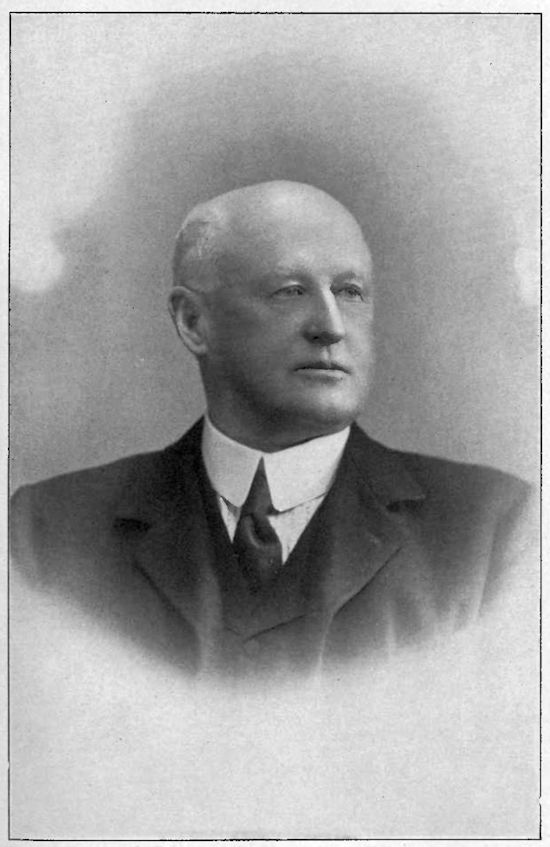
SENATOR W. C. EDWARDS Ottawa
Byrne, Daniel J., Vice-President and General Manager, Leonard Fisheries, Montreal, Que., producers, curers and packers of sea and lake foods. Entered the employ of that firm as a lad in 1886, and steadily rose to his present responsible position with a reputation as one of the leading authorities in Canada on all questions relating to the fishing industry. Leonard Fisheries, which started business in 1875, and is now one of the leading concerns in its line, was incorporated under its present form in 1917, as a result of the consolidation Leonard Bros., Matthews & Scott, and A. Wilson & Son. This was brought about largely through the efforts of Mr. Byrne, with the object of effecting economies in organization and distribution. The firm has branches in many parts of the Maritime Provinces, notably St. John, N.B., and Halifax, N.S. The subject of this sketch was born in Montreal, April, 1871, and married Mary Louisa, daughter of William Dalt, of Montreal, July, 1900, by whom he has one son, John W. In 1915 he was called on to address the Conservation Commission at Ottawa on the subject of “Canada’s Fisheries.” Mr. Byrne is a member of the following Clubs: The Engineer’s, Country and Rotary. He is a Roman Catholic in religion and Independent in politics. His recreation is golf, fishing and motoring.
Harper, John Murdoch (Quebec City), the Canadian educationist and author, came to Canada in the year of Confederation, 1867, to take charge of an Academy in New Brunswick. He was born in Johnstone, Renfrewshire, Scotland, on the 10th of February, 1845, the eldest son of Robert Montgomery Harper, the founder of the first newspaper published in that town. His grand-uncle was Robert Montgomery, who was for many years a mill-owner and manufacturer in Johnstone. From school he entered the Glasgow E. C. Training College, after taking a Queen’s Scholarship, and graduated as a teacher from it with the highest certificate of his year granted by the Lords of the Council of Education, London, and with special certificates from the Science and Art Department, Kensington. After coming to Canada he became a graduate of Queen’s University, Kingston, and thereafter received the degree of Doctor of Philosophy, from the Illinois University, after completing the three years’ post-graduate course in the section of metaphysical science. In 1881 he was unanimously elected a Fellow of the Educational Institute of Scotland, an honor seldom conferred on teachers laboring outside of Great Britain. For a time he acted as principal of the Model Schools of Nova Scotia, and afterwards as principal of the Victoria High School of St. John, New Brunswick. While there he was asked by the Premier of Prince Edward Island to become Superintendent of Education in that province, which he declined to accept. But when the Victoria School buildings were destroyed in the great fire of St. John, he was induced to accept the principalship of the Provincial Normal School in Charlottetown and the Supervisorship of the City Schools, while St. John and its school buildings were being rebuilt. At the end of three years spent in inaugurating the new system of schools in Prince Edward Island, he was invited, in face of his inclination to return to his former position in New Brunswick, to take charge of the Quebec High School as its Rector; and, accepting the appointment, he thus became identified with the educational interests of the Province of Quebec, where he has labored ever since, closing his career as an educationist in active service as Inspector of the Protestant Superior Schools of that province. While holding that office he entered upon his vocation as an author, having been for many years editor-in-chief of the “Educational Record,” a contributor to the “Educational Monthly” of Ontario, the “Queen’s Quarterly,” and other periodicals, besides being associated with Dr. Thomas Morison, of Glasgow, one of the most distinguished of the educationists of Scotland, in the compilation of sundry text-books. His earlier essays and addresses on “The New Education,” and “Cause and Effect in School Work,” led to his issue of “A Manual on Moral Drill,” in line with his pleadings for an educative “Mental and Physical Drill” in the schools of the day. His plan for a definite moral training is thus spoken of by a New York educationist and author of high standing: “Dr. Harper’s work is entirely original. It is sound. It is eminently practical and it should be most heartily adopted by all who have the training of the young in hand, and who earnestly desire that the rising generation may develop into a ‘coming race,’ in whom moral rectitude will be natural and spontaneous.” As an author, Dr. Harper has had a career as full of the best kind of literary work, as has been his career as an educationist in advice with his co-workers in school progress throughout Canada. The list of the books he has written is all but incredibly large. His chef-d’ouvre is unquestionably his drama of “Champlain,” which has given him rank, as one critic says, as the greatest of our Canadian dramatic poets since the days of Heavysege. The late George Murray, of Montreal, a writer of just discrimination, claimed that Dr. Harper is one of the most versatile and prolific of Canadian litterateurs. A partial list of his literary output from year to year includes the following: “The Development of the Greek Drama,” “The Chronicles of Kartdale,” “Sacrament Sunday and the Bells of Kartdale,” “The Earliest Beginnings of Canada,” “The Montgomery Siege,” “The Little Sergeant,” “The Seer of Silver Lake,” “Domini Domus, or the Chateau St. Louis,” “The Songs of the Commonwealth,” and “A Guide to Good Will in the Empire.” Three uniformly bound volumes of his series of “Studies in Verse and Prose,” have so far appeared, including “The Battle of the Plains,” and “The Annals of the War,” supplementary to his “Champlain, a Drama.” With the influence of his earlier years clinging to him, he has not failed to produce many pieces that depict the scenes of the land of his birth; and his poetic status as a versifier in the Doric of the Scottish Lowlands has been duly recognized by Dr. John D. Ross in his volume on “The Scottish Poets in America,” as well as by the gifted author of the book entitled “The Scot in America.” Dr. Ross pays a high tribute to the author of “Sacrament Sunday,” “Saint Andrew’s Day,” “The Old Graveyard,” “Auld Jeames and His Crack,” “Horace in the Doric,” and others of Dr. Harper’s Scottish odes, in such words as these: “Sweet as the note of a bird in the wildwood, strongly embued with patriotism, fervent in religious sentiment, eloquent in thought, pure in expression, and noble in purpose, form a few of the characteristics of Dr. Harper, the Canadian educationist and author.” In addition to all this, Dr. Harper is a loyal Canadian. In all his public utterances and in the pleadings of his prolific authorship in book or magazine or newspaper, he is a Canadian citizen who upholds as a British subject the ample patriotism of the British Empire. He has been twice married, his first wife’s maiden name having been Miss Agnes Kirkwood, daughter of William Kirkwood of Stanley Muir, near Paisley, and his second, Miss Elizabeth Hastings, daughter of Andrew Hastings, of St. John and step-daughter of William Nossack, a former Mayor of Quebec. His family has comprised two sons and five daughters. His grandson, Major John Harper Evans, has been a soldier at the front, after his training at the Kingston Royal Military College.
Brennan, John Charles. In 1854, when but a boy, when Ottawa (then By-Town) had only some 7,000 inhabitants, when the old Ottawa and St. Lawrence Railway was just built—the only line of railway connecting Ottawa with other towns at that time—when houses were few and far between and when there was no prospect of the place being selected by Her Most Gracious Majesty the late Queen Victoria as the Capital of the Dominion of Canada, the subject of this sketch became a member of the wholesale grocery firm of S. Howell & Co., with which he remained for twenty-seven years, retiring from business in 1881. While giving his untiring care to the affairs of the firm, and by his energy and business tact adding in a marked degree to its advancement—its commercial and financial success—Mr. Brennan, with full confidence in the future that he perceived was in store for Ottawa, never lost an opportunity to place his time, ambition and money in channels leading to its improvement and, with other enterprising citizens, exerted his every endeavor to stimulate its growth and importance. To-day, with marked pride, he sees the seven thousand population increased to one hundred and twenty thousand, the once fields and uncared-for lanes converted into beautifully paved streets, parks, and gardens, the costly Parliament Buildings, standing in all their grandeur upon the hill overlooking the Ottawa River; huge commercial, financial and office buildings and apartment houses galore facing the eye at every angle, and handsome modern residences in abundance. Aside from his other real estate holdings, Mr. Brennan, on the corner of Bank and Queen Streets, in the very midst of the Capital’s commercial and financial activities, has placed that large and solidly-constructed office building, “The Trafalgar.” Mr. Brennan has ever taken a keen interest in Ottawa’s hospitals, charitable institutions, churches, etc., and has unstintingly contributed to their support. Whenever called upon to help advance their interests he has freely contributed his quota, and more. During the great war, his moral, physical, intellectual and financial aid have ever been given to promote the successful operations of the Government, and to afford the war workers, the boys at the front and the returned soldiers, material help. Mr. Brennan has grown up with the city and together both he and it have prospered. Although solicited on many occasions to enter into public life he has steadfastly refused, being satisfied in his private capacity as a citizen to do his share in making general progress his goal. Mr. John Charles Brennan was born at Frankville, Ontario, January 23, 1839. He is the son of John and Amelia Maria (Howell) Brennan; he was educated in the Public Schools and private tuition. June 5, 1899, he married Alice Maud Wilson, daughter of Zachariah Wilson of “Clandeboye,” late Collector of Customs at the Port of Ottawa. He has one son and two daughters—John Charles, Amelia Elizabeth and Jocelyn Maud Wilson. He is a member of the Ottawa Hunt, Connaught Park Jockey, the Gatineau Fish and Game, and the Rideau Fish and Game Clubs. For recreation he indulges in hunting, fishing and travelling. In politics he is a Conservative, in religion a Methodist, and his place of residence is 150 Cooper Street, Ottawa.
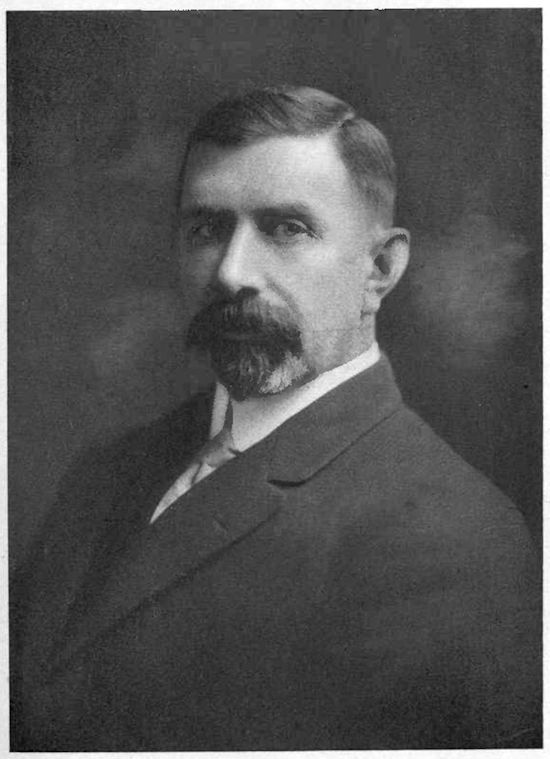
W. BULMAN Winnipeg
Bulman, William John (Winnipeg, Man.), one of the most prominent and progressive business men of Manitoba, was born at Toronto on April 5, 1870, the son of William and Frances (Cable) Bulman. He was educated in the Toronto Public Schools and, on leaving school at the age of sixteen, learned the art of the lithographer, in which he was employed in his native city for six years. In 1892 he went to Winnipeg and founded the business of Bulman Bros., Ltd., Lithographers, of which he is President and which is one of the most important firms of its kind in Canada. In promoting the advancement of Winnipeg he has been indefatigable. He was one of the founders of the Winnipeg Industrial Bureau, and was its President from 1911 to 1913. He was Hon. Secretary of the Manitoba branch of the Canadian Manufacturers’ Association for some years and subsequently became 2nd Vice-President for Canada. At the annual convention of the C.M.A., held at Winnipeg in the summer of 1918, he was elected President of that body, an office which is coveted by all Canadian business men. He is also a member of the council of the Winnipeg Board of Trade. Mr. Bulman has also been very prominent in educational affairs and was for a number of years a member of the Advisory Board of the Manitoba Education Department. He has been a School Trustee of Winnipeg since 1912 and Chairman of various Committees. During the great war he was very active in support of patriotic objects, and was Vice-President of the Manitoba Patriotic Fund. He is the originator of the Imperial Home Reunion Association, which aims at assisting the man who desires to make a home for himself in the West to bring the members of his family to this country. This idea has had the approval of many eminent Imperial thinkers. He is also the originator of the movement for citizenship through the schools, now a national one, with a National Conference to be held in August under the patronage of His Honor the Governor-General. Winnipeg possesses no citizen more popular with all classes of the community and he is Honorary President of the Manitoba Conservative Association. He is a member of the Carleton and Manitoba Clubs and the National Club, Toronto, and his recreations are motoring, motor boating, cruising and fishing at his summer home, Kenora, Ont. He is a Methodist in religion, and in 1894 married Lily, daughter of Samuel Thompson, of Toronto, and has five children, Eileen, Bessie, Dorothy, Lillian and John. He resides at 104 Wellington Crescent, Winnipeg.
Freiman, Archibald J., who conducts one of the leading department stores of Ottawa, at 73 Rideau Street, was born at Wirballen, Poland, on June 6, 1880, the son of H. and Hannah Freiman. His early education was received in Poland, which was supplemented on his coming to this country in 1893, by courses in the public schools of Hamilton and at Hamilton Business College. He commenced his business career in 1899, by establishing the Canadian House Furnishing Company, at Kingston, Ont., in partnership with M. Cramer. In 1902 the business was removed to Ottawa owing to the limited possibilities for development in Kingston. In 1905, Mr. Cramer’s interest was purchased by Mr. Freiman, Sr., who remained in partnership with his son until 1910, when Mr. A. J. Freiman bought his father out and has since conducted the business in his own name. He has been a pronounced success from the outset and is recognized as one of the leading retail merchants of Eastern Ontario. He is an orthodox Hebrew in religion and president of the Congregation Adath Eshuroon. He is vice-president of the Zionist Federation of Canada; a member of the A.F. & A.M., Knights of Pythias and I.O.O.F.; a director of Perley Home for Incurables; director of Central Canada Exhibition Association; director of Protestant Hospital; member of Laurentian Club and Kiwanis Club, Ottawa; and Montefiore and Maimondis Clubs, of Montreal. Is an enthusiastic motorist and member of the Ontario Motor League. On August 18, 1903, he married Lillian, daughter of Moses Bilsky, and has one son and two daughters. He resides at 149 Somerset Street, Ottawa.
Breadner, Robert Walker, Commissioner of Taxation of the Department of Finance and Dominion Appraiser, Department of Customs, Ottawa, is one of the leading economic experts of the Dominion of Canada. He was born at Athelstan, Quebec, on January 13, 1865, the son of the late Major Joshua and Beatrice Dudgeon (Walker) Breadner. He was educated at the Protestant Separate School of his native village, and later at the High School of Port Henry, N.Y. He entered the civil service of the Dominion in 1884 as a clerk in the Post Office Department, Ottawa. He was transferred to the Customs Department in 1892 and in 1894 became chief Check Clerk of that branch, a post he continued to hold in connection with other duties until 1908. From 1898 to 1906 he also held the position of Dominion Appraiser and in the latter year became Inspector of Customs, holding the position until 1908. Throughout this period he was also a member of the Board of Customs. It will be seen that few men had had such a detailed experience in dealing with all the manifold questions relating to tariffs, and in 1908 the Canadian Manufacturers Association induced him to leave the service of the Government and become manager of their Tariff Department. In this position he remained for four years. In 1912, because of his expert knowledge, the newly formed Borden Government induced him to return to the Civil Service as Confidential Tariff Officer, also appointing him to his old position as Dominion Appraiser and member of the Board of Customs. When during the war the Government decided on its policy of taxing business profits, Mr. Breadner was put in charge of the details and has given great satisfaction by his efficient organization of the difficult task. In addition to his many other duties Mr. Breadner found time to serve on the Ottawa Board of Education for four years. He is a member of the following clubs: Laurentian, Ottawa; Canada Bowling (Toronto), and these societies: I.O.O.F., I.O.F., L.O.L., A.O.U.W., Royal Arcanum. He is a Presbyterian in religion and on September 7, 1887, married Nellie, daughter of Andrew D. Fraser, Ottawa. He has one son and four daughters, and since his duties compelled his removal to Toronto has resided at 41 Albany Ave. in the latter city.
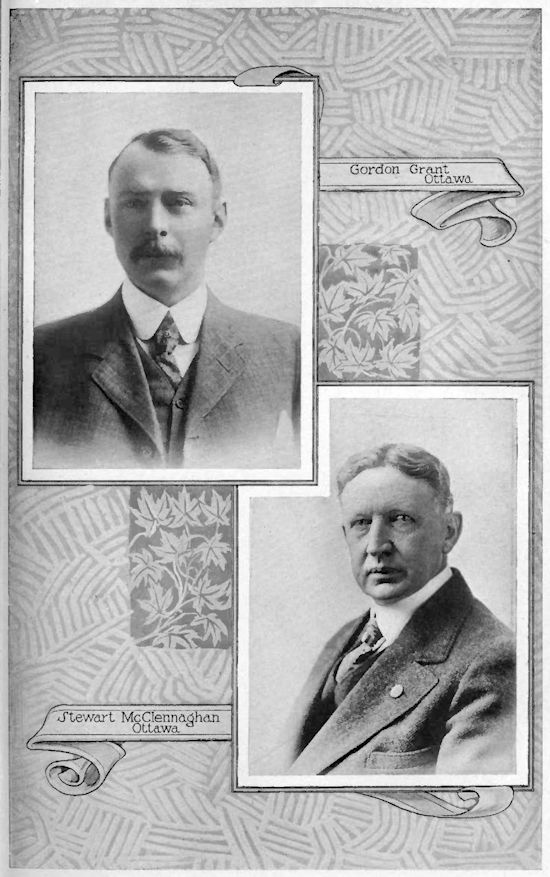
Gordon Grant, Ottawa Stewart McClennaghan, Ottawa
Black, Henry, 2322 St. John St., Regina, Saskatchewan, one of the large realty owners of that city; was born in Grenville County, Ontario, on February 14, 1875, the son of William John and Elizabeth Black. His father, who was a farmer, died when the subject of this sketch was twelve years old. His education was obtained in the Grenville Township Public School, and as a youth he removed to British Columbia, finally settling down in Regina, as a builder and contractor. He is now the owner of two blocks of apartments and of a business block in the capital of Saskatchewan, and is counted one of her most solid and progressive citizens. He has taken an active part in municipal affairs, was alderman in 1915-6-7 and Mayor in 1918 and 1919. On Dec. 15, 1910, he married Jennie Lanona, daughter of C. W. Barker, and has three children, Henry Kenneth, Charles Russell and William Franklin. In religion he is a Presbyterian.
Dargavel, John Robertson (Elgin, Ont.), is the son of Robert Dargavel and Miriam, his wife, both Scotch, was born May 3, 1864, at the Township of Crosby, in the County of Leeds. Educated at the public schools of South Crosby. Is a successful merchant, dairyman and farmer. Married, September 26, 1870, to Mary Jane, daughter of the late Robert Hopkins, merchant, of Newboro. Is President of the Eastern Ontario Dairymen’s Association; Clerk of the Township of South Crosby for the past 30 years; a member of the Elgin School Board for the past 20 years. Is a member of the Masonic Order being P.D.D.G.M. for Frontenac District, also a member of the I.O.O.F. Mr. Dargavel has three children, viz.: Helen, James Sawtell, and Mary. He was first elected to the Ontario Legislature as a Conservative at the General Elections of 1905, and re-elected at the general elections of 1908, 1911 and 1914. Has been Chairman of the Agricultural Committee of the Legislature, where his knowledge of agriculture and dairying has been very valuable to the Assembly. Has also served on the Prison Labor Committee and the Provincial Milk Commission. Is a member of the Church of England and a delegate to the Diocesan and General Synods.
Ethier, Joseph Arthur Calixte, was born at St. Benoit (Two Mountains), Quebec, May 26, 1868. Son of J. B. Ethier and wife, Julie Boyer. Educated at Montreal College. Married, first, Therise Fortier, daughter of Dr. L. A. Fortier, and secondly, Hedwidge Fortier, also daughter of Dr. L. A. Fortier, and is the father of the following children: Marie Therese and Marcelle. Deputy Prothonotary of the District of Terrebonne, 1888-1895. Crown Prosecutor for the District of Terrebonne; Mayor of the Village of St. Scholastique for six years; Secretary-Treasurer of Schools, rural municipalities of St. Scholastique and St. Columbin; Secretary of “La Compagnie d’Assurance Mutuelle de la paroisse de St. Scholastique.” Is a brilliant Advocate and King’s Counsel; is President of the Ontario Cobalt Mining Co., Ltd. First elected to the House of Commons, June 13, 1896, for the constituency of Two Mountains, Quebec; re-elected in 1900-1904 and re-elected by acclamation in 1911. Appointed Chairman of Committee on Miscellaneous Private Bills during the Session of 1907. Mr. Ethier was again re-elected at the General Election held in 1917. He is a Liberal and a Roman Catholic.
Grierson, Hon. George Allison, Minister of Public Works, Winnipeg. Born, April 11, 1867, at Brantford, Ont. Son of George Grierson and Margaret Edmundson. Educated at Brantford, Ont., and Winnipeg Public School and Collegiate Institute. Went to Manitoba in 1879, attending the Winnipeg Collegiate Institute, 1883-4, obtaining First Class Teacher’s Certificate; attended Normal School, 1885, and was the first candidate to pass newly authorized First-Class Teachers’ Professional Course, 1886. Was Principal Minnedosa Public School, 1887-90, 1892-1902. Married, December 28, 1892, to Christina, daughter of Samuel Matheson, of Kildonan, Manitoba. A member of the Masonic Order and a Veteran Oddfellow. Was interested in lacrosse in the earlier days, and at present finds recreation in curling. Member of the Presbyterian Church. Was Councillor of the Town of Minnedosa for some years and Mayor, 1914-1915. Was a Liberal candidate for Marquette for the House of Commons in September, 1911, but was defeated by Hon. W. J. Roche. First elected to Legislature for the Province of Manitoba, in the general elections, 1914, as a Liberal candidate for Minnedosa, and re-elected in 1915. Was Liberal Whip in the Manitoba Legislature during the sessions of 1914-15-16. Was re-elected for the Constituency of Minnedosa at the last elections and is at present Minister of Public Works in the Norris Government. The Honorable Mr. Grierson is a gifted speaker and an indefatigable worker, and thoroughly versed in the details of his department.
Gale, George Charles, Secretary Gale Manufacturing Company, Ltd., Manufacturers, Toronto, was born in Toronto, where he has for some years successfully carried on business, on the 26th of April, 1874. Son of James William Gale and Matilda Sophia Pitt. Educated at Jarvis Street Collegiate Institute, and Upper Canada College. Married, February, 1907, Etta F., daughter of T. B. Taylor, and is the father of one son, George Taylor Gale, born May 19, 1913. Mr. Gale always takes a prominent part in Amateur Athletics and was actively identified for many years with the Toronto Lacrosse Club, being one of the players of that famous organization. He is a member of the National Club, Lambton Golf and Country Club, and the Victoria Club and also the Masonic Order, being a member of Ashlar Masonic Lodge, St. Paul’s Chapter. In religion he is an Anglican.
Flavelle, William M., of Lindsay, Ont., is a sound, progressive business man, who has played an important part in the development of that section of Central Ontario adjacent to the home town. He was born at Peterboro in March, 1853, where he attended the Public and High Schools. His parents were John and Dorothea Flavelle; Sir Joseph Flavelle, Baronet, of Toronto, is a brother, as also is Mr. J. D. Flavelle, of Lindsay, Chairman of the Board of Ontario License Commissioners. The subject of this sketch is one of the pioneers of the Cold Storage business in Canada. Over thirty years ago he recognized the necessity and value of the same as being of untold benefit to the country, by means of which dairy and other perishable products of the farm could be garnered in the seasons of their greatest production, and conserved for future use in the non-producing intervals. The growth of the enterprise has been of immense benefit to both producer and consumer, as now many commodities, which would not be otherwise available, may be freely purchased at any season in the year. The great advancement of the business from the first simple storage, when natural ice was used as the refrigerator, to the special brick structure standing prominently on Lindsay’s main street, equipped with every modern device and appliance, is the evidence of one man’s splendid vision, business acumen, and sagacity. A natural adjunct to the Lindsay Cold Storage Plant has been added in the way of a creamery, the first, and one of the finest of its kind in Canada. Here the cream is received from the farmers, tributary to the district, tested and manufactured into the finest creamery product, to the mutual advantage of the farmer and the country in general. In 1886 Mr. Flavelle married Mary Helen Aird, daughter of Robert Aird, of Montreal. Six children blessed the union, four sons and two daughters, viz.: Aird D., Stewart A., Gordon A., Guy A., Jena L. and Helen Grace. He is President of Flavelle, Limited, The Victoria Loan and Savings Company, The Lindsay Cemetery Company, Dundas & Flavelle, Limited, and a member of the Public Library Board. With his varied interests, Mr. Flavelle is a very busy man, but finds relaxation and recreation in golf, motoring and boating. He is a Methodist in religion, and a Liberal-Conservative in politics. Public spirited, with a fine business reputation, he takes more than a passing interest in matters of National importance and is keenly concerned in all measures which will advance the community in which he has held a prominent place for so many years.
Hore, George Charles (Hamilton, Ont.), was born in the Township of West Flamboro, County of Wentworth, July 20, 1868, and was educated at the West Flamboro Public School, the Hamilton Public Schools and the Woodstock Baptist College. His father was Francis William Hore, who came to Canada about the year 1837, when quite a young man, in company with his parents, brothers and sisters; he was born in Sussex, England, and was a grandson of Joseph Hore, of North Mundham, Chichester, Sussex, England; his mother was Sophia Fearman, who in the year 1833, with other members of their family came to Canada from Norfolk, England, in the New York Packet ship “Ontario,” being on the ocean six weeks, and two weeks on the Erie canal to Oswego, N.Y., and from that port took passage on a schooner to Port Dalhousie; thence to Hamilton in a farmer’s hay rack. F. W. Hore, father of the subject of this sketch, was a man of exceptional ability and was one of the earlier settlers who helped to build up the manufacturing industries of this country to their present high position, as is shown by the magnificent factory standing to his credit in Hamilton, known as F. W. Hore & Son, Limited, manufacturers of Fine Carriage, Waggon and Sleigh Wood-work. Following in his footsteps, George C. Hore commenced work in his father’s factory at the age of fifteen years, to learn the business, and with the exception of a short time at College, has been at it continuously and steadily ever since. The Company of F. W. Hore & Son, Limited, are extensive manufacturers, and their product is well and favorably known from the Atlantic to the Pacific. They have the pleasure of showing in their office, records of many first prizes and medals taken in the pioneer days of their business, testifying to the quality of their product. They are believers in the old saying that “quality will be remembered long after the price is forgotten.” The business has been established between forty and forty-five years, and Mr. Hore is ably assisted in the management by his brother and other officers of the Company. He was married September 21, 1912, to Miss Emma Lenz, of Hamilton. In religion he is a member of the Church of England; in politics, a Conservative, and is fond of outdoor sports—being a member of the Victoria Bowling Club and the Hamilton Gun Club.
Morehouse, Oscar Emery, M.D., M.L.A. (Upper Keswick, N.B.), son of Elisha Morehouse, a farmer (English) and his wife, nee Crouse (Dutch); was born at Upper Keswick, on August 5, 1857, and was educated at common schools and McGill College (M.D.), (C.M.), Montreal; of U.E.L. stock. He has been twice married: (1st) to Alberta, daughter of the Rev. William McKiel, of Fairville, N.B., on June 17, 1890, who died in December, 1902, to whom one child, Dorothy Eunice, was born; (2nd) to Maud, daughter of Henry Burtt, of Upper Keswick, N.B., to whom three children were born, Elsie Muriel, Oscar Emery, and Alberta Evelyn. Mr. Morehouse became interested in public life at an early age, and was first elected a member of the County Council in 1896, continuing in that office until 1903; was Warden of the County Council when the Duke of Cornwall and York (the present King George of England) visited Canada, and presented him with an address at the public reception given in his honor at St. John, N.B. He was first elected to the Legislative Assembly of New Brunswick on March 30, 1911, with the large majority of 1,215, as a supporter of the Hazen Government, and was re-elected with the full ticket on June 20, 1912, their opponents losing deposits. He has acted as a Coroner in his home locality for the past twenty-five years, and is looked upon as a leader in his profession throughout the whole Province of New Brunswick. In the year 1890, he organized the first Board of Health in York County, and was Chairman of the Board for six years. Mr. Morehouse has never been associated with Clubs to any extent, but has taken a keen interest in all work connected with the New Brunswick Medical Society, as well as the Canadian Medical Association. He has taken an active interest in all patriotic work since the outbreak of the War (1914), and has given freely of his time and money. His name will rank among the first who did their duty at home when the history of the War is written for future generations. In religion he is an Episcopalian, and in politics a staunch Conservative.
Thoburn, William (Almonte, Ont.), Woollen Manufacturer, Member of Parliament and ex-Mayor, came to Canada in the year 1857, from Portsmouth, England, where he was born on April 14, 1847, and received his early education at Pakenham School, Pakenham, Ontario. He removed to Almonte in 1867, and for eleven years was engaged in mercantile business. For the last thirty-six years he has been extensively interested in the manufacture of woollens, having built up a large business and his goods are known the world over. Having made a success of his own business affairs, he was persuaded to offer himself as the Conservative Candidate for the House of Commons for North Lanark, and was first elected in 1908, and re-elected in 1911, and was one of the few members in his seat in the Chamber of the House of Commons the night of the terrible fire, when that beautiful building was totally destroyed, Feb. 3, 1916. Besides his many business and political duties, he connected himself with many Boards, and is Vice-President of the Ker-Ben Stove and Furnace Foundry; director of the Trusts and Guarantee Company, Toronto; director of the Almonte Knitting Company, Almonte; life director of the General Hospital, Ottawa, and director of the Rosamond Memorial Hospital, Almonte. He served for several years as a school trustee and councillor, and was for seven years Mayor, and has always taken a keen interest in everything pertaining to the good and welfare of the Town of Almonte. Mr. Thoburn is a widower and has two children: Annie, married to Percy Jamieson, Almonte, and Mae Elliott, married to A. M. May, Toronto. He is a member of the Methodist Church, and much interested in Church and Missionary work; a member of the Rideau Club, Ottawa, and in politics a staunch Conservative. Mr. Thoburn took an active part in patriotic work during the war, and was always one of the first citizens in his district to contribute financially and otherwise whenever called upon. In his parliamentary duties he is looked upon as a man of good judgment and his advice on many matters is often sought by his colleagues.
White, Gerald Verner (Pembroke, Ont.), Member of Parliament for North Renfrew, Ontario, was born in Pembroke, Ontario, July 6, 1879, the son of the late Hon. Peter White, P.C., and Janet Reid White. His early education completed at the Pembroke Public and High Schools, Mr. White proceeded to McGill University, where he graduated as Bachelor of Science in Mining Engineering with the class of 1901. As a native of the Upper Ottawa, however, he turned naturally to lumbering for a vocation, and his success can be judged from the positions which he now holds as President of the Cunningham Lumber Co., of Pembroke, and a director of the Pembroke Lumber Co. Mr. White is also President of the Pembroke Standard, Ltd., a Director of the Thomas Pink Co., Ltd., of Pembroke, and of the Pembroke Woollen Mills. The name of White is one distinguished in the public life of the country and Gerald V. White was elected to the Federal House of Commons at a by-election, in October, 1906, for the Constituency of North Renfrew, which had been rendered vacant by the death of his father, the Hon. Peter White, being subsequently re-elected at the General Elections of 1908 and 1911. Mr. White married Mary Elizabeth, daughter of Mr. and Mrs. D. L. Trites, of New Brunswick, and has two daughters and one son, Muriel Elizabeth, Mary Jeannette and Gerald Peter. He is a Presbyterian in religion and a Conservative in politics. Among the Clubs of which he is a member are the Rideau Club, the Hunt Club and the Golf Club, all of Ottawa. The Member for North Renfrew takes a strong interest in military matters, holding a commission as captain in the 42nd Regiment, Canadian militia, and is at present (1917) in England as Lieutenant-Colonel in command of the 224th Canadian Forestry Battalion.
Crossland, E. F. (Toronto, Ont.), was born at Port Dover, Ont., in 1866, was educated at Windsor, N.S., came to Toronto in 1886, and two years later he entered the Steele-Briggs Seed Co., Limited, and is at the present time the Second Vice-President. Being a man with a practical knowledge of this business, he has been a valuable asset to the Steele-Briggs Company, and much credit is due him for the high position that firm holds in the esteem of the Canadian people to-day. While his active business career requires considerable of his time and attention, still he is a citizen of more than ordinary worth, and he takes no small interest in all measures that have a tendency towards furthering public welfare, and is also a worthy friend of both religious and charitable enterprises. He is a Dominion Council member of the Brotherhood of St. Andrew and an ex-member of the Executive Committee; rector’s warden of St. Matthew’s Anglican Church, a member of the Toronto Board of Trade, and Masonic Order. Mr. Crossland is a man who makes many friends by his pleasing manner. In politics he is a Conservative, but believes that the future prosperity of Canada largely depends upon her public men, irrespective of their political leanings.
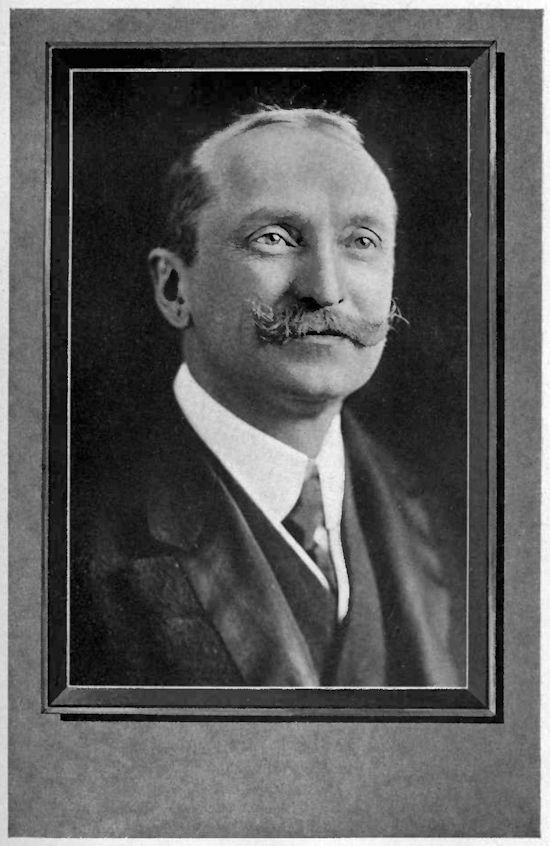
ZEPHERIN HEBERT Montreal
Dickson, Rev. James A. R., B.D. (Galt, Ont.), was born in Tranent, Scotland, on October 22, 1839. His father was David Dickson, a pious man, who was careful of the godly upbringing of his children, and being a zealous Free Churchman, instructed them in the standards of that church. Mr. Dickson came to Canada in the summer of 1857 to an uncle in Brantford, who was engaged in business there, where he resided for some time. His uncle attending the ministry of the Rev. John Wood, of the Congregational Church, he went with him, and under the faithful preaching of Mr. Wood, experienced the great change which altered the entire current of his life. He was active in Christian work in the Sabbath school and Y.M.C.A., but an irrepressible longing for wider usefulness led him to prepare for the Christian ministry. He took private lessons in Latin and Greek, attended the Brantford Grammar School for several sessions, and in 1860 entered the Congregational College of B.N.A. in Toronto, which was then under the principalship of Adam Lillie, D.D. While pursuing theological studies here, he attended classes in Logic, Hebrew, Latin and Greek in University College; mathematics, metaphysics and other subjects being taken up by special masters appointed by the board of the Congregational College. In 1864 the college being removed to Montreal, he attended the McGill College, studying zoology, botany and geology under Sir William Dawson, LL.D.; Hebrew under Dr. De Sola, and logic, English literature and moral philosophy under Canon Leach. He graduated in 1865, and was called to the Congregational Church in London, Ontario, where he remained for six years. While here he edited for three years The Gospel Message, a monthly, published in Montreal. He published “Working for Jesus,” which is now and has been for the past thirteen years, issued by the American Tract Society of New York, and the Religious Tract Society of London. Also a 32-page tract, “Saved or Not?” and “Counsels for Young Converts.” In June, 1867, he married Isabella E., eldest daughter of Walter Fairbairn of London, Ontario. In 1871 he was called to the Northern Church, Toronto. Here he remained about eight years, till he changed his ecclesiastical relations, returning to the church of his fathers. While in Toronto he was honored with the highest position in the gift of the Congregational churches, being elected Chairman of the Congregational Union, of Ontario and Quebec in 1877. Here he began to write for the “Sunday School Times,” “Sunday School World,” and “Canada Presbyterian,” to which he has been a frequent contributor. He published “Immediately,” “The Rest of Faith,” “Christian Culture,” “A Good Minister of Jesus Christ,” tracts which have had an extensive circulation. He was chosen secretary of the Upper Canada Tract Society in 1874, which he held until 1879. On resigning his charge in Toronto, he visited for five months the branch societies of the Upper Canada Tract Society. He filled Dr. Cochrane’s pulpit in Brantford for three months, while the Doctor was in Britain in 1879. While here he was called to Galt, and settled there on October 13, 1879. Since his settlement in Galt he has published “Expository Bible Readings,” “Working for the Children,” and a tract entitled “A Word in Season.” On the regulations being issued for the conferring of the degree of Bachelor of Divinity, Mr. Dickson went to Montreal Presbyterian College, and passing the examinations proper to the degree, took it in March, 1883. The congregation of Galt built for him in 1881 one of the handsomest ecclesiastical structures in Canada. It is mentioned in “Picturesque Canada.” In 1887 the Religious Tract Society of London, England, published a little volume of Mr. Dickson’s entitled “How We Are Saved.” In 1891 Mr. Dickson had conferred upon him the degree of Doctor of Philosophy (Ph.D.), by Wooster University, Ohio, one of the great schools of learning belonging to the Presbyterian Church in the United States. He attained the degree by a stated course of special study in Political Economy and Social Science, and by examinations therein. He prepared also a paper to lay before the faculty on “Conscience the Living Source of Human Law.” In 1896 the Religious Tract Society of New York published a volume by Dr. Dickson, entitled “The Truth that Saves and How to Present It.” In 1904 Dr. Dickson wrote and published “The History of the Central Presbyterian Church, Galt,” bringing the story of the church’s life up to that time.
Choquette, Philippe Auguste, LL.B. (Quebec, Que.), Advocate, Senator and Judge of the Sessions, Quebec, was born on the 6th of January, 1854, at Beloeil, County of Vercheres. His ancestors came from Amiens, Picardie, France, in 1643, and settled in Varennes, in the county where the subject of our sketch was born. His parents were Joseph Choquette, farmer, and Marie Thais Audet. He received his education at St. Hyacinthe College, and at Laval University, Quebec, and graduated B.C.L., from the latter institution in 1880, having previously taken the silver medal given by the then Governor-General, Lord Lorne, receiving, in 1899, the degree of LL.D. While he was prosecuting his studies at Laval, he acted as private secretary to the late Hon. Honore Mercier, then solicitor-general in the Joly administration, and later on Premier of Quebec Province. He held for about three years and a half the position of commercial traveller in a wholesale boot and shoe establishment in St. Hyacinthe, before he began to study law. He moved to Quebec in 1887, and entered the office of the Hon. François Langelier, then a Member of Parliament and Mayor of Quebec (who died in 1915 as Lieutenant-Governor), to study law. After being admitted to the bar of Lower Canada, in 1880, he removed to Montmagny, where he successfully practised his profession. Since 1877 he has been a contributor to “L’Union,” of St. Hyacinthe, director of “Le Soleil” in 1905-06, having before, in 1883, founded “Le Sentinelle,” of Montmagny, still existing under the name of “Le Courier de Montmagny.” In 1878 he began to take an active part in politics and in 1882 he ran for a seat in the House of Commons against A. C. P. R. Landry, now Senator, the then Conservative candidate, but was defeated by a majority of 120 votes. At the general election held in 1887, he again presented himself in opposition to Mr. Landry, and this time carried his election by a majority of 195 votes, and was re-elected in 1911-1916 by large majorities. Mr. Choquette has travelled through the principal parts of the United States and Europe. He has been Secretary of the Reform Club of the County of Montmagny. In politics he is a strong Liberal, a free trader, and in favor of commercial union. In 1898, was appointed a Judge of the Superior Court; resigned in 1904 and was called to the Senate. In 1915 was by the local Government named Judge of the Sessions of the Peace for Quebec District. He is an adherent of the Roman Catholic Church, but objects to the clergy interfering and mixing in political contests. On the 29th of August, 1883, he was married to Marie, daughter of A. Bender, prothonotary of the Superior Court, and granddaughter of the late Sir E. P. Tache, baronet, A.D.C. to her late Majesty the Queen, and one of the promoters of Confederation. As recreations he favors music and sports, and has been President of the Quebec Hockey Club from 1913 to the present time (1917). He resides at 56 Conroy St., Ottawa.
Choquette, Ernest (St. Hilaire, Quebec), son of Joseph Choquette and his wife, Thais Lapointe. Born at Beloeil, Vercheres County, Quebec, November 18, 1862. Educated at St. Hyacinthe’s College and Medical Faculty of Laval University, Montreal, from which he graduated with the degrees of M.B. and M.D. Married, October 16, 1889, to Eva Perrault, daughter of Dr. Perrault of Beloeil. He has been a frequent contributor to various journals and reviews and is the author of several books, his chief works being: “Les Ribaud,” “Claude Payson,” “Les Carabinades,” “La Terre,” and “Madeline Rabaud.” He has successfully practised his profession for many years at St. Hilaire and has been Mayor of his parish for a considerable time. First entered the Legislative Council for the Province of Quebec as a Liberal on March 14, 1910, as the representative of the Constituency of Rougemont. Is a Roman Catholic in religion and is the father of the following children: Fernande, Claude, Lucas, Yves, and Girard.
Cave, James G. James Gilbert Cave is one of those sterling Canadian business men who are the backbone of this country. Mr. Cave was born in Weston, Ontario, his parents’ names being Martin Cave and Nancy Morrison, and graduated from the Weston Grammar School, after which he entered the wholesale lumber business. He married Margaret B., daughter of Andrew Henderson, and has ten children: James M., Donald A., William, Charles, Gordon G., Margaret, Annie, Nora, Nellie and Lillian, three of whom, James, Charles and William, are serving overseas with the Canadian forces. Mr. Cave is a Protestant, a Liberal and a Mason, and has been a member of the Royal Grenadiers and the 48th Highlanders, serving in the North-West Rebellion of 1885. His present address is 97 Delaware Avenue, Toronto.
Tytler, William, B.A., Inspector of Public Schools, Guelph, Ont., was born on Jan. 5, 1842, in the Township of Nichol, near Elora, Wellington County, Ontario. His father was William Tytler, and his mother, Jane Inglis Forbes, aunt of Archibald Forbes, the celebrated special war correspondent. Mr. Tytler pursued his educational studies in the town of Elora, attending the Grammar school of that place, after he had passed the primary departments. A university course was planned, and he matriculated at the University of Toronto. His course here was characterized by industry, and he was especially distinguished in science and classics. He graduated in 1862, taking the gold medal for natural sciences. Mr. Tytler has likewise something of a military record. He has been a private in the Queen’s Own, Toronto University Company, and has been a member of volunteer companies at Carleton Place and at Smith’s Falls, Lanark County. The City of Guelph was the first to take advantage of the free libraries act; and in 1862, a library was established there, Mr. Tytler being secretary and chief worker in connection with that institution. He married on the 23rd July, 1879, Martha C. Harrison, younger daughter of Milner Harrison, of St. Mary’s. He is a member of the Presbyterian Church. We may say that Mr. Tytler at once turned his attention to the work of teaching upon graduation; and his record has been a very creditable one since he was head master of the Carleton Place Grammar School, during 1863 and 1864; of the Smith’s Falls Grammar School from 1865 to 1868; of the St. Mary’s High School from 1869 to 1874; and was appointed head master of the Guelph Collegiate Institute, in February, 1875. Mr. Tytler, it can be said without any exaggeration, stands in the front rank of the Canadian teaching profession. He is a sound scholar; and he brings both industry and enthusiasm into his work. In 1892, owing to ill health, he resigned his position, and was soon afterwards appointed Inspector of Public Schools for the city of Guelph, a position which he still holds.
Commeford, James W. (Toronto, Ont.), was born in Toronto, April 6, 1877, and was educated in the public and high schools. Having decided to follow life as an electrical engineer and contractor he gave considerable of his time in educating himself along those lines and when satisfied as to his ability he branched out into business for himself on College Street, where he is located at the present time. He has been very successful and has to his credit to-day one of the largest electrical businesses in the city, carrying a large staff of employees the year round. Mr. Commeford was induced to offer himself as a candidate for alderman in Ward Four, many citizens believing that his expert knowledge as an electrician would be beneficial to the city at large, and was defeated by a very small margin, meaning a great loss from a city standpoint, owing to the installation of the Hydro-Electric System, when his services would have been invaluable. However, youth is on his side, and Mr. Commeford will not only be elected alderman, but will fill higher offices should he desire the honor. He is widely known in yachting circles and acquatic sports, being a member of the Queen City Yacht Club, National Yacht and Skiff Club, Alexandra Yacht Club and Rochester Yacht Club. He is honorary president of the Lake Sailing Skiff Association and President of the Canadian Power Boat Association. He has donated the Motor Cycle Championship Cup, and the Long Distance Endurance Cup of the Canadian Power Boat Association. Mr. Commeford has saved thirty-three lives from drowning in Lake Ontario and received four medals from the Humane Society for his brave and timely acts. In politics he is a Conservative and an active party man.
Conant, Gordon Daniel (Oshawa, Ont.), Barrister, was deputy Reeve of Oshawa, 1914, and Mayor, 1916-1917; Secretary South Ontario Reform Association, 1915-1916. He is genial in manner, quick and easy in expression, goes straight to the point of things and is likely to be heard of in a wider field in the not distant future. Mr. Conant is the only son of Margaret and the late Thomas Conant, farmer and journalist, Oshawa, who was an extensive traveller and writer, contributing articles on travel, history and general subjects to the Toronto “Globe” for years. The subject of this sketch was born in Oshawa, January 11, 1885, and was educated at the High School of that place, afterwards graduating from the University of Toronto in 1905, with the degrees of B.A. and LL.B. and from Osgoode Hall in 1912, as Barrister-at-Law. He married Verna Rowena, daughter of Senator the Hon. E. D. Smith, manufacturer, Winona, Ont., June 25, 1915. He has one son, Douglas Smith, born in 1914, and one daughter, Verna Genevieve, born in 1916. He is a Methodist in religion and a Liberal in politics. Mr. Conant is a member of The Thirty and Golf Clubs, Oshawa, Ontario and Royal Canadian Yacht Club, Toronto, and of the Masonic Order.
Perry, Nathaniel Irwin (St. Catharines, Ont.), Rector of St. Thomas Church, and Archdeacon of Lincoln and Welland since 1911. Spent fifteen months in the British Isles, travelling and studying, where he also represented the Colonial and Continental Church Society and the Church Missionary Society in different places. He is the President of St. Catharines Ministerial Association and Lincoln County Clerical Patriotic Association. Until 1913 he was Chaplain of the 2nd Dragoons. His parents are Martha and William Perry, farmer, in the Township of King, where he was born on February 10, 1867. The Rev. Mr. Perry received his education at the Newmarket High School, University of Toronto, and Wycliffe College, graduating in Arts as M.A., 1891, and in Theology, 1893. Was for some time Joint Editor of Church Record Sunday School Publications and wrote both for the “Empire Magazine,” London, England, and the “Cambridge Magazine.” On October 12, 1897, he married Jennie B., daughter of Dr. J. H. Harris, Yarmouth, N.S., by whom he has two sons, Karl Raymond, born 1900, and Ronald Harris, born 1902. Mr. Perry is a clergyman of the Church of England, a member of the Canadian Club, St. Catharines, and also of the Masonic, Oddfellows, and Orange Societies.
Hill, Hamnett Pinhey, is a member of the legal firm of Greene, Hill & Hill, solicitors for the Bank of Ottawa, the Bank of British North America, and other large financial and commercial corporations, and has established for himself in the legal profession and in other spheres of life in Ottawa, a valuable reputation. Both the Dominion and the Ontario Governments recognizing Mr. Hill’s ability as a lawyer, and his reliability as such, in 1915 sought his services, respectively, as a Royal Commissioner and Official Arbitrator. In that year, owing to the charge of the Auditor-General that improprieties had arisen in the purchase of coal for the dredges fleet in British Columbia, the Dominion Government appointed Mr. Hill a Royal Commissioner to investigate and hear evidence re the charge. He performed his duties, on that occasion, with marked ability. And in the same year, owing to the many disputes that had arisen in the city of Ottawa between the city and the owners of land, the Ontario Government appointed Mr. Hill as Official Arbitrator and in that capacity he is now employed. He has also, on several occasions, been called upon to act as Chairman of Conciliation Boards appointed to settle disputes between employers and employees. In 1918 Mr. Hill was appointed a Special Returning Officer under the Military Voters Act with headquarters in Paris. Mr. Hamnett Pinhey Hill was born in Ottawa on December 18, 1877, and is the son of the late Hamnett Pinhey and Margaret (Christie) Hill. He was educated in the Public and High Schools in Ottawa, and the Toronto University (B.A., 1898). He read law with McDonald, Shepley, Middleton & Donald, Toronto, and was called to the Bar in 1902, when he became a partner in the legal firm of Christie & Green, which is now, owing to the death of Mr. Christie, known as Green, Hill & Hill. Mr. Hill was President of the Canadian Club, Ottawa, during 1907-1908; President of the Liberal-Conservative Association, 1912-1914; is a member of the Executive of the Board of Trade, and was Honorary Secretary of the St. John’s Ambulance Association of Canada for the year 1917. He holds the commission of Lieutenant in the Army Service Corps. In 1917 he was elected President of the University Club of Ottawa. On September 21, 1907, Mr. Hill married Beatrice Sarah Lindsay, daughter of the late Arthur Lindsay. One son and two daughters have blessed the union. Mr. Hill is a member of the Rideau and Royal Ottawa Golf Clubs, and of the Sons of England and Orange Societies. His recreation is golf, his politics Conservative and his religion Anglican. His residence is 253 Bronson Avenue, Ottawa, Ontario.
Street, Lieut.-Col. Douglas Richmond, one of the leading figures both in the business and military life of the Canadian capital, is a native of New Brunswick. He was born at Fredericton, N.B., on June 10, 1864, the son of C. F. Street, M.A., formerly of the Finance Department, Ottawa, and Lucy Audubon (Kendall) Street. His grandfather was the late Hon. J. A. Street, K.C., one of the prominent public men of New Brunswick, and for some years Attorney-General of the Province. Col. Street’s education was received in the Separate Schools of Ottawa and at Ottawa University. On graduation he decided to adopt a business career in which he proved very successful; and he is now Secretary-Treasurer of the Ottawa Electric Company, Secretary-Treasurer of the Ottawa Gas Company, and Secretary-Treasurer of the Consolidated Light, Heat and Power Company of Ottawa. Despite his business duties he has long taken an active interest in the Canadian Militia. As early as 1893 he was gazetted a second lieutenant in the Governor-General’s Foot Guards, the crack infantry regiment of Ottawa and became its commanding officer, with the rank of Lieut.-Col. in 1908. In that capacity he commanded his regiment at the Quebec Tercentenary celebration of 1908, when a large body of Canadian troops was assembled to do honor to the Prince of Wales, now His Majesty King George the Fifth, and at which Lord Roberts, General Pole-Carew and many other distinguished soldiers were present. He also commanded his regiment at the Tercentenary Celebration of the Discovery of Lake Champlain in Plattsburg, N.Y., and Burlington, Vt., in 1909. When the late war broke out Col. Street was one of those who placed his services at the disposal of the Empire. He organized, trained and became Commanding Officer of the 77th Overseas Battalion, which he took to England in June, 1916. In the various engagements which followed the battalion of Col. Street’s creation rendered most distinguished service. Col. Street now commands the 8th Infantry Brigade M.D. No. 3. Col. Street is a member of the Rideau Club, the Ottawa Golf, and the Ottawa Hunt Club. He is a Roman Catholic in religion and is married to Elizabeth Bauld, daughter of John H. Christie, Bras D’Or, Cape Breton, N.S. He resides at 12 Range Road, Ottawa.