LIST OF PHOTOGRAVURES (continued 11)
Reading edition
McCarthy, Jesse Overn (Toronto, Ont.), Vice-President and General Manager of the Security Life Insurance Co. of Canada, has been somewhat prominently connected for twenty-five years with the life insurance business of the Dominion and in the field of Social Welfare and Moral Reform. Nearly thirty years ago he began giving addresses on Child Welfare Problems and on different phases of Social Welfare work and legislation, when to speak on these matters was like “a voice crying in the wilderness,” and has seen the objects which he so strongly advocated accomplished to a remarkable extent in legislative and practical effort by the city and province alike. During that time he has given over two thousand addresses before churches, Canadian Clubs and municipal organizations. His entry into the municipal life of Toronto, first as alderman and then as Controller, was due to the adverse conditions prevailing at that time in the Isolation Hospital and his desire to see a thoroughly up-to-date and efficient Health Department established. Outside authorities and those familiar with the situation have stated that he was able to strongly interest and influence the Council in all health and social problems, so that splendid progress was made during the time that he was connected with that body. A Methodist in religion and a Liberal in politics, Mr. McCarthy served as Alderman of the City of Toronto, 1910-1911, and as Controller, 1912-1914. He is a member of the Board of Trade, the Sons of Temperance, the Royal Templars of Temperance, the Canadian Order of Foresters, and the Protestant Benevolent Society, as also of Parkdale Canoe and Lawn Bowling Clubs. Mr. McCarthy is the son of Charles Calahan and Margaret Frances McCarthy. He was born in Walpole Township, Haldimand County, Ont., November 10, 1867, and was educated in the Public Schools. He married Mary, daughter of James Grant Davis, Jarvis, Ont., August 10, 1892, by whom he has two daughters, Lilian Pearl and Mary Vourneen, and one son, Jesse Davis.
Massey, Charles Vincent (Toronto, Ont.), Lecturer in Modern History, University of Toronto, and Dean of Residence, Victoria College, Toronto. The son of Chester D. Massey, Honorary President of the Massey-Harris Company, Ltd, and Anna (Vincent) Massey. Born in Toronto, on February 20, 1887. Educated at the University of Toronto (B.A. 1910) and Balliol College, Oxford (2nd Cl. Mod. Hist. B.A. 1913, M.A. 1918). Married 1915, Alice S., daughter of George R. Parkin, C.M.G., D.C.L., Secretary of the Rhodes Scholarship Trust, Goring-on-Thames, Oxfordshire, England, by whom he has two sons, Lionel, born July 2nd, 1916, and Hart, born March 30th, 1918. Mr. Massey is a Director of the Massey-Harris Co., and of the Toronto Housing Co., a member of the Board of Governors, Toronto General Hospital, and of the Art Museum, of Toronto, Vice-Chairman of the Massey Foundation, a Governor of the Wesleyan College, Montreal, and a Director of Ridley College, St. Catharines. He held a commission in the University of Toronto contingent, C.O.T.C., 1914-1915, was appointed to Headquarters Staff, Military District No. 2, November, 1915, to take charge of musketry training, and was promoted temporary Lieut.-Col. October, 1916. (Mentioned for services). He was appointed Secretary of the War Committee of the Federal Cabinet, January, 1918, and Secretary of the Dominion Government Repatriation Committee in December, 1918, becoming in March, 1919, the Director of the Committee. He is a member of the York, University, Toronto Golf and Arts and Letters Clubs, all of Toronto, and of the Savile Club, London, England. A Liberal in politics, and a Methodist in religion. Residence, Dean’s House, Victoria College, Toronto.
Rowell, Hon. Newton Wesley, K.C., M.P. (Ottawa, Ont.), is the son of late Joseph and Nancy (Green) Rowell. Was born in London Township, County of Middlesex, Ontario, on November 1, 1867, and was educated at the local Public Schools and the Ontario Law School, Osgoode Hall. He also holds the honorary degree of LL.D. from The North-Western University, Chicago (1915). Called to the Bar in 1891 with honors and medal, and created K.C. in 1902; has successfully practised his profession in Toronto as head of the law firm of Rowell, Reid, Wood & Wright, and has for many years been considered one of the leaders of the Bar. He has been a Bencher of the Law Society of Upper Canada since 1911, is a Senator of Toronto University, and a Regent of Victoria University and very prominently identified with the Methodist Church, and with the Laymen’s Missionary Movement, and also with the Christian Endeavor movement; formerly Vice-President of the Ontario Dominion Alliance. He was an unsuccessful candidate for the House of Commons for East York in 1900, and was first elected to the Ontario Legislature for the riding of North Oxford in 1911 and re-elected in 1914. Was Leader of the Liberal Opposition of the Ontario Legislature from 1911 to October, 1917, when he entered the Union Government at Ottawa, as President of the Privy Council. Honorable Mr. Rowell has a magnetic personality and is an exceptionally able platform speaker, and has a splendid grasp of all national matters. He has lectured on “Canada’s Future” and other national topics, and stands for the highest traditions of public life. He is a man of untiring energy and a gift of rare eloquence and a genius for public affairs. He has visited the Canadian soldiers in the trenches and has brought back messages from the boys at the front which he has delivered with much fervor. Honorable Mr. Rowell married, in June, 1901, Nellie, youngest daughter of Rev. Alex. Langford, D.D., of Toronto, and is the father of three children, William Langford, Mary Coyne and Frederick Nealon Alexander. He is a member of the following clubs: Rideau, York, National, Ontario, Rosedale Golf Club, Alpine Club of Canada. He finds recreation in horseback riding and golf.
Sauvé, Arthur, M.L.A. (Saint Benoit, Deux Montagnes), is leader of the Liberal-Conservative opposition to the government of Sir Lomer Gouin. As such he advocates, particularly, the fostering of agriculture and its allied industries, as also of those questions of social and political economy which most affect his province at the present time. Born at St. Hermas, Que., October 1, 1875, the son of Jos. Sauvé, the member for Two Mountains was educated at St. Therese College and married the daughter of L. de J. Lachaine, Notary Public. His children are Mercedes, Paul, Gustave and Pauline Sauvé. He is a Journalist by profession, a member of the Club Canadien, and the Club Morin, and a Roman Catholic in religion. Mr. Sauvé was elected a Member of the Legislative Assembly of the Province of Quebec for the Constituency of Two Mountains, in 1908, by a majority of 174, and in 1912 by a majority of 276. In the elections of 1916 he was returned by acclamation and chosen as Leader of the Liberal-Conservative party in the Province.
Machin, Lieut.-Col. Harold Arthur Clement, M.P.P., who represents the riding of Kenora in the Ontario Legislature, is one of the ablest and most aggressive members of that body, and has also had a distinguished military career in connection with the late war. Although born at Rochester, N.Y., on May 9, 1875, he is of English descent, the son of Rev. Canon C. J. Machin and Emma M. L. Machin, both of whom were born in the Motherland. Col. Machin as a child lived in St. John’s, Newfoundland, and later in Port Arthur, Ontario, in both of which cities his father served as an Anglican rector. In 1885 he was sent to England to be educated at The School House, Beaconsfield, Bucks county. He returned to Canada in 1893, and to Rat Portage, now Kenora; that town, despite many prolonged absences, has ever since been his home. He qualified for the law at Osgoode Hall, Toronto, and, after being called to the bar, practised in Kenora, and soon became widely known through that region of far western Ontario. Identifying himself with the Conservative party, he was first elected to the Legislature in 1908, and subsequently returned at the general elections of 1911 and 1914. From early manhood he showed military enthusiasm, and went to South Africa in 1899 as a private in the 1st Canadian contingent under Col. (now Sir William) Otter. He served as private and n.c.o. until 1901, when he was given a commission in the South African Constabulary. In 1904 he retired with the rank of Captain, and returned to Canada, after which he spent the open seasons of the three successive years in prospecting for minerals in the Chibogomo and Mistissini districts of Northern Quebec. When the great war broke out, the old spirit of patriotism and adventure came over him again, and in 1915 he raised and became the O.C. of the 94th Battalion, with headquarters at Port Arthur. He went overseas with his Battalion in 1916, and shortly after his arrival in England was directed to raise and command the Canadian Labor Battalion for service in France. He went to the fighting area with this battalion, and served six months at the advanced base and with the 4th British Army between Peronne and St. Quentin. In 1917, he returned to Canada on leave, and was retained for duty as a member of the Military Service Council, established in connection with the Military Service Act. On the completion of the work of the Military Service Council in 1918, Col. Machin became Director of the Military Service Branch of the Department of Justice, under arrangement with the Department of Militia and Defence. Both as a legislator and a judicial officer, Col. Machin has shown a fearlessness and ability in the expression of opinion that have commended him to persons of independent mind, even when in disagreement with him. He was one of the few men in the Ontario Legislature with the moral courage to assail the defects of the Ontario Temperance Act, though it was fathered by the government of which he is the elected supporter. His strong utterances against a bigoted attitude toward the French Canadians of Quebec and Roman Catholics in general, coming from a Protestant of English descent and education, have also been widely commended. On December 24, 1918, he was the recipient of an address and silver rose bowl from the officials who served with him and under him as Director of Military Service in the Department of Justice at Ottawa. Their sentiments were voiced by Crown Attorney J. A. Ritchie, who referred to him as their “guide, counsellor and friend.” He is a capital speaker, and in the Ontario Legislature his speeches are always hailed with interest. He is an adherent of the Church of England, and a member of the Toronto Club, Albany Club, Toronto Military Institute, and the Canadian Mining Institute. He is also a Fellow of the Royal Geographical Society of England. On December 8, 1902, he married Miss Ida F. Knight, of Horner Grange, West Hill, Sydenham, England, and has two daughters, Ida A. K., born Bloemfontein, South Africa, December 7, 1903, and Barbara K., born Kenora, Ont., January 7, 1914. Though of late years his duties have carried Col. Machin far afield, his permanent residence is at Kenora, Ont.
Senecal, Francis Albert (Plantagenet, Prescott County, Ont.), County Clerk, is the son of Gedeon Senecal and Rose de Lima Blondin. He was born at Lefaivre, Ont., January 23, 1882, and received his education at Plantagenet School and Bourget College, Rigaud, and McDonald Agricultural College, Ste. Anne de Bellevue. Mr. Senecal has acted as Reeve of Plantagenet Township and was elected Warden of the County in 1914, County Clerk in 1915, and County Road Superintendent in 1916. He is the Secretary of the Liberal Association in his riding and is the owner of “Mountain Side View Farm,” where he specialized in Ayrshire cattle. In 1906 he married Marie Louise, daughter of J. Bte. Lafrosse, of Alfred, Ont., and has five children—Alexandrine, Marie Jeanne, Madeline, Blaise and Jean Paul. He is a Roman Catholic and a member of the I.O.F., C.O.F., St. Joseph and Artisans Canadien Français Societies.
Taylor, Albert William, J.P. (St. Catharines, Ont.), was born in Toronto on October 10, 1873, and is the son of the late W. D. and Charlotte (Lee) Taylor. His ancestry is Scotch. Educated at the Toronto Model School, Jarvis St. Collegiate Institute, Toronto, and Ridley College, St. Catharines. He commenced his business career as office boy with the wholesale grocery firm of Sloan & Crowther, Toronto, in 1890, and was with them for five years, becoming a clerk and then a commercial traveller. In 1895 he became an Accountant with the firm of J. Marshing & Co., New York, and in 1900 became European representative of the Crown Silver Plate Co., London, England. In 1901 he returned to Canada and became a member of the firm of Mara & Taylor, stock brokers, Toronto. In 1910 he went to St. Catharines to take his present position as Auditor of the Welland Vale Manufacturing Co., Ltd., manufacturers of hand agricultural tools, special forgings and edge tools. He is also Director and Treasurer of the Metal Drawing Co., Ltd., and Director and Secretary of the St. Catharines Realty and Building Co., Ltd. He is a Justice of the Peace for the County of Lincoln, a Director of Ridley College and a Trustee of the St. Catharines Tuberculosis Hospital. His recreations are golf, angling and shooting and he is a member of the St. Catharines Club; the St. Catharines Golf Club, Niagara Club (N.Y.), Albany and Royal Canadian Yacht Clubs, Toronto; the Tourilli Fish and Game Club, Quebec, and the Big Creek Shooting Club, Toronto. He is a member of the A.F. & A.M., a Conservative and an Anglican. On January 5, 1904, he married Jessie, daughter of Mr. J. L. Fenton, Decatur, Ill.
Dalton, Hon. Charles, M.P.P., Minister without portfolio in the government of Prince Edward Island, resides at Tignish in that province. He was born at Tignish, P.E.I., on June 9, 1850, the son of Patrick and Margaret (McCarthy) Dalton, and was educated in the public schools. His father was a farmer, and the son has been especially identified with the raising of black foxes for the fur trade. He engaged in this business upwards of twenty years ago in a legitimate way, before it became a field for reckless speculators, and has bred some of the most valuable foxes in the world. He is President of the Charles Dalton Silver Black Fox Company, Ltd., one of the pioneer companies in this industry. He first entered politics 1900, when he was an unsuccessful candidate for the Prince Edward Island Legislature. Subsequently, in 1912, he was elected for Prince constituency, and became a member without portfolio in the Mathieson ministry, since which he has spent a considerable part of his time at the capital, Charlottetown. Hon. Mr. Dalton is one of the leading capitalists and philanthropists of his province. He gave a donation of $60,000 for the erection of a tuberculosis sanitarium at North Wiltshire, P.E.I., and also a benefaction of $55,000 to St. Dunstan’s University, P.E.I. Another of his public gifts was that of the Donald Ambulance, which he equipped for the Canadian Red Cross for use at the front during the late war. He is a Roman Catholic in religion, and has been honored with a papal knighthood by His Holiness, Pope Benedict XV. In politics he is a Conservative, and is a member of the Knights of Columbus and of the Ancient Order of Hibernians. On June 30, 1874, he married Annie, daughter of Michael and Mary (O’Neil) Gavin, of Tignish, and has seven children, C. Howard, Joseph Gerald, Winnifred, Nora, Zita, Edith, and Irene.
Perley, Sir George Halsey (Ottawa, Ont.), Acting High Commissioner for Canada in England, and Overseas Minister of Militia and Defense in the Cabinet of Sir R. L. Borden, Premier of Canada, is the son of the late W. G. Perley, who represented Ottawa in the House of Commons from 1887 to 1890, and was senior member of the well-known lumber firm of Perley & Pattee. Sir George Perley was born at Lebanon, N.H., in 1857, but coming to Ottawa in early youth, received his primary education at the old Grammar School of that city, and later attended Harvard University, from which he graduated in 1878 with the degree of B.A. In 1900 the present Cabinet Minister contested the County of Russell unsuccessfully, and was also unsuccessful in a by-election for the County of Argenteuil, held in 1902. Perseverence, however, and the ability which marked these campaigns led to his return for the latter County at the General Elections of 1904, since when he has been twice re-elected in 1908 and 1911. On the re-organization of the Conservative Party Executive, during its last session in Opposition, Sir George Perley was chosen as Chief Whip, in which capacity he showed such tact and ability as Mr. Borden’s Chief Lieutenant, and also in directing the organization for the Ottawa Valley District during the Reciprocity Campaign, that the latter, on his accession to power, appointed him a Minister Without Portfolio. After the death at an advanced age of Lord Strathcona and Mount Royal in 1913, Mr. Perley was sent to England to replace him, with the title of Acting High Commissioner for the Dominion of Canada, a position which he has since filled with such distinction as to earn for him the honor of Knighthood. In the re-organization of the Department of Militia and Defense, following the resignation of Sir Sam Hughes, Sir George became the first Overseas Minister of that Department. He has been for years a Director and Vice-President of a number of large lumber companies, and is a Director of the Bank of Ottawa. Nowhere, however, has his executive ability been more strikingly displayed than in his discharge of the duties of Chairman of the Relief Committee in connection with the disastrous fire of 1900 that devastated the cities of Ottawa and Hull. Sir George Perley married Annie Hespeler Bowlby, daughter of the late W. H. Bowlby, K.C., Kitchener, Ont., in 1884 (deceased, August, 1910); secondly, Emily Colby White, daughter of the late Hon. Thomas White, June 11, 1913.
Mather, James, is one of Ottawa’s oldest, best known, and most accomplished architects, whose handiwork and skill is seen in almost every section of Ottawa—in the fine residential, office, department, business, and public buildings. Mr. Mather is a Director of Beechwood Cemetery; Director, Pritchard & Andrews Co., Ltd., Ottawa. He was born at Montrose, Scotland, December 9, 1843, and is the son of James and Jane (Low) Mather. He received his education in the Bowman Academy, Scotland. In 1872, Mr. Mather came to Canada, since which time he has practised his profession in Ottawa. He married Margaret Piper, and has one daughter. He is a member of the A.F. & A.M.; is independent in politics; has his office at 110 Wellington Street; and resides at 328 Chapel Street, Ottawa, Ontario.
Barrow, Hon. Edward Dodsley, M.P.P., Minister of Agriculture for the Province of British Columbia, is one of those Canadians of English birth who have risen to high position in their adopted country. He was born at Ringwood, Hants, England, in 1867, the son of Stephen and Sarah (Barnes) Barrow. His father was a farmer, and the subject of this sketch was educated at the public schools of his native place. Coming to this country, he settled at Chilliwack, B.C., and successfully engaged in farming. He became widely known in his district, and at the general elections for the legislature in 1916 he was induced to contest Chilliwack as a Liberal candidate, and was elected. In 1918, Hon. John Oliver, the present Prime Minister of British Columbia, on accepting that office, relinquished the ministry of Agriculture, and asked Mr. Barrow to enter his cabinet as administrator of that portfolio. Mr. Barrow accepted, and his conduct of the office has brought much satisfaction to the agricultural interests throughout the province. He is a protestant in religion, a Liberal in politics, and a member of Ionic Lodge, No. 19, A.F. & A.M. His favorite recreations are hunting and fishing. In 1891, he married Millicent E., daughter of Thomas R. Knight, contracting builder, of Wickham, Hants, England, and has two daughters, Dorothy M. and Hilda G. Barrow. Though compelled by his duties to spend much of his time at Victoria, B.C., Mr. Barrow’s home is still at Chilliwack.
Corrigan, Ambrose Eugene, is the Managing Director of the Capital Life Assurance Company, which he organized in 1912, and which, under his able management, has made rapid advancement in the life assurance business in Canada, and is now recognized as one of the best and most economically conducted companies in the Dominion. In 1913, Mr. Corrigan organized the Capital Trust Corporation, and, in 1914, he organized the Anglo-Colonial Bureau, London, England. All of these enterprises were organized on a remarkably firm basis and with much skill, and their success from the start has more than met with the most sanguine expectation. All of them are to-day in a flourishing condition, and are growing in both strength and prestige as they grow older. In that part of western Ontario, now known as Mount Forest, in the vicinity of Nottawasaga Bay and Lake Huron, when prairie and forest lands and the adjacent water stretches were the only attractions, there being no signs of habitation, and no evidence that, in the near future, even a small settlement would be established, in 1830, Mr. James Corrigan, the grandfather of the subject of this sketch, arriving from Ireland, settled, and became the first settler in that vicinity. With indomitable pluck and spirit characteristic of his ancestors, he set to work to cultivate the soil, to build up a home. The next settlers to arrive were the Martins, the ancestors of Premier Martin of Saskatchewan, and then came others and others, and more and more land was tilled and houses built until Mount Forest became a flourishing agricultural and business centre. But it was James Corrigan who set the ball rolling, and sounded the clarion call to the others to follow. It was in Mount Forest, May 28, 1881, that Mr. Ambrose Eugene Corrigan was born, and at the public and high schools there received his first tuition, which was enlarged at the O.A.C., Guelph, Toronto University, and the Ontario Normal School, Hamilton, Ont. Starting out at the early age of 23 years, Mr. Corrigan, in 1904, became the teacher of mathematics in the Elora High School. In 1905, he became attached as a teacher to the Renfrew Collegiate Institute, and, in 1906, we find him in full harness on the teaching staff of the Ottawa Collegiate Institute. From 1907 to 1911, Mr. Corrigan was manager of the Eastern Ontario Branch of the Confederation Life Assurance Company. Mr. Ambrose Eugene Corrigan is the son of Michael and Ellen (Murphy) Corrigan. In 1909, he married Rosemary Lunny, daughter of James Lunny, of Smith’s Falls, Ontario. Five children—three boys and two girls—have blessed the union. Mr. Corrigan is a Director of the Newman Club, Toronto, of the Anglo-Colonial Bureau, London, England, and Vice-President of the Capital Trust Corporation. He is a member of the Laurentian and the Rivermead Golf Clubs, and of the Knights of Columbus. Golf is Mr. Corrigan’s favorite recreation. In religion he is a Roman Catholic. His business office is at 14 Metcalfe Street, and his residence 301 Laurier Avenue East, Ottawa, Ontario.
Daniels, Hon. Orlando T. (Halifax, N.S.), son of Wellington Daniels and Lavinia Daniels. Born March 20, 1860, at Laurencetown, Annapolis County, N.S. Educated at Laurencetown Public Schools, University of Acadia College, Wolfville, King’s County, N.S. Married on November 29, 1893, to Mary L. Muir, and is the father of one daughter, Ethel M. Daniels. Barrister-at-law. First elected to Legislative Assembly at a by-election on March 6, 1906, for Annapolis County. Re-elected at the general elections, June 20, 1906, and at the general elections in 1911. Appointed a member of the Executive Council of Nova Scotia without portfolio, March 16, 1907. Appointed Attorney-General to succeed Hon. Alex. Maclean; resigned to accept nomination for the House of Commons, October 10, 1911. He was re-elected in 1917. He is a member of the Church of England, and a Liberal.
Faulkner, Hon. George Everett (Halifax, N.S.), son of Thomas and Arabella Faulkner (North of Ireland ancestry). Born January 31, 1855, at Glenholme, Colchester, N.S. Educated at Glenholme and Pictou Academy. Married on October 23, 1883, to Laura Guille Denison, daughter of William Denison, M.D., and is the father of two daughters. He is senior member of Faulkner & Company, insurance and financial agents, Halifax; President of The Maritime Trust Corporation; President of The Nova Scotia Furnishing Co., Ltd.; Director Eastern Canada Savings and Loan Co.; Director Maritime Telegraph & Telephone Co., Ltd., and other corporations. Member Nova Scotia Legislature for Halifax, June, 1906; re-elected, 1911; elected Speaker of Legislative Assembly, February, 1910; re-elected, 1916; appointed to Executive Council for Nova Scotia without portfolio, June 28, 1911. President Halifax Board of Trade, 1908; appointed to the Board of School Commissioners for the City of Halifax by the Government of Nova Scotia, 1895. Chairman, Board of School Commissioners, 1898. Alderman, Halifax, 1896-1901, serving as Chairman, Financial Committee, and on other important committees. A Governor, Halifax Ladies’ College; a Governor, School for the Deaf. He is a Presbyterian in religion, and a Liberal. He belongs to the following clubs: Canadian (President, 1911), City.
Sloan, Hon. William, M.P.P., Minister of Mines for the Province of British Columbia, is also one of the best known capitalists and public men of the Pacific Coast. He was born in Wingham, Huron County, Ontario, on September 10, 1867, the son of Dr. R. J. and Elizabeth (McMichael) Sloan, and was educated in the public schools and at the Collegiate Institute, Seaforth, Ont. While he was still a boy, his father removed to Shanghai, China, where the elder Sloan still resides. After two years in the Orient, the subject of this sketch returned to Canada, locating in Victoria, British Columbia, in 1887, and later residing at Vancouver and at Nanaimo, B.C. The mining possibilities of the region soon claimed his attention, and he was one of the discoverers of the Eldorado Creek placer gold deposits in the Yukon territory in the later nineties. His enterprise in that country laid the foundations of a substantial fortune, and on his return to Victoria, he became Liberal candidate for the House of Commons for Vancouver Island at the general elections of 1900. He was re-elected both in 1904 and 1908, and became one of the most popular figures in Ottawa during that period. Shortly after his election in 1908, he resigned his seat in order that the late Hon. William Templeman, who had been Appointed Minister of Inland Revenue, might be elected as his successor. For eight years Hon. Mr. Sloan remained in retirement, so far as politics were concerned; but in the political upheaval of 1916 he consented to join forces with those who were anxious to reform the administration of his province, and was elected to the British Columbia Legislature for Nanaimo at the general elections of September 14, 1916. On the formation of a new government, he was offered, and accepted, the portfolio of Minister of Mines, and was sworn in on November 29, 1916. His administration has been noted for progressive business management, and the expert knowledge he is able to bring to his task. He is married, and has one son, Gordon Sloan. He is a member of the Vancouver, Union (Victoria), and Rideau (Ottawa) Clubs, and his favorite recreations are hunting and fishing. In politics he is a Liberal, and in religion a Presbyterian.
Lennox, Lieut.-Col. Thomas Herbert, K.C., M.L.A. (Aurora, Ont.), son of Thos. and Margaret Lennox, both Irish. Born on April 7th, 1869, at the Township of Innisfil, County of Simcoe. Educated at the Barrie Public Schools and Collegiate Institute and Osgoode Hall, Toronto. Was a member of the Town Council of Aurora for three years and of the Aurora School Board for six years. Was first elected to the Ontario Legislature as the member for North York at the general elections in 1905. For years North York was the stronghold of the Liberal Party and its final redemption by Lieut.-Col. Lennox gave him an unique place in public favor and a strong position in Provincial Politics. He was re-elected at the general election in 1908, 1911 and 1914, and is to-day the most popular man in the riding. A few years ago the member for North York originated the “Lennox Picnic” which has been declared to be the biggest affair of its kind in the world. Up at Jackson’s Point on the beautiful shores of Lake Simcoe, his constituents and friends hold their annual gathering of thirty thousand people. Each year the attendance grows bigger and the people throng to it from all parts and it is now recognized as being the most popular out-of-door festival of the year. Lieut.-Col. Lennox has always taken a keen interest in sports of all kinds, particularly lacrosse, and played the game himself. He was elected President of the Canadian Lacrosse Association, following which he was elected President of The Presidents’ Association. As a sound lawyer and an able counsel, Lieut.-Col. Lennox enjoys a large and lucrative practice, being solicitor for the County of York, and several corporations. He is a Bencher of the Law Society of Upper Canada and a King’s Counsellor. On the outbreak of the war, having had previous Military experience as Lieutenant of the Twelfth York Rangers and later a Squadron Commander of the Governor-General’s Body Guard, and subsequently as Major of an Irish regiment known as the 110th, authorized by the Minister of Militia, he undertook the raising of an Irish Canadian Battalion. The onerous work of recruiting began on the 17th day of March, 1915, and no finer body of men ever rallied to the colors in so short a time. Men flocked to the standard of the popular member for North York, and the battalion, which was known as the 208th or “The Irish Fusiliers,” was accompanied overseas by Lieut.-Col. Lennox, where they gave a splendid account of themselves. This battalion had one of the finest brass and bugle bands in the Canadian forces and also the fully equipped Brian Boru Irish War Pipe Band, the first of its kind in Canada, made possible by the splendid generosity of Mrs. Ambrose J. Small, of Toronto. Lieut.-Col. Lennox was married on June 5th, 1894, to Louise, daughter of Edward Meeking, of Barrie, and has one son, Herbert Sidney Lennox. He is a member of the following Clubs and Societies: Albany, Military Institute; Masonic Order; Sons of England; Orange Order; Foresters; Odd Fellows and The Workmen. In religion he is an Anglican. Honorable Mr. Justice Lennox, of the Supreme Court of Ontario, is a cousin of the member for North York. Lieut.-Col. Lennox enjoys a very wide popularity among his fellow legislators, and his constituents in North York. He makes friends everywhere and retains them by his personal magnetism. He is recognized as one of the best types of Canadian manhood, and has spared neither time nor energy to always inculcate a strong National sentiment.
Veniot, Hon. Peter John (Bathurst, N.B.), born October 4, 1863, at Richibucto, N.B. Son of Captain Stephen Veniot and Mary Morell, his wife, both French. Educated at Pictou Academy, Pictou, N.S., from which he graduated in 1882. Married on February 8, 1885, to Cathelene Melanson, daughter of Raphael Melanson, of parish of Shediac, N.B., and is the father of six children: Dr. C. L. Veniot, married to Mary Leger; A. S. Veniot, C.F., married to Jane Gautrear; Dr. J. L. Veniot, dentist; Lieut. W. L. Veniot, who went overseas with the 132nd Battalion, married to Mina Cote; Lieut. P. J. Veniot, Jr., formerly of the famous 26th Battalion; and Francis P. Veniot, attending college. Member of the New Brunswick Legislature from 1894-1900. Collector of Customs from 1900-1911. Elected a member for the constituency of Gloucester at the general elections in 1917, and taken into the Foster cabinet, on its formation, as Minister of Public Works for the province, and re-elected at by-election on April 23, 1917. He is a Roman Catholic in religion, and a Liberal. He is a member of the Catholic Mutual Benefit Association, Knights of Columbus, Assumption, and Artisans. His principal recreations are curling and boating.
Winkler, Hon. Valentine, M.P.P., Minister of Agriculture for Manitoba, is a public man who has been largely identified with the progress and growth of that province. He was born at Neustadt, Grey County, Ont., on March 18, 1864, the son of David and Barbara J. (Lang) Winkler. He was educated at the public schools of his native village, and as a very young man went to Manitoba in the days of its early development, settling at Morden, where he became a farmer, and also engaged extensively in the lumber business. His friends and neighbours induced him to enter politics at an early age, and he entered the municipal office, serving as reeve of Stanley. In 1892, the late Hon. Thomas Greenway, for some years Premier of Manitoba, induced him to run for the riding of Rhineland, now called Morden and Rhineland, as a Liberal, and he was elected. He was re-elected at the general elections of 1896 and also at those of 1899, though the latter contest resulted in the defeat of his party in many constituencies. In 1900, he was induced by Sir Clifford Sifton, then the Western leader in the Laurier administration, to resign his seat in the Legislature, and contest the riding of Lisgar for the House of Commons at the Federal elections of that year. In this contest he was unsuccessful, but was immediately re-nominated for the Legislature in his old constituency of Rhineland, and was returned at a by-election on November 19, 1900, and has ever since continued to hold that seat, despite the fact that from 1899 until 1915 his party continued in opposition. The general elections of the latter year brought the Liberals back to power, and one of the first acts of the new Premier, Hon. Mr. Norris, was to send for Mr. Winkler and offer him the portfolio of Agriculture in his government. Mr. Winkler accepted, and as an administrator has shown himself thoroughly in touch with all progressive movements for the benefit of the farming industry. He is widely popular with both parties in the Legislature, of which he is the oldest member in point of service. On March 31, 1886, he married Josephine, daughter of M. B. Rombough, Dominion Land Surveyor, and has four children, Howard W., Hazel F., Ruth W., and Josephine R. Winkler. His address is the Parliament Buildings, Winnipeg, Manitoba.
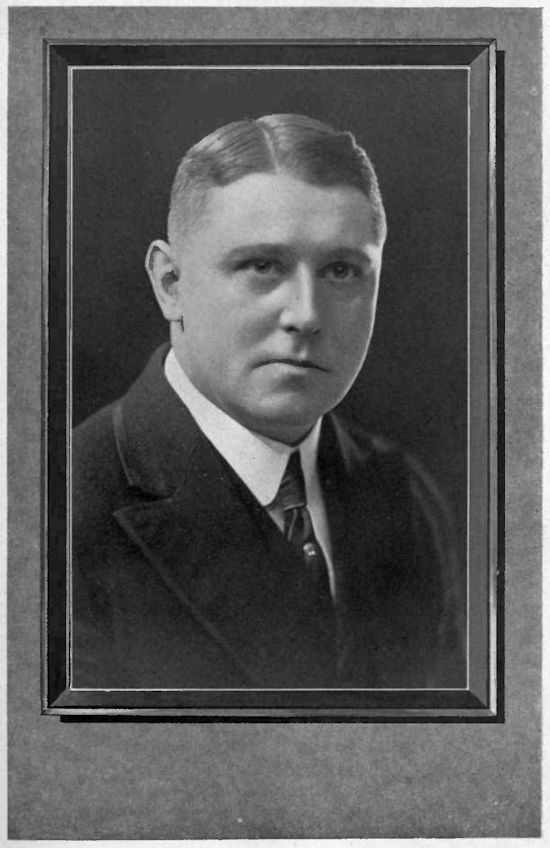
MARSHAL VAUGHAN Welland, Ontario
Champagne, Napoleon. Controller Napoleon Champagne, barrister, many years ago, became well known to the citizens of Ottawa. Well educated, talented, aggressive, ambitious and persistent, he has year after year kept himself in the public eye, and has been, and deservedly so, accorded public recognition. On several occasions he was selected by the Conservatives of Ottawa as their candidate for political honors in the Federal Parliament, and on each occasion he made a gallant fight to achieve success. When, in the early part of 1918, the famous Blue Devils of France, those brave fellows who made themselves famous in many battles during the terrible world war by their dare-devil conduct, reached Ottawa, Controller Champagne was selected to receive and welcome them. His address of welcome was one of the finest gems of oratory heard during the war. Mr. Champagne is the son of Seraphin Champagne, grocer, and Melina Duchene. His brother, Albert Champagne, is the member for North Battleford, Saskatchewan, in the House of Commons. He was born in Ottawa, May 4, 1861, and was educated in the Christian Brothers School. He has been a frequent contributor to both English and French newspapers and French magazines. In civic life, Controller Champagne has had a phenomenal career. He has served in the City Council as alderman for the years 1892-3-4-5-6-9, 1900-1-2-3-4-5-6-7, fourteen years, and as Controller for the years 1908-9-10-11-14-15-16-17-18-19, ten years. During the latter part of 1908, Controller Champagne, owing to the resignation of Mayor Scott to accept a position on the Dominion Railway Commission, became acting mayor, and held the office with much dignity. Since Controller Champagne first entered into civic life as one of the city’s representatives, he has rendered effective service on the following committees: Fire and Light, Waterworks, Board of Health, By-Laws, Printing, Library, and Finance, of which he was chairman for several years. He was also a member of the following special committees: Conduit, City Charter, Street Lighting, and Water Power. Controller Champagne is a member of the Union St. Joseph Society and the Artisans Canadiens Français. Mr. Champagne is a brilliant and successful lawyer, and has distinguished himself in several important law cases, particularly in two murder cases, in which his handling of the witnesses and his ability in cross-examination created quite a stir, and placed him in the front ranks of the legal profession in Ottawa. He practises law in both provinces—Ontario and Quebec—and has a large clientele in each. In 1911, Mr. Champagne was elected to the Ontario Legislature. He was slated for, and had he not been defeated at the election of 1914, would have become a member of the Provincial Government. He never married. In religion he is a Roman Catholic, and in politics a Conservative. His law office is at 30 Rideau Street, and he resides at 184 Osgoode Street, Ottawa, Ont.
Sifton, Hon. Arthur Lewis, M.A., LL.B., D.C.L., K.C., was born in St. John’s County, Middlesex, Ontario (about six miles from London, Ontario), October 26, 1858, of Irish descent. He is the son of the late Hon. John W. Sifton, formerly Speaker of the Manitoba Assembly, who, in 1875, with his family left Ontario for Manitoba, where he executed a number of public contracts and conducted an extensive wheat farm near Brandon, and Kate Sifton, and a brother of Hon. Sir Clifford Sifton, ex-Minister of Interior and Superintendent-General of Indian Affairs in the Laurier Cabinet. Mr. Sifton was educated in various public schools, in Wesley College, Winnipeg, Manitoba, and in Victoria University, Cobourg, Ontario. In 1880 he was awarded his B.A., and in 1888 his M.A. and LL.B. degrees. In 1880, Mr. Sifton began the study of law in Winnipeg, and was admitted to the bar of Manitoba in 1883. In 1882 he was elected a member of the first municipal council, and, the following year, in 1883, commenced his legal practice in Brandon, Manitoba. He remained in Brandon until 1885 when he removed to Prince Albert, Saskatchewan, where for a few years he continued his practice, and then removed to Calgary, Alberta, in 1889. In 1898, Mr. Sifton was elected to the North-West Assembly. In 1901 he was created a K.C. In the same year, having been re-elected a member of the North-West Assembly, Mr. Sifton became Treasurer and Commissioner of Public Works in the Haultain Administration. In January, 1903, he resigned his portfolio to accept the position of Chief Justice of the Superior Court of the North-West Territories. In 1905, when the new provinces—Saskatchewan and Alberta—were established, Mr. Sifton was appointed Chief Justice of the Superior Court of the Province of Alberta. May 26, 1910, when the Rutherford government resigned, Mr. Sifton also resigned his position as Chief Justice to accept the call of the Lieutenant-Governor of the Province to form a new Provincial Government, and was sworn in as Prime Minister. He also assumed the portfolios of President of the Executive Council, Provincial Treasurer, and Minister of Public Works. In 1911, Mr. Sifton attended the coronation of their Majesties King George and Queen Mary, and, in June of that year, was presented to King George at St. James’ Palace. December, 1911, in addition to the other Cabinet portfolios which he held, Mr. Sifton was appointed Minister of Railways and Telephones. February 29, 1912, he was appointed a member of the Commission of Conservation as one of the representatives from the Province of Alberta. At the Provincial election in 1913, he was re-elected to the Legislative Assembly of Alberta for Vermilion. In 1917, when, owing to the serious circumstances that had arisen in Canada and throughout the world resulting from the effects and requirements of the terrible world war that was then raging it was found necessary to cut out political party differences, and to have, politically and otherwise, a united Canada in the conduct of Dominion political, commercial, financial, and all public and private affairs, Mr. Sifton consented to join Sir Robert Borden, the Prime Minister, in the formation of a Union Government, and resigning his office as Prime Minister of the Province of Alberta, was sworn in as Minister of Customs in the Dominion Cabinet, which position he still holds. In 1918, Mr. Sifton accompanied Sir Robert Borden to the Peace Conference at Paris and Versailles, as one of the Canadian delegates to that memorable assembly in whose hands was placed arrangements and terms for the present and future peace of the world; and it is noteworthy to state that while there he rendered distinguished services by his advice and otherwise in the preparation and final agreement of terms that were placed before the Teutonic nations to accept and sign. On Sept. 20, 1882, Mr. Sifton married Mary H. Deering, daughter of William Deering, of Cobourg, Ontario. He has two children—one girl and one boy—Nellie Louise and Lewis Raymond. He is a member of the following clubs: Ranchmen’s, Calgary; Edmonton, Edmonton; and the Rideau and County, Ottawa. In politics, Mr. Sifton was formerly a Liberal, but is now a Unionist, and in religion a Methodist. His office is in Connaught Block, Sussex Street, Ottawa, Ontario, Canada.
Proudfoot, William, K.C., M.P.P., for Centre Huron and Leader of the Opposition in the Ontario Legislature, is a barrister practising both at Toronto and at Goderich, Ont. He was born in Colborne Township, Huron County, on February 1st, 1859, the son of Robert and Margaret (Darlington) Proudfoot. His mother came from Wicklow, Ireland, and his father, a native of Perthshire, Scotland, was one of the family which won considerable distinction in Ontario. One of his brothers was Vice-Chancellor of Ontario, and another was Rev. Dr. Proudfoot, a leader of religious thought. The subject of this sketch was educated in the Public and High Schools of Goderich, Ont.; and qualified for the law as a student in the office of James (afterward Mr. Justice) Garrow, K.C., and at Osgoode Hall. On being called to the bar in 1880 he commenced the practice of law at Goderich, Ont., as a member of the firm of Garrow & Proudfoot and he is now head of the firm of Proudfoot, Killora & Cooke in that town. He is also a member of the firm of Proudfoot, Duncan, Grant & Gilday, barristers and solicitors, Confederation Life Building, Toronto, which he joined in 1902. He was created a King’s Counsel in 1902 and has long been Treasurer and Secretary of the Huron Law Association, and is a Bencher of the Ontario Law Society. His business interests include Directorship in the Goderich Elevator and Transit Company, Ltd. and the Dominion Road Machinery Co’y. Ltd. Despite a large practice throughout Huron county Mr. Proudfoot found time to take an active part in politics and was for many years President of the West Huron Liberal Association. In his younger days his partner, the late Mr. Justice Garrow, was long an honored member of the Ontario Legislature, and on the elevation of the latter to the bench, the Liberal party naturally tendered the nomination to Mr. Proudfoot, who had already rendered valuable municipal service as Reeve of Goderich town. He was elected for the newly constituted riding of Centre Huron in 1908 and re-elected at the general elections of 1911 and 1914. As a member of the small band of Liberals sitting opposite to Sir James Whitney he soon made his mark in debate and proved one of the most discerning and aggressive critics of the Government, though giving his support to wise measures. When in 1917 Hon. N. W. Rowell retired from the Leadership of the Opposition to enter Federal politics Mr. Proudfoot was his logical successor, a decision which was ratified by the Liberal caucus in Jan., 1918. The war being then in progress Mr. Proudfoot took the statesmanlike position that there should be no party contests during the duration of the conflict and agreed to support the Government in all reasonable measures looking exclusively to the unification of the country for the prosecution of the war. Nevertheless a large body of independent support rallied to his support and the signing of the armistice found him in a stronger position both in point of followers and as a parliamentary leader than when he accepted office. In religion he is a member of the Church of England and was married on June 23, 1886, to Marion F. Dickson. He has two children. Isobel, now the wife of Lieutenant E. H. Jordan, who went overseas in October, 1914, was wounded twice and invalided home in February, 1919. Lieut. Jordan was with the 18th Field Battery, saw much service, and was decorated with the M.C. Capt. W. Proudfoot, M.C., was a member of the 15th Battalion, was wounded several times, and is a member of his father’s legal firm in Toronto.
Machado, Jose Antonio, B.A., is Vice-President of the American Bank Note Company, and Chief Executive Officer of its Canadian Branch, with headquarters at 208-228 Wellington Street, Ottawa, Ontario, Canada; and is also a Director of the American Bank Note Company, New York. Mr. Machado is a son of the late Juan Francisco Machado, gentleman (A.B. University of Havana), and Elizabeth Frances Jones, and was born at Camaguey, Cuba, January 20, 1862. He was educated in Salem, Mass., U.S.A., and at Harvard University, and graduated as Bachelor of Arts in 1883. After graduation, Mr. Machado took a special course in mechanical engineering, and later acquired his business training in New York City, and during that period travelled somewhat extensively in Europe, the West Indies, and Mexico. On May 16, 1893, Mr. Machado was married to Eleanor Esmond Whitman, daughter of the late Alfred Whitman, merchant, of New York City, and a native of Annapolis Royal, N.S. There are four daughters and two sons, viz., Eleanor Whitman (now Mrs. Lawrence M. Mead), Jose Antonio, Jr., John Zaldivar, Angela Andrews, Salome Cecilia, and Theodora. Both sons have been in active service overseas during the great war. In January, 1902, Mr. Machado came to Ottawa and took charge of the American Bank Note Company’s Canadian plant and business, which includes the preparation of the Dominion of Canada bank notes, postage stamps, and inland revenue stamps, as well as the larger part of the bank notes for the chartered banks of Canada. The company also prepares engraved bonds, stock certificates and other securities for various Canadian corporations. The business has kept pace with the general development of the business of the Dominion, so that additional buildings have been erected from time to time, until the plant now comprises a large group of modern fire-proof buildings. The plant is a model one in every respect, and no expense or thought has been spared for the comfort and well-being of the employees of the company. Mr. Machado is a member of the Finance Board of the Presbyterian Church in Canada; President of the Canadian Association for the Prevention of Tuberculosis; a member of the International Committee of the Y.M.C.A. New York; a member of the Canadian National Council of the Y.M.C.A., and of the Military Committee of same, which has dealt with the Y.M.C.A. work of Canadian soldiers at home and overseas; a Vice-President of the International Daily Vacation Bible School Association (U.S. and Canada). As regards Ottawa activities, Mr. Machado has been for many years interested in and President of the Ottawa Anti-Tuberculosis Association, which secured the building of the Royal Ottawa Sanatorium for the treatment of pulmonary consumption, and is a member of the Board of Governors of this institution. He is Hon. President of the Ottawa Y.M.C.A.; President of the Ottawa Welfare Bureau, and vice-chairman of the Ottawa Symphony Orchestra. Recently, Mr. Machado was appointed a member of the Ottawa Housing Commission, formed to take advantage of the new legislation of the Province of Ontario for improvement in housing conditions. Mr. Machado is a member of the following clubs: Harvard (New York), Rideau, Royal Ottawa Golf, Rideau Curling, Lake Bernard Fishing Club, and is a Fellow of the Royal Colonial Institute, London, England. His favorite recreations are golf, fishing, and curling. Several years ago Mr. Machado became a Canadian citizen and a British subject. In religion he is a Presbyterian, and attends St. Andrews Church, and his place of residence is 169 Daly Avenue, Ottawa, Ont.
Levy, Gabriel Herman, B.A., LL.B., Barrister, member of the firm of Gibson, Levy and Gibson, Bank of Commerce Chambers, 4 Hughson Street South, Hamilton, Ont., was born in Hamilton, August 12, 1874, the son of Herman Levy, President of Levy Bros. Co., Limited, wholesale jewellers, Hamilton, and Camilla Levy, his wife. He was educated at the Central School and Collegiate Institute, Hamilton, Toronto University, and Osgoode Hall, taking his degree of B.A. at the unusual age of under twenty, and that of LL.B. two years later. In the year of his graduation he was elected Vice-President of Varsity Literary Society at the last of the “old style” contests, which will never be forgotten by those who participated therein. He also engaged in post-graduate studies in Europe. He studied law with Sir John Gibson, and entered into practice in 1898 with the firm of Gibson, Martin & Osborne, and has retained his connection with Sir John Gibson under various firm names up to the present of Gibson, Levy and Gibson. He is largely engaged in corporation practice, the firm being counsel for, among other corporations, The Dominion Power & Transmission Co., Limited, Hamilton Street Railway, Hamilton Radial Electric Company, Canadian Westinghouse Co., Limited, National Steel Car Co., Limited, Landed Banking and Loan Company and The F. F. Dalley Corporations, Limited. Mr. Levy is interested in numerous enterprises, and is Vice-President of McKittrick Properties, Limited, a director of Canada Crushed Stone Corporation, Hamilton Hotel Company, Limited, and is Vice-President of Levy Bros. Co., Limited, the oldest and one of the most extensive wholesale and manufacturing jewellery firms in the Dominion. His reputation as a lawyer and a man is high with those who know him; “but,” as an intimate friend facetiously remarked, “it’s in bridge whist that he really shines.” And he was in charge of a team who held the Canadian Whist Championship for a number of years, and was a member of a team of the New York Bridge Whist Club that won the Atlantic Whist Trophy, one of the most important contests in America. His other recreations are golf, chess and fishing. He married on March 29, 1909, Blanche Ruth Shire, daughter of Adolph Shire, of Chicago, Ill., and has a daughter, Marion Louise, born in 1912, a son, Gabriel Herman, in 1915, and a son, John Gibson, in 1919, and enjoys life with them at his pleasant home, 193 James Street South. His clubs are Hamilton Club, Hamilton Golf and Country Club, Caledon Mountain Trout Club, Buffalo Club, Buffalo, N.Y., University Club, Toronto, New York Bridge Whist Club. He is a member of A.F. & A.M., Murton Lodge of Perfection, Moore Consistory, was T.P.G.M. of Murton Lodge of Perfection for years 1908-9. He is independent in politics.
Blondin, Hon. Pierre Edouard, Senator and Postmaster-General, was born at Saint François du Lac, County of Yamaska, Quebec, December 14, 1874, and is the son of Louis M. and Elodie (Barnard) Blondin. He was educated in the Seminarie de Nicolet and Laval University. In 1900, Mr. Blondin was admitted to the practice of the notarial profession, and was appointed Clerk of the Circuit Court of County of Champlain. For two terms he was alderman in the Grand Mere Municipal Council. Having distinguished himself in law and municipal activities, he was nominated and elected to the House of Commons in 1908; was re-elected in 1911, and became Deputy-Speaker of the House. October 20, 1914, Mr. Blondin was appointed a member of the Privy Council of Canada, and was sworn in as Minister of Inland Revenue. October 6, 1915, he was appointed Secretary of State, and Postmaster-General January 8, 1917. Realizing that the serious turn the great world war had taken called for Canada’s best efforts to be evident in the firing line, and satisfying himself in the decision that all who could should give the best mental and manual assistance they possessed to the Entente forces, on March 21, 1917, Mr. Blondin resigned his portfolio as Postmaster-General, raised the 258th Battalion, of which he became Lt.-Colonel, and with his regiment started overseas, where he remained until July, 1918, when he returned to Canada. Landing at Halifax, July 8, 1918, Mr. Blondin was accorded a cordial reception and hearty congratulations in recognition of the valiant services he had rendered while on military duty in France and Italy. Having been defeated in his candidature for re-election to the House of Commons at the general election in 1917, notwithstanding that he had resigned his office as Postmaster-General and had voluntarily donned the King’s uniform to serve abroad in the cause and defence of Canada and the Empire, on July 21, 1918, on his return to Ottawa, Mr. Blondin was requested by Sir Robert Borden to assume his duties as Postmaster-General, and to accept a Senatorship in succession to the late Senator Sheyn. July 2, 1902, Senator Blondin married Marie Rose Buisson, daughter of Louis L. F. T. Buisson, of Saint François du Lac, Quebec, and has one daughter. Clubs: Canadian Club of New York, Rideau Club, Ottawa. Commander of the Legion of Honor. A Roman Catholic in religion and a Unionist in politics, his home address is Ottawa, Ont., and his official address as Postmaster-General, Ottawa, Ontario.
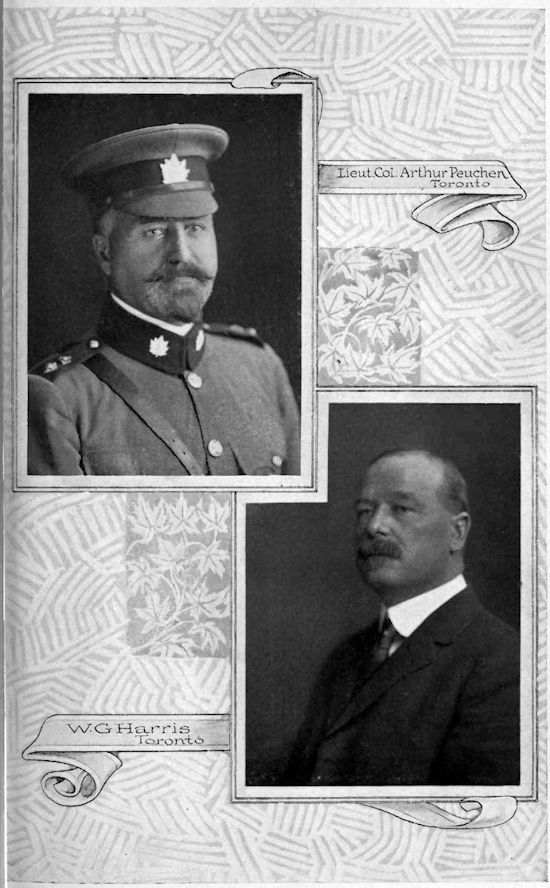
Lieut. Col. Arthur Peuchen, Toronto W.G. Harris, Toronto
Pedley, Frank, B.A., ex-Superintendent of Immigration and Deputy Superintendent-General of Indian Affairs, entered the Civil Service as Superintendent of Immigration in 1897, and in 1902 was promoted to the position of Deputy Superintendent-General of Indian Affairs, which position he held to the end of the Laurier administration and for some years after the Borden Government had come into power in 1911, when he resigned to resume his practice as a barrister, etc. During Mr. Pedley’s terms of office in the public service, Canada and Canada’s great natural resources and opportunities, the fertility of the soil, and the millions of acres awaiting the attention of the husbandman, and the open door to success and happiness that was in store for all who came to Canada to help in her development, were made known throughout the world by advertising and specially appointed agents and exhibition displays in a manner that was never before anticipated, and with the result that the peoples from all quarters of the globe, including hundreds of thousands from Great Britain and the United States, left to make Canada their future home. Mr. Pedley is the son of Rev. Charles and Sarah (Stowell) Pedley, of Hanley, Staffordshire, England, and was born at St. John’s, Newfoundland, June 25, 1858. He was educated at private schools in St. John’s, the public and high schools in Ontario, and at McGill University, Montreal, where he graduated in 1886 a B.A., with first class honors. He practised law at Toronto until 1897, when, at the invitation of Sir Clifford Sifton, he entered the Civil Service. On Aug. 28, 1895, Mr. Pedley married Helen Louise Hobart, daughter of Sidney and Mary Ann Hobart of Cobourg, Ontario. Mr. Pedley is a member of St. George’s Society. In politics he is a Liberal. He resides at 483 Maclaren Street, and his office is at 46 Elgin Street, Ottawa, Ontario.
Miller, Frederick Robert (Western University, London, Ont.), son of A. F. Miller and Elizabeth Crean. Was born at Toronto. Educated at Jarvis Street Collegiate Institute, Toronto, and at the University of Toronto, graduating in 1907, holding degrees of M.A., M.B. Was Assistant in Physiology in Cornell University for two years. Demonstrator of Physiology in the University of Toronto 1907-10. Studied in Munich 1910-1911, where he obtained the degree of M.D. from the University of Munich. Took a post-graduate course in the University of Strasbourg, and afterwards spent some time attending clinics in Paris, France. Afterwards studied for a year at the University of Liverpool with Prof C. S. Sherrington. Was Lecturer on Physiology, McGill University, 1912-1914. Studied in University of Oxford during summer of 1914. Appointed Professor of Physiology at Western University, London, Ont., 1914, which position he still fills with distinction. Dr. Miller is an Anglican in religion, and holds a commission as Captain in the Canadian Army Medical Corps. He has contributed a number of articles to British and American journals on physiological subjects. He has travelled extensively, visiting the most important educational centres both in Europe and America.
Jenkins, Lieut.-Col. Stephen Rice Jenkins, M.D., F.A.C.S., M.P.P., of Charlottetown, Prince Edward Island, during the late war, proved himself one of the ablest members of the Canadian Army Medical Corps. He was born at Charlottetown on November 12, 1858, the son of John T. and Jessie Esther (Rice) Jenkins. His paternal grandfather was Rev L. C. Jenkins, and his maternal one, Captain the Hon. Stephen Rice. His father John T. Jenkins, M.D., M.R.C.S. (Eng.), was a member of the Canadian House of Commons from 1884 to 1887. The subject of this sketch was educated at King’s College, Windsor, N.S., and at the University of Pennsylvania, Philadelphia, U.S.A., from which he graduated with the degree of M.D. in 1884. Returning to Charlottetown, he entered on the practice of his profession, and became one of the best known physicians in the Maritime Provinces. He is a member of the Dominion Medical Council. In 1912, he was elected to the Legislature of Prince Edward Island as Liberal-Conservative member for Charlottetown, and was re-elected at the general elections in 1915. In September of the latter year, he also became a member of the provincial cabinet, without portfolio. He was on active service in connection with the late war from March, 1915, until his discharge in April, 1919, holding the rank of Lieut.-Col. in the Canadian Army Medical Service, and had charge of the Military Hospital at Rockhead, Halifax, N.S., in 1915. He was a Roman Catholic in religion, a Conservative-Unionist in politics, and a member of the Q.G.D., and the Charlottetown Club. In October, 1886, he married Ellen J., daughter of Patrick Sweeney, merchant, of Charlottetown, and has nine children. His eldest son, Lieut.-Col. John S. Jenkins, D.S.O., had a distinguished career overseas during the late war; also his second son, Henry G., served overseas with the 3rd Bn. C.E., 1st Division, as Capt.; and his other children are, Mary E., Helen J., Nora I., Margaret L., Hilda, Louis C., and M. Stephanie Jenkins.
Farris, Hon. John Wallace de Beque, M.P.P., Attorney-General and Minister of Labor for British Columbia, has for some years been recognized as one of the leading lawyers on the Pacific Coast. He is, however, a native of New Brunswick, and was born at White’s Cove in that province on December 3, 1878. His father, Hon. L. P. Farris, was formerly Minister of Agriculture for New Brunswick. The subject of this sketch was educated at St. Martin’s Seminary and Acadia University, N.B., graduating with the degree of B.A. in 1899. Subsequently, he took a course at the University of Pennsylvania, graduating with the legal degree of LL.B. in 1902. In connection with both degrees he took honors. In the same year he went to Vancouver, British Columbia, and, having been called to the bar of the province, commenced the practice of law in that city. Within two years he was appointed City Prosecuting Attorney, a post he filled from 1904 to 1906. At the same time he became prominent in politics, and served as President of the Vancouver Liberal Association. In the political upheaval of 1916 he fought strongly for a change of government, and himself stood as one of the Liberal candidates for the Legislature in Vancouver city. He was elected, and proved one of the ablest of the new members that the contest brought into the House. In 1917, the Hon. Mr. Brewster, then Prime Minister, asked Mr. Farris to take the portfolio of Attorney-General and that of Minister of Labor as well, and the latter accepted. Though young in parliamentary experience, Mr. Farris is looked upon as one of the coming men in Canadian politics. In religion he is a Baptist; and is a member of the Terminal City Club, Vancouver, and of the Union Club, Victoria, B.C. He married, in 1905, Evelyn F., daughter of Prof. E. M. Keirstead, D.D., of McMaster University, Toronto, and has four children, Katherine H., Donald F., Ralph K., and John L. Farris. Mr. and Mrs. Farris, until 1918, made their home in Vancouver, but now reside in Victoria, B.C.
Smith, Hon. Ernest Albert, M.P.P., Minister of Lands and Mines for the Province of New Brunswick, resides at Shediac, N.B., where he is also engaged in lumbering and general mercantile business. He was born at Shediac on June 20, 1864, the son of Edward J. and Amelia E. Smith. His father was formerly a prominent member of the New Brunswick Legislature, to which he was elected in 1884, and founded the commercial business now carried on by the subject of this sketch. Sir Albert J. Smith, Minister of Marine and Fisheries for Canada in the government of Hon. Alexander Mackenzie from 1874 to 1878, was an uncle. Hon. E. A. Smith was educated in the High School and also at a private school in Charlottetown, P.E.I., and originally adopted the profession of dentistry, graduating with the degree of D.D.S. in 1887. On leaving college he went to British Columbia, where he practised for two years, and subsequently practised for a year in New Brunswick. He entered his father’s business in 1891, and since 1912 has conducted it under his own name. In 1916, he was induced to follow the family tradition and enter politics, and was elected to the Legislature as Liberal for Westmorland County, defeating Hon. P. J. Mahony, Minister of Public Works. At the general elections of 1917, he was again elected, and was selected as a member of the Foster government, taking over the portfolio of Lands and Mines, for which his business experience amply qualified him. He has since given an effective business administration to the department which was sorely needed, and by his policies has materially added to the public revenues. Sat in Town Council, Shediac, for several years as Alderman, and elected Mayor for 1906 and 1907, by acclamation; President of Liberal Association for County of Westmorland from 1894 to 1911; President of Provincial Liberal Association several years, which position is still held. He is an Anglican in religion, and a Past Master, A.F. & A.M. His recreations are salmon and trout fishing and shooting of small and big game. On September 30, 1896, he married Euphemia, daughter of Mr. Colin Russell, of the Customs Department, Ottawa, and has four children: Gladys, born 1897; Russell, born 1899; Donald, born 1902; and John, born 1911. Though Mr. Smith’s official duties compel his presence in Fredericton, N.B., for the greater part of his time, he still makes his home at Shediac.
Turgeon, Hon. William Ferdinand Alphonse, K.C., M.P.P., Attorney-General of the Province of Saskatchewan, is one of the best known leaders of the legal profession in the Canadian West. He was born at Bathurst, New Brunswick, on June 3, 1877, the son of Onesiphore Turgeon, a French-Canadian journalist, and his wife Margaret Eulalia Baldwin, a lady of English descent. Politics comes naturally to him, for his father is a member of the House of Commons for Gloucester County, New Brunswick, and has long been a prominent figure in the public life of that province, while his brother, J. G. Turgeon, M.P.P., is a member of the Alberta Legislature. The subject of this sketch was educated in New York City, and later at Laval University, Quebec, graduating in Arts in 1899 with the degree of B.A., and in law in 1902. Shortly afterwards he went to the West, and was called to the bar of Saskatchewan. He also became prominent as a leader in the Liberal party, and at a by-election on October 12, 1907, was elected to the legislature for Prince Albert. At the general elections of August, 1908, he contested two ridings in behalf of his party—Prince Albert and Duck Lake. He was defeated in the former, but elected to the latter. At the general elections of 1912, he stood for the riding of Humboldt, and was successful, and has ever since represented that riding. Hon. Mr. Turgeon joined the Ministry of Hon. Walter Scott as Attorney-General on September 23, 1907, shortly before his first political contest in Prince Albert. He has ever since continued to hold that portfolio, and for some years filled that of Provincial Secretary as well. His oratorical powers are exceptional, and he speaks with equal facility both in French and English. He is a Roman Catholic in religion; and on February 18, 1901, married Gertrude, daughter of Gerome Boudreau, Petit Rocher, New Brunswick. He has five children: Alice, born May 13, 1902; Cecile, February 19, 1907; Wilfrid, August 20, 1910; Eveline, November 16, 1913; and Frances Regis, July 12, 1918. He resides at 2320 Angus Street, Regina, Sask.
Pritchard, Henry Thomas, who was born in London, England, February 26, 1852, came to Canada, locating in Ottawa in 1875, and started in business as an engraver. Three years later, in 1878, he formed a partnership with J. E. Andrews, under the firm name of Pritchard and Andrews. Being exceptionally clever engravers, their business so increased that in 1897 a joint stock company was formed, and is now established and known as “The Pritchard-Andrews Company of Ottawa, Limited,” with J. A. Seybold as President and Henry Thomas Pritchard as Secretary-Treasurer and Manager, with their head office at 264 Sparks Street, Ottawa. Mr. Pritchard is the son of William Pritchard, cabinet manufacturer, of Bishopgate Street, London, England, and Elizabeth Ann (Thompson) Pritchard, and received his education in a boarding school in London. Having served his time to engraving in England, he crossed the Atlantic Ocean, and, arriving in Ottawa, Ontario, has made that city his home ever since. In 1887, Mr. Pritchard married Margaret Ramsay Black, daughter of John Black, of Hamilton, Ontario. Four sons and four daughters have blessed the union—Walter, Elizabeth Ann, Harold, Ernest, John, Margaret, Emily and Edith. Mr. Pritchard is an Anglican in religion and a Unionist in politics. He resides at Eastview.
Arsenault, Hon. Aubin E. (Charlottetown, Prince Edward Island), son of Hon. Joseph O. Arsenault, Senator, and Gertrude Arsenault, his wife. Born at Egmont Bay, P.E.I., on July 28, 1870. Educated at St. Dunstan’s College, Charlottetown, and St. Joseph’s University, Memramcook, N.B. Studied law with McLeod, Morson & McQuarrie, barristers, Charlottetown, and with the Hon. (now Sir) Chas. Russell, London, England. Called to the bar in 1899, and has successfully practised his profession at Charlottetown and Summerside, P.E.I. Was first elected to the Legislature of the province of P.E.I. in 1908. On the accession of Liberal-Conservative Government in 1911 appointed a member of the Government. Re-elected in 1912 and 1915. On elevation of the leader of the Government, Hon. J. A. Mathieson, to the Supreme Court Bench of the Province, was called on by the Lieutenant-Governor to form a Government, which he did, and became President-in-Council and Attorney-General. Re-elected in 1917. The subject of this sketch was married on November 5, 1907, to Bertha R., daughter of Captain Frank Gallant, of Tignish, P.E.I., and is the father of six children. He is a Roman Catholic in religion, and a member of the Conservation Commission of Canada.
Dunning, Hon. Charles Avery, M.P.P., is Minister of Agriculture and Provincial Treasurer for the Province of Saskatchewan, and one of the youngest and ablest of the public men of the West. He was born at Croft, Leicestershire, England, on July 31, 1885, the son of Samuel and Katherine (Hall) Dunning. His father was a farmer, and he was educated in the public schools of the Motherland. In 1903, as a boy of seventeen, he settled in Saskatchewan, and engaged in farming at Beaverdale in that province, an industry which he has ever since conducted on a large scale. He is one of the most prominent of those who organized the movement in the West for the betterment of agricultural conditions, and, in 1910, became a Director of the Saskatchewan Grain Growers’ Association. He was also its Vice-President from 1911 to 1914. In 1911, he organized the Saskatchewan Co-operative Elevator Company, and acted as general manager of this remarkably successful enterprise from its foundation until 1916. From 1911 to 1916, he was a member of the Executive Board of the Canadian Council of Agriculture, and, in 1918, served on the Canada Food Board organized in connection with the war as Director of Food Production. Earlier, in 1913, he was a member of the Royal Commission appointed by the Government of Saskatchewan to investigate the question of agricultural credits, and also that of grain markets in Europe. He has also been a frequent contributor to the press on such subjects, his vast fund of expert knowledge making him an especially welcome contributor. In 1916, he resigned his position as general manager of the Saskatchewan Co-operative Elevators to enter the Legislature of that Province. He was elected for the riding of Kinistino by acclamation. At the general elections of 1917, he was returned for Moose Jaw County. After his first election he was appointed Provincial Treasurer in the Martin administration, having been sworn in on October 20, 1916. Exactly one year later, he was also appointed Minister of Railways, and in addition on May 16, 1918, he became Minister of Telephones. On the rearrangement of portfolios, February 15, 1919, he retained his old portfolio of Provincial Treasurer, and became Minister of Agriculture as well, a step that was applauded by the whole farming community. He is a Liberal in politics and a Presbyterian in religion, and a member of the Assiniboia Club, Regina, and the Wascana Country Club. His favorite recreation is golf. On July 3, 1913, he married Ada, daughter of John Rowlatt (deceased) of Nassington, Northants, England, and has one son and one daughter. His home is at 2150 Retallack Street, Regina, Sask.
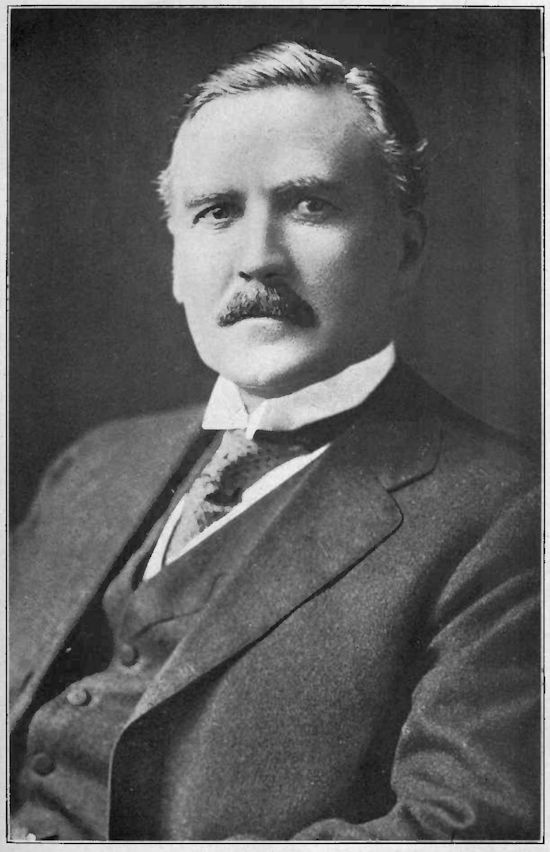
RT. HON. SIR W. T. WHITE, P.C., M.P., Ottawa
Williams, the Right Rev. Lennox Waldron, Lord Bishop of Quebec, M.A. (Oxon.), D.D., is the only son of the late Right Rev. J. W. Williams, D.D., fourth Bishop of the same diocese. He was born at Lennoxville, while his father was headmaster of Bishop’s College School, on November 12, 1859. His mother’s maiden name was Miss Anna Maria Waldron. He received his earlier education at Bishop’s College School, from which institution he went to St. John’s College, Oxford, where he received his degree of B.A. in 1882, and his M.A. in 1887. In 1899 he received the degree of D.D. from Bishop’s College University. His first charge as a clergyman was that of curate in St. Matthew’s Church, of Quebec, while the Rev. Charles Hamilton (afterwards Bishop of Ottawa and Archbishop)—was its rector. A vacancy occurring in the rectorship of that charge, the Rev. Lennox Williams was selected to fill it. In 1899 he was promoted to be Dean of the Cathedral and Rector of Quebec. In 1890 he was unanimously elected Coadjutor Bishop of Ontario, but felt obliged to decline. On the death of Bishop Dunn, he was elected Lord Bishop of the Diocese of Quebec. As a native of the Province of Quebec, he has been identified with the religious life of Quebec and the Eastern Townships during his lifetime. During his ministry he has always taken an active interest in the schools and colleges of the diocese, having been for years a member of the corporation of Bishop’s College, Lennoxville, Chairman of the Protestant Board of School Commissioners of Quebec City, and a Director of the High School. While he was Dean of the Cathedral, he was chosen a delegate to the Pan-Anglican Congress held in London, England, in 1908; and, in 1910, he again took part in the Anglican Church Congress held at Halifax, Nova Scotia. In 1887 he married Miss Caroline Annie Rhodes, daughter of the late Lieutenant-Colonel William Rhodes, at one time Minister of Agriculture for the Province of Quebec. The Bishop and Mrs. Williams had four children, viz., James William, who, after taking his degree at Oxford, joined the Canadian Army in the great war, and was killed in action at the battle of the Somme; Violet Mary; Gertrude, wife of Colonel R. O. Alexander, D.S.O.; Sydney Waldron, gentleman cadet at R.M.C., Kingston.
Margeson, Joseph Willis, Lieut.-Col. (Bridgewater, Nova Scotia) son of Otis A. Margeson (English) and Jennie Cahill (Irish). Was born on April 2nd, 1880, at Harborville, King’s County, Nova Scotia. Educated at Berwick High School; the Provincial Normal School, Truro; Acadia University, Wolfville; and Dalhousie Law School, Halifax, from which latter institution he graduated in 1908 with the degree of LL.B. Was principal of Berwick High School 1903-4. Also taught at South Berwick, Waterville and Lakeville. Married Sept. 16, 1908, to Mary Gertrude, daughter of Duncan McIntosh of Truro, Nova Scotia, and has two daughters, Doris Gwendolyn and Olive Gertrude, born Sept. 26th, 1910, and Nov. 10th, 1911, respectively. He is a barrister-at-law, and High Counsellor of the Independent Order of Foresters. He is also a member of the Masonic Order, the Loyal Order of Moose and the Ancient Order of Foresters. In religion he is a Baptist. He contested the riding of Lunenburg in November, 1909, against the Hon. A. K. MacLean, Attorney-General, at a by-election for the Provincial Legislature, but was defeated. First elected to the Provincial Legislature at the general election June 14th, 1911, and re-elected in 1916 with a largely increased majority. He resigned his seat in November, 1917, to contest his constituency as a Unionist candidate for the Federal House, but was defeated after one of the most bitter contests in the Province of Nova Scotia. Col. Margeson polled the largest vote he ever received. His opponent was a strong anti-conscriptionist. He has been prominently identified with the Canadian Militia, being Lieutenant of the 75th Regiment, 1910, Captain in the 25th Nova Scotia Overseas Battalion, December 1914, with which unit he went to France. Promoted to the rank of Major, June, 1916, and appointed Inspector of Pay Accounts and Records, C.E.F. In April, 1917, Lieut.-Col. Margeson was appointed President of “The Pay and Allowance Board,” with headquarters at Ottawa. In December, 1918, he was promoted Lieut.-Col., and in January, 1919, his name was brought to the notice of the Secretary of State for War for valuable services rendered in connection with the war. He is a Director of The News Company, publishers of “The Daily News” and “The Weekly News,” Lunenberg, Nova Scotia. He is also Vice-President of the G.W.V.A., Ottawa.
Thornton, Hon. Robert Stirton, M.P., M.B., C.M., LL.D., Minister of Education for the Province of Manitoba, is one of the educational leaders of Western Canada, though not a native of this country. He was born at Edinburgh, Scotland, on May 8, 1863, the son of David and Mary (Gavin) Thornton. His parents decided that he should adopt the career of a physician, and after a good general education in his native city at Heriot’s Hospital school, he entered Edinburgh University, and graduated in 1884 with the degree of M.B., C.M. In the same year he came to Canada, and commenced the practice of his profession at Deloraine, Manitoba. He became well-known throughout the province, and, in 1896, was elected President of the Manitoba Medical Council; and, later, President of the Medical Council of Canada. Among other matters in which he interested himself was that of horticulture, a neglected pursuit in the western country, and became recognized as a pioneer horticulturist of the prairies, and an inspiration to others to adopt such a hobby. He became identified with the Liberal party, and, in 1907, was elected to the Manitoba Legislature for Deloraine. Though defeated in 1910, he was again elected in 1914, and also in the general elections of 1915, which resulted in the overthrow of the Roblin administration. He had taken a very strong stand against the indifference of the authorities to school problems; and when Hon. Mr. Norris was called upon to form a government, he entrusted to Dr. Thornton the portfolio of Education, which, under the peculiar circumstances of the case, was perhaps the most important within the Premier’s gift. In no section of the world is the problem of education more difficult, owing to the great number of nationalities represented in the numbers of unlettered immigrants that poured into Manitoba in the years preceding the great war. With the problem of making the children of these newcomers good Canadians, conversant with the language and institutions of the land of their adoption, Dr. Thornton grappled, in 1915, and three and a half years later it was the testimony of the Winnipeg “Tribune,” that the change of government had been worth while, if only for what had been accomplished in making the schools of Manitoba Canadian. Before he became Minister of Education, large numbers of the public schools were nondescript, and breeding centres of foreign speech and ideals. In a determined and unflinching way, Dr. Thornton put into action, through the machinery of the schools, the ideals of true Canadianism, and for the first time enforced the law with regard to an English education for every child of school age in Manitoba. As a result of his policies, other western provinces have followed his example, and many educationists of the western United States look to Manitoba’s system of dealing with the foreign problem in education as a model. Latterly, Dr. Thornton has taken a strong stand against immigration of the old indiscriminate sort, and proclaims the doctrine that anyone who comes to Canada must be prepared to shoulder all the responsibilities, with the privileges, duties, and rights of Canadian citizenship. By the many advocates of these new views he is looked up to as a leader. In recognition of his services, Queen’s University (Kingston) some time ago conferred on him the honorary degree of LL.D. Dr. Thornton is a Presbyterian in religion, and a member of the Masonic Order. On April 30, 1889, he married Mary, daughter of Robert Johnston, Princeton, Ont., and has no children. He resides at Winnipeg and at Deloraine, Manitoba.
Bailey, Charles Frederick, Agricultural Commissioner for the Province of Ontario, is, singularly enough, a native of the Maritime Provinces. He was born at Kentville, Nova Scotia, in 1880, and his mother, who still survives, is now Mrs. P. Innes of that town. He was educated in King’s County High School, Kentville, and had a practical insight into agriculture as a lad on a Nova Scotia farm. In 1902 he resolved to qualify himself on the scientific side of agriculture and entered himself at the Ontario Agricultural College at Guelph, Ont., which holds a standard position throughout North America. From 1904 to 1907 he was engaged largely in commercial work related to this basic interest of the country’s prosperity and returned to the O.A.C. in the latter year. In 1909 he received from its affiliated Institution the University of Toronto, the degree of Bachelor of Scientific Agriculture. At that time the Ontario Department of Agriculture was looking about for expert young men to carry on the work of agricultural instruction and development and on receiving the above degree Mr. Bailey was in June, 1909, appointed Live Stock Specialist for Ontario. He brought a great deal of enthusiasm and knowledge to bear on his task and in 1912 was promoted to the post of Assistant Deputy Minister of Agriculture by the late Hon. James Duff. A few years later the office of Commissioner of Agriculture was created in order to place a permanent official of expert knowledge in charge of policies for the betterment of agriculture in this province. Mr. Bailey’s grasp of all the problems of his subject is exceptional and he holds a high reputation as an expert in other states and provinces. As a young man he was a Captain in the King’s County (N.S.) Regiment, but has always eschewed politics. In religion he is a member of the Church of England, and some years ago married Louise D., daughter of David Hogg, Perth, Ont. He has had three children, of whom one, a boy born in 1915, survives. His address is 164 Walmer Road, Toronto.
Dalley, Frederick Fenner, President of the F. F. Dalley Corporations, Limited, Hamilton, Ont., and subsidiaries, was born in Hamilton, April 11, 1883, the son of Fenner Frederick Dalley (former President of the F. F. Dalley Co., Limited), who died in 1913, and his wife, Mabel (Forster) Dalley. He received his education at the Hamilton public schools and Collegiate Institute. He married Ethel Hazel Gibson, daughter of the late Samuel Gibson, of Caledonia, February 21, 1914, and has two sons, Fenner Frederick Dalley, born June 1, 1915, and Samuel Gibson Dalley, born September 17, 1916. Mr. Dalley is President of the F. F. Dalley Corporations, Limited, Hamilton (the parent organization); President Dalley Products, Limited, Hamilton; President of F. F. Dalley Co. of Canada, Limited, Hamilton; President of F. F. Dalley Co. of New York, Inc., Buffalo, N.Y.; President S. M. Bixby & Co., Inc., New York (plants Brooklyn, N.Y. and Indianapolis, Ind.); Director and Treasurer The Thermokept Products Corporation, New York; Chairman and Treasurer Perfect Vacuum Canning Co., New York; and Chairman and Treasurer Thermokept, Limited, Hamilton, Ont. As parent Company, the F. F. Dalley Corporations, Limited, control in the Dalley Co., founded in 1846, manufacturers of the well known “2 in 1” shoe polishes and other specialities, and the Bixby Company of New York, founded in 1864, the two largest individual manufacturers of shoe polish in America, in addition to which they control many other specialities and staple lines. The Corporation conducts five factories and eighteen branch offices, extending from coast to coast in Canada and the United States. The Corporation’s spacious offices are centrally situated at No. 50 James Street South. Mr. Dalley’s clubs are: Hamilton, Thistle, Tamahaac, Royal Hamilton Yacht, Caledon Mountain Trout, Hamilton Golf and Country, Seaview Golf, Absecon, N.J., Buffalo, Buffalo, N.Y., Canadian, New York City. He is a member of the Hamilton Board of Trade and of the Canadian Manufacturers Association; of St. George’s Society, and the A.F. and A.M.; and is an Anglican. Mr. Dalley has a pleasing personality and great efficiency, necessary in the direction of a business with such extensive ramifications as that of which he is the head. He held a commission as Lieutenant in the Thirteenth Royal Regiment in 1906. Golf is his chief recreation. His residence is at “Wynnstay,” Ancaster, Ont., on the mountain a short distance out of Hamilton.
Stapells, Richard A., is one of the best known figures in the business and social life of Toronto, where he was born on February 12, 1879, the son of Richard George and Susan (Carruthers) Stapells. He was educated in the Toronto Public Schools and commenced his business career with the firm of Caldecott, Burton & Spence, from which so many successful Canadian business men have graduated. About 1900 he left the employ of that firm to pay a visit to England and engaged in the commission business in London for some two years. On his return to Toronto in 1902 he purchased and incorporated the business now known as the McElroy Manufacturing Company, Limited, makers of “Royal Garments,” with offices at 47 Simcoe Street, Toronto, of which he is President and Managing Director. Despite the fact that he is a most successful business man who had won success at an age when many men are but on the lower rungs of the ladder, Mr. Stapells’ general interests are remarkably wide and his artistic tastes exceptional. His chief hobby is music, for which he has a great natural talent. As a boy he was an accomplished violinist and a member of the Toronto Philharmonic Orchestra, conducted by the late Dr. F. H. Torrington. At the age of fifteen he was a member of the violin section of the great orchestra formed for the Festival in connection with the opening of Massey Hall in 1894. Later he obtained vocal instruction with the best masters in London, England, and New York, and for several years has been baritone soloist of the Church of the Messiah (Anglican), of which he is a member, and a lay delegate to the Anglican Synod, representing Church of Messiah. He was for some years also a very enthusiastic member of the executive of the National Chorus, a celebrated Toronto choral organization. In social and patriotic work he is equally active. He has long been a prominent member of the Empire Club of Canada, Toronto; was one of its vice-presidents in 1913-14 and President 1918-19. In the latter capacity he has induced many eminent men to come to Toronto and address the public on questions of the day, and made the Club one of the most vital organs of opinion in the Dominion. He is a life member of York Pioneer and Historical Society; life member of St. George’s Society; life member of the Canadian Red Cross Society, member of the Executive Committee, Canadian Defence League; member of the Executive, Overseas Club, and member of the Navy League of Canada, in connection with all of which he was active in promoting patriotic movements during the war and the succeeding repatriation period. Is a Trustee of Queen’s University. He is also a member of the Toronto Board of Trade, member of the Canadian Manufacturers Association (an Executive officer thereof in 1914), member of the Royal Colonial Institute and the Canadian Institute; a past president of the Dufferin School Old Boys’ Association; and belongs to the following clubs: Strollers’, National, Royal Canadian Yacht, and charter member of the Eastbourne Golf Club. With all his manifold activities Mr. Stapells is one of the most affable and well-poised men in the city of Toronto. In politics he is a Conservative-Unionist. In July, 1902, he married Pauline Edwina, daughter of William C. Harvey, and has two sons and four daughters. He resides at 99 Roxborough St. East, Toronto, and has a summer home, “Deancroft,” at Jackson’s Point, Lake Simcoe, Ont.
Weld, Edmund (London, Ont.), Barrister, is the member of a well-known English county family, his grandfather having been the Rev. Joseph Weld, Rector, Tenterden, Kent. His father, the late Wm. Weld, was the founder and owner of the “Farmer’s Advocate,” London, Ont. The subject of this sketch was born at Delaware, Ont., in 1859, and educated at London, Ont., where he became a Barrister, in 1884, and successfully practised his profession, as also at Toronto. He has been an Alderman and a member of the Public Library Board of his native town, also President of the Western Ontario Bowling Association. In 1907 Mr. Weld was appointed to his present position as Deputy Clerk of the Crown, Registrar of the Surrogate Court and of the County Court, Middlesex County, Ont. He married Gertrude Isobel, daughter of Richard Gibson, Delaware, Ont., in 1890. He has a family of five, viz.: Helen G., Constance G., Rowena G., Hume G., and Stanley G. He is a member of the London Club, a Conservative in Politics, and a member of the Church of England.
Brodeur, Hon. Louis Philippe, is one of the Judges of the Supreme Court of Canada, Ottawa, to which position he was appointed August 11, 1911. Mr. Brodeur was born at Beloeil, Quebec, August 21, 1862. He is the son of Toussaint Brodeur, a patriot of 1837, and of Justine Lambert. He was educated in the College of St. Hyacinthe, was graduated LL.B. at Laval University, and, in 1904, received the degree of LL.D. from that university. Called to the bar in 1884, he was in 1899 created a K.C. He has written largely for the press, and, in 1896, was editor of “Le Soir.” In 1891, Mr. Brodeur was elected to the House of Commons for Rouville, Quebec. He was re-elected in 1896, and became Deputy-Speaker of the House, and on his re-election in 1900 was appointed Speaker. He was re-elected at the next two general elections, viz., in the elections of 1904 and 1908. Mr. Brodeur gained much prominence owing to his keen knowledge of parliamentary procedure, and while Speaker was noted for the able and dignified manner in which he gave his decisions on all questions that came before him for solution. Before entering Parliament, Mr. Brodeur had gained an enviable reputation in the legal profession, and, as a member of the House of Commons—he being a fluent and eloquent speaker in both English and French, and one who had studiously labored to acquire a masterly knowledge of parliamentary procedure—he soon rose in the estimation and confidence of his fellow members; and his affability in politics, as in social life, made him a great favorite. In 1904, Mr. Brodeur was called to the Laurier Cabinet, and was sworn in as Minister of Inland Revenue. In 1906, on the death of Hon. Raymond Prefontaine, Mr. Brodeur was transferred to the Department of Marine and Fisheries, and when the Department of Naval Service was organized he was appointed head of it. It was Mr. Brodeur who was the author of the first Naval Bill introduced in the Canadian Parliament in 1910, calling for the organization of the Navy. It was Mr. Brodeur who introduced in Parliament a Bill against the American Tobacco Trust, which proved successful in checking the methods the Tobacco Company wanted to employ in Canada. The success resulting from the passing of this legislation attracted the attention of the people of Canada, and even the United States press commented favorably upon it. Taking a keen interest in navigation in all Canadian waters, Mr. Brodeur was instrumental in having established along the St. Lawrence River innumerable aids to navigation which have made that river, night or day, or in fog, navigable. In 1907 and 1911, Mr. Brodeur was a member of the Imperial Conference at London, and, by Imperial Order-in-Council of August 8, 1907, Mr. Brodeur was appointed by the King one of the joint-plenipotentiaries to negotiate the first treaty which has been exclusively negotiated by Canadians or representatives of any other sister nations of the Empire, viz., the Franco-Canadian Treaty. In 1909, Mr. Brodeur represented Canada at the Imperial Defence Conference, and was Canada’s representative to the Washington Conference held in pursuance of the decision of the Hague Tribunal on the North Atlantic fisheries. Mr. Brodeur was created an officier of the Legion d’Honneur in 1908. He is one of the Governors of the Notre Dame Hospital. In 1887, Mr. Brodeur married Emma Brillon, daughter of J. R. Brillon, notary, of Beloeil. He has four sons and one daughter. One of his sons was during the war a Lieutenant in the Imperial Navy. Mr. Brodeur is a member of the following clubs: Hunt, Rideau, Rivermead, of Ottawa, Montreal (Montreal), Winchester (Montreal), and Country Club of Montreal. He resides at 229 Chapel St., Ottawa.
Côté, Narcisse Omer, I.S.O., Controller of the Lands Patents Branch and Registrar of Dominion Lands Patents, Department of Interior, is a descendant of Jean Côté, a native of France (being the eighth generation of this ancestor residing in Canada), one of the first settlers of Quebec, having been married there in 1635, to Anne, daughter of Abraham Martin, the owner of a piece of ground in Quebec known as the plains of Abraham. Entering the Department of the Interior in the Canadian Civil Service in 1879, which Department was then presided over by the late Rt. Hon. Sir John A. Macdonald, K.C.B., Prime Minister and Minister of Interior, Mr. Côté soon made himself an attentive, valuable and trusted employee. He rapidly rose from one station to another until 1904 when he became chief clerk, in 1906 registrar of Dominion Land Patents and chief of the Lands Patents Branch, and in 1913 controller. Mr. Côté was a member and secretary of the Royal Commission on the claims of half-breeds in the North-West Territories, now comprising the Provinces of Saskatchewan and Alberta, during 1885, 1886, 1887, and chairman in 1900 of the Royal Commission on claims of the half-breeds of the Provisional District of Saskatchewan, and of persons who had served as scouts, or otherwise, during the Rebellion of 1885. Mr. Côté is the author of many valuable publications, some, if not all, of which will remain for all time to come as useful reference for historical, parliamentary, and other purposes, and which, as the years pass, will increase in value and become indispensable. The following are to be found among his literary works already published: “Political Appointments, Parliaments, and the Judicial Bench in the Dominion of Canada 1867 to 1895,” published in 1896; Supplement thereto up to 1903, published in 1903; Volume II. to the original work, for period 1896 to 1917, published in 1917; “Appendix 1865 to 1867 and Index,” published in 1918, to his father’s work published in 1866, entitled “Political Appointments and Elections in the Province of Canada from 1841 to 1865.” The whole series providing an indispensable record for present and future reference of public men and public events in Canada during the last seventy-six years, 1841 to 1917. Mr. Narcisse Omer Côté, I.S.O., was born in Quebec, September 14, 1859. He is the son of the late Joseph Olivier Côté, a notary public for the Province of Quebec, and clerk of H.M.’s Privy Council for Canada, and Marie Julie Léocadie Leprobon. He was educated at de la Salle Commercial Academy, Ottawa, and the University of Ottawa. On the occasion of the coronation of His Majesty King George the Fifth, in 1911, Mr. Côté was created a Companion of the Imperial Service Order. In 1907, Mr. Côté married Mabel Edna, daughter of the late Hon. Désiré Girouard, D.C.L., Puisne Judge of the Supreme Court of Canada. For several years, Mr. Côté was connected with the Canadian militia; and was formerly captain in the Governor-General’s Foot Guards. Mr. Côté is a member of the Rideau Club and the Royal Ottawa Golf Club. He is a Roman Catholic in religion and resides at 54 Russell Avenue, Ottawa, Ont.
Bole, David W., President National Drug and Chemical Company of Canada, Limited, with head office in Montreal, was born in the county of Lambton, Ont., February 15, 1856, the son of James Bole, a farmer, and Ann Murdock Bole, his wife. He was educated at the Watford Public School and Woodstock College, and graduated from the Ontario College of Pharmacy in 1880, and on March 3 of that year married Isabella Lennox, daughter of Thomas Lennox, merchant, of Thedford, Ont. He has three children, the sons being Frederick H. Bole and David L. Bole, President and Managing Director respectively of the Mutual Elevator Co., Fort William, Ontario, and a daughter, Florence, wife of W. D. Muirhead, of Fort William. Mr. Bole moved to Regina, Sask., in 1882, and established the first drug store in the north-west between Brandon, Man., and Kamloops, B.C. He was a member of the Provisional School Board in Regina before schools were established by law, and also President of the Board of Trade. In 1889, he moved to Winnipeg where he established a wholesale drug house, and built up an extensive business. He was elected in 1906 President National Drug and Chemical Co., with head office in Montreal, and branches in all of the leading cities of Canada. This company is one of the largest drug concerns in the British Empire, employing about $5,000,000 active capital. He was elected by acclamation to the Winnipeg School Board for eight years, during three of which he was chairman. For thirteen years he was a member of the Council of the Winnipeg Board of Trade, and one year its President. Mr. Bole was elected member of the House of Commons for Winnipeg at the general election in 1904, but declined to be a candidate in 1908. Since taking up his residence in Montreal, he has accepted no public office, except as a member of the Council of the Board of Trade. He is a member of the Montreal Club. Presbyterian; Liberal. His address is 34 St. Gabriel St., Montreal, Quebec.