LIST OF PHOTOGRAVURES
Reading edition
Askwith, Jno. E, Ottawa.
Baillie, Sir Frank W., Toronto.
Baskerville, W. J., Ottawa.
Beach, the late M. F.
Beaumont, E. J., Kitchener.
Birkett, Thomas, Ottawa.
Blondin, Hon. P. E., Ottawa.
Borden, Right. Hon. Sir R. L., Ottawa.
Bowman, Charles M., Southampton.
Breadner, R. W., Ottawa.
Breithaupt, J. C., Kitchener.
Breithaupt, L. J., Kitchener.
Brennan, J. C., Ottawa.
Bristow, M. G., Ottawa.
Bulman, W., Winnipeg.
Butterworth, J. G. B., Ottawa.
Cowan, the late W. F., Ottawa.
Currie, Major-General Sir Arthur William, Victoria, B.C.
Dwyer, W. H., Ottawa.
Edwards, Senator W. C., Ottawa.
Englehart, Jacob L., Petrolia, Ontario.
Finnie, D. M., Ottawa.
Gale, R. H., Vancouver, B.C.
Gariepy, Hon. Wilfrid, Edmonton.
Garland, John L., Ottawa.
Gibson, Brig.-General Sir John M., Hamilton.
Gouin, Sir Lomer, Quebec.
Graham, Hon. Geo. P., Brockville.
Grant, Gordon, Ottawa.
Harris, W. G., Toronto.
Hebert, Zepherin, Montreal.
Henry, D. E., Ottawa.
Hodgetts, Colonel C. A., Ottawa.
Hunter, Major W. E. Lincoln, Toronto.
Hutchison, Colonel Wm., Ottawa.
Kennedy, W. C., Windsor.
King, Hon. W. L. Mackenzie, Ottawa.
Laurier, the late Right Hon. Sir Wilfrid
Macaulay, T. B., Montreal.
Machin, Colonel H. A. C., Kenora.
Mackenzie, John Angus, Ottawa.
McClennaghan, Stewart, Ottawa.
McInenly, William, Ottawa.
McMahon, E., Ottawa.
Mitchell, Hon. W. G., Quebec.
Parsons, S. R., Toronto.
Paton, Hugh, Montreal.
Peuchen, Lieut.-Colonel Arthur, Toronto.
Reid, W. B., Toronto.
Robertson, E. Blake, Ottawa.
Shillington, Colonel A. T., Ottawa.
Shortly, Orville B., Toronto.
Sifton, Hon. Arthur L., Ottawa.
Stapells, R. A., Toronto.
Sutherland, F. C., Toronto.
Turgeon, Hon. Adelard, Quebec.
Vaughan, Marshall, Welland, Ontario.
White, Right. Hon. Sir W. T., Ottawa.
Whitney, E. C., Ottawa.
Woods, Lieut.-Colonel James W., Ottawa.
Wright, George, Toronto.
A CYCLOPÆDIA
of
CANADIAN BIOGRAPHY
Borden, Rt. Hon. Sir Robert Laird, P.C., K.C.M.G., K.C., LL.D., Premier of Canada (Ottawa, Ont.), eldest son of Andrew Borden and Eunice Laird, was born at Grand Pré, Nova Scotia, on June 26, 1854. He was educated at Acadia Villa Academy, Horton, and for a time a Professor in Glenwood Institute, N.J. His great-great-grandfather went to King’s County, Nova Scotia, with early settlers from New England, in 1760, and upon returning to Massachusetts gave his land in Nova Scotia to his son, the great-grandfather of the subject of this sketch. Upon returning to Nova Scotia, Sir Robert studied law and was called to the Bar in 1878. He first practised at Kentville, N.S., and later moved to Halifax, succeeding the late Sir John Thompson, then Prime Minister of Canada, in the firm of Thompson, Graham and Tupper. Before removing to Ottawa he was head of the law firm of Borden, Ritchie & Chisholm, of Halifax, and for ten years was President of the Nova Scotia Barristers’ Society. He was made a Q.C. in 1900; an Honorary LL.D. of Queen’s University in 1903; an Honorary LL.D., St. Francis Xavier University in 1905; an Honorary LL.D. of McGill University in 1913. In 1896 he was elected to the House of Commons from Halifax in the General Elections, and re-elected in 1900, but was an unsuccessful candidate at the General Elections in 1904. Upon the retirement of Edward Kidd, M.P., for Carleton, Ont., he was elected by acclamation in his stead at the by-election held on February 4, 1905, and was re-elected by a large majority at the general elections in 1908, when he was also elected in Halifax, N.S. He later resigned his Carleton seat, preferring to represent Halifax. At the General Elections of 1911, he was again returned for Halifax, and continued to represent that constituency up to the present time (1918). On February 6, 1901, he was chosen leader of the Conservative Party in the House of Commons, and upon the resignation of Sir Wilfrid Laurier and his Cabinet on October 6, 1911, following the defeat of the Liberal Government on the question of Reciprocity with the United States, he was sent for by His Excellency Earl Grey and was entrusted with the task of forming a Cabinet. With a very large majority at his disposal, he found the task an easy one, and was successful in gathering around him men who have since carried on the government of the country in one of the most critical periods of its existence. At the time the first Borden government assumed office the world war was unthought of except as a vague speculation, which few students of world finance and world politics believed would ever become a fact, and the new Premier did not foresee that before him lay the most difficult task that had ever confronted a Canadian Government. In the summer of 1914 the conflict which ultimately developed into a war between the Central Empires and most of the other civilized powers, came like a bolt from the blue. On August 4, 1914, there was great curiosity in the chancelleries of Europe as to whether the overseas dominions of the British Empire would stand behind Great Britain. Germany, on the day she started the war, believed that they would not, and it was prophesied in Berlin that Canada would seek separation from the Empire. Sir Robert Borden at once gave the answer by placing the entire resources of the Dominion at the disposal of the Motherland; and on receiving an intimation from the late Lord Kitchener, that men were the first necessity, immediately called Parliament together to vote the necessary money. His government commenced the training and equipment of a first volunteer expeditionary force of 35,000, with provision for its further extension at need. This expeditionary force was partly trained at Valcartier camp, Quebec, and partly at Salisbury Plains, England, and first went into action at the second battle of Ypres in the spring of 1915. In the words of Viscount French, at that time Commander-in-Chief of the British forces in France, it “saved the situation” and barred the way to the Channel Ports from the Germans. In 1915 Sir Robert, who had been honored with the title of G.C.M.G. shortly before the outbreak of the conflict, visited Great Britain and France and, convincing himself that the struggle would be very long and difficult, pledged Canada to provide an aggregate of 500,000 trained men should the need arise. He and his government also made arrangements whereby Canadian manufacturers should engage largely in the production of munitions, the credits for such contracts being financed by the Canadian administration. The same policy was pursued in connection with contracts for food supplies, with the result that throughout the war there was a continued trade expansion and financial opulence that enabled Canada to make sacrifices that would otherwise have been impossible to her. During his visits to the front Sir Robert kept himself fully in touch with the needs of the Canadian army, and resolved to make it a first consideration in all his policies. A trip to Great Britain and France in the early part of 1917 convinced him that, in view of the dark outlook for peace, it would be necessary for Canada to adopt the policy of conscription, which had already been reluctantly adopted in Great Britain by Mr. Asquith, and had become the policy of the United States, which had recently entered the war. It was clear to Sir Robert that this policy could only be effectively imposed by consent of both parties in the House of Commons, and on his return to Canada in May, 1917, he announced conscription as his policy and an abandonment of party government. He was at first stoutly opposed both in the ranks of his own party and by his political opponents. Nevertheless, after long and patient negotiations he was successful in winning practically the entire body of English-speaking Liberals to his way of thinking, and conscription carried in the House of Commons in the latter part of July, 1917, by the greatest majority ever given so momentous a measure. He then proceeded to form a Union Government almost equally representative of Conservatives and Liberals. Early in December of 1917 this government, with Sir Robert as Prime Minister, appealed to the people, and was supported by almost the entire mass of English-speaking constituencies, giving him the largest majority that any political leader has ever enjoyed in this country. As a result of the adoption of conscription, Canada was enabled by the time peace was declared to fulfil her pledge of sending 500,000 men to aid in the war against autocracy—a contribution which has made this country famous throughout the world. Already, on January 1, 1912, Sir Robert had been sworn in as a member of the Imperial Privy Council, the highest office that up to that time had been held in the Motherland by a Canadian. On his arrival in London in June, 1918, he was invited by the Prime Minister, Hon. David Lloyd-George to become a member of the Imperial War Cabinet, a post which he held during the duration of the war. This was followed in November of 1918 by an invitation to become one of Great Britain’s Imperial representatives at the negotiations preliminary to and coincident with the Peace Conference to resolve the disasters of the war and at once proceeded overseas. Sir Robert’s Imperial services have been such, and his legal attainments are so well known that at the time of writing his elevation to the peerage as a colonial representative on the legal committee of the Privy Council, which is the Court of Appeal for the whole Empire, is being strongly advocated in the Motherland. In his private relations Sir Robert is greatly beloved, and though his duties have brought him in contact with all the leading figures of Great Britain, France and the United States, he is a thorough democrat in bearing. His favorite recreation is golf and he has played with many world-famous statesmen, though he does not claim to be a champion. He is an Anglican in religion and a member of many clubs on both sides of the Atlantic. In September of 1889 he married Laura, daughter of the late T. H. Bond, of Halifax, and never fails to acknowledge the great aid and assistance that has been rendered him by Lady Borden in building up his illustrious career. They reside at 201 Wurtemburg St., Ottawa.
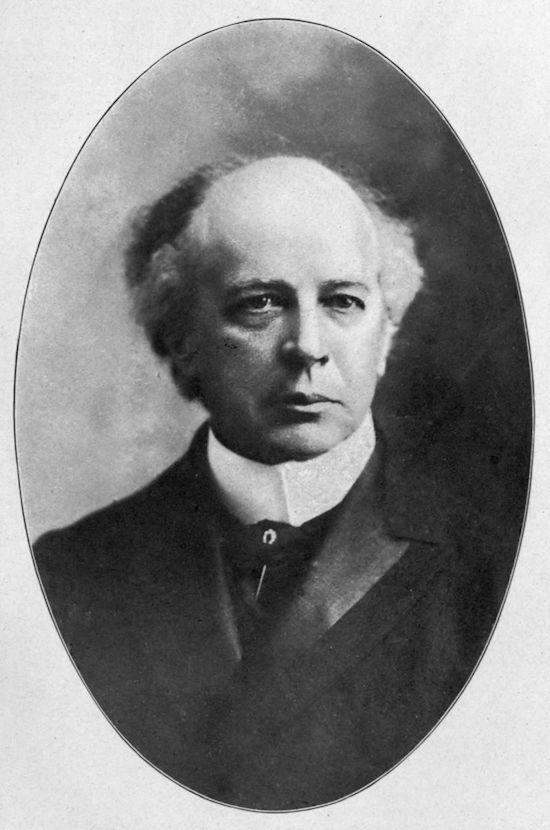
THE LATE RIGHT HONORABLE SIR WILFRID LAURIER
Laurier, the late Rt. Hon. Sir Wilfrid, P.C., G.C.M.G., K.C., D.C.L. (Oxon.), LL.D. (Ottawa, Ont.), son of the late Carolus Laurier, P.L.S., and his wife, Marcelle Martineau; born at St. Lin, Quebec, on November 20, 1841, and educated at mixed schools in his native parish and at L’Assomption College. As a law student he entered the office of the late Hon. R. Laflamme in 1860, and studied at McGill University; received B.C.L. in 1864 and was called to the Bar in the same year; was appointed a Q.C. in 1880, and became head of the law firm of Laurier & Lavergne. In the earlier years of his professional career he edited and contributed to several newspapers. In May 13, 1868, he married Miss Zoe Lafontaine. He was elected to the Legislative Assembly for Drummond and Arthabaska in 1871, and resigned to contest the same riding for the House of Commons at the general elections in 1874, and was elected; was sworn in a Privy Councillor and appointed Minister of Inland Revenue in the Mackenzie administration, on October 8, 1877, and on going back for re-election, was defeated by D. O. Bourbeau, who obtained a majority of forty. Later he was elected for Quebec East, a seat vacated by I. Thibaudeau, and was re-elected for the same Riding at the general elections of 1878, 1882, 1887, 1891, 1896 and 1900, and also elected for Saskatchewan, N.W.T., at the general elections of 1896; was re-elected to the House of Commons at general elections of 1904 for Quebec East and Wright, and elected to sit for Quebec East; in 1908 was re-elected for Quebec East, and was also returned for the City of Ottawa, and again elected to sit for Quebec East; in 1911 he was elected for both Quebec East and Soulanges; and in 1918 for Quebec East. In October, 1878, he resigned with the Mackenzie Government, and was elected leader of the Liberal Party in the House of Commons in 1887. He issued a call for a Dominion Liberal Convention in 1893, which was held at Ottawa. Upon the defeat of the Tupper Government at the general elections, June 23, 1896, he was called on by Lord Aberdeen, Governor-General, to form a ministry on July 8, 1896, on which date Sir Charles Tupper resigned office; was sworn in as President of the Privy Council, July 11, 1896, and formed his Ministry, July 13, 1896. He was appointed by a sub-committee of the Privy Council to arrange for the settlement of the Manitoba School Question and an agreement was reached in November of the same year. On the occasion of the celebration of Her Majesty Queen Victoria’s Diamond Jubilee at London, Eng., June, 1897, he represented Canada, and was created a Knight Grand Cross of the Most Distinguished Order of St. Michael and St. George; was received in audience by the Sovereign and accorded the leading place in the great Jubilee State Procession of all the Colonial dignitaries. Oxford and Cambridge Universities conferred upon him the degree of D.C.L. (hon.) during this visit. He was sworn in an Imperial Privy Councillor July 6, 1897; was made an honorary member of the Cobden Club, and received from it a gold medal in recognition of his services in the cause of international free exchange; was presented by the President of France with the Star of a Grand Officer of the legion of Honour, at Havre, July 29, 1897, being the highest but one of that order; was received in audience by His Holiness the Pope, August 12, 1897. While in England he succeeded in securing Her Majesty’s Government’s assent to the denunciation of the commercial treaties with Germany and Belgium, which stood in the way of Canada’s new tariff, extending a preference to the United Kingdom. On his return to Canada he was accorded public receptions at Quebec, Montreal, Toronto and Ottawa, and received from Toronto and Queen’s Universities the honorary degrees of LL.D. In November, 1897, he went to Washington in the interest of better relations between the two countries, and was a member of the Joint Commission which met at Quebec, August 23, 1898, to discuss questions affecting jointly Great Britain, Canada and the United States. He welcomed the present King, then Duke of Cornwall and York, to Canada in September, 1901, and accompanied the Royal Party through the Dominion; was invited, and attended, the Coronation of King Edward VII, in 1902, sailing June 14, arriving in Liverpool June 21, and in London, June 22. The Coronation, fixed for June 26, was postponed on June 24, but took place on August 9. On June 30 he attended a Colonial Conference at London, and on July 26 received the freedom of the City of Edinburgh, and was honored with the degree of LL.D. by the Edinburgh University. He was entertained by the City of Glasgow, July 28, visited the continent, and sailed for Canada on October 7, arriving at Quebec, October 17, and at Ottawa, October 18, receiving a great civic welcome at the City Hall. On New Year’s Day, 1904, he was presented by His Excellency the Governor-General, with the Fenian Raid medal for services as a volunteer in 1866. In 1907 he attended the Imperial Conference at London, Eng., as a representative of Canada, and was accorded the freedom of London, Bristol, Liverpool and other cities; and in 1911 he attended the Imperial Conference in England and represented Canada at the coronation of King George and Queen Mary. Following the defeat of his Party at the polls on September 21, 1911, on October 6 he tendered the resignation of himself and Cabinet to Earl Grey, and advised His Excellency to call upon Mr. R. L. Borden, to form a Cabinet. From that date until his death on Feb. 17, 1919, he continued to lead the Liberal Party, and in 1917 celebrated his seventy-fifth birthday. He again led his party in the general election of December, 1917, but was defeated owing to the fact that many followers had parted company with him on the issue of Conscription. Sir Wilfrid’s end came suddenly as a result of an effusion of blood to the brain. He was stricken while preparing to go to church on Sunday, Feb. 16, and passed away the following afternoon. The death of no Canadian had previously evoked such tributes as were printed and uttered, not only in Canada, but throughout the British Empire and the United States. His remains were accorded the honor of a State funeral in Ottawa on Saturday, Feb. 22, 1919, which was the most impressive function of its kind known on any continent since the death of Lincoln.
Ames, Sir Herbert B., K.B., LL.D., M.P. (Montreal, Que.), born June 27, 1863, at Montreal, of which city he has been a life-long resident. He is the only son of the late Evan Fisher Ames (who founded the shoe manufacturing concern of Ames, Holden & Company in 1856), and of Caroline Matilda Brown, his wife, who was a native of New York City. Mr. E. F. Ames came to Canada from Conway, Mass., which district he represented in the Massachusetts Legislature in 1852. He established himself in Montreal, and became one of the leading Canadian manufacturers. Sir Herbert Ames was educated in the schools of Montreal, subsequently entering Amherst College at Amherst, Mass., graduating from there with the degree of B.A. in 1885, and having had conferred on him the further title of LL.D. in 1915. When in college he was a member of the Alpha Phi Fraternity. In August, 1885, after leaving Amherst, he entered the firm of Ames, Holden & Company, at Montreal, remaining in that business until 1893. He next interested himself in municipal reform and became President of an organization of young men known as the Volunteer Electoral League, which body was largely instrumental in bringing about the reformation of the City Council. In 1898 Mr. Ames was elected a member of the Montreal City Council for St. Antoine Ward, and served his constituency for eight years. During that period he was a member of the Police Commission, of the Road Commission and for four years served as Chairman of the Board of Health. In 1895 Mr. Ames was named a member of the Council of Public Instruction of the Province of Quebec, which body supervises the entire school system of the province. Mr. Ames was first elected a member of the House of Commons, Canada, in 1904, having a majority of 650. In 1908 he was again elected by 850 of a majority, and in 1911 elected for the third time by a majority of over 2,000; again re-elected in December, 1917. On the formation of the Borden Government, in 1911, Mr. Ames was appointed to the important position of chairman of the Select Standing Committee on Banking and Commerce, to which all bills pertaining to Banks, Trust and Loan and Insurance Companies are referred for examination and report. In 1903 he was a member of the National Committee to entertain the Chambers of Commerce of the Empire, and with them travelled throughout the Dominion. In 1909, as representative of the Montreal Board of Trade, Mr. Ames attended the meeting of the Chambers of Commerce at Sydney, Australia. He has travelled extensively throughout Australia, Japan, Egypt, India, Europe, the United States and West Indies, and has given much time and attention to the discussion of trade questions, tariff and treaties with other countries. In 1896 he wrote and published a monograph entitled “The City Below the Hill,” being a sociological study of the District of the City of Montreal, in which such questions as wages, rents, health conditions, etc., were carefully received. At the request of the Department of Commerce and Labor of the United States Government, Mr. Ames prepared an article on the same subject which appeared in the journals of this department. At the present time Sir Herbert Ames is a Director and Vice-President of the Ames, Holden, McCready Company. He is also one of the three gentlemen composing the Canadian Board of the Gresham Life Insurance Company, and also a Director of the Dominion Guarantee Company. He is a member of the Mount Royal Club, the Montreal Club, the Montreal Curling Club, the University Club of Montreal, the Rideau Club, Ottawa. On May 19, 1890, Mr. Ames was married to Louise Marion Kennedy, daughter of Sir John Kennedy, C.E., of Montreal, and they occupy a residence on the slopes of Mount Royal. He is an elder in the Presbyterian Church, a Director in the Y.M.C.A., a governor in several benevolent institutions. At the outbreak of the great War, Mr. Ames was asked by His Royal Highness, the Governor-General of Canada, to assume the position of Honorary Secretary of the National Canadian Patriotic Fund, which provides for the wives and dependent relatives of soldiers serving in the armies of the Allies. On behalf of the Fund he has visited all parts of Canada, speaking and organizing, and the marked success to his initiative and effort. Through this great national benefaction there will have been raised and expended during the war period no less a sum than $45,000,000. On June 3, 1915, Mr. Ames had conferred upon him the Honor of Knighthood by His Majesty the King, and in 1916 was made a Knight of Grace of the Order of St. John of Jerusalem in England. On December 1, 1918, the Government of Canada created by Order-in-Council a National War Savings Committee for the encouragement of thrift and the promotion of investment of small savings in government securities. Of this Committee Sir Herbert Ames has been appointed Chairman.
Robertson, John Ross, journalist. The direct descendant of Duncan R., chief of the clan of Robertson of Strowan, 1347; eldest son of the late John Robertson, wholesale dry goods merchant, Toronto, and Margaret R., daughter of Hector Sinclair, Stornoway, Island of Lewis, Scotland. He was born in Toronto, Dec. 28, 1841, and educated at Upper Canada College; married, 1st, in 1871, Maria Louisa (d. Aug., 1886), daughter of Edward Earle Matthew Gillbee, Northamptonshire, Eng., grandson of the late Rev. Dr. Edward Gillbee, Vicar of Barby, near Rugby, descendant of the noted Anthony Gilby, one of the translators of the first edition of the Geneva or “Breeches” Bible, 1560; 2ndly, 1888, Jessie Elizabeth, daughter of George B. Holland, a prominent insurance man of Toronto. While still at college he occupied his spare hours in acquiring a knowledge of the printer’s craft, and was a fairly rapid compositor; commenced a small office which he established in his father’s residence, John St., Toronto, and with a few fonts of type he issued to the boys at Upper Canada College a paper under the name of the “College Times,” which later took the name of the “Boys’ Times,” a monthly publication that existed 1857-60. He also published in succession to the “Boys’ Times,” during a year at the Model Grammar School, a newsy paper for boys called “Young Canada.” Picking up a general knowledge of setting type and small job work in city offices, his face was a familiar one in the old “Christian Guardian” office, where occasionally he used to work off odd jobs, the composition of which he did in his own office; in the “Globe” Office, where in 1859, when opportunity offered, he sometimes used to feed one of the Hoe single cylinder presses when printing the inner pages of the four-page “Globe,” for the inside was always printed the afternoon before the morning issue; in the “Leader,” where he at times worked off on a small job cylinder Hoe press, the “Grumbler,” the weekly that he issued in 1860; the following year he equipped a newspaper and job office, and issued “Sporting Life,” the first paper in Canada to be devoted to athletic sports, and subsequently continued the publication of the “Grumbler,” a weekly satirical paper, at one time edited by W. J. Rattray, W. A. Foster, and the late Chief Justice Thomas Moss. He worked on the reportorial and advertising staff of the “Leader,” when Charles Lindsey and Charles Belford were editors and Ephraim Roden, City Editor, continuing at the same time the management of his printing office. He also issued for a year, Robertson’s Canadian Railway Guide, the first of its kind in Canada, and early in 1865 joined the Toronto “Globe” staff as city Editor, in May, 1866, becoming one of the founders of the “Daily Telegraph,” a journal that had a high reputation among the newspapers of Canada. Owing to political complications it ceased publication in 1872. Prior to this, in December, 1869, Mr. Robertson, then of the “Daily Telegraph,” made a trip to the North-West, accompanied by Mr. Robert Cunningham of the “Globe.” They travelled by rail from Toronto to the end of steel at St. Cloud, Minn., and there with a French half-breed guide and a two-horse farmer’s sleigh, fully equipped, began a journey of about 400 miles over the prairie. Snow storms raged and the thermometer ran from zero to 20 below. The travellers camped every night in the woods along the Red River, and arrived in Fort Garry after a perilous journey of ten days, to be locked up by the so-called “President” Riel, in Fort Garry for a week, and only allowed out to see their friends in the town, under a guard. They both secured interesting information, but were ordered out of the territory, as Riel thought they were “dangerous characters,” so they left Fort Garry for Pembina, U.S., the boundary post, one day when the thermometer was about 40 below zero. They declared they would not do the trip again for the whole North-West. Mr. Robertson, after the “Daily Telegraph” ceased publication, proceeded to London, Eng., where for three years he acted as resident correspondent and business representative of the Toronto “Daily Globe.” On his return to Canada, 1875, he assumed the business management of the “Nation,” edited by the late Prof. Goldwin Smith. It is said that during his managership of the “Nation,” his friend, Mr. Goldwin Smith asked his opinion as to the opportunities offered for an independent daily evening paper in Toronto, and that this conversation led up to the establishment of the “Evening Telegram,” which first saw light in April, 1876. It is said to be the only daily paper in Canada that has paid its way from the start. Mr. Robertson continued to conduct it until his death, May 31, 1918. “The immediate success of this paper,” said the “Globe,” in a sketch of his career published during his lifetime, “is ample evidence that he has graduated from a good school of journalism. Neither accident or luck had aught to do with his success. He launched out in new and original lines, and the good fortune that attended his efforts was the outcome of his energy, enthusiasm and experience, reinforced by a persistence and resource that would admit of no failure; it is these qualities that he brings to his every undertaking, and on the “Globe” he left behind him a reputation that is worthy of his later achievements.” This was publicly demonstrated by his Masonic career and his management of that great charity—the Hospital for Sick Children. From the first he has held high rank in the Masonic order. He entered the Craft in 1867, and was W.M. of his Mother Lodge, King Solomon’s, in 1880-1, and of Mimico, No. 359, in 1879-80. After having served successively as Grand Senior Warden, as District Grand Master of the Toronto District in 1886, he became in 1890 Grand Master of the Grand Lodge of Canada, and was subsequently chosen Grand First Principal of the Grand Royal Arch Chapter of Canada, 1894-5, and Provincial Grand Prior, Ontario Centre, Sovereign Great Priory of Canadian Knights Templar, 1882; was Grand Representative of the Grand Lodge of England in Canada, having been appointed to succeed Sir John A. Macdonald in that office on the latter’s death, 1891; indeed, every honor at the disposal of his fellow-craftsmen had been accorded him. In September, 1902, in commemoration of the coronation of His Majesty King Edward, the Duke of Connaught (q.v.) then and now Grand Master, was pleased to confer the honorary rank of Past Grand Warden of England upon several eminent personages, including the subject of this sketch. For many years Mr. Robertson was president of the Canadian Copyright Association and rendered important services in that regard, and also Vice-President and President of the Canadian Associated Press, and Hon. President of the Toronto Press Club. He was present, with his wife, by invitation, in Westminster Abbey, at the coronation of King Edward and Queen Alexandra. As an author of Masonic works, Mr. Robertson is well known, having written the “History of the Degree of the Cryptic Rite in Canada,” etc. (1888); “History of the Knights Templar of Canada, from the Foundation of the Order to the Present Time” (1890); “Talks with Craftsmen” (1893); “Freemasonry in Canada,” 2 vols., 1,000 pages each (1899). He was a contributor to the U.C. College Memorial Volume, 1893, edited the “Diary of Mrs. John Graves Simcoe, wife of the First Lieutenant-Governor of Upper Canada, 1792-6” (1911), as a press notice said, “The book of the year, a superb work,” and the author and compiler of “Robertson’s Landmarks of Toronto” (7 vols.). In 1888 the ambulance system in Toronto was unsatisfactory, and with a view to making it efficient, he imported from London, Eng., a modern ambulance, fully equipped, and presented it to the city. There are about sixty ambulances in Canada made from this model. The presentation marked a new era in this branch of humane work. He later gave a collection of 4,000 Canadian historical pictures to the Toronto Public Library, the largest collection of its kind in the world, valued at $150,000. In January, 1917, he acquired and presented to the Public Library a magnificent ornithological collection of birds and game of Canada, done in water-color by William Pope, an English sportsman and artist, who resided for forty years at Port Ryerse, Ont. This collection of water-colors is pronounced by eminent Canadian biologists to be equal of and in some respects superior to, the work of Audubon. Mr. Robertson later added to this another collection of Canadian birds, exquisite reproductions in color of hundreds of birds that are not in the Pope Collection, so that the entire collection is unparalleled in Canada. He founded and gave three magnificent silver cups, made by eminent British silversmiths, from special patterns, for the promotion of cricket, hockey and bowling; but it was as chairman of the Board of Trustees of the Hospital for Sick Children, Toronto, that he will be most gratefully remembered. For thirty-five years he carried the chief burden of this important charitable institution, bringing to its needs not only much money of his own, but aiding it with the full force of his powers as a financier and organizer. He took an active part in the management and visited the Hospital every day. His gifts to the Hospital amounted to about half a million dollars during his lifetime, for he completely equipped the Hospital buildings on College St. and on Elizabeth St., and built and founded, in connection with the Hospital, the Lakeside Home for Little Children, at Lighthouse Point, Toronto Island, with an accommodation for 250 patients and an entire hospital equipment; here, during the summer months, the suffering little ones are won back to health and strength with the aid of the cool breezes which sweep across Lake Ontario. Included in his benefactions to the Hospital he erected, equipped and presented to the Hospital (as a memorial of his first wife) a five-storey nurses’ brick residence, containing 125 rooms, which has been declared to be the most perfect building of its kind ever erected; in July, 1911, he presented to the Heather Club an extension to the pavilion for tubercular children in connection with the Lakeside Home. He built and established a complete plant for the pasteurization of milk, on the Hospital grounds, College St., Toronto, the only one of its kind in the Dominion. By his will the whole of his estate will ultimately go to this philanthropy. He was an all-round amateur athlete, and has been sometimes called “The Father of Amateur Hockey in Ontario”; was President of the Ontario Hockey Association, 1899-1905. He sat for East Toronto in 1896-1900 in the House of Commons as an Independent Conservative, pledged to oppose any Government which would attempt to establish separate schools in Manitoba, to support the “National Policy,” and to vote for the general good of the country. According to Sir Charles Tupper (q.v.) he was in all respects “a model member,” and a devoted Imperialist. In religion he was a Presbyterian. In February, 1917, Mr. Robertson was offered in the New Year’s honors a knighthood and a senatorship, both of which honors he gratefully declined. A well-known politician said, “It is the first time in the history of Canada that anyone declined a knighthood and a senatorship in the same day.” He was a member of the National, Victoria and Arts and Letters Clubs; Constitutional (Conservative) Club, London, Eng. “A born journalist”—“Canada,” of London, Eng.; “A truly independent man”—D. McCarthy, Q.C., M.P.; “Possesses a heart as big as that of an ox”—Hamilton “Spectator”; “The good angel of many of Toronto’s charitable institutions”—Hamilton “Times”; “No man need desire a more noble monument than these Hospital buildings, which would keep Mr. Robertson’s memory green if all other achievements were forgotten”—Toronto “Globe”; “He has risen step by step until he is to-day recognized as one of the keenest, most practical and successful publishers of the Dominion. The blind goddess had nothing to do with his success”—Ottawa “Citizen.”
Hearst, Hon. Sir William Howard, K.C.M.G., K.C., M.P.P., Prime Minister of the Province of Ontario, was born on February 15, 1864, in the township of Arran, Bruce County, Ontario, the son of William and Margaret (McFadden) Hearst. His father was a farmer, and the subject of this sketch was educated at the public schools of Arran Township and later at Collingwood Collegiate Institute. Subsequently he studied for the legal profession at Osgoode Hall, Toronto, and was called to the Bar of Ontario in 1888. He commenced the practice of law in Sault Ste. Marie, Ont., where he became prominent in municipal affairs and active as a speaker in the Conservative interest. He was an unsuccessful candidate in Algoma East in 1894, but in the Ontario Legislative elections in 1902 he helped to organize a group of newly defined constituencies in Northern Ontario for Mr. (afterward Sir) James P. Whitney, and by his effective methods largely assisted in placing them in the Conservative column. When the Whitney Government was formed in 1905 Mr. Hearst was appointed Government agent in connection with the guarantee loan furnished to the Lake Superior Corporation, under the provisions of which the Government had a voice in the management of the corporation until the loan should be liquidated. In this capacity Mr. Hearst proved a business success but resigned the office in 1908 to contest the riding of Sault Ste. Marie for the Ontario Legislature. He was successful and in September, 1911, when Hon. Frank Cochrane resigned the Portfolio of Forests and Mines to become Minister of Railways and Canals in the first Borden cabinet, Sir James Whitney tendered the vacancy in his cabinet to Mr. Hearst. The latter accepted and was re-elected by acclamation by his constituents, whom he has ever since continued to represent. On the death of Sir James Whitney in 1914, he was asked to form a Government, all his former colleagues accepting office under him. He was sworn in as Prime Minister and President of the Council on October 2, 1914, this being practically the last official act of Sir John Gibson, as Lieutenant-Governor. Following the death of Hon. James Duff in December, 1916, he also assumed the post of Minister of Agriculture, retaining it for two years until the elevation of Hon. George Henry to the cabinet in 1918. In connection with his profession as a lawyer he was created a K.C. in 1908 and was elected a bencher of the Law Society of Upper Canada in 1912. On February 13, 1917, he was created a Knight Commander of the Order of St. Michael and St. George. The Premiership of Sir William Hearst has been marked by energetic administration and progressive legislation. He took office at a time of peculiar difficulty in Canadian affairs, when the great war had been in progress for two months and when it was becoming evident that it would be necessary for a vast and united effort if it was to be successfully prosecuted. Perhaps his most radical step was his act of 1916, to prohibit the sale of intoxicating liquors throughout the province of Ontario. Subsequent orders-in-Council by the Federal government gave this act the effect of absolute prohibition. In 1917 he introduced and carried an act to confer the Parliamentary franchise on women. Under his leadership a comprehensive measure previously enacted providing for compensation to workmen for injuries was put into successful operation and extended. An important measure of his provides for loans to settlers, and he has also taken practical steps to deal with the housing problem. The policy of Sir James Whitney and Sir Adam Beck of government control and operation of the water powers of the province, known as the Hydro-Electric system has been amplified under Sir William Hearst. In connection with the war he visited the battlefront to personally ascertain the needs of the situation. Under his administration the Orpington Military Hospital in England was built as the gift of the people of Ontario. As Minister of Agriculture he organized measures for increased food production to meet the needs of soldiers and civilians overseas; and is taking active measures to assist in reconstruction, by helping returned soldiers to settle on the land. In religion Sir William is a Methodist. On July 21, 1891, he married Isabella Jane Dunkin of Sault Ste. Marie by whom he has four children, Lieutenant Howard Vernon Hearst and Lieutenant Irving Hearst, both of whom are on active war service; and Misses Isabel and Evelyn Hearst. Sir William resides at Toronto.
Meighen, Hon. Arthur, K.C. (Portage la Prairie, Man.), was born June 16, 1874, at Anderson, Blanchard Township, Perth County, Ont., and is the son of Joseph and Mary Meighen, of St. Mary’s, Ont. He was educated at St. Mary’s Collegiate Institute and Toronto University; received degree B.A. (Tor.), 1896; graduated with honors in mathematics. Taught High School, Caledonia, Ont., 1897-98. After graduating as a Barrister, he entered business for himself, 1902, and built up a large practice at Portage la Prairie. Bencher Manitoba Law Society since 1908; Bencher of Upper Canada Law Society since 1914. Having a capacity for public life, at the solicitation of his friends, he accepted the nomination as Conservative candidate for the Constituency of Portage la Prairie, Man., and was elected by a majority of 250. In 1904 Mr. Crawford, Liberal, had been elected by a majority of 358. In the general elections, September 21, 1911, when the Laurier Administration was defeated at the polls on the question of Reciprocity with the United States, Mr. Meighen was again elected by a majority of 675 over his opponent R. Patterson. When the position of Solicitor-General became vacant, June 26, 1913, Sir Robert Borden invited Mr. Meighen to accept that office, and at a bye-election held July 19, 1913, he was returned by acclamation. In August, 1917, he became Secretary of State for Canada and Minister of Mines, and as such devised and installed the organizations in Canada and overseas for the holding of the war election of that year. On the formation of the Union Government in the autumn of 1917 he accepted the portfolio of Minister of the Interior, and was re-elected by a handsome majority at the general elections which ensued. As a parliamentarian he has been a success, and is held in high esteem by members on both sides of the House. As a debater he is considered one of the ablest, and always commands the respect of his colleagues when he rises to speak on any important subject. Mr. Meighen was married June 1, 1904, to Jessie Isabel Cox, to whom were born three children, Theodore Roosvelt Meighen (1905), Maxwell Charles Gordon Meighen (1908), and Lillian Meighen (1910). In religion he is a Presbyterian; in politics, a Conservative. Clubs, Portage la Prairie, Rideau, Ottawa. Address, 21 Cooper St., Ottawa.
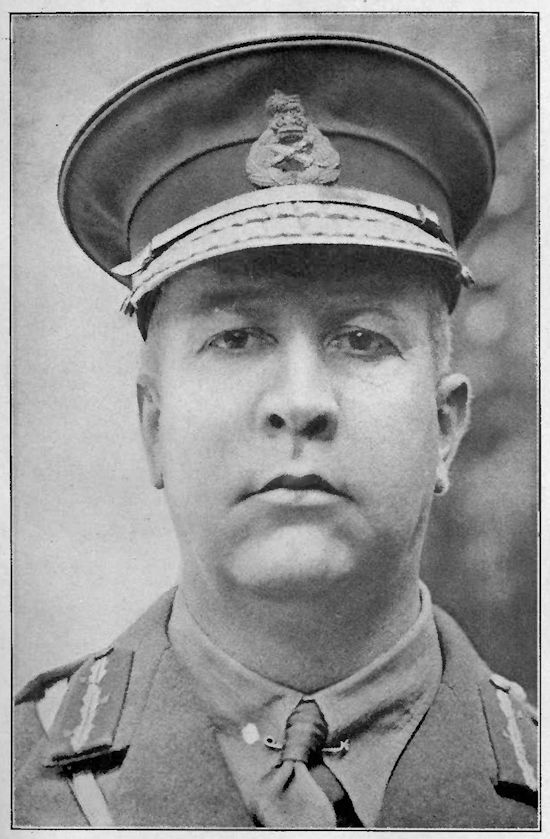
MAJOR-GEN. SIR. ARTHUR WILLIAM CURRIE Victoria, B.C.
Cockshutt, William Foster, M.P., and Financial Agent (Brantford, Ont.), is the son of I. Cockshutt, merchant of Brantford, and E. Foster Cockshutt, was born in Brantford, October, 1855, and educated at the Brantford and Galt Collegiate Institutes. Mr. Cockshutt’s chief public efforts have been exercised in the direction of Imperial Unity and Empire Trade development. He has been associated largely with Boards of Trade and has attended several Congresses of the Associated Boards in London, England, Montreal and Sydney, Australia, and in this direction has been able to exercise considerable influence in Empire trade co-operation. In the year 1909 he visited in this connection the Commonwealth of Australia, making a very extensive tour of that great country, and delivering addresses at all the important centres on the theme of Empire Trade and Defence, and received much credit for the work accomplished there. He also made an extensive tour of India, visiting most of the cities of that great member of the Empire, and studying the conditions of the country as well as trade matters and has taken part in two extended campaigns in Great Britain, addressing many large meetings at the important centres, including London, Manchester, Newcastle, Portsmouth, Bournemouth, Torquay and many other towns and cities, for which he was honored by letter from the then leader of the opposition, the Honorable Arthur Balfour. Mr. Cockshutt was a member of the first Hydro-Electric Commission of Ontario, appointed by the Municipalities and labored in that work for nearly three years. The report of the Commission has been a standard reference for development in this line ever since, and was really the basis of the development that has taken place more recently at Niagara Falls. He has travelled in most of the great countries of Europe, made many tours in the United States and the West Indies and Mexico, as well as having visited all the principal cities of the Dominion and has addressed meetings in a great number of them. He was first elected to the House of Commons in 1904, where he served until 1908, being defeated in that year and re-elected in 1911, and is at present serving throughout the present long Parliament. He is ex-President of the Cockshutt Plow Co.; has been six times a delegate to Chambers of Commerce of the Empire and is connected with a large number of industrial enterprises, particularly in Brantford and also in other centres, and has served on many industrial boards. In 1891, married M. T. Ashton, daughter of Rev. Robert Ashton of Brantford, Principal of the Mohawk Institute and has six children, Ashton, George, Eric, Maude, Clarence and Phyllis. In politics he is an Independent Conservative and is a member of the Anglican Church; has been a representative of the Church of England at many important gatherings and a member of the Huron Synod for close on to twenty-five years, been elected and re-elected to the Provincial General Synod on many occasions and is still an active member of all these Church organizations; is also Chairman of the Orphanage situated on the outskirts of Brantford, known as the Jane Laycock School; has taken considerable interest in local hospital work. Mr. Cockshutt had the honor of being the official representative of Brantford at the funeral of King Edward the Seventh; is Hon. Colonel of the 125th Battalion, C.E.F., and is a remote relative of the late Florence Nightingale, the distinguished woman who did such great work for the British Army during the Crimean War and was one of the first women to relieve soldiers of their sufferings on the battlefield. Mr. Cockshutt took great interest in the recruiting of the 125th Battalion at present overseas and has the honor of being the father of three sons, all of whom are serving in the army at present and have all reached the front at least once. His son, Major Ashton Cockshutt, now of the 125th but formerly of the 10th Battalion, 1st Contingent, was a fully qualified Lieutenant in the 103rd Calgary Rifles when the war broke out and immediately enlisted and went overseas with the first Contingent, training during the winter at Salisbury Plain, crossing to France in the early spring, saw heavy fighting at St. Julien, Festubert, and Givenchy, was wounded on June 6, 1915, and after convalescing at various military hospitals was given furlough back to Canada and after a long hard struggle regained his health and immediately re-enlisted with the 125th Battalion and is now serving at Bramshott Camp. Another son, Lieut. George Cockshutt, also enlisted early in the war with the 19th Overseas Battalion, was a qualified Officer of the Dufferin Rifles, he served the 19th at the front for many months and was invalided home in September, 1916, owing to ear trouble and at the present time is serving with the 205th Machine Gun Section, and now overseas with 1st Tank Battalion. The third son, Lieut. Eric Cockshutt, was at one time Captain of the Cadet Corps of Upper Canada College, Toronto, and upon going to McGill University, Montreal, later joined the Officers Training Corps of that University, was accepted as a candidate at the Royal Artillery School at Kingston, March, 1915, and after duly qualifying, trained at Petawawa, going overseas from there with a draft, took further training at Ross Barracks and Woolwich and then crossed over to France and served with the First Divisional Artillery, First Canadian Brigade, and is at present serving with the 2nd Howitzers. Mr. Cockshutt is a member of the Brantford Golf and Country Club, the National Club, Toronto, and also connected with the Empire Club and Imperial Institute. His recreations include golf, tennis and skating, and he has spent many summers in the Highlands of Canada occupying an extensive tract of land on the shores of Lake of Bays.
Jetté, The Hon. Sir Louis, Chief Justice and late Lieutenant-Governor, was born at L’Assomption, P.Q., on January 15, 1836. He is the son of the late Amable Jetté, who married Miss Caroline Gauffreau, the daughter of a wealthy planter of Guadaloupe, in the West Indies. Finishing the full course of study at the College of L’Assomption, he became a member of the Provincial Bar, establishing himself as a legal practitioner in the city of Montreal, where in a few years he came to be recognized as an astute advocate as well as a prospective candidate for political honors. In 1870 his legal fame was enhanced by the part he took professionally in the famous Guibord Case, and by his service before the Privy Council in England in behalf of the Provincial Government of Quebec. At length, in 1872, he was elected member for Montreal East, defeating Sir George E. Cartier, the French-Canadian colleague of Sir John A. Macdonald. When the Liberal Leader, the Hon. Alexander Mackenzie was Prime Minister, Mr. Jetté was offered the position of Minister of Justice, but accepted in preference a place on the Bench. This he retained for twenty years up to 1898, when he was appointed Lieutenant-Governor of his native province. While still practising his profession in Montreal, he became Professor of Civil Law in Laval University and a Dean of its Faculty, having been honored by the same with the degree of LL.D., as well as by Bishop’s College University with a D.C.L. and by Toronto University with an LL.D. In 1891 he was appointed Chairman of the Royal Commission charged with the investigation of affairs connected with the Baie-des-Chaleurs Railway, finally refusing to agree, however, to the decision of his two colleagues. The several other offices he has filled are many and important. After his term as Lieutenant-Governor had expired, he was given a second term. And at the end of his second term he was appointed Chief Justice of the Court of King’s Bench, retiring in 1911. Few Canadians have had so many honors conferred upon them as has Sir Louis Jetté. These include his university degrees; his knighthood from the King of England; his Legion of Honour from France, of which he is a Commander; the many addresses he has received from his fellow-members of the Bar, as well as from the people; not to speak of his receptions by King George and his late royal father, King Edward, and His Holiness the Pope. He has been associated with the Société de Legislation Comparée; with the Société d’Histoire Diplomatique of Paris (France); was a member of the Alaska Boundary Tribunal; a Director of the Montreal Polytechnic School; a member of the Council of Public Instruction, and an honorary member of the Literary and Historical Society of Quebec. In his earlier years he was a contributor to certain city journals, having been editor of one of them known as “L’Ordre.” His “Observations Relating to the Code of Civil Procedure” proves him to be possessed of a wide vision and keen insight, both as a lawyer and a literary expositor. The encomiums which have been passed upon his services as a public servant go to show Chief Justice Sir Melbourne Tait was in no way astray in his high estimate of Sir Louis Jetté’s mental culture and administrative astuteness, not only as a public speaker, but as a writer and overseer of what is in line with justice and dignity of rule. He was married in 1862, to Miss Bertha Laflamme, daughter of the late Touissant Laflamme, and sister of the Hon. R. Laflamme, the distinguished barrister and advocate of Montreal. Lady Jetté, who is an authoress in her own right, having written a Life of Madame d’Youville, won a further good name for herself and her distinguished husband for the hospitalities they were always pleased to extend to their guests at Spencer Wood during the two terms and more of Governor Jetté’s residence there as Governor.
Kennedy, William Costello, Member for North Essex in the House of Commons of Canada, is a resident of Windsor, Ont., and a prominent figure in the oil and gas industry of the Essex Peninsula. He was born at Ottawa, Ont., August 27, 1868, the son of William and Julia (Costello) Kennedy. While he was yet a boy his parents moved to Toronto to reside and he was educated in the Separate Schools and De La Salle Institute, of that city. He began his business career in 1887 as a clerk in the offices of the London and Canadian Loan and Agency Company, Toronto, at that time one of the best known financial corporations of the province. With this company he remained until 1897 when he accepted an offer to go to Windsor, Ont., and engage in the oil and natural gas industry. In 1903 he became President of the Windsor Gas Company and continued in that office until 1917. At the present time he has many interests in the city of his adoption. He was President of the Board of Trade for the years 1909 and 1910, and a member of the Windsor Board of Education from 1913 to 1918; and also a councillor of the municipality of Ojibway during the same period. From early manhood Mr. Kennedy had been a Liberal in politics and in 1917 when Sir Robert Borden formed a Union Government and decided to carry out the policy of conscription without submitting the question to the Canadian people through the medium of a referendum, he was one of those Liberals who stood back of Sir Wilfrid Laurier in opposing such a course. Though at the time it was supposed that he was facing almost certain defeat he accepted the Liberal nomination for North Essex. He was opposed by Col. Wigle, who was generally regarded as a very strong candidate. In the two months’ campaign that ensued Mr. Kennedy made many friends by his sane and reasonable methods of electioneering and when the ballots were counted on December 17, 1917, it was found that he had been elected by a handsome majority, which was not annulled by the vote of the soldiers overseas, details of which were received later. During the parliamentary session Mr. Kennedy made his maiden speech as a legislator in the budget debate, and made a very fine impression on friends and political opponents alike by his brilliant handling of financial questions. Old parliamentarians were agreed that it was one of the most promising initial speeches ever made at Ottawa, and ever since the member for North Essex has been regarded as an important factor in the future of his party. His recreations are golf and motoring, and he is a member of the following clubs: Detroit, Detroit Athletic, Essex County Golf, Windsor and Ontario, Toronto. In religion he is a Roman Catholic and on May 8, 1907, married Glencora, daughter of George W. Bolton, Detroit, Michigan.
Mitchell, Robert Menzies, Hon. (Weyburn, Sask.), is a native of Port Union, Ont., where he was born October 28, 1865, the son of James Mitchell, a farmer, and Elizabeth Rodger, his wife. His father came of Scottish ancestry, some of whose descendants settled in Canada and some in Australia. Madame Melba, the great Australian prima donna, whose maiden name was Nellie Mitchell, is a cousin of the subject of this sketch. The latter was educated at Orangeville High School and Trinity Medical School, Toronto, graduating M.D., C.M. in April, 1892. He at once commenced the practice of medicine at Dundalk, Dufferin County, Ont., and remained there until 1899, when he settled at Weyburn, Sask., and continued in active practice there until 1907. He was Chairman of the Weyburn Public School Board for ten years, and of the High School Board for five years. In August, 1908, he was elected to the Saskatchewan Legislature as a Liberal for the constituency of Weyburn, and has been re-elected at each ensuing election. He was Chairman of the Private Bills and Railways Committee of the Legislature for six years, and was chosen as Deputy Speaker in 1916. Shortly afterward he was made Speaker, and on his return to the House after the general elections of 1917 was re-elected to that office. Though a Liberal his fairness and impartiality in the conduct of debate has made him universally popular among politicians of all shades of opinion. He is a member of the following fraternal orders: A.F. & A.M., I.O.O.F., and C.O.F.; of the Weyburn Club, and the Assiniboia Club, Regina. His recreations are football and curling, and in religion he is a Presbyterian. On August 17, 1892, he married Margaret, daughter of Donald and Flora McKinnon, Badjeros, Ont., and his two sons have both served their country with honor in the great war. R. C. Mitchell, born July 11, 1893, went overseas with the First Canadian Expeditionary Force in 1914, and D. J. Mitchell, born February 15, 1895, became a member of the Royal Air Force a year or so later.
Lemieux, the Honorable Sir François-Xavier, Chief Justice of the Superior Court of Quebec, was born at Levis on the 9th of April, 1851, the son of Antoine and Henriette (Lagueux) Lemieux. From the Levis College he entered the Quebec Seminary and afterwards graduated from Laval University, in 1872, taking the degree of LL.B. In the same year he started on his career as a lawyer in the city of Quebec, taking rank almost immediately as an efficient pleader in the criminal courts of the Lower St. Lawrence districts. His eloquent fluency and finesse as a defender brought him into a lucrative practice; and there were in time few prominent cases of criminality brought into court in which his services were not sought after. Nor did his legal acumen in winning cases arouse any envious feeling against him among his legal brethren, since in 1896 he was elected Batonnier of the Quebec Bar, and in the following year Batonnier-General of the Provincial Bar. Turning his attention to politics, he sat as member of Levis in the Legislative Assembly for nine years, and afterwards as member for Bonaventure, for three years. As an orator, he has a marvellous faculty on the hustings of carrying any large audience with him in his argument. At length the widest fame came to him when he was called upon to defend Louis Riel, the rebel leader of the half-breeds and Indians in the North-West, in 1885. The charge of high treason against the culprit was sustained, but his legal defender was nevertheless acclaimed as one of the shrewdest lawyers that could have been engaged to defend him. Subsequently, in 1892, he was chosen to defend the Honorable Honore Mercier, Premier of Quebec, before the criminal court, under charges of maladministration. Mr. Mercier was honorably acquitted. Five years after the subject of this biography was appointed Puisne Judge in the district of Arthabaska and afterwards in Sherbrooke. From Sherbrooke, he was finally removed to Quebec where he holds the office of Chief Justice for the Province of Quebec. The literary talents of Sir François have been proven by his lectures and essays. His acumen as a judge has been openly acknowledged by his professional associates. He is a citizen well worthy the honor conferred upon him by King George and by Laval University, in the one case of Knighthood and in the other an LL.D. His father-in-law, the late Justice Plamondon, was a judge of the Superior Court of Quebec, Miss Diana Plamondon becoming his wife in 1874.
Turgeon, The Hon. Adelard, LL.D., C.M.G., C.V.O., Knight of the Legion of Honour of France (Quebec City), President of the Legislative Council of the Province of Quebec, and a Governor of Laval University, was born at Beaumont in the Province of Quebec, on December 19, 1863. He is the son of Mr. Damase Turgeon, and was educated at Levis College and at Laval University. Called to the Bar in 1887, he opened a law office in Levis, but afterwards entered into partnership in Quebec with the prominent legal firm of Roy, Langlais & Godbout. His career as a parliamentarian was inaugurated by his election as member for Bellechasse in 1890, a constituency which he continued to represent up to 1909, when he retired from the Legislative Assembly to take his seat in the Legislative Council and assume the high office of Speaker or President of that body. While a member of the Assembly his eloquence became an attractive feature in the many important debates in which he took part, alike as Member and Minister. As an administrator and public-spirited citizen, he has taken high rank as a publicist, having retained the favor of Bellechasse from term to term for over a decade. During the Tercentennial Celebration at Quebec in 1908, he was honored by the Prince of Wales, now King George V, and was shortly afterwards chosen as one of the members of the National Battlefields Commission, which has ever since been engaged in laying out and beautifying one of the most spacious public parks in Canada. In 1897 he was called to join the Marchand Government as Minister of Colonization, holding the same office in the Parent Cabinet, until he was chosen to act as Minister of Agriculture and Provincial Secretary. In 1905, the Parent Administration was transformed into the Gouin Administration, and in the latter Mr. Turgeon accepted the portfolio of Lands and Forests, holding the same up to 1909. On resigning his seat in the Assembly as a challenge to some of his detractors, he was re-elected against Henri Bourassa by the electors of Bellechasse as an acknowledgement of his mature administrative abilities, and a warrant to his resuming his place in the Gouin Cabinet, as well as preparing the way for his being called to the high office of President of the Legislative Council. During his public career, he has held many important positions outside of his parliamentary functions, among these being President of the Quebec Land Company, Vice-President of the Provincial Securities Company, Director of the Quebec Transfer and Cartage Company, and member of the Comptoir Mobilier-Franco-Canadien Company. He was one of the founders of the Society of L’Union Liberale, and prominently connected with various political clubs. In July, 1887, he married Miss Eugenie Samson, the daughter of Mr. Etienne Samson, of Levis. As President of the Upper Chamber of the Provincial Parliament, Mr. Turgeon has his residence within the precincts of the Parliament Buildings, wherein his hospitalities form a prominent feature in the social life of the community when parliament is in session, as well as at other times.
Rhodes, Hon. Edgar Nelson, K.C., B.A., LL.B. (Amherst, N.S.), son of Nelson A. Rhodes and Sara D. C. Curry. Born at Amherst, N.S., on January 5, 1877. Educated at Amherst Academy, Horton Collegiate Academy, Acadia University and Dalhousie University. Degrees: B.A., Acadia; LL.B., Dalhousie. Member of the Board of Governors of Acadia University. Married, July 12, 1905, to M. Grace, second daughter of Hon. W. T. Pipes, K.C., Attorney-General of Nova Scotia. He is the father of the following children: Edgar N. Rhodes, Jr., born on April 19, 1906, and Helen S. Rhodes, born on October 18, 1907. Appointed a King’s Counsel in May, 1916, by the Provincial Government of Nova Scotia. President Brooklyn Lumber Company, Ltd.; director Nova Scotia Trust Co., Ltd.; British America Nickel Corporation, Ltd.; Amherst Boot & Shoe Company, Ltd., and Amherst Pianos, Ltd. Has been, since its inception, a member of the Dominion Executive and of the Nova Scotia Executive of the Canadian Patriotic Fund; also an Honorary Vice-President and member of the Dominion Council of the St. John’s Ambulance Association. First elected to House of Commons at General Elections, 1908; re-elected, 1911 and 1917. Elected Deputy-Speaker at the opening of the 6th session of the 12th Parliament, January, 1916. Was one of the Canadian representatives at the Imperial Parliamentary Conference in London, 1916, and accompanied the members of that body on their visit to the Munitions plants, The Fleet, and to the front. Elected Speaker of the House of Commons, January 18, 1917. Re-elected Speaker at the opening of the first session of the 13th Parliament, 1918. Member Rideau Club and Country Club, Ottawa. A Unionist. Amherst, N.S.
White, Rt. Hon. Sir William Thomas, P.C., M.P., Finance Minister of Canada, is a Canadian statesman whose meteoric rise to fame during less than a decade, has attracted more than national attention. He was born at Bronte, Ont., November 13, 1866, the son of James and Elizabeth (Graham) White. His father was a farmer and his early education was obtained at Oakville public school and Brampton High School. Later he entered Toronto University and graduated in 1895 with the degree of B.A. and honors in classics. During his university career he won two first-class scholarships and a gold medal. Subsequently he took up a course of law at Osgoode Hall, Toronto and was called to the Bar of the province in 1899, but never practised. During his period as an arts and law student he supported himself, first as a reporter on the Toronto “Telegram,” where his writings showed singular eloquence and ability; and later, as one of the assessors of the Civic Assessment Department. The knowledge of real estate values and of financial questions which he had gained in the latter capacity, as well as his general abilities, led a group of Toronto capitalists to tender him in 1900, the General Managership of the National Trust Company, which they had recently formed. This post he held for nearly eleven years and during that interval attained a high status in the financial community. Though a Liberal in politics, he had never been known as an active politician. In the summer of 1911, when Sir Wilfrid Laurier, then Prime Minister, appealed to the country to ratify the Knox-Fielding pact calling for reciprocity in natural products between Canada and the United States, Mr. W. T. White, as he was then known, was one of eighteen prominent Toronto Liberals who issued a manifesto against the proposals of their former political chieftain and decided to support Mr. Robert Borden. He himself took the platform against the pact as liable to disturb the equilibrium of trade at a time when Canada was enjoying unexampled prosperity. The result of this and other appeals was that many thousands of voters, previously Liberal, abandoned the party lines and defeated the Laurier administration by a large majority. When called upon to form a government in the latter part of September, 1911, Mr. Borden felt that it was due to the large number of Liberals who had supported him, that they should be represented in the Cabinet. On consultation with the leaders of the group, known as “Borden Liberals,” they were unanimously of the opinion that Mr. White was the best available choice. Despite the fact that he was without previous political experience, the Conservative Leader decided to offer him the most important portfolio in the Cabinet, that of the Ministry of Finance. On Mr. White’s accepting the office, a seat was found for him in the House of Commons by the elevation of Mr. George Taylor, M.P. for Leeds, and formerly Conservative whip, to the Senate. At a by-election held on November 4, 1911, Mr. White was elected to Parliament by a considerable majority, despite the fact that the election was marked by severe personal attacks on him, because of his so-called “desertion” of the Liberal party. Mr. White answered the challenge by the statement that he “believed that there was no healthier sign of the times than that an honest man should change his party in the interests of his country.” His maiden speech in the House of Commons, which was delivered on Nov. 29, 1911, was awaited throughout the country with great interest, and at once stamped him as one of the coming men in Canadian politics. Since then his budget speeches have proclaimed him as a financier of masterly intellect. Had Mr. White known in 1911 that the task lay before him of financing Canada’s contribution to the prosecution of the greatest war the world has ever known, he would possibly have declined office. When in 1914, Germany made war against all Europe, and Canada decided to support the Motherland, perhaps the gravest task of all fell on the Minister of Finance, because up to that time Canada had been a heavy borrower from the Motherland, and these sources of supply would naturally be cut off if the war continued for a lengthy period. In fact, in 1914, many eminent financiers believed that the financial resources of the world would not stand the strain of a war of more than six months’ duration. The Canadian Minister of Finance however laid his plans for a long war; and in addition to the task of financing Canada’s magnificent military effort, applied himself to the problem of keeping up Canada’s trade at a figure that would enable her to continue as a belligerent. He had also the task thrust upon him of acting as banker for Great Britain, France, Russia and other belligerents, who made the finance department at Ottawa the clearing house for their enormous financial dealings with the merchants and manufacturers of the United States. During the first year of the war Great Britain was able to render financial assistance to Canada and others of the overseas dominions; and Mr. White floated some large loans in the United States. But it was already apparent that Canada must shortly finance herself. In 1916 he visited England and fully acquainted himself with the situation, and in the same year was created a Knight Commander of St. Michael and St. George, in recognition of his war services. Sir Thomas decided to test Canada’s own resources and floated a large war loan the bulk of it being taken by Canadian capitalists, although a certain number of small investors were also attracted to it. Up to 1917, however, there were only about 60,000 holders of Canadian bonds in this country. In the summer of 1917, when Canada seemed to face a serious financial crisis, Sir Thomas decided to try the experiment of a great popular loan to be known as the Victory Loan, on the lines of the popular loans floated during the American Civil War, by the celebrated financier Jay Cooke. He collected a superb organization, embracing all the leading financiers, newspapers and selling agencies of Canada and asked the people to lend their government $300,000,000, to be spent entirely in Canada for war purposes. The result passed all expectations, for the loan was over-subscribed by more than one hundred million dollars, and about 875,000 became holders of Victory Bonds. Canada was enabled to do this by the fact that Sir Thomas and the Borden administration as a whole had, by adopting the policy of financing British credits in this country, secured enormous war orders for agricultural supplies and munitions for her farmers and manufacturers, so that the flow of money during the war reached unexampled heights. The first Victory Loan of 1917 was fruitful of good results, because it enabled Canada to continue this policy on a more extended scale, so that, though this enormous sum was invested in bonds, and added to the savings of the people, a few months later the average of deposits in the savings banks of the country was larger than it had been before the first Victory Loan was floated. In the latter part of 1917 the health of Sir Thomas broke down as a result of his stupendous anxieties and labors, but after a vacation of several months in California he returned to this country restored in health. In the autumn of 1918 he decided to float another Victory Loan, asking, as in 1917, for $300,000,000, but setting the real objective at $500,000,000. The result was another enormous over-subscription, nearly $700,000,000 having been subscribed. That such a showing should have been made by a country so limited in population as Canada, is the best proof of his skill as administrator of the nation’s finances during the most trying epoch in the history of the world. So thoroughly has Sir Thomas the confidence of his leader, Sir Robert Borden, that when in November, 1918, he left Canada for an indefinite absence as a member of the European Peace Conference, he appointed the Minister of Finance Acting Prime Minister, to take charge of the hazardous task of re-organizing the country on a peace basis. Sir Thomas is a profound student and thinker and a public speaker of rare ability. Among his activities prior to his removal to Ottawa were those of a member of the Board of Governors of Toronto University and Trustee of Toronto General Hospital. He is a Methodist in religion, and a member of the Rideau Club, Ottawa, and the York and Toronto Clubs, Toronto. On Sept. 20, 1890, he married Annie Isabel, daughter of Ellis Silverthorne, Jarvis, Ont.
Price, Sir William, the prominent capitalist of Quebec City, who has been engaged in military operations during the European War as Colonel of the 171st Battalion, at Valcartier, and later as an officer at the front, is a son of Mr. Henry Ferrier Price, who married Miss Florence Rogerson. He was born at Talca, Chili, on August 30, 1867. His uncle was the Hon. Senator E. J. Price, on whose death he became leading partner of the firm of Price Brothers & Company, in 1886. He was educated at Bishops College School, Lennoxville, P.Q., and later at St. Mark’s School, Windsor, England. He has been prominent in the public life as well as the business circles of Quebec, having been a member of parliament for one of the electoral divisions of the place and afterwards Chairman of the Harbor Commission. It was while he held the latter office that he took service as one of the organizers of the Valcartier Military Camp, earning high praise from the Governor-General and the Militia Department, and finally receiving his knighthood at the hands of King George. As Colonel in Command he raised the 171st Battalion, which he took over to England in 1916, continuing his services with the army as one of the officers of a Railway Construction Battalion in France, after the 171st had been absorbed in other battalions, in terms of what is known as the Territorial System. No citizen of Quebec has earned higher credit for patriotic effort than Sir William. Setting aside his many business duties and resigning a lucrative government position, he ably fulfilled the duties assigned to him as a soldier. The responsible positions he has held as a business man and a public-spirited citizen have been manifold. Besides being President of the Price Brothers & Company, he has been Director and Honorary Chairman of the Union Bank; a Director of the Quebec Railway, Light, Heat and Power Company; Vice-President of the Canadian Lumberman’s Association; as well as being President of the Metis Lumber Company, the Jonquiere Pulp and Paper Company, the Gravel Lumber Company, and President of the Canadian Export Co. Nor did his business engagements hinder him from taking an active part in civic and charitable enterprises to which he has given beneficently of his means. At one time he was a Governor of the Jeffrey Hale Hospital, President of the Board of Trade, Director of the Trans-Canadian Railway project, an energetic supporter of the movement in favor of the National Battlefields Park, and President of the Quebec Turf Club. As far back as 1887, he took a practical interest in local military affairs, having been a lieutenant in the Eighth Royal Rifles, and being raised to his captaincy before his withdrawal from that company in 1903. As a prelude to his activity as a military organizer at the Valcartier Camp, he raised two companies for service during the Boer War, and encouraged rifle practice by presenting the Price Cup for competition at the targets. As a parliamentarian he had a term of three years; but his earlier defeat in the Rimouski constituency was repeated by Quebec West in 1911. As has been well said of him, he has proved himself to be a citizen of whom any community might well be proud. He was married in 1894, to Miss Amelia Blanche Smith, daughter of Mr. R. H. Smith, another of Quebec’s most prominent and worthy lumber merchants. His family consists of four sons and two daughters. Sir William has since his early days been an enthusiast as a “portageur,” and a keen sportsman. He owns two salmon-breeding rivers and extensive hunting grounds. While soldiering abroad, he continued head of his firm, which has in its employment several thousands of employees.
Kemp, Hon. Sir Albert Edward (Toronto, Ont.), son of Robert Kemp, an Englishman, and Sarah A. Kemp, his wife, a Canadian; born at Clarenceville, Que., August 11, 1858, and educated at Clarenceville and Lacolle Academy. For many years the subject of this sketch has been one of the leading manufacturers of Canada, and a successful business man. Since 1895 he has devoted considerable time to questions of public interest. In 1879 he married a Miss Wilson, of Montreal. He was President of the Canadian Manufacturers Association in 1895 and was re-elected in 1896. He was elected President of the Toronto Board of Trade for the year 1899, and re-elected in 1900. In 1898 he was appointed a delegate by the Board to the British Association, at its annual meeting held in Bristol, also to the Fourth Congress of the Chambers of Commerce of the Empire, held in London, June, 1900. He is a member of the Board of Regents of Victoria University, Toronto; a member of several Orders, among which is included the Orange Order, and many National and Philanthropic Societies. Mr. Kemp was first elected to the House of Commons at the general elections in 1900, and again returned in 1904. In 1908 he was defeated, but was re-elected at the general elections in 1911 by a very large majority. Upon the resignation of Sir Wilfrid Laurier and his Cabinet on October 6, 1911, following the defeat of the Liberal Party at the polls the previous September, he joined the Borden Government as Minister without Portfolio, and was sworn in a member of the Privy Council for Canada on October 10, 1911. After the outbreak of the war he was called upon by his Government to assume many important positions, among which was included the Chairmanship of the War Supplies Purchasing Commission, a position that required the keenest foresight, courage and action, and which practically demanded all his time. It later developed that the Government made no mistake in placing him at the head of this Commission, and great credit is due him for the manner in which he conducted its affairs. Upon the resignation of Sir Sam Hughes, Minister of Militia in the Borden Government, in November, 1916, Mr. Kemp was asked by Sir Robert Borden to accept the position as Minister of Militia, and accepted, and on December 14, 1916, was re-elected by acclamation by his constituents in East Toronto. Subsequently he was asked to accept the post of Overseas Minister, resident in London, and in this capacity he served throughout the momentous period of 1918, when he was directly in touch with Canada’s Army in France. In social life he has many friends, and is always ready to receive them in a manner that draws them closer to him. As a public man there is a great future before him, and he has won praise for having accepted office at the most critical moment in the history of Canada. When the greatest war the world has known draws to a close, and the history of the noble sons who fought and worked with the Allies in their different nations is written, the name of Hon. Albert Edward Kemp will come in for a full share of credit for the able and systematic methods adopted in helping the Motherland to continue to wave the flag that stands for freedom and justice. In religion he is a Methodist.
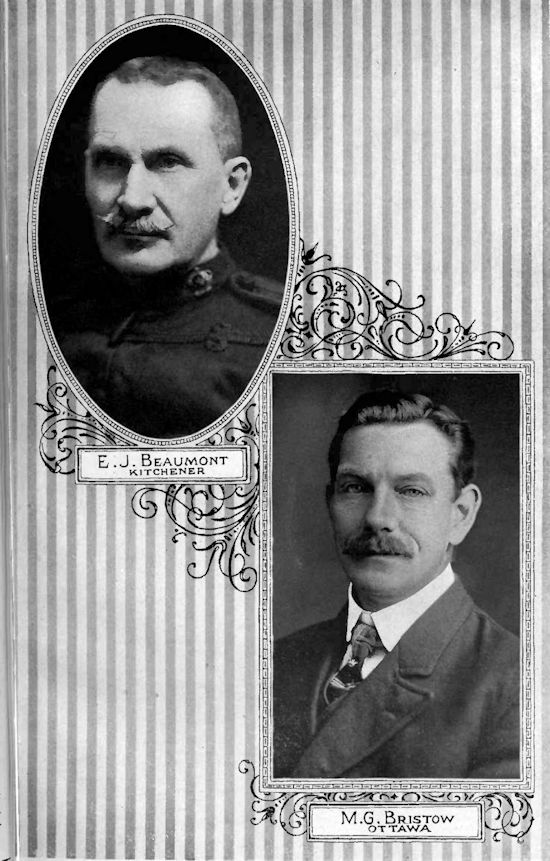
E.J. Beaumont, KITCHENER M.G. Bristow, OTTAWA
Cameron, Lieut.-Colonel Sir Douglas, K.C.M.G., ex-Lieutenant-Governor of Manitoba (Winnipeg, Man.), was born in Prescott County, Ont., June 18, 1854, the son of Colin and Annie Cameron, and was educated at the High School, Vankleek Hill, Ont. He was engaged in farming in the Province of Ontario from 1871 to 1880, afterwards moving to Winnipeg, in 1880. He engaged in various occupations until the fall of 1883, when he entered the lumber business under the firm name of Cameron & Company; later, Cameron & Kennedy. The business was incorporated as the Ontario & Western Lumber Company in 1892, and was later changed to the Rat Portage Lumber Company, and he has acted as General Manager since 1892, and President since 1894. He is also President of the Maple Leaf Flour Mills, a Director of the Northern Crown Bank, and a Director of the Manitoba Bridge and Iron Company. In 1902 he was elected to the Ontario Legislature for Fort William and Lake-of-the-Woods, and was defeated in the general elections of 1905 and 1908; was also an unsuccessful candidate for the House of Commons for Winnipeg in the Federal general elections in 1908. On August 1, 1911, he was appointed Lieutenant-Governor of the Province of Manitoba, which office he filled with the greatest satisfaction until succeeded by the present incumbent, Sir James Albert Manning Aikins, K.B. He was a Councillor for Rat Portage in 1891, and Mayor from 1891 to 1894; was appointed a K.C.M.G., December 31, 1913. In 1910 he was appointed Honorary Lieutenant-Colonel of the 79th Highlanders, and has been very active in connection with the Militia since the outbreak of the war, as well as in Patriotic work. He married Margaret Cameron Ferguson, of Vankleek Hill, in 1880, to whom were born two sons and one daughter; is a member of the Manitoba Club and the St. Charles Country Club, and as a recreation is an admirer of horses. Sir Douglas is a staunch Liberal in politics, and is considered, by the leaders of his party, as one of the ablest statesmen in Canada. In religion he is a Presbyterian and an active worker in Church and Social Reform movements.
Bégin, Louis Nazaire, Cardinal Archbishop of Quebec, was born on January 10, 1840. He is the son of Charles Bégin, of Levis, his mother’s maiden name having been Miss Luce Paradis. His earlier education was had in the schools and colleges of the Quebec district, up to the time of his leaving for Europe, to prepare himself as a priest and professor. Ordained in Rome in 1865, he returned to Quebec to assume the duties of Professor of Theology and Church History in Laval University, with collateral duties for a time as Prefect of Studies in what is known as Le Petit Séminaire. It was in 1885 he was appointed Principal of Laval Normal School at the time that institution occupied the premises of the old Chateau Haldimand, over the site of which the spacious Chateau Frontenac now extends its massive wings. Three years after, he was named Bishop of Chicoutimi, eventually returning to Quebec to take up his residence in the Archbishop’s Palace as Coadjutor of Cardinal Taschereau, under the title of Archbishop of Cyrene. From 1894 to 1898, he continued to be the Administrator of the Archdiocese of Quebec, during the declining years of Cardinal Taschereau. On the death of the latter, he succeeded him in the See of Quebec, the ceremony of his official investiture in 1899 being an historic event of the greatest interest to the whole province, as was the later celebration of his election as a Cardinal under the title of Saint Vitalis. The details of the distinguished ecclesiastic’s career form a brilliant page in the annals of Canada. Alike at home and abroad, His Eminence Cardinal Bégin has ever been known to fulfil his duty towards his Church and as a loyal citizen of Canada. Frequently he has been called to foreign parts to share in celebrations, such as the solemn coronation ceremonies of Our Lady of Guadalupe at Mexico City, in 1895, where he preached one of the memorial sermons, as well as at Rheims, during a like celebration in 1896, and at Grosse Isle in 1909, when he was the principal speaker at the unveiling of the monument erected to the memory of the Irish immigrants who had fallen victims to the typhus epidemic in 1847. He has also been several times a guest at the Vatican, having enjoyed the confidence of the three successive popes, Leo XIII, Pius X, and Benedict XV, from the last of whom he received his red hat. He has ever been a participant in all the public movements that tended to improve the social and educational conditions in his diocese, having taken a leading part in the founding of one of the leading newspapers of Quebec, known as “L’Action Catholique” and having likewise obtained the restoration of the Cathedral Chapter of Quebec, an institution that had become extinct from the days of the Conquest. He was prominent in the enterprise of unveiling a monument to the memory of Bishop Laval, as he has also been in the various efforts put forth towards beautifying the city with parks and monumental structures commemorative of historic events. He is a Fellow of the Royal Society of Canada, and has been honored by scholastic degrees of the highest merit, bestowed on him by the University of Innsbruck, in Austria, as well as those he has received from Laval and the Gregorian University of Rome. He virtually began his professional career as a teacher of the young, and has never lost his zeal in promoting, as a Member of the Council of Public Instruction, the reforms that make for a right pedagogy in school and college work. His pen has been an active one in adding to the literature to be found in the library collections of his Church, such as “La Règle de Foi” and the “Culte Catholique” not to speak of his writings on Canadian historical topics, as for instance, his “Chronologie d’Histoire du Canada,” his pastoral letters on the “Three Hundredth Anniversary of the Foundation of Quebec,” and his address on the “Second Centenary of the Death of Bishop Laval.” So wide is his knowledge of human affairs, so urbane is he in his manner and so just in his decisions, so charitable is he in his approach to the two sides of a public question, that he has more than once been called upon to act as arbitrator between employer and employees. During the many years of his episcopate he has organized over fifty new parishes, and has never failed to urge the building of spacious churches and school-houses and convents in the most of them. The events of his life have been for the most part the events of his native province and of Canada as well. Even during his travels abroad he always seems to have had in his mind the maturing of a policy of betterment for his people, and the fostering of good will among the various elements of the populations of Canada.
Langelier, The Honorable Sir François-Xavier, Statesman, and Lieutenant-Governor of Quebec, comes of very distinguished ancestry, and is one of the most respected, capable and learned of French-Canadian gentlemen, who has taken a leading part in the public life of Canada, and by his brilliant achievements, ripe scholarship and administrative ability, has served as an inspiration and shining example to all who would win a high place in the confidence and esteem of their fellow-countrymen. His parents were Louis Sabastien Langelier and Julie Esther (Cassault). Paternal ancestor came to Canada from Fresquiennes, near Rouen, Normandy, 1652; mother’s family from Granville, France; born at Ste. Rosalie, Province of Quebec, Dec. 24, 1838. Educated at St. Hyacinthe College and Laval University (LL.B., 1860; LL.L., avec grande distinction, 1861; LL.D., 1878), and Paris, France; D.C.L. (honorary) Lennoxville, 1903; married, first Feb., 1884, Virginie Sarah Sophie (died May, 1891), daughter of the late I. Legare, Quebec; secondly, May, 1892, Marie Louise, daughter of late Frederic Braun, late Civil Service, Ottawa; advocate, 1861; was one of the leaders of the Provincial Bar; K.C. (Province Quebec), 1878; also created K.C. by Dominion Government, 1880 (Marquis of Lorne); Batonnier (district Quebec) 1887; Batonnier-General of the Province, 1888; practised his profession successfully in the city of Quebec, where he was many years, from 1866, a member of the law faculty, Laval University, and subsequently, Dean of the Faculty and a member of the Council of the University; was also Vice-President of the Canadian Bar Association; President of the Institute Canadien and President of the Council of the Arts and Manufacturers’ Association; served as Mayor of Quebec, 1882-90; entered political life as a Liberal, and a free trader; was in turn a follower of Mackenzie, Blake and Laurier; unsuccessfully contested Bagot (Local), 1871; subsequently successively sat for Montmagny and Portneuf; sat for Megantic (House of Commons), 1884-87, and for Quebec Centre, 1887-1898; was Commissioner of Crown Lands and Treasurer, successively, in the local Administration of Sir H. G. Joly de Lotbinière, 1878-89; one of the signers of the address from the Liberal party to the Pope, 1896, resulting in the appointment of a Papal ablegate to Canada; a puisne Judge of Supreme Court of Province of Quebec, Jan. 14, 1898; delegated to perform the duties of the Chief Justice for the District of Quebec, June 6, 1906; as Chief Justice, became a member of the Board of Arbitrators, appointed 1891, for the settlement of accounts outstanding at Confederation between the Dominion and the Provinces of Quebec and Ontario; acted as Administrator of the Government of Quebec during the absence of Sir L. A. Jetté, 1903; knighted by his late Majesty King Edward, 1907; and made a Knight of Grace in the Order of St. John of Jerusalem in England in 1912; appointed Lieutenant-Governor, Province of Quebec, May, 1911; died February 8, 1915; has served as a Royal Commissioner on several occasions; was prominently identified with the movement for the organization of the Anti-Alcoholic League and its first President, 1907; was also President of the special committee appointed in connection with the tercentenary of the foundation of Quebec, 1906. Elected F.R.S.O., 1908; President, 1910; in addition to other legal productions, is the author of “Traite de la preuve, en matiere civile et commerciale,” and of “Cours de Droit Civil de Quebec.” Is the father of the following children: Juliette, Braun, who took service in the present war, was wounded three times, got the military cross for his bravery, and was promoted captain in the 22nd Batt. French Canadians; Françoise, Marc and Gerard. His Honor is a member of the following clubs: The Quebec Garrison and The Canadian. In religion, a Roman Catholic.
Lynch, Hon. William Warren, B.C., Q.C., D.C.L., LL.D., was born near the Village of Bedford, County of Missisquoi, Province of Quebec, on September 30, 1845. His father, Thomas Lynch, came from the County of Cavan, Ireland, about the year 1830. He served during the Canadian Rebellion in the Shefford Troop of Cavalry, and died at Knowlton, Brome County, on March 19, 1883. His mother, Charlotte R. Williams, was born at Stukely, County of Shefford, Province of Quebec, in the year 1805. Her parents were descendants of U.E. Loyalists, who came from the State of Vermont at the close of the American Revolutionary War. She died in 1885. Mr. Lynch, after taking advantage of the elementary schools in the vicinity of his birthplace, went to Stanbridge Academy in 1858, then a most flourishing institution, under the direction of Hobart Butler, M.A., where he prepared himself for a university course. During his last years at Stanbridge he acted as assistant teacher to Mr. Butler, and then entered the University of Vermont, Burlington, in August, 1861, but owing to the Civil War, which had shortly before broken out, the university course was considerably affected, and Mr. Lynch did not continue his studies there. In September, 1862, he entered the Arts Course of McGill University, Montreal, having secured one of the scholarships offered at a competitive examination. His health failing, he was obliged to abandon his studies before the Christmas examinations. He then engaged in school teaching in winter, and worked on his father’s farm in summer. In 1865 he was admitted to the study of the law, and pursued his studies in the office, first of S. W. Foster, of Knowlton, and afterwards of John Monk, of Montreal. He took his degree of B.C.L. at McGill in May, 1868, and secured the Elizabeth Torrance gold medal, and was admitted to practice in June. The following year he commenced the practice of his profession at Knowlton, and subsequently removed to Sweetsburg, the chef lieu of Bedford District. In the fall of 1870 he assumed the editorial control of the “Observer,” which was started at Cowansville, an adjoining village, and which became an influential organ of public opinion in the district. In June, 1871, during the provincial elections, which were then in progress, he went to Knowlton to report for his paper the proceedings of nomination day. There were then two candidates in the field, and to the surprise of Mr. Lynch, and without his interference, both candidates withdrew, and he was declared member elect for the County of Brome. During the Fenian troubles of 1866 Mr. Lynch took an active part in the formation of a company of volunteers at Brome, of which he became lieutenant, and remained such until his resignation in 1871. During the Fenian raid of 1870 he was at the front with his battalion. In keeping with the promise made to his electors, he became a resident of the County of Brome, returning to Knowlton in the fall of 1871. He has held successively the offices of school commissioner and chairman of that body for a number of years; and was also the Mayor of the Township of Brome, and Warden of the County. In May, 1874, he married Ellen Florence, eldest daughter of J. C. Pettes, a successful merchant of Knowlton, by whom he has two children. He is a member of the Masonic fraternity, and was some years since, deputy grand master for the District of Bedford. Mr. Lynch early in life identified himself with the Conservative party, to which he has ever borne faithful allegiance. He took an active part in the political discussions in the Legislature of Quebec on the subject of the dismissal of the De Boucherville Government, by M. Letellier, and it was upon a motion made by him that the Joly Government were defeated on October 30, 1879. He was made a Q.C. by the Joly Government in 1879, which was subsequently ratified by a similar title conferred upon him by the Federal authorities in 1881. When M. Chapleau assumed office as premier of the province, he invited Mr. Lynch to the council as Solicitor-General, which appointment was subsequently ratified by the electorate of Brome. On the abolition of the office of Solicitor-General, Mr. Lynch was appointed Commissioner of Crown Lands, on July 31, 1882. In September, 1887, his constituents tendered him a reception in the shape of a picnic, which was attended by a large number of public men, and at which a presentation of a handsome sum of money was made to him by his political admirers and friends. He then went to Montreal to resume the practice of his profession, in partnership with the present Mr. Justice Archibald and Mr. Geo. G. Foster, K.C. Shortly after, he was appointed by the Dominion Government a Commissioner, in conjunction with the late Mr. Justice Burridge, then Deputy Minister of Justice, and Mr. Dingman, of the Department of the Interior, to settle the Indian title to certain lands in the Township of Dundee, County of Huntington, and continued to hold that office during the successive administrations of Messrs. Mousseau, Ross and Taillon, and until the defeat of the last-named administration in January, 1887. During the session of 1887 he was named by the House of Assembly one of the Commissioners to perfect the revision of the provincial statutes. He was one of the leaders of the Opposition to the Government of the late Honore Mercier until his appointment to the bench in July, 1889, as Judge of the Superior Court for the District of Bedford, his native district. He has always taken a warm interest in educational matters, was twice President of the Provincial Association of Protestant Teachers, was for some years a member of the Protestant Committee of the Council of Public Instruction, and was the first President of the District of Bedford McGill Graduates’ Society. In June, 1883, the University of Bishops’ College offered him the degree of D.C.L., but owing to absence it was not conferred. In 1904, McGill University gave him the degree of LL.D. He is a devoted member of the Church of England and has often been a delegate to its synods. Since he became judge he has devoted his leisure to the promotion of various matters of local concern, such as good roads, historical societies and the Knowlton Conference.