LIST OF PHOTOGRAVURES (continued 9)
Reading edition
Proulx, Edmond, M.P. for Prescott, son of the late Isidore Proulx, who was M.P. for Prescott County from 1891 till his death, July 28, 1904, and Philomene Lalande, his wife, both French-Canadians. Born at St. Hermas, in the County of Two Mountains, Que., on the 21st of May, 1875. Educated at Bourget College, Rigaud, Que., St. Michael’s College, Toronto, Ottawa University, and the Law School, Osgoode Hall, Toronto. Was married January 2, 1907, to Madame Elliott Fraser (née Renee Audette), daughter of Randolph Audette, of the City of Quebec, wholesale merchant, and President of La Banque Nationale, and is the father of two sons, Henri and Marcel, and two daughters, Therese and Cecile. Is a Public School Trustee of the town of L’Orignal, a member of the C.M.B.A., Artisans and C.F., and Union St. Joseph of Canada. Has been Reeve of the town of L’Orignal, and Vice-President of The Ontario General Reform Association; first elected to the House of Commons as member for the County of Prescott at the general elections 1904, and subsequently at the general elections of 1908, 1911 and 1917. Is a Liberal in politics. In religion Mr. Proulx is a Roman Catholic. He is very popular among all classes of the community and has a splendid command of both the English and French languages.
Donogh, John Ormsby, Lumber merchant, Toronto. Was born at Toronto on the 25th of March, 1854, son of William Donogh and Elizabeth Hayward, his wife; was educated at the public schools in the Township of Mono and afterwards in the City of Toronto. Mr. Donogh has been long recognized as one of the pioneer lumber merchants of the City of Toronto, and for many years carried on business with Joseph Oliver, formerly Mayor of the City of Toronto, the firm name being “Donogh & Oliver.” He was instrumental in organizing and promoting of the Methodist Union of Toronto and was President for four years. The Union takes charge of all missionary and church extension work in the provincial capital. For many years Mr. Donogh has been prominent in the I.O.O.F. and has been past Grand Master for many years, and at present is Grand Treasurer of the Order. He was married on Sept. 21, 1874, to Miss Wordley; and is a member of the National Club of Toronto, a Mason, and an Oddfellow. He is a man with a large viewpoint and of sterling integrity, and has in the past supported the Liberal Party. His recreation is golf.
Jones, James William (Kelowna, B.C.), is the son of James and Tryphena Searles, both Canadians. Was born at Utica, Ont., on September 21, 1869, educated at the High Schools of Uxbridge and Port Perry, and was a general merchant in Grenfell, 1894 to 1906. Moved to Kelowna, B.C., 1907, where he took an active interest in developing a large tract of irrigated lands in the Okanagan Valley, at Kelowna. Is Secretary-Treasurer of Central Okanagan Land & Orchard Company of Kelowna, he is also prominent in mercantile life, being President of Lawson’s Limited, dry goods and furnishings, also President of McKenzie Trading Company of Kelowna. Was Mayor of Kelowna for five years, 1912-1917, inclusive, and was elected at the last election as Conservative member in the British Columbia Legislature for South Okanagan. Mr. Jones married in 1893, Adam M., daughter of M. T. Bird, of Grenfell, Sask., and is the father of four children: Ethelwyn, Clarence, Vivian and Nellie. He is a member of the Masonic Order and also of the Independent Order of Foresters. In religion he is a Methodist.
Watson, Sir David, K.C.B. and Brigadier-General (Quebec City), promoted to take command of the 4th Canadian Division of the forces at the front in April, 1916, is a native of the city of Quebec, having been born in that city on February 7, 1869. He is the only son of Mr. William Watson, his mother’s maiden name having been Miss Jean Grant, daughter of one of Quebec’s well-known merchants of Lower Town. From school and after some preliminary training in municipal work, he passed into the “Chronicle” office, when Mr. John J. Foote was manager and proprietor of the paper, and there worked his way up through the various departments of journalism, until he finally became the managing director of the establishment. He has held the office of President of the Quebec Press Association, and visited London for a first time as a delegate to the Imperial Press Congress, held in that city in 1908, and a third time as commander of the 8th Royal Rifles during the royal celebration of 1901. In the military life of Quebec he has been interested for over twenty years, and during that time was given promotion step by step until he was in command of his battalion as its Colonel, a position which he had held for two or three years before the European War broke out. Having been selected to take charge of the 2nd Battalion in the 1st Brigade of the 1st Canadian Division, in August, 1914, he proceeded from the Valcartier Camp with troops in charge, for their further training at Salisbury Plains; and, after spending the early winter months there, he proceeded to the front in January, 1915. He was by this time a Colonel in full rank. At the seat of war he was continuously engaged as a commanding officer all during the campaigning up to the summer of 1917, having taken part with his Division in the operations of Neuve Chapelle, in March, 1915, as well as in the second battle of Ypres in April, in the fight at Festubert in May, and that of Givenchy in June. In recognition of his skill and prudence in these engagements he was promoted to command the 5th Brigade of the 2nd Canadian Division in the month of August following, and forthwith as a Brigadier-General, he led his Brigade in the successive engagements of Wytschaete, Kemmel, and St. Eloi, during the spring of 1916. Subsequently he was placed in charge of the 4th Canadian Division and made extended raids in the Ypres salient and at St. Eloi, and thereafter, for forty-nine days without intermission, he and his Brigade shared in the exciting engagements along the River Somme. No less than three attacks were made by General Watson and his Division, one on the 11th of October, another on the 22nd of that month, and one on the 18th of November, 1916, all of these accumulating renown by their intrepid approach on the enemy. Nor was the commander’s bravery overlooked by the War Office, since General Watson has come in for special mention in the despatches exchanged between the general Field Staff and the War Department no less than four times. He was awarded the high honor of Commander of the Bath, and in 1918 was further honored by a Knighthood in that order. The record of the General’s active service at the front is a fitting complement to a career of over twenty years’ experience in military operations, from the days of his entering the 8th Royal Rifles, made up of his Quebec fellow-citizens, to the time of his being a General in full command of the battlefields of Europe. His career savors of romance. A newspaper employee, a prominent business man in his native city, a volunteer of the ranks, a captain, a major, a colonel, and at last a general, form the grades of a ladder overcome step by step which his fellow-Canadians cannot but contemplate with pride. It was taken for granted that in the event of Sir Arthur Currie’s transfer to another command Sir David would succeed him as Commander-in-Chief of the Canadian army in France. General Watson married Miss Mary Browning, of Quebec, on September 11, 1893, and has a family of three daughters.
Thompson, Alfred (Dawson City, Yukon Territory), Physician and Surgeon, son of James A. Thompson and Jane Thompson, both Canadians. Born June 6, 1869, at Nine-Mile River, Hants County, Nova Scotia. Educated at Public School by private tutor, and graduated from Dalhousie University, Halifax, N.S., with degree of M.D.C.M., in 1898. Married Elsie Miller, daughter of Jacob Miller, of Elmsdale, Nova Scotia, March 7, 1894. Went to Klondyke in 1899 and began practice of his profession; elected to Yukon Council in 1902. First elected to the House of Commons at the general elections of 1904, as an Independent. This was the second election held for the House of Commons in the Yukon, when Dr. Thompson was opposed by F. T. Congdon, K.C., who resigned the Governorship of the Territory to contest the seat. Dr. Thompson resigned his seat on the Yukon Council at the same time. The vote stood: Thompson 2,113, Congdon 1,495, a majority for Dr. Thompson of 618. Nomination was held on November 18, election on December 16, and the return was received at Ottawa on March 13, 1915. Retired at end of Parliamentary term and resumed practice; again elected to House of Commons in 1911 at the general elections, over his former opponent, F. T. Congdon, K.C., by a majority of over 450, and again returned at the last general elections held in the Yukon Territory, which were deferred until December 31, 1917. Dr. Thompson’s election was due to the vote of the soldiers overseas which he received as the Unionist Candidate. Is a member of the Masonic Order and of the Zero Club, Dawson, Yukon Territory, and is a Presbyterian. Father of two children, Alfreda, born December 30, 1904, and Norman, born August 5, 1909. Dr. Thompson is a supporter of the Unionist Government and a dominant force in the Yukon Territory, where he has resided for upwards of eighteen years, and has done much to promote the growing importance of the district.
Struthers, James Douglas, M.D. (Tiverton, Ont.), first became a member of his father’s family on April 7, 1886, in the County of Bruce, near the village of Underwood. His parents are Mr. and Mrs. James Struthers, of Port Elgin, who for many years were residents of Bruce Township, and whose farm was one of the best, the owner having brought his splendid Scotch knowledge into one of the finest settlements in the Dominion, where success and shrewd business ability crowned his labors. This son of worthy parents had a longing for knowledge and professional life, and as a youth was studious in S.S. No. 8, Bruce, having his thirst for knowledge awakened and developed along proper lines. His next step was to the High School in Port Elgin, from which he successfully matriculated. He then went to business college for half a year, which was followed by duties in railroad office work. While thus employed he decided that his life work would be that of a doctor. He attended Toronto University and was awarded the degree of Bachelor of Medicine in 1911. Of a likeable and charming disposition he was ever a favorite at college, and was honored by his fellow students in the University by being made Treasurer of the “At Home” Committee of the year ’11. His Scotch ancestry and faithful application to his profession have made him friends, and few young men have reached the splendid position he now occupies. He came back home and settled in the village of Tiverton, where his practice is large and continually growing. Success has crowned his ambition, which was to be able to relieve the sufferings of humanity, and his splendid abilities are often called for in consultation with his surrounding fellow practitioners, all of whom esteem him most highly. Determination and decision are two faculties he possesses. Added to these are a bright and sunny disposition, with a broad and charitable outlook on life which make for him friends of a lasting character. He is a member of Tiverton Masonic Lodge, No. 341, A.F. & A.M., the I.O.O.F., and the C.O.F. In religion he is a Presbyterian and in politics a Liberal. His friends truly say of him: “You were aye leal and true, Jamie.”
Kastner, Gideon, of Wiarton, Ontario, son of John Kastner and Margaret Litt, of Alsace-Lorraine, was born July 8, 1865, in Perth County, Ont. He received his education in the public and high schools of that county. At twenty years of age he went to Wiarton, where he engaged in the lumbering business, which was a thriving industry at that time. He also followed contracting, building piers and public wharves. In business he has been exceptionally successful. He had a liking for municipal politics, and first served in the town council in 1895. He was elected Reeve of Wiarton in 1910-11, and again in 1915-16-17-18. At the January meeting of the County Council of Bruce in 1918 he was elected to the honorable position of warden. His popularity is not solely due to his genial good nature, but to the fact that he is a keen business man and takes a deep interest in every enterprise he is connected with. He served as President of the Wiarton Board of Trade for many years. He has been Chairman of the Board of Managers of St. Paul’s Presbyterian Church for a number of years. When the recruiting campaign for the 160th Bruce Battalion was in full swing Gideon Kastner was one of its whirlwind supporters. He probably got his enthusiastic military ardour from his grandfather who served with Napoleon through many campaigns. He is a loyal supporter of all patriotic movements, lending his energy to every cause that tends to win the war. His great pastime is bowling. In politics he is a Liberal. He married Annie Symon, of Wiarton. They have one son and four daughters, and their home in Wiarton is one of the most hospitable in the county.
Sayles, Edwin Roy, Editor and proprietor of “The Port Elgin Times,” is one of the leading men to-day publishing a country newspaper. He was born in Norfolk County on April 21, 1875. His education was secured in the public and advanced schools of Courtland and the City of Brantford. In the latter place he resided for many years. Choosing newspaper work as his career, he joined the staff of the “Brantford Expositor,” on which paper he remained for many years. Later he became business manager of the “Brantford Courier,” and at the time he purchased the “Port Elgin Times” held this position. On taking possession of the “Times” he at once put his splendid business ability into the enterprise and established it upon sound business principles. Under him the “Times” has become one of the brightest country weeklies in Ontario. He has ideas which he is not afraid to put forward, and his paper is ever for the uplift and moral reform of the community which he so ably serves. He is a splendid platform man, speaking with ease and fluency. He has given much of his time to the Canadian Press Association, and for three years, 1914-15-16, was chairman of the weekly section of that body. He has also been on the executive Board of that body for a number of years. He is Past President of the Bruce County Press Association, and has done much to improve the standing of the country publisher and place his business upon the high plane it to-day occupies. He is a member of Port Elgin Lodge, No. 429, A.F. & A.M., the C.O.F., and the A.O.F. In religion he is a Baptist, taking a deep interest in the work of that body. In politics he is a Liberal, with a slight tendency toward radicalism. Though of many activities he finds time for public service, as has been evidenced by his arduous work in recruiting and patriotic efforts, which has claimed so much of the time of busy men. He takes an interest in the boy scout movement. His pastimes are bowling, shooting, and motoring. He married Miss M. Galbraith, daughter of Mr. and Mrs. John Galbraith, of Middlesex County. They have one daughter, Eleanor Jean.
Honeywell, Major Frederick Henry, B.A., is a prominent Ottawa barrister and military man who, during the late war, distinguished himself by serving his country at the front. He was born in Carleton County, Ont., on Dec. 12, 1877, son of Elkanah and Marie (Baldwin) Honeywell, and received his education at the public schools of Westboro’, Carleton County, at Ottawa Collegiate Institute and at Toronto University. He qualified for the law and after being called to the Bar established himself in practice at Ottawa, where he is head of the firm of Honeywell, Caldwell & Wilson, Barristers and Solicitors, Central Chambers. The firm has a large connection in the adjacent county, where Major Honeywell still maintains his residence. He has served as Reeve of Nepean township and as Warden of the County of Carleton. He has always taken a keen interest in military affairs, and at the time the war broke out held the commission of Major in the 5th Princess Louise Dragoon Guards, Ottawa. Offering himself for service overseas he was appointed Major of the 8th Canadian Mounted Rifles in the Canadian Expeditionary Force, in which capacity he went to the front. He was later attached to the 26th Battalion of the British Expeditionary Force in France, on active service, and participated in several noted engagements. He is essentially an outdoor man and his recreations include curling, skating, ski-ing, golf, motoring and motor boating. He is a Liberal in politics, a Protestant in religion and a member of the A.F. & A.M. and I.O.F. His residence is at Woodruff, Carleton County, Ont.
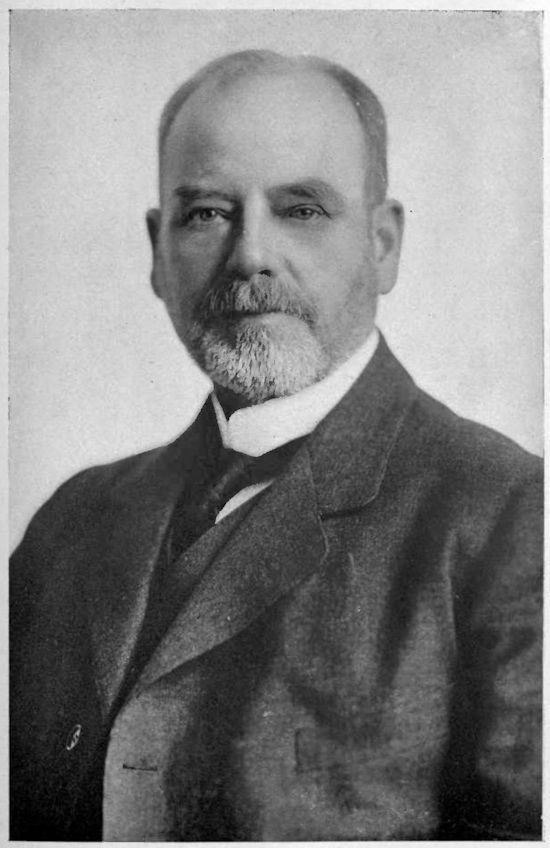
D. M. FINNIE Ottawa
Wainwright, Arnold, K.C., B.C.L., one of the leading barristers and publicists of Montreal was born in that city on June 13, 1879, the son of William and Mary Emily (Arnold) Wainwright. His education was unusually complete. After a course at Montreal Collegiate Institute he entered McGill University, from which he graduated in 1890 with the degree of B.A. and honors and medal in mental and moral philosophy. This was supplemented by a course in law and in 1902 he obtained the degree of B.C.L. with a medal. Subsequently he took a post-graduate course at the University of Montpelier, France. He was called to the bar in 1902 and is now a member of the firm of Davidson, Wainwright, Alexander & Elder, Advocates, Transportation Building, Montreal. In 1912 he was created King’s Counsel on attaining the requisite ten years’ service at the bar. He was elected President of the Junior Bar Association of Montreal in 1910 and a member of the Council of the Montreal Bar for 1911-12. In addition to being recognized as a brilliant speaker both in the forensic and political arenas, Mr. Wainwright is a recognized authority on the academic side of his profession and is Lecturer on the Laws of Evidence and the Laws of Persons in the legal faculty of McGill University. In politics he is a Liberal and was a member of the Council of the Montreal Reform Club, 1910-11. He is an Anglican in religion and a member of the following clubs: St. James’, University, Beaconsfield Golf, Country, Canada, and Reform. In 1913 he married Norah, daughter of William Prentice, Montreal, and resides at 4 Seaforth Ave. in that city.
Bates, Joseph Lever, an Ottawa business man of widely extended interests, was born at Easton’s Corners, Ont., in 1850, the son of Nathaniel Bates. He was educated in the public schools of his district and afterward engaged in the granite business. In 1907 he founded the International Land and Lumber Company, 283-285 Bank Street, Ottawa, of which he is President. His other interests include the Presidency of the British Canadian Industrial Co., Ltd., which maintains offices in London, England, as well as in this country. He is a member of the Canadian Club, Ottawa, and of the Masonic Order. In politics he is a Liberal and in religion a Methodist. On December 21, 1875, he married Juliet, daughter of Mr. C. J. Lighthall of Montana, and has three sons. His residence is at 50 McLaren Street, Ottawa.
McConnell, Richard George, Deputy Minister of Mines, and Director of the Geographical Survey for Canada, was born at Chatham, Quebec, March 26, 1857, the son of Andrew and Martha (Bradford) McConnell. He was educated at the Caribou Academy and at McGill University, from which he graduated with the degree of B.A. in 1879, taking first class honors in Natural Science. On graduation he immediately went to the Canadian West as assistant to the famous Canadian geologist, Dr. G. N. Dawson, whose name is immortalized in Dawson City, the capital of the Yukon Territory. Upon his return to the East in 1881 Mr. McConnell entered the service of the Canadian Geological Survey and made many explorations in behalf of the government which resulted in valuable discoveries in Western Canada, British Columbia and the Yukon. In 1887 and 1888 he headed one of the most extensive exploratory expeditions on record, traversing almost the whole country drained by the Stikine, Liard, Mackenzie, Porcupine, Yukon and Lewis Rivers. The results of his investigations are to be found in many reports and articles on the Geological and Mineral Resources of Western Canada. On this subject he is recognized in professional circles throughout the world as the chief living authority. In fact it is doubtful whether any man, past or present has acquired such an intimate first-hand knowledge of the great Sub-Arctic areas of Western Canada. As a geologist his fame is international, and he is a prominent member of the Geological Society of America as well as of the Royal Society of Canada. His recreations are curling and golf and he is a member of the Ottawa Golf Club. In religion he is a Presbyterian, and was married in November, 1898, to Jeannie, daughter of E. H. Botterell, Montreal. His family consists of one son and one daughter, and his home is at “Edgehill,” Rockliffe, Ottawa.
Currie, General Sir Arthur William, C.B., G.C.M.G., Commander-in-chief of the Canadian Army on the Western front during the latter stages of the great war, was born at the village of Napperton, Middlesex County, Ontario, December 5, 1875, the son of William Garner and Jane Currie. He was educated at the public school of his district and later at Strathroy Collegiate Institute. Going to British Columbia in 1893 when but eighteen years of age he first engaged in school teaching at Sidney, B.C. Later he located in Victoria, B.C., and entered on a business career. At the time the war broke out he was the head of the firm of Currie & Power, one of the leading real estate concerns of Vancouver Island. Nearest to his heart, however, were military pursuits, and he early identified himself with the 5th Canadian Garrison Artillery, in which he served fourteen years, rising ultimately to the rank of Lieutenant-Colonel. With him, however, military activity was not merely a case of dress parades, but a real pursuit. He devoted himself seriously to the study of modern tactics, not only in connection with his own arm of the service but infantry as well. He used his influence to encourage rifle shooting, and from 1907 onward was President of the British Columbia Rifle Association. On the outbreak of the war followed by the decision of the Canadian Government to send an Expeditionary Force to the front, Col. Currie was recognized as one of the most efficient volunteer officers in this country, and when Sir Sam Hughes telegraphed him asking him to accept a command he did not hesitate to offer his services. He was assigned to the command of the Vancouver Highland Battalion, which trained at Valcartier Camp, and went overseas in the late autumn of 1914 to complete its training on Salisbury Plain. The regiment was one of the first Canadian units sent to France, and in the terrible fighting at St. Julien and Langemarck in connection with the second battle of Ypres, April, 1915, had its baptism of blood. This was the engagement of which Viscount French reported to the War Office “The Canadians saved the day.” In this severe test Colonel Currie won a reputation for leadership and courage of the highest order which has distinguished him ever since. He received enthusiastic praise from General Alderson, the Imperial officer then in command of the Canadian division, and on the latter’s recommendation was accorded the coveted D.S.O. and given command of a brigade. His service as brigade commander proved so completely successful that his work won the attention of the British Headquarters Staff, and when a reorganization of commands ensued as a result of the arrival of two new Canadian divisions in the field, he was elevated to the rank of Major-General and placed in charge of the First Division of the Canadian Army. In this post he commanded his division at the Battle of Hooge, when it resisted the full force of the German assault in what was described as “this particular hell of Hooge.” His cool and brilliant handling of what was admittedly a critical situation for all forces on the bloody Ypres salient won him the unstinted praise of his immediate chief-in-command, General Sir Julian Byng, and all the other British military experts. The correspondent of the London “Times” reported that nothing finer was ever seen in warfare than the manner in which the lines over Maple Cape, Observatory Ridge and Armagh Wood were held by the troops under General Currie’s command. Sir Julian Byng in his report said “I am proud of the Canadian troops under my command. Their behaviour has been magnificent. I have never known fiercer or more deadly barrage, nor have I seen any troops fight with more earnestness, courage and cheerfulness.” He especially praised General Currie’s counter attack with the Canadian division at 1.30 on the morning of June 13, 1916, on a front of 500 yards extending from Sanctuary Wood to Hill 60, when heavy losses were inflicted on the Germans and prisoners taken. The spring of 1917 was marked by glorious achievement on the part of the Canadian troops, including the captures of Messines Ridge and Vimy Ridge, and finally attaining the investment of Lens. In the midst of the spring campaign Sir Julian Byng was shifted to the command of a British Army. General Currie was at once recognized as his logical successor and became the Chief-in-Command of the Canadian Army in the field with four divisions under him. The victory of Vimy which was heralded throughout the world as a great military achievement, was generally credited to General Currie’s masterly powers of preparation and organization. It was in recognition of these services that His Majesty King George knighted him on the field of Vimy as a member of the Order of St. Michael and St. George. Earlier still he had been made a Companion of the Bath. It was on June 19, 1917, that he assumed the chief command, and one of his first achievements was the capture of Hill 70 on his own initiative, rendering the important mining city of Lens, which had been in German occupation for nearly three years, untenable for military uses by the enemy. General Currie could have occupied Lens any time during the summer of 1917 that it was deemed desirable, but owing to the belief of the French Government that its capture would only result in further destruction, without military advantage, the word to advance was withheld. Instead, during the autumn of 1917 General Currie and his army were assigned by Sir Douglas Haig to one of the most terrible tasks that was ever allotted to a military force. It was that of taking Passchendaele Ridge in Flanders with a view to getting to Roulers and cutting off the U-Boat bases of Zeebrugge and Ostend. Sir Douglas Haig assigned the task to the Canadians because he believed that under the command of General Currie they had developed into the best “shock” troops in the world. The Germans on the other hand believed that Passchendaele Ridge was impregnable, and many military experts agreed with them; but the U-Boat menace was such that the attempt was deemed to be justified by necessity. Before the attack General Currie personally addressed his men, and did not disguise what they had to face, but so fired them with the spirit of victory that despite terrible losses they carried the Ridge. It was one of the tragedies of the war that the Flanders winter closed down so suddenly that it was impossible to reap the full fruits of victory by advancing to Roulers. By spring the situation had been absolutely changed by the great German offensive of March, 1918, and Passchendaele was temporarily abandoned. This circumstance did not alter the greatness of the original achievement, attained in obedience to the orders of the Headquarters command. In the final stages of the war which gave the Allies victory the Canadian army under General Currie played a role of immortal lustre. They entered in the fighting in full force on August 8, 1918, and from thence onward until the signing of the armistice on November 11 victory after victory crowned their banners. The greatest of their achievements was perhaps the breaking of the Drocourt-Queant Switch Line, a part of the great “Hindenburg” defence system, which the Germans had also boasted was impregnable. When General Currie achieved this victory and opened the road to Cambrai it was at once recognized by war experts, and even by German critics, that Marshal Foch’s strategy could succeed in a much shorter period than had been anticipated if such efforts could be repeated on other parts of the Allied front. As everyone knows this prognostication was not falsified. Before the war was over General Currie and his army had to their credit the capture of Cambrai and of Valenciennes, two of the most vital points in the German resistance. Two hours before the armistice was signed General Currie rode as a conqueror into Mons, the point where the old “contemptibles” of the original British Army had first shown their prowess against the Germans in 1914. During the cleaning-up operations following the war, his administrative abilities have proven most valuable. On New Year’s Day, 1919, his services were further recognized by bestowing on him the honor of Grand Cross of St. Michael and St. George, an order in which he was already a Knight. It must not be forgotten also that in the critical period when Canada’s maintenance of her forces in France was in doubt, General Currie’s voice had great weight in determining the action of the people of this country. He strongly urged on Sir Robert Borden and other ministers that this country should do everything in its power to help win the war and meet the condition caused by the falling off of enlistments, a condition which was threatening the dissolution of his ever-victorious army. The result was the decision of the Canadian Government to adopt the policy of conscription. During the election campaign that ensued he sent the following message to the Canadian people on behalf of himself and his staff: “We sincerely sympathize with endeavors to arouse our countrymen to the necessity of remaining united and firm in their determination to furnish troops in the field all necessary support. We deeply deplore the fact that the wisdom of doing so has become a subject for debate and controversy by those at home. If support is now withheld or even delayed it means that additional burdens will have to be borne by men already doing the seemingly impossible.” This message coming from the most eminent of Canadian soldiers and one who in private life had been a political opponent of the Borden administration, could not fail to bring thousands of electors to a sense of their duty to the soldier in the field. There have been rumors that an effort would be made to induce General Currie to enter Canadian politics as a Liberal leader on his return from the front, but so far he has refused to assent to any such proposals. He is an Anglican in religion and was married in 1901 to Miss L. S. Chaworth-Masters of Victoria, B.C., by whom he has one daughter. A quiet man of iron determination and marvellous powers of organization, he is, however, certain to play a prominent role in the life of Canada in future, whatever path he may elect to follow.
Girard, A. D., one of the leading advocates of St. John’s, Quebec, was born at Ste. Hyacinthe in that province on May 10, 1841, the son of Michel and Sophie (Cheicoine) Girard. He was educated at Ste. Hyacinthe College and at St. Mary’s College, Montreal. He qualified for the law and was called to the Quebec bar (of which he is now one of the honored veterans) on April 4, 1864. From that year until 1879 he practised alone at Waterloo, Quebec, and in the latter year removed to St. John’s where he has ever since resided. Until 1911 he practised by himself but then took a partner, and the firm of Girard & Demers, which has offices on St. John’s Street in above named city, is well known throughout the district. Until his retirement from public life a few years ago Mr. Girard was a prominent figure in Quebec politics and a supporter of the Conservative party. He was the candidate of that party for the Legislature as early as 1875, in the riding of Sheppard. In the elections of both 1900 and 1904 he contested St. John’s in the same interest. His counsel has been much sought by the younger politicians of the day. In religion he is a Roman Catholic and was married on February 13, 1877, to Cordelli, daughter of F. X. Bousquet of Montreal.
Wilson, Peter Edward, B.A., LL.B., Barrister-at-law, Prince George, B.C., was born at Bond Head, Ont., August 28, 1871, the son of Charles Wilson, farmer, and Rachel, his wife. He was educated at Brampton High School, Toronto University and Osgoode Hall, Toronto, and after being called to the bar, went to British Columbia in 1896, first practising at Nelson. In 1905 he was appointed judge of the County Court of East Kootenay, a post which he held with honor to himself and to his office until 1912, when he resigned to resume practice at Fort George, B.C., where he has ever since resided. He is City Solicitor of that place and has also filled the offices of President of the Board of Trade and Chairman of the School Board. During 1917-8 he was a member of the Exemption Tribunal under the Military Service Act, for the district of Fort George. He is an Anglican in religion and Independent in politics. His recreations are gardening and curling. On Dec. 10, 1896, he married Christine, daughter of George Brown, a gentleman of Maidenhead, Eng., by whom he has seven children.
Mann, Alexander Robert, 3690 Selkirk Ave., Shaughnessy Heights, Vancouver, B.C., one of the most prominent business men of the Pacific Coast and a brother of the famous Canadian railroad magnate, Sir Donald Mann, is a native of Halton County, Ontario. He was born in the Village of Acton on July 29, 1861, the son of Hugh and Helen (Macdonell) Mann, his father being a farmer. He was educated in the public and high schools of his native place, and had practical experience on the farm before going to Winnipeg in 1879, where he took up railroading. Subsequently he engaged in the lumber business at Fort Frances, Ont., and in 1890 graduated into railroad construction. Among the various western lines which he took part in building were the Long Lake branch, C.P.R. (1890); Calgary and Edmonton Railway (1892-3); Soo Line, Saskatchewan (1892-3); Cusp and Slocan Railway, B.C. (1893-4); Columbia & Western Railway (1898); Rainy River Branch, C.N.R. (1899-1901); Neepawa to McCreary section, C.N.R. (1903-4); Greenway Branch, C.N.R. (1903-4); James Bay road, Toronto to Sudbury (1904-6); Goose Lake line C.N.R. (1906-7). From 1895 to 1897 he also handled ore in the Slocan silver region. From 1898 to 1904 he operated under his own name as a railway contractor and in the latter year formed the Northern Construction Company of Vancouver, of which he is still President. He is also President of the Dominion Products, Ltd., and the Canadian Kelp Company, Ltd., of Vancouver and a Director of the Winnipeg Aqueduct Co. He is recognized throughout Canada as a type of the sound, constructive business man, to which this country owes its rapid development during the past quarter of a century. He is a member of the Vancouver Club, the Albany Club (Toronto), and the Carleton Club (Winnipeg), and his chief recreation is golf. He is a Presbyterian in religion and on June 19, 1908, married Jennie, the daughter of Robert Malton, Owen Sound, Ont., by whom he has two daughters.
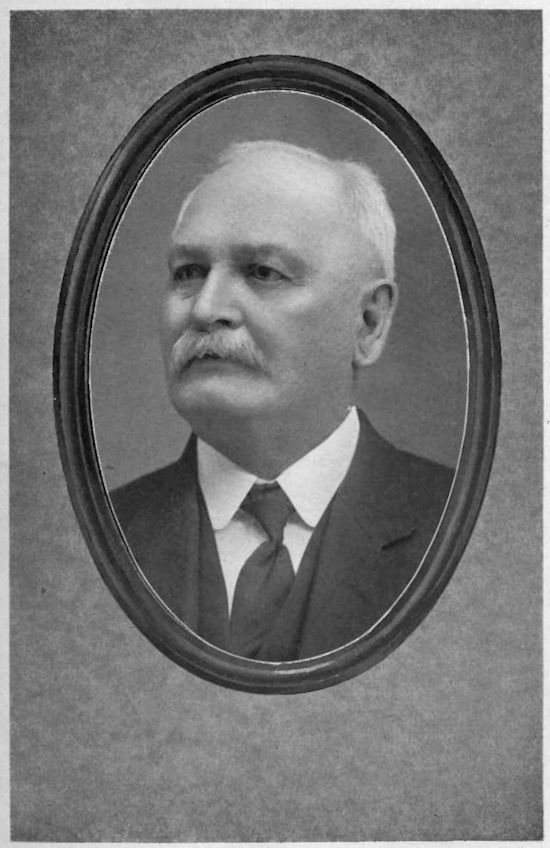
W. J. BASKERVILLE Ottawa
Cartwright, Lt.-Col. Robert, C.M.G., one of the most prominent officers in the Canadian permanent forces, and who, at the time of writing, is stationed at Military Headquarters, Belmont House, Victoria, B.C., is a son of the eminent Canadian statesman, the late Sir Richard Cartwright, K.C.M.G., and was born at Kingston, Ont., Nov. 4, 1860. He was educated at the Royal Military College, Kingston, in 1881, entered the service of the Canadian Militia, has been stationed at many of the military districts throughout Canada, and has steadily risen in rank. Col. Cartwright is widely known as an efficient, painstaking and resourceful officer and has seen considerable service. He holds the North-West Medal, earned in the rising of 1885, and the South African Medal with four clasps. When the South African war broke out in 1899, he was Assistant Adjutant-General at Headquarters, Ottawa, and relinquished his appointment to go as a member of the Canadian contingent. Later he was given the honor of Companion of St. Michael and St. George. He established and was commandant of the Canadian School of Musketry, at Rockliffe, near Ottawa, the value of which has been proven as a training school for Canadian officers in the present war. Col. Cartwright’s own duties during the latter years of the war have been those of Musketry Officer of M.D. No. 11, Victoria, B.C. In addition to his military activities, he is a successful fruit farmer, and his recreations are skating, riding, motoring and sailing. He is a Liberal in politics and a man of advanced opinions, being a member of the Single Tax Association, the Anti-Poverty League, as well as of the Army and Navy Veterans, and the Rideau Club, Ottawa. He is an Anglican in religion and was married on Sept. 20, 1885, to Ivy Marion, daughter of Benjamin Canning Davy, Kingston, Ont., by whom he has had three children, Marion, Vida Lois and Francis (deceased in early childhood).
Marshall, Lieut.-Colonel Noel G. L. (Toronto, Ont.), Merchant, is one of those “British Born” who have carved out for themselves successful careers in Canada, although, since he was but four years old at the time of his parents’ removal to this country, his view-point is essentially Canadian. Born in London, December 30, 1852, the son of Kenric R. and Charlotte A. Marshall, he was educated in the Public Schools of Toronto and entered the service of L. Coffee & Company at the age of fifteen. Subsequently he was employed by George Chaffey Bros., Coal Merchants, and in 1879 purchased an interest in the C. J. Smith Coal Company. In 1888, Noel Marshall, in company with Sir William Mackenzie, bought out the entire business and three years later changed the corporate name to that of The Standard Fuel Company. For the past sixteen years he has represented the Toronto Board of Trade at the Canadian National Exhibition, of which he is now Honorary President. Among other business connections, Mr. Marshall is President of the Faramel Company, Ltd., of Toronto; and the Dominion Automobile Company, Ltd.; Vice-President of the Imperial Guarantee and Accident Company; of the Chartered Trust & Executor Company; Director of the Sterling Bank, Western Canada Flour Mills Company, Ltd.; Canada Northern Prairie Lands Company, Ltd. Noel Marshall was a member of the Toronto Board of Education, 1890-91; member of the Toronto Board of Trade since 1899, and a member of the Council of that organization for several terms. He was created Knight of Grace of the Order of St. John of Jerusalem in 1915, and was gazetted Honorary Lieut.-Colonel in the same year. He is at present Chairman of the Central Council and Executive Committee, Canadian Red Cross Society; President of the Open-Air Horse Parade Association; Vice-President of the National Chorus and Provincial Council, Canadian Boy Scouts; member of the Ontario Parole Commission; Treasurer, Laymen’s Missionary Movement of the Church of England; Governor of the Western Hospital, Toronto; Vice-President of the Hospital for Incurables; member of the Board, Children’s Aid Society, Orphan Boys’ Home, Working Boys’ Home, British Welcome League, Imperial Home Re-union, Imperial Daughters of the Empire, Women’s Welcome Hostel, Georgina Houses, and Bishop Strachan School. Colonel Marshall married Harriette Isabel, daughter of John Hogg, M.P., York Mills, Ont., in 1879, who died on December 4, 1904. He has two sons. Col. Kenric R., D.S.O., and Noel Clifford. He is a member of the York, National, Albany, Granite and Royal Canadian Yacht Clubs, all of Toronto. He is a Conservative in politics and an Anglican in religion.
Turnbull, Walter Renwick (Brantford, Ont.), President of the Turnbull Cutcliffe Hardware Company, Ltd., was born in Brantford Township, the son of William Turnbull, his father being a farmer and for many years the Secretary-Treasurer of the Brant Mutual Fire Insurance Company. He has served six years as Alderman of the City of Brantford and is Chairman of the Brantford Municipal Railway Commission. Mr. Turnbull married Alice Ada, daughter of Wm. Buck, Stove Manufacturer, Brantford, on December 3, 1890; he has one son—William Archibald. His recreations are bowling and motoring, being a member of the Brantford Social and Bowling Club. He is a member of the A.F. & A.M. and a life member of Doric and Ozias Masonic Lodges. Mr. Turnbull is a Liberal and a Presbyterian.
McClennaghan, Stewart. Who is there in Ottawa that has not heard of, or does not know, Stewart McClennaghan? Yes! who does not know him? No one in the city, or for that matter for many miles of country surrounding the Capital of the Dominion, can be found that does not know the President and General-Manager of the famous 2 Macs, Limited, dealers in fine tailoring, hats, furnishings, clothing and boots and shoes, for men and boys, with entrances on Sparks, Bank and Queen Streets, at the busy Corner—corner of Sparks and Bank Streets, Ottawa, Ontario, Canada. Not only is he well known: he is also one of the most popular business men, social companion, lover of sports, and general good fellow with all his friends, acquaintances and customers to be found in any community, and his success in life, and his popularity, are what have sprung from his open, genial and straightforward conduct towards and with all who have had the good fortune to come in contact with him ever since he arrived in Ottawa in 1879 when he became an apprentice in the dry goods business in which line he served for ten years. Mr. McClennaghan has held almost every public office in the gift of the citizens of Ottawa—Public School Trustee, member of the Collegiate Institute Board, Controller of the City of Ottawa, Chairman of the Carnegie Library Board, President of the Central Canada Exhibition Association, Justice of the Peace, Member of the Board of Trade, Chairman of the Boxing Committee of the Ottawa Amateur Athletic Club, Vice-President of the Sportsmen’s Patriotic Association, President of the Liberal Conservative Association, Promoter of the Connaught Park Jockey Club and a member of the Original Committee who started the Prescott and Ottawa Highway Scheme which to-day is receiving such prominent attention from all lovers of good roads and from the Ontario Government—and could have held them all and been elected to others of equal or even more importance had he so desired. Whenever he was put forward as a candidate for any office—public, political, educational, sporting or social, his election was assured, and when he consented at a most critical time in the history of Ottawa’s Municipal Administration, to be a candidate for Controller he polled the largest majority ever secured by any man running for public office in the city. In addition Mr. McClennaghan is profoundly patriotic and public spirited and ever since the war started has been active, energetic and generous in helping forward Canada’s effort. His son, Lieut. Stewart Lyon McClennaghan served in France with distinction in the Royal Flying Corps, and his nephew, Lieut. Vivian S. C. McClennaghan of the Canadian Engineers, son of Mr. James McClennaghan of the Marine Dept., has been awarded the Military Cross for bravery while in charge of an important tract which was being heavily shelled and bombed and completed his task though twice buried by shell fire. In 1889 Mr. Stewart McClennaghan formed a partnership with the late Mr. M. D. MacKay as merchant tailors under the name of the 2 Macs—McClennaghan & MacKay. Three years later, in 1892, Mr. McClennaghan bought out Mr. MacKay and continued in the business until 1904 when he organized a joint stock company under the name of the 2 Macs, Limited, he becoming President and Managing-Director. To-day the business is recognized as one of the largest outfitting establishments in Canada, handling everything in boys’ and men’s wear, and occupying some 5,000 square feet of floor space, with a frontage of 100 feet on Bank Street, 66 feet on Sparks Street, and 33 feet on Queen Street, with the prospects in evidence that considerably more space will shortly be necessary if the business continues to expand as it has during the past decade. From 1900 to 1908 Mr. McClennaghan was a member of the Public School Board and was chairman for two years, and from 1908 to 1911 he was a member of the Ottawa Collegiate Institute Board from which he resigned to run for Controller of the City of Ottawa, as above stated. During the existence of the City’s Publicity Board Mr. McClennaghan was Chairman. Mr. McClennaghan is Chairman of the Carnegie Library Board and has been a member of the Board for many years. He is President of the Central Canada Exhibition Association. His first year of office, 1917, terminated with the Exhibition showing the largest receipts ever obtained in the history of the Association. He is a Justice of the Peace for the City of Ottawa and for the County of Carleton. He is a member of the Council of the Board of Trade, and has been a member of the Board for years. In amateur sports Mr. McClennaghan has been prominently identified for many years. In 1890 he won the gold medal presented by the Ottawa Amateur Association for the one mile snow shoe championship of the city. He was President of the Ottawa Bicycle Club and a member of their racing team. He was Chairman of the Board Committee of the Ottawa Athletic Club for several years. He is one of the promoters of the Connaught Park Jockey Club, became Vice-President, and is now Chairman of the Management Committee. He is Vice-President of the Sportsmen’s Patriotic Association, and it is he who is responsible for and was one of the original Committee who started the Prescott and Ottawa Highway Scheme. From 1916 to 1918 Mr. McClennaghan was President of the Ottawa Liberal Conservative (now Unionist) Association. Mr. Stewart McClennaghan is the son of William John (Contractor) and Sarah (Boyd) McClennaghan and a nephew of Mr. N. K. Boyd, ex.-M.P. for MacDonald, Manitoba. He was born at Oxford Mills, Ontario, July 14, 1866, and he was educated at the Ottawa Public Schools. August 19, 1895, he married Matilda A. Lyon, daughter of the late John G. and Victoria Lyon, of Ottawa. The union has been blessed with two sons and five daughters—Lieut. Stewart Lyon, Nora Boyd, Hilda Brook, Ruth Hasley, Helen Read, Hugh John, Doris Victoria. He is a member of the following Clubs: Laurentian, Rivermead Golf, Victoria Yacht, Abitibi Fish and Game, and of the following Societies: Masonic, Oddfellows, Foresters and Workmen. In religion he is Anglican and in politics Conservative. For recreation he indulges in golf, hunting and yachting. His military career was spent in the ranks of the Princess Louise Dragoon Guards. His place of residence is 330 Cooper Street, Ottawa, Ontario.
Buchanan, William A., M.P. (Lethbridge, Alta.), Publisher, was born in Fraserville, Peterboro County, Ont., July 2, 1876; the son of Rev. Wm. Buchanan. His earlier education took place in the Public and High Schools of Trenton, Brighton and Norwood, Ont. He first became interested in newspaper work in Peterboro, Ont., and later was News Editor of the “Evening Telegram,” Toronto, removing from there to accept the position of managing director of the St. Thomas Journal; remaining in that position until 1905, when he decided to try his fortune in the West, locating at Lethbridge, Alberta, where he established and became publisher of the “Lethbridge Herald,” first as a weekly and, in 1907, changed it to a daily. For two years he was President of the Alberta and Eastern British Columbia Press Association, and Director of the Western Associated Press. He entered politics in 1909, in the Liberal interests, and was elected as the first member to represent Lethbridge City in the Alberta Legislature, and became a member of the Rutherford Government in the fall of the same year. In 1911 he resigned, over a difference of opinion on a railway bargain, and then contested the Constituency of Medicine Hat for the House of Commons, defeating the late member, C. A. McGrath (Conservative) by a majority of 1,500. Mr. Buchanan was a member of the Special House of Commons Committee on old age pensions and on redistribution. In the general elections of 1917 he was a candidate as a Unionist Liberal, and was elected by a majority of several thousand. He is now Unionist Whip for Alberta. In 1918 he was a member of the party of Canadian Journalists invited to visit the Western front and Great Britain. During the war he was actively engaged in patriotic movements, more especially the Patriotic Fund and Belgian Relief Fund. While living in Ontario, Mr. Buchanan took a great interest in military affairs and became Quartermaster of the 25th Regiment, at St. Thomas. He is interested in all kinds of sports and takes a keen pleasure in golf; was Secretary and Treasurer of the Ontario Hockey Association during John Ross Robertson’s Presidency, and was the first Chairman of the Board of Governors of the Alberta Amateur Athletic Association; is a member of the Chinook and the Country Clubs of Lethbridge; Ontario Club, Toronto, and the Laurentian Club, Ottawa. For two years he was President of the Canadian Club, of Lethbridge. Mr. Buchanan married Alma Maude Freeman, daughter of Edwin B. Freeman, of Burlington, Ont., and has one son, Donald W., born April 9, 1908. He is a member of the Methodist Church.
Williams, Herbert Hale, head of the firm of H. H. Williams & Co., Toronto, Ont. The name of H. H. Williams is a familiar one in the Canadian real estate field. For many years now his firm, that of H. H. Williams & Co., with headquarters in Toronto, Canada, has occupied a prominent place among the old-established and conservative real estate businesses of the Dominion. Mr. Williams himself, who is the active head of the firm, is a native of Toronto. Born on September 21, 1862, he received his education in the local public schools and the Toronto Grammar School. For a short time after matriculating from the latter institution, he studied law in the office of George Morphy, but presently relinquished the idea of becoming a lawyer in favor of following a mercantile career. His first employment was obtained in the office of Taylor Bros., paper manufacturers, Toronto, where for two years he filled the position of book-keeper. Then he turned his attention to the lumber business, in the prosecution of which he met with much success. He succeeded in developing an extensive connection with the railroads of the country, furnishing them with the timber and manufactured lumber needed in construction and also built up a considerable export trade to the United States in clear lumber. In 1886 Mr. Williams withdrew from the lumber business and entered the real estate field. He founded the firm of H. H. Williams & Co. and began those operations which have subsequently established his reputation as a sane, far-sighted and reliable dealer. To give some idea of the extent and importance of the undertakings which Mr. Williams has handled during the past few years in Toronto, mention might be made of the following large transactions, all of which were carried through in their entirety by the firm of H. H. Williams & Co.: The purchase for the Canadian Pacific Railway Company of the right-of-way along the Esplanade; the purchase, also for the C.P.R., of the old Government House property on King Street, together with three blocks of land extending from Simcoe Street to Spadina Avenue, south of King Street, in connection with the establishment of freight terminals; the purchase of the two blocks bounded by Yonge, Carlton, Church and Alexander Streets, which with subsidiary properties involved an investment of over five million dollars; the purchase, on behalf of the Dominion Government, of properties required for a new general post office, a new railway postal station and an enlarged customs house; and the purchase of the two blocks bounded by Yonge, College, Teraulay and Hayter Streets, comprising nine acres of land in the very heart of Toronto and forming one of the most important retail locations in the city.
Deroche, William Paschal (Napanee, Ont.), Local Registrar of the Supreme Court of Ontario, is the son of Paschal and Elizabeth Jane Deroche, and married on January 1, 1919, Helen Aylesworth Asselstine, daughter of the late Benjamin Asselstine, of Kingston, Ont. He was born at Newburgh, Ont., on August 27, 1854, and educated at Newburgh Academy. After graduation, Mr. Deroche taught school at Deseronto (then Mill Point) and other places for five years successfully, and began the study of law in 1878 with his brother, the late H. M. Deroche, K.C., and Judge Madden, at Napanee, and also with the well-known firm of Beatty, Blackstock & Co., at Toronto. He was appointed local Registrar of the Supreme Court of Ontario, Clerk of the County Court and Registrar of the Surrogate Court in June, 1887, and has been a member of the Public Library Board in Napanee for several years. Outside of these offices, however, Mr. Deroche has sought no public honors, devoting his entire energies and finding his best reward in discharging them to the satisfaction of the public and the members of his chosen profession. He is a member of the Anglican Church and a Liberal in politics. Judge Deroche, W. D. M. Shorey, Barrister, both of Belleville, Ont.; Col. Alex. P. Deroche, Director of Works and Buildings at Ottawa; and H. M. P. Deroche, Barrister, of Melville, Sask., are all nephews of Mr. Deroche. With the possible exception of Chief Justice Sir Glenholme Falconbridge, of Toronto, all the Judges of the High Court who were on the Bench when Mr. Deroche was appointed to his present position, are dead. His brother, H. M. Deroche, K.C., died March 10, 1916.
Forster, J. W. L., Artist (Toronto, Ont.), was born at Norval, Ont., and was educated at the Brampton Grammar School. Of him, an eminent public man gives us the following: “Canada, though in some senses a young country, has already produced a group of noted artists, whose depiction of her landscape and life is helping to make the Dominion known throughout the world. Among the leaders in this group is John Wycliffe Lowes Forster, than whom none of our artists has done so much for our national portraiture. Not only has he painted more of our public men than any of his contemporaries, but he is the only Canadian artist who has devoted his whole genius to the painting of portraits. If all Mr. Forster’s portraits of famous Canadians, which hang in public buildings and noted homes, were gathered together, they would in themselves constitute a large national portrait gallery, and this gallery would be quite representative of the great leaders in all walks of life. Among our statesmen—Sir John A. Macdonald, Sir Wilfrid Laurier, Alexander Mackenzie, John Sandfield Macdonald, Sir John Thompson, Robert Baldwin, Wm. Lyon Mackenzie, William S. Fielding, Sir George Ross and Sir James P. Whitney, constitute a comprehensive group. In divinity, such noted personalities as Punshon, Cavan, Carman, Primate Archbishop Machray, Primate Archbishop Sweatman, Bishop O’Connor, Milligan, Kellog, Maclaren; in the Judiciary—Chancellors Moss, Boyd, Meredith and Mulock; in University life—Paxton Young, Geikie, Nelles, Burwash, Rand, Wallace, Loudon and Galbraith; among noted military men—Wolfe, Brock, Roberts, Denison, Merritt and Otter; in other walks—Strathcona, Goldwin Smith, General Booth, Egerton Ryerson, Sir Sandford Fleming, Senator Cox, Senator Jaffray, MacKenzie King, Sir Gilbert Parker and George Brown are representative of a brilliant galaxy preserved to posterity by Forster’s indefatigable genius. Added to his Canadian clientele, Mr. Forster has in recent years painted many distinguished portrait subjects in the United States. Born in Halton County in the middle of the Nineteenth century, of cultivated English stock, he was reared, like other men of genius, amid the simpler pursuits of country life, and his pictures are therefore remarkable for subtle insight into character, and have at the same time the refined atmosphere of old world culture.”
Englehart, Joel Lewis (Toronto, Ont.), Chairman of the Temiskaming and Northern Ontario Railway (owned by the Province of Ontario), is the son of Joel and Hannah Englehart, and was born on November 2, 1847, in Cleveland, Ohio, and received his education there. He arrived in Canada in January, 1869, and soon afterward engaged in the oil business in London, Ont., becoming a producer, then a refiner and exporter, with offices in New York, and in 1881, when only thirty-four years of age, became Vice-President of the Imperial Oil Co., which position he still holds. In 1882 he removed to Petrolea, where he became, and still is, President of the Crown Savings & Loan Company, of Petrolea, and he is also Vice-President of the London & Western Trusts Co.; Director of the Bank of Toronto; ex-Governor of Toronto University and President of the Petrolea Liberal-Conservative Association, in addition to having many other business interests. In 1891 Mr. Englehart married Charlotte Eleanor, daughter of the late Thomas Thompson, of Adelaide, Ont., who died in 1908, and in whose memory he founded the Charlotte Eleanor Hospital in Petrolea in 1910, which is on the site of his old homestead and surrounded by thirty-five acres of land. In 1909 he gave an X-Ray equipment to St. Michael’s Hospital, Toronto, and in the following year a chime of eleven bells, one of the finest in the Province, to Christ Church, Petrolea, and it is safe to assume that his private generosity has more than kept pace with his public benefactions. In March, 1905, Mr. Englehart was appointed Chairman of the Temiskaming & Northern Ontario Railway Commission and his success in developing what he is pleased to call “Greater Ontario” has amply justified the late Sir James Whitney’s choice in placing him in this responsible position. He has been accustomed to business on a large scale, involving powers of comprehension, quick perception and careful calculation, and on his appointment, turned his ability and experience to good account in the service of the Province. He is very much interested in the extension of the road and the development of the vast farming, timber and mining country it serves, as may be judged from the fact that only eleven times during the twelve years he has been Chairman of the Commission has he missed his monthly trip over the road, and only once has he taken a month’s holiday. He believes that “Greater Ontario” is the biggest asset Canada has and is firmly convinced that no spot on the continent affords such opportunity for success as the territory traversed by the T. & N.O. Railway System and that to which it has not yet extended. In support of this claim, Mr. Englehart refers to a series of articles published in the “Globe” of August, 1916, which has previously been somewhat critical, written by that paper’s farming editor, and giving statistics to show that the production both in roots and grain per acre in “Greater Ontario” was far in excess of the best returns in the older sections of the Province. Mr. Englehart is both the apostle and the prophet of the North, enthusiastically proclaiming its unrivalled potential possibilities, and as he is better informed on the subject than any other man, his statements may be accepted at face value. Mr. Englehart is an Episcopalian in religion and a Mason. His clubs are the New York, Toronto, Albany, Empire, Toronto Hunt and Ontario Jockey, and the London, of London, Ont. Genial, a versatile and convincing conversationalist, alert and strong willed, he works actively in the immense field he supervises and takes keen pleasure in its development.
MacKenzie, John Angus, who was born at Guelph, Ontario, October 20, 1878, was educated at the Public and High Schools, Harriston, and the Model School, Guelph, Ontario, and taught school at Hanover, Ontario, from 1897 to 1898. From 1899 to 1901 he was assistant to C. M. Hayes, General Manager of the Grand Trunk Railway, Montreal. Arriving in Ottawa in the latter year he started in business for himself, and to-day is President of MacKenzie Limited, Manufacturers of Railway and Lumbermen’s Supplies, 132 to 136 Lyon Street, Ottawa, whose trade extends throughout Canada and to other parts of the world. From 1903 to 1907 Mr. MacKenzie served as Lieutenant of Company A, Governor-General’s Foot Guards. His brother, James David MacKenzie was killed on September 28, 1918, while fighting at the front in the great World War. Twice before he had been wounded and had just returned to the front in France when he met his death. Two brothers, W. M. and Thomas, served King and Country, the former being gassed and wounded, and a sister, Margaret, served as a nurse at the Orpington Hospital, England. Mr. MacKenzie in 1901 married Jean Andrew, daughter of Archibald Andrew, one of Ottawa’s most charming vocalists, as a result of which he has one son and one daughter. Mr. MacKenzie’s father and mother, Kenneth and Mary MacKenzie, reside on Melgund Avenue, Ottawa. Mr. MacKenzie is a Liberal in politics, and for years was Secretary of Ottawa Reform Association. He is a member of the A.F. & A.M. Society. His recreations are fishing and tennis, and his place of residence 229 Clemow Avenue, Ottawa, Ontario.
Harkin, James B., is one of those successful journalists who have been selected by the Dominion Government to occupy important positions in the service of Canada. In appointing Mr. Harkin to the responsible position of Commissioner of Dominion Parks, the Government of Canada made a happy selection, and his work in connection with the Government-owned Parks of Canada—in his descriptive and handsomely printed and illustrated publications, in his general ability for such work and in his careful and personal attention to their care and improvement—is well seen in the vast improvements that have taken place and in the publicity that they have had. When Hon. Sir Clifford Sifton was Minister of Interior in 1903, he selected Mr. Harkin as his Private Secretary, which office he held with that distinguished gentleman until the latter resigned his portfolio in 1905. Hon. Frank Oliver, succeeding Sir Clifford as Minister of Interior, retained the services of Mr. Harkin until 1911, when he appointed him to his present position, viz., Commissioner of Dominion Parks. If anything, Mr. Harkin has proven more competent in his present position than he was when occupying the position of private secretary, and that is saying something. Mr. Harkin was born at Vankleek Hill, Ont., January 30, 1875, and received his education in the Public School, Vankleek Hill, and at the High School, Marquette, Michigan. He became connected with the newspaper work in Montreal in 1892 and served on the staff of the Ottawa “Journal” from 1893 to 1900. Mr. Harkin is the son of William and Eliza (McDonnell) Harkin, is a member of the Ottawa Civil Service and the Rivermead Golf Clubs. He is a Roman Catholic in religion and resides at 138 Lewis Street, Ottawa, Ontario.
Ewart, David, Chief Architect of the Department of Public Works, Ottawa, was born at Penicuik, near Edinburgh, Scotland, on February 18, 1843. He was educated in his native place and at the Edinburgh School of Art, where he obtained a thorough grounding in architecture. In 1871, four years after the establishment of Canadian Confederation, he was appointed Assistant Engineer and Architect of the Department of Public Works for Canada, and took up his residence in Ottawa. In 1897 he was promoted to the position of Chief Architect. In the early days of his service he had charge of the completion of the main tower of the beautiful Parliament Buildings at Ottawa, which were destroyed by fire during the great war. He also took charge of the erection of the Canadian buildings at the Paris Exposition, the Chicago World’s Fair and at other famous international expositions. He was decorated by the French Government, and in 1903 was honored by the King with the Imperial Service Order. He was appointed a Member of the Board of Assessors in connection with additions to the Parliament Buildings at Ottawa in 1906, and was elected a Councillor of the Royal Architects Institute of Canada in 1909. In government circles he is looked on as one of the Nestors of the civil service. In May, 1877, he married Margaret Segsworth, daughter of Segsworth Simpson, Barnsley, Yorkshire, England, and resides at 135 Cameron Street, Ottawa.
Armstrong, Samuel, M.P.P. (Parry Sound, Ont.), one of the early pioneers of the District of Muskoka and Parry Sound, having settled in Muskoka in 1862, and Parry Sound in January, 1867. Many miles of the old Colonization Roads were made by him for the Government in Parry Sound District. He was interested in lumbering and saw mills, also railroad contracting, besides keeping a general store at McKellar, Ont., until elected M.P.P. for Parry Sound District, December 26, 1886. In May, 1895, he was appointed Sheriff of Parry Sound, which office he still holds; acted as reeve for McKellar Township for twelve years, and is a member of the Orange Order and Royal Templars. His parents were Samuel and Harriett Hughes Armstrong and he was born in Ireland, town of New Ross, County of Wexford, February 24, 1844, and educated at the Public Schools of Thorold and Toronto. He was married to Catharine Taylor, daughter of John and Elizabeth Taylor, Lanark County, Ont., and has five children—Harriett Elizabeth, John Egbert, Frank, Milton Taylor and Mary Emma Winnifred. In politics he styles himself an Independent, is a member of the Methodist Church and a delegate to the Toronto and Winnipeg Conferences.
McNeil, Most Reverend Neil (Toronto, Ont.), Archbishop of Toronto since 1912, when he was transferred from the Archbishopric of Vancouver, B.C., to which he was appointed in January, 1910, was born at Mabou, N.S., November 23, 1851, the son of Malcolm McNeil and Ellen Meagher. He was educated at St. Francis Xavier College, Antigonish, N.S.; in 1873 he entered the College of the Propaganda in Rome, where he remained for six and a half years. He was ordained Priest in 1879, in the Basilica of John Latern by the late Cardinal Patrizzi, and in the same year received the degrees of Doctor of Philosophy and Doctor of Divinity, afterwards making a post-graduate course of one year in the University of Marseilles, France. He joined the staff of St. Francis Xavier College in 1880, and was Rector of the College from 1884 to 1891. He became Bishop of Nilopolis and Vicar Apostolic of St. George’s, west coast of Newfoundland, being consecrated at St. Ninan’s Cathedral, Antigonish, 1895. During the war Archbishop McNeil especially endeared himself to all classes of the community by his active support of all patriotic enterprises, no matter what their religious complexion.
Harris, William Gean (Toronto), is one of the pioneers and leaders of the metal industry in Canada. He was born in the Muskoka district of Ontario on February 17, 1862, the son of William Gean and Mary (Hunter) Harris. He was educated in the Toronto public schools and at the age of 18 started his present business in a small way. It has now developed into the Canada Metal Manufacturing Company, Ltd., and is engaged in smelting ores, making lead pipe, rolling sheet lead, and the manufacture of brass bullets and shells. Its wares are known throughout the Dominion of Canada, the result of 30 years of constant expansion and progressive methods. The Harris organization is now recognized as one of the indispensable factors in Canadian industry of the most diverse aspects. In building up this great industry Mr. Harris has for a considerable number of years been blessed with the active assistance of his son. By instinct a captain of industry his chief recreation in leisure hours is the study of the betterment of conditions relating to business in all its phases. Mr. Harris is a member of the A.F. & A.M., I.O.F., A.O.F., S.O.E., a Conservative in politics and a Methodist in religion. In 1887 he married Ada Florence Grove, daughter of George Grove of England, and has one son and one daughter. Mr. Harris’s business address is Fraser Ave., Toronto, and his home is at 408 Indian Road in that city.
MacDonald, Donald D. (Toronto, Ont.), Public School Principal, son of John F. MacDonald and Jean Smith, was born at Bowmanville, Durham County, Ont., on July 24, 1874, and received his education at the Clark Union Public School, the Bowmanville High School, the Toronto Normal School and the Hamilton Normal College. He subsequently took the University course in Arts extra-murally and graduated with B.A. degree in 1915. He married Laura Stewart, daughter of John Stewart, of Toronto, and to them was born one son, Donald Stewart. Mr. MacDonald was one of a family of five boys, four of whom entered the teaching profession for a time, and one of whom, Dr. N. S. MacDonald, B.A., in addition to himself, is still in the profession as one of the Public School Inspectors of Toronto. He enjoyed the advantage of being brought up in the country, the public school which he first attended being two miles distant from his home. When but a lad he determined to follow the vocation of teaching and trained himself to this end. He secured his Primary and Second-Class Teaching Certificates at the Bowmanville High School, and at once embarked upon his career as a teacher, taking charge of the public school at Providence, three miles out of Bowmanville, for three years. He then entered the course at the Toronto Normal School, achieving high academic progress and graduating with honors in 1897. For the succeeding three years Mr. MacDonald taught at Audley, near Pickering, after which, in order to complete his training, he returned to the Bowmanville High School for two years and secured his Senior Leaving Certificate. Having subsequently taught in Barrie for four months, he was appointed vice-Principal of Annette Street School, West Toronto, and three and one-half years later became its principal. During the three years he occupied this position, prior to the annexation of the Town of West Toronto to the city of Toronto, Mr. MacDonald passed the Normal College examination extra-murally, obtaining a first-class professional certificate. He was then transferred to the Niagara Street School, Toronto, of which he was Principal for over two years, when he was promoted to the Principalship of McMurrich School, in which position he served for 6½ years. Still carrying on his extensive studies, Mr. MacDonald graduated extra-murally in Arts from the Western University, and is now qualifying for the degree of D.Paed. In September, 1918, he became Principal of the Orde Street Model School, the new practice school for Normal School students. Apart from his educational activities, Mr. MacDonald has taken considerable interest in public affairs. He has been a member of the session of Victoria Presbyterian Church for some years. He was the Master of Victoria Lodge, in 1917, A.F. & A.M., No. 474, G.R.C. He is also a member of Shekinah Chapter of Royal Arch Masons. Mr. MacDonald’s parents were both Scottish. In politics he is a Conservative. Mr. MacDonald’s life thus far has been much devoted to study along with his regular educational duties.
Pardoe, Avern (Toronto, Ont.), Librarian of the Ontario Legislature, spent ten years, after leaving King Edward VI’s Collegiate Grammar School, Stratford-upon-Avon, where he was educated, in a law office of that place; afterwards doing a little amateur journalistic work in England and leaving for Canada in 1872, where he took up land near Cecebe Lake, in Chapman Township, Parry Sound District. The following year he engaged in journalism in Chicago, but returned to Canada in 1875, upon invitation to join the staff of the Toronto “Globe,” from which he resigned on Mr. Gordon Brown’s retirement in 1883. Being invited back by the new editor, Mr. John Cameron, he acted under him as Managing Editor until 1889, when he retired from journalism to engage in real estate. On the collapse of realty values in Toronto in 1894, he entered the service of the Ontario Government and received his present appointment four years later. He is a member of the Church of England, of the A.F. & A.M., Royal Arch and Scottish Rite, 32. Mr. Pardoe was born at Stratford-upon-Avon, Eng., June 26, 1845, the son of William and Harriette Pardoe, and married Mary, the daughter of Daniel P. Sprague, State Senator, Andover, Conn., in 1876, by whom he has four surviving children—Ellen Edith, Avern, William Sprague and Eunice Scoville Nicholls.
Davis, Aubrey, Manufacturer (Newmarket, Ont.), and Captain 220th Battalion, C.E.F., has been a member of the Committee of One Hundred and a strong advocate of Local Option for many years. The son of the Hon. E. J. and Margaret Johnston Davis, he holds office as Vice-President of the Davis Leather Company, Limited, of which his father is President. Mr. Davis was born at King, York County, February 2, 1878, and was educated at Aurora High School and Toronto Business College. September 2, 1902, he married Etta, daughter of Richard Pettit, of Appin, Ont., by whom he has one son, Bruce Pettit Davis. He is a member of the National Club, as also of Rameses Temple, Mystic Shrine. In politics he is a Liberal and in religion a Methodist.
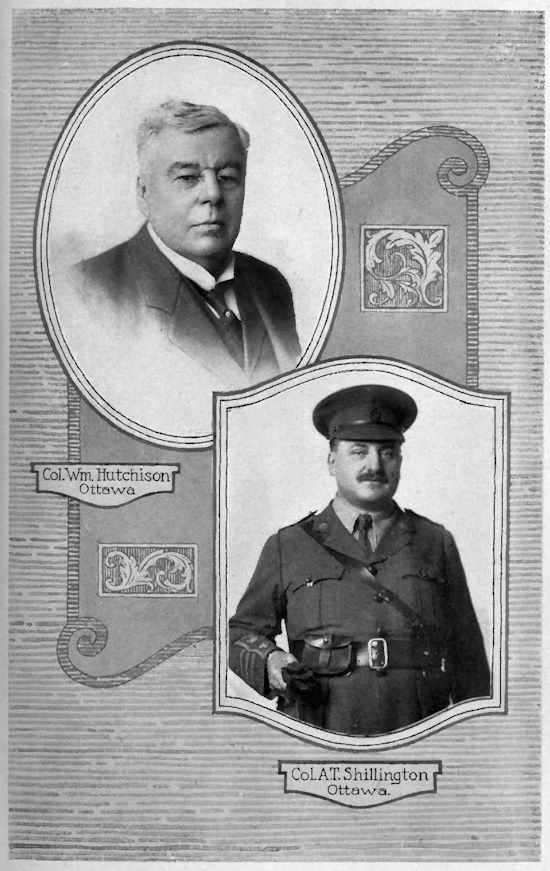
Col. Wm. Hutchison, Ottawa Col. A. T. Shillington, Ottawa.
Dowling, John S. (Brantford, Ont.), Manufacturer, was born at Bolton, Ont., May 16, 1875, the son of Bryan Dowling, a railroader, and Sarah A. Dowling. His early education began at the Bolton Public School and then at the Toronto Technical School. Settling in Brantford, he soon became interested in the welfare of that city and became Alderman in 1915 and was re-elected in 1916 and 1917, was chairman of the Railway Committee and Chairman of Finance in 1916 and 1917. He is President of the well-known firm of John S. Dowling & Company, Ltd. Mr. Dowling takes a keen interest in all kinds of sports, especially lacrosse, hockey, bowling and tennis, and was one of Canada’s star lacrosse players, helping Brantford win many games during the years 1902 to 1905. Was prominent player of Tecumseh and Toronto Lacrosse Clubs prior to going to Brantford, and was selected by latter club to tour Great Britain in 1902, which played throughout England and Ireland. Is chairman of Brantford Branch of Soldiers’ Aid Commission, having organized the first commission in Canada, which later became part of Provincial Soldiers’ Aid Commission, when latter was created. Under his chairmanship Brantford has the name of being the best organized branch in the Province. He is Rotary President of the Dufferin Bowling Club and a member of the Heather Bowling Club. Is a Mason and also a member of the Canadian Order of Foresters. On August 23, 1904, he married the daughter of Neil Macmillan, a journalist, of Glasgow, Scotland, and has had four of a family—Ian Macmillan, born June 3, 1907; Margaret Faith, born May 28, 1910, died May 27, 1912; Kathleen Patricia, born March 15, 1913, and Phyllis Trimble, born October 13, 1914. Mr. Dowling belongs to the Presbyterian Church and is a Conservative in politics.
Notman, John Charles (St. Catharines, Ont.), was born at Thorold, Ont., on January 4, 1866. Son of John and Barbara (Ogilvie) Notman. Educated at the Public Schools, St. Catharines, and in 1881, entered the office of the Welland Vale Manufacturing Co. In 1901 he was appointed as Manager of the McKinnon Dash Co., manufacturers of saddlery, carriage hardware and malleable iron castings, St. Catharines. He is Vice-President of the St. Catharines Steel and Metal Co. Since 1910 he has been Water Commissioner of the city. As a clubman he is well known in many cities, and he is a member of the St. Catharines City Golf Club; Laurentian Club, Ottawa; and the Niagara Club, Niagara Falls, N.Y. In religion he is a Presbyterian and a Conservative in politics. In 1896 he married Clara Louise, daughter of James Seymour, and has one son.
Paton, Hugh (Montreal, Que.), is President of The Shedden Forwarding Co., Ltd., Montreal; Director, Royal Bank of Canada; Bell Telephone Co.; Sincennes McNaughton Line, Ltd.; Northern Electric Co., Ltd.; Canadian Express Co.; Canadian Transfer Co.; Montreal Trust Co. Born at Johnstone, Renfrewshire, Scotland, October 5, 1852, the son of William and Mary (Shedden) Paton, he came to Canada in 1871, after an early education at Paisley Grammar School, Scotland, and joined his uncle, the late John Shedden, a prominent railway contractor of Toronto. Mr. Shedden was formerly President of the Toronto & Nipissing Railway and built the Union Station, Toronto, in addition to other public works. In 1873, Mr. Paton removed to Montreal and took up his present business under the name of The Shedden Forwarding Co., Ltd., marrying Isabella, daughter of the late Andrew Robertson, in 1884. His recreations are the turf, farming and travelling, and he has won three Queen’s Plates and one Hunt Cup. He is a governor of Montreal General, Notre Dame and Western Hospitals; was Honorary Secretary-Treasurer, 1879-1886, and Master of the Montreal Hunt, 1887; Honorary Secretary for two years of the Montreal Tandem Club; Honorary Treasurer for several years of the Province of Quebec Turf Club, Mount Royal Club, and member of the St. James’ Club, Montreal; Royal Montreal Golf Club; Montreal Racquet Club; Forest and Stream Club, Montreal; Canada Club, Montreal; Montreal Jockey Club; Toronto Club, Toronto; Manitoba Club, Winnipeg; Manhattan Club, New York; Royal Automobile Club and Junior Athenæum Club, London, Eng. Residence, 507 Sherbrooke St. West, Montreal; summer Residence, “The Island,” Bord-à-Plouffe, Que.
McGiverin, Harold Buchanan (Ottawa, Ont.), Barrister and Solicitor, was elected to the House of Commons for Ottawa in 1908, and chosen as Liberal Whip for Ontario in the following year, but was defeated in the elections of 1911. Called to the Bar of Ontario in 1893, he is a member of the firm of McGiverin, Haydon & Ebbs, and has been Counsel for the Great Northern Railway in Canada, also for the Bank of Nova Scotia at Ottawa. In spite of a distinguished professional career, however, it is as a sportsman that Mr. McGiverin is most widely known, being an authority on football and cricket. He represented Canada in International Cricket for years; has been captain of the Canadian Team for five years and President of the Ottawa Cricket Club for several years; also President of the Canadian Cricket Association. He was Captain and later President of the Ottawa Football Club, (“Rough Riders”), Champions of Canada, and was appointed Canadian Member of the Olympic Games Committee in 1908. His clubs are: Rideau, Ottawa Golf, Ottawa Country and Connaught Park Jockey, all of Ottawa; the Pilgrim, of Philadelphia; also the Marylebone Cricket Club of London, Eng., and Free Forresters. Mr. McGiverin was born in Hamilton, Ont., August 4, 1870, the son of Lieut.-Colonel William McGiverin, formerly M.P. for Lincoln, and Emma (Counsell) McGiverin. He was educated in Public and Private Schools, also at Upper Canada College and Osgoode Hall. He married Alice Maude, daughter of Hon. C. H. Mackintosh, late Lieutenant-Governor of the North-West Territories, September, 1898, and has one son, H. M. McGiverin, Cadet Royal Air Force, 1918. He is an Anglican in religion.
Ingersoll, James Hamilton, K.C. (St. Catharines, Ont.), was born in the Garden City on October 8, 1858. Son of James Hamilton and Frances E. (Jacobs) Ingersoll. Educated at the Public and High Schools of his native city and at Upper Canada College, Toronto. He studied law in the office of the late J. C. Rykert, K.C., M.P. Was called to the Bar of Ontario in 1883. Mr. Ingersoll is recognized as one of the most prominent barristers of the Niagara Peninsula, and enjoys a large and lucrative practice and represents many important interests. He is senior member of the firm of Ingersoll and Kingstone, which has offices at 24 James St., St. Catharines. He was created a King’s Counsel in 1908. He has many important interests outside his practice and is Vice-President of the Security Loan and Savings Co., Ltd., and a Director of the Suspension Bridge Company, Niagara Falls. In religion he is an Anglican, and a Conservative in politics. He is a member of the Masonic Order. He was first married in 1889 to Florence N. Fowler, and secondly, in 1910, to Harriet Mary Martin. He has two daughters.
Ellis, John F. (Toronto, Ont.), born at Mount Pleasant, Ont., on November 9th, 1845. Son of John R. Ellis and Janet Carlyle, niece of the famous Thomas Carlyle. Educated at local Grammar School and Toronto Normal School. Entered into business with John R. Barber in 1876, Paper Dealers and Envelope Manufacturers, which concern became subsequently known as the Barber-Ellis Limited, 71 Wellington Street West, Toronto, having branches at Winnipeg, Calgary and Vancouver, with the manufacturing plant at the city of Brantford, Ont. One of the Vice-Presidents of the Canadian Reconstruction Association. Was President of the Toronto Board of Trade 1902-1904; President of the Canadian Manufacturers Association 1898-1900. President of the National Club, 1901-1902; President, Caledon Fishing Club 1903-1905; Vice-President, Local Branch, Ontario Fish and Game Protective Association; one of the Founders of the Commercial Travellers’ Association; Delegate to the Sixth Imperial Trade Congress, London, England, July, 1906; presented to King Edward, 1906. He is a member of the National Club, Royal Canadian Yacht Club and Caledon Fishing Club. Mr. Ellis is a supporter of the Union Government. In religion he is a Methodist. He has given freely of his time and ability to the advancement of his home city. Married Emma Maughan, June 7th, 1877, daughter of Nicholas Maughan, Toronto Assessment Commissioner; has three sons.
McKeon, P. J., Very Reverend Dean, Rector of St. Peter’s Cathedral, London, Ont., one of the best loved clergymen of the Roman Catholic Church in this country, was born at Merlin, Ont., the son of James and Ann (Finn) McKeon. He was educated for the priesthood at the widely known seminary of the Basilian Order, Assumption College, Sandwich, Ont., whose graduates have rendered unselfish Christian service in many parts of the world. Father McKeon was Rector of St. Mary’s Church, London, Ont., for twelve years prior to his elevation as Dean and Rector of St. Peter’s Cathedral, and during that time established a reputation for kindliness, piety and zeal in all good works that was recognized by all classes of the community. He has held the responsibilities of the Chancellorship of the diocese since August, 1899, being appointed to that position by the late Archbishop McEvoy when he became Bishop of London. He is known also as one of the best organizers in the diocese of London. He willingly participates in the civic activities of his chosen city, and is a member of the local Canadian Club, the London Board of Trade and of the Knights of Columbus.
James, Edgar Augustus, a Consulting Engineer, was born in the County of York, at Thornhill, Ont., August 25, 1874, eldest son of David James and Francis M. Jackson. Both parents were also born in York County. His father, a nephew of the late Senator David Reesor, is a successful York County farmer, who has taken an active part in Grange and Farmers’ institute work. He represented the Township of Markham in the York County Council for some twelve years, and was for some twenty years Engineer for the Township of Markham. Educated at the Langstaff Public School, the Newmarket High and Model Schools, and the Toronto Normal School, the subject of this sketch taught public school at Don, Ont., for two years, after which he entered the Faculty of Applied Science of the University of Toronto, securing the degree of B.A.Sc. in 1904, and the professional degree of C.E. in 1913. As a student he was active in the work of the Engineering Society of the Faculty, and was the President of the organization in the years 1903-4. For the period of 1906 to 1914 he sat on the Senate of the University of Toronto as one of the elected representatives of the Graduates. On December 1, 1910, he was married to Mary Kate Smith, daughter of William Henry Smith, who for fifty years was Principal of the Public Schools, Port Dover, Ont. His professional experience includes two years on road work and drainage work in Western Canada, and four years on railway construction work with the Canadian Pacific Railway. In 1908 he was appointed Managing Editor of the “Canadian Engineer,” which publication, under his direction, was developed into the leading Canadian Engineering Weekly. Since giving up active journalistic work he has been a frequent contributor to the technical press. In 1911 he resigned to take the position of Chief Engineer of the Toronto & York Roads Commission, an organization charged with the improvement of some two hundred and fifty miles of leading roads radiating from Toronto. In the Fall of the same year he became a member of the newly organized firm of Consulting Engineers, James, Loudon & Hertzberg, Ltd., which firm has had charge of important engineering works in connection with buildings, bridges, roads, waterworks, sewerage and railways, together with industrial plants. Moving up through the junior classes, he became, in 1914, a full member of the Engineering Institute of Canada, having been made, in 1913, a full member of the American Society of Civil Engineers. He was a member of the original committee of six who met for the purpose of re-organizing the Engineers’ Club as a Social and Technical Club, and was a member of its first Board of Directors. He is also a member of the Ontario Club; the York Pioneer and Historical Society and a life member of the Ontario Historical Society; a P.M. of Patterson Lodge A.F. & A.M.; P.Z. Victoria Chapter, R.A.M., and a member of Cyrene Preceptory and Rameses Temple. In July, 1918, he was appointed D.D.G.M. for Toronto Centre District No. 116 A.F. & A.M., G.R.C. He is also a P.C.R. of Court Union, A.O.F. In religion both families are Methodist, as is the subject of this sketch.
Finnie, David Maclachan. The Bank of Ottawa, now amalgamated with the Bank of Nova Scotia, was established in December 1874, with headquarters in the Victoria Chambers, Cor. Wellington and O’Connor streets, Ottawa. Its authorized capital was $500,000 and its paid-up capital $343,875. An unique happening is connected with the founding of this bank, viz., that some twelve days before the head office in Ottawa was opened and ready for business, a branch office was established in Arnprior under the management of Mr. David Maclachan Finnie, who was then a young man of 25 years and who in 1903, 29 years later, became Assistant General Manager and in 1916, General Manager, which position he held up to the time, April 30th, 1919, of its amalgamation with the Bank of Nova Scotia. Mr. Finnie was, therefore, the first manager of the Bank of Ottawa to do business with the public in its solitary branch in Arnprior in 1874, when authorized capital of the bank was $500,000, and the last General Manager of the bank in 1919, when its Capital was $4,000,000; when its reserve fund was $4,750,000; when its branches numbered 95; when it had contributed 228 members of its staff to the great cause of liberty in the world’s great war; when its total assets were $70,243,000, and its liabilities $60,539,000, showing a surplus of just under $10,000,000; and when it was paying the shareholders over 12 per cent. on the par value of the stock. The Bank of Ottawa, from the start, established a high character which it always retained. Its management had a reputation invariably for generous dealings with its clients and never more than of the late years; and to Mr. Finnie’s affable manner, generous, yet wise, consideration of its clients’ requirements and his undoubted ability both as a banker and as a financier, the success achieved by the bank was considerably attributable. Mr. David Maclachan Finnie was born at Peterhead, Scotland, July 10th, 1849. He is the son of Robert and Mary (Smith) Finnie, and was educated in the Parish School, Peterhead. At an early age he acquired a business and banking experience in the office of A. & W. Boyd, Solicitors and Agents in the Union Bank of Scotland, Peterhead; in the office of Secretary, West of Scotland Wholesale Grocers Association; in the Bank of British North America, London, England; Montreal, Hamilton and Arnprior. He is a Director of the Home Building & Savings Association; was elected Vice-President of the Ottawa Board of Trade in 1909; is Vice-President of the County of Carleton Protestant Hospital, and in 1919 was elected by acclamation to the Presidency of the Royal Ottawa Golf Club. At the opening campaign on behalf of the Canadian Patriotic Fund, Ottawa Branch, he was elected Honorary Treasurer, and has remained in that position ever since. There was subscribed over $2,000,000, nearly all of which has been paid in. In 1875 Mr. Finnie married Caroline Nicholson Sterling, daughter of George Sterling of Hamilton, Ontario. He was President of the Rideau Club for 1911-12-13, and is a member of the Country, Ottawa Golf, Ottawa Hunt Clubs. In religion Mr. Finnie is an Anglican. His residence is 329 Chapel Street, Ottawa, Canada.
Boudreau, L. N. H. Rodolphe, who from 1889 to 1907 was Private Secretary to the late Right Hon. Sir Wilfrid Laurier, is a son of the late Dr. J. B. Boudreau of Doucet’s Landing, Quebec, and Sarah (Fortier) Boudreau. He was born at St. Gregoire, Quebec, Sept. 19th, 1865, and was educated at Nicolet College and Laval University. In 1893 he married Annie, daughter of Thomas Wensley, Ottawa. He accompanied Sir Wilfrid to Washington and to London and Paris on official missions. He entered the Civil Service in 1896, was appointed Assistant Clerk of the Privy Council in 1900, and Clerk of the Privy Council on May 6th, 1907. January 1st, 1918, he was knighted a Companion of St. Michael and St. George. In religion Mr. Boudreau is a Roman Catholic. He resides at 198 Stewart Street, Ottawa.
Arkell, Thomas Reginald, B.S.A. (Toronto Ont.), is recognized as one of the leading live stock experts of Canada, though still young in years. He was born at Arkell, Wellington County, Ont., on March 30th, 1888, the son of Henry and Jessie (Macfarlane) Arkell. He had an early insight into the practical side of his chosen profession from his father, who was a prominent sheep-raiser, and had resolved to give his son a thorough education in the scientific side of the business. The subject of this sketch was educated at the public schools of Arkell and Guelph, Guelph Collegiate Institute and the University of Toronto. In 1908 he graduated with the degree of Bachelor of Scientific Agriculture, standing highest in his class for general proficiency and capturing the Governor-General’s medal. He first went into journalism and in the year of his graduation was appointed agricultural editor of the “Canadian Citizen,” Ottawa; and later served for some months as Associate Editor of “The Canadian Farm,” Toronto. In 1909 he was appointed Professor of Animal Husbandry at the New Hampshire State College and animal Husbandman of the Experimental Station in connection with that institution. In 1912 he returned to Canada to accept the appointment of Chief of the Sheep and Goat Division of the Live Stock Branch in the Federal Department of Agriculture. In 1918 he was appointed Manager of the Canadian Co-operative Wool Growers, Limited, an association designed to benefit wool production in Canada from every point of view. He is widely known in connection with this basic industry and is the author of numerous papers and pamphlets relating to sheep-breeding and the inheritance of bovine characteristics. He is a member of the University Club, Ottawa, and of the American Association for the Advancement of Science. In 1911 he married Mabel Helen, daughter of William Mahaffey of Dover, New Hampshire, and has one daughter, Eleanor Kathleen. He resides at 70 Beaty Avenue, Toronto.
HON. GEO. P. GRAHAM Brockville
Gartshore, Lieut.-Col. William Moir, is one of the best known industrial leaders of Canada, and is Vice-President and General Manager of the McClary Manufacturing Co. of London, Ont. His Company is one of the Canadian pioneer concerns in the manufacture of stoves and furnaces, and has branches at Montreal, Toronto, Winnipeg, Vancouver, St. John, Hamilton, Calgary, Saskatoon and Edmonton. Col. Gartshore was born at Dundas, Ont., April 3rd, 1853, the son of John and Margaret (Moir) Gartshore. The late Mr. John Gartshore was during his lifetime a prominent manufacturer of marine machinery, engines, boilers, etc., and the subject of this sketch was educated in the public and grammar schools of Dundas and at Dr. Tassie’s famous academy at Galt, Ontario. In 1873 he joined the staff of the London Car Wheel Company and in 1876 entered the employ of the McClary Manufacturing Company with which he has ever since been connected. Since 1890 he has filled the dual office of Vice-President and General Manager. His other business interests include a directorship of Ontario Loan and Debenture Co., London. Since early manhood he has taken an active interest in military matters and holds a first-class cavalry certificate. He entered the militia as a volunteer in 1871 and during the North-West Rebellion of 1885 served as Junior Major of the 7th Fusiliers, London, for which he wears the campaign medal. He was made major in 1884 and in 1892 became Lieut.-Col. in command of 1st Regiment of Cavalry, “Hussars,” London. He is now on its reserve of officers. Col. Gartshore has also held many important public offices. He was Provincial Vice-President of the Canadian Manufacturers Association, 1908, and Vice-President for Canada in the same organization, 1914-15. He is President and was formerly for some years a director of London Fair Association; Chairman of the Victoria Hospital Trust; President of the St. John’s Ambulance Association, London; President of the Child Welfare Association, London. During his many journeys to the motherland he was in 1886 presented to the late King Edward VII when Prince of Wales, and in 1905 after he came to the throne. In response to the wishes of his fellow citizens he stood for Mayor of London in 1916 and was elected. Col. Gartshore is a member of the following Clubs: London, London Hunt, and National (Toronto). He is also a member of St. Andrew’s Society and his recreations are riding, cricket and baseball. In politics he is a Liberal-Unionist and in religion a Presbyterian. He was married on Dec. 26th, 1876, to Catherine, daughter of Mr. John McClary, the head of the company with which he is identified, and has one daughter, Mrs. Edna Cleghorn.