LIST OF PHOTOGRAVURES (continued 2)
Reading edition
Parmelee, William George, LL.D., D.C.L. (Quebec City), English Secretary of the Department of Public Instruction, and Joint Secretary of the Council of Public Instruction of the Province of Quebec, was born at Waterloo, in the Eastern Townships, in 1860. He is a son of Rufus E. Parmelee, whose father had come originally from the United States. On the mother’s side, the subject of this sketch is of Scottish descent. He received his early education at Waterloo Academy, finally graduating as a teacher from the McGill Normal School of Montreal. He afterward became head master of the Model School Department and, later, a Professor of the Normal School. Previous to his holding these positions, he had been a member of the staff of St. Francis College, Richmond, P.Q., from 1881 to 1885. From McGill Normal School he was selected for his present position in 1891; and for more than a quarter of a century he has been in touch with the educational affairs of Quebec. He has proved himself a departmental administrator of widely recognized professional acumen. The academic honors that have been bestowed upon him from the time of his extra-mural course at Queen’s University, from which he graduated in 1889, stand as an endorsation of his scholarship, these including a D.C.L. from Bishop’s College in 1902, and an LL.D. from McGill University in 1911. He has likewise been honored by being chosen more than once, President of the Teachers’ Association of his native province; President of the Literary and Historical Society of Quebec for three several terms; President of the Young Men’s Association; a delegate to the Federal Council of the United Empire Educational League in London, England, and later on as a delegate to the Imperial Conference on Education in the same centre. Taking an interest in local military affairs he was awarded a Captaincy in the 8th Royal Rifles Company, and later on received the honorary rank of Colonel. Nor has he neglected literary pursuits in his spare moments, having had published two of his papers read before the Literary and Historical Society, and entitled, “Wolfe as a Man and a Soldier,” and “The Fraser Highlanders.” He has also won high literary credit as joint-collaborateur with Dr. Arthur Doughty, the Dominion Archivist, in six volumes dealing with the “Siege of Quebec.” In 1886 he married Miss Louise Foss, of Waterloo. Their family consists of four daughters.
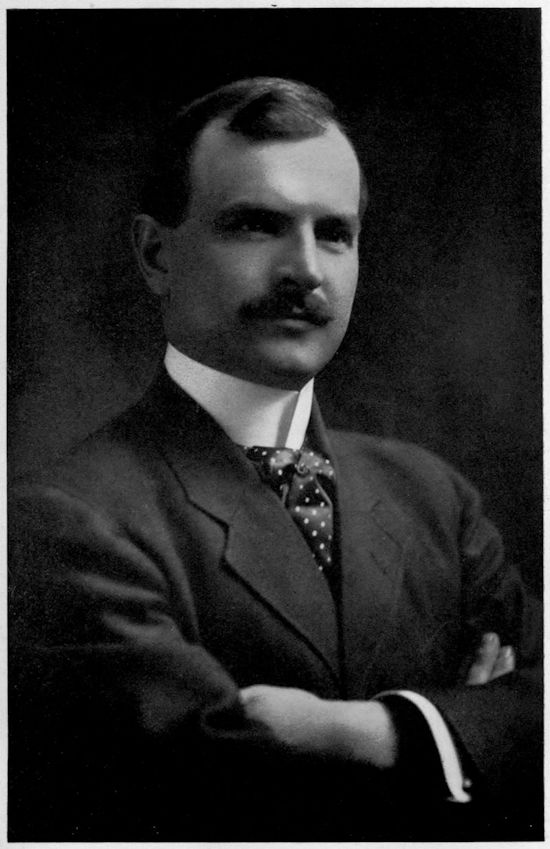
HON. P. E. BLONDIN Ottawa
McCorkill, The Hon. Justice John Charles (Quebec City), was born in the town of Farnham, P.Q., on August 31, 1854. His father was Mr. Robert McCorkill, of Farnham and the Eastern Townships. His mother’s maiden name was Miss Margaret Meighen. His wife is a daughter of the Hon. Senator Leonard of London, Ontario, their marriage having taken place in 1884. From the district elementary school, he entered the classes of the McGill Model School, and in time obtained a certificate to teach from the McGill Normal School. For a period he acted as Principal of the Montreal British and Canadian School, thereafter taking his degree of B.C.L. as a preliminary step to his becoming a lawyer. At first he became a partner in the Greenshields legal firm, but subsequently removed to the Bedford District and finally opened a central office at Cowansville. While rising to a high rank as an advocate, he was encouraged to enter the political field, and after suffering defeat twice in succession, was at length elected to the Legislative Assembly as the representative of Missisquoi. In time he was appointed Legislative Councillor for the District of Bedford, where he was so appreciatively known as a public-spirited citizen and an able lawyer, who had held the position of Batonnier of the Bar and other offices of rank. In 1903, he resigned his seat in the upper chamber of the Provincial Parliament, to become Provincial Treasurer in the Parent Administration, and was elected to the Legislature by the Constituency of Brome. This office he held for three years, up to the time of his appointment as a Judge of the Supreme Court for the District of Quebec. While Treasurer, his term was marked by important legislation, such as the revision of the taxation laws relating to banking institutions and succession duties, which resulted in a surplus for the province of half-a-million dollars. After the date of his appointment to the Bench, he was made a Joint Commissioner with the Hon. Mr. Mathieu and Mr. L. J. Gauthier, to revise the Municipal Code of the Province of Quebec. His record as a legal practitioner and advocate, as well as a financier and public-spirited citizen, has been a full one, wherever he has resided, in Montreal, in the Eastern Townships, or in the city of Quebec. For several years he was Mayor of Cowansville, where he was also President of the Missisquoi Historical Society. He has been President of the Literary and Historical Society of Quebec, and is a member of the Council of Public Instruction. Even in military affairs he has taken an active part, having been Captain as well as Major in the Militia between the years of 1879 and 1887. His literary tastes have expressed themselves in the historical papers he has written from time to time. Altogether the Hon. Justice McCorkill may truly be spoken of as possessing a forceful and clear-visioned personality, able and willing always to share in the civic and provincial advancement of the community in which he lives or has lived.
Taschereau, The Hon. Louis Alexander (Quebec City), Minister of Public Works for the Province of Quebec, is the son of the Hon. Justice Taschereau, who married Miss Josephine Caron, the daughter of the Hon. Justice Caron, formerly Lieut.-Governor. He was born on the 5th of March, 1867. He was educated at the Quebec Seminary and Laval University, graduating as a Licentiate of Law in 1889, preliminary to his entering upon his professional career as partner of Sir Charles Fitzpatrick, now Chief Justice of the Supreme Court of Canada. Later he became associated with what is now the legal firm of Taschereau, Roy, Cannon, Parent & Casgrain. As a lawyer, Mr. Taschereau came at once to be recognized as one of the leading legal practitioners of the district, among his successes being the part he took in the Gaynor and Greene extradition case in 1902. In addition to his duties as an advocate he took part in civic affairs, and for a time held a seat as an alderman of his native city. In 1900, he was elected for the constituency of Montmorency in the Legislative Assembly, and has continued ever since to be its representative. Seven years after, with his skill in debate, duly recognized by his parliamentary associates, he was selected to take his place in the Gouin Administration as Minister of Public Works and Labor. His administrative ability has been in keeping with his statesmanlike insight and foresight, and his skill in debate. His advice is ever in demand when any legal technicality has to be examined and explained to both sides of the Assembly. In fact, he has taken a high place as the Premier’s ally in all matters pertaining to the progress of the province, while he has won the highest credit within parliamentary circles and beyond them, for the efficiency of the Department in his charge. He has been a member of the Battlefields Park Commission since the day it was organized, and is likewise a Governor of the Catholic Church Society. He is a nephew of the late Cardinal Taschereau, Archbishop of Quebec. In 1891 he married Miss Adine Dionne, daughter of the Hon. E. Dionne, of the Legislative Council of Quebec, by whom he has had three sons and two daughters. Altogether he has made a record for himself in his native city and province as an able advocate, an astute governmental administrator, and a loyal citizen. Sprung from a distinguished and talented family, his career as a public man has added to its fame.
Ross, James Gibb (Quebec City), Senator of Canada, was born in Carluke, a village of Lanarkshire, in Scotland, on April 18, 1819. He came out to Canada in 1832, in company with his elder brother, John Ross; and, after attending one of the private schools of Quebec for a year or two, he entered the business office of his uncle, Mr. James Gibb. At this time the firm of James Gibb & Company was one of the largest of the wholesale grocery and provision houses in what has always been known as the Lower Town of Quebec; and there the Scottish lad laid the foundation of his business career, which was eventually to place him among the wealthiest merchants of Canada. In 1843, Mr. Thomas O. Gibb, son of Mr. James Gibb, returned to Quebec, after finishing his school education in Edinburgh; and in the same year a company was formed in which Thomas O. Gibb, John Ross, and James G. Ross were the partners, until the first mentioned of the three died in 1845. Eventually, on Mr. James Gibb’s death, the two Ross brothers took the business name of Ross & Co., and as such continued in active operation up to the year 1868. By this time the firm had amplified its business by other branches of trading; and in 1868 the older of the two members of the firm withdrew to conduct a business of his own, for the most part confined, as it was, to the grocery and provision trade. With him was associated his youngest brother, Frank Ross. At the time of the Senator’s death, in 1888, the firm of Ross & Co. had developed into one of the wealthiest business concerns in the country, having depots for the distribution of their wares in nearly all the larger cities of Canada and the United States. With millions at his command, the sole partner of the firm took an active interest in shipbuilding and railroad construction. Nearly every branch of industry was enhanced by the money advances of the multi-millionaire. The shipping interests, especially, felt the effects of his business acumen, especially when he took in charge for sailing purposes the ships the building of which he had assisted with advances of money, but which, for market reasons could not for a time be sold. The railroads which came in for assistance included the Quebec and Lake St. John Railway and the Quebec Central, both of which may trace their success as paying concerns to the financial foresight of Senator James G. Ross, who thus both directly and indirectly aided the colonization of the country and its trading interests by the assistance he extended to their promoters. Nor was it easy for one so prominent in the commercial interests of the ancient capital to refuse to be nominated as a candidate for parliamentary honors. On two several occasions he was called upon to contest the electoral division of Quebec Centre, once in the Conservative interest in 1872, against Mr. Cauchon, afterwards Governor of Manitoba, and a second time as an Independent, in 1878, against Mr. Malouin. In both instances he was defeated, though afterwards he was considered worthy to succeed the Hon. David Price as Senator, in 1884. He was unmarried; but in the families of his two brothers, John and Frank, he is notably represented to-day by Mr. John Theodore Ross, the only son of the former, and Frank W. Ross, surviving son of the latter, both of whom have evidently in them the desire inherited from their uncle, James G. Ross, to advance the interests of their native city. The Hon. Senator Ross was a prominent citizen other than in business and political circles. He took an interest in school improvements and church advancement. He was for many years President of the Quebec Bank, a Director of the Quebec High School, and an elder in Chalmers Church. As may well be said of his beneficent uncle, James Gibb, Senator James Gibb Ross was a liberal benefactor to the institutions of Quebec, both before his death and after it. He accumulated his millions in Peter Street, and every Protestant institution in the city of his adoption benefited by his wealth in some way or another.
Gouin, The Hon. Sir Jean Lomer, K.C.M.G., LL.B., LL.D., Premier of the Province of Quebec, was born at Brondines, of the County of Portneuf, on March 19, 1861. He comes from a French-Canadian stock whose lineage can be traced as far back as 1662. His father was J. N. Gouin, M.D., who married Miss Victoire Seraphine Fugère in 1852. In his earlier years, their son Lomer became a pupil of Sorel College, thereafter entering as an under-graduate the College of Levis, and afterwards graduating at Laval University. His collegiate honors include the degree of LL.D., received successively from Laval in 1902, from Bishop’s College University in 1913, and from Toronto University in 1915. He was called to the Bar in 1884, after studying law under the late Sir John Abbott and the Hon. B. Laflamme. He had thus been a student under the supervision of a Prime Minister of Canada and of a Minister of Justice. During his partnership with Judge Pagnuello and the Hon. Premier Honore Mercier, whose daughter Eliza he married in 1888, he came into prominence in the law courts of Montreal, being finally elected Batonnier-General in 1910, after having served a term as Alderman of that city, and elected a Member of the Local Legislature. In 1900 he became Commissioner of Public Works in the Parent Administration for four years. Resigning his place in the Parent Cabinet in 1904, he was called to the premiership the year after, holding the portfolio of Attorney-General up to the present time. During the general election of 1916 his administration of public affairs was upheld by a majority never before vouchsafed to a Quebec premier; while the list of honors conferred upon him since his advent to power is perhaps one of the longest on record. He was knighted by the reigning Sovereign of the Empire at the Quebec Tercentenary Celebration of 1908, and was made a K.C.M.G. in the year 1913. Ever animated with a desire to see his native province an advancing factor in the general progress of the Dominion of Canada, as well as of the British Empire, he has been diligent in promoting the public works that have to be fostered within the counties and parishes, as well as in the cities and larger towns, in line with the general advancement of the commonwealth. He has done his best to improve the educational conditions of the communities, not forgetting likewise to improve the highways and the industrial activities all over the province. His zeal in establishing and liberally subsidizing Industrial Schools and Technical Colleges has become a proverb in all the provinces; while, in view of his support of a provincial grant of one million dollars to the Canadian Patriotic Fund during the time of war, his reputation as a broad-minded Canadian citizen has been placed beyond all questioning. Senator David has pronounced a eulogium on Premier Gouin that places him in rank with, if not beyond, those who have preceded him in the Quebec premiership. Within these war-times he has advocated a National War Service in the most fervent terms, illustrating Senator David’s estimate of his statesmanship as that of a highly capable servant of the State, in his impartial judgment, prudence, eloquence, and administrative acumen. His share in the Bonne Entente mission to Ontario in 1917, to plead, with others, for a closer mutual understanding between the two leading races in Canada, has given an éclat to his statesmanship. He would see Canada a unit while aiding the mother lands in Europe by force of arms, and thus uphold the prestige of the British Empire. And the various offices Sir Lomer Gouin has held from the day he entered public life in 1891, indicate the strenuous part he has played as a public-spirited Canadian. In 1891, he was President of the National Club in Montreal, which was virtually “the Executive of the Liberal Party” in the Montreal district. That year he was defeated in his first election contest. Six years after he was elected representative for the St. James Electoral Division of Montreal, and thereafter has been member for his native County of Portneuf. He has continued to be a Member of the Council of Public Instruction since 1898; became President of the American Fish and Game Protection Association in 1910; was Chairman of the Ottawa Inter-provincial Conference in 1906, and afterwards a delegate to a like Conference in 1910. As from one “learned in the law,” his edition of the Municipal Code is a standard work; while no one has so well at his command the details of parliamentary law-and-order as he has, as leader of the House of Assembly. The record of his regime is concisely given in a neat little volume published in 1916, under the title of “Le Gouvernment Gouin et Son Oeuvre.” Another volume referring to the federal subsidies in favor of the provinces was published in 1903, giving the amplified record of an address delivered by Sir Lomer under the heading of “The Actual Question.” These volumes, together with the reports of his speeches from time to time, indicate how Sir Lomer Gouin has ever had in mind the public interest—seeing to the improving of the conditions in his native province, even to the widening out of its area as in the case of the annexation of the District of Ungava, building government works, and highways, and bridges, and never forgetting to urge it to keep pace with its sister provinces in the federacy which includes them all within the Dominion of Canada. In seeing to the advancement of the province he has in charge as premier, he has made fame for himself as a loyal statesman and dignified scholar, duly honored by the King and his country’s seats of learning. He was married to Miss Alice Amos, his second wife, in 1911. By his first wife he has had two sons—Leon, who is practising law in Montreal; and Paul, who is a lieutenant on active service.
Drayton, Sir Henry Lumley, K.C., K.B., Chief Commissioner, Board of Railway Commissioners for Canada, was born in Kingston, Ontario, April 27, 1869. He is the son of Philip Henry Drayton, who came to Canada with the 16th Rifles of England, and Margaret S. (Covernton) Drayton. He was educated in the schools of England and Canada. On September 14, 1892, he married Edith Mary Cawthra, daughter of the late Joseph Cawthra, Toronto, and has three daughters. Sir Henry Drayton was called to the Ontario Bar in 1891 and soon became recognized as one of the leaders in the legal profession. In September 1893, he was appointed Assistant City Solicitor for Toronto, and when he resigned in September, 1900, he was presented with a gold watch in recognition of the valuable services he had rendered to the city in his legal capacity. He immediately (September, 1900), formed partnership with Charles J. Holman, K.C., and in January, 1902, was appointed Counsel to the Railway Committee of the Ontario Legislature by the Chairman, the Hon. John Dryden. The following year he was appointed representative of the Ontario Government for the purpose of adjudicating upon and paying, on behalf of the Government, the claims of workmen of the different Clergue Companies operating at Sault Ste. Marie, and on January 29, 1904, he was appointed County Crown Attorney for the County of York, on the recommendation of the Hon. J. M. Gibson. In 1905 he was appointed Counsel on Civic Bribery Investigation, Toronto, the Civic Investigation Court House in 1906, the Public School Board Investigation, and also the Civic Investigation into the Medical Health Department. January the 20th, 1908, he was created K.C. He resigned his position as County Crown Attorney in 1909, and the following year, April 25, 1910, was appointed Counsel for the Corporation of the City of Toronto. May 11, 1911, he was appointed as representative of the Ontario Government a member of the Toronto Power Commission. When on July 1, 1912, he was appointed Chief Commissioner of the Board of Railway Commissioners for Canada the Toronto City Council presented him with an illuminated album. In July, 1913, he was appointed Commissioner to deal with the question of Control of Ocean Freight Rates. In 1917 Sir Henry Drayton was appointed a member of the Drayton-Smith-Acworth Commission which investigated the Canadian railway situation. When the work of the Commission was completed and their report presented to the Government, he, as his fee for his able services on the Commission, was presented with a cheque for $15,000 by the Dominion Government. He refused to accept payment and returned the cheque. Acknowledging the receipt of the returned cheque the then Minister of Railways and Canals, Hon. Mr. Cochrane, wrote in part as follows: “I can assure you that your very patriotic attitude in this matter is most sincerely appreciated by the Government at a time when every dollar which can be saved is of material importance to the successful prosecution of the war.” In very many other ways since the war commenced in 1914, Sir Henry Drayton has rendered valuable services—financially, as a member of committees and in the direction of transportation, supply and other matters. He is ever to the fore to do all he can to help Canada successfully bear the burdens—financially, commercially and otherwise—that this war has forced her to carry and no one has ever rendered such services more freely and willingly. Sir Henry Drayton is a member of the Toronto, Toronto Hunt, Ontario Jockey, Rideau, Ottawa Royal Golf, Country (Ottawa), Connaught Park Jockey (Ottawa), and the Kaministiquia (Fort William) Clubs. His address is 233 Metcalfe St., Ottawa.
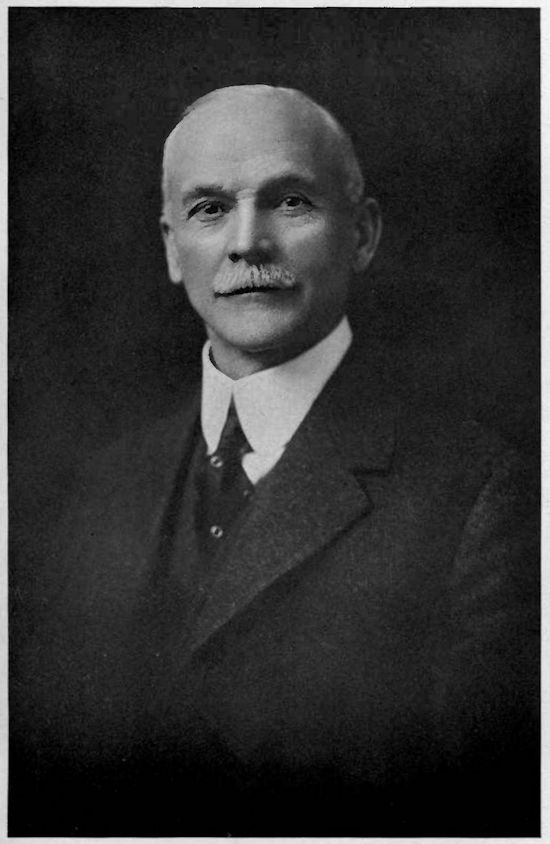
S. R. PARSONS Toronto
Dobell, Sir Charles Macpherson, K.C.B., C.M.G., D.S.O. (Quebec City), Lieutenant-General of the British Army, is a son of the late Hon. R. R. Dobell, lumber merchant, of Quebec, and a grandson of Senator Sir David Macpherson, at one time Speaker of the Canadian Senate. He is a native of Quebec, having been born on June 22, 1869. Receiving his elementary education at the Rev. Canon Von Iffland’s Private School, he became a student at the Quebec High School and later at the Charterhouse School in England, previous to his entering the Royal Military College at Kingston, Ontario. From that institution he graduated in 1890. After serving as a Lieutenant in the Hazara Expedition, wherein his bravery was mentioned in dispatches and by the award of a medal and clasp, his advancement has proceeded steadily with his experience in active service. He took part with the International Forces in the occupation of the Island of Crete, and was there raised to the rank of Major. During the South African War, he joined the Canadian Contingent, and won his D.S.O. with other honors, during the several engagements of the campaign. In command of a regiment of mounted infantry he shared in conflict after conflict with the Boers, taking part in the relief of Kimberley, and in the engagements of Paardeberg, Poplar Grove, Prefontaine, Johannesburg, Pretoria and Diamond Hill, and many others. After serving in Nigeria, he was given the rank of Lieut.-Colonel, his name from time to time occurring in the dispatches to the War Office. As an interruption to his service in Nigeria, he was called to China during the Boxer uprising, and was present at the relief of Pekin by the International Forces. On his return from China, he was appointed by the War Office to the South African Intelligence Department, and became an A.D.C. to the King. Later on he was gazetted as Inspector-General of the West African Field Force, with the rank of Brigadier-General, a position he was holding when Germany declared war in 1914. Since then he has gained further distinction and promotion. With a combined force of French and English troops numbering nearly ten thousand, he shared in the conquest of the German Colony of the Cameroons, a territory covering an area in all of 300,000 square miles. On New Year’s Day, 1916, the order of C.M.G. was bestowed upon him by King George, and eventually, at the close of the Cameroon Expedition, he received the honor of K.C.B., as well as the Legion of Honor from the President of the French Republic, being at the same time gazetted as a Major-General of the British Army. A still later event in his career as a “soldier of the king” led to his being placed in command as Lieut.-General of the Coast Forces that were to advance from the Suez Canal into Palestine. Altogether Sir Charles Dobell’s career has been a splendid one. Hailing as he does from a district in Canada that has provided several military officers of high rank to the forces of the Motherland, his fellow-Canadians cannot but be proud of the record made by one of their own as a soldier and commander. He was married in 1908, to Mrs. (Elsye Bankes) Campbell, daughter of the late Lieut.-Colonel Meyrick Bankes, of London, and widow of Captain F. L. Campbell, R.N. His two brothers, Mr. William Molson Dobell, lumber merchant, and Mr. Alfred Dobell, advocate, as well as his uncle, Mr. William Molson Macpherson, banker, are prominent citizens of the city of Quebec.
Garneau, Sir George, formerly Mayor of Quebec City, and one of the prominent merchants and capitalists of that city, who has been for many years President of the National Battlefields Commission, is a son of the late Hon. Pierre Garneau, Member of the Legislative Council of the Province of Quebec, and several times member of the Provincial Cabinet. On the mother’s side he was a grandson of Mr. Edward Burroughs, the Prothonotary. Sir George is a native of Quebec, having been born on November 19, 1864. He received his earlier education at the Quebec Seminary, afterwards entering as a student the Montreal Polytechnic School, where he graduated as Civil Engineer, in 1884. Four years afterwards he took the degree of Bachelor of Applied Science in Laval University, where for a period he was Titular Professor of Analytical Chemistry. For a time he held the position of assistant engineer on the construction staff of the Quebec and Lake St. John Railway, previous to his being taken in as a partner in his father’s wholesale dry goods establishment. Aside from his business pursuits, he identified himself with civic affairs, and on being elected alderman, he was chosen as Mayor in 1906, and at the close of his term was unanimously re-elected for a second term of two years. It was while he was Mayor that he became Chairman of the National Battlefields Commission, in 1908. During that year there occurred the Tercentennial Celebration of the founding of Quebec. In association with Earl Grey, he was prominently identified with the supervision of the preliminaries to that Celebration, and has since deeply interested himself, with his associate Commissioners, in the laying out of the Battlefields Park, which is still in course of completion as one of the most striking of Canada’s historic landmarks. His zeal as an overseer of that enterprise and the interest he took in the events of the Celebration, graced, as it was, by the presence of the Prince of Wales, now King George V, and other notables of Canada and the Motherland, was signalized by the honor of knighthood at the hands of King Edward VII, an honor subsequently supplemented by the President of the French Republic, in the bestowal of the Legion of Honor. On the creation of the Quebec Public Utilities Commission, in 1910, he was appointed member of the same and acting President, the appointment being extended for a period of ten years. His career has been marked by the holding of many other high positions connected with the progress of his native city. For a time he was a Director of the Railway Company, under which he had been in his earlier years a civil engineer. He has been Director of the Prudential Trust Company, a Director of the Quebec Steamship Company, a member of the Advisory Board of the Richelieu and Ontario Navigation Company, a Director of the Quebec Land Company, and a Governor of Laval University. His brother, the Hon. E. B. Garneau, was appointed to the Legislative Council on the death of his father. Since the demise of both of them, Sir George has continued to be President of the firm of “Garneau Limited.” He was married in 1892, to Miss Alma Benoit, daughter of Alphonse Benoit, for many years Secretary of the Department of Militia and Defence of Canada. His family consists of five sons and three daughters. In these later years Sir George has taken a deep interest in the Entente Conferences for the promotion of unity between the two distinctive races of Canada; and during the Toronto Conference, he was received at a special Convocation of the University of Toronto, and had the honor of LL.D. conferred upon him. The ancestors of the Garneau family came originally from France in 1663; and the subject of this sketch as a French-Canadian, using the French and English languages with equal facility, has never failed to acknowledge himself as an all-Canadian, devoted to the cause of a common Canadianism, under the aegis of the British Empire. He also served in the Canadian Militia, from which he retired with the rank of Captain of Field Artillery in 1894.
Cox, Herbert Coplin (Toronto, Ont.), son of the late Hon. George A. Cox, Senator, and Margaret (Hopkins) Cox, was born at Peterborough, Ont., on June 29, 1873, and received his education at Jarvis Street Collegiate Institute and Victoria University, Toronto. Mr. Cox was trained to business life and in an extensive experience under his father early developed aptitude and ability as a financier. In July, 1895, he married Louise Bogart Brown, daughter of Charles Brown, Toronto. On completing his education Mr. Cox entered the service of the Canada Life Assurance Company and rapidly rose to the management of the company’s largest branch. He entered into partnership with his father under the firm name of George A. & H. C. Cox, in the management of the Eastern Ontario and Michigan branches of the company in July, 1899, and became sole manager of the business of that territory upon his father’s appointment to the presidency. In October, 1912, he was invited to accept the presidency of the Imperial Life Assurance Company, where he obtained an invaluable experience in executive work. He retired from this position in August, 1914, to become President of the Canada Life Assurance Company on the death of his brother, E. W. Cox. He also assumed the responsibility of various other offices and directorates held by his late brother. While, however, his career as an insurance man and financier has been such as very few men of his age have attained, that represents but one side of a character remarkable for activity and public spirit, as well as ability. In movements toward the betterment of conditions in the life insurance business Mr. Cox has naturally taken a keen interest, but his pursuits outside of business, especially in the field of social betterment, are varied and important. He took a deep and active interest in the erection of Toronto’s General Hospital, serving upon several committees in this connection. He is a director of the Toronto Conservatory of Music and is a member of the Music Committee of the Metropolitan Church, of which he is also a trustee. He is likewise chairman of the Toronto Symphony Orchestra, and Honorary Colonel of the Mississauga Horse. Mr. Cox is President and General Manager of the Canada Life Assurance Company, President of the Imperial Guarantee and Accident Company, President of the Toronto Savings and Loan Company, President of the Provident Investment Company, Vice-President of the Central Canada Loan and Savings Company, Director of the Dominion Securities Corporation, Director of the National Trust Company, Director of the Canadian General Electric Company, Director of the British American Assurance Company, Director of the Western Assurance Company, Director of the Dunlop Tire and Rubber Company, and Director of the Robert Simpson Company. He is a member of the following clubs: Toronto, York, Toronto Hunt, Toronto Golf, Mississauga Golf, Royal Canadian Yacht, National, Ontario, Arts and Letters. In religion Mr. Cox is a Methodist.
Carew, John, M.L.A. (Lindsay, Ont.), born Jan. 5, 1862, at Emily Township, County of Victoria, son of John Carew and Jane Wilson, both Irish. He was educated at Lindsay Public School. Married, Feb. 11, 1885, to Margaret, daughter of Francis and Margaret Kelly, of Red Rock, Verulam Township, County of Victoria, and is father of the following children: Hazel May, Lieut.-Col. Francis John Carew, Annie, Ethel, Gertrude J., Charles Lawrence, Arthur W. and Roberta Grace. Mr. Carew has been successfully engaged in the lumber business at Lindsay for about thirty years and is a large employer of labor. He is President and General Manager of The John Carew Lumber Company, Limited; Vice-President of Horn Bros. Woollen Mills; Vice-President Hodgson Bros. Chemical Co.; Vice-President The Halton Brick Co.; Vice-President The Canada Sand Lime Brick Co. Was elected a member of the Ontario Legislature at the general elections in 1914 as the Conservative representative for South Victoria. Mr. Carew is a Presbyterian in religion, a member of the Masonic Order, and of the Independent Order of Oddfellows. He is a Governor of the Ross Memorial Hospital at Lindsay, a member of the Board of Education of the town, and President of the Lindsay Central Exhibition. Mr. Carew is an enthusiastic member of the Lindsay Curling Club. He is recognized as one of the country’s most public spirited and progressive citizens.
Casgrain, Philippe Baby (Quebec City), lawyer, parliamentarian and author, is of an old and distinguished family, which includes in its record besides himself, the late Abbé P. H. Casgrain, of literary fame; the Hon. Senator Charles E. C. Casgrain, M.D.; the Hon. Thomas Chase Casgrain, the distinguished lawyer and Minister of the Crown, and the Hon. Senator J. P. B. Casgrain. The subject of this sketch was born in the city of Quebec, on the 30th December, 1826. He is the son of Mr. C. E. C. Casgrain, who was at one time the Deputy Commissioner of Public Works. His mother’s maiden name was Miss Anne Baby, a daughter of the Hon. James Baby, Cabinet Minister. He had his earlier education at St. Anne’s College. In 1850 he was called to the Bar, and was given his K.C. in his thirty-third year, after being associated as a law-partner with the Hon. Mr. Cauveau, the Solicitor-General of his time. After this he was given a position as assistant in the Prothonotary’s Office, and was later on chosen Clerk of the Circuit Court. Subsequently he was elected a member of the House of Commons for the constituency of L’Islet, which he continued to represent from term to term for nearly twenty years. It was not until 1891 he was defeated by Mr. Georges Desjardins. During his parliamentary days he was ever diligent in assuming his share of committee work, having taken a prominent part in the Royal Commission appointed to investigate the administration of public affairs in the constituency of Rimouski. Two years after his defeat in L’Islet, he was given the presidency of a second Royal Commission to enquire into the affairs of the Montreal and Sorel Railway. During his long term of office in the Court House, he gained a prominence as a writer and investigator of the traditions that fringed the historical atmosphere of his native city. He was elected for a term of two years President of the Literary and Historical Society in 1898, and seven years afterwards he was chosen for the same position a second time. He also was a member of the Navy League, and took an active part in securing the Plains of Abraham as a federal asset, thus preparing the way for its becoming a permanent acquisition of the National Battlefields Parks Commission. In 1907 he was elected Vice-President of the Canadian Landmarks Association, and was later awarded a diploma from the Royal Society of Canada for his zeal in archæological research. The Transactions of the Royal Society and of the Literary and Historical Society bear testimony to his industry in preparing historical and antiquarian matter for publication, which otherwise might have been lost. For instance, he successfully located the site of the fountain from which the founder of the colony, Samuel de Champlain, had water drawn to supply his habitation, as well as the site of the house in which General Montcalm lived during his sojourn in Quebec, and the house in which he died; the site of the place of abode of Abraham Martin, whose name is perpetuated in the name of the historic battlefield; the site of Dumont’s Mill, near the baylet curvature of the St. Lawrence known as Wolfe’s Cove; the location of Claire Fontaine, that gave its name to the street which, as an elevated pathway on the brow of Perrault’s Hill, saw the marshalling of Montcalm’s troops in three divisions; besides the locations of many other historical landmarks in the Ancient Capital. Learned in the law, he was held in high respect as an official of the Palais de Justice. His long tenure of office in Parliament and out of it has always been characterized by integrity of purpose in dealing with public matters.
Gibson, Theron (Toronto, Ont.), Valuator and Financial Agent, began his career as an accountant with John Hogg, dry goods merchant, Guelph, Ont., in 1875, after an early education in the Public Schools and British American Business College. He was successively, Treasurer of the Guelph Lumber Company, 1878-1880; Office Manager, John Hogg & Son, Guelph, 1880-1885; Financial Manager, A. R. McMaster & Bro., Toronto, 1885-1886; Accountant, Freehold Loan & Savings Co., Toronto, 1886-1887; Inspector of the same, 1887-1898; and Inspector, Canada Permanent & Western Canada Mortgage Corporation, 1898-1903. Since when he has been engaged in business on his own account valuing real estate for investors, conducting arbitrations, managing estates, in addition to negotiating investments and fire insurance. He is interested in State Consolidated Oil Co., and a director both of Wm. Cane & Sons Co., Newmarket, and of Fire Insurance Exchange Corporation, Toronto. Mr. Gibson has always taken a prominent part in church and benevolent work. For some years he was President of the Guelph Y.M.C.A. and Treasurer and Member of the Board of the Toronto Y.M.C.A. For thirteen years he has been Superintendent of Central Presbyterian Sunday School, and for seven years Treasurer of the Ontario Branch of the Dominion Alliance. Since 1905 he has been a member of the Executive of the Provincial Sunday School Association, and is to-day Vice-Chairman of that body, as also a member of the Executive Committee and Board of Trustees of the International Sunday School Association, and Secretary of that board and life member of the Association; Treasurer and Member of the Executive Committee, Presbyterian Sunday School Association; Vice-President of the Toronto Sunday School Association, and director of the Upper Canada Bible Society. He has been an elder in the Presbyterian Church since 1883. Mr. Gibson was born in Huron County, Ont., February 19, 1852, the son of David and Sarah Jane Gibson, and married Mary Jean, daughter of the late John Stephen Holmwood, Flamboro W., Ont., September 11, 1877. He has five children, David Holmwood, Norman Rothwell, William Ernest, Douglas and Jessie Winnifred.
Murphy, Hon. Charles, B.A. The son of James Murphy of Birr, King’s County, Ireland, and Mary Conway, of Limerick, was born in Ottawa, December 8, 1863. He was educated in the Separate Schools, the Collegiate Institute and Ottawa University (B.A.), and Osgoode Hall, Toronto. He is a Barrister-at-law and has been for several years honorary solicitor for the Christian Aid Society. In September, 1908, upon the retirement from the Cabinet of Hon. R. W. Scott, Secretary of State, Mr. Murphy was chosen to succeed him and was sworn in on October 10. This office he held until the resignation of Sir Wilfrid Laurier’s Cabinet, October 6, 1911. He was nominated by the Liberals of Russell County as their candidate for the House of Commons, and at the general election of 1908 was elected by a large majority. He was re-elected at the general election of 1911. He is recognized throughout Canada as one of the most persistent advocates of Home Rule for Ireland, and his efforts and eloquence have ever been prominently evident in that cause. He is a member of the Laurentian, University and Rivermead Golf Clubs, Ottawa, and the Ontario Club, Toronto. He is a Roman Catholic, a Liberal in politics, and resides at 174 Maclaren Street, Ottawa. His father, the late James Murphy, was a well-known contractor and built, among other important public works, the Pembina branch of the Canadian Pacific Railway.
Cole, Wilmot Howard, ex-M.L.A., Colonel (Brockville, Ont.), was born at Brockville, February 16, 1834. The patronymic Cole is of very ancient Saxon origin: It appears in the “Domesday Book.” The public records show that in the year 1640, Sir John Cole, of Shenley, in Hertfordshire, England, was a landed proprietor. His son, Adam, married and had issue a son, Cornelius. This Cornelius Cole emigrated to America in the year 1708; in 1711 he became a justice of Albany County comprised within the limits of what was called “Livingston Manor.” His land was next to that of W. T. Livingston, and extended from the Manor House road to Jansens’s Kill, or creek, and was one of the finest farms in the Manor. He had three sons, named Nicholas, John and Adam. On the breaking out of the rebellion, Cornelius Cole and his sons, John and Adam, espoused the cause of England, and the sons joined the Royalist forces. As the war proceeded the feeling ran so high against the “Tories,” as the Royalists were called, and Cornelius Cole, although an old man, was seized and imprisoned, where he died a victim of fidelity to Motherland. His property was confiscated, and his sons forced to seek a home in the wilds of Canada. In 1773 John and Adam Cole with his wife and her two brothers, Jonathan, Jr., and Abel Fulford, left with other United Empire Loyalists for Canada, and passing up the St. Lawrence, they landed and settled in the County of Leeds, in that part now called the Township of Elizabethtown, at a point on the River St. Lawrence about five miles west of the present town of Brockville, which place is still called “Cole’s Ferry.” Here Adam Cole settled, being, as he was frequently heard to say, the first person to begin a settlement in the Township of Elizabethtown. Some years after the close of the war, Peter, a son of John Cole, returned to his grandfather’s old home in Ulster County, to ascertain whether he could recover some of the family estate, which had been confiscated, but failed, as the authorities had granted the property to other persons. Adam Cole’s wife was Thankful Fulford, also descended from Loyalist stock. Her father, Jonathan Fulford, sen., with the rest of his family came in 1784, and settled in the same neighborhood, and left numerous descendants. Adam Cole’s family, in 1812, consisted of nine sons and seven daughters, besides four who died in infancy. Five of the sons served in the War of 1812, the eldest, Peter, having assisted in the capture of Ogdensburg, and subsequently held the rank of captain. The house of Adam Cole was the general headquarters of the military, when they were in that section of country, or when moving between Montreal and Kingston. It is related of Peter Cole, the eldest son, that in the year 1810, the mail carrier was taken sick at his father’s house, and Peter took the mail to Kingston, where he received that from Toronto and carried it back to Montreal. At Montreal he took charge of the mail for the west, which had been accumulating for a month and weighed upwards of sixty pounds, and carried it to Kingston. He accomplished the whole trip, going and coming, of 430 miles on foot, in fourteen days, and this was in March, when the trail most of the way was through the forest and very difficult. He received for this service, from the Government the sum of fifteen dollars. Abel Cole, who was the youngest son of Adam Cole, died December 9, 1893, aged 88 years. His wife, Catherine Seaman, a grand-daughter of Caleb Seaman, died Nov. 2, 1893, aged 83 years, being one of the sons of Caleb Seaman who was with Lord Cornwallis at York Town. Wilmot Howard Cole, second son of Abel Cole, was educated at Brockville. He commenced mercantile business in 1855, and continued in the same until 1882. The old spirit of loyalty which he inherited, prompted him upon the organization of the Volunteer Militia of Canada in 1855, to become a member of the old “Brockville Rifle Company,” commanded by Major Smythe (later of the 100th Regiment, British Army). The late Col. James Crawford, William Fitzsimmons (a former postmaster of Brockville), the late Samuel Ross, William Morris, Thomas Camm and other business men of Brockville, shouldered their muskets and learned the drill at the same time. Wilmot Howard Cole filled every position in rank from private to colonel of battalion. In December, 1864, he went with the Brockville Rifle Company, as lieutenant, to Amherstburg, in the County of Essex, remaining there on duty until the following May. In November, 1865, the fear of a Fenian Raid was so strong in the vicinity of the River St. Lawrence, that the officers of the Brockville Rifle Company (who were at the time, the late Col. Crawford in command, Lieut. Cole, Lieut. Robert Bowie, and the late Lieut. Windeat), offered their services without pay, and to increase their company to 100 men to do duty for the protection of Brockville and vicinity, by drilling the men and mounting a heavy guard every night, with sentries posted in different parts of the town, the men only being paid twenty-five cents per day. The offer was accepted by the government and that duty performed until the ensuing March, when a large portion of the volunteer force were called out, and a provisional battalion formed at Brockville, under command of Col. Crawford, Lieut. Cole assuming command of the Brockville Rifle Company, with which he remained on duty until the next November, part of the time at Brockville and part at Cornwall. Again in 1870, as major of the 41st battalion, he was on duty at Cornwall during the Fenian excitement. On June 28, 1871, he was appointed to the command of the 41st battalion; on June 28, 1898, he resigned, having held the command for 27 years, and was a member of the active force for 43 years. In 1913 the Militia Department honored him with the full rank of Colonel. Col. Cole occupied various positions of trust and importance in the gift of his fellow-citizens. He was a member of the Town Council of Brockville for fourteen years; a director for many years, and president of the Johnstown Mutual Fire Insurance Company; a member of the Independent Order of Oddfellows for many years, filling various offices in the local lodge and also in the Grand lodge and Grand Encampment. He was chosen by his brethren to fill the position of Grand Master the year the Sovereign Grand Lodge met in Toronto, in September, 1880, who were entertained by their Ontario brethren. He always took an active part in everything that would advance the interests of his native town. In connection with the late Allan Turner, he worked for many years to obtain a system of waterworks for Brockville, and in 1881 they organized a company, consisting of Allan Turner, John McMullen, Thomas Gilmour, George A. Dana, and Wilmot H. Cole, to construct waterworks; and as a result of the efforts of these gentlemen, Brockville has now a most excellent system of water supply for all purposes. Colonel Cole was elected a member of the Legislature of the Province of Ontario for the Brockville riding, in the Liberal interest, at the general elections in 1875, and was a warm supporter of the Mowat Government. He received the appointment of Registrar for the County of Leeds in February, 1882. He was president of the Brockville Loan and Savings Company. Col. Cole was a member of the Methodist Church, and for over fifty years a trustee of the Wall Street Church in Brockville, and was looked upon by his fellow church members as ready to assist in carrying forward all enterprises for the benefit of the church. Col. Cole married Jane Adelaide, youngest daughter of the late Abram Philips, of New York. Their family consisted of four children, two sons and two daughters. The sons, following the traditions of the family, entered the volunteer force very early. The elder, Eugene Maurice Cole, was bugler in the Brockville Rifle Company in 1866, and did duty with that company whenever on service; he subsequently became lieutenant, after which he resigned, having removed from Brockville. The youngest son, Capt. George Marshall Cole, was captain of No. 4 company, 41st battalion. The latest enterprise which Col. Cole had been connected with and will eventually benefit his native town more than all the others, was the Brockville, Westport and Sault Ste. Marie Railway. The idea of a railway from Brockville to Westport had been entertained, and a charter was procured, but nothing further was done, and after a time the charter expired. Subsequently, Eugene M. Cole, who was in business in New York City, and enjoyed commercial relations with gentlemen interested in building railways and other public works, conceived the idea that a line of railway from Brockville to Sault Ste. Marie would prove an advantageous route in many ways, and at the same time benefit his native town. After much labor in gathering statistical information, he laid the whole matter before his father, who had it brought before the leading men of the County of Leeds, and the proposition made that if the municipalities would bear the expense of preliminary survey and obtain the charter, and grant aid by way of bonus to the extent of $125,000, Eugene M. Cole would work up the scheme and obtain the capital and contractors to build at least the first section of the road to Westport. This was agreed to, the last bonus by-law being passed on July 15, 1885, and work on the construction of the railway commenced on January 13, 1886. Although ably assisted by many persons in the County of Leeds in connection with the enterprise, the credit of the inception of the scheme, and the labor in working it up materially and financially, belong to Eugene M. Cole. Colonel Cole died December 13, 1915, in his eighty-second year, being pre-deceased by his wife by about two months.
Scott, James Guthrie, the prominent railway manager of Quebec City, was born in that city on February 13, 1847, the son of Hugh Erskine Scott. His mother’s maiden name was Margaret Chillas. The family of the Scotts has filled an important place in the community since the days of Mr. Scott’s grandfather, who came from Scotland. Mr. Henry S. Scott, hardware merchant, was his uncle, and Mr. William C. Scott and Mr. Charles Scott, his brothers, all of whom took an active interest in the progress of the city, as has their distinguished relative. The latter received his early education at the Quebec High School. In his seventeenth year he had his first start in business in the offices of the Montmorency Lumber Mills, where he eventually became head of one of the departments. In 1879, he entered the service of the Quebec and Lake St. John Railway, becoming, in time, its general manager and assuming the onerous task of having that line completed as far as Chicoutimi and extended, under the name of the Great Northern, to Hawkesbury, Ont., across the Ottawa, a distance in all of five hundred miles. But for Mr. Scott’s supervisory tact and engineering skill, Quebec would hardly have become the important railway terminal that it now is, not only of the Canadian Northern System, but of the National Transcontinental. During the earlier operations of the Quebec and Lake St. John Railway, Mr. Scott and his Board of Directors organized a system of assisted colonization that peopled the parishes all along their line, as many as from ten to twelve thousand families being induced to take up homesteads in the districts opened up for settlement. For twenty-five years Mr. Scott was facile princeps in these beneficent operations; and it was only when the Canadian Northern Railway Company took over the properties supervised by him in 1908, that he decided to retire from office to take up other work involving the commercial advancement of his native city. In 1916 he was elected President of the Quebec Board of Trade, after many years of active service as one of its members, and is also President of the British Columbia Skeena Coal Company. For many years he has been a member of the Quebec Geographical Society and other associations; and his contemporaries can look back with satisfaction at the civic progress he awakened as a railway projector and business man, and the manufacturing centres he succeeded in locating from the time he undertook to complete the Lake St. John Railway. In June, 1908, upon his retirement from the management of the railway, he was given a banquet by the citizens of Quebec at the Chateau Frontenac, in recognition of the enterprising and successful work he had done while completing extensions north and west from the city, and at the same time was presented with testimonials of value. And in addition to the story of his life as a railway manager and projector, Mr. Scott has to his credit twelve years’ service in the Militia, having been called out to frustrate the advance of the enemy in certain border raids near Windsor, Ontario, in 1865, as well as to protect Canada from the Fenian Raids, during the four years succeeding that date. In 1873 he married Miss Sophy Mary Jackson; and in 1901 was married, for a second time, to Miss Cordelia Mary Jackson, daughter of Dr. Alfred Jackson, Dean of the Faculty of Medicine, Laval University. By his first marriage he has had two sons and a daughter, and by his second, one son and one daughter.
Bender, Prosper, M.D., and Litterateur (Quebec City), was born in Quebec on July 30, 1844. He was the son of L. P. Bender, Advocate, his mother’s maiden name having been Miss Jane McMillan. His school education began at the Quebec Seminary and was continued at Laval University, where he went through a successful course in belles lettres and collateral studies. Thereafter he entered McGill University, where in 1864 he took his degree of M.D. On the following year he entered upon his career as a medical man in his native city, where, in 1868, he married Miss Amelia Scott, daughter of A. S. Scott. At the time of his graduation, the Civil War between the Northern and Southern States of the American Republic was nearing its climax, and in the excitement of events an opportunity offered itself to the young student to mature his skill in surgery and the healing art on the battlefield. He was given employment in the army in North Virginia, which was then under the command of General Ulysses Grant. As an assistant surgeon he remained with that army up to the time of General Lee’s surrender, his faithfulness and skill bringing him to the notice of his medical associates and eventually to the notice of the General in person. After the war, Dr. Bender proceeded to New York to gain further professional experience in the hospitals, before entering upon the first period of his residence in Quebec as a medical practitioner. During that period he came into touch with several of the rising public men of the town, who made a kind of literary rendezvous of his residence, much as years afterwards the Circle de Dix used to hold their seances out at Spencer Wood, under the hospital auspices of Sir Adolphe Chapleau. The social gatherings at Dr. Bender’s had no doubt the effect of turning the attention of the successful physician to literary work, leading him to publish two volumes, respectfully titled, “Literary Sheaves,” and “Old and New Canada.” In 1884 he removed to Boston, where he practised as a homeopathist, and won a reputation among the literary men of that city, as a contributor to the magazines and reviews. Within the last ten years preceding his death in 1917, he had his residence again in Quebec. During these years he published in amplified form a series of sketches about the friends of his earlier comradeship. These sketches embodied the characteristics of the brilliant literary guests who had once met round his table, and were read with the greatest of interest by the public as they appeared from time to time, as an illustration of the author’s geniality of spirit and literary acumen. Altogether, Dr. Prosper Bender’s professional and literary career stood as a blend of duly recognized medical skill and critical literary insight, holding always the confidence of his patients and being widely esteemed for his bonhomie and intellectuality as a writer of books worth reading.
Girard, Joseph (St. Gideon, Que.), son of Patrice Girard and Marie Tremblay, his wife, both French-Canadians. Born at St. Urbain, County of Charlevoix, Aug. 2, 1854. Educated at the Seminary of Quebec. Came to Lake of St. John in 1880 as a settler, cleared his land and lived on it all the time, and has been one of the most progressive and influential farmers of the district. Was President of the Dairy Society of Quebec Province and President of the School Commission. On April 5, 1875, Mr. Girard was married to Emma Cote, daughter of Vitol and Ursule Cote, and is the father of the following children: Meridee, Philippe, Tanevide and Marie Louise. First elected to the Quebec Legislative Assembly for Lake St. John District at the general elections of 1892 and re-elected in those of 1897. In 1900 he was elected to the House of Commons at the general elections, for Chicoutimi and Saguenay, which includes the local riding of Lake St. John; he was re-elected for the House of Commons in the general elections of 1904, 1908 and 1911. Mr. Girard is a member of the following societies: Dairy Society of Quebec, Agricultural Society of Lake St. John and Farmers’ Club of St. Gideon; he is also a member of the Automobile Club of Chicoutimi. In religion Mr. Girard is a Roman Catholic and in politics is an Independent Conservative.
Dawson, Arthur Osborne (Montreal, Que.), was born at New Borden, N.B., March 28, 1864, son of Richard Dawson and Mary Lockhart, his father being a farmer and a grindstone manufacturer. Rev. G. F. Dawson, M.A., St. John, N.B., and W. J. G. Dawson, M.D., Eldridge, Cal., U.S.A., are brothers, and Rev. James Henderson, D.D., pastor of the Timothy Eaton Memorial Church, Toronto, is father-in-law of Mr. Dawson, who was educated at Campbellton, N.B., and Montreal. Married, June 30, Mary A. Le Rossignol, step-daughter of Rev. Dr. Henderson of Toronto, mentioned above. Five children are the fruit of the union, viz., Ruth, Howard, Katharine, Isabel and Olive. Mr. Dawson is a Methodist in religion, a Conservative, a member of the Montreal Club and a Justice of the Peace for the District of Montreal and connected with the following large business enterprises, Vice-President and Managing Director Canadian Cottons, Limited; President Belding, Paul, Corticelli, Limited; Vice-President D. Morrice Co., Limited; President Inter-provincial British Company of Canada, Limited, Toronto; Vice-President Gowland Optical Company, Limited, Montreal. Recreations, fishing, tennis and boating.
Douglas, James (Hepworth, Ontario), son of James Douglas, Roxborough, Scotland, and Isabella Dixon, Lauderdale, Scotland, was born in the township of Brant, Bruce County, in August, 1858. Here he spent his early days, receiving his education in the public schools. For a time he followed farming as an occupation. However, he was inclined towards mercantile pursuits and gave up the farm to become a general merchant at Dobbington, in the township of Elderslie. The lumbering business attracted his attention and he gave up the store for that occupation, which was extensively carried on in those early days in Bruce. In 1902 he moved to the village of Hepworth, where he became Vice-President of the Hepworth Manufacturing Co., and also manager. Here he has resided ever since, successfully conducting the business he is connected with. Beside this he is interested in a number of other enterprises, being a director of the Canada Beds Co., of Chesley, and a shareholder in the Vincent Steel Process Co., of Detroit. He has always had a love for municipal life, and for eight years has served the village of Hepworth as reeve in a most competent manner. As a member of the County Council he has served on most of the prominent committees, but the Educational Committee has always been his favorite. Being a self-educated man, he strove hard for the vast fund of knowledge he has acquired. This has made him a warm friend toward all branches of education, and he is ever ready to forward its best interests. His ripe business judgment has ever been recognized by his colleagues in the County Council. He is a man of genial disposition and well liked by all. He is a member of Burns Lodge, No. 436, A.F. & A.M., Hepworth. In religion he is a Presbyterian, and in politics he is a Liberal. He was twice married, his first wife being Francis Bradley, daughter of John Bradley, of Greenock township.
Cross, Charles Wilson (Edmonton, Alta.), Attorney-General for the Province of Alberta, was born in Madoc, Ont., November 30, 1872, the son of the late Thomas and Marie Cross. He was educated at Upper Canada College, Toronto University and Osgoode Hall, graduating in 1895 as B.A., and the following year as LL.B. He married Annie Louisa, daughter of Frederick and Isabella Lynde, in 1900, by whom he has three children—Thomas, Helen and Margaret. Becoming a barrister in 1898, he has since practised his profession at Edmonton, and is a member of the firm of Short, Cross, Maclean, Ap’John & Laidlaw; his present office as Attorney-General of the province he has held since 1905, sitting as member for Edmonton and Edson in the Legislature. While at college he was a famous lacrosse player and is Vice-President of the Canadian Amateur Athletic Union for Alberta. He was a member of the Ottawa and Quebec Interprovincial Conferences in 1906, is a Liberal in politics and a Presbyterian in religion.
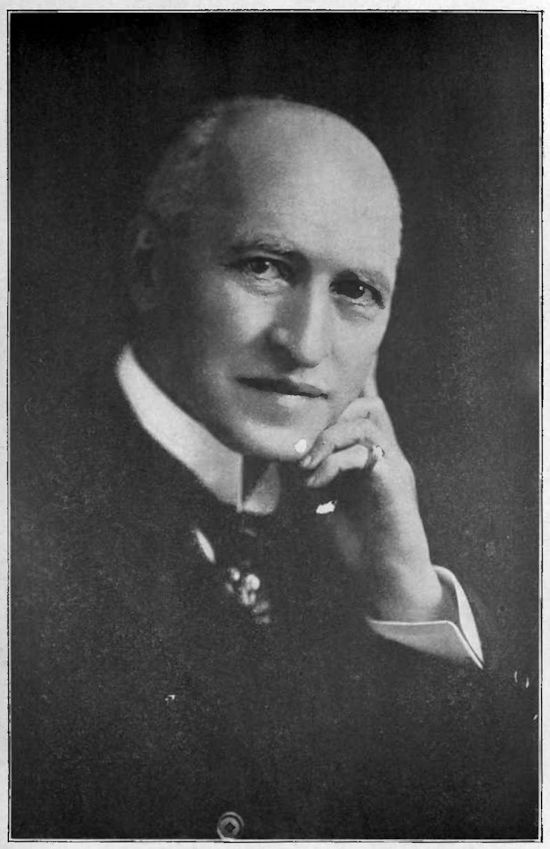
HON. ARTHUR L. SIFTON Ottawa
Pardee, Frederick Forsyth, K.C., M.P. (Sarnia, Ont.), son of the late Hon. Timothy Blair Pardee and Emma K. Pardee, née Forsyth, was born at Sarnia, Ontario, on December 29, 1867, and was educated at the Sarnia School and at Upper Canada College. He subsequently entered the study of Law and graduated at Osgoode Hall, being called to the Bar in 1890. He was created a King’s Counsel in 1908, and became head of the law firm of Pardee, Burnham & Gurd. In his student days and in the earlier years of his professional career he took a keen interest in various athletics and was a cricket player of note. He married, on December 31, 1892, Mary E. Johnston, daughter of Hugh Johnston, and to them was born one daughter, Pauline L. Early in life Mr. Pardee began to interest himself in public problems and public affairs, and in 1898, when but 31 years of age, he was chosen as Liberal candidate for the provincial riding of West Lambton, being elected to the Legislature of Ontario the same year. He sat in the Provincial House until 1902, when he was defeated by Hon. W. J. Hanna, who subsequently became Provincial Secretary in the first cabinet of Sir James Whitney. In the Dominion by-election of November 22, 1905, made necessary by the death of Dr. Johnston, the sitting member, Mr. Pardee was chosen by the electors of West Lambton to represent them in the Dominion House of Commons. He was re-elected at the general elections of 1908 and 1911. In November, 1909, on the nomination of Sir Wilfrid Laurier, then Prime Minister of Canada, he was unanimously chosen as Chief Government Whip, and still retains the important position of Chief Liberal Whip to the present time (1917). In the Dominion Parliament, as well as throughout the country, Mr. Pardee’s public work soon won him a position of usefulness and responsibility. He is a forceful and effective public speaker, and few public men are so universally popular and so highly esteemed. During his parliamentary career he has presided over, and served upon, many of the most important legislative committees of the House of Commons and Senate. In 1910 he was chosen by Sir Wilfrid Laurier to accompany him on his memorable tour through the Canadian West, making the first visit with the then Prime Minister to the new Pacific port of Prince Rupert. When, in 1911, the Administration of Sir Wilfrid Laurier was defeated at the polls upon the issue of reciprocal trade in natural products with the United States, and the Liberal party passed into Opposition, Mr. Pardee continued as Chief Whip and had a large share in the arduous parliamentary and organization work which ensued. Following the outbreak of the great war it was he who defined in Parliament, amid hearty approval from both sides of the House, the patriotic obligations which devolved upon Government and Opposition. He devoted his time and energy, both in the House and out of it, to patriotic endeavor, addressing recruiting rallies and contributing to the various national efforts of service and sacrifice. He moved in Parliament for the appointment of a special committee to consider national steps to recompense and aid returning wounded and maimed soldiers and was named by the House as a member of that committee. In 1918 he resigned the post of Liberal Whip and supported Sir Robert Borden on the question of Conscription, but declined a portfolio in the Union Government. In the general elections of that year he was again re-elected for West Lambton by a handsome majority. Mr. Pardee is strongly democratic in spirit, and during the parliamentary session of 1913-14, made a vigorous plea to the House against the indiscriminate bestowal of titles in Canada, and issued a warning against the danger of creating a pseudo-aristocracy in this young Dominion. In religion he is an Anglican and is a member of St. George’s Church, Sarnia.
Hinds, Leonard D’Arcy Bernard, Judgment Clerk of the Supreme Court of Judicature for Ontario, born Oct. 19, 1868, at Barrie, Ontario. Educated at Barrie Collegiate Institute, St. Michael’s College, Toronto, and Osgoode Hall Law School, of Toronto. Past President of the Toronto Liberal-Conservative Club. Secretary of the Toronto Branch of the United Irish League. Appointed to present office by the Whitney Government in 1905. Son of the late Bernard Hinds of Barrie, a native of Omagh, County of Tyrone, Ireland (whose father, Bernard Hinds, Irish “Aidhne,” pronounced Aion, anglicized the name to Hinds, and settled with a large family in Vespra Township, Simcoe County, in the year 1842), and Anna Leonard, formerly a teacher in the French settlement public school at Penetanguishene. Married Pauline Matson, the daughter of R. H. Matson, founder of the National Life Insurance Co. of Canada. Holds commission as Captain and Paymaster in the 110th Irish Regiment, Toronto, which Regiment he was authorized to establish in 1914, by Sir Sam Hughes, then Minister of Militia. Captain Hinds largely helped to establish the 208th Canadian Irish Bn. C.E.F., in which he was also appointed Paymaster with the rank of Captain. He was forced to withdraw from the 208th, on account of an injury which he received at Camp Borden. He has one son, Paul I. Bernard, who is on active service as an officer in the British Expeditionary Force. Captain Hinds is an ardent student of Gaelic Literature, Language and Art, and possesses one of the best Erse Libraries in Canada. He is a Catholic in religion. Address: Osgoode Hall, Toronto, Ontario, Canada.
Clute, Arthur Roger (Toronto, Ont.), was born in Belleville, Ont., on August 24, 1874. He attended the Belleville Collegiate Institute, from which he matriculated with honors in 1892, and thereupon entered the University of Toronto, from which he graduated as Bachelor of Arts in 1896, with first-class honors, in the Department of Political Science and History, having been awarded during his course one of the Alexander Mackenzie Scholarships in that department. In 1901 he received from his Alma Mater the Degree of LL.B. He was articled as a student at law to his father, the Honorable Justice Clute, in 1896; and studied law at the Law School at Osgoode Hall, Toronto, where he obtained first-class honors and was awarded a scholarship in each year of his course, together with medal upon his call to the Ontario Bar in June, 1899. Since that time Mr. Clute has practised his profession in the city of Toronto, and has acted for several years as examiner at the University of Toronto, and at the Law School, and is now also a Lecturer at the University of Toronto. In politics he is a Liberal.
Goodeve, Hon. Arthur Samuel (Ottawa), Dominion Railway Commissioner, English and Canadian origin, son of Arthur Henry and Caroline Goodeve, born at Guelph, Ont., Dec. 15, 1860, where he received his education at the Public Schools and Collegiate Institute. A graduate of the Ontario College of Pharmacy. Mayor of Rossland, B.C., 1889-1900. Appointed Provincial Secretary in the first Conservative Government in British Columbia, June, 1903, the McBride Administration; resigned portfolio, returned for Kootenay District, in the House of Commons, general elections 1908, appointed a member of Timber and Forestry Commission, B.C., 1909-10, a Conservative Whip, House of Commons, 1910; resigned seat on being appointed a Dominion Railway Commissioner. Married, April, 1884, Ellen Elizabeth Spence, daughter of James Spence, Toronto; father of four boys and two girls. Member of following clubs: Rideau, Ottawa, and Rossland, B.C.; and the Masonic order, Blue, Chapter and Commandery. A Presbyterian in religion. Before accepting his present office, Hon. Mr. Goodeve was recognized as a formidable campaigner and painstaking representative.
Guilbault, Joseph Pierre Octave, B.A., LL.D. (Joliette), Notary, was born Sept. 3, 1870, at St. Paul de Joliette, Province of Quebec, son of Joseph Guilbault and Adelaide Renaud, French-Canadians; educated at L’Assomption College, P.Q., and Laval University, Montreal. Married, Sept. 20, 1898, Clementine, daughter of Urgel Richard, of St. Jacques de L’Achigan, has one son, Fernand, and one daughter, Germaine. For ten years Secretary-Treasurer of Commissioners for Schools in Joliette, where he practices his profession of a Notary. Elected to the House of Commons for the constituency of Joliette in 1911. A Liberal-Conservative in politics. Mr. Guilbault has not been defeated—sickness prevented him from being a candidate in the election of 1917. In religion Mr. Guilbault is a Roman Catholic.
Bronson, Henry Franklin (Ottawa, Ont.), the one man, it has been said, who understood the feasibility of converting the large lakes and furious foaming falls of the Ottawa River into a channel for the driving of saw-logs, was born in the town of Moreau, Saratoga County, New York State, on February 24, 1817. His parents were Alvah Bronson and Sarah Tinker. Mr. Bronson is of mixed Scottish and Welsh descent, and the family, which is now scattered through most of the Northern States, at an early period settled in New England. Members of this enterprising and clever family were the Hon. Greene C. Bronson, of the New York bench, and the Rev. Asa Bronson, who was for many years pastor of the First Baptist Church, at Fall River, Massachusetts. The first of the family to find his way to Canada was the subject of our sketch, and shortly after he came here he led off in the lumber business. H. F. Bronson spent his youthful days at Queensbury, Warren County, New York, in the family of the late J. J. Harris, and he concluded his education at the Poultney Academy, of Vermont. “Young Bronson,” says a reliable authority, “became an apt scholar in agricultural sciences, but soon showed a preference for woodland foraging, pre-destined, as he was, to become a great marauder of pine forests.” In 1840, Mr. Harris, already alluded to, purchased extensive pine tracts, erecting mills on one of the upper Hudson lakes. He formed a partnership with his young and trusted friend, Mr. Bronson, “whose assets consisted of a sound constitution, a resolute will, unbending integrity, skill with the hand, and a mind to work.” The partnership continued for twenty-two years, and during the last ten years of the association, the greater portion of the business responsibility fell upon our subject, owing to the failure of Mr. Harris’ health. It soon became plain that the pine was rapidly disappearing from the upper Hudson; therefore, in 1848, Mr. Bronson passed over to Canada, proceeding along the Ottawa Valley till the thunder of the Chaudiere Falls burst upon his ears. At once he was satisfied that here was an excellent place to begin lumber operations; for the timber seemed inexhaustible, and the water power magnificent. He returned home, but in 1852 he persuaded Mr. Harris to accompany him to the Ottawa Valley. When they reached again the region of kingly pines and booming waterfalls, they were everywhere met with testimony from river experts, saying that the Ottawa was not suitable for the safe driving of saw logs, but Mr. Bronson recommended to his partner the purchase of hydraulic lots at the Chaudiere Falls, then held by the Crown. At the sale of the lots, made by Mr. Horace Merrill, general superintendent of the Ottawa River works, a purchase was made, and here, under the personal supervision of Mr. Bronson, their mills were built within sound of the thunder of the falls. The mills having been erected, Mr. Bronson removed his family to Ottawa, and there they were established permanently. The relation of Mr. Bronson to the sawn lumber trade of the Dominion of Canada will be better understood when it is learned that his was the first movement in the Ottawa District for the manufacture of sawn lumber for the United States market. The original mill embodied all the modern improvements of the times, including iron gates of novel model, a contrivance planned by Mr. Bronson himself, and afterwards used in most of the gang saw mills on the Ottawa River. Several other gentlemen, stimulated by the enterprise and success of Mr. Bronson and his partner, likewise set out for Ottawa; and, after a time, chiefly owing to the persistency of Mr. Bronson, a series of costly river improvements were constructed, which made the driving of logs upon the Ottawa a matter of greater convenience than upon many a smaller stream, which has no large lakes to act as a reservoir for checking the fury of the spring freshets. In 1864, Mr. Harris retired from the business, Mr. Bronson still continuing the extensive manufacture of sawn lumber, and owing to his splendid abilities as a manager, his operations not alone maintained their ground, but gradually increased. The present firm at Ottawa is known as The Bronson Company. Mr. Bronson married, on November 5, 1840, Editha E. Pierce, of Bolton, N.Y., and had four children. Gertrude, the only daughter, is the wife of Levi Crannell. The sons are Erskine Henry, Frank P., and Walter G. The family are members of the Presbyterian Church. Mr. Bronson, like another great prince of business men, Sir Hugh Allan, did not care for political life, and held himself aloof from parties, but he was connected with several benevolent institutions and business enterprises. In 1889, death called this pioneer Canadian lumberman and high-principled citizen. His private and social relations had won for him everywhere good will and highest regard. Men had learned to esteem the man because of his tested and sterling worth. In the commerce of Canada Mr. Bronson’s name will go down in history as the first lumberman in the Ottawa Valley to manufacture sawn lumber for the American market, and as a pioneer in the development of the resources of that section of Canada to the point where its principal city was deemed worthy of being named as the Capital City of the Dominion. Business courage and keenness of perception were required to accomplish these ends, but in more ways than one Mr. Bronson had shown himself to be a man of practical vision and rare foresight. To men like the late Henry Franklin Bronson, Canada and in particular the business life of the Capital, must ever remain in debt.
Lemieux, Auguste, K.C., F.R.C.I., LL.B. Few barristers in Ottawa are better known or more popular than the subject of this sketch, who occupies offices at No. 30 Rideau Street. Mr. Lemieux was born in Montreal, February 20, 1874. His father, H. A. Lemieux, was Inspector of Customs for the Province of Quebec until 1911. Some of his elder brothers are Hon. Rodolphe Lemieux, K.C., P.C., M.P., ex-Postmaster-General and Minister of Marine and Fisheries in the Laurier Cabinet; Dr. L. J. Lemieux, Sheriff of Montreal, and Chairman of the Board of Censors of the Province of Quebec, and Dr. Gustave Lemieux, M.L.A., for Gaspé, P.Q. Mr. Auguste Lemieux received his education at L’Assomption College and St. Mary’s College (Jesuits), Montreal, graduated from Laval University with honors and was conferred the degree of Bachelor of Laws (LL.B.) in 1898. He was called to the Quebec Bar in the same year and to the Ontario Bar four years later. In 1908, at the early age of 34, he was created K.C., and practised, successfully, his profession in Montreal from 1898 until 1902, when he located in Ottawa, and has since established a wide and ever increasing clientele in that city. His brilliant defence saved Laderoute from the gallows in the Bryson murder trial of 1906, and Blondin (charged with murdering Dr. Empey) at L’Orignal, in 1910. He was Councillor of the Ontario Bar Association from 1910 to 1913; President of L’Institut Canadien Français, of Ottawa, 1903 to 1905; President of La Société du Monument National, Ottawa, 1909 to 1910; President of the Belcourt (Liberal) Club for several years; Vice-President of the Ottawa Reform Association, 1904 to 1906; President of Le Club Littéraire Canadien Français, Ottawa, 1911 to 1918. He is a member of the Y.M.C.A., and also a member of the Ontario Club of Toronto. Mr. Lemieux has been frequently mentioned as candidate for Parliament. He is the author of the work on the Quebec Law of Landlord and Tenant and writes frequently for the French and English Press. In April, 1914, the French Government, in recognition of Mr. Lemieux’s proficiency in French literature, conferred on him the decoration of “Officier d’Académie” (Academic Palms), through Monsieur Réné Viviani, then Minister of Public Education of France. He was also elected, in 1913, Fellow of the Royal Colonial Institute of London, England, for life. Mr. Lemieux is an eloquent platform speaker and has frequently rendered services to his party. He married Esther Barbeau, daughter of the late Henry Barbeau, General Manager of the City and District Savings Bank and Assistant Receiver-General, Montreal, in October, 1899, and has one son and two daughters. He resides at 16 Somerset Street West.
Lawlor, H. W. (Hawkesbury, Ont.), was born at Hawkesbury, September 12, 1863, of Irish and American parentage. The son of Richard Lawlor, of Hawkesbury, for many years Coroner of this district, and grandson of William Lawlor, for over forty years manager for Hamilton Bros., and Sarah Hersey, daughter of Z. S. M. Hersey, a New England pioneer, who settled in Hawkesbury shortly after the British-American War of 1812, and who at the time of his death was the town’s most prominent citizen; he was educated in the Provincial Schools and graduated from Osgoode Hall in law in 1890. In 1896, was appointed agent for the Justice Department in his district, and has conducted some important litigation on behalf of the Crown, the most prominent being the Exchequer Court Case of Stewart vs. King, in which the late B. B. Osler made his last public appearance. He has been Police Magistrate of Hawkesbury for over eighteen years and has never had a conviction appealed or quashed. Has been Local Solicitor for the Canadian Northern Railway since the date of its construction; is Town Solicitor and also Solicitor for the several banking institutions. Has never entered Municipal politics, but has sat on the Board of Education; was first President of Hawkesbury Board of Trade. Is a Presbyterian and a Liberal-Unionist.
McNeillie, James Richardson, Clerk and Treasurer, County of Victoria, Lindsay, Ont., was born in the Parish of Johnstone, Dumfries-shire, Scotland, July 18, 1846, and came to Canada with his parents, Rachel Kerr and James Richardson McNeillie, public school teacher, in 1853, who settled in the County of Durham, where he was educated in the Public School. He spent eleven years, from 1861 to 1872, in the village of Omemee, where he was associated in the drug business and in municipal work with Mr. Thomas Matchett, who was the first member of the Legislative Assembly for South Victoria after Confederation. From 1872 to 1875 he was engaged in the business department of the Montreal Telegraph Company at Toronto, but returned to the County of Victoria on the invitation of the Hon. S. C. Wood, to become his assistant in the office of Clerk and Treasurer. When the latter became Provincial Secretary, Mr. McNeillie retained the same position under Mr. Matchett from 1875, until his own appointment as Clerk and Treasurer of the County, in 1900. When the Ross Memorial Hospital was founded by the late James Ross, of Montreal, in 1902, he was appointed a Governor under the Act of Incorporation, and is Secretary-Treasurer of the Trust. He is also a member of the Board of Foreign Missions of the Presbyterian Church, and was Chairman of the Board of Education of the Town of Lindsay for nine years, following on nineteen years’ service as member. Always taking an active interest in movements for the betterment of the criminal and mentally enfeebled classes of the Province, he was President of the Canadian Conference of Charities and Correction for the year 1909. In politics he is a Conservative, and in religion a Presbyterian. He married Esther (deceased), daughter of William Thorton, of Emily, January, 1872; and Loretta, daughter of Ralph Gardiner, of Morpeth, 1882. He has three sons, James Kerr, Ralph Gardiner and George Gardiner, and one daughter, Alice Gardiner. J. K. McNeillie has been successively, Divisional Superintendent of the Canadian Pacific Ry., General Superintendent of the Canadian Government Railways, and now Superintendent of the Susquehanna Division of the Delaware and Hudson Railway. R. G. McNeillie is Assistant General Passenger Agent of the Canadian Pacific Ry. at Winnipeg, Man., and G. G. McNeillie is a member of the Albert Kerr Company, Limited, Toronto.
Chadwick, Edward Marion, K.C. (Toronto, Ont.), was born at Cravendale, Township of Ancaster, Ont., Sept. 22, 1840, and is the third son of the late John Craven Chadwick, Guelph, Ont. He received a thorough scholastic training. The bend of his mind being in the direction of the law, he pursued his studies therefor, and was called to the Bar and associated himself with the late W. H. Beatty, and has been a partner in the firms successively formed by him in which many prominent members of the legal profession have been partners, during a period of more than fifty years, the firms being recognized as among the most important engaged in their profession in Ontario. While perhaps it is unnecessary to say anything here as to Mr. Chadwick’s ability as an author, we cannot refrain from noting the publication of a work entitled “Ontarian Families” (1894), being the genealogies of United Empire Loyalist and other pioneer families of Upper Canada; he has also been a writer for magazines on heraldic subjects, in which he is reputed to be the leading authority on this side of the Atlantic. Mr. Chadwick was for a number of years an officer in the Queen’s Own Rifles, retiring in 1882, with the rank of Major. For the last forty years Mr. Chadwick has been identified with church work, being an indefatigable worker, and he at present holds the important office of Treasurer of St. Alban’s Cathedral.
Hackett, Edward (Orangeville, Ont.), was born at Ballinasloe, County Galway, Ireland, son of the late William and Mary Hackett. He was educated at Ranelagh School, Athlone, and at Santry School, Dublin, graduating from the Royal University in the Irish Capital in 1905, with the degree of B.A., and is recognized as being one of the prominent educationalists of the Province of Ontario. Mr. Hackett came to Canada in 1908, and before leaving Ireland, was Senior Mathematical Master in the Blue Coat School, Dublin, an institution which was established by Charles the Second. He attended the Faculty of Toronto University, and taught mathematics in the Galt Collegiate Institute for the year 1909-10, also at Meaford High School for four years (1911-15), and succeeded as principal the late Alexander Steele, who had been the head of the Orangeville High School for upwards of thirty years, the present staff consisting of five teachers and the splendid standing and prestige of the school being maintained under his principalship. In 1914, Principal Hackett married Winnifred, the daughter of Dr. J. G. Clarke, of Meaford. He is a member of the Canadian Club of Orangeville, and Chairman of the Public Library Board, and is a member of the Masonic, Oddfellows and Orange Orders. He is an adherent of the Church of England, and a Liberal-Conservative in politics. Recognizing the usefulness of the Cadet movement he has taken the course prescribed for instructors and the Orangeville High School Cadets have attained much efficiency under his direction. Principal Hackett is a man in the prime of life, well informed on all matters of national importance, and gives generously of his time and talents in the promotion of the best interests of the community, in which he occupies so important a position. His chief recreation is motoring.
Hunter, Lt.-Col. A. T. (Toronto, Ont.), was born on the 25th of October, 1869, and after having received a thorough primary and elementary education at the public and high schools, he entered the Toronto University where, in 1890, he had the distinction of having the degree of LL.B. conferred upon him. He was duly admitted to the Bar in 1892 and at once embarked in the active practice of his profession, in which, he has been very successful. He maintains a handsome suite of offices at 706 Temple Building, Bay and Richmond Streets, where he enjoys a large and lucrative practice, his services being constantly retained by some of the leading firms and corporations of the city and province. Colonel Hunter is prominently identified with the Masonic craft, and is an active and influential member of the I.O.F., A.O.U.W., and a Past Master of L.O.L. No. 613. As an author Colonel Hunter is well known, and among the works emanating from his pen may be named “Power of Sale Under Mortgage,” “Foreclosure Under Mortgage,” and “Real Property Statutes.” The Colonel, prior to this war, was courageous in pointing out in speeches and contributions to the “Military Gazette,” absurdities in our military organization. Colonel Hunter has devoted some time to politics and was candidate for the riding of West Toronto in the Dominion House, of the McCarthyites in 1896, and of the Liberals in 1904. In 1914, when war was declared by Germany on England and her colonies, Colonel Hunter at once responded to the call to duty, laid aside his business and other connections, and went overseas with the 4th Battalion C.E.F. On April 23, 1915, he was wounded in the battle of St. Julien, but returned to duty in time for the battle of Festubert; after this he was placed on duty in England, and later returned to Canada on leave of absence; while in Canada he acted as Brigade-Major at Camp Borden in 1916. He again returned to England on active service, and in February, 1917, was attached to the Princess Patricias on service in France and was present with them at Vimy Ridge. He returned to Canada in November of same year and has been gazetted Lt.-Colonel of the 12th Regt. York Rangers.
Groves, Abraham, M.D. (Fergus, Ont.), was born in the town of Peterboro’, on Sept. 8, 1847. He is a son of Abraham Groves, and Margaret, daughter of Gideon Gibson, one of the early pioneers of Canada, who served through the war of 1812-15, and fought at Lundy’s Lane. Mr. Groves came to this country with his parents from the County of Wicklow, Ireland, about 1826, and settled in the vicinity of Peterboro’. In 1856 Mr. Groves removed to the County of Wellington, taking up his abode in the Township of Garafraxa, where he pursued the occupation of farmer. During the Mackenzie Rebellion Mr. Groves took part on the Loyalists’ side. The fruit of the marriage was thirteen children, the subject of this sketch being the second eldest of the family. He at first attended the common schools, but afterwards entered the High School at Fergus. Some time after leaving school he resolved to study medicine, and in 1868 entered the Toronto School of Medicine, where he remained until 1871, graduating M.D. in the same year, from the Toronto University. After graduation he at once went to Fergus and entered into partnership with the late Dr. Munro, under the firm name of Munro & Groves, which partnership existed two years. After dissolution Dr. Groves practised by himself until 1874, when he took into partnership Dr. John Wishart, now lecturer at the Western University, at London, Ont., which partnership existed one year, Dr. Wishart then retiring. However, again in 1879, he took into partnership Dr. Thomas Chisholm, the association continuing for a year. In 1882 he again took another partner, Dr. J. F. McMahon, now of Toronto, but this combination too dissolved in 1883, and since that time Dr. Groves has singly conducted one of the largest practices in Fergus. In 1869 he graduated from the old Toronto Military School; in 1882 he was elected to the Village council of Fergus, and was re-elected for the years of 1883 and 1884. He was elected reeve for 1885, but owing to his position of surgeon of the county poor house, he could not retain his seat. Dr. Groves is largely interested in real estate in the village, owning some of the finest buildings there, among which structures may be mentioned the Royal Bank building, constructed of brown stone. He is a member of the Mercer Lodge, A.F. and A.M., No. 347; is surgeon and member of the Oddfellows’ lodge No. 73, and has held all of the offices in that order. He is also a member of the Royal Templars, and physician to lodge No. 124. In 1878 Dr. Groves was appointed physician and surgeon to the Grand Trunk Railway at Fergus, which position he still holds. In 1882 he was appointed physician and surgeon to the Wellington County House of Industry, and this office he still likewise retains. In politics he has held aloof from parties, though sincerely interested in the welfare of the country. He is a member of the Church of England, and has been churchwarden for twelve years of St. James’ Church, Fergus. He married in 1874, Jennie, daughter of the late William Gibbon, of Elora, and by this lady has a family of two children; she died in 1886. On January 29, 1910, he married Ethel May Burke, only daughter of the late D. S. Burke, Esq., of Fergus. Dr. Groves enjoys the repute of being a very skilful surgeon, and he was the first to perform in Canada the operation technically known to the profession as supra pubic lithotomy. In January, 1901, he established, in Fergus, the Royal Alexandra Hospital, which has already become widely known throughout Western Ontario. He also installed the Fergus and Elora Electric Light Plant, since taken over by the Hydro-Electric. In 1911 he was tendered by unanimous vote the Conservative nomination for the House of Commons for the South Riding of the County of Wellington, but the pressure of his professional work prevented his accepting.
Grange, Edward Wilkinson (Ottawa, Ont.), was born at Napanee, July 4, 1876, a son of Alexander W. Grange and his wife, Annabella Daly; educated at Napanee Collegiate Institute and Victoria University, taking an Honor Course in Modern Languages at the latter institution, from which he graduated with a degree of B.A., in 1899, upon which he took up journalism as a profession and has since had a very extended experience, serving first on “The Toronto News” for three years, afterwards on “The Mail and Empire.” Was in charge of “The Globe’s” Ottawa Bureau and contributor to editorial columns. During Mr. Grange’s University course he was editor of the “Acta Victoriana,” in his final year; and President of Athletic Union and first holder of the college “Athletic Stick”; was editor of Eastern Press Service, serving all papers in the Maritime Provinces during Parliamentary sessions, made Honorary Lieutenant in Canadian Expeditionary Forces and had charge of daily press bulletin service to troops Overseas; has been Ottawa correspondent of Toronto “Globe” since 1907, also of “The Chronicle,” Halifax; “Telegraph,” St. John; “Standard,” London, Eng. Secretary for three years of the Parliamentary Press Gallery and President, 1912-13. Resigned from “Globe” staff, November, 1918, to engage in special work for government branches connected with re-construction problems and also to look after private business interests. Mr. Grange is a Liberal and was nominated in April, 1915, as Liberal candidate for the House of Commons for the riding of Lennox and Addington. Ran as an Independent-Liberal supporting Military Service Act in General Election of 1917. Belongs to the following clubs: Rideau Club, Rivermead Golf Club and Rideau Aquatic Club, Ottawa. He married, in 1915, Marion McDougall, a daughter of the late John Lorne McDougall, C.M.G., Auditor-General of Canada, and has one son, Edward Alexander McDougall, born June 26, 1917.
Ferguson, Hon. William Nassau (Toronto, Ont.), Judge of the Supreme Court of Ontario, Court of Appeals Division, was born in Cookstown, Ont., in 1870, the son of Isaac and Emily (Gowan) Ferguson, and received his education at Upper Canada College and Osgoode Hall, graduating from the latter institution in 1894. He is a brother of Mrs. Arthur Murphy of Edmonton—better known by her pen name of “Janey Canuck”—and of Thomas R. Ferguson, K.C., of Toronto and Winnipeg. He is also a nephew of the late Lieutenant-Colonel T. R. Ferguson, M.P. for South Simcoe, and a grandson of the late Lieutenant-Colonel Ogle R. Gowan, M.P. for Leeds and Grenville, who founded the Orange Order in Canada; also a cousin of the late Hon. Justice Ferguson of the Supreme Court of Ontario. The present Mr. Justice Ferguson became King’s Counsel in 1908, was elected a Bencher of the Law Society of Upper Canada in 1916, and received his present appointment in the same year. He has always been prominent in outdoor sports, having been captain of Upper Canada College and Osgoode Hall Rugby teams, President of the Ontario Rugby Union and a Director of both the Toronto Baseball and Lacrosse Clubs. Judge Ferguson is a member of the following clubs: Albany, Toronto, National, R.C.Y.C., Ontario Jockey and Toronto Hunt, and also of the Masonic and Orange Orders. He is a Trustee of the Hospital for Sick Children and a member of the Executive of the Toronto and York Patriotic Fund, an Anglican in religion and a Conservative in politics. His recreations are golf, fishing and motoring. “A lawyer in love with law and enamored of common sense, the Ontario Judiciary will be strengthened by his ability and vigor.”—Toronto “Telegram,” December 9, 1916.