LIST OF PHOTOGRAVURES (continued 13)
Reading edition
Gibson, Brigadier-General Sir John Morison, K.C.M.G., M.A., LL.D., K.C., born January 1, 1842, township of Toronto, in the County of Peel, and is therefore a “Peel Old Boy.” His father, William Gibson, a farmer, came from Glamis, Forfarshire, Scotland, in 1827. His mother, Mary Sinclair, was born in Scotland. Her people had settled in the township of Nelson, in the County of Halton. The family removed from Toronto township when the subject of this sketch was only eight or nine years of age to the County of Haldimand, where he had some experience in the Log School House education of the primitive settlements of that County in the early 50’s. He afterwards went to the Central School in Hamilton, the late Dr. Sangster then being Superintendent and Head Master. In due course, and working against great disadvantages, he became head boy of the public schools of Hamilton, a position which he maintained until he passed the matriculation examination of the University of Toronto in 1859. As head boy of the school, he with the second boy, was selected to open the waterworks system of the city of Hamilton in 1858. His course at the University was a very successful one, taking scholarships all the way through the various years, and graduating in 1863 as the highest honor graduate with the Prince of Wales Prize, then given for general proficiency, including honors at graduation, the Silver Medals in Classics and Modern Languages, and the prize in Oriental languages, including Hebrew, Chaldee and Syriac. After taking his B.A. degree, he commenced the study of law in the office of the late Sir George Burton in Hamilton, at the same time taking the law course of the University, and receiving the degree of LL.B. in 1869 with the gold medal. One thing of note in connection with General Gibson’s life is that he has always endeavored to repay the educational institutions from which he received his education. For many years he was a member of the Board of Education in Hamilton, and was its Chairman for two years. During that time the Collegiate Institute was brought into prominence as one of the leading secondary educational institutions of the country. He served as a Senator of the University of Toronto, being elected at the first election of graduates in 1873 and re-elected in 1878 and 1883. He subsequently founded a general proficiency scholarship for matriculation candidates. When a student of the University during the Trent affair, he joined the University Rifles, being one of the first to sign the roll of that company in 1860. He has been in the Militia ever since, for now nearly 59 years, and at the present time is the senior officer in the Canadian Force among all who are not following military life as their regular occupation. In 1863, he transferred to the 13th, and has served from private up through all the ranks to the position of commanding officer, which position he held for 9 years, and at the present time is the Honorary Colonel of that corps. He was present at Ridgeway as a lieutenant. He subsequently commanded the 15th Brigade, having headquarters at Hamilton, and later on at the beginning of the great war received the rank of Brigadier-General. As a marksman he always has had a very high reputation, having been a member Canadian Wimbledon teams in 1874, ’75, and ’79, being a frequent prize winner, and taking the much coveted Prince of Wales prize in the last-named year. He took part in several of the early international long range rifle contests with British, Australian, and American rifle teams. In 1881 he commanded the team which defeated the British team in the competition for the Kolapore Cup. He was president for three years of the Ontario Rifle Association, was also President of the Canadian Military Rifle League, and from 1893 for thirteen or fourteen years was President of the Dominion Rifle Association. In 1907 he again commanded the Canadian rifle team at Bisley. He has also been President of the Canadian Military Institute, and was President of the Canadian Red Cross Society from its original organization throughout the South African War, and subsequently for a period of about 14 years, and has been throughout the recent great war one of the most active members of the Executive Board. He was for two years President of the Hamilton St. Andrew’s Society. From an early age he has been a very prominent Freemason—was Grand Master of the Masonic Grand Lodge of Canada during the years 1892 and 1893, being now the representative of the Grand Lodge of England, and for nine years was Sovereign Grand Commander of the Supreme Council of the Scottish Rite Masons in Canada. He has always taken a prominent part in politics. As a young man he was Secretary of the Hamilton Reform Association, which position he held for many years. He was first returned to the Legislature in 1879, representing Hamilton for a period of 19 years, and afterwards East Wellington for 7 years. He entered the Government as Provincial Secretary in 1889, became Commissioner of Crown Lands in 1896, and Attorney-General in 1899. He was an honorary A.D.C. to their Excellencies, Lord Aberdeen and Lord Minto, when Governors-General, and in 1897 was selected by the Militia Department to proceed to England in connection with the celebration of the Queen’s Diamond Jubilee; was present by invitation, at the coronations in Westminster Abbey of the late King Edward VII, and of the present King George V. He has always taken a leading part at the Bar, and was made a Queen’s Counsel in 1890, is a Bencher of the Law Society of Upper Canada, and as a young man was an examiner in the Faculty of Law at Toronto University. In 1903 he received the honorary degree of LL.D. from that institution, and subsequently also from McMaster University. In 1908 he became Lieut.-Governor of the Province of Ontario, being the last to occupy the old Government House on King Street West, Toronto, continuing for over six years. During his term, on the recommendation of His Royal Highness the Duke of Connaught, then Governor-General of Canada, he was created a Knight Commander of the Order of St. Michael and St. George. As a public man he shrank from prominence in the public eye; he was most industrious and faithful in the performance of any duties he undertook to discharge. He had an excellent training for many years under the greatest of law makers this country has ever produced, Sir Oliver Mowat. While a private member of the Legislative Assembly he was selected as Chairman of the Private Bills Committee, which for fifteen years he presided over with eminent ability, fairness and impartiality. During the short period when the license branch was under his control some of the most advanced measures of temperance legislation were introduced by him, including the local option law, the validity of which was stoutly contested, but in the end affirmed by the Judicial Committee of the Privy Council. Though not himself a practical sportsman, almost immediately after entering the legislature he led a movement for better protection of game birds and fur-bearing animals, first securing the abolition of spring shooting and other improvements in the law, and afterwards the appointment of a Royal Commission followed by a thorough revision of the game laws and the establishment of a departmental branch, with a chief game warden and other provincial wardens entrusted with the enforcement of the laws relating to game protection. While Provincial Secretary he was always an industrious legislator. The laws relating to Joint Stock Companies were thoroughly revised, modernized, and simplified by him. The old laws relating to building societies and loan companies were completely overhauled, and became the present Loan Corporations Act. It was at this time also that he undertook to stem the tide or flood of benefit societies, many of them of the fake order, which threatened to inundate this Province—a subject of legislation requiring at the time very cautious and skilful handling, but which, with the able assistance of Mr. J. H. Hunter, M.A., was ultimately put on a very satisfactory footing. One of the most important laws of comparatively recent years owes to him its existence, and has generally been referred to as the “Gibson Act”—the Act relating to neglected and dependent children—and the establishment of the Children’s Branch, with Mr. Kelso as its chief officer. This law has been most beneficial in its operation, and has been followed more or less closely in most of the other Provinces. During his comparatively short incumbency as Commissioner of Crown Lands he introduced and carried through the House the important legislation prohibiting the exportation of saw logs—a measure affecting very large interests but meeting the entire approval of the public. He also dealt with important changes in the mining laws during a period of great mining excitement in the Province. It is probably not generally known that while Commissioner of Crown Lands he introduced a short but very important measure preventing any absolute alienation by the Crown of Provincial water powers, and providing for leasing same for short renewable terms of years subject to conditions in the public interest. It is somewhat singular that a public man who has often been unfairly criticized as a champion of monopolies should never have been credited with this act directly aimed against and prohibitive of monopoly. In the matter of forest preservation or reforesting, Mr. Gibson aimed at carrying out a programme which probably time would justify as the most effective and productive policy possible. He aimed at the selection and setting apart every year a portion of the Crown domain unfit for agricultural purposes as a timber growing reserve. Many such sections in Northern Ontario, which have been cut over or burnt over, and now more or less covered over by new growth, could be set apart and treated as territory to be guarded as timber growing areas. In the Eastern part of the Province certain old limits were repurchased from the license holders and so set apart, and again another area in Western Ontario. The plan of year after year reserving areas in this way would in a generation or so result in well defined sections of the Province producing a new crop of timber which would not fail to become an extremely valuable asset to posterity. It was in Sir John Gibson’s time that the first steps were taken for the establishment of the Temagami Reserve very effectively carried out by Mr. Davis, his successor. As Attorney-General he had, of course, the responsibility of legislation generally. The assessment laws had been the subject of investigation and report at the hands of two Royal Commissioners, and amid the distressing conflict of opinion on the various questions which arise whenever this subject is touched, the difficulty of framing a generally acceptable measure seemed insuperable. Whatever may be thought of the present act, Sir John Gibson’s tact as a legislator was mainly instrumental in having it passed through the House, and probably as time has passed and the public have become more and more familiar with its provisions it may be considered to give general satisfaction. The collection and revision of Imperial Statutes in force in this Province in the shape of a brief third volume of the Revised Statutes carried out with the aid of a committee of the judges has been a boon to law students, and a great convenience to the legal profession. (The foregoing facts and observations regarding Sir John’s career have been contributed by Mr. James Innes Macintosh, who was for several years his private secretary when a Minister of the Crown.) He was one of the pioneers, along with the late John Patterson and the late John Moodie, in introducing Hydro-Electric power and long distance transmission of same in this country utilizing surplus water from the Welland Canal, and transmitting the power to Hamilton, where very soon many of the industrial and electric railways adopted the same, to the great advantage of the companies. For many years he was President of the Cataract Power Company. He is a Director of the Canadian Bank of Commerce, the Canada Life Assurance Company, the Toronto General Trusts Corporation, the Toronto Conservatory of Music, the Homewood Retreat at Guelph, the Dominion Power and Transmission Company, the Canadian Westinghouse Company, and several other industrial companies in Hamilton. He was married first in 1869 to Emily Annie, daughter of the late Rolph Birrell, of London, who died in 1874; second, in 1876 to Caroline, daughter of the late Senator Adam Hope, who died in 1877; and third, on May 18, 1881, to Elizabeth, daughter of the late Judge Malloch, of Brockville. He had six children, viz., John Gordon Gibson, who died shortly after taking his B.A. degree at the University of Toronto; Eugenia Elizabeth Emily; Margaret Mary Stewart, wife of Robert S. Waldie, of Toronto; Archibald Hope Gibson, Barrister; Captain Colin W. G. Gibson, of the Royal Fusiliers, who was twice severely wounded; and Francis Malloch Gibson, who went to the front as an officer of the 48th Highlanders at the commencement of the war and was killed in action near Armentieres. Sir John’s manner is dignified but affable, his style of speech clear and precise; in his movements he is deliberate, but with the elasticity of well-preserved middle age, while his expression is kindly but alert, with evidence of unlimited determination and unmistakable inclination and power to lead. When an active officer of the Militia he was recognized by his fellow-officers as a master of field manœuvres. The beautiful family residence, “Ravenscliffe,” is delightfully situated on the lower slope of the mountain, looking down Ravenscliffe Avenue, through a vista of stately elm trees.
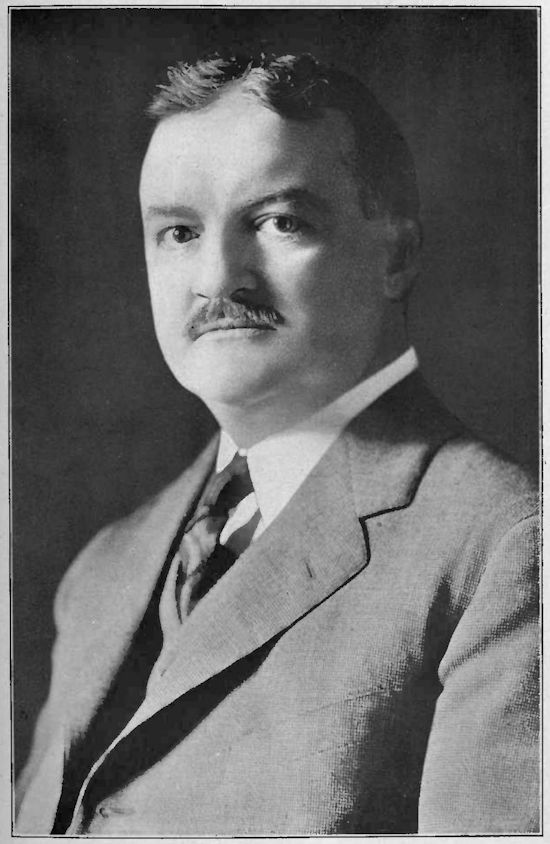
W. C. KENNEDY Windsor
Mitchell, The Hon. Walter George (Quebec City), Treasurer of the Province of Quebec, was born at Danby, in the County of Drummond. He is the son of the Hon. Senator William Mitchell, his mother’s maiden name being Miss Dora Goddard. His early education was matured at the Montreal High School and at the Bishop’s College school of Lennoxville. Thereafter he entered McGill University as an undergraduate, finally taking his degree of B.C.L. in 1901. On being admitted to practice at the Bar, he became connected with the law firm of Greenshields, Greenshields & Heneker. Two years after he became a prominent member of the firm of Laflamme, Mitchell and Callaghan, receiving his K.C. in 1912. In view of his being chosen by the Lieutenant-Governor to assume the duties of the Hon. P. S. G. Mackenzie, who had died suddenly, he was subsequently elected by acclamation as representative of the constituency of Richmond, a county which he continues to represent as Member of the Provincial Parliament, after a second election by acclamation. Prior to his assuming the office of Provincial Treasurer, Mr. Mitchell was in possession of a large and lucrative practice in Montreal. While actively engaged with his professional duties, as a leading lawyer, he did not fail to take an active interest in political affairs, and came into public prominence in the administration of the Montreal Reform Club. Through his efforts in co-operation with his associate members, new and attractive quarters for that club were erected on Sherbrooke Street; and, in 1913, he was chosen, by way of reward for his active services, the President of that flourishing institution, and in the following year was re-elected to the same office. From the date of the famous Drummond-Arthabaska election contest in 1910, Mr. Mitchell became more and more intimately identified with the political life of the Eastern Townships and its various electoral movements. During the winning of the constituency of Drummond-Arthabaska back to the Liberal interest in 1910, he was associated with Dr. Beland, later a prisoner of war in Germany, and was acclaimed everywhere as an eloquent and persuasive pleader in behalf of the naval policy of Sir Wilfrid Laurier. In fact, in 1911, it was to a large extent through Mr. Mitchell’s influence as an organizer, not to speak of his father’s unbroken popularity as a public man, and other influences, that the constituency of Drummond-Arthabaska was won over to the Liberal interest. As Provincial Treasurer, Mr. Mitchell has made a name for himself as a most successful financier, taking a prominent rank almost immediately as a parliamentary debater. Nor has he failed to share in remedial legislation, whenever such came up for consideration in the Provincial Parliament. He has interested himself particularly in modifying the Quebec License Law, fathering amendments to that law restricting the number of licenses, increasing the license fees, prohibiting treating, increasing the age limit, shortening the hours of sale, and urging an enactment to abolish the bars on the 1st of May, 1918, with immediate sanction to the Minister of Militia and Defence to declare any or all districts throughout the Province of Quebec “out of bounds” for soldiers and sailors. At his instance also the Quebec Insurance Act has been amended from time to time, so as to give better protection to the public. One of his most notable and highly patriotic acts in parliament since the war in Europe began, was his presentation of a Bill, asking authority to subscribe out of the public revenues in behalf of his native province a million of dollars to the Canadian Patriotic Fund—a proposal which met with an instant and unanimous approval from both chambers. Under his mature financial advice the Province of Quebec has spent millions of dollars in constructing and improving highways of nearly every district. And yet so prudently have the finances of the province been husbanded under his judicious oversight, that the provincial debt has virtually remained as easy a burden on the people as it ever has been, notwithstanding the large amounts spent on the highways, and the large increase in the grants to education, agriculture, and public works. Altogether Mr. Mitchell has won the highest credit as a parliamentarian and a financier, enjoying the full confidence of his colleagues and of many of his fellow legislators, irrespective of party lines. He was married on February the 4th, 1907, Mrs. Mitchell’s maiden name having been Miss Antonia Pelletier. Their family comprises two sons and three daughters.
Lesperance, Albert Paneran (Montreal, Que.), General Manager, was born at Longueuil, Que., on September 17, 1860, and was educated at Longueuil and Montreal Business College, he is the Executor of the Estate of Henry Hogan, also the Estate Masson; is a Roman Catholic in religion and styles himself an Independent in politics; is a member of the Canadian Club, Montreal Board of Trade, and Chambre de Commerce, also Governor of Notre Dame Hospital. On May 10, 1890, he married Delima Bovin, the daughter of Leonard Bovin, a merchant, of St. Hyacinthe, Que., and has ten children: Juliette, Henri, Germain, Annette, Arthur, Simmonne, Irene, Therese, Suzanne and Paul.
Parsons, S. R. (Toronto, Ont.), President of the British-American Oil Co., Ltd., Oil Refineries, was born in Port Hope, Ont., in 1854. Son of William and Margaret (Trick) Parsons. He received his education in the Public and Grammar Schools of that town and began business with the firm of James Campbell & Son, at that time extensive manufacturing stationers, and publishers of Toronto. After six years’ association with this firm he removed to Winnipeg and subsequently engaged in the wholesale stationery business as senior partner in Parsons, Bell & Co., which afterwards merged with the Consolidated Stationery Co., Ltd., of which he was President for a number of years. In 1882 Mr. Parsons married Anne Kate Helliwell, daughter of Rev. Thomas Lord Helliwell of Winnipeg, and has three daughters, Mrs. Chas. A. Withers, Mrs. Henry F. Gooderham, and Mrs. Errol A. Hethrington, all of Toronto. After sixteen years of successful business in Winnipeg, Mr. Parsons was compelled to leave the northern climate in the interest of his health and returned to Toronto where in 1906, along with others, he established the extensive business of which he continues the moving spirit. He has always taken an active interest in religious, social and philanthropic work and for many years has been a director of the Methodist Union. Since 1900 he has been Chairman of the Ontario Board of Directors, Canadian Fire Insurance Co., and is a member of the Northern Ontario Fire Relief Committee, and the Organization of Resources Committee of the Province of Ontario, also of the Ontario Executive of the Bonne Entente at whose meeting in the Chateau Frontenac, Quebec, in 1916, he was one of the principal speakers and put forward this three-plank platform: First—We ought to live together in sincerity, friendship and justice; Second—We ought to strive for a cleaner public life; Third—We ought to help maintain the integrity and strength of our great Empire. But it is in connection with his work in the Canadian Manufacturers Association that Mr. Parsons has come most prominently before the public, for though naturally being far from an aggressive man, when the burden of office was laid upon him he realized his responsibilities to the full and has frequently from the platform, in the press and in action given evidence of the reserve force that was in him. He was elected for four successive years (1911-1915) Chairman of the Transportation Committee of the Association; Second Vice-President in 1915, First Vice-President in 1916, and President at the Annual Meeting of the Association in Winnipeg in 1917. He was Chairman in 1917 of the Committee of Employers of Labor for the Province of Ontario to secure men to help in the harvest fields, an organization responsible for the saving of many millions in food stuffs. On assuming office as President of the C.M.A. Mr. Parsons delivered an inspiring inaugural address of a thoroughly business character, but progressive, loyal, ethical, liberal and humanitarian as well. In 1918 he was appointed a representative of the C.M.A. on the Federal Board for the settlement of Labor disputes. Writing of him on this occasion, “The Monetary Times” says: “He is a capable, energetic business man, with a frank and alert manner that wins confidence. The welfare of the Canadian Manufacturers Association is in good hands under his care. He is a type of Association President well able to smooth out many of the difficulties between capital and labor, having appreciation of the problems met by both.” Mr. William Lewis Edmonds writes at the same time in “Industrial Canada”: “While Mr. Parsons is strong as a business man, and particularly in the quality of executive ability, that is not the only direction in which his strength lies. He is a strong man all the way round. He is a man of strong opinions and particularly on subjects that approach the ethical in character, and having cultivated the habit of looking at controversial subjects from the other fellow’s perspective as well as his own, it is not a difficult thing to persuade him to change his attitude, provided the other fellow is right and he is wrong, but when once after carefully weighing the pros and cons, he is persuaded that he is right he’ll not surrender principles, although where non-essentials are the issue he will readily agree to a compromise. In judgment he is sound, and in insight keen and quick. Although not connected with either political party, Mr. Parsons takes a keen interest in public affairs, and practical movements which have for their object a betterment of conditions in state and society have his warm, and in many instances, his active sympathy.” Writing in the “Toronto Star Weekly,” Arthur Hawkes says: “Mr. Parson’s service in the Manufacturers Association has been real service, and not a still hunt for glory. In committee he is as cautious as strong, and as strong as wise. He looks often before he leaps and he can take a pretty good leap—the fundamental condition of which is that he shall have examined the jumping-off place and surveyed the spot where he intends to land. When he has made up his mind he doesn’t change it, which is because he is sound in judgment.” In concluding his quite lengthy sketch and referring particularly to Mr. Parsons’ political platform he says: “This is a pretty good creed. It is just like Parsons. If you know him you know an honest manufacturer, a broad Methodist, and a friend who is with you till daylight.” Of him, “Motoring” says: “He presented an excellent report to the C.M.A. convention as Chairman of the Special Committee on the Co-ordination of recruiting and production. He is a clear thinker and speaker and could probably quote from half a hundred authors. He is a keen business man and one who puts his best efforts into all he undertakes.” Mr. Parsons is not only a clear thinker but an apt phraser as may be judged from this clause in his inaugural address as President of the C.M.A.: “These are surely days for plain living and high thinking, days when there is a compression of life, and days which summon all that is heroic within us to stand like men in meeting our duties, whether they be personal, social, local or national.” In a speech before the Canadian Club of Orillia, in February, 1918, on “War-Time Business and Profits” which was endorsed by the C.M.A. Executive and published in the principal papers of Canada, Mr. Parsons said: “Canadians, let us know each other better, let us understand and sympathize with each other’s problems, for in that knowledge lies increased production, good feeling between city and country, prosperity in reason and fair play to all.” A strong desire for fair play and justice to all is the outstanding characteristic of Mr. Parsons’ whole attitude towards any question, and, while conservatively progressive he is so liberally and humanely so that his influence in the important association of which he is President cannot fail to be productive of better feeling between employer and employees. In manner Mr. Parsons is genial and easy of approach, a good conversationalist, well-read and with a ready and apt style of expression, but views every question apparently through ethical spectacles—a habit unfortunately not generally in vogue. He is a member of the National Club, Canadian Club, and Toronto Board of Trade. He is a Unionist in politics, and a member of the Methodist Church. His office is the 13th floor of the Royal Bank Building and his residence 139 Crescent Road, Toronto.
Forman, James C. (Toronto, Ont.), Assessment Commissioner, a son of the late James Forman, one of the 93rd Highlanders, was born November 23, 1851, and received his education in the Public and Model Schools and British-American Commercial College. He occupied a position in a broker’s and insurance office for about two years, and then entered the employ of the wholesale dry goods firm of Dobbie and Carrie, remaining there for over four years. Mr. Forman, afterwards, while in the employ of the late George Warin, was offered a temporary position in the City Hall by the late Stephen Radcliff, City Clerk. He was permanently appointed in 1878 as Assessment Clerk, and gradually worked his way up the ladder until he assumed his present position in 1905, succeeding Mr. R. J. Fleming on the latter’s resignation. Mr. Forman has taken a close interest in assessment matters, having read papers before the Ontario Municipal Association and International Tax Association and is frequently selected to represent the City Council at their meetings. In 1903 he was in close touch with former Attorney-General Sir John Gibson in the preparing of the new Assessment Act. In October, 1908, he read a paper before the Internation Tax Association on “Business Assessments as a Substitute for Personal Property.” He takes the deepest interest in town planning and represented the City Council at Philadelphia, May, 1911, and the Board of Trade at Boston, reading a short paper at the latter city in May, 1912. He has prepared a report on the Single Tax Situation as he found it in the West, from Winnipeg to Victoria. Mr. Forman is in every respect a man who has done his share toward placing Toronto on its present high pinnacle of fame, and has won the esteem of all citizens by his safe and able administration of the office of Assessment Commissioner. He is a man of undoubted integrity, with keen instinct and a pleasing countenance. He is a warm adherent, an active worker and for several years occupant of the post of “People’s Warden” of St. Matthew’s Church, First Avenue. He has refused several flattering offers from the leading real estate concerns of this city, preferring to remain in his present position.
Foster, Thomas Wilfred (Kirkland Lake, Ont.), was born in Dundalk, County of Grey, Ontario, on February 25, 1885, and educated at the public school of that village, his parents being John and Christina Foster, who moved to Alberta where the father of the subject of this sketch died in June, 1916, at Wainwright. A brother, David Albert, enlisted in the 51st Battalion from Edmonton, in the Canadian Expeditionary Forces. Mr. Foster carries on the business of a general merchant at Kirkland Lake, Ont., of which place he is the Police Magistrate and postmaster. He married Mary Greer, daughter of James and Sofia Greer, and is the father of the following children: Leonard, Ralph, Vivian and Irene. Mr. Foster has been for some years prominently identified with the Masonic Order, being Past Master for Porcupine Lodge, and also is a member of the Orange Order. In religion, he is a Methodist and politically, is a Conservative.
Shortly, Orville Benjamin, began his career with the Metropolitan Life Insurance Company on July 6, 1903. In 1904 he was appointed Superintendent of the Ottawa district. Arriving in Ottawa he immediately entered upon his duties in that capacity. It was not long before he had secured for his company a large number of policy-holders who, as the days, months and years passed by, grew larger and larger in numbers until, up to 1918, his large and greatly increased staff of employees at the head office, The Metropolitan Life Building, corner Metcalfe and Queen Streets, Ottawa, and his numerous agents, are kept busily and industriously employed. Previous to his arrival in Ottawa the Metropolitan Life Insurance Company had failed to make itself well established. His advent in the Capital of Canada, however, changed all this and activity and progress began and has been in operation ever since. As a recognition of the value of his services, in March, 1918, the General Management of The Metropolitan Life Insurance Company promoted him to the Chief Agency for the whole of Canada—a well-deserved and well-earned promotion, while he still retained the Superintendency of the Ottawa district, which up to the date of his promotion controlled no less than forty-three thousand policyholders. On October 28, 1918, Mr. Shortly was again promoted by his company, having been transferred from Ottawa to take charge of the Toronto district of the Metropolitan Life. He resides at 15 Whitney Ave., North Rosedale, and his office address is 4 Richmond St. East. Although Mr. Shortly only came to reside in Toronto on October 28, 1918, he has already been placed on the executive of the Life Underwriters’ Association of Toronto; has been made a member of the Association of Life Managers, and been elected to membership in the Ontario Club, the Royal Canadian Yacht Club, the Canadian Club, and the Scarborough Golf Club. Mr. Shortly is the author of several essays on Life Insurance Salesmanship, and has given addresses before several Life Insurance associations. He is a past President of the Life Underwriters’ Association of Ottawa. He is an enthusiastic sportsman. In his earlier days, when he was quite an athlete, he was an expert bicyclist and captured many first prizes in racing contests. When, in 1914, the terrible war hostilities commenced, Mr. Shortly placed his services, such as he could give, at the services of the State and forced his way into the midst of the greatest war activities in the City of Ottawa. In collecting funds for the several patriotic objects, and in helping to make the Victory Loans successful he was one of the most active and his services were of inestimable value. Prior to engaging in the insurance business Mr. Shortly was salesman and manager for Eastern Ontario for the Canadian Typograph Company of Windsor, Ontario. He has travelled considerably throughout the continent and Europe. On August 27, 1917, Governor Whitman, Governor of New York State, appointed Mr. Shortly Commissioner of Deeds for the State of New York. Mr. Shortly was born in Peterborough, Ontario, Canada, August 13, 1875, and was educated in the Peterborough Public Schools. He is the son of Benjamin and Hattie Robertson Shortly. His father is a merchant in Peterborough and holds the distinction of being in business there longer than any other man. A prominent relative is James E. Kavanagh, 3rd Vice-President of the Metropolitan Life Insurance Company. On September 28, 1904, Mr. Shortly married Mabel Louise Howe, daughter of Etna D. Howe, 24 Whitney Avenue, Toronto, President Northrop & Lyman Drug Company. Two children have blessed the union—Orville Dean, born August 3, 1905, and John Benjamin, born February 24, 1910. He is a member of the Laurentian, Canadian, the Rivermead Golf, and the Wright Fish and Game Clubs, of the Board of Trade, the Y.M.C.A., Masonic Order, Scottish Rite, Murphy Chapter Rose Croix. For recreation he enjoys golf, fishing and hunting.
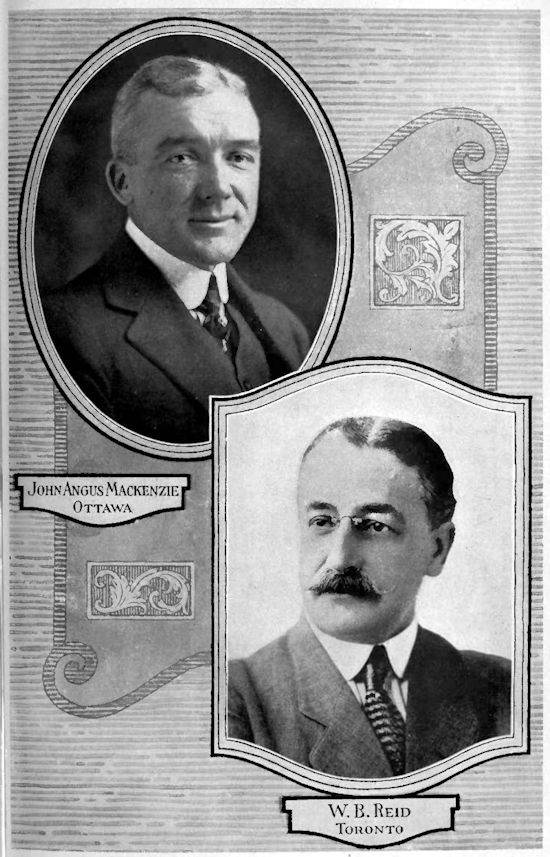
John Angus Mackenzie, Ottawa W. B. Reid, Toronto
Cotton, Major-General W. H. (Toronto, Ont.), commanding 2nd Division H.O. at Toronto, was a Lieut.-Colonel Commandant Royal School of Artillery, was born in Montreal on January 7, 1848. He is the eldest son of the late Henry Cotton, of the civil service of Canada. Henry Cotton was the son of William Miles Cotton, of England, and was born in St. Petersburg, Russia, in 1817, coming to Canada in 1836, and serving in the civil service for upwards of forty years. The late Mr. Cotton married in 1847, Eleanor, daughter of David Ross, Q.C., of Montreal, who now survives him. David Ross, who died in Montreal in 1837, aged sixty-seven, married Jane Davidson, daughter of Judge Davidson, of Montreal. Arthur Davidson, afterwards judge, was clerk of the Court of Appeals in the Province of Quebec, in 1778, during the period that His Excellency Sir F. Haldimand was Governor-General of that Province. John Ross, an officer in Wolfe’s army at the taking of Quebec, was the great-great-grandfather of the subject of this sketch. W. H. Cotton was educated at Toronto and Quebec, receiving a general English education, embracing the study of classics. At the time of the organization of the schools of artillery, and the permanent corps connected therewith, Col. Cotton was then (1871) a Captain in the Ottawa Garrison Artillery, having been transferred from the Quebec Garrison Artillery. He was the first Captain of A Battery Regt. C.A., and in 1882 succeeded to his present appointment on the promotion of Lieut.-Colonel Irwin. He twice visited Wimbledon, in connection with the Wimbledon team, in the years 1871 and 1875. Gen. Cotton is a staunch member of the Church of England. He married in April, 1876, Jessie, daughter of the late John Penner, of Montreal, and granddaughter of the late Chas. Penner, of Lachine, who afterwards resided in Kingston. He has six children living, three sons and three daughters, and is a member of Rideau Club, Ottawa, and York Club, Toronto.
Nesbitt, Arthur Russel (Toronto, Ont.), born at Nestleton, County of Durham, Ontario, on November 1, 1884. Son of George M. and Letitia (Hyland) Nesbitt. Educated at Wellesley School, Jarvis Street Collegiate, Trinity College, and Osgoode Hall, Toronto, being called to the Bar in 1910. He commenced practising his profession at the Provincial capital, where he has achieved a marked degree of success. Married on July 16, 1913, to Sadie Harrison, daughter of W. J. Brown, broker, of Toronto. Mr. Nesbitt has taken a deep interest in municipal affairs, and is at present Alderman for Ward Four of the city of Toronto, and Chairman of the Legislative Committee, which position he has held for the last two years. He entered the City Council at the elections in 1915, when he headed the poll, and has had that distinction in the subsequent elections. He is a man of indefatigable energy, and a very valuable member of the city council. He has been prominently identified for several years with the Liberal-Conservative party, and is past Secretary of the Conservative Association of Ward Four of the City of Toronto. He is also prominent in fraternal societies. He is a member of the Masonic and Orange Orders, being Past-Master of McKinley Lodge, L.O.L. He is an Oddfellow, a member of the Independent Order of Foresters, and the Canadian Order of Foresters.
Marchand, Pierre (Ottawa), Controller of Expenditure, Department of Interior, when appointed to a position by Sir Clifford Sifton, who was then Minister of the Interior, took office as an accountant whose talents and ability as such had been well tested and approved on several previous occasions. As accountant in the offices of the Lake Temiscamingue Colonization Railway at Mattawa, Ontario; in his occupancy of a similar position with Leblanc & Lemay, wholesale and retail clothiers and gent’s furnishers, and afterwards with D. V. Ranger, wholesale merchant at Ottawa, he was always found quick and reliable in his work, and, besides gaining and retaining the full confidence of his employers, he firmly established himself as an accountant of enviable reputation. It was in 1899, owing to the increased and rapidly increasing work that the Department of Interior was called upon to handle, attributable to Sir Clifford Sifton’s able and progressive administration, that Mr. Marchand’s services were secured, and the expenditure branch of that Department required carefulness, watchfulness and efficiency, and had to be placed in charge of one whose past record had stamped on it faithfulness and reliability. Since Mr. Marchand’s advent into that part of the Civil Service, the expenditure of the Department of Interior has had a painstaking, reliable and efficient public official, and one whose ever-attentive industry and care has elevated it to a high standard of excellent management. Prior to entering the Civil Service, Mr. Marchand was an active political worker in the Liberal party’s interests in Ottawa. At one time, and for several years, he was Secretary for the Club National, a French-Canadian Liberal organization, and was recognized as a strong and effective political worker. The late Hon. F. G. Marchand, who became Premier of Quebec, was one of Mr. Marchand’s many prominent relatives. Mr. Marchand was born at Ottawa, December 25, 1866, and is the son of Amable Marchand and Adelina Belair. His father was a prominent accountant, who saw that his son received a good commercial and classical education in Ottawa, Montreal and Quebec. Mr. Marchand was twice married. On October 6, 1891, he married at Ottawa, Josephine, daughter of Mrs. O. Lafleur, a widow. She died in May, 1916. On January 10th, 1917, he married in Ottawa, Bertha, daughter of P. Girard, whose residence is at Carillon, Quebec. By this second marriage, his home is blessed with a son and a daughter, Rosaire and Carmen. Mr. Marchand is a member of the Institut Canadien-Français and Monument National. In religion he is a Roman Catholic, and he resides at 81 Stewart Street.
Northrup, William Barton, K.C., M.A. (Ottawa, Ont.), Clerk of the House of Commons, is an eminent lawyer, and was for many years head of the legal firm of Northrup and Roberts, of Belleville, Ontario. For many years he sat in the House as the representative for East Hastings, Ontario, and was noted for his able debates and the eloquent and persistent manner in which he advocated the establishment of divorce tribunals where the poor as well as the rich would be accorded fair play and justice, and the abolition of the costly Senate procedure, which was antiquated, unjust and farcical and unreliable. Mr. Northrup was first elected to Parliament at a by-election to fill the vacancy caused by the death of Mr. S. B. Burdell, who was returned to Parliament at the general election in 1891. He was unsuccessful in his candidature in the general election in 1896, but at the general elections of 1900-4-8 and 1911 he was successful. He did not run in the war election in 1917. In 1902 he accompanied the Rt. Hon. Sir R. L. Borden on the North-West tour. Succeeding Dr. T. B. Flint, M.A., LL.B., D.C.L., he was appointed Clerk of the House of Commons in 1918. Like the late Dr. Flint, Mr. W. B. Northrup has had a long experience as a member of the House of Commons, and is an expert in parliamentary practice. His natural geniality and uniform courtesy made him friends on both sides of the House. With distinguished ability, grace and dignity he fills the position of Clerk of the House of Commons. William Barton Northrup is the son of the late A. G. N. Northrup, Deputy-Clerk of the Crown and Pleas, County Hastings, Ontario. He was born in Belleville, Ontario, October 19, 1856, and was educated at the Belleville Grammar School, Upper Canada College, and Toronto University (B.A. with honors 1877, M.A. 1878). June 1, 1879, he married Minnie, eldest daughter of the late J. E. Procter, Brighton, Ontario. She died June, 1905. In June, 1907, he married Mary Schryver, daughter of the late J. C. Fitch, Toronto, and relict of F. C. Clemow. He was created K.C. in 1902, bencher Law Society, 1906, and was re-elected. In the House of Commons in 1892 he moved the address in reply to the Speech from the Throne, and in 1906 seconded the address inviting King Edward and Queen Alexandra to visit Canada. In his youth he was a noted cricketer.
Braden, Norman Short (Hamilton, Ont.), is an electrical engineer by profession and one of the industrial chieftains of that city. He was born at Indianapolis, U.S.A., on June 15, 1869, the son of James Braden, a physician, and Lydia E. Braden. The Braden family are of Scottish descent, and his ancestors emigrated from the North of Ireland to the United States in the eighteenth century. Mr. Braden was educated at the public schools of Indiana and at Whitman College, Walla Walla, Washington. After leaving college in 1892 he entered the employ of the Jenney Electric Motor Company of Indianapolis, and seven years later joined the staff of the Westinghouse Electric and Manufacturing Company, of Pittsburgh. Upon the formation of the Canadian Westinghouse Company, Limited, of Hamilton, Ont., in 1903, he moved to the latter city, and was appointed manager of the sales department, in charge of the commercial electrical development and activities of his Company for the entire Dominion. Under his direction the growth of the Canadian Westinghouse Company’s business has expanded with great rapidity, requiring an increase of capital from $1,500,000 in 1903 to $10,000,000 in 1918. It gives employment to upwards of three thousand hands, and is the largest manufacturer of electrical apparatus in Canada. In 1919, Mr. Braden was elected third vice-president of the company with executive charge of its commercial organization. The subject of this sketch is also identified with another of Hamilton’s leading industries, the B. Greening Wire Co., Ltd. On November 29, 1906, he married Mabel, daughter of Samuel Owen and Jennie H. Greening. The Greening family have been prominent manufacturers of wire products in England since the year Columbus discovered America, 1492, and have been established in Hamilton since 1858. Of that company Mr. Braden, who entered the family by marriage, is now a Director. He is a member of the American Institute of Electrical Engineers and of the Jovian Order, and belongs to the Hamilton Club, the Rotary Club of his city; the Golf and Country Club; the Engineers’ Clubs of Toronto and Montreal; the Electric Club of Toronto, and the Transportation Club of New York City. He is a Presbyterian in religion, and his recreations are hunting, golf, motoring, and motor boating. Mr. and Mrs. Braden have three children, Eleanore Greening Braden, William Greening Braden, and Margaret Owen Braden.
Bowie, Lieut.-Colonel Henry William (Ottawa, Ont.), Sergeant-at-Arms of the House of Commons and a Commissioner of Parliament, is the son of the late Captain Alexander Bowie, who, during his lifetime, was one of the most popular men residing in the capital of the Dominion of Canada, and Esther Shepherd, and was born at Ottawa, November 10, 1862, and educated in the public and private schools. In 1892, Lieut.-Colonel Bowie married Helen Louise Gouin, daughter of James A. Gouin, who for thirty-three years was postmaster for the City of Ottawa. There are five children, Guy Gouin, Henry William Shepherd, Louis Alexander, Marion Faith, and Adelaide Esther—three boys and two girls. An enthusiast in military matters, at the age of nineteen, in 1881, Lieut.-Col. Bowie became a member of the Canadian Militia, and qualified at the Royal Military College and the Royal School of Artillery, and for several years was a member of the Governor-General’s Foot Guards. In 1882 Colonel Bowie entered the service of the Ottawa River Navigation Company, in which his father was Ottawa Manager, and qualified as Master, Marine Department, Ottawa, in 1884. From 1891 to 1896, and again from 1911 to 1915, Colonel Bowie was Secretary to the Honourable the Speaker of the House of Commons, and from 1891 to 1918 (for 28 years) served as Deputy-Sergeant-at-Arms in that honourable Assembly. On the death of Lieut.-Col. H. R. Smith, I.S.O., C.M.G., J.P., A.D.C., Colonel Bowie was recalled from overseas, and, March, 1918, was appointed as Sergeant-at-Arms. Shortly after the Great War was declared Colonel Bowie made every effort to follow those who had already gone overseas, or to join those who were preparing to go, but, owing to official and other duties over which he had to preside he was unable to leave until 1916, when he went as second major of the 77th Overseas Battalion. In August, 1916, he became attached to the 60th Battalion in France, but was shortly afterwards, October, 1916, called from France to Bramshott, England, to command a Provisional Battalion, C.E.F. It was at this time, October, 1916, that Colonel Bowie’s eldest son, Lieut. Guy Gouin Bowie, left Canada for overseas with the 154th Infantry Battalion, C.E.F. Colonel Bowie remained in command of the Provisional Battalion until July, 1917, when he was seconded for duty with the Imperial Forces and proceeded at once to France. Arriving there he served under the Administrative Commandant, Third Army Railheads, as Staff Officer and O.C., Railheads Detail Detachment, till recalled to Canada in March, 1918. In the meantime his son, Lieut. Guy Gouin Bowie, who was born in Ottawa, October 10, 1892, followed in his father’s footsteps and had quite an eventful military career. He was appointed to the Active Militia, G.G.F.G., as Lieutenant on December 15, 1915, and received his certificate of qualification from the Officers’ Training School, Kingston, on January 20, 1916. On March 5, 1916, he was appointed Lieutenant in the 154th Infantry Battalion, C.E.F., and went overseas with that battalion on October 20, 1916. Arriving in England, October 31, he was appointed Lieutenant in the Imperial Land Forces, and on January 31, 1917, was transferred from the 154th Battalion to the 6th Reserve Battalion at Seaford, Sussex. On August 7, 1917, he was transferred to the 21st Battalion, C.E.F., France, and was dangerously wounded in front line trenches, Lens sector, December 14, 1917. Arriving at Clearing Station, Aubigny, December 14, 1917, he was transferred to the 24th General Hospital, Estaples, France, January 1, 1918, and on February 6, 1918, was transferred to Prince of Wales Hospital, London, England, where he remained until May 6, 1918, when he was invalided home. Lieut. Bowie was married October 10, 1916, at Ottawa to Lily Wright Brigham, daughter of T. G. Brigham, and has two sons, Thomas Guy and James Henry. Col. Bowie is a member of the Wellington Club, London, England, and the Royal Ottawa Golf Club, Ottawa. His home address is 82 Park Avenue, and his official address, House of Commons, Ottawa, Ontario, Canada.
Robinette, Thomas Cowper, K.C. (Toronto, Ont.), enjoys an enviable reputation as a brilliant criminal lawyer, and as such has appeared with success in many famous cases, notably Macwherrel and Caledon wreck cases at Brampton, Healey and Blythe at Toronto, Mrs. Kyle at Woodstock, Dr. Robinson at Napanee and many others. Mr. Robinette is of U.E.L. descent, his family having come from Pennsylvania to Peel County, Ontario, in 1781. He was born at Dixie, Ont., near Cooksville in 1861, the son of the late Josiah Robinette and Esther J. Goodison. Educated at Public Schools, Strathroy High School and Toronto University, he graduated from the Faculty of Arts in 1884, and from that of law in 1887, with the Governor-General’s Gold Medal. He was Silver Medallist in Modern Languages and English Prizeman, also holding a Scholarship in General Proficiency. Although taking an active part in politics, Mr. Robinette has never yet represented any constituency, having contested Centre Toronto against E. F. Clarke unsuccessfully in 1904 and again in 1908 against Edmund Bristol, also North York, in 1911. He married Edith May Lindsay, of Pickering Township, Ont., in 1899, and has four sons, Thomas, Jr., John, George and Allan, also one daughter, Minnie. Thomas Robinette was made K.C. in 1902, a Bencher of the Law Society in 1911 and 1916; Member of the Royal Colonial Institute, London, Eng., in 1913; Director of the Moral and Social Reform League, Toronto, in 1913; President of the Methodist Young Men’s Association in 1906; President of the University Literary and Scientific Society in 1907; Chairman of the Young Liberal Convention, Toronto, in 1885; also Joint Secretary of the Dominion Young Men’s Association, formed at Montreal in 1886. Mr. Robinette is a Liberal in politics and a Methodist in religion. He is a member of the National Club, Ontario Club, R.C.Y.C., Canadian Club and Empire Club, all of Toronto, also of the Masonic, I.O.O.F., C.O.O.F., A.O.U.W., and Maccabean Societies. An ex-officer of the Queen’s Own Rifles and 34th Regiment, he is to-day engaged in the practice of law at Toronto as head of the firm of Robinette, Godfrey, Phelan and Lawson, in which J. S. Fullerton, K.C., late Corporation Counsel of Toronto, is associate counsel. “As a pleader, energetic, clear and painstaking”—“Toronto News.” “Has a trained mind, is accessible to new ideas, and has unusual gifts for the exposition and enforcement of his opinions”—“Toronto Globe.”
Murray, Hon. Robert, K.C., Provincial Secretary-Treasurer of the Province of New Brunswick, is one of the best known and widely respected public men of the Maritime Provinces. He was born at Chatham, N.B., where he still resides, on July 17, 1855, the son of Robert and Jane Murray. His father was a millwright, and the younger Robert was educated at the Presbyterian Academy in his native town, from which he graduated in 1871. At school he had shown himself to be of a naturally studious turn of mind, and decided to qualify himself for the bar. He was Police Magistrate for the town of Chatham, N.B., from 1887 to 1891, when he resigned. For upwards of forty years he followed his profession as a barrister in the town of Chatham, and has built up a large practice in the County of Northumberland, where he is held in general esteem and confidence. Subsequently, in 1902, his standing was recognized when he was created a King’s Counsel. In addition, he devoted himself to public and municipal affairs, and was identified with the Liberal party. His first public service was as a member of the County Council of Northumberland, and he was later an alderman of the town of Chatham. In 1905 he was elected by acclamation in a by-election as one of the representatives of Northumberland County in the Provincial Legislature, where he served till 1908. During the past few years, there have been several political upheavals in the province of New Brunswick, and in 1917, when the Conservative ministry, headed by Hon. G. Clarke, sought the franchise of the people, there was a demand for new men. In that contest, Mr. Murray was induced to stand as one of the Liberal candidates for Northumberland, which sends four members to the Legislature. He was elected, and at the same time the Murray administration, of which Hon. J. A. Murray was Premier, was defeated. Hon. Walter E. Foster, who was called upon to form a ministry, at once sent for Mr. Murray and offered him the portfolio of Provincial Secretary-Treasurer, in succession to Hon. D. V. Landry. The offer was accepted, and Mr. Murray has since conducted the finances of the province to the satisfaction of everyone. From his youth Mr. Murray took an active interest in the militia of his district, and retired in 1910 with the rank of Major, receiving the long service decoration. During the late war he played an energetic, useful part in promoting Canada’s military and patriotic effort. In religion he is a Presbyterian, and is a member of the A.F. & A.M., and the I.O.O.F. His recreations are hunting, curling and quoit playing. On June 11, 1889, he married Jane, daughter of Simon F. Simpson, of Negnac, Northumberland County, N.B., and has three children, Nina Helen, Vera Alice, and Robert Blaine, all of whom are now married. Though his public duties compel him to spend much of his time in Fredericton, his home is still at Chatham, N.B., and he continues the practice of his profession there.
Wood, Rev. William Robertson (Winnipeg, Man.), General Secretary of the Manitoba Grain Growers’ Association. Was born on June 6, 1874, at Weir, Orkney, Scotland. Son of William Wood and Margaret Robertson. Came to Canada in 1887. Educated at primary school in his native island, and at Port Elgin High School, Owen Sound Model School, Toronto University and Knox College. From this latter institution he graduated in 1904. On his ordination, he served the Presbyterian Church as Minister in Dunbarton, Ont., 1904-8; Claremont, Ont., 1908-13; Franklin, Man., 1913-16. Opposed Hon. J. H. Howden, Attorney-General for Manitoba, for the constituency of Beautiful Plains, Man., and was defeated by thirty-two votes. First elected a member of the Manitoba Legislature for Beautiful Plains, August, 1915, opposing J. H. Irwin, Neepawa. General Secretary of the Free Trade League of Canada, 1916-17. Became Secretary of the Manitoba Grain Growers’ Association, August, 1917. Married, in June, 1904, to Margaret, daughter of Andrew and Ellen Workman, of Rothsay, Ont., and has one daughter, Rhoda Marguerite, born in December, 1906. In politics Rev. Mr. Wood is an Independent Liberal.
Weld, John, publisher (London, Ont.), was born on a farm in Middlesex County, Ont., on September 7, 1854. His father, the late William Weld, son of an Anglican Church clergyman, emigrated from Tenterden, Kent, England, in 1843, and made a home for himself amid the forests of Delaware Township. After living the life of a pioneer farmer for twenty years, he founded “The Farmer’s Advocate” of London in 1866 as a means of assisting other settlers who were continually coming to him for advice, and it is through his long association with this journal and its colleague, “The Farmer’s Advocate and Home Journal” of Winnipeg that the subject of this sketch became so widely known. After receiving his early education in the London schools, Mr. Weld learned the printing business in a local shop and completed his apprenticeship with a short post-graduate engagement with a large New York publishing house. Returning to Canada, he was attracted by the West, which was then opening up for settlers, and he staked his claim in Saskatchewan, where he “proved up” on a half-section in 1885. The growth of “The Farmer’s Advocate” then necessitated his return to London, where he became business manager of the publication until his father’s death on January 3, 1891. He then became general manager, and when the Wm. Weld Company, Ltd., was organized and incorporated in July of the same year, he acquired a controlling interest in the firm, which he has since held. The first issue of “The Farmer’s Advocate” of Winnipeg appeared in 1890. It was edited in the West, but a separate company was not organized until July 31, 1905, when The Farmer’s Advocate of Winnipeg, Ltd., was incorporated with Mr. Weld as President. A building was erected on Princess Street in that year, but it proved inadequate to meet the ever-growing requirements of the business, so it was sold in 1911, and a five-story concrete, fire-proof building was constructed at the corner of Notre Dame and Langside Streets. In order to keep the two publications inseparably linked with practical and progressive farming, as well as to provide means whereby the editors might keep constantly in touch with varying agricultural conditions, a farm was purchased in the neighbourhood of London, and, incidentally, a separated portion of this is a part of the Weld homestead which has always been owned by the family under the original Crown grant. The subject of this sketch spends many enjoyable hours on Weldwood Farm, where pure-bred Yorkshire swine and one of the largest herds of pure-bred dual-purpose Shorthorns in Canada are maintained. The Bryant Press, Toronto, of which Mr. Weld is President, was acquired in 1903, and he is also President of the London Printing and Lithographing Company, Ltd. He has held various offices in the Canadian Press Association, and was the only representative of the Agricultural Press to visit Britain and the war zone in company with Canadian publishers and editors, the party being the guests of the Imperial Government in the summer of 1918. He is a member of the Anglican Church, and a life member of the Masonic Order, Tuscan Lodge 195, A.F. & A.M.
Foster, Hon. Walter Edward, Premier of New Brunswick, is also one of the most prominent business men of that Province. He was born at St. Martins, N.B., on April 9, 1874, the son of Edward H. and Elizabeth (Pattison) Foster, and educated at the public and grammar schools of St. John, N.B. As a boy of fifteen he entered the Bank of New Brunswick as a junior clerk, and remained in its service until 1899, when he became a member of the firm of Vassie & Co., Ltd., wholesale dry goods merchants, St. John. Of this firm he is now Vice-President and Managing Director. He is also actively connected with transportation and shipping interests, and is President of the St. Martins Railway Co. He was Vice-President of the St. John Board of Trade in 1906-7, and President in 1908-9. He was Third Arbitrator and Chairman of the Conciliation Board which successfully settled differences between the longshoremen of the Port of St. John and the Shipping Federation, 1913. In the autumn of 1915 differences having again arisen between the Longshoremen’s Association and the shipping companies at St. John, he was appointed Chairman of the Conciliation Board by the Minister of Labor of Canada, and succeeded in effecting an agreement for two years. Coming as it did in the midst of the war, this settlement was of the highest importance in a military sense. Hon. Mr. Foster was formerly an officer in the New Brunswick Regiment, Canadian Artillery, retiring with the rank of Captain in 1903. He has been for a good many years identified with the Liberal party, and is a Past President of the Young Liberals Club of St. John, but not until comparatively recently did he become a candidate for political office. In 1916 the Liberal party in the Legislature decided on reorganization, and offered the leadership of the Opposition to Mr. Foster. He accepted, and at once threw himself with energy into the task of putting the party on a fighting basis. At the general elections of February 24, 1917, he was victorious at the polls, and he was shortly afterward sworn in as First Minister. His business-like and economical administration in a difficult period has given satisfaction to all classes of citizens. He is a member of the Union Club, St. John, and was President of the Cliff Club, 1915-7. In religion he is an Anglican. On January 18, 1900, he married Jehan Mary, daughter of William Vassie, St. John, and has one son and three daughters. His residence is at 36 Cobourg Street, St. John, and his summer residence at Rothesay, N.B.
Charlesworth, Hector, journalist (Toronto, Ont.), was born at Hamilton, Ont., September 28, 1872, the son of Horatio G. and Charlotte (McEachern) Charlesworth. He is a Canadian of several generations, some of his forbears having come to Quebec after the British conquest in the eighteenth century. His maternal grandfather, John McEachern, whose parents went to Manitoba with Lord Selkirk’s party, was born at Fort Garry on the site of the present city of Winnipeg, in 1811. When he was but very young, his parents travelled in canoes through the waterways of Northern Ontario to Montreal, and later made their home at Chateauguay Basin, Que. Mr. Charlesworth has lived in Toronto since 1876, and was educated at Wellesley School and Jarvis Street Collegiate Institute. His father was a shoe manufacturer; and in 1887 he was articled as a chartered accountant with a view to his ultimately becoming office manager of the firm. At seventeen he commenced writing anonymously under the nom de plume of “Touchstone” for Toronto “Saturday Night.” In 1891 Mr. E. E. Shepherd, editor of the journal, inserted an advertisement asking the contributor to disclose his identity, and on learning it offered him a position on the staff of that journal. He remained with Mr. Shepherd for a year, and then resolved to qualify himself by practical experience as a reporter. During the next eighteen years he worked on several daily newspapers, including “The World,” “The News,” and “The Mail and Empire,” of which latter journal he was City Editor from 1904 to 1910. Shortly after the reorganization of “Saturday Night” as a national weekly he was offered and accepted the post of Assistant Managing Editor, which he still holds. Though he has been a copious writer on political, financial and social topics, he is perhaps best known as a musical and dramatic critic. He acted as Chairman of the Board of Judges at the Earl Grey dramatic competitions, Toronto, 1911, and of Winnipeg, 1912, and eliminating judge in the Duke of Connaught’s competition, 1913. He was also chief judge in the “Collier’s Weekly” competition to secure suitable English words for “O Canada” in 1909. He has written essays and sketches for many publications, including the “International Studio,” the “New York Evening Post,” “Christian Science Monitor,” “New York Times,” the “Canadian Bankers’ Journal,” and the “Canadian Magazine.” His name appears among the contributors to volume one, number one, of the latter publication. He was one of the special writers engaged in connection with the Victory Loan Campaigns of 1918 and 1919, his work being syndicated throughout Canada, and has edited and contributed to many Canadian books of reference. His other published work includes a treatise on modern methods of treating tuberculosis published by the National Sanitarium Association, and the narrative introduction to Dr. Herbert A. Bruce’s controversial book “Politics and the Canadian Army Medical Service.” In 1900 he was personally thanked by the family of the late Robert Louis Stevenson for two sonnets protesting against a movement to remove the remains of that author from Samoa, which have since been reprinted in the “Oxford Book of Canadian Verse.” He was also one of nine accredited Canadian correspondents who accompanied the present King and Queen (then Duke and Duchess of Cornwall and York) on the Royal tour of 1901, and later reported His Majesty’s visit to the Quebec Tercentenary in 1908. On February 15, 1897, he married Katherine, second daughter of Peter Ryan, Toronto, and has two children, Constance Charlotte (born 1904) and Lionel Victor (born 1906).
Bennett, Richard Bedford, K.C., LL.B. (Calgary, Alta.), is one of the leading barristers and publicists of the Canadian West. He was born at Hopewell, Albert County, New Brunswick, on July 3, 1870, the son of Henry J. and Henrietta (Stiles) Bennett. His father was of U.E. Loyalist stock, and his mother’s people settled in Canada immediately after the British conquest of 1759-60. On both sides Mr. Bennett represents the ninth generation born on this side of the Atlantic. He was educated in the Public and High Schools of New Brunswick and at Dalhousie University, Halifax, Nova Scotia, where he qualified for the law and received the degree of LL.B. He was called to the New Brunswick Bar in 1893, and for a time practised at Chatham, N.B., as the partner of the late Hon. L. J. Tweedie, afterward Prime Minister and Lieutenant-Governor of the Province. In 1897 he removed to Calgary, and was called to the Bar of the North-West Territories, forming a partnership with Mr. (now Sir) James Lougheed, at present Government leader in the Dominion Senate and Minister of Civil Re-establishment, a partnership which has continued ever since. In 1907, Mr. Bennett was created King’s Counsel. In 1898, one year after his arrival in the West, he was elected to the Legislative Assembly of the North-West Territories for West Calgary, and sat in that body until its dissolution in 1905, on the granting of autonomy to Alberta and Saskatchewan. In 1909, he was elected for his old constituency to the Alberta Legislature, and was recognized as the ablest debater in that body. Among his public services was the exposure of the Alberta and Great Waterways Railway transaction, which led to a change from the Rutherford to the Sifton administration and Cabinet reconstruction. At the Federal elections of 1911 he resigned from the Alberta Legislature to run for the House of Commons as Conservative candidate for Calgary. He was elected, and the same campaign placed Sir Robert Borden in power. At Ottawa, Mr. Bennett was at once recognized as one of the leading figures on the Government benches, and in the trying period which followed the outbreak of the war in 1914 proved a source of strength to the administration. Actively identified with the Canadian Patriotic Fund and Red Cross Society. President of the Alberta Provincial Branch of the latter, member of Central Council and of Executive of Patriotic Fund. He accompanied Sir Robert Borden to Great Britain and France in 1915 on the occasion of the Prime Minister’s first visit of inspection to the Canadian army overseas, and later became Chairman of the National Service Commission to report on Canada’s war possibilities in men and resources. At the general election of 1917 declined re-nomination, but supported Union Government. In addition to his renowned forensic abilities, Mr. Bennett has a deep grasp of commercial and development questions. Shortly after going to the West he became identified with the irrigation projects of the Canadian Pacific Railway Company. He resigned his position as counsel to that company in Alberta on being elected to the House of Commons. He is to-day interested in and director of several industrial and financial corporations, including the Metropolitan Life Insurance Company of New York. In religion he is a Methodist, and in politics an Independent. He is a Bencher of the Law Society of Alberta, Fellow of the Royal Colonial Institute, and a member of the following clubs: Ranchmen’s and Golf and Country, Calgary; Rideau and Country, Ottawa.
Butterworth, John George Bissett, Ottawa’s premier coal merchant, was born at Port Hawkesbury, Nova Scotia, in 1848. His ancestors can be traced back to the Huguenots of France, whose lives were in constant danger in the 16th and 17th centuries, who were constantly involved in war, who were persecuted and suffered severely in the reign of Francis I. and his successors, and of whom from 25,000 to 30,000 suffered death at the massacre of St. Bartholomew, August 20, 1572. In 1685, hundreds of thousands of these Puritans went into exile, going to Prussia, Holland, Switzerland, England, Scotland, and America, and Mr. Butterworth’s ancestors found a resting-place, a place of safety, in England, where they remained and industriously added to the wealth of the country, and took part in the Peninsular War at the beginning of the 19th century. Being seafaring, enterprising, and ambitious men, and with a desire to make their mark in the new world, where they would have large scope to exercise their talents, they left the old country and arrived at Port Hawkesbury, Nova Scotia, where, eventually, they became builders and owners of merchant ships and captains in the merchant fleet, and married into United Empire families. Tiring of seafaring life, and in compliance with the wishes of the sons, and at the suggestion of the mother, Mr. Butterworth, Sr., sold out his shipping interests and the valuable lands and wharves which he owned at Port Hawkesbury, and with his wife and family arrived in Ottawa, which was then in its infancy, having been incorporated just one year, previously. When they grew up, Mr. Butterworth and his two brothers, E. B. and C. A. Butterworth, following in the ambitious footsteps of their ancestors, not satisfied with their then existing opportunities for advancement, left for the United States, and engaged in business and met with success. Their love for the British Empire, however, was still dominant within them, and they decided to sell out, return to Canada, and make it their future home. In 1874, they entered into business in Ottawa as hardware merchants and metal workers, and later, in 1881, started in the coal business. Eventually, C. A. and E. B. retired from the coal business and continued in the hardware business, while J. G. B., the subject of this sketch, retired from both of these and remained alone as the coal merchant, which business he has carried on to this day most successfully, and which to-day holds the lead of all others. Mr. Butterworth has three plants, with large storage capacity sufficient to hold at any one time 25,000 tons, and enabling him to constantly carry a heavy stock of coal during the summer to provide against delays in winter transportation and during the winter season. Over $100,000 is invested in these plants. In the severe winter of 1917, had it not been for the provision made by and the ability of Mr. Butterworth to supply large quantities of coal, there would have been great hardship in not only Ottawa, but in Carleton Place, Perth, Almonte, Arnprior, Renfrew, and many outside places in the provinces of Ontario and Quebec, to which points he was able to and did ship thousands of tons of coal. He, in that terrible winter, became the great provider of the people of Ottawa and her surrounding neighbours by supplying them with the coal they needed. For 1918 he was equally prepared to meet any emergency that might arise, but, luckily, the winter was not of a nature so severe as that of the previous year. In 1917, in order to cope with all demands that were likely to be made, Mr. Butterworth practically took care of the coal trade. He took the whole output of the Independent Coal Mine in Pennsylvania, shipped the small sizes to N.Y. and N.J. to the textile and munitions factories, and the prepared sizes into Canada. In so doing he secured large quantities of coal which otherwise could not have been obtained, and his foresight and enterprise prevented a serious coal famine in Ottawa and the other places before mentioned. The name of John George Bissett Butterworth will always be held high in gratitude and esteem by the people of Ottawa and of many other cities and towns in the Provinces of Ontario and Quebec. Mr. Butterworth is the son of William and Matilda Catherine (Bissett) Butterworth. He is President and Managing Director of the Ormstown Brick and Terra Cotta Co., of Ormstown, Quebec; ex-Vice-President of the Montreal Terminal Railway; ex-President of the Capital Power Company, of Deschene; ex-President, Ottawa Cartage Company; and ex-President of the Capital Fuel Company. In 1879, Mr. Butterworth married Elisabeth J. Shaw, daughter of James Shaw, Shawville, Quebec, a merchant in that place. He has two sons and two daughters—Grace Winifred, John George Hawthorne, Ethel Gertrude, and Wilfred Rosamond. One of his sons served as a lieutenant in the European War. Mr. Butterworth is an Anglican in religion, and resides at 225 MacLaren St., Ottawa, Ont.
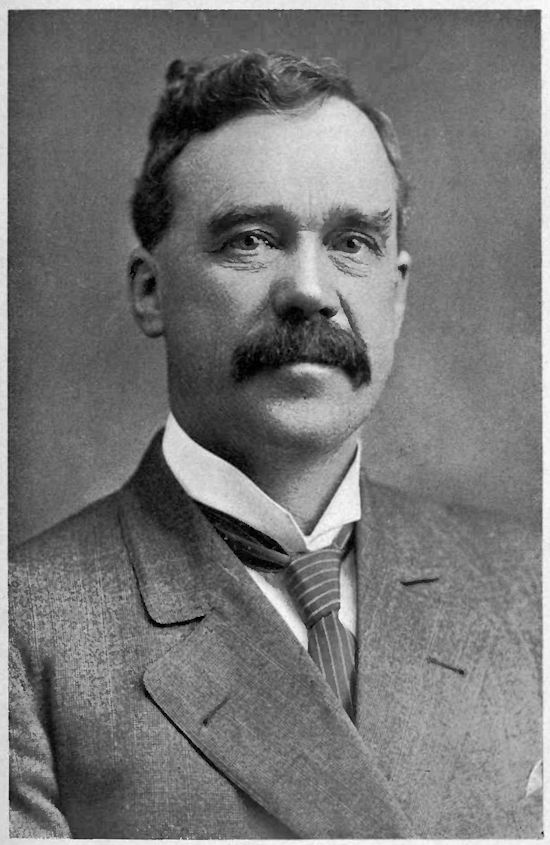
E. McMAHON Ottawa
Bell, John Percival, General Manager of the Bank of Hamilton, Hamilton, Ont., is recognized as one of the ablest of Canadian financiers. He is a native of the city in which he resides, and from early youth has grown up with the institution of which he is now the executive head. He was born on June 8th, 1872, the son of John and Jane (Park) Bell, and was educated in the public and high schools of Hamilton. In 1888, as a lad of sixteen he entered the service of the Bank of Hamilton as a junior clerk, and during the ensuing twelve years learned every phase of the banking business. In 1900 he was appointed manager of the Georgetown branch, and two years later was transferred to the Berlin (now Kitchener) branch in a similar capacity. In 1904, he became manager of the Brantford branch, one of the most important in the territory of the institution, and remained there until 1909, when he returned to Hamilton to become manager of the main office in that city. In 1914, he was promoted to the position of General Manager on the retirement from that position of Mr. James Turnbull, who, by a coincidence had become General Manager of the Bank in the same year (1888) that Mr. Bell entered its service. The five years of Mr. Bell’s incumbency as General Manager have been the most difficult in the history of Canadian finance, owing to the disruption caused by the great war, and he has proven a brilliant success. He has carried on the policy which has specially endeared the Bank of Hamilton to its clientele, by caring for the interests of the business man of moderate resources with the same zeal as is bestowed on those of the great corporations. Mr. Bell is thoroughly in touch with the great and constantly expanding business interests of his native city; and his regime has been marked by an expansion of the Bank’s Toronto custom, as witnessed in the taking over of the great office building and premises of the now extinct Traders’ Bank in that city. He was elected a councillor of the Hamilton Board of Trade in 1911, and during the war acted as Treasurer of the Patriotic Fund for his district. His recreations are golf, bowling and curling, and he is a member of the following clubs: Hamilton; Hamilton Thistle; Hamilton Jockey; Royal Hamilton Yacht; Hamilton Golf; and the Toronto Club (Toronto). In politics he is independent, and in religion an Anglican. On Oct. 11th, 1900, he married Rosalind, daughter of Rev. Arthur Boultbee, Toronto, and has two sons and three daughters. Mr. and Mrs. Bell reside at 78 Chedske Ave., Hamilton.
Noyes, John Powell, Prothonotary Superior Court (Cowansville, Ont.), was born at Potton, Brome County, Que., September 15th, 1842, the son of Herman B. Noyes and Sarah Powell. Receiving his education in Bangor and Fort Covington, N.Y., and St. Mary’s College, Montreal, from which last he graduated in 1866, he studied law with the late Hon. L. S. Huntington, Q.C., and the late Judge Laframboise. Mr. Noyes practised his profession at Waterloo, Que., where he was also editor of the “Advertiser,” and meeting with gratifying success became Batonnier of Bedford District and K.C. in 1886; also Batonnier-General for the Province of Quebec in 1887. In 1889 he was appointed a Royal Commissioner to investigate the claim of the Hereford Railway Employees, and in 1891 Joint Prothonotary Superior Court, Joint Clerk of the Circuit Court, and Joint Clerk of the Crown and Peace for the District of Bedford. In 1887 he was nominated for Shefford (Local) Constituency in the Liberal interest but withdrew before the contest; his name has also been mentioned as a candidate for the Judiciary. Mr. Noyes was the first Mayor of the Town of Waterloo and for an extended period Secretary-Treasurer of the Stanstead, Shefford & Chambly Railway Co., of which he is now a director. He is the author of “Canadian Loyalists and Early Settlers in the District of Bedford,” published in 1901, also of “Some Pioneers of Shefford,” is a director of the Historical Society of Missisquoi, and was elected President in 1904. He has been a Freemason since 1866, having been a member of and sat in the Grand Lodges of Canada and Quebec; he was grand Superintendent R. A. Masons, Eastern Township District, in 1883; Grand First Principal, Grand Chapter of Quebec in 1886-7; Deputy Grand Master, Grand Lodge of Quebec, in 1893, and Grand Master of the above in 1894. Mr. Noyes married Lucy A., daughter of Joseph Merry of Magog, Que., in 1867, and has six children—Egbert S., Jessie C., Laura M., Bertha A., Emily M. and Ralph M. Noyes, of whom four survive. In 1913 he was named sole Prothonotary of the District of Bedford and in 1916 was tendered a banquet by the Judges, Bar and Court Officials of the District on the anniversary of his admission to the Bar fifty years before, and of his appointment as Joint Prothonotary twenty-five years before.
Hughes, Brigadier-General William St. Pierre, D.S.O. (Ottawa, Ont.). On October 19, 1914, authority was granted to Lieut.-Colonel (now Brigadier-General) William St. Pierre Hughes to organize an infantry battalion to be absorbed into the Second Canadian Contingent for Overseas Service. On the evening of May 5, the 21st was given a rousing send-off by the citizens of Kingston, Ontario, and the following morning the battalion embarked at Montreal on the S.S. Metagama for overseas. Ten days later the 21st disembarked at Devonport, England, and on Sept. 15 it landed on French soil, and, in due time was under fire at Messines, Vis-en-Artois, Neuville Villasse, Mercatel, Amiens, Bouley Grenier, St. Eloi, Sanctuary Wood, Ancre, Vimy Ridge, Courcelette, Mosselmark Village and Polderhook Chateau, Passchendaele, Bapaume, Arras, Quichy-le-Chateau, the village of Damery and Parvillers, Cambrai, and was one of the first battalions to cross the boundary at Bonn into Germany. Before going overseas to serve in the Great War, General William St. Pierre Hughes held the position of Inspector of Penitentiaries, with headquarters in Ottawa. During his absence at the front that office was abolished by Act of Parliament, and the new office of Superintendent of Penitentiaries was established. The value to Canada of General Hughes’ services as Inspector and as a competent and fearless soldier during the war were well known to the Dominion Government, to the members of Parliament, and to the general public, and when the position of Superintendent was made public, members of Parliament, the Press of Canada and the public in general were unanimous in General Hughes’ favor, and he was appointed to the position. When he was appointed to the position the “Montreal Gazette” said: “One of the purposes of the Civil Service Commission is to select for appointment worthy and capable men...... A case in point is the selection of Major-General Hughes for the position of Superintendent of Dominion Penitentiaries...... General Hughes comes of a fighting family in a military sense, and the call of the colors has always found in him a quick response even in the relatively remote days of 1885...... His appointment is still more to be commended by reason of merit and experience. He had long service in the Penitentiaries Branch of the Department of Justice, in which he rose to the rank of Chief Inspector before donning the uniform in defence of the Empire...... The responsible duties of the office will be well discharged by one who never failed in duty.” Brigadier-General William St. Pierre Hughes, D.S.O., Superintendent of Penitentiaries, and brother of Major-General Sir Sam Hughes, was born in Durham County, Ontario, June 2, 1863, and is the son of John Hughes and Caroline Laughlin. From both sides of his family he inherited military tastes, his father being the son of a surgeon-major in the Imperial army who spent eighteen years in India, and his mother the daughter of Colonel Laughlin of the 10th Royal Irish Artillery and the granddaughter of Colonel St. Pierre, one of the most famous of Napoleon’s colonels. General Hughes was educated entirely by his father until his eleventh year, when he went to Toronto where he remained six years. After a year at home he went to Winnipeg, where in 1885 he enlisted with the famous “Little Black Devils.” During his stay in Winnipeg he won the amateur championship of Manitoba and the North-West as a one-mile foot runner. After the Rebellion he returned to Ontario, spending a year at college in Belleville; then a year in Orillia where he played lacrosse with the Orillia team when that team won the championship of Ontario; then to Cornwall, where he played with the famous Cornwall lacrosse team during its years of national triumph. In 1893, General Hughes became Warden’s Secretary and Clerk of Industries in the Kingston Penitentiary, taking up what has become his life’s work. After filling a number of different positions in penitentiary work, during which he took a deep interest in criminology, General Hughes became Inspector of Penitentiaries in 1913. With great earnestness he started to put into effect many cherished plans for prison reform, but the call of 1914 put an end for the time to this work. During all the years of prison work General Hughes has kept in close touch with military affairs. Starting as lieutenant in the old 14th Battalion of Kingston, he, in course of time, became lieutenant-colonel commanding it, and was also brigade-major of the 7th Canadian Infantry Brigade. General Hughes was in the West when war was declared, and on his return in September, 1914, hurried to Valcartier, but was then unable to get a place in the 1st Contingent, which had already been mobilized. He then returned to Kingston and mobilized the famous 21st Battalion. He commanded this battalion continuously until July, 1916, when he was promoted to the command of the 10th Canadian Infantry Brigade, which he commanded in France until the spring of 1917. He then returned to England, where he commanded the Canadian area at Crowborough until it was taken over by the Imperial army. General Hughes then became president of a board for adjusting the financial differences between the Imperial and Canadian authorities as regards barrack damages, etc., and succeeded in writing off over $225,000 of charges made by Imperials against Canadians, and also saving an amount of almost $50,000 which was paid to Canadian Paymaster-General by various units in settlement of these charges. During his service in France General Hughes was awarded the D.S.O., and was twice mentioned in despatches. Owing to a reorganization of the Penitentiary Branch, General Hughes was forced to return to Canada in the summer of 1918, and was appointed Superintendent of Penitentiaries in April, 1919. Prominent relatives of General Hughes, besides Major-General Sir Sam Hughes, are Major John Hughes and Dr. James L. Hughes, brothers. February 5, 1900, General Hughes married Jessie Williams, daughter of William Macleod, of Cornwall, Ontario. He has one son and one daughter, Major Laughlin Macleod Hughes, R.C.H.A., and Mrs. John S. Gzowski, of Montreal, Quebec. General Hughes is a member of the following societies: Masonic, Orange, Odd-fellows and Foresters. For recreation he indulges in all-round sports and big game hunting. He is a Presbyterian in religion, and resides at 155 Stewart Street, Ottawa, Ontario.
Smart, Russell Sutherland, B.A., M.E., is a member of the firm of Featherstonhaugh & Smart, Patent Solicitors, 5 Elgin Street, Ottawa. He is the son of George A. and Louise Maud (Walton) Smart, of Toronto. His father was a well-known author. Mr. Smart was born at Winnipeg, Manitoba, June 20, 1885, and was educated in the Jarvis Collegiate Institute, Toronto; Toronto University, 1904; School of Practical Science; Queen’s University, 1907; honorary M.E. Toronto University 1913. In July, 1911, Mr. Smart was called to the Quebec bar, and to the Ontario bar in 1914. In May, 1904 he was admitted Patent Attorney. He is joint author of “Fisher and Smart on Patents,” and author of “Smart on Trademarks.” December 24, 1908, Mr. Smart married Emma Louise Parr, daughter of James A. Parr, lumberman, of Ottawa. He has three daughters—Helen Louise, Elizabeth, and Jane Clayton. Mr. Smart is a member of the Rideau, Rivermead Golf, University (Toronto), and Chemists (New York) clubs, and of the following societies: Engineering Institute of Canada, Chartered Institute of Patent Agents, and Patent American Law Association. For recreation, Mr. Smart indulges in golf and tennis. In religion he is a Presbyterian; in politics, independent; and he resides at 15 Linden Terrace, Ottawa.
McMahon, James Alexander (Hamilton, Ont.), Treasurer and Managing Director, Union Drawn Steel Company, Limited, conducted a Commercial College at Beaver Falls, Penn., 1887-1892; was employed with the Swan Electric Company, Cleveland, Ohio, 1892-1893, and with the Union Drawn Steel Company, of Beaver Falls, Penn., 1893-1905, coming to Hamilton in 1905, where he established the present business. He is a member of the Executive Committee, Hamilton Branch, Canadian Manufacturers Association, 1916-17; a member of the Membership Committee of the same for all of Canada, of which latter body he was Chairman in 1911; a member of the Technical Committee Hamilton School Board, and a member of the Hamilton Board of Trade. Mr. McMahon was born in Venango County, Penn., December 18th, 1859, the son of John and Margaret (Wolf) McMahon. He was educated at the Public Schools of Pennsylvania, and took a Commercial Course at Oberlin, Ohio. In 1889 he married Jennie G., daughter of Benjamin F. Beegle, by whom he has one son, Carl A., and one daughter, Alma. He is a member of the A.F. & A.M. also of the Commercial Club, Royal Hamilton Yacht Club, and Canadian Club, Glendale Golf and Country Club, all of Hamilton. In politics he is a Conservative, and a Methodist in religion.
Gwatkin, Major-General W. G. (Ottawa, Ont.), has been connected with the military system of Canada since 1905. Except for rather less than two years—between 1909 and 1911—his service with it has been continuous, and he has been intimately concerned alike with the preparations which were made for the Great War and with the staff work at Headquarters during the course of the war. A Cambridge University man, he joined the Manchester Regiment in 1882, and served as Subaltern, Adjutant, Company Commander and Second in Command; in 1894 he passed the Staff College; and in 1898 he began a long career on the Staff. Early in 1899 he went to the War Office to work in what ultimately became the Mobilization Section, the organ of the War Office which had a great deal to do, first, with the rapid and efficient supply of troops to South Africa, and afterwards with the careful preparations which enabled the regular army to show to such advantage in France. In the War Office during this period he served under Colonel (now Lieut.-General) Sir Percy Lake. In 1904, General Lake came to Canada to be the first Chief of the General Staff, and in 1905 he brought Colonel Gwatkin (who had been serving with his regiment in South Africa) to Ottawa to serve as Director of Operations and Staff Duties—in other words, to be his principal technical assistant. The reorganization of the Canadian Militia which followed the South African War was beginning. In the years between 1904 and 1914 the Militia force was remodelled, and a staff system was founded which proved able to carry through the work of raising and sending overseas an army of half a million men. Colonel Gwatkin’s services were so highly regarded that the Minister of Militia specially asked the War Office for an extension of his services, and he remained in Canada, not for the regulation three years, but for four. After a period of staff service in England his services were again requested by the Canadian Government, and he came to Canada early in 1911. At that time the military authorities of the Empire had become seriously apprehensive of war with Germany, and Colonel Gwatkin’s work largely comprised such measures of organization for this emergency as were undertaken in the circumstances. In particular he drew up complete plans for the raising and despatch of a contingent to England in the event of a war in Europe in which Canada might wish to participate. The plan drawn up anticipated a large number of the points which arose when the war actually came. In November, 1913, he succeeded Major-General C. J. MacKenzie as Chief of the General Staff. He was filling this post when the war came. The work done in the Militia Department in preparation for such an eventuality proved of the utmost service. Cable censorship was established, harbours were closed, dangerous points were guarded, the transition from peace to a war which the general public had not expected was made with remarkable smoothness. When the first contingent sailed General Gwatkin was desired by the Government to stay at Militia Headquarters to keep the machine working. During the entire course of the war he performed enormous labours. To recruit, give preliminary training to and ship overseas so large an army meant administrative ability of a very high order and the discharge of an immense amount of thankless labour. He has done his work to the high satisfaction of the Government of Canada, whose principal military adviser he has been. It showed its appreciation of his services by insisting on retaining him, though the Imperial Government repeatedly expressed a desire to recall him for service in Great Britain or France. The details of his career are as follows:—Major-General Willoughby Garnons Gwatkin, C.B., C.M.G., born August 11, 1859; was appointed Lieutenant Manchester Regiment May 10, 1882; Adjutant, Manchester Regiment, April 18, 1888, to April 17, 1892; Captain, Manchester Regiment, January 17, 1890; Major, Manchester Regiment, April 7, 1900; Brevet Lieut.-Colonel, January 6, 1904; Brevet Colonel November 20, 1907; Major-General, October 21, 1914. Staff appointments—Staff Captain Egypt, January 24, 1898, to April 20, 1898; Staff Captain, Headquarters of Army, March 11, 1899, to January 10, 1900; D.A.A.G., H.Q. of Army (temp.) January 11, 1900 to January 21, 1901; Staff Captain (Mobilization) H.Q. of Army, January 22, 1901, to October 14, 1902; D.A.Q.M.G. (Mobilization) H.Q. of Army, October 15, 1902, to October 31, 1903; Director of Operations and Staff Duties (General Staff Officer 2nd Grade) Canadian Militia, October 5, 1905, to October 20, 1909; General Staff Officer 1st grade Eastern Command, March 5, 1910, to February 28, 1911; General Staff Officer (Mobilization) 1st Grade Militia H.Q., Canada, July 14, 1911, to October 31, 1913; Chief of the General Staff and 1st Military Member of the Militia Council, Dominion of Canada, November 1, 1913. General Gwatkin is the fourth son of the late Frederick Gwatkin of New Square, Lincoln’s Inn, London, W.C., and Grove House, Twickenham, and Louisa Isabella, younger daughter of the Rev. Ambrose Stapleton, vicar of East Budleigh, Devonshire. He was educated at Shrewsbury School, at King’s College, Cambridge, and at R.M.C., Sandhurst. In 1916 he was created C.B. (Civil), C.M.G. in 1918 and Order of St. Sava of Serbia in 1918.
Ross, John Theodore, B.A. (Quebec), is one of the leading capitalists of the city. He was born in that city on Nov. 30, 1862, the son of the late John Ross, a prominent merchant and his wife, Anne Runcie. The late Senator J. G. Ross was his uncle. He was educated at Quebec High School, at Morrin College and at McGill University, Montreal, from which latter institution he graduated with the degree of B.A. in 1883. He entered the wholesale business firm of his father, known as John Ross & Co., in 1884, and was admitted to full partnership in 1887, continuing in this capacity until 1894 when the firm was liquidated. Since then he has been widely engaged in financial and commercial operations. He was elected Vice-President of the Quebec Bank in 1897 and President in 1908. On its amalgamation with the Royal Bank of Canada some years later he became a Director of the latter institution. Among his many other interests is that of President of the Chronicle Printing Company, which publishes the “Quebec Chronicle,” one of the historic newspapers of Eastern Canada. His other commercial interests have at various times embraced the Quebec Steamship Company, the Montmorency Cotton Mills Company, the McArthur Export Company, The Quebec Improvement Company, the Trans-Canada Railway Co., the Pacific Pass Coalfields, Ltd., the Quebec Transport Company, the North Pacific Lumber Company. He has also taken a deep interest in public and philanthropic affairs. He is a member of the Quebec Board of Trade and Chairman of the Quebec High School Board, Vice-President of the Literary and Historical Society, Quebec, President of the Society for the Prevention of Cruelty to Animals, and President of the Jeffrey Hale Hospital. In religion he is a Presbyterian, and in politics a Conservative. He is a member of the Garrison Club, Quebec, and his recreations are driving and tennis. On April 15, 1896, he married Mabel Kate, daughter of John Burstall, Quebec, and has two sons and two daughters. He resides on St. Louis Road, Quebec.
Rogers, John Morrison (Ingersoll, Ont.), physician and surgeon, has been active in the Liberal Party for a number of years, being Liberal nominee for the Legislative Assembly in his constituency at the present time. He is the son of Thomas and Margaret Rogers, and was born at Mount Forest, Ont., in 1867, where he received his early education, afterwards graduating from Toronto University in 1893. Dr. Rogers married Edythe B., daughter of J. B. Hambridge, Aylmer, Ont., in 1902, and has three sons: John Reginald, Donald Morrison, and William Parke. He is a member of the Ontario Medical Association, Vice-President Western Liberal Association, the Ingersoll Curling Club, and the Ingersoll Bowling Club. In religion he is a Presbyterian.
Colquhoun, Arthur Hugh Urquhart, B.A., LL.D., Deputy Minister of Education for the Province of Ontario, was born at Montreal on December 2, 1861, the son of the late Walter Colquhoun (a native of Dumbartonshire, Scotland,) and his wife Jane, daughter of William Clarke, Niagara, Ont., and relict of Charles Richardson, M.P. He was educated at Cornwall Public School, Montreal High School (where he won the Murray Medal for proficiency and the Governor-General’s Medal for literature and history) and McGill University, from which he graduated in 1885 with the degree of B.A., first class honors in English literature and history, and the Shakespeare gold medal. During his student days he took up the calling of journalism and joined the editorial staff of the “Montreal Star” in 1881. In 1883 he was entrusted with the post of editor-in-chief of the “Montreal Weekly Star,” and at the same time edited the “McGill University Gazette.” In 1886 he went to Ottawa and accepted the post of editor of the “Journal” of that city. In 1887, when the leaders of the Conservative government founded the “Toronto Empire” as chief organ of the party, he was appointed assistant editor and has ever since made Toronto his home. In 1891, he was appointed managing editor of the “Empire” and continued in that capacity until its amalgamation with the “Mail” in 1895. In the latter year, he entered the growing field of trade journalism with Col. J. B. Maclean, and until 1902 edited the “Printer and Publisher” and the “Dry Goods Review.” In 1902, he joined the staff of the “Mail and Empire” as editorial writer, and early in 1903, when Mr. J. S. (now Sir John) Willison reorganized the “Toronto News,” he became news editor of that publication, and helped to make the paper temporarily famous for the literary distinction and importance of its news columns. From the outset of the political career of the late Sir James Whitney, Mr. Colquhoun had been his close personal friend and adviser. One of the pledges of that statesman while leader of the opposition in the Ontario Legislature was a reorganization of the educational system from top to bottom, and shortly after his elevation to the post of Prime Minister in 1905 he appointed a Royal Commission of distinguished men to enquire into the affairs of the provincial university at Toronto. At the request of Mr. Whitney, Mr. Colquhoun accepted the position of secretary of the commission, and had much to do with the drafting of its report, which proved to be one of the most important documents of its kind produced in this country. In recognition of his services in this capacity, the University conferred on him the honorary degree of LL.D. in 1906. In the latter year he was also appointed Deputy Minister of Education, a position he still holds, and was largely instrumental in putting into effect the reforms promised by Sir James Whitney. In 1908, he was offered and declined the post of Chief Librarian of the city of Toronto. Among the earlier positions that he held was that of Chairman of the Press Committee of the British Association when it met at Toronto in 1897, an occasion which brought to Canada many of the great scientists of that day. He was also elected President of the Canadian Press Association for 1906-7. Both before and since his retirement from journalism, Mr. Colquhoun has been a frequent contributor, chiefly on historical themes, to magazines and reviews, including “The Canadian Magazine,” “The University Magazine,” “The British Empire Review,” and “Queen’s Quarterly.” On the political history of the provinces of Canada, he is a recognized authority; and his published works include “The History of Canadian Press Association”; the volume on the Fathers of Confederation in “The Chronicles of Canada,” and “Memoir of Senator Gowan, C.M.G.” (which he edited). His books are marked by purity of diction, and shrewd and moderate judgments on men and events. Mr. Colquhoun is a member of the Toronto Club and the Toronto Golf Club, and resides at 342 Walmer Road, Toronto.