The Avthors Meditation upon sight of his Pictvre.
Reading edition
WHen I behold my Picture, and perceive, How vaine it is, our Portraitures to leave In Lines, and Shadowes, (which make shewes, to day, Of that which will, to morrow, fade away) And, thinke, what meane Resemblances at best, Are by Mechanike Instruments exprest; I thought it better, much, to leave behind me, Some Draught, in which, my living friends might find me The same I am; in that, which will remaine, Till all is ruin'd, and repair'd againe: And, which, in absence, will more truely show me, Than, outward Formes, to those, who think they know me. For, though my gratious Maker made me such, That, where I love, belov'd I am, as much As J desire; yet, Forme, nor Features are, Those Ornaments, in which J would appeare To future Times; Though they were found in me, Farre better, than I can beleeve they be. Much lesse, affect I that, which each man knowes, To be no more, but Counterfeits of those, Wherein, the Painters, or the Gravers toole, Befriends alike, the Wiseman, and the Foole: And, (when they please) can give him, by their Art, The fairest-Face, that had the falsest-Heart. A Pictvre, though with most exactnesse made, Is nothing, but the Shadow of a Shade. For, ev'n our living Bodies, (though they seeme To others more, or more in our esteeme) Are but the shadowes of that Reall-being, Which doth extend beyond the Fleshly-seeing; And, cannot be discerned, till we rise Immortall-Objects, for Immortall-eyes. Our Everlasting-Substance lies unseene, Behinde the Fouldings, of a Carnall-Screene, Which is, but, Vapours thickned into Blood, (By due concoction of our daily food) And, still supplied, out of other Creatures, To keepe us living, by their wasted natures: Renewing, and decaying, ev'ry Day, Vntill that Vaile must be remov'd away. For, this lov'd Flesh, wherewith, yet cloth'd we go, Is not the same, wee had sev'n yeares ago; But, rather, something which is taken-in, To serve insteed of what hath wasted bin, In Wounds, in Sicknesses, in Colds, and Heates, In all Excrescions, and in Fumes, and Sweates. Nor shall, this present Flesh, long stay with us: And, wee may well be pleas'd, it should be Thus. For, as I view, those Townes, and Fields, that be In Landskip drawne; Even so, me thinks, I see A Glimpes, farre off, (through Faith's Prospective glasse) Of that, which after Death, will come to passe; And, likewise, gained have, such meanes of seeing, Some things, which were, before my Life had being, That, in my Soule, I should be discontent, If, this my Body were, more permanent; Since, Wee, and all God's other Creatures, here, Are but the Pictures, of what shall appeare. Yet, whilst they are, I thankfully would make That use of them, for their Creator's sake, To which hee made them; and, preserve the Table, Still, Faire and Full, as much as I were able, By finishing, (in my alotted place) Those Workes, for which, hee fits me by his Grace. And, if a Wrenne, a Wrenn's just height shall soare, No Ægle, for an Ægle, can doe more. If therefore, of my Labours, or of Mee, Ought shall remaine, when I remov'd, must be, Let it be that, wherein it may be view'd, My Makers Image, was in me renew'd: And, so declare, a dutifull intent, To doe the Worke I came for, e're I went; That, I to others, may some Patterne be, Of Doing-well, as other men to mee, Have beene, whilst I had life: And, let my daies Be summed up, to my Redeemer's praise. So this be gained, I regard it not, Though, all that I am else, be quite forgot.
By Knowledge onely, Life wee gaine, All other things to Death pertaine.
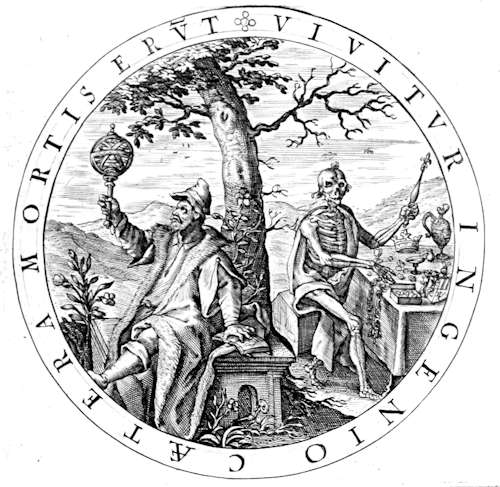
Illvstratio I. Book. 1.
HOw Fond are they, who spend their pretious Time In still pursuing their deceiving Pleasures? And they, that unto ayery Titles clime Or tyre themselves in hoording up of Treasures? For, these are Death's, who, when with wearinesse They have acquired most, sweepes all away; And leaves them, for their Labors, to possesse Nought but a raw-bon'd Carcasse lapt in clay. Of twenty hundred thousands, who, this houre Vaunt much, of those Possessions they have got; Of their new purchac'd Honours, or, the Power, By which, they seeme to have advanc't their Lott: Of this great Multitude, there shall not Three Remaine, for any Future-age to know; But perish quite, and quite forgotten bee, As Beasts, devoured twice ten yeares agoe. Thou, therefore, who desir'st for aye to live, And to possesse thy Labors maugre Death, To needfull Arts and honest Actions, give Thy Spanne of Time, and thy short blast of Breath. In holy Studies, exercise thy Mind; In workes of Charity, thy Hands imploy; That Knowledge, and that Treasure, seeke to find, Which may enrich thy Heart with perfect Ioy. So, though obscured thou appeare, awhile, Despised, poore, or borne to Fortunes low, Thy Vertue shall acquire a nobler stile, Then greatest Kings are able to bestow: And, gaine thee those Possessions, which, nor They, Nor Time, nor Death, have power to take away.

The Man that hath true Wisdome got, Continues firme, and wavers not.
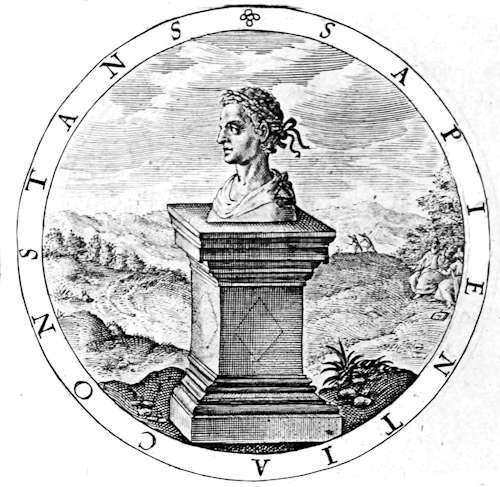
Illvstr. II. Book. 1.
STill fixt, and with triumphant Laurell crown'd, Is truest Wisdome; whom, expressed thus, Among the old Impresa's, we have found; And, much, this Emblem hath instructed us. For, hence we learne; that, Wisdome doth not flow From those unconstant men, whom ev'ry Blast, Or small Occasion, turneth to and fro; But, from a Settled head that standeth fast. Who'ever shoulders, him, he gives no place; What Storme soe're, his Times or Fortunes, breath, He neither hides his Brow, nor turnes his Face; But, keepes his Lookes undaunted, ev'n in Death. The Laureat head, upon the Pillar set, Thus signifies; And that Bay-wreath doth show That constant Wisdome will the conquest get, When giddy Policie prevailes not so. If, therefore, thou desirest to be taught, Propose good Ends with honest Meanes thereto, And therein Constant be, till thou hast brought To perfect end, that Worke, thou hast to doe. Let neither flatt'ring Pleasures, nor Disgrace, Nor scoffing Censures, nor the cunning Sleights Of glozing Sycophants, divert that Race To which, a harmelesse Prudence, thee invites. Though others plot, conspire, and undermine, Keepe thou a plaine right Path; and let their Course, For no advantage, make thee change from thine, Although it (for the present) seemes the worse. He, thus that workes, puts Policie to Schoole, And makes the Machavilian prove a foole.

The Law is given to direct; The Sword, to punish and protect.
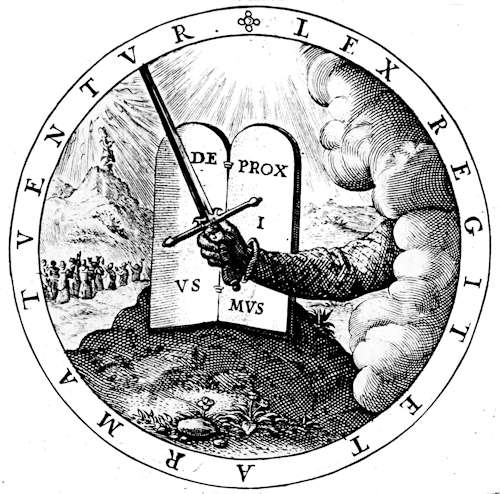
Illvstr. III. Book. 1.
WHen God-Almighty first engrav'd in stone His holy Law; He did not give the same As if some common Act had then beene done; For, arm'd with Fires and Thunders, forth it came. By which, that great Law-maker, might inferre What dreadfull Vengeance would on those attend, Who did against those holy Precepts erre; And, that, his Power, well-doers could defend. Thereto, this Emblem, also doth agree; For, loe, before the Tables of the Lawe, A naked Sword is borne, whose use may bee As well to keepe in Safety, as in Awe. Whence, Princes (if they please) this note may take, (And it shall make them happily to raigne) That, many good and wholsome Lawes to make Without an Executioner, is vaine. It likewise intimates, that such as are In Soveraigne place, as well obliged be Their zeale for true Religion to declare, As, what concerneth Manners, to foresee. It, lastly, showes that Princes should affect Not onely, over others to Command, But Swords to weare, their Subjects to protect; And, for their Guard, extend a willing hand. For, Lawes, or Peace to boast of; and, the whiles, The Publique-weale, to weaken or disarme, Is nor the way to hinder Civill-Broyles, Nor to secure it from a Forraigne-harme. For, As by Lawes a Land is kept in frame; So, Armes is that, which must protect the same.

Occasions-past are sought in vaine; But, oft, they wheele-about again.
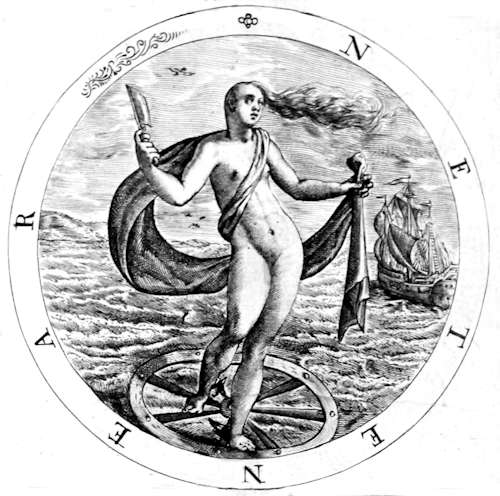
Illvstr. IV. Book. 1.
UNwise are they that spend their youthfull Prime In Vanities; as if they did suppose That men, at pleasure, might redeeme the Time; For, they a faire advantage fondly lose. As ill-advis'd be those, who having lost The first Occasions, to Despairing runne: For, Time hath Revolutions; and, the most, For their Affaires, have Seasons more, then one. Nor is their Folly small, who much depend On Transitorie things, as if their Powre Could bring to passe what should not have an End; Or compasse that, which Time will not devoure. The first Occasions, therefore, see thou take (Which offred are) to bring thy hopes about; And, minde thou, still, what Haste away they make, Before thy swift-pac't houres are quite runne out. Yet, if an Opportunity be past, Despaire not thou, as they that hopelesse be; Since, Time may so revolve againe, at last, That New-Occasions may be offred thee. And see, thou trust not on those fading things, Which by thine owne Endeavours thou acquir'st: For, Time (which her owne Births to ruine brings) Will spare, not thee, nor ought which thou desir'st. His Properties, and Vses, what they are, In-vaine observ'd will be, when he is fled: That, they in season, therefore, may appeare, Our Emblem, thus, hath him deciphered; Balde save before, and standing on a Wheele; A Razor in his Hand, a Winged-Heele.

By Labour, Vertue may be gain'd; By Vertue, Glorie is attain'd.
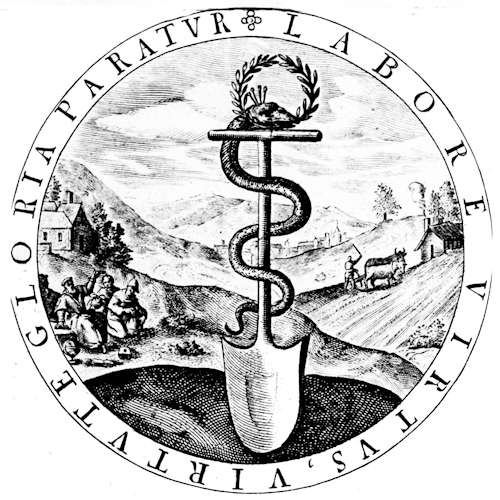
Illvstr. V. Book. 1.
SVppose you Sirs, those mimicke Apes you meet In strange fantasticke habits? or the Rabble, That in gay clothes embroyder out the street, Are truely of Worshipfull or Honorable? Or can you thinke, that, To be borne the Sonne Of some rich Alderman, or ancient Peere, Or that the Fame our Predecessors wonne May claime those Wreathes which true Deserving weare? Is Honour due to those, who spend their dayes In courting one another? or consuming Their Fortunes and themselves, on Drabbs and Playes? In sleeping, drinking, and Tobacco-fuming? Not so. For, (though such Fooles, like children, place Gay Titles on each other) Wise-men know What slaves they be; how miserably-base; And, where such Attributes would better show. An idle Body clothes a vitious Minde; And, what (at best) is purchac'd by the same, Is nothing else, but stinking Smoke and Winde; Or frothie Bubbles of an empty Fame. True Glory, none did ever purchase, yet, Till, to be Vertuous they could first attaine; Nor shall those men faire Vertues favour get, Who labour not, such Dignities to gaine. And, this Impresa doth inferre no lesse: For, by the Spade, is Labour here implide; The Snake, a vertuous Prudence, doth expresse; And, Glorie, by the Wreath is Typifide. For, where a vertuous Industry is found, She, shall with Wreaths of Glory, thus be crown'd.

Though Fortune prove true Vertues Foe, It cannot worke her Overthrowe.
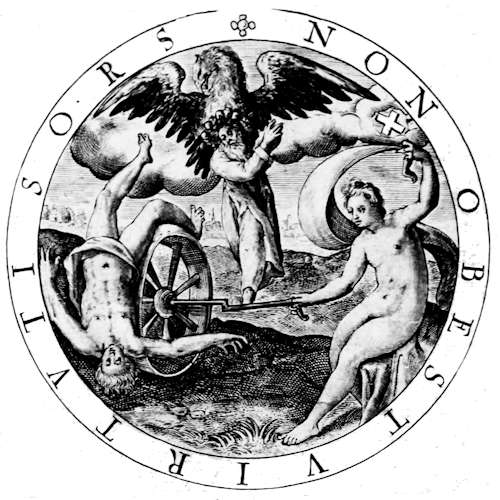
Illvstr. VI. Book. 1.
UNhappy men are they, whose Ignorance So slaves them to the Fortunes of the Time, That they (attending on the Lot of Chance) Neglect by Vertue, and Deserts, to clime. Poore Heights they be which Fortune reares unto; And, fickle is the Favour she bestowes: To-day, she makes; to-morrow, doth undoe; Builds up, and in an instant overthrowes. On easie Wheeles, to Wealth, and Honours high, She windes men oft, before they be aware; And, when they dreame of most Prosperitie, Downe, headlong, throwes them lower then they were. You, then, that seeke a more assur'd estate, On good, and honest Objects, fixe your Minde, And follow Vertue, that you may a Fate Exempt from feare of Change, or Dangers, finde. For, he that's Vertuous, whether high or low His Fortune seemes (or whether foule or faire His Path he findes) or whether friend, or foe, The World doth prove; regards it not a haire. His Losse is Gaine; his Poverty is Wealth; The Worlds Contempt, he makes his Diadem; In Sicknesse, he rejoyceth, as in Health: Yea, Death it selfe, becommeth Life, to him. He feares no disrespect, no bitter scorne, Nor subtile plottings, nor Oppressions force; Nay, though the World should topsie-turvie turne, It cannot fright him, nor divert his Course. Above all Earthly powres his Vertue reares him; And, up with Eglets wings, to Heav'n it beares him.

A fickle Woman wanton growne, Preferres a Crowd, before a Crowne.
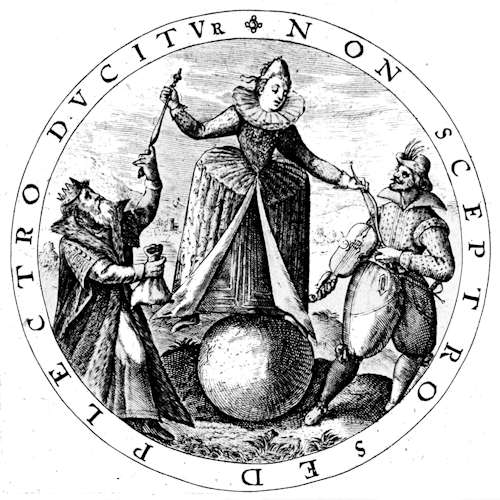
Illvstr. VII. Book. 1.
FOole! Dost thou hope, thine Honours, or thy Gold, Shall gaine thee Love? Or, that thou hast her heart Whose hand upon thy tempting Bayt layes hold? Alas! fond Lover, thou deceived art. She that with Wealth, and Titles, can be wonne, Or woo'd with Vanities, will wavring bee; And, when her Love, thou most dependest on, A Fiddle-sticke shall winne her heart from thee. To Youth and Musicke, Venus leaneth most; And (though her hand she on the Scepter lay) Let Greatnesse, of her Favours never boast: For, Heart and Eye, are bent another way. And lo, no glorious Purchace that Man gets, Who hath with such poore Trifles, woo'd, and wonne: Her footing, on a Ball, his Mistresse sets, Which in a moment slips, and she is gone. A Woman, meerely with an Out side caught, Or tempted with a Galliard, or a Song, Will him forsake (whom she most lovely thought) For Players and for Tumblers, ere't be long. You, then, that wish your Love should ever last, (And would enjoy Affection without changing) Love where your Loves may worthily be plac't; And, keepe your owne Affection, still from ranging. Vse noble Meanes, your Longings to attaine; Seeke equall Mindes, and well beseeming Yeares: They are (at best) vaine Fooles, whom Follie gaine; But, there is Blisse, where, Vertue most endeares: And, wheresoe're, Affection shee procures, In spight of all Temptations, it endures.

This Ragge of Death, which thou shalt see, Consider it; And Pious bee.
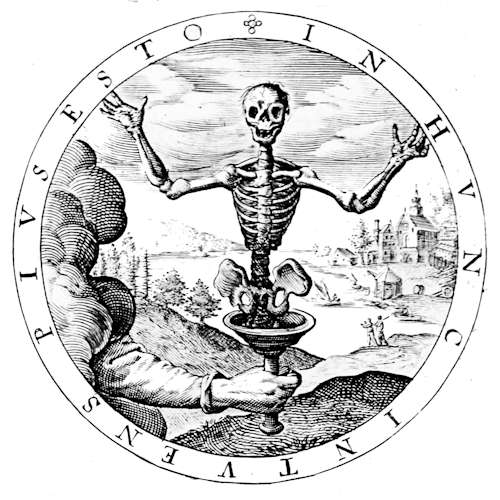
Illvstr. VIII. Book 1.
WHy, silly Man! so much admirest thou Thy present Fortune? overvaluing so Thy Person, or the beauty of thy Brow? And Cloth'd, so proudly, wherefore dost thou goe? Why dost thou live in riotous Excesse? And Boast, as if thy Flesh immortall were? Why dost thou gather so? Why so oppresse? And, o're thy Fellow-creatures, Domineere? Behold this Emblem; such a thing was hee Whom this doth represent as now thou art; And, such a Fleshlesse Raw-bone shalt thou bee, Though, yet, thou seeme to act a comelier part. Observe it well; and marke what Vglinesse Stares through the sightlesse Eye-holes, from within: Note those leane Craggs, and with what Gastlinesse, That horrid Countenance doth seeme to grin. Yea, view it well; and having seene the same Plucke downe that Pride which puffs thy heart so high; Of thy Proportion boast not, and (for shame) Repent thee of thy sinfull Vanity. And, having learn'd, that, all men must become Such bare Anatomies; and, how this Fate No mortall Powre, nor Wit, can keepe thee from; Live so, that Death may better thy estate. Consider who created thee; and why: Renew thy Spirit, ere thy Flesh decayes: More Pious grow; Affect more Honestie; And seeke hereafter thy Creatours praise. So though of Breath and Beauty Time deprive thee, New Life, with endlesse Glorie, God will give thee.

Before thou bring thy Workes to Light, Consider on them, in the Night.
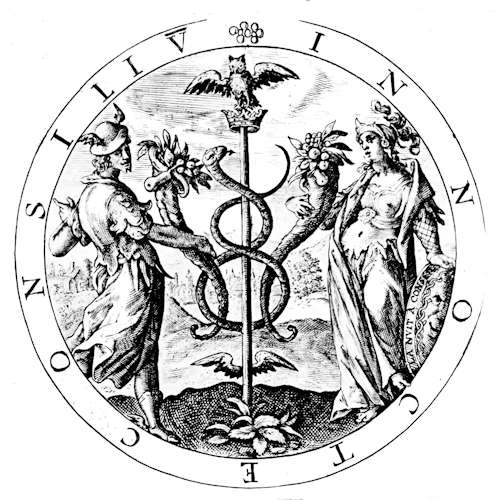
Illvstr. IX. Book. 1.
AN Owle (the Hieroglyphicke us'd for Night) Twixt Mercury and Pallas, here takes place, Vpon a crown'd Caduceus fixt upright; And, each a Cornucopia doth imbrace. Through which darke Emblem, I this Light perceive; That, such as would the Wit and Wealth acquire, Which may the Crowne of approbation have, Must wake by Night, to compasse their desire. For, this Mercurian-Wand, doth Wit expresse; The Cornu-copia, Wealthinesse implies; Both gained by a studious Watchfulnesse; Which, here, the Bird of Athens signifies. Nor, by this Emblem, are we taught alone, That, (when great Vndertakings are intended) We Sloth, and lumpish Drowsinesse must shunne; But, Rashnesse, also, here is reprehended. Take Counsell of thy Pillow, (saith our Sawe) And, ere in waighty Matters thou proceede, Consider well upon them; lest they draw Some Afterclap, which may thy Mischiefe breede. I, for my seriou'st Muses, chuse the Night; (More friend to Meditation, then the Day) That neither Noyse, nor Objects of the Sight, Nor bus'nesses, withdraw my Thoughts away, By Night, we best may ruminate upon Our Purposes; Then, best, we may enquire What Actions wee amisse, or well, have done; And, then, may best into our Selves retire: For, of the World-without, when most we see, Then, blindest to the World-within, are wee.

An Innocent no Danger feares, How great soever it appeares.
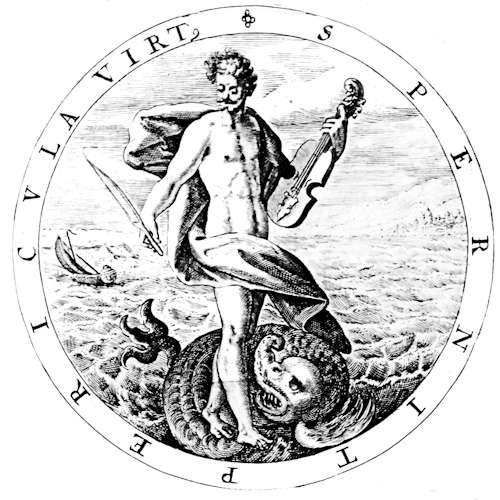
Illvstr. X. Book. 1.
WHen some did seeke Arion to have drown'd, He, with a dreadlesse heart his Temples crown'd; And, when to drench him in the Seas they meant, He playd on his melodious Instrument; To shew, that Innocence disdayned Feare, Though to be swallow'd in the Deeps it were. Nor did it perish: For, upon her Backe A Dolphin tooke him, for his Musick's sake: To intimate, that Vertue shall prevaile With Bruitish Creatures, if with Men it faile. Most vaine is then their Hope, who dreame they can Make wretched, or undoe, an Honest-Man: For, he whom Vertuous Innocence adornes, Insults o're Cruelties; and, Perill scornes. Yea, that, by which, Men purpose to undoe him, (In their despight) shall bring great Honours to him. Arion-like, the Malice of the World, Hath into Seas of Troubles often hurl'd Deserving Men, although no Cause they had, But that their Words and Workes sweet Musicke made. Of all their outward Helps it hath bereft them; Nor meanes, nor hopes of Comfort have beene left them; But such, as in the House of Mourning are, And, what Good-Conscience can afford them there. Yet, Dolphin-like, their Innocence hath rear'd Their Heads above those Dangers that appear'd. God hath vouchsaf'd their harmelesse Cause to heed, And, ev'n in Thraldome, so their Hearts hath freed, That, whil'st they seem'd oppressed and forlorne; They Ioyd, and Sung, and Laugh'd the World to scorne.

A Foole, in Folly taketh Paine, Although he labour still in vaine.
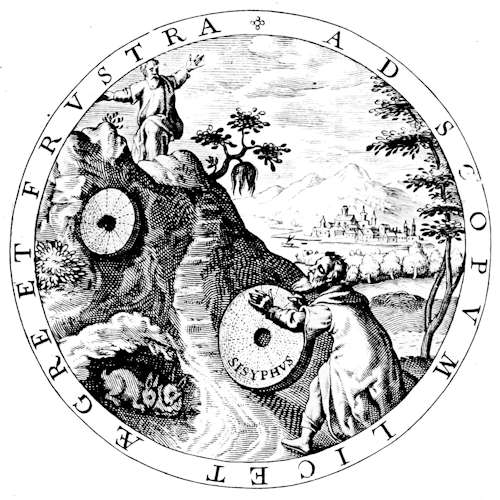
Illvstr. XI. Book. 1.
A Massie Mil-stone up a tedious Hill, With mighty Labour, Sisyphus doth roll; Which being rais'd-aloft, downe-tumbleth, still, To keepe imployed his afflicted Soule. On him, this tedious Labour is impos'd; And (though in vaine) it must be still assayd: But, some, by no Necessity inclos'd, Vpon themselves, such needlesse Taskes have layd. Yea, knowing not (or caring not to know) That they are worne and weary'd out in vaine, They madly toyle to plunge themselves in Woe; And, seeke uncertaine Ease, in certaine Paine. Such Fooles are they, who dreame they can acquire A Minde-content, by Lab'ring still for more: For, Wealth encreasing, doth encrease Desire, And makes Contentment lesser then before. Such Fooles are they, whose Hopes doe vainely stretch To climbe by Titles, to a happy Height: For, having gotten one Ambitious-Reach, Another comes perpetually in sight. And, their stupidity is nothing lesse, Who dreame that Flesh and Blood may raysed be Vp to the Mount of perfect-Holinesse: For (at our best) corrupt and vile are we. Yet, we are bound by Faith, with Love and Hope, To roll the Stone of Good-Endeavour, still, As neere as may be, to Perfections top, Though backe againe it tumble downe the Hill. So; What our Workes had never power to doe, God's Grace, at last, shall freely bring us to.

As, to the World I naked came, So, naked-stript I leave the same.
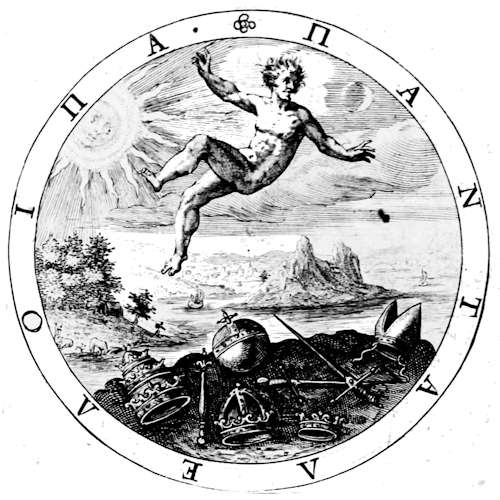
Illvstr. XII. Book. 1.
THrice happy is that Man whose Thoughts doe reare His Minde above that pitch the Worldling flies, And by his Contemplations, hovers where He viewes things mortall, with unbleared eyes. What Trifles then doe Villages and Townes Large Fields or Flockes of fruitfull Cattell seeme? Nay, what poore things are Miters, Scepters, Crownes, And all those Glories which Men most esteeme? Though he that hath among them, his Delight, Brave things imagines them (because they blinde With some false Lustre his beguiled sight) He that's above them, their meane-Worth may finde. Lord, to that Blessed-Station me convey Where I may view the World, and view her so, That I her true Condition may survey; And all her Imperfections rightly know. Remember me, that once there was a Day When thou didst weane me from them with content, Ev'n when shut up within those Gates I lay Through which the Plague-inflicting Angel went. And, let me still remember, that an Houre Is hourely comming on, wherein I shall (Though I had all the World within my powre) Be naked stript, and turned out of all. But minde me, chiefely, that I never cleave Too closely to my Selfe; and cause thou me, Not other Earthly things alone to leave, But to forsake my Selfe for love of Thee: That I may say, now I have all things left, Before that I of all things, am bereft.

To him a happy Lot befalls That hath a Ship, and prosp'rous Gales.
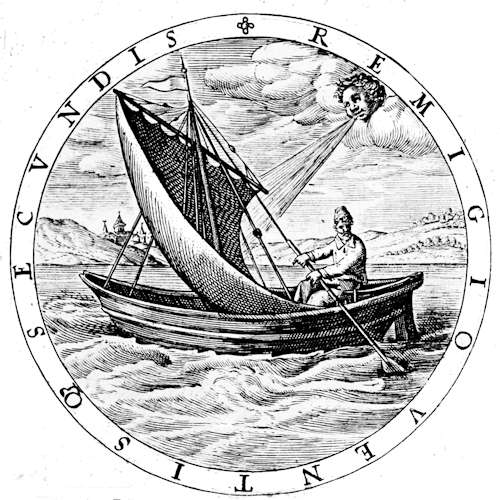
Illvstr. XIII. Book. 1.
NO wonder he a prosp'rous Voyage findes That hath both Sailes and Oares to serve his turne, And, still, through meanes of some propitious Winds Is to his wished Harbour, swiftly borne. Nor is it much admir'd, if they that lacke Those aydes (on which the Common-faith depends) Are from their hoped aymes repelled backe, Or made to labour for unfruitfull ends. Yet neither in the Ship, Wind, Oares, or Sailes, Nor in the want of Outward meanes, alone, Consists it, that our Hope succeedes or failes; But, most in that, which Men least thinke upon. For, some endeavour, and their Paines are blest With Gales which are so fortunate, that they Fly safe, and swiftly on, among the best, Whil'st others labour, and are cast away. Some others, on this Worlds wide Ocean floate, And neither Wind, nor Tide assistant have, Nor Saile, nor Oare, nor Anchor, nor sound Boate, Nor take so much as heede themselves to save; And yet are safe: A third sort, then, there are Who neither want fit Meanes, nor yet neglect, The painefull-Industrie, or honest Care, Which Need requires; yet find small good effect. Therefore, let that which you propose, be Iust; Then, use the fairest Meanes, to compasse it: And, though Meanes faile, yet foster no mistrust; But fearelesly, to God, your Course commit: For, Hee, to Faithfull-Hearts, and Honest-Mindes Turnes Losse to Gaine; and Stormes, to prosp'rous Windes.

Though he endeavour all he can, An Ape, will never be a Man.
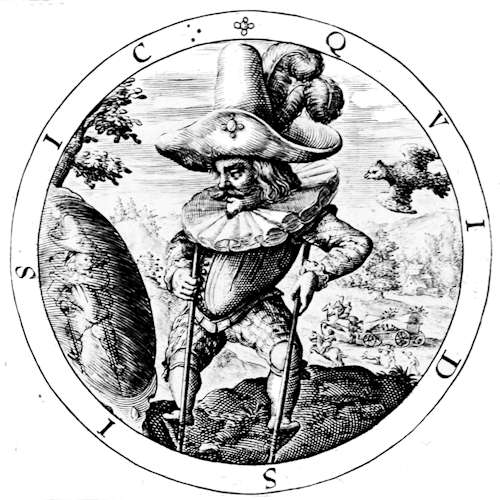
Illvstr. XIIII. Book. 1.
WHat though an Apish-Pigmie, in attire, His Dwarfish Body Gyant-lyke, array? Turne Brave, and get him Stilts to seem the higher? What would so doing, handsome him I pray? Now, surely, such a Mimicke sight as that, Would with excessive Laughter move your Spleene, Till you had made the little Dandiprat, To lye within some Auger-hole, unseene. I must confesse I cannot chuse but smile, When I perceive, how Men that worthlesse are, Piece out their Imperfections, to beguile, By making showes, of what they never were. For, in their borrow'd-Shapes, I know those Men, And (through their Maskes) such insight of them have; That I can oftentimes disclose (ev'n then) How much they savour of the Foole or Knave. A Pigmey-spirit, and an Earthly-Minde, Whose looke is onely fixt on Objects vaine; In my esteeme, so meane a place doth finde, That ev'ry such a one, I much refraine. But, when in honour'd Robes I see it put, Betrimm'd, as if some thing of Worth it were, Looke big, and on the Stilts of Greatnesse, strut; From scorning it, I cannot then forbeare. For, when to grosse Vnworthinesse, Men adde Those Dues, which to the Truest-worth pertaine; Tis like an Ape, in Humane-Vestments clad, Which, when most fine, deserveth most disdaine: And, more absurd, those Men appeare to me, Then this Fantasticke-Monkey seemes to thee.

I pine, that others may not perish, And waste my Selfe, their Life to cherish.
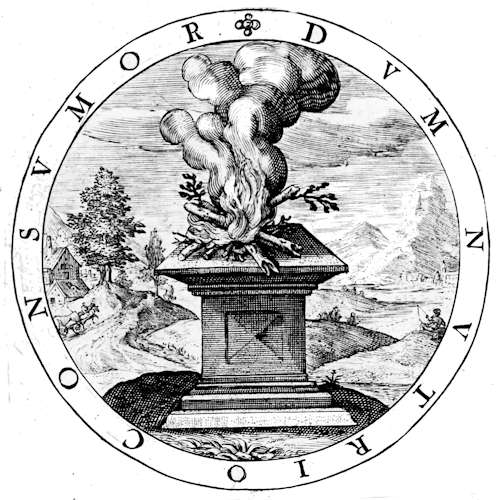
Illvstr. XV. Book. 1.
OBserve I pray you, how the greedy Flame The Fewell, on an Altar doth consume. How it destroyeth that which feedes the same, And how the Nourisher away doth fume. For, so it fares with Parents that uphold Their thriftlesse Children in unlawfull Pleasures: With Cares, it weares them out, ere they are old; And ere their Lives consume, consumes their Treasures. So fares it with such Wantons as doe feede Vnchast Desires; for, ev'ry day they grow Vntill their Longings, their Supplies exceede, And, quite devoure those men that fed them so. So fares it with all those that spend their Youth In lab'ring to enrich ungratefull Men, Who, growing Great, and Wealthy, by their Truth, Returne them Smoke and Ashes backe agen. So fares it with good States-men, who to keepe A thankelesse Common-wealth in happy Peace, Deprive their Mindes of Rest, their Eyes of Sleepe, And, waste themselves, that others may encrease. And, so it fares with Men that passe away Their time in Studies, (and their Healths impaire) That helps to other men become they may, And, their defective Knowledges, repaire. But, let my Flesh, my Time, and my Estate, Be so consum'd; so spent; so wasted bee, That they may nourish Grace, and perfit that For which all these were first bestowd'd on me: So when I quite am vanish'd out of seeing, I shall enjoy my Now-concealed-Being.

When to suppresse us, Men intend, They make us higher to ascend.
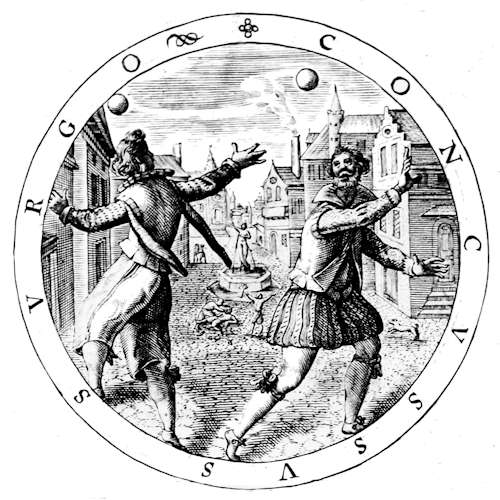
Illvstr. XVI. Book. 1.
WHen we observe the Ball, how to and fro The Gamesters force it; we may ponder thus: That whil'st we live we shall be playd with so, And that the World will make her Game of us. Adversities, one while our hearts constraine To stoope, and knock the Pavements of Despaire; Hope, like a Whirle-wind mounts us up againe, Till oft it lose us in the empty ayre. Sometimes, above the Battlements we looke; Sometimes, we quite below the Line are tost: Another-while, against the Hazard strooke, We, but a little want, of being lost. Detraction, Envie, Mischief, and Despight, One Partie make, and watchfully attend To catch us when we rise to any Height; Lest we above their hatred should ascend. Good-Fortune, Praises, Hopes, and Industries, Doe side-together, and make Play to please us; But, when by them we thinke more high to rise, More great they make our Fall, and more disease us. Yea, they that seeke our Losse, advance our Gaine; And to our Wishes, bring us oft the nigher: For, we that else upon the Ground had laine, Are, by their striking of us lifted higher. When Balls against the Stones are hardest throwne, Then highest up into the Aire they fly; So, when men hurle us (with most fury) downe, Wee hopefull are to be advanc'd thereby: And, when they smite us quite unto the Ground, Then, up to Heav'n, we trust, we shall rebound.

Till God hath wrought us to his Will, The Hammer we shall suffer still.
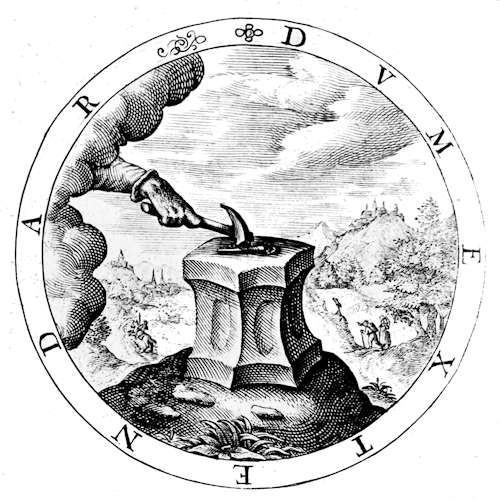
Illvstr. XVII. Book. 1.
WHy should the foolish World discourage Men, In just endurances? or bid them shunne Good Actions, 'cause they suffer now and then, For Doing well, as if some Ill were done? Ere Plates extended are, they must abide A thousand hamm'rings; And, then that which fill'd So little roome, it scarce your Hand could hide, Will serve a goodly Monument to gild. So, he that hopes to winne an honest Name, Must many blowes of Fortune undergoe, And hazard, oft, the blast of Evill-Fame, Before a Good-Report her Trumpe will blow. A thousand Worthies had unworthily Been raked up in Ashes and in Clay, Vnknowne and bury'd in Obscurity, If Malice had not fil'd their Rust away. But, lo; their lasting prayses now are spread, And rais'd, by Adverse-Chance, to such a height, That they most glorious are, now they are dead; And live in Injuries, and Deaths, despight. For, by Afflictions, man refined growes, And, (as the Gold prepared in the Fire) Receiveth such a Forme by wrongs and blowes, That hee becomes the Iewell we desire. To thee therefore, Oh God! My Prayers are Not to be freed from Griefes and Troubles quite: But, that they may be such as I can beare; And, serve to make me precious in thy Sight. This please me shall, though all my Life time, I Betweene thine Anvill and the Hammer, lie.

From thence, where Nets and Snares are layd, Make-hast; lest els you be betray'd.
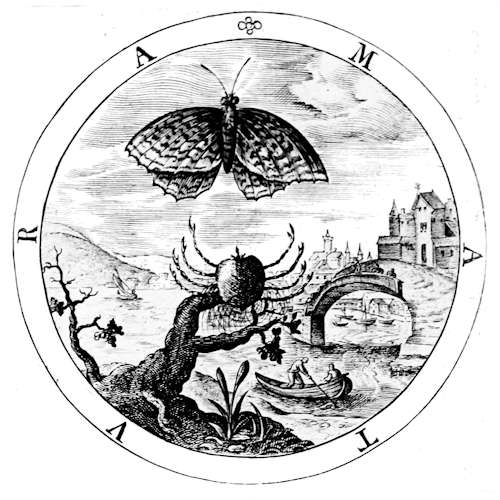
Illvstr. XVIII. Book. 1.
THe nimble Spider from his Entrailes drawes A suttle Thread, and curious art doth show In weaving Nets, not much unlike those Lawes Which catch Small-Thieves, and let the Great-ones goe. For, as the Cob-web takes the lesser Flyes, When those of larger size breake through their Snares; So, Poore-men smart for little Injuries, When Rich-men scape, whose Guilt is more then theirs. The Spider, also representeth such Who very curious are in Trifling-things, And neither Cost, nor Time, nor Labour grutch, In that which neither Gaine nor Pleasure brings. But those whom here that Creature doth implye Are chiefely such, who under cunning shewes Of simple-Meanings (or of Curtesie) Doe silly Men unwarily abuse. Or else, it meanes those greedy-Cormorants Who without touch, of Conscience or Compassion, Seeke how to be enricht by others wants, And bring the Poore to utter Desolation. Avoyd them therefore, though compell'd by need; Or if a Storme inforce, (yee lab'ring Bees) That yee must fall among them; Flie with speed From their Commerce, when Calmes your passage frees. Much more, let wastfull Gallants haste from these; Else, when those Idling-painted-Butterflies, Have flutter'd-out their Summer-time, in ease, (And spent their Wealth in foolish Vanities) The Blasts of Want may force them to be brought For shelter thither, where they shall be caught.

When thou a Dangerous-Way dost goe, Walke surely, though thy pace be slowe.
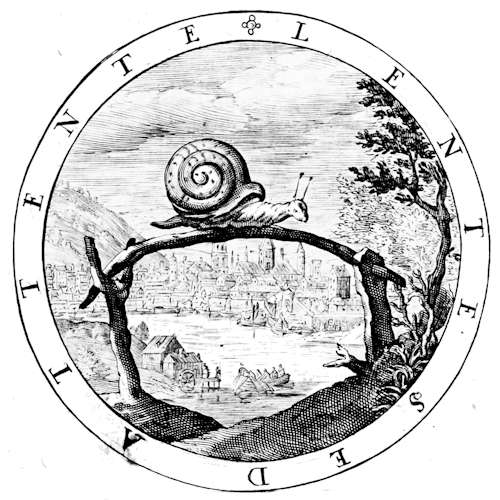
Illvstr. XIX. Book. 1.
EXperience proves, that Men who trust upon Their Nat'rall parts, too much, oft lose the Day, And, faile in that which els they might have done, By vainely trifling pretious Time away. It also shewes, that many Men have sought With so much Rashnesse, those things they desir'd, That they have brought most likely Hopes to nought; And, in the middle of their Courses, tir'd. And, not a few, are found who so much wrong Gods Gratiousnesse, as if their thinkings were, That (seeing he deferres his Iudgements long) His Vengeance, he, for ever, would forbeare: But, such as these may see wherein they faile, And, what would fitter be for them to doe, If they would contemplate the slow-pac'd Snaile; Or, this our Hieroglyphicke looke into: For, thence we learne, that Perseverance brings Large Workes to end, though slowly they creepe on; And, that Continuance perfects many things, Which seeme, at first, unlikely to be done. It warnes, likewise, that some Affaires require More Heed then Haste: And that the Course we take, Should suite as well our Strength, as our Desire; Else (as our Proverbe saith) Haste, Waste may make. And, in a Mysticke-sense, it seemes to preach Repentance and Amendment, unto those Who live, as if they liv'd beyond Gods reach; Because, he long deferres deserved Blowes: For, though Iust-Vengeance moveth like a Snaile, And slowly comes; her comming will not faile.

A Sive, of shelter maketh show; But ev'ry Storme will through it goe.
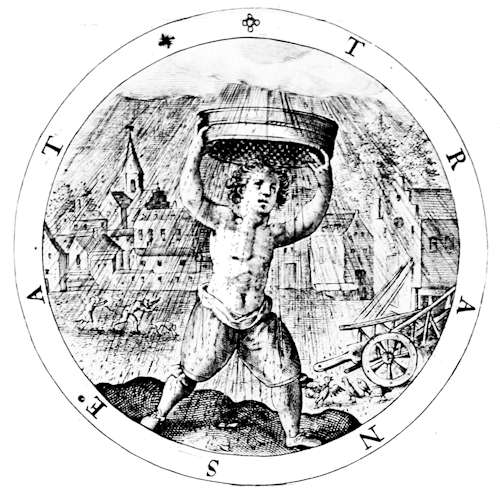
Illvstr. XX. Book. 1.
SOme Men, when for their Actions they procure A likely colour, (be it nere so vaine) Proceede as if their Projects were as sure, As when Sound Reason did their Course maintayne: And these not much unlike those Children are, Who through a Storme advent'ring desp'rately, Had rather on their Heads, a Sive to beare, Then Cov'rings, that may serve to keepe them drye. For, at a distance that perchance is thought A helpfull Shelter; and, yet, proves to those Who neede the same, a Toy, which profits nought; Because, each drop of Raine quite through it, goes. So, they, whose foolish Projects, for a while, Doe promise their Projectors hopefull ends, Shall finde them, in the Tryall, to beguile; And, that both Shame and Want, on them attends. Such like is their estate, who, (to appeare Rich-men to others) doe, with Inward-payne, A gladsome out-ward Port desire to beare; Though they at last nor Wealth nor Credit gaine. And, such are all those Hypocrites, who strive False Hearts beneath Faire-spoken Words to hyde: For, they o'revaile themselves but with a Sive, Through which, their purposes at length are spyde. And, then, they either woefully-lament Their Brutish-folly, or so hardned grow In Sinning, that they never can repent, Nay, jest and scoffe at their owne Overthrow. But no false Vaile can serve (when God will smite) To save a Scorner, or an Hypocrite.

Death no Losse, but rather, Gaine; For wee by Dying, Life attaine.
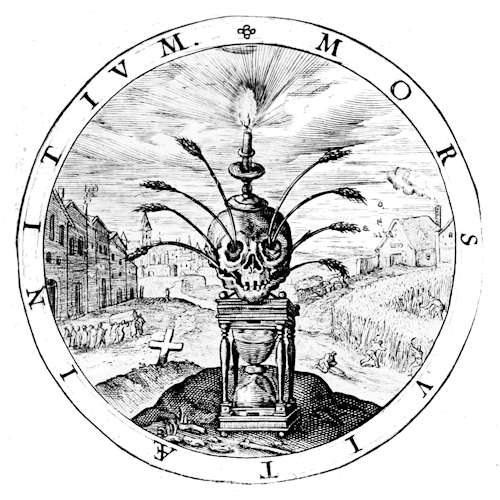
Illvstr. XXI. Book. 1.
I Will not blame those grieved Hearts that shed Becoming-teares, for their departed Friends; Nor those who sigh out Passions for the Dead; Since, on Good-natures, this Disease attends. When Sorrow is conceiv'd, it must have Vent (In Sighes or Moysture) or the Heart will breake; And, much they aggravate our Discontent, Who, out of Season, Reason seeme to speake. Yet, since our Frailty may require we should Remembrances admit to keepe us from Excesse in Griefe: this Emblem here behold, And take such Hope as may our Teares become. The Wheat although a while it lyes in Earth, (And seemeth lost) consumes not quite away; But, from that Wombe receives another Birth, And, with Additions, riseth from the Clay. Much more shall Man revive, whose worth is more: For, Death, who from our Drosse will us refine, Vnto that other Life, becomes the Doore, Where, we in Immortalitie shall shine. When once our Glasse is runne, we presently Give up our Soules to Death; So Death must give Our Bodies backe againe, that we, thereby, The Light of Life eternall, may receive. The Venom'd Sting of Death is tooke away; And, now, the Grave, that was a Place of Feare, Is made a Bed of Rest, wherein we may Lye downe in Hope, and bide in safety, there. When we are Borne, to Death-ward straight we runne; And by our Death, our Life is new-begnnne.

When Vice and Vertue Youth shall wooe, Tis hard to say, which way 'twill goe.
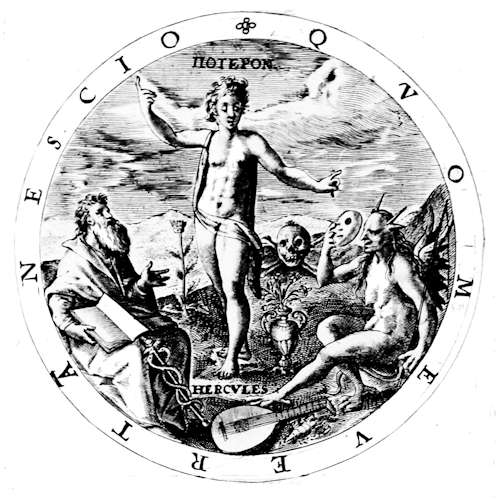
Illvstr. XXII. Book. 1.
MY hopefull Friends at thrice five yeares and three, Without a Guide (into the World alone) To seeke my Fortune, did adventure mee; And, many hazards, I alighted on. First, Englands greatest Rendevouz I sought, Where Vice and Vertve at the highest sit; And, thither, both a Minde and Bodie brought, For neither of their Services unfit. Both, woo'd my Youth: And, both perswaded so, That (like the Young man in our Emblem here) I stood, and cry'd, Ah! which way shall I goe? To me so pleasing both their Offers were. Vice, Pleasures best Contentments promist mee, And what the wanton Flesh desires to have: Quoth Vertve, I will Wisdome give to thee, And those brave things, which noblest Mindes doe crave. Serve me said Vice, and thou shalt soone acquire All those Atchievements which my Service brings: Serve me said Vertve, and Ile raise thee higher, Then Vices can, and teach thee better things. Whil'st thus they strove to gaine me, I espyde Grim Death attending Vice; and, that her Face Was but a painted Vizard, which did hide The foul'st Deformity that ever was. Lord, grant me grace for evermore to view Her Vglinesse: And, that I viewing it, Her Falsehoods and allurements may eschew; And on faire Vertve my Affection set; Her Beauties contemplate, her Love embrace, And by her safe Direction, runne my Race.

By Paine, on Pleasures we doe seize; And, we by Suff'rance, purchase Ease.
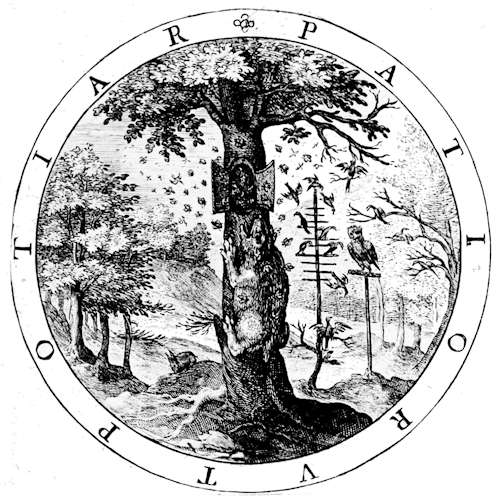
Illvstr. XXIII. Book. 1.
THe lick'rish Beare to rob the Honey-Bees Among their stinging-Swarms thrusts in his pawes; Adventureth to climbe up hollow Trees, And from their Cells, the well fill'd Combes he drawes: Right so, the Sensuall-Man that he may gaine His bruitish Lust, a thousand perills dares; And, that his Lawlesse-will he may attaine, Nor Conscience, Credit, Cost, nor Labour spares. 'Twere shamefull basenesse, therefore, if that he Who knoweth Vertue, and is thought her Lover, Should so by any Perills frighted bee, To make him such Affections to give-over. For, why should that Vaine-Crew whose Valour springs From beastly Fury, or inflamed-Passion, Enabled be to compasse bolder things, Then Sober-Wit, and Grave Consideration? Or, why should lisping-Wantons, for their Lust So much adventure as one finger, there, Where we our Lives in hazard would not thrust For Vertues Glory, if it needfull were? For, though her Sweetnesse fast is closed in With many Thornes, and such a Prickling-guard, That we must smart, before that Prize we winne, The Paine is follow'd, with a Rich Reward. By Suff'ring, I have more Contentment had, Then ever I acquir'd by Slothfull Ease; And, I by Griefe, so joyfull have beene made, That I will beare my Crosse, while God shall please. For, so at last my Soule may Ioy procure, I care not, in my Flesh what I endure.

Who by good Meanes, good things would gaine, Shall never seeke, nor aske in vaine.
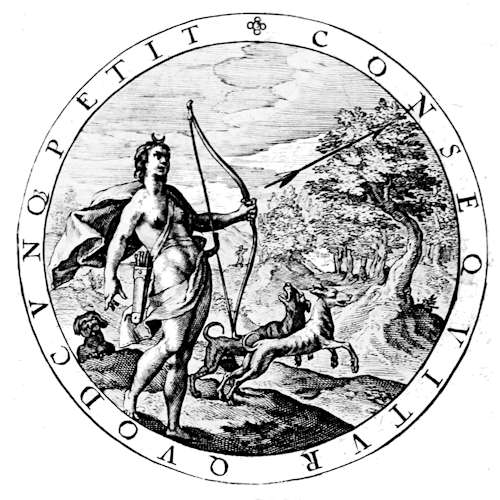
Illvstr. XXIIII. Book. 1.
IN vaine faire Cynthia never taketh paines, Nor faints in foll'wing her desired Game; And, when at any Marke her Bowe she straines, The winged Arrow surely hits the same. Her Picture, therefore, in this place doth shew The Nature of their Mindes who Cynthia-like, With Constancie their Purposes pursue, And faint not till they compasse what they seeke. For, nought more God-like in this World is found, Then so Resolv'd a man, that nothing may His Resolution alter or confound, When any taske of Worth, he doth assay. Nor, is there greater Basenesse, then those Mindes That from an Honest-purpose, can be wrought By Threatnings, Bribes, Smooth-Gales or Boyst'rous-Windes, What ever colour or excuse be brought. You then, that would, with Pleasure, Glory gaine, Diana like, those modest things require, Which truely may beseeme you to attaine; And stoutly follow that which you desire: For, changing though the Moone to us appeare, She holds a firme Dependence on the Sunne; And, by a Constant-Motion, in her Sphære With him, doth in Conjunction often runne: So, Constant-men, still move their hopes to winne; But, never by a Motion-indirect; Nor, will they stop the Course that they are in, Vntill they bring their purpose to effect. For, whosoever Honest-things requires, A Promise hath of all that he desires.

Oft Shooting, doth not Archers make; But, hitting right the Marke they take.
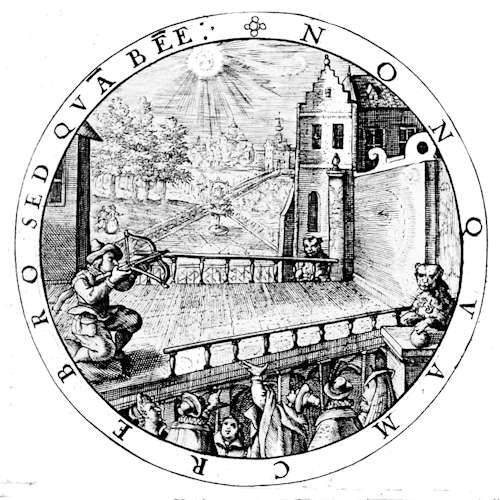
Illvstr. XXV. Book. 1.
WHen to the Fields we walke to looke upon Some skilfull Mark-man; so much heede we not How many Arrowes from his Bowe are gone, As we observe how nigh the Marke he shot: And, justly we deride that Man who spends His Time and Shafts, but never ayme doth take To hit the White; or foolishly pretends, The number of the Shots, doth Archers make. So, God, who marketh our Endeavours, here, Doth not by tale, account of them receive; But, heedeth rather how well meant they were, And, at his Will how rightly aym'd we have. It is not mumbling over thrice a day A Set of Ave Maries, or of Creeds, Or many houres formally to pray; When from a dull Devotion it proceedes: Nor is it, up and downe the Land to seeke To finde those well breath'd Lecturers, that can Preach thrice a Sabbath, and sixe times a weeke, Yet be as fresh, as when they first beganne: Nor, is it, such like things perform'd by Number Which God respects: Nor doth his Wisdome crave Those many Vanities, wherewith some cumber Their Bodies, as if those their Soules could save. For, not Much-doing, but Well-doing, that Which God commands, the Doer, justifies. To pray without Devotion, is to Prate; And, Hearing is but halfe our Exercise. We ought not, therefore, to regard, alone, How often, but how Well, the Worke be done.

With Patience, I the Storme sustaine; For, Sun-shine still doth follow Raine.
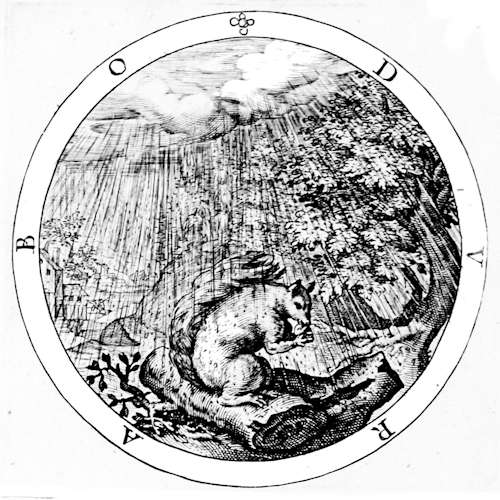
Illvstr. XXVI. Book. 1.
THe little Squirrell, hath no other Food Then that which Natures thrifty hand provides; And, in purveying up and downe the Wood, She many cold wet Stormes, for that, abides. She lyes not heartlesse in her Mossie Dray, Nor feareth to adventure through the Raine; But skippeth out, and beares it as she may, Vntill the Season waxeth calme againe. Right thus, have I and others, often far'd; For, when we first into the World were brought, We found but little, for our Vse prepar'd, Save that, which by Hard-Labour, must be sought. In many Stormes, unheeded, we are faine To seeke out needfull things; and, smilingly To jest, at what some others would complaine: That, none might laugh at our Necessity. Yea, some have liv'd on Huskes, whil'st others fed On that which was their Labours due Reward; And, were pursu'd (till they almost were dead) Without the Worlds Compassion or Regard. Yet, by Enduring, they out liv'd the Blast Of Adverse-Fortune; and, with good successe, (Expecting calmer Seasons) at the last, Arrived at the Port of Happinesse. Their Suffring-much, hath made their Suffrings none; And brought forth Hopes, by which, perceive they may, That Nights have but their Turnes; and (they once gone) Their Darkenesse, makes much welcomer, the Day. All Griefe shall have an ending, I am sure; And, therefore, I with Patience, will Endure.

Where Hellen is, there, will be Warre; For, Death and Lust, Companions are.
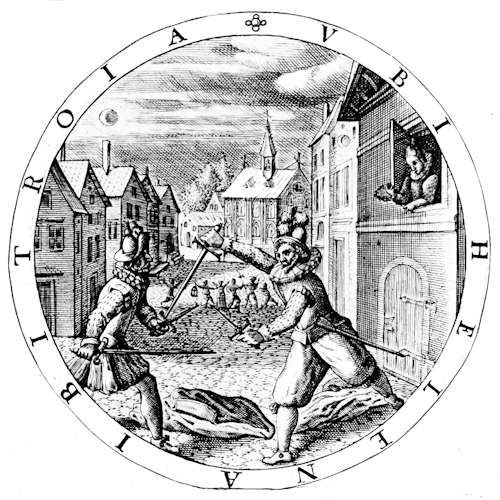
Illvstr. XXVII. Book. 1.
THeir foolish Guise, I never could affect, Who dare, for any cause, the Stewes frequent: And, thither, where I justly might suspect A Strumpet liv'd, as yet, I never went. For, when (as Fooles pretend) they goe to seeke Experience, where more Ill then Good, they see; They venture for their Knowledge, Adam-like; And, such as his, will their Atchievements bee. Let, therefore, those that would loose Trulls detest, Converse with none, but those that modest are; For, they that can of Whoredome make a Iest, Will entertaine it, ere they be aware. Chast-Company, and Chast-Discourse, doth make The Minde more pleased with it, ev'ry day; And, Frequent viewes of Wantonnesse, will take The Sense and Hatred, of the Vice away. Some, I have knowne, by Harlots Wiles undone, Who, but to see their Fashions first pretended; And, they that went for Company, alone, By suddaine Quarrells, there, their Dayes have ended. For, in the Lodgings of a Lustfull-Woman, Immodest Impudence hath still her Being; There, Furie, Fraud, and Cruelties are common: And, there, is Want, and Shame, and Disagreeing. Ev'n Beauty, of it selfe, stirres loose Desires, Occasioning both Iealousies, and Feares; It kindleth in the Brest, concealed Fires, Which burne the Heart, before the Flame appeares: And, ev'ry day, experienced are wee; That, there, where Hellen is, Troyes Fate will bee.

No Inward Griefe, nor outward Smart, Can overcome a Patient-Heart.
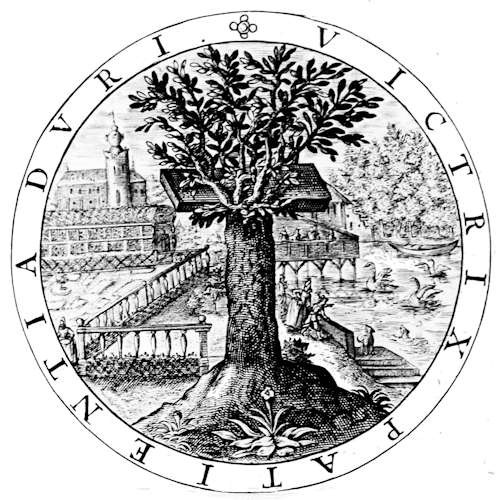
Illvstr. XXVIII. Book. 1.
SOme Trees, when Men oppresse their Aged Heads, (With waighty Stones) they fructifie the more; And, when upon some Herbs, the Gard'ner treads, They thrive and prosper, better then before: So, when the Kings of Ægypt did oppresse The Sonnes of Iacob, through their Tyrannies; Their Numbers, every day, did more encrease, Till they grew greater then their Enemies. So, when the Iewes and Gentiles, joyn'd their Powre The Lord, and his Annoynted, to withstand; (With raging Furie, lab'ring to devoure And roote the Gospel, out of ev'ry Land) The more they rag'd, conspired, and envy'd, The more they slander'd, scorn'd, and murthered; The more, the Faithfull, still, were multiply'd: And, still, the further, their Profession spred. Yea, so it spred, that quite it overthrew Ev'n Tyranny it selfe; that, at the last, The Patience of the Saints, most pow'rfull grew, And Persecutions force, to ground was cast. The selfe-same Pow'r, true Patience, yet retaines, And (though a thousand Suff'rings wound the same) She still hath Hope enough to ease her paynes; That Hope, which keepeth off, all Feare and Shame: For, 'tis not Hunger, Cold, nor Fire, nor Steele, Nor all the Scornes or Slanders, we can heare, Nor any Torment, which our Flesh can feele, That conquers us; but, our owne Trayt'rous Feare. Where, Honest Mindes, and Patient Hearts, are Mates They grow victorious, in their Hardest-Fates.

By many Strokes, that Worke is done, Which cannot be perform'd at One.
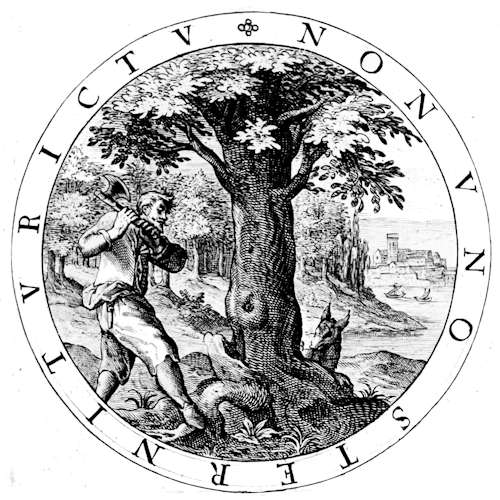
Illvstr. XXIX. Book. 1.
DEspaire not Man, in what thou oughtst to doe, Although thou faile when one Attempt is made; But, adde a New-Endeavour thereunto, And, then another, and another, adde: Yea, till thy Pow'r and Life shall quite be spent, Persist in seeking what thou shouldst desire; For, he that falleth from a good Intent, Deserves not that, to which he did aspire. Rich Treasures, are by Nature, placed deepe; And, ere we gaine them, we must pierce the Rockes: Such Perills, also, them, as Guardians keepe, That, none can winne them without wounds and knockes. Moreover, Glories, Thrones are so sublime, That, whosoever thinkes their Top to gaine, Till many thousand weary steps he clime, Doth foole himselfe, by Musings which are vaine. And, yet, there is a Path-way, which doth leade Above the highest things that Man can see; And (though it be not knowne to all who tread The Common-Tract) it may ascended be. As, therefore, none should greater things presume Then well becomes their strength; So, none should feare (Through Folly, Sloth, or Basenesse) to assume Those things upon them, which beseeming are. In Time, and by Degrees may things be wrought, That seem'd impossible to have beene done, When they were first conceived in the thought; And, such as these, we may adventure on. Mine Arme, I know, in time will fell an Oke; But, I will nev'r attempt it, at a Stroke.

Afflictions Fire consumeth Sinne; But, Vertue taketh Life therein.
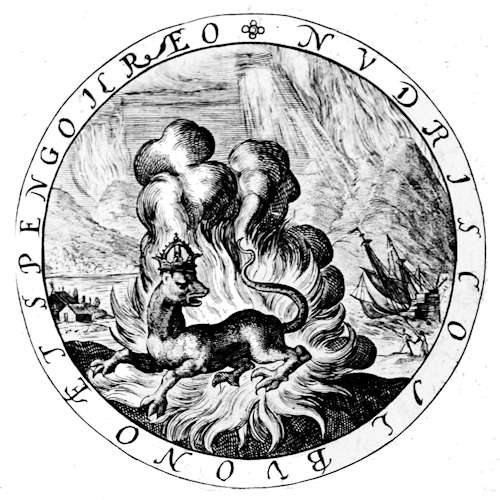
Illvstr. XXX. Book. 1.
WHether the Salamander be a Beast, Or Precious-Stone, which overcomes the Flame, It skills not; Since, by either is exprest The Meaning which we purpose by the same: Both brooke the Fire unhurt; And (more then so) The fiercer and the longer Heats there are, The livelyer in the same the Beast will grow; And, much the brighter, will the Stone appeare. This Crowned-Salamander in the Fire, May, therefore, not unfitly, signifie Those, who in Fiery Charriots, doe aspire Elijah-like, to Immortality: Or, those Heroicke-spirits, who unharm'd Have through the Fires of Troubles, and Affliction, (With Vertue, and with Innocencie arm'd) Walkt onward, in the Path-way, of Perfection. The Fiery-Tryall, which like Wood and Hay, Consumes the Workes of ev'ry Wicked-one; (And maketh all their Hopes to fume away) Doth purifie what Faithfull-men have done. They triumph in the Flames, and shall obtaine The glorious Crowne of Endless-Happinesse, When all that show of Blisse appeareth vaine, Which Worldly men have seemed to possesse. For, though some Sinnes and Follies, gilded are, And shine like purest Gold, and Pretious-Stones; This Test, will finde of what Allay they were, And, make them knowne but Counterfeited Ones: For, in this Fornace, all such Wormes expire; And, none but Vertue liveth in this Fire.

Hee, over all the Starres doth raigne, That unto Wisdome can attaine.
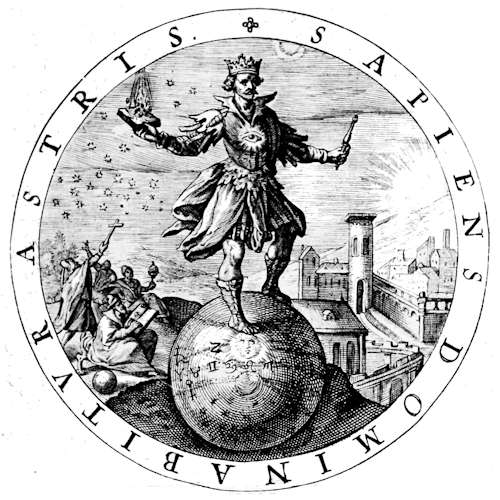
Illvstr. XXXI. Book. 1.
I Am not of their Minde, who thinke the Sun, The Moone, the Planets, and those glorious Lights Which trim the Sphæres, doe in their Motions run To no more purpose, then to please our Sights. Nor for distinguishment of Nights, and Dayes, Or of the Seasons, and the Times, alone, Can I suppose the Hand of God displayes Those many Starres, we nightly gaze upon: For, both by Reason, and by Common-sense We know (and often feele) that from above The Planets have, on us, an Influence; And, that our Bodies varie, as they move. Moreover, Holy Writ inferres, that these Have some such pow'r; ev'n in those Places, where It names Orion, and the Pleiades; Which, Starres of much inferiour Nature are. Yet, hence conclude not, therefore, that the Minde Is by the Starres constrained to obey Their Influence; or, so by them inclin'd, That, by no meanes resist the same we may. For, though they forme the Bodies temp'rature, (And though the Minde inclineth after that) By Grace another Temper we procure, Which guides the Motions of Supposed Fate. The Soule of Man is nobler then the Sphæres; And, if it gaine the Place which may be had, Not here alone on Earth, the Rule it beares, But, is the Lord, of all that God hath made. Be wise in him; and, if just cause there bee, The Sunne and Moone, shall stand and wayt on thee.

A Princes most ennobling Parts, Are Skill in Armes, and Love to Arts.
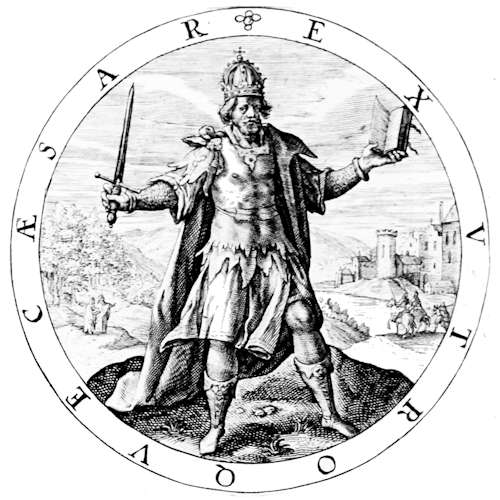
Illvstr. XXXII. Book. 1.
RIght blest are they on whom God hath bestowne A King, whose Vertues have approved him To be an Ornament unto his Throne, And as a Lustre to his Diadem. Hee seekes not onely how to keepe in awe His People, by those meanes that rightfull are; But, doth unto himselfe, become a Law, And, by Example, Pious Wayes declare. He, loveth Peace, and after it pursues; Yet, if of Warre a just occasion come, Doth nor Bellona's Challenges refuse, Nor feare, to beat Defyance on his Drum; He is as ready, also, to advance The Lib'rall Arts, and from his Lands to drive All false Religion, Schisme, and Ignorance, As other publike profits to contrive. And, such a Prince is not a Casuall-thing, The Glories of a Throne, by Chance, possessing; Nor meerely from his Parents, doth he spring, But, he is rather Gods immediate Blessing. If thou desirest such a Prince to be, Or, to acquire that Worth which may allure Such Princes to vouchsafe some Grace to thee; Their Kingly Vertues, labour to procure. In Military Practices delight, Not for a wicked, or vaine-glorious end; But, to maintaine the Cause that is upright, Or thy distressed Countrey to defend. And, strive that thou, as excellent mayst bee In Knowledge, as, thou art in thy Degree.

True-Lovers Lives, in one Heart lye, Both Live, or both together Dye
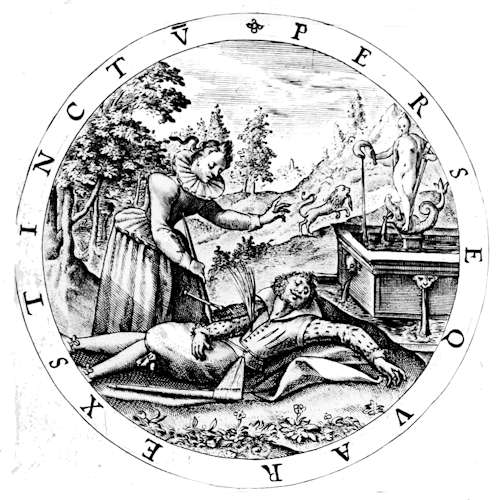
Illvstr. XXXIII. Book. 1.
HEe that shall say he Loves, and was againe So well-belov'd, that neither Hee nor Shee Suspects each other, neither needs to gaine New proofes, that they in all Desires agree; And, yet, shall coole againe in their Affection, (And leave to Love) or live till they are Lovers The second-time; It some grosse Imperfection In One (if not in Both) of them discovers. It was not Love which did between them grow; But, rather, somewhat like unto the same; Which (having made a faire deceiving Show) Obtain'd, a while, that honorable Name. For, False-Affections will together play So lovingly; and, oft, so act those Parts Which reall seeme; that, for a time, they may Appeare the Children of Vnfeigned-Hearts: Yea, Many-times, true Turtles are deceiv'd By counterfeited Passions, till their Love Of her true Object findes her selfe bereav'd; And, after it, is forced to remove: But, where True-Love begetteth, and enjoyes The proper Object, which shee doth desire, Nor Time, nor Injury the same destroyes; But, it continues a Perpetuall Fire. Like am'rous Thisbe to her Pyramus, On all occasions, it continues true: Nor Night, nor Danger, makes it timorous; But, through all Perills, it will him pursue. Thus, both in Life, in Death, in all estates, True-Lovers will be true-Associates.

When Two agree in their Desire, One Sparke will set them both on Fire.
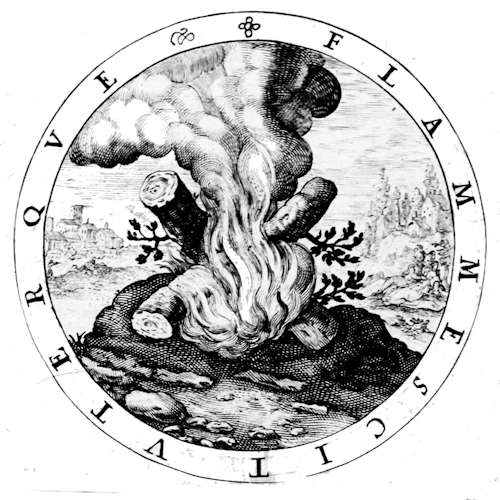
Illvstr. XXXIV. Book. 1.
THe Westerne-Indians, when they want a Fire To warme their naked limbs, or dresse their Food, At ev'ry need, accomplish their Desire, By often rubbing of two Stickes of Wood. From whence, these Observations we may take; First, that in them whose Natures gentlest are, A long Contention such a Change may make, As did, before, scarce possible appeare. Next, that when Two in Opposition bee, Whose power and strength and Malice is the same, Their strugling Hearts but seldome doe agree, Till they beget, a Selfe-devouring-Flame. And, thirdly, it informes, that those chast Fires Which on Loves Altars keepe a Lasting-Heat; Are those, which in two Hearts, two Like-Desires Vpon each other, mutually beget. Hence, therefore, learne thou, first, not to contemne Their Mildnesse, who to anger are not prone; Lest, many wrongs doe stirre up Fires in them, And worke thee Mischiefe, when thou look'st for none. Be wary, next, though thou thy selfe be strong, How with a pow'rfull Foe thou dost contend; For, they that wrastle in Contention, long, Will, sure, beshrew their Madnesse, in the end. And, if to warme thee by Loves Fires thou seeke, Thy Peere in Yeares, and Manners, pray to finde; Let both your Aymes, and Longings, be alike; Be one in Faith, and Will; and, one in Minde: So, you shall reape the fruits of your Desire, And warme each other with a kindly Fire.

He that delights to Plant and Set, Makes After-Ages in his Debt.
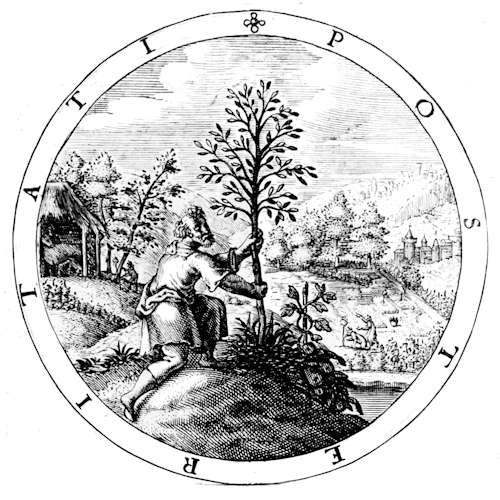
Illvstr. XXXV. Book. 1.
WHen I behold the Havocke and the Spoyle, Which (ev'n within the compasse of my Dayes) Is made through every quarter of this Ile, In Woods and Groves (which were this Kingdomes praise) And, when I minde with how much greedinesse, We seeke the present Gaine, in every thing; Not caring (so our Lust we may possesse) What Dammage to Posterity we bring: They doe, me-thinkes, as if they did foresee, That, some of those, whom they have cause to hate, Should come in Future-times, their Heires to be: Or else, why should they such things perpetrate? For, if they thinke their Children shall succeed; Or, can believe, that they begot their Heires; They could not, surely, doe so foule a Deed, As to deface the Land, that should be theirs. What our Forefathers planted, we destroy: Nay, all Mens labours, living heretofore, And all our owne, we lavishly imploy To serve our present Lusts; and, for no more. But, let these carelesse Wasters learne to know, That, as Vaine-Spoyle is open Injury; So, Planting is a Debt, they truely owe, And ought to pay to their Posterity. Selfe-love, for none, but for it selfe, doth care; And, onely, for the present, taketh paine: But, Charity for others doth prepare; And, joyes in that, which Future-Time shall gaine. If, After-Ages may my Labours blesse; I care not, much, how Litle I possesse.

To Have, and not to Vse the same; Is not our Glory, but our Shame.
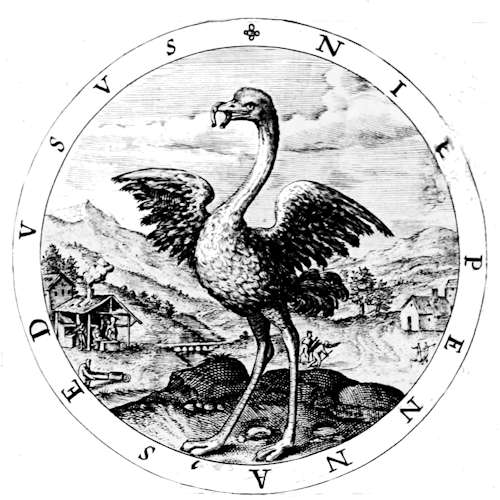
Illvstr. XXXVI. Book. 1.
THe Estridge (though with many Feathers trimm'd, And deckt with goodly Plumes of no meane size) Is so unwieldy, and so largely limb'd, That, up into the Aire he cannot rise. And, though in Wings and Feathers, he appeares A goodly Fowle, and beares his Head so high, As if he could oretop the lower Sphæres; And, farre above the towring Eagles flie; So uselesse are those Feathers, and those Wings, To gaine him Name among their aiery Race; That, he must walke with such Inferiour things, As in this Common-Region, have their place. Such Fowles as these, are that Gay-plumed-Crew, Which (to high place and Fortunes being borne) Are men of goodly worth, in outward view; And, in themselves, deserve nought els but scorne. For, though their Trappings, their high-lifted Eyes, Their Lofty Words, and their Much-feared Pow'rs, Doe make them seeme Heroicke, Stout, and Wise, Their Hearts are oft as fond, and faint as ours. Such Animals as these, are also those That Wise, and Grave, and Learned Men doe seeme In Title, Habit, and all Formall showes; Yet, have nor Wit, nor Knowledge, worth esteeme. And, lastly, such are they; that, having got Wealth, Knowledge, and those other Gifts, which may Advance the Publike-Good, yet, use them not; but Feede, and Sleepe, and laze their time away. He, may be but a Goose, which weares the Quill; But, him we praise, that useth it with Skill.

He, that his Course directly Steeres, Nor Stormes, nor Windy-Censures feares.
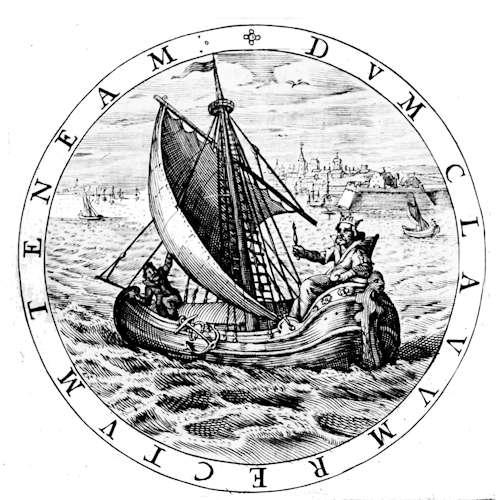
Illvstr. XXXVII. Book. 1.
WEe to the Sea, this World may well compare; For, ev'ry Man which liveth in the same, Is as a Pilot, to some Vessell there, Of little size, or else of larger frame. Some, have the Boats of their owne Life to guide, Some, of whole Families doe row the Barge, Some, governe petty Towneships too, beside, (To those compar'd, which of small Barkes have charge) Some others, rule great Provinces; and, they Resemble Captaines of huge Argoses: But, when of Kingdomes, any gayne the Sway, To Generalls of Fleets, we liken these. Each hath his proper Course to him assign'd, His Card, his Compasse, his due Tacklings, too; And, if their Businesse, as they ought, they mind, They may accomplish all they have to doe. But, most Men leave the Care of their owne Course, To judge or follow others, in their wayes; And, when their Follies make their Fortunes worse, They curse the Destiny, which they should prayse. For, Waves, and Windes, and that oft-changing Weather Which many blame, as cause of all their Losses, (Though they observe it not) helpes bring together Those Hopes, which their owne Wisedome, often crosses. Regard not, therefore much, what those things be, Which come, without thy fault, to thwart thy Way; Nor, how, Rash-Lookers-on will censure thee; But, faithfully, to doe thy part, assay: For, if thou shalt not from this Counsell vary, Let my Hopes faile me, if thy Hopes miscarry.

A sudden Death, with Shame, is due To him, that, sweares What is untrue.
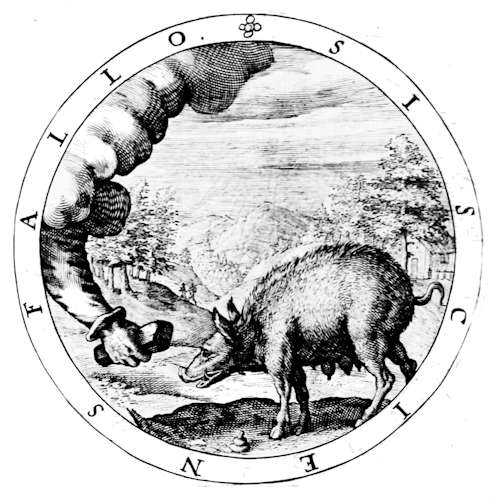
Illvstr. XXXVIII. Book. 1.
WHen th' Ancients made a solemne League or Vow, Their Custome was to ratifie it, thus; Before their Idoll-God, they slew a Sow, And sayd aloud; So be it unto us. Implying, that, if otherwise they did Then had been vow'd; or, if within their Brest A Fraudulent-Intention had beene hid, They merited such Vsage, as that Beast. For, by the Swine that they had slaughtred so, (Which, during Life, was helpefull unto none) Of Life deprived by a sudden blow, And, then, cast out, that none might feed thereon; They, mystically did inferre; that, he Who falsify'd that Oath which he had sworne, Deserv'd, by Sudden-Death, cut off to be; And, as a Beast uncleane, to lye forlorne. That Heathenish Hieroglyphicke, doth implye This Christian-Doctrine; that, we should in Vowes, In Leagues, and Oathes, assume no Liberty, But, what sincerest Honesty allowes. By Swine, the babbling Sophisters are meant, In Hieroglyphicall Signification; Which wee doe Sacrifice, when our intent Is free from Falsehood, and Æquivocation. And, this, let ev'ry Man endeavour for, Who loves the Blessings, for just men prepar'd; Or, if the Sinne he doe not much abhorre, At least, the Danger let him well regard: For, to pursue him, Vengeance never leaves, That falsely Sweares, or willingly Deceives.

Where strong Desires are entertain'd, The Heart 'twixt Hope, and Feare, is pain'd.
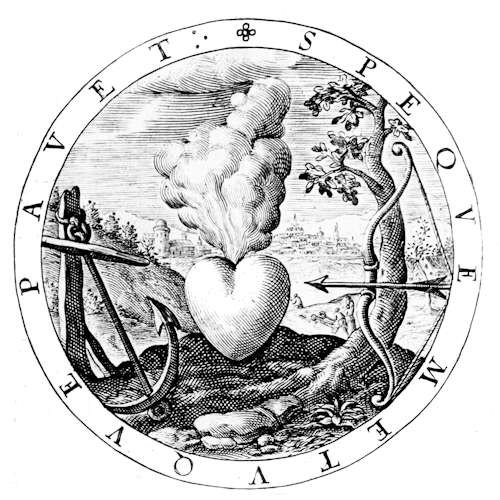
Illvstr. XXXIX. Book. 1.
A Troubled Minde, ore-charged with Desires, Betweene great Hopes, and no lesse Feares opprest, And payned inwardly with secret Fires, Was thus, by some, in former times exprest. A Smoking Heart, they placed just betwixt A Fastned Anchor, and a Bended Bow; To which a Barbed-Arrow seemed fixt, And, ready from the Strayned-String to goe. The Smoke doth Sighes, the Anchor doth declare That Hope, which keepes us from Despairing quite; The Bowe and Arrow, signifie that Feare, Which doth, perpetually, the Soule affright. And, by this Emblem, it appeares to me That they which are with strong Desires opprest, (Though good or bad the Object of them be) In seeking Pleasures, finde no small unrest: For, they are not by Feares, alone, disturbed, But, as the Wiseman saith, ev'n Hope-Delayd Torments the Heart; and, when Desire is curbed, The Soule becommeth sad, and ill-apayd. A Groundlesse-Hope, makes entrance for Despaire, And with Deceiving-showes the Heart betrayes: A Causelesse-Feare, doth Reasons force impaire, And, terrifies the Soule, in doubtfull wayes. Yet, quite neglect them not; For, Hope repells That Griefe sometimes, which would our Hearts oppresse. And, Feare is otherwhile the Sentinell Which rouzeth us from dang'rous Carelesnesse. Thus, Both are good: but, Both are Plagues to such, Who either Fondly feare, or Hope too much.

Those Fooles whom Beauties Flame doth blinde, Feele Death, where Life they thought to finde.
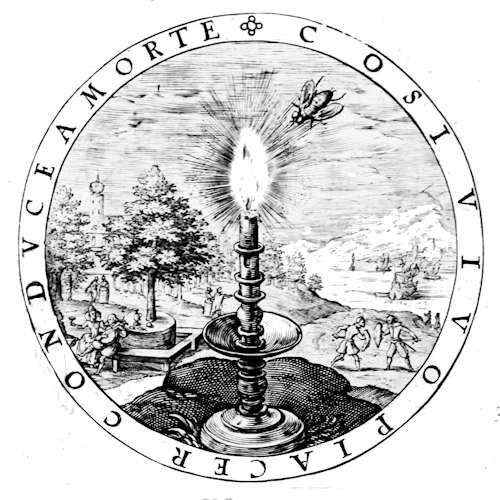
Illvstr. XL. Book. 1.
WHen you doe next behold the wanton Flyes About the shining Candle, come to play, Vntill the Light thereof hath dimm'd their Eyes, Or, till the Flame hath sing'd their Wings away: Remember, then, this Emblem; and, beware You be not playing at such harmefull Games: Consider, if there sit no Female, there, That overwarmes you, with her Beauties Flames, Take heed, you doe not over dally so As to inflame the Tinder of Desire; But, shun the Mischiefe, e're too late it grow, Lest you be scorched in that Foolish-Fire. For, as those Wandring-Fires which in the Night, Doe leade unwary Trauellers astray, Alluring them, by their deceiving Sight, Till they have altogether lost their way: Right so fantasticke Beauty doth amaze The Lust-full Eye, allures the Heart aside, Captives the Senses (by a sudden blaze) And, leaves the Iudgement wholly stupify'd. Nay, if Men play too long about those Torches, Such is the Nature of their wanton Flame, That, from their Bodies (unawares) it scorches Those Wings and Feet, on which they thither came. It wasteth (ev'n to nothing) all their Wealth, Consumes their precious Time, destroyes their Strength, Bespots their Honest-Fame, impaires their Health, And (when their Fatall Thread is at the length) That thing, on which their Hope of Life is plac't, Shall bring them to Destruction, at the last.

Let him, that at Gods Altar stands, In Innocencie, wash his Hands.
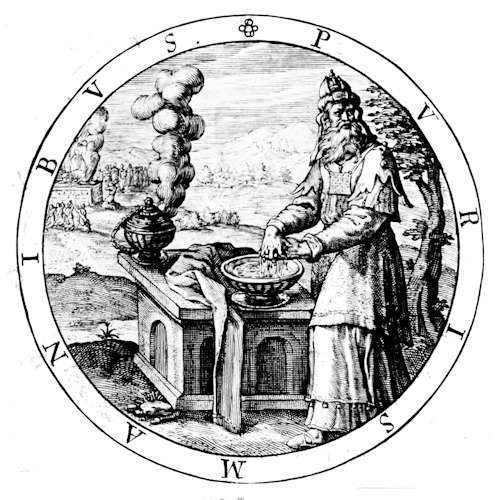
Illvstr. XLI. Book. 1.
WHen (Reader) thou hast first of all survayd That Reverend Priest, which here ingraven stands, In all his Holy Vestiments array'd, Endeavouring for Purifyed-Hands; Collect from hence, that, when thou dost appeare To offer Sacrifice of Prayse or Prayer, Thou oughtst the Robes of Righteousnesse, to weare, And, by Repentance, thy defects repaire. For, thou, that, with polluted Hands presum'st Before Gods Altar to present thy Face; Or, in the Rags of thine owne Merits com'st, Shalt reape Displeasure, where thou look'st for Grace. Then, if thou be of those that would aspire A Priest, or Prelate, in Gods Church to be; Be sure, thou first those Ornaments acquire, Which, may be suting to that High-Degree. Intrude not, as perhaps too many doe, With Gifts unfit, or by an Evill meane: Desire it with a right Intention too; And, seeke to keepe thy Conversation cleane. For, they that have assum'd this Holy-Calling, With Hands impure, and Hearts unsanctify'd, Defame the Truth; give others cause of Falling, And, scandalize their Brethren, too, beside: Yea, to themselves, their very Sacrifice Becomes unhallow'd; and, their Thankes and Prayers, The God of Purity, doth so despise, That, all their Hopes, he turneth to Despaires: And, all their best Endeavours, countermands, Till they appeare with unpolluted Hands.

No Heart can thinke, to what strange ends, The Tongues unruely Motion tends.
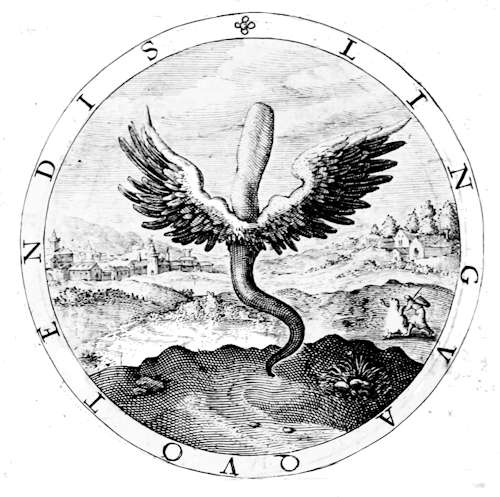
Illvstr. XLII. Book. 1.
WEll-worthy of our better Heeding were, That Holy Pen-mans Lesson, who hath sayd, We should be slow to Speake, and swift to Heare; If, well, the nature of the Tongue we waigh'd. For, if we let it loose, it getteth Wings, And, flies with wanton Carelesnesse, about; It prateth in all places, of All things; Tells Truth and Lyes, and babbleth Secrets out. To speake, of things unknowne, it taketh leave, As if it had all Knowledge in Possession; And, Mysteries (which no Man can conceive) Are thought fit Objects for the Tongues Expression. With Truth it mixeth Errors; sayes, unsayes; And, is the Preacher of all Heresies. That Heart, which gives it motion, it betrayes; And, utters Curses, Oathes, and Blasphemies. It spreads all Slanders, which base Envie raiseth; It moveth Anger, and begetteth Hates: It blameth Vertue; filthy Deeds it praiseth; And, causeth Vproares, Murthers, and Debates. Yea, tis the chiefest Factor for the Devill; And, yet, with speeches feignedly-sincere, It otherwhile reproveth what is Evill, And, will in Lowly-words, a Saint appeare. Now this is knowne; we, next of all, should learne, How we may shunne the Mischiefe being knowne; How, we bad Tongues, in Others, may discerne; And, how to guide and moderate our Owne. And, reason good; for, none can apprehend, What Mischiefe doth an Evill Tongue attend.

The Minde should have a fixed Eye On Objects, that are plac'd on High.
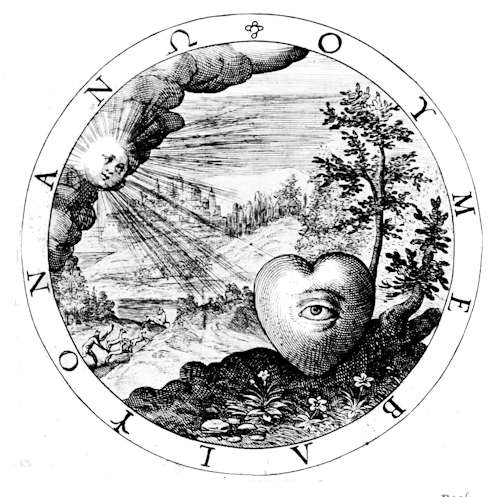
Illvstr. XLIII. Book. 1.
A Heart, which bore the figure of an Eye Wide open to the Sunne; by some, was us'd, When in an Emblem, they would signifie A Minde, which on Celestiall Matters mus'd: Implying, by the same, that there is nought Which in this lower Orbe, our Eyes can see, So fit an Object for a manly thought, As those things, which in Heav'n above us be. God, gave Mankinde (above all other Creatures) A lovely Forme, and upward-looking Eye, (Among the rest of his peculiar Features) That he might lift his Countenance on high: And (having view'd the Beauty, which appeares Within the outward Sights circumference) That he might elevate above the Sphæres, The piercing Eye, of his Intelligence. Then, higher, and still higher strive to raise His Contemplations Eyes, till they ascend To gaine a glimpse of those eternall Rayes, To which all undepraved Spirits tend. For, 'tis the proper nature of the Minde (Till fleshly Thoughts corrupt it) to despise Those Lusts whereto the Body stands inclin'd; And labour alwayes, upward to arise. Some, therefore, thought those Goblins which appeare To haunt old Graves and Tombes, are Soules of such, Who to these loathsome places doomed were, Because, they doted on the Flesh too much. But, sure we are, well-minded Men shall goe To live above, when others bide below.

Those Fields, which yet appeare not so, When Harvest comes, will yellow grow.
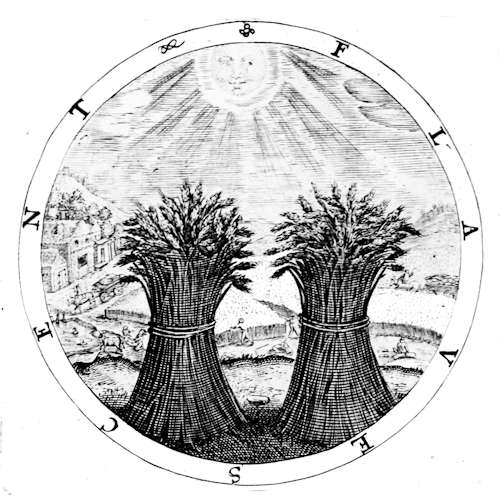
Illvstr. XLIV. Book. 1.
WHen, in the sweet and pleasant Month of May, We see both Leaves and Blossomes on the Tree, And view the Meadowes in their best array, We hopefull are a Ioyfull-Spring to see; Yet, oft, before the following Night be past, It chanceth, that a Vapor, or a Frost, Doth all those forward bloomings wholly waste; And, then, their Sweetnesse and their Beautie's lost. Such, is the state of ev'ry mortall Wight: In Youth, our Glories, and our Lusts we shew; We fill our selves with ev'ry vaine Delight, And, will most thinke on that which may insue. But, let us learne to heed, as well as know, That, Spring doth passe; that, Summer steales away; And, that the Flow'r which makes the fairest show, E're many Weekes, must wither and decay. And, from this Emblem, let each Lab'ring-Swaine (In whatsoever course of life it be) Take heart, and hope, amidst his daily paine, That, of his Travailes, he good fruits shall see. The Plow'd and Harrow'd Field, which, to thine eye, Seemes like to be the Grave, in which the Seeds Shall (without hope of rising) buryed lye, Becomes the fruitfull Wombe, where Plenty breeds. There, will be Corne, where nought but Mire appeares; The Durty Seed, will forme a greenish blade; The Blade, will rise to Stemmes with fruitfull Eares; Those Eares, will ripen, and be yellow made: So, if in honest Hopes, thou persevere, A Ioyfull Harvest will at last appeare.

As soone, as wee to bee, begunne; We did beginne, to be Vndone.
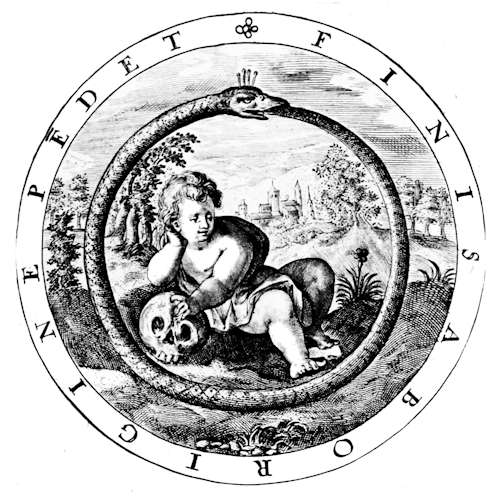
Illvstr. XLV. Book. 1.
WHen some, in former Ages, had a meaning An Emblem, of Mortality, to make, They form'd an Infant, on a Deaths-head leaning, And, round about, encircled with a Snake. The Childe so pictur'd, was to signifie, That, from our very Birth, our Dying springs: The Snake, her Taile devouring, doth implie The Revolution, of all Earthly things. For, whatsoever hath beginning, here, Beginnes, immediately, to vary from The same it was; and, doth at last appeare What very few did thinke it should become. The solid Stone, doth molder into Earth, That Earth, e're long, to Water, rarifies; That Water, gives an Airy Vapour birth, And, thence, a Fiery-Comet doth arise: That, moves, untill it selfe it so impaire, That from a burning-Meteor, backe againe, It sinketh downe, and thickens into Aire; That Aire, becomes a Cloud; then, Drops of Raine: Those Drops, descending on a Rocky-Ground, There, settle into Earth, which more and more, Doth harden, still; so, running out the round, It growes to be the Stone it was before. Thus, All things wheele about; and, each Beginning, Made entrance to it owne Destruction, hath. The Life of Nature, entreth in with Sinning; And, is for ever, wayted on by Death: The Life of Grace, is form'd by Death to Sinne; And, there, doth Life-eternall, straight beginne.

Though very small, at first, it be, A Sprout, at length, becomes a Tree.
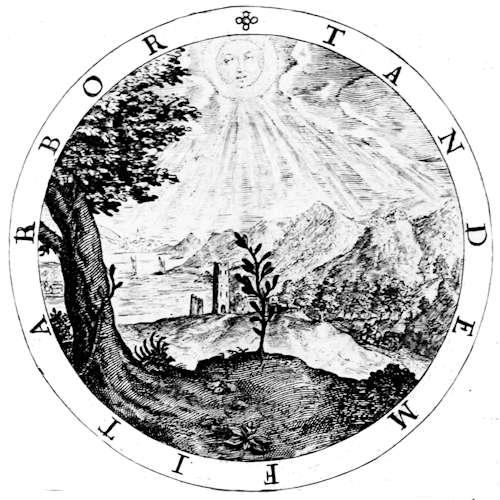
Illvstr. XLVI. Book. 1.
WEe finde it common (but not comely thou) That, when a good Endeavour is begot, Vnlesse, at very first, it equall grow With our Expectance, we regard it not. Nor Wit, nor Patience, have we to conceive, That ev'ry thing, which may by Man be wrought, Proportionable Time, and Meanes, must have; Before it can be to Perfection, brought. Yet, ev'ry day, in things of ev'ry kinde, Experience hath informed us, herein; And, that, in many things, a change we finde, Which, at the first, would scarce believ'd have bin. For, though a Gosling will not prove a Swan, Vnruely-Colts become well-trayned Steeds; A Silly-Childe growes up a Mighty-Man, And, Lofty-Trees doe Spring from Little Seeds. Learne, therefore hence, that, nothing you despise, Because it may, at first, imperfect seeme: And, know, how all things (in some sort) to prise, Although, you give them not the best esteeme. From hence, moreover, learne; not to despaire, When you have just occasion, to pursue A toylesome worke, or any great affaire: Since, all-things, at the first, from nothing, grew. And, I my selfe will, also, learne, from hence, (Of all my Paines, though little fruits I see) Nor to repine, nor to receive Offence; But, rather joy in what befalleth mee. For, though my Hopes appeare but meanely growne, They will be Great, when some shall thinke them none.

When we above the Crosse can rise, A Crowne, for us, prepared lies.
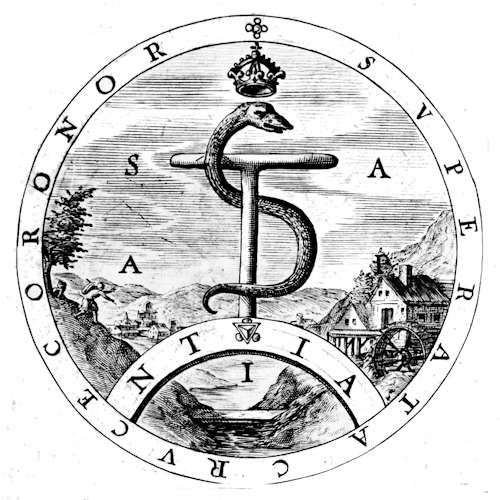
Illvstr. XLVII. Book. 1.
A Serpent rais'd above the Letter Tau, Aspiring to a Crowne, is figur'd here: From whence, a Christian-Morall we may draw, Which worth our good regarding will appeare. For, by those Characters, in briefe, I see Which Way, we must to Happinesse ascend; Then, by what Meanes, that Path must clymed bee; And, what Reward, shall thereupon attend. The Crosse, doth shew, that Suffring is the Way; The Serpent, seemes to teach me, that, if I Will overcome, I must not then, assay To force it; but, my selfe thereto applye. For, by embracing what we shall not shunne, We winde about the Crosse, till wee arise Above the same; and, then, what Prize is wonne, The Crowne, which overtops it, signifies. Let me, O God, obtaine from thee the Grace, To be partaker of thy Blessed Passion; Let me, with Willingnesse, thy Crosse imbrace, And, share the Comforts of thy Exaltation. To beare that Part, whereto I doomed am, My Heart, with Strength, and Courage, Lord, inspire: Then, Crucifie my Flesh upon the same, As much as my Corruption shall require. And, when by thy Assistance, I am rear'd Above that Burthen, which lyes yet upon me; And, over all, which (justly may be fear'd) Shall, during Life-time, be inflicted on me; Among those Blessed-Soules, let me be found, Which, with eternall Glory, shall be Crown'd.

In Death, no Difference is made, Betweene the Scepter, and the Spade.
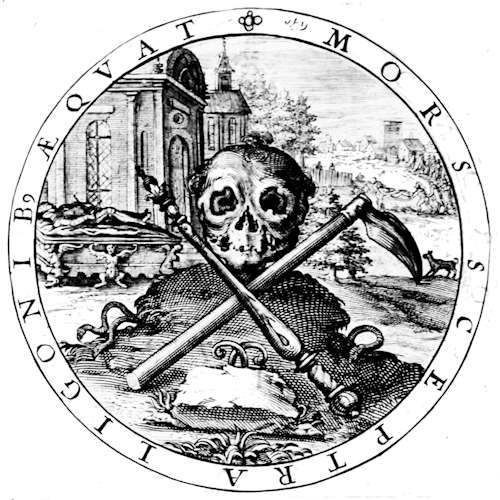
Illvstr. XLVIII. Book. 1.
LEt no man be so sottish as to dreame, Though all Men in their Death made equall are, That, therfore, they may gather by this Theame, That, Parity, in Life-time, fitting were. For, as the Bodies Members (which in Death Have all the like esteeme) had their Degrees, And Honours, differing in time of breath; The same (in States) Discretion comely sees. Nor, should we hence inferre, that it were just To disesteeme the breathlesse Carcasses Of Kings and Princes, when they sleepe in Dust; For, Civill-Reverence is due to these. Nor, ought we, in their Life-time, to apply The Truth, which by this Emblem is declar'd, The Dignities of Men to vilifie; Or, bring upon their Persons lesse regard. That, which from hence, I rather wish to preach, Is this; that ev'ry Man of each degree, Would marke it so, that he, himselfe might teach What thoughts and deeds, to him most proper be. If he be great; let him remember, then, That (since, nor Wealth, nor Title, can procure him Exemption from the Doomes of other Men) He ought to seeke, how Vertue may secure him. If he be Poore; let him this Comfort take, That, though, awhile, he be afflicted here, Yet, Death may him as fully happy make, As he, that doth a Crowne Imperiall weare. For, when his Fatall-blow, Death comes to strike, He, makes the Beggar, and the King, alike.

What cannot be by Force attain'd, By Leisure, and Degrees, is gain'd.
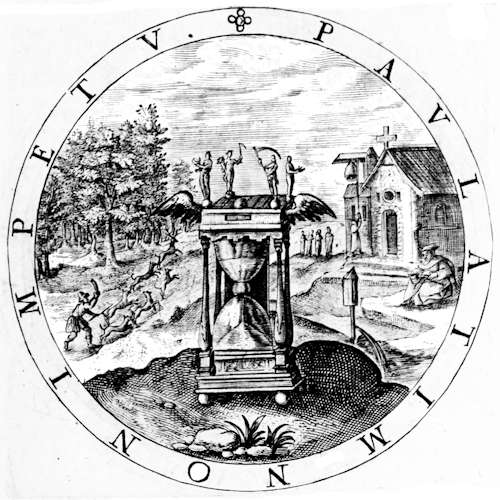
Illvstr. XLIX. Book. 1.
SOme Foolish-Boyes (and such a Boy was I) When they at Schoole have certaine houres to passe, (To which they are compell'd unwillingly) Much time they spend in shaking of the Glasse: Thus, what they practise, to make-short their stay, Prolongs it more; for while they seeke to force The Sands, to runne more speedily away, They interrupt them; and, they passe the worse. Right so, in other things, with us it fares; (And, seeming wise, we act a foolish part) For, otherwhile, what Time alone prepares, We seeke to make the subject of an Art. Sometimes, by Rashnesse, we endeavour what We ought with Leisure, and Advice, to doe: But, if a good Successe doth follow, that, Our Wit was nothing helpefull thereunto. Sometime, againe, we prosecute a thing By Violence; when our desir'd effect, No other meanes so well to passe can bring, As Love and Gentlenesse, which we neglect. But, let this Emblem teach us to regard What Way of Working, to each Worke pertaines: So, though some Portion of our Hopes be barr'd, We shall not, altogether, lose our paines. Some things are strong, and, othersome are weake; With Labour, some; and, some with Ease be wrought: Although the Reed will bend, the Kexe will breake; And, what mends one thing, makes another naught. Marke this; And, when much Haste will marre thy Speed, That, then, thou take good Leisure; take thou Heed.

Of Little-Gaines, let Care be had; For, of small Eares, great Mowes are made.
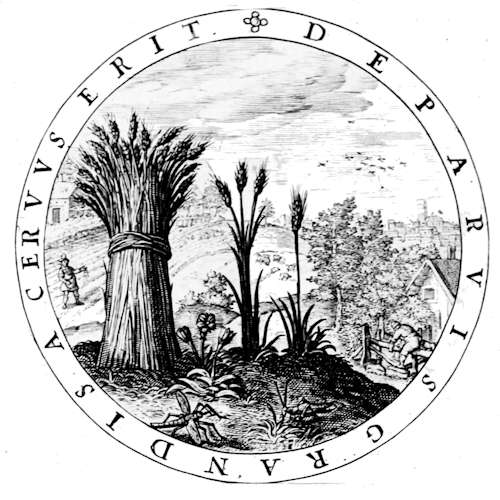
Illvstr. L. Book. 1.
AMong the many Faylings of the Time, This Emblem giveth Cause to mention one, Which, unto me, doth seeme the greater Crime, Because, to many, it appeareth none. I finde, that petty things are so neglected (Well nigh of all) in Losings and in Winnings, As if, what ere they thought to have effected, Subsisted without Members, or Beginnings. The Man, that loseth every Month a Penny, May salve-up Twelve-months Losses, with a Shilling. But, if of other Losses he hath many, To save a Pin, at length, he shall be willing. For, he that sees his Wine-fill'd Vessell drop, (Although a Drop, in value, be but small) Should, thence, Occasion take, the Leake to stop, Lest many Droppings draine him drye of all. Moreover, they, that will to Greatnesse rise, A Course, not much unlike to this, must keepe: They ought not Small-Beginnings to despise; Nor, strive to runne, before they learne to creepe. By many single Eares, together brought, The Hand is fill'd; by Handfulls, we may gaine A Sheafe; with many Sheaves a Barne is fraught: Thus, oft, by Little, we doe much obtaine. Consider this; And, though I wish not thee To take, of Trifling-things, too great a care; Yet, know thus much (for truth) it best will bee, If all things may be weighed as they are: By slender Losses, great-ones are begunne; By many trifling Gaines, much Wealth is wonne.

Finis Libri primi.
