Wood Engraving and the Stereotype
Reading edition
In any event, wood engraving did not really flourish until a practical stereotyping process was perfected. By this procedure substitute blocks of type metal could replace the wood engravings in the press, and the danger of splitting the block was eliminated. The first steps of any importance toward a practical process were made by the Earl of Stanhope around 1800, but not until Claude Genoux in France, between 1828 and 1829, developed the papier mâché or wet mat process could acceptable stereotypes of entire pages be produced.[27] By this method, patented on July 24, 1829, and others that followed, a number of duplicate plates of each page could be made as required for rapid printing on a battery of presses. Wood engraving now emerged as a practical method of illustration for popular publications. The Penny Magazine and the Saturday Magazine, founded in 1832, immediately made use of Genoux's stereotyping process. Dobson[28] describes the effect of these periodicals:
"The art of wood engraving received an astonishing impact from these publications. The engraver, instead of working merely with his own hands, has been obliged to take five or six pupils to get through the work." (Mr. Cowper's evidence before the Select Committee on Arts and Manufactures, 1835). It is difficult nowadays [1884] to understand what a revelation these two periodicals, with their representations of far countries and foreign animals, of masterpieces of painting and sculpture, were to middle-class households fifty years ago.
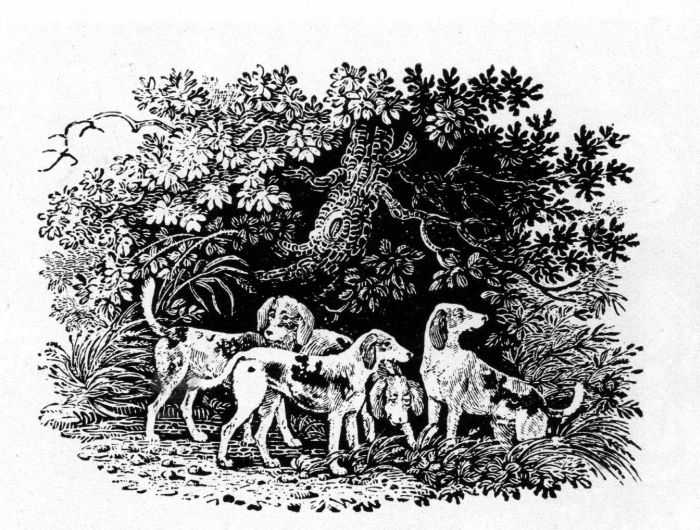
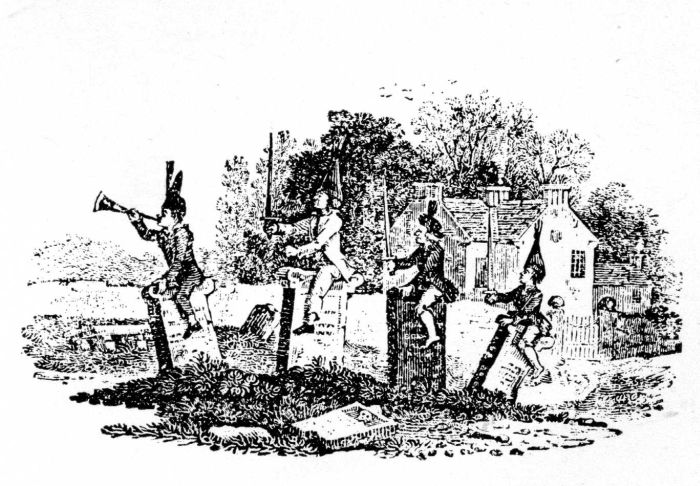
Figure 11.—Tailpiece by Thomas Bewick (actual size), engraved after a drawing by John Bewick, from The Chase, by William Somervile, 1796. (Photo courtesy the Library of Congress.)
We will not pursue Bewick's career further. With habits of hard work deeply ingrained, he kept at his bench until his death in 1828, engraving an awesome quantity of cuts. But he never surpassed his work on the Birds, although his reputation grew in proportion to the spread of wood engraving throughout the world.
The medium became more and more detailed, and eventually rivaled photography in its minute variations of tone (see figs. 15 and 16). But printing wood engravings never was a problem again. Not only was wove paper always used in this connection, but it had become much cheaper through the invention of a machine for producing it in lengths. Nicholas Louis Robert, in France, had developed and exhibited such an apparatus in 1797, at the instigation of M. Didot. John Gamble in England, working with Henry and Charles Fourdrinier, engaged a fine mechanic, Bryan Donkin, to build a machine on improved principles. The first comparatively successful one was completed in 1803. It was periodically improved, and wove paper appeared in increasing quantities. Spicer[29] says: "Naturally these improvements and economies in the manufacture of paper were accompanied by a corresponding increase in output. Where, in 1806, a machine was capable of making 6 cwt. in twelve hours, in 1813 it could turn out double that quantity in the same time at one quarter the expense."
Figure 12.—Wood Engraving by W. J. Linton, 1878 (Actual Size). The detail opposite is enlarged four times to show white line-technique.
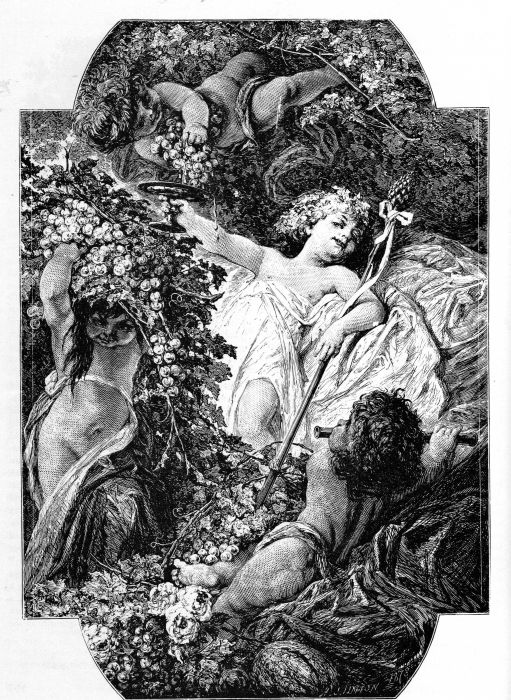
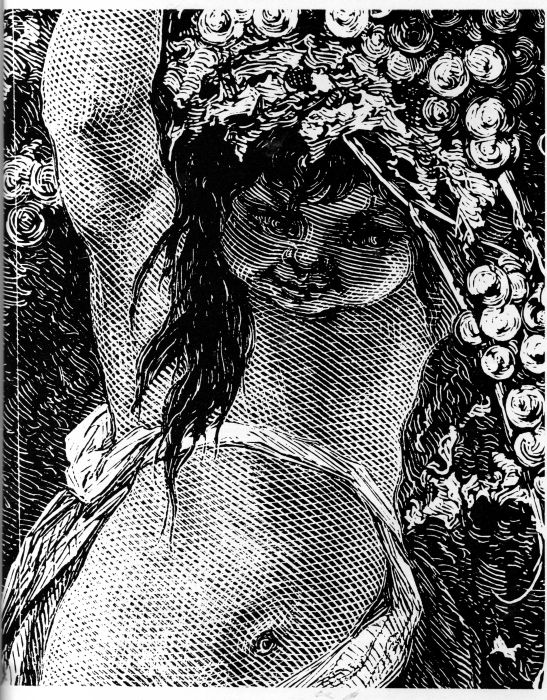
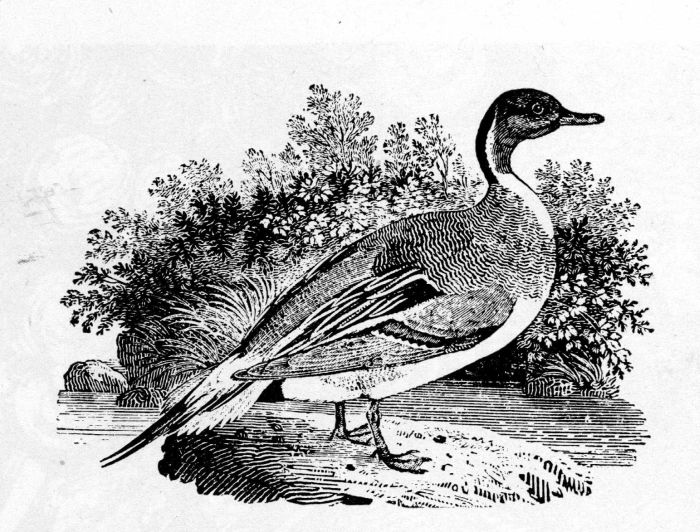
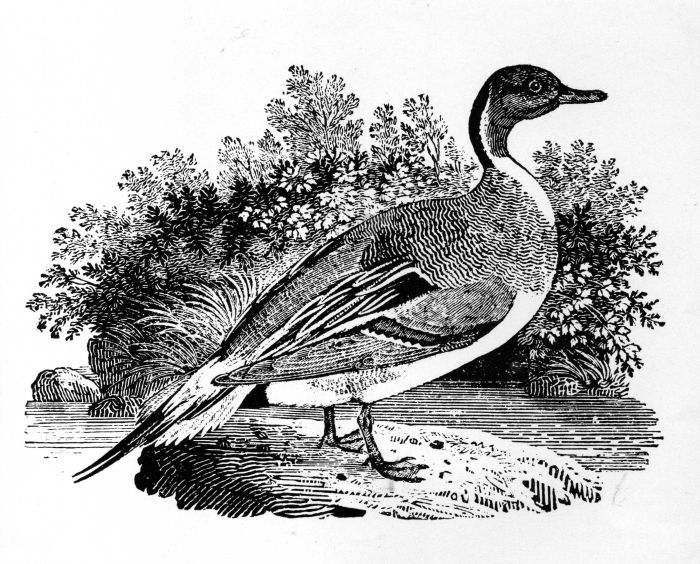
Figure 13.—"Pintail Duck" by Thomas Bewick (actual size), from History of British birds, vol. 2, 1804. The detail opposite is enlarged three times.
At about the same time the all-iron Stanhope press began to be manufactured in quantity, and shortly the new inking roller invented by the indispensable Earl came into use to supplant the old inking balls. Later in the century (there is no need to go into specific detail here) calendered and coated papers were introduced, and wood engraving on these glossy papers became a medium that could reproduce wash drawings, crayon drawings, pencil drawings, and oil paintings so faithfully that all the original textures were apparent.[30] The engraver, concerned entirely with accurate reproduction, became little more than a mechanic who rendered pictures drawn on the blocks by an artist. In time, photographic processes came to be used for transferring pictures to the blocks and eventually, of course, photomechanical halftones replaced the wood engraver altogether.
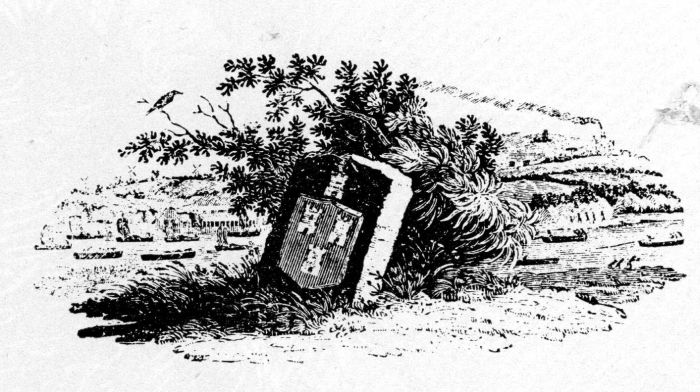
Figure 14.—Title-Page Illustration by Thomas Bewick, from History of British birds, vol. 1, 1797. (Actual size.)
Bewick was an artist, not a reproductive craftsman. His blocks were conceived as original engravings, not as imitations of tones and textures created in another medium. If wood engraving advanced in the direction of commercialism to fill an overwhelming mass need, it was only because he had given it a technical basis. But it had greater artistic potentialities, as proved by Blake, Calvert, and Lepére, among others, and has found new life in the engravers of the 20th-century revival.
The reasons for Bewick's remarkable effectiveness can now be summed up. He succeeded, first, because he was the natural inheritor of a specifically English graphic arts process, burin-engraving on the end grain of wood. This had been practiced almost solely in England, which lacked a woodcut tradition, for about 75 years before the date he finished his apprenticeship. We know from Jackson's contemporary account that end-grain wood engraving was standard practice in England from about 1700. Bewick merely continued and refined a medium that came down to him as a national tradition.
Secondly, his country isolation and lack of academic training saved him from the inanity of repeating the old decorative devices—trophies, cartouches, classical figures, Roman ruins, and other international conventions that had lost their significance by the 1780's, although a spurious classicism was still kept alive for genteel consumption and the romantic picturesque still persisted in interior decoration.
Thirdly, he looked at life and nature with a fresh eye, without preconceptions. While his lack of larger vision held him down as an artist, it contributed to his feeling for natural textures and story-telling detail. His approach to illustration, therefore, was the spontaneous expression of an observant but unimaginative nature, coated with a bitter-sweet sentiment. It was this quality, so homely and common and yet so charged with integrity, that delivered the shock of recognition to a mass audience.
Lastly, and perhaps most importantly in the long run, he was fortunate enough to live at a time when a necessary prerequisite for the physical appearance of his work, wove paper, was coming into use. Without it he would soon have had to simplify his line system, returning to older and less detailed methods, or his work would have remained unprintable. It was the new paper that allowed him to extract unprecedented subtleties from the wood block, that made his cuts print clearly and evenly, and that encouraged the expansion of the wood engraving process. These factors, taken together, make up the phenomenon of Thomas Bewick.
Figure 15.—Tailpiece by Thomas Bewick, from History of British birds, vol. 2, 1804. (Actual size.)
U. S. GOVERNMENT PRINTING OFFICE: 1959