Weather RAINS BENEFITED VEGETATION IN MANY INTERIOR DISTRICTS Conditions Mostly Favorable for Cotton—Wheat Too Far Advanced for Much Rust Damage.
Reading edition
Beneficial rains were received during the week ending Aug. 1 in many Central Valley districts, but the rainfall was of rather local character and many areas were still in need of moisture. The rainfall was especially beneficial for growing crops in Iowa, much of South Dakota, portions of Kansas, and parts of the Ohio Valley States. Vegetation was improved also in the northwestern Plains area and in many sections of the central Rocky Mountain States.
Showers brought some relief in the far Southwest, particularly in portions of Arizona and northern New Mexico, but other localities in that area were still in need of rain. Very little rain occurred from the lower Great Plains southward and the high temperatures in that area were accompanied in some localities by destructive hot winds. Late truck needed rain also in some other Southern States. Farm work made good progress generally, except for some delay, principally in north Central States, caused by heavy rainfall. Roads were mostly in good condition.
THRASHING SOMEWHAT RETARDED.
Small grains.—There was considerable rainfall during the week in many localities of the North Central States, and thrashing of small grains was retarded in this section. There was some injury to grain in shock also in portions of the upper Mississippi Valley, particularly in Iowa. East of the Mississippi River this work made generally good progress under favorable weather conditions, while harvesting of late grain and thrashing progressed rapidly in the far Northwestern States. Plowing for fall seeding showed progress in the lower Missouri Valley, the north central Great Plains States, and in some Ohio Valley districts, with the soil mostly in good condition.
Reports of black rust in spring wheat continued from the central and eastern portions of North Dakota, but the crop was too far advanced to suffer serious damage. There was some local damage by hail in Minnesota, and the condition of spring wheat is variable in that State, though on the whole it is generally fair. The crop was largely harvested in South Dakota and some thrashing was done with fair yields with the grain of good to excellent quality.
Oat and barley harvests continued in the Northeastern States, and thrashing progressed in the Ohio Valley region. The yields in the latter area were mostly disappointing. Considerable oats in shock were damaged in Iowa by molding, rotting, and sprouting due to wet weather. Oats were benefited in many of the later western districts by the showers of the week. Flax was reported in mostly good condition in South Dakota. Rice did well in California and the condition and progress of this crop was reported as good in Texas. Harvest of the early rice crop was in progress in Louisiana.
Corn.—The rainfall in the central and upper Mississippi Valley, much of the Great Plains area, and in localities of the Ohio Valley was very beneficial to corn. The late crop, however, in the lower Great Plains, in Texas, and some other southern localities needed rain badly. The condition and development of the crop were reported as excellent in all sections of Missouri and fair to very good in Iowa. Moderately heavy rains occurred in the last-named State, especially in the western portion, where moisture had been badly needed. The progress of the crop was very good in Illinois, fair to very good in Indiana generally, although it needed rain in the eastern portion of the latter State. Corn was in good condition in Ohio but needed rain in many places.
The crop was favorably affected by the weather in the Middle Atlantic States and was doing well in northeastern districts. The nights continued too cool for best development of this crop in the western upper Lake region, where growth was backward. Fields were uneven but generally fair and showed some improvement in Minnesota. Corn had mostly tasseled out to the extreme north central portion of the country. Broom corn was damaged by drought in the southern Great Plains, especially in western Oklahoma.
MOSTLY FAVORABLE FOR COTTON.
Cotton.—Cotton was favorably affected by the weather of the week except where there was a lack of moisture in the more western portion of the belt and where it was too wet in a few central and eastern localities. Moderate rainfall was the rule from the Mississippi Valley eastward, but to the westward little or no rain fell. Temperatures were somewhat above normal in the central and eastern districts and were unusually high in the northwestern portion of the belt. Sunshine was generally ample except in northeastern localities.
The crop made favorable progress in North Carolina, except where it was too wet in parts of the coastal plain. The weather was generally favorable in South Carolina, although there was too much moisture in some central counties and the plants were reported as sappy with some shedding, but fruiting fairly well generally. The week was very favorable for cotton in Georgia where very good to excellent progress was reported, and generally fair advance was indicated from Alabama.
The progress was very good in the northern and southern portions of Mississippi but less favorable where the rainfall was heavier in the central portion. Cotton showed very good development in Louisiana and most of Arkansas, the warm, dry weather being favorable in the latter State. Conditions were less favorable, however, in Texas and Oklahoma. Peanuts were shedding in the former State as a result of warm, dry weather, although the early planted crop continued in fair to good condition. The progress of the peanut crop in Texas was poor to only fair, and progress and condition were fair in Oklahoma although the plants needed rain badly in the western portion where wilting and shedding were reported.
Weevils were generally less active, particularly in the western portion of the belt, although they continued numerous in most sections and were doing considerable damage in many localities. Bolls were reported as opening rapidly in southern Georgia and picking progressed favorably. The weather was very favorable for this work in the southern portion of Texas.
Potatoes.—White potatoes made generally good progress throughout the country during the week. Showers were beneficial for the crop in many portions of the Rocky Mountain and Plateau States, except in local areas where unirrigated potatoes needed more moisture. Some damage from disease and insects was reported from comparatively small areas in the northwestern Lake region and the crop was injured in portions of the lower Great Plains by heat and drought. In some sections of the middle Atlantic coast area more moisture would have been beneficial. Digging was in progress northward to the Lake region. Planting continued in portions of the Southeast. Sweet potatoes did well generally and were reported as making excellent growth, except in Florida where they needed more rain.
Truck and miscellaneous crops.—With sufficient moisture in most of the interior Valley States, truck crops and gardens showed improvement, although they were damaged in portions of the Ohio Valley States by lack of moisture. They were unfavorably affected in a few localities of the east Gulf area. Rain was badly needed in the Southwest and unirrigated truck was suffering in the far Northwest.
Sugar beets improved in Colorado and were doing well in Utah, Wyoming, and Nebraska. The weather was favorable for tobacco in the Northeast, but this crop was injured by drought in portions of Kentucky and plants were yellowing in places in Ohio because of insufficient moisture. The weather was favorable for checking rust in the Ohio Valley localities. Sugar cane was doing well in the lower Mississippi Valley, but cane and peanuts were needing rain in Florida. In Virginia peanuts were reported as small and the fields grassy.
RAINS HELP WESTERN RANGES.
Meadows, pastures, and stock.—Alfalfa was benefited by local showers in the Central Plateau area and meadows and pastures were improved in many interior Valley States, although moisture was needed in some sections. Considerable rain fell over the northern and northwestern Great Plains and in the central Rocky Mountain districts, resulting in material improvement to ranges. There were also local showers in the far Southwest, which were beneficial, but only partial relief was brought to New Mexico, where much of the range was still slowly deteriorating and stock was thin. Ranges were further unfavorably affected by lack of rainfall in Texas, and pastures were mostly burned dry in central Oklahoma. More rain was needed in West Virginia and Pennsylvania, but pastures continued very good in the Middle Atlantic States and the Northeast. Pastures were reported short in Michigan, and while still good in Wisconsin they needed rain in many localities. Ranges were in poor condition in Minnesota.
Fruit.—There was some damage to fruit by heat and lack of moisture in Oklahoma, and some harm resulted locally from high winds in Missouri. Apples and prunes would have been benefited by rain in some of the more northwestern States. Otherwise the weather conditions were generally favorable for fruit in practically all sections of the country. Prunes and olives were sizing up nicely in California; oranges were fair to good in that State; but lemons were less satisfactory because of last winter’s freeze. Strawberry plants were favorably affected in Florida and citrus fruits were in good condition.
The Mexican bean beetle was reported as a serious pest from several counties in Tennessee.
119
Warm in Southwest during Week.
Moderate midsummer temperatures prevailed in most sections of the country during the week, except for unusually warm weather in some south central districts. Maximum temperatures were frequently above 100° in Oklahoma, western Arkansas, and northern Texas, the highest reported in this area being 104° at Oklahoma City on July 26. Chart 1, page 120, shows that for the week as a whole the temperature averaged below normal in the Northeast, some north central localities, and in most sections west of the Rocky Mountains. Elsewhere the weekly averages were above normal, being decidedly above normal in the lower Great Plains section.
Rainfall was generally of a local character during the week, with light to moderate, and in a few instances heavy, showers reported generally from the Mississippi Valley eastward, as shown by Chart 2, page 120. Good rains occurred in the northwestern Great Plains, but little or none was received from the southern Plains southward.
Average August Weather.
The last two columns of the table on this page show the normal temperature and precipitation for the month of August at the various Weather Bureau stations throughout the country. The average temperature for August differs but little from that of July, although as a rule August is slightly cooler except on the Pacific coast. East of the Rocky Mountains the coolest August weather usually occurs in the upper Lake region and the Northeastern States, where the monthly normals are about 62° to 65°. The normals are slightly above 80° in much of the Gulf coast section.
Rainfall in August is frequently of a local character, resulting largely from thunderstorms. The highest monthly averages for August vary from 6 ins. to more than 8 ins. and occur in the more southeastern States. The dry season continues over the Pacific Coast States and little or no rain is expected, except for occasional showers in the mountains and in the more northern districts. Thunderstorms during August are usually more frequent along the east Gulf coast than in any other section of the country, occurring on the average on about 20 days during the month. They are usually active also during this month in the far Southwest, this being within the season of maximum rainfall in Arizona and New Mexico and portions of the adjoining States.
Irish Flax Industry Failing.
The Irish flax industry is threatened with extinction, according to a report from the American Consul at Belfast. The area under flax for the present year amounts to only 25,000 acres, compared with 40,000 acres in 1921 and 127,193 acres in 1920.
The Irish Department of Agriculture has been urged to formulate and adopt a scheme for the improvement and maintenance of this staple industry of Northern Ireland.
Mississippi Tomato Shipments.
Mississippi’s tomato output has grown by leaps and bounds. In the spring of 1920 there were 1,360 cars shipped from that State. The 1921 movement was 1,960 cars, and this season the shipments filled approximately 3,450 cars.
WEEKLY TEMPERATURE AND PRECIPITATION——AUGUST NORMALS.
Districts and stations. Temperature. Precipitation. August normals.
Week ending Aug. 1. Week ending Aug. 1. Temperature. Precipitation.
Average. Departure from normal. Total. Departure from normal.
GULF STATES.
° ° Ins. Ins. ° Ins.
Jacksonville 84 +3 0.4 ‒1.1 80 6.2
Miami 82 0 1.6 ‒0.1 82 7.6
Key West 82 ‒2 1.5 +0.5 84 4.7
Tampa 84 +2 T. ‒2.2 81 8.6
Pensacola 82 +1 0.1 ‒1.8 81 7.2
Mobile 82 +1 0.6 ‒1.1 80 6.8
Montgomery 84 +3 0.6 ‒0.6 80 4.2
Anniston 80 +2 0.7 ‒0.7 76 4.5
Birmingham 82 +1 1.5 +0.1 79 4.5
Meridian 82 +2 2.3 +1.3 78 3.6
Vicksburg 82 +1 0.7 ‒0.3 81 3.5
New Orleans 84 +2 0.1 ‒1.0 82 5.6
Shreveport 84 +1 0.2 ‒0.7 81 2.2
Little Rock 84 +3 T. ‒1.2 79 3.6
Fort Smith 88 +7 T. ‒1.1 79 3.7
Bentonville 82 +3 0.2 ‒0.9 76 4.0
Oklahoma 88 +8 0 ‒0.7 78 3.2
Abilene 84 +1 0 ‒0.5 81 2.0
Fort Worth 88 +4 T. ‒0.6 83 1.9
Dallas 88 T.
Palestine 84 +2 T. ‒0.9 80 2.2
Taylor 86 +3 T. ‒0.7 82 2.5
Houston 84 0.1
Galveston 82 ‒1 0.1 ‒0.8 83 5.0
Corpus Christi 84 +1 T. ‒0.4 82 2.3
San Antonio 84 +1 0 ‒0.5 82 2.7
Del Rio 84 ‒2 0 ‒0.5 84 2.6
OHIO VALLEY AND TENNESSEE.
Memphis 84 +3 T. ‒0.9 79 3.2
Nashville 82 +3 0.4 ‒0.5 78 3.5
Chattanooga 82 +4 1.0 0 76 3.8
Knoxville 80 +4 T. ‒1.0 75 4.0
Lexington 78 +2 0.6 ‒0.3 75 3.6
Louisville 80 +1 1.7 +0.9 76 3.5
Evansville 82 +3 1.1 +0.3 77 3.2
Indianapolis 76 0 0.2 ‒0.7 74 3.3
Cincinnati 76 0 0.5 ‒0.3 74 3.3
Dayton 76 0 0.6 0 73 3.0
Columbus 74 ‒1 0.2 ‒0.6 73 3.2
Parkersburg 76 0 0.5 ‒0.3 73 3.5
Elkins 70 ‒1 0.9 0 68 3.6
Pittsburgh 74 ‒1 0.1 ‒0.9 73 3.2
LAKE REGION.
Canton 66 ‒3 0.1 ‒0.6 67 2.7
Syracuse 68 ‒3 T. ‒0.9 69 3.3
Oswego 68 ‒2 T. ‒0.7 69 2.7
Buffalo 70 0 0.2 ‒0.5 69 3.0
Erie 70 ‒1 1.3 +0.5 70 3.3
Cleveland 72 ‒1 0.6 ‒0.2 70 3.2
Toledo 74 +1 0.1 ‒0.6 71 2.7
Detroit 74 +2 0.2 ‒0.6 70 2.8
Saginaw 72 +1 0.8 ‒0.1 69 2.9
Alpena 66 0 0.3 ‒0.3 64 3.3
Grand Rapids 72 ‒1 0.2 ‒0.6 70 2.6
Chicago 74 ‒1 0.1 ‒0.8 73 2.9
Fort Wayne 74 0.9
Milwaukee 72 +2 0.1 ‒0.5 69 2.8
Green Bay 70 0 0.8 0 67 3.1
Escanaba 66 ‒1 2.2 +1.4 64 3.6
Ludington 68 0.3
Sault Ste. Marie 62 0 0.5 ‒0.2 61 3.1
Marquette 66 +1 0.2 ‒0.4 64 2.9
Duluth 70 +5 0.2 ‒0.6 63 3.5
UPPER MISSISSIPPI VALLEY.
St. Paul 72 0 0 ‒0.8 69 3.5
La Crosse 72 ‒1 0 ‒0.8 70 3.4
Madison 72 ‒1 0 ‒0.6 70 3.2
Charles City 70 ‒4 1.1 +0.4 71 3.4
Dubuque 72 ‒3 0.6 ‒0.3 72 3.0
Davenport 74 ‒1 0.8 +0.1 73 3.6
Des Moines 78 +2 1.2 +0.4 73 3.6
Keokuk 78 +1 0.7 ‒0.3 75 3.2
Peoria 76 +1 1.1 +0.5 72 2.9
Terre Haute 78 0.8
Springfield, Ill. 78 +2 1.0 +0.4 74 2.8
Hannibal 80 +3 0.9 +0.1 75 3.4
St. Louis 82 +2 0.7 ‒0.1 77 2.7
Cairo 84 +5 0 ‒0.9 77 2.9
PACIFIC COAST.
Tatoosh Island 52 ‒4 0 ‒0.3 55 2.1
Seattle 62 ‒2 0 ‒0.1 63 0.5
North Head 54 ‒4 T. ‒0.1 58 0.6
Portland, Oreg. 66 ‒2 0 ‒0.1 67 0.6
Roseburg 68 ‒1 0 0 68 0.3
Eureka 54 ‒2 0 0 56 0.1
Red Bluff 86 +4 0 0 80 T.
Sacramento 78 +4 0 0 73 T.
San Francisco 58 0 0 0 58 0
Fresno 84 +1 0 0 81 0
San Luis Obispo 66 +2 0 0 64 T.
Los Angeles 70 ‒1 0 0 71 0
San Diego 68 0 T. +T. 69 0
ATLANTIC COAST.
Eastport 58 ‒4 0.6 ‒0.1 61 3.3
Portland, Me. 66 ‒3 0.1 ‒0.8 66 3.6
Burlington 66 ‒2 T. ‒0.9 66 4.0
Northfield 64 ‒2 T. ‒1.1 63 3.9
Concord 66 ‒4 T. ‒1.0 67 3.7
Boston 70 ‒2 0.1 ‒0.9 70 4.0
Nantucket 66 ‒3 0.3 ‒0.4 68 3.0
New Haven 70 ‒2 0.2 ‒1.2 70 5.0
Albany 70 ‒2 0.5 ‒0.4 70 4.0
Ithaca 68 ‒3 T. ‒0.9 69 3.2
Binghamton 68 ‒2 0 ‒0.9 68 3.4
New York 70 ‒5 0.1 ‒1.2 73 4.5
Scranton 68 ‒4 2.0 +0.8 69 4.2
Harrisburg 72 ‒3 1.0 ‒0.3 72 4.2
Philadelphia 74 ‒2 T. ‒1.4 74 4.6
Trenton 72 ‒3 T. ‒1.2 73 5.4
Atlantic City 72 ‒1 0.4 ‒0.6 72 4.3
Baltimore 74 ‒4 0.3 ‒1.0 76 4.2
Washington 74 ‒3 1.4 0 74 4.4
Norfolk 78 0 1.4 ‒0.1 77 6.0
Richmond 76 ‒3 0.2 ‒0.9 78 4.4
Lynchburg 76 ‒2 0.2 ‒0.9 76 4.2
Wytheville 74 +1 0.5 ‒0.7 70 4.5
Asheville 74 +2 0.2 ‒1.0 70 4.8
Charlotte 80 +1 T. ‒1.5 77 5.6
Raleigh 78 ‒1 0.5 ‒1.2 77 5.9
Hatteras 80 +2 0.9 ‒0.5 78 5.8
Wilmington 80 +1 2.4 +0.7 78 6.5
Charleston 84 +2 1.5 ‒0.1 81 7.0
Greenville 80 0.1
Columbia, S. C. 82 +1 3.0 +1.2 80 6.8
Augusta 84 +3 T. ‒1.3 80 5.6
Atlanta 82 +4 1.2 ‒0.2 77 4.5
Macon 84 +4 T. ‒1.4 78 4.2
Savannah 84 +3 1.8 +0.3 79 7.5
Thomasville 84 +2 0.1 ‒1.2 81 5.0
MOUNTAIN REGION.
Havre 68 ‒1 0.2 ‒0.2 65 1.3
Kalispell 66 +1 T. ‒0.1 63 0.9
Helena 68 0 0.1 ‒0.1 66 0.7
Sheridan 70 +3 0.1 65
Lander 72 +3 T. ‒0.1 66 0.5
Cheyenne 68 0 0.6 +0.2 66 1.5
Grand Junction 76 ‒3 0.3 +0.1 76 1.0
Denver 74 +1 0.9 +0.5 71 1.3
Pueblo 74 ‒1 0.2 ‒0.3 72 1.6
Amarillo 80 +4 0 ‒0.5 75 2.8
El Paso 80 0 T. ‒0.4 79 1.7
Roswell 80 +1 T. ‒0.6 77 1.5
Santa Fe 68 0 0.6 0 67 2.4
Flagstaff 64 ‒1 0.9 +0.4 63 3.3
Phoenix 88 ‒3 0.1 ‒0.2 89 1.0
Yuma 90 ‒2 T. 0 90 0.4
Independence 76 ‒3 T. 0 76 0.1
Tonopah 72 ‒2 0 ‒0.1 72 0.4
Modena 70 0 0.7 +0.3 69 1.8
Salt Lake City 78 +1 0 ‒0.1 74 0.8
Reno 72 +3 T. 0 67 0.2
Winnemucca 70 ‒3 T. +T. 71 0.2
Pocatello 74 +2 T. ‒0.1 70 0.6
Boise 76 +2 T. 0 72 0.2
Lewiston 78 +3 0 ‒0.1 74 0.4
Baker 68 +2 T. ‒0.1 65 0.4
Walla Walla 76 +1 0 ‒T. 74 0.4
Spokane 72 +2 T. ‒0.1 68 0.5
MISSOURI VALLEY.
Springfield, Mo. 80 +3 2.4 +1.4 75 4.3
Columbia, Mo. 82 +5 1.2 +0.6 75 3.0
Kansas City 80 +2 T. ‒1.1 76 4.8
St. Joseph 80 0.1
Topeka 82 +4 0.6 ‒0.5 76 4.3
Iola 82 +3 0.1 ‒0.7 76 3.5
Wichita 82 +2 T. ‒0.8 78 3.1
Dodge City 82 +4 0 ‒0.7 76 2.6
Concordia 78 ‒1 0.2 ‒0.6 76 2.8
North Platte 76 +3 0.7 0 71 2.5
Lincoln 76 ‒1 1.5 +0.7 74 3.7
Omaha 76 ‒1 2.1 +1.2 74 3.6
Sioux City 74 ‒1 4.7 +3.9 73 3.0
Valentine 74 0 1.6 +0.8 71 2.8
Rapid City 70 ‒1 1.2 +0.6 69 2.1
Pierre 74 ‒2 1.0 +0.5 73 2.0
Huron 72 0 0.4 ‒0.2 69 2.6
Moorhead 74 +6 T. ‒0.6 66 3.1
Devils Lake 70 +2 0.2 ‒0.5 65 2.8
Bismarck 70 0 2.0 +1.6 67 2.0
Williston 70 0 0.9 +0.5 68 1.3
Note.—T indicates amount too small for measurement.
120
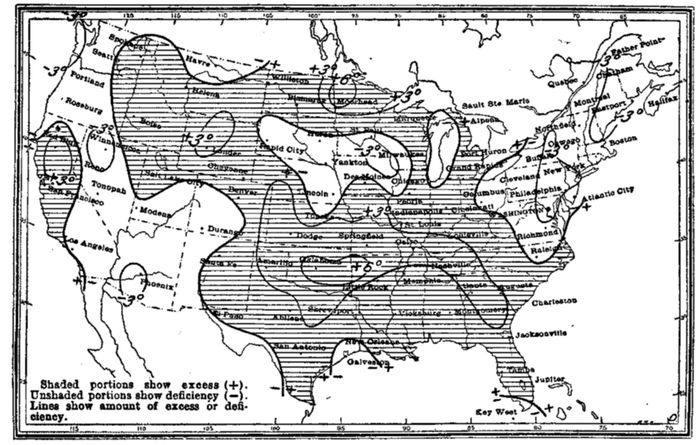
CHART 1.—DEPARTURE OF TEMPERATURE FROM THE NORMAL, WEEK ENDING 8 A. M., AUGUST 1, 1922.
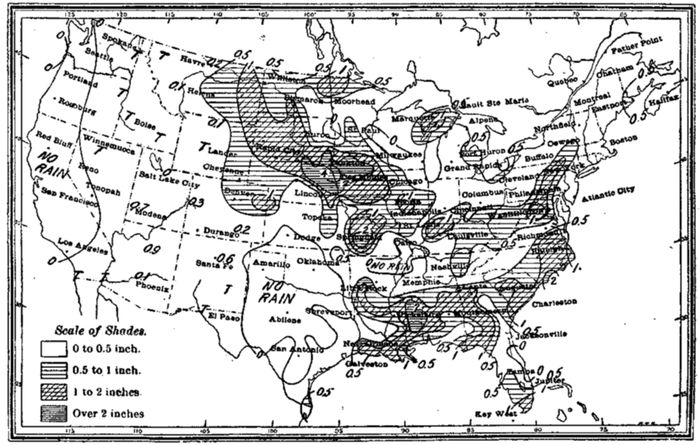
CHART 2.—PRECIPITATION, INCHES, WEEK ENDING 8 A. M., AUGUST 1, 1922.