A ROMAN WEDDING
Reading edition
63 B.C.
TRES SCAENAE
Scaena prīma: Spōnsālia
Scaena secunda: Nūptiae
Scaena tertia: Dēductiō
DRĀMATIS PERSŌNÆ
Spōnsa: Tullia
Spōnsus: Gāius Pīsō
Spōnsae pater: Mārcus Tullius Cicerō
Spōnsae māter: Terentia
Spōnsī pater: Lūcius Pīso Frūgī
Spōnsī māter
Spōnsae frāter: Mārcus Tullius Cicerō, adulēscēns
Flāmen Diālis
Pontifex Maximus
Iūris cōnsultus
Quīntus Hortēnsius
Prōnuba
Sīgnātōrēs
Tībīcinēs
Līctōrēs
Mārcipor Philotīmus Tīrō Anna Servī
A ROMAN WEDDING
SCAENA PRĪMA SPŌNSĀLIA
Let the curtain be raised, showing a room furnished as nearly as possible like the atrium of a Roman house. A bench, covered with tapestry, on each side of the stage facilitates the seating of the guests. Cicero is heard practicing an oration behind the scenes.
M. Cic. Ō rem pūblicam miserābilem! Quā rē, Quirītēs, dubitātis? Ō dī immortālēs! Ubinam gentium sumus? In quā urbe vīvimus? Quam rem pūblicam habēmus? Vīvis, et vīvis nōn ad dēpōnendam sed ad cōnfīrmandam tuam audāciam.
(Enter Terentia. A slave, Anna, follows bringing a boy’s toga, which she begins to sew, under Terentia’s direction. Another slave, Marcipor, also follows.)
Nihil agis, nihil mōlīris, nihil cōgitās quod nōn ego nōn modo audiam, sed videam. Quae cum ita sint, Catilīna, ex urbe ēgredere; patent portae, proficīscere. Māgnō mē metū līberābis dum modo inter mē atque tē mūrus intersit. Quid est enim, Catilīna, quod tē iam in hāc urbe dēlectāre possit? Quamquam quid loquor? Tē ut ūlla rēs frangat? (A crash, similar to that of falling china, is heard.)
Terentia. Quid est? Vidē, Mārcipor!
(As Marcipor is about to leave, Philotimus enters at the right, bringing in his hands the pieces of a broken vase.)
Phil. Ō domina, ecce, dominus, dum ōrātiōnem meditātur, vās quod ipse tibi ē Graeciā attulit, manūs gestū dēmōlītus est.
Terentia (groaning). Lege, Philotīme, omnia fragmenta. (Exit Phil.) Mihi, Mārcipor, fer cistam ex alabastrītā factam. (Exit Mar.) (To herself.) Tam molestum est ōrātōrī nūpsisse. (Covers her face with her hands, as if weeping.)
M. Cic. (proceeding with his practicing). Atque hōc quoque ā mē ūnō togātō factum est. Mārce Tullī, quid agis? Interfectum esse Lūcium Catilīnam iam prīdem oportēbat. Quid enim malī aut sceleris fingī aut cōgitārī potest quod ille nōn concēperit? Ō rem pūblicam fortūnātam, ō praeclāram laudem meī cōnsulātūs, sī ex vītā ille exierit! Vix feram sermōnēs hominum, sī id fēcerit. (Enter Marcipor with a small box.)
Mar. Hīc est, domina, cista tua.
Terentia (takes from her bosom a key and opens the box, taking out a package of letters, one of which she reads). “Sine tē, ō mea Terentia cārissima, sum miserrimus. Utinam domī tēcum semper manērem. Quod cum nōn possit, ad mē cotīdiē litterās scrībe. Cūrā ut valeās et ita tibi persuādē, mihi tē cārius nihil esse nec umquam fuisse. Valē, mea Terentia, quam ego vidēre videor itaque dēbilitor lacrimīs. Cūrā, cūrā tē, mea Terentia. Etiam atque etiam valē.”
Quondam litterās amantissimās scrīpsit; nunc epistolia frīgēscunt. Quondam vās mihi dedit, nunc vās mihi dēmōlītur; quondam fuit marītus, nunc est ōrātor. Tam molestum est mātrem familiās esse.
(Enter Cicero, from the right, followed by his slave Tiro, carrying a number of scrolls which he places upon a table.)
M. Cic. Quid est, Terentia? Quidnam lacrimās? Mihi dīc.
Terentia. Rēs nūllast! Modo putābam quantum mūtātus ab illō Cicerōne quī mē in mātrimōnium dūxerit, sit Cicerō quem hodiē videō. Tum Terentiae aliqua ratiō habēbātur. Nunc vacat Cicerō librīs modo et ōrātiōnibus et Catilīnae. Nescīs quantum mē hūius negōtī taedeat! Nūllum tempus habēs ad cōnsultandum mēcum dē studiīs nostrī fīliolī. Magister dē eō haec hodiē rettulit. (Hands Cicero a scroll.) Mē pudet fīlī.
M. Cic. (reading to himself the report). Dīc meō fīliō, Mārcipor, ut ad mē veniat. (Exit Marcipor, who returns bringing young Marcus.)
M. Cic. a. Quid est, pater?
M. Cic. Tua māter, mī fīlī, animum ānxium ob hanc renūntiātiōnem dē tē habet. Mē quoque, cōnsulem Rōmānum, hūius renūntiātiōnis quibusdam partibus pudet. (Reads aloud.) “Bis absēns.” Cūr, mī fīlī, ā scholā āfuistī?
M. Cic. a. Id nōn memoriā teneō.
Terentia. Sunt multa quae memoriā nōn tenēs, sī ego dē hāc renūntiātiōne iūdicāre possum.
M. Cic. (continues reading). “Tardus deciēns!” Deciēns! Id est incrēdibile! Fīlius cōnsulis Rōmānī tardus deciēns! Māter tua id nōn patī dēbuit.
Terentia (angrily). Māter tua id nōn patī dēbuit! Immō vērō pater tuus id nōn patī debuit.
M. Cic. “Ars legendī A.” Id quidem satis est. “Ars scrībendī D.” D! Id quidem minimē satis est. Nūgātor dēfuit officiō! “Fīlius tuus dīcit scrīptūram tempus longius cōnsūmere. Dēbet sē in scrībendō multum exercēre, sī scrībere modō tolerābilī discere vult. Arithmētica A. Huic studiō operam dat. Dēclāmātiō A. Omnibus facile hōc studiō antecellit.” Bene, mī fīlī. Ea pars hūius renūntiātiōnis mihi māgnopere placet. Ōrātor clārissimus ōlim eris.
Terentia. Ūnus ōrātor apud nōs satis est.
M. Cic. a. Ōrātor erō ōlim nihilō minus. Facile est ōrātōrem fierī. Dēclāmātiō est facillima. Hodiē in scholā hanc dēclāmātiōnem didicī:
Omnia tempus edāx dēpāscitur, omnia carpit, Omnia sēde movet, nīl sinit esse diū. Flūmina dēficiunt, profugum mare lītora siccant, Subsīdunt montēs et iuga celsa ruunt. Quid tam parva loquor? mōlēs pulcherrima caelī Ardēbit flammīs tōta repente suīs. Omnia mors poscit. Lēx est, nōn poena, perīre: Hīc aliquō mundus tempore nūllus erit.
Terentia. Tālis dēclāmātiō est facilis. Audī quid dē geōmetriā tuā relātum sit. Geōmetria magis quam declāmātiō ostendit utrum tū mentem exerceās.
M. Cic. (continues reading). “Geōmetria D.” Magister haec scripsit: “Fīlius tuus dīcit geōmetriam ōrātōribus inūtilem esse. Eī dīligenter domī labōrandum est.” Ō Mārce, hōc est incrēdibile! Num dīxistī tū geōmetriam ōrātōribus inūtilem esse?
M. Cic. a. Ō, studium geōmetriae mihi odiōsum ingrātumque est! Omnēs puerōs istīus taedet. Tantī nōn est!
M. Cic. Etiam sī studium tū nōn amās, geōmetriam discere dēbēs. Tibi centum sēstertiōs dabō sī summam notam in geōmetriā proximō mēnse adeptus eris.
M. Cic. a. (grasping his father’s hand). Amō tē, pater, convenit! Eam adipīscar!
Terentia (to Anna). Estne toga parāta?
Anna. Parāta est, domina.
Terentia. Hūc venī, Mārce!
M. Cic. a. Ō māter, tempus perdere nōlō. Mālō legere.
Terentia. Quid dīcis? Nōn vīs? Nōnne vīs novam togam habēre?
M. Cic. a. Nōlō. Novā mī nīl opus est. Tam fessus sum! (Picks up a scroll and is about to take a seat in the corner.)
M. Cic. Ad mātrem tuam, Mārce Cicerō, sine morā, accēde!
(Marcus is about to obey when a knock is heard at the door. Lucius Piso Frugi and Quintus Hortensius enter at the left.)
M. Cic. (greeting Q. Hortensius). Ō amīcī, salvēte! ut valētis?
Terentia (greeting L. Piso). Dī duint vōbīs quaecumque optētis. Cicerōnī modo dīcēbam nōs diū vōs nōn vidēre, praesertim tē, Pīsō. Mārcipor, ubi est Tullia? Eī dīc ut hūc veniat.
L. Piso. Nōlī Tulliam vocāre. Nunc cum parentibus Tulliae agere volō, nōn cum Tulliā ipsā.
Terentia. Nōn vīs nostram Tulliam vidēre! Quid, scīre volō?
L. Piso. Cum eā hōc tempore agere nōn cupiō. Id propter quod in vestram domum hodiē vēnī tuā, et Cicerōnis rēfert. Velim vōbīscum agere prō meō fīliō, Gāiō Pīsōne, quī fīliam tuam in mātrimōnium dūcere vult.
M. Cic. Meam fīliam in mātrimōnium dūcere! Mea Tulliola nōndum satis mātūra est ut nūbat. Mea fīlia mihi cārior vītā ipsā est. Eam āmittere . . . id nōn ferre possum. Ea lūx nostra est. Meā Tulliolā nihil umquam amābilius, nec longā vītā ac prope immortālitāte dīgnius vīdī. Nōndum annōs quattuordecim implēvit et iam ēius prūdentia est mīrābilis. Ut magistrōs amat! Quam intellegenter legit! Nōn possum verbīs exprimere quantō vulnere animō percutiar sī meam Tulliolam āmittam. Utinam penitus intellegerēs meōs sēnsūs, quanta vīs paternī sit amōris.
L. Piso. Tālia verba, Mārce Tullī, virī Rōmānī nōn propria sunt. Necesse est omnēs nostrās fīliās in mātrimōnium dēmus. Nihil aliud exspectā.
Terentia. Nostra fīlia omnibus grātissima est. Semper enim lepida et līberālis est. Iam diū sciō nōs eam nōn semper retinēre posse.
L. Piso. Rēctē, rēctē! Meus fīlius bonus est; est ōrātor. Est quoque satis dīves. Rōmae duās aedēs habet; rūre māgnificentissima vīlla est eī. Cum illō fīlia tua fēlīx erit. Id mihi persuāsum habeō. Quae cum ita sint, Mārce Tullī, sine dōte tuam fīliam meō fīliō poscō.
M. Cic. Prohibeant dī immortālēs condiciōnem ēius modī. Cum mea fīlia in mātrimōnium danda sit, nēminem cōgnōvī quī illā dīgnior sit quam tuus fīlius ēgregius.
L. Piso (shaking hands with Cicero). Ō Mārce, mī amīce, dī tē respiciant! Nunc mihi eundum est ut fīlium et sīgnātōrēs arcessam et iam hūc revertar.
(Exeunt L. Piso and Q. Hortensius.)
Terentia. Dīc, Mārcipor, servīs ut in culīnā vīnum, frūctūs, placentās parent. (Exit Marcipor.) Mārce, fīlī, sorōrem vocā.
M. Cic. a.
Tullia, ō Tullia, Soror mea bella, Amātōres tibi sunt Pīsō et Dolābella.
(Enter Tullia at the right.)
Amatne Pīsō tē, Etiam Dolābella? Tullia, ō Tullia, Soror mea bella, Pīsōnem tuum marītum fac; Nōn grātus Dolābella.
Tullia. Ō Mārce, tuī mē taedet. Quid est, māter?
Terentia. Tullia, nōnne est Gāius Pīsō tibi grātissimus?
Tullia. Ō, mihi satis placet. Cūr mē rogās, māter?
Terentia. Rogō, mea fīlia, quod Pīsō tē in mātrimōnium dūcere vult. Tibi placetne hōc?
Tullia. Mihi placet sī—
Terentia. Sī—quid, mea fīlia?
Tullia. Ō māter, nōlō nūbere. Sum fēlīx tēcum et patre et Mārcō. Vīxī tantum quattuordecim annōs. Puella diūtius esse volō, nōn māter familiās.
Terentia. Pīsō dīves est. Pater tuus nōn māgnās dīvitiās nunc habet. Meum argentum quoque cōnsūmptum est. Etiam haec domus nostra nōn diūtius erit. Quid faciāmus sī tū nōn bene nūbēs?
Tullia. Sciō patrem meum nōn māgnās possessiōnēs habēre; quid vērō, māter? Servīlia, Lūcullī spōnsa, quī modo rediit spoliīs Orientis onustus, semper suam fortūnam queritur. Misera Lūcullum ōdit ac dētestātur. Hesternō diē meīs auribus Servīliam haec verba dīcere audīvī: “Mē miseram! Īnfēlīcissimam vītam! Fēminam maestam! quid faciam? Mihi dēlēctus est marītus ōdiōsus. Nēmō rogāvit quī vir mihi maximē placeat. Coniugem novum ōderō, id certum est. Prae lacrimīs nōn iam loquī possum.” Ō māter! ego sum aequē trīstis ac Servīlia. Nōlō Gāiō Pīsōnī nūbere. Nūllī hominī, neque Rōmānō neque peregrīnō, quem vīderim, nūbere volō.
Terentia. Tullia, mea fīlia, mātris et nostrae domūs miserēre! Hodiē pater ā mē argentum postulābat quod eī dare nōn poteram. Pīsō dītissimus est et nōbīs auxiliō esse potest. Parentum tuōrum causā tē ōrō nē hunc ēgregium adulēscentem aspernēris.
Tullia. Ō Servīliam et Tulliam, ambās miserās! Quid dīcis tū, mī pater? Vīs tū quoque mē in mātrimōnium dare?
M. Cic. Ō mea Tulliola, mē nōlī rogāre. Nescīs quantum ego tē amem. Sine tē vīvere nōn poterō. Id mihi persuāsum habeō. Putō tamen, sī pācem apud nōs habēre velīmus, tē mātris iussa sequī necesse esse.
Tullia. Volō, mī pater, tē pācem habēre. Tua vīta tam perturbāta fuit. Nūbam, sed ō mē miseram!
(A knock is heard. Enter from the left L. Piso, Gaius Piso, and the signatores. They are greeted by Cicero and Terentia and seated by slaves.)
Terentia (as she receives them). Multum salvēte, ō amīcī. Tulliae vix persuādēre poteram, tamen nōn iam invīta est.
L. Piso. Bene, bene, hīc est mihi diēs grātissimus. Parāta sunt omnia?
Terentia. Omnia parāta sunt, sed iūris cōnsultus nōndum vēnit.
L. Piso. Ille quidem ad tempus adesse pollicitus est.
Terentia. Id spērō. Tībīcinēs, Mārcipor, hūc arcesse. (Enter Q. Hortensius and his wife, together with the pronuba and the iuris consultus.) Salvēte, meī amīcī. Adsīdite sī placet.
Iuris con. Sī mihi veniam dabitis, nōn diū morārī velim. Īnstāns negōtium mē in forō flāgitat. Mihi mātūrandum est. (Goes to a table with M. Cicero and busies himself with the tabulae nuptiales.)
L. Piso. Mātūrēmus! Gāī et Tullia, ad mē venīte! (To Cicero.) Spondēsne Tulliam, tuam fīliam, meō fīliō uxōrem darī?
M. Cic. Dī bene vertant! Spondeō.
L. Piso. Dī bene vertant!
G. Piso (placing a ring on the fourth finger of Tullia’s left hand). Hunc ānulum quī meum longum amōrem testētur aceipe. Manum, Tullia, tibi dō, et vim bracchiōrum et celeritātem pedum et glōriam meōrum patrum. Tē amō, pulchra puella. Tē ūnam semper amābō. Mihi es tū cārior omnibus quae in terrā caelōque sunt. Fēlīcēs semper sīmus!
Iuris con. Tabulae nūptiālēs sunt parātae et ecce condiciōnēs. (Reads.) “Hōc diē, prīdiē Īdūs Aprīlēs, annō sescentēsimō nōnāgēsimō prīmō post Rōmam conditam, M. Tulliō Cicerōne Gāiō Antōniō cōnsulibus, ego M. Tullius Cicerō meam fīliam Tulliam Gāiō Calpurniō Lūcī fīliō Pīsōnī spondeō. Eam cum dōte dare spondeō. Ea dōs erit quīndecim mīlia sēstertium.” (Turning to Gaius.) Gāī Pīsō, spondēsne tē Tulliam semper amātūrum cultūrumque?
Gr. Piso. Id spondeō.
Iuris con. Spondēsne tū, Tullia, tē Gāiō Pīsōnī semper obsecutūram esse?
Tullia. Id spondeō.
Iuris con. (stamping the tabulae with a seal). Nuc subscrībite! Tū prīmus, Cicerō, deinde Terentia et Tullia et Gāius.
(The tibicines play softly and the servi pass wine, dried fruit, and small cakes. Tullia, taking her glass of wine, steps forward and pours a little out as an offering to the gods. After the witnesses have signed in turn, the following words of congratulation are spoken.)
Q. Hor. Beātī vīvātis, Pīsō et Tullia! Omnēs spōnsō et spōnsae salūtem propīnēmus! (All drink to the health of the betrothed.)
M. Cic. a. Sint dī semper volentēs propitiīque ipsīs domuī familiaeque. Sit vōbīs fortūna benīgna!
M. Cic. Tibi grātulor, Pīsō. Tū pulcherrimam et optimam puellam tōtīus Rōmae adeptus es.
Pronuba. Ō fortūnāte adulēscēns quī tālem puellam invēnerīs!
Iuris con. Sīgnāvēruntne omnēs? Tū, Quīnte Hortēnsī, nōndum subscrīpsistī.
Q. Hor. Id statim faciam. (Signs.)
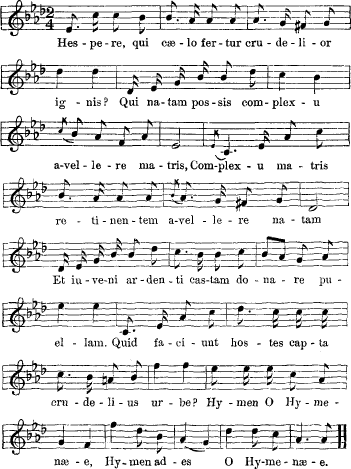
Pronuba. Nunc omnēs cantēmus!
(All join in singing, accompanied by the tibicines.)
Listen to music Music in PDF format
SECUNDA SCAENA NŪPTIAE
The house is adorned with wool, flowers, tapestry, and boughs.
The Pontifex Maximus (wearing a white fillet) and the Flamen Dialis enter from opposite sides, each preceded by a lictor with fasces, who remains standing at the side of the stage, while the priests pass on to the altar. The Flamen burns incense. A slave brings in a pigeon on a silver tray and hands it to the Flamen, while another hands to the Pontifex from a basket a plate of meal and one with crackers.
The priests, taking respectively the bird and the meal, hold them high above their heads and look up devoutly, after which the bridal party enters, from the left, in the following order:
The bride, preceded by the pronuba, comes first. Both take their places, standing at the right of the altar; next the groom, preceded by the boys, takes his stand near the bride, a little to the left; the guests follow and are seated.
Cicero hands wine to the priests, with which they sprinkle the sacrifices.
As the Flamen again looks up and raises his hands above his head, all kneel except the priests and lictors, while he pronounces the following solemn words:
Auspicia secunda sunt. Māgna grātia dīs immortālibus habenda est. Auspicia secunda sunt.
After all have risen, the pronuba, placing her hands upon the shoulder of the bride and groom, conducts them to the front of the altar. There she joins their hands and they walk around the altar twice, hand in hand, stopping in front when the ceremony proper begins.
Again the Flamen says:
Auspicia secunda sunt.
The Pontifex hands the groom a cracker, of which he partakes, passing it on to the bride. The pronuba puts back the veil, and after the bride has eaten the cracker she says to the groom:
Ubi tū Gāius, ego Gāia.
Both are then conducted by the pronuba to two chairs, placed side by side, at the right of the altar, covered with the skin of a sheep. They face the altar and the pronuba covers their heads with a large veil. (Place the same veil over both.)
Pontifex Maximus (making an offering of meal to Jupiter).
Iuppiter omnipotēns dīvum pater atque hominum rēx, Hōs spōnsōs bene respiciās, faveāsque per annōs. Iuppiter omnipotēns, precibus sī flecteris ūllīs Aspice eōs, hōc tantum, et sī pietāte merentur, Dā cursum vītae iūcundum et commoda sparge Multa manū plēnā; vīrēs validāsque per mensēs Hī habeant, puerōs pulchrōs fortēsque nepōtēs. Rēbus iūcundīs quibus adsīs Iuppiter semper.
Flamen Dialis.
Iūnō quae incēdis dīvum rēgīna Iovisque Coniunx et soror, hōs spōnsōs servā atque tuēre. Sint et fēlīcēs, fortēs, pietāte suprēmī; Māgnā cum virtūte incēdant omnibus annīs, Semper fortūnātī, semper et usque beātī.
(The pronuba now uncovers the heads of the wedded pair and they receive congratulations.)
L. Piso. Beātī vīvātis, Gāī et Tullia!
Terentia. Vōbīs sint dī semper faustī!
M. Cic. a. Vōbīs ambōbus grātulor. Sed nūlla rēs levis est mātrimōnium. Quid, Tullia?
Tullia. Rēctē dīcis, frāter, mātrimōnium nōn in levī habendum est.
M. Cic. Sint omnēs diēs fēlīcēs aequē ac hīc diēs.
Pronuba. Spērō, meī amīcī, omnēs diēs vōbīs laetissimōs futūrōs esse.
(The curtain falls. The priests and lictors retire, all the rest, except Terentia and Tullia, keeping the same position for the next scene.)
SCAENA TERTIA DĒDUCTIŌ
The guests are sitting about the room. The bride is sitting on her mother’s lap. Her wedding ornaments have been taken off and she is closely veiled. The groom takes her as if by force from her mother’s arms.
Tullia. Ō māter, māter, nōlō ā tē et patre meō discēdere. Ō, mē miseram!
Terentia. Ī, fīlia, ī! Saepe tuōs parentēs et frātrem vīsere poteris. Necesse est nunc cum marītō eās.
G. Piso. Mihi, Tullia, cārior vītā es. Tē nōn pigēbit coniugem meam fierī. Id polliceor. Mēcum venī, Tullia cārissima!
Tullia. Sīc estō. Prius mustāceum edendum est. (She cuts the wedding cake and all partake.)
L. Pisonis uxor. Hōc mustāceum optimum est. Hōc fēcistīne tū, Tullia?
Tullia. Nihil temporis habēbam quō mustāceum facerem. Multa mihi ūnō tempore agenda erant.
Terentia. Tullia mustāceum facere potest sī spatium datur.
M. Cic. a. (taking another piece of cake). Tullia est dēliciae puellae. Sī ūnum modo mustāceum habēmus, ad novam domum Tulliae proficīscāmur.
(Others cry out) Eāmus!
The curtain falls. A frame to represent the door of a Roman house is placed to the left of the stage; a small altar stands at the right: a circular piece of wood with holes bored in it as a receptacle for the torches (common wax candles) is placed on top of the altar used by the priests. The procession to the groom’s house advances from the left in the following order:
The flute-players first, followed by a lad carrying a torch and vase; next the bride, supported on either side by a boy; the groom, throwing nuts to those in the street, walks at the side; a boy follows, carrying the bride’s spindle; the others follow, two by two, all carrying torches and singing:
Hespere, quī caelō fertur crūdēlior īgnis? Quī nātam possīs complexū āvellere mātris, Complexū mātris retinentem āvellere nātam Et iuvenī ārdentī castam dōnāre puellam. Quid faciunt hostēs captā crūdēlius urbe? Hȳmēn ō Hymenaee, Hȳmēn ades ō Hymenaee.
When the groom’s house is reached, the bride winds the door posts with woolen bands and anoints them with oil to signify health and plenty. She is then lifted over the threshold by two boys to prevent possible stumbling. The groom, Cicero, Terentia, L. Piso and his wife, enter the house and place their torches on the altar; the others remain standing outside. All continue singing, accompanied by the flute-players, until after the groom hands to the bride a dish, on which incense is burning, and a bowl of water, which both touch in token of mutual purity, and Tullia again repeats the words:
Ubi tū Gāius, ego Gāia.
G. Piso (presenting to her the keys, which she fastens in her girdle). Sit fēlīx nostra vīta! Clāvēs meae domūs, mea uxor, accipe!
Tullia kindles the fire on the altar with her torch, and then throws it to a girl outside. The girl who catches the torch exclaims:
Ō, mē fēlicissimam! proxima Tulliae nūbam.
(Tullia kneels at the altar and offers prayer to Juno.)
Iūnō, es auctor mūnerum, Iūnō, māter omnium, Nōbīs dā nunc gaudium. Iūnō, adiūtrīx es hominum, Iūnō, summa caelitum, Nōbis sīs auxilium.
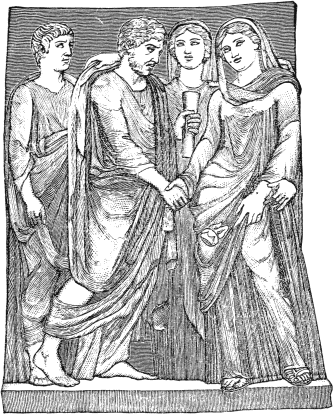
Roman Marriage
COSTUMES AND SUGGESTIONS
The bride wears a white dress trimmed with purple fringe, a girdle of crimson wool, and a long yellow veil. She has on many bright-colored ribbons, many bracelets and rings, and high yellow shoes with buckles. Her hair is arranged in six locks parted by the point of a spear and held in place by vittae or bands.
The Pontifex should have a band of purple three inches wide around the bottom of his toga.
The boys should wear straight robes reaching to the knee and gathered at the shoulders. The garb of the statue “Diana of the Hind” is a good illustration.
The slaves wear bright-colored tunics reaching to the knees.
Valuable suggestions may be found in Johnston’s “Private Life of the Romans,” “Harper’s Dictionary of Classical Antiquities,” and Harper’s Magazine, Vol. 46.
The individual parts should be thoroughly learned and practiced before a full rehearsal is attempted.
Especial emphasis should be placed upon the necessity of reciting the parts slowly and distinctly.
The signing of the tabulae nuptiales was a part of the nuptiae, but it has been introduced during the sponsalia to give better balance to the play. Wherever permissible, very simple Latin has been used in order to render the task of memorizing as easy as possible.