Manufacture of Cider Vinegar from Minnesota Apples.
Reading edition
PROF. W. G. BRIERLY, HORT. DEPT., UNIVERSITY FARM, ST. PAUL.
Cider making is an old process, carried on in a small way on the farm or more extensively in the commercial "quick process." From apple cider many different products are obtained, chief of these being vinegar and others being bottled cider, boiled cider, apple butter and, more recently, concentrated cider and cider syrup. This discussion will consider only the manufacture of vinegar.
As a farm process, the making of cider vinegar utilizes an otherwise waste product, the culls or unmarketable varieties. It can be done on rainy days or when other work is slack. For the best results, however, as in any form of marketing, some vinegar should be made each year so that the market may be supplied regularly, and, further, to give the necessary experience which will mean a better quality of vinegar.
As a commercial process we find the making of cider is a regularly conducted manufacturing enterprise in which a considerable amount of capital is needed. Expert knowledge of vinegar making, especially of the "quick process," is essential. On this basis it is not open to the apple grower and is a doubtful venture on a co-operative plan without the help of experts. Where a vinegar factory is established, however, it gives to the orchardist a means to dispose of his cull apples.
Considering the process as it can be carried on on the farm, there are a number of distinct steps, all of which are important. The first step is to prepare for the work. Get a good machine, as it will pay for itself in the added extract of juice. A good machine need not cost more than $25 and may be had for less. Casks must be obtained and sterilized with live steam or sulphur fumes, washed thoroughly, and kept in a convenient place where they will not dry. It is best as well to have the convenience of running water to wash the apples if dirty and to clean up the machine occasionally. Cleanliness should be provided for and insisted upon, as dirty and decaying apples not only give undesirable flavors, but the bacteria and molds feed upon the sugar in the cider and greatly reduce the strength of the vinegar. This is one reason why a rainy day is a good time for cider making, as dust and flies are less and molds are not so abundantly "planted" in the cider.
The next step is the grinding and pressing and is very simple. With an efficient machine the cider is quickly ready for the casks.
Then follows the first fermentation, which very frequently is not properly managed, and poor vinegar results. The casks should be filled only two-thirds full, the bung left open but screened with cheesecloth or lightly fitted with a plug of cotton to admit air. Compressed yeast generally should be added, at the rate of one cake to each five gallons, first mixing the yeast in lukewarm water. If the cask is then placed in a warm place, at least sixty degrees—seventy degrees or more being better—we have the three requirements of proper fermentation, namely, air, warmth and yeast. This will give rapid fermentation, which will reduce the loss of sugars to a minimum. This fermentation should be allowed to go on until completed. If vinegar starts to form it will usually leave a residue of sugar and give a weaker vinegar. It will require from two weeks to a year to change all the sugars into alcohol, depending upon the management of the work. When finished the clear juice is "racked" or siphoned into a clean cask, through a straining cloth to insure the removal of all pomace or sediment.
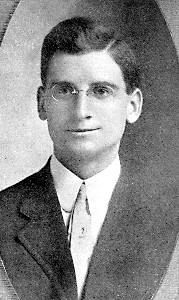
Prof. W. G. Brierly, Horticultural Dept., University Farm, St. Paul, Minn.
Then follows the fermentation to produce the acetic acid and finish the vinegar. A "starter" of "mother" can be used, but it is best to take out a gallon or more of the cider when "racking" and add a pint to a quart of a good grade cider vinegar. Let it stand in a warm place, well covered with cheesecloth, and in from four to ten days a granular, brownish cake should begin to form. This starter can then be put directly into the casks, a pint or more to each cask. If the starter develops a white, slimy coat, throw it out and start again. For all of this second stage of fermentation follow the same plan as at first. Fill the barrels not over two-thirds full, use a cotton plug or cheesecloth screen at the bung and keep at a warm temperature. The essentials again are air and warmth, with a good vinegar starter. Under these conditions the vinegar may be ready in from two to ten months. If the usual plan of "natural" fermentation is followed, and the cask is kept at a low temperature, it may be three years before the vinegar is ready.
When the vinegar seems to be completed, send a sample to the State Dairy and Food Commission at the Capitol for analysis. If they say it is completed, "rack" off and strain again into clean barrels, this time filling full and driving in the bung. This will prevent loss from evaporation, and the vinegar can be sold at any time. The state law requires that cider vinegars sold in the state measure up to a certain standard—namely, four per cent. of acetic acid, 1.6 grams per 100 cc. of solids, and .25 grams per 100 cc. of ash.
So much for vinegar making in general. For Minnesota conditions little is known about the definite behavior of any apple varieties. This has led to the study of vinegar making as a problem for the Experiment Station. The Division of Horticulture is carrying on variety tests to determine the yields of juice at different stages of maturity, the efficiency of types of presses, labor costs per gallon, and the production of vinegar from each variety to determine its value. The Division of Agricultural Chemistry makes analyses of the sweet cider to determine the composition and vinegar prospects, and also analyzes the vinegars at various stages. The work has been carried on for two seasons and is showing some interesting facts. These must, however, be checked with further work before definite statements can be published.
As to machines, our results show that the press with press cloths will outyield nearly two to one the press with the barrel or drum. However, a strong grain sack used to catch the pomace and used to confine it in the drum will give a very satisfactory yield, but it requires a considerable amount of labor to do this.
As to labor costs per gallon, we have as yet no definite figures except that one man can grind and press a minimum of eight to nine gallons an hour. Two men can raise the output to at least thirteen gallons. At 25 cents per hour the cost per gallon on this basis varies between two and four cents. As the apples are of little value, and the labor generally "rainy day" labor, this seems to give an inexpensive product.
Our vinegars are as yet incomplete. The run of 1914 was very limited and of necessity stored in a cold cellar. It now tests two per cent. acetic acid, so is only half finished.
As to variety yields, the results of the work of two seasons compare very closely and show generally that there is a variation from a minimum of a scant two gallons up to more than a pint over three gallons from forty pounds of each variety. The forty-pound quantity is taken as representative of the bushel by measure. The varieties leading cider production are—the Hibernal and Wealthy, which generally have given us about three gallons per forty pounds, the Duchess and Patten running slightly lower in cider yield. The Longfield, Lowland Raspberry, Charlamoff and Whitney rank in a third group, according to our trials. This does not mean, however, that those in the latter group are not usable, as the Charlamoff and Whitney are among the highest in sugar content. These figures are greatly modified if the apples have been in storage or are over-ripe.
The chemical analyses of the ciders show that, in general, Minnesota apples do not contain relatively high percentages of sugars. This varies with the season and increases with maturity. The highest total sugar content in ripe apples has been found in the Charlamoff at 9.25 per cent., followed in order by Whitney, 9.08 per cent., Wealthy 8.81 per cent., Duchess 8.60 per cent., Patten 8.21 per cent., Hibernal 7.85 per cent., and Longfield at 7.17 per cent. The significance of these figures is seen when the statement is made that it usually takes two per cent. sugars to make one per cent. of acetic acid. With the majority of our apples we must work carefully, or the vinegar will not meet the state standard of four per cent. acetic acid. This is further substantiated by the report of the State Dairy and Food Commission that the vinegar samples sent to them rarely come up to the standard.
From the data as we now have it we cannot draw definite conclusions, but in general it is safe to say that the making of vinegar from Minnesota apples is done on a close margin. This will mean careful work to get the most out of the fermentation, the use of yeast, warm cellars or store rooms and proper management of the casks as to filling and the entrance of air. The work is not expensive. There is a good demand for really good vinegar, and a market is provided for fruit which could not readily be sold in any other form.