ECLOGUES.
Jeremiah Holmes Wiffen translation
Dum sint volucres, Lasse, Cupidines, Dum cura dulcis, dum lachrymæ leves, Blandæque amatorum querelæ, Silvicolis amor et magistris; Vivent labores, et numeri tui, Dulcesque cantus; nec fuga temporis Obliviosi, nec profani Vis rapiet violenta Fati: Sive è supremis axibus ætheris Nos triste vulgus despicis, aureâ Seu fistulâ doces Elisam Elysias resonare sylvas.
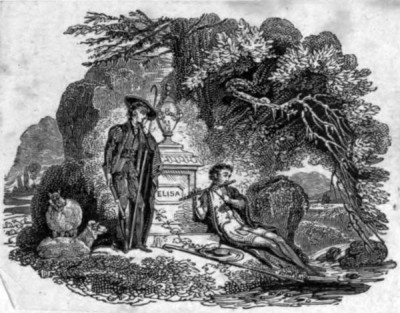
ECLOGUE I. TO DON PEDRO DE TOLEDO, VICEROY OF NAPLES.
SALICIO, NEMOROSO.
The sweet lament of two Castilian swains, Salicio's love and Nemoroso's tears, In sympathy I sing, to whose loved strains Their flocks, of food forgetful, crowding round, Were most attentive: Pride of Spanish peers! Who, by thy splendid deeds, hast gained a name And rank on earth unrivalled,—whether crowned With cares, Alvano, wielding now the rod Of empire, now the dreadful bolts that tame Strong kings, in motion to the trumpet's sound, Express vicegerent of the Thracian God; Or whether, from the cumbrous burden freed Of state affairs, thou seek'st the echoing plain, Chasing, upon thy spirited fleet steed, The trembling stag that bounds abroad, in vain Lengthening out life,—though deeply now engrossed By cares, I hope, so soon as I regain The leisure I have lost, To celebrate, with my recording quill, Thy virtues and brave deeds, a starry sum, Ere grief, or age, or silent death turn chill My poesy's warm pulse, and I become Nothing to thee, whose worth the nations blaze, Failing thy sight, and songless in thy praise. But till that day, predestined by the Muse, Appears to cancel the memorial dues Owed to thy glory and renown—a claim Not only upon me, but which belongs To all fine spirits that transmit to fame Ennobling deeds in monumental songs,— Let the green laurel whose victorious boughs Clasp in endearment thine illustrious brows, To the weak ivy give permissive place, Which, rooted in thy shade, thou first of trees, May hope by slow degrees To tower aloft, supported by thy praise; Since Time to thee sublimer strains shall bring, Hark to my shepherds, as they sit and sing. The sun, from rosy billows risen, had rayed With gold the mountain tops, when at the foot Of a tall beech romantic, whose green shade Fell on a brook, that, sweet-voiced as a lute, Through lively pastures wound its sparkling way, Sad on the daisied turf Salicio lay; And with a voice in concord to the sound Of all the many winds, and waters round, As o'er the mossy stones they swiftly stole, Poured forth in melancholy song his soul Of sorrow with a fall So sweet, and aye so mildly musical, None could have thought that she whose seeming guile Had caused his anguish, absent was the while, But that in very deed the unhappy youth Did, face to face, upbraid her questioned truth.
SALICIO.
More hard than marble to my mild complaints, And to the lively flame with which I glow, Cold, Galatea, cold as winter snow! I feel that I must die, my spirit faints, And dreads continuing life; for, alienate From thee, life sinks into a weary weight, To be shook off with pleasure; from all eyes I shrink, ev'n from myself despised I turn, And left by her for whom alone I yearn, My cheek is tinged with crimson; heart of ice! Dost thou the worshipped mistress scorn to be Of one whose cherished guest thou ever art; Not being able for an hour to free Thine image from my heart? This dost thou scorn? in gentleness of woe Flow forth, my tears, 'tis meet that ye should flow! The sun shoots forth the arrows of his light O'er hills and valleys, wakening to fresh birth The birds, and animals, and tribes of earth, That through the crystal air pursue their flight, That o'er the verdant vale and craggy height In perfect liberty and safety feed, That with the present sun afresh proceed To the due toils of life, As their own wants or inclinations lead; This wretched spirit is alone at strife With peace, in tears at eve, in tears when bright The morning breaks; in gentleness of woe, Flow forth my tears, 'tis meet that ye should flow! And thou, without one pensive memory Of this my life, without the slightest sign Of pity for my pangs, dost thou consign To the stray winds, ungrateful, every tie Of love and faith, which thou didst vow should be Locked in thy soul eternally for me? Oh righteous Gods! if from on high ye view This false, this perjured maid Work the destruction of a friend so true, Why leave her crime of justice unrepaid? Dying I am with hopeless, sharp concern; If to tried friendship this is the return She makes, with what will she requite her foe? Flow forth, my tears, 'tis meet that ye should flow! Through thee the silence of the shaded glen, Through thee the horror of the lonely mountain Pleased me no less than the resort of men; The breeze, the summer wood, and lucid fountain, The purple rose, white lily of the lake, Were sweet for thy sweet sake; For thee the fragrant primrose, dropt with dew, Was wished when first it blew! Oh how completely was I in all this Myself deceiving! oh the different part That thou wert acting, covering with a kiss Of seeming love, the traitor in thy heart! This my severe misfortune, long ago, Did the soothsaying raven, sailing by On the black storm, with hoarse sinister cry, Clearly presage; in gentleness of woe, Flow forth, my tears, 'tis meet that ye should flow! How oft, when slumbering in the forest brown, (Deeming it Fancy's mystical deceit,) Have I beheld my fate in dreams foreshown! One day, methought that from the noontide heat I drove my flocks to drink of Tagus' flood, And, under curtain of its bordering wood, Take my cool siesta; but, arrived, the stream, I know not by what magic, changed its track, And in new channels, by an unused way, Rolled its warped waters back; Whilst I, scorched, melting with the heat extreme, Went ever following in their flight, astray, The wizard waves; in gentleness of woe, Flow forth, my tears, 'tis meet that ye should flow! In the charmed ear of what beloved youth Sounds thy sweet voice? on whom revolvest thou Thy beautiful blue eyes? on whose proved truth Anchors thy broken faith? who presses now Thy laughing lip, and hopes thy heaven of charms, Locked in the' embraces of thy two white arms? Say thou, for whom hast thou so rudely left My love, or stolen, who triumphs in the theft? I have not yet a bosom so untrue To feeling, nor a heart of stone, to view My darling ivy, torn from me, take root Against another wall or prosperous pine, To see my virgin vine Around another elm in marriage hang Its curling tendrils and empurpled fruit, Without the torture of a jealous pang, Ev'n to the loss of life; in gentle woe, Flow forth, my tears, 'tis meet that ye should flow! What may not now be looked for to take place In any certain or uncertain case? What are too adverse now to join, too wild For love to fear, too dissonant to agree? What faith is too secure to be beguiled? Matter for all thus being given by thee. A signal proof didst thou, when, rude and cold, Thou left'st my bleeding heart to break, present To all loved youths and maids Whom heaven in its blue beauty overshades, That ev'n the most secure have cause to fear The loss of that which they as sweet or dear Cherish the most; in gentleness of woe, Flow forth, my tears, 'tis meet that ye should flow! Thou hast giv'n room for hope that now the mind May work impossibilities most strange, And jarring natures in concordance bind; Transferring thus from me to him thy hand And fickle heart in such swift interchange, As ever must be voiced from land to land. Now let mild lambs in nuptial fondness range With savage wolves from forest brake to brake; Now let the subtle snake In curled caresses nest with simple doves, Harming them not, for in your ghastly loves Difference is yet more great; in gentle woe, Flow forth, my tears, 'tis meet that ye should flow! My dairies always with new milk abound, Summer and winter, all my vats run o'er With richest creams, and my superfluous store Of cheese and butter is afar renowned; With as sweet songs have I amused thine ear As could the Mantuan Tityrus of yore, And more to be admired; nor am I, dear, If well observed, or so uncouth or grim, For in the watery looking-glass below My image I can see—a shape and face I surely never would exchange with him Who joys in my disgrace; My fate I might exchange; in gentle woe, Flow forth, my tears, 'tis meet that ye should flow! How have I fallen in such contempt, how grown So suddenly detested, or in what Attentions have I failed thee? wert thou not Under the power of some malignant spell, My worth and consequence were known too well; I should be held in pleasurable esteem, Nor left thus in divorce, alone—alone! Hast thou not heard, when fierce the Dogstar smites These plains with heat and drouth, What countless flocks to Cuenca's thymy heights Yearly I drive, and in the winter breme, To the warm valleys of the sheltering south? But what avails my wealth if I decay, And in perpetual sorrow weep away My years of youth! in gentleness of woe, Flow forth, my tears, 'tis meet that ye should flow! Over my griefs the mossy stones relent Their natural durity, and break; the trees Bend down their weeping boughs without a breeze, And full of tenderness, the listening birds, Warbling in different notes, with me lament, And warbling prophesy my death; the herds That in the green meads hang their heads at eve, Wearied, and worn, and faint, The necessary sweets of slumber leave, And low, and listen to my wild complaint. Thou only steel'st thy bosom to my cries, Not ev'n once rolling thine angelic eyes On him thy harshness kills; in gentle woe, Flow forth, my tears, 'tis meet that ye should flow! But though thou wilt not come for my sad sake, Leave not the landscape thou hast held so dear; Thou may'st come freely now, without the fear Of meeting me, for though my heart should break, Where late forsaken I will now forsake. Come then, if this alone detains thee, here Are meadows full of verdure, myrtles, bays, Woodlands, and lawns, and running waters clear, Beloved in other days, To which, bedewed with many a bitter tear, I sing my last of lays. These scenes perhaps, when I am far removed, At ease thou wilt frequent With him who rifled me of all I loved; Enough! my strength is spent; And leaving thee in his desired embrace, It is not much to leave him this sweet place. Here ceased the youth his Doric madrigal, And sighing, with his last laments let fall A shower of tears; the solemn mountains round, Indulgent of his sorrow, tossed the sound Melodious from romantic steep to steep, In mild responses deep; Sweet Echo, starting from her couch of moss, Lengthened the dirge, and tenderest Philomel, As pierced with grief and pity at his loss, Warbled divine reply, nor seemed to trill Less than Jove's nectar from her mournful bill. What Nemoroso sang in sequel, tell Ye, sweet-voiced Sirens of the sacred hill! Too high the strain, too weak my groveling reed, For me to dare proceed.
NEMOROSO.
Smooth-sliding waters, pure and crystalline! Trees, that reflect your image in their breast! Green pastures, full of fountains and fresh shades! Birds, that here scatter your sweet serenades! Mosses, and reverend ivies serpentine, That wreathe your verdurous arms round beech and pine, And, climbing, crown their crest! Can I forget, ere grief my spirit changed, With what delicious ease and pure content Your peace I wooed, your solitudes I ranged, Enchanted and refreshed where'er I went! How many blissful noons I here have spent In luxury of slumber, couched on flowers, And with my own fond fancies, from a boy, Discoursed away the hours, Discovering nought in your delightful bowers, But golden dreams, and memories fraught with joy! And in this very valley where I now Grow sad, and droop, and languish, have I lain At ease, with happy heart and placid brow; Oh pleasure fragile, fugitive, and vain! Here, I remember, waking once at noon, I saw Eliza standing at my side; Oh cruel fate! oh finespun web, too soon By Death's sharp scissors clipt! sweet, suffering bride, In womanhood's most interesting prime, Cut off, before thy time! How much more suited had his surly stroke Been to the strong thread of my weary life! Stronger than steel, since in the parting strife From thee, it has not broke. Where are the eloquent mild eyes that drew My heart where'er they wandered? where the hand, White, delicate, and pure as melting dew, Filled with the spoils that, proud of thy command, My feelings paid in tribute? the bright hair That paled the shining gold, that did contemn The glorious opal as a meaner gem, The bosom's ivory apples, where, ah where? Where now the neck, to whiteness overwrought, That like a column with genteelest scorn Sustained the golden dome of virtuous thought? Gone! ah, for ever gone To the chill, desolate, and dreary pall, And mine the grief—the wormwood and the gall! Who would have said, my love, when late through this Romantic valley, we from bower to bower Went gathering violets and primroses, That I should see the melancholy hour So soon arrive that was to end my bliss, And of my love destroy both fruit and flower? Heaven on my head has laid a heavy hand; Sentencing, without hope, without appeal, To loneliness and ever-during tears The joyless remnant of my future years; But that which most I feel, Is to behold myself obliged to bear This condemnation to a life of care; Lone, blind, forsaken, under sorrow's spell, A gloomy captive in a gloomy cell. Since thou hast left us, fulness, rest, and peace Have failed the starveling flocks; the field supplies To the toiled hind but pitiful increase; All blessings change to ills; the clinging weed Chokes the thin corn, and in its stead arise Pernicious darnel, and the fruitless reed. The enamelled earth, that from her verdant breast Lavished spontaneously ambrosial flowers, The very sight of which can soothe to rest A thousand cares, and charm our sweetest hours, That late indulgence of her bounty scorns, And in exchange shoots forth but tangled bowers, But brambles rough with thorns; Whilst with the tears that falling steep their root, My swollen eyes increase the bitter fruit. As at the set of sun the shades extend, And when its circle sinks, that dark obscure Rises to shroud the world, on which attend The images that set our hair on end, Silence, and shapes mysterious as the grave; Till the broad sun sheds once more from the wave His lively lustre, beautiful and pure: Such shapes were in the night, and such ill gloom At thy departure; still tormenting fear Haunts, and must haunt me, until death shall doom The so much wished-for sun to re-appear Of thine angelic face, my soul to cheer, Resurgent from the tomb. As the sad nightingale in some green wood, Closely embowered, the cruel hind arraigns Who from their pleasant nest her plumeless brood Has stolen, whilst she with pains Winged the wide forest for their food, and now Fluttering with joy, returns to the loved bough, The bough, where nought remains: Dying with passion and desire, she flings A thousand concords from her various bill, Till the whole melancholy woodland rings With gurglings sweet, or with philippics shrill. Throughout the silent night she not refrains Her piercing note, and her pathetic cry, But calls, as witness to her wrongs and pains, The listening stars and the responding sky. So I in mournful song pour forth my pain; So I lament,—lament, alas, in vain— The cruelty of death! untaught to spare, The ruthless spoiler ravished from my breast Each pledge of happiness and joy, that there Had its beloved home and nuptial nest. Swift-seizing death! through thy despite I fill The whole world with my passionate lament, Impórtuning the skies and valleys shrill My tale of wrongs to echo and resent. A grief so vast no consolation knows, Ne'er can the agony my brain forsake, Till suffering consciousness in frenzy close, Or till the shattered chords of being break. Poor, lost Eliza! of thy locks of gold, One treasured ringlet in white silk I keep For ever at my heart, which, when unrolled, Fresh grief and pity o'er my spirit creep; And my insatiate eyes, for hours untold, O'er the dear pledge will, like an infant's, weep: With sighs more warm than fire anon I dry The tears from off it, number one by one The radiant hairs, and with a love-knot tie; Mine eyes, this duty done, Give over weeping, and with slight relief I taste a short forgetfulness of grief. But soon, with all its first-felt horrors fraught, That gloomy night returns upon my brain, Which ever wrings my spirit with the thought Of my deep loss, and thine unaided pain; Ev'n now, I seem to see thee pale recline In thy most trying crisis, and to hear The plaintive murmurs of that voice divine, Whose tones might touch the ear Of blustering winds, and silence their dispute; That gentle voice (now mute) Which to the merciless Lucina prayed, In utter agony, for aid—for aid! Alas, for thine appeal! Discourteous power, Where wert thou gone in that momentous hour? Or wert thou in the grey woods hunting deer? Or with thy shepherd boy entranced? Could aught Palliate thy rigorous cruelty, to turn Away thy scornful, cold, indifferent ear From my moist prayers, by no affliction moved, And sentence one, so beauteous and beloved, To the funereal urn! Oh, not to mark the throes Thy Nemoroso suffered, whose concern It ever was, when pale the morning rose, To drive the mountain beasts into his toils, And on thy holy altars heap the spoils; And thou, ungrateful! smiling with delight, Could'st leave my nymph to die before my sight. Divine Eliza! since the sapphire sky Thou measurest now on angel-wings, and feet Sandalled with immortality, oh why Of me forgetful? Wherefore not entreat To hurry on the time when I shall see The veil of mortal being rent in twain, And smile that I am free? In the third circle of that happy land, Shall we not seek together, hand in hand, Another lovelier landscape, a new plain, Other romantic streams and mountains blue, Fresh flowery vales, and a new shady shore, Where I may rest, and ever in my view Keep thee, without the terror and surprise Of being sundered more! Ne'er had the shepherds ceased these songs, to which The hills alone gave ear, had they not seen The sun in clouds of gold and crimson rich Descend, and twilight sadden o'er the green; But noting now, how rapidly the night Rushed from the hills, admonishing to rest, The sad musicians, by the blushful light Of lingering Hesperus, themselves addressed To fold their flocks, and step by step withdrew, Through bowery lawns and pastures wet with dew.
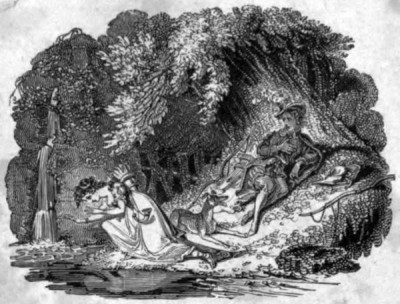
ECLOGUE II.
SILVA I.
ALBANIO. SALICIO.
ALBANIO.
Temperate, when winter waves its snowy wing, Is the sweet water of this sylvan spring; And when the heats of summer scorch the grass, More cold than snow: in your clear looking-glass, Fair waves! the memory of that day returns, With which my soul still shivers, melts, and burns; Gazing on your clear depth and lustre pure, My peace grows troubled, and my joy obscure; Recovering you, I lose all self-content: To whom, alas, could equal pains be sent! Scenes that would soothe another's pangs to peace, Add force to mine, or soothe but to increase. This lucid fount, whose murmurs fill the mind, The verdant forests waving with the wind, The odours wafted from the mead, the flowers In which the wild bee sits and sings for hours, These might the moodiest misanthrope employ, Make sound the sick, and turn distress to joy; I only in this waste of sweetness pine To death! oh beauty, rising to divine! Oh curls of gold! oh eyes that laughed with light! Oh swanlike neck! oh hand as ivory white! How could an hour so mournful ever rise To change a life so blest to tears and sighs, Such glittering treasures into dust! I range From place to place, and think, perhaps the change, The change may partly temper and control The ceaseless flame that thus consumes my soul. Deceitful thought! as though so sharp a smart By my departure must itself depart: Poor languid limbs, the grief is but too deep That tires you out! Oh that I could but sleep Here for awhile! the heart awake to pain, Perchance in slumbers and calm dreams might gain Glimpse of the peace with which it pants to meet, Though false as fair, and fugitive as sweet. Then, amiable kind Sleep, descend, descend! To thee my wearied spirit I commend.
SALICIO.
How highly he may rate His fortunate estate, Who, to the sweets of solitude resigned, Lives lightly loose from care, At distance from the snare Of what encumbers and disturbs the mind! He sees no thronged parade, No pompous colonnade Of proud grandees, nor greedy flatterers vile, Ambitious each to sport In sunshine of a court; He is not forced to fawn, to sue, to smile, To feign, to watch of power each veering sign, Noticed to dread neglect, neglected to repine. But, in calm idlesse laid Supine in the cool shade Of oak or ilex, beech or pendant pine, Sees his flocks feeding stray, Whitening a length of way, Or numbers up his homeward-tending kine: Store of rich silks unrolled, Fine silver, glittering gold, To him seem dross, base, worthless, and impure; He holds them in such hate, That with their cumbrous weight He would not fancy he could live secure; And thinking this, does wisely still maintain His independent ease, and shuns the shining bane. Him to soft slumbers call The babbling brooks, the fall Of silver fountains, and the unstudied hymns Of cageless birds, whose throats Pour forth the sweetest notes; Shrill through the crystal air the music swims; To which the humming bee Keeps ceaseless company, Flying solicitous from flower to flower, Tasting each sweet that dwells Within their scented bells; Whilst the wind sways the forest, bower on bower, That evermore, in drowsy murmurs deep, Sings in the silent ear, and aids descending sleep. Who breathes so loud? 'Tis strange I see him not; Oh, there he lies, in that sequestered spot! Thrice happy you, who thus, when troubles tire, Relax the chords of thought, or of desire! How finished, Nature, are thy works! neglect Left nought in them to add to, or perfect. Heightening our joy, diminishing our grief, Sleep is thy gift, and given for our relief; That at our joyous waking we might find More health of body and repose of mind: Refreshed we rise from that still pause of strife, And with new relish taste the sweets of life. When wearied out with care, sleep, settling calm, Drops on our dewless lids her soothing balm, Stilling the torn heart's agonizing throes, From that brief quiet, that serene repose, Fresh spirit we inspire, fresh comfort share, And with new vigour run the race of care. I on his dreams will gently steal, and see If I the shepherd know, and if he be Of the unhappy or contented class: Is it Albanio slumbering there? Alas The unhappy boy! Albanio, of a truth; Sleep on, poor wearied, and afflicted youth! How much more free do I esteem the dead, Who, from all mortal storms escaped, is led Safe into port, than he who living here, So noble once, and lively in his cheer, Cast by stern fortune from his glorious height, Has bid a long, long farewell to delight! He, though now stript of peace, and most distressed, Was once, they say, most blissful of the blest, In amorous pledges rich; the change how great! I know not well the secret of his fate; Lycid, who knew the tale, sometime ago Told me a part, but much remains to know.
ALBANIO.
Is it a dream? or do I surely clasp Her gentle hand, that answers grasp for grasp? 'Tis mockery all! how madly I believed The flatterer sleep, and how am I deceived! On swift wings rustling through the ivory door, The vision flies, and leaves me as before, Stretched lonely here; is't not enough, I bear This grievous weight, the living soul's despair; Or, to say truly, this uncertain strife, And daily death of oft-renewing life!
SALICIO.
Albanio, cease thy weeping, which to see, Grieves me.
ALBANIO.
Who witnesses my weeping?
SALICIO.
He Who by partaking will assuage the smart.
ALBANIO.
Thou, my Salicio? Ah, thy gentle heart And company in every strait could bring Sweet solace, once; now, 'tis a different thing.
SALICIO.
Part of thy woes from Lycid I have heard, Who here was present when the' event occurred; Its actual cause he knew not, but surmised The evil such, that it were best disguised. I, as thou know'st, was in the city, bent On travelling then, and only heard the' event On my return; but now, I pray relate, If not too painful, specially, the date, The author, cause, and process of thy grief, Which thus divided will find some relief.
ALBANIO.
Relief is certain with a friend so sure, When such the sickness as admits of cure; But this, this pierces to my marrow! Still, Our shared pursuits by fountain, grove, and hill, And our vowed friendship to thy wishes win My else-sealed lips;—yet, how shall I begin? My soul, my brain, with clouds is overcast, At but the mere remembrance of the past— The alarm, the mortal wound, the sudden pain, Then every earlier feeling felt again, Linked with the blighted present, all prevail, And, like a spectre, scare me from the tale. But yet, methinks, 'twere wisdom to obey, Lay bare the wound, and sorrowing bleed away From anguish and from life; and thus, dear friend, From the commencement to the fatal end, My woes will I relate, without disguise, Though the sad tale my soul reluctant flies. Well have I loved, well shall love, whilst the ray Of life celestial lights this coil of clay, The maid for whom I die! No free-will choice, No thoughtless chase at Folly's calling voice Led me to love, nor, oft as others aim, With flattering fancies did I feed the flame; But from my tenderest infancy, perforce, Some fatal star inclined me to its course. Thou know'st a maiden, beautiful and young, From my own ancestors remotely sprung, Lovelier than Love himself; in infancy Vowed to Diana of the woods, with glee, Amidst them, skilled the sylvan war to wage, She passed the rosy April of her age: I, who from night till morning, and from morn Till night, to challenge of the sprightly horn, Followed the inspiring chase without fatigue, Came by degrees in such familiar league With her, by like pursuits and tastes allied, I could not stir an instant from her side. Hour after hour this union stricter grew, Joined with emotions precious, pure, and new: What tangled mountain has been left untraced By our swift feet? What heath, or leafy waste Of forests, has not heard our hunting cry? What babbling echo not been tired thereby? Ever with liberal hands, when ceased our toils, To the chaste patron who decreed our spoils, We heaped the holy altars, talking o'er Past risks, now offering of the grisly boar The grim and tusked head, and nailing now The stag's proud antlers on the sacred bough Of some tall pine; and thus when evening burned, With grateful, happy hearts, we home returned; And when we shared the quarry, never went From us one word or look of discontent. Hunting of all kinds charmed, but that the most Of simple birds, snared ever with least cost Of toil; and when desired Aurora showed Her rosy cheeks, and locks like gold that glowed, With dew impearling all the forest flowers, Away we passed to unfrequented bowers, In the most secret valley we could find, Shut from the tread and talk of humankind; Then, binding to two lofty trees, unseen, Our tinctured webs of very perfect green, Our voices hushed, our steps as midnight still, We netted off the vale from hill to hill; Then, fetching a small compass, by degrees We turned toward the snares, and shook the trees, And stormed the shadiest nooks with shout and sling, Till the whole wood was rustling on the wing: Blackbirds, larks, goldfinches, before us flew, Distracted, scared, not knowing what to do. Who shunned the less, the greater evil met, Confusedly taken in the painted net; And curious then it was to hear them speak Their griefs with doleful cry and piercing shriek; Some—for the swarms were countless—you might see Fluttering their wings and striving to get free, Whilst others, far from showing signs of rage, In dumb affliction drooped about the cage; Till, drawing tight the cords, proud of the prey Borne at our backs, we took our homeward way. But when moist autumn came, and yellow fell The wild-wood leaves round bowerless Philomel; When August heats were past, a different sport, But no less idle, we were wont to court, To pass the day with joy; then, well you know, Black clouds of starlings circle to and fro: Mark now the craft that we employed to snare These birds that go through unobstructed air. One straggler first from their vast companies, Alive we captured, which was done with ease; Next, to its foot a long limed thread we tied, And when the passing squadron we descried, Aloft we tossed it; instantly it mixed Amongst the rest, and our success was fixed; For soon, as many as the tangling string, Or by the head, or leg, or neck, or wing, In its aërial voyage twined around, Flagged in their strength, and fell towards the ground, Yet not without long strugglings in their flight, Much to their mischief, and to our delight. Useless to it was the prophetic croak Of the black rook in the umbrageous oak; When one of them alive, as oft occurred, Fell in our hands, we made the captive bird Decoy to many a captive; to a plain Spacious, and sowed perchance with winter grain, Where flocks of rooks in company resort, Our prize we took, and instant to the sport. By the extreme points of its wings, to ground, But without breaking them, the bird we bound; Then followed what you scarce conceive; it stood With eyes turned upward, in the attitude Of one that contemplates the stars; from sight Meanwhile we drew, when, frantic with affright, It pierced the air with loud, distressful cries, And summoned down its brethren from the skies. Instant a swift swarm which no tongue could name, Flew to its aid, and round it stalking came. One, of its fellow's doom more piteous grown Than cautious or considerate of its own, Drew close—and on the first exertion made, With death or sad captivity it paid For its simplicity; the pinioned rook So fast clung to it with the grappling-hook Of its strong claws, that without special leave It could not part: now you may well conceive What our amusement was to see the twain, That to break loose and this fresh aid to gain, Wrestling engage; the quarrel did not cool Till finished by our hand, and the poor fool Was left at mournful leisure to repent Of the vain help its thoughtless pity lent. What would'st thou say, if, standing centinel With upraised leg when midnight shadows fell, The crane was snared betwixt us? Of no use Was its sagacious caution to the goose, Or its perpetual fame for second-sight Against the snares and stratagems of night. Nought could its strength or sleight at swimming save The white swan, dwelling on the pathless wave, Lest it by fire, like Phaëton, should die, For whom its shrill voice yet upbraids the sky. And thou, sad partridge, think'st thou that to flee Straight from the copse secures thy life to thee? Thy fall is in the stubble! On no bird, No beast, had nature for defence conferred Such cunning, but that by the net or shaft It fell, subdued by our superior craft. But were I each particular to tell Of this delightful life, the vesper bell Would sound ere it was done: enough to know That this fond friendship, this divine-faced foe, So pure from passion, undisturbed by fears, To different colour changed my rising years. My ill star shone; the spirit of unrest, And love, excessive love, my soul possessed; So deep, so absolute, I no more knew Myself, but doubted if the change were true. Then first I felt to mingle with the stir Of sweet sensations in beholding her, Fearful desires that on their ardent wings Raised me to hope impracticable things. Pain for her absence was not now a pain, Nor even an anguish brooding in the brain, But torment keen as death—the ceaseless smart Of fire close raging in the naked heart. To this sad pass I gradually was brought By my ill star, and ne'er could I have thought Its baneful power reached farther, were it not Proved but too surely by my present lot, That, when compared with these, my former woes Might be considered as a sweet repose. But here 'tis fit the hated tale that swells My soul with grief, and thrills the tongue that tells, Should find a close, nor sadden, though it sears Albanio's memory, kind Salicio's ears. Few words will speak the rest;—one hour, but one— Wrecked my last joy, and left me quite undone.
SALICIO.
If, my dear friend, you spoke with one who ne'er Had felt the dangerous flame, the restless care, The bitter-sweets of love which thus you feel, Wisdom it were the sequel to conceal: But if I share the sorrows of thy breast, Why as a stranger hide from me the rest? Think'st thou that I on my part do not prove This living death, this agony of love? If skilled experience should not wholly end Thy heavy grief, the pity of a friend, Himself sore wounded by the marksman's dart, Will fail not to at least assuage the smart. Since, then, I candidly disclose my share In such concerns (and even yet I bear Marks of the arrow), it is quite unkind To be so shy: whilst thou hast life, thy mind Should cherish hope; I may, as Love's high priest, Counsel some cure, or weep with thee at least. No harm can come from subjecting thine ear To the kind counsels of a friend sincere.
ALBANIO.
Thou would'st that I should fruitlessly contend With one who must o'ercome me in the end. Love wills my silence, nor can I commence The tale requested without great offence: Love chains my tongue, and thus—indeed, indeed— Spare me, I feel that I must not proceed.
SALICIO.
What obstacle forbids thee to reveal This ill to one who surely hopes to heal In part the wound?
ALBANIO.
Love, love that doth deny All comfort,—Love desires that I should die; Knowing too well that for a little while The mere relation would my grief beguile, More swiftly to destroy, the God unjust Has now deprived my bosom of the gust Which late it had, to candidly avow, And thus conclude its sorrows; so that now It neither does become thy truth to seek For farther knowledge, nor myself to speak,— Myself, whom fortune has alone distressed, And who alone in dying look for rest.
SALICIO.
Who is so barbarous to himself as e'er To' entrust his person to a murderer's care, His treasures to the spoiler! Can it be, That without discomposure thou canst see Love make in frolic, for a flight of skill, Thy very tongue the puppet of his will?
ALBANIO.
Salicio, cease this language; curb thy tongue; I feel the grief, the insult, and the wrong: Whence these fine words? what schoolman did commit To thee this pomp of philosophic wit, A shepherd of the hills? with what light cheer The careless lip can learn to be severe, And oh, how easily a heart at ease Can counsel sickness to throw off disease!
SALICIO.
I counselled nothing that deserved to call An answer from thee of such scorn and gall: Merely I asked thee—ask thee to relate What it is makes thee so disconsolate. I shared thy joy, and can I fail to be Touched with thy grief? be free with me, be free.
ALBANIO.
Since I no longer can the point contest, Be satisfied—I will relate the rest; One promise given, that when the tale is done, Thou wilt depart, and leave me quite alone; Leave me alone, to weep, as eve declines, My fatal loss amid these oaks and pines.
SALICIO.
Well! though thy wisdom I cannot commend, I will prove more a fond than faithful friend; Will quit the place, and leave thee to thy woes:
ALBANIO.
Now then, Salicio, hear what I disclose; And you, the Dryads of this leafy grove, Where'er you be, attend my tale of love! I have already told the prosperous part, And if in peace I could have fixed my heart, How happy had I been; but the desire, The constant striving to conceal my fire From her, alas! whose sweet and gentle breath But fanned it, brought me to the gates of death. A thousand times she begged, implored to know What secret something vexed my spirit so; In my pale aspect she too plainly read Grief of some sort, and gaiety was fled; Thus would she say, thus sue to me, but sighs And tears of anguish were my sole replies. One afternoon, returning from the chase Fatigued and fevered, in the sweetest place Of this wide forest, even where now we sit, We both resolved our toil to intermit. Under the branches of this beech we flung Our limbs at ease, and our bent bows unstrung. Thus idly lying, we inspired with zest The sweet, fresh spirit breathing from the west. The flowers with which the mosses were inlaid, A rich diversity of hues displayed, And yielded scents as various; in the sun, Lucid as glass, this clear, shrill fountain shone, Revealing in its depth the sands like gold, And smooth, white pebbles whence its waters rolled; Nor goat, nor stag, nor hermit, nor the sound Of distant sheepbells, broke the stillness round. When with the water of the shaded pool We had assuaged our thirst, and grew more cool, She, who with kind solicitude still kept The' intent to know why I so often wept, With solemn prayers adjured me to confess The cause or object of my sore distress; And if 'twas love, not to be swayed by shame, But own it such, and write the lady's name; Vowing that as she always from her youth Had shown me an affection full of truth, So in this instance she with pure good-will Would aid my views, and prove a sister still. I, who no longer could my soul contain, Yet dared not openly the truth explain, Told her that in the fountain she might read Her name whose beauty made my bosom bleed. Her eager mind was instant on the wing, She rose, she ran, and looked into the spring, But seeing only her own face there, blushed With maiden shame, and from the water rushed, Swift as if touched with madness, not a look She deigned me, but her way disdainful took, And left me murmuring here, till life shall fail, My rash resolve for ever to bewail. My folly I accused—all, all engrossed In vain reflections on the' advantage lost. Thus grew my grief; thus fatally misled, What sighs did I not breathe, what tears not shed; For countless hours stretched here I lay, with eyes Rigidly fixed upon the vacant skies; And as one grief in hand another brought, The ceaseless tear, the phantasies of thought, The frequent swoon, remorse for felt offence, Regret, despair, the senselessness of sense, And a benumbing consciousness of pain Perpetual, almost, almost whirled my brain. I know not how I found my friends, nor what Led my stray footsteps homeward to my cot; I only know four suns had risen and past, Since fasting, sleepless, motionless, aghast, I had lain here; my herds too had been left All this long time, of wonted grass bereft; The calves that lately frisked it o'er the field, Finding their udders no refreshment yield, Lowing complained to the unheeding skies; The woods, alone considerate of their cries, Rebellowing loudly, gave back the lament, As though condoling with their discontent. These things yet moved me not; the many—all In fact, that now upon me came to call, Were frightened with my weeping; rumour led, And curious wonder, numbers to my shed; The shepherds, herdsmen, pruners of the vines, Anxious to serve me, with sincerest signs Of pity, pleaded, prayed me to declare The cause of my mad grief and deep despair; Stretched on the earth, to them my sole replies Were broken groans, fast tears, and fiery sighs; Or if at times I spoke, one answer came From my wild lips—the same, and still the same: "Swains of the Tagus, on its flowery shore, Soon will you sing, 'Albanio is no more!' This little comfort I at least shall have, Though I be laid within the wormy grave, Sad you will sing, 'Albanio is no more,' Swains of the Tagus, on its flowery shore!" The fifth night came: my ill star then inspired My brain to dare what had been long desired— The shuffling off life's load, and out I rushed With wild resolve—creation all was hushed; Through the dusk night I hurried to descry Some lonely spot where I might fitly die. As chance would have it, my faint footsteps drew To a high cliff which yet far off I knew, As pendant o'er the flood, scooped into caves By constant sapping of the restless waves. There, as I sate beneath an elm, o'erspent, A sudden ray returning memory lent: I once, with her, had to the neighbouring trees Come at midnoon to take the cooling breeze. On this my fancy fixed; the thought like balm Assuaged my frenzy, and I grew more calm. And now the dawn with roses had begun To pave the path of the resplendent sun, To which the green trees bowed, and, woke from rest, The smiling Ocean bared her heaving breast; When, as the melancholy swan, that feeling Life's latest anguish o'er her spirit stealing, Sings with her quivering bill and melting breath, Sad, but most sweet, the lullaby to death; So I, in equal pain and sickness lying, The immortal passing, and the mortal dying, Took my last farewell of the skies and sun, In passionate laments that thus might run: "Oh! fierce as Scythian bears in thy disdain, And as the howling of the stormy main Deaf to my plaints, come, conqueress, take thy prey, A wretched frame fast hastening to decay! I faint—I die, and thus will put an end To thy dislike; no longer shall offend The' enamoured breast where thy dear beauty lies, My mournful face, rash lips, or weeping eyes. Then thou, who in my lifetime scorned to move One step to comfort me, or even reprove, Stern to the last,—then thou wilt come, perchance, And as thine eyes on my cold relics glance, Repent thy rigour, and bewail my fate; But the slow succour will have come too late. Canst thou so soon my long, long love forget, And in a moment break without regret The bond of years? hast thou forgotten too Childhood's sweet sports, whence first my passion grew, When from the bowery ilex I shook down Its autumn fruit, which on the crag's high crown We tasted, sitting, chattering side by side? Who climbed trees swinging o'er the hoarse deep tide, And poured into thy lap, or at thy feet, Their kernelled nuts, the sweetest of the sweet? When did I ever place my foot within The flowery vale, brown wood, or dingle green, And culled not thousand odorous flowers to crest Thy golden curls, or breathe upon thy breast? You used to swear, when I was absent far, There was no brightness in the morning star, For you no sweetness in the noon's repose, Taste in the wave, nor fragrance in the rose. Whom do I wail to? Not a single word Is heard by her by whom it should be heard. Echo alone in pity deigns to hear me, And with her mimic answers strives to cheer me, Remembering sweet Narcissus, and the pain Which she herself endured from shy disdain; But ev'n kind Echo pity deems a fault, Nor stands revealed within her hollow vault. Spirits! if such there be, that take the care Of dying lovers, and attend their prayer, Or personal genius of my life! receive The words I utter, ere my soul takes leave Of its frail tenement! oh Dryades! Peculiar guardians of these verdant trees, And you, swift-swimming Naiads who reside In this my native river! from the tide Upraise your rosy heads, if there be one That sighs, and weeps, and loves as I have done; That I, white Goddesses, may have to say— Though my weak plaints and unmelodious lay Moved not one human eye to pitying tears, The mournful dirge could touch diviner ears. Oh fleet-foot Oreads of the hills! who go Chasing through chestnut groves the hart and roe, Leave wounding animals, draw near, and scan The last convulsions of a wounded man! And you, most gracious Maidens, that amid The night of woods till summer noons lie hid, Then, crowned with roses, issue from your oaks, Your white breasts covered with your golden locks; Sweet Hamadryads! hear my plaints forlorn, And if with angry Fate ye are not sworn Against me, to the causes of my death Give celebration and perpetual breath. Oh wolves! oh bears! that in the deep descents Of these o'ershaded caves to my laments Are listening now, as oft my flute could move Your shaggy ears, and lull you into love, Repose in peace! farewell each high-browed mountain! Green crofts, farewell! Adieu thou fatal fountain! Still waters, foaming streams, and you, ye strong Sonorous cataracts, farewell! live long, Long ages after me, and as ye sweep To pay rich tribute to the hoary deep, Oft sound my sad voice through the stony vales; Oft to the traveller tell autumnal tales Of him whose tuneful ditties charmed of old Your living waves, rejoicing as ye rolled; Who watered here his heifers, day by day, And crowned with wreaths of laurel and of bay, The brows of his strong bulls:"—and saying this, I rose, from that tremendous precipice To fling myself, and clambered up the hill With hasty strides, and a determined will; When lo! a blast sufficient to displace The huge sierra from its stable base, Arose and smote me to the earth, where long I lay astonished from a stroke so strong. But when at length I came to recollect, And on the marvel seriously reflect, I blamed my impious rashness, and the crime That sought to end before the destined time, By means so terrible, my life of grief, Though harsh, determinate, though bitter, brief. I have since then been steadily resigned To wait for death, when mercilessly kind It comes to free me from my pangs; and now, See how it comes! Though heav'n did not allow Me to find death, the assassin is left free To find, and shake his fatal dart o'er me.— I have now told thee the true cause, the cross Occurrence, pain, and process of my loss; Fulfil thy promise now, and if thou art Indeed my friend, as I believe, depart; Nor give disturbance to a grief so deep— Its only solace is the wish to weep.
SALICIO.
On one point only now Would I remark, if thou Would'st not imagine it was meant to' advise; I'd ask thee, what can blind So utterly thy mind, And warp thy judgment in so strange a wise, As not at once to see Instinctively, that she Who so long charmed thee with her grateful smile, With, or without regret, Can never all forget Your past fond friendship in so short a while; How dost thou know but that she feels no less Grief for her own coy flight, than pain for thy distress?
ALBANIO.
Cease, flattering sophist, cease This artificial peace, Nor with false comfort make my sufferings more; Or I, far, far exiled, Must seek some hideous wild Where human footstep never stamped the shore. She is entirely changed From what she was, estranged From all kind feelings; this too deemest thou, Howe'er thy lips unwise With rhetoric would disguise The fatal truth, or seem to disallow; But thy dear sophistry indulge alone, Or for more credulous ears reserve it; I am gone!
SALICIO.
All hope of cure is vain, Till less he dreads the pain Of the physician's probe;—here then alone, Indulging his caprice, I'll leave him, till disease Has passed its raging crisis, and is grown More tractable, until The storm of a self-will So passing strong, has raved itself to rest: And to yon bower of birch I'll meanwhile pass, in search Of the sweet nightingale's secreted nest; And, beautiful Gravina, it shall be Thine for one rosy kiss: I know the ivied tree.
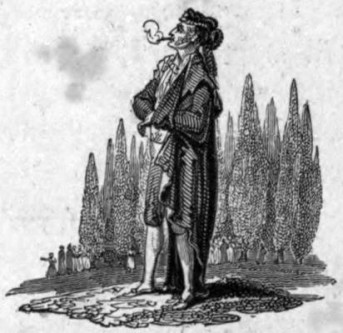
ECLOGUE II.
SILVA II.
CAMILLA. ALBANIO. SALICIO. NEMOROSO.
CAMILLA.
Echo the sound did much misrepresent, If this is not the way the roebuck went After 'twas struck; how swift it must have fled, And with what strength, considering how it bled! So deep the bearded shaft transfixed its side, That the white feather was alone descried; And now the search of what eludes my sight Tires me to death. It can't have stretched its flight Beyond this valley; it must surely be Here, and perhaps expiring! oh that she, My Lady of the Groves, would of her pack Lend me a hound to follow up the track, The whilst I sleep away the hours of heat Within these woods!—Oh visitants most sweet! Fresh, amorous, gentle, flavourous breezes, blow In deeper gusts, and break this burning glow Of the meridian sun! at length, I pass My naked soles upon the cold green grass; Thy sylvan toils this raging noon commit To men, Diana, whom they best befit! For once I dare thy horn to disobey; Thy favourite chase has cost me dear to-day. Ah my sweet fountain! from what paradise Hast thou too cast me by a mere surprise? Know'st thou, clear mirror, what thy glass has done? Driven from me the delightful face of one, Whose kind society and faith approved I now no less desire than then I loved, But not as he supposed; God grant that first Her heart may break, ere vowed Camilla burst The virgin band that binds her with the maids Of dear Diana, and her sacred shades! With what reluctance thought renews the sense Of this sad history, but the youth's offence Exculpates me; if of his absence I Were the prime cause, I would most willingly Myself condemn, but he, I recollect, Both wilful was, and wanting in respect. But why afflict myself for this? I yet Would live contented, and the boy forget.— These clear cool springs a lulling murmur make, Here will I lie, and my sweet siesta take; And when the sultry noon is over, go Again in search of my rebellious roe: Still 'tis a mystery and surprise to me With such a wound how it so far could flee!
ALBANIO.
Methought, or frolic fancy must delight With false presentments to deceive my sight, I saw a wood-nymph, gliding through the groves, Reach the near fountain; haply, if she loves, She may advise me of some charm, may name Some dear deceit to ease this painful flame: No given advice but aggravates my grief, If 'tis in discord with my own belief, And to the hopeless harm can none accrue: Oh holy Gods! what is it that I view? Is it a phantom changed into the form Of her whose beauty makes my blood run warm? No, 'tis herself, Camilla, sleeping here; It must be she—her beauty makes it clear! But one such wonder Nature wished to make, Then broke the die for admiration's sake. How could I then suppose her not the same, When Nature's self no second such can frame! But now, though certain is the bliss displayed, How shall I venture to awake the maid, Dreading the light that lures me to her side? And yet—if only for the pleasing pride Of touching her, methinks that I might shake This fear away; but what if she should wake? To seize and not to loose her—soft! I fear That daring act might make her more austere; Yet, what is to be done? I wish to reach My former seat beneath the shady beech, And hers is slumber deep as death; she lies, How beautifully blind! the bee that flies Near her, the quarrelling birds, that old sweet tune Hummed by the spring, all voices of the noon Tease, but disturb her not; her face is free— A charming book—to be perused by me, And I will seize the' occasion; if the boughs In being parted should from slumber rouse, Strong to detain her I am still, though not As when we last were seated on this spot: Oh hands, once vigorously disposed to end me! See you how much your power can now befriend me? Why not exert it for my welfare!—small The risk—one effort will suffice for all.
CAMILLA.
Aid me Diana!
ALBANIO.
Stir not! from my hold Thou canst not break; but hear what I unfold.
CAMILLA.
Who would have told me of so rude a stroke? Nymphs of the wood, your succour I invoke! Save me, oh save! Albanio, this from thee? Say, art thou frenzied?
ALBANIO.
Frenzy should it be, That makes me love—oh more than life,—the cause Of all my grief, who scorns me and abhors.
CAMILLA.
I ought, methinks, to be abhorred by thee, To make thy speeches with thy deeds agree; To seek to treat me so, at such a time! Outrage on outrage heaping, crime on crime.
ALBANIO.
I commit outrage against thee! May I In thy disgrace, my dear Camilla, die,
CAMILLA.
Hast thou not Infringed our friendship on this very spot, Seeking to turn it by a course amiss From placid thoughts?
ALBANIO.
Oh holy Artemis! Must the distraction of a single hour Whole years of fond attention overpower, When, too, repentance mourns the fault, and when—
CAMILLA.
Ah, this is always the sly way with men! They dare the crime, and if the' event goes wrong, Cry your forgiveness with the meekest tongue.
ALBANIO.
What have I dared, Camilla?
CAMILLA.
It is well; Ask these dumb woods, this fountain, it shall tell; There it remains in face of the pure skies, The living witness of thy wrong device.
ALBANIO.
If death, disgrace, or pain can expiate My fault, behold me here prepared to sate Thy anger to the full.
CAMILLA.
Let go my wrist! Scarce can I breathe; let go, I do insist!
ALBANIO.
Much, much I fear that thou wilt take the wing Of the wild winds, and flee.
CAMILLA.
Fear no such thing! With pure fatigue I am quite overcome; Unhand me! Oh, my dislocated thumb!
ALBANIO.
Wilt thou sit still, if I my grasp forego, Whilst by clear reasons I proceed to show That without any reason thou with me Wert wroth?
CAMILLA.
A pretty reasoner thou wilt be! Well, free me that I may.
ALBANIO.
Swear first in sooth, By our past friendship and our bygone youth.
CAMILLA.
Soothly I swear by the pure law sincere Of our past friendship, to sit down and hear— Thy chidings, sure enough; to what a state Hast thou reduced my hand in this debate By thy fierce grasp!
ALBANIO.
To what a state hast thou Reduced my soul by leaving me till now!
CAMILLA.
My golden clasp, if that be lost—woe's me! Unlucky that I am! 'tis gone, I see, Fallen in this fatal vale! what mischief more?
ALBANIO.
I should not wonder if it dropped before, In the deep Vale of Nettles.
CAMILLA.
I desire, Where'er it dropped, to seek it.
ALBANIO.
That will tire Still more my dear Camilla; leave that toil! I'll find the clasp; I cannot bear the soil Should scorch my enemy's white feet;—
CAMILLA.
Well, well, Since you're so good—behold that beechen dell In sunshine, look straight forward, there, below; A full round hour I've there been spending:
ALBANIO.
So! I see it now; but meanwhile pray don't go.
CAMILLA.
Swain, rest assured that I will die before Thy apprehending hands affright me more.
ALBANIO.
Ah, faithless nymph! and is it in this mode Thou keep'st thy plighted oath? Oh heavy load Of curst existence! oh false love, to cheer My drooping soul with hopes so insincere! Oh painful mode of martyrdom! oh death, Cool torturer, slow to claim my hated breath! You give me cause to call high Heaven unjust; Gape, empty earth, and repossess the dust Of this rebellious body, which debars The swift-winged soul from soaring to the stars! I, I will let it loose; let them that dare Resist—resist me?—of themselves take care, It much concerns them! Can I not fulfil My threats? die, go—here—there—where'er I will, Spirit or flesh?
CAMILLA.
Hark! he desires to do Himself some mischief; my worst fears were true, And his mind wanders.
ALBANIO.
Oh that here I had The man whose malice seems to drive me mad! I feel discharged of a vast weight! it seems I fly, disdaining mountains, woods, and streams, My farm, flock, field, and dairy! Are not these Feet? yes, with them I fly where'er I please. And now I come to think, my body's gone; It is the spirit I command alone. Some one has stolen and hid it as I gazed On the clear sky, somewhat too much amazed; Or has it stayed behind asleep? I swear A figure coloured like the rose was there, Slumbering most sweetly; now, if that should be My shape—no, that was far too fair for me.
NEMOROSO.
Poor head! I would not give a coin of brass For thy discretion now.
ALBANIO.
To whom, alas, Shall I give notice of the theft?
SALICIO.
'Tis strange, And passing sad, to see the utter change In this once sprightly youth, with whom we two, My Nemoroso, have had much to do; Mild, pleasant, good, wise, sociable, and kind, The sweetest temper and sincerest mind.
ALBANIO.
I will find witness, or small power is left Me 'gainst the man that did commit the theft, And though my body's absent, as a foe Will drive him on to death; ah, dost thou know Aught of the thief, my gentle fountain fair? Speak, if thou dost! so may the swart star ne'er Sear thy fresh shades, or scorch thy silver spring, But still green fairies round thee dance and sing. There stands a man at bottom of the brook, With laurel crowned, and in his hand a crook Shaped like mine own, of oak: ho! who goes there? Answer, my friend! Heaven help me! I declare Thou' art deaf or dumb, some mortal foe I fear To life's humanities; holla! give ear; I am a disembodied soul; I seek My body, which, in a malicious freak, Some cruel thief has stol'n, it much has stirred me; Deaf or not deaf I care not—have you heard me? O gracious God! either my wayward brain Wanders, or I behold my shape again; Ha, my loved body! I no longer doubt thee, I clearly see thy image; whilst without thee I have been most unhappy—come, draw nigher, End both thy exile and my lorn desire.
NEMOROSO.
I much suspect that his continual thought And dreams of death, have in his fancy wrought This pictured separation.
SALICIO.
As in sleep, Ills which awake perpetually we weep, Fraught with the grief that haunts the soul, remain, And print their shadowy species on the brain.
ALBANIO.
If thou art not in chains, come forth to' endow Me with the true form of a man, who now Have but the title left; but if thou' art bound By magic art, and rooted to the ground, I pray thee speak! for if my piteous pleading Should fail to touch the ear of Heaven unheeding, I to the bowers of Tartarus will depart, And storm fierce Pluto's adamantine heart, As for his absent consort, unalarmed, Did the fond lover, who with music charmed Hell's grisly maids, and hushed, sweet harmonist, The raging snakes that round their temples hissed!
NEMOROSO.
With what good arguments does he enforce His mad opinions!
SALICIO.
The accustomed course Of ingenuity awhile holds on, When genius fails, and apprehension's gone; Thus, though now frenzied, still a lucid vein Runs through the dark ideas of his brain, Having been what we knew him once.
NEMOROSO.
No more, Praise him not to me, for my heart runs o'er With grief to see him in so lost a strait.
ALBANIO.
I was considering what a painful state This strange, sad exile is; for, to my mind, Nor woods, nor oceans warred on by the wind, Nor moated towers, nor mountains, pathless proved, Nor others' sweet society beloved, Cuts us asunder, but a slender wall Of water, lucid, but preventing all The blissful union we desire so much; For from that surface where we all but touch Thou never dost depart, and seemest never Satiate with gazing, by each fond endeavour Of becks, and smiles, and gestures, signifying Desire of junction, duteous, but denying; Brother, reach out thy arm, that we may shake Hands like good friends, and for past friendship's sake, Once more embrace! ha! mock'st thou me? dost thou Fly from me thus? 'tis acting not, I vow, As a friend should; I from the fountain's froth Am dripping wet, and thou, too, art thou wroth— Poor Sir Unfortunate? ha! ha! how swift Thy—what is it? thy figure thou dost shift; Ruffled, disturbed, and with a writhen face! That this unlucky thing now should take place! I was consoled in seeing so serene Thy amorous image and thy smiling mien. No happy thing with me will now endure!
NEMOROSO.
Nothing at least that will thy frenzy cure.
SALICIO.
Let us depart; fresh furies now begin To storm his soul.
ALBANIO.
Oh heav'n! why not leap in, And reach the centre of the fountain cold?
SALICIO.
What foolish fancy's this, Albanio? hold!
ALBANIO.
Oh the clear thief! but how? what? is it well To' invest thyself with my secreted shell Of flesh, before my face? oh insolence! As if I were a block devoid of sense And common feeling; but this hand shall slay, And pluck thy daring spirit out.
SALICIO.
Away! Come thou; I am not equal to the task Of mastering him.
NEMOROSO.
What would'st thou?
SALICIO.
Canst thou ask, Kinsman unkind, what would I? disengage My hand and throat, if his malicious rage Give me but power.
NEMOROSO.
Act no such petty part; Thou canst but do thy duty where thou art.
SALICIO.
Is this a time for pleasantry and play? Sport'st thou with life? come instantly, I pray!
NEMOROSO.
Anon: I'll stand awhile aloof, and see How from a madcap thou thyself canst free.
SALICIO.
Alas! I strike for self-defence.
ALBANIO.
Although You die—
NEMOROSO.
It is too true; madman, let go!
ALBANIO.
I'll end him; but one moment let me be.
NEMOROSO.
Off, off this instant!
ALBANIO.
Why, how harm I thee?
NEMOROSO.
Me? not in any wise.
ALBANIO.
Then homeward turn, And meddle not in what you've no concern.
SALICIO.
Ha, madman! pinion him and hold him tight, For mercy's sake; I'll do for thee, sir knight! Hold fast his elbows whilst the cord I tie; Sound of the switch perchance may terrify His proud soul to submission.
ALBANIO.
Noble lords, If I be still, will you put up your swords?
SALICIO.
No.
ALBANIO.
Would you kill me?
SALICIO.
Yes.
ALBANIO.
A harmless gnat! Look how much higher this rock is than that.
NEMOROSO.
'Tis well; he shortly will forget his vaunt.
SALICIO.
Soft; for 'tis thus they use such minds to daunt.
ALBANIO.
What! lashed and pinioned?
SALICIO.
Hush, give ear.
ALBANIO.
Woe's me! Dark was the hour when first I strove with thee, So harsh thou smitest; were we not before As brothers fond; shall we be such no more?
NEMOROSO.
Albanio, friend beloved, be silent now; Sleep here awhile, and move not.
ALBANIO.
Knowest thou Any news of me?
SALICIO.
Mad, poor fool!
ALBANIO.
Agreed. Soft, for I sleep.
SALICIO.
Indeed dost thou?
ALBANIO.
Indeed! Sound as the dead! what motion do I make? Only observe me.
SALICIO.
Hush! the wand I shake Shall pay the price of thy rebellious will, If thou unclose an eye.
NEMOROSO.
He is more still And tranquil than he was: Salicio, What are thy thoughts; can he be cured, or no?
SALICIO.
To use all gentle methods that may tend Or to the life or health of such a friend, Is our just duty.
NEMOROSO.
Hark then for a space To what I say; a singular strange case Will I relate, of which—but let that pass— I both the witness and the subject was. On Tormes' banks, the sweetest stream of Spain, Mild, sacred, clear, extends a spacious plain, Green in mid-winter, green in autumn, green In sultry summer as in spring serene; At the far end of which, the eye's delight, Charming in form, and of a pleasing height, A hill o'erlooks the scene, whose wood-crowned crest Fair towers surmount, whereon heaven seems to rest: Towers of strange beauty, not so much admired For their fine structure, although Toil has tired Thereon his curious chisel, as renowned For their grand Lords by glory haloed round. All that is deemed desirable and great May there be found, rank, wisdom, virtue, state, The gifts of Nature, and the stores of Art, Whatever Taste can wish, or Power impart. There, dwells a man of genius, whose rare touch Of the melodious lyre and pipe is such As ne'er to satiate with its notes of grace And flavourous tones, the Spirit of the place. On Trebia's field stood his paternal home, Trebia the red, the' Aceldama of Rome, And still, though numerous years have intervened, The favourite refuge of the same fierce fiend— Of war, whose crimson sword its turf has stained, Its green bowers ravaged, its pure waves profaned. He, seeing this, abandoned it to find Some scene more suited to his gentle mind: Good fortune led his footsteps to the hall Of Alba, so that splendid seat they call, Severo him; the God of wit and light Pours all his rays on his sciential sight. He, when he wills, by signs and murmured spells, Can curb the swiftest, mightiest stream that swells; Change storms to golden calms, change night to noon, Bid thunders bellow, and pluck down the moon, If to his signals she will not reply, And check the car that whirls her through the sky. I fear, should I presume to speak in praise Of all his power and wisdom, I should raise His wrath, but this I must declare, above All other things, the pangs of slighted love He in an instant cures, removes the pain, Converts impassioned frenzy to disdain, Sadness to smiles, and on the soul's tuned keys Rewakes its old familiar melodies. I shall not know, Salicio, I am sure, To tell the means and method of my cure, But this I know, I came away quite sound, Pure from desire, and vigorous from my wound. I well remember that by Tormes' stream I found him rapt in some pathetic theme, Singing in strains whose sweetness might imprint The soul of feeling in a heart of flint: When me he saw, divining my desire, He changed the mode, and rectified his lyre; The praise of liberty from love he sings, And with a sprightlier spirit smites the strings; Reflected in his song, I stand confest The slave of sense, and alien from all rest, Shamed and surprised, till—how shall I explain That strange effect?—the fascinating strain The tincture takes of medicine, which, in brief, Flows through my veins, and, grappling with my grief, Roots out the venom: then was I as one Who all night long o'er break-neck crags has run, Not seeing where the path leads, till at last Light dawns, and looking back, the perils passed Rush on his sight, now so distinctly kenned, The mere idea sets his hair on end: So thunderstruck stood I, nor to this day Can I, without a shudder of dismay, Eye my past danger; my new scope of sight Presented all things in their proper light, And showed what I before with such a gust Had grasped for gold, to be but worthless dust. Such was the talisman, and such the skill With which that ancient sage uncharmed my will; My mind its native liveliness regained, And my heart bounded as from bonds unchained.
SALICIO.
Oh fine old age! ev'n fruitful in thy snows, That to the soul thus bring'st its lost repose, Weaning the heart from love, the ungentle gust That blasts our hopes, or weds them with the dust. Merely from that with which thou hast amazed My ear, I feel strong wishes in me raised, To see and know him.
NEMOROSO.
Does thy wonder mount So high, Salicio, at this poor account? More could I say, if I were not afraid To tire thy patience.
SALICIO.
What is this thou' hast said, Unthinking Nemoroso? Can there be Aught half so charming, half so sweet to me, As listening to thy stories? Tell me more Of sage Severo; tell me, I implore. Nought interrupts the tale; our flocks at rest, The fresh soft wind comes whispering from the west; Sweet weeps the nightingale in song that moves In amorous hearts the sadnesses she proves; The turtle murmurs from her elm; the bee Hums; the shy cuckoo shouts from tree to tree; The wood a thousand flowers presents; the flowers A thousand hues; and, hung with nodding bowers, This babbling fountain with its voice invites To social ease and interchanged delights.
ECLOGUE II.
SILVA III.
NEMOROSO. SALICIO.
NEMOROSO.
Hark then awhile, and I will tell of things Strange and amazing: Spirits of these springs, Nymphs, I invoke you! Silvans, Satyrs, Fauns, That haunt the glens, the greenwoods, and the lawns! Sweet from my lips let each clear accent part, All point or grace, all harmony or art, Since neither pastoral pipe, Arcadian quill, Nor syrinx sounds in concord with my will. To such rare heights Severo's powers aspire, His chanted verse and smooth harmonious lyre Can stay fleet whirlwinds in their mid career, His golden words and messages to hear, And make them from austere, rebellious lords, Obsequious slaves to dance around his chords In voluntary song; old Tormes knows His incantation, and, commanded, shows The Senior all his secrets: once he led The mighty master to his fountain-head, And showed him where mid river-flowers and fern He lies, incumbent o'er a crystal urn; On this he saw a thousand things embossed, Foreseen, and sculptured with surprising cost; With so divine a wit the sage has wrought This vase, each object seems instinct with thought. On every side the figured bas-reliefs Depict the deeds and virtues of the chiefs, Who by illustrious titles dignified, And ruled the tract through which his waters glide. There the brave youth, Don Garcia, stood confessed By his disdainful mien, dilated chest; He 'gainst a wise and potent king that held His sire in bondage, gallantly rebelled,[7] Each bold retainer summoning, to aid His pious aims; with him the God pourtrayed His son, who showed, whilst earth enjoyed his light, At court a Phœbus, and a Mars in fight: Young though he seemed, he promised in his look Supreme success in all he undertook; Ev'n in his youth, upon the Moors he dealt Severe rebukes, and made his puissance felt; And as the chieftain of the Christian band, Confirmed his heart and exercised his hand. Elsewhere, with more assured renown, and now With more of manhood on his martial brow, He harassed the fierce Franks: sublime he stood To sight, his armours red with hostile blood. Long in the straitened siege had he sustained The woes of want; no measure now remained, But through the breaches of the rending wall In furious sally on the foe to fall. What numbers died that day beneath his spear! What other numbers fled like hunted deer! No pictured tale, no sculptured argument, No poet's flame could fitly represent How fierce Fadrique smote them as they fled, The chaser's rage, and the pursued one's dread. Near him is seen in bold relief his son, Don Garcia, equalled upon earth by none, Unless by his Fernando! who could view The ardent light of his dear beauty, who The expression of his frank fair countenance, Nor own his grandeur in that single glance? Alas! in cruelty the Furies hurled War's fires abroad, and snatched him from the world, The world so happy in his light! sad Spain, Thy weeping eyes how oft didst thou in vain Roll toward Gelves! Acting his sad part, The youth is sculptured with such lively art, That should you see it, you would say each stroke Was fraught with life, and that the crystal spoke. The broad sands burned, the sun of bloody red, His soldiers round him fell down faint or dead; With earnest vigilance he only cursed That dull delay, and reckless as at first, Praised glorious death; when suddenly the sound Of Illa Allah shook the skies, the ground Rang with strong trampling, and a dusty host Of fierce barbarians the young chief enclosed; But he, nought daunted, cast to them his gage, In generous frenzy of audacious rage, And bore up bravely, making many pay The price of their temerity; these lay In deep disorder, some whose vital threads He had already slit, with cloven heads, Wallowing in blood; some silent dying; some Yet breathing free, not wholly overcome, Showed palpitating bowels, strangely gored By the deep gashes given by his sharp sword. But Fate was in the conflict, and at last, Deaf with the din, his spirits failing fast, Pierced through with thousand swords, and craving grace For all his sins, he laid his pallid face On the burnt soil, and sighed away, forlorn, His soul of beauty like the rose of morn, That smit by the hot season, sickening grieves, Hangs its gay head, and pales its crimson leaves; Or as a lily which the passing share Leaves cruelly cut down, whereby its fair Transparent hue, though not all perished, now That its maternal earth neglects to throw Juice through its veins, fades soon as noontide tells Her wonted rosary on its dewy bells; So on the mimic sands, in miniature, Shows thy fair face, fresh rose, white lily pure! Next a strange sculpture draws and so detains The' observer's notice, that he entertains No curiosity aught else to view, How wild soe'er, or beautiful, or new. The three sweet Graces there are seen pourtrayed With Phidian skill, transparently arrayed; One only garment of celestial white Veils their soft limbs, but shuts not out the sight. Drawn are they cheering, strengthening for the throe, A noble lady in her hour of woe. Soon the dear infant is seen born; ne'er smiled The ripening moon upon a lovelier child; Upon his little cradle, overspread With flowers, the name of Don Fernando's read. From sweetly singing on the shady crown Of Pindus, the Nine Lights of life come down; And with them Phœbus, rosy and unshorn, Goes, like the moon amidst the stars of morn, With graceful step; arriving, they confess His charms, and long and tenderly caress. Elsewhere winged Mercury is drawn beholding Mars, the plumed warrior, cautiously enfolding The new-born infant in his rude embrace, Soon giving courteous and respectful place To Venus, smiling at his side; in turn She kissed his cheek, and from a golden urn Sprinkled Elysian nectar o'er the boy With lavish hand, and fond familiar joy: But Phœbus from her arms the child displaced, And gave the office to his sisters chaste. They were delighted with the sweet employ; Time waves his wings, the babe becomes a boy, Rising and flourishing in youthful grace, Like a tall poplar in a shady place. Talents he showed untaught, and undisguised Gave now such proofs of genius, as surprised The associate nymphs, and they the boy consigned To one of blameless life and cultured mind, Who to the world might make more manifest The rich endowments which the child possessed; An ancient man, whose face, ungiven to guile, Expressed severeness sweetening to a smile, Received the youth; Severo, when his gaze Fell on this form, stood spell-bound with amaze; For as within a looking-glass he viewed Himself depicted, air, age, attitude, All were conformable, just so he trod, So looked, so greeted; turning to the god, He saw him smiling at his frank surprise; "And why this so great wonder?" Tormes cries; "Seem I so ignorant as not to' have known, Ere to thy yearning mother thou wert shown, That thou wouldst be, when future suns should shine, The wise Director of his soul divine?" The Ancient, with deep joy of wonder bred, His eager eyes upon the picture fed. Next, as his looks along the sculptures glanced, A youth with Phœbus hand in hand advanced; Courteous his air, from his ingenuous face, Informed with wisdom, modesty, and grace, And every mild affection, at a scan The passer-by would mark him for a man, Perfect in all gentilities of mind, That sweeten life and harmonize mankind. The form which lively thus the sculptor drew, Assur'd Severo in an instant knew, For him who had by careful culture shown Fernando's spirit lovely as his own; Had given him grace, sincerity, and ease, The pure politeness that aspires to please, The candid virtues that disdain pretence, And martial manliness, and sprightly sense, With all the generous courtesies enshrined In the fair temple of Fernando's mind. When well surveyed, his name Severo read, "Boscán!!" whose genius o'er the world is spread: In whose illumined aspect shines the fire That, streamed from Delphos, lights him to the lyre, And warms those songs which with mankind shall stay, Whilst endless ages roll unfelt away! More ripeness marked the youth, as to his rules Listening, he culled the learning of the schools; These left at length, he in gymnastic games, War's mimic symbols, strives with youths, whose names Had never else been known to after years In the wide world; the tilt of canes and spears, Wrestling, the course, the circus, toil and dust, Gave his arm skill, and made his limbs robust. Next, amorous Venus shows her rosy face, Seizing his hand, she leads him for a space From the severe gymnasium, and aside Points out his fault with all a lecturer's pride; Tells him how ill he acts; that some few hours The roughest soldier wreathes his sword with flowers, And that in endless turmoil so to waste The May of life was treason to good taste. Entering a myrtle bower, she shows him, laid Midst leaves and violets blue, a slumbering maid: Flushed was her cheek, and as she slept she smiled, As some delightful dream her brain beguiled: He saw, the crimsoning cheek his passion spoke; The bowers they rustled, and the nymph awoke. Smit with her beauty, he desired to wed The enchanting shape—the Goddess shook her head— As if she feared the parties to unite; He gazed—he gazed, insatiate with the sight! From her dear side he could not, could not move, Wept on her neck, and vowed eternal love. Next, angry Mars, imperious to behold, Advancing, gave the youth a crown of gold: Threatening the illustrious youth, a knight was seen, Of a fierce spirit and insulting mien.[8] In cautious wise beneath the setting moon They timed their steps, and met on a pontoon; Well had the sculptor shadowed out the fight, His clouding crystal spoke the noon of night. Mars was their umpire; he condemned the foe, And placed his crown upon the conqueror's brow; Graced with the gold, the hero shone from far, As in blue heaven the beautiful bright star That ushers in Aurora: thence his name Spreads to all parts, and gathers greater fame. Soon other happier arts he meditates To steal from death, elusive of the Fates, Much of himself, and live admired, unfled, When the blind vulgar might lament him dead. Hymen came moving to the crotal's clash, His right foot sandalled with a golden sash; A choir of virgins sing; on dancing feet They part alternate, and alternate meet; Then softly lay upon the bridal couch A blushing girl, whom Venus did avouch To be the same that, bowered in myrtles deep, Erst smiled so sweetly in her dreaming sleep— A dream as sweetly realized! she showed Worthy the youth on whom she was bestowed; Her pillow bore the words, impaled in flame, Donna Maria Enríquez, her name; Anxious to be admitted, scarce the choir Of nymphs could check Fernando's forward fire: At length he was received, and left beside His virtuous, pure, and beautiful young bride. Elsewhere, on one foot standing, never stable, Capricious Fortune did the sculptor fable, Calling to Don Fernando that he led A life of idleness, and now must tread A toilsome path, but she would be his guide, And venture first: he with her wish complied, Made her his boon companion, and pursued Her who, unveiled, as beautiful is wooed, But, veiled from sight, deemed fearful, nothing worth, Virtue her name, the rarity of earth! Whom does she guide along with equal pace, But him whom thus her beauty leads to face Each fresh fatigue, for glory to aspire, And scorn the chains of delicate desire. The mighty Pyrenees, which seem to shoot To heaven their summit as to hell their root, They traversed in mid-winter; white the snow Colours the clime, and mute the torrents flow Under cold crystal bridges that confine Their tides, smooth sliding through the frozen mine; Whilst, if a blast but stirs the pines, they bend, And with the weight of ices crashing rend. Through all they strive, nor will be held at bay Or by the length or wildness of the way. By constant toil the hero makes advance, Till the gained summit shifts the scene to France; His swiftness Fame renewed—his spirits cheered, On flying wings beside him she appeared, And signified, in act and attitude, That the hill-tracks would soon become less rude. Of various guides the Duke selected one, And on they rode beneath the mounting sun; Faint wax their horses, but they reached at last The walls of Paris, and its portals passed. There the gaunt form of Sickness stands to sight, The healthy duke assisting to alight; Touched by her hand, his colour seems to fade, He droops, he faints, and sickens to a shade. Soon, crossing from a shady thicket green, The form of Esculapius might be seen With balms and herbs, nor did he slack his tread Till he arrived beside Fernando's bed: With his right foot he entered, and at length Restored the patient to his usual strength. His way he took where white-wall'd convents shine, And reached the passage of the lucid Rhine. The rich romantic river on its breast Received him, glorying in so great a guest, And called to mind the hour when to the same Embarking point the Latin Cæsar came. He seemed not scanty of his waves, but swelled Floods like a sea, and the light bark impelled, Which flying left behind green viny bowers, High castled crags, and old romantic towers. Blythely his impulse the swift bark obeyed, And passed the spot where erst a ravished maid, And thousand virgins with her, stained the sod With blood, recorded in the book of God. The espoused pure virgin, Ursula, was seen Casting her dying eyes to heaven serene, The tyrant looking on, who, at a word, From breast to beauteous breast the sword transferred. Thence through wide Germany he shaped his way To where in doubt the Christian army lay, Till to his sight the rapid Danube gave His affluent floods; he launched upon the wave. From the spurned shore the refluent currents strong Winged through cleft crags his bounding boat along, Whilst the strained oars with forcible descent Raised showers of silver wheresoe'er it went: On—on like lightning was it seen to fly, Its very motion sculptured to the eye. The heroic duke, a little farther on, Was pictured disembarked at Ratisbon, Where for the Imperial crown on every hand War had convoked the magnates of the land. Amidst his peers and princes Charles was placed, Our Spanish Cæsar, and the duke embraced, Charmed with his coming; all in pleased surprise Fixed on Fernando their saluting eyes, And the same instant they perceived him, grew Sure of the victory when the trumpet blew. With much vain-glory, haughtiness of mien, And barbarous boasting, the Grand Turk was seen, Armed, and in rich costume; pitched far and wide Near weeping Hungary was his camp descried. So strange a multitude o'erspread the plain, That scarce the region could the host contain,— A host so vast, the country, you would think, Would fail for pasture, and the stream for drink. Cæsar, with pious zeal and valiant soul, These hosts despised, and bade his flags unrol; His tribes convoked, and shortly you might see An army form—bold, resolute, and free; See various nations in one camp combined, Various in speech, but influenced by one mind. They swarmed not o'er the land in such parade Of numbers as the Moslem, but displayed That which these failed to show—a brave freewill, Faith, courage, firmness, discipline, and skill. Them with a generous zeal, by apt applause, Fernando heartens in the common cause, That numbers of them in his views took part, Won to his flag with admirable art. The fierce yet docile German he addressed In his own style, and so to all the rest Conformed in custom, humour, mood, and tongue, Grave with the age'd and sprightly with the young, That the phlegmatic Fleming would have said, In Lisle or Antwerp he was born and bred, In Spain the excelling Spaniard; the astute Italian marks him, with amazement mute, His nation's ease so well he seems to hit, Her past proud valour, and her modern wit. He seems in him to see arise again Rome's last, sole hope, the youth who passed to Spain, And closed her long, long warfare in the fall Of rival Carthage and grim Hannibal, Whose crimson sword, to Nemesis devote, So oft was pointed at her naked throat. Next sickening Envy on the crystal stood, Severely sculptured, adverse to his good, Gathering against Fernando, face to face, The unfavoured faction, loud for his disgrace. With them she armed, but in all points, with pain, Found her arts baffled and her influence wane. He with mild tongue and with extended hands The tumult hushed of the censorious bands, And by degrees soared with so high a flight, The eyes of Envy could not reach his height, So that successless, blinded by the blaze Of his clear virtue, she her passion sways, And forces her proud self, in suppliant weed, On earth to kneel, and for forgiveness plead. The monster's spoils he carelessly received, And, from these rude anxieties relieved, Walked in the cool serene of eve beside The lonely stream, and near its tossing tide Encountered Cæsar, full of doubt and care For the success of the approaching war; Since, though he banished sadness, still the thought Of the vast stake he ventured, with it brought Wish for wise counsel; this the duke bestowed; They there agreed on a convenient mode To' obstruct the plans of Solyman, destroy His high-raised hopes, and blast his promised joy. Their counsels ended, weary they repose On the green turf, and as their eyelids close, Hear the dim Danube's voice, so it might seem, Murmur approval of their golden scheme. Then to the pausing eye the chisel gave The clear stream's Genius issuing from the wave, Aged, on tiptoe moving mute, with reeds And willows crowned, and robed in sea-green weeds; He in that sleep uncertain showed them clear All that concerned their ends; it would appear That this sweet idlesse crossed their good, for swift (As though some precious gem or cherished gift Was burning in the flames) they start, they rise, With terror touched and a divine surprise; Divine surprise, that ceasing leaves behind Hope to the heart, and gladness to the mind. The stream without delay appeared to urge The chiefs aboard, and smoothed its eddying surge, That the Armada which it had to guide O'er its broad waters might more gently glide. What favour to the fleets its Genius bore, Was seen in the calm wave and feathering oar. With admirable speed you next might mark A well-ranged army instantly embark; The sturdy movement of dipt oars, combined With little hindrance from the wave or wind, Swift through the deep sonorous waters works That fleet, obnoxious to the tyrant Turks. No human artist could, though born to' excel, Have framed a picture which expressed so well The fleet, the host, the speed, the waves' rich fret; Scarce in the forge at which the Cyclops sweat, And, tired, change arms at every hammering blow, Could their grand Master have expressed it so. Through the clear current who had seen them bear, Would on that missal have been apt to swear That the sharp prows provoked the blue profound, And clove the billows with a silver sound; Grey foam before, bright bubbles danced behind; Anon the banners, trembling in the wind, Mimicked the moving waters; on the coast Like living things appeared the adverse host, Shy and incredulous, which, filled of late With barbarous scorn and haughtiness sedate, Thought not to meet with men that would prevent Their march; ours, piqued by such injustice, went Measuring their way so furiously and wroth, That the whole stream fermented into froth. The other host, affrighted at the view, From tent to tent in wild distraction flew, Eager to gather from the public breath The' unknown intelligence of life or death; Like a vast stream by wintry breezes crost, Through bones and marrow ran an icy frost, Till, the whole camp in uproar, each one placed His hopes of safety in immediate haste. The camp is raised in tumult; on their way They march, they speed in shameful disarray; Leaving behind in terror, unconcealed, Their gold and jewels strewed o'er all the field. The tents wherein sloth, murder, revelling, And rape, found place with each unholy thing, They part without; armed steeds run masterless; On their scared lords the scared dependants press; Whilst the fierce Spaniard, hovering round their rear, Strains the red sword, and shakes the lifted spear. Cæsar is seen attempting to restrain Fernando, ardent above all to stain His sword in unbelieving blood; with bold And eager action, not to be controlled, He struggles with the king; as the fierce hound Of generous Erin, on the spring to bound After the bristly boar, restricted, whines, And quarrels with the leash that scarce confines His passionate desire and fleet-foot flight, Which makes his master draw the string more tight— So, imaged to the life, contending stand The fixt to fly, the settled to withstand; So Cæsar curbs, just so Fernando grieves, As whoso views them at a glance perceives. Next on the clear pictorial urn is feigned Victory, contented with the laurels gained; Cæsar embraced—unthinking, without check, She throws her arm around Fernando's neck; He turns away with spleen but ill concealed, And mourns the easy triumphs of the field. A foreign car does next the crystal grace, Filled with the spoils of the barbaric race, And in accompaniment the sculptured seals Of conquest, captives fettered to the wheels,— Mantles, and purple silks of various realms, Brast lances, crescents, gonfalons, and helms, Light vant-braces, cleft shields, turbans emblazed With gems, and swords, into a trophy raised, Shine forth, round which, as with one heart and voice, Cities and nations gather and rejoice. The Tyrrhene next was whitening with the sails Of the vast ships blown home by willing gales; Glorious, renowned, with foamy prows they sweep, And like majestic fishes swim the deep. Till greenly crowned with laurel, they at last In Barcelona Bay glad anchor cast. Thence, promised vows fulfilled, with offered prayers And consecrated spoils, the duke prepares To hurry instant, glowing with the fire Of amorous hope and long-chastised desire. He passes Catalonia, leaves behind The towns of Arragon, and swift as wind, Without alighting, ever with his heel Striking his courser, treads in sweet Castile. To home's near joys—his lady's wished embrace, He yields his heart—he reserenes his face, And from his eyes and from his thought drives far Death, dangers, doubts, vexations, wounds, and war. Then, held alone by ecstasy in thrall, The crystal shows him in his happy hall. On tiptoe meeting him, with many a kiss, His wife, half dubious of so great a bliss, Flings round his neck with all the wife's delight Her well-shaped arms, so delicately white, And smiling strains him to her heart, whilst rise Unconscious tears to her rejoicing eyes; Those lucid eyes that the clear sun outshine,— Glittering they gush, and make them yet more fine. With her beloved Fernando, earth again, The field, the stream, the mountain, and the plain, Were deeply,—in her view, divinely blessed, And under various modes their bliss expressed; More lofty rise the walls; the breathing bowers Of lovelier colours pour forth sweeter flowers; Tormes himself is pictured in the tale, With all his Naiads, pouring through the vale In greater affluence his abundant streams; With stags the face of the green mountain teems, Roebucks and fallow deer, that sportive browze The savoury herb, or crop the leafy boughs; More verdant spreads the plain, extending even Till her charmed eye beholds it blend with heaven; And heaven is hers, deep joy, and deeper peace, A joy whose sense exaggerates all it sees, Full of his presence of whose praise earth sings, And glorying Valour tells immortal things. This saw Severo palpably and clear, They were no dreams, no fictions; should'st thou hear His tale, thou would'st religiously believe The truth of it, as though thou didst perceive Thyself the sculptures; as the urn he eyed, He vows he in the forms such force descried— That had even life been given to what were wrought, They could not look more animate with thought. What to the mind or eye obscure remained, The courteous River lucidly explained. "He, the young chieftain of that army," said The God, "from pole to pole his rule shall spread; And that his glorious deeds, when by thy lyre Divinely hymned, mankind may more admire, Know that these many acts, these perils sought, And victories won by him, shall all be wrought, With every deed with which the vase is rife, Within the first five lustres of his life; Now thou hast all foreseen, go forth—the Urn To its accustomed place I must return." "Yet first," Severo said, "to me unfold What that may be which blinds me to behold, Which glitters on the shaded crystal bright As a red comet in the noon of night?" "More knowledge, friend, than Heav'n metes out to man," Said he, "can ne'er be conquered by his scan; If I not clearly picture that which draws Thy notice thus, thou art thyself the cause; For whilst a veil of flesh your spirit shrouds, A thousand things are circumfused with clouds, Which mock the curious eyes that would inquire Into their secrets; with inferior fire I could not work them: know then (to thy ear I well may trust it) that what glitters here With an excess so radiant, hue so warm, That the dazed vision fails to fix its form, Is what Fernando's hand and soul sublime Shall gloriously perform in after-time; Deeds which, compared with what he yet has done, Are as a sparkling star or summer sun To an obscure low vapour; thy weak view Is not sufficient for such warmth of hue, Till grown accustomed to the gaze; to him Who long has languished in a dungeon dim, Sunshine is agony—so thou, who caged In depths of gross obstruction wert engaged In contemplating one that might appear, The differing native of a lovelier sphere, Must not much wonder that thy shrinking sight Was dazzled by such luxury of light. But see, within my waves the sun's bright eye Closes—is closed—ere thou canst make reply!" Thus saying—with a pleasant parting look, The Senior by the hand Severo shook. Oh wonderful! the waves where the sun sank Were on each side restricted in a rank, And, deep albeit before, did now disclose The bed between them, and as high they rose, Deepening the part near which the prophet stood, He gave a spring, and leaped into the flood; White flew the foam to heaven, and loud to land Roared the stirred waters mixed with golden sand. In a new science versed, Severo grey Was for collecting without vain delay Its fruits for future hope, and unbesought Wrote down the' events exact as Tormes taught; And though he well might judge my mind would fail To apprehend aright the' impressive tale, Yet not for this did he refuse to' unrol For my survey the strange prophetic scroll; Insatiably I read, yet thou, sweet friend, Art wondering when the tale will have an end.