SECTION III Italy
Reading edition
(9 September 1943–4 June 1944)
The Allied victory in Sicily helped to bring about the surrender of Italy. The terms of the Italian surrender were signed on 3 September 1943 and announced on the night of the 8th. Allied troops received the news on shipboard while under way to invade Italy. Fighting did not cease with the surrender. Instead, the Germans took over the country with troops on the spot and sent reinforcements. The defeat of the Germans in Italy would strengthen Allied control over the Mediterranean shipping lanes and would provide air bases closer to targets in Germany and enemy-occupied territory. The Allied troops in Italy would also engage enemy troops which might otherwise have been employed against the Russians.
On 3 September, elements of the British Eighth Army crossed into Italy and advanced up the Italian toe in pursuit of the retreating Germans. On 9 September the main assault was launched when an Anglo-American force, part of the U. S. Fifth Army, landed on the beaches near Salerno, south of Naples. Since the enemy had expected landings in the vicinity of Naples and had disposed his forces accordingly, the Allies encountered prompt and sustained resistance. By 15 September, however, the Germans started to withdraw up the Italian Peninsula, pursued on the west by the Fifth Army and on the east by the Eighth Army. The port of Naples fell on 1 October and the Foggia airfields about the same time.
After crossing the Volturno River against stiff resistance, the Allies advanced to the Winter Line seventy-five miles south of Rome. In bitterly cold weather the troops slogged through mud and snow to breach the series of heavy defenses and advanced to the Gustav Line. In midJanuary the main Fifth Army launched a new offensive across the Rapido and Garigliano Rivers to pierce the Gustav Line and advance up the Liri Valley toward Rome. Bridgeheads were secured across the rivers and footholds were obtained in Cassino and surrounding hills, but no break-through of the main German positions was effected. A few days after the initial attack against the Gustav Line, an Anglo-American amphibious force landed at Anzio and struck inland with the purpose of compelling the Germans on the southern front to withdraw. But the Allied beachhead force was contained by the enemy’s unexpectedly rapid build-up and was hard pressed to stave off several fierce German counterattacks.
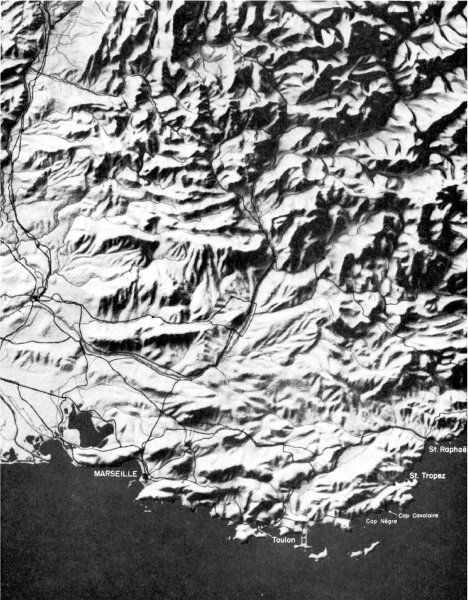
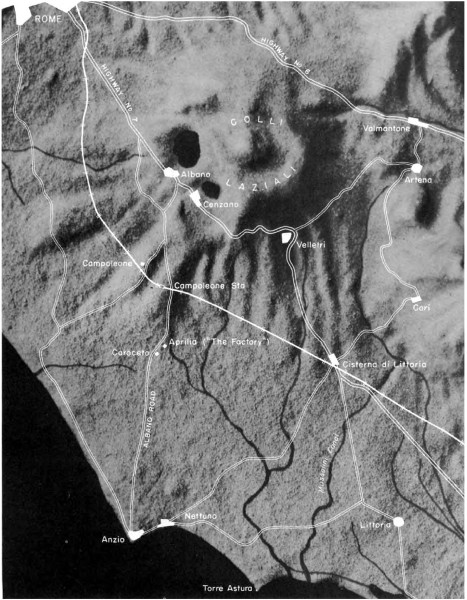
After the Anzio front became stabilized and the effort to take Cassino was abandoned, the AAI (Allied Armies in Italy) regrouped and launched a new offensive on 11 May 1944. Fifth Army, led by French troops and assisted by American troops, broke through the main German positions in the Arunci Mountains west of the Garigliano River while the Eighth Army advanced up the Liri Valley. A few days later the beachhead force effected a junction with the troops from the southern front, and advanced almost to Valmontone on Highway 6 before the axis of attack was shifted to the northwest. After several unsuccessful attacks toward Lanuvio and along the Albano road, the Fifth Army discovered an unguarded point near Velletri, enveloped the German positions based on the Alban Hills, and pushed on rapidly toward Rome, which fell on 4 June 1944 with the Germans in full retreat. Meanwhile preparations were being rushed for an invasion of southern France by Allied troops, most of them drawn from forces in Italy.
ITALY
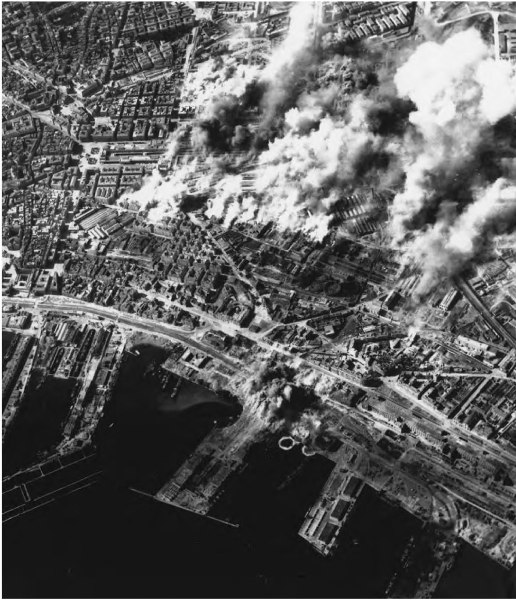
RAILROAD YARDS IN NAPLES burning after bombardment by Allied bombers from Africa. Before the invasion of Italy the bombing of enemy rail communications leading into southern Italy had high priority. Naples and Foggia were the most important rail centers south of Rome and both were heavily bombed prior to the landings.
ITALY
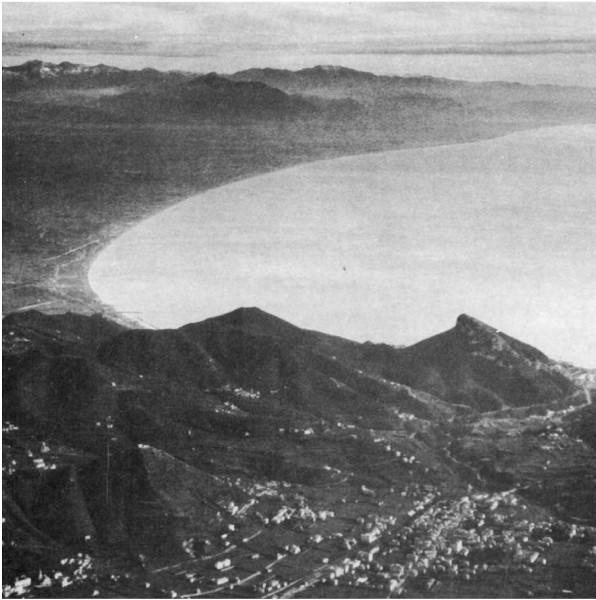
GOLFO DI SALERNO. The plain of Salerno in Italy, ringed and dominated by mountains, provided observation posts and commanding positions for the enemy. Here, on 9 September 1943, landed elements of the U. S. Fifth Army, an Anglo-American force. The British 10 Corps of this army landed on the beaches shown in the center of the picture, the U. S. VI Corps on beaches at Paestum in distance. One division of the British Eighth Army landed at Taranto in the heel of Italy simultaneously with the main landings in the Golfo di Salerno. Just six days before these landings two divisions of the British Eighth Army had invaded Italy from Sicily. These two armies were to advance northward: the U. S. army along the west and the British army along the east side of the peninsula.
ITALY
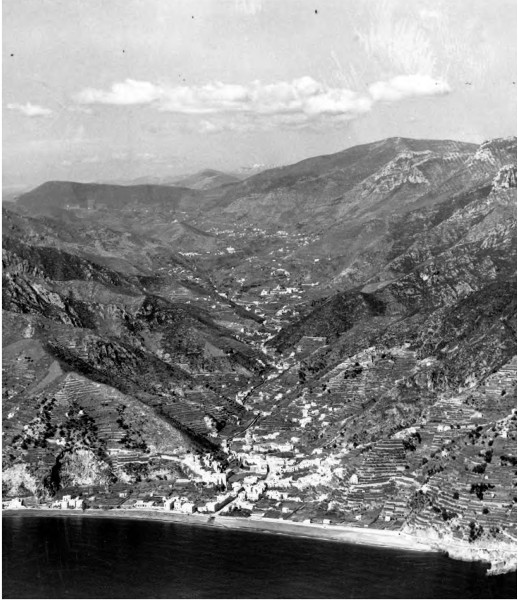
MAIORI BEACH, located a few miles west of the town of Salerno. Three Ranger battalions landed here unopposed on the morning of the invasion. Their mission to advance across the mountains and into the Nocera plain to prevent reinforcements located around Naples from reaching the invasion area was accomplished.
ITALY
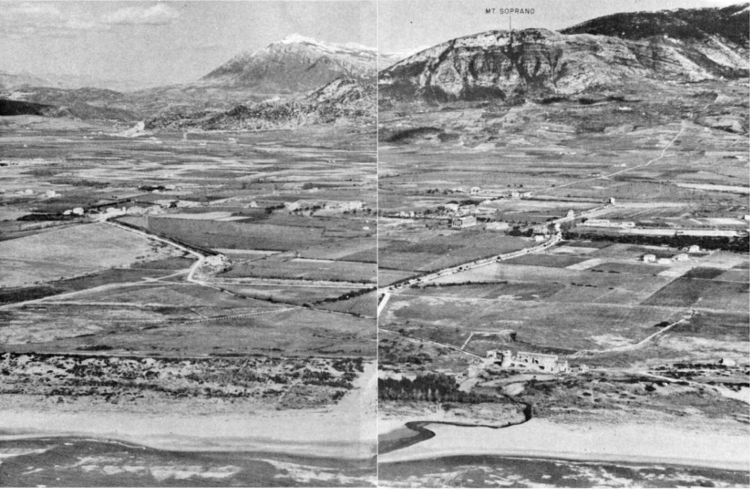
PAESTUM BEACH ON THE GOLFO DI SALERNO. At lower right is Paestum tower, the most prominent landmark on the beach. This beach was the scene of the first invasion of U. S. troops on the mainland of Europe. The landing took place before daylight on 9 September and the troops reached Monte Soprano before nightfall. The area did not contain many fixed defenses, but the enemy had a considerable number of tanks and mobile guns.
ITALY
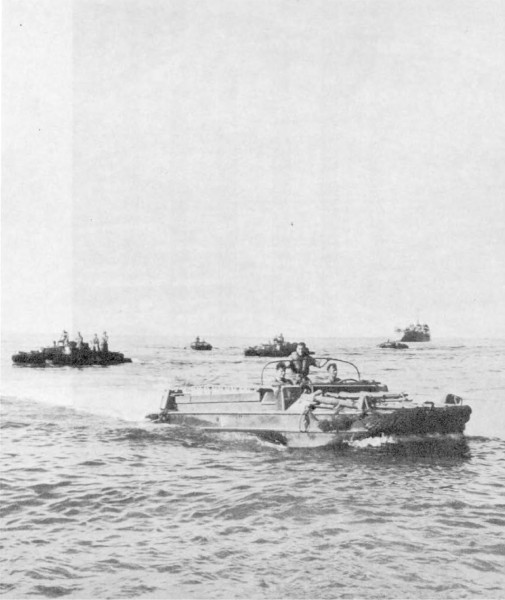
DUKW’S HEADING FOR SALERNO BEACHES. The one in the foreground is carrying gasoline in five-gallon cans. The maintenance of Allied forces for the first few days depended largely on craft such as these “ducks.”
ITALY
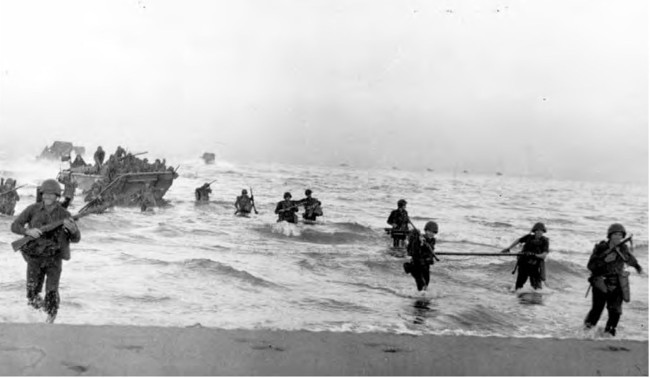
INVASION SCENES AT PAESTUM BEACH. Infantry debarking from assault craft (top) and naval personnel evacuating wounded soldiers to a transport for medical care (bottom). The landing craft shown are all LCVP’s.
ITALY
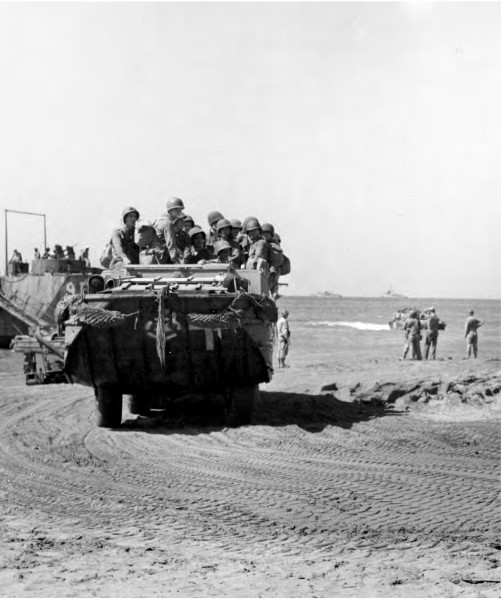
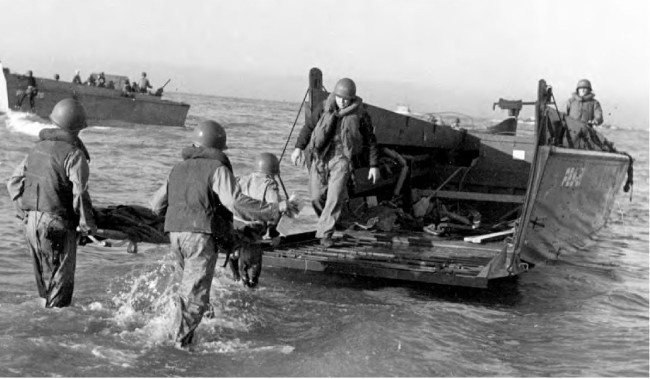
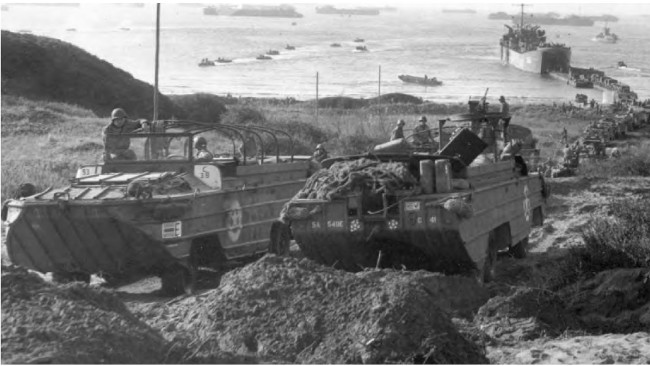
DUKW LANDING AT PAESTUM BEACH. These amphibian trucks brought light artillery and antitank guns ashore after the first assault waves had landed and, later in the day, brought men and supplies ashore.
ITALY
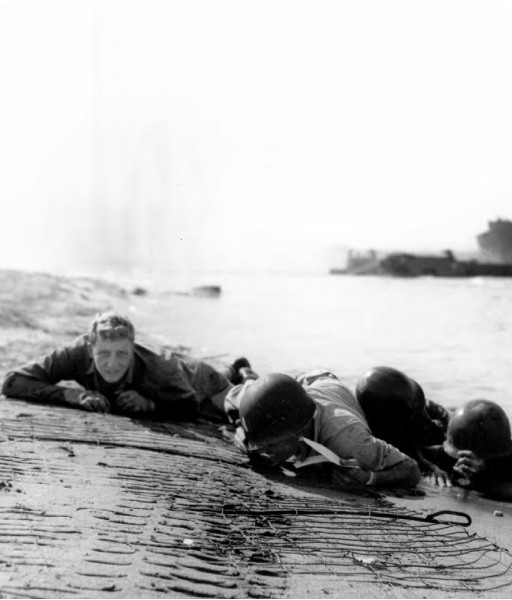
SOLDIERS HUGGING THE BEACH during air strafing and bombing attack on D Day. Five enemy air raids, each by a formation of eight fighter-bombers, were made against U. S. troops along the beach. Several smaller formations were sent against ships offshore. Casualties and damage caused were relatively slight on D Day.
ITALY
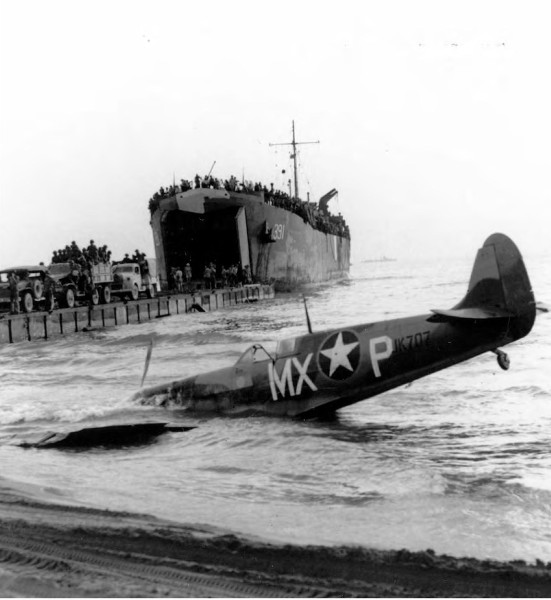
WRECKED SPITFIRE shot down by Allied antiaircraft fire over Paestum beach. As several U. S. fighter squadrons were equipped with British Spitfires, the planes bore U. S. markings. Providing air cover from the Salerno area was a difficult problem because Allied fighters were based in Sicily. The longest-range fighter, the P-38, could stay over the beaches for only one hour, the A-36 (modified North American P-51 Mustang) thirty minutes, and the Spitfire about twenty minutes. (In background: LST unloading equipment over sectional ponton ramp.)
ITALY
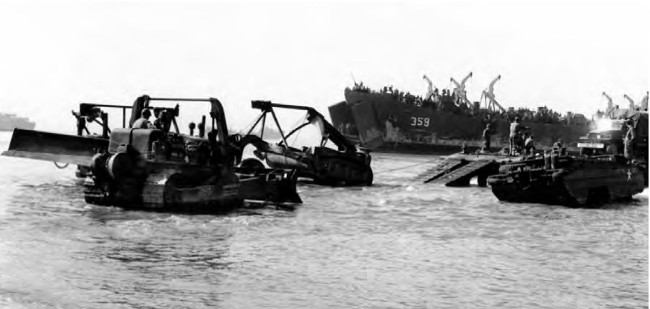
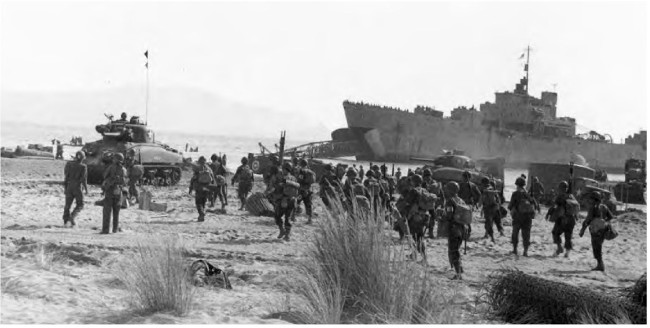
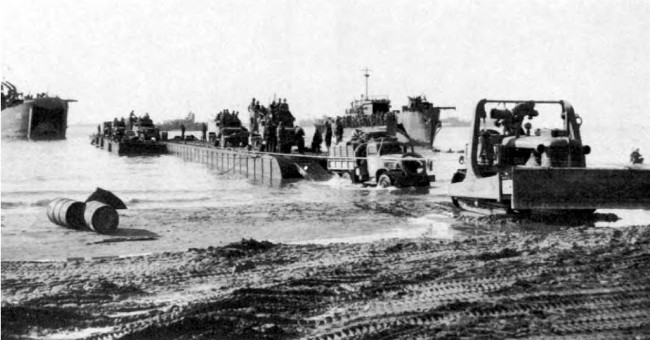
REINFORCEMENTS COMING ASHORE at Paestum beach on D Day. Top: bulldozer coming ashore—in background is a U. S. type LST, two-davit design; bottom: infantry, armor, and medical aid men—in background is British type tank landing ship (LST (1)). This ship was one of three belonging to the Boxer class. These were the first ships built specifically for tank landing purposes after the successful experimentation with the converted Maracaibo class oil tankers. They could land medium tanks over a low ramp carried within the ship and extended through low gates toward the beach. Load: thirteen 40-ton tanks or the equivalent. (A DUKW also is shown in the top picture; the tanks in the bottom picture are Sherman M4A1.)
ITALY
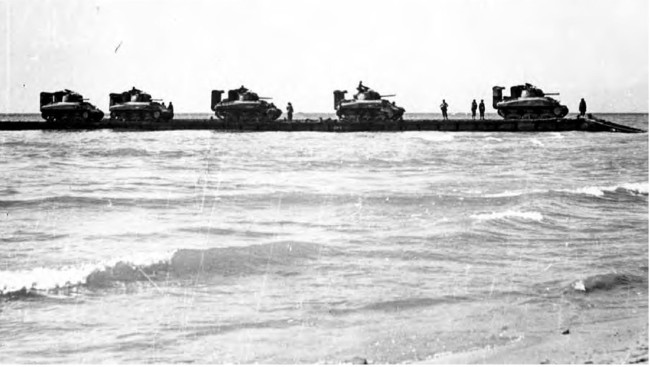
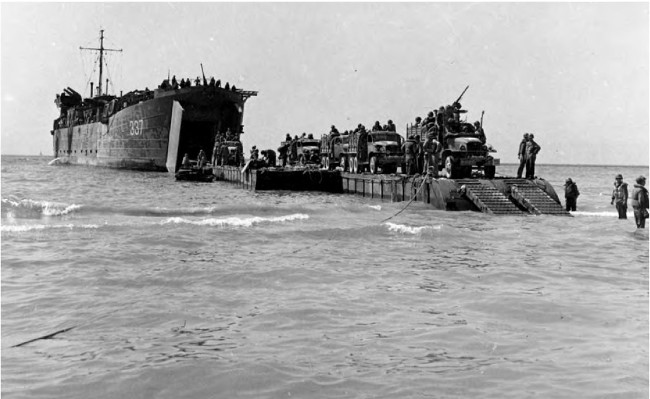
HEAVY EQUIPMENT ROLLING ASHORE ON D DAY. Waterproofed medium tanks (Shermans) rolling toward shore across sectional ponton ramp from LST (top), and LST discharging fully loaded trucks (bottom).
ITALY
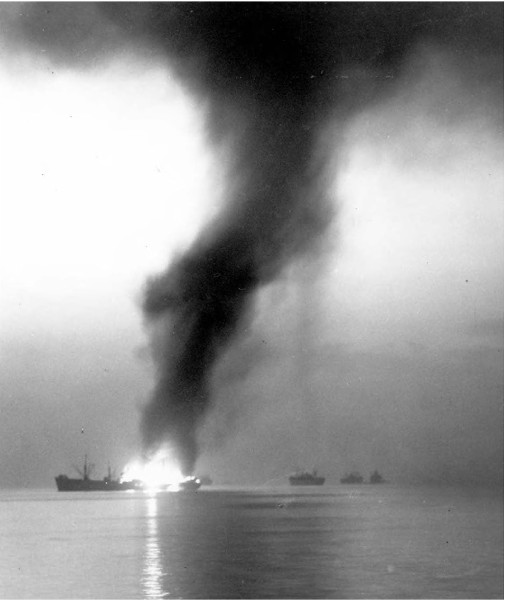
FREIGHTER BURNING AFTER BOMBING ATTACK. The night of 10–11 and the day of 11 September saw the greatest enemy air activity. During that time about 120 hostile aircraft raided the beaches and the transport area.
ITALY
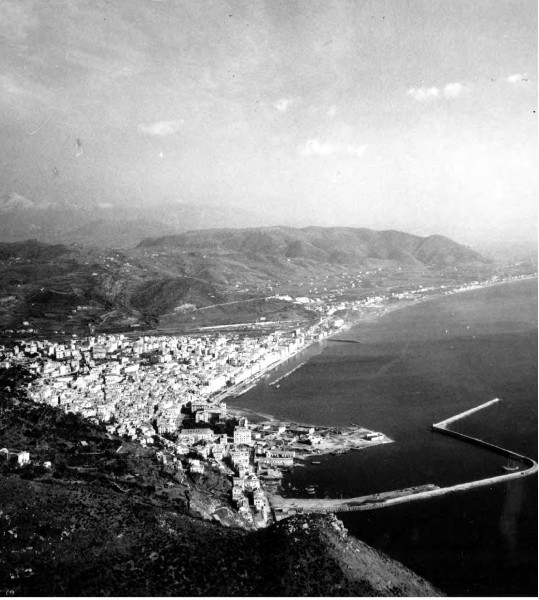
SALERNO, which fell to the British forces of the Fifth Army on D Day. Until the port of Naples, which fell on 1 October, was cleared, all reinforcements and supplies for the army came in over the beaches or through the port of Salerno. On 19 September the entire Salerno plain was securely in Allied hands. The German counterattacks which had started on 12 September had been checked by the 15th. On the 17th the Germans started to withdraw from the area.
ITALY
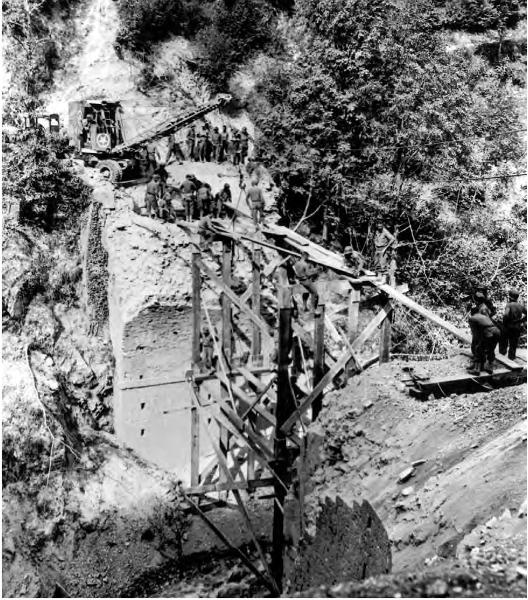
ENGINEERS REPAIRING A BRIDGE NEAR ACERNO. While part of the invading forces advanced westward toward Naples, part proceeded toward Benevento to the north. The enemy retreated slowly toward the river Volturno, the next natural line of defense, leaving rear guards to delay the advance, mine the roads, and blow the bridges.
ITALY
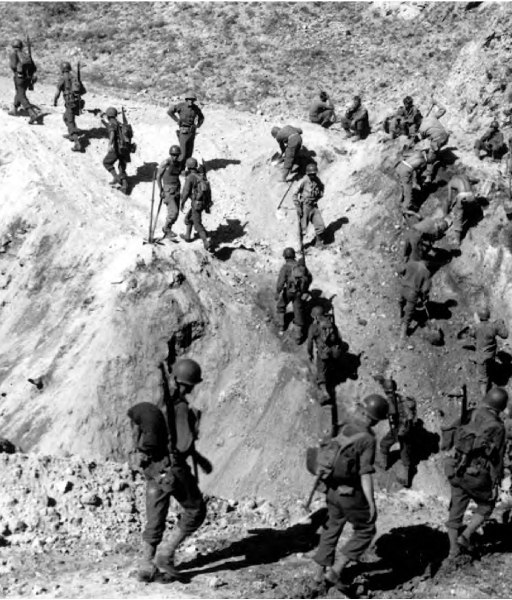
INFANTRY ADVANCING ACROSS BYPASS TO BRIDGE near Avellino on the way to the Volturno River. Blown bridges caused much delay; infantry, after crossing, generally ran into opposition that required the use of tanks, which had to wait until the engineers could rebuild the bridges.
ITALY
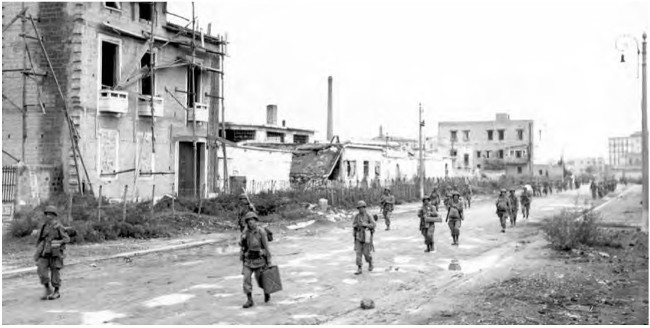
U. S. TROOPS IN NAPLES. The city fell to the British 10 Corps, assisted by elements of some U. S. units, on 1 October 1943. When Naples fell, the Allies were in possession of three of Italy’s best ports, Naples, Bari, and Taranto, as well as two of the most important airport centers, the Naples area on the west and the Foggia area on the east of the peninsula. The latter had fallen to the Eighth Army on 27 September and soon became the base for the biggest concentration of Allied bombers in the entire Mediterranean theater.
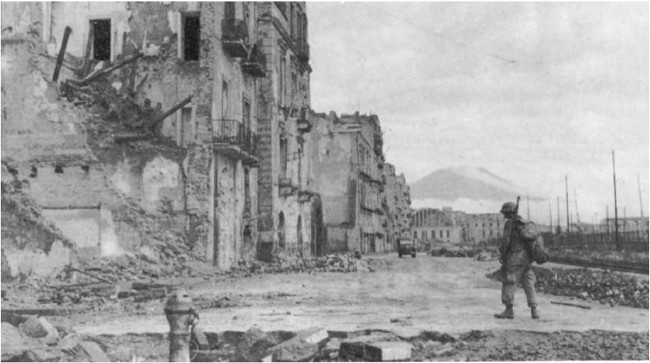
ITALY
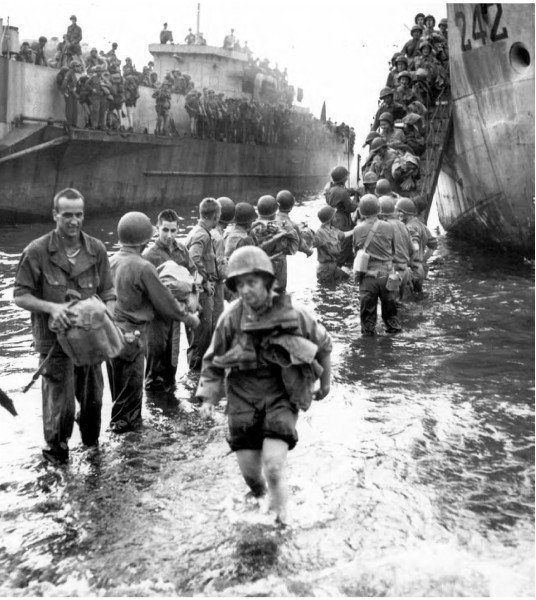
U. S. NURSES DEBARK FROM LCI in the Bay of Naples. Port facilities in the city had been heavily bombed by the Allies for months before the invasion and the damage had been increased by the Germans as they retreated. Much of the cargo coming into the harbor had to be discharged over beaches in the bay. However, twelve days after the capture of the city the unloading facilities were beginning to function and that day 3,500 tons were discharged.
ITALY
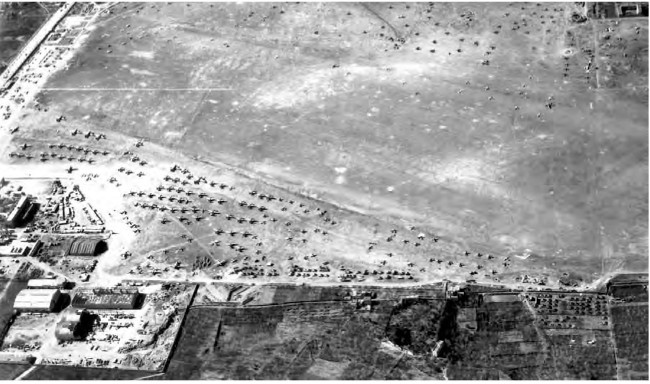
AIRFIELDS NEAR NAPLES. Capodichino (top) and Pomigliano (bottom) after they had been put to use by the Allies. Both fields had been severely damaged by Allied bombers before the invasion.
ITALY
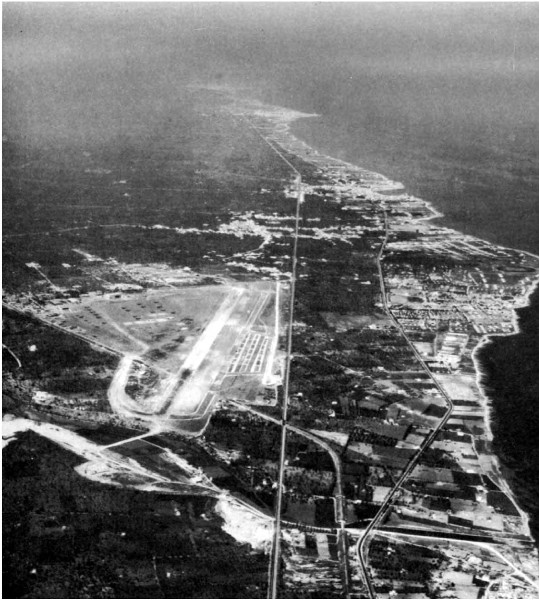
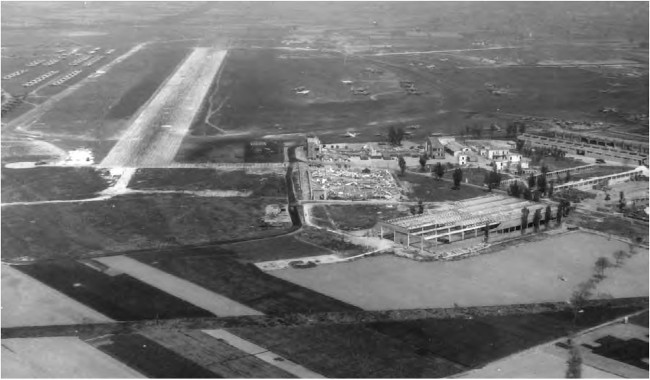
BARI AIRPORT, on the Adriatic just north of the heel of Italy, was captured by the British on 22–23 September 1943. The enemy had used this airport as a transport base and for staging fighters on the way to Africa. The near-by town of Ban became headquarters for the heavy Allied bombardment units based at several airfields on the Foggia plain. Both the town of Ban and the Bari airport were subject to attack by enemy aircraft.
ITALY
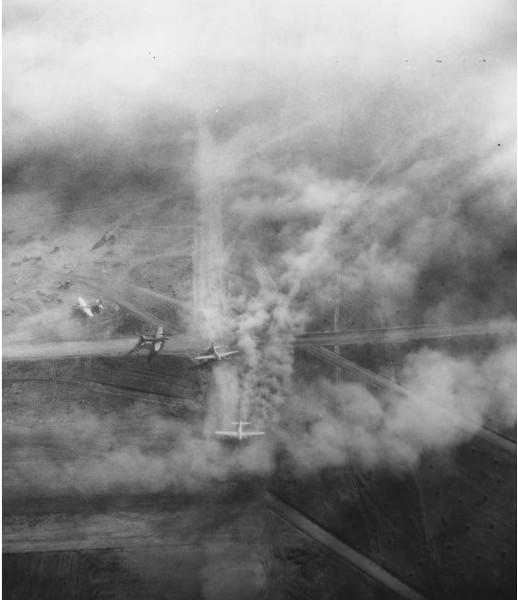
FLYING FORTRESSES taxiing out to runway to take off on a mission. This picture was taken early in the Italian campaign, before this airfield in the Foggia area had been improved. Soon after the Foggia airfields had been captured, Allied bombardment groups started to move from the African bases.
ITALY
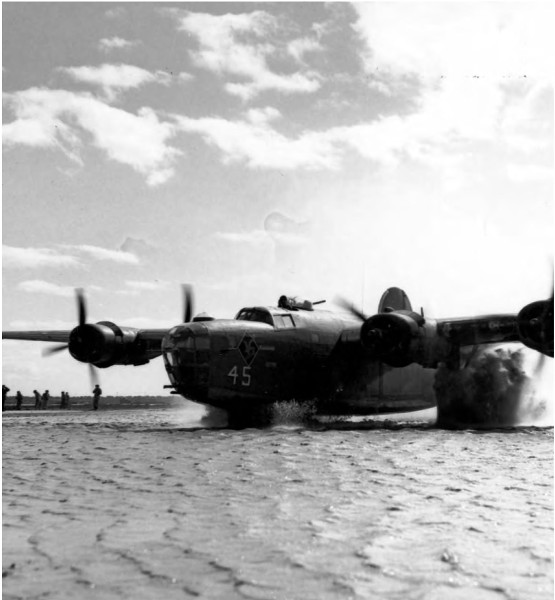
LIBERATOR BOMBER taxiing along flooded runway on one of the airfields in the Foggia area. When the fall rains started in October 1943 most of these fields became muddy and some were flooded. The flying of missions was continued while construction was in progress, runways being lengthed and raised, and fields drained. By the end of 1943 most of the fields had been put into good shape and by that time two heavy bombardment groups, two medium groups, and two fighter groups were operating out of ten airfields in the Foggia area.
ITALY
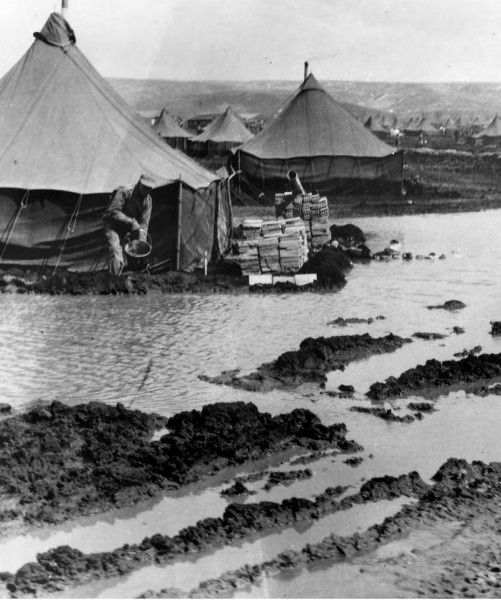
AIRMAN BAILING OUT HIS TENT after a rainstorm in southern Italy. This was late fall 1943. As time went on conditions improved. By the end of the year there were 35,000 U. S. combat airmen with their supporting forces in Italy.
ITALY
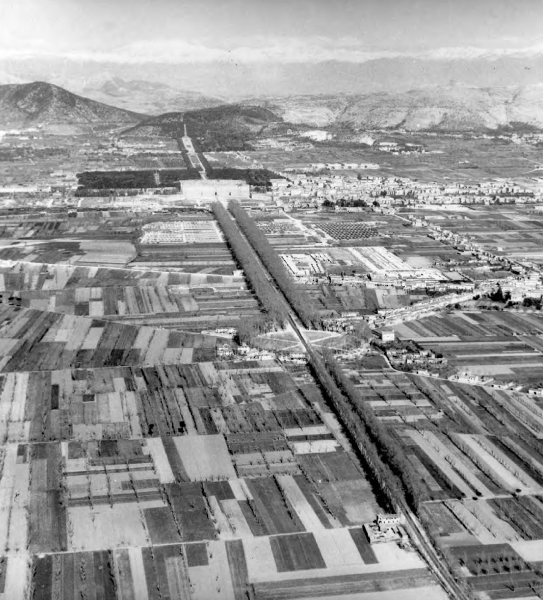
CASERTA, NEAR NAPLES. This area fell to the Fifth Army on 5 October 1943. The palace shown at end of tree-lined road became headquarters of the Fifth Army soon after the building was captured. Later it also became headquarters of the 15th Army Group (Fifth and Eighth Armies) and still later Allied Force Headquarters, the last named having control over the entire Mediterranean Theater of Operations. The German surrender in Italy was signed in the palace.
ITALY
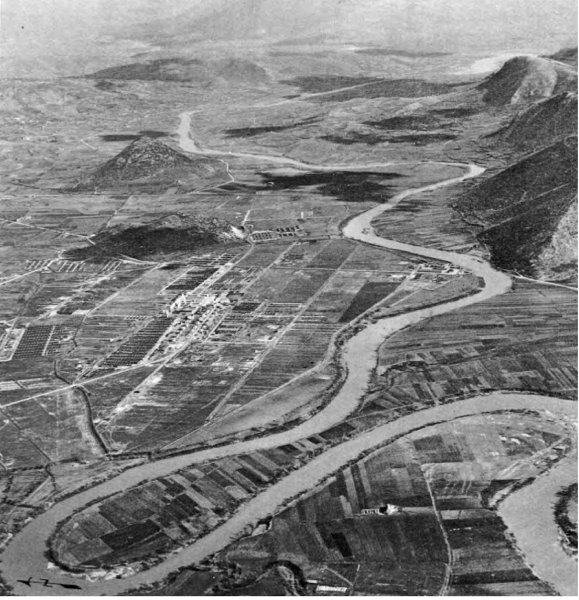
VOLTURNO RIVER ABOVE CAPUA. This was the first natural line of defense north of the Naples area. The Fifth Army had reached the southern bank of this river by 6 October. In the period between the landings on 9 September and the arrival at the Volturno, the Fifth Army had suffered 12,219 casualties of all kinds; 4,947 were U. S.; 7,272 were British. On 13 October the first successful crossing of this river took place above and below the hairpin loop. The river here is from 150 to 200 feet wide, its depth from 3 to 5 feet. U. S. troops crossed in assault boats or on rafts; some used life preservers, and some forded the icy stream with the use of guide ropes.
ITALY
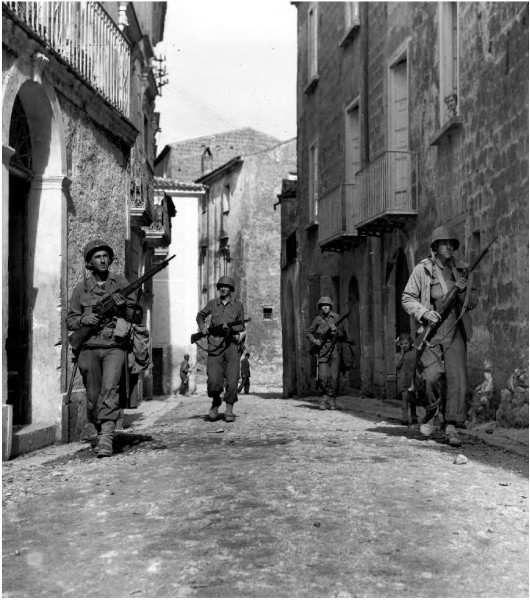
SOLDIERS ENTERING CAIAZZO after crossing the Volturno River. The two men in foreground are carrying the Springfield rifle with telescopic sights; those in rear, the Garand. (The Springfield rifle M1 903A 4, .30-caliber, bolt-action, manually operated, became the standard U. S. Army rifle in 1903. Garand rifle M1, .30-caliber, self-loading, semiautomatic, is at present the standard U. S. Army rifle.)
ITALY
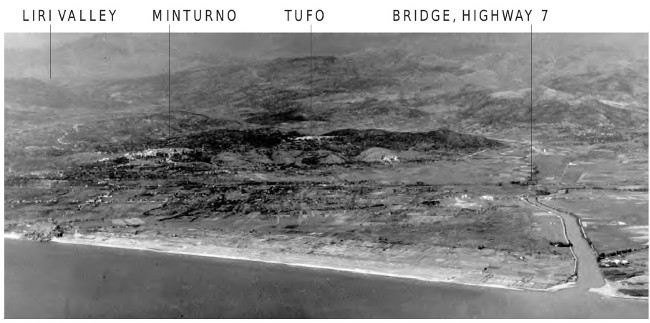
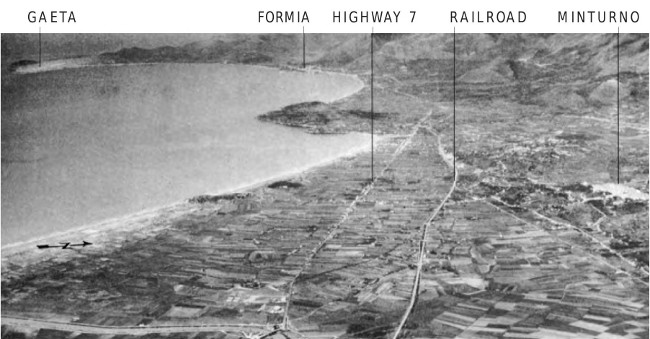
THE GARIGLIANO RIVER AREA on the Golfo di Gaeta. The area shown was the western anchor of the enemy Gustav Line as well as his Winter Line. By 15 November 1943 the Fifth Army was halted in front of the Winter Line, which consisted of well-prepared positions across the waist of Italy from the mouth of the Garigliano River on the west, through the mountains in the center, to the mouth of the Sangro on the east coast. The more formidable Gustav Line was located farther north except along the lower Garigliano where the two defense lines generally coincided. Little fighting took place in the area shown until the British 10 Corps crossed the river on 17 January 1944 to support the main Fifth Army effort to drive up the Liri Valley. Garigliano River is located at right in top picture and at lower left in bottom picture.
ITALY
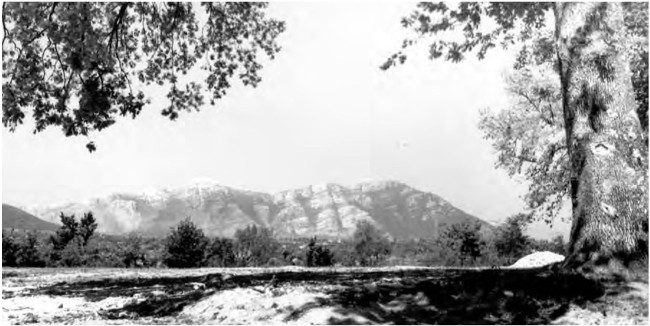
THE CAMINO HILL MASS. Top picture is taken looking toward the northwest from road fork of Highways 6 and 85. Bottom picture shows the hill mass with the Rapido River Valley in distance. The Winter Line continued along the south and east slopes of these mountains. The Camino Hill area fell to British and American troops on 9 December 1943, after several days of severe fighting.
ITALY
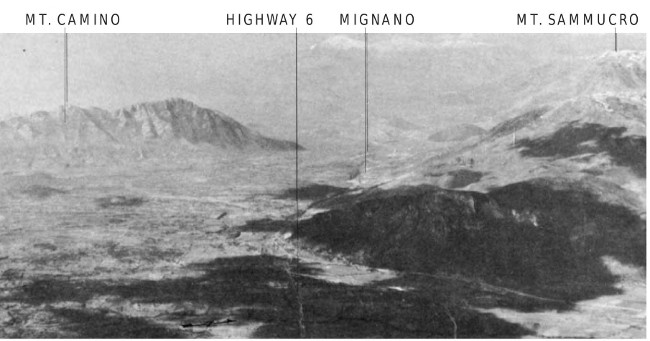
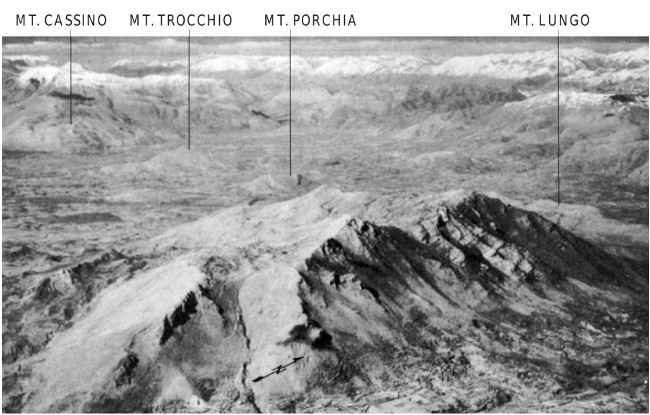
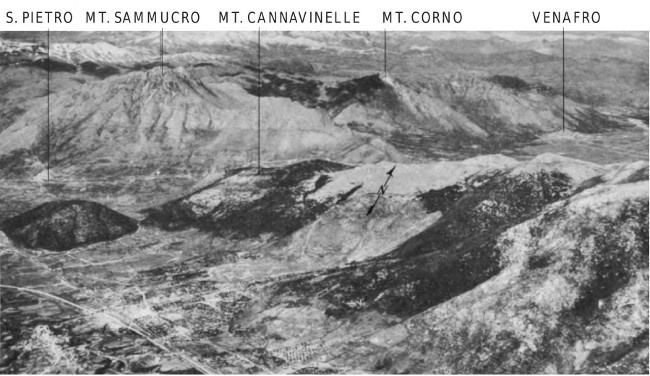
THE MIGNANO GAP. Looking west through the gap toward Monte Cairo, the snow-covered mountain in distance. Cassino is located at the foot of this mountain (top). Looking north from the gap; the village of Mignano, Highway 6, and the railroad are in lower left hand corner (bottom). San Pietro Infine, the village on the slope of Monte Sammucro, was the scene of one of the costliest battles of the Winter Line campaign. Mignano Gap was one of the few breaks in the mountains of the Winter Line and the main effort to breach that line was made at this gap.
ITALY
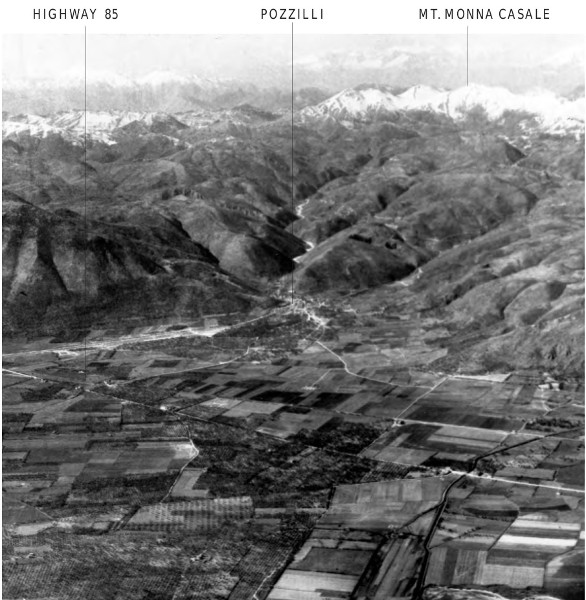
VOLTURNO RIVER VALLEY NORTH OF VENAFRO. River is in foreground. The valley had been cleared of enemy troops by the middle of November 1943. While German rear guards carried out delaying actions, the main enemy forces strengthened the Winter Line defenses in these mountains, which separate the Volturno River from the Rapido River. Hard fighting took place for control of the road leading from Pozzilli through the mountains to San Elia in the Rapido Valley. Initial attempts made by U. S. forces to cross the mountains failed because of the exhaustion of the troops, the difficulty of supply, the unfavorable weather, and the determined resistance of the enemy. The U. S. units were replaced by fresh French mountain troops, who in January 1944 fought their way across the mountains.
ITALY
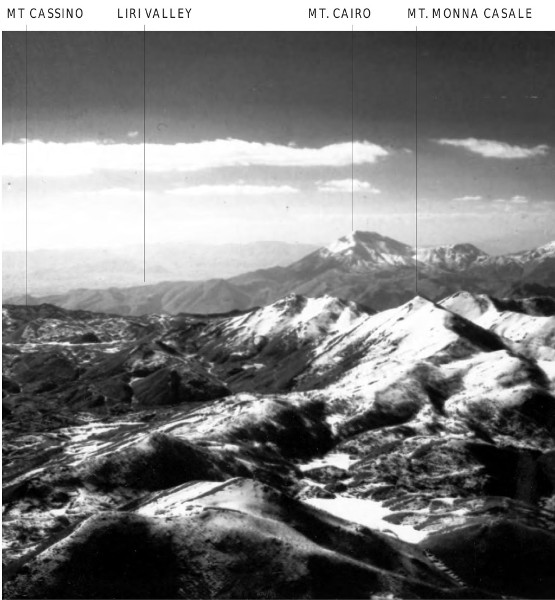
THE MONNA CASALE MOUNTAIN RANGE. These are the highest mountains in the ridge separating the Volturno and Rapido Valleys. Two roads across these mountains connect the two valleys: the Colli al Volturn-Atina road on the north side of the range, the Pozzilli-San Elia road on the south side. Both were relatively poor. Hill mass at lower left is Monte Pantano. The battle for this hill started on the night of 28–29 November and lasted until 4 December. On that day the U. S. forces withdrew with the enemy still in possession of most of the area. French troops seized the rest of Monte Pantano on 17 December.
ITALY
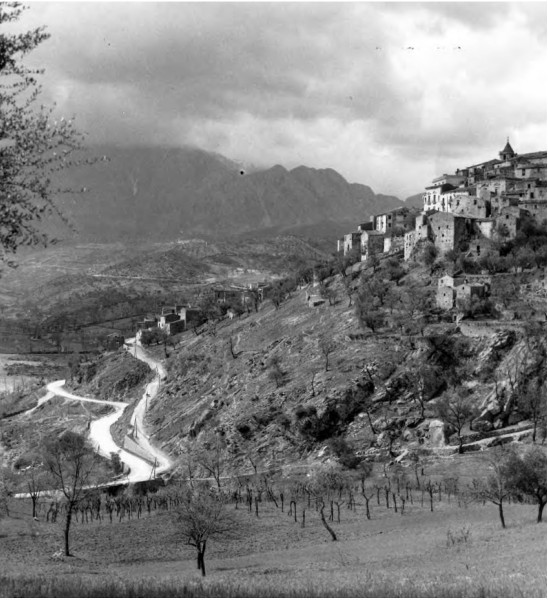
COLLI AL VOLTURNO. This typical Italian mountain village is located at the headwaters of the Volturno and was on the right flank of the U. S. Fifth Army. The mountains between this area and the left flank of the British Eighth Army fighting along the east coast of Italy were so rugged that no fighting took place there. Both Allied armies merely maintained small patrols to keep in contact. The lower road on the left runs through the mountains separating the Volturno and Rapido River Valleys and leads to Atina north of Cassino.
ITALY
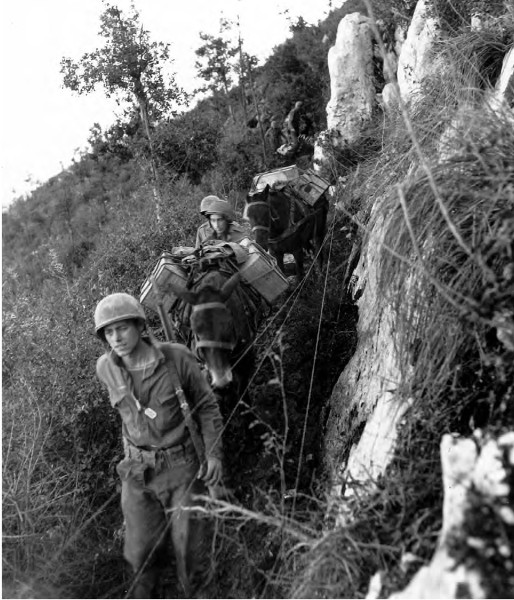
PACK TRAIN IN THE MOUNTAINS. These pack trains consisted mainly of mules, but horses and donkeys were also used. Without the use of pack trains the campaign would have been much more difficult. To supply the basic needs of an infantry regiment in the line two hundred and fifty animals per day were required.
ITALY
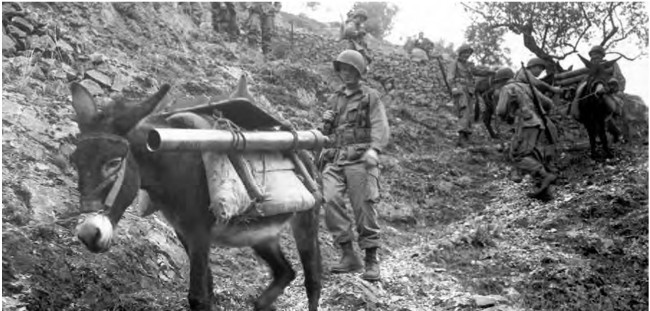
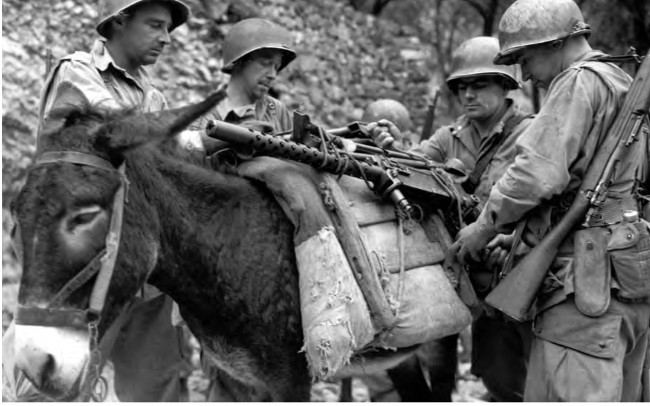
PACK TRAIN IN THE VENAFRO AREA. Top: first donkey is loaded with an 81-mm. mortar, the second carries the ammunition; bottom: strapping a light .30-caliber machine gun on a donkey. The pack animals obtained by the Allies in the Mediterranean area were of varying sizes, generally smaller than the ordinary American mule, and standard U. S. pack equipment had to be modified in the field. Most of the equipment, however, was purchased in Italy.
ITALY
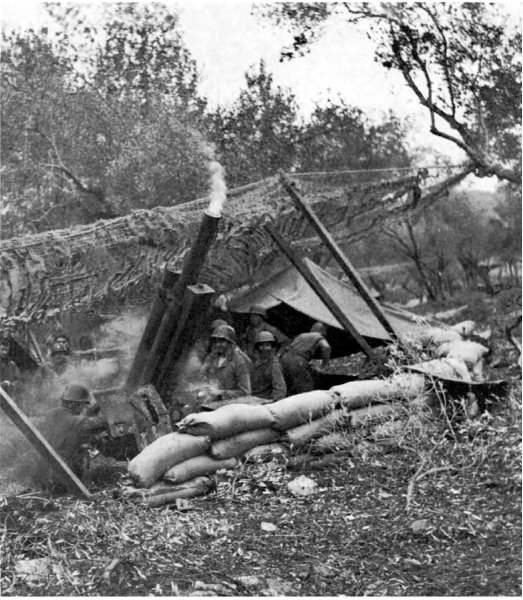
FIRING A HOWITZER ON THE VENAFRO FRONT, with camouflage net pulled back for firing. While the infantry crouched in foxholes on the rocky slopes of the mountains, the artillery in the muddy flats behind them gave heavy supporting fire on enemy positions. To clear the masks presented by the high mountains ahead, barrels had to be elevated. (105-mm. howitzer.)
ITALY
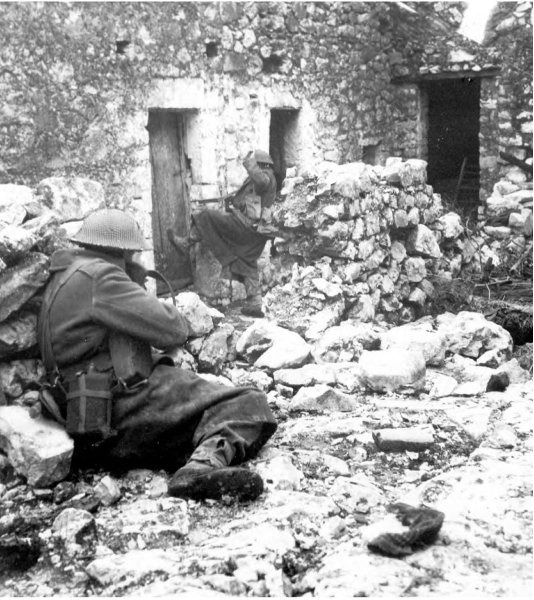
BRITISH SOLDIERS SEARCHING A HOUSE IN COLLE, a village on Monte Camino. Soldier in foreground is covering his partner while the latter kicks open the door. The stone houses, typical of those in the mountain areas, with walls sometimes four feet thick, made fine strong points. They could be reduced by artillery, but in the Camino fighting, a joint British-American operation, there was no close-support artillery.
ITALY
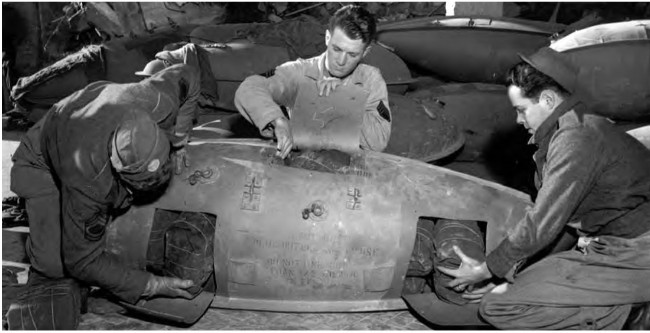
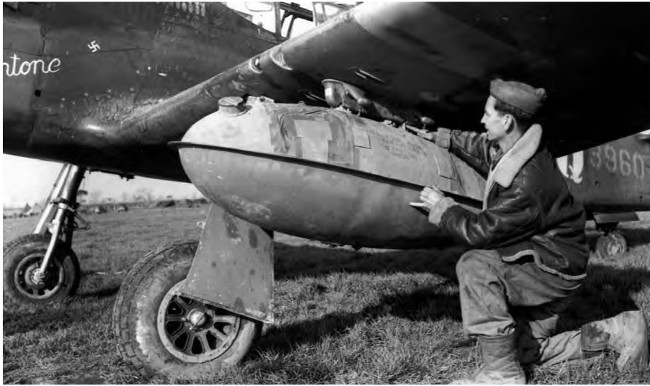
PREPARING AIR DROP OF FOOD AND SUPPLIES. Packing food parcels into belly tanks of a P-40 (top), and attaching tank to the bomb rack of A-36 fighter-bomber (bottom). The tank is released like a bomb. During the fighting on Monte Camino in December several air drops were attempted, but poor visibility, poor recovery grounds, and proximity to enemy positions combined to defeat the attempts on that occasion.
ITALY
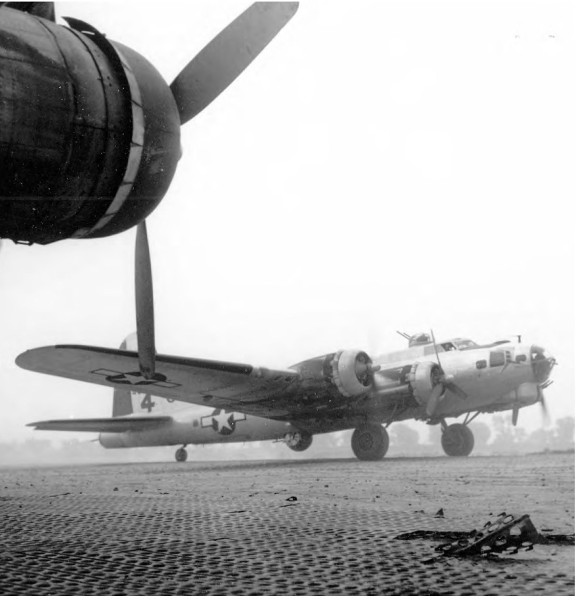
FLYING FORTRESS RETURNING FROM A MISSION. Note part of the pierced steel plank runway in the foreground. The moving of the heavy bombers from their bases in Africa to the Foggia area in Italy was a tremendous undertaking because of the equipment necessary to establish new runways, pumping plants, pipelines, repair shops, and warehouses. The move took place during the late fall and winter of 1943 and required about 300,000 tons of shipping. This was at a critical time of the ground fighting and there was not enough shipping to take care of both the air and the ground fighters. So heavy were the shipping requirements that the build-up of Allied ground forces was considerably delayed.
ITALY
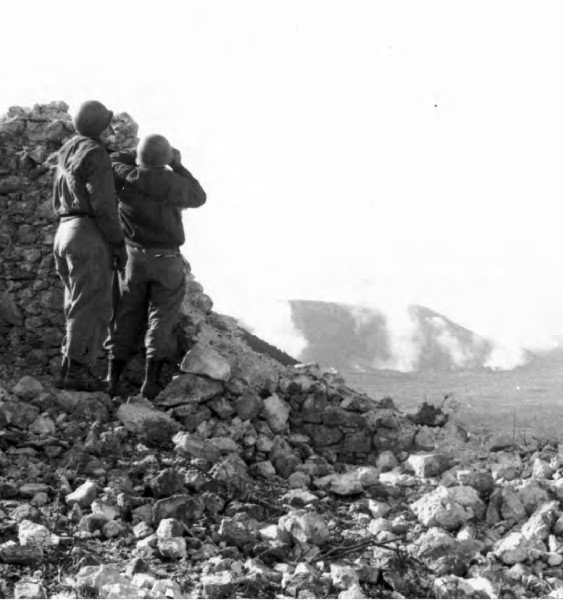
OBSERVING SMOKE SHELLS FALLING on enemy-occupied Monte Lungo during the second fight for the village of San Pietro Infine on 15 December 1943. The smoke was to prevent enemy observation on the village, which at this time was under infantry attack. The first attacks on San Pietro Infine, 8–9 December, were repulsed by the enemy, as were the attacks of 15–17 December. By this time, however, the Allies had launched an attack and taken Monte Lungo, thus outflanking the Germans in the San Pietro Infine area. This caused the Germans to evacuate the village and withdraw to the next position a few hundred yards back.
ITALY
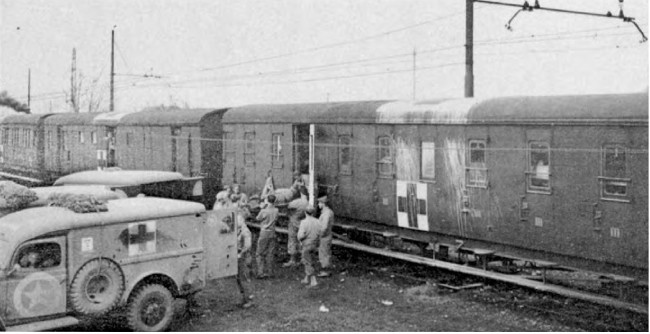
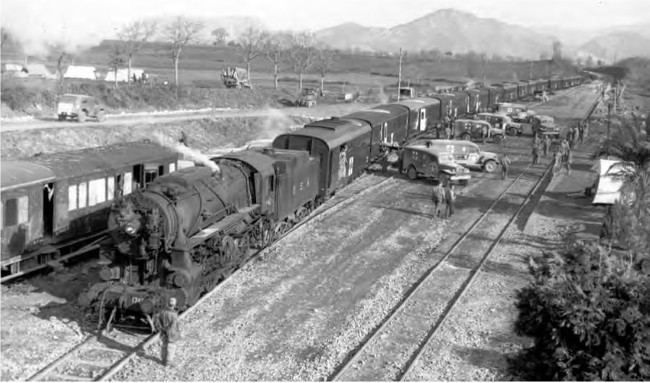
HOSPITAL TRAINS taking men wounded in the 1943–44 winter campaign to base hospitals in the Naples area. Until the fighting had advanced beyond Rome, the main Allied hospital area in Italy was in and around Naples. The trains above have German and Italian cars and U. S. locomotives. (Ambulances: truck, ¾-ton 4 x 4, crew of 2 with 4 litter patients or 7 sitting patients.)
ITALY
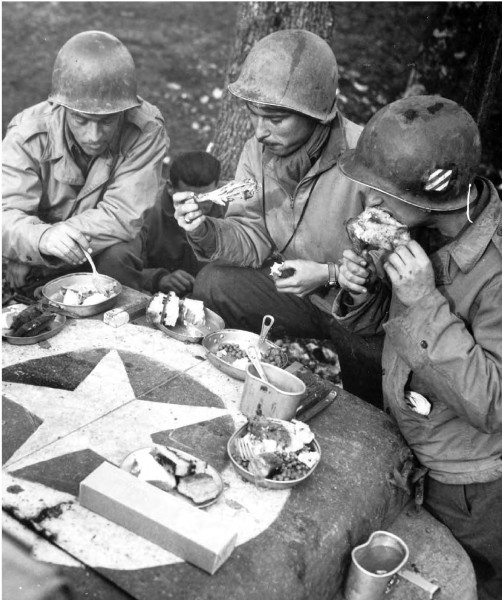
CHRISTMAS TURKEY ON THE HOOD OF A JEEP, Christmas 1943. Every effort was made to give the troops the traditional holiday dinners, complete with trimmings.
ITALY
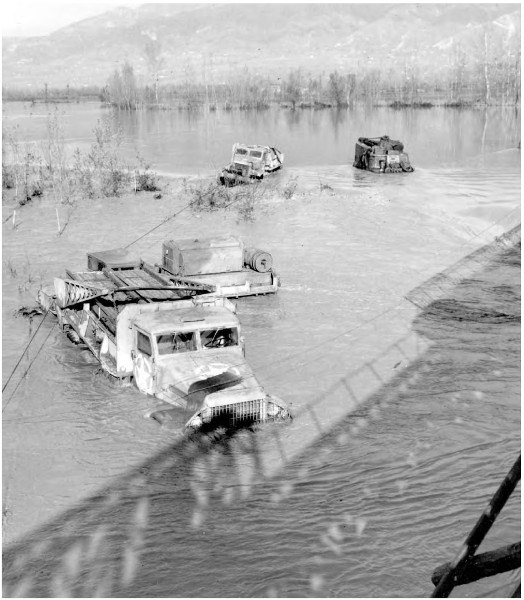
VEHICLES CAUGHT IN FLOODWATERS OF THE VOLTURNO. The fall rains of 1943 started early and flooded the rivers and streams between Naples, the main supply base, and the fighting area of the Winter Line. Just behind the lines, mud, traffic, and enemy shelling combined to keep roads and bridges in a condition that required constant work.
ITALY
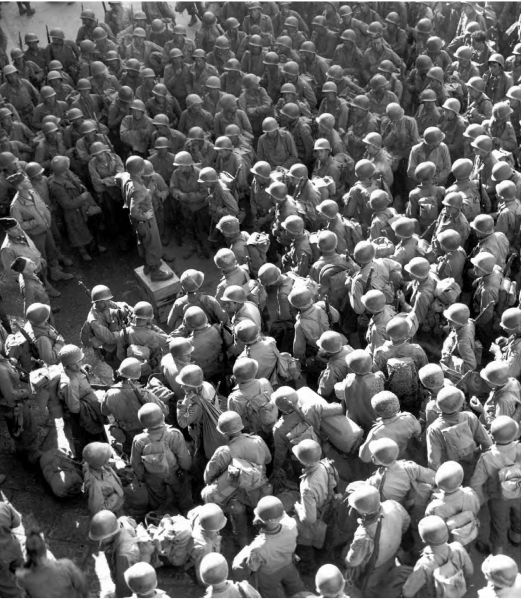
FRONT-LINE SOLDIERS BEING BRIEFED on arrival in rest camp in Naples. Because of lack of food and housing in Italy it was found impossible to give a man a pass and let him seek his own recreation. Military rest camps were set up in several localities, where the men could sleep late in clean beds, have good food, and some entertainment.
ITALY
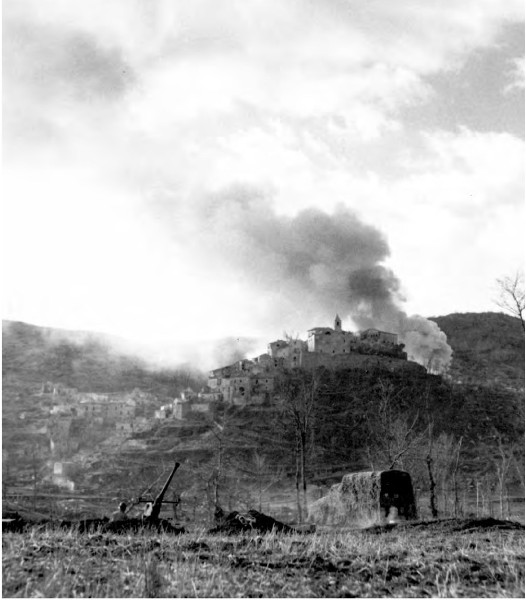
THE TOWN OF ACQUAFONDATA UNDER ENEMY SHELLFIRE. This village was located on the road between Pozzilli in the Volturno Valley and San Elia, north of Cassino. The road was on the right flank of the Fifth Army throughout the Winter Line fighting. Most of the fighting along this road was done by French mountain troops of the Fifth Army.
ITALY
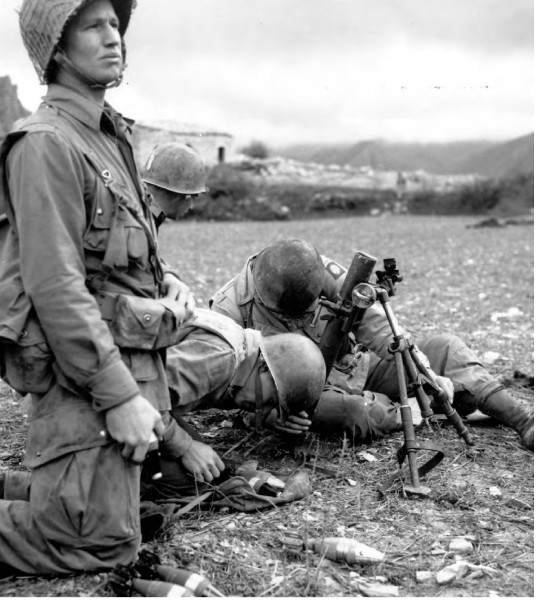
FIRING A MORTAR DURING A TRAINING PROBLEM near Venafro in the Volturno River Valley. Mortars played an important part during the drive through the Winter Line mountains and an intensive training schedule was maintained prior to and during the drive. (60-mm. mortar M 2, mount M 2, standard, developed by the French, but manufactured in the United States under rights obtained from the French.)
ITALY
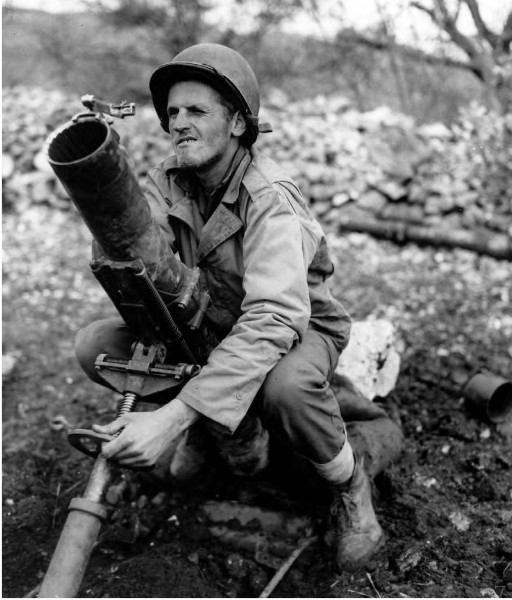
ADJUSTING ELEVATION AND DEFLECTION of 4.2-inch chemical mortar. This mortar had a rifled barrel and was designed for high-angle fire. Because of its accuracy (insured by rifled barrel), mobility, rate of fire, and ease of concealment, it was particularly suited for close support of attacking units.
ITALY
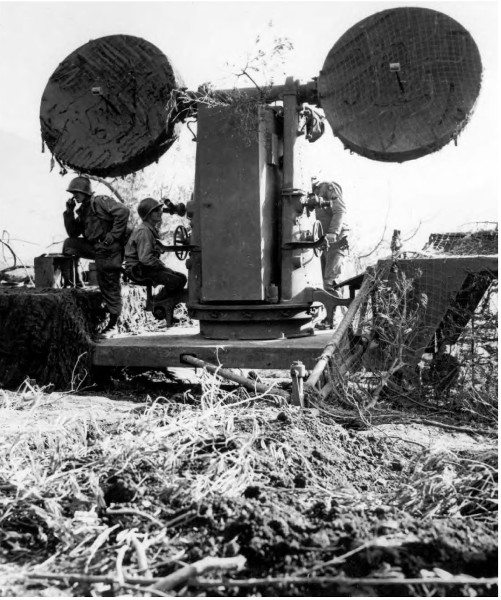
RADAR IN OPERATION NEAR SAN PIETRO INFINE. The operating parts were mounted on a semitrailer towed by a tractor or truck. A van-body truck carried a complete stock of spare parts. (Radar SCR 547.)
ITALY
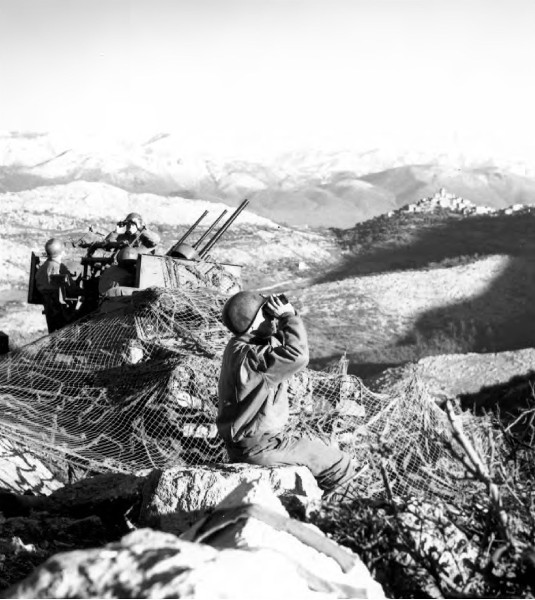
CAMOUFLAGED MOBILE ANTIAIRCRAFT UNIT near San Pietro Infine. Enemy air attacks were not very numerous during the Winter Line fight; the Germans had few aircraft to spare and the weather tended to restrict the use of enemy as well as Allied aircraft. (Multiple-gun motor carriage M 15 composed mainly of a half-track personnel carrier with a 37-mm. gun, two .50-caliber machine guns, and M 6 sighting system.)
ITALY
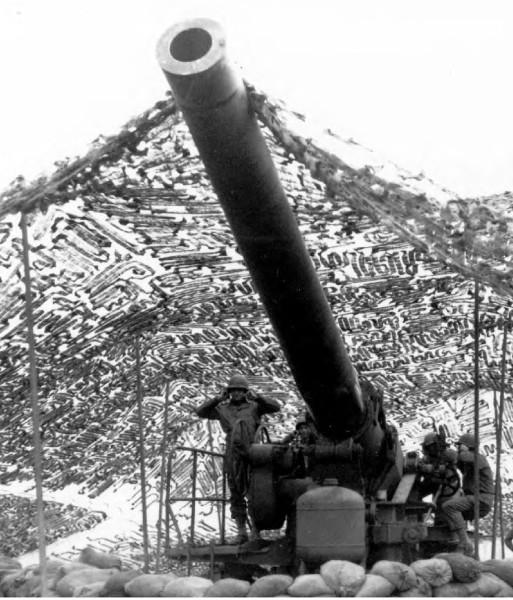
HOWITZER IN THE MIGNANO AREA. This model was the largest U. S. artillery piece in Italy. It and the 8-inch howitzer were rushed from the States to help reduce the strong enemy fortifications of the Gustav Line; the most heavily fortified part of this line was in the Cassino area. (240-mm. howitzer.)
ITALY
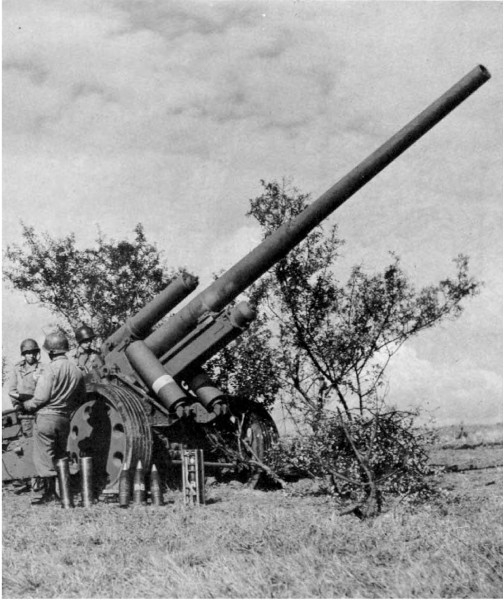
CAPTURED GERMAN ARTILLERY. The standard medium gun of the German Army. It was a World War I model which was used on all German fronts and was part of the corps artillery. The caliber was 10-cm.
ITALY
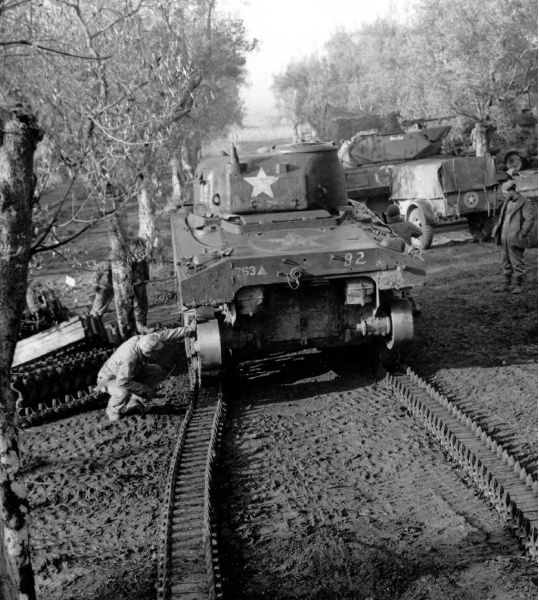
CHANGING TRACKS ON A SHERMAN TANK at Presenzano. This village is located near Highway 6 a few miles behind the lines in Mignano Gap. Tanks had not played a big role during the Winter Line fight because of the mountainous terrain and the muddy lowlands. Tank units were kept ready for use once the infantry had cleared the way through Mignano Gap to Cassino and the entrance to the Liri Valley, the so-called Gateway to Rome.
ITALY
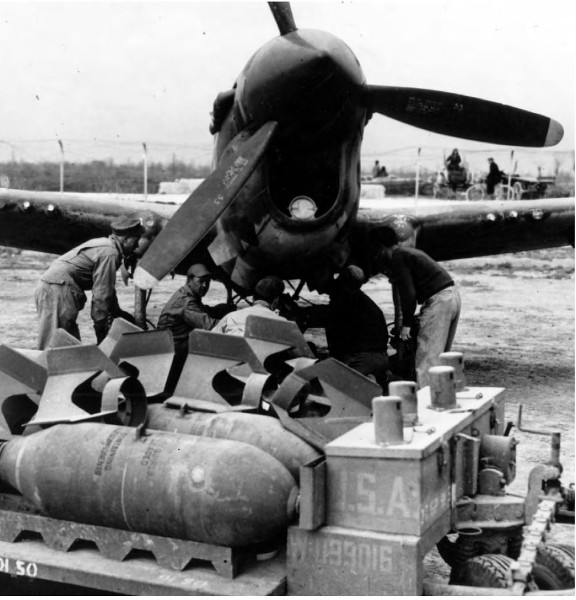
LOADING A CURTISS P-40 Kittybomber for a bombing mission. This was one of the first U. S. fighter types to get into combat, The many variations and modifications of this early fighter of World War II had many names. Those Army planes transported by naval aircraft carrier to the coast of Africa during the invasion there were called Tomahawks, those sold by the United States to the British were called Kittyhawks. Later in the war, as faster fighters arrived to protect bomber formations, the P-40 became a fighter-bomber and was called the Kittybomber. The P-40 groups in Italy were being re-equipped with Republic P-47 Thunderbolt fighters early in 1944.
ITALY
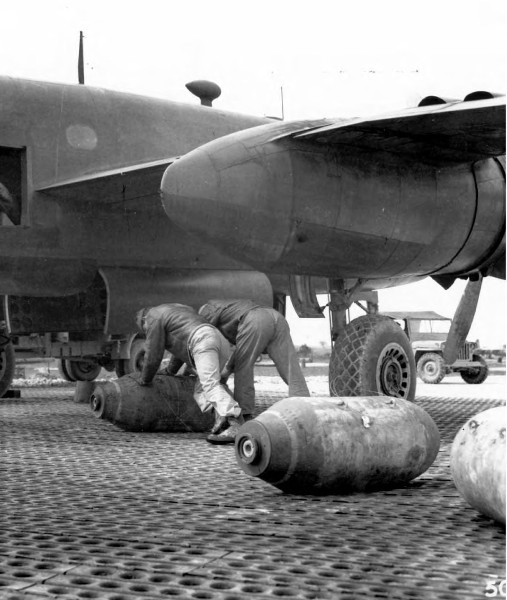
LOADING A MITCHELL MEDIUM BOMBER, North American B-25, with 1,000-pound bombs. Tail fins were attached to the bombs after they were in position in the bomb bay.
ITALY
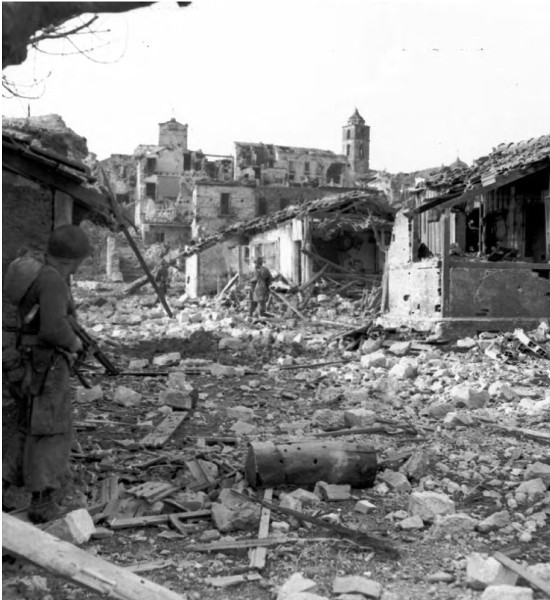
INFANTRY PATROL ENTERING CERVARO on 12 January 1944. The man at left is carrying a tommy gun and covering the two men in front as they hunt for snipers. A few minutes after this picture was made two men of this patrol were killed by Germans hidden in the ruins. Cervaro is on the western slopes of the Rapido Valley. By this time the Fifth Army had fought its way through the Winter Line mountains. Fighting in this area had lasted from 15 November 1943 to 15 January 1944.
ITALY
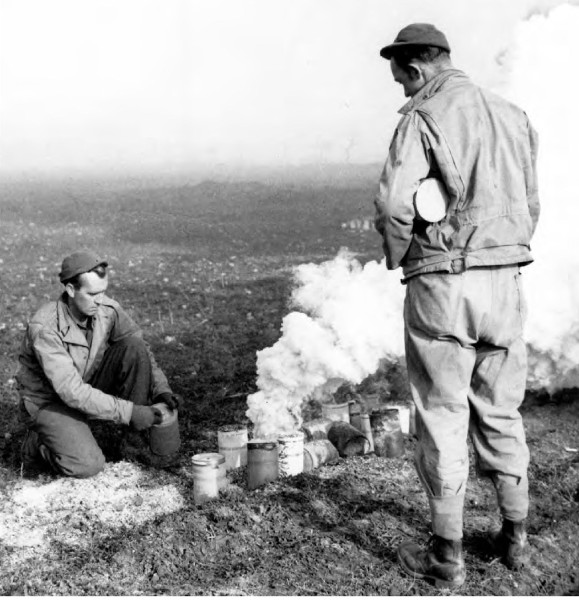
SMOKE POTS USED TO SCREEN INFANTRY crossing the Rapido River near Cassino. The first attempt to cross was made south of Highway 6 by a U. S. division on 20 January 1944. It was a failure. Crossings attempted in the next two days by this division also failed. By afternoon of 22 January all assault boats had been destroyed, efforts to bridge the stream had been unsuccessful, the troops who had managed to cross were isolated, and supply or evacuation had become impossible. On 23 January the attack in the sector was ordered halted. Casualties were 1,681: 143 killed, 663 wounded, and 875 reported missing. On 24 January another U. S. division managed to cross the Rapido north of Highway 6.
ITALY
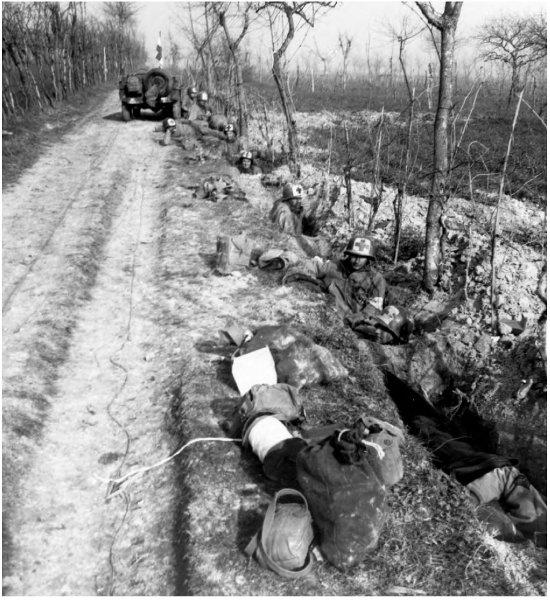
LITTER BEARERS TAKE SHELTER ALONG ROAD near the Rapido River during the first crossing attempt. Casualties among medics were high during the Rapido River crossings. Visibility was generally poor because of mist or artificial smoke and enemy automatic weapons had been zeroed in on likely crossing sites and the surrounding areas. The only means of protection for the litter bearers was the red cross markings on their helmets and sleeves, but at night and during periods of poor visibility in the daytime these identifications were not easily seen.
ITALY
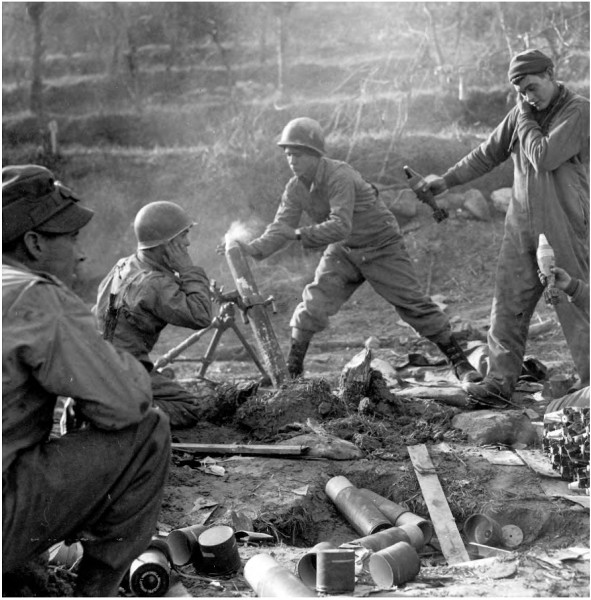
FIRING A MORTAR during the successful Rapido River crossing on 24 January. The attack was made north of Highway 6 and directed toward the mountains north of Cassino. The outskirts of the town were entered for the first time on the morning of 26 January. Tanks were not able to help during the first few days as the ground was too soggy and the engineers were unable to construct bridges. The entire area was under observation from Montecassino and the adjacent hills. Four tanks finally managed to cross during the morning of the 27th, but by noon they were all out of action. Two days later thirty tanks were across, the infantry had taken the village of Cairo high in the hills north of Cassino, and the Allies had made the first dent in the Gustav Line in the Cassino area. (81-mm. mortar.)
ITALY
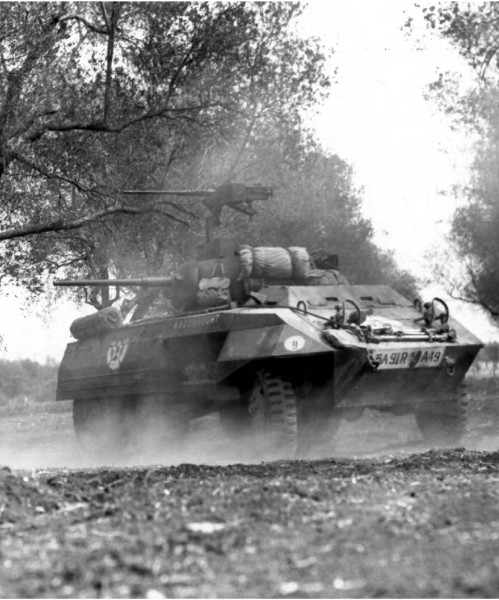
ARMORED CAR FIRING ITS CANNON IN THE CASSINO AREA. (Armored car M8; principal weapon, 37-mm. gun. The one above is also equipped with a .50-caliber M2 Browning machine gun in AA mount.)
ITALY
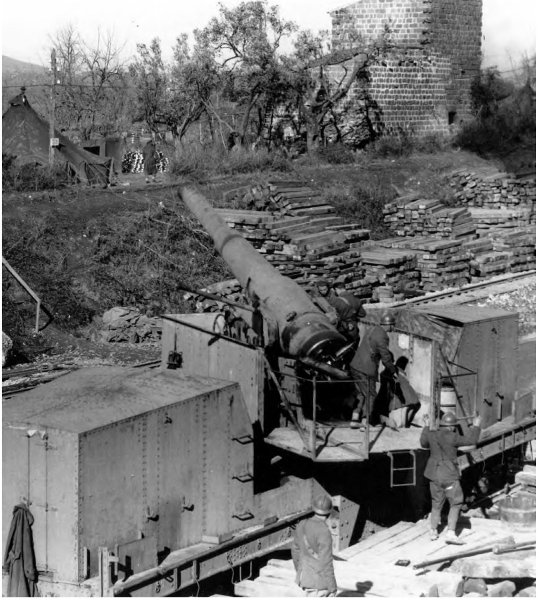
ITALIAN SOLDIERS preparing to fire one of their railway guns against targets in the Gustav Line. On 7 December 1943, Italian units first entered the fight on the side of the Allies under command of Fifth Army. The Italians took over a narrow section in Mignano Gap with 5,486 combat troops. In addition to the combat personnel the Italians also provided various service companies and pack units which proved valuable in solving the difficult supply problem in the mountains.
ITALY
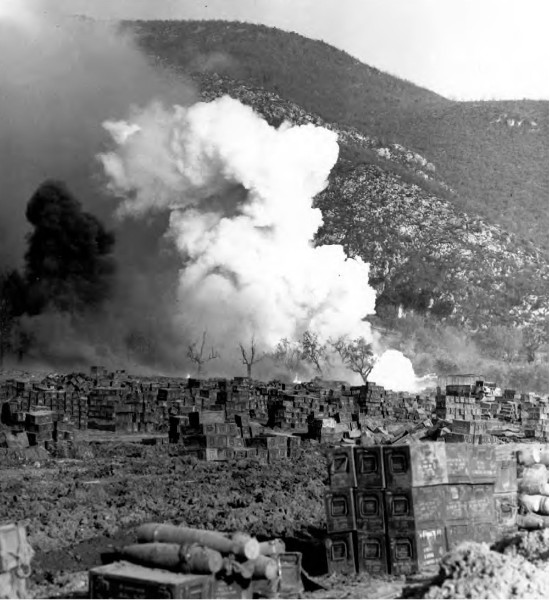
BURNING AMMUNITION DUMP in the Mignano Gap area near Highway 6. The dump was located about seven miles behind Cassino front. The fire was accidental and not due to enemy action. Dumps in this area were not camouflaged because they were too large and Allied air forces had most of the enemy air grounded. Huge quantities of ammunition were needed to reduce the defenses of the Gustav Line. Dispersion was difficult because of the muddy ground. Vehicles became mired as soon as they left the road.
ITALY
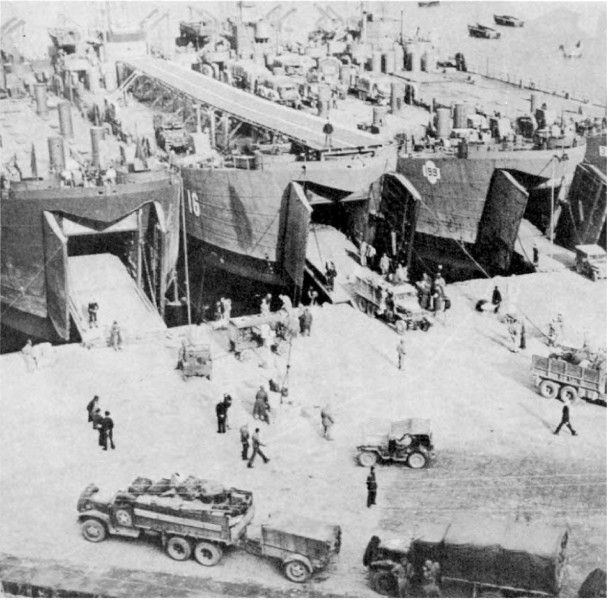
LOADING LST’S IN NAPLES FOR THE INVASION OF ANZIO. Everything was combat-loaded for quick removal, as plans required the convoy to be unloaded in twenty-four hours. The slow advance of the Allies late in 1943 led to the revival of plans for an amphibious operation south of Rome. Early in January 1944 the Allies broke through the Winter Line and unless some movement could be devised to breach the more formidable Gustav Line they faced another difficult mountain campaign. Enough landing craft for Anzio were finally assembled, though resources were limited by requirements for the coming Normandy invasion. (Note LST in center, with take-off runway for cub observation planes. Planes could not land on these runways. Two ships were thus equipped with six planes each which landed on the beachhead shortly after dawn on D Day, 22 January 1944.)
ITALY
ITALY
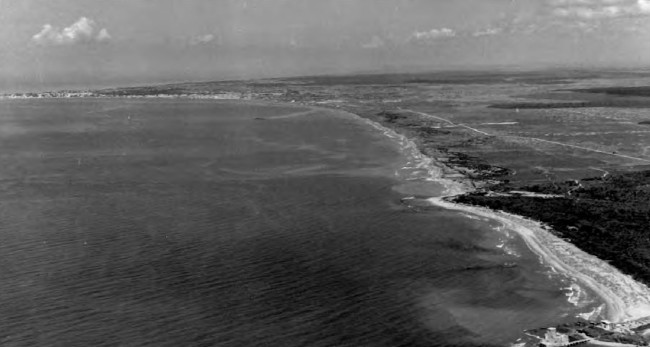
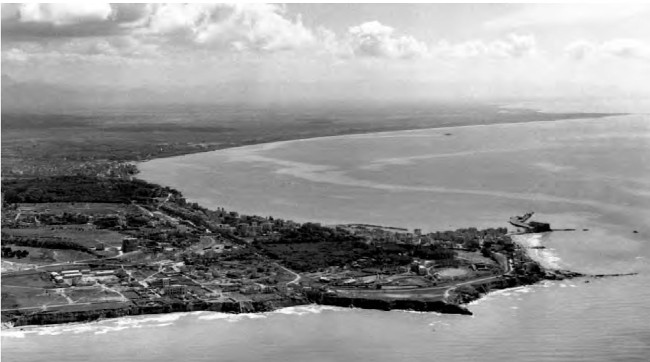
THE ANZIO BEACH AREA. Top: looking westward, Astura tower lower right; bottom: looking eastward. The beach shown in these pictures was the U. S. zone of the landing area. The British landing beach, about six miles northwest of Anzio, proved too shallow for unloading supplies. It was closed soon after the British forces had landed there, and supplies were handled mostly through the port of Anzio. The Anglo-American assault force consisted of almost 50,000 men and 5,200 vehicles.
ITALY
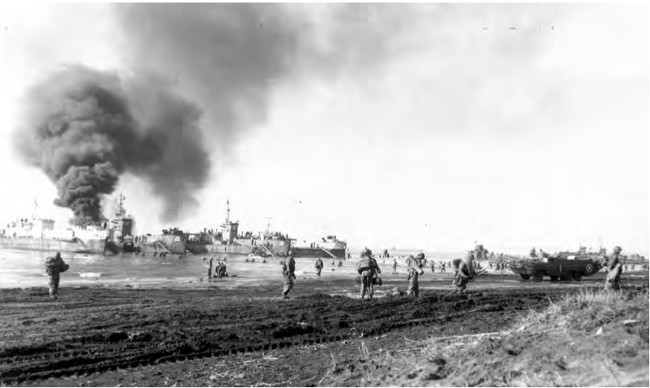
MORNING OF D DAY. Top: men coming ashore from LCI’s. Enemy air raids started at 0850 and consisted of three separate attacks by an estimated 18–28 fighter-bombers. One LGI was hit and is shown burning. Bottom: LST backing away from portable ponton causeway after having unloaded. Bulldozer is holding causeway in place. In background is an LGI with a deckload of soldiers waiting to go ashore.
ITALY
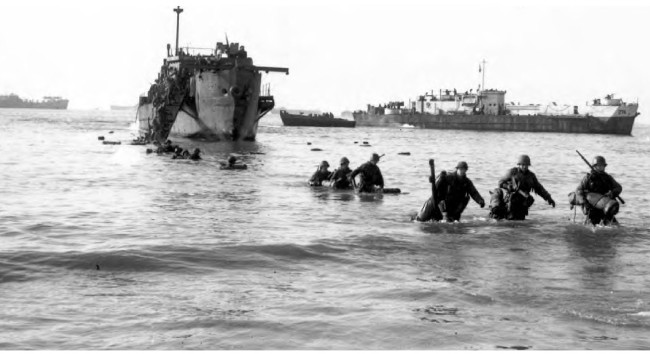
MEN AND EQUIPMENT COMING ASHORE on Anzio beaches on D Day morning. The first assault craft hit the beaches at 0200, 22 January 1944. There was practically no opposition to the landings as the enemy had been caught by surprise. Men with full equipment wading ashore from LCI (top); in foreground are two DUKW’s near beach, at right is LST unloading equipment over portable causeway pontons (bottom).
ITALY
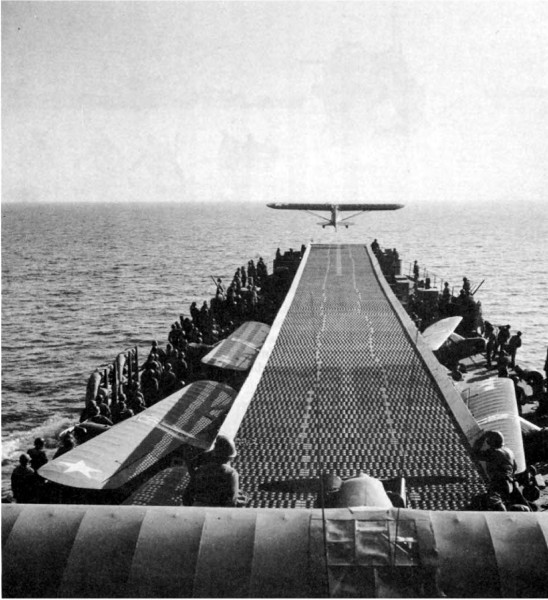
ARTILLERY OBSERVATION PLANE taking off from LST carrier to land at Anzio beachhead shortly after dawn on D Day. The first use of an LST carrier for this purpose was during the invasion of Sicily. Two planes were launched and directed naval fire to the vicinity of Licata, Sicily. Cub planes were to play an important part at Anzio. The area of the beachhead and surroundings is generally flat and featureless and in such terrain observation was at a premium and it was vital to secure or deny that observation.
ITALY
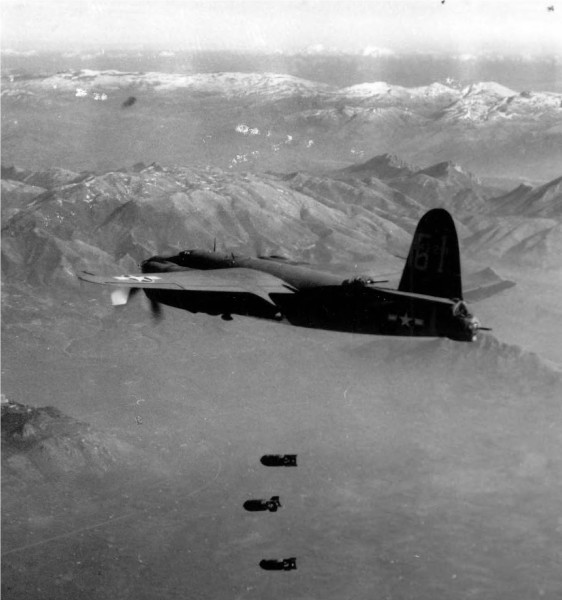
B-26 BOMBING ROADS IN THE LIRI VALLEY behind the Gustav Line on 22 January 1944 in order to hamper the enemy in sending troops to the Anzio area. The hill at lower left is Montecassino. The mountains immediately above the plane were the scene of bitter fighting during the winter of 1943–44. While the Anzio landing was still in preparation the Allied air forces had been bombing airfields and communication centers, and the army had started its drive (on 17 January 1944) to penetrate the Gustav Line. By the 22d, the date of the Anzio invasion, the attempt to penetrate the Gustav Line had bogged down in front of the Cassino defenses.
ITALY
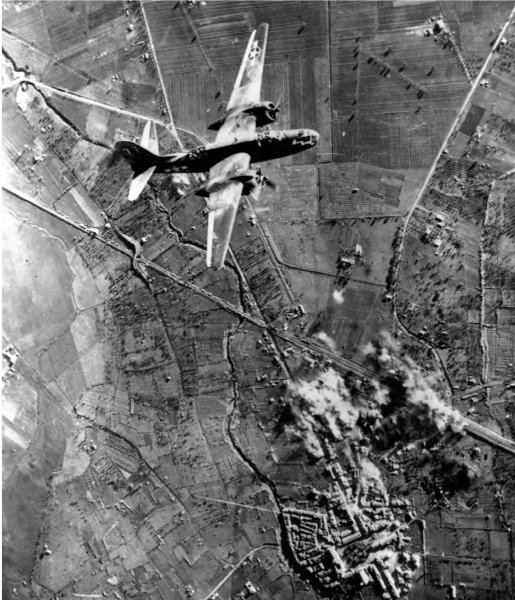
DOUGLAS HAVOC BOMBING RAILROAD BRIDGE and enemy installations at Cisterna di Littoria. This town became one of the enemy strong points surrounding the beachhead. It was shelled and bombed for months, and when it finally fell, on 25 May 1944, it was nothing but a mass of rubble.
ITALY
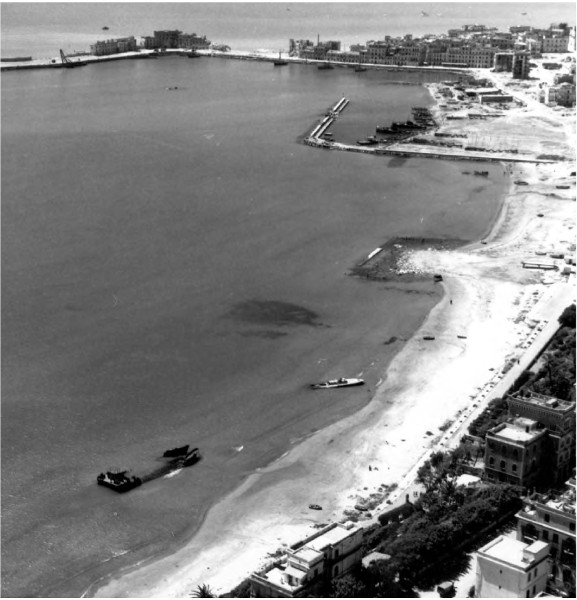
THE PORT OF ANZIO, which was taken intact with very little opposition on the morning of D Day, 22 January 1944. The enemy had placed demolition charges to destroy the port and its facilities, but the assault was so sudden and unexpected that there was no opportunity to set off the charges. By early afternoon the port was ready to receive four LST’s and three LCT’s simultaneously. By midnight on D Day 36,034 men, 3,069 vehicles, and large quantities of supply had been brought ashore, either through the port or over the beaches. The unloading area of the port (upper right) was not suitable for Liberty ships or other freighters; these continued to be unloaded offshore, mostly by DUKW’s.
ITALY
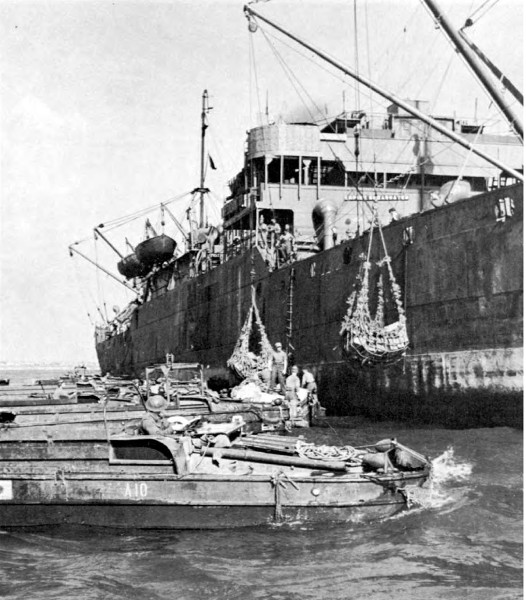
FREIGHTER UNLOADING CARGO INTO DUKW’S. Supplies for Anzio were carried by two methods: in truck-loaded LST’s from Naples and in bulk-loaded Liberty ships or other freighters from Africa. After its capture, the port of Anzio sustained regular shelling by enemy artillery. The LST’s docked at the port and the freighters unloaded into smaller craft or DUKW’s offshore.
ITALY
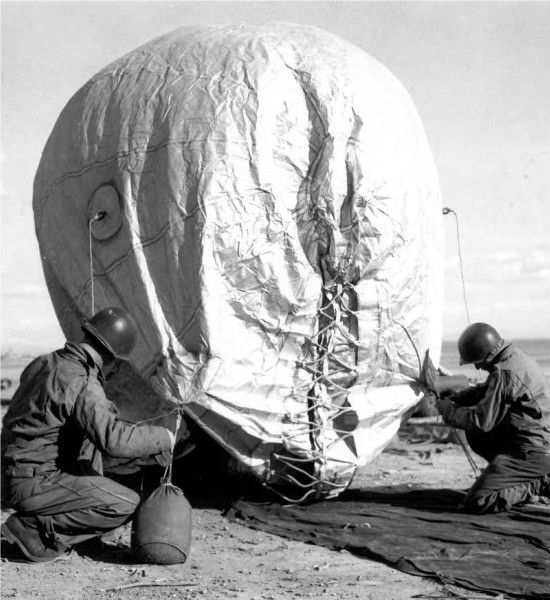
MEN WORKING ON A BARRAGE BALLOON. A number of balloons were used at the beachhead, chiefly in and around the port area. Floated at the end of a steel cable, their purpose was to prevent low-level strafing and dive-bombing attacks and to force the bombers high enough to give the antiaircraft gunners time to get on the target. Up to forty balloons were flown at one time over the port. These were filled with highly inflammable hydrogen gas, which was manufactured in the field. Helium gas was sometimes used but was harder to obtain.
ITALY
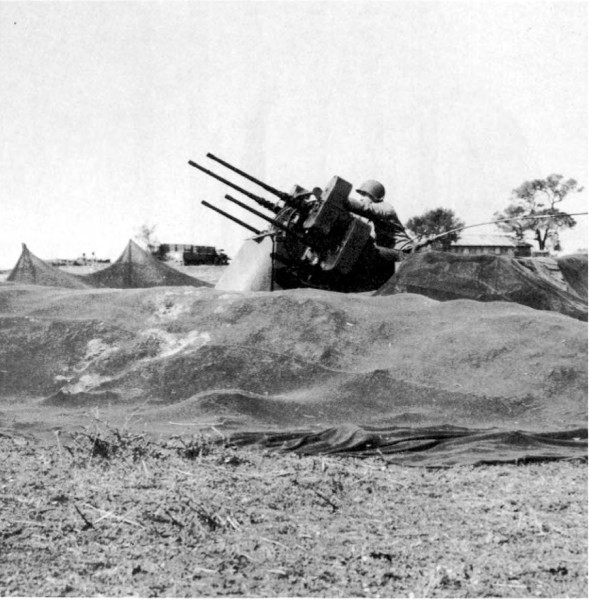
CAMOUFLAGED MULTIPLE-GUN MOTOR CARRIAGE M16 mounting four .50-caliber machine guns in Maxson turret. Allied antiaircraft artillery faced its first major test in Italy with the establishment of the beachhead. The enemy air force now started on a large-scale, continuous offensive. The offshore shipping, port, and beach congestion in the Anzio area offered easy targets. Allied fighter aircraft were based about one hundred miles to the south and they found it difficult to counter the enemy’s quick sneak raids and night attacks. Antiaircraft artillery units were mainly responsible for combatting these attacks and keeping the flow of supplies constant. By May 1944, 1,051 pieces of antiaircraft artillery were on the beachhead, including sixty-four 90-mm. guns.
ITALY
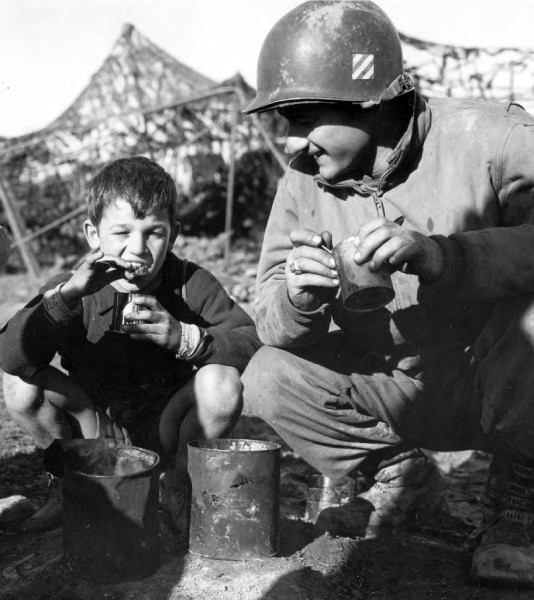
SOLDIER SHARING HIS C RATION WITH NATIVE BOY. A few days after the landing most of the civilian population, about 22,000, were evacuated by sea to Naples, leaving only about 750 able-bodied civilians. Later, as the need for workers increased, an office was set up in Naples to recruit Italian civilians for work at the beachhead. (Soldier is wearing a combat jacket, initially issued with trousers to members of armored units.)
ITALY
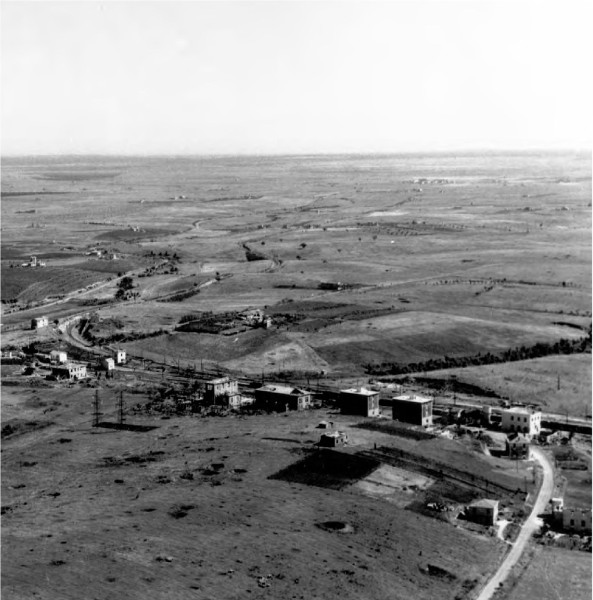
CAMPOLEONE STATION near the Albano highway leading from Anzio to the Colli Laziali, the mountain mass overlooking the plains of the beachhead. By 31 January 1944 the Allies had advanced to Campoleone station, the front line being the railroad bed in foreground above, but the available forces could not hold the area. The enemy was bringing reserves toward the Gustav Line where the Allied drive had stalled. These enemy reserve troops were rerouted to contain the Anzio beachhead and, if possible, force the Allies back to the sea. The picture above, looking toward the sea, gives an idea of the flat, featureless terrain in the area. The group of buildings in the distance at right is the “Factory,” scene of hard fighting.
ITALY
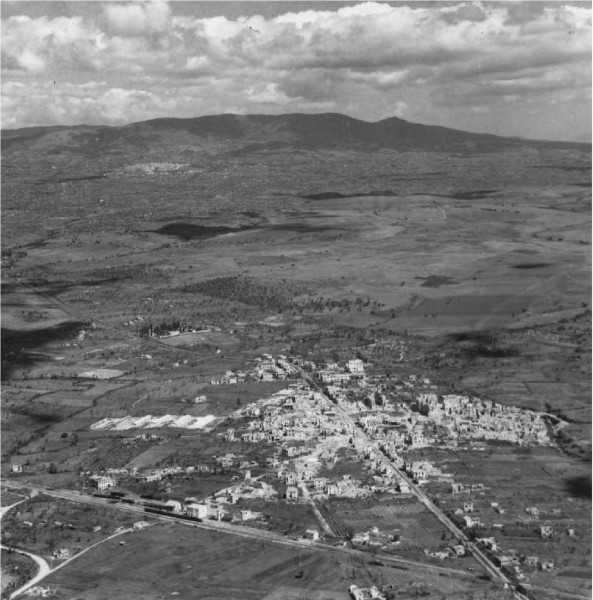
CISTERNA DI LITTORIA. A thrust toward Cisterna di Littoria was made by the Allies on 25–27 January 1944, but was stopped about three miles southwest of the town. Another attempt made on 30 January-1 February met even less success. In the distance are the Colli Laziali overlooking the beachhead. Below the mountains is the town of Velletri. Highway 7 through Cisterna di Littoria leads past the mountains to Rome. Attempts to extend the beachhead failed: the first attempt along the Albano road was stopped at Campoleone; the second, the effort to cut Highway 7 at Cisterna di Littoria, was stopped within sight of the village. By this time the enemy outnumbered the Allies and the latter consolidated their positions and waited for the counterattacks.
ITALY
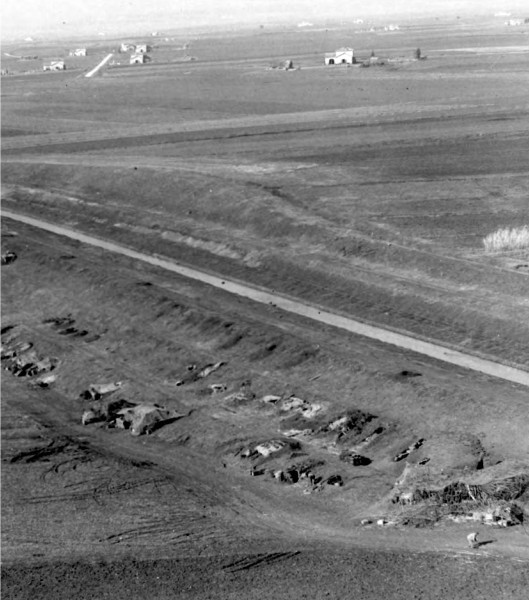
CAMOUFLAGED FOXHOLES AND ARTILLERY POSITIONS along the Mussolini Canal. On 2 February 1944, after the unsuccessful attempt to extend the beachhead, the Anzio force received orders to dig in and prepare for defense. By this date casualties totaled 6,487. Allied troops were on the defensive in Italy for the first time since the invasion at Salerno.
ITALY
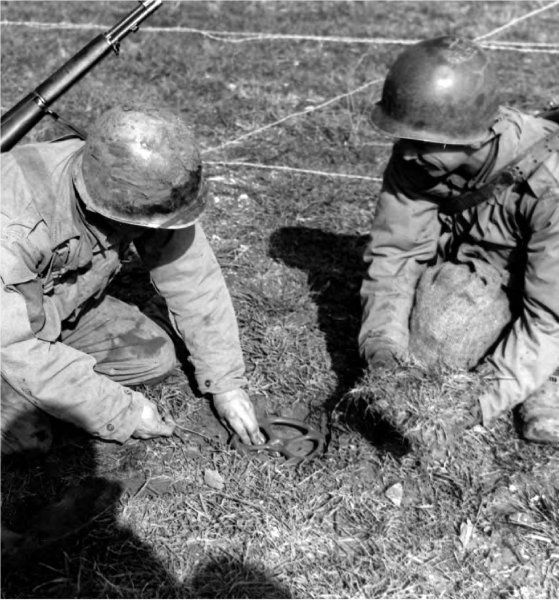
LAYING AN ANTITANK MINE. The man at left is arming the mine by pulling the safety fork. This type of mine contained 6 pounds of cast TNT and had a total weight of 10⅔ pounds. The pressure of a man stepping on the mine would not detonate it, but any vehicle hitting it would set it off. Mines were generally laid at night or on foggy days behind a smoke screen. The task of laying mine fields at night in the open, almost featureless terrain resulted at first in many improperly marked fields causing accidents. The practice was finally adopted of first marking a field, then recording it, and only then laying the mines. (Antitank mine M1A1.)
ITALY
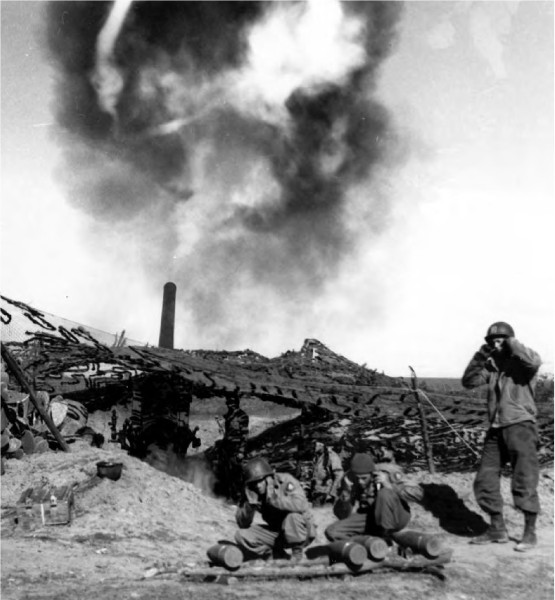
LONG TOM FIRING AT GERMAN POSITIONS. On 3 February 1944 the enemy started a series of counterattacks to wipe out the beachhead. There were three main attacks: 3–12 February, 16–20 February, and 28 February–4 March. The stalemate began on the latter date and lasted until the offensive to break out of the beachhead got under way on 23 May 1944. Enemy prisoners taken during the February fighting always commented on the heavy artillery fire, which caused numerous casualties, shattered nerves, and demoralized many enemy units.
ITALY
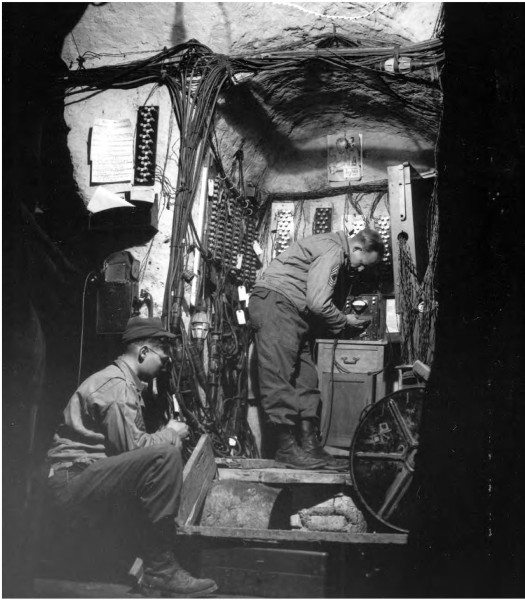
SIGNAL CORPS MEN working in the main frame room of headquarters switchboard installation. The beach area at Anzio-Nettuno was on a slightly higher level than the rest of the beachhead area and was honeycombed with tunnels and caves so far underground that they were bombproof. Wherever possible the installations along the shore were put underground.
ITALY
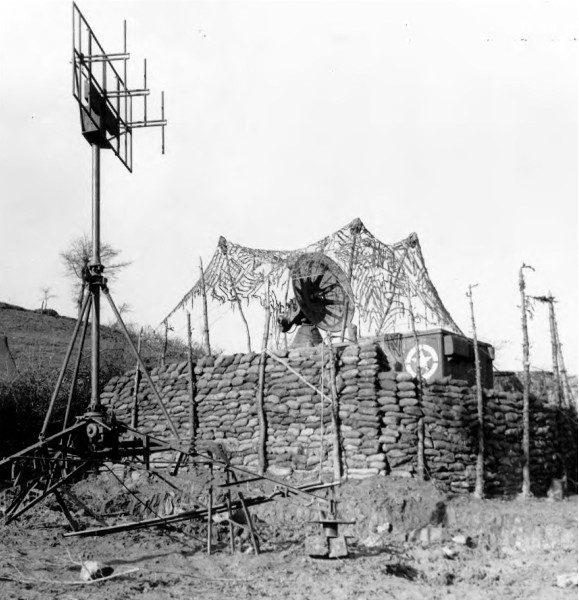
RADAR SET IN OPERATION. By 24 February 1944 the first sets of this type were in position on the Anzio beachhead. They were brought in to cope with enemy jamming techniques and “window” (small strips of metallic paper dropped from attacking planes) which had reduced the effectiveness of earlier types of radar. During the night of 24 February a flight of twelve bombers approached in close formation, using the “window” method of jamming. Forty-eight 90-mm. guns directed by radar of the improved type caught them at extreme range over enemy territory and brought down five with the first salvo. The remainder of the formation jettisoned their bombs and fled. (Radar SCR 584.)
ITALY
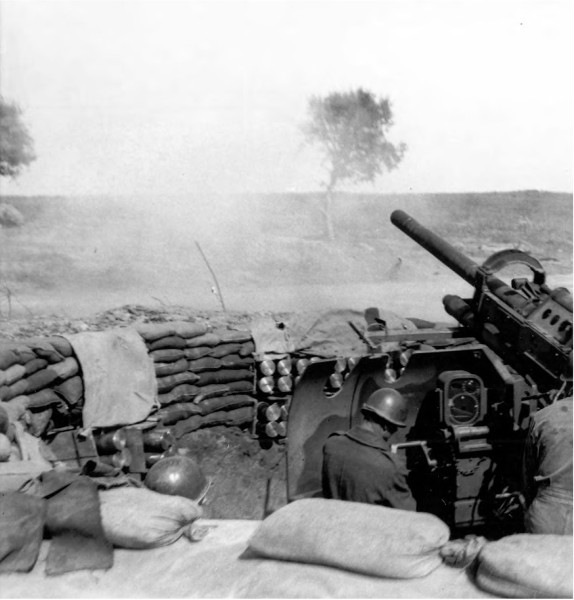
FIRING ANTIAIRCRAFT GUN at ground targets. The enemy counterattack down the Albano road on 16–20 February 1944 was the most severe and dangerous of the three main attacks the Germans made on the Allies at Anzio beachhead. On the 17th it looked as if the enemy might succeed in driving down the Albano road from the Campoleone area to Anzio and thus split the beachhead forces. To aid the hard-pressed infantry, all the artillery in the area was brought to bear on the enemy. In addition to 432 guns representing corps and divisional artillery and three companies of tanks, four batteries of 90-mm. antiaircraft guns were employed against ground targets. Two cruisers assisted with fire on the flank of the beachhead.
ITALY
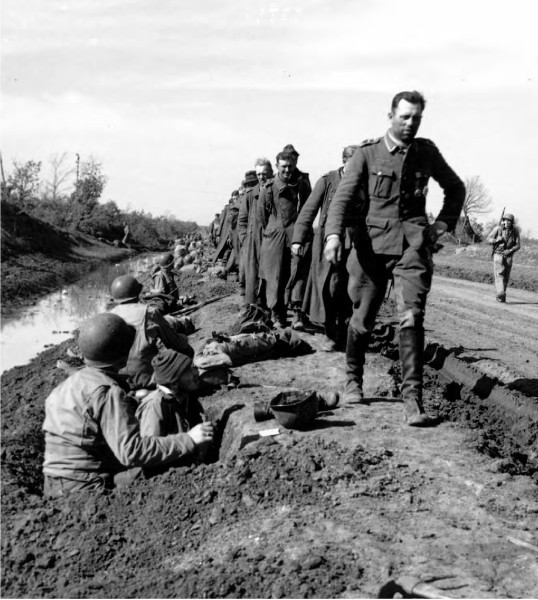
GERMAN PRISONERS TAKEN NEAR THE ALBANO ROAD on 19 February 1944. The German attack started in the morning hours of 16 February and relied on smoke to conceal the advancing troops. By 18 February the enemy infantry, strongly supported by tanks, had pushed the defenders back about three miles. The next day the Allies counterattacked and halted the advance. Never again was the enemy to come so close to rolling up the final beachhead line.
ITALY
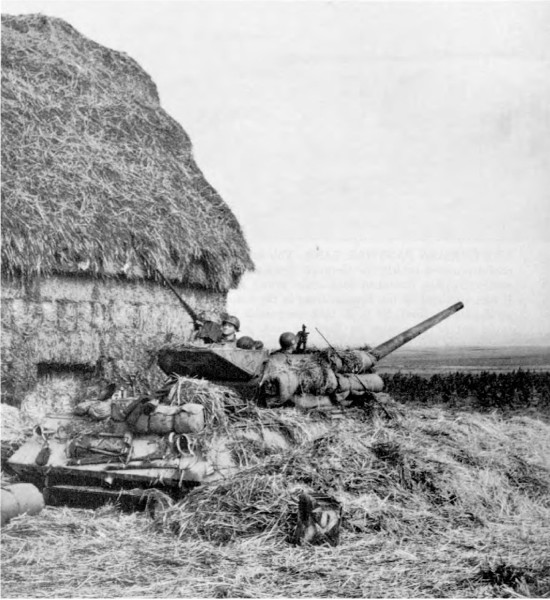
TANK DESTROYER DUG IN BEHIND HAY STACK. These weapons were used well forward, sometimes dug in, but more often placed behind a house or other means of concealment. Tanks were also used well forward, particularly after the front became somewhat stabilized at the beginning of March. The distribution was about one company of tanks to one regiment in the line. This practice violated the principle of employing tanks in mass, but their usefulness in support of the infantry outweighed the loss of mobility and dispersion of strength.
ITALY
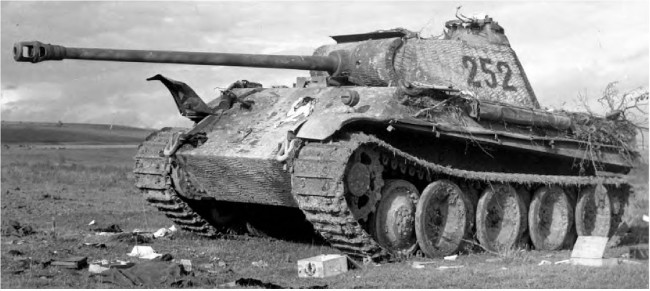
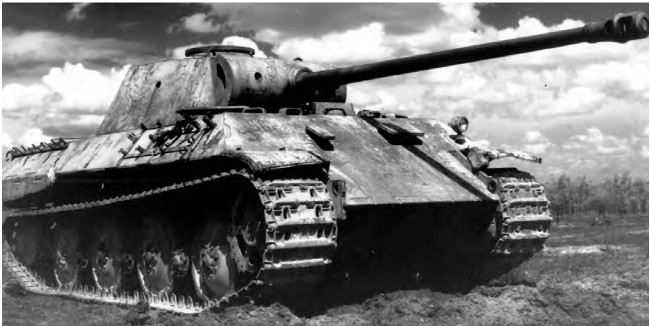
THE GERMAN PANTHER TANK. This heavy tank was probably the most successful armored vehicle the Germans developed, having relatively high speed and maneuverability, combined with heavy armor and a rapid-fire, high-velocity gun. It first appeared on the Russian front in the summer of 1943, and soon thereafter on the Italian front. No U. S. tank comparable to it appeared. The frontal armor could not be penetrated by Sherman tank guns at ordinary fighting range. In constructing this vehicle the Germans were influenced by the Russian tank, the T34. The corrugated surface (top picture) is a plastic coating to prevent magnetic mines from sticking to the metal. (Pz. Kpfw. Panther, 7.5-cm. Kw. K. 42 (L/70) gun. After Action Reports indicate that there were a total of 165 enemy tanks surrounding the beachhead as of 28 February 1944. Of these 32 were Tigers and 53 Panthers, the rest being mostly Mark IV.)
ITALY
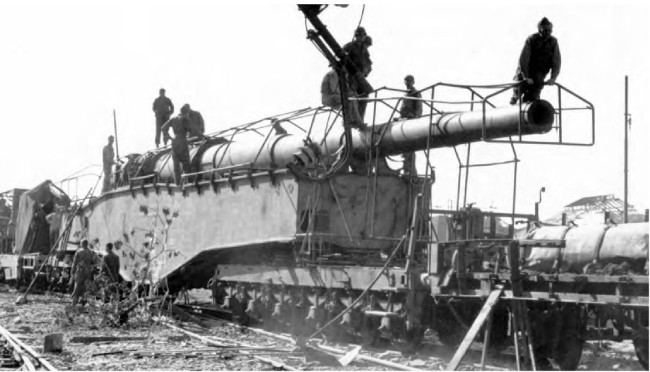
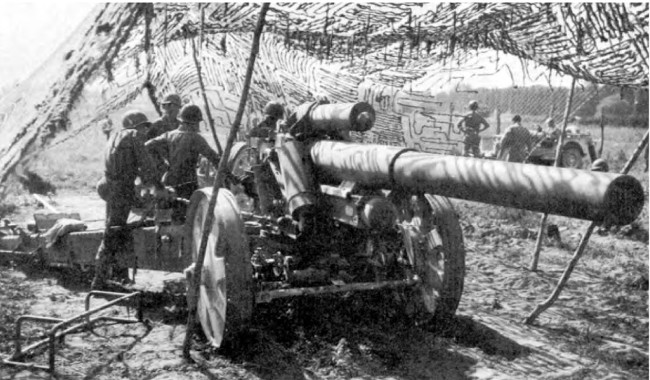
ANZIO ANNIE, 280-mm. railway gun (top). The beachhead faced a heavy concentration of German artillery. During enemy attacks in February this was employed mostly in direct support of the infantry. Standard German divisional medium howitzer (bottom). The caliber was 150-mm. (15-cm. s. F. H. 18.)
ITALY
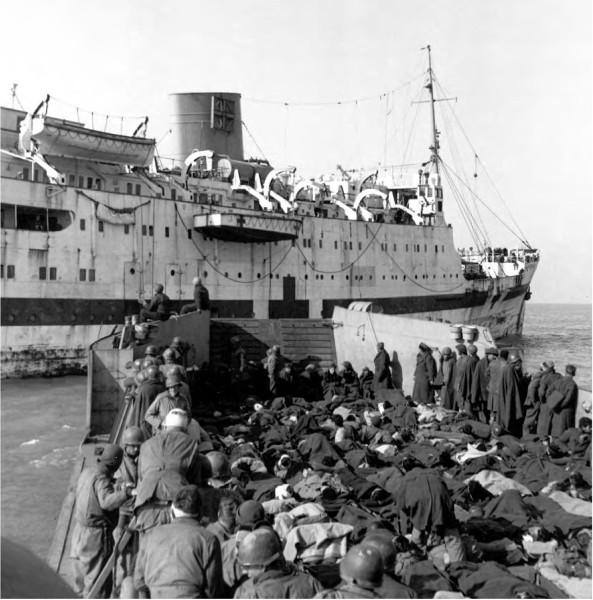
LANDING CRAFT BRINGS WOUNDED TO HOSPITAL SHIP in Anzio bay. On the night of 24 January 1944 a fully illuminated and marked British hospital ship was bombed and sunk while taking wounded on board. All evacuation from the beachhead was by sea. Air transportation could not be used, since the dust raised by planes landing or taking off brought on enemy shelling. Hospital ships were used whenever possible, but as these could not dock in the shallow port, LCT’s were used to transfer patients from shore to ships. When storms and high seas interrupted this procedure the wounded were loaded on board LST’s at the Anzio docks for the 30-hour trip to Naples. For the period 22 January to 22 May, 33,063 patients were evacuated by sea.
ITALY
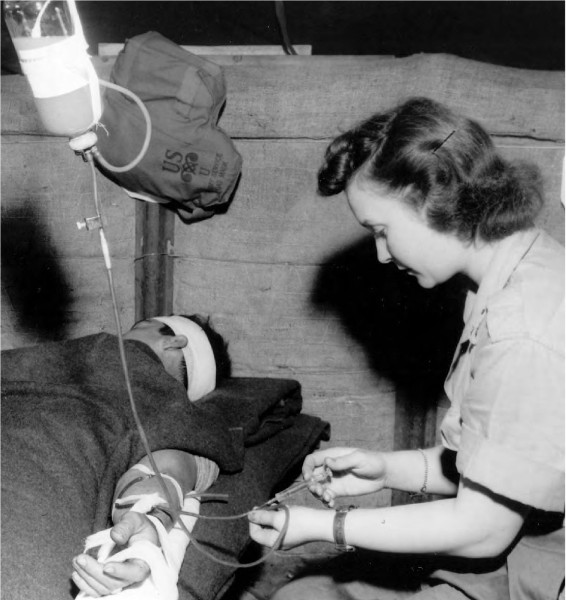
NURSE GIVING INTRAVENOUS INJECTION OF PLASMA to a wounded soldier. In the period 22 January to 22 May 1944, 18,074 American soldiers suffering from disease, 4,245 from injuries, and 10,809 battle casualties—33,128 in all—were given medical care and attention in evacuation hospitals at the beachhead. If recovery required fourteen days or less, the casualty remained in the evacuation hospital; if the recovery period was estimated to take more than two weeks, the patient was evacuated to one of several base hospitals in the Naples area as soon as he was strong enough to be moved.
ITALY
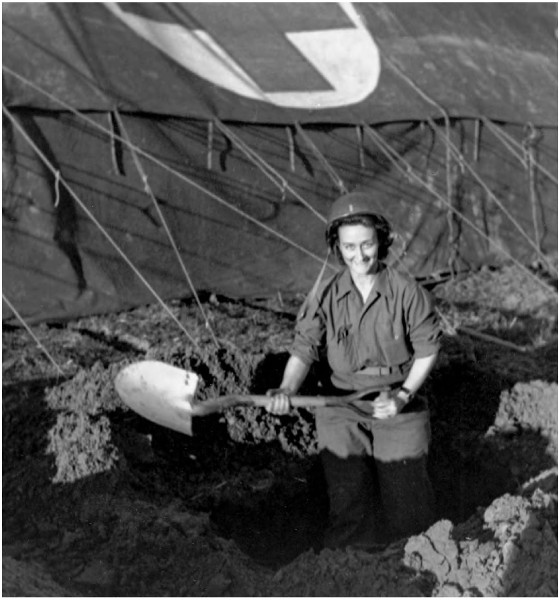
NURSE DIGGING FOXHOLE. The confined area of the beachhead and the lack of distinction between the front lines and rear areas were nowhere more noticeable than in the locality of the U. S. evacuation hospitals. For more than sixteen weeks medical personnel healed and comforted the sick and wounded in an area within range of enemy artillery. Soldiers called the hospital zone “Hell’s Half Acre” and admitted their preference for the protection of a front-line foxhole to a cot in a hospital tent. Of the medical personnel at the beachhead, 82 were killed in action, 387 were wounded, 19 were captured, and 60 were reported missing in action.
ITALY
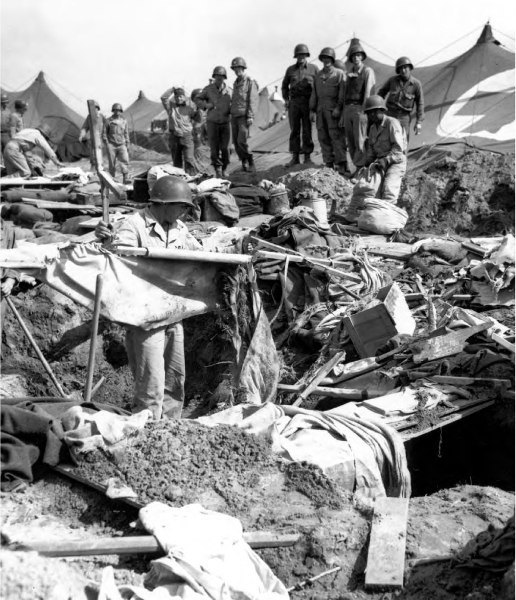
WRECKAGE OF EVACUATION HOSPITAL ON THE BEACHHEAD. Most of the hospitals were located in the vicinity of Nettuno, and all were within easy range of enemy artillery. It was impossible, within the confined area of the beachhead, to locate hospitals in an area out of reach of enemy artillery.
ITALY
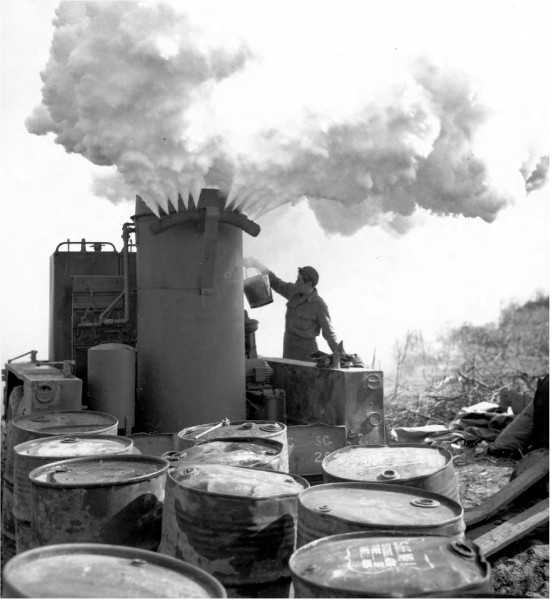
MECHANICAL SMOKE GENERATOR IN ACTION. Generators of this type were used at ports to prevent accurate bombing and in the field to conceal movements of troops. Large quantities of oil, about two 53-gallon drums per hour, were consumed. The generator was capable of converting hydrocarbon oils of low volatility into a fog of relatively great persistence. The special oil, usually referred to as fog oil and used for the generation of large area screens, was a petroleum by-product. The fog would frequently extend five miles or more downwind. (Smoke generator M1.)
ITALY
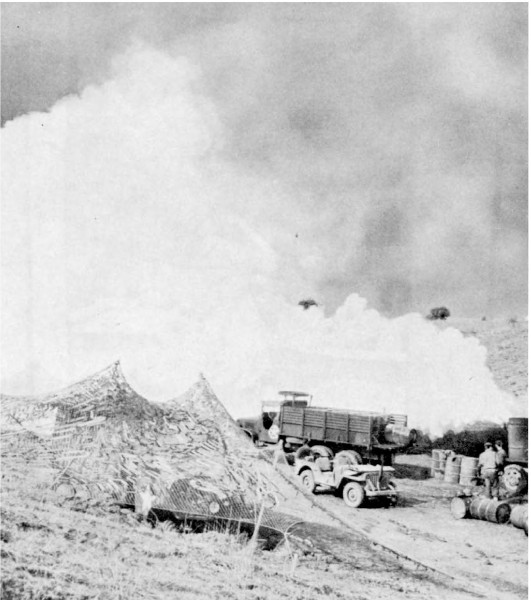
SMOKE SCREEN SHIELDING ALLIED POSITIONS. Smoke was used to a great extent on the beachhead because the flat terrain which the Allies occupied was under constant observation from the enemy-held Colli Laziali. The harbor area was screened by smoke starting one-half hour before sunset, the time the enemy bombers usually appeared, and on every air raid alarm.
ITALY
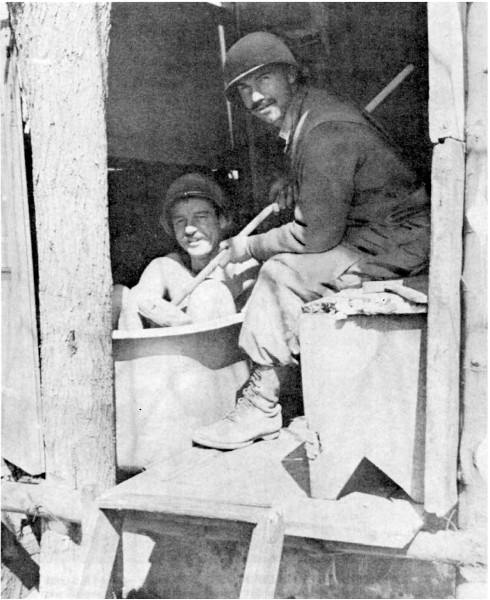
BATHING FACILITIES at the beachhead were limited but those available were used to the fullest extent.
ITALY
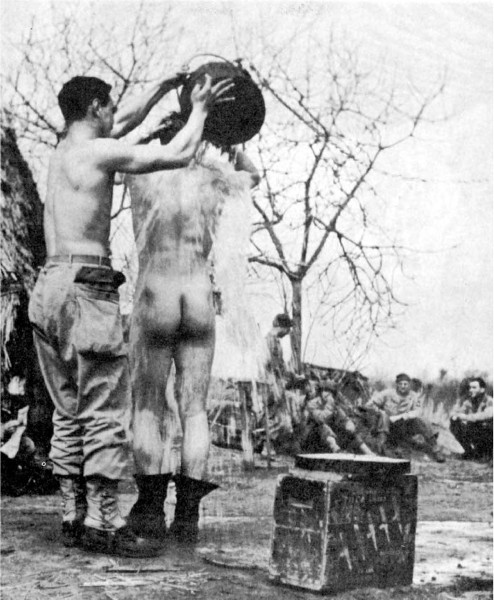
PRIMITIVE SHOWER BATH. Some of the more hardy souls took their showers directly from the well in winter.
ITALY
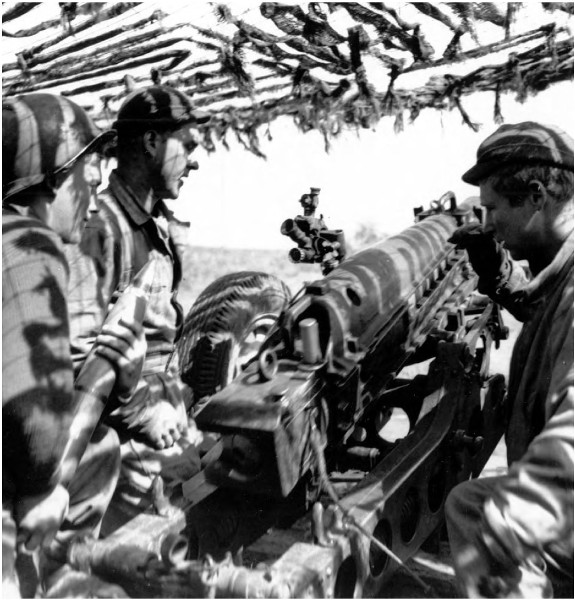
FIRING A PACK HOWITZER. From the establishment of the beachhead the Allied artillery surpassed that of the enemy. Even with limitations imposed on some types of ammunition, the artillery was firing about 25,000 rounds per day. At the same time the enemy fire falling in the port and the rest of the beachhead was estimated to be not more than 1,500 rounds. The amount of Allied artillery increased month by month. At the end of March a battalion of 8-inch howitzers was brought in with the primary mission of demolishing houses used by the enemy as observation posts and strong points. In April a battery of 240-mm. howitzers was added to the beachhead forces. (75-mm. pack howitzer.)
ITALY
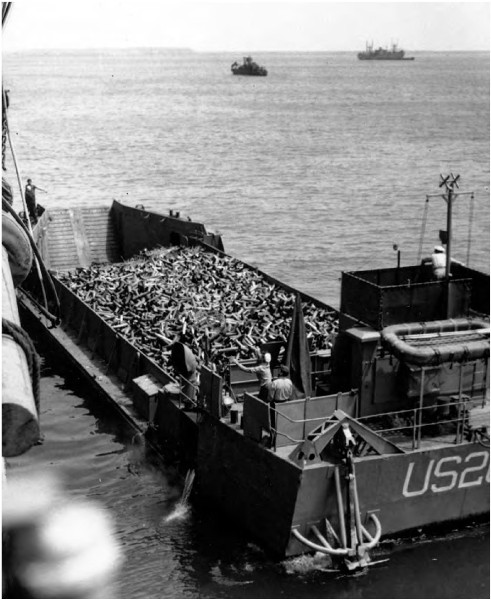
USED SHELL CASES BOUND FOR THE UNITED STATES as scrap are loaded into a freighter from an LCT.
ITALY
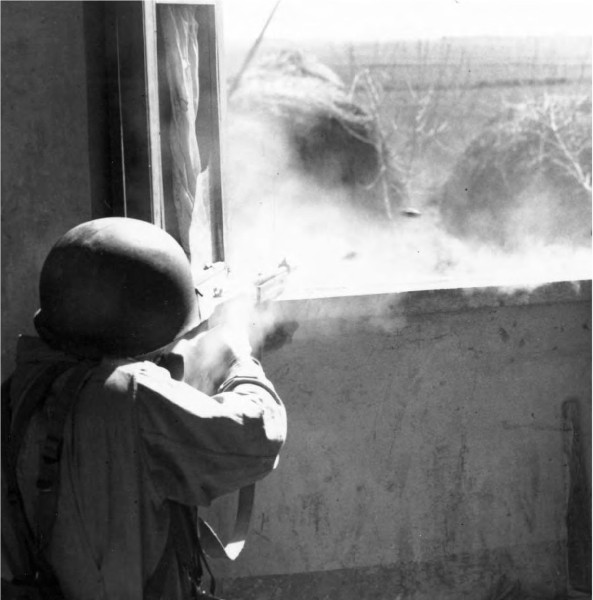
SOLDIER FIRING A SUBMACHINE GUN at a haystack suspected of concealing enemy soldiers. After the last German attempt to reduce the beachhead had died out during the first days of March 1944 there began a period of stalemate on the Anzio plain. This did not mean the end of fighting; it meant the end of pitched battles by large numbers of men and armor. Artillery duels still continued and enemy aircraft bombed and strafed positions as before. There were frequent clashes and fire fights between infantry patrols. To provide protection against enemy infantry attacks, stress was laid on the development of self-sustaining, mutually supporting points of resistance, usually centered on Italian farmhouses. (.45-caliber Thompson submachine gun.)
ITALY
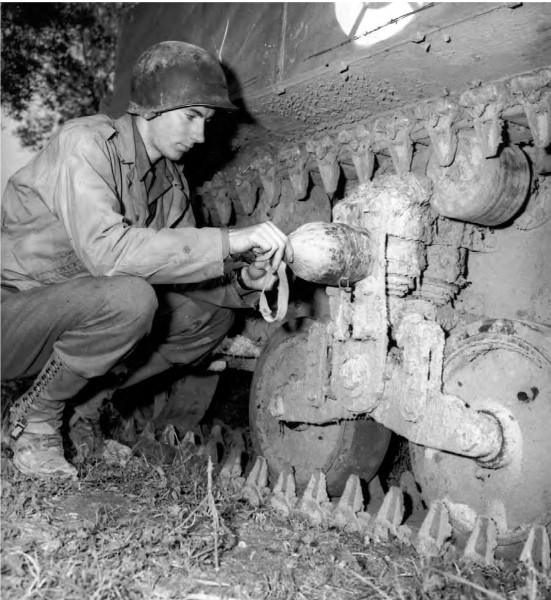
SOLDIER TESTING “STICKY GRENADE” on an armored vehicle. This was a British weapon used against tanks. It had a hollow-type charge, and was held to the metal by magnets. Unlike the real sticky grenade which could be thrown and which stuck to the target by means of a glue substance, this antitank grenade had to be hand-placed. During the stalemate period the front-line troops were equipped with this type of grenade in addition to bazookas. The charge was a delayed action type and the grenade was set off by pulling the string attached to it.
ITALY
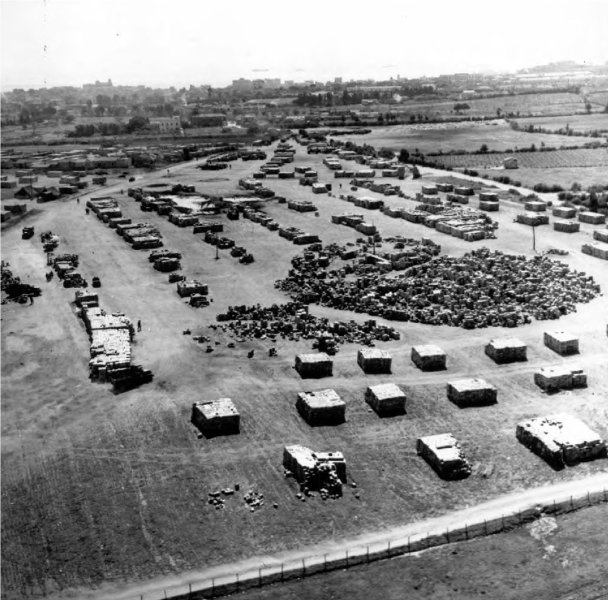
BEACHHEAD RATION DUMP. The failure of the main part of the army in the south to break through the Gustav Line and join the troops at Anzio necessitated maintaining the beachhead by sea for a longer period than planned. Shipping schedules were revised to take care of the gradually growing forces and to build up a reserve of food, fuel, ammunition, and other supplies. Food could be kept in a large dump, but fuel and ammunition presented problems. The beachhead area was so small that fuel and ammunition dumps, no matter where placed, were within enemy artillery range. These dumps were kept small and dispersed in order to keep losses to a minimum. Between 22 January and 10 March 1944 a little more than 1,000 tons of ammunition were destroyed, mostly by enemy bombing. Losses never became critical.
ITALY
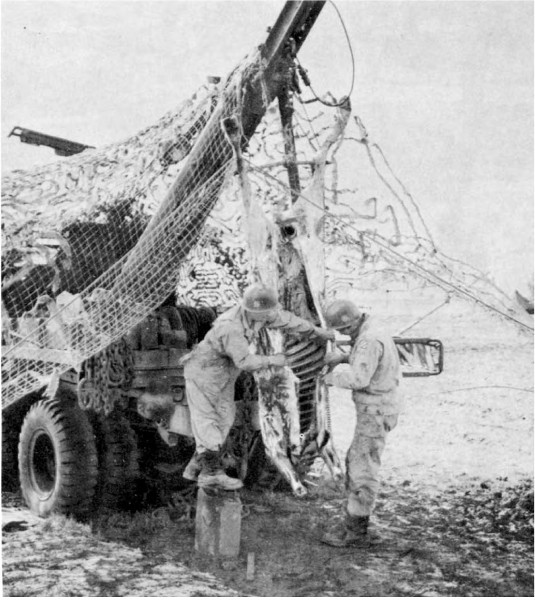
SOLDIERS BUTCHERING A COW. Cattle and sheep would frequently wander into mine fields and be wounded or killed. The carcasses presented a welcome change from regular rations. During the stalemate some soldiers had their own chicken pens, others bought fresh eggs from the few remaining farmers. Foraging patrols for homeless livestock and poultry were as carefully planned as patrols against the enemy.
ITALY
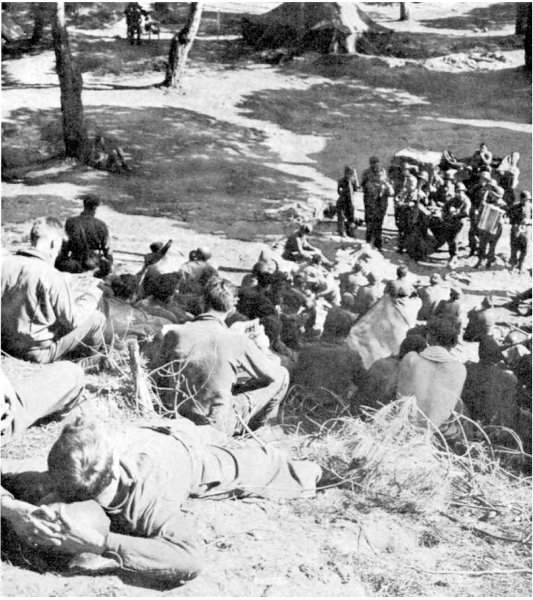
LISTENING TO A CONCERT BY A SOLDIER ORCHESTRA. This is in a recreation area established by one of the divisions on the beachhead in March 1944. Only a limited audience could attend because of the ever-present danger of enemy artillery fire. During the critical period of enemy counterattacks in February all troops were needed for defense, but as soon as the front had become stabilized 750 men every four days were sent by LST to the rest center at Caserta.
ITALY
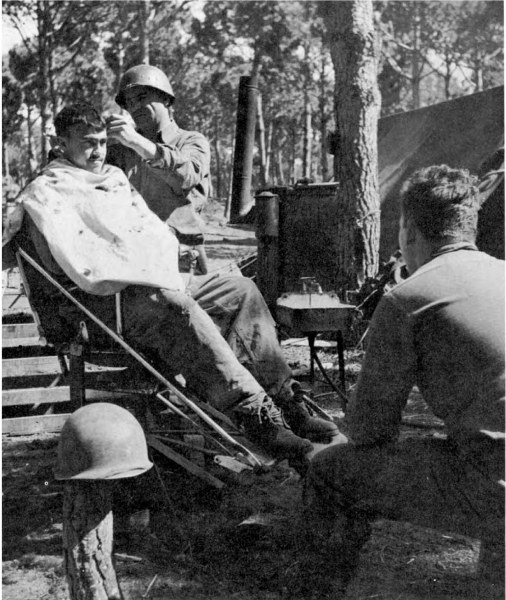
OPEN AIR BARBERSHOP AT THE BEACHHEAD located in one of the few wooded sectors of the area. Barber service, because of its uplifting effect on morale, was made available whenever possible.
ITALY
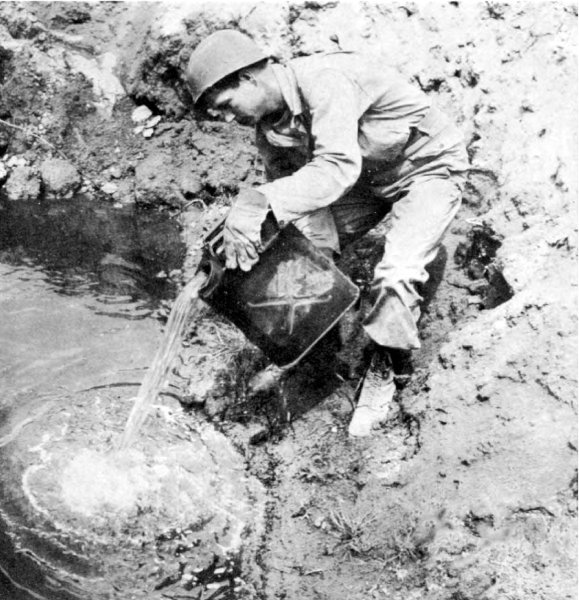
MALARIA CONTROL. Soldier pouring diesel oil in water-filled bomb crater to kill mosquito larvae. The Pontine Marshes near the beachhead had for centuries been notorious for the prevalence of malaria. In April 1944 large-scale draining projects were started, and patrols were sent out to dust or pour oil on canals, ditches, and pools. This activity was even carried right into no man’s land at night. The program, combined with preventive measures taken by the individual soldier, such as the use of head nets, mosquito bars, insect repellents, and atabrine, kept malaria from becoming a medical problem. The division stationed in the worst area did not develop a single new case of the disease.
ITALY
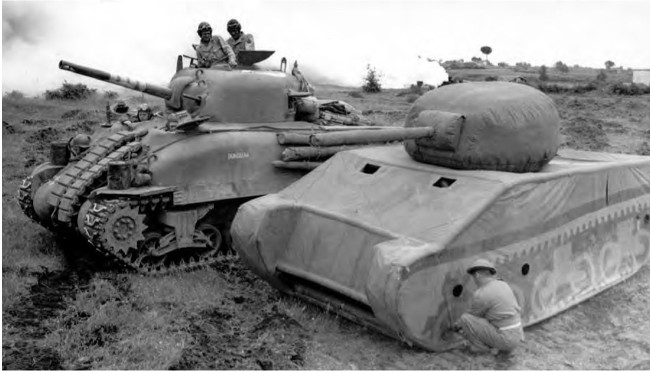
INFLATING RUBBER DUMMY TANK (top). Placing dummy tank in camouflaged position which had been vacated by a tank moving toward the front for the coming offensive (bottom). The dummy tank was designed by the British and manufactured in the United States.
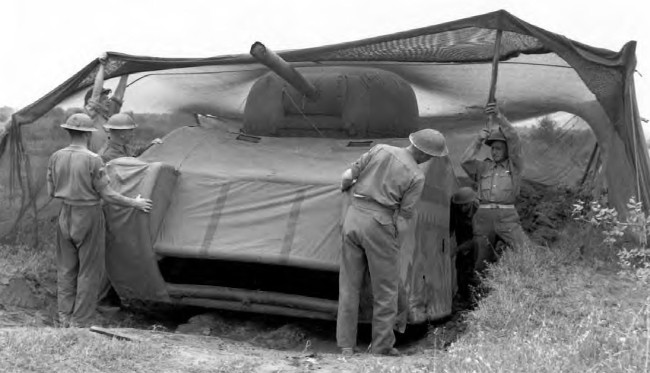
ITALY
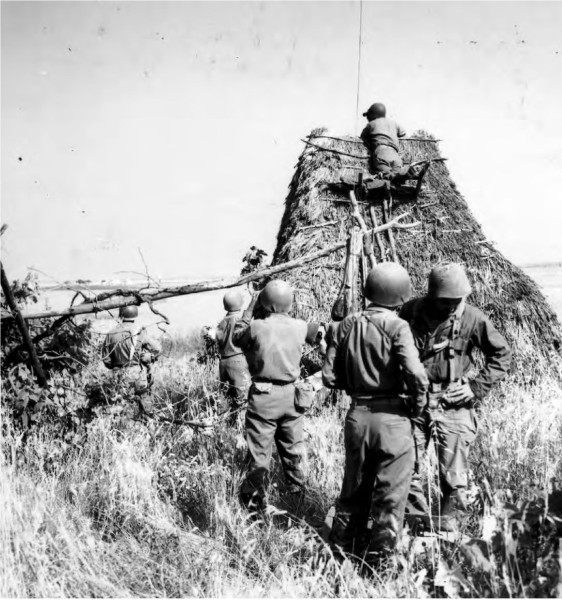
WATCHING THE BATTLE FROM OBSERVATION POINT. The offensive from the beachhead started at 0545, 23 May 1944, when the artillery began firing. Allied medium and fighter bombers strafed and bombed enemy positions. At 0630 the infantry and tanks moved out. The artillery preparations, the most intensive thus far at the beachhead, had searched out command posts, assembly areas, and dumps with the result that enemy communications and supply lines were severely damaged. The Germans recovered and put up a strong fight, but they could not make up for the initial disorganization.
ITALY
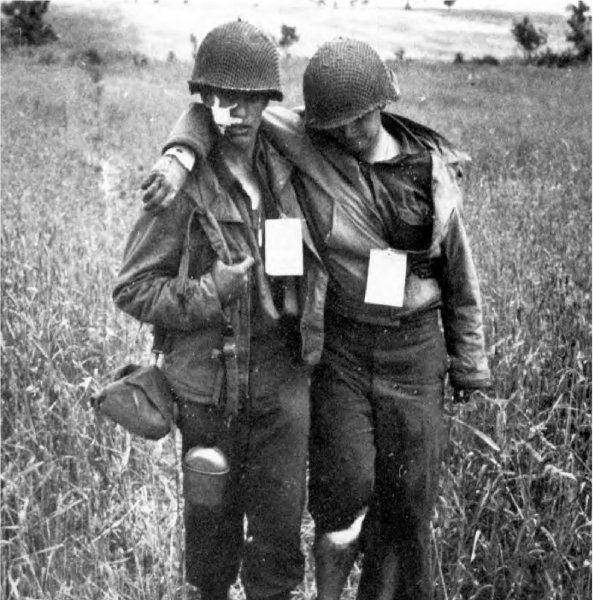
WALKING WOUNDED ON THEIR WAY FROM THE FRONT to a hospital. Tags tell the nature of the wound and what has been done for it in the field or at the first aid station. On the first day of the fight to break out of the beachhead, the Allies suffered the heaviest casualties of the Anzio Campaign. American combat casualties for the whole army on that day were 334 killed, 1,513 wounded, and 81 missing, a total of 1,928 and the high point in the entire Italian campaign. The U. S. and British combat casualties at the beachhead between 22 January and 22 May numbered about 30,000, including at least 4,400 killed and 18,000 wounded. The enemy captured about 6,800 prisoners. The noncombat casualties during this period amounted to about 37,000.
ITALY
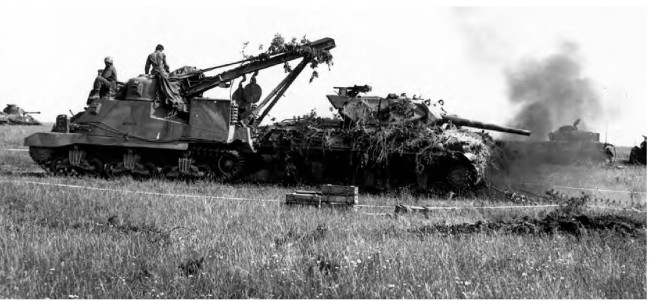
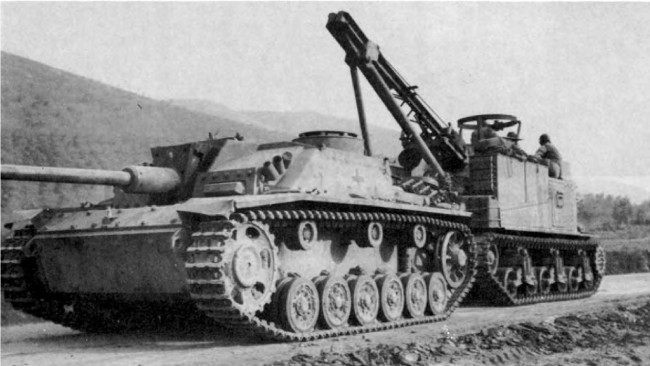
RECOVERING ARMOR. Tank recovery vehicle pulling disabled tank destroyer M10 out of mine field near Cisterna di Littoria (top). Many Allied tanks were disabled by running into their own mine fields. Front of tank destroyer is still smoking from effect of mine blast. In the left background is a disabled Sherman tank. To the right are a ruined German Mark IV tank and a personnel carrier. During the first day’s attack the Allies lost heavily in tanks and tank destroyers. Those that ran on mines were generally repairable, those lost as a result of enemy fire were often wrecked beyond repair. Tank recovery vehicle M31 (same as at top) towing German 75-mm. assault gun (bottom).
ITALY
INFANTRY SOLDIER IN GISTERNA DI LITTORIA. This town on Highway 7 had been one of the German strong points facing the beachhead forces. It fell to tanks and infantry on 25 May. The main Allied drive had been launched in the direction of Cisterna di Littoria with the object of continuing straight north to capture Valmontone on Highway 6 and cut off the enemy forces retreating toward Rome from the shattered Gustav Line defenses.
ITALY
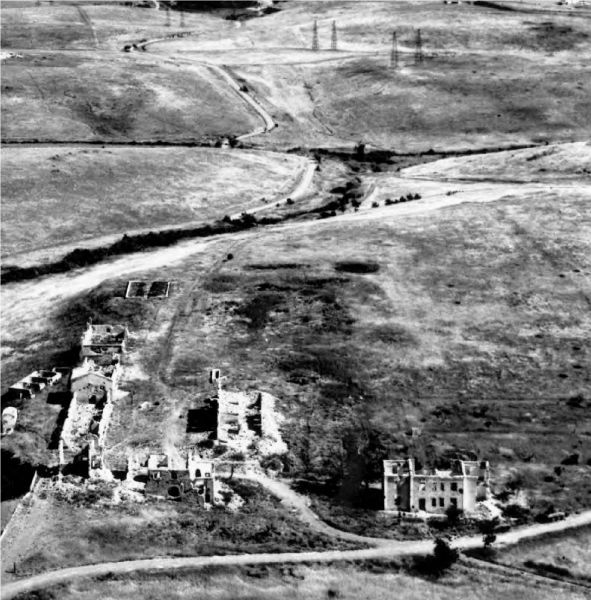
THE VILLAGE OF CAMPOLEONE with Campoleone station in upper left. The station area was reached on 31 January, when the first attempt to break out of the beachhead was made, but was soon lost to enemy counterattacks. It was not retaken by the Allies until 29 May 1944 during the drive on Rome. Starting on that day a tank-infantry attack fought a two-day action to penetrate the German defenses here, but without success. The area was heavily defended by infantry weapons supported by enemy tanks, self-propelled guns, artillery, and flak guns. On 31 May the U. S. armored division making the attack was withdrawn for maintenance purposes. Losses in both tanks and personnel had been severe. The break-through, when it came, was made across the eastern side of the Colli Laziali.
ITALY
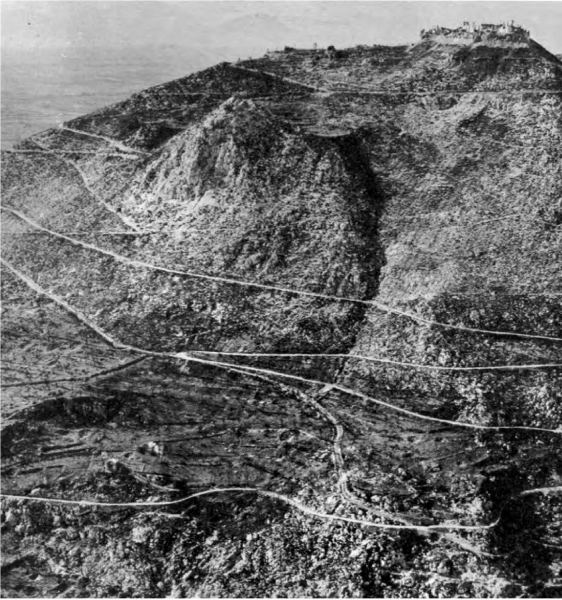
MONTECASSINO ABBEY. Liri Valley, the so-called Gateway to Rome, is on the left. On 15 February the abbey was bombed and shelled for the first time. Before that Allied soldiers had orders not to fire even a rifle shot at the structure. Enemy ammunition dumps were located close to the building, and gun emplacements in the vicinity were numerous. It had become a legitimate military objective. The bombing and shelling destroyed the abbey as a work of art, but its usefulness to the enemy was scarcely impaired. The rubble caused by the destruction of the upper parts of the building only served to strengthen the remaining lower parts.
ITALY
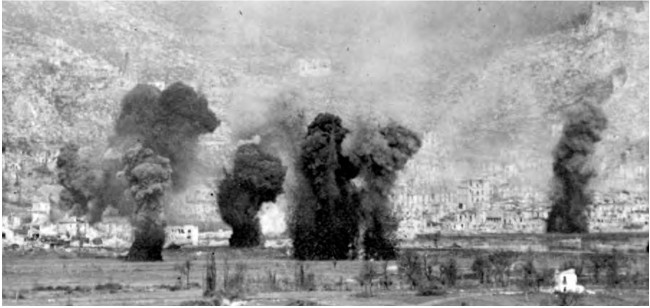
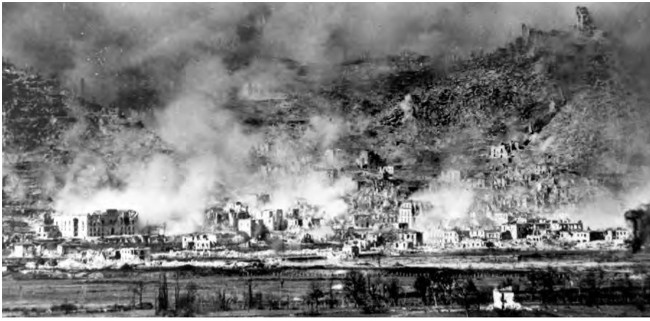
THE BOMBING OF CASSINO on 15 March. Although it had been repeatedly bombed before, the town was heavily bombed and shelled that day in preparation for the attack by the New Zealand Corps, at this time part of the Fifth Army. About 1,200 tons of bombs were dropped and 195,969 rounds were fired by artillery ranging in size from 3-inch guns to 240-mm. howitzers. The enemy’s defenses were not destroyed. Protected by cellars, steel and concrete pillboxes, caves, and tunnels, the German troops suffered comparatively few casualties. The bombing and shelling neither overcame the enemy’s resistance nor noticeably reduced his morale. When the infantry moved in for the attack they were met by heavy mortar fire; when the Allied tanks appeared they could not advance because of bomb craters and debris. The attack was repulsed.
ITALY
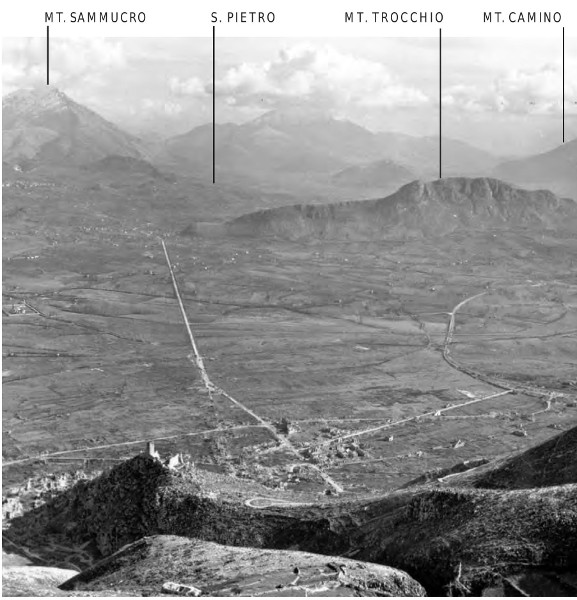
CASSINO AREA, looking along Highway 6. “Castle Hill,” in left foreground topped by tower, was in Allied hands for weeks before the town of Cassino fell. Below cliff are ruins of the town. The picture, made from the vicinity of the abbey, gives some indication of the enemy’s observation over Allied positions. The main drive through the Winter Line defenses started above San Pietro Infine. U. S. forces began the advance on 15 November 1943 and had fought their way to the outskirts of Cassino by 26 January 1944, a distance of eight miles in seventy days. The town fell on 18 May to the Eighth Army after several unsuccessful attacks. The drive on the southern front, to penetrate the Gustav Line, started on 11 May 1944, while that out of the Anzio beachhead started on 23 May.
ITALY
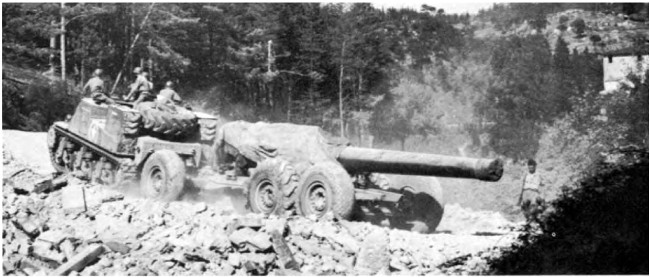
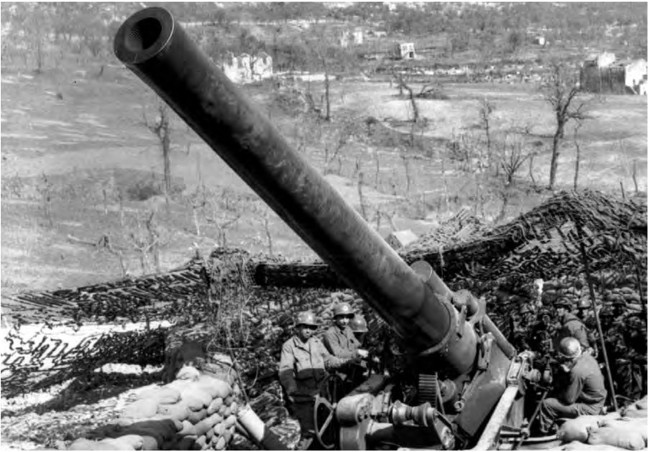
HOWITZER. These pieces fired their first mission in Italy in Mignano Gap, 30 January 1944. They were used with good effect during the Gustav Line fight in and around Cassino. Vehicle towing weapon is converted General Grant tank M3 (top). Howitzer in position near San Vittore del Lazio, five miles southeast of Cassino (bottom). (240-mm. howitzer.)
ITALY
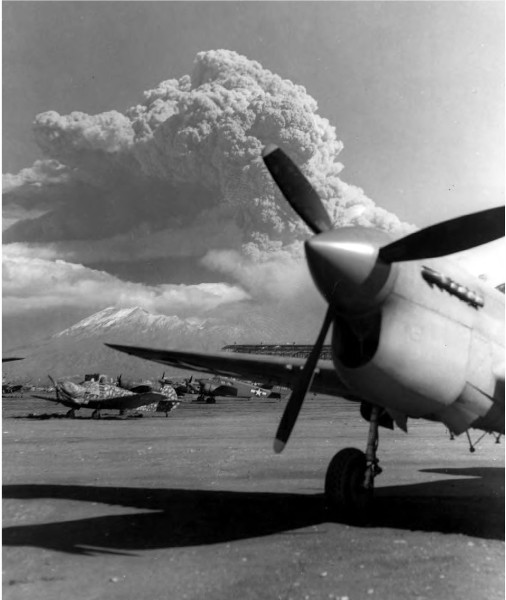
THE ERUPTION OF VESUVIUS in March 1944 damaged a number of aircraft on fields in the vicinity. Fuselages and wings were pierced by fragments of rock hurled from the volcano. In foreground is a P-40 fighter-bomber.
ITALY
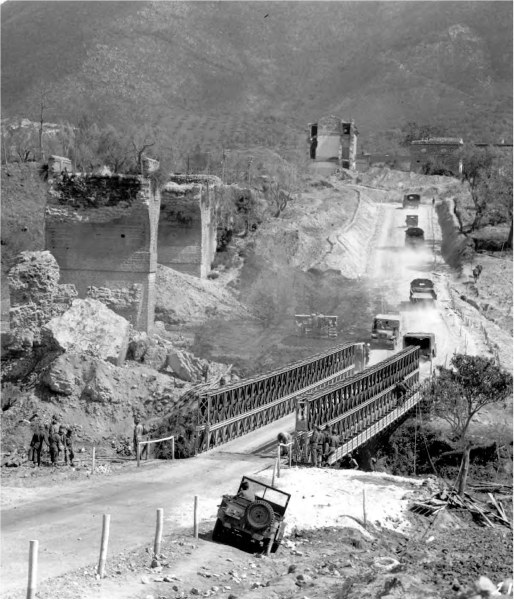
BAILEY BRIDGE over bypass on Highway 7 near Sessa Aurunca. This is the coastal road between Rome and Naples; the inland road, through the Mignano Gap, past Cassino and up the Liri Valley to Rome, is Highway 6. The Bailey bridge was invented by the British, from whom the U. S. forces obtained it.
ITALY
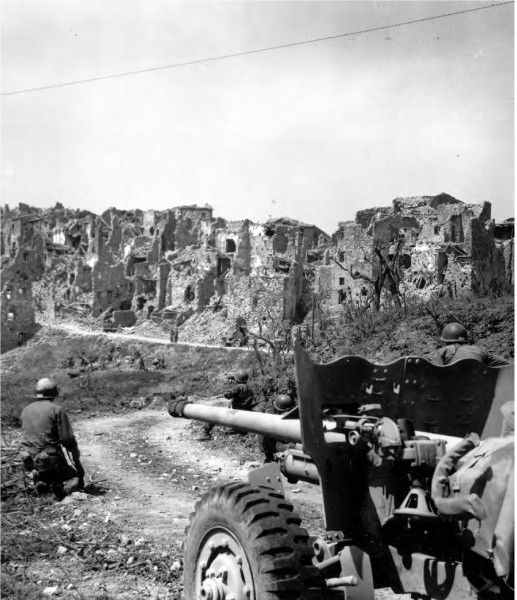
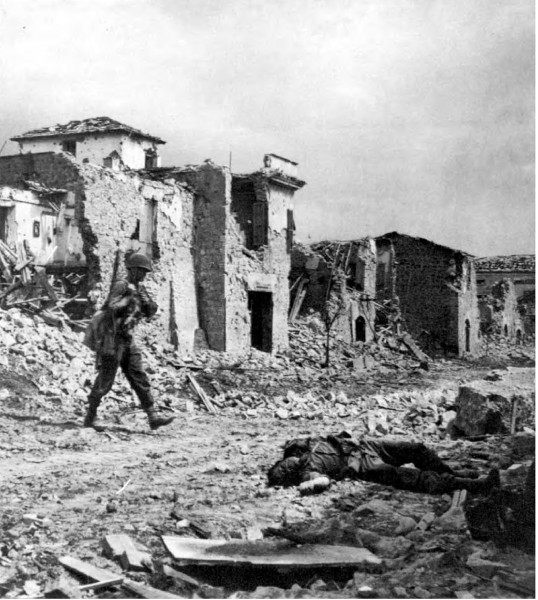
THE RUINS OF SANTA MARIA, INFANTE. This village between the Aurunci Mountains and the Golfo di Gaeta fell to U. S. forces on 14 May, three days after the attack that was to carry the Allies to Rome started. The village had been demolished by air and artillery bombardment. (57-mm. antitank gun.)
ITALY
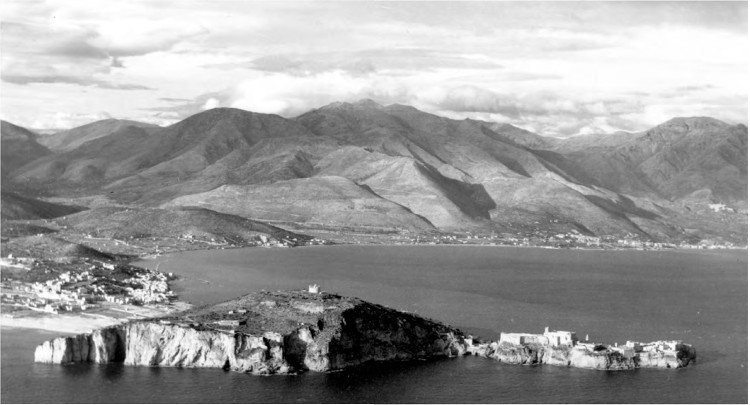
GOLFO Dl GAETA. The high mountain at the right is Monte Petrella, which is 4,600 feet high; the one in the center is Monte Ruazzo, which is 4,000 feet high. The drive through the Gustav Line, started by the left flank of the Fifth Army, had reached Monte Petrella by 15 May and had advanced to the Itri Valley on the left of the picture. U. S. forces in general advanced along the slopes facing the sea.
The French mountain troops advanced across the mountains farther to the north, then turned right into the Liri Valley on the other side and threatened to cut off the German forces around Cassino and in the lower part of Liri Valley. This action by the French made the German position untenable and the enemy started a general withdrawal from the Gustav Line.
ITALY
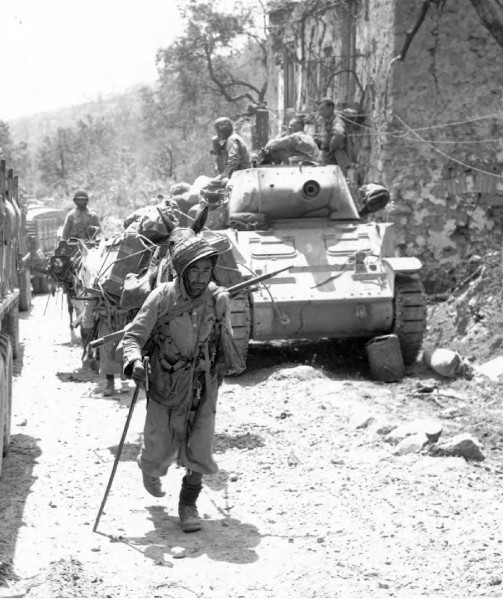
GOUMIERS OF THE FRENCH FORCES leading a pack train into the Aurunci Mountains during the drive that started 11 May. Tank is U. S. M5 light tank manned by French crew, and armed with a 75-mm. howitzer.
ITALY
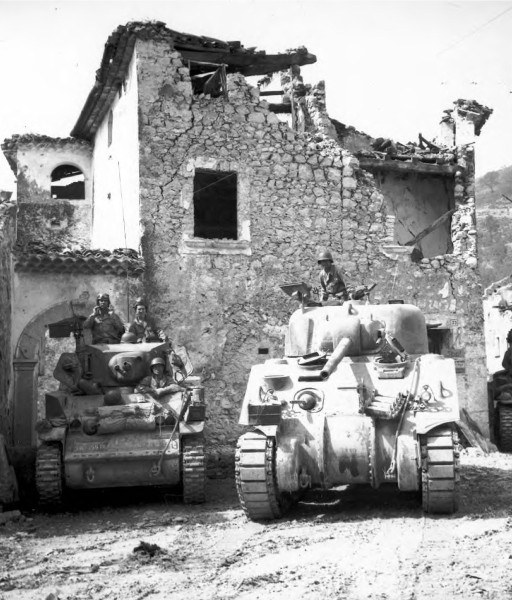
U. S. TANKS IN CORENO AUSONIO on 14 May. The same tanks, manned by Americans, were attached to the French mountain troops making a drive from the Castelforte area on the right flank of the Fifth Army, through the Aurunci Mountains and into the Liri Valley. (Left, light tank M5; right, medium tank M4.)
ITALY
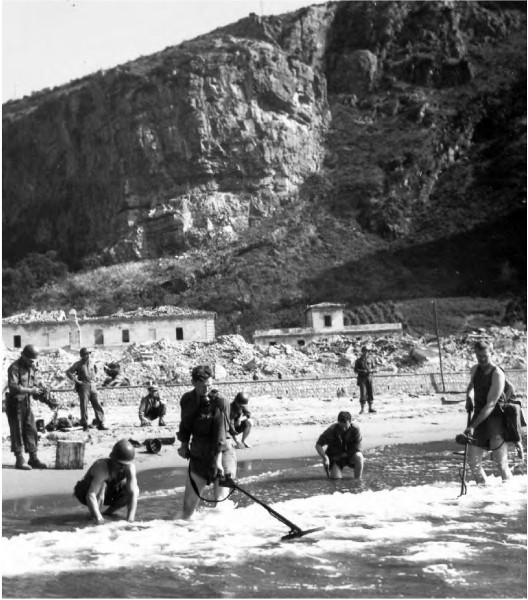
SWEEPING THE TERRACINA BEACH FOR MINES. Terracina is located on Highway 7. During the drive the road became so overcrowded that some supplies had to be shipped by sea. Since the small harbor was cluttered with wreckage of ships, the beach had to be cleared for landing and unloading. (Mine detector SCR 625.)
ITALY
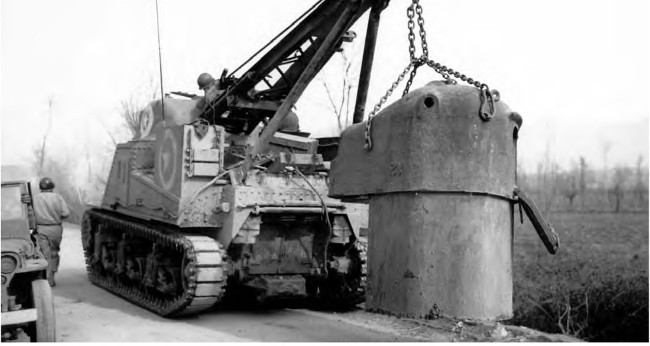
GERMAN PORTABLE PILLBOXES. Some of these were found in the Gustav Line around Cassino and others were later found in the Hitler Line in the Liri Valley. These steel pillboxes, camouflaged and usually connected by communication trenches to well constructed bunkers, were impregnable to all but direct hits from artillery fire. (German mobile steel pillbox, being removed by tank recovery vehicle M31.)
ITALY
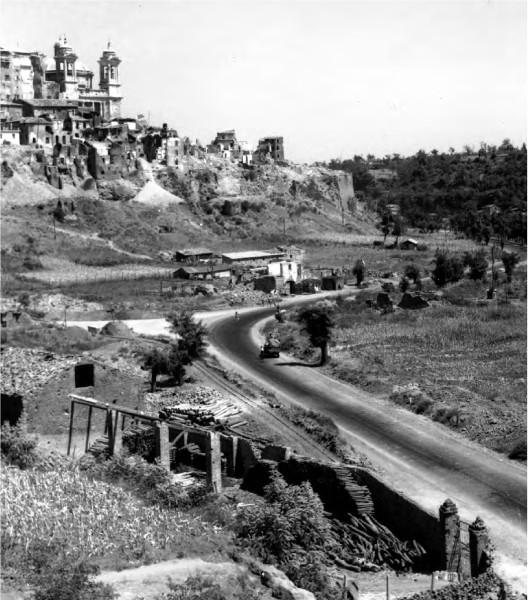
VALMONTONE ON HIGHWAY 6, twenty-five miles southeast of Rome. This was the main escape route of the enemy forces trying to retreat toward Rome from the Cassino-Liri Valley area. The enemy kept the road open until 1 June. U. S. forces found the village unoccupied on the morning of 2 June when a battle patrol entered the town.
ITALY
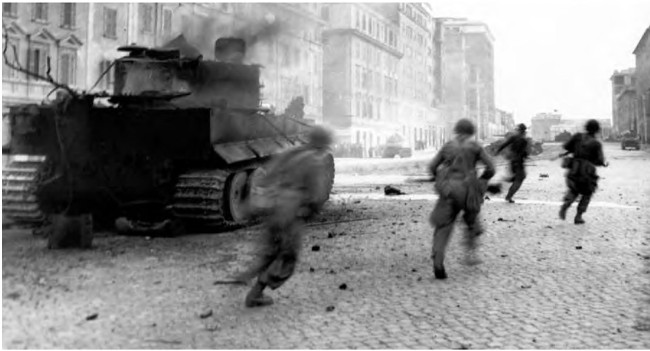
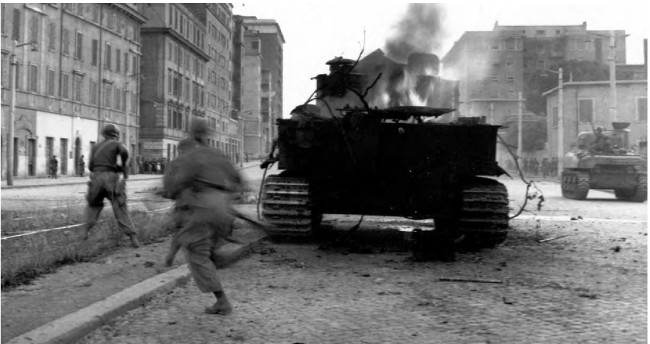
A TANK-INFANTRY TEAM entering Rome on 4 June. The burning vehicle is a German Tiger tank. The enemy had been evacuating the city for several days, but had left a strong rear guard equipped with tanks and artillery to hold the Allies in and below the city as long as possible. Since the streets of Rome were not suitable for conventional infantry attacks, small tank-infantry teams entered the city from several directions and by early morning of 5 June were in possession of the bridges across the Tiber.
ITALY
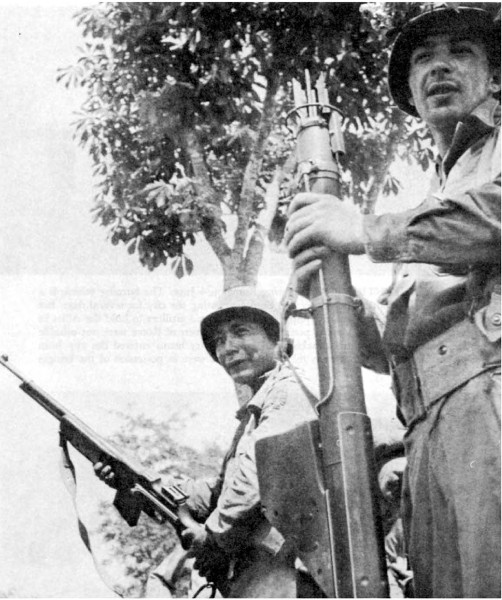
INFANTRYMEN OF ONE OF THE TANK-INFANTRY TEAMS to enter Rome on 4 June. Soldier on left has a Browning automatic rifle. The one on right holds a bazooka (rocket launcher M1).
ITALY
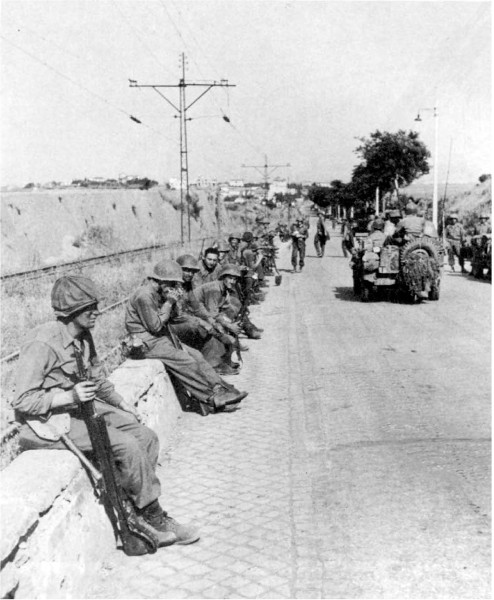
INFANTRY AWAITING SIGNAL TO ENTER ROME on 4 June. At this time the city was being cleared by small tank-infantry teams.
ITALY
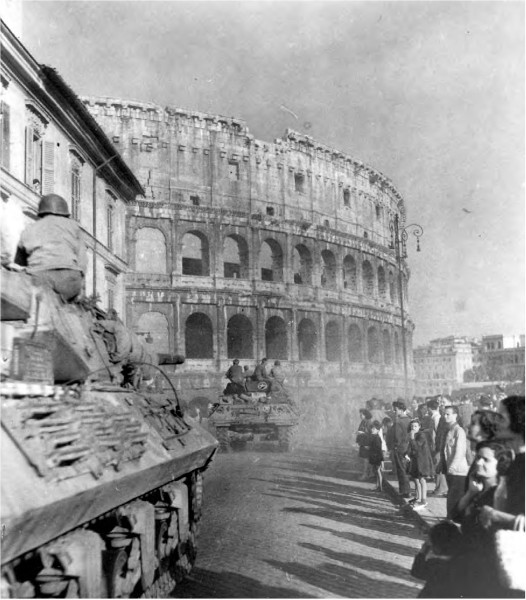
FIFTH ARMY ENTERING ROME on 5 June only to continue through the city in pursuit of the enemy retreating along the roads north of Rome. During this retreat the Germans were under constant bombing and strafing attacks by Allied air forces. The roads of retreat were littered with vehicles of all kinds. (3-inch gun motor carriage M10.)
ITALY
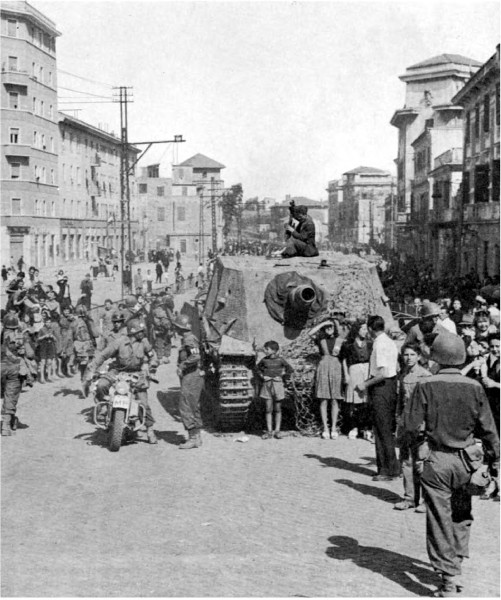
GERMAN GRIZZLY BEAR on a street in Rome. This is a close-support weapon and mounts a short-barreled howitzer in a high, armored superstructure (15-cm Stu. H. 43 on Pz. Kpfw. IV chassis.)
ITALY
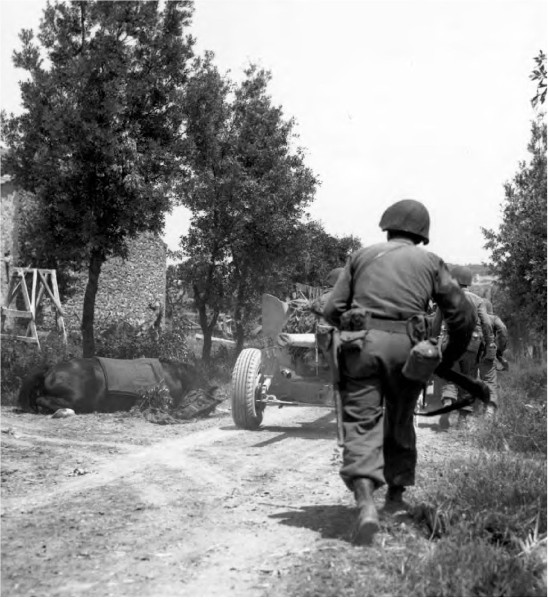
INFANTRY IN PURSUIT OF THE ENEMY north of Rome. Note dead horse on left. Much of the German equipment was horse-drawn, limiting the speed of withdrawal. During the pursuit of the enemy from Rome to the Arno River whole divisions both American and French were gradually withdrawn from the Fifth Army to train for the coming invasion of southern France. Army strength dropped from 248,989 on 1 June to 153,323 on 1 August 1944. Three U. S. divisions, veterans of the Italian campaign, were sent to the Naples area for invasion training. (57-mm. antitank gun.)
SOUTHERN FRANCE
SOUTHERN FRANCE