THE TOLL-KEEPERS.
Reading edition

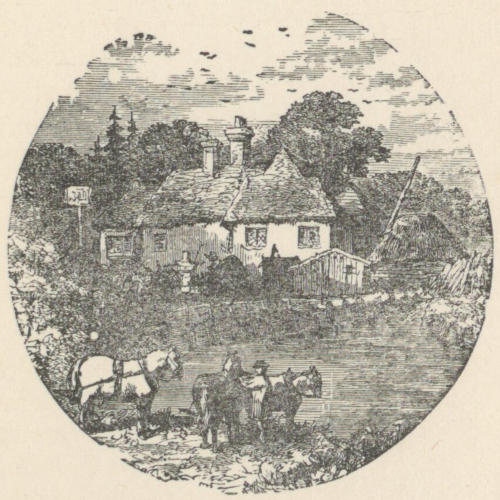
Bushgrove farm-house was a right snug homestead, and the farm-yard, and the rick-yard, and the out-buildings said very plainly that Farmer Cousens was a well-to-do man. To spend one fine summer’s day at Bushgrove would furnish you children with enough to talk about for a month. There would be something to suit the tastes of all of you. Some of the boys would make for the stable at once, and very likely would get a chance of a ride in one of the carts to some part of the farm; others would venture up in the loft above, and perform some daring somersaults on the soft hay; some of the girls would get permission to feed the poultry, and be delighted when the different sorts came half running, half flying at the sight of the well-known bowl; others would only be too glad to help Mrs Cousens in the house, especially if they were entrusted with the important duty of going up to the apple room and selecting the nicest, rosiest apples for the pie. But none, either of the boys or girls, would be far away when the cows were milked just before tea, for a draught of new milk warm from the cow is a treat that Londoners do not easily forget.
I will undertake, however, to say that not one of you when thinking over your day’s pleasure, but would decide that the most enjoyable part of your visit was your introduction to little Sophy and Nelly Cousens.
Oh! their father would not think much of his farm or his ricks if he had not these little rogues about him, and their mother would consider Bushgrove a very dismal home without these little feet trotting about it: it was hard to say who was the farmer’s favourite. Sophy was the elder and the prettier, so strangers said, but “Bless you,” he would say, “folks may talk, but they won’t persuade me which is the prettier, for I don’t want to know: ’tis just like this with cows—some like ’em all roan, others like ’em spotted, but Betty doesn’t care which way ’tis as long as they are quiet and well-behaved when she milks ’em; so I say, as long as the dear children are good, what’s the use of comparing ’em feature by feature?” But friends could not help comparing their manner. Nelly, though only four,—more than a year younger than her sister—was by far the sturdier child, and far less shy and bashful. She would hold up her dear honest face for any one to kiss that spoke kindly to her, while Sophy needed to be persuaded that you loved her before she would raise her drooping eyes, much less her plump cheeks.
Now Farmer Cousens used to grumble—all farmers have some cause, they say; and his was, that he could not take his corn, or his hay, or his vegetables to market without paying a heavy toll. But when most inclined to complain, he would think of the other toll gate nearer home, and then his face would lighten up with a smile.
I wonder who kept that other gate, and what the toll was for passing through.
It was very strictly kept by two little keepers, who were very partial indeed in deciding who were to pay, and who were to go free; and, strange to say, those they loved best had to pay the most. Why, they let their toll gate take care of itself till just as they knew their father would be coming home; then they would take up their places—Sophy on her feet, ready to catch him if he should try to run through; and Nelly sitting up on the bars, to get a ride when the gate was opened, as well as her toll. Sometimes her father pretended he could not open it with such a great heavy weight on it, but she was not to be done in that way. If anything delayed him longer than usual, Sophy would soon begin to get anxious and fear he would not come before it was time for her to go to bed, but little Nelly rested her heels on the bar, and planted her hands so firmly, as much as to say, “Here I sit till he does come.”
All right, Sophy; cheer up, little woman; I hear old Bob’s steady trot, your father is coming, and you won’t care about our society just now; so good-bye both of you, and save some kisses for us when we next go through—we shall want lots of change for our money.