V. TERRITORIAL REGIMENTS. (continued 2)
Reading edition
Notes.—The 44th captured an Eagle of The 62nd French Infantry at Salamanca.
Bibliography.—Historical Record of The 44th, or East Essex Regiment of Foot. Illustrated. [London: Mitchell. 1864.] Historical Record of The 44th, or East Essex Regiment. By T. Carter. 2nd Edition. Illustrated. [Chatham: Gale and Polden. 1887.] Historical Record of The 56th, or West Essex Regiment. 1755-1844. Illustrated. [London: Parker. 1844.]
The Sherwood Foresters (Derbyshire Regiment),
COMPRISING
1st Batt. (formerly) The 45th (Nottinghamshire—Sherwood Foresters) Regiment.
2nd Batt. ( " ) The 95th (Derbyshire) Regiment of Foot; with Militia Battalions.
3rd Batt. The 1st and 2nd Derby Militia.
4th Batt. The Royal Sherwood Foresters Militia.
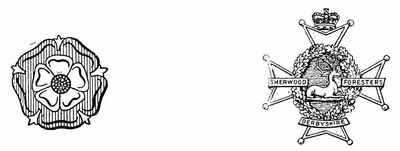
The United Red and White Rose. The Collar Badge.
TITLES.
1st Batt.
1741-48. The 45th Regiment of Foot; also Fraser's or The 2nd (Green) Marines; disbanded.
1741-51. Colonel D. Houghton's (or successive Colonels') Regiment of Foot; disbanded.
1751-82. The 45th Regiment of Foot.
1782-1866. The 45th (Nottinghamshire) Regiment of Foot.
1866-81. The 45th (Nottinghamshire—Sherwood Foresters) Regiment.
2nd Batt.
1760-63. The 95th Regiment of Foot; disbanded.
1780-83. The 95th Regiment of Foot; disbanded.
1794-96. The 95th Regiment of Foot; disbanded.
1802-16. The 95th (Rifles); re-named The Rifle Brigade.
1816-18—. The 95th Regiment of Foot; disbanded.
1824-5-1881. The 95th (Derbyshire) Regiment of Foot.
1881 (from). The Sherwood Foresters (Derbyshire Regiment).
PRINCIPAL CAMPAIGNS, BATTLES, &c.
* "Honours" on the Colours, the figures showing the Battalions concerned.
1757-60. Canada.
*1758. Louisbourg (1).
1759. Quebec.
1762. Martinique.
1775-78. America.
1776. Brooklyn.
1776. Long Island.
1776. Brunx.
1777. Brandywine.
1777. Germantown.
1795. Cape of Good Hope.
1806. Buenos Ayres.
1807. Monte Video.
*1808-14. Peninsula (1).
*1808. Roleia (1).
*1808. Vimiera (1).
*1809. Talavera (1).
*1810. Busaco (1 & 2).
*1811. Fuentes d'Onor (1).
*1812. Ciudad Rodrigo (1).
*1812. Badajos (1).
*1812. Salamanca (1).
1812. Burgos.
*1813. Vittoria (1).
*1813. Pyrenees (1).
*1813. Nivelle (1).
*1814. Orthes (1).
*1814. Toulouse (1).
*1824-26. Ava (1).
*1846-47. South Africa (1).
1852-53. South Africa.
*1854. Alma (2).
*1854. Inkerman (2).
*1855. Sevastopol (2).
1857-58. Indian Mutiny.
*1858-59. Central India (2).
*1868. Abyssinia (2).
1868. Magdala.
*1882. Egypt (2).
*1897-98. Tirah.
1900. South Africa.
Uniform.—Scarlet, with Green facings (1st Batt.), and Scarlet with Yellow facings (2nd Batt.), from formation in 1741 and 1823 respectively until territorialised. The facings are now White.
Regimental and other Badges.—In the Army List "The United Red and White Rose." Also in various combinations, "A Maltese Cross surmounted by a Crown; a White Stag (the municipal arms of Derby) within a Wreath."
Nickname.—"The Old Stubborns" (of the 45th Foot, during the Peninsular Campaigns).
Notes.—The 45th captured a French flag at the storming of Badajos.
Bibliography.—The 95th (The Derbyshire) Regiment in the Crimea. By Major H. C. Wylly. [London: Sonnenschein, 1900.]
The Loyal North Lancashire Regiment,
COMPRISING
1st Batt. (formerly) The 47th (Lancashire) Regiment of Foot.
2nd Batt. ( " ) The 81st (Loyal Lincoln Volunteers) Regiment of Foot; with Militia Battalions.
3rd & 4th Batt. The 3rd Royal Lancashire Militia.
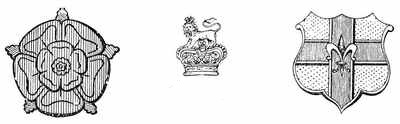
The Royal Crest.
The Red Rose.
The Arms of the City of Lincoln.
TITLES.
1st Batt.
1740-48. The 47th (4th Marines) Regiment of Foot; disbanded.
1741-51. Colonel John Mordaunt's (or Colonel's name) Regiment of Foot.
1751-82. The 47th Regiment of Foot.
1782-1881. The 47th (Lancashire) Regiment of Foot.
2nd Batt.
1759-63. The 81st (Invalids) Regiment; dispersed as Independent Companies.
1778-83. The 81st (Aberdeen Highlanders) Regiment of Foot; disbanded.
1793-94. The 81st (Loyal Lincoln Volunteers) Regiment.
1794-1833. The 81st Regiment of Foot.
1833-81. The 81st (Loyal Lincoln Volunteers) Regiment of Foot.
1881 (from). The Loyal North Lancashire Regiment.
PRINCIPAL CAMPAIGNS, BATTLES, &c.
* "Honours" on the Colours, the figures showing the Battalion concerned.
1745. Jacobite rising.
1746. Falkirk.
1757-60. Canada.
*1758. Louisbourg (1).
*1759. Quebec (1).
1760. Sillery.
1760. Montreal.
1762. Martinique.
1775-81. America.
1775. Lexington.
1775. Bunker's Hill.
1777. Stillwater.
1796. San Domingo.
1800. Kaffraria.
*1806. Maida (2).
1806. Buenos Ayres.
1807. Monte Video.
1809. Scylla Castle.
1809. Ionian Islands.
*1809. Corunna (2).
1809. Flushing.
*1810-14. Peninsula (1 & 2).
1811. Barrossa.
*1811. Tarifa (1).
1812. Burgos.
*1813. Vittoria (1).
*1813. St. Sebastian (1).
1814. Nive.
1814. Bayonne.
*1826. Ava (1).
*1854. Alma (1).
*1854. Inkerman (1).
*1855. Sevastopol (1).
1857-58. Indian Mutiny.
*1878-79. Afghanistan (2).
*1878. Ali Masjid (2).
1900. South Africa.
Uniform.—Scarlet and White facings (1st Batt.) and Scarlet with Buff facings (2nd Batt.) from formation; both battalions have White facings at present time.
Regimental and other Badges.—"The Red Rose of Lancaster." Also "The King's (or Royal) Crest of England" (which is also the badge of the Duchy of Lancaster, and is said to have been conferred on the 47th when raised in Scotland). Also on some appointments "The Arms of the City of Lincoln."
Nicknames, &c.—"Wolfe's Own" (of the 47th at Quebec—the black worm in the gold lace, as now worn, is in memory of the Hero of Quebec). "The Cauliflowers" (of the 47th, in allusion to its white facings, an unusual colour when the corps was raised). "The Lancashire Lads" (also of the 47th—from its county title).
Notes.—This is the only regiment entitled "Loyal," but the term was originally applied, not to the Lancashire, but to the Lincoln battalion. When raised the Lincoln Militia volunteered in a body.
Bibliography.—Historical Record of The 81st Regiment, or Loyal Lincoln Volunteers. 1793-1872. [Gibraltar, 1872.]
The Northamptonshire Regiment,
COMPRISING
1st Batt. (formerly) The 48th (Northamptonshire) Regiment of Foot.
2nd Batt. ( " ) The 58th (Rutlandshire) Regiment of Foot; with Militia Battalions.
3rd Batt. The Northampton and Rutland Militia.
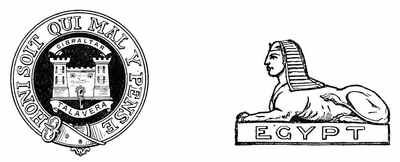
Ornament on Helmet Plate. The Sphinx.
TITLES.
1st Batt.
1740-48. The 48th (The 5th or Cochrane's Marines) Regiment; disbanded.
1740-51. Colonel James Cholmondeley's (or successive Colonels') Regiment of Foot.
1751-82. The 48th Regiment of Foot.
1782-1881. The 48th (Northamptonshire) Regiment of Foot.
2nd Batt.
1740-48. The 58th Regiment of Foot; renumbered the 47th, and now The 1st Batt. Loyal North Lancashire.
1756-57. The 58th Regiment of Foot; renumbered The 56th.
1755-57. The 60th Regiment of Foot; renumbered The 58th.
1757-82. The 58th Regiment of Foot.
1782-1881. The 58th (Rutlandshire) Regiment of Foot.
1881 (from). The Northamptonshire Regiment.
PRINCIPAL CAMPAIGNS, BATTLES, &c.
* "Honours" on the Colours, the figures showing the Battalion concerned.
1744-47. Flanders.
1745. Fontenoy.
1745. Jacobite rising.
1746. Culloden.
1747. Val.
1758-62. Canada.
*1758. Louisbourg (1 & 2).
*1759. Quebec (1 & 2).
1760. Sillery.
1760. Montreal.
1762. Martinique.
1762. Havannah.
*1779-83. Gibraltar (2).
1794. Martinique.
1796. St. Lucia.
1798. Minorca.
1800. Malta.
*1801. Egypt (2).
1801. Aboukir.
1801. Mandora.
1801. Alexandria.
*1806. Maida (2).
1809. Scylla.
*1809-14. Peninsula (1 & 2).
*1809. Douro (1).
1809. Oporto.
*1809. Talavera (1).
1810. Busaco.
*1811. Albuera (1).
1812. Ciudad Rodrigo.
*1812. Badajos (1).
*1812. Salamanca (1 & 2).
1812. Burgos.
*1813. Vittoria (1 & 2).
*1813. Pyrenees (1 & 2).
*1813. Nivelle (1 & 2).
1813. Nive.
*1814. Orthes (1 & 2).
1814. Bordeaux.
*1814. Toulouse (1).
1814. Plattsburg.
1834. Coorg.
*1849-56. New Zealand (2).
*1855. Sevastopol (1).
*1879. South Africa (2).
1881. Transvaal.
*1897-98. Tirah.
1900. South Africa.
Uniform.—1st Batt., Red (afterwards Scarlet) with Buff facings (from 1741 to 1881). 2nd Batt., Scarlet with White (or Buff) facings (1755-1767); Scarlet with Black facings (1767-1881). The facings for both battalions are now White.
Regimental and other Badges.—"The Castle and Key," with the motto, "Montis Insignia Calpe" (for the defence of Gibraltar by the 58th). Also "The Sphinx," for "Egypt" (1801—also an honour of the 58th).
Nicknames.—"The Black Cuffs" (from the facings of the 58th in 1767). Also "The Steel Backs."
Notes.—It was declared of The 48th that they saved the day at Talavera by their "advance, position, and steadiness"—hence "Talavera" on the helmet and waist-plates.
Princess Charlotte of Wales's (Royal Berkshire Regiment),
COMPRISING
1st Batt. (formerly) The 49th (Hertfordshire—Princess Charlotte of Wales's) Regiment of Foot.
2nd Batt. ( " ) The 66th (Berkshire) Regiment of Foot; with Militia Battalion.
3rd Batt. The Royal Berkshire Militia.
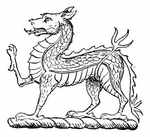
The Dragon of China.
TITLES.
1st Batt.
1742-48. The 49th (The 6th or Cotterell's Marines) Regiment; disbanded.
1743-51. Colonel Edward Trelawney's (or Colonel's name) Regiment of Foot.
1751-82. The 49th Regiment of Foot.
1782-1816. The 49th (Hertfordshire) Regiment of Foot.
1816-81. The 49th (Hertfordshire—The Princess of Wales's) Regiment.
2nd Batt.
1755-58. The 19th (2nd Batt.) Regiment of Foot; renumbered.
1758-82. The 66th Regiment of Foot.
1782-1881. The 66th (Berkshire) Regiment of Foot.
1881 (from). Princess Charlotte of Wales's (Royal Berkshire Regiment).
PRINCIPAL CAMPAIGNS, BATTLES, &c.
* "Honours" on the Colours, the figures showing the Battalion concerned.
1775-78. America.
1775. Bunker's Hill.
1776. Brooklyn.
1776. Long Island.
1776. Brunx.
1777. Brandywine.
1778. St. Lucia.
1796. San Domingo.
*1799. Egmont-op-Zee (1).
*1801. Copenhagen (1).
*1809-14. Peninsula (2).
*1809. Douro (2).
*1809. Talavera (2).
*1811. Albuera (2).
1812-14. America.
*1812. Queenstown (1).
1813. Chrystler's Farm.
*1813. Vittoria (2).
*1813. Pyrenees (2).
*1813. Nivelle (2).
*1813. Nive (2).
*1814. Orthes (2).
1821. Cape of Good Hope.
*1840-42. China (1).
1842. Chusan.
1842. Canton.
1842. Amoy.
1842. Shanghai.
1842. Ningpoo.
*1854. Alma (1).
*1854. Inkerman (1).
*1855. Sevastopol (1).
*1879-80. Afghanistan (2).
1880. Maiwand.
*1880. Kandahar (2).
*1882. Egypt (1).
*1885. Suakim (1).
1885. Tamai.
1885. Nile.
*1885. Tofrek (1).
1900. South Africa.
Uniform.—Scarlet (or Red) with Green facings (both Batts. when raised); Scarlet with Blue facings (present time).
Regimental and other Badges.—"The Dragon" (for China). Also (on Helmet-plate, not mentioned in Army List) "A Stag under a Tree" (an old badge of the Militia Battalion).
Notes.—Raised in Jamaica from Volunteer Companies left in the Island in 1714. For distinction in the American War (1776) the "Grenadier Company" wore a white feather with a black tip, and the "Light Company" a red heckle. Its title in 1816 was bestowed for services to the Princess at Weymouth. The 2nd Battalion (as the 66th Foot) was part of the St. Helena Garrison during the exile of the Emperor Napoleon I.
Bibliography.—The 66th Berkshire Regiment. By J. Percy Groves. [Reading: Beecroft. 1887]
The Queen's Own (Royal West Kent) Regiment,
COMPRISING
1st Batt. (formerly) The 50th (Queen's Own) Regiment of Foot.
2nd Batt. ( " ) The 97th (The Earl of Ulster's) Regiment of Foot; with Militia Battalions.
3rd Batt. The 1st West Kent Militia.
"Quo fas et gloria ducunt."
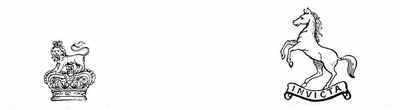
The Royal Crest of England. The White Horse of Kent.
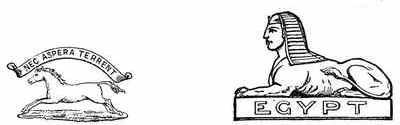
The White Horse and Motto. The Sphinx.
TITLES.
1st Batt.
1740-48. The 58th (The 7th, or Cornwall's Marines) Regiment; disbanded.
1748-57. The 50th (Shirley's American Provincials) Regiment of Foot; disbanded.
1757-82. The 50th (raised in 1751 as the 52nd) Regiment of Foot.
1782-1827. The 50th (West Kent) Regiment of Foot.
1827-31. The 50th (The Duke of Clarence's) Regiment of Foot.
1831-81. The 50th (The Queen's Own) Regiment of Foot.
2nd Batt.
1759-63. The 97th Regiment of Foot; disbanded.
1779-83. The 97th Regiment of Foot; disbanded.
1794-95. The 97th (Strathspey Highlanders) Regiment; disbanded, the flank companies going to the Black Watch.
1798-1802. The 97th (Queen's Germans); renumbered The 96th.
1804-18. The 98th Regiment of Foot; renumbered and disbanded as The 97th.
1824-81. The 97th (The Earl of Ulster's) Regiment of Foot.
1881 (from). The Queen's Own (Royal West Kent) Regiment.
PRINCIPAL CAMPAIGNS, BATTLES, &c.
* "Honours" on the Colours, the figures showing the Battalion concerned.
1759-62. Germany.
1760. Corbach.
1761. Belle Isle.
1761. Kirk Denkern.
1762. Wilhelmstahl.
1783. Gibraltar.
1793. Toulon.
1794. Corsica.
1797-99. Portugal.
*1801. Egypt (1).
1801. Mandora.
1801. Alexandria.
1807. Copenhagen.
1808. Cadiz.
*1808-14. Peninsula (1).
1808. Roleia.
*1808. Vimiera (1).
*1809. Corunna (1).
1809. Flushing.
*1812. Almaraj (1).
1812. Badajos.
*1813. Vittoria (1).
1813. Maya.
*1813. Pyrenees (1).
*1813. Nive (1).
*1814. Orthes (1).
1814. Plattsburg.
*1843. Punniar (1).
*1845. Moodkee (1).
*1845. Ferozeshah (1).
*1846. Aliwal (1).
*1846. Sobraon (1).
*1854. Alma (1).
*1854. Inkerman (1).
*1855. Sevastopol (1 & 2).
1857-58. Indian Mutiny.
*1858. Lucknow (2).
*1863-66. New Zealand (1).
1881. South Africa.
*1882. Egypt (1).
*1884-85. Nile (1).
1900. South Africa.
Uniform.—1st Batt., Scarlet with Scarlet facings (1755-67); Scarlet with Black facings (1767-1831); Scarlet with Blue facings (from 1831). 2nd Batt., Scarlet with Sky-blue facings (on formation in 1824).
Regimental and other Badges.—"The Sphinx" for "Egypt" (1801). The Motto "Quo fas et gloria ducunt" ("Whither right and glory lead"), borne by the late 97th. Also, on appointments, "The Royal Crest"; "The White Horse of Kent" with "Invicta" (adopted since territorialisation). Also (formerly), "The White Horse of Hanover" (in common with many line Regiments).
Nicknames.—"The Blind Half-Hundred" (of the late 50th, many of its men suffering severely from ophthalmia in Egypt, 1801). "The Dirty Half-Hundred" (at Vimiera, where the 50th fought with much distinction; Major Napier wrote their faces were "begrimed with powder as black as their own lapels"). "The Devil's Royals" (also of the 50th). "The Gallant Fiftieth" (this sobriquet was likewise bestowed for gallantry at Vimiera, 900 "tumbling down on Laborde's division of French [5,300 strong] amidst a fearful war-cry, and with a shock that nothing could withstand"—so also wrote Major Napier). "The Celestials" (from the Sky-blue facings of the 97th raised by the Earl of Ulster, the colour being that of the ribbon of the Order of St. Patrick).
Notes.—Its county connection apparently dates from the time of the American War, when its Colonel was one of the distinguished Kentish Wilson family, who also have been intimately connected with the Kentish Militia.
Bibliography.—The History of The 50th (The Queen's Own) Regiment. From the earliest date to the year 1881. By Colonel Fyler. Coloured illustrations, maps, and plans. [London: Chapman and Hall. 1895.]
The King's Own (Yorkshire Light Infantry),
COMPRISING
1st Batt. (formerly) The 51st (2nd Yorkshire West Riding) Regiment.
2nd Batt. ( " ) The 105th (Madras Light Infantry) Regiment; with Militia Battalion.
3rd Batt. The 1st West York Militia.
"Cede Nullis."
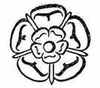
The White Rose (of York).
TITLES.
1st Batt.
1740-48. The 51st (The 8th or Sir Thomas Hanmer's Marines) Regiment; disbanded.
1745-57. The 51st (raised in 1745 as Pepperil's American Provincials) Regiment of Foot; disbanded.
1755-57. The 53rd Regiment of Foot; renumbered.
1757-82. The 51st Regiment of Foot.
1782-1809. The 51st (2nd Yorkshire, West Riding) Regiment of Foot.
1809-21. The 51st (2nd Yorkshire, West Riding, Light Infantry) Regiment.
1821-81. The 51st (2nd Yorkshire, West Riding, The King's Own Light Infantry) Regiment.
2nd Batt.
1761-63. The 105th (Queen's Own Royal Highlanders) Regiment; raised as a wedding escort to Queen Charlotte; disbanded.
1781-83. The 105th (Volunteers of Ireland) Regiment.
1794-96. The 105th Regiment of Foot.
1839-58. The Hon. East India Company's 2nd Madras (European Light Infantry) Regiment.
1858-61. The 2nd Madras (Light Infantry) Regiment.
1861-81. The 105th (Madras Light Infantry) Regiment.
1881 (from). The King's Own Yorkshire Light Infantry.
PRINCIPAL CAMPAIGNS, BATTLES, &c.
* "Honours" on the Colours, the figures showing the Battalion concerned.
1758-62. Germany.
*1759. Minden (1).
1760. Corbach.
1760. Warbourg.
1782. Minorca.
1793. Toulon.
1794. Corsica.
*1808-14. Peninsula (1).
*1809. Corunna (1).
1809. Flushing.
*1811. Fuentes d'Onor (1).
1812. Badajos.
*1812. Salamanca (1).
1812. Burgos.
*1813. Vittoria (1).
*1813. Pyrenees (1).
*1813. Nivelle (1).
*1814. Orthes (1).
*1815. Waterloo (1).
1815. Netherlands.
*1852-3. Pegu (1).
*1878-80. Afghanistan (1).
*1878. Ali Masjid (1).
*1885-7. Burma (1).
1900. South Africa.
Uniform.—1st Batt., Scarlet with Sea-Green (and latterly "full" Green) facings (1755-1821); Scarlet with Blue facings (from 1821). 2nd Batt., Scarlet with Buff facings (1839-1881); Scarlet with Blue facings (from 1881).
Regimental Badge.—"The White Rose" (of York). The Motto, "Cede Nullis" ("Yield to None"—brought by the late 105th. It appears first in the Indian Army List for 1841). On most of the appointments "A French Horn" appears in combination with "The White Rose."
Nickname.—"The Kolis" (from the title received in 1821—K[ing's] O[wn] L[ight] I[nfantry]).
Bibliography.—A Record of the Services of The 51st (2nd West York) The King's Own Light Infantry Regiment. By W. Wheater. [London: Longmans. 1870.]
The King's (Shropshire Light Infantry),
COMPRISING
1st Batt. (formerly) The 53rd (Shropshire) Regiment of Foot.
2nd Batt. ( " ) The 85th (Bucks Volunteers) (King's Light Infantry) Regiment; with Militia Battalions.
3rd Batt. The Shropshire Militia.
4th Batt. The Hereford Militia.
"Aucto splendore resurgo."
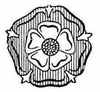
The United Red and White Rose.
TITLES.
1st Batt.
1741-48. The 53rd (The 10th or Jeffrey's, afterwards Agnew's Marines) Regiment; disbanded.
1755-57. The 55th Regiment of Foot; renumbered.
1757-82. The 53rd Regiment of Foot.
1782-1881. The 53rd (Shropshire) Regiment of Foot.
2nd Batt.
1759-63. The 85th (Royal Volunteers Light Infantry) Regiment; disbanded.
1778-83. The 85th (Westminster Volunteers) Regiment; mostly lost at sea returning from Jamaica; rest disbanded.
1794-1808. The 85th (Bucks Volunteers) Regiment of Foot.
1808-15. The 85th (Bucks Volunteers Light Infantry) Regiment.
1815-21. The 85th (Bucks Volunteers) (Duke of York's Own Light Infantry) Regiment.
1821-81. The 85th (Bucks Volunteers) (King's Light Infantry) Regiment.
1881 (from). The King's (Shropshire Light Infantry).
PRINCIPAL CAMPAIGNS, BATTLES, &c.
* "Honours" on the Colours, the figures showing the Battalion concerned.
1761. Belle Isle.
1762. Portugal.
1776-81. America.
1793-95. Flanders.
1793. Famars.
*1793. Nieuport (1).
1793. Valenciennes.
*1794. Tournay (1).
1794. Nimeguen.
1795. Guildermalsen.
*1796. St. Lucia (1).
1797. St. Vincent.
1797. Port-au-Prince.
1797. Trinidad.
1799. Helder.
1799. Bergen.
1799. Egmont-op-Zee.
1809. Flushing.
1809. Burdelkund.
*1809-14. Peninsula (1 & 2).
*1809. Talavera (1).
*1811. Fuentes d'Onor (2).
1812. Badajos.
*1812. Salamanca (1).
1812. Mahratta War.
1814-15. Nepaul.
1814-15. Kalunga.
*1813. Vittoria (1).
*1813. Pyrenees (1).
1813. St. Sebastian.
1813. Bidassoa.
*1813. Nive (1).
*1813. Nivelle (1).
1814. Bayonne.
*1814. Toulouse (1).
*1814. Bladensburg (2).
1814. Washington.
1815. New Orleans.
1817-19. Pindarree War.
18—. Copal Droog.
1838-39. Canada.
*1846. Aliwal (1).
184-. Buddiwal.
*1846. Sobraon (1).
*1848-49. Punjaub (1).
*1849. Goojerat. (1)
1856-57. South Africa.
1857-58. Indian Mutiny.
*1857. Lucknow (1).
1857. Cawnpore.
*1879-80. Afghanistan (2).
*1882. Egypt (1).
*1885. Suakim (1).
1900. South Africa.
Uniform.—1st Batt., Scarlet with Scarlet facings (1755 till 1881); Scarlet with Blue facings (present time). 2nd Batt., Scarlet with Yellow facings (1794-1821); Scarlet with Blue facings (since 1821).
Regimental Badge.—"The United Red and White Rose." Motto: "Aucto splendore resurgo" (from 1821). "A Bugle with Strings" is also worn on various appointments.
Nicknames.—"The Brickdusts" (from the facings of the 53rd). "The Old Five and Threepennies" (from its number, and the daily pay of an ensign). "The Elegant Extracts" (dissensions amongst the staff of the 85th were [circa 1811] so frequent that the Duke of York dispersed the lot, substituting officers from other corps). "The Young Bucks" (in distinction to The 16th—"The Old Bucks").
Notes.—The 1st 85th was the first Light Infantry Regiment in the service.
Bibliography.—Historical Record of The 53rd, or Shropshire Regiment of Foot. 1755-1848. Illustrated. [London: Parker. 1849.] Historical Records of The 53rd (Shropshire) Regiment, now 1st Batt. King's (Shropshire) Light Infantry. 1755-1889. By Colonel W. Rogerson. [Devonport: Swiss. 1890.]
The Duke of Cambridge's Own (Middlesex Regiment),
COMPRISING
1st Batt. (formerly) The 57th (West Middlesex) Regiment of Foot.
2nd Batt. ( " ) The 77th (East Middlesex) Regiment of Foot; the 3rd and 4th Batts. are authorised; with Militia Batts.
5th Batt. The Royal Elthorne Militia.
6th Batt. The Royal East Middlesex Militia.
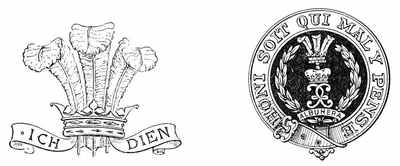
The Plume of the Prince of Wales. The Helmet Badge.
TITLES.
1st Batt.
1741-48. The 57th Regiment of Foot; renumbered The 46th.
1755-57. The 57th Regiment of Foot; renumbered The 55th.
1755-57. The 59th Regiment of Foot; renumbered The 57th.
1757-82. The 57th Regiment of Foot.
1782-1881, The 57th (West Middlesex) Regiment of Foot.
2nd Batt.
1756-63. The 77th (Montgomery Highlanders) Regiment; disbanded.
1775-83. The 77th (Atholl Highlanders) Regiment; disbanded.
1787-1807. The 77th Regiment of Foot.
1807-76. The 77th (East Middlesex) Regiment of Foot.
1876-81. The 77th (East Middlesex) (Duke of Cambridge's Own) Regiment of Foot.
1881 (from). The Duke of Cambridge's Own (Middlesex Regiment).
PRINCIPAL CAMPAIGNS, BATTLES, &c.
* "Honours" on the Colours, the figures showing the Battalion concerned.
1758-60. Canada.
1762. Havannah.
1776-82. America.
1776. Brooklyn.
1781. York Town.
1793-95. Flanders.
1793. Nieuport.
1793. Dunkirk.
1794. Nimeguen.
1790-1807. Hindoostan.
1796. St. Lucia.
*1799. Mysore (2).
*1799. Seringapatam (2).
*1809-1814. Peninsula (1 & 2).
1809. Flushing.
*1811. Albuera (2).
*1811. El-Bodon.
*1812. Ciudad Rodrigo (2).
*1812. Badajos (2).
*1813. Vittoria (1).
*1813. Pyrenees (1).
*1813. Nivelle (1).
*1813. Nive (1).
1814-15. Canada.
1814. Bayonne.
1819. Asseerghur.
1854. Balaclava.
*1854. Alma (1).
*1854. Inkerman (1 & 2).
*1855. Sevastopol (1 & 2).
1858. Indian Mutiny.
*1861-66. New Zealand (1).
*1879. South Africa (1).
1900. South Africa.
Uniform.—1st Batt., Scarlet (or Red) with Green facings (1755-67); Scarlet with Yellow facings (1767-1881); Scarlet with White facings (from 1881). 2nd Batt., Scarlet with Yellow facings (from 1787 to territorialisation, when White facings were adopted).
Regimental and other Badges.—"The Plume of the Prince of Wales" (the 77th badge). Also "The Duke of Cambridge's Cypher and Coronet." Amongst other badges not specified in official lists are (1) "A Laurel Wreath, with Albuera" (an old 57th badge for gallantry at that battle); (2) "The County Arms."
Nicknames.—"The Die-Hards," for stubborn valour at Albuera, by which the 57th practically insured victory; at the finish the Colours were riddled by thirty bullets, and the survivors numbered one officer in twenty-four, and 168 men out of 584. Colonel Inglis rallied his men again and again by "Die hard, my men, die hard!" The 57th had previously been known as "The Steelbacks," from the frequency with which its men, largely recruited by militiamen from London, were flogged. "The Pothooks" (the 77th), from the two sevens in its number.
Notes.—The 77th at El-Bodon was specially commended by Lord Wellington for "steadiness, discipline and confidence" when largely outnumbered.
Bibliography.—Historical Records of The 57th (or West Middlesex Regiment). 1755-1878. By General H. J. Warre, C.B. [London: Mitchell. 1878.] Some Reminiscences of the "Die-Hards" (57th West Middlesex). By Sergeant-Major E. Bezar. [Dunedin: Dick & Co. 1891.] A History of The 57th (West Middlesex Regiment) from 1755-1881. Including a record of the services of the "Die-Hards" in the American War of Independence, Flanders, the West Indies, the Peninsula, France, the Crimea, New Zealand, Zululand, etc. By Captain Henry H. Woolwright, Middlesex Regiment. With coloured plates and other illustrations and maps. Demy 8vo. 406 pp.
The King's Royal Rifle Corps,
COMPRISING
1st to 4th Batts. (formerly) The 60th (The King's Royal Rifle Corps); with Militia Batts.
5th Batt. The Huntingdon Militia.
7th Batt. The 2nd Royal Middlesex Militia.
8th Batt. The Carlow Militia.
9th Batt. The North Cork Militia.
"Celer et audax."
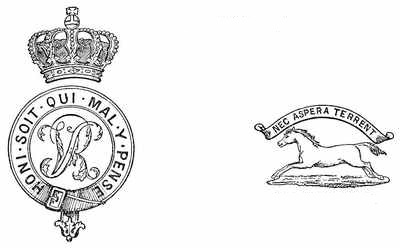
The White Horse.
The Royal Cypher within Garter. With the Imperial Crown.
TITLES.
1741-48. The 60th Regiment of Foot.
1755-57. The 62nd (Royal American) Regiment of Foot; renumbered.
1757-1824. The 60th (Royal American) Regiment of Foot.
1824. The 60th (Duke of York's Rifle Corps and Light Infantry).
1824-30. The 60th (The Duke of York's Own Rifle Corps).
1830-81. The 60th (The King's Royal Rifle Corps).
1881 (from). The King's Royal Rifle Corps.
PRINCIPAL CAMPAIGNS, BATTLES, &c.
* "Honours," the figures showing the Battalion concerned.
1757-60. Canada.
1758. Ticonderoga.
*1758. Louisbourg (2 & 3).
*1759. Quebec (2 & 3).
1760. Sillery.
1762. Martinique.
1762. Havannah.
1796. Grenada.
1799. Surinam.
*1808-14. Peninsula (5).[B]
*1808. Roleia (5).
*1808. Vimiera (5).
1809. Corunna.
1809. Douro.
*1809. Martinique (3).
*1809. Talavera (5).
1810. Guadaloupe.
*1810. Busaco (5).
*1811. Fuentes d'Onor (5).
*1811. Albuera (5).
*1812. Ciudad Rodrigo (5).
*1812. Badajos (5).
*1812. Salamanca (5).
*1813. Vittoria (5).
*1813. Pyrenees (5).
*1813. Nivelle (5).
*1813. Nive (5).
*1814. Orthes (5).
*1814. Toulouse (5).
1814. Bayonne.
*1848-49. Punjaub (1).
*1849. Mooltan (1).
*1849. Goojerat (1).
*1850-53. South Africa (2).
1857-58. Indian Mutiny.
*1857. Delhi (1).
1860. China.
*1860. Taku Forts (2).
*1860. Pekin (2).
*1878-80. Afghanistan (2).
*1879. Ahmed Khel (2).
*1880. Kandahar (2).
*1879-81. South Africa (3).
*1882-84. Egypt (3).
*1882. Tel-el-Kebir (3).
1884-85. Nile.
1884. El Teb.
1884. Tamai.
1885. Abu Klea.
1890-92. Burma.
*1895. Chitral.
1900. South Africa.
Uniform.—Scarlet, with Blue facings (1755 to 1814); Green, with Scarlet facings (present time).
Regimental and other Badges.—Among those appearing on the appointments but not in the Army List are "The Royal Cypher within the Garter, surmounted by a Crown," and "A Maltese Cross." Also formerly "The White Horse" (of Hanover). Motto, "Celer et Audax" ("Swift and Bold," bestowed, according to tradition, by General Wolfe in recognition of its conduct before Quebec).
Notes.—This regiment, though possessing no "Colours," bears more honours than any other regiment, the Highland Light Infantry coming next with twenty-nine.
Bibliography.—A Regimental Chronicle and List of Officers of The 60th, or The King's Royal Rifle Corps, formerly The 62nd, or The Royal American Regiment of Foot. By Captain Nesbit Willoughby Wallace, 60th Royal Rifles. [London: Harrison. 1879.] "Celer et Audax," or The Services of The 5th Battalion, 60th Regiment (Rifles). By Major-General Gibbes Rigaud, late Lieutenant-Colonel, 60th Rifles. [Oxford: Hall & Stacy. 1879.]
The Duke of Edinburgh's (Wiltshire Regiment),
COMPRISING
1st Batt. (formerly) The 62nd (Wiltshire) Regiment of Foot.
2nd Batt. ( " ) The 99th (Duke of Edinburgh's) Regiment of Foot; with Militia Batt.
3rd Batt. The Royal Wiltshire Militia.
The Duke of Edinburgh's Coronet and Cypher.
TITLES.
1st Batt.
1743-48. The 62nd Regiment of Foot: disbanded.
1755-57. The 62nd (Royal American) Regiment of Foot: renumbered The 60th.
1756-57. The 62nd Regiment of Foot: renumbered The 77th.
1756-58. The 4th King's Own (2nd Batt.): separately regimented as The 62nd Foot.
1758-82. The 62nd Regiment of Foot.
1782-1881. The 62nd (Wiltshire) Regiment of Foot.
2nd Batt.
1760-63. The 99th Regiment of Foot: disbanded.
1780-83. The 99th (Jamaica) Regiment of Foot: disbanded.
1794-98. The 99th Regiment of Foot: disbanded.
1804-11. The 99th Regiment of Foot: renumbered The 98th (or Prince of Wales' Tipperary) Regiment of Foot: disbanded in 1818.
1805-15. The 100th Regiment of Foot: renumbered in
1815-18. The 99th (H.R.H. The Prince Regent's County of Dublin) Regiment of Foot: disbanded.
1824-74. The 99th (Lanarkshire) Regiment of Foot.
1874-81. The 99th (The Duke of Edinburgh's) Regiment of Foot.
1881 (from). The Duke of Edinburgh's (Wiltshire Regiment).
PRINCIPAL CAMPAIGNS, BATTLES, &c.
* "Honours" on the Colours, the figures showing the Battalion concerned.
1743. Dettingen.
1745. Fontenoy.
1745. Jacobite rising.
1746. Culloden.
1758. Carrickfergus.
1776-80. America.
1777. Stillwater.
1793-8. San Domingo.
1795. Demerara.
1795. Essequebo.
1795. Berbice.
1809. Scylla.
1813. Niagara.
*1813-14. Peninsula (1).
1813. Bidassoa.
*1813. Nive (1).
1814. Bayonne.
1814-15. America.
*1845-47. New Zealand (2).
*1845. Ferozeshah (1).
*1846. Sobraon (1).
*1855. Sevastopol (1).
1860. China.
*1860. Pekin (2).
1878-80. South Africa (2).
1900. South Africa.
Uniform.—Scarlet with Buff facings (1st Batt. from 1758-1881), and Scarlet with Yellow facings (2nd Batt. from 1824-1881). Now Scarlet with White facings for both batts.
Regimental and other Badges.—"The Duke of Edinburgh's Coronet and Cypher" (this in combination with a Maltese Cross, adopted by the 62nd in 1806, and the Regulation Star and Wreath).
Nickname.—"The Springers" (tradition says that the 62nd was so called from its employment as a light battalion during the American War in 1777).
Notes.—For its defence, in 1760, against the French, of the Castle of Carrickfergus it at one time wore a "splash" on the buttons. After the ammunition was expended bricks and stones were thrown, and, so the story runs, their buttons were used as bullets. The 99th were raised in Lanarkshire—hence its former county title.
Bibliography.—"The Springers." The 62nd Regiment. By H. M. C. [Dublin: Carson. 1891.]
The Manchester Regiment,
COMPRISING
1st Batt. (formerly) The 63rd (West Suffolk) Regiment of Foot.
2nd Batt. ( " ) The 96th Regiment of Foot; with Militia Batts.
3rd & 4th Batts. The 6th Royal Lancashire Militia.
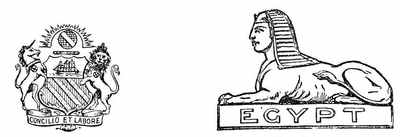
The Arms of the City of Manchester.
The Sphinx.
TITLES.
1st Batt.
1744-48. The 63rd (American) Regiment of Foot: renumbered The 49th.
1757-58. The 8th King's (2nd Batt.) Regiment; regimented in
1758-82. The 63rd Regiment of Foot.
1782-81. The 63rd (West Suffolk) Regiment of Foot.
2nd Batt.
1760-63. The 96th Regiment of Foot (raised for service in the Carnatic): disbanded.
1780-83. The 96th (British Musketeers) Regiment: disbanded.
1793-98. The 96th (The Queen's Royal Irish) Regiment; dispersed.
1803-16. The 96th Regiment of Foot (raised as 2nd Batt. 52nd Foot: renumbered The 95th, and as such disbanded in 1818).
1815-18. The 96th (Queen's Own) Regiment of Foot (raised in 1798 as The Queen's Germans: numbered The 97th in 1802: renumbered, in 1815, the 96th: disbanded in 1818—the Egyptian and Peninsular honours of this corps were assumed by the late 96th).
1824-81. The 96th Regiment of Foot.
1881 (from). The Manchester Regiment.
PRINCIPAL CAMPAIGNS, BATTLES, &c.
* "Honours" on the Colours, the figures showing the Battalion concerned.
1759. Guadaloupe.
1775-81. America.
1775. Bunker's Hill.
1776. Long Island.
1776. Brooklyn.
1777. Brandywine.
1777. Germantown.
1781. Entaw Springs.
1794-95. Flanders.
1794. Nimeguen.
1794. Martinique.
1794. Guadaloupe.
1796. Grenada.
1796. St. Vincent.
1796. St. Lucia.
1799. Bergen.
*1799. Egmont-op-Zee (1).
1799. Alkmaer.
*1801. Egypt (2).
1801. Alexandria.
*1808-11. Peninsula (2).
*1809. Martinique (1).
1809. Flushing.
*1810. Guadaloupe (1).
1814. Bergen-op-Zoom.
1815. Guadaloupe.
*1845-47. New Zealand (2).
*1854. Alma (1).
*1854. Inkerman (1).
*1855. Sevastopol (1).
*1879-80. Afghanistan (1).
*1882. Egypt (1 & 2).
1900. South Africa.
Uniform.—Scarlet with White facings (before territorialisation the facings of the 1st and 2nd Batts. were Green and Yellow respectively).
Regimental and other Badges.—"The Sphinx" for Egypt (1801) by descent from the 96th Regiment of 1798-1818. Also (since 1881) The Arms of the City of Manchester.
Nickname.—"The Bloodsuckers" (of the 63rd).
Bibliography.—The History of the late 63rd (West Suffolk) Regiment. By Major James Slack, late 63rd Regiment. [London: Army and Navy Co-operative Society. 1884.]
The Prince of Wales's (North Staffordshire Regiment),
COMPRISING
1st Batt. (formerly) The 64th (2nd Staffordshire) Regiment of Foot.
2nd Batt. ( " ) The 98th (Prince of Wales's) Regiment of Foot; with Militia Batts.
3rd Batt. The 2nd King's Own Stafford Militia.
4th Batt. The 3rd King's Own Stafford Militia.
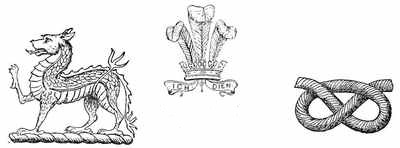
The Plume of the Prince of Wales.
The Dragon of China. The Staffordshire Knot.
TITLES.
1st Batt.
1740-48. The 64th (Irish) Regiment of Foot: disbanded.
1756-58. The 11th (2nd Batt.) Regiment of Foot: regimented in
1758-82. The 64th Regiment of Foot.
1782-1881. The 64th (2nd Staffordshire) Regiment of Foot.
2nd Batt.
1760-63. The 98th Regiment of Foot: disbanded.
1779-84. The 98th Regiment of Foot: disbanded.
1793-1802. The 98th (Highland) Regiment of Foot: renumbered the 91st.
1805-15. The 98th Regiment of Foot: renumbered and disbanded in 1818.
1805-18. The 99th (Prince of Wales's Tipperary) Regiment of Foot: renumbered The 98th in 1815, and afterwards disbanded.
1824-76. The 98th Regiment of Foot.
1876-81. The 98th (The Prince of Wales's) Regiment of Foot.
1881 (from). The Prince of Wales's (North Staffordshire Regiment).
PRINCIPAL CAMPAIGNS, BATTLES, &c.
* "Honours" on the Colours, the figures showing the Battalion concerned.
1759. Guadaloupe.
1761. Belle Isle.
1762. Martinique.
1762. Havannah.
1776-81. America.
1775. Lexington.
1775. Bunker's Hill.
1776. Brooklyn.
1777. Brandywine.
1780. Charlestown.
1780-84. Carnatic.
1781. Entaw Springs.
1794. Guadaloupe.
1794. Martinique.
*1803. St. Lucia (1).
*1804. Surinam (1).
*1842. China (2).
*1848-49. Punjaub (2).
*1856-57. Persia (1).
*1856. Reshire (1).
*1856. Bushire (1).
*1857. Koosh-ab (1).
1857-58. Indian Mutiny.
1857. Cawnpore.
*1857. Lucknow (1).
*1896. Hafir.
1900. South Africa.
Uniform.—Scarlet with White facings (when raised the 64th had Black, and the 98th White facings respectively).
Regimental and other Badges.—"The Prince of Wales's Plume" (in memory of the visit to Malta in 1875). "The Dragon," for "China" (1842). Also (since territorially organised) "The Staffordshire Knot."
Bibliography.—Memoirs of the Services of The 64th Regiment (2nd Staffordshire). 1758-1881. By H. G. Purdon, 64th Regiment. [Stafford: Halden. 1882.]
The York and Lancaster Regiment,
COMPRISING
1st Batt. (formerly) The 65th (2nd Yorkshire, North Riding) Regiment of Foot.
2nd Batt. ( " ) The 84th (York and Lancaster) Regiment of Foot; with Militia Batt.
3rd Batt. The 3rd West York Militia.
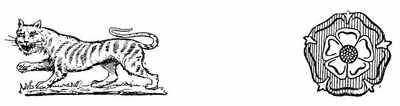
The Royal Tiger. The Union Rose.
TITLES.
1st Batt.
1756-58. The 12th (2nd Batt.) Regiment of Foot; renumbered in
1758-82. The 65th Regiment of Foot.
1782-1881. The 65th (2nd Yorkshire, North Riding) Regiment of Foot.
2nd Batt.
1758-64. The 84th Regiment of Foot: disbanded.
1775-78. The 84th Royal Highland Emigrants Corps: renamed
1778-84. The 84th (Royal Highland Emigrants) Regiment of Foot: disbanded.
1793-1809. The 84th Regiment of Foot.
1809-81. The 84th (York and Lancaster) Regiment of Foot.
1881 (from). The York and Lancaster Regiment.
PRINCIPAL CAMPAIGNS, BATTLES, &c.
* "Honours" on the Colours, the figures showing the Battalion concerned.
1759-62. India
1759. Guadaloupe.
1760. Wyndewash.
1760. Arcot.
1760. Villanova.
1761. Martinique.
1761. Pondicherry.
1762. Havannah.
1775-81. America.
1775. Bunker's Hill.
1782. Gibraltar.
1794-95. Flanders.
1794. Martinique.
1794. Guadaloupe.
1795. Cape of Good Hope.
*1796-1822. India (1).
1803. Gujerat.
1804. Malwa.
1805. Bhurtpore.
1807. Goa.
1809. Flushing.
1809. Arabia.
1810-11. Mauritius.
*1813-14. Peninsula (2).
1813. Bidassoa.
*1813. Nive (2).
1814. Bayonne.
1817. Kirkee.
*1821. Arabia (1).
*1821. Beni-Boo-Ally.
1857-58. Indian Mutiny.
1857. Cawnpore.
*1857. Lucknow (2).
*1861-65. New Zealand (1).
*1882-84. Egypt (1 & 2).
1882. Kassassin.
*1882. Tel-el-Kebir (2).
1884. El Teb.
1884. Tamai.
1900. South Africa.
Uniforms.—Scarlet and White facings (in the 65th from formation in 1758; the 84th had Yellow facings from 1793 to 1881).
Regimental and other Badges.—"The Royal Tiger" with "India" (for lengthy and distinguished services by the 65th). "The Union Rose" (from 1809). The 65th was also entitled to "Arabia" under the regimental figure.
Nickname.—"The Tigers."
Bibliography.—The Roll of Officers of The York and Lancaster Regiment. By Major G. A. Raikes, F.S.A. Demy 8vo. Vol. I.—The 1st Battalion, late 65th Foot. Vol. II.—The 2nd Battalion, late 84th Foot.
The Durham Light Infantry,
COMPRISING
1st Batt. (formerly) The 68th (Durham—Light Infantry) Regiment of Foot.
2nd Batt. ( " ) The 106th (Bombay Light Infantry) Regiment; with Militia Batts.
3rd Batt. The 1st Durham Militia.
4th Batt. The 2nd Durham Militia.
The United Red and White Rose.
TITLES.
1st Batt.
1756-58. The 23rd (2nd Batt.) Royal Welsh Fusiliers: regimented in
1758-82. The 68th Regiment of Foot.
1782-1812. The 68th (Durham) Regiment of Foot.
1812-81. The 68th (Durham Light Infantry) Regiment.
2nd Batt.
1826-58. The Hon. East India Co.'s 2nd Bombay European Light Infantry.
1858-61. The 2nd Bombay Light Infantry Regiment.
1861-81. The 106th Bombay Light Infantry Regiment.
1881 (from). The Durham Light Infantry.
PRINCIPAL CAMPAIGNS, BATTLES, &c.
* "Honours" on the Colours, the figures showing the Battalion concerned.
1758. Cherbourg.
1795. St. Lucia.
1796. St. Vincent.
1796. Grenada.
1803. St. Lucia.
1809. Flushing.
*1811-14. Peninsula (1).
*1812. Salamanca (1).
1812. Burgos.
1813. Adour.
*1813. Vittoria (1).
*1813. Pyrenees (1).
*1813. Nivelle (1).
*1814. Orthes (1).
1814. Bordeaux.
*1854. Alma (1).
*1854. Inkerman (1).
*1855. Sevastopol (1).
*1856-57. Persia (2).
*1856. Reshire (2).
*1856. Bushire (2).
*1857. Koosh-ab (2).
*1864-66. New Zealand (1).
1900. South Africa.
Uniform.—Scarlet, with White facings (present time: the 68th wore Green facings from 1758 to 188-, and the 106th Buff from 1839-42).
Regimental Badge.—"The United Red and White Rose."
Nickname.—"The Faithful Durhams."
Bibliography.—A Short Record of The Durham Light Infantry, from 1758 to 1894. Compiled by Lieutenant-Colonel W. Gordon, Commanding 1st Batt. [Devonport: Swiss. 1894.]
The Highland Light Infantry,
COMPRISING
1st Batt. (formerly) The 71st (Highland Light Infantry) Regiment.
2nd Batt. ( " ) The 74th (Highlanders) Regiment; with Militia Batts.
3rd & 4th Batts. The 1st Royal Lanark Royal Militia.
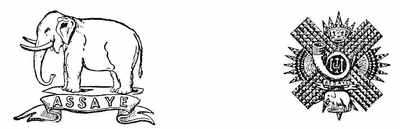
The Elephant. Special Device, as on Collar Badge.
TITLES.
1st Batt.
1758-63. The 71st Regiment of Foot (raised as 2nd Batt. 32nd Foot, but separately regimented the same year: disbanded in 1763).
1764-65. The 71st (Invalids) Regiment of Foot (previously the 81st (Invalids); reduced to Independent Garrison Companies in 1769).
1775-83. The 71st (Highland) Regiment of Foot: also Fraser's Highlanders (chiefly engaged in American Rebellion and afterwards disbanded).
1777-86. The 1st Batt. 73rd (Highland) Regiment of Foot.
1786-1808. The 71st (Highland) Regiment of Foot.
1808-9. The 71st (Glasgow Highland) Regiment of Foot.
1809-10. The 71st (Glasgow Highland Light Infantry) Regiment.
1810-81. The 71st (Highland) Light Infantry.
2nd Batt.
1758-63. The 74th Regiment of Foot (raised as 2nd Batt. of 36th Foot in 1756; separately regimented in 1758; disbanded in 1764).
1763-65. The 74th (Invalids) Regiment of Foot; formerly the 117th Invalids; dispersed as Independent Garrison Companies.
1777-83. The 74th (Highland) Regiment of Foot: also The Argyll Highlanders: disbanded in 1783.
1787-1816. The 74th (Highland) Regiment of Foot: also "The Assaye Regiment" (1803).
1816-45. The 74th Regiment of Foot.
1845-81. The 74th (Highlanders) Regiment of Foot.
1881 (from). The Highland Light Infantry.
PRINCIPAL CAMPAIGNS, BATTLES, &c.
* "Honours" on the Colours, the figures showing the Battalion concerned.
1780-83. Gibraltar.
*1780-97. Hindoostan (1).
*1780. Carnatic (1).
1780. Arcot.
1781. Porto-Novo.
*1781. Sholingur (1).
1782. Arnee.
*1783. Mysore (1).
1783. Cuddalore.
1791. Bangalore.
1791. Nundy-Droog.
1791. Savendroog.
1792. Seringapatam.
1793. Pondicherry.
1795. Ceylon.
*1799. Seringapatam (2).
1800. Polygar.
1802. Ahmednuggar.
1803. Argaum.
*1803. Assaye (2).
*1806. Cape of Good Hope (1).
1806. Buenos Ayres.
1807. Monte Video.
*1808-14. Peninsula (1 & 2).
*1808. Roleia (1).
*1808. Vimiera (1).
*1809. Corunna (1).
1809. Flushing.
*1810. Busaco (2).
*1811. Fuentes d'Onor (1 & 2).
1811. Arroyo dos Molinos.
*1812. Almaraj (1).
*1812. Ciudad Rodrigo (2).
*1812. Badajos (2).
*1812. Salamanca (2).
*1813. Nivelle (2).
*1813. Vittoria (1 & 2).
1813. Maya.
*1813. Pyrenees (1 & 2).
1813. Nive (1).
*1814. Orthes (1 & 2).
*1814. Toulouse (2).
1815. Quatre Bras.
*1815. Waterloo (1).
1815. Netherlands.
*1851-53. South Africa (2).
1854-56. Crimea.
1854. Balaclava.
1855. Kertch.
1855. Yenikale.
*1855. Sevastopol (1).
*1858. Central India (1).
1858. Indian Mutiny.
*1882. Egypt (2).
*1882. Tel-el-Kebir (2).
1900. South Africa.
Uniform.—1st Batt., Scarlet, Buff facings, and the Mackenzie tartan, with chako instead of feather bonnet (from 1777). 2nd Batt., Scarlet and grass Green facings (from 1758 till 1881).
Regimental Badges.—That in the Army List is "The Elephant" with "Assaye"; but on the chako-plate and collar a special design is worn, combining "The Star of the Order of the Thistle" with "The Crown" as on the collar of the Order of the Star of India (for distinction gained by each battalion in India); a Horn on the Star with monogram H.L.I, surmounting a scroll with "Assaye" and "The Elephant" (without howdah or trappings) below.
Nickname.—"The Pig and Whistle Light Infantry."
Notes.—The two veteran regiments now known as the 1st and 2nd Highland Light Infantry possess the longest "honour" record (twenty-nine in all) of any British regiment whatsoever, save the King's Royal Rifle Corps, which have thirty-two all told. The roll commences with "Carnatic," won by the 1st Batt. in the Hyder Ali campaign, seconded by the laurels of the 2nd Batt. at the Siege of Seringapatam, in which on several occasions it particularly distinguished itself. The same battalion contributed "Assaye" (with "The Elephant"). It is recorded that in this battle "Every officer present, save one, was killed or wounded, and the battalion reduced to a mere wreck." "Assaye" is an honour shared only with The Seaforths and The 19th Hussars. For its services in India the Honourable East India Company presented it (1803) with a complimentary Colour. Henceforward honours fell thick and fast on both battalions—at the Cape, particularly so throughout the Peninsula campaign, in the Kaffir wars of 1851-53 (a large draft of its men went down in the ill-fated Birkenhead), at the Crimea, in the Indian Mutiny, and more latterly in the Egyptian campaigns of the eighties.
Bibliography.—Historical Record of The 71st Regiment Highland Light Infantry. 1777-1852. Illustrated. [London: Parker. 1852.] Historical Record of The 71st Regiment Highland Light Infantry. 1777-1876. By Lieut. Henry J. T. Hildyard, 71st Highland Light Infantry. [London: Harrison. 1876.] Historical Record of The 74th Highlanders. 1787-1850. Illustrated. [London: Parker. 1850.] Historical Records of The 74th Highlanders (now 2nd Battalion Highland Light Infantry). 1787-1887. Illustrated. [Dumfries: Macveigh. 1887.]
The Seaforth Highlanders (Ross-shire Buffs, the Duke of Albany's Own Regiment of Foot).
(3 Batts.)
1st Batt. (formerly) The 72nd (Duke of Albany's Own Highlanders) Regiment of Foot.
2nd Batt. ( " ) The 78th (Highlanders—Ross-shire Buffs) Regiment of Foot; with Militia Battalion.
3rd Batt. The Highland Rifle Militia.
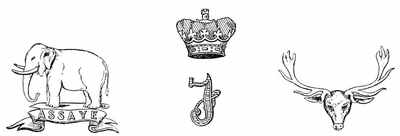
The Coronet and Cypher of The Duke of Albany.
The Elephant with "Assaye."
The Seaforth Crest.
TITLES.
1st Batt.
1756-63. The 2nd Highland Batt.: afterwards regimented as The 78th (Highland) Regiment of Foot; also Fraser's Highlanders; disbanded 1763. (See Titles, 2nd Batt.)
1778-86. The Seaforth (Highland) Regiment of Foot; after establishment regimented as The 78th (Highland) Regiment of Foot. (See 2nd Batt.)
1786-1823. The 72nd (Highland) Regiment of Foot. (At the peace of 1783 many regiments were disbanded.) There had previously been three 72nds—(a) The 72nd Foot (1756-63); (b) The 72nd (Invalids) Foot (1764-65); and (c) The 72nd (Royal Manchester Volunteers) Regiment of Foot (1777-84).
1823-1881. The 72nd (Duke of Albany's Own Highlanders) Regiment of Foot.
2nd Batt.
1756-63. The 2nd Highland Batt.: afterwards regimented as The 78th (Highland) Regiment of Foot; also Fraser's Highlanders; disbanded.
1793-18—. The 78th (Highlanders) Regiment of Foot; also Ross-shire Buffs; between 1777-86 The 78th was represented in the 1st Batt. by the Seaforth Highlanders.
1881 (from). The Seaforth Highlanders (Ross-shire Buffs, The Duke of Albany's).
PRINCIPAL CAMPAIGNS, BATTLES, &c.
* "Honours" on the Colours, the figures showing the Battalion concerned.
1758. Louisbourg.
1758. Montmorenci.
1759. Quebec.
*1780-97. Hindoostan (1).
*1780. Carnatic (1).
1782. Arnee.
*1783. Mysore (1).
1783. Cuddalore.
1791. Bangalore.
1791. Savendroog.
1792. Seringapatam.
1793. Pondicherry.
1794-95. Flanders.
1794. Nimeguen.
1795. Guildermalsen.
1795. Quiberon.
1803. Ahmednuggar.
*1803. Assaye (2).
1803. Argaum.
*1806. Maida (2).
*1806. Cape of Good Hope (1).
1807. Egypt.
1807. Rosetta.
*1811. Java (2).
1814-15. Netherlands.
1814. Antwerp.
*1835. South Africa (1).
1854. Kertch.
*1855. Sevastopol (1).
*1856-57. Persia (2).
1857-58. Indian Mutiny.
*1857. Koosh-ab (2).
1857. Cawnpore.
*1857. Lucknow (2).
*1858. Central India (1).
*1878. Peiwar Kotal (1).
*1879. Charasiah (1).
*1878-80. Afghanistan (1 & 2).
*1879. Kabul (1).
*1880. Kandahar (1).
*1882. Egypt (1).
1882. Kassassin.
*1882. Tel-el-Kebir (1).
*1895. Chitral.
*1898. Atbara.
*1899. Khartoum.
1900. South Africa.
Uniform.—1st Batt., Scarlet with Buff facings, and the "Mackenzie" tartan (from 1778, but in 1823 the tartan was changed to "Stuart," as directed by the Commander-in-Chief, Duke of York and Albany; subsequently the "Mackenzie" tartan was revived). The hackle is white. 2nd Batt., Scarlet with Buff facings and the "Mackenzie" tartan; from date of "linking" the facings have matched those of the 1st Batt.
Regimental Badges, Mottoes, &c.—The Coronet and Cypher of the late Duke of York (who was also Duke of Albany); also, subsequently, the Cypher of the late Prince Leopold, Duke of Albany; also a Stag's Head (the cognisance of the Earls of Seaforth); also an Elephant (without howdah and trappings) with "Assaye" on scroll underneath; also a Thistle bearing the Star of the Order of the Thistle, with circle superimposed, within which is the Cypher (F) of the late Duke of York, surmounted by the Ducal Coronet. Mottoes.—(1) Cuidich'n Righ (Help, to the King): this, with the Stag's Head, appertains to the Mackenzies, and, according to tradition, was bestowed through the founder of the clan having saved the life of King Alexander II. of Scotland when attacked by a wounded stag. Borne by the Ross-shire Buffs from the first: officially recognised in 1825. (2) Caber Feidh (The Antlers of the Deer), the Seaforth slogan; and (3) Tulloch ard (The High Hill), the old gathering-ground of the Mackenzies on Loch Duich in Ross-shire.
Nicknames.—(1) "The Regiment of the Macraes" (from the large proportion of men of this name in the 72nd when raised); also (2) "The Wild Macraes" (when in Edinburgh their doings seriously frightened the inhabitants); (3) "The King's Men" (from the ancient motto of the 78th, "Help, to the King").
Notes, &c.—Both Batts. are successors of the old 78th (Highland) Regiment of Foot—Fraser's Highlanders—which saw much service under General Wolfe; disbanded in 1763. The second 78th was raised in 1778 by Kenneth Mackenzie, Earl of Seaforth, was renumbered as the 72nd in 1786, and is the direct ancestor of the present 1st Seaforth Highlanders. Seven years later the present 2nd Seaforth Highlanders were raised as The 78th (Highland) Regiment of Foot, being also known, shortly afterwards, as the Ross-shire Buffs. The combined battle-roll of honour is much the same as that of the Black Watch and the Argyll and Sutherland Highlanders. "Assaye" (in 1803) was specially recognised by the Honourable East India Company presenting honorary colours to the late 78th (2nd Batt.). Half a century later, during the Mutiny, it rendered unparalleled service under Havelock, Outram, and Clive, adding "Lucknow" to the Colours, while its achievements in "Central India," "Afghanistan," "Kabul," "Kandahar," "Egypt," and "Tel-el-Kebir" are well within living memory.
Bibliography.—Historical Records of The 72nd Regiment, or Duke of Albany's Own Highlanders. 1778-1848. [London: Parker. 1848.] Historical Records of The 72nd Highlanders, now 1st Batt. Seaforth Highlanders. 1777-1886. [Edinburgh: Blackwood. 1886.]
The Gordon Highlanders.
(3 Batts.)
1st Batt. (formerly) The 75th (Stirlingshire) Regiment of Foot.
2nd Batt. ( " ) The 92nd (Gordon Highlanders) Regiment of Foot; with
3rd Batt. The Royal Aberdeenshire Militia.
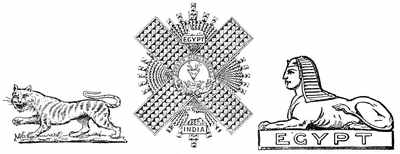
Special Device on Waist- Plate and Buttons.
The Tiger.
The Sphinx.
TITLES.
1st Batt.
1758-63. The 75th Regiment of Foot; raised in 1756 as 2nd Batt. 37th Foot, separately regimented as 75th in 1758, and disbanded in 1765.
1764-65. The 75th (Invalids) Regiment of Foot: formerly (1760) the 118th Invalids; dispersed for garrison service.
1778-83. The 75th (Prince of Wales's) Regiment of Foot; disbanded at the close of the American War.
1787-1809. The 75th (Highland) Regiment of Foot; also "Abercrombie's Highlanders."
1809-62. The 75th Regiment of Foot.
1862-81. The 75th (Stirlingshire) Regiment of Foot.
2nd Batt.
1794-98. The 100th (Gordon Highlanders) Regiment of Foot.
1798-1861. The 92nd (Highland) Regiment of Foot; there had previously been three other regiments bearing this number, but none incorporated for more than four years.
1861-81. The 92nd (Gordon Highlanders) Regiment of Foot.
1881 (from). The Gordon Highlanders.
PRINCIPAL CAMPAIGNS, BATTLES, &c.
* "Honours" on the Colours, the figures showing the Battalion concerned.
1761. Belle Isle.
1762. Portugal.
1778-83. America.
*1791-1806. India (1).
1792. Seringapatam.
1795-97. Malabar and Goa.
*1799. Mysore (1).
1799. Sedaseer.
*1799. Seringapatam (1).
1799. Helder.
1799. Crabbendam.
1799. Bergen.
*1799. Egmont-op-Zee (2).
1799. Quiberon.
1800. Ferrol.
*1801. Mandora (2).
*1801. Egypt (2).
1801. Alexandria.
1803. Gujerat.
1804. Malwa.
1805. Bhurtpore.
1807. Copenhagen.
1808-14. Peninsula (2).
*1809. Corunna (2).
1809. Flushing.
*1811. Fuentes d'Onor (2).
1811. Arroyo dos Molinos.
*1812. Almaraj (2).
*1813. Vittoria (2).
1813. Maya.
*1813. Pyrenees (2).
*1813. Nive (2).
1814. Gâve.
*1814. Orthes (2).
1815. Quatre Bras.
*1815. Waterloo (2).
1815. Netherlands.
*1835. South Africa (1).
1857-58. Indian Mutiny.
*1857. Delhi (1).
1857. Bulundshuhur.
1857. Agra.
1857. Cawnpore.
*1858. Lucknow (1).
*1878-80. Afghanistan (2).
*1879. Charasiah (2).
*1879. Kabool (2).
*1880. Kandahar (2).
1881. Transvaal.
*1882-84. Egypt (1).
*1882. Tel-el-Kebir (1).
*1884-85. Nile (1).
1884. El Teb.
1884. Tamai.
*1895. Chitral.
*1897-98. Tirah.
1900. South Africa.
Uniform.—Red, with deep Yellow facings, and the Gordon tartan bearing a yellow distinguishing stripe (the Marquis of Huntly, who raised the late 92nd, 2nd Batt., became the fifth Duke of Gordon). The hackle is white.
Regimental Badges, &c.—"The Sphinx" (for Egypt), and "The Royal Tiger" (for India). In the device on buttons and waist-plate these are shown in the upper and lower divisions of the St. Andrew Cross, with "Egypt" and "India" underneath, respectively; also within a scroll, inscribed "Gordon Highlanders," on the centre of the cross, and resting on a thistle wreath, is worn the crest (a stag's head issuing from the ducal coronet) of the Marquis of Huntly.
Nickname.—"The Gay Gordons."
Notes, &c.—Both regiments were raised in Scotland, the 75th specially for service in India at the instance and cost of the late Honourable East India Company, receiving on its return "The Royal Tiger" in recognition of nineteen years of eventful and arduous service. Fifty years later it again fought in India through the Mutiny. During this period the 2nd Batt., as the late 92nd, was distinguishing itself in Holland, in Egypt (with special distinction at Mandora), and particularly in the Peninsula Campaigns of 1809-14, no less than seven "honours" falling to its share. Fresh laurels were won at Quatre Bras in company with the Black Watch and the Royal Scots. Of its later exploits only the barest mention can be made—of its services in the Indian Mutiny, in Afghanistan (1878-80), including Kabul and the march to Kandahar and the rest—the emblazonments on the "Colours" tell a sufficiently emphatic story.
Bibliography.—Historical Record of the 92nd Regiment (Gordon Highlanders). 1794-1850. Illustrated. [London: Parker. 1851.]
The Queen's Own Cameron Highlanders,
COMPRISING
1st Batt. (formerly) The 79th (Queen's Own Cameron Highlanders) Regiment.
2nd Batt. Authorised; with Militia Battalion.
3rd Batt. The Highland Light Infantry Militia.
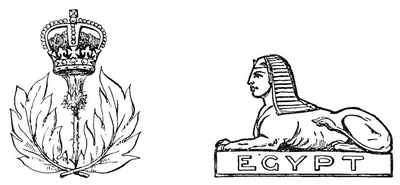
The Thistle and Crown. The Sphinx.
TITLES.
1759-64. The 79th Regiment of Foot.
1778-84. The 79th (Royal Liverpool Volunteers) Regiment of Foot; also The Liverpool Blues; disbanded.
1793-1804. The 79th (Highland—Cameronian Volunteers) Regiment.
1804-73. The 79th (Cameron Highlanders) Regiment of Foot.
1873-81. The 79th (Queen's Own Cameron Highlanders) Regiment.
1881 (from). The Queen's Own Cameron Highlanders.
PRINCIPAL CAMPAIGNS, BATTLES, &c.
* "Honours" on the Colours.
1762. Manilla.
1783. Carnatic.
1794-95. Flanders.
1794. Nimeguen.
*1799. Egmont-op-Zee.
1800. Quiberon.
1800. Ferrol.
1800. Vigo.
1800. Cadiz.
1801. Mandora.
1801. Egypt.
1801. Alexandria.
1807. Copenhagen.
*1808-14. Peninsula.
1809. Corunna.
1809. Flushing.
1810. Cadiz.
1810. Busaco.
*1811. Fuentes d'Onor.
*1812. Salamanca.
1812. Burgos.
*1813. Pyrenees.
*1813. Nivelle.
*1813. Nive.
*1814. Toulouse.
1815. Quatre Bras.
*1815. Waterloo.
1815. Netherlands.
*1854. Alma.
1854. Balaclava.
*1855. Sevastopol.
1858. Indian Mutiny.
*1858. Lucknow.
1874. Ashantee.
*1882. Egypt.
*1882. Tel-el-Kebir.
*1884-85. Nile.
*1898. Atbara.
*1899. Khartoum.
Uniform.—Scarlet with Green facings (1793-1873); Scarlet with Blue facings (from 1873).
Regimental and other Badges.—"The Thistle ensigned with the Imperial Crown" (with the change of title in 1873). "The Sphinx" for "Egypt," (1801).
Notes.—This is the sole Territorial Regiment having one line battalion only.
Bibliography.—Historical Records of the 79th Queen's Own Cameron Highlanders. By Captain Mackenzie, Lieutenant Ewart, and Lieutenant Findlay. [Devonport: Swiss. 1887.] Some Account of the Part Taken by the 79th Regiment, or Cameron Highlanders, in the Indian Mutiny, 1858. By Captain D. Dunberley. [Inverness, 1891.]
The Royal Irish Rifles,
COMPRISING
1st Batt. (formerly) The 83rd (County Dublin) Regiment of Foot.
2nd Batt. ( " ) The 86th (Royal County Down) Regiment of Foot; with Militia Battalions.
3rd Batt. The Royal North Down Militia.
4th Batt. The Royal Antrim Militia.
5th Batt. The Royal South Down Militia.
6th Batt. The Royal Louth Militia.
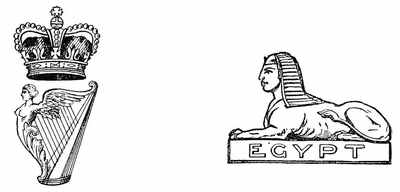
The Harp and Crown. The Sphinx.
TITLES.
1st Batt.
1758-63. The 83rd Regiment of Foot; disbanded.
1778-83. The 83rd (Royal Glasgow Volunteers) Regiment of Foot; disbanded.
1793-1859. The 83rd Regiment of Foot.
1859-81. The 83rd (County of Dublin) Regiment of Foot.
2nd Batt.
1759-63. The 86th Regiment of Foot; formerly 2nd Batt. 76th Foot; disbanded.
1779-83. The 86th Regiment of Foot; disbanded.
1793-1806. The 86th (The Shropshire Volunteers) Regiment of Foot.
1806-12. The 86th (The Leinster) Regiment of Foot.
1812-81. The 86th (Royal County Down) Regiment of Foot.
1881 (from). The Royal Irish Rifles.
PRINCIPAL CAMPAIGNS, BATTLES, &c.
* "Honours," the figures showing the Battalion concerned.
1795. Jamaica.
1797-8. San Domingo.
*1799-1819. India (2).
*1801. Egypt (2).
1805. Bhurtpore.
*1806. Cape of Good Hope (1).
*1809-14. Peninsula (1).
*1809. Talavera (1).
*1810. Bourbon (2).
*1810. Busaco (1).
*1811. Fuentes d'Onor (1).
1811. El Bodon.
*1812. Ciudad Rodrigo (1).
*1812. Badajos (1).
*1812. Salamanca (1).
*1813. Vittoria (1).
*1813. Nivelle (1).
*1814. Orthes (1).
*1814. Toulouse (1).
1817-19. Kandy.
1838-39. Canada.
*1842-59. Central India (1 & 2).
1857-58. Indian Mutiny.
1858. Jhansi.
1858. Golowlee.
1858. Calpe.
1858. Gwalior.
1900. South Africa.
Uniform.—1st Batt., Scarlet with Yellow facings (1793-1881). 2nd Batt., Scarlet with Yellow facings (1793-1812); Scarlet with Blue facings (1812-1881). 1st and 2nd Batts., Green with Dark Green facings (at present time).
Regimental and other Badges.—"The Harp and Crown," with Motto, "Quis separabit." Also "The Sphinx" for "Egypt" (1801), won by the 86th. The "Honours" formerly on the "Colours" have, since the conversion of the regiments into a Rifle Corps, been placed on the special pattern helmet-plate.
Nicknames.—"Fitch's Grenadiers" (of the 83rd when raised in 1793, on account of smallness of stature). "The Irish Giants" (in India, 1842, of the 86th).
Notes.—The 86th captured several standards at Jhansi (1858).
Bibliography.—Historical Record of The 86th, or Royal County Down Regiment. 1793-1842. [London: Parker. 1842.] Memoirs and Services of the 83rd Regiment. [Bray. 1863.]
Princess Victoria's (Royal Irish Fusiliers),
COMPRISING
1st Batt. (formerly) The 87th (Royal Irish Fusiliers) Regiment of Foot.
2nd Batt. ( " ) The 89th (Princess Victoria's) Regiment of Foot; with Militia Battalions.
3rd Batt. The Armagh Militia.
4th Batt. The Cavan Militia.
5th Batt. The Monaghan Militia.
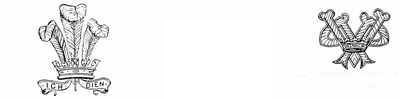
The Plume of the Prince The Princess Victoria's
of Wales.Cypher and Coronet.
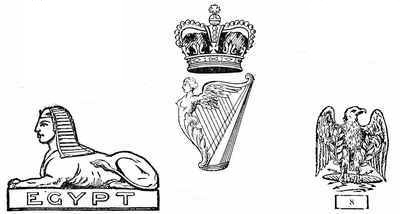
The Harp and Crown.
The Sphinx.
The Eagle.
TITLES.
1st Batt.
1759-63. The 87th (Highland Volunteers) Regiment of Foot; also "Keith's Highlanders"; disbanded.
1779-83. The 87th Regiment of Foot; disbanded.
1793-1811. The 87th (The Prince of Wales's Irish) Regiment of Foot.
1811-27. The 87th (The Prince of Wales's Own Irish) Regiment of Foot.
1827-81. The 87th (The Royal Irish Fusiliers) Regiment of Foot (for a short period The Prince of Wales's Own Irish Fusiliers).
2nd Batt.
1759-65. The 89th (Gordon Highlanders) Regiment of Foot; disbanded.
1779-83. The 89th Regiment of Foot; disbanded.
1793-1866. The 89th Regiment of Foot.
1866-81. The 89th (The Princess Victoria's) Regiment of Foot.
1881 (from). The Princess Victoria's (Royal Irish Fusiliers).
PRINCIPAL CAMPAIGNS, BATTLES, &c.
* "Honours" on the Colours, the figures showing the Battalion concerned.
1760. Zierenberg.
1760. Warbourg.
1760. Campen.
1761. Fellinghausen.
1761. Johannisberg.
1762. Wilhelmstahl.
1764. Buxar.
1780. St. Lucia.
1780. Antigua.
1793. Alost.
1794-5. Flanders.
1794. Boxtel.
1794. Nimeguen.
1795. Tuyl.
1800. Malta.
*1801. Egypt (2).
1801. Alexandria.
1806. Buenos Ayres.
*1807. Monte Video (1).
*1809-14. Peninsula (1).
*1809. Talavera (1).
1810. Mauritius.
*1811. Barrossa (1).
*1811. Tarifa (1).
*1811. Java (2).
*1813. Vittoria (1).
1813. Bidassoa.
*1813. Nivelle (1).
1813-14. Canada.
1813. Chrystler's Farm.
*1813. Niagara (2).
1814-15. Netherlands.
*1814. Orthes (1).
*1814. Toulouse (1).
1814. Bergen-op-Zoom.
1815-16. Nepaul.
*1824-26. Ava (2).
*1855. Sevastopol (2).
1857-58. Indian Mutiny.
1860. China.
*1882. Egypt (1).
*1882. Tel-el-Kebir (1).
*1884. Egypt (2).
1884. El Teb.
1884. Tamai.
1900. South Africa.
Uniform.—1st Batt., Scarlet with Green facings (1793-1823, when the facings were changed to Blue); 2nd Batt., Scarlet with Black facings (1793 to 1881, when the latter gave place to the present Blue facings).
Regimental and other Badges.—"The Princess Victoria's Coronet" (received with its title in 1866, when Her Majesty exchanged the colours presented by her in 1833, as Princess Victoria, for new ones). "The Sphinx" for "Egypt" (1801). "An Eagle with a Wreath of Laurel" in addition to "The Plume of the Prince of Wales" (for distinction at Barrossa in 1811, where it captured the Eagle [the first taken in the Peninsular War] of the 8th French Light Infantry)—cf. the figure "8" below the Eagle—whence also its title "The Prince of Wales's Own Irish." "The Harp and Crown" (the badge of the 87th, when raised in 1793).
Nicknames, &c.—"The Old Togs," or "The Faugh-a-Ballagh Boys" (from the war cry of the 87th at Barrossa—"Fag an Bealac" = "Clear the Way"). "The Eagle Takers" (also a sobriquet of the 87th—see above). "Blayney's Bloodhounds" (for skill in tracing rebels in the Irish Rebellion of 1798). "The Rollickers."
Notes.—The Royal Fusiliers wear two collar badges, a distinction shared only with the Seaforth Highlanders.
Bibliography.—Historical Record of The 89th, or Royal Irish Fusiliers. 1793-1853. [London: Parker. 1842.] Historical Record of The 89th Princess Victoria's Regiment. By Captain R. Brinckman, 2nd Royal Inniskilling Fusiliers. Illustrated. [Gale and Polden. 1888.]
The Connaught Rangers,
COMPRISING
1st Batt. (formerly) The 88th (Connaught Rangers) Regiment of Foot.
2nd Batt. ( " ) The 94th Regiment of Foot; with Militia Battalions.
3rd Batt. The South and North Mayo Militia.
4th Batt. The Galway Militia.
5th Batt. The Roscommon Militia.
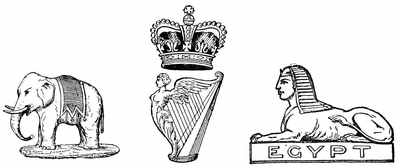
The Elephant. (Caparisoned) The Harp and Crown. The Sphinx.
TITLES.
1st Batt.
1760-63. The 88th (Royal Highland Volunteers) Regiment of Foot; disbanded.
1779-83. The 88th Regiment of Foot; disbanded.
1793-1881. The 88th (Connaught Rangers) Regiment.
2nd Batt.
1760-63. The 94th (Royal Welsh Volunteers) Regiment of Foot; disbanded.
1779-83. The 94th Regiment of Foot; disbanded.
1794-95. The 94th (Irish) Regiment of Foot; disbanded.
1803-1818. The 94th (Scots Brigade) Regiment of Foot; disbanded.
1823-81. The 94th Regiment of Foot.
1881 (from). The Connaught Rangers.
PRINCIPAL CAMPAIGNS, BATTLES, &c.
* "Honours" on the Colours, the figures showing the Battalion concerned.
1760-62. Germany.
1760. Warbourg.
1760. Campen.
1762. Wilhelmstahl.
1794-95. Flanders.
1794. Nimeguen.
1793. Alost.
1796. Grenada.
1796. St. Lucia.
1799. Bergen.
*1799. Seringapatam (2).
*1801. Egypt (1).
1803. Argaum.
1806. Buenos Ayres.
1807. Monte Video.
*1809-14. Peninsula (1 & 2).
*1809. Talavera (1).
1810. Matagorda.
*1810. Busaco (1).
1811. Sabugal.
*1811. Fuentes d'Onor (1).
*1812. Ciudad Rodrigo (1 & 2).
*1812. Badajos (1 & 2).
*1812. Salamanca (1 & 2).
1812. Burgos.
*1813. Vittoria (1 & 2).
*1813. Nivelle (1 & 2).
1813. Pyrenees.
*1814. Orthes (1 & 2).
*1814. Toulouse (1 & 2).
1814. Plattsburg.
*1854. Alma (1).
*1854. Inkerman (1).
*1855. Sevastopol (1).
1857-58. Indian Mutiny.
*1858. Central India (1).
*1877-79. South Africa (1 & 2).
1880-81. Transvaal.
1900. South Africa.
Uniform.—1st Batt., in 1793, Scarlet with Yellow facings; now (1900) Scarlet and Deep Green. 2nd Batt., in 1823, Scarlet with Buff facings; at present the same as 1st Batt.
Regimental and other Badges.—"The Harp and Crown," with the Motto, "Quis separabit" (the badge of the 88th from formation). "The Sphinx" for "Egypt" (1801; also an 88th distinction). "The Elephant" (without the howdah, but caparisoned: this with "Seringapatam" on the honours has descended to the Connaughts through its 2nd Batt. from the 94th of 1803-1818. See Notes).
Nicknames.—"The Devil's Own" (88th), "The Gawies" (94th).
Notes.—The 94th of 1803-18 was a Scots Brigade in the service of Holland from 1586-1793, save one interregnum of three years from 1688-91. In 1804 it was taken into the English service, earning much distinction in India and in the Peninsular campaigns, the "honours" of which were revived in the 94th of 1823.
Bibliography.—Historical Record of The 88th, or Connaught Rangers. 1793-1837. [London: Clowes. 1838.]
The Princess Louise's (Argyll & Sutherland Highlanders).
(4 Batts.)
1st Batt. (formerly) The 91st (Princess Louise's Argyllshire Highlanders).
2nd Batt. ( " ) The 93rd (Sutherland Highlanders) Regiment of Foot; with Militia Battalions.
3rd Batt. The Highland Borderers Militia.
4th Batt. The Royal Renfrew (Prince of Wales's) Militia.
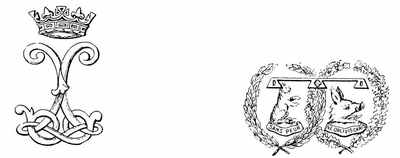
The Princess Louise's Cypher and Coronet. A Cat: The Boar's Head.
TITLES.
1st Batt.
1794-96. The 98th (Argyllshire Highlanders) Regiment of Foot; renumbered.
1796-1809. The 91st (Argyllshire Highlanders) Regiment of Foot. Three other corps had previously borne this number; neither had been retained longer than four years.
1809-21. The 91st Regiment of Foot; its distinctive title was probably dropped for the same reason that the Highland dress was for a time discarded, because of its supposed impediment to recruiting.
1821-64. The 91st (Argyllshire) Regiment of Foot.
1864-72. The 91st (Argyllshire) Highlanders.
1872-1881. The 91st (Princess Louise's Argyllshire) Highlanders.
2nd Batt.
1760-96. The 93rd Regiment of Foot; during this period three 93rds were raised and disbanded—1760-63; 1779-83 (American War); and 1793-96 (served in Demerara, Essequibo, and Berbice, and then was drafted into the 39th).
1800-61. The 93rd Highlanders.
1861-81. The 93rd (Sutherland Highlanders).
1881 (from). The Princess Louise's (Argyll and Sutherland Highlanders).
PRINCIPAL CAMPAIGNS, BATTLES, &c.
* "Honours" on the Colours, the figures showing the Battalion concerned.
1779-83. America.
1796. Guiana.
*1806. Cape of Good Hope (2).
*1808-14. Peninsula (1).
*1808. Roleia (1).
*1808. Vimiera (1).
*1809. Corunna (1).
1809. Flushing.
1809. Talavera.
*1813. Pyrenees (1).
*1813. Nivelle (1).
1813. Bidassoa.
*1813. Nive (1).
*1814. Orthes (1).
*1814. Toulouse (1).
1814. Bayonne.
1814-15. Netherlands.
1814. Bergen-op-Zoom.
1814. Antwerp.
1815. New Orleans.
1838. Canada.
*1846-47. South Africa (1).
*1851-53. South Africa (1).
*1854. Alma (2).
*1854. Balaclava (2).
1855. Kertch.
1855. Yenikale.
*1855. Sevastopol (2).
1857-58. Indian Mutiny.
*1857. Lucknow (2).
1858. Rohilcund.
*1879. South Africa (1).
1900. South Africa.
Uniform, &c.—Scarlet, with bright Yellow facings, and the Sutherland tartan.
Regimental Badges, &c.—"The Princess Louise's Cypher and Coronet," "The Boar's Head" (the Campbell crest), and "Ne obliviscaris." Also "A Cat" and "Sans peur" (the Sutherland cognisance).
Nickname.—"The Rory's."
Notes.—The old 91st was raised at Stirling by the Duke of Argyll: hence its title, crest, and motto. The Cape was the scene of its first campaign, since which it, with its companion battalion, has seen much service—a forty-one years' combined record—in South Africa. Its "honours" were, however, chiefly won in the Peninsular campaigns at the beginning of the century. The 2nd Batt. was also raised in Scotland from the Sutherland Fencible Highlanders, and has had a most distinguished career from then till now. Little need to dwell on its prowess. Who amongst us does not remember, or who has not read of that "thin red line" drawn up by Colin Campbell to resist the onslaught of the Russian Horse at Balaclava; how the 93rd stood their ground, successfully stemming and finally repulsing that memorable charge; how it alone of all regiments of foot enjoys the proud distinction of "Balaclava" on its "colours"? And surely there is still less need to tell how a few months later, in the Mutiny, and especially at Lucknow, this famous corps added new and undying laurels to its regimental record—a record which is in the memory or ken of all.
Bibliography.—Historical Records of The 91st Argyllshire Highlanders (now the 1st Battalion Argyll and Sutherland Highlanders). From the formation of the Regiment in 1794 to 1881. By G. L. Goff, 91st Highlanders. With full-page coloured and other illustrations. [London: Bentley. 1891.] Historical Record of The 93rd Sutherland Highlanders, now 2nd Battalion Princess Louise's Argyll and Sutherland Highlanders. By Roderick H. Burgoyne. [London: Bentley. 1883.] History of the 1st Battalion Princess Louise's Argyll and Sutherland Highlanders. By Lieut.-Colonel H. G. Robley and P. J. Aubin. [Cape Town: Murray and S. Zeyer. 1883.]
The Prince of Wales's Leinster Regiment (Royal Canadians),
COMPRISING
1st Batt. (formerly) The 100th (Prince of Wales's Royal Canadian) Regiment.
2nd Batt. ( " ) The 109th (Bombay Infantry) Regiment; with Militia Battalions.
3rd Batt. The King's County Militia.
4th Batt. The Queen's County Militia.
5th Batt. The Meath Militia.
The Plume of the Prince of Wales.
A Maple Leaf.
TITLES.
1st Batt.
1761-63. The 100th (Highland) Regiment of Foot; disbanded.
1780-84. The 100th Regiment of Foot; disbanded.
1794-18[?]. The 100th (Gordon Highlanders) Regiment of Foot; the late 92nd, now 2nd Gordon Highlanders.
1805-19. The 100th (Prince Regent's County of Dublin) Regiment of Foot; disbanded as the 99th.
1816-18. The 100th (Duke of York's Irish) Regiment of Foot; raised as the 101st.
1858-1881. The 100th (Prince of Wales's Royal Canadian) Regiment of Foot.
2nd Batt.
1761-63. The 109th Regiment of Foot; disbanded.
1794-95. The 109th (Aberdeenshire) Regiment of Foot; disbanded.
1854-58. The Hon. East India Company's 3rd (Bombay European) Regiment.
1858-61. The 3rd (Bombay) Regiment.
1861-81. The 109th (Bombay Infantry) Regiment.
1881 (from). The Prince of Wales's Leinster Regiment (Royal Canadians).
PRINCIPAL CAMPAIGNS, BATTLES, &c.
* "Honours" on the Colours, the figures showing the Battalion concerned.
1761-62. Martinique.
1761. Belle Isle.
1783. Carnatic.
1812-14. Canada.
*1813. Niagara (1).
1857-58. Indian Mutiny.
*1858. Central India (2).
1858. Ratgur.
1858. Barodia.
1858. Sangor.
1858. Garrakota.
1858. Muddenpore.
1858. Betura.
1858. Jhansi.
1858. Koouch.
1858. Calpe.
1858. Morar.
1858. Gwalior.
1900. South Africa.
Uniform.—Scarlet with Blue facings (from formation with 1st Batt., the 2nd Batt. wore White facings till 1881).
Regimental and other Badges.—"The Plume of the Prince of Wales," "A Maple Leaf" (the late 100th was raised in Canada).
Nicknames.—"The German Mob" (of the 109th, from the number of Germans in the regiment when taken over from the Hon. East India Company). "The Brass Heads" (also of the 109th because, physique being good, they suffered little from the sun).
Notes.—The 100th Foot was an expression of Canadian loyalty at the time of the Mutiny.
The Royal Munster Fusiliers,
COMPRISING
1st Batt. (formerly) The 101st (Royal Bengal Fusiliers) Regiment.
2nd Batt. ( " ) The 104th (Bengal Fusiliers) Regiment; with Militia Battalions.
3rd Batt. The South Cork Militia.
4th Batt. The Kerry Militia.
5th Batt. The Royal Limerick County Militia.
"Spectamur Agendo."
The Royal Tiger. The Arms of Munster.
TITLES.
1st Batt.
1760-63. The 101st (Highland) Regiment of Foot; also Johnstone's Highlanders; disbanded.
1780-83. The 101st Regiment of Foot; disbanded.
1794-95. The 101st (Irish) Regiment of Foot; drafted.
1806-17. The 101st (Duke of York's Irish) Regiment of Foot; disbanded.
1759-1840. The Hon. East India Company's Bengal (European) Regiment.
1840-41. The Hon. East India Company's 1st Bengal (European) Regiment.
1841-46. The Hon. East India Company's 1st (Bengal European) Light Infantry.
1846-58. The Hon. East India Company's 1st (Bengal European) Fusiliers.
1858-61. The 1st Bengal Fusiliers.
1861-81. The 101st Royal Bengal Fusiliers.
2nd Batt.
1761-63. The 104th (King's Volunteers) Regiment of Foot; disbanded.
1780-83. The 104th Regiment of Foot; disbanded.
1794-95. The 104th (Royal Manchester Volunteers) Regiment of Foot; drafted.
1806-16. The 104th Regiment of Foot; disbanded.
1839-50. The Hon. East India Company's 2nd Bengal (European) Regiment.
1850-58. The Hon. East India Company's 2nd (Bengal European) Fusiliers.
1858-61. The 2nd Bengal Fusiliers.
1861-81. The 104th Bengal Fusiliers.
1881 (from). The Royal Munster Fusiliers.
PRINCIPAL CAMPAIGNS, BATTLES, &c.
* "Honours" on the Colours, the figures showing the Battalion concerned.
1757. Chandernagore.
*1757. Plassey (1).
*1758. Condore (1).
*1759. Masulipatam (1).
*1759. Badara (1).
1760-61. Delhi.
1760. Wyndewash.
*1763-65. Gujerat (1).
*1764. Buxar (1).
*1774-94. Rohilcund (1).
1781. Porto Novo.
*1781. Sholingur.
1782. Arnee.
*1783. Carnatic (1).
1783. Cuddalore.
*1804. Deig.
1805. Bhurtpore.
1808. Macao.
1810. Amboyna.
1813-14. Canada.
1814-15. Nepaul.
1815. Java.
*1826. Bhurtpore (1).
*1839-40. Afghanistan (1).
*1839. Ghuznee (1).
*1845. Ferozeshah (1).
*1846. Sobraon (1).
*1848-49. Punjaub (2).
*1849. Chillianwallah (2).
*1849. Goojerat (2).
1851-53. Burma.
*1852-53. Pegu (1 & 2).
1857-58. Indian Mutiny.
*1857. Delhi (1 & 2).
*1858. Lucknow (1).
*1885-87. Burma (1).
1900. South Africa.
Uniform.—The 101st (when raised) wore Scarlet with Sky-blue facings, the latter being changed to Blue in 1846; the 104th have worn Scarlet with Blue facings throughout.
Regimental and other Badges.—"A Shamrock." "The Royal Tiger." Also (since territorialisation) "The Arms of Munster." Motto, "Spectamur agendo."
Nicknames.—"The Dirty Shirts" (the 101st fought without the tunic at Delhi in 1857).
Notes.—The two battalions received their titles in 1846 and 1850, for distinction in the Sutlej and Punjaub Campaigns respectively; the officers of the 104th being allowed to wear also a scarlet band in the forage cap for services in India.
Bibliography.—History of the Royal European Regiment, now the Royal Munster Fusiliers. By Lieutenant-Colonel P. R. Innes. Illustrated. [London: Simpkin. 1885.]
The Royal Dublin Fusiliers,
COMPRISING
1st Batt. (formerly) The 102nd (Royal Madras Fusiliers).
2nd Batt. ( " ) The 103rd (Royal Bombay Fusiliers); with Militia Battalions.
3rd Batt. The Kildare Militia.
4th Batt. The Royal Dublin City Militia.
5th Batt. The Dublin County Militia.
"Spectamur Agendo."
The Elephant. The Arms of the City The Royal Tiger. of Dublin.
TITLES.
1st Batt.
1760-63. The 102nd (Queen's Own Royal Volunteers) Regiment of Foot; disbanded.
1780-83. The 102nd Regiment of Foot; disbanded.
1793-94. The 102nd (Irish) Regiment of Foot; drafted.
1809-16. The 102nd Regiment of Foot; raised in 1798 as the New South Wales Corps: disbanded in 1818 as the 100th Foot.
1746-1830. The Hon. East India Company's European Regiment.
1830-39. The Hon. East India Company's Madras (European) Regiment.
1839-43. The Hon. East India Company's 1st Madras (European) Regiment.
1843-58. The Hon. East India Company's 1st Madras (European) Fusiliers.
1858-61. The 1st Madras Fusiliers.
1861-81. The 102nd (Royal Madras) Fusiliers.
2nd Batt.
1761-63. The 103rd (Volunteer Hunters) Regiment of Foot; disbanded.
1781-83. The 103rd (King's Irish Infantry) Regiment of Foot; disbanded.
1794-95. The 103rd (Loyal Bristol Volunteers) Regiment of Foot; drafted.
1809-17. The 103rd Regiment of Foot.
1661-68. The Bombay Regiment.
1668-1839. The Hon. East India Company's Bombay (European) Regiment.
1839-44. The Hon. East India Company's 1st Bombay (European) Regiment.
1844-58. The Hon. East India Company's 1st Bombay (European) Fusiliers.
1858-61. The 1st Bombay Fusiliers.
1861-81. The 103rd Royal Bombay Fusiliers.
1881 (from). The Royal Dublin Fusiliers.
PRINCIPAL CAMPAIGNS, BATTLES, &c.
* "Honours" on the Colours, the figures showing the Battalion concerned.
*1747-83. Carnatic (2).
*1747-83. Mysore (2).
*1751. Arcot (1).
*1757. Plassey (1 & 2).
*1758. Condore (1).
*1760. Wyndewash (1).
*1764. Buxar (2).
1764. Madras.
1764. Pondicherry.
1767-69. Mysore.
1778-80. Pondicherry.
*1780. Gujerat (1).
1780. Ahmedabad.
*1781. Sholingur (1).
1782. Arnee.
1783. Cuddalore.
1791. Bangalore.
*1791. Nundy-Droog (2).
*1792. Seringapatam (2).
*1793. Pondicherry (1).
*1810. Amboyna (1).
*1810. Ternate (1).
*1810. Banda (1).
*1817. Kirkee (2).
*1817. Maheidpore (1).
1819. Asseerghur.
*1821. Beni-Boo-Ally (2).
*1824. Ava (1).
*1839. Aden (2).
*1848-49. Punjaub (2).
*1849. Mooltan (2).
*1849. Gujerat (2).
*1852-53. Pegu (2).
1857-58. Indian Mutiny.
1857. Cawnpore.
*1857. Lucknow (1).
1900. South Africa.
Uniform.—1st Batt., Scarlet with Buff facings when raised, but the facings frequently changed—Blue, French Grey, White, and Blue; they are now (1900) Blue. 2nd Batt., when raised in 1661, the Sea-Green facings to the Scarlet uniform were adopted in compliment to Catherine of Braganza (Queen of Charles II.), Bombay being part of her dowry, and sea-green her favourite colour. The uniform and facings are now Scarlet and Blue.
Regimental and other Badges.—"The Royal Tiger" (for Nundy-Droog in 1791), "The Elephant" (for Mysore), also (since 1881) "The Arms of the City of Dublin." Motto, "Spectamur agendo" (this for services under Lord Clive).
Nicknames.—"The Lambs" (of the 102nd Foot), "The Old Toughs" (for long and arduous service of the 103rd in India).
The Rifle Brigade (Prince Consort's Own),
COMPRISING
4 Batts., with Militia Battalions.
5th Batt. The Queen's Own Royal Tower Hamlets Militia.
6th Batt. The Royal Longford and West Meath Militia.
7th Batt. The King's Own Royal Tower Hamlets Militia.
Special Device on the Pouch.
TITLES.
1800-2. The Corps of Riflemen; also Manningham's Sharpshooters.
1802-16. The 95th (Rifle Corps) Regiment of Foot.
1816-62. The Rifle Brigade.
1862-81. The Prince Consort's Own Rifle Brigade.
1881 (from). The Rifle Brigade (Prince Consort's Own).
PRINCIPAL CAMPAIGNS, BATTLES, &c.
* "Honours" inscribed on the Pouch, &c.
*1801. Copenhagen.
1806. Buenos Ayres.
*1807. Monte Video.
1807. Copenhagen.
*1808-14. Peninsula.
*1808. Roleia.
*1808. Vimiera.
*1809. Corunna.
1809. Flushing.
*1810. Busaco.
*1811. Barrossa.
1811. Sabugal.
*1811. Fuentes d'Onor.
1811. Tarifa.
*1812. Ciudad Rodrigo.
*1812. Badajos.
*1812. Salamanca.
*1813. Vittoria.
1813. St. Sebastian.
*1813. Nivelle.
*1813. Nive.
*1814. Orthes.
1814. Tarbes.
*1814. Toulouse.
1814. Antwerp.
1814-15. Netherlands.
1815. New Orleans.
1815. Quatre Bras.
*1815. Waterloo.
*1846-53. South Africa (2 Honours).
*1854. Alma.
*1854. Inkerman.
*1855. Sevastopol.
1857-58. Indian Mutiny.
*1858. Lucknow.
*1874. Ashantee.
*1878-79. Afghanistan.
*1878. Ali Masjid.
*1885-87. Burma.
*1899. Khartoum.
1900. South Africa.
Uniform.—Green faced with Black (from formation).
Regimental and other Badges.—None given in Army List. On appointments appear "A Maltese Cross," surmounted by "A Crown." Previous to 1830 a figure of "Fame" surmounted the Cross. At one time the badge was "A Bugle Horn."
Nickname.—"The Sweeps" (from its facings).
Notes.—Formed in 1800 by detachments from various regiments. As King William IV. remarked, "What more can be said of you, Riflemen, than that wherever there has been fighting there you have been, and wherever you have been you have distinguished yourselves?"
Bibliography.—History of The Rifle Brigade (The Prince Consort's Own). Formerly The 95th. By Sir William H. Cope, Bart. Illustrated. [London: Chatto and Windus. 1877.]
The West India Regiment,
COMPRISING
1st Batt. (formerly) Malcolm's Black Rangers: originally The Carolina Black Corps.
2nd Batt. ( " ) The St. Vincent's Black Rangers.
3rd Batt. Authorised.
PRINCIPAL CAMPAIGNS, BATTLES, &c.
* "Honours" on the Colours.
1779. Savannah.
1780. Charlestown.
1781. Hobkirk's Hill.
1781. Entaw Springs.
1794. Martinique.
1794. Guadaloupe.
1795. St. Lucia.
1795. St. Vincent.
1796. St. Lucia.
*1805. Dominica.
*1809. Martinique.
1809. San Domingo.
*1810. Guadaloupe.
1815. New Orleans.
1815. Mobile.
1823. Mahaica.
1848. Coomassie.
1853-54. Christenbourg.
1853-55. Sabbajee.
1864. Ashantee.
1865. Jamaica.
1872. Orange Walk.
1873-74. Ashantee.
*1887, 1892-4. West Africa.
Uniform.—Zouave dress, Scarlet with White facings.
Bibliography.—A History of The 1st West India Regiment. By Major A. B. Ellis. [London. 1885.]
The Royal Marines,
COMPRISING
Royal Marine Artillery; and Royal Marine Light Infantry.

The Globe and Laurel Wreath.
TITLES.
1664-89. The Lord Admiral's (H.R.H. The Duke of York and Albany's)
Maritime Regiment; also ranked as The 3rd Foot: drafted into
The Coldstreams.
1694-97. Maritime Regiments: several raised and disbanded.
1702-13. Maritime Regiments: six raised, of which three were disbanded,
the rest being now represented by The 1st Batt. East Lancashire,
The 1st East Surrey, and The 1st Duke of Cornwall's Light Infantry;
at the same time other regiments were placed on the Marine
Establishment for sea-service—these regiments are now represented
by The 2nd Gloucester Regiment, The Yorkshire, The Lancashire
Fusiliers, The 1st Border, The 1st Royal Sussex, and The 2nd
Worcester.
1740-48. Marine Regiments: ten raised and disbanded.
1755-1802. Marines: 50 Companies permanently established.
1802 (from). Royal Marines.
PRINCIPAL CAMPAIGNS, BATTLES, &c.
[It is impossible to instance more than the most distinguished of the varied services of this branch of the Army. Reference should also be made to the Regimental Records of Corps specially mentioned as having at one time served as Marines.]
1705. Gibraltar.
1706. Spain.
1708. Minorca.
1708. Nice.
1708. Ostend.
1708. Sardinia.
1709. Nova Scotia.
1709. West Indies.
1709. Dunkirk.
1741. Carthagena.
1746. Culloden.
1747-8. Aria-Coupang.
1747-8. Pondicherry.
1747-8. Coromandel Coast.
1758. Louisbourg.
1761. Belle Isle.
1762. Manilla.
1762. Havannah.
1775. America.
1775. Bunker's Hill.
1783. Gibraltar.
1797. St. Vincent.
1797. Camperdown.
1801. Copenhagen.
1801. Egypt.
1801. Teneriffe.
1801. Acre.
1801. Elba.
1805. Trafalgar.
1807. Copenhagen.
1807. Dardanelles.
1808-14. Peninsula.
1809. Flushing.
1811. Cape Lissa.
1812-15. America.
1836-38. Spain.
1840. Syria.
1840-1. Egypt.
1840-2. China.
1845-9. New Zealand.
1851-3. Burma.
1855. Baltic.
1855. Sevastopol.
1858. Lucknow.
1860. China.
1868. Abyssinia.
1874. Ashantee.
1882. Egypt.
1884. Nile.
1884-5. Egypt.
1884-90. Zululand.
1887, 1892-4. West Africa.
1900. South Africa.
&c., &c., &c.
Uniform.—Scarlet with Yellow facings (1664); Red Waterman's Frocks with bright Yellow facings (1702); the 1740-48 contingents wore the usual Red Waterman's frock with different facings and cloth caps for each regiment:—1st Regiment, Yellow; 2nd, Green; 3rd, Yellow; 4th, White; 5th, Yellow; 6th, Green; 7th, White; 8th, Yellow; 9th, Buff; 10th, Yellow. From 1755 to 1802 a Scarlet Uniform with White facings was worn, the facings being changed to Blue in 1802. At the present time the Royal Marine Artillery wear Blue with Scarlet facings, and the Royal Marine Light Infantry Scarlet with Blue facings.
Regimental and other Badges.—"The Globe" with the Motto, "Per Mare, per Terram." "The Crown—the Anchor and Laurel"—Her Majesty's Cypher, with the word "Gibraltar" (the latter for services at the various sieges).
Nicknames.—"The Little Grenadiers" (at Belle Isle the Corps wore the old-fashioned Grenadier caps of the earlier maritime regiments). "The Jollies." "The Globe Rangers." "Neptune's Bodyguard." "The Admiral's Regiment."
Notes.—The Royal Marines rank next to The Berkshire Regiment.
Bibliography.—Historical Records of The Royal Marines. Compiled and edited by Major L. Edye, R.M.L.I., Barrister-at-Law. Vol. I. 1664-1701. [London: Harrison. 1893.] Historical Review of the Royal Marine Corps. By Captain Gillespie. [London: 1803.] Historical Record of the Royal Marine Forces. By Colonel Nichols. [London: 1845.]