CLAIR PRICE (continued 2)
Reading edition
But with the passing of British influence from Constantinople, the land lines toward India were at last uncovered. In 1888, the Ottoman Government transferred to a syndicate formed by the Deutsche Bank of Berlin a 56-mile railway from Haidar Pasha, a suburb of Constantinople, to Ismid on the Sea of Marmora, and accompanied the transfer with a concession to extend the line some 300 miles due east via Eski-Shehr to Angora. In the acceptance of this transfer and the exploitation of the concession which accompanied it, Germany began to free itself of the Suez Canal.
This concession was utilized by a German group calling itself the Ottoman Anatolia Railway Company, which soon received a further concession for the construction of a 230-mile extension of the Angora line to Caesarea. The new concession contemplated still further concessions through Sivas and Diarbekr to Mosul and thence down the Tigris to Bagdad, a route which would have cut Russia’s projected route from Kars to Alexandretta. Russia promptly vetoed it and the Caesarea concession was dropped. A second concession had been received at the same time, however, for a 269-mile line from Eski-Shehr on the Ismid-Angora line to Konia, and Russia’s veto now changed the Konia line from a feeder line to the main Bagdad line. The necessary concessions for its extension from Konia through the Taurus Mountains and on to Bagdad and Basra at the head of the Persian Gulf were granted in 1903 to the Imperial Bagdad Ottoman Railway Company, which took over the franchises of the original Ottoman Anatolia Company.
With railways and railway concessions in its possession for a 1,800-mile line from Haidar Pasha to Basra, the Bagdad Railway Company now compared in its high political significance with the late East India Company or the Suez Canal Company or the Anglo-Persian Oil Company. The Berlin-to-Bagdad scheme of which it was part, isolated Russia from the Mediterranean by cutting its projected land line through Serbia to the Adriatic, its projected sea line through the Straits and its projected land line from Kars to Alexandretta. Politically, it had even a wider meaning. In 1898, the Kaiser visited Constantinople in person and, after receiving the highest honors which the Ottoman Sultan could confer upon him, continued his tour down the Syrian corridor to Damascus and Jerusalem, proclaiming himself the friend of Islam. Some years later, this move acquired significance to that body of Islamic peoples who live between Constantinople and Kabul and who found themselves locked in the vise-like grip of the Anglo-Russian Treaty of 1907.
The precise route of the Bagdad Railway was a matter not easily settled. Russia had driven it south from its original Caesarea-Sivas-Diarbekr route and Great Britain now tried to pull it still further south, all the way down to the beach back of Alexandretta Bay where the British Navy could cut it when requisite without more trouble than that of sending off a landing party. The beach route was avoided, however, even though its avoidance necessitated heavy tunnelling to breach the Taurus, but the British menace at Alexandretta was never wholly escaped. For Aleppo through which its route was finally fixed, was only a two days’ march from Alexandretta which in turn was only a half-day’s steaming from Cyprus, which the British had taken secretly from the Sultan in 1876. Aleppo became the most vulnerable spot in the Berlin-to-Bagdad scheme, protected in case of war only by the fact that prior Russian and French claims upon it might tie the British hands. Here the Bagdad Railway was to effect a junction with the French railways which drop down the Syrian corridor to Damascus, and the Caliph’s inland Hejaz Railway dropped from Damascus down the back of the Syrian corridor to Medina whence it overlooked Mecca. Had the British been free in case of war to occupy Aleppo from Cyprus, the Berlin-to-Bagdad scheme would not only have been cut, but the Ottoman Empire would have fallen at once into two parts and ultimately into three. Deprived of the use of the sea, Constantinople would have been cut off from Syria and the Hejaz immediately and its communication with Mesopotamia would have been driven north into the heart of Asia Minor where the inevitable Russian advance from Trans-Caucasia would have imperilled it. Aleppo became the Achilles’ heel of the Empire, pointed out to all who know their maps by the tell-tale finger of Cyprus.
When finally adopted, the route of the Bagdad Railway began at Konia on the Anatolian plateau, 3,300 feet above sea level, and well back into the hinterland approached the Taurus whose peaks rear their snow-clad summits against the sky at an altitude of 12,000 feet. Once through the Taurus, its route descended to the low plain of Cilicia and rose again to surmount the 5,000-foot Amanus Range which rims off the top of the Syrian corridor. Thence it dropped to the 1,200-foot level of Aleppo at the top of Syria. The rest of the way to Bagdad was easy.
Work on it began at once and continued until the Ottoman Government signed its Mudros armistice in October, 1918. By that time, its isolated sections had been linked in a continuous line from Haidar Pasha to Nisibin on the flatlands of Upper Mesopotamia, a distance of 1,100 miles. Here seems to have been the beginning of a land line to India, a line which might now be carrying fast mail and passenger traffic not only toward India but toward South Africa as well. The Indian traffic might some day be continued from Bagdad across the Persian plateau and into the Seistan to link with the Nushki Railway from Quetta, or alternatively from Basra along the Persian seaboard to the Indian railhead of Chahbar. Similarly, the South African traffic would be diverted at Aleppo down the Syrian corridor to Cairo and on to Khartoum in the Sudan, to be continued some day over whatever rail-and-ferry route is finally chosen for the Cape-to-Cairo system. It is by no means to be assumed that the Bagdad Railway would have proved itself a sound commercial proposition or that the world is in immediate need of those land lines to India and South Africa of which it would have formed a part. Its route was not dictated by the economic needs of the Ottoman Empire, although it did incidentally afford that Empire the promise of a trunk line from Constantinople to Bagdad of which it stood in sore need. Some day when native Governments have won for themselves the right to mark out their own railway routes, projects like the Bagdad Railway may correspond more closely to the economic needs of the countries through which they pass, and international trains will presumably still be afforded us over long distance routes just as they are afforded us in Europe. But the imperialists have other matters to think about beside the economic needs of native Governments.
However sound as an economic proposition the Bagdad Railway might ultimately have shown itself to be, it did merit the most serious attention in the West as a possible step in the economic development of the East, and this is precisely what it did not receive. Germany backed it and Great Britain fought it, both of them for the same reason, namely, that it escaped the Suez Canal. The legitimate needs of the Ottoman Empire governed neither of them.
As at first proposed, the Bagdad Railway would have given Germany a foothold from which to call in question almost at once British control of the Persian Gulf. Here Great Britain had recently tapped the southern end of that rich oil-belt which runs all the way down the western rim of Persia from Baku. In a day when the basis of industry was shifting from coal to oil, the Anglo-Persian Oil Company had tapped the Persian fields at Ahwaz and piped their flow 100 miles down to its refineries at Abadan near Basra, of which the Bagdad Railway now proposed to make a German railhead. Negotiations between London and Berlin prompted the Bagdad Railway Company to drop its Bagdad-Basra concession, but even if Bagdad were to become a German railhead, it would have cut the Government of India’s only line of communication with Teheran and would have menaced at Basra the Cairo-to-Calcutta line of its great Cape-to-Cairo-to-Calcutta scheme.
The Bagdad Railway, however, did not expose itself to British diplomatic sabotage as France’s canal across the Egyptian isthmus had been exposed, for the British Embassy was no longer supreme at Constantinople. It was in Serbia that the German highway to the East crossed the Russian line to the Adriatic, and Austria-Hungary was still seeking a pretext to clear the remnant of the South Slavs from Germany’s path. In Serbia lay the frontier of British India. Over the Serbian criss-cross, Great Britain joined Russia in the Anglo-Russian Treaty of 1907, France joined the two of them after the Agadir crisis of 1911 in Morocco, and Europe was divided into two armed camps, a division which pivotted on Serbia.
Meanwhile Great Britain, Russia and France continued negotiations with Germany over the Bagdad Railway. In the Potsdam Agreement of 1911, Russia finally turned down the British scheme for a Trans-Persian line linking the Russian Trans-Caucasian railways with the Nushki Railway from Quetta, and chose to link its Trans-Caucasian system with the Bagdad Railway instead, undertaking to build feeder lines from the Russian zone in north Persia to the main Bagdad line in Mesopotamia. By 1914, Great Britain had withdrawn its objection to the Bagdad Railway and had agreed to support no rival railway, exception being made for a Cairo-Basra line along the Cairo-Calcutta leg of its Cape-to-Cairo-to-Calcutta triangle. At the same time, negotiations were nearing completion between France and Germany, but all these agreements lightly disappeared when the long-expected bugle call finally sounded out of Serbia on June 28, 1914, and away to the north, the east and the west, the drums began their answering roll.
VII
CHRISTENDOM AND THE WAR
The effect of the war of 1914-18 upon modern Christendom would not concern us here if the scene of this narrative were not a Moslem country to which Christendom, beginning with Old Greece and running west to the country towns of the United States, has adopted an attitude of superiority. I do not need to say that the subject of Christianity itself is very far removed from the realm of controversy, but its communicants are human beings and are not only subjects of legitimate controversy but of entirely healthy controversy.
Moslems are usually hospitable to all foreigners and they frequently respect missionaries personally. They use mission hospitals and occasionally they avail themselves of the advantages of foreign schools. But for missionaries as Christians, engaged in spreading a gospel of peace while their contemporaries at home invent poison gas, Moslems have neither understanding nor respect. In their Christian capacities, missionaries are tolerated as long as they do not offend.
The older missionaries know these things. They know that in their effort to spread Christianity, their greatest enemies have been the Christians, and most of their work in the Ottoman Empire has been an effort to convert Eastern Christians to a Western interpretation of Christianity. But this their supporters in the United States have to this day never realized. Americans at home have assumed that the word Christian is an all-sufficing label, that the communicants of the Orthodox and Gregorian Churches in the East are Christians as Western Protestants understand the term, that Eastern Moslems are heathen in the Western meaning of the word; and on this assumption they have built up out of the mutual tragedies of racial and religious disentanglement in the Ottoman Empire, their Christian martyr-legend and the sorry butcher-legend which they have attached to the Turks.
The missionaries’ supporters at home are firm believers in prohibition, but the missionaries themselves know that the liquor traffic in the Ottoman Empire has been in the hands of native and Western Christians, protected under the Capitulations by Christian Governments. Yet so habitual has the Christian attitude of superiority become, that American churchmen have actually gone to Constantinople within these last four years and have come away unhumbled. The city of Islam has been under the Christians’ control for four years and the sight of it has been such a rebuke as Christendom has not suffered since the great Moslem reformation first purged the decadent Eastern Christendom of the Middle Ages. Americans at home have not yet learned that European Governments have sometimes accepted Christianity “in principle” rather than in fact, and that only when the Christians themselves, from British Foreign Secretaries down to the humblest Greek dive-keepers in Galata, have been converted to the practice of Christianity, will the missionaries gain the understanding and respect of Islam.
I am attempting to speak plainly upon a subject which can be no more than suggested here for it carries us quickly outside the proper scope of this narrative, but it is necessary to touch upon it if our subject is to be plumbed to its depths. I believe that American Protestantism and British Nonconformism have their greatest task still ahead of them and that that task lies nearer home than Islam. I believe that task is nothing less than the salvage of the practice of Christianity from the wreck the Christians themselves have made of it.
VIII
THE WAR AND ISLAM
KEMAL HURRIES BACK TO CONSTANTINOPLE AND RAUF BEY ASKS THE BRITISH EMBASSY TO FINANCE NEUTRALITY—ENVER ENTERS THE WAR AND PERSIA ATTEMPTS TO FOLLOW HIM—THE HARD POSITION OF ISLAM IN INDIA.
Kemal left his post as military attache at Sofia immediately on the outbreak of war in Europe, and hurried back to Constantinople, still a young officer but an officer with a brilliant past, a hatred of the Enver Government which was both personal and political, and a prestige in the Army comparable to the prestige in the Navy which Hussein Rauf Bey had won in the raider Hamidie. The probability that Russia would participate in the European war had afforded the Enver Ministry the opportunity it sought to achieve its Pan-Turanian project, to carry the Crescent and Star to the “unredeemed” Turks of the Azerbaijan province of Persia, of Russian Trans-Caucasia and of the Russian provinces in Central Asia. Fired by the same crude Westernism as had turned the eyes of the Old Greeks to the “unredeemed” Greeks of Constantinople, the Enver Ministry had envisaged a Greater Ottoman Empire which, while maintaining the Caliphate out of deference to Old Turkish and Islamic opinion, would “liberate” 40,000,000 “Turks” then “groaning under the heel of the Russian oppressor” and would emerge from the war a Great Power extending from the Balkans to Bokhara. The Arabs to the south would be hammered into that respect for the Caliphate which they had once manifested, but the Turks’ real future lay away to the east. So the Enver Ministry concluded its secret agreement with Germany, the British Government seized the two Ottoman battleships which were building in British yards, and Germany was soon to run the Goeben and Breslau into the Straits to take their places.
To Kemal and Rauf, the latter of whom had brought his crew home from one of the two seized battleships in England, Enver’s Pan-Turanianism was a program which the Empire could not afford. Both of them were Westerners, but their Westernism was hard and practical and close to the ground. Within the limits imposed upon them by the Caliphate, which made the Empire the leader of Islam, they held that the Turk’s first duty was to his own country. Russia having entered the war in Europe, a defense of the eastern frontier would be necessary but the Empire’s internal condition made it essential that events in Europe should not be permitted to carry it further than a state of armed neutrality. In the country’s bankrupt condition, the Enver Ministry had secured the promise of German loans on condition that it participated in the war against Germany’s enemies, and Rauf went to the British Embassy immediately on his return to Constantinople, to say that payment by the British Government for the two battleships it had seized would strengthen the hands of the Opposition by enabling it to finance mobilization on the eastern frontier without resort to German money.
In this, Rauf spoke not only for the political Opposition but for the strong British and French traditions in Constantinople to which Enver’s course was a source of genuine grief. Rauf says, however, that the British Embassy made him no reply. To quote his precise words: “England made every effort to get Honduras, Paraguay and Greece into the war on the side of the Allies, but for us she had no word.” The Emperor of India and the Caliph had parted company in 1907. Great Britain remained true to its commitments to Russia. Enver’s Pan-Turanianism may have been impractical or not, but to any Ottoman Government, whether headed by Enver or Rauf, there were only two courses in the face of Russia—either to defend itself or to cease to exist. The Enver Government secured its loans from Germany on the only terms on which it could get them and if those terms involved war against Great Britain, it illy becomes British statesmen to complain. It was not the Enver Government which drew up the Anglo-Russian Treaty of 1907.
German naval officers hustled the Enver Government to a break by bombarding Odessa and dropping the mined nets which closed the Straits, thus banging and bolting the Black Sea gate to Russia as their own Navy in the north had already banged and bolted Russia’s Baltic gate. The Caliph proclaimed a Holy War against all Christians except Germans and Austrians, a proclamation which presumably was intended to wreck British India but which had the immediate effect of wrecking Tokatlian’s restaurant in Pera instead. The Enver Government abrogated the humiliating Capitulations and proclaimed its war aims: “Our participation in the world war represents the vindication of our national ideal. The ideal of our nation and people leads us toward the destruction of our Russian enemy, in order to obtain thereby a natural frontier to our Empire, which should include and unite all branches of our race.” Enver himself took command on the eastern frontier and his main body crossed into Russian Trans-Caucasia, while a smaller force crossed the Persian frontier toward Tabriz. Ahead of him in both directions lay large Turkish-speaking populations, and behind him in Constantinople the Opposition had been scattered. Rauf, the hero of the Hamidie, was eventually exiled to a volunteer command in Persia, a great seaman fighting with the infantry. Kemal was eventually sent to the Dardanelles, possibly in the hope that a British shell might put an end to him.
By this time, Austria-Hungary had smashed Serbia out of the way and both sides now poured out money and intrigue to win over Greece and Bulgaria. But Greece refused to budge without the promise of Constantinople which was in course of being promised to Russia, and Bulgaria demanded Macedonia. Victories, however, are the most telling arguments when Balkan Governments are sitting on the fence and Great Britain launched its Dardanelles campaign in 1915, possibly to open the road to Russia, possibly to enter Constantinople itself, possibly to impress Greece and Bulgaria, possibly with all three objects. It was here, in holding up the British before Anaforta, that Kemal became a military hero in Germany and would have become the hero of his own country if Enver had not suppressed the story of Anaforta in Constantinople. Two years later, when it did leak out in the C. U. P. year-book for 1917, Enver confiscated the entire remaining issue of the year-book and had it destroyed. The British used to tell a story of Kemal’s defense of Anaforta by way of showing that the Turks were better soldiers than the Germans. According to their version, Kemal at Anaforta telephoned his German superior, Limon von Sanders, for permission to attack immediately. Von Sanders refused permission and Kemal, tearing the telephone from the wall in a fit of anger, attacked on his own responsibility and won. The story is doubtless false, but it indicates the sort of legend which was growing up around a soldier who was, firstly, a Turk and who, secondly, looked upon Germans and British with equal coldness.
The ending of the British Dardanelles expedition, however, failed to impress either Greece or Bulgaria. It did impress Constantinople and when Ali Fethy Bey, Ottoman Minister at Sofia, not only supplied Bulgaria with the necessary promise of Macedonia but made over to it at once that bend in the Maritza River in which Karagatch, a suburb of Adrianople, lies, Bulgaria came in and the Enver Government found itself on the crest of a great wave of popularity. The Berlin-to-Bagdad highway was now complete and on the afternoon of January 17, 1916, the first express rolled into Constantinople direct from Berlin, while Sirkedji Station rang with cheers.
British defeat at the Dardanelles was a severe blow to the legend of British invincibility, and the promise of friendship to Islam which the Kaiser had made at Damascus in 1898 now offered a possible means of escape from the vise-like grip of the Anglo-Russian Treaty of 1907. The Enver Government had shown the way out and Persia which had felt the weight of the 1907 Treaty most heavily, was not long in following. The German Legation in Teheran helped it along with much talk of Kaiser Hajji Wilhelm Mohammed II and that sort of thing, but when the Persian Parliament fled from Teheran in 1915 to declare war against the Allies at Kum, the Russian and British Ministers hastened to the Palace and threatened to complete their partition of the country the moment the Shah left the capital. Thereafter the Shah remained a prisoner in Teheran, while Russians, British, Persian Nationalists and Turks fought across his chaotic country.
As for Afghanistan, the war found the Court at Kabul divided into two parties, one led by the Amir’s stepmother Bibi Halima which backed him in sticking loyally to the British, and the other led by his younger brother Nasrullah Khan which demanded that he seize the chance of powerful alliance in breaking out of the Anglo-Russian vise. Nasrullah’s party grew rapidly, despite the fact that the Amir fought it with every resource at his command. He confronted it personally when in November, 1914, he strode onto Kabul bridge in royal state and, holding the Koran in his hand, declaimed to his enemies: “These feringhis (British) are our friends. They are my friends. I the Light of Faith, I, the Torch of the Nation, have decreed, and now repeat my decree, that no subject of mine shall lift a finger against the feringhis.”
As for Islam in India, its position became one of the sheer curiosities of contemporary history. Its Emperor in London was at war with its Caliph in Constantinople. As the result of the 1907 Treaty, its temporal and its religious allegiances were thrown into direct opposition. Its leaders attempted to harmonize this contradiction in its loyalties by drawing a distinction between its Caliph and the Ottoman Sultan, by conceiving of the war as existing between its Emperor in London and the Ottoman Sultan in Constantinople, and by demanding an undertaking from the Government of India that the war involved purely temporal objectives and was not concerned in any degree whatsoever with the Caliphate. The Government of India accordingly gave an undertaking that the question of the Caliphate was one for Moslem opinion alone to decide, and on this explicit understanding Moslem troops were enlisted in India for service against “our brother Turk.”
This use of Indian Moslems against the Ottoman Sultan, one of the most delicate of operations, formed one of the outstanding British successes of the war, but Englishmen at home have never succeeded in discovering that British India exists. Forgetful of the fact that the British Empire was “the greatest Moslem Power in the world,” that it contained 100,000,000 Moslems to 80,000,000 Christians, British statesmen in England publicly referred to Salonica as “the portal of Christianity” and to the Egyptian Expeditionary Force which later advanced into Palestine, as “Crusaders.” At a moment when the Government of India was making every effort to give its vast country a sense of security, such references in England made Islam in India instantly alert for its Caliphate.
IX
THE ARMENIAN DEPORTATIONS OF 1915
ENVER AND THE ARMENIAN PATRIARCH—WHERE THE ARMENIANS LIVED—AMERICAN MISSIONARIES AND THE ARMENIANS—RUSSIA AND THE ARMENIANS—GREAT BRITAIN JOINS RUSSIA IN THE 1907 TREATY—ENVER’S DEMAND FOR BRITISH ADMINISTRATORS IN THE EASTERN PROVINCES—THE WAR AND THE ARMENIAN DEPORTATIONS.
When the Enver Government entered the war, Enver Pasha himself warned the Armenian Patriarch in Constantinople against any attempt to turn the war to Armenian advantage. This contact introduces us into the most intimate of Ottoman relationships and one which can not be adequately surveyed unless we divest our minds of the Capitulations and of that attitude toward the Ottoman Government to which they gave birth.
In themselves, the Capitulations dated back to pre-Ottoman days when foreigners were accustomed to being governed under their own laws and usages wherever they happened to live. In the golden days of the Ottoman Empire, the Sultans confirmed them and as Ottoman prestige declined, an increasing number of Capitulatory rights grew up outside the specific rights originally stipulated in the imperial firmans. In general, it may be said of them that they conferred a diplomatic status on all Westerners in the Empire, attaching them to their own Consulates instead of to the Ottoman Government in whose country they lived. They were abrogated by the Enver Government on Sept. 28, 1914, in a unilateral declaration which the Central Powers were not in a position to prevent and against which the Allied Powers could only register their protests.
But the Capitulations were more than merely a legal process. They constituted a mental attitude toward the Ottoman Government. They made it the Western habit to disregard that Government and to establish Western contacts with its subjects quite independently of the fixed and existing relationships of the country. Under the Capitulations, the West long ago established contact with the Ottoman Government’s Christian subjects and a code of governmental conduct was unwittingly built up which the West has applied to that Government alone. Under this code, any Ottoman Christian was given the right to rebel against the Government but the Government, although it was the only body charged with the maintenance of peace in the country, was denied the right to put down Christian rebellion. This code the West has applied to no other Government. Orthodox Russia has repeatedly stamped out Moslem rebellion in Central Asia with as great brutality as the Ottoman Government has ever used against its Christians, but the code which the West has applied to the Ottoman Government it has never applied to Russia. The West has never acquired the habit of disregarding the Russian Government in the country in which it was charged with the duty of administration. Russia is a modern growth which has never known Capitulations.
If it is possible for us to divest our minds of the last vestige of the Capitulations, to apply to the Ottoman Government precisely the same code of governmental conduct which it has been our custom to apply to the Eastern absolutism of Old Russia, the relationship of the Ottoman Government to its Armenians may be profitably examined.
The Armenian population before the late war consisted of about 1,500,000 in the Ottoman Empire, about 1,000,000 in the Russian Empire, about 150,000 in Persia and about 250,000 in Egypt, Europe and the United States. Although small colonies of them were to be found in all parts of the Ottoman Empire, the bulk of them lived in the eastern provinces, a mountainous tableland on which, with their Turkish neighbors, they formed a sedentary peasantry among a nomadic population of Kurds.
In none of these eastern provinces did they constitute a majority of the population and in this respect they differed sharply from the Greeks and Bulgarians of the old Balkan provinces. This was not due to the Ottoman conquest, for the last of the independent Kingdom of Armenia Major had disappeared in the Seljuk invasion of 1079, and the Egyptians put an end to Armenia Minor in Cilicia in 1375. It was not until 1514 that the Ottoman Sultan Selim I, in his campaign against the Persians, occupied the modern eastern provinces and brought their tangled populations into the Ottoman Empire. In accordance with the tolerance which distinguished the great Sultans, the Gregorian Church to which the Armenians belonged, was made a recognized community in full enjoyment of its ecclesiastical and cultural liberty. Unlike Greeks and Bulgarians in Europe who did possess majorities and who consequently had within themselves all the elements of nationhood, the Armenians enjoyed in their community institutions the only degree of autonomy which they could have enjoyed. It was comparatively easy for Greeks and Bulgarians, once Western ideas of nationalism had reached them, to enlarge the autonomy of their own community institutions into territorial independence, but any attempt to transfer Armenian autonomy from a religious to a territorial basis was quite another matter. The population of the modern eastern provinces was such that a resuscitation of the old Armenian Kingdom was impossible and it would have remained impossible until some means had been discovered of re-writing ten centuries of history.
That the Armenians were grossly maladministered by the modern Sultans in Constantinople, there can be no manner of doubt. And so were their Turkish and Kurdish neighbors. It was in this very maladministration that the problem of the modern Ottoman Empire lay, and that problem was a Turkish problem as well as an Armenian problem. The Young Turkish Revolution of 1908 was an honest attempt to solve it by reviving the Constitution and decentralizing the Government, but in the hands of the Committee of Union and Progress the Revolution swiftly broke down and the problem of the modern Ottoman Empire remained unsolved.
American missionaries established contact with the Armenian minorities nearly a century ago, and began drawing out of the Gregorian Church a number of converts to Protestantism. These converts were so bitterly persecuted by the Gregorian clergy that the Sultan finally recognized them, some time in the 1850’s, as a separate Prodesdan community in enjoyment of the right to worship as they pleased. Continued Gregorian persecution threw them increasingly into the arms of the missionaries who became a means by which Americans in the United States were drawn into touch with the new Prodesdan community in the Ottoman Empire. It was inevitable that this touch should bring the Armenians into contact with American civil as well as religious ideas, with the Western civilization which American Protestantism embodies, and that the very real and undoubted wrongs which the Armenians were suffering under Hamidian administration should become known in the United States. This was in itself an entirely healthy process, but its tragedy lay in the fact that the missionaries either could not or would not make it plain to their supporters in the United States that the Turks suffered from precisely the same wrongs. Thus instead of bringing all the races of the Empire impartially into the American vision, instead of making it plain in the United States that the Hamidian regime in Constantinople was the oppressor and that Turks and Armenians alike were its victims, the result of American missionary endeavor was to focus American concern on the Armenians’ sufferings alone.
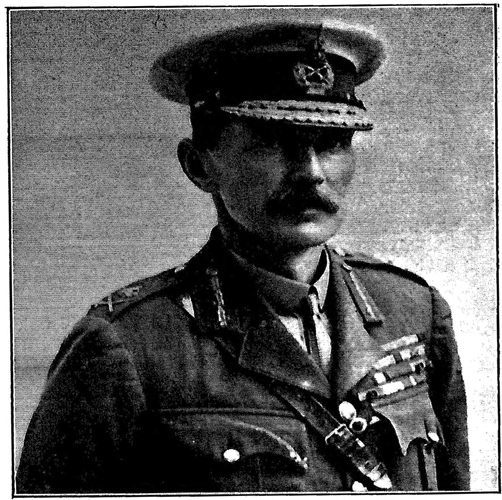
LIEUT.-GEN. SIR CHARLES A. HARINGTON, G. B. E., K. C. B., D. S. O.
Allied Commander-in-Chief at Constantinople until its evacuation in September and October, 1923.
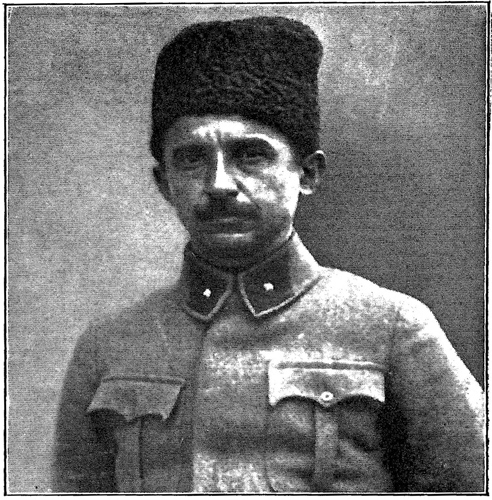
GENERAL ISMET PASHA
Commander of the Western (Smyrna) Front until the re-capture of Smyrna in September, 1922; head of the delegation which signed the Mudania Armistice, October, 1922; head of the delegation which signed the Peace Treaty of Lausanne, July, 1923; Minister of Foreign affairs of the Second Grand National Assembly.
In the meantime, Russia had achieved a contact with the Armenians of a wholly different sort. Having broken through the barrier of the Caucasus Range and established its provincial administrations in Trans-Caucasia, Russia had transferred large numbers of Armenians from Ottoman to Russian sovereignty, had stripped them of the autonomy of their community institutions and had kept them in order with an iron hand. In the Russo-Turkish War of 1876, its Armies had halted their march toward Alexandretta at Kars whence they overlooked the Ottoman Armenians in the eastern provinces. The Treaty of San Stefano which closed the War of 1876 was quashed and in the Treaty of Berlin of 1878, Russian provision for reforms to be applied to the Armenians was agreed to by all the signatory Powers. In the Cyprus Convention of 1876, however, Great Britain had bound itself to maintain the Sultan’s realm against Russia, and the eastern provinces, now the most difficult and the most important provinces in the outer Empire, became the theatre of directly opposed British and Russian policies. But Russia, despite its resentment at the loss of the San Stefano Treaty, had won at Berlin. The Armenian clauses in the Berlin Treaty reinforced the Armenian disposition to secure redress of their wrongs independently of their Turkish neighbors who were equal sufferers with them under the Hamidian regime. This tendency presently found further reinforcement in the Nihilist movement which developed in Russia after the Russo-Turkish War. The persecuted Armenians of Russian Trans-Caucasia joined the Nihilist movement, but their headquarters at Tiflis were stamped out by the Czar’s police and the Armenian revolutionists fled to Switzerland, Paris, London and New York.
Relations between Turks and Armenians in the Ottoman Empire had thus far been generally peaceful. They both suffered alike under the Government at Constantinople and even when Westernism was alienating the Bulgarians in Europe, the Armenians in the eastern provinces were still “the loyal community.” But the Armenian revolutionists in the West, instead of confining their work to Russian Trans-Caucasia, sought to raise funds in the Ottoman Empire as well, and the ancient Turco-Armenian relationship began to be poisoned. Armenian committees succeeded in giving the Turks the impression that “the loyal community” was no longer loyal, and Abdul Hamid replied in the savage massacres of 1894 and 1896. For this business the West rightly fastened the blame upon “Abdul the Damned,” and the Turkish people whose patience sometimes reaches the proportions of a grievous handicap, were generally exempted from blame.
In 1907, the eastern provinces became the scene of an about-face in Anglo-Russian relations. Under the Anglo-Russian Treaty of that year, the two Powers effected an immediate partition of Persia and envisaged a future partition of the Ottoman Empire in which the eastern provinces would go to Russia and Mesopotamia would go to Great Britain. This would have admitted Russia to a military position whence it could have threatened both the Syrian corridor to Egypt and Mesopotamia itself, but presumably the British belief which prompted the 1907 Treaty was that, if Old Russia had made life well-nigh impossible for the British in Asia, Liberal Russia which was believed to have been born in the 1905 Revolution, would prove a neighbor with whom it was possible to live on friendly terms in Asia. So Russian annexation of the eastern provinces became the common program of Great Britain and Russia alike, and from that date Russia adopted a policy so liberal toward its Armenians in Trans-Caucasia that a small Russian annexationist group soon appeared among the Armenians in the eastern provinces. The fact must be emphasized that there has never been any Russian population in these provinces and that the Armenians constituted Russia’s only ground for intervention and eventual annexation.
The Anglo-Russian Treaty of 1907 was quickly followed by the Young Turkish Revolution of 1908. Turks and Armenians alike rejoiced at the downfall of the Hamidian regime. An Armenian bloc was formed in the new Parliament and the Committee of Union and Progress entered into apparently amicable relations with it. The bulk of Armenian opinion in the Empire seemed to be willing to work the revived Constitution and to begin, in common with its Turkish neighbors, the reforms of which all the Ottoman races stood in the direst need. But the Armenian revolutionaries in the West had already planted independence committees in the Empire and drilled them in the technique of revolution. The committees’ reply to what seemed to be Turco-Armenian cooperation in the Parliament at Constantinople, was the Adana “massacre.” This was on a quite different plane from Abdul Hamid’s savagery in 1894 and 1896, and the principal fault which may be found with the Turks at Adana was their tardiness in putting a stop to it. The independence committees launched it in the approved style of Balkan revolution, staging it at Adana presumably with a view to attracting Western intervention at the near-by port of Mersina. Western battleships did in fact anchor in the Mersina roadstead, but refrained from landing men.
Russia now loomed above the eastern provinces but during the Balkan Wars refrained from action, possibly in order to permit the Enver Government to defend Constantinople against the Bulgarians, Russia having designs of its own on Constantinople. Still anxious to reach some solution of the problem of its eastern provinces which would counter the Russian menace, the Enver Government in 1912 voluntarily demanded British administrators, as it had a right to do under the Cyprus Convention of 1876. The British Foreign Office turned down the demand on the ground that Russia would object to the employment of British in the vicinity of its frontier. Only a year before, the Foreign Office had turned down the request of Mr. Morgan Shuster, American Treasurer-General of Persia, for the employment of a British officer at Teheran and had cited the same reason for its action. There was nothing in the letter of the Anglo-Russian Treaty of 1907 which authorized the Foreign Office to forbid Major Stokes’ appointment at Teheran, nor was there anything in the letter of that Treaty which partitioned the Ottoman Empire between Russia and Great Britain. These understandings come under the head of what Sir Edward Grey called the “spirit” of the 1907 Treaty.
When the British Government after the late war dispatched Sir Edward Grey, then Viscount Grey of Fallodon, to Washington intending to make him British Ambassador to the United States, he was permitted to return to London without having taken up his duties. But American churchmen have not always been as close to reality as their Government at Washington has been. American educators in the Ottoman Empire, however, have watched missionary work at first hand for a sufficient length of time so that today the oldest of them make the most complete abstinence from any sort of missionary endeavor the first essential in the management of their schools.
The British Foreign Office had no sooner turned down the Enver Government’s demand than Russia served its own demands at Constantinople. The Enver Government appealed to Germany and a compromise was eventually effected under which a Dutchman and a Norwegian were appointed Inspectors-General in the eastern provinces. Neither of them had ever been in the Near East and neither knew any Near Eastern language. The war began shortly and neither of them ever reached the Near East.
The Armenian bloc in the Parliament at Constantinople was holding its 1914 congress at Erzerum in the eastern provinces when the Enver Government entered the war. Government emissaries visited them there and laid before them the Pan-Turanian project whose immediate object was to throw Russia back. A partition of Russian Trans-Caucasia was proposed, the conquered territory to be divided between Armenians, Georgians and Tartars, each to be accorded autonomy under Ottoman suzerainty. The Armenian bloc replied that if war proved necessary they would do their duty as Ottoman subjects but they advised the Government to remain neutral. It may be assumed that the Armenian deputies in the Parliament were still willing, despite the disappointments of the Enver regime, to work the Constitution with the Turkish deputies. The independence committees, however, found their inspiration in the West and their program was electrified by the professed concern for Armenian independence with which the Allied Powers began the war. The Russian annexationist group was similarly affected. In their view, Russia’s opportunity to “liberate” the eastern provinces was at hand.
Under the 1908 Constitution, the Enver Government had a right to mobilize Armenians of military age as well as Turks, but armed opposition broke out at once, notably at Zeitun, a town of Armenian mountaineers who had long enjoyed an almost complete local independence. Along the eastern frontier, Armenians began deserting to the Russian Armies and the Enver Government, distrusting the loyalty of those who remained, removed them from the combatant forces and formed them into labor gangs whose commissariat, to put it mildly, worked even more decrepitly than that of the combatant troops.
With this situation in his rear, Enver Pasha crossed both the Russian and Persian frontiers but in January, 1915, he was thrown back behind his own frontier by the Russian victory at Sarykamish. This victory fired the annexationist hopes and armed bands of Armenian volunteers began operating behind the Ottoman Armies. In April, Lord Bryce and the “Friends of Armenia” in London appealed for funds to equip these volunteers, and Russia also was presumably not uninterested in them. Seeing that both Great Britain and Russia were at war with the Ottoman Government, it would have been surprising if so obvious a move had been overlooked. These volunteer bands finally captured Van, one of the eastern provincial capitals, late in April and, having massacred the Turkish population, they surrendered what remained of the city to the Russian Armies in June. The news from Van affected the Turks precisely as the news from Smyrna affected them when the Greeks landed there in May, 1919. The rumor immediately ran through Asia Minor that the Armenians had risen.
By this time, the military situation had turned sharply against the Enver Government. The Russian victory at Sarykamish was developing and streams of Turkish refugees were pouring westward into central Asia Minor. The British had launched their Dardanelles campaign at the very gates of Constantinople, and Bulgaria had not yet come in. It does not seem reasonable to assume that this moment, of all moments, would have been chosen by the Enver Government to take wide-spread measures against its Armenians unless it was believed that such measures were immediately necessary. Measures were taken. The provincial governors in those parts of the Empire which were exposed to the enemy, i. e., the eastern provinces and the Mediterranean coast where British and French men of war were maintaining a patrol, were ordered to assemble their Armenians and march them south into the Arab country for internment. If these deportations were to be carried out in an orderly fashion, the strongest and most reliable police arrangements were necessary but these arrangements the Enver Government either could not or would not make. In general, the deportations only gathered the Armenians together and exposed them without protection to a population alarmed and angered by the news from Van. They broke down into a dreadful business in which Armenian men of military age were shot down in batches and the remnant of women, children and old persons who had not already made their way as refugees into Russian Trans-Caucasia, were finally interned in Mesopotamia and Syria under conditions of the direst want.
This business deprived Russia of its sole claim to intervention in the eastern provinces, and the British Foreign Office which shared in the Anglo-Russian program of partitioning the Ottoman Empire as Persia had already been partitioned, has naturally made the most of it. Lord Bryce’s estimate of the number of Armenians who died in the course of it was 800,000.
X
THE 1907 TREATY AND THE CALIPHATE
GREAT BRITAIN PROMISES CONSTANTINOPLE TO RUSSIA—ARAB NATIONALISM AND THE HOLY PLACES OF ISLAM—THE HEJAZ BECOMES INDEPENDENT OF CONSTANTINOPLE—THE BRITISH CAPTURE JERUSALEM—THE CALIPHATE AGITATION IN INDIA.
The Anglo-Russian entente which had been created by the 1907 Treaty, went to work in 1914 according to plan, the Russian mill-stone grinding in from the north and the British mill-stone from the south. The moment of the Ottoman Empire’s final break-up had arrived, such a moment as had never occurred before in the history of modern imperialism and is unlikely to occur again.
Early in 1915, Great Britain and Russia wrote the sequel to the 1907 Treaty in the Sazonoff agreement, negotiated in London. The British surrender continued. Under the terms of this agreement, Constantinople, the seat of the Caliphate and the political capital of Islam, was surrendered to Russia and the neutral zone in Persia (exception being made for the town of Ispahan) was added to the British zone. The agreement was necessarily kept secret. At a moment when the Government of India was exerting every effort to re-assure Indian Moslems on the subject of the Caliphate, its contents might have exploded India.
The Anglo-Russian partition of the Ottoman Empire was soon agreed upon. Mesopotamia was duly awarded to Great Britain and the eastern provinces to Russia (without provision for the independent Armenia for which the Allied Governments have so frequently expressed concern). Palestine, an integral part of the Caliph’s domain, was awarded to an international Western regime, and the rest of the Syrian corridor, together with a great hinterland running north-east to meet the new Russian frontier and east to the Persian frontier, was awarded to France as a buffer between the Russian and British acquisitions. But the German drive on Paris made it impossible for France to release an Army for the occupation of its zone. Under the military pressure on the Western Front, France had no recourse but to recall its Consul-General at Beirut and to maintain a diplomatic watch upon its zone. Incidentally, its zone included Aleppo, the Achilles’ heel of the Ottoman Empire, which lay only a two days’ marching distance from Alexandretta which in turn lay a half-days’ steaming from the British base at Famagusta on Cyprus. But although the British Government raised the project of striking at Aleppo time and again, France and Russia interposed and maintained their vetoes. As a result, the British Egyptian Expeditionary Force and Indian Expeditionary Force “D” in Mesopotamia were put in the interesting position of having to operate for four years against an enemy whose military rear was open at Aleppo.
It now becomes possible to reconstruct the British war program. The Cape-to-Cairo-to-Calcutta project which proposed to embed the Suez Canal in 8,000 miles of British territory running from South Africa to India, was its goal. It was not an incident in the growth of the Empire, it was its very climax and full fruition. It was the peak of British imperialism.
Its center was Cairo and with the entry of the Ottoman Empire into the enemy alliance, the great British Embassy at Constantinople abdicated in favor of the British Agency in Cairo. It was from Cairo that Islam was paralyzed by the split between Arabs and Turks. If Lord Kitchener were alive today, it seems safe to say that he would be the ruler in Cairo of an Arab area stretching from the Sudan to Persia, with a protege at Mecca in the person of King Hussein dignified by the newly acquired Caliphate of Islam. As for the Ottoman Caliphate, Czarist Russia was to reduce the Sultans to simple Amirs of Anatolia, a program in which the Foreign Office connived and whose result has been what Englishmen since the war have referred to as British “abdication” in India. We in the West might understand more vividly what “our brother Turk” means to Islam in India if we had been in the habit of entering India by an overland route rather than by the sea route which we customarily use….
Great Britain’s declaration of war against the Ottoman Empire on Nov. 5, 1914, enabled it to transfer Cyprus to the Colonial Office at once. In Cairo, it enabled the British Agency to depose the Sultan’s Khedive and to set up a Khedive of its own. London’s repeated pledges to France on the subject of Egypt made it hesitate at the final cancellation of Ottoman sovereignty but the situation was a difficult one and the British Protectorate was duly proclaimed, the Agency’s Khedive assuming the title of Sultan. The Agency was now elevated to the status of a Residency and martial law was proclaimed. Very soon, German and Ottoman forces struck at the Suez Canal through which British Indian, Australian and New Zealand forces were streaming en route to France and whose banks were garrisoned with a mixed assemblage of troops known as the Force in Egypt, a Force uncertain as Lord Kitchener afterward reminded it whether it was expected to defend the Canal or the Canal was expected to defend it. The enemy was thrown back from the very banks of the Canal and, having itself crossed to establish the bridgehead of Kantara, the Egyptian Expeditionary Force marked time while the Grand Sherif of Mecca communicated the terms of Arab nationalism to the Residency in Cairo. Arab nationalism made it necessary for the Foreign Office in London to consult France and the result of that consultation was the secret Sykes-Picot agreement which did not long detain the Residency in Cairo and which need not long detain us here.
What is worthy of attention here, however, is the fact that Arab nationalism involved Mecca, Medina and Jerusalem, the three sites of the holiest places of Islam. With the Egyptian Expeditionary Force marking time at Kantara, Mecca and Medina lay on the southern flank of its advance and to the north in the lower end of the Syrian corridor lay Jerusalem. The three constituted a line lying across the line of the E. E. F.’s advance, a line guaranteed to all Islam by its Ottoman Caliph and additionally guaranteed to Islam in India by the Government of India’s undertaking that the Caliphate was a matter for Moslem opinion alone to decide. This guaranteed line, however, lay across the Cairo-Calcutta leg of the Cape-to-Cairo-to-Calcutta triangle and in due time the Foreign Office handed down its instructions. The Residency in Cairo began the extemporization of a British Arabia which should pivot on Mecca with provincial capitals at Damascus and Bagdad.
Thus was carried into effect one of the most momentous decisions in the history of an Empire which once called itself “the greatest Moslem Power in the world,” a decision which plumbs the depths of the British surrender in the Anglo-Russian Treaty of 1907. The Ottoman Caliphate was the last great barrier in front of imperialism. The 1907 Treaty broke it.
The Residency now lost no time in establishing contact with the Grand Sherif of Mecca. The Ottoman Caliph hurried reinforcements to the Hejaz, but the Sherif’s son Feisal drew a cordon around them in Medina at the southern terminus of the Hejaz Railway. Although British officers directed him in repeated efforts to isolate Medina by cutting the Hejaz Railway, the Caliph succeeded in holding it until after the Ottoman Government signed its armistice in 1918, but throughout the rest of the Hejaz, his garrisons sooner or later were removed to British prison camps in Egypt. In the summer of 1917 the Grand Sherif declared his independence of Constantinople, assuming the title of King Hussein I.
The loss of Mecca broke the Ottoman Caliphate. King Hussein had his own lineal qualifications for the Caliphate. An Anglican-Orthodox union had been projected with its capital in a Russian Constantinople, and an Arab king at Mecca may indicate the disposition which the Foreign Office in London proposed to make of the Caliphate. From that day to this, the burden of supporting the Hejaz has been transferred from Constantinople to London. Once it was part of the burden of the Ottoman Caliphate. Today it is maintained by a British subsidy. Two of the three most venerable shrines of Islam are financed by the Colonial Office which, whatever else may be said of it, is not a Moslem bureau.
With its right secured, the Egyptian Expeditionary Force was now free to advance on Jerusalem. With British officers on its right fetching Feisal’s Hejaz Army northward toward Damascus, the E. E. F. wheeled into the lower end of the Syrian corridor against stubborn Turco-German opposition. With small French and Italian detachments posted to it in view of the award of Palestine to an international Western regime, the E. E. F. finally occupied Jerusalem late in 1917 and, having broken up repeated enemy attempts to recover it, rested on its arms while the Residency at Cairo converted it into a British fait accompli.
When Godfrey de Bouillon captured Jerusalem in a former episode, he waded through blood to his saddle girth to rescue the Holy Sepulchre, but mediaevalism has changed its methods. When General Allenby captured it in 1917, he tacked up an “Out of Bounds” sign on the Holy Sepulchre, the Residency at Cairo hurried up one of its attaches to serve as military governor of the town, an assistant city engineer from Alexandria hurriedly arrived to draw up a new town plan for it and a landscape artist was hurried down from London to put the new town plan into effect. So Jerusalem became a British fait accompli and so it remains to this day. And the new town plan, having presumably served its purpose, has disappeared.
The war has given us all an aptitude for loose thinking and a full share of loose thought has attached to General Allenby and his Egyptian Expeditionary Force. Under our Western political tradition, a majority of the population is given the right to determine its own destiny, provided it is of a sufficient degree of intelligence to shoulder its responsibilities. If the faith of that majority in Palestine happens to be Islam, is not Islam the only one of the three faiths to which both Christian and Jewish shrines are equally sacred with its own? Has Islam ever failed in respect to the Christian and Jewish shrines in Jerusalem during its centuries of trusteeship? And what has happened to Islam’s shrines in Cordoba, Grenada and Toledo, in Sicily and Malta, under Christian rule?
At the British demand, the Ottoman Caliph finally withdrew his garrison from Medina after the armistice in 1918. It is simple enough to upset the theology of an Ottoman Caliphate, but the British Foreign Office, despite the Government of India’s specific undertaking to Moslems in India, has upset the fact of an Ottoman Caliphate and in the last fifty years the fact and the theology of the matters. The Caliphate has become the symbol of all those Eastern traditions which are woven into the fabric of Islamic civilization, a symbol thrown into vivid relief by the increasing inroads which Western and Russian imperialisms have been making into that civilization. However narrow Old Turkish opinion was, however stubbornly it confined the Young Turks to a rigidly conservative interpretation of the Caliphate, Islam in India could Caliphate may have come to be two quite separate adjust its Caliphate to such modern and healthy growths as that of Arab nationalism. But the forcible imposition of Western civilization upon the Arabs was a still further step in that process of Western imperialism against which the very existence of the Caliphate had become a protest.
Until the war ended, Islam in India relied not only on the Government of India’s undertaking to the effect that the Caliphate was a matter for Moslem opinion alone to decide, but on the fact that the Empire as a whole contained 100,000,000 Moslems to 80,000,000 Christians. With these assurances, Indian Moslem troops even participated in the capture of Jerusalem, but when the peace proposed to continue what the war had begun, the Caliphate agitation in India soon became the most formidable fact in the British Empire. The Foreign Office and the India Office are supposed to be housed on the same quadrangle off Downing Street in London, but the distance which the Anglo-Russian Treaty of 1907 has brought between them is one of the sheer curiosities of contemporary history. One sometimes wonders, on that exalted plane on which Sovereigns dwell, what the Emperor of India has been saying to the Defender of the Faith since 1907 and what reply the Defender of the Faith has been making to the Emperor of India.
XI
THE COLLAPSE OF CZARIST RUSSIA
THE CZAR ABDICATES—THE FRENCH DEPOSE CONSTANTINE AT ATHENS—KEMAL URGES ENVER TO WITHDRAW FROM THE WAR—MR. LLOYD GEORGE’S NEW WAR AIMS IN TURKEY—THE ANGLO-RUSSIAN TREATY OF 1907 ABROGATED—PAN-TURANIANISM LEAPS INTO LIFE ON THE HEELS OF THE RUSSIAN ROUT—THE MUDROS ARMISTICE OPENS THE BRITISH ROAD TO THE CHAOS IN RUSSIA.
Following the East India Company’s lead, the Government of India had long continued to weave into closer mesh the fabric of British influence which covered the land-locked Persian Gulf. In Nejd, Koweit and Mohammerah, in the maintenance for more than a century of an Agent at Bagdad, there lay the seeds of a British Arabian enterprise comparable to the great enterprise of British India. The Anglo-Russian Treaty of 1907 ensued and in 1914 the Government of India diverted a brigade of Indian Expeditionary Force “A” for Egypt and France, to the Persian Gulf where it lay off Bahrein Island to make a lightning stroke against Basra, the key to Bagdad. As soon as war was declared, it was heavily reinforced and, having been designated Indian Expeditionary Force “D,” it moved at once on Basra which it occupied in three weeks. Its Political Officer urged an immediate advance on Bagdad, but the Government of India was already groaning under the pressure from London. “D” Force succeeded, however, in advancing slowly north against a stiffening Turco-German opposition until it reached Kut-el-Amara.
At this stage, the tired Government of India suddenly woke up and ordered a bold dash to Bagdad. This turn of events changed the whole basis of “D” Force’s operations from the defensive to the offensive, a change for which the Force as then constituted was quite inadequate. The result was that the Turco-German command was able at Ctesiphon to throw General Townshend back to Kut-el-Amara where he was surrounded and held out for five months while the Government of India launched successive failures to relieve him. Kut-el-Amara was finally starved into surrender, General Townshend was removed to Constantinople as a prisoner of war, and the Government of India was forthwith relieved of its command. Indian Expeditionary Force “D” now became the Mesopotamian Expeditionary Force under War Office command, although the Government of India retained its political command in Sir Percy Cox.
It was not until the end of 1916 that the War Office was ready to begin operations for the recapture of Kut-el-Amara, and by the end of February, 1917, the enemy was in full retreat. On the heels of his rout, Bagdad was occupied on March 11 and, although the Turco-German command made repeated attempts to recapture the city, its British defense held and Germany’s Berlin-to-Bagdad scheme was left in the air.
The Russian Armies by this time had not only advanced deeply into the eastern provinces but had occupied their zone in northern Persia in sufficient force to link with the British in Mesopotamia. A very few of them had even been permitted to travel to Basra and below it to gaze upon the blue and British waters of the Persian Gulf.
But on March 12, 1917, the Czar abdicated.
On May 16, Kerensky’s Republican Cabinet was set up at Petrograd, and the British Foreign Office entered at once into cordial relations with it.
On June 11, the French deposed Constantine at Athens, the Venizelist Government which was imposed on Old Greece entered the war on the side of the Allies, and ever since the failure of the British Dardanelles campaign, there had been an Allied Army based on Salonica, the key to Constantinople.
In July, Kerensky ordered General Baratoff to withdraw the Russian Armies from Persian soil. They melted away both from Persia (with the exception of a small force of die-hards who continued to hold Teheran hoping that the trouble at Petrograd would soon blow over), and from the eastern provinces of the Ottoman Empire.
On Sept. 30, General Mustapha Kemal Pasha who had thrown up his command of the Sixteenth Army in disgust after a break with Falkenhayn over the recapture of Bagdad, urged Enver Pasha to make the Russian collapse the occasion of withdrawal from the war. The disruption of the country’s economic life and the constant drainage away of its gold to Germany could have but one end, he wrote from Aleppo. Even with Russia eliminated, Great Britain and France could not be divided and they could not be beaten. The British would conquer Palestine, would set up a Christian Government with which to hold the Suez Canal, and would isolate the remnant of the Empire from the rest of Islam—“a sound war policy made possible by our entry into the war against England, a policy whose success means irreparable loss for us and whose failure means German domination for us…. Falkenhayn has said repeatedly to anyone who will listen to him, that he is a German and is naturally interested first in Germany. If he can hold Palestine, he will place himself before the world and before our country as one of the great victors of the war. We shall then lose our own country and to this end, Falkenhayn will sacrifice every ounce of gold and every soldier he can squeeze out of us.” But in the wake of the Russian rout, Pan-Turanianism had leaped into new life. Enver’s reply was to give Falkenhayn command of the Palestine front and to exile Kemal, together with Rauf Bey, to Germany in the suite of the Crown Prince.
On Nov. 7, another revolution lifted its head amid the chaos of the Kerensky administration and Soviet Russia was born, to be attacked at once by the British Foreign Office with a vindictive hatred which has not even now run its full course.
On Jan. 5, 1918, Mr. Lloyd George, then barred from access to Soviet Russia by the bolted Straits, declared in London: “Nor are we fighting … to deprive Turkey of its capital or of the rich and renowned lands of Asia Minor and Thrace, which are predominantly Turkish in race…. We do not challenge the maintenance of the Turkish Empire in the homelands of the Turkish race with its capital at Constantinople.” This declaration was interpreted by what remained of the Opposition in Constantinople, to mean that the Emperor of India, freed from his Russian incubus, was in a position to renew his old understanding with the Caliph.
On Feb. 1, Soviet Russia abrogated the Anglo-Russian Treaty of 1907 and the British Foreign Office “shook hands with murder” to the extent of concurring in the abrogation. But the 1907 Treaty had already worked out to its ghastly fruition. Nothing remained of Persia’s independence but an imprisoned Shah at Teheran. The Caliphate of Islam was destroyed, and few countries have ever been flogged into such ruin as now prevailed in the Turkish remnant of the Ottoman Empire.
On March 2, Germany imposed its peace terms on Soviet Russia at Brest-Litovsk, detaching the Ukraine from Russia, embedding the Black Sea firmly in the Berlin-Baku-Bokhara scheme (the old Berlin-to-Bagdad scheme had been left in the air by the British capture of Bagdad), and making over Batum to the Turks. A Turco-German conference at Trebizond on the Black Sea speedily effected a joint policy for Trans-Caucasia, under whose terms Baku was named as the capital of a new Trans-Caucasian State to be christened “Azerbaijan,” presumably after the Azerbaijan province in north-west Persia which it was proposed to claim as an irredentum for the new State. An Ottoman Army, accompanied by a German military mission, now lost no time in moving on Baku and the British Mesopotamian Expeditionary Force simultaneously detached a small body which it designated the “Dunsterforce,” hurriedly dispatching it across Persia for Tiflis in Trans-Caucasia. Turks, Germans and British raced for Baku, all three determined now that Russia had fallen back behind the barrier of the Caucasus Range, to hold it there.
In the eastern provinces, the Russian rout had left hardly as much as a street cat alive. In what had been Russian Trans-Caucasia, beyond the eastern provinces, three small and quarrelsome Governments bobbed about like corks in the chaos, a Tartar Government at Baku controlled by the local Russian Soviet, an Armenian Government at Erivan controlled by the brigand-patriot Antranik, and a Liberal Georgian Government at Tiflis which feared the Russians and despised the Armenians. The Ottoman Army drove its way easily to Baku. The British Dunsterforce reached there first but only in time to flee back to Persia, for the Ottoman forces stormed the city’s hurriedly extemporized defensive works, installed their Azerbaijan Government, signed their treaty of close military alliance with it, organized the Turkish Federalist Party in its support and set about the task of fetching all Trans-Caucasia under its rule. Firmly founded on the German Berlin-Baku-Bokhara scheme, Pan-Turanianism had finally become a reality.
Meanwhile on July 3, the Crown Prince succeeded to the Throne at Constantinople. The Sixth Mohammed took up his abode in the white marble palace of Dolma Bagtsche on the Bosphorus. But it was not the Old Turks who girded him with the Prophet’s Sword. Instead of the Mevlevi tchelebi from Konia, he was girded by the sheikh of the great Senussi order whose seat is at Jarabub in the Sahara. A German submarine had taken him aboard at an empty place on the African coast and had landed him at Pola. Throughout the crossing, he had said his prayers five times a day in the forward battery compartment, facing toward Mecca by standard compass.
General Mustapha Kemal Pasha who had spent most of a year touring Germany and Austria-Hungary in disgrace, was now recalled and given the Yilderim group (Fourth, Seventh and Eighth Armies) on the Palestine front. But it was too late. Amid the din of a world war crashing to its close, simultaneous offensives were launched in September, by the French command at Salonica with Constantinople as its objective and by the British command in Palestine with Aleppo as its objective. With General Allenby’s great break-through overrunning the Syrian corridor, the French imposed an armistice on Bulgaria and the Enver Government fell in Constantinople. Enver Pasha fled to Daghestan, a dapper young Turk still in earnest pursuit of the Pan-Turanian will-o’-the-wisp, and the Opposition inherited the wreck with its capital gripped by a German garrison and French fingers reaching for it from the Maritza.
But the great wheel twirled and clicked. From a French command with the Old Greeks in tow, the new Izzet Government in Constantinople had nothing to hope. From the Emperor of India, freed from his Russian incubus, it had everything to hope. Secretly in order not to provoke the Germans to counter-action, the Izzet Government lost no time in dispatching General Townshend who was still a prisoner of war on Prinkipo, to the British naval Commander-in-Chief at Port Mudros outside the Straits. Rauf Bey, Minister of Marine in the Izzet Cabinet, followed in hurried secrecy with two colleagues. If their mission was a success, the German garrison in Constantinople would have to be confronted with a fait accompli.
In the cabin of H. M. S. Agamemnon, Admiral Calthorpe’s flagship at Port Mudros, Rauf outlined the Izzet Government’s program in seeking an armistice: (1) a return to the understanding which the Caliph and the Emperor of India had enjoyed down to 1907; (2) autonomy for the Arabs under the Caliph’s sovereignty; (3) recognition of the abrogation of the Capitulations; and (4) temporary financial help, if necessary. Admiral Calthorpe asked only that the Straits be unbarred and the road to Soviet Russia be opened. As for Pan-Turanianism, it might prove useful in holding Russia behind the barrier of the Caucasus Range. Clause 11 of the Mudros armistice stipulated as follows: “Immediate withdrawal of Turkish troops from North-West Persia to behind the pre-war frontier has already been ordered and will be carried out. Part of Trans-Caucasia has already been ordered to be evacuated by Turkish troops, the remainder to be evacuated if required by the Allies after they have studied the situation there.” Clause 15 added: “Allied control officers to be placed on all railways, including such portions of Trans-Caucasian railways now under Turkish control, which must be placed at the free and complete disposal of the Allied authorities, due consideration being given to the needs of the population. This clause to include Allied occupation of Batum. Turkey will raise no objection to the occupation of Baku by the Allies.”
So “hostilities between the Allies and Turkey” ceased “from noon, local time, on Thursday, 31st October, 1918.” The Straits were unbarred and when the French fingers closed upon Constantinople, British fingers closed with them. General Franchet d’Esperet had to share his command with General Milne. Between rows of British and French bayonets, the German garrison marched out of the capital and the Turks were relieved that the Emperor of India was once again the friend of the Caliph. Allied fleets, to be strengthened soon by most of the British Grand Fleet from the North Sea, steamed up the Dardanelles and anchored in the Bosphorus. Greek battleships followed them, anchoring under the windows of Dolma Bagtsche palace, and the Ottoman Caliph, to spare himself the painful sight, repaired to Yildiz Kiosk which for thirty-two years had been the hermit-home of Abdul Hamid. With Liberal Russia destroyed, the Church of England was soon to transfer the venue of its theological disquisitions with the Orthodox Church from the Patriarchate at Moscow to the Phanar in Constantinople. Five centuries of history were about to be re-written and Ottoman Greeks in the capital, trampling their fezzes, donned Western hats in transports of the wildest joy. The remnant of the Ottoman Armenians did the same; both the Ottoman Empire and Russia were destroyed and nothing (except ten centuries of history) now remained to prevent the resuscitation of the mediaeval Kingdom of Armenia.
But the Ottoman capital had been reduced to a supply base for Denikin. With an Anglo-French command in firm control of the great city, the Russians at last began their entry into Constantinople—big Slavs in uniform who had borne the British to their knees in 1907, huge slit-eyed men once kings in Kafiristan, now grovelling for crusts in the gutters of Galata.
XII
THE ANGLO-RUSSIAN WAR OF 1918-’20
HOW MR. LLOYD GEORGE TRIED TO IMPOSE ALONE UPON ISLAM THAT FATE WHICH GREAT BRITAIN AND RUSSIA HAD AGREED TO IMPOSE TOGETHER IN 1907—THE ANGLO-PERSIAN AGREEMENT—THE “CENTRAL ASIAN FEDERATION”—THE AMERICAN MANDATE IN TRANS-CAUCASIA—THE RETURN OF SOVIET RUSSIA.
The war now began in bitter earnest.
Czarist Russia had been a weight upon Islam which had increased until 1907 when, in agreement with Great Britain, the two Powers began grinding to pieces the last of the independent Islamic States. Russia’s collapse in 1917 and the resultant abrogation of the 1907 Treaty, coinciding with Germany’s collapse, afforded the British Government a marvelous opportunity to reconsider its policy toward Islam. The British had no great enemy left in the East, but apparently the fact did not occur to Mr. Lloyd George. In the Anglo-Russian war of 1918-’20, the British Government took over the business of crushing Islam which Czarist Russia had begun, while attempting to overthrow the Soviet Government and re-instate in office a Russian Government which should concur in the fate which the British alone now sought to impose on the last of the Islamic States. With Constantinople occupied, the Ottoman Sultans could be reduced to simple Amirs of Anatolia whenever Mr. Lloyd George chose. In the meantime, what happened in Turkey hardly mattered. What happened in Russia did matter.
The little Dunsterforce which had been thrown back into Persia by the Turkish capture of Baku, was quickly reinforced from Bagdad and became the British North Persia Force with its base at Kasvin, not far from Teheran. Here it stood in the heart of the old Russian zone, despite a small body of Czarist die-hards who still clung to the old Russian zone in Teheran. Meanwhile the old British zone in the southern half of Persia had been occupied by the South Persia Rifles whose officer personnel was British, and early in 1918 the Government of India had dispatched the East Persia Cordon from Quetta along the Nushki Railway to the new railhead of Duzdap in the Seistan, whence it ran a lorry road north through Persia to Meshed in the old Russian zone and flung out detachments to occupy Askabad and the Merv oasis on the Russian Trans-Caspian Railway.
Late in 1918, the Mudros armistice enabled the North Persia Force to re-occupy Baku in Trans-Caucasia (where it left the Turkish Federalist Party in power) and General Milne occupied Batum from Constantinople. Ostensibly to hold Denikin’s rear, the British occupation of Trans-Caucasia was rapidly completed, the Turco-German forces being evacuated into the eastern provinces and the remnants of the Czarist forces being rounded up and dismissed to Denikin’s front. At Baku, the Czarist Caspian Fleet was maneuvred into British hands and removed to British keeping at Enzeli on the Persian coast. Opposite Baku on the eastern coast of the Caspian, the East Persia Cordon detached from Askabad a small garrison for Krasnovodsk, and Persia was now not only held by British and Indian forces but all its approaches, from north, south, east and west, were in the same hands.
In Denikin’s rear, General Milne at Constantinople now commanded a single British front which crossed Trans-Caucasia from Batum to Baku, which made a British lake of the Caspian, and which extended into Central Asia from Krasnovodsk to Askabad and the Merv oasis. Over all of it, the double-headed eagle of Czarist Russia had waved only a year before. Behind this truly remarkable front, railway projects were speedily envisaged by which the new British Arabia, British Persia and British Trans-Caucasia were to be firmly bound to each other and to British India, a Bagdad-Teheran-Enzeli line to develop Enzeli into a British naval base which should command the Caspian, and a Batum-Kars-Tabriz-Duzdap line to fetch the frontiers of British India to the Black Sea as they had already been fetched to Haifa on the Mediterranean. The Cape-to-Cairo-to-Calcutta triangle had not only been made good, but the collapse of Czarist Russia had made the British a present of the Constantinople-Kabul line in addition. British officers were glum with expectation.
Sir Percy Cox, chief political officer of the Mesopotamian Expeditionary Force, was dispatched to Teheran as British Minister as soon as the Mudros armistice brought the war to an end on the Mesopotamia front, and began formulating the Anglo-Persian Agreement at once. Persia had then been swallowed whole by the British. The North Persia Force was paying 350,000 tomans a month (roughly $800,000) to keep the Persian Government in being and 100,000 tomans a month to keep the old Cossack Division quiet. Under these conditions, Sir Percy Cox began negotiations in January, 1919, with three Persian grandees and by June the Agreement was ready to be signed. It provided for a British loan of £2,000,000 to the Persian Government and for British advisers in the Persian Ministries. Briefly, it had the effect of reducing Persia to another of the British Indian frontier States. It was finally approved by the British Foreign Office and was signed by the three Persians on August 9. It had been drawn up secretly and no public announcement of its signature was made until August 15, when it was announced simultaneously that the Shah had left for a prolonged tour in Europe. It was to take effect as soon as the Persian Parliament ratified it. At the moment the Parliament was not in session, the deputies having left Teheran in 1915, intending to re-assemble at Kum to follow the Ottoman Empire into war against the Anglo-Russian entente.
Meanwhile the East Persia Cordon regularized the position of its garrisons in Meshed and Merv by styling them “Afghan Consulates-General under armed guard.” It will be recalled that the Amir Habibullah Khan of Afghanistan, a wild country which tilts up to the roof of the world above the north-west frontier of India, had stuck loyally to the British despite a fiery nationalist party which sought to carry him into the war against the Anglo-Russian entente. He was still sticking loyally to the British when Czarist Russia fell in 1917 and all of Central Asia fell with it into the most complete confusion. North of him, Bokhara, a smaller country which adjoins the Afghan frontier for nearly half its length, had been nominally independent under the rule of its Emir, Said Mir Alim Khan, in Old Bokhara City, but actually ruled by the Czarist Resident in the Russian cantonment of New Bokhara. The Kerensky Cabinet at Petrograd continued this regime, but Soviet Russia recalled the Resident and left the Emir in control. The mutual abrogation of the Anglo-Russian Treaty of 1907 had the effect of leaving both Bokhara and Afghanistan in enjoyment of actual independence. The Young Uzbeg Party in Bokhara immediately began an agitation for the introduction of Parliamentary government, but the Emir Said Mir Alim lost no time in discovering new friends at Merv where the Government of India’s East Persia Cordon had set up one of its “Afghan Consulates-General under armed guard.”
It had never been possible for the British to dictate their own terms to Afghanistan as they did to Persia after the Russian retreat, for the Afghans are made of sterner stuff. Neither the Uzbegs of Bokhara to the north nor the Punjabis of India to the south have shown much love for the Afghans. As for the Persians, the Afghans could doubtless do what they pleased with them. But with the dispatch of the East Persia Cordon to Meshed and Merv, Said Mir Alim of Bokhara and Habibullah of Afghanistan reached an understanding respecting a “Central Asian Federation” which should be “independent of Russian domination.”
PAPA EFTIM EFFENDI
Until the Ottoman General Election in November, 1919, an Orthodox priest at Kiskin, near Angora; after the General Election, “acting metropolitan” of the Turkish Orthodox Church.
MELETIOS IV
Oecumenical Patriarch from February, 1922, to July, 1923.
The meaning of Bokhara to British India has already been indicated. British command of the Caspian now isolated the Trans-Caspian Railway from Soviet Russia, and with Bokhara detached from Russia and brought within the British Indian orbit, the only remaining Russian railway to the back of India, i. e., the Moscow-Orenburg-Tashkent line, would stop at Samarkand as far as its military usefulness to any future Russia was concerned. The Russian spurs to Termez and Kushklinsky Post on the northern frontier of Afghanistan which had been nightmares in British India, would lose their meaning. Any future Russian move against British India would be countered at Bokhara which lies at a sufficient distance to prevent the unsettling effect of Anglo-Russian trouble from making itself felt in India.
But on Feb. 20, 1919, Habibullah was assassinated. Nasrullah seized the throne but, convicted in open durbar of murdering the Amir, he was unseated in favor of the Amir’s third son, Amanullah. Nasrullah’s strong nationalist following rushed pell-mell into an invasion of British India, but was thrown back by the Indian Army. The East Persia Cordon was hurriedly withdrawn to Quetta and the announcement of the Anglo-Persian Agreement’s signature at Teheran was followed three weeks later by a Bokharan revolution in which the Young Uzbeg party dethroned Said Mir Alim and set up its Parliament. Possibly the Young Uzbegs feared a similar British coup at Bokhara City.
Said Mir Alim having fled into Afghanistan, the Soviet Government at Moscow finally concluded military and commercial treaties with the Young Uzbegs on March 4, 1921, which purport to recognize the independence of the Bokhara People’s Soviet Republic. This is Bokhara’s present title, but the British Foreign Office still withholds full recognition from any of the Soviet States. Even as late as May 8, 1923, a note from Lord Curzon to the Soviet Government demanded inter alia the recall of the Soviet Ministers from Teheran and Kabul, and a long statement by Said Mir Alim on the subject of Soviet “treachery” was circulated to the London press on the evening of June 4….
The East Persia Cordon’s hurried scuttle back to Quetta early in 1919 still left the British in control of Persia and in occupation of Trans-Caucasia and Constantinople. General Milne still commanded the Black Sea, the line of the Caucasus Range, the Caspian and the trans-Caspian town of Krasnovodsk. Denikin still stood between Soviet Russia and the British.
Having isolated the starving Armenians of Erivan from any possibility of Russian relief, whether from Denikin or Soviet Russia, the British permitted Americans to embroil themselves in Armenian affairs as intimately as they would. If the United States Government had permitted itself to be rushed into the acceptance of a mandate over the Armenians in Trans-Caucasia, it is not impossible that the British would have gratefully accepted the barrier between Soviet Russia and British Persia which such a mandate would incidentally have furnished. The Armenians had once constituted Czarist Russia’s sole claim to intervention in the eastern provinces of the old Ottoman Empire, and if that claim had been disposed of to the United States, not only would an effective barrier have been interposed in front of Russia’s inevitable return to Trans-Caucasia but the remnant of Turkey would have been cut off from the rest of Islam.
By the summer of 1919, however, it had become plain that the United States Government, while anxious to see American relief extended to the Armenians, was unwilling to incur an inevitable quarrel with the future Russia, and General Milne in Constantinople announced that Italy would occupy Trans-Caucasia. Three months later, an Italian military mission on the spot followed the example which the United States Government had set and in September, 1919, the necessity of reinforcing his Constantinople garrison compelled General Milne to pull in his isolated packet of troops in Krasnovodsk and to evacuate Trans-Caucasia down to Batum. Will the Royal Army Service Corps ever issue another ration of caviare in Baku?
Mr. Lloyd George now began peddling Trans-Caucasia all over Europe, offering the Armenians in turn to Holland, Sweden, Rumania, to the League of Nations, to Canada and New Zealand, and even flirting with Turkish Pan-Turanianism. But the spectacle of Mr. Lloyd George bearing gifts to the world attracted the same scrutiny elsewhere as it had already attracted at Washington. Presumably anybody who was able to hold Trans-Caucasia could have had the Armenians in those days (except Denikin and Soviet Russia who alone were both able and willing to take them), for demobilization at home was rapidly putting an end to British ability to hold anything more than Persia, Mesopotamia, Syria, Egypt, Cyprus and Constantinople.
This sort of thing continued until Denikin began his retreat early in 1920, which sooner or later would expose Trans-Caucasia to the Soviet Government. Still tub-thumping on the subject of the Armenians, the British Foreign Office now gave de facto recognition to the Turkish Federalist Government of Azerbaijian, the Dashnakoutzian Government of Armenia, and the Liberal Government of Georgia. The British War Office rushed men and munitions into Trans-Caucasia to stiffen the three Governments against the approaching Soviet Armies. The British Admiralty hurried out a naval mission to overhaul the old Russian Caspian Fleet in the Persian port of Enzeli.
But the Soviet Armies intercepted the Admiralty’s mission at Baku, threw its personnel into jail, and themselves sent an expedition to Enzeli to take over the old Russian Fleet from beneath the guns of the British North Persia Force. That interception announced Russia’s return to Trans-Caucasia which, since the collapse of Czarist Russia in 1917, has seen more horrors than any other area on the face of this small planet.
The Turkish Federalist Government at Baku was quickly overthrown and on Sept. 30, 1920, the Soviet Government at Moscow concluded peace with the Government of the Azerbaijan Soviet Republic which calls itself “the first Moslem Republic in the world.”
The Dashnakoutzian Government of Armenia stood for some time. Like the Armenian independence committees of the old Ottoman Empire, its inexperienced leadership was engaged in appealing to Mr. Lloyd George and to American opinion to protect it, and had refrained from any attempt to achieve that peace with its Russian and Turkish neighbors which was the very first essential of its existence. In the Treaty of Sevres, signed at Paris on Aug. 10, 1920, it was awarded a Turkish frontier which was to be delineated by Mr. Wilson. The American mandate project having fallen through, the Wilson frontier was presumably thought to be the next best method of drawing the United States into Trans-Caucasia. The Wilson frontier had the sole effect of destroying any hopes which might have existed of a Turco-Armenian peace. A state of war which neither Turks nor Armenians could afford, continued to exist until December, 1920, when the Turkish command at Erzerum put a stop to the streams of Moslem refugees which had been flowing out of Armenia, by invading the country and occupying Kars. A Soviet ultimatum stopped Kiazim Karabekr Pasha at Kars. The Dashnakoutzian Government fled. The Soviet Republic of Armenia succeeded it and Mr. Lloyd George’s interest in the Armenians abruptly ceased.
Compelled by the necessity of still further reinforcing his Constantinople garrison, General Milne finally evacuated Batum in favor of the Liberal Government of Georgia. Boundary disputes with the neighboring Azerbaijan and Armenian Governments soon brought the Georgian Liberals into petty frontier wars and a revolution in March, 1921, overthrew them in favor of what is now the Socialist Soviet Republic of Georgia.
Soviet Russia was no in contact with Nationalist Turkey and in the Treaty of Kars which the Turks signed on Oct. 13, 1921, with the Soviet States of Armenia, Azerbaijan and Georgia, the Kars and Ardahan provinces which had been wrested from the Ottoman Empire in the Russian War of 1876, were returned to Turkey, and the port of Batum was opened unreservedly to Turkish commerce.
Soviet Russia was now in contact with Persia also. Here, despite the fact that the country was occupied by the North Persia Force and the South Persia Rifles, Sir Percy Cox had been unable to assemble a Persian Parliament which would ratify the Anglo-Persian Agreement of 1919 and in February, 1921, a Russo-Persian Treaty was signed at Moscow in which Soviet Russia abandoned all Czarist Russian claims on the Persian Government and recognized no zones of influence in the country. Meanwhile the North Persia Force maneuvered the Czarist die-hards out of Teheran and itself took over the old Cossack Division, officering it with British personnel. At the last moment, just before the North Persia Force was to retire to its base at Bagdad early in the summer of 1921, the Cossack Division marched on Teheran and installed a new Persian Government which valiantly repudiated the Anglo-Persian Agreement and proposed to share out the Persian Ministries among the Allied Governments and the United States, reserving for the British the right to appoint advisers in the Ministries of War and Finance only. But the Zia-ed-Din Government lasted only as long as the North Persia Force lasted. Zia fled to Bagdad with the last of the North Persia Force in May, 1921. The last of the British officers were withdrawn from the Cossack Division and the South Persia Rifles were disbanded. At present, neither British nor Russians are engaged in reiterating “in the most categorical manner the undertakings which they have repeatedly given in the past to respect absolutely the independence and integrity of Persia.”
Soviet Russia has lifted from Islam the weight with which Czarist Russia once bore it down and Mr. Lloyd George’s Government has not succeeded in its effort to supply alone the weight it took both Russians and British to supply in 1907. Mr. Lloyd George could not prevent Islam in India from joining the Hindus in non-cooperation with the West. He could not prevent Islam in Persia from following to the extent of non-cooperation with his Foreign Secretary. That demon which Sir Edward Grey once lightly referred to as the “spirit” of the Anglo-Russian Treaty of 1907, has been slowly departing, wrenching civilizations apart as it went. Its stubborn retreat from the countries it wasted and the slow return of Islam to life in its wake, comprise the background before which the remainder of this narrative is set.
XIII
THE GRECO-TURKISH WAR BEGINS
CONSTANTINOPLE AND THE GROWTH OF GREEK NATIONALISM—SURROUNDED BY BRITISH FORCES, THE TURKS GO BACK TO PEACE—APPLICATION OF THE SECRET TREATIES WHICH THE ALLIES HAD DRAWN UP DURING THE WAR—THE OECUMENICAL PATRIARCHATE BREAKS OFF ITS RELATIONS WITH THE OTTOMAN GOVERNMENT.
As every body knows, a brook called the Sweet Waters of Europe ripples down into a long bay called the Golden Horn, which divides Constantinople in Europe into two parts. On the northern side, between the crowded Golden Horn and the great Bosphorus, lie the suburbs of Galata and Pera, Galata behind the thicket of masts along its quai and Pera climbing the steep streets onto the hill beyond. Galata and Pera constitute the foreign suburbs where the Embassies, armed with the Capitulations, have never permitted the Ottoman Government to govern, except during the four years of the war when they were not in a position to prevent the Government from abrogating the Capitulations. Here were the Embassies and Legations, all of them except the Persian Legation, although the Ottoman Government was not here and never has been.
Between the little Golden Horn and the great green Sea of Marmora, a bold peninsula curls out to Seraglio Point. Here, within the five-mile wall which encloses its landward side, lies Stamboul to which Galata and Pera bear the same cultural and historical relationship as Yonkers bears to New York. Indeed, one could ignore Galata and Pera as negligible suburbs of foreigners were it not that by the slow expansion of the Capitulations through the centuries, these small foreign suburbs have slowly turned the capital upside down until the Mudros armistice in 1918 finally ushered the Anglo-French command into Pera in possession of complete authority. Here in Stamboul was the seat of the Ottoman Government and here are the greatest monuments of Islam. The broad peninsula on which Stamboul lies is tipped with the great shrines of Islamic culture, its sky-line is pierced with the minarets of its mighty mosques, of Ayiah Sophia, Ahmedieh, Valideh, Bayazid, Suleimanieh and Mohammed II.
Here in Stamboul also, in the small Greek suburb of the Phanar at the head of the Golden Horn, was the Oecumenical Patriarchate, the head of the Rûm community in the old Empire. The old Byzantine Empire had lost its territorial basis in 1453, but it had remained in the political capital of Islam as an ecclesiastical, political and commercial force centering at the Phanar. The Patriarch himself had become an official of the Ministry of Justice in the Ottoman Government and was appointed by the Ottoman Minister from a list of three candidates proposed by the Holy Synod. Relations between the Caliph-Sultan and the Patriarch remained generally peaceful even after the Old Greeks secured their independence in the 1820’s, and there was no appreciable Greek nationalism in the Rûm community until the Young Turkish Revolution of 1908 called upon Moslems and Christians alike to give up their dividing community institutions and assume the equal rights and the equal duties of Ottoman citizens in an Ottoman nation. That call, accompanied by the opening of the Parliament at Constantinople, brought Greek nationalism from Old Greece into the Ottoman Rûm community, and the Balkan Wars widened the breach which was opening between the Ottoman Government and the Phanar. It produced so difficult a situation that an agreement was finally reached in 1914 between the Old Greek and the Ottoman Governments for an exchange of minorities, but the outbreak of war suspended its operation. Until the spring of 1916 the Ottoman Government, in view of the neutrality of Old Greece, refrained from any steps against its Rûm community, but when the French command at Salonica imposed the Venizelos Government on Athens and brought Old Greece into the war as an enemy, the Ottoman Government took immediate steps to deport its Rûm communicants along the coast of Asia Minor out of the range of Allied naval activity. Like the great Armenian deportations of 1915, these Greek deportations were military in their origin but they were far better controlled throughout their course than the former had been.
After the Mudros armistice in 1918, these Greeks in Asia Minor began to flow back to what remained of their homes, and the remnant of the broken Empire went back with relief to its peacetime pursuits. An unsurpassed commercial opportunity lay ahead of Asia Minor, for the Russian collapse had put an end to the great export of wheat from the South Russian ports. Constantinople, its population swollen by the Allied military and naval forces, now looked exclusively to Asia Minor for its sustenance. Western business men had followed the Allies into the capital in large numbers, and money was available in such quantities as Constantinople had never known. The Empire having been “liberated” from the “Ottoman blight,” American capitalists abounded in the capital, all of them anxious to get in on the ground floor of the boom. Under the Allied aegis, Western trade faced a prodigious opportunity and the peasantry of Asia Minor lost no time in seeking whatever small share of the melon might fall to them. The spring of 1919 found them back at the handles of their rude, ox-drawn plows.
But there were Greek battleships anchored among the Allied men of war in the Bosphorus, and a Turkish guard was quartered in the great mosque of Ayiah Sophia in Stamboul. Ottoman Greeks in the capital had gone wildly nationalist, finding their hero in Mr. Venizelos, the man who had brought Old Greece into the war. The Oecumenical Patriarch at the Phanar had turned likewise toward Mr. Venizelos, the deliverer of the “unredeemed” Ottoman Greeks. But Balkan wars break when the snow melts in the spring. Through the winter of 1918-’19, the Anglo-French command maintained an outward peace in Constantonople.
Three British high commands held the remnant of the Empire in Asia as firmly in the British grip as Persia was bring held. The Mesopotamian Expeditionary Force, with its G. H. Q. at Bagdad, had pushed its way up from the flatlands of the lower Tigris-Euphrates basin into the rugged hills of southern Kurdistan, the Turkish administration of Mosul withdrawing in front of it to Diarbekr. The Egyptian Expeditionary Force, with its G. H. Q. at Cairo, had reached the top of the Syrian corridor at Aleppo and had flung out small detachments to establish contact with the Bagdad command to the east, and to occupy Cilicia and the Taurus tunnels of the Bagdad Railway to the west, the Turkish administration of Cilicia continuing in office pending an indication of British intentions. Armenian deportees, some of whom had been interned by the Turks in Syria and some of whom had made their way into Egypt to be interned by the British, were being run into Cilicia in large numbers and a few of them were being carried on along the Bagdad Railway as far as Konia, where the E. E. F.’s control ended. The British co-command of the Army of the Black Sea whose Anglo-French G. H. Q. was in Pera, had stationed control officers along the Bagdad Railway from Konia to its Constantinople terminus, along the railways in the hinterland of Smyrna and along the old Russian railways in Trans-Caucasia. The Bagdad Railway had been broken up into its two original parts. The Bagdad and Cairo commands had confiscated it from Konia east and their military trains were rapidly wracking it to pieces. Western Europe was not to be again permitted to escape the Suez Canal. The Pera co-command, however, was working the original Anatolian Railway from Constantinople to Angora and Konia for the Deutsche Bank, pending its permanent disposition in the peace treaty.