MISCELLANEOUS POEMS.
Reading edition
THE RAVEN.
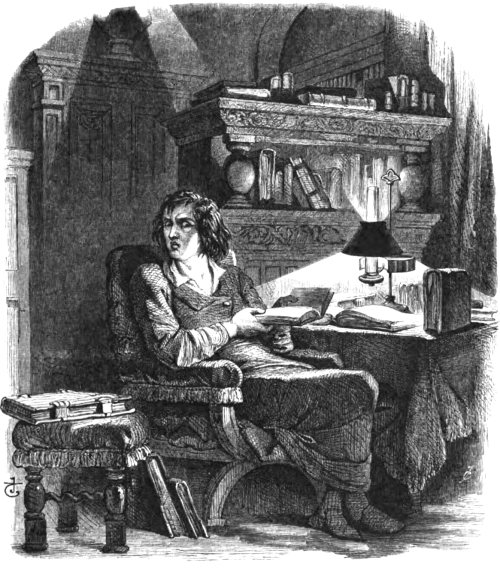
Once upon a midnight dreary, while I pondered, weak and weary, Over many a quaint and curious volume of forgotten lore— While I nodded, nearly napping, suddenly there came a tapping, As of some one gently rapping, rapping at my chamber door. “’Tis some visitor,” I muttered, “tapping at my chamber door— Only this and nothing more.” Ah, distinctly I remember it was in the bleak December, And each separate dying ember wrought its ghost upon the floor. Eagerly I wished the morrow;—vainly I had sought to borrow From my books surcease of sorrow—sorrow for the lost Lenore— For the rare and radiant maiden whom the angels name Lenore— Nameless here for evermore. And the silken sad uncertain rustling of each purple curtain Thrilled me—filled me with fantastic terrors never felt before: So that now, to still the beating of my heart, I stood repeating, “’Tis some visitor entreating entrance at my chamber door— Some late visitor entreating entrance at my chamber door; This it is and nothing more.” Presently my soul grew stronger; hesitating then no longer, “Sir,” said I, “or Madam, truly your forgiveness I implore; But the fact is I was napping, and so gently you came rapping, And so faintly you came tapping, tapping at my chamber door, That I scarce was sure I heard you”—here I opened wide the door; Darkness there and nothing more. Deep into that darkness peering, long I stood there wondering, fearing, Doubting, dreaming dreams no mortals ever dared to dream before; But the silence was unbroken, and the stillness gave no token, And the only word there spoken was the whispered word, “Lenore!” This I whispered, and an echo murmured back the word, “Lenore!”— Merely this and nothing more.
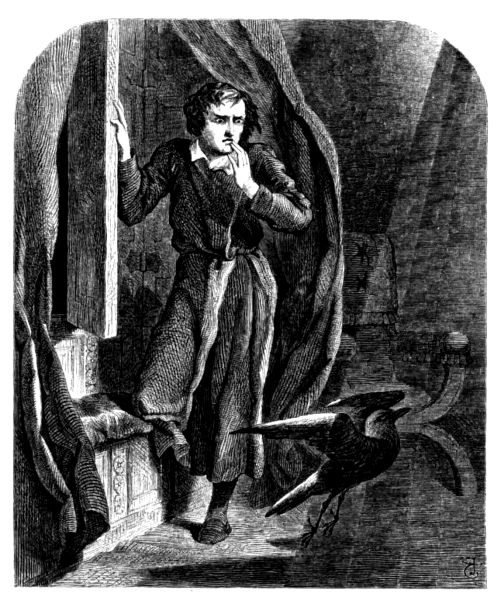
Back into the chamber turning, all my soul within me burning, Soon again I heard a tapping something louder than before. “Surely,” said I, “surely that is something at my window lattice; Let me see, then, what thereat is, and this mystery explore— Let my heart be still a moment, and this mystery explore;— ’Tis the wind and nothing more.” Open here I flung the shutter, when, with many a flirt and flutter, In there stepped a stately Raven of the saintly days of yore. Not the least obeisance made he; not a minute stopped or stayed he; But, with mien of lord or lady, perched above my chamber door— Perched upon a bust of Pallas just above my chamber door— Perched, and sat, and nothing more. Then this ebony bird beguiling my sad fancy into smiling, By the grave and stern decorum of the countenance it wore, “Though thy crest be shorn and shaven, thou,” I said, “art sure no craven, Ghastly grim and ancient Raven wandering from the Nightly shore— Tell me what thy lordly name is on the Night’s Plutonian shore!” Quoth the Raven, “Nevermore.” Much I marveled this ungainly fowl to hear discourse so plainly, Though its answer little meaning—little relevancy bore; For we cannot help agreeing that no living human being Ever yet was blessed with seeing bird above his chamber door— Bird or beast upon the sculptured bust above his chamber door, With such name as “Nevermore.” But the Raven, sitting lonely on that placid bust, spoke only That one word, as if his soul in that one word he did outpour. Nothing farther then he uttered; not a feather then he fluttered— Till I scarcely more than muttered, “Other friends have flown before— On the morrow he will leave me, as my Hopes have flown before.” Then the bird said, “Nevermore.” Startled at the stillness broken by reply so aptly spoken, “Doubtless,” said I, “what it utters is its only stock and store, Caught from some unhappy master whom unmerciful Disaster Followed fast and followed faster till his songs one burden bore— Till the dirges of his Hope that melancholy burden bore Of ‘Never—nevermore.’” But the Raven still beguiling all my sad soul into smiling, Straight I wheeled a cushioned seat in front of bird and bust and door; Then, upon the velvet sinking, I betook myself to linking Fancy unto fancy, thinking what this ominous bird of yore— What this grim, ungainly, ghastly, gaunt, and ominous bird of yore Meant in croaking “Nevermore.” This I sat engaged in guessing, but no syllable expressing To the fowl whose fiery eyes now burned into my bosom’s core; This and more I sat divining, with my head at ease reclining On the cushion’s velvet lining that the lamp-light gloated o’er, But whose velvet violet lining with the lamp-light gloating o’er She shall press, ah, nevermore!
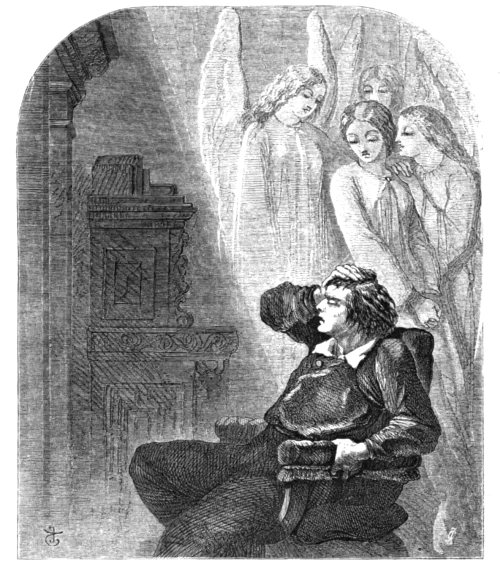
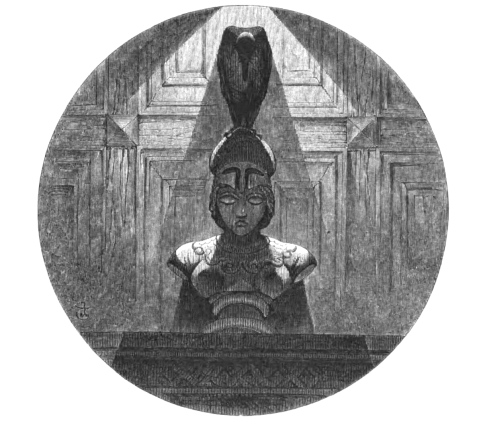
Then, methought, the air grew denser, perfumed from an unseen censer Swung by Seraphim whose foot-falls tinkled on the tufted floor. “Wretch,” I cried, “thy God hath lent thee—by these angels he hath sent thee Respite—respite and nepenthe from thy memories of Lenore! Quaff, oh quaff this kind nepenthe and forget this lost Lenore!” Quoth the Raven, “Nevermore.” “Prophet!” said I, “thing of evil!—prophet still, if bird or devil!— Whether Tempter sent, or whether tempest tossed thee here ashore, Desolate yet all undaunted, on this desert land enchanted— On this home by Horror haunted—tell me truly, I implore— Is there—is there balm in Gilead?—tell me—tell me, I implore!” Quoth the Raven, “Nevermore.” “Prophet!” said I, “thing of evil—prophet still, if bird or devil! By that heaven that bends above us—by that God we both adore— Tell this soul with sorrow laden if, within the distant Aidenn, It shall clasp a sainted maiden whom the Angels name Lenore— Clasp a rare and radiant maiden whom the angels name Lenore.” Quoth the Raven, “Nevermore.” “Be that word our sign of parting, bird or fiend!” I shrieked, upstarting— “Get thee back into the tempest and the Night’s Plutonian shore! Leave no black plume as a token of that lie thy soul hath spoken! Leave my loneliness unbroken!—quit the bust above my door! Take thy beak from out my heart, and take thy form from off my door!” Quoth the Raven, “Nevermore.” And the Raven, never flitting, still is sitting, still is sitting On the pallid bust of Pallas just above my chamber door; And his eyes have all the seeming of a demon’s that is dreaming, And the lamp-light o’er him streaming throws his shadow on the floor; And my soul from out that shadow that lies floating on the floor Shall be lifted—nevermore!
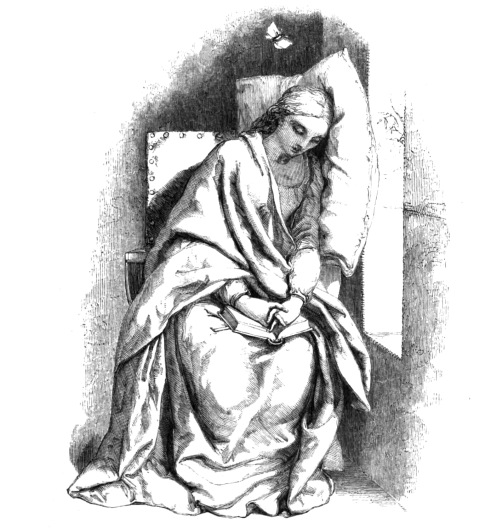
LENORE.
Ah, broken is the golden bowl! the spirit flown for ever! Let the bell toll!—a saintly soul floats on the Stygian river; And, Guy De Vere, hast thou no tear?—weep now or never more! See! on yon drear and rigid bier low lies thy love, Lenore! Come! let the burial rite be read—the funeral song be sung!— An anthem for the queenliest dead that ever died so young— A dirge for her the doubly dead in that she died so young. retches! ye loved her for her wealth and hated her for her pride, And when she fell in feeble health, ye blessed her—that she died! How shall the ritual, then, be read?—-the requiem how be sung By you—by yours, the evil eye,—by yours, the slanderous tongue That did to death the innocence that died, and died so young? Peccavimus; but rave not thus! and let a Sabbath song Go up to God so solemnly the dead may feel no wrong! The sweet Lenore hath “gone before,” with Hope, that flew beside, Leaving thee wild for the dear child that should have been thy bride— For her, the fair and débonnaire, that now so lowly lies, The life upon her yellow hair, but not within her eyes— The life still there, upon her hair—the death upon her eyes. “Avaunt! to-night my heart is light. No dirge will I upraise, But waft the angel on her flight with a pæan of old days! Let no bell toll!—lest her sweet soul, amid its hallowed mirth, Should catch the note, as it doth float up from the damnèd Earth. To friends above, from fiends below, the indignant ghost is riven— From Hell unto a high estate far up within the Heaven— From grief and groan, to a golden throne, beside the King of Heaven.”

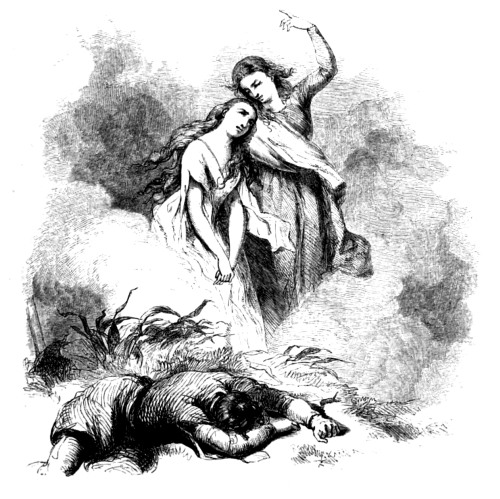
A VALENTINE.
or her this rhyme is penned, whose luminous eyes, Brightly expressive as the twins of Lœda, Shall find her own sweet name, that, nestling lies Upon the page enwrapped from every reader. Search narrowly the lines!—they hold a treasure Divine—a talisman—an amulet That must be worn at heart. Search well the measure— The words—the syllables! Do not forget The trivialest point, or you may lose your labour! And yet there is in this no Gordian knot Which one might not undo without a sabre, If one could merely comprehend the plot. Enwritten upon the leaf where now are peering Eyes’ scintillating soul, there lie perdus Three eloquent words oft uttered in the hearing Of poets, by poets—as the name is a poet’s, too. Its letters, although naturally lying Like the knight Pinto—Mendez Ferdinando— Still form a synonym for Truth.—Cease trying! You will not read the riddle, though you do the best you can do.

To translate the address, read the first letter of the first line in connexion with the second letter of the second line, the third letter of the third line, the fourth of the fourth, and so on to the end. The name will thus appear.
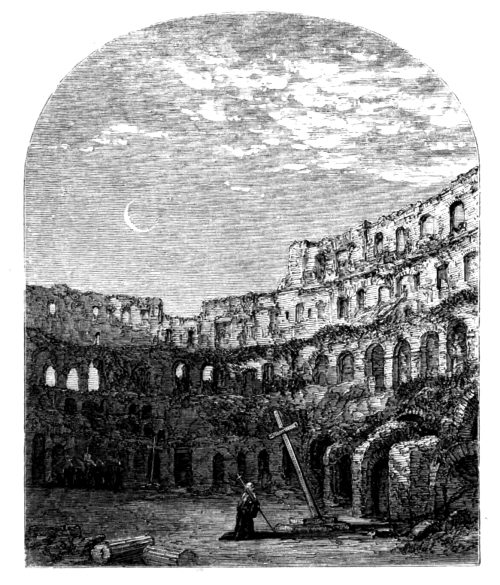
THE COLISEUM.
Type of the antique Rome! Rich reliquary Of lofty contemplation left to Time By buried centuries of pomp and power! At length—at length—after so many days Of weary pilgrimage and burning thirst, (Thirst for the springs of lore that in thee lie,) I kneel, an altered and an humble man, Amid thy shadows, and so drink within My very soul thy grandeur, gloom, and glory! Vastness! and Age! and Memories of Eld! Silence! and Desolation! and dim Night! I feel ye now—I feel ye in your strength— O spells more sure than e’er Judæan king Taught in the gardens of Gethsemane! O charms more potent than the rapt Chaldee Ever drew down from out the quiet stars! Here, where a hero fell, a column falls! Here, where the mimic eagle glared in gold, A midnight vigil holds the swarthy bat! Here, where the dames of Rome their gilded hair Waved to the wind, now wave the reed and thistle! Here, where on golden throne the monarch lolled, Glides, spectre-like, unto his marble home, Lit by the wan light of the hornèd moon, The swift and silent lizard of the stones! But stay! these walls—these ivy-clad arcades— These mouldering plinths—these sad and blackened shafts— These vague entablatures—this crumbling frieze— These shattered cornices—this wreck—this ruin— These stones—alas! these grey stones—are they all— All of the famed and the colossal left By the corrosive Hours to Fate and me? “Not all”—the Echoes answer me—“not all! Prophetic sounds and loud arise for ever From us, and from all Ruin, unto the wise, As melody from Memnon to the Sun. We rule the hearts of mightiest men—we rule With a despotic sway all giant minds. We are not impotent—we pallid stones. Not all our power is gone—not all our fame— Not all the magic of our high renown— Not all the wonder that encircles us— Not all the mysteries that in us lie— Not all the memories that hang upon And cling around about us as a garment, Clothing us in a robe of more than glory.”
TO —— ——.
ot long ago, the writer of these lines, In the mad pride of intellectuality, Maintained “the power of words”—denied that ever A thought arose within the human brain Beyond the utterance of the human tongue: And now, as if in mockery of that boast, Two words—two foreign soft dissyllables— Italian tones, made only to be murmured By angels dreaming in the moon-lit “dew That hangs like chains of pearl on Hermon hill,”— Have stirred from out the abysses of his heart, Unthought-like thoughts that are the souls of thought, Richer, far wilder, far diviner visions Than even the seraph harper, Israfel, (Who has “the sweetest voice of all God’s creatures,”) Could hope to utter. And I! my spells are broken. The pen falls powerless from my shivering hand. With thy dear name as text, though bidden by thee, I cannot write—I cannot speak or think— Alas, I cannot feel; for ’tis not feeling, This standing motionless upon the golden Threshold of the wide-open gate of dreams, Gazing, entranced, adown the gorgeous vista, And thrilling as I see, upon the right, Upon the left, and all the way along, Amid unpurpled vapours, far away To where the prospect terminates—thee only.

TO HELEN.
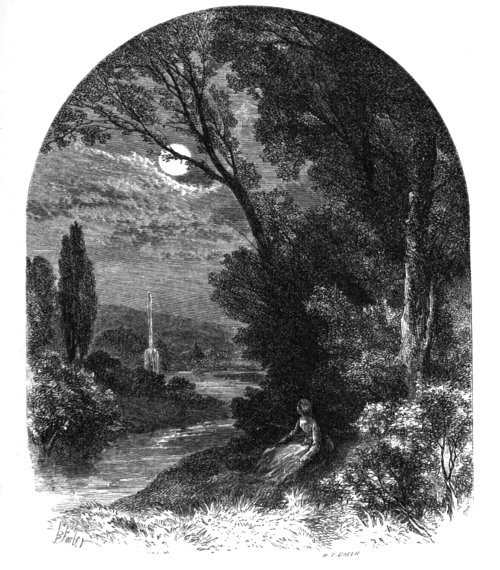
I saw thee once—once only—years ago: I must not say how many—but not many. It was a July midnight; and from out A full-orbed moon, that, like thine own soul, soaring, Sought a precipitate pathway up through heaven, There fell a silvery-silken veil of light, With quietude, and sultriness, and slumber, Upon the upturn’d faces of a thousand Roses that grew in an enchanted garden, Where no wind dared to stir, unless on tiptoe— Fell on the upturn’d faces of these roses, That gave out, in return for the love-light, Their odorous souls in an ecstatic death— Fell on the upturn’d faces of these roses That smiled and died in this parterre, enchanted By thee, and by the poetry of thy presence. lad all in white, upon a violet bank I saw thee half reclining; while the moon Fell on the upturn’d faces of the roses, And on thine own, upturn’d—alas, in sorrow! Was it not Fate, that, on this July midnight— Was it not Fate (whose name is also Sorrow) That bade me pause before that garden-gate, To breathe the incense of those slumbering roses? No footstep stirred: the hated world all slept, Save only thee and me. (Oh, Heaven!—oh, God! How my heart beats in coupling those two words!) Save only thee and me. I paused—I looked— And in an instant all things disappeared. (Ah, bear in mind this garden was enchanted!)

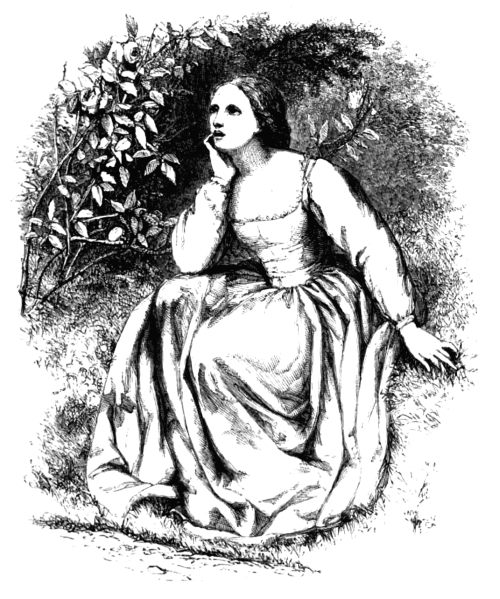
The pearly lustre of the moon went out: The mossy banks and the meandering paths, The happy flowers and the repining trees, Were seen no more: the very roses’ odours Died in the arms of the adoring airs. All—all expired save thee—save less than thou: Save only the divine light in thine eyes— Save but the soul in thine uplifted eyes. I saw but them—they were the world to me. I saw but them—saw only them for hours— Saw only them until the moon went down. What wild heart-histories seemed to lie enwritten Upon those crystalline, celestial spheres! How dark a woe! yet how sublime a hope! How silently serene a sea of pride! How daring an ambition! yet how deep— How fathomless a capacity for love! ut now, at length, dear Dian sank from sight, Into a western couch of thunder-cloud; And thou, a ghost, amid the entombing trees Didst glide away. Only thine eyes remained. They would not go—they never yet have gone. Lighting my lonely pathway home that night, They have not left me (as my hopes have) since. They follow me—they lead me through the years. They are my ministers—yet I their slave. Their office is to illumine and enkindle— My duty, to be saved by their bright light, And purified in their electric fire, And sanctified in their elysian fire. They fill my soul with Beauty (which is Hope), And are far up in heaven—the stars I kneel to In the sad, silent watches of my night; While even in the meridian glare of day I see them still—two sweetly scintillant Venuses, unextinguished by the sun!

AN ENIGMA.
eldom we find,” says Solomon Don Dunce, ”Half an idea in the profoundest sonnet. Through all the flimsy things we see at once As easily as through a Naples bonnet— Trash of all trash!—how can a lady don it? Yet heavier far than your Petrarchan stuff— Owl-downy nonsense that the faintest puff Twirls into trunk-paper the while you con it.” And, veritably, Sol is right enough. The general tuckermanities are arrant Bubbles—ephemeral and so transparent— But this is, now,—you may depend upon it— Stable, opaque, immortal—all by dint Of the dear names that lie concealed within ’t.
ULALUME.
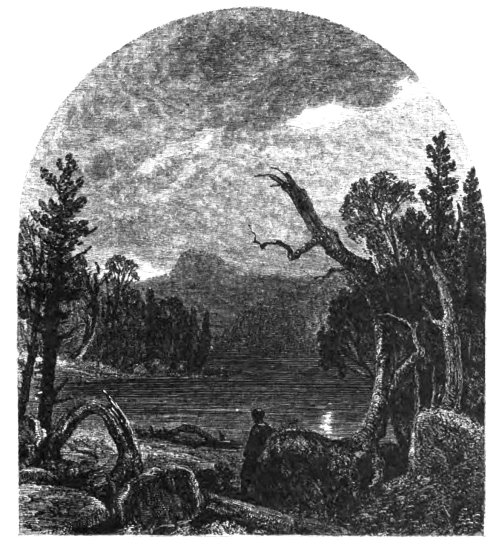
The skies they were ashen and sober; The leaves they were crisped and sere— The leaves they were withering and sere; It was night in the lonesome October Of my most immemorial year; It was hard by the dim lake of Auber, In the misty mid region of Weir— It was down by the dank tarn of Auber, In the ghoul-haunted woodland of Weir. Here once, through an alley Titanic, Of cypress, I roamed with my Soul— Of cypress, with Pysche, my Soul. These were days when my heart was volcanic As the scoriac rivers that roll— As the lavas that restlessly roll Their sulphurous currents down Yaanek In the ultimate climes of the pole— That groan as they roll down Mount Yaanek In the realms of the boreal pole. Our talk had been serious and sober, But our thoughts they were palsied and sere— Our memories were treacherous and sere— For we knew not the month was October, And we marked not the night of the year— (Ah, night of all nights in the year!) We noted not the dim lake of Auber— (Though once we had journeyed down here)— Remembered not the dank tarn of Auber, Nor the ghoul-haunted woodland of Weir. And now, as the night was senescent And star-dials pointed to morn— As the star-dials hinted of morn— At the end of our path a liquescent And nebulous lustre was born, Out of which a miraculous crescent Arose with a duplicate horn— Astarte’s bediamonded crescent Distinct with its duplicate horn. And I said—“She is warmer than Dian: She rolls through an ether of sighs— She revels in a region of sighs: She has seen that the tears are not dry on These cheeks, where the worm never dies, And has come past the stars of the Lion To point us the path to the skies— To the Lethean peace of the skies— Come up, in despite of the Lion, To shine on us with her bright eyes— Come up through the lair of the Lion, With love in her luminous eyes.” But Pysche, uplifting her finger, Said—“Sadly this star I mistrust— Her pallor I strangely mistrust:— Oh, hasten!—oh, let us not linger! Oh, fly! let us fly!—for we must.” In terror she spoke, letting sink her Wings until they trailed in the dust— In agony sobbed, letting sink her Plumes till they trailed in the dust— Till they sorrowfully trailed in the dust. I replied—“This is nothing but dreaming: Let us on by this tremulous light! Let us bathe in this crystalline light! Its Sybilic splendour is beaming With Hope and in Beauty to-night:— See!—it flickers up the sky through the night! Ah, we safely may trust to its gleaming, And be sure it will lead us aright— We safely may trust to a gleaming That cannot but guide us aright, Since it flickers up to Heaven through the night.” Thus I pacified Psyche and kissed her, And tempted her out of her gloom— And conquered her scruples and gloom; And we passed to the end of the vista, But were stopped by the door of a tomb— By the door of a legended tomb; And I said—“What is written, sweet sister, On the door of this legended tomb?” She replied—“Ulalume—Ulalume— ’Tis the vault of thy lost Ulalume!”
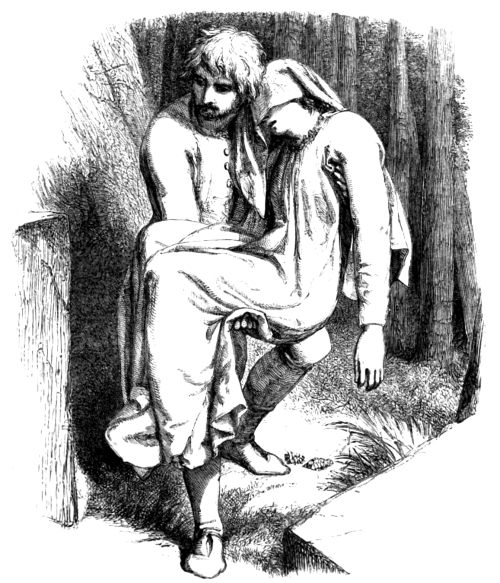
Then my heart it grew ashen and sober As the leaves that were crisped and sere— As the leaves that were withering and sere, And I cried—“It was surely October On this very night of last year That I journeyed—I journeyed down here— That I brought a dread burden down here— On this night of all nights in the year, Ah, what demon has tempted me here? Well I know, now, this dim lake of Auber— This misty mid region of Weir— Well I know, now, this dank tarn of Auber, This ghoul-haunted woodland of Weir.”
TO ——.
I heed not that my earthly lot Hath—little of Earth in it— That years of love have been forgot In the hatred of a minute:— I mourn not that the desolate Are happier, sweet, than I, But that you sorrow for my fate Who am a passer by.
TO MY MOTHER.
ecause I feel that, in the heavens above, The angels, whispering to one another, Can find, among their burning terms of love, None so devotional as that of “Mother,” Therefore by that dear name I long have called you— You who are more than mother unto me, And fill my heart of hearts, where Death installed you In setting my Virginia’s spirit free. My mother—my own mother, who died early, Was but the mother of myself; but you Are mother to the one I loved so dearly, And thus are dearer than the mother I knew By that infinity with which my wife Was dearer to my soul than its soul-life.
THE BELLS.
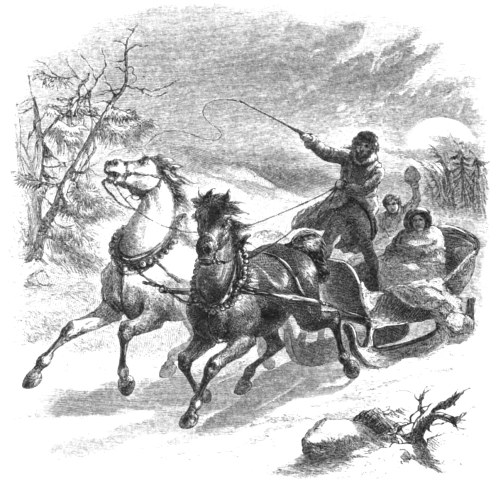
I. Hear the sledges with the bells— Silver bells! What a world of merriment their melody foretells! How they tinkle, tinkle, tinkle, In the icy air of night! While the stars that oversprinkle All the heavens, seem to twinkle With a crystalline delight; Keeping time, time, time, In a sort of Runic rhyme, To the tintinabulation that so musically wells From the bells, bells, bells, bells, Bells, bells, bells— From the jingling and the tinkling of the bells. II. Hear the mellow wedding bells, Golden bells! What a world of happiness their harmony foretells! Through the balmy air of night How they ring out their delight! From the molten-golden notes, And all in tune, What a liquid ditty floats To the turtle-dove that listens, while she gloats On the moon! Oh, from out the sounding cells, What a gush of euphony voluminously wells! How it swells! How it dwells On the Future! how it tells Of the rapture that impels To the swinging and the ringing Of the bells, bells, bells, Of the bells, bells, bells, bells, Bells, bells, bells— To the rhyming and the chiming of the bells!
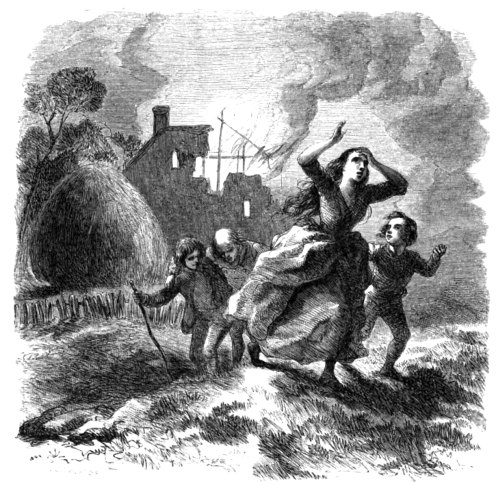
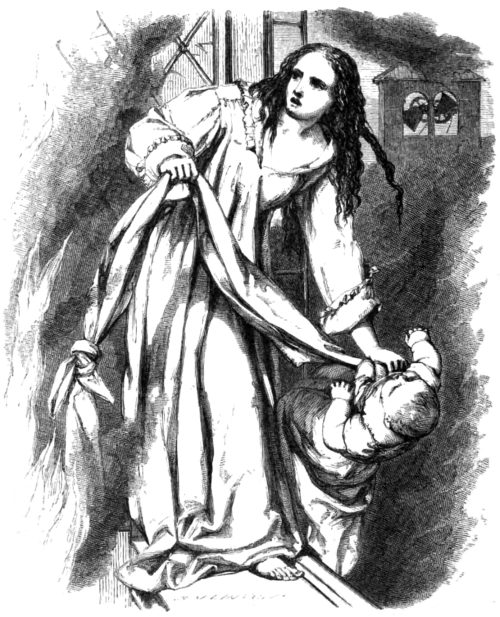
III. ear the loud alarum bells— Brazen bells! What a tale of terror now their turbulency tells! In the startled ear of night How they scream out their affright! Too much horrified to speak, They can only shriek, shriek, Out of tune, In a clamorous appealing to the mercy of the fire, In a mad expostulation with the deaf and frantic fire. Leaping higher, higher, higher, With a desperate desire, And a resolute endeavour, Now—now to sit or never, By the side of the pale-faced moon. Oh, the bells, bells, bells! What a tale their terror tells Of Despair! How they clang, and clash, and roar! What a horror they outpour On the besom of the palpitating air! Yet the ear it fully knows, By the twanging, And the clanging, How the danger ebbs and flows; Yet the ear distinctly tells, In the jangling, And the wrangling, How the danger sinks and swells, By the sinking or the swelling in the anger of the bells— Of the bells— Of the bells, bells, bells, bells, Bells, bells, bells— In the clamour and the clangour of the bells!
IV. Hear the tolling of the bells— Iron bells! What a world of solemn thought their monody compels! In the silence of the night, How we shiver with affright At the melancholy menace of their tone! For every sound that floats From the rust within their throats Is a groan. And the people—ah, the people— They that dwell up in the steeple, All alone, And who tolling, tolling, tolling, In that muffled monotone, Feel a glory in so rolling On the human heart a stone— They are neither man nor woman— They are neither brute nor human— They are Ghouls: And their king it is who tolls; And he rolls, rolls, rolls, Rolls A pæan from the bells! And his merry bosom swells With the pæan of the bells! And he dances, and he yells; Keeping time, time, time, In a sort of Runic rhyme, To the pæan of the bells— Of the bells: Keeping time, time, time, In a sort of Runic rhyme, To the throbbing of the bells— Of the bells, bells, bells— To the sobbing of the bells; Keeping time, time, time, As he knells, knells, knells, In a happy Runic rhyme, To the rolling of the bells— Of the bells, bells, bells— To the tolling of the bells, Of the bells, bells, bells, bells— Bells, bells, bells— To the moaning and the groaning of the bells.
THE CONQUEROR WORM.
o! ’tis a gala night Within the lonesome latter years! An angel throng, bewinged, bedight In veils, and drowned in tears, Sit in a theatre, to see A play of hopes and fears, While the orchestra breathes fitfully The music of the spheres. Mimes, in the form of God on high, Mutter and mumble low, And hither and thither fly— Mere puppets they, who come and go At bidding of vast formless things That shift the scenery to and fro, Flapping from out their Condor wings Invisible Woe! That motley drama—oh, be sure It shall not be forgot! With its Phantom chased for evermore, By a crowd that seize it not, Through a circle that ever returneth in To the self-same spot, And much of Madness, and more of Sin, And Horror the soul of the plot. But see, amid the mimic rout A crawling shape intrude! A blood-red thing that writhes from out The scenic solitude! It writhes!—it writhes!—with mortal pangs The mimes become its food, And the angels sob at vermin fangs In human gore imbued. Out—out are the lights—out all! And, over each quivering form, The curtain, a funeral pall, Comes down with the rush of a storm, And the angels, all pallid and wan, Uprising, unveiling, affirm That the play is the tragedy “Man,” And its hero the Conqueror Worm.

ANNABEL LEE.
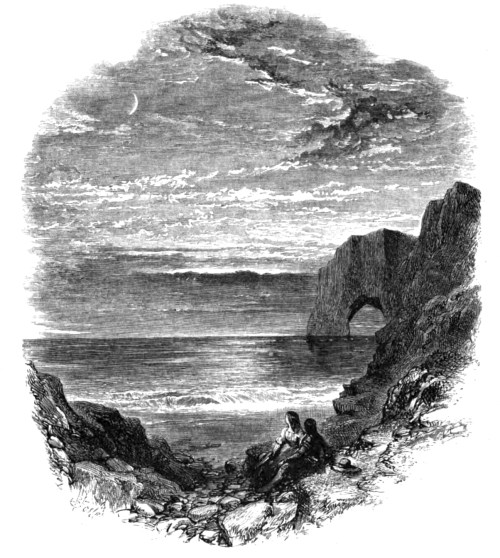
It was many and many a year ago, In a kingdom by the sea, That a maiden there lived whom you may know By the name of Annabel Lee; And this maiden she lived with no other thought Than to love and be loved by me. I was a child and she was a child, In this kingdom by the sea: But we loved with a love that was more than love— I and my Annabel Lee; With a love that the winged seraphs of heaven Coveted her and me. And this was the reason that, long ago, In this kingdom by the sea, A wind blew out of a cloud, chilling My beautiful Annabel Lee; So that her high-born kinsman came And bore her away from me, To shut her up in a sepulchre In this kingdom by the sea. The angels, not half so happy in heaven, Went envying her and me— Yes!—that was the reason (as all men know, In this kingdom by the sea) That the wind came out of the cloud by night, Chilling and killing my Annabel Lee.
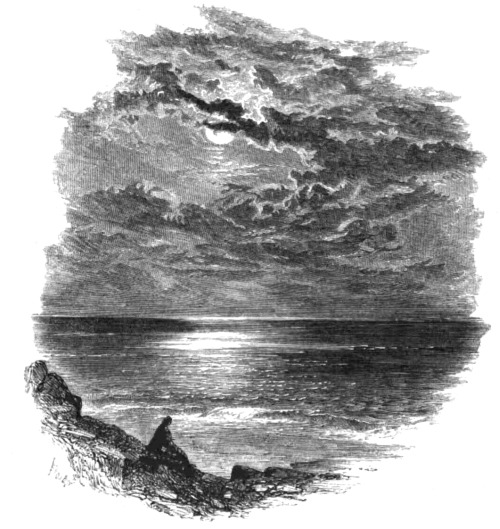
But our love it was stronger by far than the love Of those who were older than we— Of many far wiser than we— And neither the angels in heaven above, Nor the demons down under the sea, Can ever dissever my soul from the soul Of the beautiful Annabel Lee: For the moon never beams, without bringing me dreams Of the beautiful Annabel Lee; And the stars never rise, but I feel the bright eyes Of the beautiful Annabel Lee; And so, all the night-tide, I lie down by the side Of my darling—my darling—my life and my bride, In the sepulchre there by the sea, In her tomb by the sounding sea.
THE VALLEY OF UNREST.
NCE it smiled a silent dell Where the people did not dwell; They had gone unto the wars, Trusting to the mild-eyed stars, Nightly, from their azure towers, To keep watch above the flowers, In the midst of which all day The red sun-light lazily lay. Now each visitor shall confess The sad valley’s restlessness. Nothing there is motionless— Nothing save the airs that brood Over the magic solitude. Ah, by no wind are stirred those trees That palpitate like the chill seas Around the misty Hebrides! Ah, by no wind those clouds are driven That rustle through the unquiet heaven Uneasily, from morn till even, Over the violets there that lie In myriad types of the human eye— Over the lilies there that wave And weep above a nameless grave! They wave:—from out their fragrant tops Eternal dews come down in drops. They weep:—from off their delicate stems Perennial tears descend in gems.
ISRAFEL.[1]
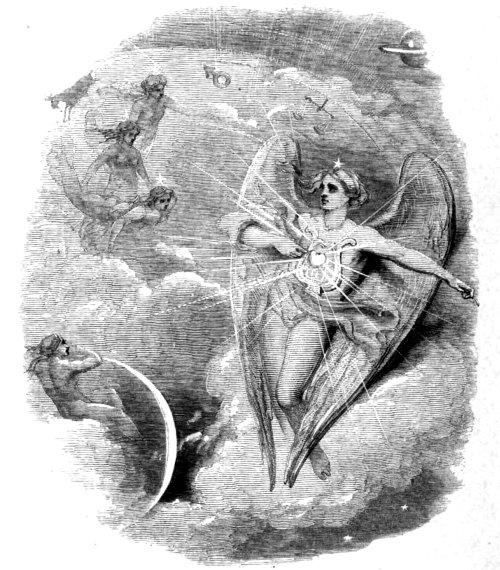
In heaven a spirit doth dwell “Whose heart-strings are a lute;” None sing so wildly well As the angel Israfel, And the giddy stars (so legends tell) Ceasing their hymns, attend the spell Of his voice, all mute. Tottering above In her highest noon, The enamoured moon Blushes with love, While, to listen, the red levin (With the rapid Pleiads, even, Which were seven) Pauses in heaven. And they say (the starry choir And the other listening things) That Israfeli’s fire Is owing to that lyre By which he sits and sings— The trembling living wire Of those unusual strings. But the skies that angel trod, Where deep thoughts are a duty— Where Love’s a grown-up God— Where the Houri glances are Imbued with all the beauty Which we worship in a star. Therefore, thou art not wrong, Israfeli, who despisest An unimpassioned song; To thee the laurels belong, Best bard, because the wisest! Merrily live, and long! The ecstasies above With thy burning measures suit— Thy grief, thy joy, thy hate, thy love, With the fervour of thy lute— Well may the stars be mute! Yes, heaven is thine; but this Is a world of sweets and sours; Our flowers are merely—flowers, And the shadow of thy perfect bliss Is the sunshine of ours. If I could dwell Where Israfel Hath dwelt, and he where I, He might not sing so wildly well A mortal melody, While a bolder note than this might swell From my lyre within the sky.
SILENCE.
here are some qualities—some incorporate things, That have a double life, which thus is made A type of that twin entity which springs From matter and light, evinced in solid and shade. There is a two-fold Silence—sea and shore— Body and soul. One dwells in lonely places, Newly with grass o’ergrown; some solemn graces, Some human memories and tearful lore, Render him terrorless: his name’s “No More.” He is the corporate Silence: dread him not! No power hath he of evil in himself; But should some urgent fate (untimely lot!) Bring thee to meet his shadow (nameless elf, That haunteth the lone regions where hath trod No foot of man), commend thyself to God!
TO ZANTE.
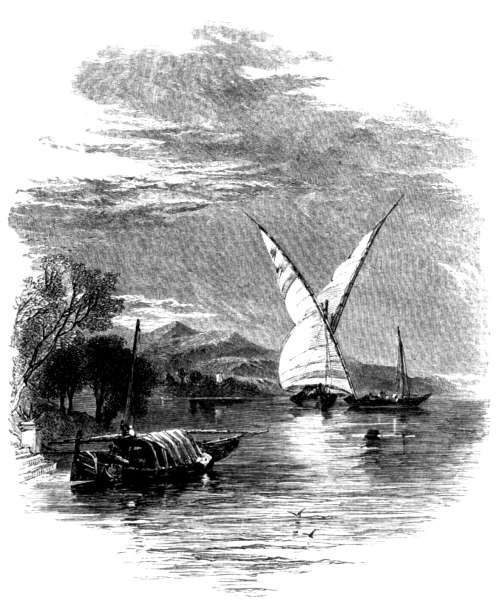
Fair isle, that from the fairest of all flowers, Thy gentlest of all gentle names dost take! How many memories of what radiant hours At sight of thee and thine at once awake! How many scenes of what departed bliss! How many thoughts of what entombèd hopes! How many visions of a maiden that is No more—no more upon thy verdant slopes! No more! alas, that magical sad sound Transforming all! Thy charms shall please no more— Thy memory no more! Accursèd ground Henceforth I hold thy flower-enamelled shore, O hyacinthine isle! O purple Zante! “Isola d’oro! Fior di Levante!”
TO F——S S. O——D.
hou wouldst be loved?—then let thy heart From its present pathway part not! Being everything which now thou art, Be nothing which thou art not. So with the world thy gentle ways, Thy grace, thy more than beauty, Shall be an endless theme of praise, And love—a simple duty.
BRIDAL BALLAD.
he ring is on my hand, And the wreath is on my brow; Satins and jewels grand Are all at my command, And I am happy now. And my lord he loves me well; But, when first he breathed his vow, I felt my bosom swell— For the words rang as a knell, And the voice seemed his who fell In the battle down the dell, And who is happy now. But he spoke to reassure me, And he kissed my pallid brow, While a reverie came o’er me, And to the church-yard bore me, And I sighed to him before me, Thinking him dead D’Elormie, “Oh, I am happy now!” And thus the words were spoken, And thus the plighted vow; And though my faith be broken, And though my heart be broken, Behold the golden token That proves me happy now! Would God I could awaken! For I dream I know not how, And my soul is sorely shaken Lest an evil step be taken,— Lest the dead who is forsaken May not be happy now.
THE HAUNTED PALACE.
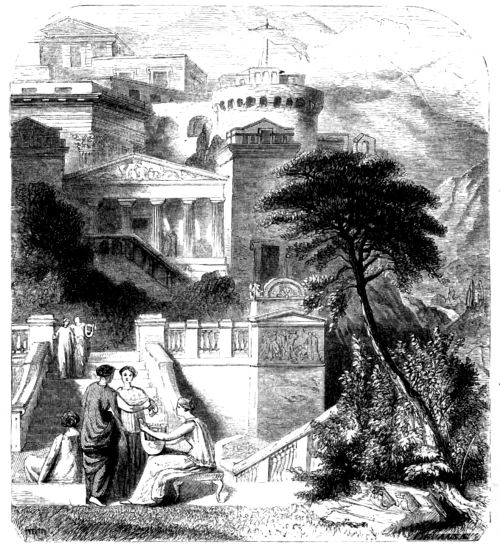
In the greenest of our valleys By good angels tenanted, Once a fair and stately palace— Radiant palace—reared its head. In the monarch Thought’s dominion— It stood there! Never seraph spread a pinion Over fabric half so fair! Banners yellow, glorious, golden, On its roof did float and flow, (This—all this—was in the olden Time long ago,) And every gentle air that dallied, In that sweet day, Along the ramparts plumed and pallid, A wingèd odour went away. Wanderers in that happy valley, Through two luminous windows, saw Spirits moving musically, To a lute’s well-tunèd law, Round about a throne where, sitting (Porphyrogene!) In state his glory well befitting, The ruler of the realm was seen. And all with pearl and ruby glowing Was the fair palace-door, Through which came flowing, flowing, flowing, And sparkling evermore, A troop of Echoes, whose sweet duty Was but to sing, In voices of surpassing beauty, The wit and wisdom of their king. But evil things, in robes of sorrow, Assailed the monarch’s high estate. (Ah, let us mourn!—for never morrow Shall dawn upon him desolate!) And round about his home, the glory That blushed and bloomed Is but a dim-remembered story Of the old time entombed. And travellers now, within that valley, Through the red-litten windows see Vast forms, that move fantastically To a discordant melody, While, like a ghastly rapid river, Through the pale door A hideous throng rush out for ever And laugh—but smile no more.
EULALIE.
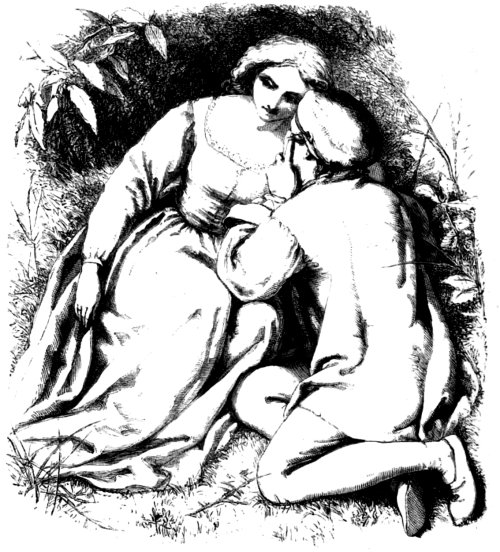
I dwelt alone In a world of moan, And my soul was a stagnant tide, Till the fair and gentle Eulalie became my blushing bride— Till the yellow-haired young Eulalie became my smiling bride. Ah, less—less bright The stars of the night Than the eyes of the radiant girl! And never a flake That the vapour can make With the moon-tints of purple and pearl, Can vie with the modest Eulalie’s most unregarded curl— Can compare with the bright-eyed Eulalie’s most humble and careless curl. Now Doubt—now Pain Come never again, For her soul gives me sigh for sigh, And all day long Shines, bright and strong, Astarté within the sky, While ever to her dear Eulalie upturns her matron eye— While ever to her young Eulalie upturns her violet eye.
TO F——.
eloved! amid the earnest woes That crowd around my earthly path— (Drear path, alas! where grows Not even one lonely rose)— My soul at least a solace hath In dreams of thee, and therein knows An Eden of bland repose. And thus thy memory is to me Like some enchanted far-off isle In some tumultuous sea— Some ocean throbbing far and free With storms—but where meanwhile Serenest skies continually Just o’er that one bright island smile.
TO ONE IN PARADISE.
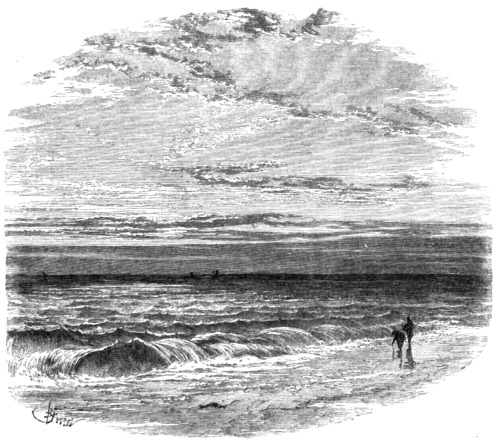
Thou wast that all to me, love, For which my soul did pine— A green isle in the sea, love, A fountain and a shrine, All wreathed with fairy fruits and flowers, And all the flowers were mine. Ah, dream too bright to last! Ah, starry Hope! that didst arise But to be overcast! A voice from out the Future cries, “On! on!”—but o’er the Past (Dim gulf!) my spirit hovering lies Mute, motionless, aghast! For, alas! alas! with me The light of Life is o’er! “No more—no more—no more—” (Such language holds the solemn sea To the sands upon the shore) Shall bloom the thunder-blasted tree, Or the stricken eagle soar! And all my days are trances, And all my nightly dreams Are where thy dark eye glances, And where thy footstep gleams— In what ethereal dances, By what eternal streams.
DREAM-LAND.
y a route obscure and lonely, Haunted by ill angels only, Where an Eidolon, named Night, On a black throne reigns upright, I have reached these lands but newly From an ultimate dim Thule— From a wild weird clime that lieth, sublime, Out of Space—out of Time. Bottomless vales and boundless floods, And chasms, and caves, and Titan woods, With forms that no man can discover For the dews that drip all over; Mountains toppling evermore Into seas without a shore; Seas that restlessly aspire, Surging, unto skies of fire; Lakes that endlessly outspread Their lone waters—lone and dead,— Their still waters—still and chilly With the snows of the lolling lily. By the lakes that thus outspread Their lone waters, lone and dead,— Their sad waters, sad and chilly With the snows of the lolling lily,— By the mountains—near the river Murmuring lowly, murmuring ever,— By the grey woods,—by the swamp Where the toad and the newt encamp,— By the dismal tarns and pools Where dwell the Ghouls,— By each spot the most unholy — In each nook most melancholy,— There the traveller meets aghast Sheeted Memories of the Past— Shrouded forms that start and sigh As they pass the wanderer by— White-robed forms of friends long given, In agony, to the Earth—and Heaven. For the heart whose woes are legion ’Tis a peaceful, soothing region— For the spirit that walks in shadow ’Tis—oh, ’tis an Eldorado!
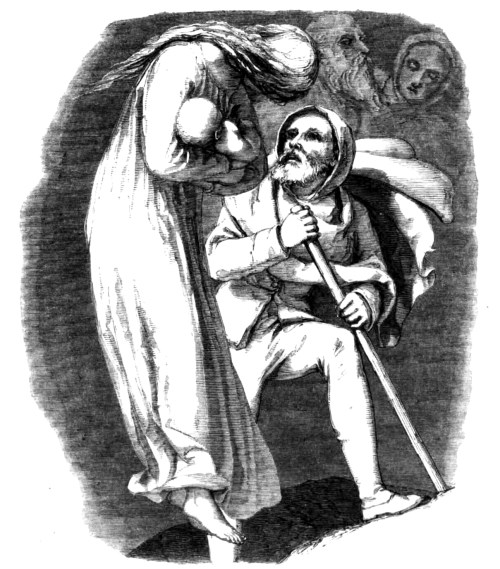
But the traveller, travelling through it, May not—dare not openly view it; Never its mysteries are exposed To the weak human eye unclosed; So wills its King, who hath forbid The uplifting of the fringed lid; And thus the sad Soul that here passes Beholds it but through darkened glasses. By a route obscure and lonely, Haunted by ill angels only, Where an Eidolon, named Night, On a black throne reigns upright, I have wandered home but newly From this ultimate dim Thule.
HYMN.
t morn—at noon—at twilight dim— Maria! thou hast heard my hymn! In joy and woe—in good and ill— Mother of God, be with me still! When the Hours flew brightly by, And not a cloud obscured the sky, My soul, lest it should truant be, Thy grace did guide to thine and thee; Now, when storms of Fate o’ercast Darkly my Present and my Past, Let my Future radiant shine With sweet hopes of thee and thine!
THE SLEEPER.
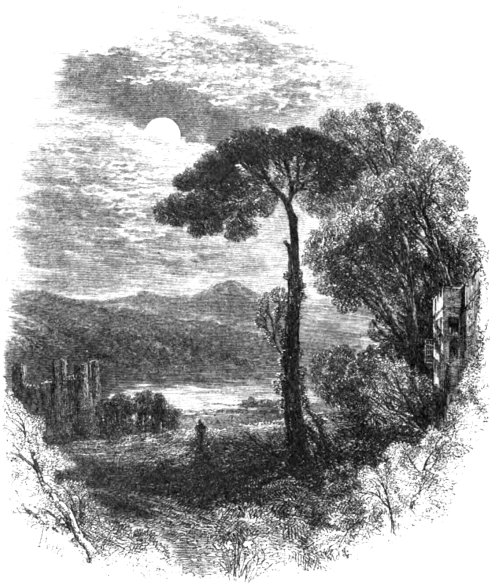
At midnight, in the month of June, I stand beneath the mystic moon. An opiate vapour, dewy, dim, Exhales from out her golden rim, And, softly dripping, drop by drop, Upon the quiet mountain top, Steals drowsily and musically Into the universal valley. The rosemary nods upon the grave; The lily lolls upon the wave; Wrapping the fog about its breast, The ruin moulders into rest; Looking like Lethe, see! the lake A conscious slumber seems to take, And would not, for the world, awake. All Beauty sleeps!—and lo! where lies (Her casement open to the skies) Irene, with her Destinies! Oh, lady bright! can it be right— This window open to the night? The wanton airs, from the tree-top, Laughingly through the lattice drop— The bodiless airs, a wizard rout, Flit through thy chamber in and out, And wave the curtain canopy So fitfully—so fearfully— Above the close and fringed lid ’Neath which thy slumb’ring soul lies hid, That, o’er the floor and down the wall, Like ghosts the shadows rise and fall! Oh, lady dear, hast thou no fear? Why and what art thou dreaming here? Sure thou art come o’er far-off seas, A wonder to these garden trees! Strange is thy pallor! strange thy dress! Strange, above all, thy length of tress, And this all solemn silentness! The lady sleeps. Oh, may her sleep, Which is enduring, so be deep! Heaven have her in its sacred keep! This chamber changed for one more holy, This bed for one more melancholy, I pray to God that she may lie For ever with unopened eye, While the dim sheeted ghosts go by! My love, she sleeps! Oh, may her sleep As it is lasting, so be deep! Soft may the worms about her creep! Far in the forest, dim and old, For her may some tall vault unfold— Some vault that oft hath flung its black And winged panels fluttering back, Triumphant, o’er the crested palls, Of her grand family funerals— Some sepulchre, remote, alone, Against whose portal she hath thrown, In childhood, many an idle stone— Some tomb from out whose sounding door She ne’er shall force an echo more, Thrilling to think, poor child of sin! It was the dead who groaned within.
FOR ANNIE.
hank Heaven! the crisis— The danger is past, And the lingering illness Is over at last— And the fever called “Living” Is conquered at last. Sadly, I know I am shorn of my strength, And no muscle I move As I lie at full length— But no matter!—I feel I am better at length. And I rest so composedly, Now, in my bed, That any beholder Might fancy me dead— Might start at beholding me, Thinking me dead. The moaning and groaning, The sighing and sobbing, Are quieted now, With that horrible throbbing At heart:—ah, that horrible, Horrible throbbing! The sickness—the nausea— The pitiless pain— Have ceased, with the fever That maddened my brain— With the fever called “Living” That burned in my brain. And oh! of all tortures That torture the worst Has abated—the terrible Torture of thirst For the naphthaline river Of Passion accurst:— I have drunk of a water That quenches all thirst:—
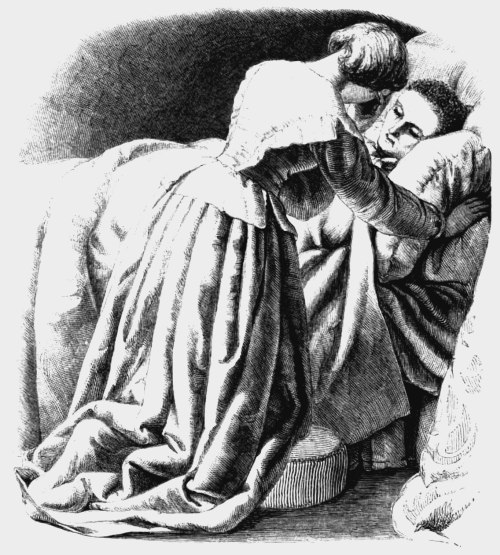
Of a water that flows, With a lullaby sound, From a spring but a very few Feet under ground— From a cavern not very far Down under ground. And ah! let it never Be foolishly said That my room it is gloomy And narrow my bed; For man never slept In a different bed— And, to sleep, you must slumber In just such a bed. My tantalized spirit Here blandly reposes, Forgetting, or never Regretting its roses— Its old agitations Of myrtles and roses: For now, while so quietly Lying, it fancies A holier odour About it, of pansies— A rosemary odour, Commingled with pansies— With rue and the beautiful Puritan pansies. And so it lies happily, Bathing in many A dream of the truth And the beauty of Annie— Drowned in a bath Of the tresses of Annie. She tenderly kissed me, She fondly caressed, And then I fell gently To sleep on her breast— Deeply to sleep From the heaven of her breast. When the light was extinguished, She covered me warm, And she prayed to the angels To keep me from harm— To the queen of the angels To shield me from harm. And I lie so composedly, Now, in my bed, (Knowing her love) That you fancy me dead— And I rest so contentedly, Now in my bed, (With her love at my breast) That you fancy me dead— That you shudder to look at me, Thinking me dead:— But my heart it is brighter Than all of the many Stars in the sky, For it sparkles with Annie— It glows with the light Of the love of my Annie— With the thought of the light Of the eyes of my Annie.
ELDORADO.
Gaily bedight, A gallant knight, In sunshine and in shadow, Had journeyed long, Singing a song, In search of Eldorado. But he grew old— This knight so bold— And o’er his heart a shadow Fell as he found No spot of ground That looked like Eldorado.
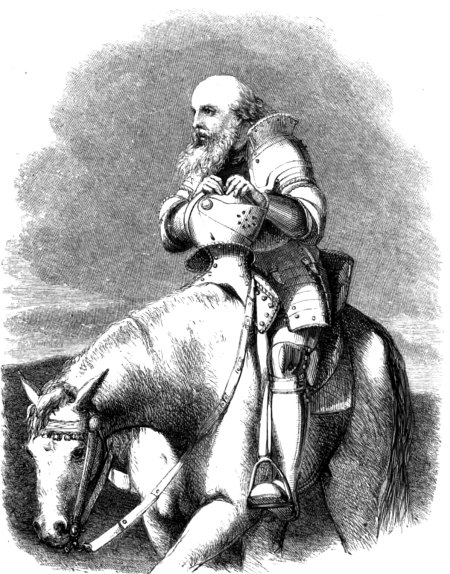
And, as his strength Failed him at length, He met a pilgrim shadow— “Shadow,” said he, “Where can it be— This land of Eldorado?” “Over the Mountains Of the Moon, Down the Valley of the Shadow, Ride, boldly ride,” The shade replied,— “If you seek for Eldorado!”
A DREAM WITHIN A DREAM.
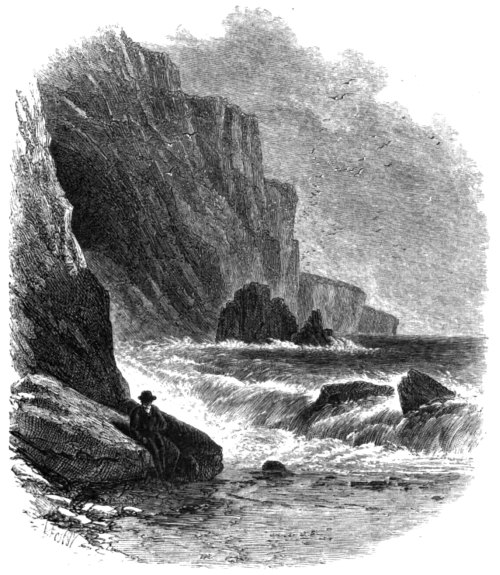
Take this kiss upon the brow! And, in parting from you now, Thus much let me avow— You are not wrong, who deem That my days have been a dream; Yet if hope has flown away In a night, or in a day, In a vision, or in none, Is it therefore the less gone? All that we see or seem Is but a dream within a dream. I stand amid the roar Of a surf-tormented shore, And I hold within my hand Grains of the golden sand— How few! yet how they creep Through my fingers to the deep, While I weep—while I weep! O God! can I not grasp Them with a tighter clasp? O God! can I not save One from the pitiless wave? Is all that we see or seem But a dream within a dream?
THE CITY IN THE SEA.
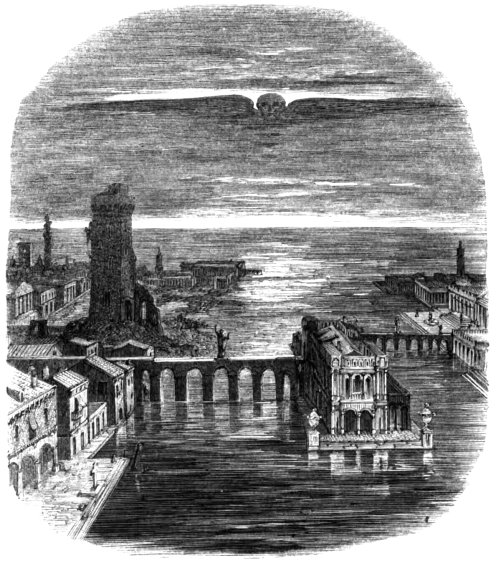
Lo! Death has reared himself a throne In a strange city lying alone Far down within the dim West, Where the good and the bad and the worst and the best Have gone to their eternal rest. There shrines and palaces and towers (Time-eaten towers that tremble not!) Resemble nothing that is ours. Around, by lifting winds forgot, Resignedly beneath the sky The melancholy waters lie. No rays from the holy heaven come down On the long night-time of that town; But light from out the lurid sea Streams up the turrets silently— Gleams up the pinnacles far and free— Up domes—up spires—up kingly halls— Up fanes—up Babylon-like walls— Up shadowy long-forgotten bowers Of sculptured ivy and stone flowers— Up many and many a marvellous shrine Whose wreathèd friezes intertwine The viol, the violet, and the vine. Resignedly beneath the sky The melancholy waters lie. So blend the turrets and shadows there That all seem pendulous in air, While from a proud tower in the town Death looks gigantically down.
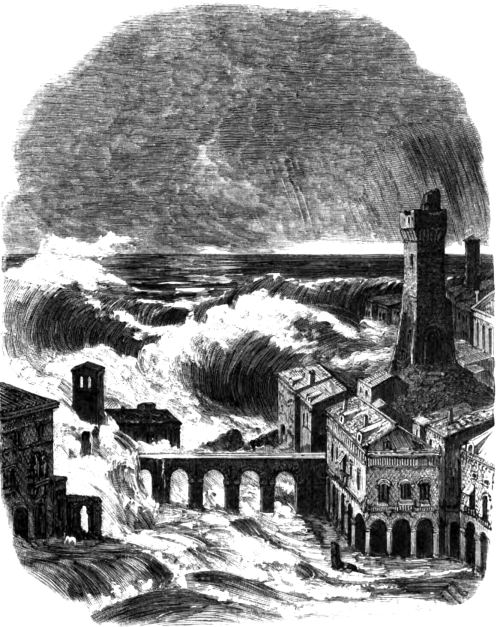
There open fanes and gaping graves Yawn level with the luminous waves; But not the riches there that lie In each idol’s diamond eye— Not the gaily-jewelled dead Tempt the waters from their bed; For no ripples curl, alas! Along that wilderness of glass— No swellings tell that winds may be Upon some far-off happier sea— No heavings hint that winds have been On seas less hideously serene. But lo, a stir is in the air! The wave—there is a movement there! As if the towers had thrust aside, In slightly sinking, the dull tide— As if their tops had feebly given A void within the filmy heaven. The waves have now a redder glow— The hours are breathing faint and low— And when, amid no earthly moans, Down, down that town shall settle hence, Hell, rising from a thousand thrones, Shall do it reverence.