Front matter
Reading edition
Contributions from The Museum of History and Technology Paper 63
The Penitente Moradas of Abiquiú Richard E. Ahlborn
Introduction
Penitente Organization
Origins of the Penitente Movement
The History of Abiquiú
The Architecture of the Moradas
Interior Space and Artifacts
Summary
Smithsonian Institution Press Washington, D.C. 1968
U.S. GOVERNMENT PRINTING OFFICE: 1968 0—287-597
For sale by the Superintendent of Documents, U.S. Government Printing Office Washington, D.C. 20402—Price 75 cents
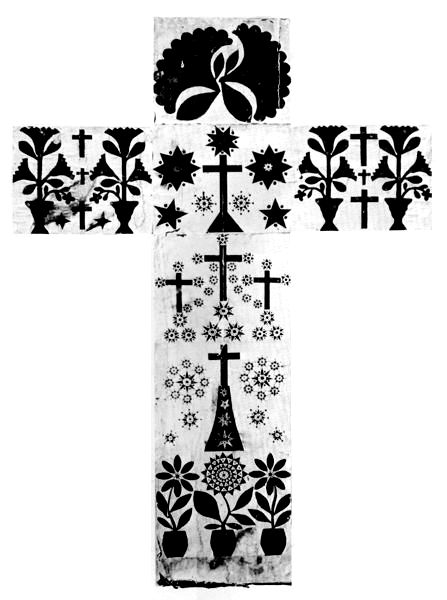
Figure 26. Cross (cruz). Size: 106.7 centimeters high, 73.6 wide. Date: First quarter of 20th century. Origin: Abiquiú; Onésimo Martínez. Location: South morada, center room. Manufacture: Indigo blue designs (stencilled?).
Richard E. Ahlborn
THE PENITENTE MORADAS OF ABIQUIÚ
By the early 19th century, Spanish-speaking residents of villages in northern New Mexico and southern Colorado felt the need for a brotherhood that would preserve their traditional social and religious beliefs. Known as "brothers of light," or penitentes, these Spanish-Americans centered their activities in a houselike building, or morada, especially equipped for Holy Week ceremonies.
For the first time, two intact moradas have been fully photographed and described through the cooperation of the penitente brothers of Abiquiú, New Mexico.
The Author: Richard E. Ahlborn is associate curator in the Division of Cultural History in the Smithsonian Institution's Museum of History and Technology.