Part 2 — CHAPTER XII. The Greek System.
Reading edition
We are now come to the most important portion of our task, the development of the Greek and Italic systems. In the Homeric Poems we found the Talanton (or value of a cow in gold) the sole unit of weight, and that only employed for gold. This Talanton has been shown to be the same in weight as the light gold shekel of Asia Minor, which, under the form of coin, we have just been discussing as the Croesean stater and Persian Daric. It was therefore nothing else than the Euboic or Attic stater of historical times, which at all periods and at all places that fall within our knowledge formed the sole unit for the weighing of gold.
Besides the Talanton based on the ox, there was in all probability another higher unit in occasional use in Greece Proper. This was the threefold of the ox-unit. We have already had occasion to notice the small gold talent, called by some writers the Macedonian, which was equal to three Attic staters. The same weight under the name of the Sicilian talent was employed likewise for gold only in the Greek colonies of Sicily and Southern Italy. The conservatism of colonists is too well known to need illustration, and we may with high probability infer that the Greek settlers in Magna Graecia brought the small talent from their original homes. What was the origin of this weight? We have seen that everywhere all over our area the slave is the occasional higher unit. Thus the Irish slave (cumhal) was a unit of account equal to three cows. The slave in the Welsh Laws is equal to 4 cows, whilst in Homer we found a slave woman valued at 4 cows also. From the way in which this notice of her price occurs, it is probable that Achilles did not give a woman of the most ordinary kind as a prize, for had she been the ordinary slave-woman of account, there would have been no need to mention the price, as any one would have known how many cows exactly she was worth. It is then not improbable that three cows were commonly reckoned as the value of a slave, and accordingly the small gold talent, which is the multiple of the ox-unit, is simply the metallic representative of the slave, just as the Homeric Talanton itself is that of the cow.
What the exact weight of this unit was on Greek soil we are now enabled to ascertain by the aid of the treatise on the Constitution of the Athenians known to the ancients as the work of Aristotle, and the brilliant discovery and identification of which by the officials of the British Museum reflects much credit on British scholarship.
We had previously known from Plutarch (who ascribed the first coinage of Athens to Theseus[365]) that amongst his other reforms Solon caused drachms to be coined of lighter weight than those previously in currency, so that 100 of the new ones would be equal in value to 73 old ones. Some scholars have inferred that this was an expedient for relieving debtors, who would be allowed to pay in the new coin debts contracted in the older currency. The newly discovered Constitution dispels this assumption, and also affords us some most valuable additional matter[366]: “In his Laws then he appears to have made these enactments in favour of the people, but before his legislation he appears to have wrought the cancelling of debts, and afterwards the augmentation of the measures and weights, and the augmentation of the currency. For in his day the measures likewise were made larger than those of Pheidon, and the mina, which previously had almost seventy drachms, was filled up by a hundred drachms[367]. But the ancient type was the didrachm[368], and he also made as a standard[369] for his coinage 63 minas weighing the talent, and the minae were apportioned out by the stater, and the other weights.”
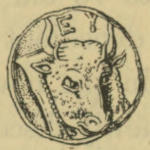
Fig. 30. Coin of Eretria.
The first point to engage our attention is the formation of a new standard for the silver coin (for no gold was coined for nearly two centuries): sixty-three old minas were taken to form a new talent, which of course was divided henceforward into 60 new minas. As the weight of the Attic talent in post-Solonian times is most accurately known, we can at once discover the weight of the ancient mina by dividing the ordinary weight of the talent (405,000 grs.) by 63: 405,000 ÷ 63 = 6428 grs., that is 322 grs. less than the post-Solonian mina of 6750 grs. As there are 50 staters in the mina, the ancient stater weighed 128·56 grs., or just a grain lighter than the Daric (129·6 grs.). The old mina of 6428 grs. had been equal to 70 drachms; each of these then must have weighed 92 grs. nearly, that is, the ordinary weight of an Aeginetic drachm. There can be no doubt that the coins of Aegina were used as currency at Athens before Solon’s time, where they circulated side by side in all probability with the coins of Euboea which bore the bull’s head, whence arose the tradition of the earliest coinage of Athens consisting of didrachms stamped with an ox. The old mina (63 of which went to the new silver talent) was of course the ancient standard used for weighing gold and silver before coined money was employed. It was that known as the Euboic, based on the ox-unit. The Aeginetic standard was only used for silver, gold at all times being weighed by the Euboic standard even where the Aeginetic was in use for silver. This standard was of course in full use for gold and evidently likewise for silver in prae-Solonian times, even though the Aeginetic drachms passed as currency at Athens. For if they had adopted the Aeginetic standard, 100 Aeginetic drachms would have been reckoned to the mina, but as only 70 drachms went to the mina it is evident that the old ox-unit (so-called Euboic) standard of unit 130 grs. with its corresponding mina was always the national Athenian standard.
We showed at an earlier stage that in the age when the art of coining was first introduced into Greece by Pheidon of Argos, it was probable that gold stood to silver in the proportion of 15:1. For convenience, then, in Peloponnesus and in Central Greece a system was adopted by which 10 pieces of silver were equivalent to one piece or ingot of gold. This system, known as the Aeginetic, was thus obtained.
Gold being to silver as 15:1,
1 gold ingot (Talanton) of 130 grs. × 15 = 1950 grs. of silver, 1950 grs. ÷ 10 = 195 grs.
Therefore 1 gold Talanton of 130 grs. = 10 pieces of silver of 195 grs. each.
It is possible that this method of making 10 silver pieces equal to one gold unit was developed at the time of the introduction of coined money, but it is more likely that it may have been in use even before that time.
Now it is worth observing that all through the classical period of Greek history the term stater is generally confined in use to gold pieces. Thus silver coins, unless they weighed 135 grs., are not described as silver staters, but are regularly termed didrachms. So general evidently was this practice that the adjective chrysous (χρυσοῦς) was regularly employed to express the gold unit, the masculine gender showing that the noun understood is stater (στατήρ). Thus Pollux says: “Some were termed staters of Darius, some Philippeans, other Alexandrians, all being of gold, and if you say gold piece, stater is understood: but if you should say stater, gold is not absolutely to be understood[370].” From the fact that Pollux draws attention to the exceptional use of stater to express a silver coin, on the principle that exceptio probat regulam, it is evident that stater regularly represents a gold piece of two Attic drachms. The familiar practice in Attic Greek, when speaking of a considerable sum of silver without employing either the term mina or talent, is to say 1000 drachms, 2000 drachms and the like, but not 1000 staters or 2000 staters, etc., whilst on the other hand, under like conditions, the practice is to enumerate gold not by drachms, but by staters. Thus in a fragment from the Demi of Eupolis quoted by Pollux[371] a man is described as possessing 3000 staters of gold. We certainly hear of an Aeginean stater and a Corinthian[372] stater (both of silver), but both are found in writers of comparatively late date, when usage was getting less exact, and besides, as the Aeginetic system had a separate individuality of its own, its unit being perfectly different from the Euboic Attic, might with justice be termed a stater. We are thus justified in considering the gold stater the legitimate descendant of the Homeric Talanton, the stater or weigher representing the Talanton or weight of the older time. As long as no other unit than the ox-unit or Talanton was employed, the Talanton or weight par excellence was sufficient to describe it, but when under Asiatic influences the higher unit of the mina (μνᾶ) and talent were introduced, a term was substituted which indicates clearly that the gold unit of 130 grs. was the weigher or basis of the whole system. Starting then with our ox-unit, we find already in Homer definite traces of a decimal, but nothing to indicate the existence of a sexagesimal system. Ten talents of gold are mentioned in several passages.
Starting then with the ox-unit of 130 grs. we can thus arrive at the fully elaborated Greek systems. The term mina (μνᾶ) is beyond doubt a borrowing from the East. How far it was ever much employed in the reckoning of gold it is hard to say, but it is at least remarkable that, when we hear so frequently of minae of silver in the Attic writers, no instance of a mina of gold is quoted in our books of reference. From this one is led to infer that it was for the purpose of measuring the less precious metal, silver, that the term mina was brought into use in Greece. In fact, as stater is essentially a term which clings to gold, so mina is especially a term used of silver. With the mina the Greeks borrowed likewise the highest Asiatic unit (the kikkar of the Hebrews), which became the Talanton or talent of historical Greece. But it is remarkable that the Greeks did not borrow its Asiatic name along with the unit itself. They simply gave it their own name weight (literally, ‘that which can be lifted,’ cp. τλάω, tollo, etc.). This fact can be explained readily if we suppose that the Greeks, like all those other primitive peoples whom we have mentioned, had a rough and ready unit for estimating bulky wares, the standard of the load, or as much as a man could conveniently carry on his back. Having already such a unit they would have no difficulty in adopting the load or talent, which had been fixed according to the Sexagesimal system, and which had permeated all Western Asia. In fact their position towards the Asiatic load, which had been accurately fixed by the mathematical skill of the Babylonians, would be exactly analagous to that of the Malays of Java and Sumatra towards the accurately adjusted Chinese picul. Because the Malays themselves were accustomed to use loads of various weights as their rough highest unit of bulk, they have with all the more readiness received the form of the same unit, which the clever Chinese have incorporated into their commercial weight system by making it equal to 100 chings (catties, or pounds). But it is doubtful if at any time in Greece Proper the talent of gold was ever considered as a monetary unit. We have found Eupolis speaking of “3000 staters of gold” instead of simply saying a talent of gold, and when we do find mention made of talents of gold, as in a famous passage of Thucydides, where he describes the amount of gold employed by Pheidias in the making of the world-renowned chryselephantine statue of Athena for the Parthenon, whilst the computations in silver are expressed simply by talents, the gold is enumerated as talents in weight. We may assume that gold was weighed throughout Greece in historical times on the following system:
1 stater = 130 grs.
50 staters = 1 mina = 6500 grs.
3000 ” = 60 minae = 1 talent = 390,000 grs.
When silver came into use it was probably weighed all through Hellas, as in Asia and Egypt, on the same standard as gold. This continued always to be the practice amongst the great trading communities of Euboea, Chalcis and Eretria, and their colonies, and also with Corinth and her daughter states. Hence the system was commonly known as the Euboic, sometimes as the Corinthian, and in later times, for a reason to be presently given, the Attic. But in this silver system it is no longer the stater which represents the smaller unit, but rather the drachm (δραχμή). Furthermore we find in most constant use a subdivision of the drachm called the obol (ὀβολός nail or spike), six of which made a drachm. There can be no doubt that this silver obolos represented the value in silver of the ancient copper unit from which it took its name, which itself was not estimated by weight but probably, as we saw above, was simply appraised by measure, as is done by all primitive peoples in the estimation of copper and iron, nay even in the very earliest stage of gold itself (p. 43). As six of these nails or obols made a handful (δραχμή) in the ancient copper system, so when each of them was equated to a certain amount of silver, the equivalence in silver was called an obol, and the six silver obols obtained the old name of handful or drachm. In the ordinary Greek system of reckoning silver it is 100 drachms, not 50 staters, of silver which form the mina. But of course at the earlier stages of the use of silver we may with some boldness assume that silver was simply weighed by the stater (or Homeric Talanton).
It is important then to note that among the smaller weight denominations silver has virtually no term peculiarly its own: for we have seen that stater belongs essentially to gold, whilst drachm and obol have originated in the use of copper. This is in complete harmony with what we know of the history of the metals themselves, gold and copper being known and employed long before men had learned to utilize silver; and so too, we find the late-introduced term mina in especially close connection with the latest employed of the three metals. This Euboic-Attic silver system may be stated as follows:
6 obols = 1 drachm
100 drachms = 1 mina
60 minae = 1 talent.
The Corinthians, whilst making the obol of the same weight as the Euboic, made a different division of the silver stater; for as Corinth occupied the very portals of Peloponnesus where the Aeginetic system was universal, she found it convenient for purposes of exchange to divide her silver stater of 135 grs. into three drachms of 45 grs. each, one of which was for practical purposes identical with the Aeginetan half drachm. Thus two Corinthian drachms of 45 grs. each were equal to one Aeginetan drachm of 90 grs.
The Aeginetan Standard.
The desire to obtain 10 silver pieces equivalent in value to the gold ox-unit induced the Aeginetans, who were famous merchantmen, to make a silver system distinct from that of gold. Gold being to silver as 15:1,
130 × 15 = 1950 grs. of silver.
1950 ÷ 10 = 195 grs.
With the Aeginetans as with the Euboeans in their silver system, the ancient copper units of the nail and handful played an important part. The story of Pheidon[373] having hung up in the temple of Hera at Argos the ancient currency of nails of copper and iron as soon as he struck his first issue of silver coins, if not absolutely true in all details, at least contains a most probable statement of what did actually take place when a real silver currency was first introduced. We have seen how the Chinese, starting with a barter currency of real hoes and knives, the objects of most general demand, gradually replaced those larger and more cumbrous articles by hoes and knives of a more diminutive size, until finally they became a real currency when they had been so reduced in size as to be utterly unfit for practical use. We saw likewise how that at the present moment the real hoe is the lowest unit of barter among the wild tribes of Annam, and that small bars of iron of given size are used in Laos, and that plates of metal ready to be made into hoes, and hoes themselves, are employed by the negroes of Central Africa, whilst on the west coast axes of a size too diminutive for actual use are employed as a real currency. As the day came when the Chinese finally replaced the archaic knife by the full developed copper coin called the cash, so the Aeginetans and Argives of the days of Pheidon superseded by a real coin ancient monetary-units consisting either of real implements of iron and copper, or bars of those metals of certain definite dimensions, or possibly mere Lilliputian representatives of such, which had previously served them as a true currency. On the whole however it is safest to assume from the names nail (Obol) and Handful (drachme) that the form in which copper or iron served as currency in Peloponnesus and the mainland of Hellas in general was that of rods of a certain length and thickness. We have cited already many analogous forms from modern Asia and Africa, and from the ancient Kelts, to which we shall presently add the ancient Italians. But just as we found that in the Soudan, whilst the slave and ox were universally the higher units of value, each particular district had its own distinctive lower unit according to the nature of its products and requirements, so it is most likely that there were many different units of value (but all alike sub-multiples of the cow) in use among the various Greek communities. It is also probable that they must have exercised a certain effect in the formation of the units of silver currency. Nor is evidence wanting for this. I have already maintained (p. 5) that the fact of the occurrence of the type of the cow, or cow’s head, on early Greek coins is evidence that the original monetary unit was the ox. Thus we find the forepart of an ox on the early electrum staters of Samos of the Phoenician standard (217 grs.), which was probably equivalent to a pure gold ox-unit of 130 grs. The bull’s head also appears on the electrum coins of Eretria and of other places in Euboea. But it is with the silver currency that we are now especially concerned. Whilst it was extremely likely that silver coins might in process of time bear the impress of an ox, the general unit of currency, it was still more natural that, as pieces of silver supplanted as units not the ox but its sub-multiples, that is the particular series of articles of barter in use in any particular district, so these silver coins should bear some traces in their types of the ancient units thus supplanted. That eminent scholar Colonel Leake many years ago remarked that the types of Greek coins generally related “to the local mythology and fortunes of the place, with symbols referring to the principal productions or to the protecting numina.”
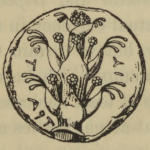
Fig. 31. Coin of Cyrene with Silphium plant.
Modern scholars have more and more lost sight of the doctrine contained in the words which I have italicized, and directed all their efforts to giving a religious signification to everything[374]. The forepart of the Lion and the Bull on the coins of Lydia become symbols of the Sun and Moon, the Tortoise on the didrachm of Aegina is regarded as a symbol of Aphrodite, the Ashtaroth of the Phoenicians, in her capacity of patron divinity of traders; even the silphium plant of Cyrene, which yielded a salubrious but somewhat unpleasant medicine, is regarded not as holding its place on the coins of Cyrene and its sister towns because it formed the chief staple of trade, but because forsooth it may have been the symbol of Aristaeus, “the protector of the corn-field and the vine and all growing crops, and bees and flocks and shepherds, and the averter of the scorching blasts of the Sahara.” There is probably just as much evidence for this as there is for believing that the beaver on some Canadian coins and stamps is symbolical of St Lawrence, after whom the great Canadian river is named, the warm skin of the beaver indicating that the saint of the red-hot gridiron is the averter of the cruel and biting blasts that sweep down from the icy North. I do not for a moment mean that mythological and religious subjects do not play their proper part in Greek coin types. But it is just as wrong to reduce all coin types to this category as it would be to regard them all as merely symbolic of the natural and manufactured products of the various states. If however we can show that certain coins, even in historical times, were regarded as the representations of the objects of barter of more primitive times, we shall have established a firm basis from which to make further advances.
In those now famous Cretan inscriptions found at Gortyn[375] certain sums are counted by kettles (lebetes, λέβητες) and pots (tripods, τρίποδες). Some have thought that these are the same objects which are called staters in later forms of the same documents. But recently M. Svoronos[376] has advanced a very plausible hypothesis that the lebetes and tripods of the inscriptions really refer not to an actual currency in the kettles and pots of the old Homeric times, but to certain Cretan coins which are countermarked with a stamp, which he recognizes in many examples as a lebes, and in at least one case as a tripod. Whether the first hypothesis, that actual kettles and pots were indicated in the earlier inscriptions and that they had been replaced afterwards by coins, or the hypothesis of M. Svoronos, be true, is immaterial for us. In either case there is evidence of a direct and unbroken succession which connects the silver currency of Crete with an earlier currency of manufactured articles. The very fact that a lebes or a tripod stamped upon a coin gave it currency, not merely in the town of issue but among neighbouring states, indicates that in a previous age the common unit of currency corresponding in value to the coin so marked was an actual lebes or tripod. Such is the evidence preserved for us in this remote corner of Hellas where life moved slowly, and where the archaic style of writing known as boustrophedon (the lines going from right to left and left to right alternately, as the plough turns up and down the field) still lingered on long after it had disappeared from every spot on the mainland of Greece. If then amongst the symbols which appear on the earliest coins of Greek communities, which began very early to strike money, we can find some which have not been identified as religious, and which we can show represent objects which actually did or may well have formed a monetary unit in such places, we shall have advanced a step further; and if we succeed in making good this fresh position, we may in turn find a nonreligious explanation for certain types, which at present are regarded as mythological symbols.
The types with which we shall deal must be those found on the most archaic coins, and which therefore date from a time when barter was just being replaced by a monetary currency. Thus in the case of cities like Athens and Corinth, which began to coin at a comparatively late period and which had been long accustomed to use the issues of other states before they struck money of their own, we should hardly expect to find any trace of the old local barter-unit in their coin types, as such a unit had long since been replaced by the foreign coins.
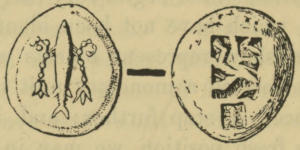
Fig. 32. Coin of Cyzicus with tunny fish.
Let us first turn to the well-known type of the tunny fish (πηλαμύς, θύννος), vast shoals of which were continually passing through the sea of Marmora (Propontis) from the Black Sea to the Mediterranean[377]. This type appears invariably upon the electrum coins of Cyzicus, and a tunny’s head is found upon some very archaic silver coins from the Santorin ‘find’ which Mr Head places at the top of the whole Cyzicene series, but no one has, as far as I am aware, yet hitherto attempted to mythologize it[378], although the fecundity of this fish would make it just as suitable an emblem for Aphrodite as the “lascivious turtle,” and the traders of Cyzicus might quite as well wear the badge of the goddess of the sea as the merchants of Aegina, for there is just as much or just as little evidence for Phoenician influences at Cyzicus as there is at Aegina. From what we have learned in an earlier chapter we know that the articles which form the staple commodities of a community in the age of barter virtually form its money. In a city like Cyzicus whose citizens depended for their wealth on their fisheries and trade, rather than on flocks or herds and agriculture, the tunny fish singly or in certain defined numbers, as by the score or hundred and the like, would naturally form a chief monetary unit, just as we found the stock fish employed in mediaeval Iceland. Are we not then justified in considering the tunny fish, which forms the invariable adjunct of the coins of Cyzicus, as an indication that these coins superseded a primitive system in which the tunny formed a monetary unit, just as the Kettle and Pot counter-marks on the coins of Crete point back to the days when real kettles formed the chief medium of exchange? But far stronger evidence is at hand to show that the tunny fish was used as a monetary unit in some parts of Hellas. We have had occasion to refer to the city of Olbia which lay on the north shore of the Black Sea. It was a Milesian colony, and was the chief Greek emporium in this region. There are bronze coins of this city made in the shape of fishes, and inscribed ΘΥ, which has been identified as the abbreviation θύννος, tunny. Others are inscribed ΑΡΙΧΟ, which Koehler read as τάριχος, salt fish, but which the distinguished German numismatist Von Sallet[379] regards as meaning a basket (ἄρριχος). He holds those marked ΘΥ as the legal price of a tunny fish, those marked ΑΡΙΧΟ as that of a basket of fish[380]. When we recall the Chinese bronze cowries, the Burmese silver shells, the silver fish-hooks of the Indian Ocean, the little hoes and knives of China, and the miniature axes from Africa, we are constrained to believe that in those coins of Olbia, shaped like a fish, we have a distinct proof of the influence on the Greek mind of the same principle which has impelled other peoples to imitate in metal the older object of barter which a metal currency is replacing. The inhabitants of Olbia were largely intermixed with the surrounding barbarians, and may therefore have felt some difficulty in replacing their barter unit by a round piece of metal bearing merely the imprint of a fish, while the pure-blooded Greek of Cyzicus had no hesitation in mentally bridging the gulf between a real fish and a piece of metal merely stamped with a fish, and did not require the intermediate step of first shaping his metal unit into the form of a tunny. We shall find that this tendency to shape metal into the form of the object which it supplants may perhaps be traced in the coins of Aegina and Boeotia.

Fig. 33. Coins of Olbia in the form of tunny fish.
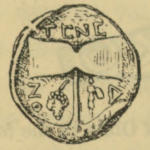
Fig. 34. Coin of Tenedos with double-headed axe.
In the same quarter of Hellas we find another instance of a coin type which may be regarded as evidence that the silver coin which bears it was the representative of an older barter unit. The island of Tenedos, lying off the Troad, struck at a very early date silver coins bearing for device a double-headed axe (the Latin bipennis). This “Axe of Tenedos” (Τενέδιος πέλεκυς) was explained by Aristotle[381] as a reference to a decree of a king of Tenedos which enacted that all who were convicted of adultery should be put to death. This explanation is probably a bit of mere aetiology to explain the existence of an emblem, the true origin of which had been forgotten. However, it yields one important result, for it shows that the emblem was not religious. Had that been its nature, priestly conservatism would have kept an unbroken tradition of its origin. But from another source some light may be obtained: Pausanias[382] in the 2nd century A.D. saw at Delphi axes dedicated according to tradition by Periclytus of Tenedos, and then proceeds to relate the following tale: Tennes, an old King of Tenedos about the time of the Trojan War, cut with an axe the ropes with which his father Cycnus had moored his ship to the shore, when he came to ask pardon of Tennes for having cast him and his sister in a chest into the sea, in a fit of anger caused by the false accusation of a stepmother. We may gather that according to this form of the legend the Janiform head, male and female, on the obverse of the coins of Tenedos alludes to the brother and sister. But Pausanias makes no attempt to connect Periclytus in any way with Tennes except as being a native of Tenedos. This is hardly enough to account for the dedication of the axes at Delphi. Two explanations suggest themselves. It was the custom of kings or communities to send offerings to Delphi of the best products of their land. Thus Croesus sent vast quantities of his Lydian electrum, and, still more to the point, the people of Metapontum in South Italy, whose land was famous for its wheat, after an especially favourable harvest sent to Delphi a wheat-ear (υέρος) of gold. Were the double axes in like fashion an especial product of Tenedos? Or was this dedication analogous to that of Pheidon when he hung up in the temple of the Argive Here the ancient nails and bars? The first explanation is the more probable, for there was no reason why the Tenedians should not have dedicated their cast off currency of axes in some temple at home. I have already mentioned the hoe currency of ancient China, and the axes used as such in Africa. I shall now show that such double-axes as those stamped on the coins of Tenedos formed part of the earliest Greek system of currency. I have already enumerated the various articles used in barter in the Homeric poems. The prizes offered in the Funeral games of Patroclus are of course merely the usual objects of barter and currency, slavewomen, oxen, lebetes, tripods, talents of gold and the like. “But he (Achilles) set for the archers dark iron, and he set down ten axes (πελέκεας), and ten half-axes (ἡμιπέλεκκα)[383].” The axe is undoubtedly of the same kind as that on the coins of Tenedos, the name (pelekys) being the same in each case, and the Homeric one beyond doubt is double-headed like the Tenedian, since the half-axe (hemi-pelekkon) must obviously mean a single-headed axe[384]. The double-axes formed the first prize, the ten half-axes the second, for “Meriones took up all the ten axes, and Teucer bore the ten half-axes to the hollow ships[385].” These axes and half-axes then seem to go in groups of ten as units of value, the half-axes representing half the value of the double-headed. If then the kettle and tripod of Homeric times are found as symbols on the coins of Crete, why may not the axe on those of Tenedos represent the local unit of an earlier epoch? and that such axes were evidently an important article in Tenedos is proved by the dedication at Delphi.
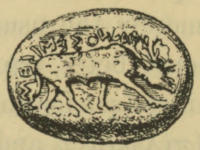
Fig. 35. Coin of Phanes (earliest known inscribed coin).
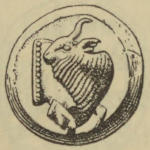
Fig. 36. Archaic coin of Samos.
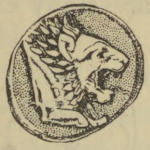
Fig. 37. Coin of Cnidus.
But could we only find a contemporary description of the type on one of the earliest coins of Asia Minor, the cradle of the art of coining, we might get our ideas on the nature of the coin types greatly cleared. Fortunately such an opportunity is afforded to us by an unique coin in the British Museum, the oldest as yet known which bears an inscription. It is an oblong electrum coin (Fig. 35), the reverse having the usual incuse, but on its obverse it bears a stag feeding, and over it runs (retrograde) in archaic letters I AM THE MARK OF PHANES (Φανος εμι σεμα = Φάνους εἰμὶ σῆμα). There can be no doubt that the mark of Phanes is the stag. If there was no inscription it would have been at once asserted that the stag was the symbol of the goddess Artemis, and who could deny it? But as it stands it is plain that the stag is nothing more than the particular badge adopted by the potentate Phanes, when and where he may have reigned, as a guarantee of the weight of the coin and perhaps the purity of the metal. The Daric itself needs no inscription to tell us that its type is not religious. The figure of the Great King with his spear and bow and quiver can hardly be allegorized even by an Origen[386]. Emboldened by these instances we may even hold up our hands against the host of Heaven, and raise doubts as to whether the foreparts of the lion and bull upon the coins of Lydia represent the Sun-god and the Moon-goddess. May not the lion simply be the royal emblem? I have already suggested this explanation for the lion weights of Assyria. Undoubtedly from the earliest times the king of beasts (as in Aesop’s Fables) was regarded in the East as the true badge of royalty. “The Lion of the tribe of Judah” is familiar to us all, and it is more rational to regard the lions which guarded the steps of Solomon’s throne as emblems of kingship rather than as symbols of the Sun. Is then the Lion on the coins of Lydia nothing more than the kings badge, just as the stag is the badge of Phanes? But what about the bull or cow? Shall I go too far if I regard it as indicating that the coin is the ox-unit? When the Greeks borrowed the art of coining from Lydia it is easy to understand that they would likewise borrow the type either in a complete or modified form, and hence it is that we find the lion or lion’s head on the coins of Miletus[387], the lion’s scalp on those of Samos (on which the cow’s head also is found), the lion’s head on the coins of Cnidus, of Gortyn in Crete, at Rhodes, at Miletus, and at the Phocaean towns of Velia in Lucania, and Massalia in Gaul, and put by the Samian exiles on their coins at Zancle. If the Greeks had been barbarians they would have slavishly copied the lion coins of Lydia, just as the Gauls copied the lion of Massalia, and at a later time the stater of Philip, and as the Himyarites of South Arabia, the “owls” of Athens[388], and as in mediaeval times the Danes of Dublin copied the coins of the Saxon kings[389]. But the artistic genius of the Greeks could submit to no such trammels, and the lion type was varied and diversified according to the fancy of each community. The same holds good of the type of the cow and cow’s head. The Greek genius gave us these beautiful types such as the cow suckling her calf (Dyrrachium), the cow with the bird on her back (Eretria), the cow scratching herself (Eretria), the two calves’ heads seen on the coins of Mytilene, and the magnificent charging bull on the coins of Thurii. The cow or bull’s head on the early gold and electrum coins was the indication of the value. In later times when the connection between ox and coin was only traditional, the ox was put on coins simply as symbolical of money.
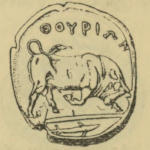
Fig. 38. Coin of Thurii.
Fig. 39. Coin of Rhoda in Spain.
Again Phocaea, one of the very earliest Greek towns to issue coins, employed a symbol which cannot be termed religious. Her coins bear a seal (phoca) a type parlant referring to the name of the town. Many examples of the same kind can be quoted, the rose (ῥόδον) on the coins of Rhodes (Ῥόδος) and also on those of Rhoda in Spain, the bee (melitta) on those of Melitaea, perhaps even the owl (χαλκίς) on coins ascribed to Chalcis in Euboea. These considerations will serve to show that we may expect many things on coins besides religious symbols. Thasos was famous for its wine, and accordingly the wine-cup is a regular adjunct of its coins, either standing alone, or held in the hands of old Silenus, who quaffs therefrom a “draught of vintage that hath been cooled a long age in the deep-delved earth.” All who have read Horace remember the fame of the wines of Chios, and accordingly the wine-jar is a regular adjunct of the mintage of that island. Now there is proof that the trade in wine was of extreme antiquity, if not in the islands just mentioned, at least in Lemnos, and that that trade was carried on by barter, for we read in Homer how “many ships stood in from Lemnos bringing wine, which Euneos the son of Jason had sent forward, whom Hypsipyle had borne to Jason shepherd of the folk, but separately for the sons of Atreus, Agamemnon and Menelaus, the son of Jason gave wine to be fetched, a thousand measures. From thence used the flowing-haired Achaeans to buy their wine, some with copper, some with glittering iron, some with hides, others with the kine themselves, others again with slaves[390].” From what we have seen in an earlier chapter it is clear that a measure of wine would have a known value in relation to the various articles here enumerated. Thus in North America where the beaver skin was the unit, a gallon of brandy = 6 skins, a brass kettle = 1 skin, an ounce of vermilion = 1 skin and so on[391]. In other words, the ordinary currency with which the Lemnians would purchase wares from other people who had no wine of their own would be wine, the unit of which was the measure (which elsewhere I have tried to show was the cup δέπας, Smith’s Dict. Antiq. s.v. Mensura). This measure would be the size of the vessel ordinarily employed for wine, probably much the same as the two-handled vase out of which Silenus is seen drinking on coins of Thasos.
With the introduction of silver currency nothing is more likely than that an effort would be made to equate the new silver unit to that which had formed the principal unit of barter. That the earliest types should indicate the object (or its value) which the coin replaced is in complete accord with the statement of Aristotle (quoted on an earlier page) that “the stamp was put on the coin as an indication of value[392].” As no numerals appear on the early Greek coins, it is evident that Aristotle regarded the symbol, whether ox-head, or tunny, or shield, as the index of the value. If it be said that the putting of a cow, or axe, or tunny on a coin was simply a picturesque way of indicating a single unit, we may reply that it is far easier to understand why a certain people chose a particular symbol, if in their minds the object symbolized was identified with the value of the silver or gold coin. It is at all events certain that Aristotle did not regard the type as religious in origin. But we are not without actual evidence that such an equating of the silver unit to the barter-unit really took place in Greece. It is held by the best numismatists that Solon was the first to coin money at Athens. It is also well known that the highest class in his constitution, called Pentacosiomedimni (Five-hundred-measure-men), were rated at 500 drachms. Thus the Olympic victor received 500 drachms to qualify him to be a Five-hundred-measure-man[393]. Furthermore Plutarch distinctly tells us that Solon reckoned a drachm as equivalent to a measure[394] or a sheep. It is hardly possible to doubt that the first Attic coined silver drachm was equated to the old barter unit of a measure (either of corn or oil). The same may be said in reference to the olive sprig which from the earliest issue is found on the coins of Athens. The sacred olive-trees (μορίαι) which belonged to the state, and for the care of which special officials were appointed, and even the very stumps of which, and the spot on which they had grown, were under a taboo[395], were a source of considerable revenue to the state in the 6th century B.C. The fact that they were all supposed to be scions of the sacred olive-tree on the Acropolis, which was itself supposed to be the gift of Athena, and the religious care bestowed on them, puts it beyond doubt that the olive at an early date formed one of the most important products of Attica. The instances given already of the employment of various kinds of food as money are sufficient to show that there is nothing far-fetched in supposing that olives and olive-oil may have been so employed at Athens.
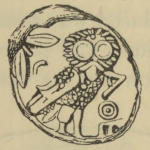
Fig. 40. Tetradrachm of Athens.
We have already spoken of the silphium or laserpitium plant on the coins of Cyrene, Barca, Euesperides and Teuchira, and mentioned the interpretation which makes it the symbol of the hero Aristaeus. It seems however far more reasonable to treat it on the same principle as the others just discussed. The silphium formed the most important article produced in that region, and it is perfectly in accordance with all analogy that certain quantities of this plant and of the juice extracted from it should be employed as money. We saw above that at the present moment tea is so employed on the borders of Tibet and China, and raw cotton in Darfur. But there is also some positive evidence in favour of this assumption, for Strabo[396] tells us that a traffic was carried on at the port of Charax between the Carthaginians and Cyrenaeans, the former bringing wine wherewith to purchase the silphium of the latter. There must have been a wine-unit, and also an unit for the silphium, or otherwise the barter could not have been carried on; and just as in Gaul[397] a jar of wine purchased a boy fit to serve as a cupbearer, a certain measure of wine being equated to a slave-boy, so we may conclude that some such wine-unit was equated to a packet or bale of silphium, the latter in turn having a certain amount of silver equated to it, which when coinage was introduced was stamped with the silphium device. That the silphium was packed in bales of a fixed weight is proved by a now famous vase-painting which represents the weighing (on ship board?) of the bales of silphium in the presence of Arcesilas the king of Cyrene[398]. The figure who points to the scales is marked silphiomachos (σλιφιομαχος) which is taken to mean silphium-weigher (σλιφιο- being either a mis-spelling of the artist, or the local form of the word, whilst the latter part is connected with the Egyptian mach = to weigh). Close to the silphium packets is the word ΜΑΕΝ, which has not been explained, but which may be simply a form of the word mina (manah, meneh) and denotes that each packet weighed that amount.
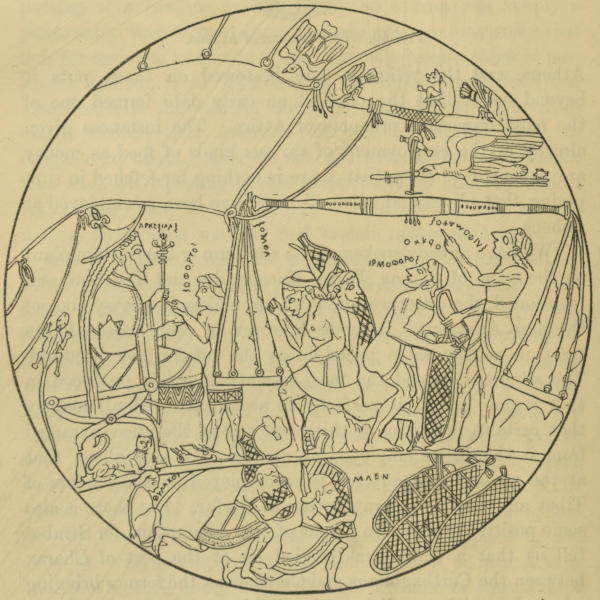
Fig. 41. Vase from Cyrene, shewing the weighing of the Silphium.
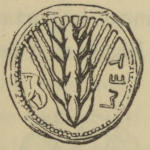
Fig. 42. Coin of Metapontum.
The ear of corn (wheat) on the coins of Metapontum[399], an old Achaean colony in Magna Graecia, is explained by modern writers as a symbol of Demeter: but the story told by Strabo of how the early settlers dedicated a golden ear at Delphi because they had amassed such great wealth from agriculture, indicates a far simpler solution, that the chief product and chief article of barter of Metapontum was naturally placed on her coins. As the tunny adorns the coins of Cyzicus, so we find the cuttle-fish on the coins of Croton and Eretria. As this creature was devoured with great gusto by the ancients, as it is at the present day at Naples and in Palestine, there is no necessity to regard it as a symbol of Poseidon, or of treating it in any way different from the tunny.
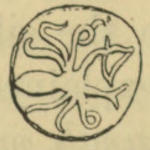
Fig. 43. Coin of Croton with cuttle fish.
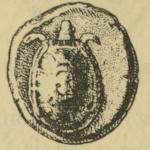
Fig. 44. ‘Tortoise’ of Aegina.
I now come to two most important types, the Tortoise of Aegina, and the Shield of Boeotia. I have already mentioned the symbolic interpretation given by E. Curtius to the former. That various natural productions, such as gourds, cocoa-nuts, joints of bamboo, served and still serve as vessels and measures of capacity in various countries we have seen already, and we likewise found that in the ancient Chinese monetary system of shells the shell of the tortoise stood at the top as the unit of highest value, and that down to a comparatively late epoch it was still highly prized in Cochin China for making bowls of great beauty. In both Greek and Latin there is abundant evidence to show that the functions which in a later time were performed by pottery were discharged by natural shells at an earlier period. Thus, if we do not find any actual vessel called a chelône (tortoise) in use amongst the Greeks, we at least find one called a Sea-urchin (Echinus, ἐχῖνος): for not only was the shell of this creature used as a vessel for containing medicines and the like, but vessels of artificial construction of the same shape and name were actually employed; thus the casket in which were deposited and sealed up the documents produced at the preliminary hearing of an Athenian lawsuit was called an Echinus. There was likewise a small vessel called conché (κόγχη), after the shell-fish of that name, the Latin concha, whilst a cognate name, conchylion, was applied to the case placed over the seals of wills.
Nay, ostrakon, the common word for a potsherd, familiar to us from its famous derivative Ostracism, or Voting by Potsherds, so called because the people inscribed their votes on pieces of pottery, meant originally nothing more than an oyster shell. In Latin testa, the ordinary name for an earthenware vessel, means nothing more than the covering of a shell-fish, and from this word testudo, the Latin name for the tortoise, is simply a derivative. Such instances could be multiplied if it were necessary, but those mentioned are sufficient to show the high probability of so valuable a shell as that of the tortoise having been employed. Owing to its beauty it would probably hold its place in Greece as the choicest kind of vessel for centuries after the art of pottery was known, just as it did in Cochin China. It would be only when the art of glazing and embellishing pottery had made some progress that vessels of baked clay could compete with the lustrous, many-hued shell. Nor are we without some direct evidence for the use of tortoise shell among the Greeks. The famous story of the invention of the lyre by the god Hermes is not without significance. According to the Hymn to Hermes, “the precocious divinity on the very day of his birth sallied forth and found a tortoise feeding on the luxuriant grass in front of the palace, as it moved with straddling gait.” His eye was caught by the dappled shell (αἰόλον ὄστρακον), and carrying home his spoil, he made of it a lyre. The legend which thus explains why the sounding-board of the lyre is so called points back to a time when the best form of bowl or hollow vessel for making a sounding board for a musical instrument was that afforded by the shell which was probably one of the common articles of everyday life.
But, in addition to all this indirect evidence, we are able to point to actual Greek vessels made of earthenware, fashioned in the shape of a tortoise. In the second Vase Room of the British Museum (case 48 and 49) there are two terra cotta vases from the island of Melos, wrought in the shape of this creature, and with these before us it is hardly possible to regard as other than wooden bowls carved in the shape of the same animal the wooden tortoises with which the Thessalian women pounded to death Lais the famous courtezan, in the temple of Aphrodite, after she had taken up her residence in their country[400]. We can parallel this development of artificial vessels of wood and earthenware from the use of the actual shell in modern times. Lady Brassey saw in the Museum at Honolulu, amongst the ancient native weapons and swords, “tortoise-shell cups and spoons, calabashes and bowls[401].” Now in the Cambridge Ethnological Museum there is a very fine wooden bowl from the South Seas, carved in the shape of a tortoise, and also earthenware vessels in the shape of tortoises from Fiji, which shows that the islanders of the Pacific not only used the real shells for vessels, but likewise imitated them in wood[402].
On an earlier page I quoted the statement of Ephorus that the Aeginetans took to commerce on account of the barrenness of their island. But they must have had something to give in exchange to other people before they could have developed a carrying trade, and as the island had been the resort of merchants from very early days, it must have had something to attract strangers as well as its position. Let us take the case of an island with barren soil in modern days, and see what it has to export. Thus Dhalac Island in the Red Sea is frequented by the Banyan merchants for the sake of its pearls, and at Massowah tortoise-shell forms an important article of commerce. Just as the Banyans come to Dhalac[403], so the Phoenicians probably came to Aegina, searching for the murex (purple fish) and tortoise. No doubt tortoise-shell must have been the chief article of export from Tortoise Island, described by Strabo (773), as situated in the Arabian Gulf (Red Sea).
The foregoing considerations make it not at all improbable that the tortoise on the coins of Aegina simply indicates that the old monetary unit of that island was the shell of the sea-tortoise (ἡ θαλαττία χελώνη), which was considerably larger, and therefore more valuable for making bowls, than that of the land or “mountain” tortoise (ἡ ὀρεινὴ χελώνη). There was a well-known headland on the Coast of Peloponnesus called “Tortoise Head” (Chelonates), and this creature must have been a peculiar feature of the shores of Aegina, or it would not have been chosen as the type for her coins, whether it be a religious symbol or not. At all events we know from the story of Sciron the robber, slain by Theseus, that the sea-tortoise was a familiar feature on the shores of the Saronic Gulf, as the hapless travellers who were kicked over the rocks by the caitiff were devoured by a large sea-tortoise which frequented the strand below. This creature’s picture is handed down on a well-known vase-painting which commemorates the exploits of Theseus. Finally, it may well be supposed that had not its connection with the invention of the lyre attracted to that instrument the name of “Tortoise” both in Greek and Latin, we should have found the name employed for some sort of vessel, as is the case with the Echinus.
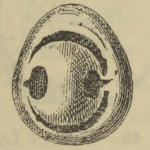
Fig. 45. Coin of Boeotia with shield.
Coming now to Central Greece, we find on the coins of all the Boeotian towns (with the exception of Orchomenus in her earliest issues) the well-known device of the Boeotian shield. This has been confidently pronounced to be a sacred emblem, symbolic of a common worship, conjectured to be that of Athena Itonia, whose temple near Coronea was the meeting-place of the Boeotians[404], whilst at Coronea golden shields were preserved in the Acropolis[405]. This may be so, but it is equally possible that the shield represented a common monetary unit in ancient times. The shield of early Hellas was a simple ox-hide buckler, described in Homeric language simply as an ox-hide[406]. Amongst barbarous peoples, as we saw above, weapons form one of the regular commodities commonly employed as currency; the Achaeans bought wine with hides as well as with oxen from the ships that came from Lemnos, and as there can be no doubt that the hide was a regular sub-multiple of the cow, it is very probable that the ox-hide shield stood in a similar relation to the cow, the chief or most universal unit; and as we find axes and half-axes among the prizes offered by Achilles as well as kettles and caldrons, so we learn from a famous passage[407] that shields were amongst the most usual articles offered as prizes and therefore were regular units of currency: “For they strove neither for an ox to be sacrificed nor yet for an ox-hide shield which are wont to be the prizes for the feet of men, but they strove for the life of the horse-taming Hector.”
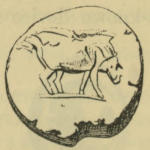
Fig. 46. Coin of Lycia.
When silver money was struck, it was natural that the barter-unit which came nearest in value to the silver didrachm would be equated to it, and the piece of silver would accordingly be termed Shield or Tortoise, just as the silver equivalent for the old copper rod was called the Obol, and in due course the corresponding device would be impressed on the silver coinage. The same explanation may probably be applied in other cases, such as that of the boar on the coins of Lycia. On the coins of the Gaulish tribe Sequani who made the best bacon and hams which came into the Roman market, the swine is found[408]. Doubtless this animal was their chief source of wealth, and formed a unit of barter, but we have not space for any more examples.
It is worth noting that it is quite possible that the men who issued the earliest coins of Boeotia and Aegina were influenced in the shape they gave these coins by the actual objects which they were replacing. The coins of Aegina with their high round upper side and flat under side suggest the general outline of a tortoise. As the people of Olbia, like the Chinese, Burmese and Ceylonese, had to make coins in the shape of a fish, so the Aeginetans acting under a like instinct may have wished to give a conventional representation of the tortoise. The earliest coins have the incuse on the reverse divided into eight triangular compartments. Are these the eight plates which form invariably the plastron or under surface of all the tortoise family? Later on the Aeginetan incuse is always in five compartments, but in the two well-known triangular depressions we perhaps find an echo of the tortoise-plastron[409]. The earliest coins seem to represent a sea-tortoise, for the feet are real flippers quite distinct in shape from the legs shown on the later coins. As the plates of the carapace (upper surface) are not fully represented in the archaic coins, this omission may not be merely due to rudeness of work, but rather because in the case of the sea-tortoise the thirteen plates of the carapace are not so prominent as in the land-tortoise. On the later coins where the feet are those of the land-tortoise the coins accurately represent the thirteen plates.
It has to be borne in mind that the shape of the incuse depressions on the reverse of coins is very constant. Thus on the Aeginetan coins we never find what is known as the mill-sail incuse which is the peculiar feature of the reverse of the early Boeotian coins, nor on the other hand do we even find the eight-fold incuse on the coins of Boeotia. Some influences must have determined the choice of form, such as I have just suggested in the case of Aegina. Did the first Boeotian Mintmaster shape his coins with the real buckler in his mind’s eye? On the reverse of these coins we find the incuse forming a rude X, which is bounded by a circle of dots, whilst in the centre of the incuse is the initial letter of the name of the issuing town, such as 𐌈 for Thebes, 𐌇 for Haliartus. Does the X-shaped incuse represent conventionally the cross-bars of the frame of the shield seen at the back, the circle dots indicating the outline? The letters on these coins are the earliest inscriptions on the coins of Greece Proper. We can easily see how they came to be placed on the coins, as soon as we remember that there was a Λ on the Lacedaemonian shields, a Σ on the Sicyonian, a Μ on the Messenian[410]. Why do not we find the initial in the coins placed on the front of the shield, where it must have stood on the real buckler? If as is held by the best authorities the coins of Boeotia formed a federal currency, we see a reason for the practice. As the silver shield replaced the real buckler, the old unit which had been universally employed through Boeotia, no town would have been permitted to put its initial on the shield engraved on the obverse. No doubt the old actual shield of currency was plain, and each purchaser painted the initial of his own country upon it. The Mintmasters accordingly of each town regarding the whole coin as a shield placed the letter of these several states on the reverse. Baumeister (Denkmäler, s.v. Wappen) gives pictures of the back of two shields. The frame of the shield consists of a circular rod, with two cross bars. The idea of making the incuse represent the other side of the object given in relief on the obverse seems to be just the stage between a complete representation of the object as in the tunny of Olbia, and that evinced by the early coins of Magna Graecia, on which the reverse gives in the incuse exactly the same form as that in relief on the obverse.
At first sight the result of this great variety of local units apparently places impassable barriers to trade, but a knowledge of the actual facts of barbarous communities and their monetary systems as they exist in our time easily dispels this impression. I quoted above (p. 46) the words of Mohammed Ibn-Omar, wherein he points out that every separate district in the Soudan has its own lower unit or units, whilst everywhere alike the ox and the slave are the higher units; these local units are equated one to the other, so that there is no difficulty in trading. The same holds true of ancient Greece; the tortoise-shell of Aegina may have been reckoned equal to a certain amount of Attic olive oil or to a jar of wine of certain size, which formed the unit of commerce at Thasos and Chios, whilst in its turn a jar of wine was reckoned as equivalent to a package of silphion from Cyrene, a kettle from Crete, or an axe, or certain number of axes, or half-axes from Tenedos, or an ox-hide shield from Boeotia. All were sub-multiples of the ox, and had a fixed value in gold, and later in silver, as weighed against grains of corn. This supposition is in complete accord with the system revealed to us in the Homeric Poems, and is confirmed by the evidence drawn from barbarous races in modern times. It is likewise to be borne in mind that the tendency to place religious and mythological types on Greek coins was one especially developed in the later but not in the earliest period of coinage. No doubt aesthetic considerations played a large part in the adoption of such types, which came especially into prominence when Greek art was at its height. On the early coins one simple type is the rule, whilst at a later stage, besides the old national type, many adjuncts and symbols are added. Contrast the early coins of Athens with the later. The archaic issues have an olive spray and an owl, the later have not merely the owl, but an amphora, and a symbol in the field alluding to the legend of Triptolemus. Again, at Argos the early coins have simply the wolf or half-wolf or wolf’s head, with a large A on the reverse, but in the later times the A is accompanied by symbols, such as a crescent and letters. The hare appears on the coins of Rhegium and Messana, having been chosen as a type, according to Aristotle, by the tyrant Anaxilas in commemoration of the introduction of that animal by him into Sicily; but it also appears on a rare coin of Messana, not as a main type, but as caressed by Pan. This does not prove that the hare was a symbol of Pan, but that for artistic purposes the rustic god in the act of caressing the hare is chosen instead of the more commonplace type of the hare all alone. So at Thasos the coins with old Silenus quaffing from a wine-cup do not signify that Silenus was a principal object of worship, but he is simply added for picturesque effect. We can at all events draw one conclusion from the historical origin assigned to both this type and that of the axe of Tenedos, that in the middle of the 4th cent. B.C. the Greeks did not see any religious significance in them, any more than they did in the representation of the mule-car which had won at Olympia, placed on his coins by Anaxilas. If, as has been so emphatically laid down by the leading modern Greek numismatists, the types on Greek coins are so essentially religious in origin, it is extremely difficult to explain the extraordinary rapidity with which all such notions as regards their origin must have vanished from the minds of the most learned of the Greeks, at so early a date as the 4th cent. B.C. (hardly more than two centuries after the introduction of the art of coining). The Greeks regarded those types from much the same point of view as we regard St George and the Dragon on sovereigns and crowns, or the Lady Godiva riding in puris naturalibus on the Coventry tokens. The effort to turn agonistic into religious types by contending that, as the Olympic festival was of religious origin, so the successful chariot which had won at Olympia was a sacred symbol, can only be regarded as an ingenious effort to attach by even the most slender thread a simple commemorative type to a religious origin.
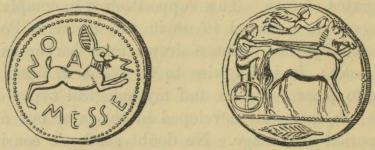
Fig. 47. Coin of Messana.
There is not the slightest reason for treating with incredulity the statement that Anaxilas introduced the hare into Sicily. Pollux[411] tells us that there were no hares in Ithaca, and from the same source we learn that the islanders of Carpathus, wishing to add the animal to the products of their isle, introduced a single pair, the descendants of which became in a short time so numerous that they ruined the crops, a story which finds a singular parallel in the history of the introduction of the rabbit into Australia in our own days. The hare was to the old Greek sportsman (as we know from the Tracts on Hunting of Xenophon and Arrian) what the stag was to the mediaeval baron, and the fox to the modern English squire. If William the Conqueror, as says the chronicler, “loved the tall deer as though he were their father,” the tyrant Anaxilas may well have prided himself upon the introduction of the hare into Sicily in much the same manner as modern sportsmen have brought the French partridge into England. When once the type was started, the dislike of any change in coin types is so strong that we need not be surprised at the hare appearing for a long period on the coins of Messana and Rhegium. Besides, the hare was considered by the Greek gourmet as the choicest of viands: all readers of Aristophanes are familiar with “jugged hare” as a proverbial expression for “the best of cheer.”
Variation of Silver Standards.
The connection between the types on early silver coins of Greece and the earlier local units of value being probably such as I have indicated, we next approach the question of changes in the weight of the silver coins at various places and at various times. Besides the ordinary Euboic and Aeginetic standards we find others such as the Rhodian, and the Ptolemaic, the former so named because the island of Rhodes from the beginning of the 4th century B.C. ceased to strike tetradrachms of the full Attic weight of 270 grs. and coined instead pieces which range in weight from 240 to 230 grs., the latter getting its name from the dynasty of the Lagidae, who quickly dropped the full weight of the tetradrachm (270 grs.) as struck by Alexander, and reverted to the Phoenician silver of 220 grs., which they used not only for silver, but also for gold; it is to this last fact that the name Ptolemaic as given to the standard is really due, for as a standard for gold it was certainly new. But not merely shall we find coins standing so far apart from the usual standards that we are obliged to give them distinctive appellations, but we likewise find various modifications of the Aeginetic in various places, whilst in some parts of northern Greece and Thrace we shall find the so-called Phoenician and Babylonian standards in occupation. It is hardly possible that mere degradation of weight will account for all the phenomena; accordingly the object of this section will be to show that from first to last the Greek communities were engaged in an endless quest after bimetallism: we shall find, as we have already indicated, that whilst the gold unit never varies in any part of Hellas until a late epoch, the silver coins exhibit differences not merely between one district and another, but even between one period and another in the self-same city or state. There is incontrovertible evidence to prove that the same trouble was caused by the fluctuation in the relative value of gold and silver as arises in modern times. Xenophon[412] in his treatise De Vectigalibus (speaking of the benefit likely to accrue to the state if the silver mines of Laurium were better worked) makes the most interesting remark that “if any one were to allege that gold too is not less useful than silver, that I do not deny, yet this I know that gold, whenever it turns up in quantity, becomes on the one hand cheaper itself, and on the other makes silver dearer.” This passage alone is sufficient to show how sensitive was the old Greek money market in the beginning of the 4th century B.C., and this statement is amply substantiated on Italian soil by a passage quoted by Strabo[413] from Polybius, from which we learn that after the discovery of a rich gold mine in the land of the Taurisci of Noricum, within the space of two months “gold went down one third in value throughout all Italy.” Such being the effect of a discovery of gold, it is evident that either the silver currency must undergo certain modifications in order that a definite round number of silver units may be equal to the gold unit, or on the other hand the gold unit must undergo modification. But as we have shown that the gold unit remained unaltered throughout all Hellas, Asia and Egypt down to the time of the Ptolemies, it follows that whatever changes were necessary must have taken place in the silver standards. Of this we have proof in the case of Rhodes itself. Down to 408 B.C. the three ancient cities of Ialysus, Camirus and Lindus issued each a separate series of coins, Camirus on the Aeginetic standard, the other two on the Phoenician. In 408 B.C. all these united in founding the new city of Rhodes, and henceforward there is a single coinage. At first the Attic standard seems to have been employed for silver, as rare tetradrachms of 260 grs. are found, but it must have very soon given place to the so-called Rhodian, the tetradrachm of which ranges from 240 to 230 grs. About the same time (400 B.C.) the Rhodians began to issue gold staters of the so-called Euboic standard, and for a century this double issue of gold and silver continued unbroken. It is plain, from the case of this famous island, that it is only the silver standards which changed. There can be no doubt that the unit by which gold in bullion was reckoned before that metal was coined was the so-called Euboic or ox-unit, but during the archaic period we find both the so-called Phoenician (220 grs.) and Aeginetic (drachms of 92 grs.) being employed for silver in the island, whilst after 408 B.C. gold is issued on the ox-unit, but silver, although at first on this standard, immediately changes to the Rhodian of 240 grs. Evidently then the fixed element is the gold, the fluctuating the silver. The coinage of Rhodes likewise exemplifies the doctrine already indicated, that the employment of religious and mythological symbols seems to mark not the earlier but rather the later stages of Greek coining. Thus Camirus employed the fig-leaf, Ialysus half a winged boar, and Lindus the lions head with open jaws, but after 408 Helios the Sun-god, from whom all Rhodians alike claimed descent, and to whom the island was sacred[414], becomes the regular type, with the type parlant of the Rose (Rhodon) on the reverse.
Next let us take the money of Macedonia, where there was an abundant coinage of both gold and silver. The Pelasgian tribe of Bisaltae, and the Thracian Edonians and Odomanti, had during the half century which preceded the Persian wars all struck silver on the so-called Phoenician standard. It is commonly supposed that they obtained this standard from the important town of Abdera, which at the same period employed a like standard, and it is suggested that Abdera had borrowed it from her mother Teos, who had borrowed it from Miletus and the other great towns of the Ionian seaboard, among which it was especially employed for electrum. But unfortunately, whilst the types of Teos and Abdera are the same (a seated Griffin), the staters of Teos weigh only 186 grs., which is the Aeginetic, not the Phoenician (220 grs.) standard. Shortly after the overthrow of the Persian host Alexander I. of Macedon acquired the land of the Bisaltae along with the rich silver mines, which were said to produce for him a talent daily, and he adopted both the types and standard of the Bisaltian silver coinage, only substituting his own name for that of the Bisaltae. During the century which elapsed between Alexander I. and the accession of the famous Philip II. the coinage of Macedon and that of Abdera followed the same course in each case; the Phoenician standard of 230 grs. gave way to the so-called Babylonian or Persian of about 170 grs. Again, it has been suggested that Abdera influenced the neighbouring communities in this change. But when Philip came to the throne he returned to the Phoenician standard for silver, and when for the first time in Macedon he issued a bountiful coinage of gold staters, they were struck on the ancient gold unit, the so-called Euboic standard of 130 grs. But hardly had Philip slept with his fathers, and Alexander reigned in his stead, when a need was felt for a change in the silver standard. Accordingly the latter in the early years of his reign began, and continued to his death, to strike his silver on the same standard as his gold. Let us now study the lessons to be learned from this history of currency. There can be no reasonable doubt that the ox-unit or stater was the unit by which gold was estimated from first to last in that region. Unless it already existed Philip would not have employed it for his gold coinage at a time when he was making changes in his silver, but would have assimilated his gold to his silver standard. But, as before remarked, just because gold was not coined anywhere in Greece until the closing years of the 5th century, and in all transactions it passed as bullion, so much the stronger was the reason for keeping its weight-unit unchanged. But was the standard of 220 grs. really an imported Phoenician, or was it not rather one arrived at in that region by the natives themselves owing to the relations then existing between silver and gold? It is evident from the account given of the Bisaltian silver mines that in the time preceding and immediately posterior to the Persian invasion silver was exceedingly abundant in all that region. It is then by no means unlikely that it required ten silver pieces of 220 grs. each to make the equivalent of one gold unit of 130 grs. With the exhaustion of the silver mines, and perhaps a greater output of gold, silver became dearer, and consequently 10 silver pieces of 170 grs. each were now equal to a gold stater. Abdera on the coast would come perfectly within the sphere of such changed conditions, and her standard would consequently likewise undergo modification. With Philip’s accession, fresh conquests and a general development of resources may have temporarily thrown more silver on the market, thus inducing him to revert to the 220 grs. standard, but the exploiting of the famous mines of Crenides increased the supply of gold to such an extent that by the time Alexander mounted his fathers throne gold stood to silver in the relation of 10:1, and it was found extremely convenient to coin this on the same footing as gold, 10 silver pieces of 135 grs. being exactly equal to the gold stater of like weight. A like explanation applies to the coinage of Thrace. Amongst the Thracian tribes who dwelt near Mount Pangaeum and worked the gold and silver mines of that region the art of coining had been known from the 6th century B.C. and they issued silver coins of about 160 grs. This is regarded by some as debased Babylonian or Persic standard. But it is far more rational to suppose that in that region gold was more plentiful in proportion to silver than it was at that time further west in Macedonia, and accordingly a certain number of silver didrachms of 160 grs. were found to represent the gold stater or ox-unit. It seems most unlikely that a people long acquainted with both gold and silver could not devise for themselves a simple method of making some convenient number of silver pieces be equivalent to one gold, and that, on the contrary, having once obtained a certain standard fixed for silver in Asia Minor, at a time when gold was to silver as 13:1, they would blindly cleave to this standard, no matter how great a change took place in the relation of the metals. In face of the statements of Xenophon and Polybius already quoted and the fact that Solon deliberately constructed a new silver standard, it is simply impossible to believe such a doctrine.
On the opposite shore from Thrace lay the flourishing city of Cyzicus. This wealthy community commenced to issue electrum staters and hectae in the 5th century B.C., if not earlier, the former being about 252 grs., the latter 41 grs. These electrum staters have been shown by Professor Gardner to have contained gold and silver in about equal proportions[415]. This most important fact, taken in connection with the literary evidence derived from Xenophon and Demosthenes, makes it probable that the Cyzicene stater of 252 grs. was counted equal to a Daric of 130 grs. of pure gold[416]. “These coins of Cyzicus,” says Mr Head, “together with the Persian Darics formed the staple of the gold currency of the whole ancient world, until such time as they were both superseded by the gold staters of Philip and Alexander the Great[417].”
Not only did they circulate side by side with the Darics, but it is worthy of notice that when the Cyzicenes struck coins of pure gold (circa 413 B.C.) they were of Daric type and standard. The earliest silver coins (430-412 B.C.) were small pieces of 32 and 18 grs., whilst the larger coins which come later are on the Phoenician silver standard of 212 grs. (412 B.C.), whilst from 400 B.C. to 330 B.C. the Rhodian standard of 235 grs. prevailed. From the story of her coinage we learn clearly that at Cyzicus the inferior metals bowed to the sway of gold. The electrum stater of 252 grs. is made equal to the pure gold unit, and whilst the silver standard changes from 212 grs. to 235 grs. the gold and pale gold pieces in currency remain inviolate. Once more, it is almost certain that some displacement in the relative values of the metals had caused the raising of the standard from 212 grs. to 235 grs. One thing certainly is beyond doubt, and that is the utter improbability of the introduction of the 235 grs. standard being in any way due to the influence of Rhodes. This remark likewise applies to Chios, where from a very early period (600-490 B.C.) side by side with electrum staters of 217 grs. we find didrachms of silver of 123-120 grs., “a weight peculiar to Chios,” says Mr Head, “which was probably the Phoenician somewhat raised.” But why was it raised? The real solution is that the relations between gold, electrum and silver at Chios necessitated the striking of silver on a standard a few grains lighter than the gold unit in use (the Persian Daric), and the electrum stater of 217 grs. Space forbids our going through all the cities of the Ionian coast in detail, but the principle which we have laid down and illustrated from the currency systems of several leading states is sufficient to indicate the method by which we would explain the fluctuations in the silver standards employed at different times in various states. The Daric is the universal gold unit of all this region; by its side is the electrum stater usually of 217 grs. and most probably the equivalent in value of the pure gold coin of 130 grs.: along with them we find singular fluctuations in the silver currency; towns that are close neighbours employing different systems contemporaneously.
There is, however, one state which cannot be passed over without more particular reference. At an earlier page I spoke of the gold mines of Thasos, which had attracted the attention of the Phoenicians at a very early time. But, in addition to the mineral wealth of their own island, the Thasians drew a huge annual revenue from their mines on the mainland. Although the first influence in the island was Phoenician, and the Thasians themselves were Ionians from Paros, instead of finding the Phoenician standard employed for its silver coins, we see them striking their archaic coins on the so-called Babylonian system. Under the supremacy of Athens this standard fell so much that it eventually coincided with the Attic (138 grs.) or even was lower. The Thasians, after revolting from Athens in 411 B.C., struck gold coins for the first time; these were on the Euboic or ox-unit standard (consisting of half-staters and thirds). But about the same period they began to coin silver on the so-called Phoenician of 220 grs. It is indeed strange that in the early age, when the Phoenician tradition was still strong, they did not employ the 220 grs. standard, but only resorted to it after employing for a long period the Babylonian and Attic standards. It is evident that in Thasos, as elsewhere, there had existed the same gold unit for untold generations, else at the very time when they revolted from Athens and adopted a new standard for their silver, they would not have struck gold on what is commonly called the Attic or Euboic standard. It is evident that the changes in the silver standards were due to changes in the relation of silver to gold, the fall in standard from 168 grs. to 135 grs. indicating perhaps that silver, which at first was to gold as 1:13, had gradually grown dearer.
Commercial Weight System.
We must now turn to the commercial weight system. As elsewhere, one of the chief commodities to come under such a system was copper, and the history of the weighing of this metal, as far as it can be learned, will be of great importance to us. Now we should naturally expect that at Athens, which had in later days but one standard for gold and silver, copper likewise would have been estimated on this unit. But, as a matter of fact, there were two distinct standards in use at Athens, as is proved by two weights preserved in the British Museum, the inscription on one of which is Mina of the Market (ΜΝΑ ΑΓΟΡ), that on the other is Mina of the State (ΜΝΑ ΔΗΜΟ). This mina of the market is the same as that called the Commercial Mina on an Attic inscription[418], where its weight is given as that of 138 silver drachms, that is, the weight of an Aeginetic mina of silver. Athens had not coined any money of her own up to Solon’s time, but seems to have employed the coins of Aegina. But this standard, although no longer employed for silver, did not fall into desuetude. As already pointed out, all peoples have felt the need of a heavier standard for cheap articles than that which serves for gold. Probably the Aeginetic mina had been used at Athens for copper: accordingly, when Solon made his new silver standard for the weighing of silver, the Aeginetic standard was found convenient for less costly and more bulky wares, and was therefore retained in use as the mercantile or market standard, the name State being given to the silver standard.
We have learned already that in the early stages of society copper and iron are not sold or appraised by weight, but rather by measurement. We have also seen that there is every reason to believe that the Greek obol originally was a spike or rod of copper of a definite length and thickness. If we can believe the statement of Ephorus given by Strabo that Phidon of Argos established a weight as well as a measure system for the Peloponnesians (although Herodotus is silent as regards weights), it is not at all improbable that, taking this story in conjunction with the dedication of the old bar money by Phidon in the temple of Hera, we have here a genuine tradition of the superseding of the bars of metal, the value of which simply depended on their dimensions, by a system based essentially on weight. It is plain that, as copper was weighed both at Aegina and Athens by the Aeginetic silver standard, copper most probably was never estimated by weight until after the forming of the separate silver standard in the way already described.
We have previously noticed the fact that the two principal terms applied to silver coins, drachm and obol, give clear indications that they have been borrowed from an ancient system of copper (just as we shall presently find that the denarius, the special term employed for their silver currency by the Romans, owes its origin to the ancient copper as). If further proof were required, it is afforded by the name employed for the subdivisions of the obol. The latter at Athens was divided into 8 chalci or coppers (χαλκοῖ). The smallest silver coin at Athens was the half-obol, but in some places names, Trichalcum, Tetrachalcum, etc. were given to copper coins. Now, as the Aeginetan obol weighed about 16½ grs. and the Attic 11¼, the former is one-third greater than the latter. But we shall see shortly that as the Attic obol has 8 chalci, the Aeginetan must have had 12, from which it follows that the ancient copper obol or bar used in Aegina, throughout Peloponnesus, and at Athens, and probably throughout Boeotia, was everywhere the same.
The Sicilian System.
In dealing with the Sicilian and Italian systems we must reverse the order of treatment of the metals, and as it is in the copper that we shall find the closest link between the Greek and those other systems, we shall therefore commence with that metal.
On the Italian Peninsula and in Sicily we find a series of weight and monetary terms totally distinct from any found in Greece Proper. From this alone we may infer that, even before the settlement of any Greek Colonies in Magna Graecia and Sicily, there existed a well defined system, if not of weight, at least for the exchange of copper by fixed standards of measurement. In various Sicilian cities we find small silver coins called litrae; these beyond all question are simply the representatives in silver of an ancient copper unit employed by the Sicels, and which they had brought with them into the island. These Sicels were a tribe of the great Italian stock (itself a branch of the Aryan family) closely related to the Umbrians, Latins, and Oscans, had probably formed the van of the Aryan advance into the Peninsula, and had finally crossed the straits and overcome the Sicanians, an Iberic race, who were the earliest inhabitants of the island of whom any historical record exists. The word litra is merely a dialectic form of the same original lidhra[419], from which the Latin libra itself is sprung. But whilst we shall have little difficulty in finding out the weight at which the Latin libra was fixed, we have just as great difficulty in discovering that of the Sicilian litra, as we have lately found in the case of the ancient Greek copper obol. As copper was only coined at a late period, and the copper coins are merely tokens, or money of account, we are unable to arrive at any conclusion as to the original full weight of the litra from any data afforded by the copper coins of the various Sicilian states, although, from the circumstance that many of these coins bear marks of value, at first sight it might seem far otherwise. Thus at Agrigentum in the period preceding 415 B.C. the copper litra weighed about 750 grs., between 415 B.C. and 406 B.C. 613 grs., and from 340 B.C. to 287 B.C. it was about 536 grs. only. At Himera between 472 B.C. and 415 B.C. it was about 990 grs., but within the same period it fell to 200 grs., whilst at Camarina between 415 B.C. and 405 B.C. it was about 221 grs. Not only therefore is it futile to attempt any statement of the reduction of the litra in Sicily in general, but also to arrive at any sound approximation to its full original weight, as far as the weight of the copper coins is concerned. On the other hand, any calculation based on the relative values of copper and silver has been up to the present unsatisfactory, owing to the great uncertainty which still prevails, Mommsen making the relation in the earlier period stand as 288:1, whilst Mr Soutzo thinks it never can have been higher than 120:1.
The latter view I have already proved to be untenable when we apply the test of the value of cattle, and it was made probable that in the 5th century B.C. silver was to copper as 300:1. From this it will be possible to show that the full weight of the copper litra was originally about 4900 grs.
Any effort to determine the original weight of the copper litra by a new method calls for a merciful consideration, even though it too may fail. Whilst the original weight of the litra is still a matter of doubt, we are fortunately completely acquainted with the method of its subdivisions. The litra was divided into 12 parts called Ungiae, Unciae or Onciae, a name which is no other than the Latin Uncia. This at once brings us face to face with the Roman copper system, where the as was the higher unit, and was divided into 12 unciae (ounces). But there are other striking coincidences of nomenclature. Thus ⅙ of the as was called sextans; one-sixth of the litra is called Hexâs (ἑξᾶς), and the Triens and Quadrans are paralleled by the trias (τριᾶς) and tetras (τετρᾶς) although there is a difference in the application of these terms. Then the five-twelfths of the as is Quincunx; the same fraction of the litra is Pentonkion (πετόγκιον). We have plainly therefore a common Italo-Sicilian copper system, the terms of which were adopted and Graecised by the settlers in Italy and Sicily.
Now we have already adverted to the fact that the earliest Sicilian towns which coined money, Naxos, Zancle and Himera, although Chalcidian colonies, yet employed the Aeginetic standard, whereas we might naturally expect them to follow the Euboic. This would give the maximum of 16½ grs. for the silver obol. Now according to Pollux, Aristotle in his lost treatise on the constitution of Agrigentum says that the litra is worth an Aeginetan obol, and Pollux goes on to say that “one would find in him (Aristotle) in his Constitution of the Himeraeans likewise other names of Sicilian coins, such as ungia, which is equivalent to one chalcus, and hexas, which is equivalent to two chalci, and trias, which is equivalent to three chalci, and hemilitron (half litra), which is equivalent to six, and litra which is equivalent to an obol[420].” It is plain from this that Aristotle knew that the Aeginetic obol was divided into twelve chalci. Thus the proposition laid down above, that the ancient Greek copper obol was a rod or spike divided into 12 parts, is thoroughly proved. The reason why the Attic obol had only 8 chalci is now plain; it was, as we saw, only two-thirds of the Aeginetan and consequently only contained two-thirds of the whole number of pieces of copper into which the ancient copper unit was divided. Now, as we find the Chalcidian settlers of Himera and other places not using their native Euboic standard for coining, but employing the Aeginetic, and as the Aeginetic obol was equal to the Sicilian litra, we are justified in the conclusion, that when the Greek settlers reached Italy and Sicily they found their Italic kinsfolk using a copper unit exactly the same as that employed in Greece; and that finally, when they began to coin, they found it more convenient to strike silver on a standard which was both convenient in reference to exchange with gold, as I have shown above, and had the further advantage of corresponding accurately in value to the ancient copper unit in use among the Sicels. If, as I indicated, silver was to copper as 300:1, the Aeginetic silver obol of 16⅔ grs. would be worth 5000 grs. of copper (practically the same as the early Roman libra). It follows then that if we could only discover the weight of the Sicilian litra we should know that of the old Greek copper obol. Is this possible? We have no reason to doubt that the obol was a rod of copper of a certain size, which in the course of time after the introduction of coined money shrank up until the original rod was only represented by what had been its equivalent in silver, or a small copper coin, whose name still survives in the ob used in old account books as the symbol for half-penny[421]. The Greek coinage has preserved for us but faint traces of the various steps in the degradation of the copper obol, but, as we have already seen, we find the Sicilian copper litra in various stages of its decadence from 990 grs. down to 200 grs. Again, whilst no trace has as yet been found of obols at all in the archaic shape of rods, or anything approaching it, we find in Sicily at Agrigentum litrae which are in form distinct survivals of an earlier stage when the litra, like the obol, was a rod or bar of copper. These are very strange looking lumps of bronze made in the shape of a tooth with a flat base, having on one side an eagle or eagle’s head and on the other a crab, while on the base are marks of value ⸬, ⸪, : (tetras, trias, hexas). The uncia is almond-shaped with an eagle’s head on one side, and a crab’s claw on the other[422]. As we found the Chinese knife shrinking up into a shorter and thicker mass until at last it only survives in the round cash, so in all probability we here find the Sicilian litra in its mid course from its original full size and shape to that of the ordinary round copper coin of a later age. That the shape of the original copper unit of the Italians was that of a rod or bar we shall now proceed to demonstrate in the case of the Roman as.
The Italian System. Bronze.
As the cow formed the highest unit in the monetary system of ancient Italy, so the lowest unit employed was a certain amount of copper called an as. We have already found the cow serving the same purpose in Sicily (as late as the time of Dionysius forming the rateable unit at Syracuse). The systems of Further Asia, where the buffalo stands at the head of the scale and the hoe or a piece of raw metal of a certain size stands at the bottom, form a perfect analogy in modern times. As far as its value and divisional system go, we have identified the Sicilian litra with the ancient Hellenic obol or rod, and we have in turn discovered a very close resemblance between the divisions of the litra and that of the as. I now propose to examine into the original nature of this denomination, and the form of the object to which it was applied. This will have been effectually accomplished, if I can succeed in establishing the proposition that the as was primarily a rod or bar of copper, one foot in length, divided into 12 parts, called inches (unciae), thus coinciding with the Greek obol in form, as also in its duodecimal division.