Part 2 — CHAPTER X. The Systems of Egypt, Babylon, and Palestine. (continued 2)
Reading edition
The Hebrew gold standard accordingly consisted of a shekel of 130 grains, subdivided into 2 bekahs or halves; each of which in turn contained 10 gerahs or lupins: 100 such shekels made a maneh, and according to Josephus[338] 100 manehs made a kikkar or talent. It would thus appear that, just as in the time of Solomon the heavy mina had been introduced which was equal to 100 shekels of the Sanctuary, so the Hebrews carried out consistently this principle by making 100 minae go to the talent. It is however most probable that before that time they had employed a maneh of their own of 50 light shekels, for we have seen above that the talent of silver mentioned in Exodus consisted of only 3000 shekels, just as in all the other gold and silver systems of Asia Minor and Greece: and since we have proved that the silver shekel of the Sanctuary was the ordinary light shekel of 130 grains, it is evident that the silver talent is not made up of 3000 double shekels, but is really nothing more than the sixty-fold of a mina which contained 50 shekels of the ox-unit standard. If gold was weighed at all by any higher standard than the shekel, it is almost certain that it must have been weighed by this mina and talent[339]. However, by the time of the monarchy it is most probable that the double or heavy mina had been introduced for silver as well as for gold. In fact the probabilities are that it was applied for the weighing of silver before that of gold. Thus when Naaman the leper set out to go to the Hebrew prophet, “he took with him ten talents of silver, and six thousand [pieces] of gold, and ten changes of raiment[340].” Here the 6000 gold pieces are perhaps the 6000 light shekels which would make a talent of the heavy Assyrian standard after the ordinary Phoenician system of 50 shekels = 1 mina, and 60 minae = 1 talent: and doubtless Naaman counted these 6000 gold pieces as a talent of gold; but inasmuch as the Hebrews had a peculiar system of their own, by which 100 minae, and 10,000 light shekels went to the kikkar, these 6000 are not described as a talent by the Hebrew writer. We may thus regard the silver talent as consisting of 3000 light shekels, at the earliest period, and later on as of 3000 heavy shekels: finally, when coinage was introduced and money was struck under the Maccabees on the Phoenician silver standard, it consisted of 3000 shekels of 220 grs. each. But there is one period about which we find great difficulty in coming to any conclusion. After the return from the Babylonian captivity what standards were employed for gold and silver? As Judaea formed part of the dominions of the Great King, we would naturally expect to find in Nehemiah and Ezra traces of the standard then employed throughout the Persian Empire for the precious metals. As we have found that the light shekel formed the unit for gold from first to last, and as it was also the gold unit of the Babylonians and Assyrians, we may unhesitatingly assume that it formed the basis of the Jewish system in the days of Nehemiah (446 B.C.). As regards the silver standard we have fortunately one piece of evidence, which may give us the right solution. We found that in Exodus each male Israelite contributed a bekah, or half a shekel (of the Sanctuary) to defray the cost of the tabernacle: this half-shekel was a drachm of about 65 grs. Troy. Now after the Return from Captivity, we find Nehemiah (x. 32) writing: “We made ordinances for us, to charge ourselves yearly with the third part of a shekel[341] for the service of the house of our God.” Why the third of a shekel instead of the half of earlier days? When we read of the generous and self-sacrificing efforts made by the Jews to restore the ancient glories of the Temple worship, we can hardly believe that it was through any desire to reduce the annual contribution. The solution is not far to seek when we recollect that the Babylonian silver stater of that age weighed about 172·8 grs. This formed the standard of the empire, and doubtless the Jews of the Captivity employed it like the rest of the subjects of the Great King. The third part of this stater or shekel weighed about 58 grains; so that practically the third part of the Babylonian silver shekel was the same as the half of the ancient light shekel, or shekel of the Sanctuary. From this we may not unreasonably infer that after the Return the Jews employed the Babylonian silver shekel as their silver unit, and this probably continued in use until Alexander by the victories of Issus and Arbela overthrew the Persian Empire, and erected his own on its ruins. But although the Babylonian shekel was the official standard of the empire there can be no doubt that the old local standards lingered on, or rather held their ground stubbornly in not a few cases. We saw above that the Aramaean peoples had especially preferred the double shekel, and from it they developed the so-called Phoenician or Graeco-Asiatic silver standard. Gold being to silver as 13·3:1, one double shekel of 260 grains of gold was equal to fifteen reduced double shekels of silver of 225 grains each. Now it is important to note that the Phoenician shekel or stater was always considered not as a didrachm but as a tetradrachm; a fact which is explained by its development from the old double shekel, which of course was regarded as containing four drachms, and which at the same time explains why it is that in the New Testament the Temple-tax of the half shekel is called a didrachm, the term applied to the shekel itself in the Septuagint. When the Jews coined money under the Maccabees, they struck their silver coins on this Phoenician standard, and their shekel was always regarded as a tetradrachm. For the ancient half shekel of the Sanctuary they soon substituted the half of their shekel coins, that is about 110 instead of 65 grains of silver. This change probably took place under the Maccabees; silver had then probably become much more plentiful in Judaea as shown by the fact that they were able to issue a silver coinage. When those who collected the Temple-tax asked Christ for his didrachm, he bade Simon Peter go to the sea and catch a fish, in the mouth of which he would find a stater, “that give him, said he, for both me and thee.” As the stater evidently sufficed to pay a didrachm for each, there can be no doubt that the shekel or stater was considered by the Jews to be a tetradrachm.
It is very uncertain whether the Hebrews at any time employed a maneh of 60 shekels. They most certainly did not do so for gold and silver, and probably not even for copper and other cheap commodities. Very unfortunately the famous passage in Ezekiel (xlv. 12), which deals with weights and measures, is so confused in the description of the maneh that we cannot employ it as evidence. The one element of certainty is that the gold shekel never varied from first to last. It is likewise probable that, whilst the heavy maneh was introduced for gold silver and copper alike, the shekel always remained the same, 100 shekels being counted to the mina of gold and silver in the royal system, whilst 50 shekels always continued to be regarded as composing the maneh of the Sanctuary, such as we found it in the Book of Exodus. To confirm this view of the shekel we can cite the Bull’s-head weight (fig. 27), which came from Jerusalem, and weighs 36·800 grammes, which represents the amount of 5 light shekels (making allowance for a small fracture), the light shekel being 8·4 grams. (130 grs.). It is plain that this is a multiple of the light and not of the heavy shekel, for it is not likely that such a multiple as 2½ would be employed. On the other hand, we found the five-fold multiple of the light shekel appearing in the Assyrian system, and also the Egyptian.
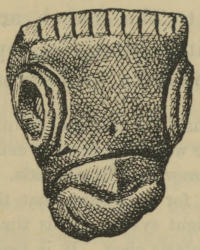
Fig. 27. Bull’s-head Five-shekel Weight.
The Hebrew systems, as we have tentatively set them forth, may be seen in the following tables.
I. Earliest period. Shekel of 130-5 grs. alone employed for gold and probably silver.
II. Mosaic period. Gold and Silver. (The old light shekel or ox-unit is now called shekel of the Sanctuary to distinguish it from its double.)
50 light Shekels = 1 Maneh
3000 light Shekels = 60 Manehs = 1 Kikkar (talent).
III. Regal period. Gold.
100 light (= 50 double) shekels = 1 heavy Maneh
5000 heavy (= 10,000 light) ” = 100 heavy Manehs = 1 talent.
The same system was probably employed for silver and copper, but instead of counting 100 light shekels to the Maneh as in the case of gold, they reckoned silver and copper by the double shekel, probably called the king’s shekel in contradistinction to that of the Sanctuary.
IV. After the Return. The light shekel still retained for gold, and the Babylonian, or Phoenician silver standard, employed for silver.
V. Maccabean Period. Gold on the old standard, and silver (now first coined) struck on the Phoenician silver standard of 220 grains.
Copper was estimated most probably on the old double shekel system; and most likely the royal Assyrian heavy system of 60 shekels to the maneh and 60 manehs to the talent was adopted in its entirety for copper and other articles of no great value in proportion to their bulk[342].
Phoenician Standard.
The total loss of the literature and records of the Phoenicians, and the fact that neither in their own country nor in the greatest of their colonies, Carthage, did they employ coined money until a comparatively late period, make the task of restoring their weight system very difficult if not hopeless. The silver standard called Phoenician or Graeco-Asiatic is the sole evidence to show that they employed as their unit for gold the heavy Babylonian shekel of 260 grs. On the other hand we have just seen that their close neighbours, the Hebrews, from first to last, and the ancient people of the Nile with whom the Phoenicians were in the closest trade relations (having large trading communities settled in the Delta, and from whom they had borrowed the hieroglyphic syllabic symbols, which with them became the Alphabet), had employed the light shekel, the only gold unit that likewise from first to last prevailed throughout the vast regions of Central Asia Minor, and as we have seen, was the unit of Greece even in the early days when the great cities of Mycenae and Tiryns were in direct contact with, and deriving their arts and civilization from Asia or from Egypt.
The derivation of the Phoenician silver standard of about 225 grs. (14·58 gram.) according to the hitherto received doctrine is as follows. As the Babylonians formed their silver standard by making into ten pieces the amount of silver equivalent to the “light gold shekel,” so the Phoenicians and Syrians are supposed to have divided the amount of silver equivalent to “the heavy shekel” into fifteen pieces, gold being to silver in each case as 13·3:1. But we ask why did the Phoenicians adopt so awkward a scale as the quindecimal when it was possible for them to employ the decimal or duodecimal? In the next place by the supposed system 7½ silver shekels were equal to one light shekel, that is the gold unit which was universally employed amongst all the peoples with whom they traded: and what number could be more awkward for purposes of exchange than 7½? If therefore we can show that it is probable that at one period silver was exceedingly abundant in Phoenicia compared with gold, and that consequently gold was worth considerably more than 13 times its weight in silver, the sole support for the heavy shekel being the Phoenician unit is removed, and the theory of the fifteen stater system falls to the ground. It is well known that the Phoenicians had much of the trade of Cilicia and the other coast regions of Asia Minor in their hands. It was Cilicia that produced the chief supplies of silver for Western Asia[343]. From this land therefore the Phoenicians obtained vast quantities of silver, and it was from them almost certainly the Egyptians, who had no native silver, obtained a supply of that metal. But this was not all. About 1000 B.C. the Phoenicians, in their quest after new and unexhausted regions, made their way westward and reached Spain. I have already related the ancient stories which embody the account of the marvellous amount of silver which the first bold explorers brought back. We need not wonder then if in the days of king Solomon, “silver was nothing accounted of” in Syria and Palestine. We also saw that the relative value of gold and silver was just as liable to fluctuate in ancient, as in modern times, according to the supply of either metal, and when we come to deal with the Greek system we shall find many instances of this. If we then suppose that gold was to silver as 17:1 in Phoenicia, the gold shekel of 130 grs. would be worth ten silver pieces of 220 grs. each. (130 × 17 = 2210; 2210 ÷ 10 = 221). This is in reality far closer to the actual weight of the coins than the result obtained by the old hypothesis: 260 × 13·3 = 3466 ÷ 15 = 231 grs. Troy, which is about 10 grs. higher than the actual coin weights.
The approximation gained by our conjectural relation of 17:1, is far closer than that obtained by that of 13·3:1. The conclusion is probable that silver was far cheaper in Phoenicia and the contiguous coasts than elsewhere in Asia Minor, and that it was natural that the weight of the silver unit was increased in order to preserve the relation in value between one gold unit, and ten silver units. Lastly we may point out that at no place on the coast of Phoenicia or Asia Minor, the region especially in contact with the Phoenicians, do we find gold pieces struck on the heavy shekel. Electrum certainly was coined on this foot; but of this we shall be able to give a satisfactory explanation. We have (with the exception of some Lydian pieces) to go as far north as Thasos or Thrace before we find a gold coin of such a nature, which is of course nothing more than a double stater.
The Phoenician gold mina was probably like the Hebrew, which was most likely borrowed from it, the fifty-fold of the heavy shekel, 100 gold shekels and 100 silver shekels constituting a maneh, as amongst the Hebrews in the time of Solomon. But we can conjecture with some probability that at an earlier stage they weighed their gold and silver according to the old common ox-unit, which we found in use among the Hebrews under the name of the Holy Shekel or shekel of the Sanctuary. No doubt the mina for gold always contained 100 light or 50 heavy shekels, and when their own peculiar shekel of 220 grs. came into vogue for silver, 50 such shekels made a mina. Finally, there can be little doubt that 60 minas invariably went to the talent.
In the case of commercial weights, it is most probable that 60 heavy shekels made a mina: this is rendered almost perfectly certain by the Lion weights with Phoenician as well as cuneiform inscriptions found at Nineveh, 60 heavy minas forming a heavy talent.
The Phoenician Colonies.
It is worth while before going further to enquire whether we can gain any light from the systems of weight employed by the famous daughter-cities of Phoenicia, such as Gades and Carthage. A weight bearing in Punic characters the name of the Agoranomos and the numeral 100 has been found at Jol (Julia Caesarea) in North Africa, but unfortunately it has suffered so much by corrosion from water and the loss of its handle that it is impossible to make any tolerable approximation to its original weight. Hultsch[344] conjectures with some probability that, making allowance for its loss, it represents 100 drachms, and deduces from this that the Carthaginians treated the drachm as their shekel, but for this latter hypothesis there seems no sufficient evidence. If this supposition were true, the weight would represent a half-mina of the Phoenician silver standard. But there is one thing which this weight does prove, and that is that, whether it be a mina or half-mina, it is the drachm or shekel, which was evidently regarded as the unit of the system, not the mina. Thus once more we get a confirmation of our general thesis that the mina and talent are the multiples, and that it is the shekel or stater which is the basis. Nor does the coinage of Carthage furnish us with all the information that could be desired, for it was only after 410 B.C. that that great “mart of merchants” began to strike coins, and even then it was only in her Sicilian possessions that she did so, no doubt induced to adopt the practice by constant contact with her Greek enemies: for not only the type (of Persephone) was borrowed from Syracusan coins, but the very dies were engraved by the hands of Greek artists. The gold coins are struck on a standard of about 120 grs. Troy, whilst the silver issue consists of tetradrachms of the so-called Attic (or more simply light shekel or ox-unit) standard of 130-135 grs. Since during the same period (405-347 B.C.) Syracuse[345] was issuing gold pieces on the Attic standard, it is most probable that it is only through the want of heavier specimens that we are compelled to set the Siculo-Punic coins issued at Panormus (Palermo) and other places in Italy so low as 120 grs. It was not until about the time of Timoleon (340 B.C.) that money was coined at Carthage itself. This coinage consists wholly of gold, electrum and bronze, down to the time of the acquisition of the rich silver mines of Spain, and the foundation of New Carthage in that country by Hasdrubal, the son-in-law of Hamilkar Barca and brother-in-law of Hannibal, in the interval between the First and Second Punic wars (241-218 B.C.), when large silver coins both Carthaginian and Hispano-Carthaginian seem to have been first struck[346].
The gold and electrum coins of the first period are of the following weights: gold 145 and 73 grs.; electrum 118, 58 and 27 grains. The gold unit is thus some 10 grains higher than the normal value of the ox-unit. If these coins belonged to an earlier period we might with some confidence affirm that the variation was due to the plentiful supply of gold derived by the Carthaginians from the still unexhausted gold deposits of Western Africa. This is perhaps the true explanation even at the late period when the coins were issued, but there may have been a desire to adjust the three metals, gold, electrum and silver, so that they might be conveniently exchanged. It will be observed that the electrum coins are struck on a unit of 118 grs., and it is not at all improbable that silver was reckoned by the same unit, even though not yet coined; for when the silver coins appear they are struck on a standard of 118 or 236 grs. It will be at once noticed that this standard is considerably higher than the Phoenician silver standard found along the coasts of Asia Minor. It may thus have been found convenient to raise by a few grains the weight of the gold unit so as to harmonize the relations between the three metals. Further speculation is vain, as we do not know the proportion of gold contained in the electrum coins[347]. From what we shall shortly learn about the electrum of Cyzicus, it is not impossible that the gold piece of 73 grs. was worth an electrum stater of 118 grs.
Coming to the Phoenicians of Spain we find that Gades, which did not begin her coinage until about 250 B.C., employed a standard for her silver of 78 grains, and that the island of Ebusus (Iviza) struck didrachms of 154 grs., a half-drachm of 39 grs. and a quarter-drachm. This coincides closely with the 78 grain drachm of Gades. It is palpable that there is no connection between this standard and the Phoenician standard of 220 grs. As the same system is found in the cities of Emporiae and Rhoda (Ampurias and Rosas) in the north-east of Spain, and in the earliest drachms of Massilia (Marseilles)[348], it is far more reasonable to suppose that the relations between gold and silver throughout Spain were such that, in order to make a certain fixed number of silver pieces equivalent to the gold ox-unit, it was found necessary to make the silver didrachm of about 156 grs. and the drachm of 78 grs.
It would thus seem that the principle which we shall seek to establish for the Greek silver standards held true of the Phoenician likewise,—that whilst the gold unit, the basis of all weight, remains unchanged or was but very slightly modified even at a late period (when the idea of the original ox-unit must have become dimmed by time), in order to effect a more complete harmonizing of a threefold system of gold, electrum and silver, the silver units shew every kind of variety, which can only be accounted for by supposing that owing to the different relations between gold and silver in various regions and at various periods in the same regions, it was found necessary from time to time to increase or diminish the weight of the silver unit. Thus if gold was to silver as 12:1 in the 3rd century B.C., we find a ready explanation for the standard of Gades and Emporiae. The gold unit of 130 grs. would be worth ten silver units of 156 grs. each (130 × 12 = 1560 ÷ 10 = 156). So too the 118 gr. standard of Carthage may be explained by supposing that gold was to silver as 11:1; for then 1 gold unit of 130 grs. = 12 silver of 118 grs. each (130 × 11 = 1430 ÷ 12 = 119 grs.), duodecimal division perhaps being preferred to the decimal owing to the relations between electrum and silver, the former perhaps being as in Lydia[349] counted at 10 times the value of the latter. If gold was to silver as 12:1, and electrum to silver as 8:1, electrum being thus nearly two-thirds gold, one gold piece of 75 grs. = 1 piece of electrum of 118 grains, and 8 pieces of silver of 116 grs. each (75 × 12 = 900; 116 × 8 = 928), and 1 piece of electrum of 118 was worth 8 pieces of silver of 116 grs. each. All this is, be it remembered, purely conjectural, as we know nothing of the actual relations existing between any pair of the metals.
However, when we come to deal with the electrum of Cyzicus we shall be able to produce some data, which will at least show that our suggested explanation of the relations existing between gold, electrum and silver at Carthage is not purely chimerical.
Lastly comes the question of the commercial weight-system. We have already spoken of the badly preserved weight from Jol, but we could not say whether it was used for the precious metals, or more ordinary merchandize. However, the great Phoenician inscription of Marseilles, already referred to, makes it plain that even in the weighing of meat they reckoned by the shekel and not by the mina; for we find in it mention of 300 [shekels] and 150 [shekels] of flesh from the victims. This completely accords with the 20 shekels of food mentioned by Ezekiel (iv. 10), and clearly indicates that even in what we may well believe to be the heavy commercial shekel, the ancient decimal system had not been superseded by the sexagesimal; and, further, that the mina had not succeeded in supplanting the more ancient fashion of counting by shekels; for had such been the case, the weight of the meat would have been expressed in 6 manehs, or 3 manehs. This piece of evidence confirms the results which we arrived at in the case of the Hebrews—that it was only at a later period that reckoning by manehs came into use. The Phoenician colonies of the West, including Carthage herself, had probably been planted before the influences of the Chaldaean system had obtained a solid footing in Palestine. We may however not unreasonably believe that the Carthaginians employed some such form of talent as we find in the Book of Exodus, 3000 shekels (50 × 60 = 3000) going to the talent, though as yet no record has revealed to us the actual existence of either talent or mina.