Chapter VIII · (continued 2)
Reading edition

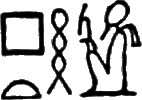
Ptaḥ-Sokar-Osiris. A form of Ptah, peculiar to Memphis, and represented as a deformed child. His Egyptian name is Ptaḥ-Seker-Usȧr. 29
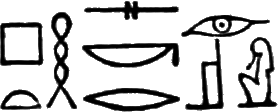
Ptaḥ-tathunen. A title of Ptah of Memphis. The Egyptian form of the word is Ptaḥ-tathunen, meaning perhaps "Ptah of the stable earth". 65
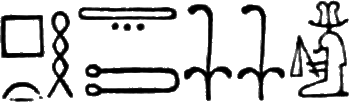
Ptolemies. The descendants of Ptolemy Sôtêr, a general of Alexander the Great, and forming the XXXIIId dynasty of Egyptian kings. Each of them married his sister. Their reign extended from 305 to 30 B. C., and was characterized by infamy, tyranny, murder, and poisoning. 9 21 22
Ptolemy IX. Euergetes II. A weak king of the XXXIIId dynasty, married to and reigning for a time with his sister Cleopatra II. and his niece Cleopatra III. His name in Egyptian is 7 10
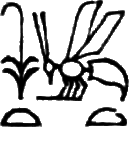

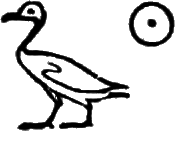

suten-kaut? Nuter-per-ââ-en-Ptaḥ-sotep-en-âr-maâ- Ȧmen-Râ-sekhem-ânkh sa Râ Ptûlmîs-ânkh-zeta-Ptaḥ-mer
The king of Upper and Lower Egypt, "The Epiphanes, the heir of Ptah, the chosen of Amen-Ra, dispenser of justice, conqueror, living", the Sun's offspring, "Ptolemy, living forever, beloved of Ptah."
suten-kaut? Nuter-per-ââ-en-Ptaḥ-sotep-en-âr-maâ- Ȧmen-Râ-sekhem-ânkh
The king of Upper and Lower Egypt, "The Epiphanes, the heir of Ptah, the chosen of Amen-Ra, dispenser of justice, conqueror, living",
sa Râ Ptûlmîs-ânkh-zeta-Ptaḥ-mer
the Sun's offspring, "Ptolemy, living forever, beloved of Ptah."
Punt. The Egyptian name of the southern part of Arabia, which see.
Pylon. The large mass of masonry of an Egyptian temple, resembling two truncated pyramids with the gate between them. A picture of one is given on page 20. Its hieroglyph is perhaps . 20 24

Pyramidion. The apex of an obelisk which resembles a miniature pyramid. It was sometimes inscribed with pictures and hieroglyphs, and covered with a capping of gold-metal or electrum (which see). 18 19 21 22 26 47 50 51 52 53 54 55
Pyramids. The enormous masses of stone built by various kings, especially those of the fourth dynasty, and serving as their tombs. There are quite a number of them in and near ancient Memphis, the largest being that of Khufu, called the Great Pyramid, which is 480 ft. high. The usual Egyptian word for "pyramid" is ȧbmer. 12 27 91
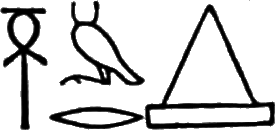
Qebti·t. The Egyptian name of Coptos, which see. 88
Qem·t. The common Egyptian designation of Egypt, which see. 61 66 70 84
Qurnah. A modern village marking the site of a part of the necropolis of ancient Thebes, situated on the west shore of the Nile. Here are the ruins of the grand temple begun by Seti I., and completed by Ramses II. 88
Râ. The Sun, the Supreme Being, and the organizer of the world according to Egyptian mythology. He was worshipped in the entire country, but especially in Heliopolis. He is always represented with the face of a hawk. With the fifth dynasty the Pharaohs began to call themselves the incarnation of Râ, or sa Râ, "the son of the Sun", which title they retained until the time of the Roman emperors. The Egyptian name of the sun is Râ. 21 22 27 30 31 36 37 38 39 46 47 48 49 50 52 53 54 55 56 57 58 59 60 61 62 63 64 65 66 67 68 69 70 71 72 82 91
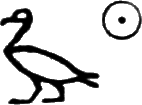
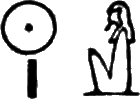
Râ-Ḥor-Khuti. A name of the sun-god, written in Egyptian or Râ-Ḥor-khuti, "the Sun, the hawk of the two horizons". 28 29 30 46 47 49 55 58 59 60
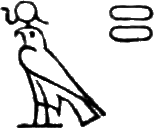
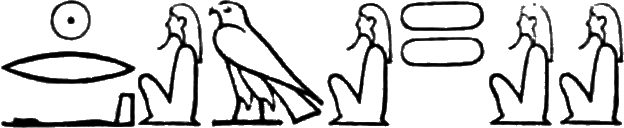
Ramses II. One of the greatest monarchs the world ever saw, the son of Seti I., and a king of the XIXth dynasty. He conquered most of the then known world, built magnificent temples, erected obelisks, and perpetuated his name on almost every Egyptian monument. His Egyptian name is 7 8 9 10 16 36 37 62 63 64 65 66 67 68 69 70 71 88 91
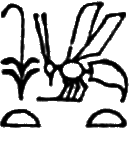
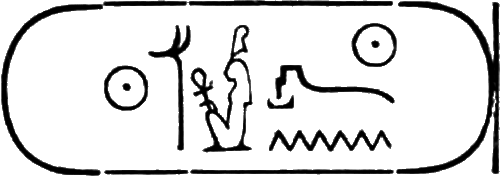
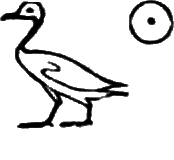
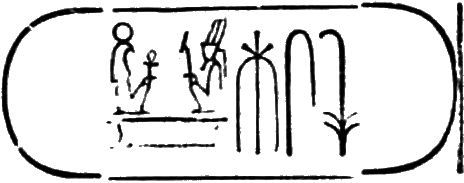
suten-kaut? User-Mâ-Râ-sotep-en-Râ sa Râ Ȧmen-mer-Râ-meses-su
The king of Upper and Lower Egypt, "Strong in truth, the Sun, chosen of the Sun", the Sun's offspring, "Beloved of Amen, the Sun, begetting himself."
suten-kaut? User-Mâ-Râ-sotep-en-Râ
The king of Upper and Lower Egypt, "Strong in truth, the Sun, chosen of the Sun",
sa Râ Ȧmen-mer-Râ-meses-su
the Sun's offspring, "Beloved of Amen, the Sun, begetting himself."
Ramses III. A famous king of the XXth dynasty, who conquered the Hittites, Syrians, and the tribes of Palestine. His name in Egyptian is 112 131
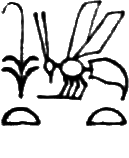
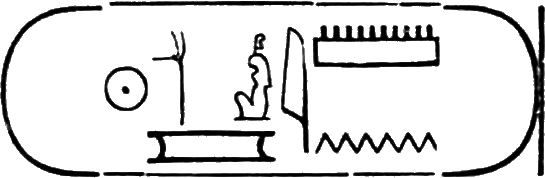
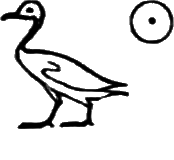
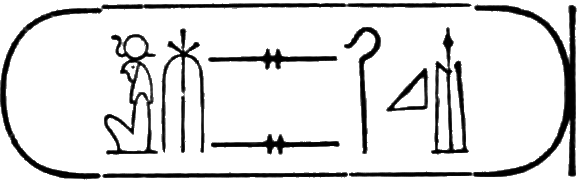
suten-kaut? User-mâ-Râ-Ȧmen-mer sa Râ Râ-meses-ḥeq-Ȧn
The king of Upper and Lower Egypt, "Strong in truth, the Sun, beloved of Amen", the Sun's offspring, "The Sun's child, prince of Heliopolis."
suten-kaut? User-mâ-Râ-Ȧmen-mer
The king of Upper and Lower Egypt, "Strong in truth, the Sun, beloved of Amen",
sa Râ Râ-meses-ḥeq-Ȧn
the Sun's offspring, "The Sun's child, prince of Heliopolis."
Râqedî·t. The Egyptian name of Alexandria (which see), called Rhakôtis by the ancients. 91
Redesieh. A modern village in what was formerly the first nome of Upper Egypt. 68
Red Sea. This was called in Egyptian muqed·t. 86 88
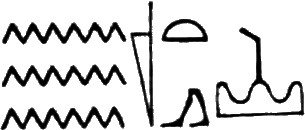
Rhakotis. The Greek name of the town on whose site Alexander the Great built Alexandria (which see). 91
Rising Sun. The god Râ. 22
Rome. The capital of the ancient world. Its Egyptian name occurs on the Barberini Obelisk as Harmâ·t. 5 7 9 20 22 23 25
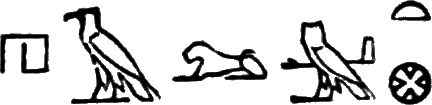
Rosetta. A modern town at the mouth of the Bolbitinic arm of the Nile. It was the ancient Bolbitiné. 91
Rosetta Stone. Without a doubt this is the most important monument of antiquity that has come down to us. It is a stelé of black basalt, bearing an inscription in Hieroglyphic, Demotic, and Greek. It contains a decree of the priests in honor of Ptolemy V. Epiphanes, which was issued on March 27, 195 B. C. This stone, discovered in 1799, furnished the key for deciphering the hieroglyphs, and is now preserved in the British Museum. 92
Rotennu. A Syrian people who were repeatedly defeated and subjugated by kings of the XVIIIth and later dynasties. They were subdivided into the Upper and Lower Rotennu, and their Egyptian name was Rethennu. 36

Saccarah. A modern village near the site of ancient Memphis with a number of famous pyramids. The name is undoubtedly derived from that of the god Ptah-Sokar-Osiris. 91
Sa-el-Hajar. The modern name of Saïs. 92
Saïs. The capital of the fifth nome of Lower Egypt, the Egyptian Sa·t, and the Coptic [saï]. Nothing now remains but a mass of débris. 4 10 92
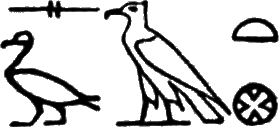

Saîu·t. The Egyptian name of Sioot, which see. 89
Sallustian Obelisk. An obelisk in Rome standing opposite the church of Santa Trinita dei Monti. It is a poor Roman copy of the Piazza del Popolo Obelisk, and has three columns of hieroglyphs on it, together with the cartouches of Seti I. and Ramses II. It was re-erected by Pius VI. in 1789. 9
Sân. The modern name of Tanis, which see. 11
Sân Obelisks. As many as thirteen fragments of perhaps four obelisks are still at Tanis (Sân). These obelisks appear to have been erected by Ramses II. 11
Sarbut-el-Khedem Obelisk. An erect obelisk in the Sinaitic Peninsula, on the way from Suez to Mount Sinai. The hieroglyphs on it are partially obliterated. 9
Sa·t. The Egyptian name of Saïs, which see. 92
Sebek. The crocodile-headed deity and a form of Râ. He was specially worshiped in the Fayoom, and his Egyptian name was Sebek. 90
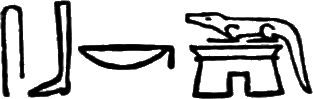
Sebek-Râ. A combination of the gods Sebek and Râ, the local deity of Ombos. 29
Sekhet. A lion-headed goddess and the wife of Ptah. As a destroying deity her name is Sekhet, but as a goddess of love it was Bast, or, as the Greeks called her, Pasht. She was usually identified with Diana. (92 98 103)
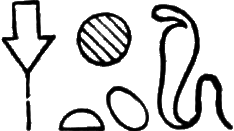
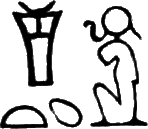
Sektet Boat. The boat of the evening-sun Tum, in which he was thought to pass over the heavens. In Egyptian the word is written sektet. 22
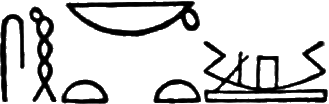
Seni·t. The Egyptian name of Esneh, which see. 87
Set or Sutekh. The national god of the Hyksos or the Shepherd kings of Asia, whose worship was forced on the Egyptians. He was the personification of evil, and was represented as an ass-headed deity with the usual divine insignia. He was the sworn enemy of Horus, whose father (Osiris) he had slain, and is identified with the devil. His picture, , was afterwards completely erased by the Egyptians from their monuments. His Egyptian name is Set or Sutekh. 87

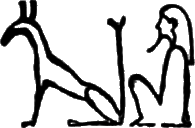
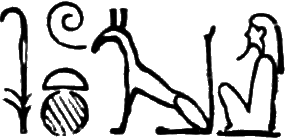
Seti I. A famous king of the XIXth dynasty and the father of Ramses II. He was an intense worshipper of Set, the devil, and forced his adoration on the people. His many wars carried him into Arabia Felix, Palestine, the Hittite territory, and beyond the Orontes and Euphrates. Out of him and his two successors the ancients fabricated the name Sesostris. His Egyptian name is 6 9 86 87 88
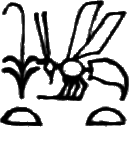
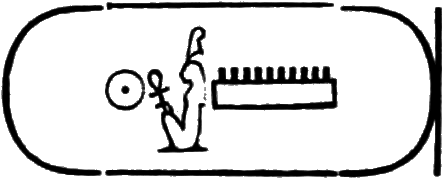
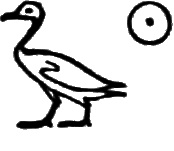
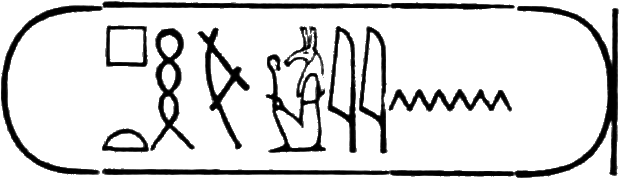
suten-kaut? Mâ-men-Râ sa Râ Setî-mer-en-Ptaḥ
The king of Upper and Lower Egypt, "Truth, the stable Sun", the Sun's offspring, "Seti, the beloved of Ptah."
suten-kaut? Mâ-men-Râ
The king of Upper and Lower Egypt, "Truth, the stable Sun",
sa Râ Setî-mer-en-Ptaḥ
the Sun's offspring, "Seti, the beloved of Ptah."
Setting Sun. The god Tum, which see. 22
Shepherd Kings. See under Hyksos. 92
Silsilis. The Egyptian Khennu, which see. 86
Sinaitic Peninsula. That part of western Asia lying between Syria and Egypt, and playing an important part in the forty years' sojourn there of the Israelites under Moses. 1 4 9 11
Sion House Obelisk. Perhaps the same as the Alnwick Castle Obelisk, which see.—Sion House is the country-seat of the Duke of Northumberland. 10
Sioot. The modern name of the capital of the XIIIth nome of Upper Egypt, called in Egyptian Saìu·t. Its local deity was the jackal-headed god Anubis. 89
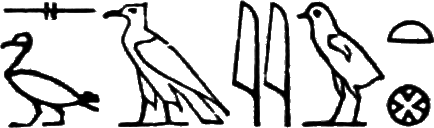
Soughton Hall Obelisk. An obelisk mentioned by Bonomi, which may be identical with one of those at present in England. 11
Sphinx. There are three kinds of sphinxes: Androsphinxes, having the head of a man; Criosphinxes, having that of a ram; and Hieracosphinxes, having that of a hawk. A few are also found with the form of a woman. "The Sphinx" is the monster figure in front of the Pyramid of Khufu, but older than it. It was cut out of a solid mountain, and had between its paws a temple of Harmachis, to whom it was dedicated. The sphinx represents the incarnation of the divine wisdom of the Pharaoh 32 46 47 49 50 51 52 53 54 55
Stele. A slab rounded off on top and covered with inscriptions. It was made either of wood or of stone. The word comes from the Greek στήλη [stêlê]. The Egyptian word for it is utu. 5 31 37 48
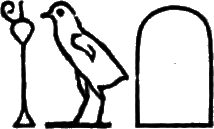
St. Ephraim Syrus. A Christian writer of the Syrian church, who died 373 A. D. 19
Sta. Maria Maggiore Obelisk. The companion of the Monte Cavallo Obelisk, at present in front of the basilica (church) of Santa Maria Maggiore in Rome. It has no inscriptions, and was removed to Rome by the emperor Claudius. Sixtus V. re-erected it on its present site in 1587. 9
Stuart, Villiers. A traveler and author. 2
"Sublime Porte." The name of the place where the Sultan administers justice, and, with us, a designation for the Sultan himself. The Turkish term for it is باب عالی [bâbi 'âlî], "the high gate". 53
Suez Canal. The first attempt to construct it was made by Seti I., of the XIXth dynasty. It then only connected the Nile with the Red Sea, and was finished by Ramses II. Traces of it still remain. The present Canal was planned and completed by Lesseps in 1869. 40
Sun·t. The Egyptian name of Syêné. 86
Syêné. The Greek name of the modern Assuân, which was in the first nome of Upper Egypt, and called Sun·t by the Egyptians. The famous quarries, from which most of the obelisks were taken, were located here. The biblical name is סְוֵנֵה [s'vênêh, cf. Ezekiel xxix:10, xxx:6], which is the same as the Coptic [sûan], and the Arabic اسوان [aswân]. 5 13 16 23 24 35 82 86
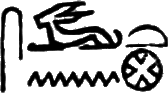

Syenite. The reddish amphibole-granite of Syêné, which was taken for all the Egyptian obelisks. 23
Syria. A large tract of country in western Asia, bordering on Egypt. It was inhabited by many different tribes, with whom the Pharaohs of the XVIIIth and XIXth dynasties carried on extensive wars. 36
Ta-en-ta-rer·t. The Egyptian name of Denderah, which see. 88
Tanis. The Greek name of the Egyptian Zân·t the capital of the XIVth nome of Lower Egypt, now Sân. It was the main seat of the Hyksos, who embellished it in every possible way. 4 11 45 92
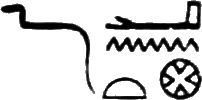
Tathunen. See under Ptah-tathunen. 65
Tel-Basta. The modern name of Bubastis, which see. 92
Tel-el-Amarna. The present site of a city founded by the heretic king Amenôphis IV. in honor of the sun-disk Aten, in the XVth nome of Upper Egypt. It was totally destroyed after his death. 29 89
Thebes. The largest and most famous city of the ancient world, the capital of the fourth nome of Upper Egypt and of the whole empire. Its usual Egyptian name was Us·t, or nu·t Ȧmen, which was sometimes shortened into nu·t â·t, "the great city", or nu·t, "the City" simply, the biblical נא [nô]. Its site is now occupied by several villages, such as Karnak, Luxor, &c. The local deity was Amen. 2 3 4 9 10 11 16 28 29 48 50 53 55 56 57 59 60 87 88 89

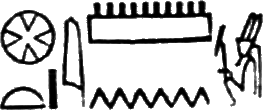
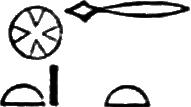

Theni·t. The Egyptian name of Thinis. 89
Thinis or This. The capital of the eighth nome of Upper Egypt, the reputed home of the first king of Egypt, Menes. Its Egyptian name is Theni·t, at present El-Tineh, which see. 89
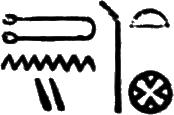
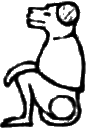
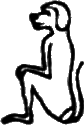
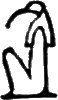
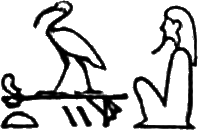
Thoth [pronounced tót]. The Egyptian god of writing, learning, and medicine. He was thought to introduce the soul of the deceased into the Lower World and to read off its sins before the judgment-seat of Osiris. He was afterwards identified with the moon. His sacred animal was the cynocephalus-ape ( or ), and he himself is represented with the head of the ibis, . His name in Egyptian is or Deḥuti. 49 56 57
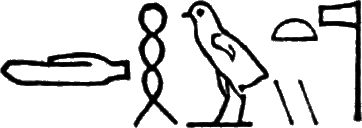
Thothmes I. [tótmees]. A king of the XVIIIth dynasty and the son of Aahmes I. He was a mighty warrior, and his conquests were very extensive. His name in Egyptian is 5 9 10
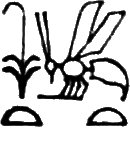
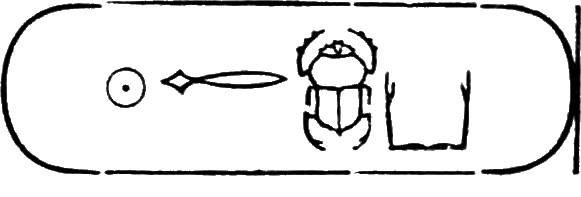
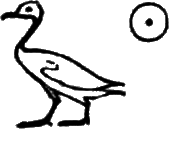
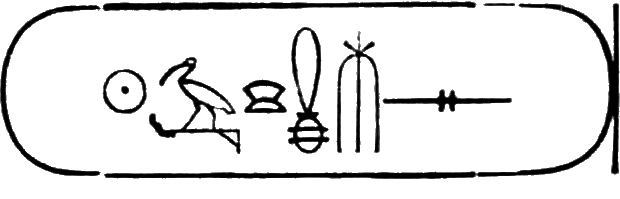
suten-kaut? Râ-â-kheper-ka sa Râ Râ-Deḥuti-khâ-ma-meses
The king of Upper and Lower Egypt, "The great Sun, producing works", the Sun's offspring, "Glorious like the Sun, child of Thoth."
suten-kaut? Râ-â-kheper-ka
The king of Upper and Lower Egypt, "The great Sun, producing works",
sa Râ Râ-Deḥuti-khâ-ma-meses
the Sun's offspring, "Glorious like the Sun, child of Thoth."
Thothmes II. [tótmees]. A king of the XVIIIth dynasty and a son of Thothmes I. He was a weak monarch and altogether under the influence of his great sister Hatasu. His name in Egyptian is 6
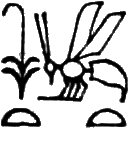
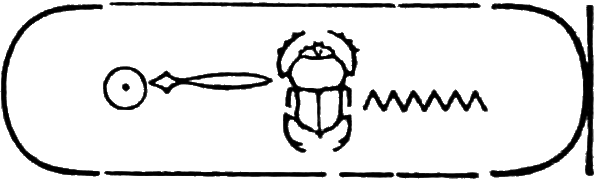
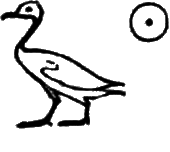
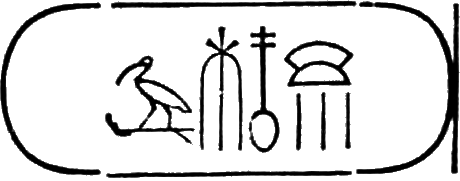
suten-kaut? Â-kheper-en-Râ sa Râ Deḥuti-mes-nefer-khâu
The king of Upper and Lower Egypt, "Formed by the great Sun", the Sun's offspring, "The child of Thoth, beautiful in his appearances."
suten-kaut? Â-kheper-en-Râ
The king of Upper and Lower Egypt, "Formed by the great Sun",
sa Râ Deḥuti-mes-nefer-khâu
the Sun's offspring, "The child of Thoth, beautiful in his appearances."
Thothmes III. [tótmees]. The greatest king of the XVIIIth dynasty, a son of Thothmes I. His empire extended over all the then known world. The New York Obelisk was erected by him. His name in Egyptian is 6 7 9 10 19 31 35 36 37 38 46 47 48 49 50 52 53 54 55 56 57 58 59 60 61 62 82
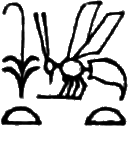
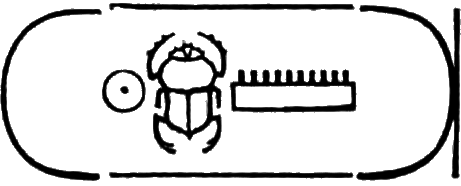
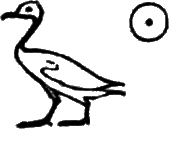
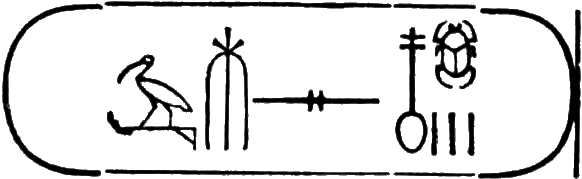
suten-kaut? Men-kheper-Râ sa Râ Deḥuti-meses-nefer-kheperu
The king of Upper and Lower Egypt, "The stable and creative Sun", the Sun's offspring, "The child of Thoth, of beautiful form."
suten-kaut? Men-kheper-Râ
The king of Upper and Lower Egypt, "The stable and creative Sun",
sa Râ Deḥuti-meses-nefer-kheperu
the Sun's offspring, "The child of Thoth, of beautiful form."
Thothmes IV. [tótmees]. A king of the XVIIIth dynasty, the successor of Amenôphis II. He reigned for nine years only, and his Egyptian name is 6 9 19
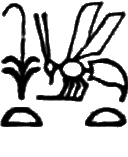
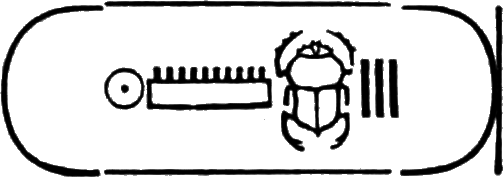
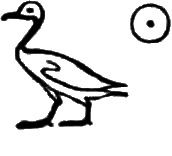
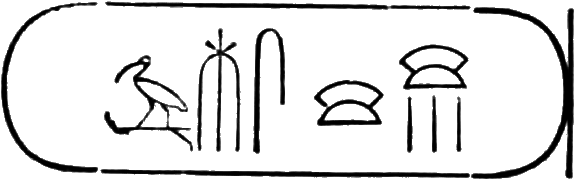
suten-kaut? Men-kheperu-Râ sa Râ Deḥuti-meses-khâ-khâu
The king of Upper and Lower Egypt, "The Sun, stable in his forms", the Sun's offspring, "The child of Thoth, glorious in his diadems."
suten-kaut? Men-kheperu-Râ
The king of Upper and Lower Egypt, "The Sun, stable in his forms",
sa Râ Deḥuti-meses-khâ-khâu
the Sun's offspring, "The child of Thoth, glorious in his diadems."
Troja. The name which the Greeks gave to the town near Memphis, the Ru-âu·t (with the feminine article ta-Ru-âu·t) of the Egyptians. Here was situated the quarry of Memphis. The similarity of the words gave rise to the name "Troja" (Troy), which must not, however, be confounded with the famous Greek city of the same name in Asia Minor. 91
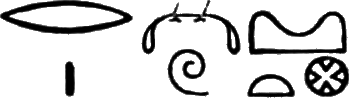
Tum. The Egyptian god of the setting sun. He was especially worshiped in Heliopolis. In painted inscriptions his color is generally red, like that of Râ, sometimes, however, also green. His name in Egyptian is Tum. 22 27 28 29 46 51 53 56 57 58 67
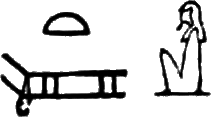
Tura. The quarry of Memphis from which the "white stone" was taken. The Greeks called it Troja, which see. 91
"Two Countries." A designation of Egypt, which was divided into two parts, Upper and Lower Egypt. It may, however, also signify "heaven and earth" or "the universe". It is in Egyptian taui, "the two countries". (39 39) 47 48 49 50 51 52 53 54 55 62 63 64 65 66 67 68 69 70
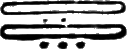
Upper Egypt. The southern part of Egypt from the Fayoom to Assuân. 2 3 31 84 89
Upper and Lower Egypt. The two divisions of Egypt, which were at certain periods of Egyptian history separate kingdoms. Some of the Egyptian designations are ḥez-desher, "the land of the white and red crowns" (cf. page 31), qebeḥui, "the land of the two sources (of the Nile)" (cf. page 119), res-meḥ, "the south and north land", qemâ-meḥ, "the south and north land", ?-ûz, "the land of the lotus and the papyrus", &c. The usual title of the king was suten-kaut?, "the king of Upper and Lower Egypt". 30 48 52 53 54 56 57 58 59 60 61 62 63 64 65 66 67 68 69 70 72 84
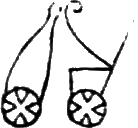
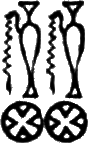
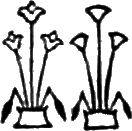
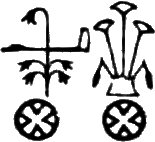
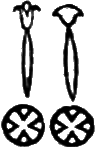
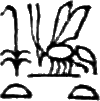
Uraeus Snake. The Cobra haje of Egypt, the most deadly reptile in that country, whose figure was worn as the head-dress of kings and queens. It typifies Pharaoh's power over the life and death of his subjects, and its Egyptian name is ârâ·t. The Greeks called it "basilisk", from which they took their word for "king", βασιλεύς [basileus]. 56 57
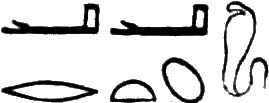
User-Mâ-Râ-sotep-en-Râ. The royal name of Ramses II., which see 37 62 63 64 65 66 67 68 69 70 71
Usertesen I. The second king of the XIIth dynasty, the son of Amenémhâ I., and the conqueror of the Ethiopians. His name in Egyptian is 5 9 11 36 91
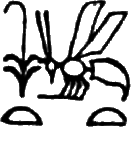
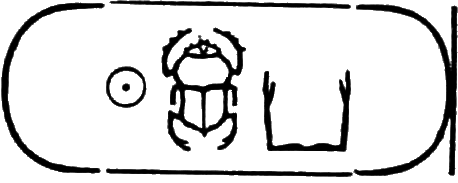
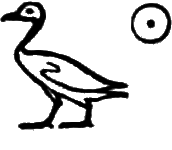
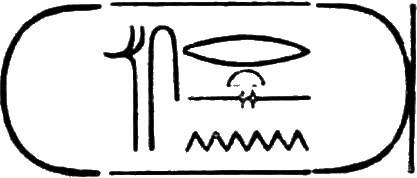
suten-kaut? Râ-kheper-ka sa Râ Usertesen
The king of Upper and Lower Egypt, "The Sun, producing works", the Sun's offspring, "Usertesen."
suten-kaut? Râ-kheper-ka
The king of Upper and Lower Egypt, "The Sun, producing works",
sa Râ Usertesen
the Sun's offspring, "Usertesen."
Us Sceptre. The symbol of power carried in the hands of kings and gods, written us, or else us, which is the "cucufa", also called the Zâm-sceptre. 46 87


Us·t. The Egyptian name of Thebes, which see. 48 50 53 55 56 59 87
Vatican Obelisk. An obelisk without an inscription on the Piazza di San Pietro, in front of the Vatican, in Rome. Originally erected in Heliopolis, it was transported to Rome by the emperor Caligula (about 40 A.D.). It was the only one of all the obelisks not overthrown and broken during the times of anarchy, pillage, and destruction in that city. Sixtus V. had it removed and erected in its present position in 1586. 9
Victory Stelé. A stelé which was found in Karnak. It contains a martial hymn of Thothmes III. 31 48
Villa Mattei Obelisk. A small obelisk in the Villa Mattei or the Villa Celimontana in Rome, presented by a certain Cyriacus Matthæius to the Roman Senate. It was either erected by him in his gardens in 1582, or else by Sixtus V. in 1590. The lower portion of it is modern, but the upper half bears the cartouches of Ramses II. and Psametik II. 10
"Vocal Memnon." One of the colossal statues of Amenôphis III. west of Thebes in the desert. It was thrown down by an earthquake about 27 B. C., and cracked. On re-erection it was found to emit a musical sound at sunrise. This gave rise to the Greek legend of Memnon and Aurora (the dawn). Since its restoration the sound is no longer heard. The Arabs call the two colossal statues Shamy and Damy. (96 112)
Vulture Diadem. A diadem of Pharaoh, in Egyptian neb mut or neb sheta (doubtful!). The figure of the vulture was generally worn as the head-dress of the queens. It is the symbol of protection, and represents Pharaoh and his queen as the protectors and nourishers of their people. 56 57 66 70

Wanstead Obelisk. A fragment of an obelisk which existed at the time of Zoëga in Wanstead, a suburb of London. It was brought to England from Alexandria in 1712. Its present location is unknown. 11
Wilkinson, Sir John Gardner. An English Egyptologist (born in 1797, died in 1875). His famous work is The Manners and Customs of the Ancient Egyptians. 14
Yaﻋmer-ben-Shaddâd. A mythical person. 80
Zân·t. The Egyptian name of Tanis, which see. 92
Zoëga, George. A Danish archæologist interested in Egyptological subjects (born in 1755, died in 1809 in Rome). 11
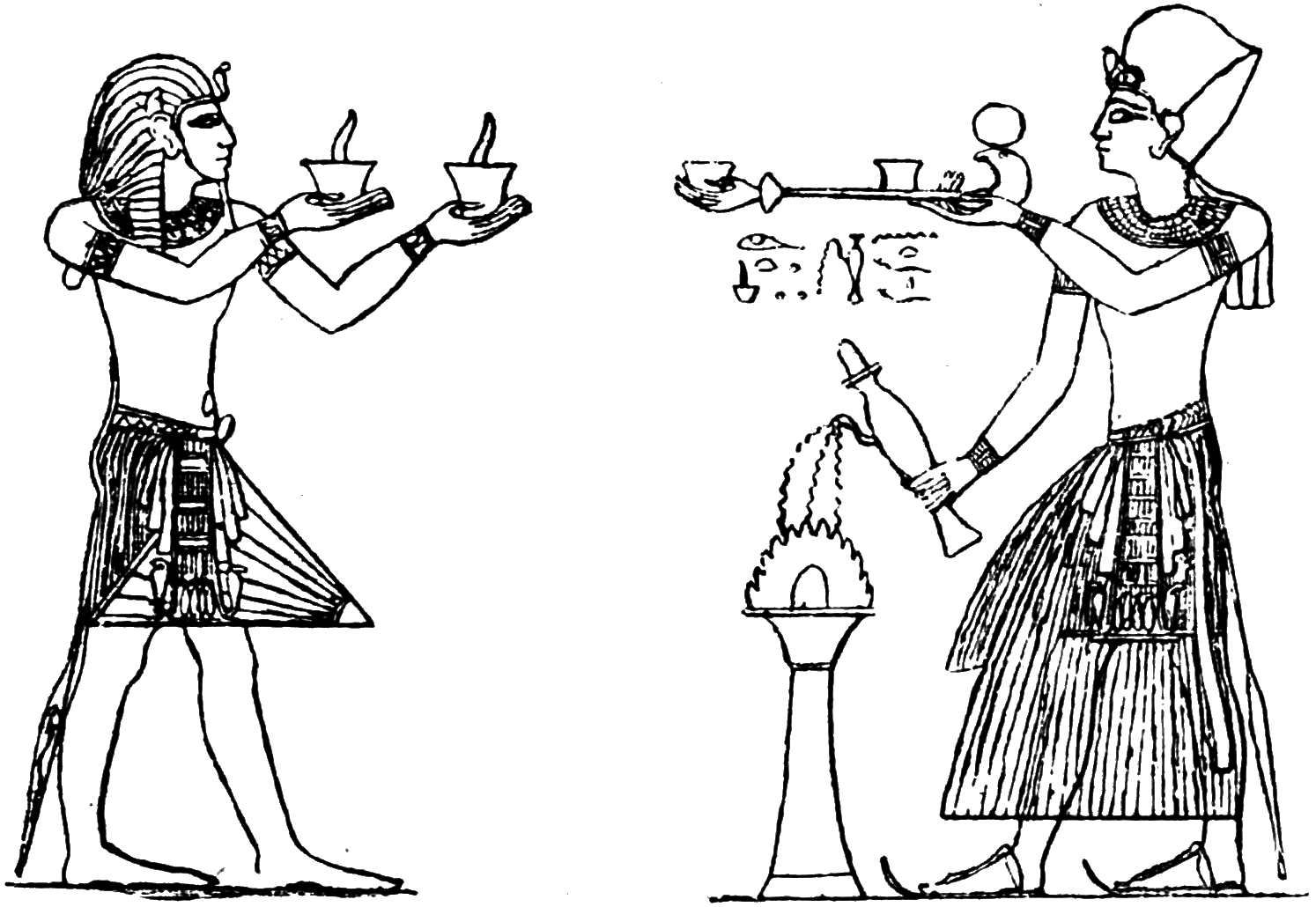
Pharaoh in his royal robes offering libation to the gods.