← Table of contents
The New York Obelisk

A GLOSSARY

Reading edition

OF THE EGYPTIAN WORDS OCCURRING ON THE NEW YORK OBELISK.

The words in this Glossary are arranged according to the Hieroglyphic alphabet as follows:
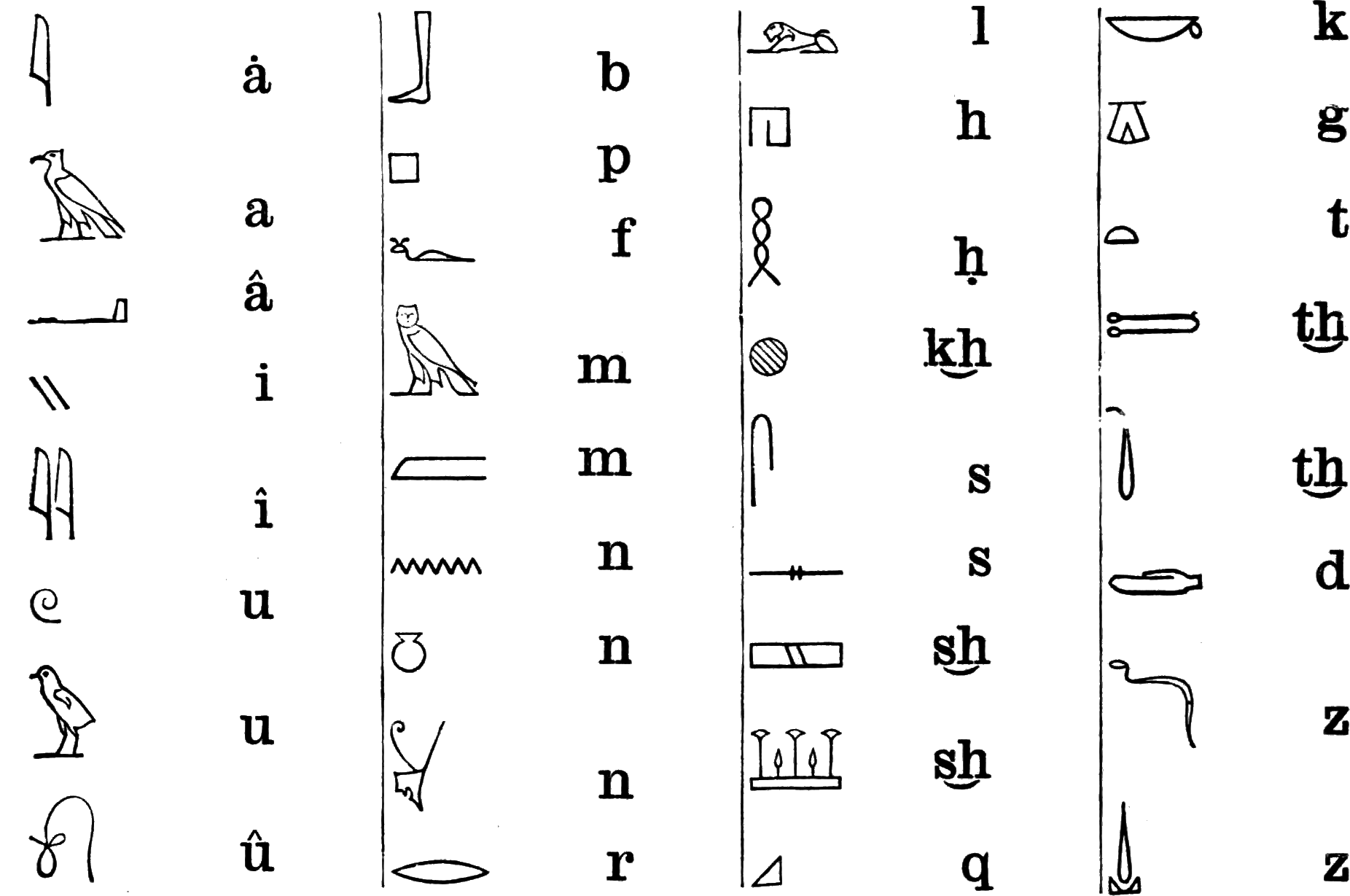
Illustration from The New York Obelisk: Cleopatra's Needle With a Preliminary Sketch of the History, Erection, Uses, and Signification of Obelisks

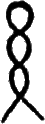
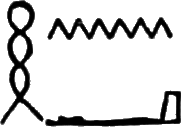
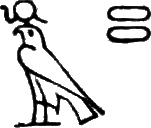
As there was no fixed orthography among the ancient Egyptians the same word is frequently spelled in many different ways. This will be noticed in the following pages.—The plural of nouns or adjectives was formed by adding three lines () to the word or by repeating the Hieroglyphic sign of the word three times.—The dual was formed by adding two lines () or by repeating the sign twice.—The dot before the t (·t) denotes that the t is the feminine ending, which was pronounced by the ancient Egyptians only slightly or, probably, not at all.

Illustration from The New York Obelisk: Cleopatra's Needle With a Preliminary Sketch of the History, Erection, Uses, and Signification of Obelisks

Abbreviations: E stands for East Face of the Obelisk; W for the West Face; N for the North Face; S for the South Face. Pyr. stands for Pyramidion. EAST, WEST, NORTH, SOUTH denote the vertical columns of the Obelisk on that particular side of its face. CENT. denotes the central column. The small numerals refer to the pages of the book.

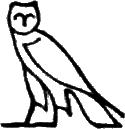
Ȧ

Illustration from The New York Obelisk: Cleopatra's Needle With a Preliminary Sketch of the History, Erection, Uses, and Signification of Obelisks

ȧm. Prep. "in." Adv. "there, where." W CENT. 59
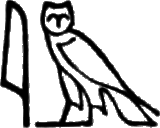
Illustration from The New York Obelisk: Cleopatra's Needle With a Preliminary Sketch of the History, Erection, Uses, and Signification of Obelisks

Ȧmen-mer-Râ-meses-su. Second cartouche or the family name of Ramses II., "beloved of Amen, the Sun, begetting himself". E NORTH 62 63 SOUTH 64 64 S EAST 65 65 WEST 66 66 W SOUTH 68 68 NORTH 67 67 N WEST 70 70 EAST 69 69
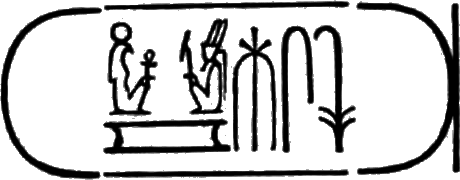
Illustration from The New York Obelisk: Cleopatra's Needle With a Preliminary Sketch of the History, Erection, Uses, and Signification of Obelisks

Ȧmen-mer-Râ-meses-su. Same as preceding. Base of E 71 71 S 71 71 W 71 71 N 71 71
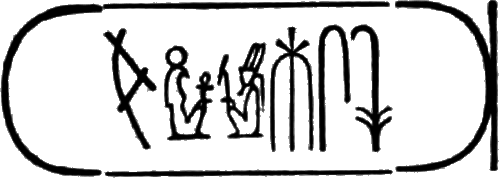
Illustration from The New York Obelisk: Cleopatra's Needle With a Preliminary Sketch of the History, Erection, Uses, and Signification of Obelisks

Ȧmen-mer-Ûsarken. Second cartouche or the family name of Osarkon I., "beloved of Amen, Osarkon". SMALL SIDE INSCRIPTIONS E 72 72 S 72 72 W 72 72 N 72 72
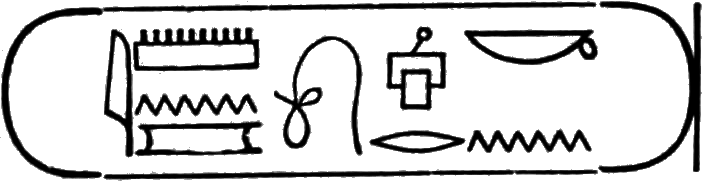
Illustration from The New York Obelisk: Cleopatra's Needle With a Preliminary Sketch of the History, Erection, Uses, and Signification of Obelisks

Ȧn. "Heliopolis." E CENT. 56 S CENT. 58 N EAST 69 Pyr. WEST 52 53 SOUTH 51
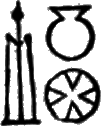
Illustration from The New York Obelisk: Cleopatra's Needle With a Preliminary Sketch of the History, Erection, Uses, and Signification of Obelisks

ȧr. Verb: "to make, form, fashion; making, maker". E CENT. 56 W NORTH 67 67 S CENT. 58 58 N WEST 70 Pyr. WEST 53 NORTH 54 55

Illustration from The New York Obelisk: Cleopatra's Needle With a Preliminary Sketch of the History, Erection, Uses, and Signification of Obelisks

ȧrîtu. Noun, feminine, plural: "works". S EAST 65
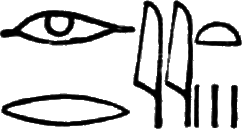
Illustration from The New York Obelisk: Cleopatra's Needle With a Preliminary Sketch of the History, Erection, Uses, and Signification of Obelisks

ȧrp. Noun: "wine". Pyr. EAST 49 SOUTH 51
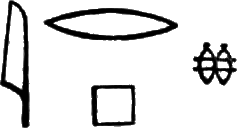
Illustration from The New York Obelisk: Cleopatra's Needle With a Preliminary Sketch of the History, Erection, Uses, and Signification of Obelisks

ȧten. Noun: one of the names of "the sun". E NORTH 62
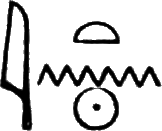
Illustration from The New York Obelisk: Cleopatra's Needle With a Preliminary Sketch of the History, Erection, Uses, and Signification of Obelisks

Â

Illustration from The New York Obelisk: Cleopatra's Needle With a Preliminary Sketch of the History, Erection, Uses, and Signification of Obelisks

âa or â. Adjective: "great, large". E CENT. 57 SOUTH 64 W SOUTH 68 Pyr. EAST 49 SOUTH 51 WEST 53 In combination with ḥa·t. E CENT. 56

Illustration from The New York Obelisk: Cleopatra's Needle With a Preliminary Sketch of the History, Erection, Uses, and Signification of Obelisks

ânkh. Verb, &c.: "to live; living; life". E CENT. 57 NORTH 63 S EAST 65 W NORTH 67 N CENT. 61 EAST 69 WEST 70 Pyr. EAST 47 49 SOUTH 50 51 WEST 52 53 53 NORTH 54 55 55 Base of E 71 71 S 71 71 W 71 71 N 71 71
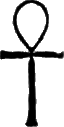
Illustration from The New York Obelisk: Cleopatra's Needle With a Preliminary Sketch of the History, Erection, Uses, and Signification of Obelisks

U

Illustration from The New York Obelisk: Cleopatra's Needle With a Preliminary Sketch of the History, Erection, Uses, and Signification of Obelisks

uâ. Adj. and adv.: "one, sole, alone; only". E SOUTH 64
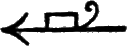
Illustration from The New York Obelisk: Cleopatra's Needle With a Preliminary Sketch of the History, Erection, Uses, and Signification of Obelisks

uâf. Verb, &c.: "to smite, ward off, vanquish; conqueror, victor". S WEST 66
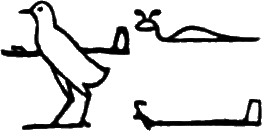
Illustration from The New York Obelisk: Cleopatra's Needle With a Preliminary Sketch of the History, Erection, Uses, and Signification of Obelisks

uâf. Same as preceding. N WEST 70

Illustration from The New York Obelisk: Cleopatra's Needle With a Preliminary Sketch of the History, Erection, Uses, and Signification of Obelisks

us. Noun and adj.: "strength, power; strong". E CENT. 57 Pyr. WEST 53

Illustration from The New York Obelisk: Cleopatra's Needle With a Preliminary Sketch of the History, Erection, Uses, and Signification of Obelisks

Us. "Thebes." E CENT. 56 W CENT. 59 Pyr. EAST 48 SOUTH 50 WEST 53 NORTH 55
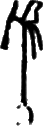
Illustration from The New York Obelisk: Cleopatra's Needle With a Preliminary Sketch of the History, Erection, Uses, and Signification of Obelisks

usem. Noun: "gold-metal; electrum", S CENT. 58
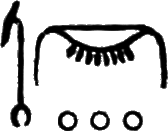
Illustration from The New York Obelisk: Cleopatra's Needle With a Preliminary Sketch of the History, Erection, Uses, and Signification of Obelisks

user. Adj.: "great, powerful, long". E SOUTH 64 W SOUTH 68
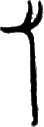
Illustration from The New York Obelisk: Cleopatra's Needle With a Preliminary Sketch of the History, Erection, Uses, and Signification of Obelisks

User-Mâ-Râ-sotep-en-Râ. The first cartouche or the royal name of Ramses II., "strong in truth, the sun, chosen of the sun". E NORTH 62 62 SOUTH 64 64 S EAST 65 65 WEST 66 66 W NORTH 67 67 SOUTH 68 68 N EAST 69 69 WEST 70 70 Base of (all reading from right to left) E 71 71 S 71 71 W 71 71 N 71 71
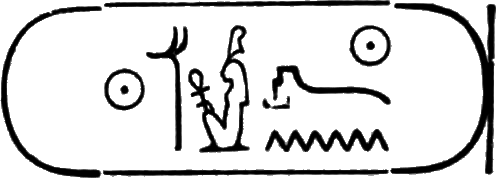
Illustration from The New York Obelisk: Cleopatra's Needle With a Preliminary Sketch of the History, Erection, Uses, and Signification of Obelisks

utu. Verb, &c.: "to command, order; decree". N CENT. 60
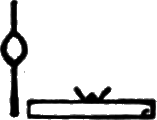
Illustration from The New York Obelisk: Cleopatra's Needle With a Preliminary Sketch of the History, Erection, Uses, and Signification of Obelisks

Û

Illustration from The New York Obelisk: Cleopatra's Needle With a Preliminary Sketch of the History, Erection, Uses, and Signification of Obelisks

ûaḥ. Verb: "to place, put, establish". E CENT. 56 56
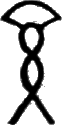
Illustration from The New York Obelisk: Cleopatra's Needle With a Preliminary Sketch of the History, Erection, Uses, and Signification of Obelisks

ûrui. Dual of the adjective ûr "large", hence: "the two large" obelisks, referring to the New York and London Obelisks. S CENT. 58
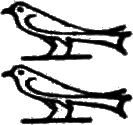
Illustration from The New York Obelisk: Cleopatra's Needle With a Preliminary Sketch of the History, Erection, Uses, and Signification of Obelisks

B

Illustration from The New York Obelisk: Cleopatra's Needle With a Preliminary Sketch of the History, Erection, Uses, and Signification of Obelisks

benben·t. Noun: "pyramidion". S CENT. 58
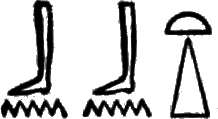
Illustration from The New York Obelisk: Cleopatra's Needle With a Preliminary Sketch of the History, Erection, Uses, and Signification of Obelisks

P

Illustration from The New York Obelisk: Cleopatra's Needle With a Preliminary Sketch of the History, Erection, Uses, and Signification of Obelisks

pau·t. Noun: "circle, assembly, company". E CENT. 57

Illustration from The New York Obelisk: Cleopatra's Needle With a Preliminary Sketch of the History, Erection, Uses, and Signification of Obelisks

per. Noun: "house". W CENT. 59 NORTH 67
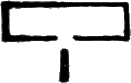
Illustration from The New York Obelisk: Cleopatra's Needle With a Preliminary Sketch of the History, Erection, Uses, and Signification of Obelisks

peru. Plural of the preceding word with the determinative of "city": "temples, sanctuaries". N EAST 69
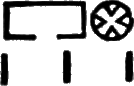
Illustration from The New York Obelisk: Cleopatra's Needle With a Preliminary Sketch of the History, Erection, Uses, and Signification of Obelisks

per. Verb: "to go out, proceed, issue". E SOUTH 64
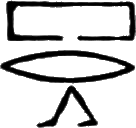
Illustration from The New York Obelisk: Cleopatra's Needle With a Preliminary Sketch of the History, Erection, Uses, and Signification of Obelisks

peḥu. Plural of peḥ "back, behind": hence "farthest, extreme". N CENT. 60
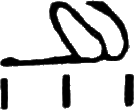
Illustration from The New York Obelisk: Cleopatra's Needle With a Preliminary Sketch of the History, Erection, Uses, and Signification of Obelisks

pesed. Verb: "to shine, illumine". E NORTH 62
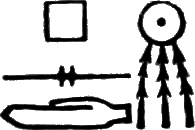
Illustration from The New York Obelisk: Cleopatra's Needle With a Preliminary Sketch of the History, Erection, Uses, and Signification of Obelisks

pet. Noun and adj.: "heaven; heavenly". E NORTH 62 CENT. 56 56 SOUTH 63 S EAST 65 CENT. 58 WEST 66 W NORTH 67 CENT. 59 SOUTH 68 N EAST 68 CENT. 60 WEST 70

Illustration from The New York Obelisk: Cleopatra's Needle With a Preliminary Sketch of the History, Erection, Uses, and Signification of Obelisks

Ptaḥ-tathunen. Epithet of the god "Ptah" of Memphis. S EAST 65
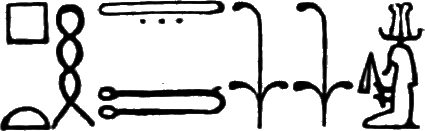
Illustration from The New York Obelisk: Cleopatra's Needle With a Preliminary Sketch of the History, Erection, Uses, and Signification of Obelisks

Ptaḥ-tathunen. A variant (different spelling) of the preceding word. N EAST 69
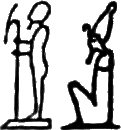
Illustration from The New York Obelisk: Cleopatra's Needle With a Preliminary Sketch of the History, Erection, Uses, and Signification of Obelisks

F

Illustration from The New York Obelisk: Cleopatra's Needle With a Preliminary Sketch of the History, Erection, Uses, and Signification of Obelisks

f. Third person sing. masc. pers. and possessive pronoun: "he, him, his; it, its". E NORTH 62 CENT. 56 56 56 57 SOUTH 64 S EAST 65 CENT. 58 58 58 58 W NORTH 67 67 CENT. 59 N EAST 69 CENT. 60 60 WEST 70 Pyr. EAST 49 SOUTH 51 WEST 53 NORTH 54 55

Illustration from The New York Obelisk: Cleopatra's Needle With a Preliminary Sketch of the History, Erection, Uses, and Signification of Obelisks

M

Illustration from The New York Obelisk: Cleopatra's Needle With a Preliminary Sketch of the History, Erection, Uses, and Signification of Obelisks

m. Prep.: "in, for; at; as; (made) of; with". E CENT. 56 56 56 56 S CENT. 58 58 58 W CENT. 59 N CENT. 60 WEST 70 Pyr. EAST 48 SOUTH 50 WEST 53 NORTH 55
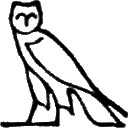
Illustration from The New York Obelisk: Cleopatra's Needle With a Preliminary Sketch of the History, Erection, Uses, and Signification of Obelisks

m. Same as preceding: "in; at; from". E NORTH 62 SOUTH 64 S EAST 65 W NORTH 67

Illustration from The New York Obelisk: Cleopatra's Needle With a Preliminary Sketch of the History, Erection, Uses, and Signification of Obelisks

ma or mȧ. Adv.: "like, as". E CENT. 56 57 SOUTH 64 S WEST 60 W SOUTH 68 N EAST 69 WEST 70

Illustration from The New York Obelisk: Cleopatra's Needle With a Preliminary Sketch of the History, Erection, Uses, and Signification of Obelisks

mȧ. Same word as the preceding: "like, as". E NORTH 62 S EAST 65 WEST 66 N EAST 69
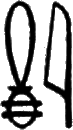
Illustration from The New York Obelisk: Cleopatra's Needle With a Preliminary Sketch of the History, Erection, Uses, and Signification of Obelisks

Mâ. The goddess of truth, "Mā". S EAST 65 N EAST 68
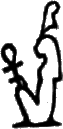
Illustration from The New York Obelisk: Cleopatra's Needle With a Preliminary Sketch of the History, Erection, Uses, and Signification of Obelisks

mâk. Verb, &c.: "to protect, ward off; protector". S WEST 66
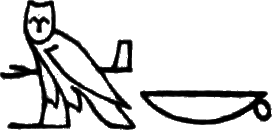
Illustration from The New York Obelisk: Cleopatra's Needle With a Preliminary Sketch of the History, Erection, Uses, and Signification of Obelisks

mâk. Same word as the preceding: "to protect; protector". N WEST 70
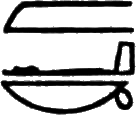
Illustration from The New York Obelisk: Cleopatra's Needle With a Preliminary Sketch of the History, Erection, Uses, and Signification of Obelisks

mennu. Noun: "monument; monuments". S CENT. 58
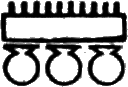
Illustration from The New York Obelisk: Cleopatra's Needle With a Preliminary Sketch of the History, Erection, Uses, and Signification of Obelisks

men·tu or setu. Noun, plural of men·t or set "country", hence: "countries, foreign nations". N CENT. 60 S WEST 66 N WEST 70
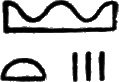
Illustration from The New York Obelisk: Cleopatra's Needle With a Preliminary Sketch of the History, Erection, Uses, and Signification of Obelisks

Men-kheper-Râ. The first cartouche or the royal name of Thothmes III., "the stable and creative sun". E CENT. 56 S CENT. 58 W CENT. 59 N CENT. 60 Pyr. EAST 47 48 SOUTH 50 50 WEST 52 53 NORTH 54 55
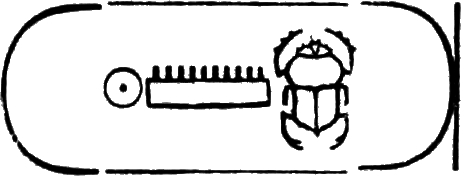
Illustration from The New York Obelisk: Cleopatra's Needle With a Preliminary Sketch of the History, Erection, Uses, and Signification of Obelisks

menkh. Verb and adjective: "to be beautiful; beautiful, kind". S WEST 66 Cf. also the causative form of the same word s·menkh "to embellish". W CENT. 59
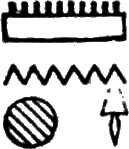
Illustration from The New York Obelisk: Cleopatra's Needle With a Preliminary Sketch of the History, Erection, Uses, and Signification of Obelisks

mer. Verb, &c.: "to love; loving; beloved; love; lover". E NORTH 62 S EAST 65 CENT. 58 W NORTH 67 N EAST 68 CENT. 60

Illustration from The New York Obelisk: Cleopatra's Needle With a Preliminary Sketch of the History, Erection, Uses, and Signification of Obelisks

merî. Adj., derived from the preceding: "beloved". E CENT. 57 S CENT. 58 W CENT. 60
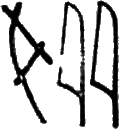
Illustration from The New York Obelisk: Cleopatra's Needle With a Preliminary Sketch of the History, Erection, Uses, and Signification of Obelisks

merîti. Lengthened form of the preceding word: "beloved, lovely, beautiful". E NORTH 62
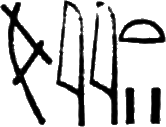
Illustration from The New York Obelisk: Cleopatra's Needle With a Preliminary Sketch of the History, Erection, Uses, and Signification of Obelisks

mes or meses. Verb, &c.: "to bring forth, beget; born of; birth; child". E NORTH 62 CENT. 56 SOUTH 64 W NORTH 67 CENT. 59 N EAST 69
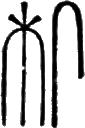
Illustration from The New York Obelisk: Cleopatra's Needle With a Preliminary Sketch of the History, Erection, Uses, and Signification of Obelisks

meses. Same word as the preceding: "to bring forth; birth; born of; child". E CENT. 56 N EAST 69
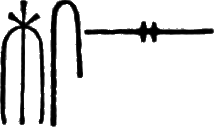
Illustration from The New York Obelisk: Cleopatra's Needle With a Preliminary Sketch of the History, Erection, Uses, and Signification of Obelisks

N

Illustration from The New York Obelisk: Cleopatra's Needle With a Preliminary Sketch of the History, Erection, Uses, and Signification of Obelisks

n. Prep.: "by, for". E CENT. 56 SOUTH 64 S CENT. 58 58 58 58 N EAST 69 CENT. 60 Sign of the genitive case: "of, in". E CENT. 56 56 SOUTH 64 64 W CENT. 59 SOUTH 68 Pyr. WEST 53 Sign of the accusative case. E CENT. 56

Illustration from The New York Obelisk: Cleopatra's Needle With a Preliminary Sketch of the History, Erection, Uses, and Signification of Obelisks

n. Same as the preceding. Sign of the genitive case: "of". E NORTH 63 SOUTH 64
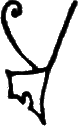
Illustration from The New York Obelisk: Cleopatra's Needle With a Preliminary Sketch of the History, Erection, Uses, and Signification of Obelisks

neb. Noun: "lord, master". E NORTH 62 SOUTH 64 64 S EAST 65 65 CENT. 58 WEST 66 W NORTH 67 SOUTH 68 N EAST 69 69 WEST 70 Pyr. EAST 47 49 49 SOUTH 50 51 51 WEST 52 53 53 NORTH 54 54 55 Adj.: "all, every". E CENT. 57 N EAST 69 CENT. 60 61 WEST 70 70 Pyr. EAST 49 SOUTH 51 NORTH 55

Illustration from The New York Obelisk: Cleopatra's Needle With a Preliminary Sketch of the History, Erection, Uses, and Signification of Obelisks

neb·t. Feminine of the preceding word: "mistress, queen". E CENT. 56 where by mistake, perhaps, it stands for the preceding word and means "lord".
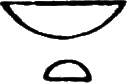
Illustration from The New York Obelisk: Cleopatra's Needle With a Preliminary Sketch of the History, Erection, Uses, and Signification of Obelisks

Pronunciation doubtful, either neb mut neb ârâ or neb sheta neb meḥen·t: "the lord of the Vulture and Uræus diadems". The title of Pharaoh as the ruler of Upper and Lower Egypt. E CENT. 56 S WEST 66 N WEST 70
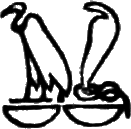
Illustration from The New York Obelisk: Cleopatra's Needle With a Preliminary Sketch of the History, Erection, Uses, and Signification of Obelisks

nub. Noun: "gold". In the phrase Hor-nub "the golden hawk or Horus". E SOUTH 64 W SOUTH 68 N CENT. 60
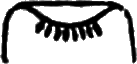
Illustration from The New York Obelisk: Cleopatra's Needle With a Preliminary Sketch of the History, Erection, Uses, and Signification of Obelisks

nefer. Adj.: "good, gracious, benevolent, beautiful". Pyr. EAST 47 SOUTH 50 WEST 52 53 NORTH 54 Base of E 71 71 71 71 S 71 71 71 71 W 71 71 71 71 N 71 71 71 71

Illustration from The New York Obelisk: Cleopatra's Needle With a Preliminary Sketch of the History, Erection, Uses, and Signification of Obelisks

neferu. Plural of the preceding word: "beauty". E CENT. 56
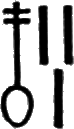
Illustration from The New York Obelisk: Cleopatra's Needle With a Preliminary Sketch of the History, Erection, Uses, and Signification of Obelisks

nen. Adv.: "not". S CENT. 58 W NORTH 67
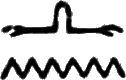
Illustration from The New York Obelisk: Cleopatra's Needle With a Preliminary Sketch of the History, Erection, Uses, and Signification of Obelisks

neḥeḥ or, possibly, only ḥeḥ. Noun, &c.: "eternity; eternal; forever". E CENT. 56
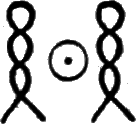
Illustration from The New York Obelisk: Cleopatra's Needle With a Preliminary Sketch of the History, Erection, Uses, and Signification of Obelisks

nekht. Adj. and noun: "powerful, valiant, mighty; strength". E NORTH 62 CENT. 56 SOUTH 63 S EAST 65 CENT. 58 WEST 66 W NORTH 67 CENT. 59 SOUTH 68 N EAST 68 CENT. 60 WEST 70 Pyr. EAST 48 SOUTH 50 WEST 53 NORTH 55
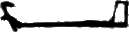
Illustration from The New York Obelisk: Cleopatra's Needle With a Preliminary Sketch of the History, Erection, Uses, and Signification of Obelisks

nekhtu. Plural of the preceding word: "victory". N CENT. 60
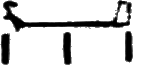
Illustration from The New York Obelisk: Cleopatra's Needle With a Preliminary Sketch of the History, Erection, Uses, and Signification of Obelisks

nekhtu. Same word as the preceding: "victory". E SOUTH 64 W SOUTH 68
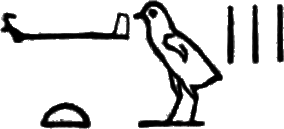
Illustration from The New York Obelisk: Cleopatra's Needle With a Preliminary Sketch of the History, Erection, Uses, and Signification of Obelisks

ent. Lengthened form of the preposition n (cf. above). Sign of the genitive case: "of". N CENT. 60

Illustration from The New York Obelisk: Cleopatra's Needle With a Preliminary Sketch of the History, Erection, Uses, and Signification of Obelisks

enti (others read entet). Relative pronoun: "who, which, what; whose; whom". E CENT. 56
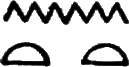
Illustration from The New York Obelisk: Cleopatra's Needle With a Preliminary Sketch of the History, Erection, Uses, and Signification of Obelisks

nuter. Noun and adj.: "god; divine". E CENT. 57 Pyr. EAST 47 49 SOUTH 50 51 WEST 52 53 NORTH 54 Base of E 71 71 S 71 71 W 71 71 N 71 71 Reading from right to left. Base of E 71 71 S 71 71 W 71 71 N 71 71

Illustration from The New York Obelisk: Cleopatra's Needle With a Preliminary Sketch of the History, Erection, Uses, and Signification of Obelisks

nuter. Same word as the preceding: "god". S EAST 65
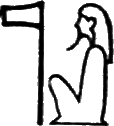
Illustration from The New York Obelisk: Cleopatra's Needle With a Preliminary Sketch of the History, Erection, Uses, and Signification of Obelisks

nuteru. Plural of nuter: "gods". E CENT. 57
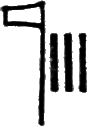
Illustration from The New York Obelisk: Cleopatra's Needle With a Preliminary Sketch of the History, Erection, Uses, and Signification of Obelisks

nuteru. Same word as the preceding: "gods". E NORTH 62 W NORTH 67
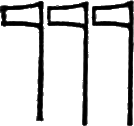
Illustration from The New York Obelisk: Cleopatra's Needle With a Preliminary Sketch of the History, Erection, Uses, and Signification of Obelisks

nuteri dûa. Noun: "morning-star". S EAST 65
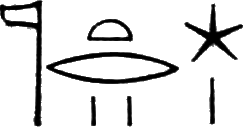
Illustration from The New York Obelisk: Cleopatra's Needle With a Preliminary Sketch of the History, Erection, Uses, and Signification of Obelisks

R

Illustration from The New York Obelisk: Cleopatra's Needle With a Preliminary Sketch of the History, Erection, Uses, and Signification of Obelisks

r. Prep.: "out, over, for, as, in order to". E SOUTH 64 64 N EAST 69 69 CENT. 60 60 Pyr. E 49 S 51 W 53 N 55

Illustration from The New York Obelisk: Cleopatra's Needle With a Preliminary Sketch of the History, Erection, Uses, and Signification of Obelisks

ru. Noun: "mouth, end". N CENT. 60

Illustration from The New York Obelisk: Cleopatra's Needle With a Preliminary Sketch of the History, Erection, Uses, and Signification of Obelisks

Râ. "Rā, the sun." E NORTH 62 62 CENT. 56 57 SOUTH 64 64 S EAST 65 65 CENT. 58 WEST 66 66 W NORTH 67 67 CENT. 59 SOUTH 68 68 N EAST 69 69 CENT. 61 WEST 70 70 Pyr. EAST 48 SOUTH 50 WEST 53 NORTH 55 SMALL SIDE INSCRIPTIONS E 72 72 S 72 72 W 72 72 N 72 72

Illustration from The New York Obelisk: Cleopatra's Needle With a Preliminary Sketch of the History, Erection, Uses, and Signification of Obelisks

Râ. Same word as the preceding: "Rā, the sun". E SOUTH 64 64 S WEST 66 66 W SOUTH 68 N EAST 69 69 WEST 70

Illustration from The New York Obelisk: Cleopatra's Needle With a Preliminary Sketch of the History, Erection, Uses, and Signification of Obelisks

Râ. Same word as the preceding: "Rā, the sun". N CENT. 60
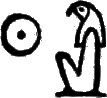
Illustration from The New York Obelisk: Cleopatra's Needle With a Preliminary Sketch of the History, Erection, Uses, and Signification of Obelisks

Râ. Same word as the preceding: "Rā, the sun". E NORTH 62 W NORTH 67
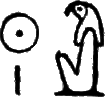
Illustration from The New York Obelisk: Cleopatra's Needle With a Preliminary Sketch of the History, Erection, Uses, and Signification of Obelisks

Râ. Same word as the preceding: "Rā, the sun". E NORTH 62 63 SOUTH 64 S CENT. 58 WEST 66 W NORTH 67 SOUTH 68 N CENT. 60 WEST 70
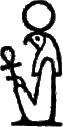
Illustration from The New York Obelisk: Cleopatra's Needle With a Preliminary Sketch of the History, Erection, Uses, and Signification of Obelisks

Râ-Hor-khuti. A name of the sun-god: "Rā, the hawk in the horizon". S CENT. 58 W CENT. 60 Pyr. EAST 49 North 55
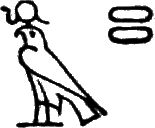
Illustration from The New York Obelisk: Cleopatra's Needle With a Preliminary Sketch of the History, Erection, Uses, and Signification of Obelisks

renpe·tu. Noun, plural of renpe·t "year", hence: "years". E SOUTH 61 W SOUTH 68
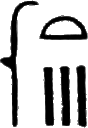
Illustration from The New York Obelisk: Cleopatra's Needle With a Preliminary Sketch of the History, Erection, Uses, and Signification of Obelisks

rekh. Verb: "to know, understand". E CENT. 56
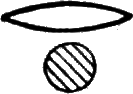
Illustration from The New York Obelisk: Cleopatra's Needle With a Preliminary Sketch of the History, Erection, Uses, and Signification of Obelisks

Same word as the preceding: "to know, understand". S EAST 65
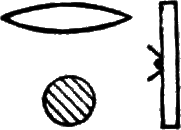
Illustration from The New York Obelisk: Cleopatra's Needle With a Preliminary Sketch of the History, Erection, Uses, and Signification of Obelisks

H

Illustration from The New York Obelisk: Cleopatra's Needle With a Preliminary Sketch of the History, Erection, Uses, and Signification of Obelisks

hapu. Noun, plural of hap "law, judgment", hence: "laws". S EAST 65
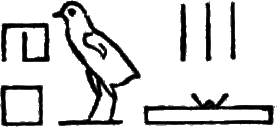
Illustration from The New York Obelisk: Cleopatra's Needle With a Preliminary Sketch of the History, Erection, Uses, and Signification of Obelisks

har. Adj.: "calm, satisfied, glad". N CENT. 60
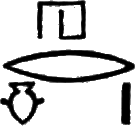
Illustration from The New York Obelisk: Cleopatra's Needle With a Preliminary Sketch of the History, Erection, Uses, and Signification of Obelisks

Ḥ

Illustration from The New York Obelisk: Cleopatra's Needle With a Preliminary Sketch of the History, Erection, Uses, and Signification of Obelisks

ḥâu. Noun, plural of ḥâ "limb", hence: "limbs". E CENT. 56
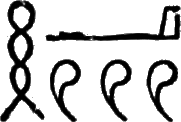
Illustration from The New York Obelisk: Cleopatra's Needle With a Preliminary Sketch of the History, Erection, Uses, and Signification of Obelisks

ḥu. Verb: "to smite, strike". N CENT. 60
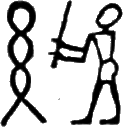
Illustration from The New York Obelisk: Cleopatra's Needle With a Preliminary Sketch of the History, Erection, Uses, and Signification of Obelisks

ḥeb. Noun: "festival, feast". S EAST 65
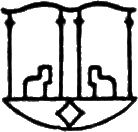
Illustration from The New York Obelisk: Cleopatra's Needle With a Preliminary Sketch of the History, Erection, Uses, and Signification of Obelisks

ḥebu. Plural of the preceding word: "festivals". N EAST 69
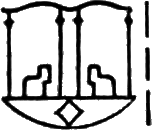
Illustration from The New York Obelisk: Cleopatra's Needle With a Preliminary Sketch of the History, Erection, Uses, and Signification of Obelisks

ḥeb. Noun: "festival". In the phrase sed-ḥeb "the thirty-year period". S CENT. 58
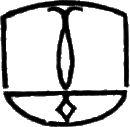
Illustration from The New York Obelisk: Cleopatra's Needle With a Preliminary Sketch of the History, Erection, Uses, and Signification of Obelisks

ḥun. Noun: "child, boy, youth". E NORTH 62
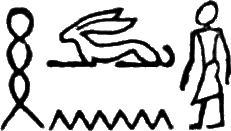
Illustration from The New York Obelisk: Cleopatra's Needle With a Preliminary Sketch of the History, Erection, Uses, and Signification of Obelisks

ḥenâ. Prep.: "with". E CENT. 57

Illustration from The New York Obelisk: Cleopatra's Needle With a Preliminary Sketch of the History, Erection, Uses, and Signification of Obelisks

ḥer. Noun: "face". N WEST 70

Illustration from The New York Obelisk: Cleopatra's Needle With a Preliminary Sketch of the History, Erection, Uses, and Signification of Obelisks

Ḥer. "Horus" with the double crown of Egypt. E NORTH 62 CENT. 56 SOUTH 63 S EAST 65 CENT. 58 WEST 66 W NORTH 67 CENT. 59 SOUTH 68 N EAST 68 CENT. 60 WEST 70
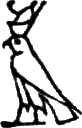
Illustration from The New York Obelisk: Cleopatra's Needle With a Preliminary Sketch of the History, Erection, Uses, and Signification of Obelisks

See under Râ-Ḥor-khuti.

Illustration from The New York Obelisk: Cleopatra's Needle With a Preliminary Sketch of the History, Erection, Uses, and Signification of Obelisks

Ḥer-nub. "The golden Horus." E SOUTH 64 W SOUTH 68 N CENT. 60
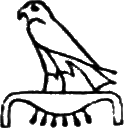
Illustration from The New York Obelisk: Cleopatra's Needle With a Preliminary Sketch of the History, Erection, Uses, and Signification of Obelisks

See under neḥeḥ. E CENT. 56

Illustration from The New York Obelisk: Cleopatra's Needle With a Preliminary Sketch of the History, Erection, Uses, and Signification of Obelisks

ḥeq. Noun: "prince, chief". Pyr. SOUTH 51 WEST 52
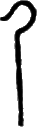
Illustration from The New York Obelisk: Cleopatra's Needle With a Preliminary Sketch of the History, Erection, Uses, and Signification of Obelisks

ḥequ. Plural of the preceding word: "princes, chiefs". N CENT. 60
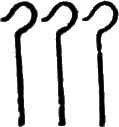
Illustration from The New York Obelisk: Cleopatra's Needle With a Preliminary Sketch of the History, Erection, Uses, and Signification of Obelisks

ḥa·t. Noun: "temple". Pyr. SOUTH 51 WEST 53
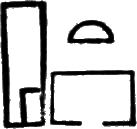
Illustration from The New York Obelisk: Cleopatra's Needle With a Preliminary Sketch of the History, Erection, Uses, and Signification of Obelisks

ḥa·t-â. From the preceding word with the adjective â "great", hence: "the great temple". E CENT. 56
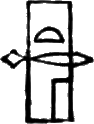
Illustration from The New York Obelisk: Cleopatra's Needle With a Preliminary Sketch of the History, Erection, Uses, and Signification of Obelisks

ḥez. Adj.: "white". Noun: "the white crown" of Upper Egypt. N CENT. 60
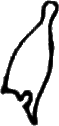
Illustration from The New York Obelisk: Cleopatra's Needle With a Preliminary Sketch of the History, Erection, Uses, and Signification of Obelisks

Kh

Illustration from The New York Obelisk: Cleopatra's Needle With a Preliminary Sketch of the History, Erection, Uses, and Signification of Obelisks

khâ. Adj.: "glorious, crowned". E CENT. 56 W CENT. 59 Pyr. EAST 48 SOUTH 50 WEST 53 NORTH 55

Illustration from The New York Obelisk: Cleopatra's Needle With a Preliminary Sketch of the History, Erection, Uses, and Signification of Obelisks

khâu. Noun, plural of khâ "crown", hence: "diadems, crowns". E SOUTH 64
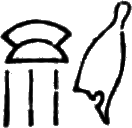
Illustration from The New York Obelisk: Cleopatra's Needle With a Preliminary Sketch of the History, Erection, Uses, and Signification of Obelisks

khu. Verb, &c.: "to be glorious; resplendent; glory, splendor". E NORTH 63 SOUTH 64
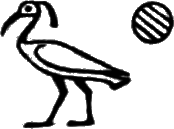
Illustration from The New York Obelisk: Cleopatra's Needle With a Preliminary Sketch of the History, Erection, Uses, and Signification of Obelisks

khu·t. Noun: "horizon". E NORTH 62

Illustration from The New York Obelisk: Cleopatra's Needle With a Preliminary Sketch of the History, Erection, Uses, and Signification of Obelisks

khuti. Dual of the preceding word: "the two horizons". See under Râ-Ḥor-khuti.

Illustration from The New York Obelisk: Cleopatra's Needle With a Preliminary Sketch of the History, Erection, Uses, and Signification of Obelisks

Kheperȧ. The god "Khepera", literally "the creator". E SOUTH 63
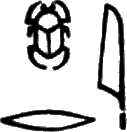
Illustration from The New York Obelisk: Cleopatra's Needle With a Preliminary Sketch of the History, Erection, Uses, and Signification of Obelisks

khepesh. Noun: "strength, power, victory". N CENT. 60

Illustration from The New York Obelisk: Cleopatra's Needle With a Preliminary Sketch of the History, Erection, Uses, and Signification of Obelisks

kher. Conj. and prep.: "for". E CENT. 56
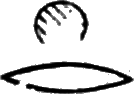
Illustration from The New York Obelisk: Cleopatra's Needle With a Preliminary Sketch of the History, Erection, Uses, and Signification of Obelisks

Kherp-kheper-Râ-sotep-en-Râ. The first cartouche or the royal name of Osarkon I., "made governor by Rā, chosen of Rā". SMALL SIDE INSCRIPTIONS E 72 72 S 72 72 W 72 72 N 72 72
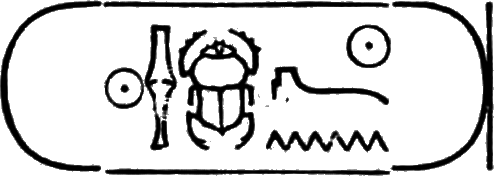
Illustration from The New York Obelisk: Cleopatra's Needle With a Preliminary Sketch of the History, Erection, Uses, and Signification of Obelisks

kha·t. Noun: "belly, womb". E CENT. 56
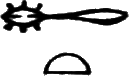
Illustration from The New York Obelisk: Cleopatra's Needle With a Preliminary Sketch of the History, Erection, Uses, and Signification of Obelisks

kha·t. Same word as the preceding: "belly, womb". E SOUTH 64
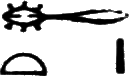
Illustration from The New York Obelisk: Cleopatra's Needle With a Preliminary Sketch of the History, Erection, Uses, and Signification of Obelisks

khet. Noun: "thing; things". Pyr. NORTH 54

Illustration from The New York Obelisk: Cleopatra's Needle With a Preliminary Sketch of the History, Erection, Uses, and Signification of Obelisks

khatf. Prep. and conj.: "for, before; since, because". N CENT. 60 WEST 70
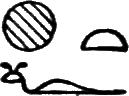
Illustration from The New York Obelisk: Cleopatra's Needle With a Preliminary Sketch of the History, Erection, Uses, and Signification of Obelisks

S

Illustration from The New York Obelisk: Cleopatra's Needle With a Preliminary Sketch of the History, Erection, Uses, and Signification of Obelisks

sa. Noun: "son, child, offspring". E NORTH 62 62 CENT. 56 SOUTH 64 64 S EAST 65 65 CENT. 58 WEST 66 66 W NORTH 67 67 CENT. 59 SOUTH 68 68 N EAST 69 69 CENT. 61 WEST 70 70 Pyr. EAST 48 SOUTH 50 WEST 53 NORTH 55 SMALL SIDE INSCRIPTIONS E 72 72 S 72 72 W 72 72 N 72 72
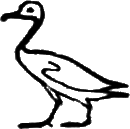
Illustration from The New York Obelisk: Cleopatra's Needle With a Preliminary Sketch of the History, Erection, Uses, and Signification of Obelisks

sa. Same word as the preceding: "son, child, offspring". E SOUTH 63 S WEST 66 W SOUTH 68 N WEST 70

Illustration from The New York Obelisk: Cleopatra's Needle With a Preliminary Sketch of the History, Erection, Uses, and Signification of Obelisks

s·âḥâ. Verb, causative form of âḥâ "to raise", hence: "to cause to be raised, erect". S CENT. 58
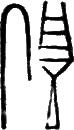
Illustration from The New York Obelisk: Cleopatra's Needle With a Preliminary Sketch of the History, Erection, Uses, and Signification of Obelisks

su. Personal pronoun third person: "he, him; himself; she, her; herself; it; itself; they, them; themselves". E SOUTH 64 N EAST 69

Illustration from The New York Obelisk: Cleopatra's Needle With a Preliminary Sketch of the History, Erection, Uses, and Signification of Obelisks

su. Same word as the preceding: "he; him; &c." N CENT. 60
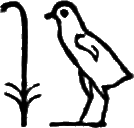
Illustration from The New York Obelisk: Cleopatra's Needle With a Preliminary Sketch of the History, Erection, Uses, and Signification of Obelisks

s·usekh. Verb, causative form of usekh "to extend", hence: "to cause to be extended". N CENT. 60
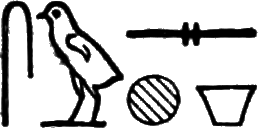
Illustration from The New York Obelisk: Cleopatra's Needle With a Preliminary Sketch of the History, Erection, Uses, and Signification of Obelisks

sep. Noun: "time, times", after numerals. S CENT. 58

Illustration from The New York Obelisk: Cleopatra's Needle With a Preliminary Sketch of the History, Erection, Uses, and Signification of Obelisks

s·menkh. Verb, causative of menkh "to be beautiful", hence: "to render beautiful, embellish". W CENT. 59
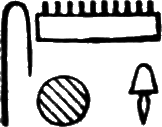
Illustration from The New York Obelisk: Cleopatra's Needle With a Preliminary Sketch of the History, Erection, Uses, and Signification of Obelisks

sen. Personal pronoun third person plural masculine: "they; them; their". E CENT. 56 56
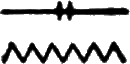
Illustration from The New York Obelisk: Cleopatra's Needle With a Preliminary Sketch of the History, Erection, Uses, and Signification of Obelisks

s·ḥeb. Verb, causative form of ḥeb "to be glad", hence: "to cause to rejoice, gladden". N EAST 69
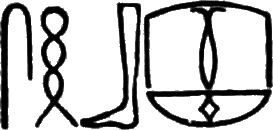
Illustration from The New York Obelisk: Cleopatra's Needle With a Preliminary Sketch of the History, Erection, Uses, and Signification of Obelisks

suten. Noun: "king". E CENT. 56

Illustration from The New York Obelisk: Cleopatra's Needle With a Preliminary Sketch of the History, Erection, Uses, and Signification of Obelisks

suten. Same word as the preceding: "king". S WEST 66 N WEST 70
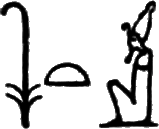
Illustration from The New York Obelisk: Cleopatra's Needle With a Preliminary Sketch of the History, Erection, Uses, and Signification of Obelisks

sutenî·t. Noun, derived from the preceding word: "kingdom". E CENT. 56
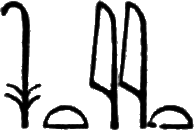
Illustration from The New York Obelisk: Cleopatra's Needle With a Preliminary Sketch of the History, Erection, Uses, and Signification of Obelisks

suten-kaut (doubtful!). Noun: "the king of Upper and Lower Egypt". E NORTH 62 CENT. 56 SOUTH 63 S EAST 65 CENT. 58 WEST 66 W NORTH 67 CENT. 59 SOUTH 68 N EAST 68 CENT. 60 WEST 70 Pyr. WEST 52 NORTH 54 SMALL SIDE INSCRIPTIONS E 72 72 S 72 72 W 72 72 N 72 72
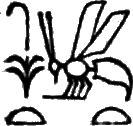
Illustration from The New York Obelisk: Cleopatra's Needle With a Preliminary Sketch of the History, Erection, Uses, and Signification of Obelisks

sed. In the phrase sed-ḥeb "the thirty year period festival". S CENT. 58
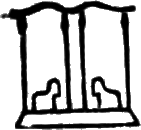
Illustration from The New York Obelisk: Cleopatra's Needle With a Preliminary Sketch of the History, Erection, Uses, and Signification of Obelisks

s·zef. Verb, causative form of zef "to be full", hence: "to cause to be filled, provide with". N EAST 69
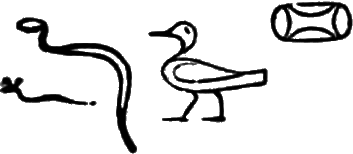
Illustration from The New York Obelisk: Cleopatra's Needle With a Preliminary Sketch of the History, Erection, Uses, and Signification of Obelisks

Sh

Illustration from The New York Obelisk: Cleopatra's Needle With a Preliminary Sketch of the History, Erection, Uses, and Signification of Obelisks

shep. Verb: "to seize, obtain". E SOUTH 64
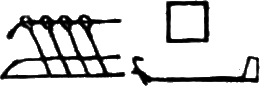
Illustration from The New York Obelisk: Cleopatra's Needle With a Preliminary Sketch of the History, Erection, Uses, and Signification of Obelisks

shepes. Adj.: "beautiful, glorious". E NORTH 62
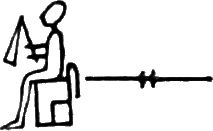
Illustration from The New York Obelisk: Cleopatra's Needle With a Preliminary Sketch of the History, Erection, Uses, and Signification of Obelisks

shef·t. Noun: "terror, awe". S EAST 65
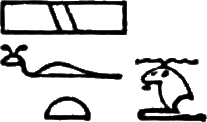
Illustration from The New York Obelisk: Cleopatra's Needle With a Preliminary Sketch of the History, Erection, Uses, and Signification of Obelisks

Q

Illustration from The New York Obelisk: Cleopatra's Needle With a Preliminary Sketch of the History, Erection, Uses, and Signification of Obelisks

qa. Verb, abbreviated form of qa: "to raise". N CENT. 60
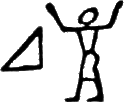
Illustration from The New York Obelisk: Cleopatra's Needle With a Preliminary Sketch of the History, Erection, Uses, and Signification of Obelisks

qa. Noun: "bull". E NORTH 62 CENT. 56 SOUTH 63 S EAST 65 CENT. 58 WEST 66 W NORTH 67 CENT. 59 SOUTH 68 N EAST 68 WEST 70 Pyr. EAST 48 SOUTH 50 WEST 53 NORTH 55
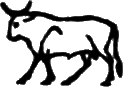
Illustration from The New York Obelisk: Cleopatra's Needle With a Preliminary Sketch of the History, Erection, Uses, and Signification of Obelisks

qebeḥ. Noun: "libation". Pyr. WEST 53 NORTH 55
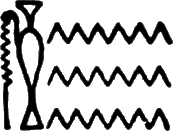
Illustration from The New York Obelisk: Cleopatra's Needle With a Preliminary Sketch of the History, Erection, Uses, and Signification of Obelisks

Qem·t. "Egypt". S WEST 66 N CENT. 61 WEST 70
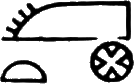
Illustration from The New York Obelisk: Cleopatra's Needle With a Preliminary Sketch of the History, Erection, Uses, and Signification of Obelisks

qema. Verb: "to create". E CENT. 56

Illustration from The New York Obelisk: Cleopatra's Needle With a Preliminary Sketch of the History, Erection, Uses, and Signification of Obelisks

qen. Noun: "force, triumph, victory". N WEST 70
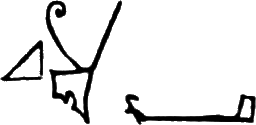
Illustration from The New York Obelisk: Cleopatra's Needle With a Preliminary Sketch of the History, Erection, Uses, and Signification of Obelisks

G

Illustration from The New York Obelisk: Cleopatra's Needle With a Preliminary Sketch of the History, Erection, Uses, and Signification of Obelisks

ger. Verb: "to seize, possess". E NORTH 62 W NORTH 67
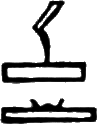
Illustration from The New York Obelisk: Cleopatra's Needle With a Preliminary Sketch of the History, Erection, Uses, and Signification of Obelisks

T

Illustration from The New York Obelisk: Cleopatra's Needle With a Preliminary Sketch of the History, Erection, Uses, and Signification of Obelisks

ta. Noun: "land, earth". N CENT. 60

Illustration from The New York Obelisk: Cleopatra's Needle With a Preliminary Sketch of the History, Erection, Uses, and Signification of Obelisks

ta. Same word as the preceding: "land, earth". N WEST 70
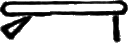
Illustration from The New York Obelisk: Cleopatra's Needle With a Preliminary Sketch of the History, Erection, Uses, and Signification of Obelisks

taui. Dual of the two preceding words: "the two countries", Egypt. E NORTH 62 62 SOUTH 64 S EAST 65 65 WEST 66 W NORTH 67 67 SOUTH 68 N EAST 69 WEST 70 Pyr. EAST 47 SOUTH 50 51 WEST 52 NORTH 54 55 Written separately. Pyr. EAST 49
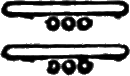
Illustration from The New York Obelisk: Cleopatra's Needle With a Preliminary Sketch of the History, Erection, Uses, and Signification of Obelisks

tash·tu. Noun, plural of tash·t "boundary", hence: "boundaries". N CENT. 60
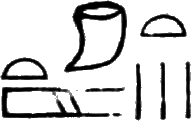
Illustration from The New York Obelisk: Cleopatra's Needle With a Preliminary Sketch of the History, Erection, Uses, and Signification of Obelisks

tep. Adj.: "first". S CENT. 58

Illustration from The New York Obelisk: Cleopatra's Needle With a Preliminary Sketch of the History, Erection, Uses, and Signification of Obelisks

tef. Noun, contracted form of ȧtef: "father". S CENT. 58 N CENT. 60
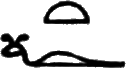
Illustration from The New York Obelisk: Cleopatra's Needle With a Preliminary Sketch of the History, Erection, Uses, and Signification of Obelisks

tef. Same word as the preceding: "father". S EAST 65 W NORTH 67 N EAST 69
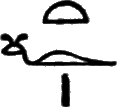
Illustration from The New York Obelisk: Cleopatra's Needle With a Preliminary Sketch of the History, Erection, Uses, and Signification of Obelisks

Tum. The god "Tum". E CENT. 57 Pyr. SOUTH 51 WEST 53
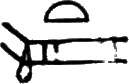
Illustration from The New York Obelisk: Cleopatra's Needle With a Preliminary Sketch of the History, Erection, Uses, and Signification of Obelisks

Tum. Same word as the preceding: the god "Tum". E CENT. 56
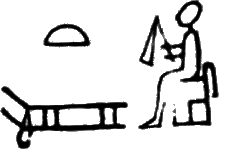
Illustration from The New York Obelisk: Cleopatra's Needle With a Preliminary Sketch of the History, Erection, Uses, and Signification of Obelisks

tekhenui. Noun, dual of tekhen "obelisk", hence: "two obelisks". S CENT. 58
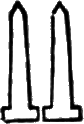
Illustration from The New York Obelisk: Cleopatra's Needle With a Preliminary Sketch of the History, Erection, Uses, and Signification of Obelisks

D

Illustration from The New York Obelisk: Cleopatra's Needle With a Preliminary Sketch of the History, Erection, Uses, and Signification of Obelisks

du. Verb, &c.: "to give; giving; gift". E NORTH 63 CENT. 57 S EAST 65 W NORTH 67 N EAST 69 CENT. 61 WEST 70 Pyr. EAST 47 49 SOUTH 50 51 WEST 52 53 53 NORTH 54 55 55
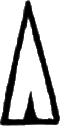
Illustration from The New York Obelisk: Cleopatra's Needle With a Preliminary Sketch of the History, Erection, Uses, and Signification of Obelisks

du·t. Noun, from the preceding word: "gift, present". Pyr. EAST 49 SOUTH 51 WEST 53 NORTH 55
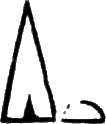
Illustration from The New York Obelisk: Cleopatra's Needle With a Preliminary Sketch of the History, Erection, Uses, and Signification of Obelisks

dûa. Noun: "star". In the phrase nuterti dûa "the morning-star". S EAST 65

Illustration from The New York Obelisk: Cleopatra's Needle With a Preliminary Sketch of the History, Erection, Uses, and Signification of Obelisks

dem. Adj.: "all, complete". N WEST 70
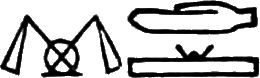
Illustration from The New York Obelisk: Cleopatra's Needle With a Preliminary Sketch of the History, Erection, Uses, and Signification of Obelisks

dem·t. Noun, from the preceding word: "completeness, totality". N CENT. 60
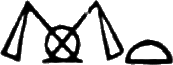
Illustration from The New York Obelisk: Cleopatra's Needle With a Preliminary Sketch of the History, Erection, Uses, and Signification of Obelisks

Deḥuti. The god "Thoth". E CENT. 56

Illustration from The New York Obelisk: Cleopatra's Needle With a Preliminary Sketch of the History, Erection, Uses, and Signification of Obelisks

Deḥuti-meses-nefer-kheperu. The second cartouche or the family name of Thothmes III., "the child of Thoth, beautiful in his transformations (or of beautiful form)". S CENT. 58 W CENT. 60 N CENT. 61
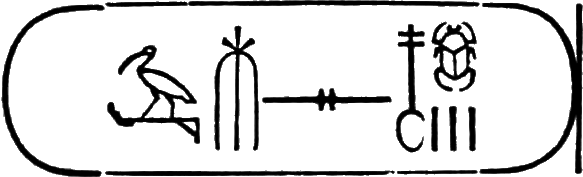
Illustration from The New York Obelisk: Cleopatra's Needle With a Preliminary Sketch of the History, Erection, Uses, and Signification of Obelisks

ded. Noun: "stability". E CENT. 57 Pyr. WEST 53

Illustration from The New York Obelisk: Cleopatra's Needle With a Preliminary Sketch of the History, Erection, Uses, and Signification of Obelisks

dedui. Noun, dual of ded "hand", hence: "the two hands". N CENT. 60
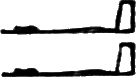
Illustration from The New York Obelisk: Cleopatra's Needle With a Preliminary Sketch of the History, Erection, Uses, and Signification of Obelisks

dedui. Same word as the preceding: "two hands". N WEST 70
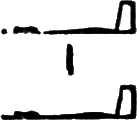
Illustration from The New York Obelisk: Cleopatra's Needle With a Preliminary Sketch of the History, Erection, Uses, and Signification of Obelisks

Z

Illustration from The New York Obelisk: Cleopatra's Needle With a Preliminary Sketch of the History, Erection, Uses, and Signification of Obelisks

zeta. Noun, &c.: "eternity; eternal; forever". E CENT. 57 S CENT. 58 W CENT. 60 N CENT. 61 Pyr. EAST 47 SOUTH 50 WEST 52 NORTH 54

Illustration from The New York Obelisk: Cleopatra's Needle With a Preliminary Sketch of the History, Erection, Uses, and Signification of Obelisks
Explore with AITake your curiosity a little further.

Reading settings