Front matter (continued 2)
Reading edition
The commercial kaolins of France, Germany, America and China very closely resemble the Cornish china clays in composition, but when used in the manufacture of porcelain they create differences in the finished material which are clearly noticeable, though microscopical examination and chemical analysis, at present, fail to distinguish between them in the raw state on account of their great resistance to ordinary chemical and physical forces.
In addition to the breaking up of felspathic rocks with the formation of china clay or kaolin (kaolinization), other decompositions which occur may result in the formation of clays, and an examination of a considerable number of clays by J. M. van Bemmelen (26) has led him to suppose that several different clay-forming forces have been at work in the production of clays. He classifies these under four heads:
(1) Kaolinization, or the decomposition of felspathic and similar rocks by the action of telluric water containing active gases in solution.
(2) Ordinary weathering in which the action is largely mechanical, but is accompanied by some hydrolysis owing to the impurities contained in the water which is an essential factor.
(3) Lateritic action—or simple decomposition by heat—which occurs chiefly under tropical conditions, but may also occur in temperate climates, and has for its main product a mixture of free silica and alumina, the latter being in the form of (amorphous) 'laterite.' It may not improbably be a result of the decomposition of the clay molecule similar to that which occurs when china clay is heated, as there is no temperature below which it can be said that china clay does not decompose into free silica and alumina (29).
(4) Secondary reactions in which the products of one of the reactions previously described may undergo further changes, as the conversion of amorphous clayite into crystalline kaolinite, or amorphous laterite into crystalline hydrargillite.
Weathering.
The action of the forces conveniently classed under the term weathering are of two main kinds:
(a) The mechanical grinding of sandstone, quartzite, limestone, and other rocks, causes an addition of adventitious material to clay, the proportions being sometimes so large as to render it necessary to term the material an argillaceous sand, rather than a sandy clay. Some of these grains of mineral matter are so minute and so resistant to the ordinary chemical reagents as to make it extremely difficult to distinguish them from clay.
(b) The chemical decomposition due to the action of very dilute solutions. By this means simple silicates are decomposed with the formation of colloidal silica which may either remain in solution or may be deposited in a coagulated form. At the same time, some alumino-silicates will be similarly decomposed into colloidal alumino-silicic acids or clays.
The ultimate results of the action of ordinary weathering on silicate rocks are, therefore, sands and clays, the latter being in some ways quite distinct in their origin and physical properties from the china clays. According to J. M. van Bemmelen (26) such clays also contain an alumino-silicate soluble in boiling hydrochloric acid followed by caustic soda, whereas pure china clays are unaffected by this treatment.
The variety of silicates and other minerals which—in a partially decomposed condition—go to form 'clays' is so great that the complete separation of the smallest particles of them from those of the true clay present has never been accomplished and our knowledge of the mineralogical constitution of many of the best known clays is far from complete.
It is highly probable that the action of water does not cease with the formation of clay, but that it slowly effects an increase in the plasticity of the clay. There thus appear to be at least three kinds of primary clay, viz.:
Kaolinic or china clays which are chiefly derived from felspar and can be isolated in a relatively pure state. They are highly refractory, but only slightly plastic.
Epigenic or colloidal clays derived from kaolinic clays, as a secondary product, or directly from felspar, mica, augite and other alumino-silicates by 'weathering.' They are usually less refractory and much more plastic than the china clays and contain a large percentage of impurities—sometimes in the form of free silica (sand) or of metallic oxides, carbonates, sulphides, sulphates, silicates, or other compounds. Many so-called secondary clays such as pipe clays, ball clays and fireclays may be of this type, though their origin is difficult to trace owing to their subsequent transportation and deposition.
Lateritic or highly aluminous clays, of a highly refractory character, but low plasticity. They are usually somewhat rich in iron oxide which materially affects their plasticity. Unlike the china clays, pure lateritic clays are completely decomposed by hydrochloric acid. Bauxite and some of the highly aluminous clays of the Coal Measures appear to be of this type.
Unfortunately these different types of clay are extremely difficult to distinguish and in many instances they have become mixed with each other and with other materials during the actions to be described in the next chapter, that it is often almost impossible to decide whether the true clay in a given specimen possessed its characteristics ab initio or whether it has gained them since the time when it ceased to be a primary clay.
Secondary clays are those which have been produced by the action of the weather and other natural forces on primary clays, the changes effected being of a physical rather than a chemical nature (see Chapter IV).
The essential constituent of secondary clays has not been positively identified. In so far as it has been isolated it differs from the true clay in the primary clays in several important respects, and until its nature has been more fully investigated great caution must be exercised in assigning a definite name to it. For many purposes the term pelinite (p. 149) is convenient, being analogous to the corresponding one used for material in china clays (clayite, p. 107). These terms are purely provisional and must be discarded when the true mineralogical identities of the substances they represent have been established.
CHAPTER IV
THE MODES OF ACCUMULATION OF CLAYS
From whatever sources clays may have been originally derived, the manner in which they have been accumulated in their present positions is a factor of great importance both in regard to their chemical and physical characters and their suitability for various purposes.
As explained in Chapter III, the china clays or kaolins may usually be regarded as primary clays derived from granitic or other felspathic or felsitic rocks by chemical decomposition. Such clays are found near to their place of origin, are usually obtainable in a comparatively pure state and are generally deficient in plasticity. They may occur in beds of small or great depth, but these are not 'accumulations' in the ordinary meaning of that term.
Residual clays (p. 70) also form a distinct class, as unlike the majority of argillaceous materials they are left behind when other substances are removed, usually by some process of solution. In many cases, however, the residual clays are really secondary in character, having been transported from their place of origin, together with limestone or other minerals, the mixture deposited and subjected to pressure and possibly to heat, whereby a rock-like mass is formed. This mass has then been subjected to the solvent action of water containing carbon dioxide or other substances which dissolve out the bulk of the associated minerals and leave the residual clay behind.
The chief agents in the transport and accumulation of clays are the air, in the form of wind; water, in the form of rain, streams, rivers, floods, lakes and seas, or in the form of ice and snow as in glaciers and avalanches; earth-movements such as the changes wrought by volcanoes, earthquakes and the less clearly marked rising and falling of various portions of the earth's crust which result in folded, twisted, sheared, cracked, inclined, laminated and other strata.
These agents have first moved the clay from its original site and have later deposited it with other materials in the form of strata of widely varying area and thickness, some 'clay' beds being several hundred feet in depth and occupying many square miles in area, whilst others are in the form of thin 'veins' only a few inches thick or in 'pockets' of small area and depth. These deposits have in many places been displaced by subsequent earth-movements and have been overlain by other deposits so as to render them quite inaccessible. Others have been covered by deposits several miles thick; but the greater part of the covering has since been removed by glacial or other forces, so that clays of practically all geological ages may be found within the relatively small area of Great Britain.
The Transportation of Clays.
By the action of wind or rain, or of rain following frost, the finer of particles clay are removed from their primary site and as the rain drops collect into streamlets, these unite to form streams and rivers and the clay with its associated minerals is carried along by the water. As it travels over other rocks or through valleys composed of sandstone, limestone and other materials, some of these substances are dislodged, broken into fragments of various sizes and with the clay are carried still further. In their journey these materials rub against each other and against the banks and bed of the stream, thereby undergoing a prolonged process of grinding whereby the softer rocks are reduced to very fine sand and silt which becomes, in time, very intimately mixed with the clay. If the velocity of the stream were sufficiently great, the mixed materials—derived from as many sources as there are rocks of the districts through which they have passed—would be discharged into a lake or into the sea. Here the velocity of the water would be so greatly reduced that the materials would gradually settle, the largest and heaviest fragments being first deposited and the finer ones at a greater distance.
With most streams and rivers, however, the velocity of the water is very variable, and a certain amount of deposition therefore occurs along the course, the heavier particles only travelling a short distance, whilst the finer ones are readily transported. If the velocity of the stream increases, these finer particles (which include the clay) may become mixed with other particles of various sizes and the materials thus undergo a series of mixings and partial sortings until they are discharged at the river mouth or are left along its sides by a gradual sinking of the water level. The clay will be carried the whole course of the river, unless it is deposited at some place where the velocity of the water is reduced sufficiently to permit it to settle.
If floods arise, the area affected by the water will be increased. The alluvial clays have, apparently, been formed by overflowing streams and rivers, the material in suspension in the water being deposited as the rate of flow diminished. Such alluvial deposits contain a variety of minerals—usually in a very finely divided state—clay, limestone-dust or chalk, and sand being those most usually found.
River-deposited clays, i.e., those which have accumulated along the banks, are characterized by their irregularity in thickness, their variable composition and the extent to which various materials are mixed together. This renders them difficult to work and greatly increases the risks of manufacture as the whole character of a fluviatile clay may change completely in the course of a few yards.
According to the districts traversed by the water, the extent to which the materials have been deposited and re-transported and the fresh materials introduced by earth-movements, river-deposited clays may be (a) plastic and sufficiently pure to be classified as 'clays,' (b) marls or clays containing limestone-dust or chalk thoroughly mixed with the clay, and (c) loams or clays containing so much sand that they may be distinguished by the touch from the clays in class (a). Intermediate to these well-defined classes there are numerous mixtures bearing compound names such as sandy loams, sandy marls, argillaceous limestone, calcareous sands, and calcareous arenaceous clays, to which no definite characteristics can be assigned.
To some extent a transportation of clays and associated materials occurs in lakes, but the chief processes there are of the nature of sedimentation accompanied by some amount of separation. On the shores of lakes, and to a much larger extent on the sea coasts, extensive erosion followed by transportation occurs continuously, enormous quantities of land being annually removed and deposited in some portion of the ocean bed. The erosion of cliffs and the corresponding formation of sand and pebbles are too well known to need further description. It should, however, be noticed that the clay particles, being much finer, are carried so far away from the shore that only pebbles and sand remain to form the beaches, the finer particles forming 'ocean ooze.'
The action of the sea in the transport of rock-materials is more intense than that of rivers, the coasts being worn away by repeated blows from the waves and the pebbles and sand grains the latter contain. The ocean currents carry the materials dislodged by the waves and transport them, sometimes to enormous distances, usually allowing a considerable amount of separation to take place during the transit. In this way they act in a similar manner to rivers and streams.
Glaciers may be regarded as rivers of ice which erode their banks and bed in a manner similar to, but more rapidly than, streams of water. Owing to their much greater viscosity, glaciers are able to carry large boulders as well as gravel, sand and clay, so that the materials transported by them are far more complex in composition and size than are those carried by flowing water.

Fig. 14. Illustrating the successive deposition of different strata.
Separation and Sedimentation.
The clay and other particles having been placed in suspension in water by one or more of the natural forces already mentioned, they soon undergo a process of sorting or separation, previous to their deposition. The power of water for carrying matter in suspension depends largely on its velocity, and when this is reduced, as when a river discharges into a lake or sea, the larger and denser particles at once commence to settle, the smaller ones remaining longer in suspension, though if the velocity of the water is reduced sufficiently all the particles will be deposited. Hence, the deposits in lakes (lacustrine) and at the mouths of rivers (estuarine) increase more or less regularly in fineness according to their distance from the point at which the water enters, the gravel and stones being deposited first, then the coarse sand, next the finer sand and finally the silt and clay (fig. 14). If cross-currents are present, the deposits will, naturally, be made more irregular, and in some cases variations in the flow of the transporting water may cause the coarser particles to be carried further than usual so that they may cover some of the finer deposits previously formed; but as the clay and silt particles are so much finer than sand and gravel they usually travel so far before settling that their deposits are very uniform if the area over which they are spread is sufficiently large. Lake-deposited clays are for this reason more uniform than estuarine beds, whilst beds deposited at considerable depths in the sea and at a great distance from land are still more uniform.
A lacustrine clay is usually more persistent and uniform than fluviatile beds though sometimes difficult to distinguish from the latter. Some of the most valuable clay deposits are of lacustrine formation; their comparative purity and great uniformity enabling ware of excellent colour and texture to be produced without much difficulty. Thus the Reading mottled clays of the Hampshire basin, on the outskirts of the London basin and in Northern France are well known for the admirable red bricks, tiles and terra-cotta produced from them. Still purer clays deposited at Bovey Heathfield in Devonshire are also of lacustrine origin, though they differ in many respects from the ordinary lake-deposited clays and are of unusual thickness for deposits formed in this manner.
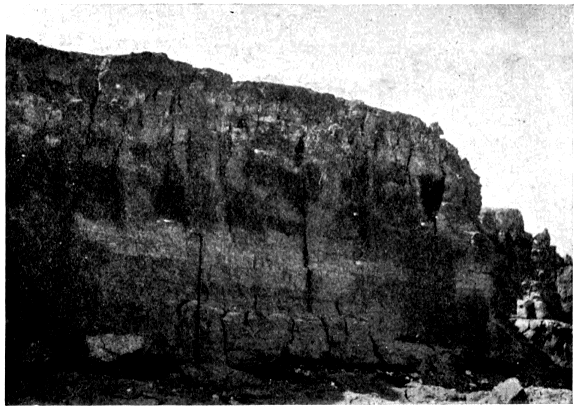
Fig. 15. Lacustrine clay at Skipsea. (By courtesy of T. Sheppard Esq.)
The greater purity of lacustrine clays, as compared with fluviatile ones, is attributed to the much larger area over which the deposit is spread,—enabling variations in the deposits to be much less noticeable than when a smaller area is covered—and to the very small velocity of the water in lakes, whereby all the coarser particles are deposited a considerable distance away from the clays and silts.
Ries (6) has pointed out that many (American) lake-clays are of glacial origin, having been laid in basins or hollows along the margin of the ice-sheet or in valleys which have been dammed by an accumulation of drift across them. Such clay beds are usually surface deposits of variable thickness and frequently impure. Like all lacustrine deposits they show (though in a more marked degree than in the older and larger lakes) alternate layers of sand and clay, though the former are usually too thin to be noticeable except for their action in enabling the deposited material to be easily split along the lines of bedding.
Estuarine deposits partake of the nature of both fluviatile and marine beds, according to their position relative to the river from which they originate. They are usually uncertain in character and are often irregular in composition owing to the variations in the flow of the water. The Estuarine clays of Great Britain—with the possible exception of the Jurassic deposits in Northamptonshire and Lincolnshire—are of minor importance, but in some countries they form a valuable source of clay.
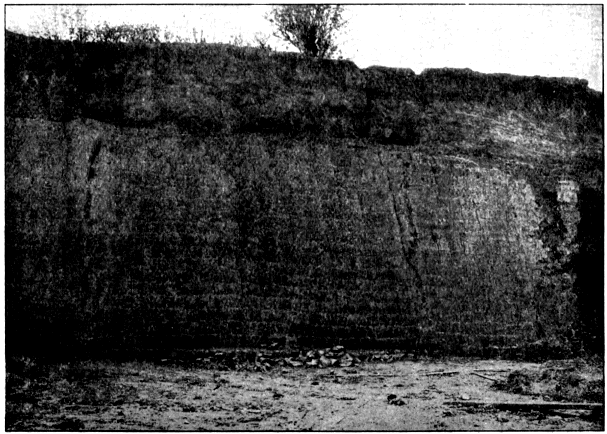
Fig. 16. Clay at Nostel, showing Marine Band. (By courtesy of T. Sheppard Esq.)
Marine clays are, as their name implies, those deposited from sea water. They are frequently found at a considerable distance from the shores of the ocean in which they were laid down, and subsequent risings and fallings of the surface of the earth have so altered the areas occupied by sea water, that a large number of marine deposits now form dry land. Though usually of enormous size and of generally persistent character, marine clay deposits vary considerably in the composition of the material at different depths, as well as in different areas. This is only to be expected from the manner of their deposition, from the varied sources of the material and from the numerous river- and ocean-currents taking part in their formation. For this reason it is generally necessary to mix together portions of the deposit drawn from various depths in order to secure a greater uniformity than would be obtained if a larger area were to be worked to a smaller depth.
The Oxford clay which extends from the centre of England to the centre of France is a typical marine clay.
At the bottom of all oceans at the present day is a deposit, of unknown thickness, of red calcareous clay or ooze which is steadily increasing in amount and is thereby forming a fresh marine deposit, though at present its inaccessibility deprives it of all economic value.
It is important not to overlook the enormous part played by variations in the level of the land relative to that of the ocean in past ages. For instance, there is abundant evidence to show that practically the whole of Great Britain has been repeatedly submerged to great depths and has been raised to heights far greater than its present average. These oft-repeated risings and settlings have caused great changes in the nature of the deposited materials so that in the Coal Measures, for example, there are deposits of obviously fresh-water origin sandwiched in between others undoubtedly marine. It can readily be understood, as stated by Arber (24), that if, at a given period, the dry land during the formation of the Coal Measures gradually subsided, it would first be covered with clear water, whilst from those portions of the area which occupied the higher ground the rivers and streams continued to pour into their estuary a large amount of fresh-water material. Later, a stage would be reached when mud of marine origin invaded the area and covered the previous deposits. When, after an indefinitely long period, the ground again rose, fresh-water deposits might again form, and this alternation of marine and fluviatile deposits appears to have been repeated with great frequency during the Carboniferous period.
In the Lower Coal Measures of Yorkshire and Lancashire, Stopes and Watson (23) have shown that the shales forming the roof of the Upper Foot Coal were derived from drifted sediments of marine origin.
Precipitated Clays.
If the plasticity of some clays is really due to the colloidal nature of their particles, it is obvious that they must have been formed by a process of coagulation or precipitation at a distance from the site of the minerals from which they have been derived. According to the 'colloid theory,' felspar and other alumino-silicates are decomposed by 'weathering,' the chief effect of which is the formation (by hydrolysis) of a colloidal solution of 'clay.' This apparently clear solution flows along in the form of a small streamlet, joins other streamlets and continues its journey. So long as it is quite neutral or contains free alkali the solution will remain practically clear, but as soon as acids enter the stream, or are formed in it by the decomposition of organic matter, a coagulation of the colloidal matter will commence and the amount of 'clay' thus thrown out of solution will depend on the amount of such free acid.
If the coagulation or precipitation occurs in still water, the 'clay' will be deposited almost immediately, otherwise it will be carried forward until it reaches a place where it can be deposited in the manner already described.
Such precipitated clays need not necessarily be pure, as other substances may be present in colloidal form and may be coagulated at the same time as the clay. In addition to these, the admixture of sand and other minerals present in suspension in the solution may become mixed with the particles during coagulation and be deposited with them.
Clays formed in this manner are extremely difficult to identify on account of the highly complex nature of the reactions occurring in their vicinity both during and subsequent to their formation.
Re-Deposited Clays.
Although many clays and other materials have been transported and accumulated in the manner described, the majority of those now available have been subjected to repeated transportation and deposition, owing to the frequent and enormous changes in the relative levels of land and water during the various geological epochs. So far as can be ascertained, it is during these changes of position and the recurrent exposure to air and to water containing various substances in solution, together with the almost incessant grinding which took place during the transportation and deposition, that most secondary clays became plastic. If this is the case, it explains the impossibility of increasing the plasticity of clay by artificial means, at any rate on a large scale.
The simplest of the agents of re-deposition are rain-storms and floods which, forming suddenly, may cause the water of a stream or river to flow with unwonted velocity and so carry away previously formed deposits of various kinds. Clays transported in this way are termed by Ries (6) colluvial clays, the term 'diluvial' is generally employed in this country. If these are derived from a primary clay which has not travelled far since it left the original granite from which it was formed, they will usually be white-burning and of only slight plasticity, but if the flood affects materials which have already been re-deposited several times, the colluvial clays may be of almost any imaginable composition. Floods of a different character—due to the subsidence of the land so that it is partially covered with lake- or sea-water, which beats on its shores and erodes it in the manner already described—are also important factors in the transportation of clays.
So far as clays are concerned, the action of the sea is both erosive and depository, though the sedimentation in it being that of the pelagic ooze at great depths the clayey material is quite inaccessible. Under certain conditions, however, the sea may erode land in one area and may return the transported material to the land in another area. The diluvial clay-silt known as warp in the valley of the Humber is of this character.
Quite apart from the action of water, however, much denudation, transportation and re-deposition of clays and associated materials has been due to the action of ice in the form of glaciers, though these do not appear to have had much effect in increasing the plasticity of the clays concerned.
Glacially deposited clays are characterised by their heterogeneous composition, some of them containing far more sand than true clay, whilst yet retaining a sufficient amount of plasticity to enable them to be used for rendering embankments impervious and for the manufacture of common bricks, and, occasionally, of coarse pottery; others contain so much sand as to be useless for these purposes. Most glacial deposits contain a considerable proportion of stones and gravel which must be removed before the clay can be used.
The large proportion of adventitious matter is due in great part to the much greater erosive force and carrying power of ice as compared with water, resulting in much larger pieces of material being carried, and as the whole of the ice-borne material is deposited almost simultaneously when the glacier melts, only a very small amount of separation of the material into different grades takes place. The comparative freedom from coarse sand of some glacial clays shows that some sorting does occur, but it is very limited in extent as compared with that wrought in materials which have been exclusively transported by water.
For the manufacture of bricks, tiles and coarse pottery in Yorkshire, Lancashire and some of the more northern counties of Great Britain, glacially deposited clays are of great importance in spite of their irregular composition. They are frequently termed 'boulder clays' or 'drift clays' (p. 65), but in using these or any other terms for clays transported by glacial action it is important that they should not be understood to refer to the whole of the deposited matter. Large 'pockets' of coarse sand and gravel frequently occur in deposits of this character and veins of the same materials are by no means uncommon. The custom of some geologists of referring to the whole of a glacial deposit as 'boulder clay' has, in a number of cases, led to serious financial loss to clayworkers who have erroneously assumed that, because some 'boulder clays' are used for brick and tile manufacture, all deposits bearing a similar title would be equally suitable. This difficulty would largely be avoided if, as is now increasingly the case, the term 'drift' or 'glacial deposit' were used for the deposits as a whole, the term 'boulder clay' being restricted to the plastic portions and not including pockets of sand, gravel and other non-plastic materials.
Boulder clays—using this term in the limited sense just mentioned—consist of variable quantities of sand and clay, stones and gravel being generally associated with them. The stones may usually be removed by careful picking, and the gravel by means of a 'clay cleaner' which forces the plastic material through apertures too small to allow the gravel to pass. The plastic material so separated is far from being a pure clay and may contain almost half its weight of sand, the greater part of which is readily separated by washing the material.
Boulder clays, when freed from stones and gravel, are sufficiently plastic to meet the needs of most users, without being so highly plastic and contractile as to necessitate admixture with sand or similar material.
Some boulder clays contain limestone in the form of gravel or as a coarse powder produced by the crushing of larger fragments. These are less suitable for manufacturing purposes as the lime produced when the articles are burned in the kilns is liable to swell and to disintegrate them on exposure.
Owing to their origin and the nature of the impurities they contain, boulder clays are never pure and when burned are irregular in colour and somewhat fusible unless subjected to some process of purification.
CHAPTER V
SOME CLAYS OF COMMERCIAL IMPORTANCE
Although clays occur in deposits of almost all geological periods, many of them are of little or no commercial value. This may be due to their situation or to their composition and other characteristics. Thus, a Coal Measure clay is ordinarily quite inaccessible, and to sink a shaft specially to obtain it may be an unprofitable undertaking; if, however, a shaft is sunk for coal the clays in the neighbourhood of the coal seams are rendered accessible and, usually, a certain amount of such clays is brought to the surface in order to remove it out of the way of the coal miners.
Again, a clay deposit may be so far removed from human habitations as to make it practically valueless, but if, for any reason, the population of the district in which the clay is situated grows sufficiently, the clay may become of considerable value. It not infrequently happens, therefore, that the commercial importance of a clay deposit is one which fluctuates considerably, yet, in spite of this fact, there are certain kinds of clay which are nearly always of some commercial value. The most important of these are the kaolins (china clays), the pottery and stoneware clays, the refractory clays (fireclays), the brick and terra-cotta clays and shales, and the clays used in the manufacture of Portland cement. The origin and manner in which these clays have been accumulated have been described in the previous chapters; it now remains to indicate their characteristics from the point of view of their commercial value.
Commercial china clays and kaolins in the United Kingdom are not simple natural products but, in the state in which they are sold commercially, have all been subjected to a careful treatment with water, followed by a process of sedimentation whereby the bulk of the impurities have been removed. According to the extent to which this treatment has been carried out, they will contain 10 per cent. or more mica and quartz, with little or no tourmaline, felspar and undecomposed granite. In some parts of Europe and America, kaolins are found in a state of sufficient purity to need no treatment of this kind unless they are to be used for the very highest class of wares.
Mica is usually the chief impurity as its particles are so small and their density resembles that of the purified china clay more closely than do the other minerals. In commerce the term china clay is almost invariably used to denote the washed material obtained from the 'china clay rock,' but at the pits the word 'clay' is used indiscriminately for the carclazite (p. 78) and for the material obtained from it. As the term 'kaolin' is used indifferently abroad for the crude 'deposit' and for the purified commercial article, it should be understood that the following information relates solely to the substance as usually sold and not to the crude material.
Commercial china clay or kaolin is a soft white or faintly yellowish substance, easily reduced to an extremely fine powder, which when mixed with twice its weight of water will pass completely through a No. 200 sieve. Its specific gravity is 2·65, but the minuteness and nature of its smallest particles and their character are such that it will remain in suspension in water for several days; it thus appears to possess colloidal properties, at any rate so far as the smaller particles are concerned. It is almost infusible, but shows signs of softening at 1880° C. (Seger Cone 39) or at a somewhat lower temperature, according to the proportion of impurities present. When heated with silica or with various metallic oxides it fuses more readily owing to the formation of silicates.
China clays and kaolins are not appreciably affected by dilute acids, but some specimens are partially decomposed by boiling concentrated hydrochloric acid (26) and all are decomposed by boiling sulphuric acid, the alumina being dissolved and the silica liberated in a form easily soluble in solutions of caustic soda or potash. This has led to the conclusion that some kaolins may have been produced by weathering, as the bulk of true kaolinitic clays (such as Cornish china clay) is not affected by boiling hydrochloric acid (p. 81).
Owing to the exceptional minuteness of its particles, it is extremely difficult to ascertain whether pure china clay or kaolin is crystalline or amorphous. Johnson and Blake (21) found that all the specimens they examined 'consisted largely of hexagonal plates' and that in most kaolins 'these plates are abundant—evidently constituting the bulk of the substance.' This observation is contrary to the experience of most investigators, the majority of whom have found the bulk of the material to be amorphous and sponge-like, but a small portion of it to consist of hexagonal or rhombic crystals.
Mellor (22) has proposed the name clayite for this amorphous material, the crystalline portion being termed kaolinite as suggested by Johnson and Blake.
Both kaolinite (crystalline) and clayite (amorphous) yield the same results on analysis and correspond very closely to the formula H4Al2Si2O9 or Al2O32SiO22H2O, so that it is most probable that they are the same substance in different physical states.
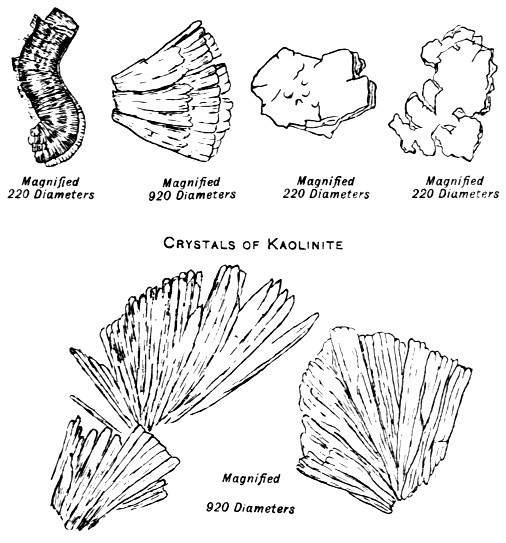
According to Hickling (36) the general impression that the particles of china clay are amorphous is due to the use of microscopes of insufficient power. With an improved instrument, Hickling claims to have identified the 'amorphous' portion of china clay with crystalline kaolinite, the clay particles (fig. 17) being in the form of irregular, curved, hexagonal prisms or in isolated plates. The former show strong transverse cleavages. The index of refraction and that of double refraction agree with those of Anglesea kaolinite crystals, as does the specific gravity.
In spite of their great purity, commercial china clays and kaolins are almost devoid of plasticity, nor can this property be greatly increased by any artificial treatment. This has led to the conclusion that plasticity is not an essential characteristic of the clayite or kaolinite molecules, but is due to physical causes not shown by any investigation of the chemical composition of the material.
In addition to the specially purified kaolins just described, alkaline kaolins, siliceous kaolins and ferruginous kaolins are obtained from less pure rocks and do not undergo so thorough a treatment with water. Some of these varieties are not improbably derived from transported kaolins, as they occur in Tertiary strata, and so bear some resemblance to the white fireclays on the Carboniferous limestone of Staffordshire, Derbyshire and North Wales, though the latter are far more plastic.
To be of value, a china clay or kaolin must be as white as possible and must be free from more than an insignificant percentage of metallic oxides which will produce a colour when the clay is heated to bright redness. If the material is to be used in the manufacture of paper, paint or ultra-marine, these colour-producing oxides are of less importance providing that the clay is sufficiently white in its commercial state.
The manufacturer of china-ware and porcelain requires china clay or kaolin which, in addition to the foregoing characteristics, shall be highly refractory. It must, therefore, be free from more than about 2 per cent. of lime, magnesia, soda, potash, titanic acid and other fluxes.
It is a mistake to suppose that all white clays of slight plasticity are china clays or kaolins. Some pipe clays have these characteristics, but they contain so large a proportion of impurities as to be useless for the purposes for which china clay is employed and are consequently of small value.
Users of china clays and kaolins generally find it necessary to carry out a lengthy series of tests before accepting material from a new source, as such a material may possess characteristics not readily shown by ordinary methods of analysis, but which are sufficiently active to make it useless for certain purposes (see p. 143).
Pottery clays are, as their name implies, those used in the manufacture of pottery, and comprise the china clays already mentioned (p. 104), the ball clays and the less pure clays used in the manufacture of coarse red ware, flower pots, etc.
The china clays (p. 104) are not used alone in pottery manufacture as they lack plasticity and cohesion. In the production of china-ware or porcelain they are mixed with a fluxing material such as Cornish stone, pegmatite, or felspar, together with quartz or bone ash. Thus, English china ware is produced from a mixture of approximately equal parts of bone ash, china clay and Cornish stone, whilst felspathic or hard porcelain is made from a mixture of kaolin, felspar and quartz, a little chalk being sometimes added.
The ball clays (p. 64) form the basis of most ordinary pottery, though some china clay is usually added in order to produce a whiter ware. Flint is added to reduce the shrinkage—which would otherwise be inconveniently great—and the strength of the finished ware is increased, its texture is rendered closer and its capability of emitting a ringing sound when struck are produced by the inclusion of Cornish stone or felspar in the mixture. Small quantities of cobalt oxide are also added to improve the whiteness in the better classes of ware.
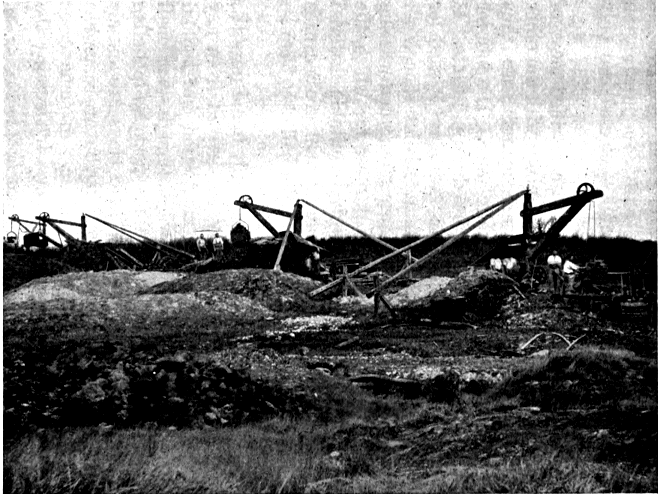
Fig. 18. Mining best Potter's clay in Devonshire. (Photo by Mr G. Bishop.)
The ball clays are characterised by their remarkably high plasticity, their fine texture and their freedom from grit. They are by no means so pure as the china clays, and unless carefully selected can only be used for common ware.
The better qualities burn to a vitrified mass of a light brownish tint, but when mixed with the other materials used in earthenware manufacture they should produce a perfectly white ware. The inferior qualities are used for stoneware, drain pipes, etc. It should be noted that the term 'ball clay' is used for clays of widely differing characteristics though all obtained from one geological formation; when ordering it is necessary to state the purpose for which the clay is required or an entirely unsuitable material may be supplied. For the same reason, great care is needed in any endeavour to sell a ball clay from an hitherto unworked deposit.
Coarse pottery clays[11] are usually found near the surface and whilst they may be derived from any geological formation, those most used in England are of Triassic or Permian origin, though some small potteries use material of other periods, including alluvial or surface clays. These clays are closely allied to those used for brickmaking, but are somewhat finer in texture and more plastic. In some cases they are prepared from brick clays by treating the latter in a wash-mill, the coarser particles being then removed, whilst the finer ones, in the state of a slip or slurry, are run into a settling tank and are there deposited.
The presence of a considerable proportion of iron oxide results in the formation of red ware, which is necessarily of a porous nature, as the fluxes in the clay are such that they will not permit of its being heated to complete vitrification without loss of shape. To render it impervious the ware is covered with a glaze, usually producing red, brown or black ware (Rockingham ware).
The stoneware or drain-pipe clays, are the most important of the vitrifiable clays and owe their value to the fact that they can be readily used for the manufacture of impervious ware without the necessity of employing a glaze. They are, therefore, used in the manufacture of vessels for holding corrosive liquids such as acids and other chemicals, for sanitary appliances, sewerage pipes and in many other instances where an impervious material is required.
Owing to the lime, magnesia, potash and soda they contain, the stoneware clays undergo partial fusion at a much lower temperature than is required by some of the purer clays. The fused portion fills the pores or interstices of the material, making—when cold—a ware of great strength and impermeability.
The chief difficulty experienced in the manufacture of stoneware is the liability of the articles to twist and warp when heated. For this reason it is necessary to burn them very carefully and to select the clays with circumspection. Some clays are quite unsuitable for this branch of pottery manufacture because of the practical impossibility of producing ware which is correct in shape and is free from warping.
What is required are clays in which the partial fusion will commence at a moderate temperature and will continue until all the pores are filled with the fused material without the remaining ingredients being attacked or corroded sufficiently to cause the ware to lose its shape. As the temperature inside a potter's kiln is continually rising, the great tendency is for the production of fused material to take place at an ever-increasing rate, so that the danger of warping becomes greater as the firing nears completion. Some clays commence to vitrify at a moderate temperature and can be heated through a long range of temperature before an appreciable amount of warping occurs; such clays are said to possess a 'long range of vitrification' (p. 38). In other clays the difference between the temperature at which vitrification commences and that at which loss of shape occurs is only a few degrees; such clays are useless for the manufacture of stoneware, as their vitrification range is too short. It is therefore essential that, for the manufacture of stoneware, a clay should contain a large proportion of refractory material which will form a 'skeleton,' the interstices of which will be filled by the more fusible silicates produced by the firing.
It is generally found that of all the fluxes present in vitrifiable clays, soda and potash compounds—the so-called 'alkalies'—and all lime compounds are the most detrimental, as in association with clay they form a material with a very short range of vitrification. Magnesia, on the contrary, accompanies a long vitrification range.
The clays used in Great Britain for the manufacture of the best stoneware are the Devonshire and Dorset ball clays, the upper portions of these deposits being used for this purpose as they are somewhat less pure than the lower portions used in the manufacture of white ware. For coarser grades of stoneware, clays of other geological formations are employed, especially where the finished ware may be coloured, as the purity of the clay is of less importance. Providing a clay has a sufficiently long vitrification range, a suitable colour when burned, and that it is capable of being readily formed into the desired shapes, its composition and origin are of small importance to the stoneware manufacturer. In actual practice, however, the number of sources of good stoneware clay is distinctly limited, and many manufacturers are thus compelled to add suitable fluxes to refractory clays in order to meet some of their customers' requirements. For this purpose a mixture of fireclay with finely powdered felspar or Cornish stone is used. Chalk—which is a cheaper and more powerful flux—or powdered glass cannot be used as the range of vitrification of the mixture would be too short.
Some manufacturers take the opposite course and add fireclay, flint, or other refractory material to a readily fusible clay. This is satisfactory if the latter clay is relatively low in lime and owes its fusibility to potash, soda or magnesia in the form of mica or felspar. The mica and felspar grains enter so slowly into combination with the clay that a long range of vitrification occurs, whereas with lime, or with some other soda and potash compounds, the combination occurs with great rapidity and the shape of the ware is spoiled.
The refractory clays are commonly known as fireclays on account of their resistance to heat. The china clays and kaolins are also refractory, but are too expensive and are not sufficiently plastic to be used commercially in the same manner as fireclays, except to a very limited extent, though bricks have been made for many years from the inferior portions of china clay rock at Tregoning Hill in Cornwall.
The geological occurrence of the fireclays of the Coal Measures has already been described on p. 53. In addition, there are the refractory clays occurring in pockets or depressions in the Mountain Limestone of North Wales, Staffordshire, Derbyshire and Ireland, which consist of siliceous clays and sands, the insoluble residue of the local dissolution of the limestone, intermixed with the débris of the overlying Millstone Grit (see p. 54). These clays and sands can be mixed to produce bricks of remarkably low shrinkage, but the pockets are only large enough to enable comparatively small works to be erected and the clays are so irregular both in composition and distribution as to render their use somewhat speculative.
A third type of refractory clay—termed flint clay—is used in large quantities in the United States, but is seldom found in Great Britain. When moistened, flint clays do not soften, but remain hard and flint-like with a smooth shell-like fracture. For use they are ground extremely fine, but even then they develop little plasticity. They are considered by Ries (6) to have been formed by solution and re-precipitation of the clay subsequent to its primary formation, in a manner similar to flint. They are somewhat rich in alumina and many contain crystals of pholerite (Al2O32SiO23H2O).
The Coal Measure fireclays (p. 53)—which are by far the most important—are divided into two sections by the coal seams, those above the coal being shaly and fissile in structure whilst those below (underclays) are without any distinct lamination. Both these clays may be equally refractory, but the underclays are those to which the term fireclay is usually applied. The lowest portions are usually more silicious and in some areas are so rich in silica as to be more appropriately termed silica rock or ganister. Fireclays may, in fact, be looked upon as a special term for the grey clays of the Coal Measures, interstratified with and generally in close proximity to the seams of coal. They are known locally as clunches and underclays and were at one time supposed to represent the soil that produced the vegetation from which the coal was formed, but are now considered by many authorities to be of estuarine origin.
It is important to notice that whilst the coals almost invariably occur in association with underclays, some fireclays are found at a considerable distance from coal.
The fireclays of the Coal Measures have a composition varying within comparatively wide limits even in contiguous strata; those chiefly used having an average of 20 to 30 per cent. of alumina and 50 to 70 per cent. of silica. They appear to consist of a mixture of clay and quartz with a small proportion of other minerals, but in some of them a portion of the clay is replaced by halloysite—another hydro-alumino-silicate with the formula
H6Al2Si2O10 or Al2O3.2SiO2.3H2O.
Their grey colour is largely due to vegetable (carbonaceous) matter and to iron compounds. The latter—usually in the form of pyrites—is detrimental to the quality of the goods as it forms a readily fusible slag. Unlike the iron in red-burning clays it can seldom be completely oxidized and so rendered harmless. The fireclays must therefore be carefully selected by the miners.
On the Continent, and to a much smaller extent in Great Britain, refractory articles are made from mixtures of grog or burned fireclay with just sufficient raw clay to form a mass of the required strength. For this purpose a highly plastic, refractory clay is required and the Tertiary ball clays of Devon and Dorset (p. 64) are particularly suitable.
The most important characteristics of a fireclay are that it shall be able to resist any temperature to which it may be exposed and that the articles into which it is made shall not be affected by rapid changes in temperature. Other characteristics of importance in some industries are the resistance to corrosive action of slags and vapours, to cutting and abrasion by dust in flue-gases or by the implements used in cleaning the fires. For those purposes it is necessary that a fireclay should possess high infusibility (p. 32), a low burning shrinkage (p. 29) and a high degree of refractoriness (p. 34), and before it is used these characteristics should be ascertained by means of definite tests, as they cannot be determined by inspection of a sample or from a study of its chemical analysis.
Several grades of fireclay have long been recognized on the Continent and in the United States of America, but the recent Specification of the Institution of Gas Engineers is the only official recognition in Great Britain of definite grades. This specification defines as No. 1 grade a fireclay which shows no signs of fusion when heated to 1670° C. or Cone 30 at the rate of 10° C. per minute, and as No. 2 grade fireclay those which show no signs of fusion when similarly heated to 1580° C. or Cone 26.
It is regarded as a sign of fusion if a test piece with sharp angles loses its angularity after heating to a predetermined temperature (see p. 35).
It is customary to regard as 'fireclay' all clays which, when formed into the shape of a Seger Cone (fig. 6) do not bend on heating slowly until a temperature of 1580° C. (Cone 26) is reached. Any clays comprised within this definition and yet not sufficiently refractory to be of the No. 2 grade just mentioned may be regarded as No. 3 grade fireclays. Many of the last named are well suited for the manufacture of blocks for domestic fireplaces, for glazed bricks and for firebricks not intended to resist furnace temperatures.
To resist sudden changes in temperature the material must be very porous—the article being capable of absorbing at least one-sixth of its volume of water. For this reason it is customary to mix fireclays with a large proportion of non-plastic material of a somewhat coarse texture, the substance most generally employed being fireclay which has been previously burned and then crushed. This material is known as grog or chamotte and has the advantage over other substances of not affecting the composition of the fireclay to which it is added, whilst greatly increasing its technical usefulness. The addition of grog also reduces the shrinkage of the clay during drying and ensures a sounder article being produced.
The most serious impurities in refractory clays are lime, magnesia, soda, potash and titanium and their compounds as they lower the refractoriness of the material. Iron, in the state of ferric oxide is of less importance, but pyrites and all ferrous compounds are particularly objectionable. Pyritic and calcareous nodules may, to a large extent, be removed by picking, and by throwing away lumps in which they are seen to occur. There is, at present, no other means of removing them.
Fireclays may be ground directly they come from the mine, but it is usually better to expose them to the action of the weather as this effects various chemical and physical changes within the material, which improves its quality as well as reduces the power required to crush it.
To take full advantage of the refractory qualities of a clay it is necessary to select it with skill, prepare and mould it with care, to burn it slowly and steadily, to finish the heating at a sufficiently high temperature and to cool the ware slowly.
Rapidly heated fireclay is seldom so resistant to heat under commercial conditions as that which has been more steadily fired. Rapid or irregular heating causes an irregular formation and distribution of the fused material during the process of vitrification (p. 37) and so produces goods which are too tender to be durable. It is, therefore, necessary to exercise great care in the firing.
Shales are rocks which have been subjected to considerable pressure subsequent to their deposition and are, consequently, laminated and more readily split in one direction than in others. Some shales are almost entirely composed of silica or calcareous matter, but many others are rich in clay, the term referring to physical structure and not to chemical composition. The clay-shales occur chiefly in the Silurian and Carboniferous formations, the latter being more generally used by clayworkers.
Clay-shales are valued according to (a) the proportion of oil which can be distilled from them, those rich in this respect being termed oil shales; (b) the colour when burned, as in brickmaking and terra-cotta shales; (c) the refractoriness, as in fireclay shales and (d) the facility with which they are decomposed on exposure or on heating and form sulphuric acid as in alum shales.
Oil shales contain so much carbonaceous matter that on distillation at a low red heat they yield commercially remunerative quantities of a crude oil termed shale tar. In composition they are intermediate between cannel coal and a purely mineral shale. To be of value they should not yield less than 30 gallons of crude oil per ton of shale, with ammonia and illuminating gas as by-products. They are of Silurian, Carboniferous or Oolitic origin, the Kimeridge shale associated with the last-named being very valuable in this respect.
The most important oil shales occur in Scotland.
The fireclay shales have already been described on pages 53 and 116.
The brickmaking shales are those which are sufficiently rich in clay to form a plastic paste when ground and mixed with water. They can be made into bricks of excellent colour and great strength, but for this purpose require the use of powerful crushing and mixing machinery. They are usually converted into a stiff paste of only moderate plasticity and are then moulded by machinery in specially designed presses, though some firebricks are made from crushed shale mixed into a soft paste with water and afterwards moulded by hand. Some shales, such as the knotts at Fletton near Peterborough are not made into a paste, the moist powdered shale being pressed into bricks by very powerful machinery.
Brickmaking shales may be found in any of the older geological formations, though they occur chiefly in the Silurian, Permian, Carboniferous and Jurassic systems. The purer shales of the Coal Measures burn to an agreeable cream or buff colour, the less pure ones and those of the other formations mentioned produce articles of a brick-red or blue-grey colour.
Where the shales are of exceptionally fine grain and their colour when burned is very uniform and of a pleasing tint they are known as terra-cotta shales, the red terra-cottas being chiefly made from those occurring in Wales and the buff ones from the lower grade fireclays of the Coal Measures.
Alum shales are characterised by a high proportion of pyrites, which, on roasting, form ferrous sulphate and sulphuric acid. The latter combines with the alumina in the shale and when the roasted ore is extracted with water a solution of iron sulphate and aluminium sulphate is obtained. From this solution (after partial evaporation) alum crystals are obtained by the addition of potassium or ammonium sulphate.
The chief alum shales are those of the Silurian formation in Scotland and Scandinavia. The Liassic shales of Whitby were at one time an equally important source of alum.
During recent years a large amount of alum has been obtained from other sources or has been made from the lower grade Dorset and Devonshire ball clays by calcining them and then treating them with sulphuric acid. These clays being almost free from iron compounds yield a much purer alum at a lower cost.
Brick clays are those which are not suitable—either from nature or situation—for the manufacture of pottery or porcelain and yet possess sufficient plasticity to enable them to be made into bricks. The term is used somewhat loosely, and geologists not infrequently apply it to clays which are quite unsuitable for brickmaking on account of excessive shrinkage and the absence of any suitable non-plastic medium. Large portions of the 'London clay' are of this nature and can only be regarded as of use to brick- and roofing-tile-manufacturers when the associated Bagshot sands are readily accessible. Similarly, some of the very tough surface clays of the Northern and Midland counties are equally valueless, though designated 'brick clays' in numerous geological and other reports. It is, therefore, necessary to remember that, as ordinarily used, the term 'brick clay' merely indicates a material which appears at first sight to be suitable for brickmaking, but that more detailed investigations are necessary before it can be ascertained whether a material so designated is actually suitable for the purpose.
It is also important to observe that local industrial conditions may be such that a valuable clay may be used for brickmaking because there is a demand for bricks, but not for the other articles for which the clay is equally suitable. For instance, a considerable number of houses in Northumberland and Durham were built of firebricks at a time when it was more profitable to sell these articles for domestic buildings than for furnaces.
In many ways the bricks used for internal structural work form the simplest and most easily manufactured of all articles made from clay. The colour of the finished product is of minor importance and so long as a brick of reasonably accurate shape and of sufficient strength is produced at a cheap rate, little else is expected.
Impurities—unless in excessively large proportions—are of small importance and, indeed, sand may almost be considered an essential constituent of a material to be used for making ordinary bricks. It is, therefore, possible to utilize for this purpose some materials containing so little 'clay' as to make them scarcely fit to be included in this term. So long as the adventitious materials consist chiefly of silica and chalk and the mixture is sufficiently plastic to make strong bricks, it may be used satisfactorily in spite of its low content of clay, but if the so-called 'brick clay' contains limestone, either in large grains or nodules, it will be liable to burst the bricks or to produce unsightly 'blow-holes' on their surfaces. If too much sand or other non-plastic material is present, the resulting bricks will be too weak to be satisfactory.
No brick clay can be regarded as 'safe' if it contains nodules of limestone—unless these can be removed during the preparation of the material—or if the resulting bricks will not show a crushing strength of at least 85 tons per square foot.
The introduction of machinery in place of hand-moulding and of kilns instead of clamps has greatly raised the standard of strength, accuracy in shape and uniformity in colour in many districts, and many builders in the Midlands now expect to sort out from the 'common bricks' purchased, a sufficient number of superior quality to furnish all the 'facing bricks' they require. Apart from this, and in districts where buildings are faced with stone or with bricks of a superior quality, the 'stock' or 'common brick' may be made from almost any clay which will bear drying and heating to redness without shrinking excessively or cracking. A linear shrinkage of 1 in. per foot (= 81/2 per cent.) may be regarded as the maximum with most materials used for brickmaking. Clays which shrink more than this must have a suitable quantity of grog, sand, chalk, ashes or other suitable non-plastic material added.
If the clay contains much ferric oxide it will produce red or brown bricks according to the temperature reached in the kiln, but if much chalk is also present (or is added purposely) a combined lime-iron-silicate is produced and the bricks will be white in colour. If only a small percentage of ferric oxide is present a clay will produce buff bricks, which will be spotted with minute black specks or larger masses of a greyish black slag if pyrites are also present or if ferrous silicate has been produced by the reduction of the iron compounds and their subsequent combination with silica.
Further information on brick earths will be found on page 67.
A description of the processes used in the manufacture of bricks being outside the scope of the present work, the reader requiring information on this subject should consult Modern Brickmaking (25) or some similar treatise.
Roofing tiles require clays of finer texture than those which may be made into bricks. Stones, if present, must be removed by washing or other treatment, as it is seldom that they can be crushed to a sufficiently fine powder, unless only rough work is required. If sufficiently fine, the clay used for roofing tiles may be precisely the same as that used for bricks and is treated in a similar manner. It must, however, be of such a nature that it will not warp or twist during the burning; it must, therefore, have a long range of vitrification (p. 38).
Terra-cotta is an Italian term signifying baked earth, but its meaning is now limited to those articles made of clay which are not classed as pottery, such as statues, large vases, pillars, etc., modelled work used in architecture, or for external decoration. Although the distinction cannot be rigidly maintained, articles made of clay may be roughly divided into
(a) Pottery (faience) and porcelain (glazed),
(b) Terra-cotta (unglazed),
(c) Bricks and unglazed tiles devoid of decoration.
In this sense, terra-cotta occupies an intermediate position between pottery and bricks, but no satisfactory definition has yet been found for it. Thus, bricks with a modelled or moulded ornament are, strictly, terra-cotta, yet are not so named, and some pottery is unglazed and yet is never classed as terra-cotta, whilst glazed bricks are never regarded as pottery. Again during the past few years, what is termed 'glazed terra-cotta' has been largely used for architectural purposes, yet this is really 'faience.'
Although this overlapping of terms may appear confusing to the reader, it does not cause any appreciable amount of inconvenience to the manufacturers or users, as it is not difficult for a practical clayworker to decide in which of the three classes mentioned a given article should be placed.
Partly on account of the lesser weight, but chiefly in order to reduce the tendency to crack and to facilitate drying and burning, terra-cotta articles are usually made hollow.
It is necessary that clays used in the manufacture of terra-cotta should be of so fine a texture that the finest modelling can be executed. Such clays occur naturally in several geological formations, and some may be prepared from coarser materials by careful washing, whereby the larger grains of sand, stones, etc., are removed. Some shales, when finely ground, make excellent clays for architectural terra-cotta, portions of all the better known fireclay deposits being used for this purpose. It is, however, necessary to use only those shales which are naturally of fine texture, as mechanical grinding cannot effect a sufficient sub-division of the particles of some of the coarser shales.
The finer Triassic 'marls' are also admirable for terra-cotta work, the most famous deposit being the Etruria Marl Series in the Upper Coal Measures near Ruabon.
The most important characteristics required in terra-cotta clays are (a) fine texture, or at any rate the ability to yield a fine, dense surface, (b) small shrinkage with little tendency to twist, warp or crack in firing, (c) pleasing and uniform colour when fired, and (d) a sufficient proportion of fluxes to make it resistant to weather without giving a glossy appearance to the finished product.
In large pieces of terra-cotta some irregularity of shape is almost unavoidable, but, if care is taken in the selection and manipulation of the material, this need not be unsightly.
The durability of terra-cotta is largely dependent on the nature of the surface. The most suitable clays, when fired, have a thin 'skin' of vitrified material which is very resistant to climatic influences, and so long as this remains intact the ware will continue in perfect condition. If this 'skin' is removed, rain will penetrate the material and under the influence of frost may cause rapid disintegration.
In the manufacture of very large pieces of terra-cotta a coarse, porous clay is used for the foundation and interior, and this is covered with the finer clay. By this means a greater resistance to changes in temperature is secured, the drying and the burning of the material in the kiln are facilitated and the risks of damage in manufacture are materially reduced.
Cement clays are those used in the manufacture of Portland cement and of so-called natural cements. They are largely of an alluvial character and are of two chief classes: (a) those which contain chalk or limestone dust and clay in proportions suitable for the manufacture of cement and (b) those to which chalk or ground limestone must be added.
They vary in composition from argillaceous limestones containing only a small proportion of clay to almost pure clays.
The manufacture of Portland cement has assumed a great importance and owing to the large amount of investigations made in connection with it, it may be said to represent the chief cement made from argillaceous materials, the others being convenient though crude modifications of it.
The essential constituents are calcium carbonate (introduced in the form of chalk or powdered limestone) and clay, the composition of the naturally occurring materials being modified by the addition of a suitable proportion of one or other of these ingredients. The material is then heated until it undergoes partial fusion and a 'clinker' is formed. This clinker, when ground, forms the cement.
In Kent, the Medway mud is mixed with chalk; in Sussex, a mixture of gault clay and chalk is employed; in the Midlands and South Wales, Liassic shales and limestone are used; in Northumberland a mixture of Kentish chalk and a local clay is preferred, and in Cambridgeshire a special marl lying between the Chalk and the Greensand is found to be admirable for the purpose because it contains the ingredients in almost exactly the required proportions.
For cement manufacture, clays should be as free as possible from material which, in slip form, will not pass through a No. 100 sieve, as coarse sand and other rock débris are practically inert. The proportion of alumina and iron should be about one-third, but not more than one-half, that of the silica, and in countries where the proportion of magnesia in a cement is limited by standard specifications, it will be found undesirable to use clays containing more than 3 per cent. of magnesia and alkalies.
Whilst calcareous clays usually prove the most convenient in the manufacture of cement, it is by no means essential to use them, and where a clay almost free from lime occurs in convenient proximity to a suitable chalk or limestone deposit an excellent cement may usually be manufactured.
The 'clays' from which the so-called 'natural' or 'Roman cements' are made by simple calcination and crushing, usually fuse at a lower temperature than do the mixtures used for Portland cement, and unless their composition is accurately adjusted they yield a product of such variable quality as to be unsuitable for high class work.
Fuller's earth is a term used to indicate any earthy material which can be employed for fulling or degreasing wool and bleaching oil. True fuller's earth is obtained chiefly from the neighbourhood of Reigate, Surrey, Woburn Sands, Bedfordshire and from below the Oolite formation near Bath, but owing to the scarcity of the material and the irregularity of its behaviour, china clay is now largely used for the same purpose. True fuller's earth is much more fusible than the white clays usually substituted for it, and when mixed with water it does not form a plastic paste but falls to powder. As the chief requirement of the fuller is the grease-absorbing power of the material there is no objection to the substitution of other earths of equal efficiency.
Fuller's earth does not appear to be a true clay, though its constitution and mineralogical composition are by no means clearly known. T. J. Porter considers that it is chiefly composed of montmorillonite (Al2O34SiO2H2O), anauxite, (2Al2O39SiO26H2O), and chalk with some colloidal silica and a little quartz. It therefore appears to resemble the less pure kaolins, but to contain little or no true clay, though in many respects it behaves in a manner similar to a kaolin of unusually low plasticity.
Other clays of commercial importance, with further details of the ones just mentioned, are described in the author's British Clays, Shales and Sands (2).
CHAPTER VI
CLAY SUBSTANCE: THEORETICAL AND ACTUAL
Having indicated the origin, modes of accumulation and general characteristics of the numerous materials known as 'clay,' it now remains to ascertain what substance, if any, is contained in all of them and may be regarded as their essential constituent, to which their properties are largely due. Just as the value of an ore is dependent to a very large extent on the proportion of the desired metal which it contains, and just as coal is largely, though not entirely, esteemed in proportion to the percentage of carbon and hydrogen in it, so there may be an essential substance in clays to which they owe the most important of their characteristics.
The proportion of metal in an ore or of hydrocarbon in a coal can be ascertained without serious difficulty by some means of analysis, but with clay the difficulties are so great that, to some extent at least, they must be regarded as being, for the present, insurmountable. This is in no small measure due to the general recognition of all minerals or rocks which become plastic when kneaded with water as 'clays' without much regard being paid to their composition. Consequently materials of the most diverse nature in other respects are termed clays if they are known to become plastic under certain conditions.
There is, in fact, at the present time, no generally accepted definition of clay which distinguishes it from mixtures of clay and sand or other fine mineral particles. The usual geological definitions are so broad as to include many mixtures containing considerably less than half their weight of true clay or they avoid the composition of the material altogether and describe it as a finely divided product of the decomposition of rocks.
Many attempts have been made to avoid this unfortunate position, which is alike unsatisfactory to the geologist, the mineralogist and the chemist as well as to the large number of people engaged in the purchase and use of various clays; and, whilst the end sought has not been reached as completely as is desirable, great progress has been made and much has been accomplished during the last twenty years.
One of the earliest attempts to ascertain whether there is an essential constituent of all clays was made by Seger (7) who used two methods of separating some of the ingredients of natural clays from the remaining constituents. The first of these methods consists in an application of the investigations of Schulze, Schloesing and Schoene on soils, viz. the removal of the finest particles by elutriation; the second is an extension of the method of Forschammer and Fresenius, viz. the treatment of the material with sulphuric acid.
To the product containing the clay when either of these methods is used Seger gave the name clay substance, but the material so separated is by no means pure clay. The term clay substance must, therefore, be confined to the crude product containing the clay together with such other impurities as are in the form of extremely small particles or are soluble in sulphuric acid.
It has not yet been found possible to isolate pure clay from ordinary clays, so that in investigating the nature of what Seger was endeavouring to produce when he obtained the crude clay substance, indirect methods are necessary.
It has long been known that if a sample of 'clay'—using this word in the broadest sense—is rubbed in a considerable quantity of water so as to form a thin slip or slurry, it may readily be divided into a number of fractions each of which will consist of grains of different sizes. This separation may be effected by means of a series of sieves through which the slurry is poured, or the slurry may be caused to flow at a series of different speeds, the material left behind at each rate of speed being kept separate; or, finally, the slurry may be allowed to stand for a few seconds and may then be carefully decanted into another vessel in which it may remain at rest for a somewhat longer period, these times of resting and decantation, if repeated, providing a series of fractions the materials in which are more or less different in their nature.
'Clays' containing a considerable proportion of coarse material are most conveniently separated into a series of fractions by means of sieves, whereby they are divided into (i) stones, (ii) gravel, (iii) coarse sand, (iv) medium sand, (v) fine sand and (vi) a slurry consisting of such small particles that they can no longer be separated by sifting. If the residues on the sieves are carefully washed free from any adhering fine material and are then dried, they will be found on examination to be quite distinct from anything definable as clay. They may consist of a considerable variety of minerals or may be almost entirely composed of quartz, but with the possible exception of some shales of great hardness, they are undoubtedly not clay. This simple process therefore serves to remove a proportion of material which in the case of some 'clays' is very large but in others is insignificant; thus 40 per cent. of sand-like material may be removed from some brick-clays whilst a ball clay used for the manufacture of stoneware or pottery may pass completely through a sieve having 200 meshes per linear inch.
The material which passes through the finest sieve employed will contain all the true clay in the material; that is to say, the coarser portion will, as already mentioned, be devoid of the ordinary characteristics of clay. At the same time, this very fine material will seldom consist exclusively of clay, but will usually contain a considerable proportion of silt, extremely fine mineral particles and, in the case of calcareous clays, a notable proportion of calcium carbonate in the form of chalk or limestone particles. Only in the case of the purest clays will the material now under consideration consist entirely of clay, so that it must be again separated into its constituents. This is best accomplished, as first suggested by Schoene, by exposing the material to the action of a stream of water of definite speed. H. Seger (7) investigated this method very thoroughly and his recommendations as to the manner in which this separation by elutriation should be carried out remain in use at the present time. Briefly, all material sufficiently fine to be carried away by a stream of water flowing at the rate of 0·43 in. per minute was found by Seger to include the whole of the clay in the samples he examined, but, as was later pointed out by Bischof, it is not correct to term the whole of this material 'clay substance,' as when examined under the microscope, it contains material which is clearly not clay.
Processes of decantation of the finest material obtained after elutriation still fail to separate all the non-clay material, and Vogt has found that when the material has been allowed to stand in suspension for nine days some particles of mica are still associated with the clay.
It would thus appear that no process of mechanical separation will serve for a complete purification of a clay; indeed, there are good reasons for supposing that extremely fine particles of quartz and mica render physical characteristics an uncertain means of accurately distinguishing clays from other rock dust.
When chemical methods of investigation are employed the problem is not materially altered, nor is its solution fully attained. It is, of course, obvious that any chemical method should be applied to the product obtained by treating the raw material mechanically as above described, for to do otherwise is to create needless confusion. Yet by far the greater number of published analyses of 'clays' report the ultimate composition of the whole material, no attempt being made to show how much of the various constituents is in the form of sand, stones or other coarse particles of an entirely non-argillaceous character.
If the particles of a 'clay' which are sufficiently small to be carried away by a stream of water with a velocity of only 0·43 in. per minute are analysed, it will be found that their composition will vary according to the origin of the clay and the subsequent treatment to which it has been subjected during its transport and deposition. If the clay is fairly free from calcareous material and is of a white-burning nature it may be found to have a composition like china clays. Red-burning clays, on the contrary, will vary greatly in composition, so that it becomes difficult to find any close analogy between these kinds of clay. This difference is partly due to the extremely fine state of division in which ferric oxide occurs in clays, the particles of this material corresponding in minuteness to those of the purest clays and so being inseparable by any mechanical process.
In 1876 H. Seger (7) published what he termed a method of 'rational analysis,' which consisted in treating the clay with boiling sulphuric acid followed by a treatment with caustic soda. He found that the purer china clays (kaolins) and ball clays were made soluble by this means and that felspar, mica and quartz were to a large extent unaffected. Later investigators have found that this method is only applicable to a limited extent and that its indications are only reliable when applied to the clays just named, but the principle introduced by Seger has proved invaluable in increasing our knowledge of the composition of clays. By means of this so-called rational analysis Seger found that the purer clays yielded results of remarkable similarity and uniformity, the material entering into solution having a composition agreeing very closely with the formula Al2O32SiO22H2O which is generally recognized as that of the chief constituent or constituents of china clay (kaolin) and the purer ball clays. This crude substance, obtainable from a large number of clays by the treatment just described, was named clay substance by Seger, who regarded it as the essential constituent of all clays.
Red-burning clays when similarly treated do not yield so uniform a product, and the ferric oxide entering into solution makes the results very discordant. Moreover, even with the china clays or kaolins a small proportion of alkalies, lime and other oxides enter into solution and a number of minerals analogous to clay, but quite distinct from it, are also decomposed and dissolved. For these reasons the 'rational analysis' has been found insufficient; it is now considered necessary to make an analysis of the portion rendered soluble by treatment with sulphuric acid in order to ascertain what other ingredients it may contain in addition to the true clay present.
As the china clays (kaolins) and ball clays on very careful elutriation all yield a product of the same ultimate composition, viz. 39 per cent. of alumina, 46 per cent. of silica, 13 per cent. of water, and 2 per cent. of other oxides, they are generally regarded as consisting of practically pure clay with a variable amount of impurities. Many years ago Fresenius suggested that these non-clayey constituents of clays should be calculated into the minerals to which they appeared likely to correspond so as to obtain a result similar to that obtained by Seger without the disadvantages of the treatment with sulphuric acid and as supplementary to such treatment in the case of red-burning and some other clays. More recent investigators have found that if a careful microscopic examination of the clay is made the results of estimating the composition from the proportion of the different minerals recognizable under the microscope and by calculation from the analysis of the material agree very closely and are, as Bischof (28) and, more recently, Mellor have pointed out, more reliable than the 'rational analysis' in the case of impure clays. If care is taken to make a microscopical examination identifying the chief impurities present the calculation from the analysis may usually be accepted as sufficiently accurate, but it is very unsatisfactory to assume, as some chemists do, that the alkalies and lime in the clay are all in the form of felspar and that the silica remaining in excess of that required to combine with the alkalies, lime and alumina is free quartz. Some clays are almost destitute of felspar but comparatively rich in mica, whilst others are the reverse, so that some means of identifying the extraneous minerals is essential. When this is not used, the curious result is obtained that German chemists calculate the alkalies, etc. to felspar whilst the French chemists, following Vogt, calculate them to mica; English ceramic chemists appear undecided as to which course to follow, and some of them occasionally report notable amounts of felspar in clays quite destitute of this mineral!
A statement of the composition of a 'clay' based on a mechanical separation of the coarser ingredients followed by an analysis of the finer ones and a calculation of the probable constituents of the latter, as already described, is known as a proximate analysis in order to distinguish it from an ultimate analysis which states the composition of the whole material in terms of its ultimate oxides. A proximate analysis therefore shows the various materials entering into the composition of the clay in the following or similar terms:
Stones per cent.
Gravel "
Coarse sand "
Medium sand "
Fine sand "
Silt "
Felspar or mica dust "
Silica dust "
'True clay[12]' "
Moisture "
Carbon "
Other volatile matter "
For some purposes it is necessary to show the proportion of calcium, iron and other compounds as in an ordinary ultimate analysis.
A comparison of the foregoing with an ultimate or 'ordinary' analysis of a clay (p. 16) will show at once the advantage of the former in increasing our knowledge of the essential constituent of all clays, if such a substance really exists. Its absolute existence is by no means proved, for, as will have been noticed, its composition is largely based on assumption even in the most thorough investigations, particularly of the admittedly less pure clays.
In the purer clays the problem is much simpler and in their case an answer of at least approximate accuracy can be given to the question 'What is clay?'
Even with these purer clays it is not sufficient to study an analysis showing the total amount of the silica, alumina and other oxides present; it is still necessary to effect some kind of separation into the various minerals of which they are composed. When, however, the accessory minerals do not exceed 5 per cent. of the total ingredients their influence is less important and the nature and characteristics of the 'clay substance' itself can be more accurately studied. By careful treatment of well selected china clays, for example, it is possible to obtain a material corresponding to the formula Al2O32SiO22H2O within a total error of 1 per cent., the small amount of impurity being, as far as can be ascertained, composed of mica. So pure a specimen of clay is found on microscopical examination to consist of minute irregular grains of no definite form, together with a few crystals of the same composition and identifiable as the mineral 'kaolinite' (p. 107). This 'amorphous' material, which appears to be the chief constituent of all china clays and kaolins, has been termed clayite by Mellor (22).
Johnson and Blake, Aron and other observers have stated that the majority of the particles in china clays and kaolins are crystalline in form. Owing to their extreme smallness it is exceedingly difficult to prove that they are not so, though for all ordinary purposes they may be regarded as amorphous, the proportion of obviously crystalline matter present in British china clay of the highest qualities being so small as to be negligible.
Hickling (36), using an exceptionally powerful microscope, claims to have identified this 'amorphous' substance in china clay as 'worn and fragmental crystals of kaolinite,' and recently Mellor and Holdcroft and Rieke have shown that the apparently amorphous material shows the same endo- and exothermal reactions as crystalline kaolinite.
So far as china clays or kaolins are concerned, kaolinite or an amorphous substance of the same composition appears to be identical with the 'ideal clay' or 'true clay' whose characters have so long been sought.
This term—clayite—is very convenient when confined to china clays and kaolins, but it is scarcely legitimate to apply it, as has been suggested, to material in other clays until it has been isolated in a sufficiently pure form to enable its properties to be accurately studied. This restriction is the more necessary as in one very important respect clayite obtained from china clay and some kaolins differs noticeably from the nearest approach to it obtainable from the more plastic clays: namely, in its very low plasticity. This may be explained by the fact that it is only obtainable in a reasonably pure form in clays of a primary character, whilst the plastic clays have usually been transported over considerable areas and have been subjected to a variety of treatments which have had a marked effect on their physical character. Moreover, the fact that the purest 'clay' which can be isolated from plastic clays appears to be amorphous and to some extent colloidal greatly increases the difficulty of obtaining it in a pure state, especially as no liquid is known which will dissolve it without decomposing it. The fact that it is not an elementary substance, but a complex compound of silica, alumina and the elements of water, also increases the intricacy of the problem, for these substances occur in other combinations in a variety of other minerals which are clearly distinct from clay.
Ever since the publication of Seger's memorable papers (7), and to a small extent before that time, it has been generally understood that china clay or kaolin represented the true essential constituent of clays, but several investigators have been so imbued with the idea that all true clay substance must have a crystalline form that they have frequently used the term 'kaolinite' to include the 'amorphous' substance in plastic clays. This is unfortunate as it is by no means proved that the latter is identical with kaolinite, and a distinctive term would be of value in preventing confusion. Other investigators have used the word 'kaolin' with equal freeness, so that whilst it originally referred to material from a particular hill or ridge in China[13] it has now entered into general use for all clays whose composition approximates to that of china clay (p. 16) in which the plasticity is not well developed. Thus, in spite of the difference in origin between many German and French kaolins and the china clays of Cornwall, it is the custom in Europe generally to term all these materials 'kaolin.' Yet they are very different in many respects from the material originally imported from China.
As the essential clay substance has not yet been isolated in a pure form from the most widely spread plastic clays, but is largely hypothetical as far as they are concerned, the author prefers the term pelinite [14] when referring to that portion of any plastic clays or mixtures of clays with other minerals which may be regarded as being the constituent to which the argillaceous portion of the material owes its chief properties. In china clay and kaolin the 'true clay' is identical with clayite—or even with kaolinite (p. 108)—and there is great probability that this identity also holds in the case of the more plastic clays of other geological formations, but until it is established it appears wisest to distinguish the hypothetical or ideal clay common to all clays (if there is such a substance) by different terms according to the extent to which its composition and characters of the materials most closely resembling it are experimentally known.
The substances most resembling this 'ideal clay' which have, up to the present been isolated, are:
(a) Kaolinite. Found in a crystalline form in china clays and kaolins (p. 107).
(b) Clayite. A material of the same chemical composition as kaolinite, but whose crystalline nature (if it be crystalline) has not been identified—chiefly obtained from china clays and kaolins.
(c) Pelinite. A material similar to clayite, but differing from it in being highly plastic and, to some extent, of a colloidal nature—obtained from plastic clays.
(d) Laterite. A material resembling clayite in physical appearance, but containing free alumina and free silica (p. 80).
(e) Clay Substance. A general term indicating any of the foregoing or a mixture of them; it is also applied (unwisely) to the material obtained when a natural clay is freed from its coarser impurities by elutriation (p. 7).
The Chief Characteristics of 'True Clay' from Different Sources.
In so far as it can be isolated true clay appears to be an amorphous, or practically amorphous, material which may under suitable conditions crystallize into rhombic plates of kaolinite. The particles of which it is composed are extremely small, being always less than 0·0004 in. in diameter. They adsorb dyes from solutions and show other properties characteristic of colloid substances though in a very variable degree, some clays appearing to contain a much larger proportion of colloidal matter than do others. To some extent the power of adsorption of salts and colouring matters appears to be connected with the plasticity (p. 41) of the material, but this latter property varies so greatly in clayite or pelinite from different sources as to make any generalization impossible.
True clay substance appears to be quite white, any colour present being almost invariably traceable to ferric compounds or to carbonaceous matter. The latter is of small importance to potters as it burns away in the kiln. The specific gravity of clay substance is 2·65 according to Hecht, the lower figures sometimes reported being too low. Its hardness is usually less than that of talc—the softest substance on Mohs' scale—but some shales are so indurated as to scratch quartz. It is quite insoluble in water and in dilute solutions of acids or alkalies, but is decomposed by hydrofluoric acid and by concentrated sulphuric acid when heated, alumina entering into solution and silica being precipitated in a colloidal condition.
It absorbs water easily until a definite state of saturation has been reached, after which it becomes impervious unless the proportion of water is so large and the time of exposure so great that the material falls to an irregular mass which may be converted into a slurry of uniform consistency by gently stirring it. With a moderate amount of water, pelinite develops sufficient plasticity to enable it to be modelled with facility, but clayite and some specimens of pelinite are somewhat deficient in this respect. The pelinitic particles usually possess the capacity to retain their plasticity after being mixed with considerable proportions of sand or other non-plastic material and are then said to possess a high binding power (p. 28).
If a large proportion of water is added to a sample of clayite or pelinite and the mixture is stirred into a slurry it will be found to remain turbid for a considerable time and will not become perfectly clear even after the lapse of several days. Its power of remaining in suspension is much influenced by the presence of even small amounts of soluble salts in either the water or the clay substance, its precipitation being hastened by the addition of such salts as cause a partial coagulation of the colloidal matter present. Some specimens of clayite and pelinite retain their suspensibility even in the presence of salts, but this is only true of a very limited proportion of the substance. In most cases the presence of soluble salts causes the larger particles to sink somewhat rapidly and to carry the finer particles with them.
The rate at which a slip or ' cream' made of elutriated clay and water will flow through a small orifice is dependent on the viscosity of the liquid and this in turn depends on the amount of colloidal material present, i.e. on how much of the clay (pelinite) is in a colloidal form. Its viscosity is greatly affected by the addition or presence of small quantities of acid or alkali or of acidic or basic salts. Acids increase the viscosity; alkalies and basic salts, on the contrary, make the slip more fluid. Neutral salts behave in different ways according to the concentration of the solution and to the amount of clay (pelinite) present in the slip. If the slip contains so little water as to be in the form of a thin paste, neutral salts usually have but a small action, but when the slip contains only a small proportion of clay (pelinite) the presence of neutral salts will tend to cause the precipitation of the clay. In this way salts act in two quite different directions according to the concentration of the slip.
On drying a paste made of clay and water the volume gradually diminishes until the greater part of the water has been removed; after this the remainder of the water may be driven off without any further reduction in volume of the material. This is another characteristic common to colloidal substances such as gelatin. The material when drying attains a leathery consistency which is at a maximum at the moment when the shrinkage is about to cease; on further drying the material becomes harder and more closely resembles stone.
Providing that wet clay is not heated to a temperature higher than that of boiling water it appears to undergo no chemical change and on cooling it will again take up water[15] and be restored to its original condition except in so far as its colloidal nature may have been affected by the heating. If, however, the temperature is raised to about 500° C. a decomposition of the material commences and water is evolved. This water—which is commonly termed 'combined water'—is apparently an essential part of the clay-molecule and when once it has been removed the most important characteristics of the clay are destroyed and cannot be restored. The reactions which occur when clay is heated are complex and are rendered still more difficult to study by the apparent polymerization of the alumina formed. Mellor and Holdcroft (29) have recently investigated the heat reactions of the purest china clay obtainable and confirm Le Chatelier's view (10) that on heating to temperatures above 500° C. clay substance decomposes into free silica, free alumina and water, the two former undergoing a partial re-combination with formation of sillimanite (Al2O3SiO2) if a temperature of 1200° C. is reached. Mellor and Holdcroft point out that there is no critical point of decomposition for clay substance obtained from china clay, as it appears to lose water at all temperatures, though its decomposition proceeds at so slow a rate below 400° C. as to be scarcely appreciable.