THE MYSTERYES OF NATVRE AND ART
Reading edition

THE
MYSTERYES OF
NATVRE AND ART:
Conteined in foure
severall Tretises, The first of water
workes, The second of Fyer workes,
The third of Drawing, Colouring,
Painting, and Engrauing, The
fourth of divers Experiments, as wel
serviceable as delightful: partly
Collected, and partly of the Authors
Peculiar Practice, and
Invention
by
I . B
Imprinted at London for Ralph Mab and are to be sold by John Jackson
and Francis Church at the Kings armes in Cheapeside 1634.
TO THE READER.
Courteous Reader, this ensuing Treatise hath lien by mee a long time, penned, but in a confused and undigested manner, as I gathered it, practised, or found it out by industry and experience. It was not in my minde to have as yet exposed it to the publique view: but being sollicited by the intreaties of some, and those not a few, to impart to each particular person what his Genius most affected; I was enforced as well for the satisfying of their requests, as for the avoydance of many inconveniences, to dispose in some order such Experiments as for the present I was content to impart. Expect no elegancy of phrase, for my time would not afford that, (nor indeed my selfe to be the transcriber.) I endeavored as much as I could, to write in plaine termes, that in regard of the easinesse thereof it might suit with the meanest capacity. The whole book consisteth of foure parts: The first whereof treateth of Water-workes. The second of Fire-workes. The third of Drawing, Painting, Graving, and Etching. The fourth and last part treateth of severall Experiments, as well serviceable as delightfull: which because they are confusedly intermixed, I have entituled them Extravagants.
Now my chiefest ayme and end being the generall good, I could wish a generall acceptance, but that is too uncertaine to expect: I will content my selfe that I am already certaine that these my first and weak endeavours will finde acceptance with some, and I hope also with all honest and indifferent Readers; as for others, hap as hap may be, it is not to be doubted, but that I shall scape as well as many my betters have done before me. Farewell.
Your Wellwiller,
I. B.

To my friend the Authour, upon his Mysteries
of Nature and Art.
When I scan over with a busy eye
The timely fruits of thy vast industry,
Observing how thou searchest out the heart
Of Knowledge, through th' untrodden pathes of Art,
How easily thy active minde discries
Natures obscure and hidden rarities,
No greater wonder than thy selfe I finde,
The chiefest rarity's thy active minde,
Which so fore-runs thy age. Thy forward spring
Buds forth betimes, and thou art publishing
Ev'n in the morning of thy day, so soone,
What others are to learne till th' afternoone.
Now since thy first attempts expos'd thou hast
To publick censure, and the Dy is cast,
Doubt not of good successe: the early rose
(Thou knowst) is snatcht at, ev'n before it blowes.
Climbe higher yet; let thy quick-sighted eyes
Venture againe for new discoveries:
Nor be thou mizer-like, so envious,
As to detaine what ere thou find'st, from us;
No, make the world thy debtor; be thou still
As open-handed to impart thy skill,
As now thou art; and may thy teeming braine
Bring often forth such lusty Births againe.
R. O.
Of Water-works.
It hath been an old saying amongst Philosophers, and experience doth prove it to be true, Non datur vacuum, that is to say, Nature will not admit of any vacuity, or emptinesse. For some one or other of the Elements, but especially Ayre, and Water doe insert themselves into all manner of concavities, or hollownesses, in, or upon the earth, whether they are such as are formed either by Art or Nature. For the one it is so obvious, and manifest, as that it needs not any proofe at all. As for the other, I shall make it manifest unto you by easie demonstration. Let there be gotten a large vessell of glasse, or other, having besides the mouth another hole (though but a little one) at the top: poure water into the vessell by a tunnell thrust into the mouth of it, and you shall finde that as the water runneth into the vessell, a winde will come forth of the little hole, sufficient to blow out a candle being held over it. This proveth, that before the water was poured into the vessell (though to our sight it appeared to bee empty) it was full of ayre, which forced out of the vessell as the water ran in; and the reason hereof is, because the water is by nature of a massie, subtill, substance; and the ayre of a windy, light, evaporative nature: The knowledge of this, with the rarifaction of inclosed ayre, is the ground and foundation of divers excellent experiments not unworthy the knowledge of any ingenious Artist whatsoever.

The order of the things contayned in
the first booke.
Experiments of drawing water by the Crane.
Experiments of drawing water by Engins.
Experiments of forcing water by ayre compressed.
Experiments of forcing water by Engins.
Experiments of producing sounds by ayre and water.
Experiments of producing sounds by evaporation of water by fire.
Experiments of producing sounds by Engins.
Experiments of motions by evaporating water.
Experiments of motions by rarifying ayre.
Of Water-workes.
To draw water by a Crane.
Take any vessell, of what bignes you please, fill it with water, then take a Crane (that is a crooked hollow Cane) one end wherof, let be somewhat longer then the other; put the shorter end of it into the vessell of water, and let the longer end hang out of the vessell, unto which longer end, put your mouth, and draw in your breath, and the water will follow; then withdraw your mouth, and you shall see the water runne so long, till it come equall to that end of the Cane which is within the vessell.
Another.
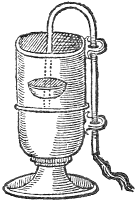
Take a deep vessel, having two loopes on one of the sides, fill it nigh full with water: then take a hollow Cane, like unto the aforesayd, but let there bee fastned unto the shorter end a wooden dish; put the longer end heereof through the loopes on the side, and that end that hath the dish fastned unto it into the vessell of water, with your mouth as you did in the former, draw out the ayre, and you shall see that as the water runneth out, the Crane will sinke lower and lower, and so will continue running untill the vessell bee drawen empty.
How to make a conceited pot, which being filled with water, will of it selfe run all out; but not being filled will not run out.
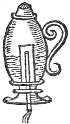
Make, or cause a pot to bee made of what fashion best liketh your mind, and make a large hollow cane to stand up in the midst thereof; having at the bottome 2 or 3 small holes; let the top of this cane be close: then make a hole in the bottome of the vessell, and put up a little cane hollow at both ends, into the other cane, so that the one end therof may almost touch the top of the great cane, and it is done. Note, that if you put into this vessel so much liquor, that it swimme above the top of the cane, it will of its owne accord, run and never cease so long as there is any liquor in the vessell; but if you fill it below the cane, it will not run at all of it selfe: the reason whereof is this; the ayre being the lighter element, doth ascend into the higher place, but being drawne as in the two first demonstrations out of the Crane, or forced, as in this, by the weight of the water in the vessell, the water then tendeth downewards unto its proper place.
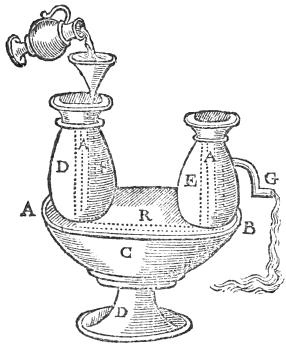
How to dispose 2 vessels upon one foot, that so much wine may runne out of the one, as you shall put water into the other.
Let A, B, C, D, be the foot, at each end whereof, place a vessell equall in bignesse, the one to the other; as D, E; also let there passe a hollow cane from the one to the other, as A, R, A, the ends whereof must almost touch the tops of the sayde vessels; in the vessell D, there must bee a hollow pipe, as F, whereby you may by help of a tunnel powr water into the vessell: also in the vessell E, there must be a crane, as G; now if you fill the vessel E with wine almost unto the top of the crane, and afterwards stoppe the mouth of the vessell, that the ayre may not breath foorth, it will not run of it selfe: but if you put water into the vessell D, the ayre contayned in it, will passe through the hollow pipe, A, R, A, into the vessel E, where striving for a greater quantity of roome, it presseth the wine out of the vessell E, (by the crane) answerable in quantity unto the water powred into the vessell D.
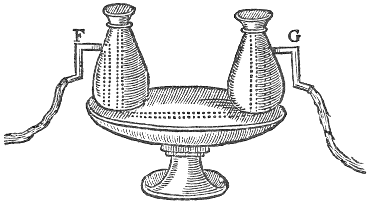
How to dispose 2 vessels upon one foot, the one being empty, and the other almost full of wine, and yet shall not runne out of the vessell, unlesse you fill the empty vessel with water, and then the one shall run pure wine, the other fayre water.
Let there bee 2 vessels placed upon one foot, having a hollow cane passing from one to the other (as I taught in the precedent probleme) but let there bee 2 cranes as F, G, one in each vessell; then fill one of the vessels with wine, but not above the crane, so it will not runne of it selfe: but if you powre water into the other vessell, untill it bee full, it will cause that wine shall runne out of the one, and cleare water out of the other.
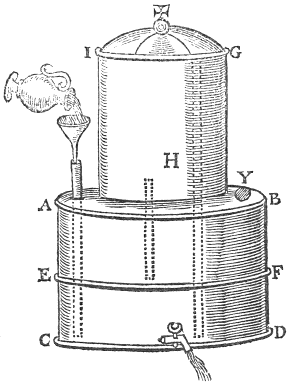
To make that the water conteined in one vessell, shal ascend into another vessell placed above it.
Let A, B, C, D, bee a vessell having a partition in the middle, as E, F, let there be placed upon this vessell, a Cylinder of Glasse cleare, and very transparant, that will contayne the same quantity of water, that one of the partitions will, as I, G, H; in the lowermost partition towards the bottome, let there bee a cocke, and out of the same vessell let two pipes be made to passe, the one wherof reacheth almost unto the top of the Cylinder, the other must come out by the side of the Cylinder: also out of the upper partition there must come another pipe. Moreover there must be a hole, through the top of the uppermost partition as Y. Fill the lower partition at the pipe, also the upper partition by the hole Y: note then that if you turn the cocke as the water runneth out of the lower partition, the water contained in the upper partition wil ascend throgh the pipe into the glasse Cylinder. When all the water in the lower partition is runne out at the cocke, then the water which before did ascend into the Cylinder, will fall backe againe into the upper partition: after this manner may you compose an artificiall water clocke, if you note the howres upon the Cylinder, and make the cocke after such manner, as that the water may issue out but by droppes.
To make a cup or vessell that so oft as you take the liquor out of it, so oft it shall fill it selfe, but never runne over.
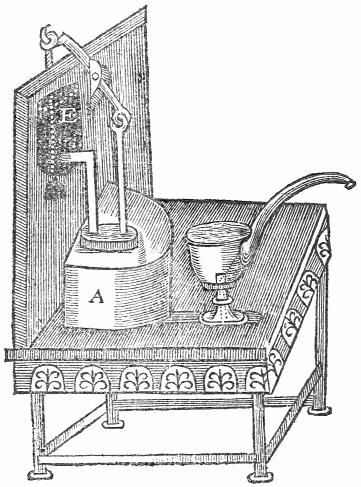
Svppose A to bee a vessell full of water, having a pipe comming from the bottome, and rising up into a cup of the just height that the vessell is of; over the vessell fild with water, let there be placed another vessel, as E. From this vessell must come a pipe, and reach with in the other vessell. Now ouer this vessell there hangeth, as it were, the beame of a scale; at the one ende whereof, is fastened a peece of boord, hauing a leather nayled upon the top; at the other end of this beame must hang a weight, but not full so heauie as the peece of boord lethered is. Fill both these vessells with water, and the cup also; note then, that if you sucke out the water in the cup by the pipe on the side of it, the water in the vessell will come into it, untill it is in both of equall height: now as the water falleth downe in A, the peece of boord that is hanged unto one end of the beame falleth after it (because it is heauier then the weight) and so giueth way unto the water in E, which runneth into it; and when the vessell is filled againe with water, it beareth up the sayd peece of boord against the pipe of the vessell E, so that the water can run out thereat no longer, except the water bee againe drawne out of the cup.
Of drawing water by Engines.
Before I begin with these, take a word or two by the way. Let it bee a generall notion that no engine for water workes of what sort soeuer, whether for seruice, or meere pleasure, can be made without the help of Succurs, Forcers, or Clackes; euery of which, I haue orderly explayned both by words and demonstratiue figures.

A Succur is a box, which is made of brasse (hauing no bottome) in the middest of which, there is a small bar goeth crosse, the same hauing a hole in the middle of it; this box hath a lid so exactly fitted unto it, that being put into it, no ayre nor water can passe betweene the creuise: this couer hath a little button on the top, and a seame that goeth into the box, and so through the hole of the aforesayd crosse barre, and afterwards it hath a little button riueted on it, so that it may with ease flip up and downe, but not be taken, or flip quite out.
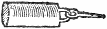
A Forcer is a plug of wood exactly turned and leathered about; the end that goeth into the barrell, is semicircularly concaue.

A Clacke is a peece of Leather nayled ouer any hole, hauing a peece of lead to make it lie close, so that the ayre or water in any vessell may thereby bee kept from going out.
How to harden Leather, so as the same shall last much longer in succurs of Pumps, then it doth unprepared.
Lay such Leather as is well tanned to soake in water, wherein there hath beene store of iron filings a long time, or else in the water that hath lien a long time under a grindstone, into the which such yron as hath beene from time to time ground away, hath fallen and there setled.
The making of a Pumpe to draw water.
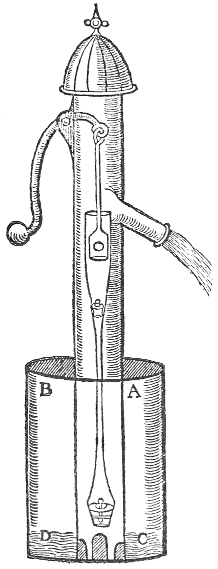
Svppose A B C were a deepe Wel, wherein you would make a Pumpe to draw water to the surface or superficies of the earth. First therefore you must prouide a pipe of Lead, or a peece of timber bored through, so long as will reach unto the bottome of the Well: that part that standeth in the water must bee cut with two or three arches, as it were, if it be wood; if Leade, it must haue somewhat to beare it a little from the bottome, that the water may thereby bee let into the pipe. Towards the bottome of the pipe in the water there must bee fastned a succur; also another of these succurs must be fastned about two foot aboue the top of the ground; then haue a bucket fitted unto the hole of the wood or leaden pipe; let it bee well leathered about, and haue a clacke at the bottome of it, and let it bee hanged with a sweepe as the figure sheweth: note that after you haue filled the distance betweene the lower succur, and the bucket with water, that if you lift up the sweepe, it will thrust downe the bucket upon the water, and presse it, the water being pressed upon by the bucket, beareth up the clacke, and comes into the bucket; then if you pull downe the sweepe, the clacke shutteth, and so the water remaynes in the bucket, which being drawen upward, there being nothing to follow but water, both the succurs open, and there commeth into the pump so much water as the buckets drew out.
The making of an Engin, whereby you may draw water out of a deepe Well, or mount any River water, to be conveyed to any place within three or foure miles of the same. Also it is used in great ships which I have seene.
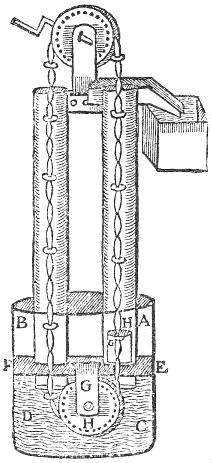
Svppose A B C D to be a deepe Well, and E F to be a strong peece of timber fastned athwart the same, a good way in the water. In this planke let there bee fastened a peece of timber with a strong wheele in it, as G H, hauing strong yron spikes droue athwart the wheele within the creuise, and strongly riueted on each side: let them be three or foure inches distant from each other. Let there bee likewise made in the sayde planke two holes, in which set two hollow posts, that may reach to the top of the Well, or so much higher as you desire to mount the water; let them bee made fast that they stirre not. In the bottom of one of these posts, there must be fastned a barrell of brasse, as G H, made very smooth within, and betwixt those two posts at the top; let there bee fastned unto them both another peece of strong timber to hold them fast, lest they start asunder; and in the midst of that make a mortice, and in it fasten a strong peece of timber with a wheele like to the former mentioned; the pin whereof ought to bee made fast unto the wheele, and haue a crooked handle to turne about, that by turning of it, you may turne the wheele also. Then prouide a strong yron chayne of length sufficient, hauing on euery third or fourth linke a peece of horne, that will easily goe through the brasse barrell, and a leather of each side of it, but somewhat broader then the horne; put this chayne under the lower wheele in the Well upon both the hollow posts, draw it ouer the upper wheele, and linke it fast and straight. Turn then the handle round, and it will turne the chayne round, whose leathers comming up the brasse barrell, will beare the water before them; this goeth very strongly, and therefore had neede bee made with wheeles and wrought upon by horses, for so the water is wrought up at Broken Wharfe in London.
To make an Engin, which being placed in water will cast the same with violence on high.
Let there be prepared a strong table, with a sweepe fastened at the one end thereof, to lift up and downe; unto the end of the sweepe, let there be linked a peece of yron hauing two rods of length sufficient; let there bee made a hole quite through the midst of this table, whose diameter let be about fiue or six inches; then prouide two peeces of brasse in forme of hattes, but let the brim of the uppermost be but about one inch broad, and haue diuers little holes round about it; also in the crown of this must bee placed a large succur, and ouer it a half globe, from the top of which, must proceed a hollow trunke aboute a yard long, and of a good wide bore; then take good liquored leather, 2 or 3 times double, & put betweene the board and the brims of this, and with diuers little screws put through the holes of the brimme, screw it fast unto the top of the table. Note that the table must bee leathered also underneath the compasse of the brimme of the lower brasse. Now the lowermost brasse must be of equal diameter (in hollownesse) unto the other, but it must be more spirall towards the bottome, and must haue eyther a large clacke or succur fastned in it; also the brim of this must be larger then that of the uppermost, and haue two holes made about the midst on each side one; bore then 2 holes in the table, on each side of the brasse one, answerable unto the holes of the brim of the lower brasse, throgh which holes put the two rods, of the yron hanged unto the sweepe through them, and riuet them strongly into the holes of the lower brasse. Place this in water, and by mouing the sweepe up and downe, it will with greater violence cast the water on high.
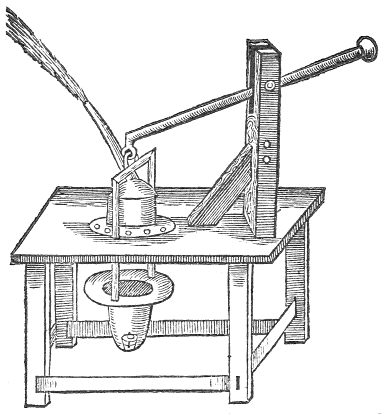
Experiments of forcing water by ayer compressed.
Let there bee a large pot or vessell, hauing at the side a peece of wood made hollow, hauing a clacke of leather with a peece of lead upon it, within the vessell also let there be a pipe through the top of the vessell, reaching almost to the botom of it: at the top of which let there be a round hollow ball, and on it a small cocke of brasse. Note that if you fill the said vessell halfe-full of water, and blow into the hole of the pipe, at the side, your breath will lift up the clack, and enter the vessell, but when it is in, it will presse down the clack: blow into it oftentimes, so shall there bee a great deale of ayre in the vessell, which will presse so hard upon the water, that if you turne the cock at the top, the water in the vessell will spin out a good while.
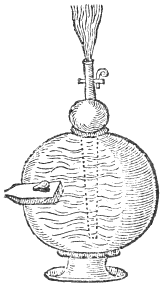
Another.
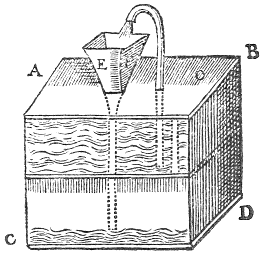
Let A, B, C, D, be a great vessell, having a partition in the middle: let there bee a large tunnell at the top of it, E, F, whose neck must go into the bottom almost of the lower vessell: let there be a hollow pipe also coming out of the partition, and almost touch the top of the upper vessell. In the top of the upper vessell let there bee another pipe, reaching from the bottom of the upper vessell, and extending it selfe out of the vessell a good way: let the top of it hang ouer the tunnell. In the top of the upper vessell let there be a hole besides, to be stopped with cork, or otherwise: when you will use it, open the cork-hole, and fill the upper vessel with water: then stop it close againe, and poure water into the tunnell, and you shall see that the water in the upper vessell will run out of the pipe into the tunnell againe and so will continue running untill all the water in the upper vessell be run out. The reason thereof is this; the water in the tunnell pressing the ayre in the lower vessell, maketh it ascend the pipe in the partition, and presse the water in the upper vessell, which having no other way but the pipe, it runneth out thereat.
The forcing of water by pressure, that is the naturall course of water in regard of its heavinesse and thinnesse, artificially contrived to break out of what image you please.
Let A, B, C, D, bee a cestern placed upon a curious frame for the purpose, let the bottom of this frame be made likewise in the form of a cestern: Through the pillers of this frame let there passe hollow pipes from the bottom of the upper cestern, and descend to the bottom of the lower cestern, and then run all to the middle thereof, and joyne in one, and turne up into the hollow body of a beast, bird, fish, or what your fancy most affecteth: let the hole of the image whereat the water must break out, be very small, for so it will run the longer. Fill the upper cestern with water, and by reason of the weight thereof it will passe through the pipes, and spin out of the hole of the image.
Experiments of forcing water by Engins.
Let there bee an even streight barrell of brasse of what length and bignesse you please: let the bottom of it be open, and let the top be closed, but so that it be hollow on the outside like a basin: in the midst whereof let there bee a straight pipe erected, open at both ends, also let there be another short pipe at the side of it, which let bee even with the top of the basin on the outside, but stand a little from it on the side. Having thus prepared the barrell, fit a good thick board unto it, so that it may slip easily up and down from the top of the barrell unto the bottom, nayle a lether about the edges of it, and another upon the top of it: on the underside of it let there be fastned a good stiffe, but flexible spring of steele, which may thrust the board from the bottom to the top of the barrell: let the foot of this spring rest upon a barre fastned acros the bottom of the barrell; let this board also have tied at the middle a little rope of length sufficient. When you use it, bore a little hole in the table that you set it on, to put the rope thorow, and pull the rope down, which will contract the spring, and with it draw down the board: then poure in water at the basin untill the vessell be full: Note then, as you let slack the rope, the water will spirt out of the pipe, in the middle, and as you pull it straight, the water will run into the vessell againe. You may make birds, or divers images at the top of the pipe, out of which the water may break.
Another manner of forcing water, whereby the water of any spring may be forced unto the top of a hill.
Let there be two hollow posts, with a succur at the bottom of each, also a succur nigh the top of each: let there be fastned unto both these posts a strong peece of timber, having, as it were, a beame or scale pinned in it, and having two handles, at each end one. In the tops of both these hollow posts fasten two brasse barrels, made very even and smooth within, unto these two barrels let there be fitted two forcers, lethered according to art, at the tops of these forcers must be fastned two yrons, which must bee linked unto the aforesaid beam; from each post below towards the end of the barrels, let there bee two leaden pipes, which afterward meet in one, to conduct the water up to the place desired, which if it bee very high, there will be need of some succurs to catch the water as it cometh.
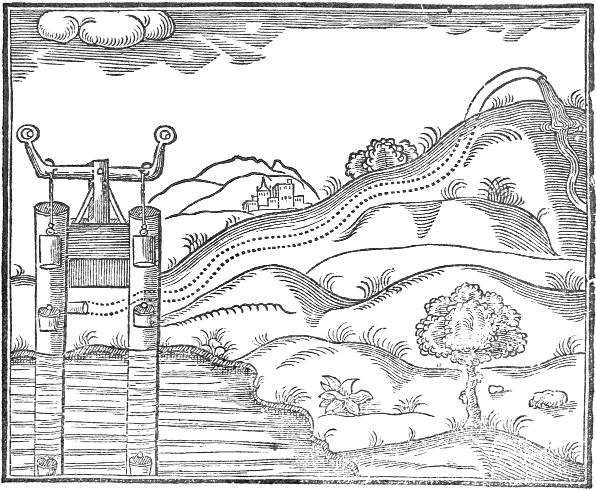
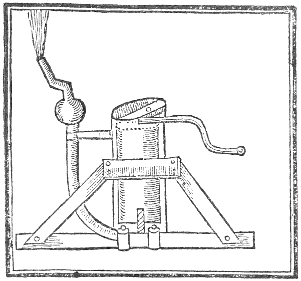
The description of an Engin to force water up to a high place: very usefull for to quench fire amongst buildings.
Let there be a brasse barrell provided, having two succurs in the bottom of it: let it also have a good large pipe going up one side of it with a succur nigh unto the top of it, and above the succur a hollow round ball, having a pipe at the top of it made to screw another pipe upon it, to direct the water to any place. Then fit a forcer unto the barrell with a handle fastned unto the top; at the upper end of this forcer drive a strong screw, and at the lower end a screw nut, at the bottom of the barrell fasten a screw, and at the barre that goeth crosse the top of the barrell, let there be another screw nut: put them all in order, and fasten the whole to a good strong frame, that it may stand steddy, and it is done. When you use it, either place it in the water, or over a kennell, and drive the water up to it, and by moving the handle to and fro, it will cast the water with mighty force up to any place you direct it.
Experiments of producing sounds by ayer and water.
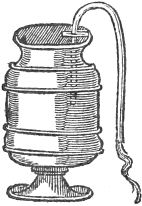
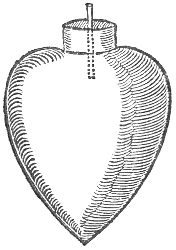
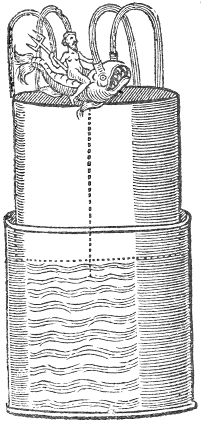
Let there bee had in a readinesse a pot made after the forme of the figure following, having a little hole at the top, in the which fasten a reed or pipe, also another little hole at the bottom: presse this pot into a bucket of water, and it will make a loud noyse.
Another.
Let there be a cestern of lead or such like, having a tunnell on the top: let it bee placed under the fall of a Conduit, and at the one end of the top, let there come out of the vessell a small pipe, which let bee bent into a cup of water, and there will be heard a strange voice. Over this pipe you may make an artificiall tree with diuers birds made to sit therein.
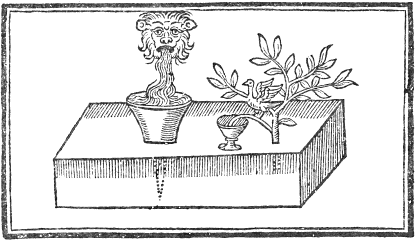
How to make that a bird sitting on a basis, shall make a noise, and drink out of a cup of water, being held to the mouth of it.
Provide a cestern, having a tunnell at the one end of the top, and a little cane coming out of the other end of the vessell; on the top of which let there be a bird made to sit, also at the bottom of the cestern, let there bee a crane to carry away the water as it runneth into the vessell. Place this vessell with its tunnell under the fall of a conduit of water, and the bird will sing; and if you hold a cup of water under his bill, hee will drink and make a noise.
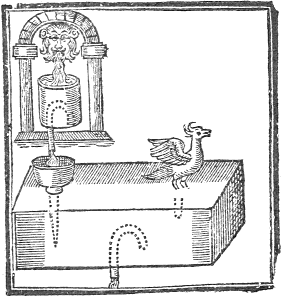
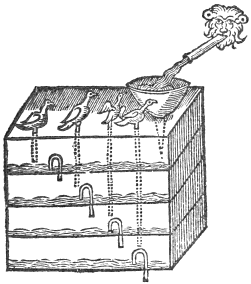
A device whereby severall voyces of birds cherping may be heard.
Prepare a cestern having divers partitions, one above another; let them all have cranes in the bottoms to carry the water from one to another; also let each cestern have his severall pipe, all of them coming out at the top of the cestern, on whose tops let birds bee artificially made, with reeds in them: also in the top of the upper cestern let there bee a tunnell. Place it under the fall of a conduit of water, and you shall heare so many severall voyces as there are birds.
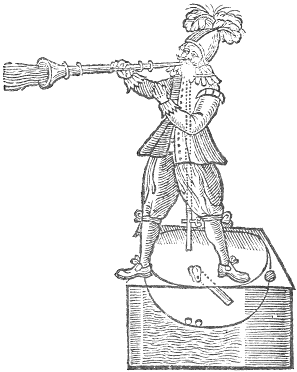
A device whereby the figure of a man standing on a basis shall be made to sound a trumpet.
Prepare a cestern having within on the lid fastned a concave hemisphere, in whose bottom let there bee made one or two holes: let there also be a hole in the top of the sayd cestern, whereby it may bee filled with water as occasion serveth. Also let there bee made to stand on the top of this cestern the image of a man holding unto his mouth a trumpet: this image must likewise have a slender pipe coming out of the cestern unto the trumpet, in this pipe or cane there must be a cock, nigh unto the cestern. Also there must come out of the concave hemisphere at the side of the cestern, a little short pipe, having a clack on it within the vessell. Fill the cestern about two thirds full of water, and then cork it up fast, blow then into the vessell at the pipe on the side divers times, and the ayer will force the water out of the hemisphere, and make it rise up on the sides of it; turne then the cock, and the weight of the water will force the ayer out of the pipe, and so cause the trumpet to sound.
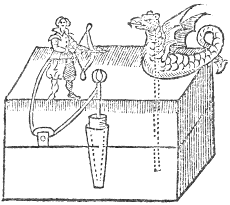
Hercules shooting at a Dragon, who as soone as he hath shot, hisseth at him.
Let there be a cestern having a partition in the midst, in the partition let there bee a deep succur, having a small rope fastned unto the top of it: let the one end of the rope come out of the upper lid of the cestern, and bee fastned unto a ball, the other part thereof let it be put under a pulley (fastned in the partition) and let it be carried also out of the upper cestern, and be fastned unto the arme of the image, which must bee made to slip to and againe, and to take hold of the string of a steele bow that is held in the other hand. At the other end of the cestern let there bee made an artificiall image of a Dragon, through whose body must come a small pipe with a reed artificially fastned in the upper part thereof. Note then, that when you put up the ball, the image will draw his bow, and when you let it fall, the Dragon will hisse.
Experiments of producing sounds by evaporation of water by ayer.
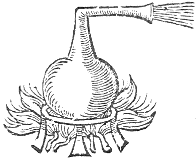
Prepare a round vessell of brasse, or latin, having a crooked pipe or neck, whereto fasten a pipe: put this vessell upon a trevet over the fire, and it will make a shrill whistling noyse.
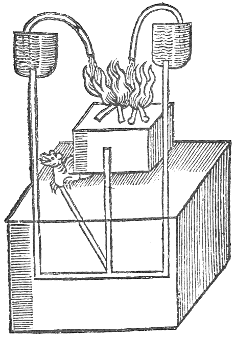
To make two images sacrificing, and a Dragon hissing.
Prepare a cestern having an altar of brasse or tin upon it, let there be in the cestern a hollow pipe turning up out of the cestern at each end; also in the middle within the altar, also on the side of the altar into the body of a dragon artificially made, with a reed in the mouth of it. Let there bee two boxes at the tops of the pipes, on the ends of the cestern, having two crooked pipes or cranes comming out of them. Fill the boxes with water when you occupy it, also put fire upon the altar, and the dragon will hisse, and the water in the two boxes being wrought upon by the heat of the fire comming thorow the pipes, will drop into the fire. These two boxes ought to be inclosed in the bodies of two images, and the two short cranes comming out of them in her armes and hands.
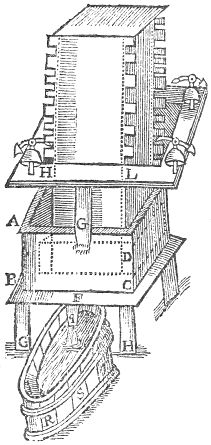
Experiments of producing sounds by Engins.
Prepare a vessell after the forme of the figure marked with the letters A, B, C, D, place it upon a frame, as F, G, H; this vessell must have a hole in the bottom, with a pipe fastned in it, as Q, to convay the water conteyned in it into a vessell or tub set under it, marked with the letters R, S, T, also a frame must bee fastned at the top of it, as G, H, L, having so many bels with little beaters or hammers to them (artificially hanged) as are requisit to expresse your desired tune. Lastly provide a sollid peece of timber, whose lower part must bee fitted unto the aforesayd vessell, so that it may easily slip up and down, and so high as that its foot resting upon the bottom of the vessell, the upper part thereof may stand somewhat above all the bels. Note likewise that that part of this wood aboue its bottom or foot must be cut away about three quarters of an inch. Vpon this wood thus fitted must bee fastned severall pins equall unto each bell, from the top unto the foot thereof, so disposed that they may orderly presse down the inward ends of the hammers of each bell, according as the tune goeth: when you use it, fill the cestern almost with water, and put the fitted peece of timber into it, and as the water runneth out at the bottom, it will play upon the bels: note that it were very requisit to haue a cock fastned to the pipe on the bottom of the vessell, that therewith you might at your pleasure stay the water. The like engines might be made to play upon wyer strings disposed upon a concavous water, to make the musick resound, but because this description giueth light enough for the framing of diuers other, I thought good here to omit them.
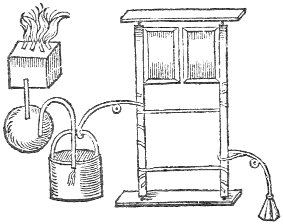
Experiments of motions by rarifying water with fire.
Let there be an altar having a pipe comming out of it, and entring the body of a hollow ball, let there come out of the same ball a crane, whose lower end make to hang ouer a bucket fastned to a rope, and hanging ouer a pulley, of which rope the other end must bee wound about two spindles, hauing two doores fastned unto them, and at the end of the same rope let there bee a waight fastned. So the fire on the altar will cause the water to distill out of the ball into the bucket, which when by reason of the water it is become heuier then the weight, it will draw it up, and so open the said gates or little doores.
Experiments of motions by rarifying ayre by fire.
Let there be a round vessell of glasse, or horn, and on the top of it a vessell of brasse, and in the midst a hollow pipe spreading it selfe into foure seuerall branches at the bottom: the ends of two of the branches must turn up, the ends also of two must turn down; upon these foure branches fasten a light cord, with seuerall images set upon it. Rarifie the ayre then by laying a red-hot iron upon the top of the brasse or tin vessell, and it will turn the wheele about, so that you would think the images to bee living creatures.
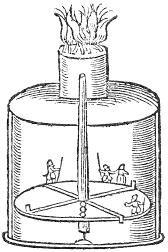
Another way.
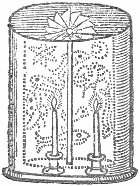
First prepare a round peece of wood, hauing a brasse box in the midst, such as they make to hang the mariners compasse with, but a good deale bigger, round about this peece of wood fasten divers shreds of thin lattin, standing obliquely or ascew, as the figure doth represent; round about these fasten a coffin of thin pastbord, cut into seuerall formes of fishes, birds, beasts, or what you please. Prepare a lantern with oyled parchment, sufficient to conteine it, in the midst of whose bottom must bee erected a spindle with a narrow point, to hang the pastbord cut into formes upon: upon each side let there be a socket for to set a candle in, also let there bee made a doore in the bottom to put the candles in at, and after to be shut, and it is done. If you set two candles in the sockets, the heat of them will turne the whole pastbord of formes round.
Amongst all the experiments pneumaticall, there is none more excellent than this of the Weather-glasse: wherefore I haue laboured to describe the making thereof as plainly as it possibly might be.
What the Weather-glasse is.
A Weather-glasse is a structure of, at the least, two glasses, sometimes of three, foure, or more, as occasion serueth, inclosing a quantity of water, and a portion of ayre proportionable, by whose condensation or rarifaction the included water is subject unto a continuall motion, either upward or downward; by which motion of the water is commonly foreshewn the state, change, and alteration of the weather. For I speak no more than what mine experience hath made me bold to affirme; you may (the time of the yeere, and the following obseruations understandingly considered) bee able certainly to foretell the alteration or uncertainty of the weather a good many houres before it come to passe.
Of the severall sorts and fashions of Weather-glasses.
There are diuers seuerall fashions of Weather-glasses, but principally two.
1 The Circular glasse.
2 The Perpendicular glasse: The Perpendiculars are either single, double, or treble.
The single Perpendiculars are of two sorts, either fixt or moueable.
The fixt are of contrary qualities; either such whose included water doth moue upward with cold, and downward with heat, or else upward with heat, and downward with cold.
In the double and treble Perpendiculars, as the water ascendeth in one, it descendeth as much or more in the other.
In the moueable Perpendicular the glasse being artificially hanged, moueth up and down with the water.
How to make the water.
I must confesse, that any water that is not subiect unto putrifaction, or freezing, would serue the turne, but Art hath taught to make such a water as may bee both an ornament to the work, and also delectable to the eye.
Take two ounces of vardigrease in powder, and infuse it so long in a pint of white wine vineger, untill it hath a very green colour, then poure out the vineger gently from the vardigrease: take also a pint and a halfe of purifide May-dew, and put therein 6 ounces of Roman vitreoll in grosse powder, let it stand till the vitreoll bee throughly dissolved; then mix this with the former water, and strain them through a cap paper, and put it into a cleane glasse well stopped, and its ready for use.
Another.
Take a gallon of rayn water that hath setled, infuse therein a day and a night 4 pound of quick lyme; stir it about with a cleane stick oftentimes in the day; in the morning poure the cleere water off from the lyme, into a brasse pan, and adde thereto 3 pound of sal armoniack; let it stand fiue or six houres, afterwards stir it about untill it be of a perfect blew colour, then straine it through a browne paper rowled within a tunnell, and reserue it for your use. This water is not so good for use as the former.
How to make the Circular glasse.
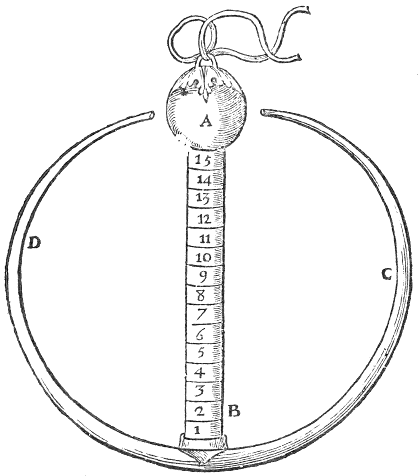
First you must prepare two glasses, the fashion whereof let be like unto the figures marked with the letters A, B, and C, D. The glasse C, D, is open at both the ends, also in the middle there is a neck comming up of sufficient widenesse to receiue the shank end of the glasse marked with the letters A, B. Then fill the glasse C, D, a third part, with either of the waters, and diuide the glasse into so many equall parts as you would haue degrees; rarifie the ayre in the head of the glasse A, B, by holding it to the fire, which being yet warme, reuerse the shank of it into the neck of the glasse C, D. Note that if the water do not ascend high enough, you must take the glasse A, B, out againe, and heat it hotter; if it ascend too high, heat it not so hot. If it be in the dog-dayes, and extreme heat of summer, 1 and 2 are good degrees; if the weather be most temperate, then 3 and 4 are best; if a frost, 9 or 10. When you haue hit an indifferent degree, lute the joynts very close, and fasten a ribben unto the top of the glasse to hang it by. In this glasse the water will with cold ascend the glasse A, B, with heat it will descend the glasse A, B, and ascend the hornes of the glasse C, D.
How to make the single perpendicular glasse, whose water ascendeth with cold, and descendeth with heat.
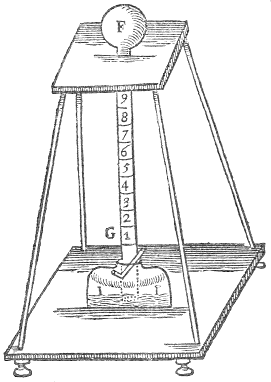
Prepare two glasses after the fashion of these figures underset, F, G, I, I. Alwayes chuse those upper glasses that haue the least heads, else they will draw the water too fast, and presse it too low: also let not the shank of the glasse bee too wide: it is no matter to bee curious in chusing the lower glasse. Hauing prouided both these glasses, make a frame for them about one inch longer than the shank of the glasse F, G, hauing a hole at the top to put the same thorow. There ought to be a great deale of care had in making the frame so, that the foot thereof may bee of a greater compasse than the top, to the end that it may stand firm, and not be subject to be turned down, which will distemper the whole work. After you have provided the frame, proceed to the making of it after this manner. Put both the glasses into the frame, and then divide the shank of the glasse F, G, into so many equall parts as you would haue it haue degrees; write figures upon paper, and paste them on (with gum tragagant dissolued in faire water;) then fill the bottom glasse 2 thirds with the water, and rarifie the ayre in the glasse F, G, so often untill you haue hit such a degree as is most fitting for the temper of the weather, put in a little crooked hollow cane for the ayre to passe in and out at, but let it not touch the water: then stop it about the joynts of the glasse with good cement, that nothing may come out. Make an artificiall rock about it, with peeces of cork dipt in glew, and rowled in this following powder, and it is done.
The powder for the rock.
Take mother of Pearle 2 pound, small red Corall di. pound, Antimony crude 4 ounces, and make a grosse powder of them.
To make the single perpendicular glasse, ascending with heat, and descending with cold.
Prepare two glasses after the fashion of the figure A, B, and C, D: let the glasse A, B, haue a small pinhole at or about the top of all, and let the glasse C, D, haue besides the hole at the top, another hole at the bottom with a short pipe. Prouide such a frame for this as you did before for the other; then put the glasses into it, fasten the bottom glasse to the bottom of the frame, hauing a hole at the bottom, thorow which the pipe of the glasse C, D, may passe, fit a cork unto it: then lute the two glasses together, so that no ayre may passe between the joyning; divide then the shank into so many degrees as you please, and figure it as before I taught you, then with the heat of a candle, rarifie the ayre in the glasse C, D, and fill it a third part full of water, and then put the cork fast in. Note that if the first heating of the glasse rayse not the water unto your content, you must repeat it over and over, untill it doe: when it is sufficient, then stop the cork in very firm, that no water may come out, and it is made.
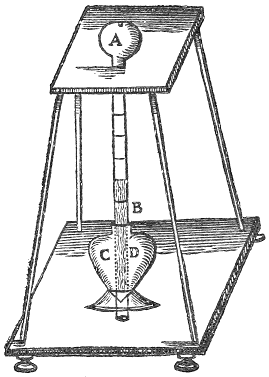
How to make the double perpendicular glasse.
Prepare two glasses like unto the figure marked with the letters A, B, the one of them must have a small hole in or about the head thereof. Prepare likewise for the bottom a vessell of the fashion of the figure G, H, having two mouthes, at each end one, also a cocke in the middle, as K: divide then the shank of the glasse without the hole in the top, into equall parts, and set figures upon it: next lute them both fast into the necks of the bottom vessell. (But first remember to put them in a frame:) when the cement is dry turn the cock of the bottom vessell, and rarify the ayre in the glasse that hath no hole at the top; then set the bottom vessell a little way into a vessell filled with water, and it will suck up the water as it cooleth, when the bottom vessell is full, also the water mounted in that top glasse without a vent, up to a fitting degree; (the temper of the weather regarded) then depresse (but gently) the glasses into the vessell of water, untill the water be come up into the glasse with the vent at the top sufficiently, that is, so that in both the glasses may bee contained so much water as will fill the shank of one, and about 2 or 3 degrees of the other; then turne the cock, and take away the vessell of water from under them, let them down, and fasten the bottom vessell unto the bottom of the frame, and make a rock about it, or else what other works you please, that the art may not be discerned. Lastly, set figures upon both, but first upon that without the vent, beginning from the bottom, and proceeding upwards, then lay your hand upon the head of it, which will depresse the water, which when it commeth equall to the degrees, paste the same degree on the place of the water in the other glasse with the vent, and it is done.
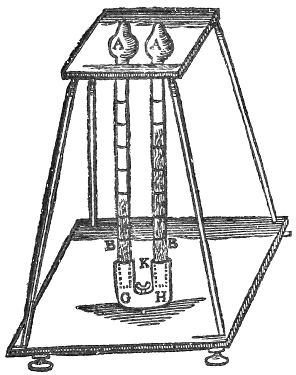
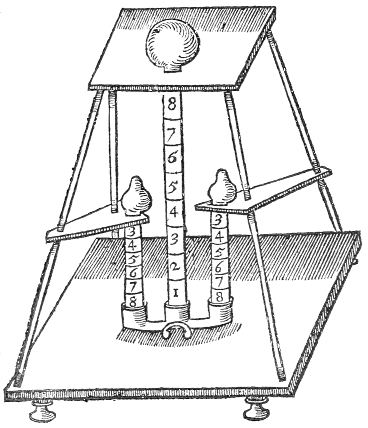
How to make the treble perpendicular glasse.
After the same manner is the treble glasse made: but whereas in the double glasse there was but one glasse that had a vent at the top, there is two in this, both whose shanks must contain the iust quantity of water that the glasse without the vent will containe. If you do well obserue the form of the subsequent figure, you cannot goe amisse.
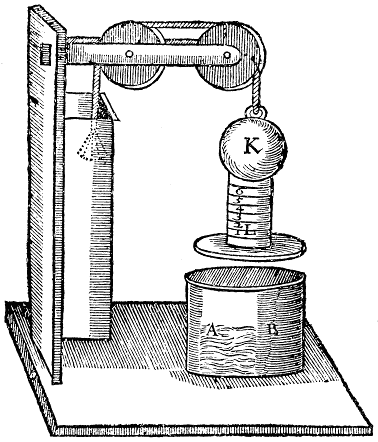
How to make the moveable perpendicular glasse.
First prepare the glasse A, B, fill it almost top-full of water, provide also the glasse K, L, having a loop at the top of it: divide it into so many equall parts as you would haue degrees, and on the mouth thereof fasten a thin board, that will easily slip in and out of the bottom glasse, make then a waight of lead or brasse somewhat heavier than both the glasse and board fastned thereto; and then tie a little rope to the loop of the glasse A, B, and the waight at the other end thereof. Rarify the ayre contained in the glasse L, and reverse it into the glasse A, B, filled with water, and hang the plummet over two little pulleys fastned in a frame made for the purpose, and as the glasse K, L, cooleth, the water will ascend the same, and so by the change of the outward both the glasse and water will move accordingly.
Of the use of all the severall sorts of Weather-glasses.
Albeit the formes of Weather-glasses are divers, according to the fancy of the Artist, yet the use of all is one and the same: to wit, to demonstrate the state, and temper of the season, whether hot or cold; as also to foreshew the change and alteration thereof.
1 Note therefore, that the nature and property of the water in all the glasses that have no vent holes at the top, is, to ascend with cold, and descend with heat. But in them that have vents, it descendeth as much as it ascendeth in these.
2 The sudden falling of the water is an evident token of rayne.
3 The continuance of the water at any one degree, is a certaine token that the weather will continue at that stay it is then at, whether it be fayre, or foule, frost or snow. But when the water either riseth or falleth, the weather will then presently change.
4 The uncertaine motion of the water is a signe of fickle weather.
The single perpendicular with a vent, moveth upwards with cold, and downwards with heat, and is quite contrary in quality to the former, only that it moveth uncertainly in fickle and uncertaine weather, and keepeth a constant place in stayed weather.
These rules are all certaine and true: now you may according to your owne observation frame other rules, whereby you may foretell the change of the weather the water being at any one degree whatsoeuer.
A Water-clock, or a Glasse shewing the houre of the day.
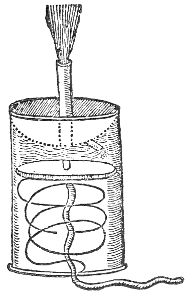
Let there be provided a deepe vessell of earth, or any thing else, that will hold water, as A, B, C, D, provide also a glasse made after the fashion of the figure marked with the letters E, F, G. It must bee open at the bottom, and haue also a small hole at the top, thorow which if you can but put the point of a needle, it is sufficient. This glasse must not bee so long as the vessell is deepe, by about two inches. Then take a iust measure of the length of the glasse E, F, G, and set it on the inside of the vessell A, B, C, D, from the bottom towards the top, and then make a rase round about the vessell; there must bee fitted unto this earthen vessell, a pipe reaching from the top of the outside thereof, (where there must bee a cock unto it) and going to the bottom, where it entreth the same, and againe extendeth it selfe almost unto the circle or mark rased on the vessell A, B, C, D. Fill then the vessell with fayre water up to the rase, or circle, and turne the cock, and put the glasse into the water, and you shall see that the glasse by reason of its heavinesse, will tend toward the bottom of the vessell, but very slowly, by reason that the ayre contained therein hath so small a vent: turne an houre-glasse, and at the end of each houre make a mark upon the glasse equall with the water, and it is done. When the glasse is quite sunke to the bottom of the water, turn the cock, and with one blast of your mouth at the pipe, it will ascend againe.
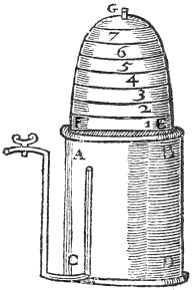
Another fashioned one.
Prepare a vessell, as A, B, C, D, having a very small cock unto it, whose passage ought to bee so small, as that the water might issue out but by drops. Prepare likewise a vessell, as E, F, G, H, having at one end of it a piller of a foot and a halfe, or two foot high: let there be fitted unto this vessell a board, so that it may freely without stay, slip up and down: towards one side of this board, there must be a good big hole, which must bee placed under the cock of the other vessell. Then fasten unto the top of this board, the image of Time or Death, and pointing with a dart upon the piller aforesaid: turn then an houre glasse, and at the end of every houre make a figure on the place of the piller that the image with his dart pointeth at, and it is made. For note, the dropping of the water out of the cock thorow the hole of the board whereon the image standeth, causeth the same to ascend by little and little. Mark the figures.
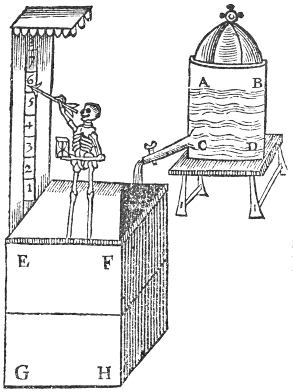
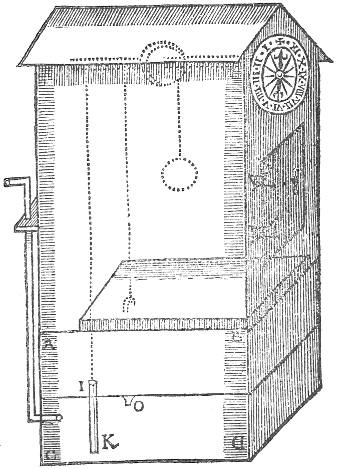
Another artificiall Water-clock, which may bee set conveniently in a double Weather-glasse.
First prepare a cestern, as A, B, C, D, partition in the middle, let there bee made two pipes, the one whereof must reach out of the upper cestern, and descend almost to the bottom of the lowest cestern, as I, K; the other must be a short one, and haue a very small hole, that the water may thereby issue out of the upper cestern but by drops; also at the side nigh the bottom of the upper cestern, let a small pipe enter. To the upper cestern fit a board, (with a peece of lead nayled upon it to make it somewhat heavy) so that it may easily slip up and downe in it; this board must haue a loop to fasten a rope unto, and you must so poyse the said board, that it being hung up by a line, may hang even, and levell. Then prepare a box to put ouer the cestern, which ought to stand about six inches aboue the cestern. In the top of this box let there be fastned a long pulley with a creuice to put a small rope ouer, in this creuice it were fitting to fasten small pins, to the end that the rope might turn the sayd wheele as the water faleth from under the board: let the spindle of this pulley come out at one side of the box whereon there is a Dyall drawn, contayning so many houres as you would haue it go for; unto this end of the spindle let there bee fitted a needle, or director, to shew the houre, then put a small cord ouer the pulley in the box, fasten one end thereof to the loop of the board, and at the other end let there bee tied a waight not quite so heauy as the board, then fill the upper cestern with water, and the board will presse it out into the lower vessell, at the pipe O, drop by drop, and as the board sinketh lower, it will by meanes of the rope upon the pulley, turne the index fastned unto the spindle of the pulley about the dyall; you may set it by an houre-glasse or Watch: when it is quite downe, if you doe with your mouth blow into the pipe at the side of the cestern, the water will all mount up againe into the upper cestern.
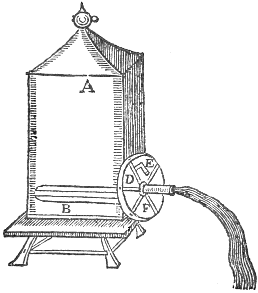
A wheele which being turned about, it casteth water out at the spindle.
Let A, B, be a tub hauing in the bottom a brasse barrell, with a hole open quite through one side of it: let D, E, F, be a wheele, whose spindle must bee also hollow, and haue a hole through one side of it, so that being put into the hollow barrell, both the holes may be equall together. Note then, that so long as these holes are equall together, the water will run out at the spindle of the tub, but if you turne the wheele to another side, it will not run.
A water-presser, or the mounting of water by compression.
Let there bee prouided a barrell of brasse, of what length and widenesse you please, let it bee exactly smooth within, and very tight at bottom; unto this barrell fit a plug of wood leathered about, and let there bee made diuers small holes quite through it, wherein fasten diuers formes and shapes of birds, beasts, or fishes, hauing very small pin-holes through them, for the water to spin out at: you shall do well to make this plug very heavy, either by pouring molten lead into certaine holes made for the purpose, or else by fastning some waight unto the top: fill the barrell with water, and put the plug into it, which lying so heavy upon the water, it will make it spin out at the pin-holes of the images placed thereupon.
How to compose a great or little peece of Water-worke.
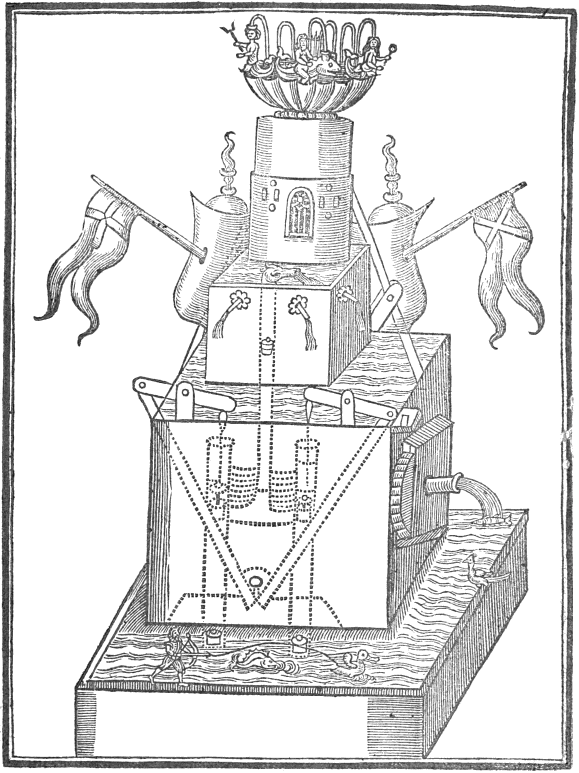
First prepare a table, whereupon erect a strong frame, and round about the frame make a moat with a leaden cestern to be filled with water; let the leaden moat somewhat undermine as it were the frame, which ought to be built in three stories, one aboue another, and euery one lesser than another. Within the middle story fasten a very strong Iack that goeth with a waight, or a strong spring, the ending of whose spindles ought to be crooked, thus Z, whereby diuers sweeps for pumps may bee moued to and againe, whose pumps must go down into the moat, and haue small succurs unto them, and convayances towards their tops, whereat the water may be mounted into diuers cesterns, out of some wherof there may be made convayances in their bottoms, by small pipes running down into the riuer or moat again, and there breaking out in the fashions and formes of Dragons, Swans, Whales, Flowers, and such like pretty conceits: out of others the water may fall upon wheeles, out of whose spindles, the water turning round, may bee made to run. In the uppermost story of all, let there bee made the forcer by ayre, as I taught before, or else a presser, hauing at the top, Neptune riding on a Whale, out of whose nostrils, as also out of Neptunes Trident, the water may be made to spin through small pin-holes; you may also make diuers motions about this work, but for that the multitude of figures would rather confound than instruct the Reader, I haue of purpose omitted them.
THE
SECOND BOOKE,
Teaching most plainly, and withall
most exactly, the composing of all
manner of Fire-works for Triumph
and Recreation.
By I.B.
LONDON,
Printed by Thomas Harper for Ralph Mab. 1634.
To the Reader.

Courteous Reader, there hath a desistance been occasioned since the inception of this work, by reason of the occurrence of certaine Authours, that contrary unto my knowledge had laboured so fully herein; but after consideration had (that for the most part they were but translations) I thought it might bee no lesse lawfull and commendable for mee than for others, to communicate unto such as are yet desirous of further information, that wherein I haue bestowed both cost and paines. Notwithstanding, I haue so used the matter, as that I might not derogate from the estimation had of others to increase mine owne. Read it throughly, iudge indifferently, and if thou likest it, practise considerately. If thou art ignorant herein, I am sure it will instruct thee, and though well experienced (which perhaps thou art) I make no question, but that thou mayst finde somewhat which thou hast not heard of before; So farewell.
Your Welwiller
I.B.
Of Fire-workes.

I haue euer found (in conference with diuers desirous of instruction in any Art or Science whatsoeuer) that the summe and chiefest end of all hath been, to know the reasons and causes of those things they were desirous to be informed in. Wherefore I thought good, before I came to the matter it selfe, to set down some few Præcognita or Principles (as I may so call them) whereby such as are ingenious, upon occasion, may informe themselues, if they stand in doubt of the cause of any thing that is heereafter taught.
Certayne Præcognita or Principles wherein are contayned the causes and reasons of that which is taught in this Booke.
1 The foure Elements, Fire, Ayre, Earth, and Water, are the prima principia (I meane the materialls) whereof euery sublunary body is composed, and into the which it is at last dissolued.
2 Euery thing finding a dissolution of those naturæ catenæ, that is, meanes whereby their principia are connected, and ioyned together, their lighter parts ascend upward, and these that are more grosse and heauy, doe the contrary.
3 It is impossible for one and the selfe same body to possesse at one time two places; It followeth therefore, that a dense body rarified, and made thin, eyther by actuall or potentiall fire, requireth a greater quantity of room to be conteyned in, then it did before. Hence it is, that if you lay your hand upon a glasse, hauing a straight mouth reuerst into a dish of water, it rarifieth the ayre contayned therein, and makes it breake out thorough the water in bubbles. Also, that gunpowder inclosed in the barrell of a gun, being rarified by fire, applied unto the touch-hole, it seeketh a greater quantity of roome, and therefore forceth the bullet out of the barrell. This is called violent motion.
4 According unto the strength and quantity of a dense body rarified, and according unto the forme and length of its inclosure, it forceth its compresser further or neerer at hand.
Thus much shall suffice to haue spoken concerning the Præcognita: Now I will passe ad majora, & ad magis necessaria: to wit, those necessary Instruments, and seuerall sorts of Ingredients, that ought to be had in readines.
As for the instruments they are these; Morters and Pestles, Serces, also seuerall sorts of Formers, Paper, Parchment, Canuas, Whipcord, strong binding thread, Glew, Rosin, Pitch, with diuers vessells meet to contayne and mingle your compositions in. The ingredients likewise are chiefly these, Saltpeter, Rochpeter, Sulpher, Charcoale, good Gunpowder, Filings of steele, oyle of Peter, and Spirit of wine.
Instructions for chusing your ingredients.
Saltpeter is very good, if that being layd upon a board, and fire put to, it rise with a flamed ventosous exhalation, raysing no scum, nor leauing no pearle, but onely a blacke specke burnt into the boord.
The best brimstone, is quick brimstone, or liue sulphur, and that sort is best that breaketh whitest; if this cannot be gotten, take of the whitest yellow brimstone.
The best Coales for use are the sallow, willow, hazel and beech; onely see they be well burnt. Euery of these ingredients must be powdred finely and searsed.
All kindes of gunpowder are made of these ingredients imposed, or incorporated with vineger, or aquauitæ, and afterward grayned by art. The Saltpeter is the Soul, the Sulphur the Life, and the Coales the Body of it. The best sort of powder may be distinguished from others, by these signes:
1 If it be bright and incline to a blewish colour.
2 If in the handling it proue not moyst but auoydeth quickely.
3 If being fired, it flash quickly, and leaue no dregs nor setlings behinde it.
A device to try the strength of divers sorts of Gunpowder.
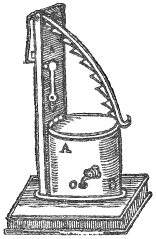
If so be you haue at any time diuers sorts of Gunpowder, and it is your desire to know which of them is the strongest, then you must prepare a box, as A, B, being foure inches high, and about two inches wide, hauing a lid ioynted unto it. The box ought to be made of iron, brasse, or copper, and to bee fastned unto a good thick plank, and to haue a touch-hole at the bottom, as O, and that end of the box where the hinge of the lid is, there must stand up from the box a peece of iron or brasse, in length answerable unto the lid of the box: this peece of iron must haue a hole quite through it, towards the top, and a spring, as, A, G, must bee screwed or riueted, so that the one end may couer the sayd hole. On the top of all this iron, or brasse that standeth up from the box, there must bee ioynted a peece of iron (made as you see in the figure) the hinder part of which is bent downward, and entreth the hole that the spring couereth; the other part resteth upon the lid of the box. Open this box lid, and put in a quantity of powder, and then shut the lid down, and put fire to the touch hole at the bottom, and the powder in the box being fired, will blow the box lid up the notches more or lesse, according as the strength of the powder is: so by firing the same quantity of diuers kindes of powders at seuerall times, you may know which is the strongest. Now perhaps it will bee expected that I should speak of the making of Saltpeter, Gunpowder, Coales, with the refining of Sulphur: but because they are so commonly to bee had, and to bee bought at better rates than I know they can bee made by any that intend it for their priuate use, I haue forborne it: There are diuers I am sure that would willingly bee in action: I haue thought fitting therefore to set downe the collection of naturall Saltpeter, which is a kinde of white excrescence growing upon stone-wals, and (as I haue seene great store) in the arches of stone-bridges. First therefore gather this white excrescence, and adde unto it Quick-lyme, and Ashes, mingle them, and put them into a halfe-tub that hath a hole to draw the liquor out at; then put into this halfe-tub warm water, and let it stand untill all the peter be dissolued; let it then drain out at the hole by little and little, and if the liquor be not cleere, double a brown paper, and put it within a tunnell, and straine the liquor through it. Then boyle it and scum it untill it bee ready to congeale, neither too hard, nor yet too tender: then take it from the fire, and put it into shallow vessels, either of earth or brasse; set them in a cold place two or three dayes, and it will shoot into isicles, and this is called Rochpeter. Thus much for the ingredients. Now I am come unto the Formers, the number whereof I cannot certainly determine, because it dependeth upon the variety of each particular persons inuention. Now that I may formally proceed, I will first make some distinction of each kinde in generall; and then I will speak of euery particular contained in each generall. Fire-works are of 3 sorts.
1 Such as operate in the ayre, as Rockets, Serpents, Raining fire, Stars, Petards, Dragons, Fire-drakes, Feinds, Gyronels, or Fire-wheeles, Balloons.
2 Such as operate upon the earth, as Crackers, Trunks, Lanterns, Lights, Tumbling bals, Saucissons, Towers, Castles, Pyramids, Clubs, Lances, Targets.
3 Such as burn in or on the water, as Rockets, Dolphins, Ships, Tumbling bals.
Part of either of the three kindes are simple, and part are compounded; part also are fixed, and part moueable. First I will treat of the diuers compositions, and then of the Formers, Coffins, and manner of composing euery of them.
Of the divers compositions of fire workes.
First of the compositions of fire workes, for the ayre; and therein first I will speake of the compositions for rockets, because that all moueable fireworkes haue their motion from the force of them accordingly applied.
Compositions for Rockets of all sizes according unto
the prescription of the noted Professors,
Mr Malthus, Mr Norton, and the
French Authour, Des recreationes
Mathematiques.
A Composition for Rockets of one ounce.
Take of gunpowder, saltpeter and charcoale, of each one ounce and a halfe, mingle them together, and it is done. Note heere, as I told you before, that all your ingredients ought to be first powdred by themselues, and afterwards mixed very well together.
A Composition for Rockets of two and three ounces.
Take of gunpowder fowre ounces and a halfe, saltpeter one ounce, mixe them together.
A Composition for Rockets of foure ounces.
Take of gunpowder fowre pounds, saltpeter one pound, charcoale fowre ounces, mingle them together.
A Composition for Rockets of fowre ounces.
Take of gunpowder fowre poundes, saltpeter one pound, charcoale fowre ounces, brimstone halfe an ounce, mingle them together.
A Composition for all middle sized Rockets.
Take of gunpowder one pound, two ounces of charcoales; mingle them.
A Composition for Rockets of five or six ounces.
Take of gunpowder two pound fiue ounces, of saltpeter halfe a pound, of charcoale six ounces, of brimstone and yron scales, of each two ounces, mingle them.
A Composition for Rockets of ten or twelve ounces.
Take of gunpowder one pound and one ounce, saltpeter fowre ounces, brimstone three ounces and a halfe, charcoale one ounce, mingle them.
A Composition for Rockets of one pound, or two.
Take of saltpeter twelue ounces, gunpowder twenty ounces, and charcoale three ounces, quicke brimstone and scales of yron, of each one ounce, mingle them.
A Composition for Rockets of eight, nine and tenne pounds.
Take saltpeter eight pounds, charcoale two pounds twelue ounces, brimstone one pound fowre ounces. Note that no practitioner (how exact soeuer) ought to relie upon a receipt, but first to trie one rocket, and if that be too weake adde more gunpowder, if it be too strong let him adde more charcoale untill hee finde them flie according unto his desire. Note that the charcoale is only to mitigate the violence of the powder, and to make the tayle of the rocket appeare more beautifull. Note also that the smaller the rockets be, they need the quicker receipts, and that in great rockets, there needeth not any gunpowder at all.
The Composition for middle sized Rockets may serve
for Serpents, and for rayning fire, or else the receipt
for Rockets on the ground, which
followeth heereafter.
Compositions for Starres.
Take saltpeter one pound, brimstone halfe a pound, gunpowder fowre ounces, this must be bound up in paper or little ragges, and afterwards primed.
Another receipt for Starres.
Take of saltpeter one pound, gunpowder and brimston of each halfe a pound; these must be mixed together, and of them make a paste, with a sufficient quantity of oile of peter, or else of fayre water; of this paste you shall make little balles, and roll them in drie gunpowder dust; then drie them, and keepe them for your occasions.
Another.
Take a quarter of a pinte of aqua vitæ, and dissolue therein one ounce, and a halfe of camphire, and dip therin cotten bumbast, and afterwards roule it up into little balles; afterwards rowle them in powder of quick brimstone, and reserue them for use.
Another receipt for Starres, whereof you may make fiends and divers apparitions according unto your fancie.
Take gum dragant, put it into an yron pan, and rost it in the embers; then powder it, and dissolve it afterwards in aqua vitæ, and it will become a jellie, then straine it; dissolve also camphire in other aqua vitæ. Mixe both these dissolutions together, and sprinkle therein this following powder.
Take saltpeter one pound, brimstone halfe a pound, gunpowder three pound, charcoale halfe a pound; when you have mingled and stirred them well together, mixe them well with the aforesayd jelly, and then make it into little balles, or into what fashion else you please, then cool them in gunpowder dust, and keepe them for use.
Compositions for receipts of fireworkes, that operate upon the earth.
For Rockets there needeth onely gunpowder finely beaten and searced.
Likewise for all the other sorts, searced gunpowder will serue, which may be abated, or alayed with charcoal dust at your pleasure.
Compositions for fireworkes that burne upon,
or in the water.
A Receipt for Rockets that burne upon the water.
Take of saltpeter one pound, brimstone halfe a pound, gunpowder halfe a pound, charcoales two ounces. This composition will make the Rockets appeare with a great fiery tayle. If you desire to have it burne cleare, then take of saltpeter one pound, three ounces of gunnepowder, brimstone halfe a pound.
A Receipt of a composition that will burne, and feed upon the water.
Take masticke halfe a pound, white Frankincense, gum sandrake, quickelime, brimstone, bitumen, camphire, and gunpowder, of each one pound and a halfe, rosin one pound, saltpeter fowre pounds and a halfe, mixe them all together.
A Receipt of a composition that will burne under water.
Take brimstone one pound, gunpowder nine ounces, refined saltpeter one pound and a halfe, camphire beaten with Sulphur, and Quicksilver; mixe them well together with oyle of peter, or linseed oyle boyled, untill it will scald a feather. Fill a canvas ball with this composition, arme it, and ballast it with lead at the bottome, make the vent at the top, fire it well and cast it into the water, and it will fume and boyle up slowly.
A Receipt of a Composition that will kindle with the water.
Take of oyle of Tile one pound, Linseed oyle three pounds, oyle of the yelks of egges one pound, new quick lime eight pounds, brimstone two pounds, camphire fowr ounces, bitumen two ounces; mingle all together.
Another.
Take of Roch peter one pound, flowre of brimstone nine ounces, coales of rotten wood six ounces, camphire one ounce and a halfe, oyle of egges, and oyle of Tile enough to make the mixture into a paste.
Or take callamita one pound, sal niter and asphaltum, of each fowre ounces, quicke brimstone three ounces, liquid varnish sixe ounces; make them all into a paste. Put eyther of these compositions into a pot wherein is quick lime, so that the lime come round about the past; then lute it fast, binde it close with wires, and set it in a limekiln a whole baking time, and it will become a stone that any moysture will kindle.
Another.
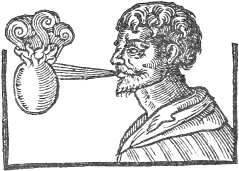
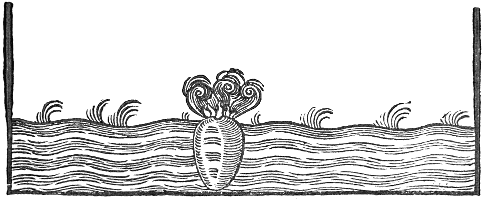
If you make a little hole in the top of an egge, and let out all the meat, and fill the shell with the following powder, and stop the hole with wax, and cast it into a running water, it will break out into a fire.
Take of salt-niter, brimstone, and quick-lyme, of each a like quantity, mix them.
How to make stouple, or prepare cotten-week to prime your fire-works with.
Take cotten-week, such as the Chandlers use for candles, double it six or seuen times double, and wet it throughly in saltpeter water, or aqua vitæ, wherein some camphire hath been dissolued, or, for want of either, in faire water; cut it into diuers peeces, rowle it in mealed gunpowder, or powder and sulphur; then dry them in the Sun, and reserue them in a box where they may lie straight, to prime Starres, Rockets, or any other fire-works.
How to know the true time, that any quantity of fired Gun-match that shall doe an exployt at a time desired.
Take common gun-match, rub, or beat the same a little against a post to soften it; then either dip the same in salt peter water, and drie it againe in the Sunne, or else rub it in a little powder and brimstone beaten very small, and made liquid with a little aqua vitæ, and dried afterwards; trie first how long one yard of match thus prepared will burne, which suppose to be a quarter of an howr, then fowre yards will be a iust howre. Take therefore as much of this match as will burne so long as you will haue it to be ere your worke should fire, binde the one end unto your worke, lay loose powder under, and about it lay the rest of the match in hollow, or turning so that one part of it touch not another, and then fire it.
A Water called Aqua Ardens.
Take old red wine, put it into a glased vessell, and put into it of orpment one pound, quicke sulphur halfe a pound, quicke lime a quarter of a pound; mingle them very well, and afterwards distill them in a rosewater still: a cloth being wet in this water will burne like a candle, and will not be quenched with water.
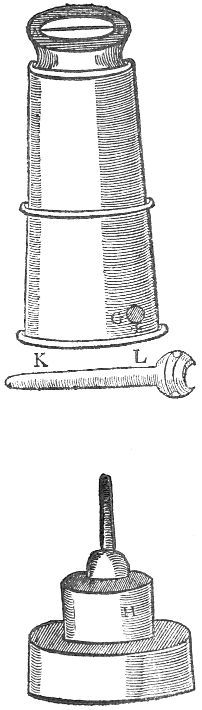
The Formers are instruments wherewith the coffins for the fireworkes are made and formed, whereof in order; and first for Rockets that operate in the ayre. The Formers for Rockets consist of two parts, represented by the two next figures following, the uppermost whereof representeth the body of the Former, which must bee made of Maple, Walnut tree, or of other close & well seasoned wood, seven inches, wanting halfe a quarter in length, turned equally, and exactly hollow quite through, the diameter of whose hollownesse, represented by the line at the top marked at each end with a, e, must bee one inch and a quarter; the breech of the former is represented by the lowest figure, the upper part wherof, must be made to enter the body of the Former; the height of the whole breech, beside the broach is 3 inches and a halfe; it entreth the body of the Former, one inch and three quarters; the top of it must be made like a halfe nutmeg, in the midst whereof (as Mr. Malthus and des recreationes Mathematiques) there must bee fastned an yron broach two inches and a halfe long: then put the breech into the body, and pierce them both quite through as the figures doe represent at G and H; then make a pin as K, L, to pinne them both together, which must bee made to take out at pleasure: then marke both the body and breech neere the said hole with this ★ or any other marke, that you may thereby know how to fit them afterwards.
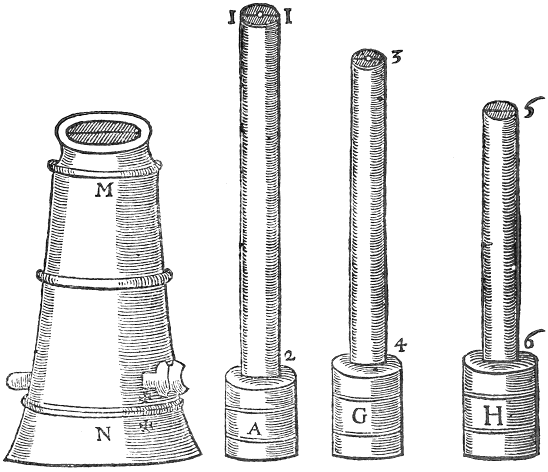
The next figure marked with M, N, doeth expresse both the parts of the Former pinned together; unto this Former there must be made one Rowler expressed by the figure A; also two rammers expressed by the figures G H; they must all of them be turned very even and smooth; let the diameter of the thicknesse of the rowler expressed by the line on the top marked I I, be three quarters of an inch, let it be eight inches long from I, to 2, and have a hole bored in the very midst of the end, so wide and so deep, that all the broach of the former may enter the same: this is to rowle the coffin of paper and upon. The first rammer noted with the figure G, must bee seuen inches and a halfe long, from 3 to 4, and haue a hole at the end of it, as the rowler had; this rammer is to ram the composition into the former (hauing the coffin in it) untill it bee raysed aboue the broach. The second rammer noted with the figure H, must be fiue inches and three quarter long from 5 to 6, and it must haue no hole at the top as the other had; it serueth to ram the composition into the coffin, when it is once raysed aboue the broach. The diameter of the thicknesse of these two rammers must be a thought lesse than the diameter of the rowler, to the end they may not hurt the coffin, being driuen in. Now to make the coffins you must take paper, parchment, or strong canuasse, rowle it hard upon the rowler, so often untill it will go stiffe into the body of the Former: then thrust it rowler and all through the sayd hollow body of the Former; put then the broach of the formers breech into the hole of the rowler, and with a peece of strong packthred choake the coffin within halfe an inch of the rowlers end (which you may do best, and with most ease, if you first dip the end of the coffin into fayre water, so that it may be wet quite through) after you haue choaked the coffin, you must thrust the breech of the former, the coffin also with the rowler in it, up into the body of the former: then pin the breech fast to the body of the former with the pin, and on the rowler giue one stroak or two with a mallet lightly, then unpin the breech, and with the rowler thrust the coffin out of the bottom of the former, lay it by untill the end be dry. Thus you may at leisure times make diuers coffins ready to use upon any occasion. The following figure expresseth an empty coffin.
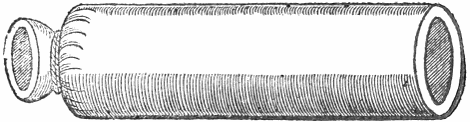
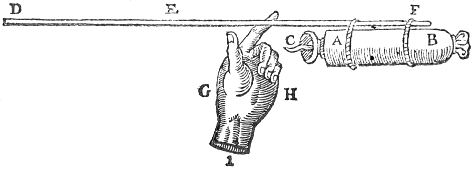
Take one of these coffins, put it into the Former, and take the composition for middle-sized rockets (mentioned before) and put thereof spoonfull after spoonfull, untill you haue filled the coffin unto the top of the former, after the putting of euery second spoonfull into the coffin, with a mallet giue two or three blowes upon the head of the rammer, that the composition may bee well rammed into the coffin: euery third or fourth driuing M. Norton wisheth (if the rockets are to be fired in three or foure dayes) to dip the rammer in gum-dragant, and camphir dissolued in spirit of wine, or good aquavitæ: but if it will bee a month before they will bee fired, then dip the rammer in oyle of peter, or liquid varnish, and linseed oyle mixed together: If you would haue the rocket to giue a report or blow, then within one diameter of the top, driue a bottom of leather, or six or eight double of paper, pierce and prime either of them through in three or foure places, and fill the rest of the coffin with whole gunpowder; afterwards driue another bottom of leather, and then with strong packthred choak the coffin close unto it: then take the rocket out of the Former, and prime it at the broach-hole with a peece of prepared stouple, and binde unto it a straight rod 6 or 7 times the length of the rocket, and so heavy, that being put on your finger, it may ballast the rocket within two or three diameters of the same: mark the following figure, which represents a rocket ready made and finished, A, B, the rocket, C, the stouple that primeth it, D, E, F, the rod bound unto the rocket with two strings, G, H, I, the hand that poyseth it.
How to make Serpents.
The coffins for serpents are made of paper rowled nine or ten times upon a rowler not much thicker than a goose quill, and about foure inches long. The coffins must bee choaked almost in the midst, but so that there may bee a little hole, through which one may see: the longest part of the coffins for Serpents must be filled with the composition specified before: if you would haue it wamble in the ayre, then choak it not after the composition, but if you would haue it wamble, then halfe-choak it, as is demonstrated by the following figure, the shorter end of the coffin must bee filled with whole gunpowder, and choaked quite up, as appeareth at B, in the figure M, N, O, which is the figure of a Serpent ready made.

How to make rayning fire.
Take diuers goose quils, and cut off the hollow ends of them, and fill them with the composition before mentioned, stopping them afterwards with a little wet gunpowder, that the dry composition may not fall out.
How to make starres.
I haue sufficiently taught the making of these in describing their compositions, wherefore I will now onely present the figures of them unto your view; A, A, signifieth two that are bound up in paper or cloth, and peirced, and primed with stouple: the other two, E, E, signifie those that are made up without paper, and need no priming more than the powder or sulphur dust that they are rowled in.

How to make Petards.
You must make the coffins for them either of white yron, or else of paper, or parchment rowled upon a Former for the purpose, and afterwards fitted with a couer, which must be glewed on: these coffins must be filled with whole gunpowder, and peirced in the midst of the broad end, and primed thereat with prepared stouple; the paper ones must be couered all ouer with glew, and the peirced. The figure of a Petard ready made, and primed, is signified by the figure E.
How to make compounded Rockets.
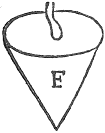
First you must make the Rocket I taught you before; you must not choake the end of it, but eyther double downe halfe the coffin, and with the rammer and a mallet, give it one or two good blowes: then with a bodkin pierce the paper unto the composition, or else drive a bottome of leather fitted unto the bore of the Rocket, and pierce it through in two or three places; then pare or cut off the coffin equall thereunto; to this end of the rocket you must binde a coffin wider a great deale then the Rocket is; strew into it a little gunpowder dust, that it may cover the bottome of this coffin, and put therein with their mouthes downeward eyther golden rayne, or serpents, or both; also starres, or petards; you must put some gunpowder dust among these; when you have filled the coffin with these or such like, cover the top of it with a peece of paper, and paste upon that a picked crowned paper, balast it with a rod, and it is finished; the figure followeth.
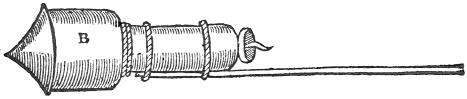
How to make fiends, or fearefull apparitions.
These must bee made of the compositions for Starres, wrought upon cotton weeke dipped in aqua vitæ, wherein camphire hath beene dissolved, and after what fashions your fancy doth most affect.
How to make fire Boxes.
You must make the coffins for fire Boxes of paste-board, rowled upon a Former, of what bignesse you list; then binde them about with packthread, and glew over the cords; also glew bottoms unto them, which must be pierced with a bodkin to prime them at. In these boxes you may put golden rayne, starres, serpents, petrars, fiends, devils. The tops of these fire boxes must bee covered with paper as the compound Rockets. Note that you must strew gunpowder dust a pretty thicknesse on the bottome of the fire-boxes, and prime the hole at the bottome with prepared stouple.
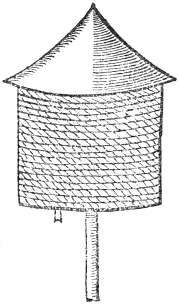
How to make Swevels.
Swevels are nothing else but Rockets, having in stead of a rod (to ballast them) a little cane bound fast unto them, where through the rope passeth. Note that you must be carefull to have your line strong, even & smooth, and it must be rubd over with sope that it may not burn. If you would have your Rockets to returne againe, then binde two Rockets together, with the breech of one towards the mouth of the other, and let the stouple that primeth the one, enter the breech of the other; both kinds are expressed by the figures, the uppermost whereof representeth the single one; A B signifieth the Rocket; D E, the cane bound unto it, through which a rope passeth. The lowermost representeth the double Rocket; A B signifieth one Rocket, and C D another; E the stouple that primeth the one, and entreth the breech of the other; the cane that the rope passeth thorough is supposed to be behinde the two Rockets.
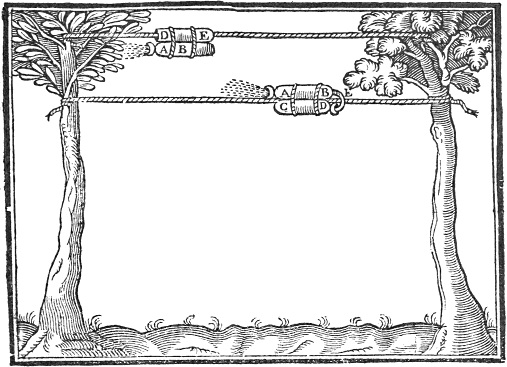
How to make Gironells, or fire wheeles.
The making of fire wheeles consisteth onely in the placing of Rockets, with the mouth of one towards the tayle of another, round about certaine moveable wheels; wherefore I thinke it sufficient only to describe the diversity of their fashions which follow.
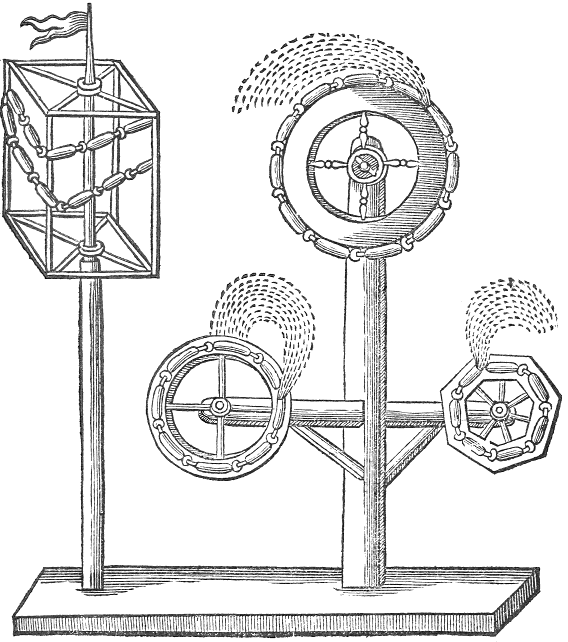
How to make flying Dragons.
The flying Dragon is somewhat troublesome to compose; it must be made eyther of dry and light wood, or crooked-lane plates, or of thin whalebones covered with Muscovie glasse, and painted over. In the body thereof, there must bee a voyde cane to passe the rope through; unto the bottome of this cane must bee bound one or two large Rockets, according as the bignesse and weight of the Dragon shall require; the body must bee filled with divers petrars, that may consume it, and a sparkling receipt must be so disposed upon it, that being fired, it may burne both at the mouth and at the tayle thereof; then hang the wings on in such wise, that they may shake as the Dragon runnes along the line; you may dispose divers small serpents in the wings; marke the figure.
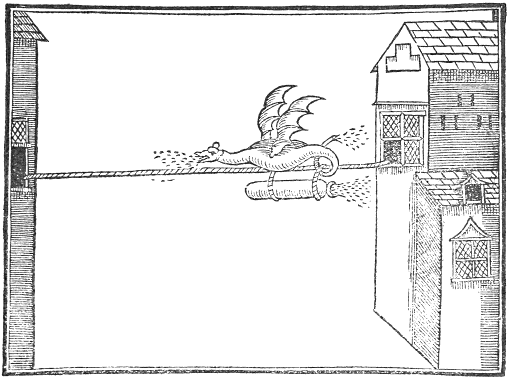
How to make fire Drakes.
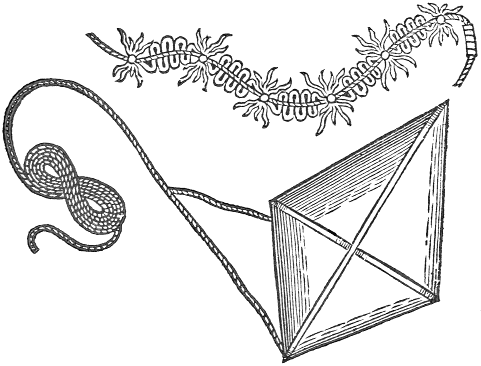
You must take a peece of linnen cloth of a yard or more in length; it must bee cut after the forme of a pane of glasse; fasten two light stickes crosse the same, to make it stand at breadth; then smeare it over with linseed oyle, and liquid varnish tempered together, or else wet it with oyle of peter, and unto the longest corner fasten a match prepared with saltpeter water (as I have taught before) upon which you may fasten divers crackers, or Saucissons; betwixt every of which, binde a knot of paper shavings, which will make it flie the better; within a quarter of a yard of the cloth, let there bee bound a peece of prepared stoupell, the one end whereof, let touch the cloth, and the other enter into the end of a Saucisson: then tie a small rope of length sufficient to rayse it unto what height you shall desire, and to guide it withall: then fire the match, and rayse it against the winde in an open field; and as the match burneth, it will fire the crackers, and saucissons, which will give divers blowes in the ayre; and when the fire is once come unto the stoupell, that will fire the cloth, which will shew very strangely and fearefully.
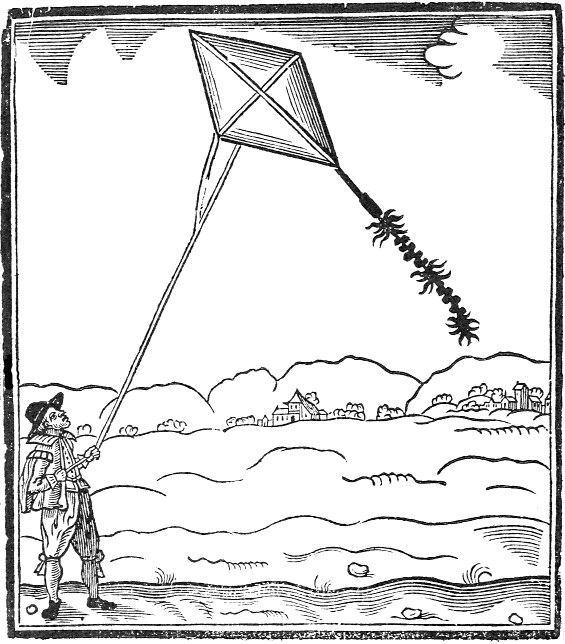
How to make Balloones, also the morter Peece to discharge them.
The diameter of the hollownesse of the morter Peece must be one foot, the longer it is the further it will carry. Let the diameter of the hollownesse of the sacke be the third part of a foot, and halfe a foot deepe: it must have a square foot, and a portfire to strew into the bottome of the sacke on the side of it; this portfire is to be made like a cane about three inches long, and have a bottome sodered unto the inside of the screw, which bottome must be pierced with a small touch hole. This morter peece may be made of yron, red copper, or for a neede with pastbord, armed with cord, and glewed ouer, but the sack, and foot of it must bee made of wood, and the pastbord morter must bee nayled fast upon it. A Balloone must be made of canuasse rowled eight or nine times upon a Former, it must bee made so, that it will easily go into the morter peece; into this Balloone you may put Rockets, Serpents, Starres, Fiends, Petards, and one or two Saucissons to breake the Balloone; then choak it up with cord, and prime it with a little cane rammed full of a slow composition; fill the stock of the morter peece full of whole gunpowder, then screw on the portfire, O, then put the Balloone down to the bottom of the morter with the cane that primeth it, downward into the stock; then with tallow or grease stop the chinks between the Balloone and the morter, and it is ready to bee discharged, which you may do by putting fire to the portfire, and while that burneth, retreat out of harmes way.
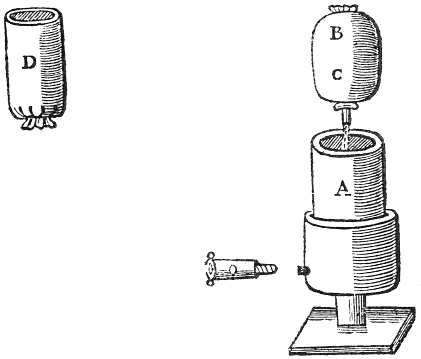
A, the figure of the morterpeece with its portfire, O. B, C, a Balloone ready made. D, an empty coffin for a Balloone.
Of Fire-works for the earth.
How to make Rockets for the earth.
The moulds for these Rockets for the earth are not made like those for the ayre, because that it is required that these should last longer, and haue a more gentle motion: obserue therefore the following directions for the making of them, which may serue for all occasions, without any alteration for bigger or lesser. Let the diameter of their hollownesse bee halfe an inch, let their hollownesse be five or six inches long, let the rowler for to rowle the coffins on, bee the third part of an inch thick, and let the rammer to charge it bee a thought lesse, let the breech bee three quarters of an inch long, and let the breech enter halfe an inch into the mould, then fill it with the composition proper for it, obseruing those rules in the ramming it, as you did in ramming rockets for the ayre; when you haue filled it within an inch of the top of the mould, double down a quarter of the coffin, beating it with three or foure strokes of the mallet; then with a bodkin peirce it in two or three places, and then put in the quantity of a pistoll charge of whole gunpowder, then double down the halfe of the coffin, giuing it a gentle blow or two with the mallet, and with a strong packthred choak the rest of the coffin, and what remaineth after the coffin is choaked, cut it of, and it is made.