Chapter X · DRESSING YIELDS AND CATTLE CUTTINGS.
Reading edition
Yields of Cattle — Yield from Twenty-two Native Cattle — Yield from Fifty-nine Texas Cattle — Yield from Twenty Heavy Cattle — Yield from Thirty-four Cattle — Percentage of Various Cuts — Beef Cuts — Diagram of Cutting — Grading — Loins — Ribs — Rounds — Chucks — Plates, Shanks and Flanks — Barreled Beef.
Yields of Cattle.
—The following are carefully prepared calculations made from data obtained in operation, showing yields of different products on several different lots of cattle. These were choice cattle in each instance and the average yield of the products is generally larger than would be the case with the ordinary run of cattle slaughtered. A perusal of the different tests given in the following pages will give the reader the average yield in different lines from the cattle handled, together with the value of the different items at time tests were made.
The prices were in vogue at the time of the original publication and while now obsolete are left for comparative purposes. The quantities and percentages would remain and can be used as a basis for present computations.
Yield from Twenty-Two Native Cattle.
—The following tables show the yield in beef, hides and tallow and value of offal of twenty-two native cattle, the first in each test showing the weight and percentage of yield of beef, hides and tallow.
The yield of sweetbreads of twenty-two cattle was twenty-two pieces, weighing six pounds, valued at 20c per pound, total value $1.20. The yield in tripe was twenty-two pieces, weighing 420 pounds, valued at ¹⁄₂c per pound, total value $2.10. Total value of sweetbreads and green tripe, $3.30.
PERCENTAGE OF YIELD OF BEEF, HIDES AND TALLOW.
Product Weight lbs. Averages Weight lbs. Per Cent
Live weight 23,700 Average 1,077.00 ...
Dressed weight 14,239 Average 646.00 60.08
Shipping weight 14,162 Shrinkage ... 0.54
Hides weight 1,755 Average ... 7.40
Total fat weight 1,391 Average per head 63.25 5.80
TRIMMINGS FROM LOT OF TWENTY-TWO CATTLE.
Product Pounds Value Total Value
22 tongues 149 $0 .55 each $12 .10
22 livers 248 .35 each 7 .70
22 hearts 56 .07 each 1 .54
22 tails 40 .03¹⁄₂ each .77
Cheek meat 88 .03 per lb. 2 .64
Head meat 16 .03 per lb. .48
Fine meat 7 .03 per lb. .21
Head trimmings 11 .03 per lb. .33
Total value ... ... $25 .77
CASINGS FROM LOT OF TWENTY-TWO CATTLE.
Product Per cent used Value Total Value
20 sets round guts 91 $0 .14 set $2 .80
8 sets middles 36 .50 set 4 .00
22 pcs. bungs 100 .11 each 2 .42
20 pcs. bung gut skins 91 .01¹⁄₂ each .25
19 pcs. weasands 86 .05 per pce. .95
8 pcs. bladders 36 .30 per doz. .22
14 lbs. weasand meat ... .01 per lb. .14
Total value ... ... $10 .78
YIELD FROM HEADS AND FEET OF TWENTY-TWO CATTLE.
Product Total Wt. lbs. Wt. per head, lbs. Price Am’t Value per head
Skulls 88 4 .00 $18 .00 per ton $ 0 .79 $0 .03590
Jaws 43 1 .95 18 .00 per ton .39 .01772
Knuckles 63 2 .86 18 .00 per ton .56 .02545
Dark hoofs 39 1 .77 22 .00 per ton .43 .01954
No. 1 r’nd shins 26 1 .18 42 .00 per ton .54 .02454
Flat shins 19 .86 30 .00 per ton .29 .01318
No. 1 tallow 145 6 .59 .06³⁄₄ per lb. 9 .78 .44454
Neatsfoot oil 23 1 .05 .64 per gal. 1 .93 .08773
Tankage 110 5 .00 16 .00 per ton .88 .04000
Total ... ... ... $15 .59 $0 .70860
The product sent to tank room was 1,675 pounds green weight, the average per head being 76.14 pounds.
In figuring the value of the offal in the different tests the materials sent to the tank room are not taken into consideration. The blood from the twenty-two cattle was eight pounds per head of dry blood; total, 176 pounds; value, at the rate of $33.00 per ton, equals $2.90.
The sinews from the twenty-two lot was 1.93 pounds per head; total weight, 42 pounds; value at the rate of $19.00 per ton, equals 40c.
The fat from the twenty-two native cattle showed the following yield in oleo stock:
1,391 lbs. tallow = { 1,122 lbs. No. 1 stock = 80.00 per cent.
193 lbs. scrap tallow = 13.88 per cent.
76 lbs. waste = 5.46 per cent.
100.00 per cent.
The 1,122 pounds of stock showed the following yield in oleo oil and stearine:
YIELD IN OLEO OIL AND STEARINE.
Product Per cent Weight, lbs. Price per lb. Value
No. 1 oil 79 .77 895 $0 .10¹⁄₂ $94 .37
No. 1 stearine 19 .52 219 .13¹⁄₂ 29 .56
Waste in pressing .71 8 ... ...
Totals 100 .00 1,122 ... $123 .93
The total value of the offal of the twenty-two native cattle, including the tallow, was $182.67, an average per head of $8.30.
Yield from Fifty-Nine Texas Cattle.
—The following table shows the yield in beef, hides and tallow and the value of offal of fifty-nine fed Texas cattle:
PERCENTAGE OF YIELD OF BEEF, HIDES AND TALLOW.
Product Weight, lbs. Averages Weight, lbs. Per cent
Live weight 64,260 Average 1080 . ...
Dressed weight 39,609 Average 671 . 61 .64
Shipping weight 39,365 Shrinkage ... .62
Total fat 3,896 Average per head 66 .03 6 .00
Hides 4,946 Average per head 83 .92 7 .70
The yield in sweetbreads was 59 pieces, weight 20 pounds, value 20c per pound; total, $4.00.
The output of tripe was 59 pieces, weighing 1,080 pounds, valued at ¹⁄₂c per pound; total value, $5.40. Total value of sweetbreads and green tripe, $9.40.
TRIMMINGS FROM FIFTY-NINE TEXAS CATTLE.
Product Weight, lbs. Value Total value
59 tongues 418 $0 .55 each $32 .45
59 livers 744 .35 each 20 .65
59 hearts 160 .07 each 4 .13
59 tails 88 .03¹⁄₂ each 2 .06
Cheek meat 227 .03 per lb. 6 .81
Head meat 37 .03 per lb. 1 .01
Fine meat 18 .03 per lb. .54
Head trimmings 24 .03 per lb. .72
Total value ... ... $68 .37
YIELD IN CASINGS FROM FIFTY-NINE CATTLE.
Product Per cent used Value Total value
52 sets round guts 88 $0 .14 per set $ 7 .28
20 sets middles 34 .50 per set 10 .00
59 pcs. bungs 100 .11 per pce. 6 .49
46 pcs. bung gut skins 78 .01¹⁄₄ per pce. .57
50 pcs. weasands 85 .05 per pce. 2 .50
43 pcs. bladders 73 .30 per doz. 1 .07
24 lbs. weasand meat ... .01 per lb. .24
Total value ... ... $28 .15
YIELD IN HEADS AND FEET FROM FIFTY-NINE CATTLE.
Product Total Wt. lbs. Wt. per head lbs. Price Amount Value per head
Skulls 247 4 .19 $18 .00 per ton $ 2 .22 $0 .0377
Jaws 130 2 .20 18 .00 per ton 1 .17 .0198
Knuckles 161 2 .73 18 .00 per ton 1 .49 .0245
Dark hoofs 112 1 .90 22 .00 per ton 1 .23 .0189
Piths 73 1 .24 20 .00 per ton .73 .0124
No. 1 r’nd shins 61 1 .04 42 .00 per ton 1 .28 .0218
Flat shins 43 .73 30 .00 per ton .65 .0109
No. 1 tallow 527 8 .93 .06³⁄₄ per lb. 35 .56 .6027
No. 1 horns 57 .97 200 .00 per ton 5 .70 .0970
Neatsfoot oil 55 .93 .64 per gal. 4 .69 .0793
Tankage 215 3 .64 16 .00 per ton 1 .72 .0291
Total amount ... ... ... $56 .44 $0 .9566
The yield in the tank room of fifty-nine Texas cattle was 4,466 pounds green weight to tanks, the average per head being 75.70 pounds.
The yield in blood of fifty-nine Texas cattle was eight pounds per head of dry blood; total, 472 pounds; value, at the rate of $33.00 per ton, equals $7.78.
The yield in sinews of fifty-nine Texas cattle was 1.87 pounds per head; total weight, 110 pounds; value, at the rate of $19.00 per ton, equals $1.04.
The fat from the fifty-nine Texas cattle showed the following yield in oleo stock:
3,896 lbs. tallow = { 3,169 lbs. No. 1 stock = 81.34 per cent.
539 lbs. scrap tallow = 13.84 per cent.
188 lbs. waste = 4.82 per cent.
100.00 per cent.
The above 3,169 pounds of stock showed in oleo oil and stearine:
YIELD IN OLEO OIL AND STEARINE.
Product Per cent Weight, lbs. Price per lb. Value
No. 1 oil 80.75 2,559 $0 .11 $281 .49
No. 1 stearine 18.49 586 .13¹⁄₂ 79 .11
Waste in pressing .76 24 ... ...
Totals 100.00 3,169 ... $360 .60
The total value of the offal of fifty-nine Texas cattle, including tallow, was $531.78; average per head, $9.103.
Yield from Twenty Heavy Cattle.
—The following tables show the yield in beef, hides and tallow, and the value of offal of twenty cattle, eight hides, classified as natives and twelve as spreadies.
The yield in sweetbreads from twenty cattle was: 20 pieces weighing seven pounds, valued at 20c per pound; total value, $1.40. The yield in tripe was 20 pieces weighing 420 pounds, valued at ¹⁄₂c per pound; total value, $2.10. Total value of sweetbreads and green tripe, $3.50.
The product sent to tank room was 1,626 pounds green weight to tanks, the average per head being 81.3 pounds.
PERCENTAGE OF YIELD IN BEEF, HIDES AND TALLOW.
Product Weight, lbs. Averages Weight, lbs. Per cent
Live weight 24,650 Average 1,232 ...
Dressed weight 15,894 Average 758 61.64
Shipping weight 14,914 Shrinkage ... 1.84
Hides weight (eight natives and twelve spreadies) 1,731 ... 86 .5 7.10
Total fat 1,552 Average per head 77 .6 6.20
YIELD IN TRIMMINGS FROM TWENTY CATTLE.
Product Pounds Value Total Value
20 tongues 173 $0 .55 each $11 .00
20 livers 261 .30 each 7 .00
20 hearts 64 .07 each 1 .40
20 tails 33 .03¹⁄₂ each .70
Cheek meat 95 .03 per lb. 2 .85
Head meat 16 .03 per lb. .48
Fine meat 10 .03 per lb. .30
Head trimmings 15 .03 per lb. .45
Total value ... ... $24 .18
YIELD IN CASINGS FROM TWENTY CATTLE.
Product Per cent used Value Total Value
19 sets rounds 95 $0 .14 per set $2 .66
7 sets middles 35 .50 per set 3 .50
20 pcs. bungs 100 .11 each 2 .20
15 pcs. bung gut skins 75 .01¹⁄₄ each .19
8 pcs. weasands 40 .05 each .40
9 pcs. bladders 45 .30 per doz. .22
11 lbs. weasand meat ... .01 per lb. .11
Total value ... ... $9 .28
The yield in blood from twenty cattle was 8.35 pounds per head of dry blood; total, 167 pounds; value at the rate of $33.00 per ton, equals $2.75.
Yield in sinews of twenty cattle was two pounds per head, total weight 40 pounds; value at the rate of $19.00 per ton, equals 38c.
YIELD FROM HEADS AND FEET OF TWENTY CATTLE.
Product Total wt., lbs. Wt. per head, lbs. Price Amount Value per head
Skulls 84 4.20 $18 .00 per ton $0 .75 $0 .0375
Jaws 46 2.30 18 .00 per ton .41 .0205
Knuckles 69 3.45 18 .00 per ton .62 .0310
Hoofs 43 2.15 22 .00 per ton .47 .0235
No. 1 r’nd shins 25 1.25 42 .00 per ton .53 .0245
Flat shins 20 1.00 30 .00 per ton .30 .0150
No. 1 tallow 165 8.25 .06³⁄₄ per lb. 11 .13 .5568
Neatsfoot oil 32 1.60 .64 per gal. 2 .72 .1360
Tankage 72 3.60 16 .00 per ton .58 .0290
Totals ... ... ... $17 .52 $0 .8760
The fat from twenty cattle produced a yield in oleo stock of
1,552 lbs. fat = { 1,265 lbs. No. 1 stock = 81.51 per cent.
215 lbs. scrap tallow = 13.85 per cent.
72 lbs. waste = 4.64 per cent.
100.00 per cent.
The above 1,265 pounds of stock showed the following yield in oleo oil and stearine:
YIELD IN OLEO AND STEARINE.
Product Per cent Weight, lbs. Price per lb. Value
No. 1 oil 79 .37 1,004 $0 .11 $110 .44
No. 1 stearine 20 .08 254 .14 35 .56
Waste in pressing .55 ... ... ...
Totals 100 .00 1,258 ... $146 .00
The total value of the offal of above twenty cattle, including the tallow, was $203.61, an average per head of $10.1805.
Yield from Thirty-Four Cattle.
—The following table shows the yield in beef, hides and tallow and the value of offal of thirty-four cattle:
PERCENTAGE OF YIELD IN BEEF, HIDES AMD TALLOW.
Product Weight, lbs. Averages Weight, lbs. Per cent
Live weight 42,350 Average 1259 ...
Dressed weight 25,563 Average 751 60.36
Shipping weight 25,067 Shrinkage ... 1.98
Hides weight 3,027 ... 89 .00 7.10
Total fat 2,666 Fat per head 78 .41 6.30
YIELD FROM TRIMMINGS OF THIRTY-FOUR CATTLE.
Product Weight, lbs. Value Total Value
34 tongues 263 $0 .55 each $18 .70
34 livers 425 .35 each 11 .90
34 hearts 173 .07 each 2 .38
34 tails 49 .03¹⁄₂ each 1 .19
Cheek meat 185 .03 per lb. 5 .55
Head meat 32 .03 per lb. .96
Fine meat 19 .03 per lb. .57
Head trimmings 26 .03 per lb. .78
Total value ... ... $42 .03
YIELD FROM CASINGS OF THIRTY-FOUR CATTLE.
Product Per cent used Value Total Value
34 sets rounds 100 $0 .14 set $4 .76
13 sets middles 38 .50 set 6 .50
34 pcs. bungs 100 .11 each 3 .74
32 pcs. bung gut skins 94 .01¹⁄₄ each .40
30 pcs. weasands 88 .05 each 1 .50
25 pcs. bladders 74 .30 per doz. .63
10 lbs. weasand meat 20 .01 per lb. .20
Total value ... ... $17 .73
The yield in sweetbreads of same thirty-four cattle was 29 pieces, weighing nine pounds, valued at 20c per pound; total value of $1.80. The yield in tripe was 34 pieces, weighing 710 pounds, valued at ¹⁄₂c per pound; total value, $5.35.
The yield in tank room of same thirty-four cattle was 2,665 pounds green weight to tanks, the average per head being 78.38 pounds.
Yield in blood of same thirty-four cattle was as follows: 8.6 pounds per head of dry blood; total, 292 pounds; value at the rate of $33.00 per ton equals $4.82.
The yield in sinews of thirty-four cattle was 1.44 pounds per head; total weight, 49 pounds; value at the rate of $19.00 per ton equals 46c.
The fat from the thirty-four cattle showed the following yield in oleo stock:
2,666 lbs. fat = { 2,189 lbs. No. 1 stock = 82.11 per cent.
383 lbs. scrap tallow = 14.37 per cent.
94 lbs. waste = 3.52 per cent.
100.00 per cent.
The above 2,189 pounds of stock showed the following yield in oleo oil and stearine:
YIELD IN OLEO AND STEARINE.
Product Per cent Weight, pounds Price per lb. Value
No. 1 oil 78.04 1,708 $0 .11 $187 .88
No. 1 stearine 21.06 461 .14 64 .54
Waste in pressing .90 20 ... ...
Totals 100.00 2,189 ... $252 .42
The total value of the offal of these thirty-four cattle, including the tallow, was $356.80; an average per head of $10.497.
The foregoing records of tests will show the reader the actual value of the by-products figured at the time these tests were made. Owing to changes in the market prices, these figures are not correct for present conditions, but the percentage of yield and different items are correct, and the reader can take any one of these tests and by substituting the market prices of today obtain figures of value.
These tests also give the percentage of the hide and tallow. The latter, as will be noted, is quite high, as it will be seen that the tests were made on a fairly fat grade of cattle.
Percentage of Various Cuts of Beef.
—Nearly every large city has its special ways and peculiarities of cutting meats, consequently the percentage of the different cuts varies largely. The following table is a record of results from a cutting test and shows the percentage of “Chicago cut” meat with square cut chucks:
Chicago Cuts— Per Cent.
Chucks 28.00
Rounds 23.00
Navels 8.00
Flanks 2.00
Flank steaks .50
Kidney .25
Ribs 10.00
Loins 15.00
No. 2 suet .50
No. 1 suet 3.00
Shanks 4.00
Brisket 5.00
Necks .75
100.00
The following table shows percentage on cattle cut Chicago style, with the exception of a “Kosher chuck” the latter consisting of five-rib, four-quarter cut-off from the side of the beef:
New York Cuts (Natives)— Per Cent.
Ribs 9.55
Loins 15.74
Flanks 5.55
Navels 8.61
Suet 3.62
Rounds 23.27
New York chucks 33.66
100.00
The following table shows the percentage on cattle cut Philadelphia style:
Philadelphia Cuts— Per Cent.
Rump and round 34.00
Rattler (chuck, plate, brisket and shank) 44.00
Ribs and loins 22.00
100.00
The following table gives the result of tests and shows in detail the percentages in cutting canner cattle. As will be understood, for canning purposes, a light grade of animals is always used; cattle that are too light or too thin are always used for other purposes. In such cases the meats are always boned-out and the different cuts of the meat are here enumerated, showing their percentages:
Packing House Cuts— Per Cent.
Sirloin butts 3.903
Strips 4.204
Tenderloins 2.552
Boneless chucks 13.813
Rolls 2.552
Plates 12.162
Insides 7.957
Outsides 5.555
Knuckles 5.555
Clods 5.105
Rump butts 2.402
Flank steak .600
Hanging tenderloin .450
Front shanks 7.207
Hind shanks 4.650
Soft bones 6.906
Trimmings 8.108
Tallow 4.519
Kidneys .600
100.00
Explanatory.
—Part of the data following and quoted in this chapter is from an excellent bulletin issued by the University of Illinois Agricultural Experiment Station, by Louis D. Hall. This is so clearly expressed and well illustrated that nothing need be added to the subject. The same is true regarding data shown on mutton and on hogs.
Beef Cuts.
—“Wholesale fresh beef” trade is about equally divided between carcass beef and beef cuts. The latter are sold both as “straight cuts” and as subdivisions thereof. The “straight cuts” handled in Chicago markets are Loins, Ribs, Rounds, Chucks, Plates, Flanks and Shanks (Fig. 44). The loin is separated from the round at the hip joint. The flank is cut from about the middle of the thirteenth rib to the opposite lower corner of the loin. The shank is sawed off just below the second knuckle (shoulder joint). The plate is cut off on a line extending from about the middle of the twelfth rib through the point at which the shank is removed. The rib and chuck are separated between the fifth and sixth ribs.
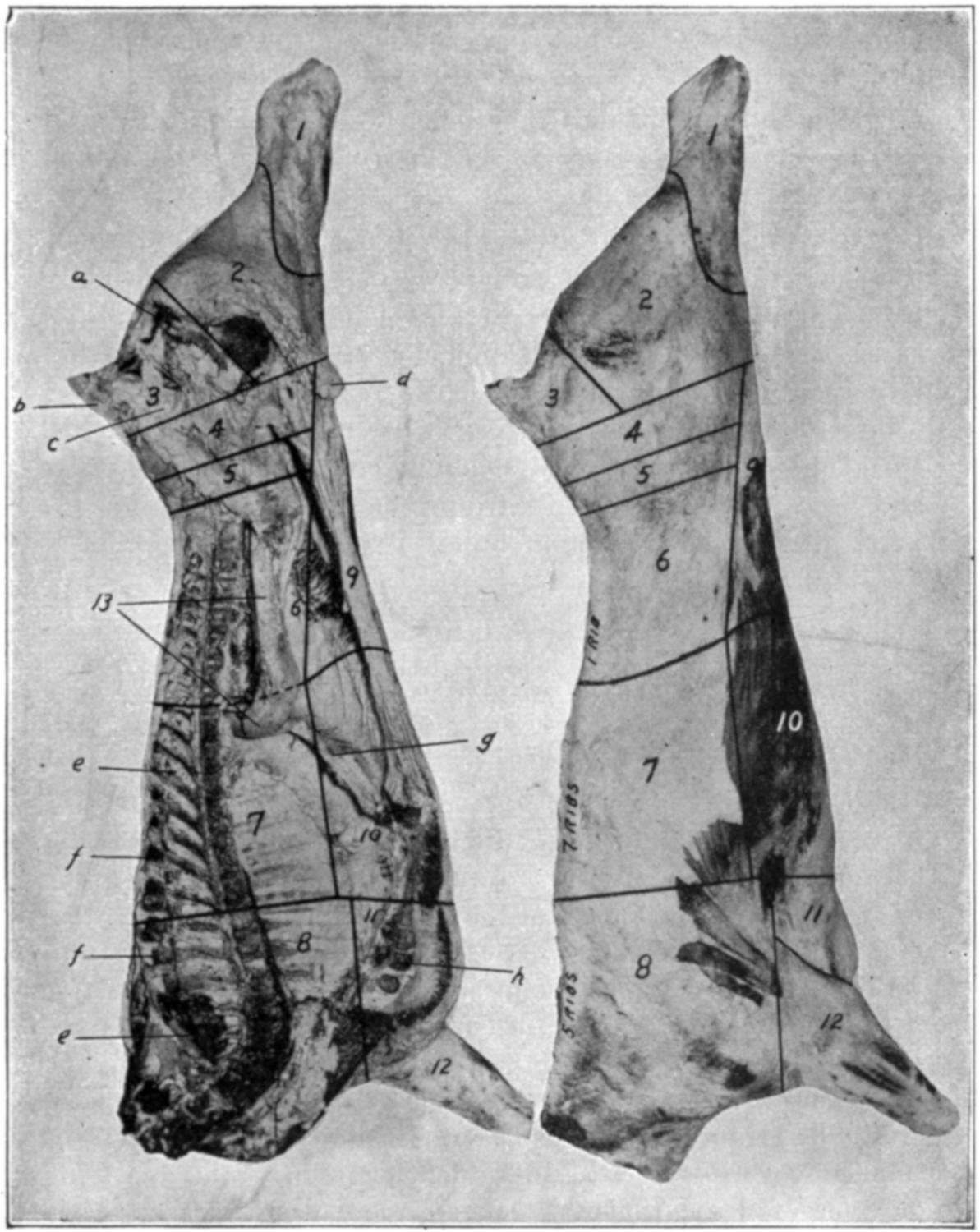
FIG. 44.—CHICAGO BEEF CUTS.
1, 2, 3. Round
4, 5, 6. Loin
7. Rib
8. Chuck
9. Flank
10, 11. Plate
12. Shank
13. Suet
1. Hind shank
2. Round, R. & S. off
3. Rump
4, 5. Loin end
6. Pinbone loin
5, 6. Flatbone loin
10. Navel
11. Brisket
1, 2, 3, 4, 5, 6, 9. Hind quarter
7, 8, 10, 11, 12. Fore quarter
7, 8. Back
7, 10. Piece
8, 11, 12. Kosher chuck
8, 10, 11, 12. Triangle
a. Aitch-bone
b. Rump-bone
c. Crotch
d. Cod
e. Chine-bones
f. “Buttons”
g. Skirt
h. Breast-bone
The standard grades of straight cuts are No. 1, No. 2 and No. 3. Cuts that are too deficient in thickness and quality to be used on the butcher’s block, and which are consequently made into boneless cuts, barreled beef, sausage, etc., are termed “strippers.”
Diagram of Cutting.
—The page illustrating a diagram of cutting shows the “Chicago” method of dividing the animal if cut for sale.
Grading.
—“Weight affects the grade of a beef cut about the same as in grading a carcass. No. 1 cuts are principally from choice and prime 800 to 1,000-pound native steer carcasses and choice 750 to 900-pound native cows; No. 2’s are largely from medium and good 650 to 800-pound steers and 600 to 750-pound cows; and No. 3’s are made chiefly from 450 to 600-pound common and medium cows, also from Texas and light Western steers. Stripper cuts are made from canners, medium and common bulls, Texas and common light Western cattle.
AVERAGE WEIGHTS OF STRAIGHT BEEF CUTS (POUNDS)
Grade Loins Ribs Rounds Chucks Plates Flanks Shanks
No. 1 50-85 30-50 75-110 75-110 40-80 15-20 10-20
No. 2 40-60 25-35 60-80 60-80 30-50 10-15 5-10
No. 3 25-40 20-25 40-60 40-60 20-35 5-10 5-10
Strippers 20-30 15-20 30-40 30-40 15-20 5-10 5-10
Loins.
—“The loin is the highest-priced cut of the carcass because of the tenderness and quality of the lean. The grade of a loin may be determined by marked excellence or deficiency in either thickness, covering or quality, or by a uniform degree of development in all respects. No. 1’s must have a full, well-rounded shape, a complete covering of white fat, the thickness of which is in proper proportion to the lean, and bright, firm, fine-grained, well-marbled flesh. No. 2’s are generally less rounded in form, with insufficient, excessive, or uneven covering and a slight deficiency in grain, marbling or color of flesh; while No. 3’s are more flat in shape, nearly or entirely lacking in covering of fat and very deficient in thickness and quality of flesh, but sufficiently developed to be cut into porterhouse and sirloin steaks for cheap trade (Fig. 45). Stripper loins have no outside fat and are usually extremely flat and rough in shape, with dark-colored, coarse-grained flesh, and hard, white bone.
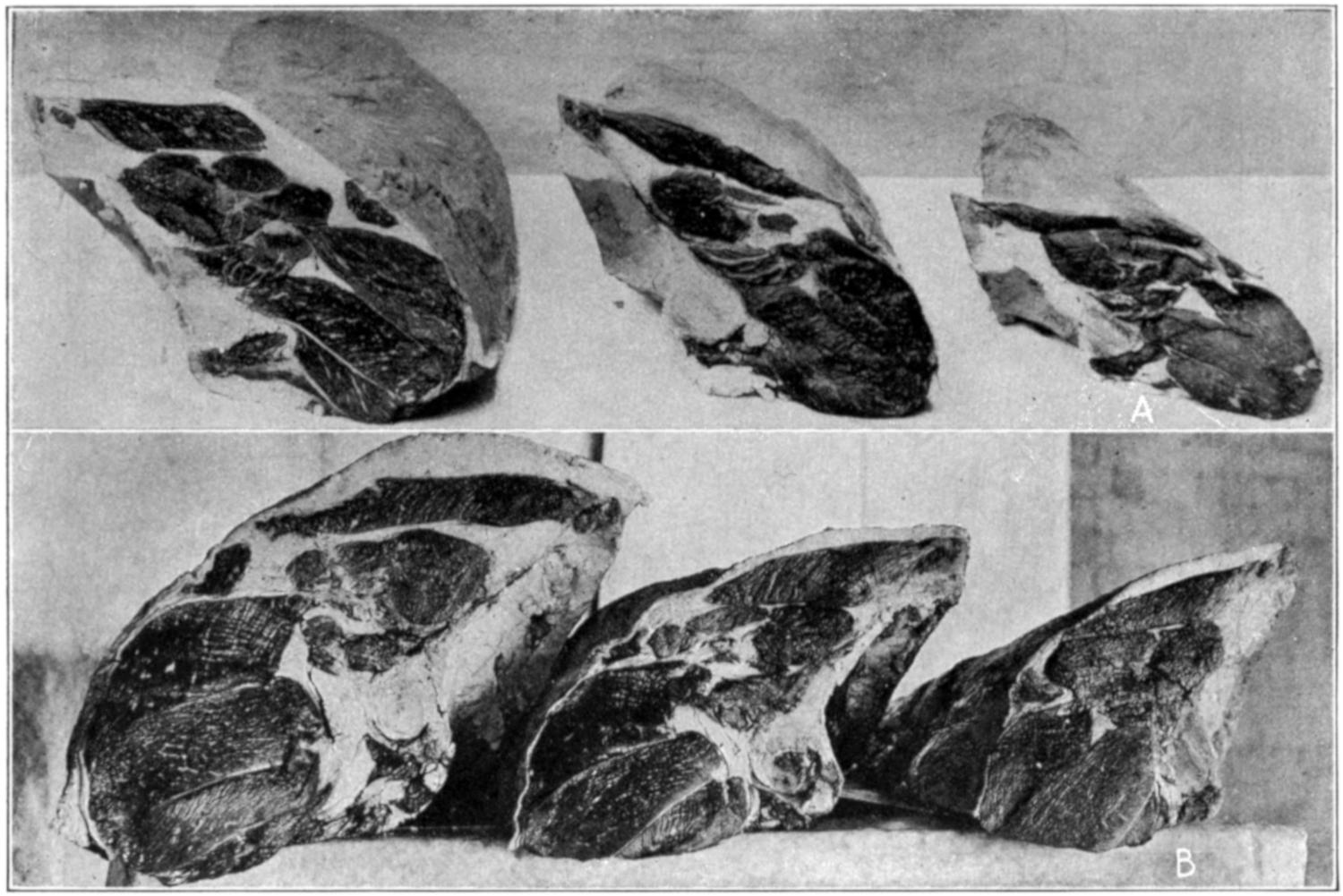
FIG. 45.—A. FLAT BONE LOINS, NO. 1, NO. 2 AND NO. 3 GRADES. B. REGULAR LOINS, NO. 1, NO. 2 AND NO. 3 GRADES.
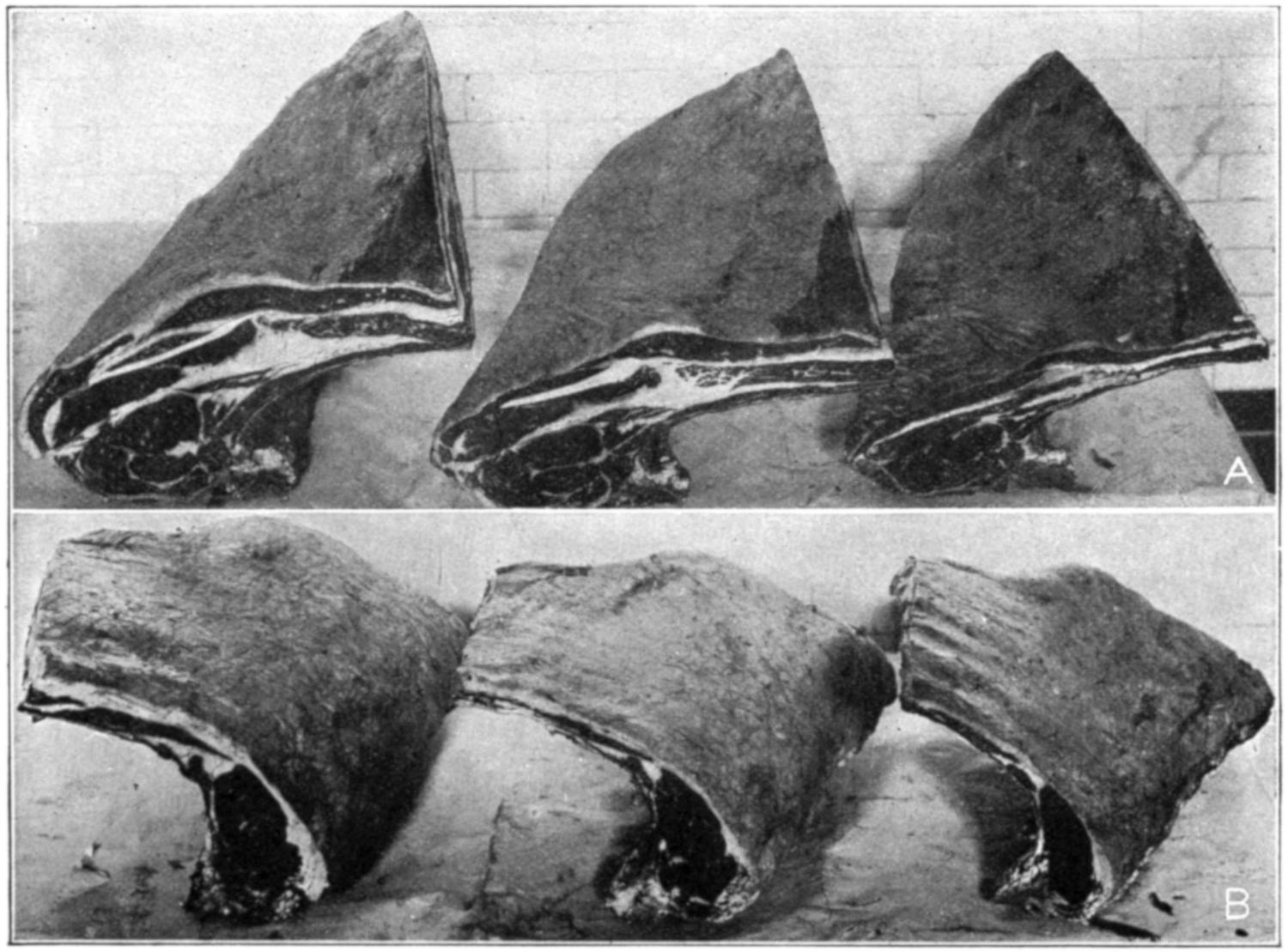
FIG. 46.—RIBS, NO. 1, NO. 2 AND NO. 3 GRADES. A. FRONT. B. REAR.
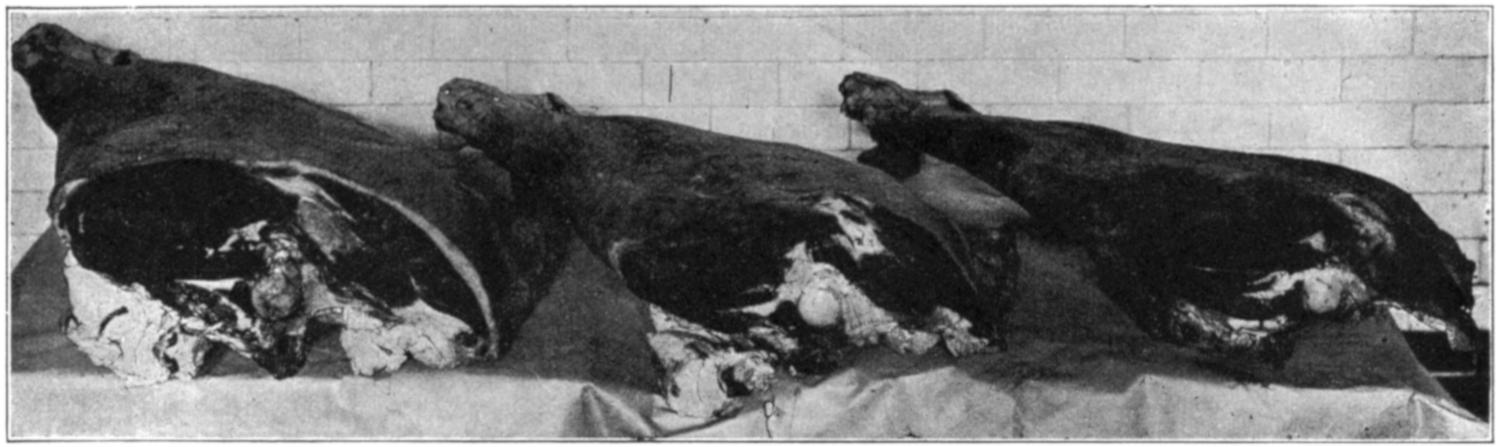
FIG. 47.—ROUNDS, NO. 1, NO. 2 AND NO. 3 GRADES.
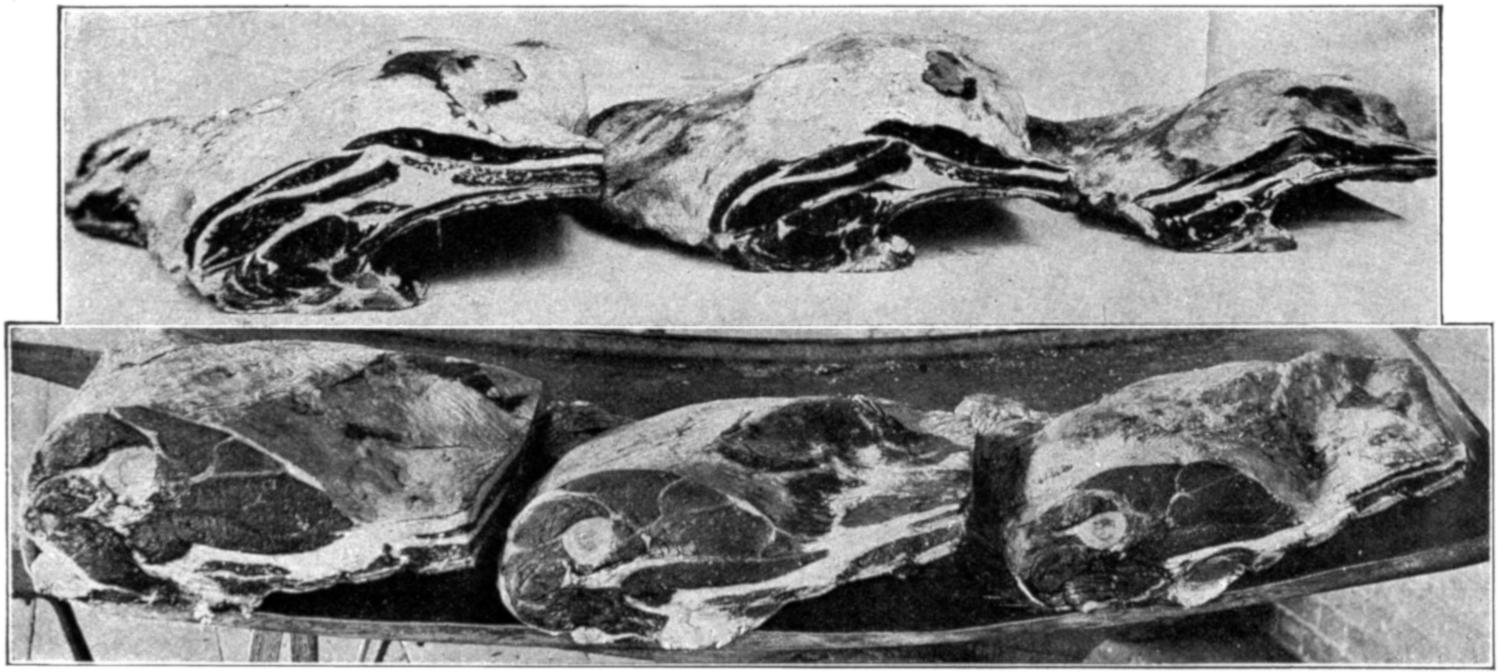
FIG. 48.—CHUCKS, NO. 1, NO. 2 AND NO. 3 GRADES. (ABOVE, REAR VIEW. BELOW, SIDE VIEW.)
Ribs.
—“This cut, which includes the portion between the loin and chuck, contains the best roasts. The poorer quality of ribs are boned and make ‘the roll.’ A ‘regular roll’ consists of the lean part of the rib with backbone removed and shoulder blade fat cut away. ‘Spencer’ rolls are of the same type, except that the covering is left on the lean, exclusive of that over blade bone, which is removed.
Rounds.
—“The cut surface of the full round is identical with the butt end of the corresponding loin. Cuts of various types of rounds are shown in Fig. 47. An excess of rounds under average conditions makes it necessary to divide the rounds further into rump butts used for corn beef; beef hams used for dried beef, and shanks for sausage meat.
“In stripping a bullock for beef hams, it is divided into three parts, known as a set, viz., inside, outside, and knuckle pieces.
Chucks.
—“The style of cutting shown in Fig. 48 is known as the square chuck, and is the style most used in Chicago wholesale markets. Chucks are sometimes cut ‘knuckle out’ by removing the shank with a knife at the second knuckle instead of sawing off below the joint. The lower grades of chucks are often further divided in order to make the cut more saleable. Such cuts are the shoulder clod and boneless chuck. The shoulder clod is a wedge-shaped piece cut from the fleshy part of the chuck just back of the shoulder blade, and extending from the elbow of the shank nearly or quite to the backbone. It is taken mainly from No. 3 and ‘stripper’ cuts, and to a small extent from No. 1’s and 2’s. It is a boneless cut weighing six to fifteen pounds, and sells from 10 to 20 per cent above chuck quotations.”
A “kosher” chuck consists of the square chuck, shank, brisket and neck in one piece, the forequarter with rib and navel piece off.
Plates, Shanks, and Flanks.
—“These are usually boned and the parts used in sausage department and bonehouse, except in the heavier cuts of plates and flanks, which are used in mess beef.
Barreled Beef.
—“The demand for barreled beef is a receding item in packing house usage. Formerly it was a large item. The quotation gives the grading and naming:
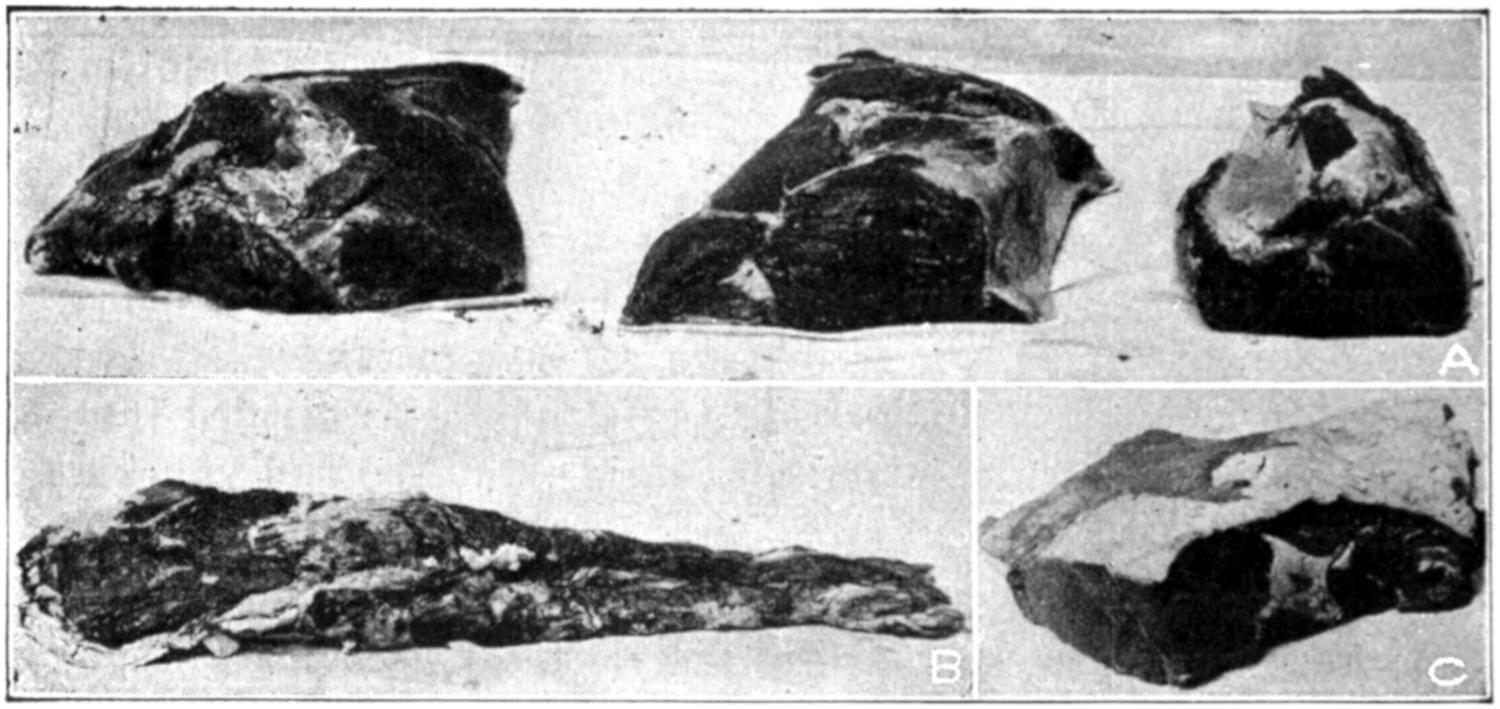
FIG. 49.—A, BEEF HAMS (LEFT, “INSIDE”; CENTER, “OUTSIDE”; RIGHT, “KNUCKLE”). B, TENDERLOIN. C, SHOULDER CLOD.
“Extra India Mess Beef is made from heavy fat No. 1 plates weighing 65 to 80 pounds, cut into pieces of about eight pounds average and packed in tierces or barrels. It is the highest grade of barreled beef and is sold largely through British markets for army and navy use. Fulton Market Beef is of the same quality as Extra India, but from 60 to 70 pound plates, and is usually put up in half barrels or tubs for domestic trade. These and the two following grades of plate beef are usually packed with the lower side of the brisket piece removed.
“Extra Plate (Extra Family) Beef is cut from moderately fat No. 1 plates (50 to 60 pounds), and packed like Extra India. It is exported principally to various countries in northern Europe.
“Regular Plate or Family Beef consists of No. 2 plates (40 to 50 pounds), with a good proportion of fat and lean, cut into pieces of six to eight pounds and packed the same as Extra India. It is also sold largely in northern European countries.
“Packet Beef is made from 30 to 40-pound plates (heavy No. 3’s and light No. 2’s) cut the same as other grades of plate beef. It is used throughout Europe, the West Indies, Central and South America.
“Common Plate Beef is made from No. 3 plates, 20 to 30 pounds average, cut and packed as explained above. It is the lowest grade or barreled plate beef. This grade, also Prime Mess and Extra Mess Beef, is sold to the same trade as Packet Beef.
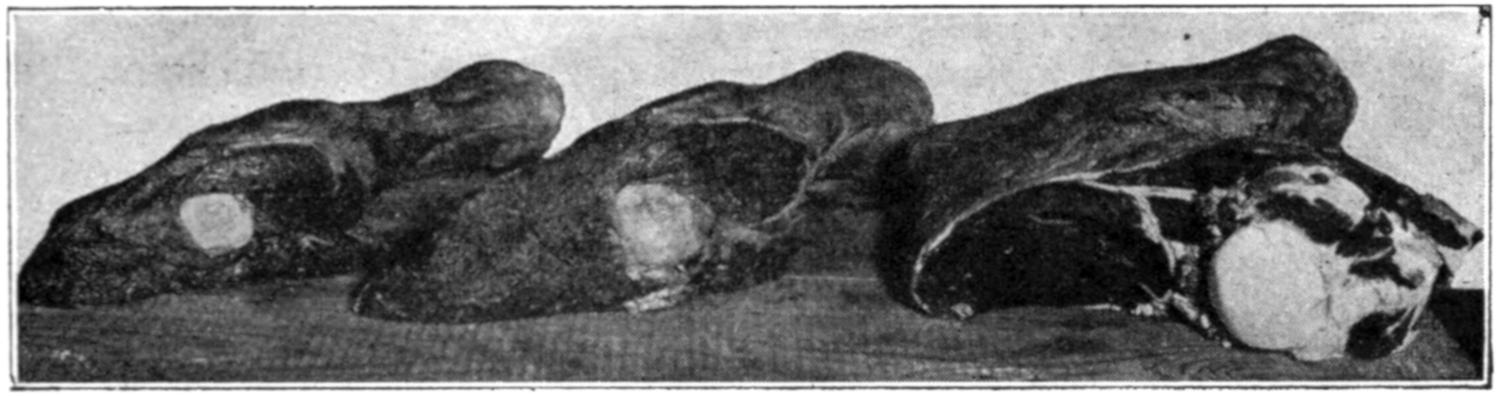
FIG. 50.—SHANKS. NO. 1 GRADE, NO. 2 GRADE, NO. 3 GRADE. CLOD ON.
“Rolled Boneless Beef (Rolled Beef or Rollettes) consists of plates with a portion of the brisket cut off, the remainder of plate being boned, rolled and wound with twine. It is made from No. 2 and No. 3 plates of 25 to 40 pounds average. The rolls weigh eight to twelve pounds and are cured in mild brine.
“Prime Mess Beef consists of about 100 pounds of plates and 100 pounds of chucks, rumps and flanks per barrel cut into pieces of six to nine pounds. The proportions of the cuts named are varied according to demands and may contain 100 pounds of chucks with the remainder plates, flanks and rumps, or as otherwise specified. This grade is made from heavy No. 3 and light No. 2 cuts.
“Extra Mess Beef contains the same assortment of cuts as Prime Mess, but is made only from No. 3 cuts.
“Ramp Butt Beef is cut from rumps off the medium and lower grades of rounds, and is boneless except a small piece of tail-bone. The pieces average four to six pounds each. It is sold largely in lumbering districts and to the fisheries trade.”