Retrospective Gleanings.
Reading edition
THE MONEY OF BETRAYAL, OR "PRICE OF BLOOD."
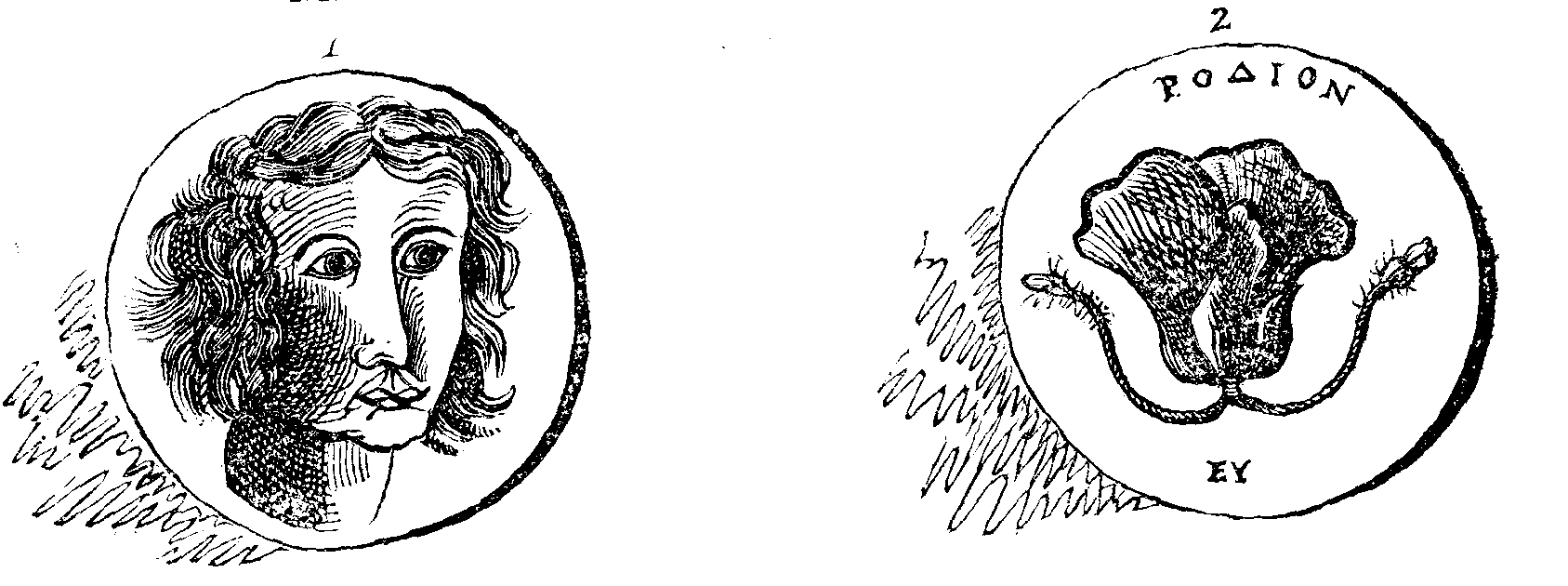
The following very curious notice respecting the money (coin and value) for which Judas Iscariot betrayed our Redeemer, (and afterwards, with it, purchased "the Potter's Field, to bury strangers in,") is extracted from The Sovereign Order of Saint John of Jerusalem, by ANDREW FAVINE, 1620, and will no doubt prove acceptable to the reader:—
"In this citty of Rhodes they did beate and stamp money of silver, in bignesse somewhat neare to an half teston of France, but yet much thicker, and the figures thereon more embossed than ours are. These pieces of silver are like to the halfe sickle of the Jews, or the diobrachma of the Romaines, but they be more worth. There is a tradition, that the thirtie pence, for which the Saviour of the world was sold and delivered to the Jews, by the traitor, Judas, were of this kinde. And in very deede, in the Church of the Holy Crosse of Jerusalem, at Rome, is to be seene one of those thirtie pence, which is wholly like to that in the Church of the Temple, in the citty of Paris. It is enchased in a shrine, and is to be seene but thorow a christall glasse, and on the side which may be noated, appeareth nothing but a head.
"The learned Gulielmus Budeus, the honour of our Citty of Paris, and of all France, in the remarkable tract which he wrote, De Asse, affirmeth that he had scene the pennie of silver, in the Temple at Paris, and that on it was represented a head, as in truth there is. But, concerning the other side, neither the learned Cardinall Baronius, nor Budeus, doe speake anything else; then of the weight of those silver pence, which the Evangelists tearme Argenteos. One of those silver pence of Rhodes I have, and both the sides thereof, in this manner I shew to you (vide Engraving).
After this erudite disquisition, which endeavours to account for the smallness of the sum for which our blessed Lord was betrayed, and for which Alcedama was purchased, how would honest Andrew Favine stare, could he learn that modern commentators have, without comment, assigned something less than one-fifth of 18l. 7s. 6d. as the "price of innocent blood." We transcribe in proof, the annotation on Mat. 26 c. 15 v. from D'Oyly and Mant's Bible:—"'Thirty pieces of silver.' Thirty shekels, about 3l. 10s. 8d. of our money. It appears from Exod. 21 c. 32 v., that this was the price to be paid for a slave or servant, when killed by a beast. So vilely was HE esteemed, who shed his precious blood for man; and so true it is, that Christ took upon him the form of a servant." Now, the Jewish shekel being valued at 2s. 4-1/4d. and the coin of the next superior denomination, (the maneh) being set down in our Bible money-tables, at 7l. 1s. 5d. it is clear that several of intermediate value must have existed, for exchange, which might reconcile this difference. M.L.B.