THE BEULAH SALINE SPA, NORWOOD.
Reading edition
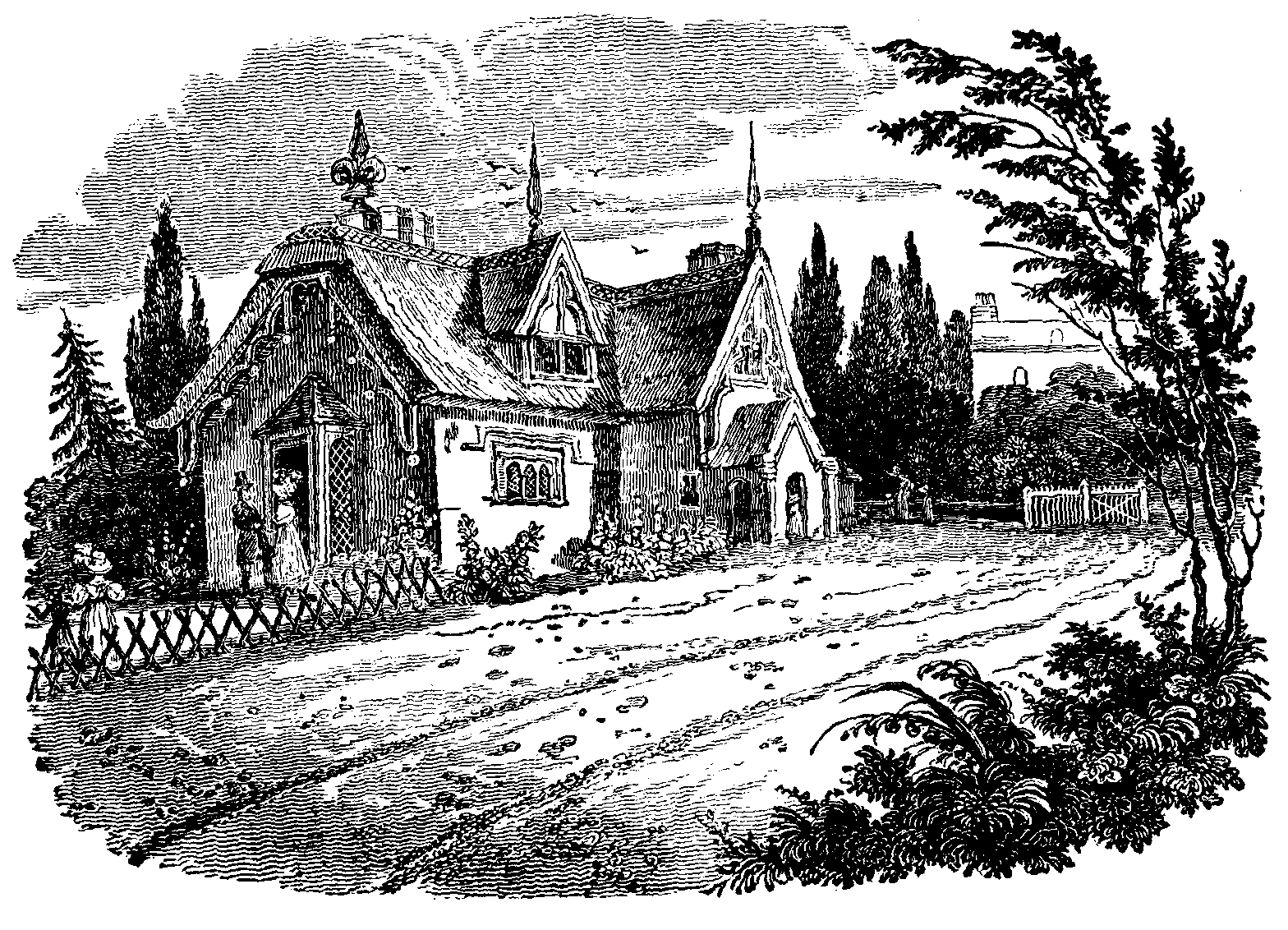
Our attention has been invited to the Beulah Spa by a brochure lately published, from the very competent pen of Dr. George Hume Weatherhead; the details of which will be read with interest by all who are in quest of "healing founts." "The Spa," observes Dr. Weatherhead, "has long been resorted to by the country people of the neighbourhood, who, from experiencing its beneficial effects in a variety of diseases, have sustained its sanative character, and kept it from sinking into total neglect." We trust, however, that its virtues may soon enjoy more extensive celebrity, especially as the attractions of the scenery amidst which the spring is situate are of no common-place character, and the distance from the metropolis both easy and inviting. The Spa has already acquired some popularity; for, we learned on our visit a few days since, that, although it was only opened to the public towards the close of the month of August, in the past year, it was visited during the autumn by several hundred persons weekly.
The Spring lies embowered in a wood of oaks, open to the south-west whose dense foliage shelters and protects it. It is now the sole vestige of the gipsy haunts, and comprises a space of more than twenty-five acres; the gentle inclination of the ground keeping the foot-paths always dry.
Passing the lodge, we descended by a winding path through the wood to a small lawn or glade, at the highest point of which is a circular rustic building, used as a confectionery and reading-room; near which is the Spa, within a thatched apartment. The spring rises about 14 feet, within a circular rockwork enclosure; the water is drawn by a contrivance, at once ingenious and novel; a glass urn-shaped pail, terminating with a cock of the same material, and having a stout rim and cross-handle of silver, is attached to a thick worsted rope, and let down into the spring by a pulley, when the vessel being taken up full, the water is drawn off by the cock. We quote Dr. Weatherhead's analytical description of the water:
"The water drawn fresh from the well is beautifully transparent and sparkling. Innumerable bubbles of fixed air are seen rising to the surface, when allowed to stand. Its taste is distinctly bitter, without being at all disagreeable, leaving on the palate the peculiar flavour of its predominant saline ingredient, the sulphate of magnesia. The temperature of the water, at the bottom of the well, is 52 deg. of Fahrenheit; its specific gravity 1011; and, by an analysis of its composition by those distinguished scientific chemists, Messrs. Faraday and Hume, the following are the solid contents of a quart of the water:—
BEULAH SALINE. Sulphate of magnesia ............ 123 Sulphate of soda and magnesia .... 32 Muriate of soda .................. 19 Muriate of magnesia .............. 18-1/2 Carbonate of lime ................ 15 Carbonate of soda ................. 3 --- Grains 210-1/2 CHELTENHAM PURE SALINE. Sulphate of magnesia ............. 22 Sulphate of soda ................. 30 Muriate of soda ..................100 Sulphate of lime .................. 9 --- Grains 161
The lawn is tastefully varied with parterres of plants; owing to the lateness of the season, we saw but few near flowering, save
Daffodils, That come before the swallow dares, and take The winds of March with beauty, violets dim, But sweeter than the lids of Juno's eyes, Or Cytherea's breath.
A few yards from the lawn a rustic orchestra is in course of erection: whence "the dulcet and harmonious sounds" of music may attune with the joyful inspiration of the natural beauties of the scene. Our guide, (of a more intelligent and communicative character than guides usually are,) directed us by a descending path through the wood, across a rude bridge, past a maze, by a flight of roughly-formed steps, to a terrace, whence we enjoyed a picturesque prospect of great range and indescribable beauty. The woods were as yet leafless, but primroses enlivened the pathside: how touchingly is their solitude told by our poets. Shakspeare calls them
Pale primroses That die unmarried ere they can behold Bright Phoebus in his strength.
Milton describes them as dying forsaken:
Bring the rathe primrose that forsaken dies:
and Mayne calls this flower
Lorn tenant of the peaceful glade, Emblem of virtue in the shade.
Dr. Weatherhead describes the prospect from this terrace with more minuteness than the hazy state of the atmosphere enabled us to trace its several beauties. The ancient archiepiscopal town of Croydon lies at your feet; more remote, Banstead Downs spread a carpet of blooming verdure to the sight; in the extreme distance Windsor Castle peers its majestic towers above the mist; while elsewhere the utmost verge of the horizon is bounded by the bold range of the Surrey and Hampshire hills. Turning to the left you enjoy a view of Addiscombe Place, the seminary for cadets of the East India Company; of Shirley, the sporting seat of John Maberly, Esq. M.P.; of the Addington hills clothed with heaths; and of the park, the seat of his Grace the Archbishop of Canterbury; when the prospect, deepening in extent, stretches as far as Knockholt Beeches, near Seven Oaks, and, winding round, comprehends the tall spire of Beckenham Church, piercing through the dense woods which surround it; Shooter's Hill, Blackheath, and the villages that intervene.
Immediately beneath you are the grounds of the Spa, every portion of which can be distinctly traced from this spot: the lodge, lawn, refreshment-room, spring, and orchestra, as we have described them, and the paths winding among the woods till they disappear as it were in trackless solitude.
Dr. Weatherhead's pamphlet treats copiously, but in a popular style, of the medicinal properties of the Spa. The terms for drinking the waters are furnished at the lodge, where the visiter may smile at the remedy being set to music, in the melodies of the Beulah Spring Quadrilles. It may prevent some disappointment by stating that the Grounds are not opened to the public on Sundays.