THE MIRROR OF LITERATURE, AMUSEMENT, AND INSTRUCTION.
Reading edition
CONTAINING
ORIGINAL ESSAYS;
HISTORICAL NARRATIVES; BIOGRAPHICAL MEMOIRS; SKETCHES OF SOCIETY; TOPOGRAPHICAL DESCRIPTIONS; NOVELS AND TALES; ANECDOTES;
SELECT EXTRACTS
FROM
NEW AND EXPENSIVE WORKS;
POETRY, ORIGINAL AND SELECTED:
THE SPIRIT OF THE PUBLIC JOURNALS;
DISCOVERIES IN THE ARTS AND SCIENCES; USEFUL DOMESTIC HINTS; &c. &c. &c.
VOL. XIII.
LONDON PRINTED AND PUBLISHED BY J. LIMBIRD, 143, STRAND.
(Near Somerset House.)
1829
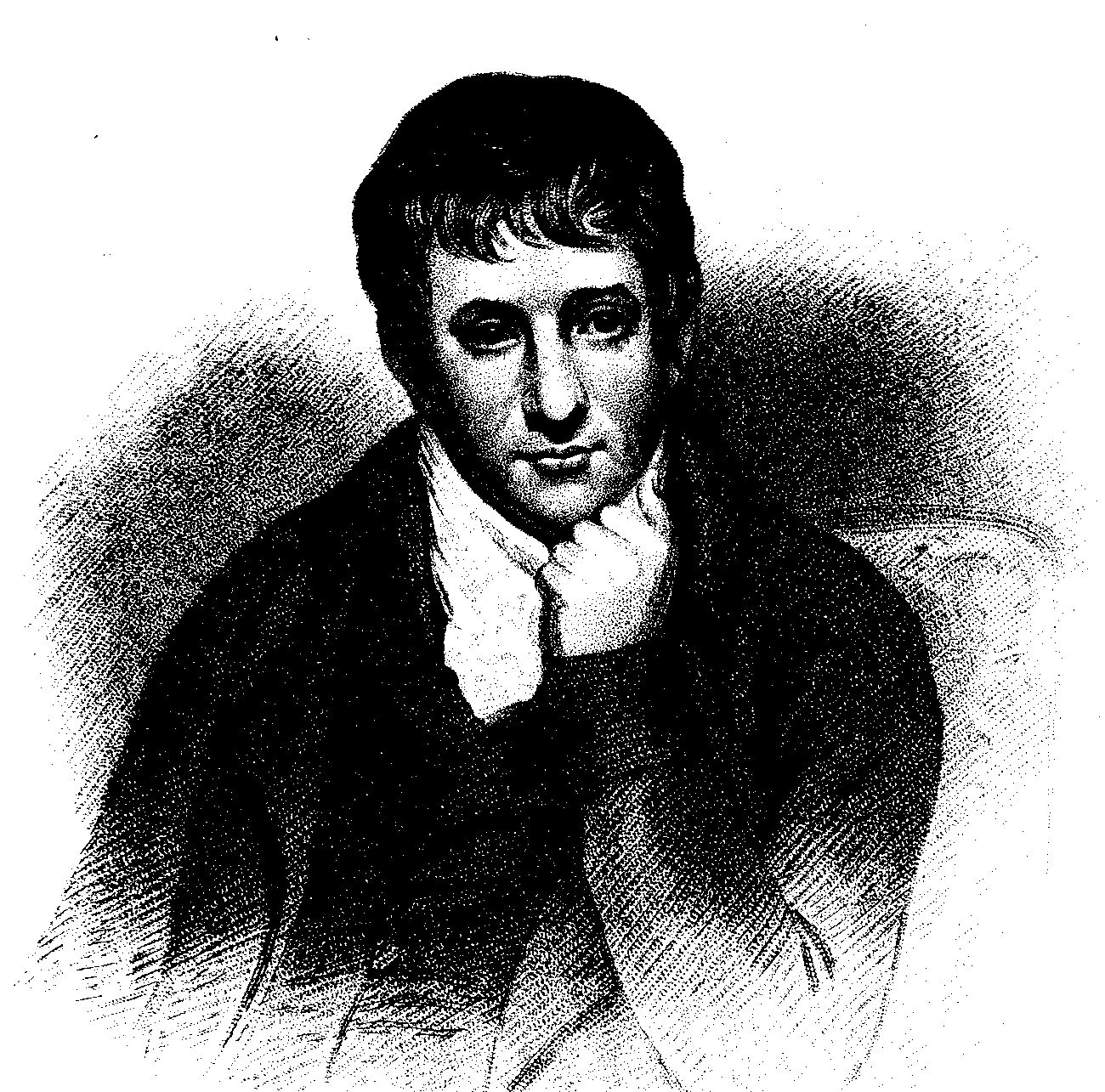
PORTRAIT of the late SIR HUMPHRY DAVY, Bart.
PREFACE.
We begin to think that a long Preface in this season of ennui would be almost as tiresome as tragedy in warm weather, and much more so than the trite three-line Prologue in Hamlet. Our materials are collected from all quarters, with but little of our own; so that we might praise all the authors without the charge of uncommon vanity; but panegyric savours much of the poppy, and we must use it accordingly.
Our thanks are first due to such Subscribers as have, by personal observation and research, enabled us to throw a light on certain obsolete customs or portions of our domestic history; for these contributions form a prominent feature of the Correspondence of THE MIRROR; it being our object, in this department, to gather facts rather than to draw only upon the invention of our friends. In support of this system we could select many specimens from the Correspondence of the present volume, the interest of which is, we hope, be equal to any of its predecessors.
The Selector will be found to contain many valuable extracts from New and Costly Works, in almost every class of literature; and the piquancy of the Notes of a Reader may be turned to as a convenient little treasury, into which readers of all tastes may dip with pleasure and advantage.
The Sketch Book contains rather an unusual number of Narratives, some of them of extraordinary interest, and written in the best style of the best authors.
The Spirit of Discovery will be considered characteristic of our times, by illustrating the real economy of science in its application to the conveniences of every-day life. As a collateral branch of this division is The Naturalist, under which head we have endeavoured to identify THE MIRROR with Zoology, as one of the most popular studies of the day.
The Spirit of the Public Journals breathes not a few of the sweetest and most recent poetical compositions from the pens of celebrated authors, some of whose names are passports to high excellence.
The Engravings have, probably, been criticised upon first impression; so that we can only hope they have merited the applause of our Subscribers. We may be permitted to remark that some of the illustrations relate to scenes and subjects of no ordinary attraction in Antiquarian Remains, and Architectural Improvements of yesterday; a few of these have been executed at a considerable cost to the Proprietor; for which extra exertion he has been more than requited by the increased demand.
Several current Novelties will be found described at length in this volume—as the circumstantial and accurate accounts of the Colosseum—and the New Swan River Settlement, the last of which is illustrated with an Engraved Chart.
Strenuous as have been our exertions for past patronage, we shall not relax in the ensuing volume. An entirely new Type has been prepared for this purpose, and we feel confident that we shall be enabled to keep pace with the increased typographical beauty of the MIRROR, as well as with the improved spirit of its Engravings.
June 27, 1829.
LIST OF ENGRAVINGS.
VOL. XIII.
PORTRAIT of the late SIR HUMPHRY DAVY, Bart.
Bruce Castle, Tottenham.
Old Elephant, Fenchurch Street.
Macclesfield Bridge, Regent's Park.
Rupert's Palace, Barbican.
Hanover Lodge, Regent's Park.
Grove House, ditto.
Colosseum, Exterior, ditto.
Marquess of Hertford's Villa, ditto.
Doric Villa, ditto.
Colosseum, Interior, ditto.
Kirkstall Abbey.
Warwick Castle.
Old Covent Garden Market.
York Terrace, Regent's Park.
Snow Flakes, Magnified.
Rugby School.
Miners of Derbyshire.
Fortune Playhouse, Barbican.
Epsom New Race Stand.
Old Charing Cross.
Exeter 'Change, Strand.
Hyde Park Grand Entrance.
Talipot Tree.
Glowworm.
Deathwatch, Magnified.
Chester Terrace, Regent's Park.
Guy's Cliff.
Roman Altar.
Gower's Tomb.
Hirlas Horn.
Old Somerset House.
Harrow School.
Sussex Place, Regent's Park.
Clarendon House, Piccadilly.
Relic of John Buryan.
Cornwall Terrace, Regent's Park.
Chart of the Swan River Settlement.
Laleham Park, the Residence of the Young Queen of Portugal.
Holland House, Kensington.
Cumberland Terrace, Regent's Park.
Residence of T. Campbell, Esq.
Labyrinth at Versailles.
MEMOIR OF SIR HUMPHRY DAVY, BART.
The present may be regarded as a chemical age; for so extensive, rapid, and important have been the late acquisitions in the science of chemistry, that we may almost claim it as the exclusive discovery of our own times. The popularity and high estimation in which it is held may be ascribed to three causes: 1. The satisfaction which is afforded by its results. 2. Its utility in all the arts of life. 3. The little previous preparation which an entrance on its study requires. To these may be added, the new interest conferred upon the science by the discoveries of Black, Priestly, and Lavoisier, which had already introduced into chemical science the long-neglected requisites of close investigation and logical deduction; but it was reserved for Sir HUMPHRY DAVY to demonstrate the vast superiority of modern principles, by the most brilliant career of discovery, which, since the days of Newton, have graced the annals of science.
Sir Humphry Davy was born December 17, 1779, at Penzance, in Cornwall. His family was ancient, and above the middle class; his paternal great grandfather had considerable landed property in the parish of Budgwin, and his father possessed a small paternal estate opposite St. Michael's Mount, called Farfal, on which he died in 1795, after having injured his fortune by expending considerable sums in attempting agricultural improvements. Sir Humphry received the first rudiments of his education at the grammar-schools of Penzance and Truro: at the former place, he resided with Mr. John Tomkin, surgeon, a benevolent and intelligent man, who had been intimately connected with his maternal grandfather, and treated him with a degree of kindness little less than paternal. His genius was originally inclined to poetry; and there are many natives of Penzance who remember his poems and verses, written at the early age of nine years. He cultivated this bias till his fifteenth year, when he became the pupil of Mr. (since Dr.) Borlase, of Penzance, an ingenious surgeon, intending to prepare himself for graduating as a physician at Edinburgh. As a proof of his uncommon mind, at this early age, it is worthy of mention, that Mr. Davy laid down for himself a plan of education, which embraced the circle of the sciences. By his eighteenth year he had acquired the rudiments of botany, anatomy, and physiology, the simpler mathematics, metaphysics, natural philosophy, and chemistry. But chemistry soon arrested his whole attention. Having made some experiments on the air disengaged by sea-weeds from the water of the ocean, which convinced him that these vegetables performed the same part in purifying the air dissolved in water which land-vegetables act in the atmosphere; he communicated them to Dr. Beddoes, who had at that time circulated proposals for publishing a journal of philosophical contributions from the West of England. This produced a correspondence between Dr. Beddoes and Mr. Davy, in which the Doctor proposed, that Mr. Davy, who was at this time only nineteen years of age, should suspend his plan of going to Edinburgh, and take a part in experiments which were then about to be instituted at Bristol, for investigating the medical powers of factitious airs; to this proposal Mr. Davy consented, on condition that he should have the uncontrolled superintendence of the expements. About this time he became acquainted with Davies Gilbert, Esq. M.P. a gentleman of high scientific attainments, (now President of the Royal Society), with whom he formed a friendship which has always continued; and to Mr. Gilbert's judicious advice may be attributed Mr. Davy's adoption of and perseverance in the study of chemistry. With Dr. Beddoes, Mr. Davy resided for a considerable time, and was constantly occupied in new chemical investigations. Here, he discovered the respirability of nitrous oxide, and made a number of laborious experiments on gaseous bodies, which he afterwards published in "Researches Chemical and Philosophical," a work that was universally well received by the chemical world, and created a high reputation for its author, at that time only twenty-one years of age. This led to his introduction to Count Rumford, and to his being elected Professor of Chemistry to the Royal Institution in Albemarle-street. On obtaining this appointment Mr. Davy gave up all his views of the medical profession, and devoted himself entirely to chemistry.
Mr. Davy's first experiments as Professor of Chemistry in the Royal Institution, were made on the substance employed in the process of tanning, with others to which similar properties were ascribed, in consequence of the discovery made by M. Seguier, of Paris, of the peculiar vegetable matter, now called tannin. He was, during the same period, frequently occupied in experiments on galvanism.
To the agriculturist, chemistry is of the first consideration. The dependence of agriculture upon chemical causes had been previously noticed, but it was first completely demonstrated in a course of lectures before the Board of Agriculture, which Mr. Davy commenced in the year 1802, and continued for ten years. This series of lectures contained much popular and practical information, and belongs to the most useful of Mr. Davy's scientific labours; for the application of chemistry to agriculture is one of its most important results; and so rapid were the discoveries of the author, that in preparing these discourses for publication, a few years afterwards, he was under the necessity of making several alterations, to adapt them to the improved state of chemical knowledge, which his own labours had, in that short time, produced.
In the year 1812, Mr. Davy married his amiable lady, then Mrs. Apreece, widow of Shuckburgh Ashby Apreece, Esq. and daughter and heiress of the late Charles Kerr, of Kelso, Esq. By his union with this lady, Mr. Davy acquired not only a considerable fortune, but the inestimable treasure of an affectionate and exemplary wife, and a congenial friend and companion, capable of appreciating his character and attainments. A few days previously to his marriage, he received the honour of knighthood from his Majesty, then Prince Regent, being the first person on whom he conferred that dignity.
We now arrive at the most important result of Sir Humphry Davy's labours, viz. the invention of the SAFETY-LAMP for coal mines, which has been generally and successfully adopted throughout Europe. This invention has been the means of preserving many valuable lives, and preventing horrible mutilations, more terrible even than death; and were this Sir Humphry Davy's only invention, it would secure him an immortality in the annals of civilization and science. The general principle of this discovery may be described as follows:
In 1813, Sir Humphry was elected a corresponding member of the Institute of France, and vice-president of the Royal Institution; in 1817, one of the eight associates of the Royal Academy; in 1818 created a baronet, and during the last ten years he has been elected a member of most of the learned bodies of Europe.
We could occupy many pages with the interesting details of Sir Humphry Davy's travels in different parts of Europe for scientific purposes, particularly to investigate the causes of volcanic phenomena, to instruct the miners of the coal districts in the application of his safety-lamp, and to examine the state of the Herculaneum manuscripts and to illustrate the remains of the chemical arts of the ancients. He analyzed the colours used in painting by the ancient Greek and Roman artists. His experiments were chiefly made on the paintings in the baths of Titus, the ruins called the baths of Livia, in the remains of other palaces and baths of ancient Rome, and in the ruins of Pompeii. By the kindness of his friend Canova, who was charged with the care of the works connected with ancient art in Rome, he was enabled to select with his own hands specimens of the different pigments, that had been formed in vases discovered in the excavations, which had been lately made beneath the ruins of the palace of Titus, and to compare them with the colours fixed on the walls, or detached in fragments of stucco. The results of all these researches were published in the Transactions of the Royal Society for 1815, and are extremely interesting. The concluding observations, in which he impresses on artists the superior importance of permanency to brilliancy in the colours used in painting, are especially worthy the attention of artists. On his examination of the Herculaneum manuscripts, at Naples, in 1818-19, he was of opinion they had not been acted upon by fire, so as to be completely carbonized, but that their leaves were cemented together by a substance formed during the fermentation and chemical change of ages. He invented a composition for the solution of this substance, but he could not discover more than 100 out of 1,265 manuscripts, which presented any probability of success.
The course of Sir Humphry Davy to the highest rank as a chemical philosopher, was, after his appointment at the Royal Institution, rapid and brilliant; and if he was previously aided by as few of the advantages of fortune as any man living, he had then at his disposal whatever his industry and talents chose to command. We have given but a hasty outline of his labours; but it is possible that he may have left behind him much, not yet made public, for which, science will be still further indebted to him. His works, papers, and letters are numerous, and the greatest portion of them are contained in the Transactions of the Royal Society. One of the most popular and interesting of his recent papers is that on the Phenomena of Volcanoes. This contains a series of investigations of Vesuvius, made by the author during a residence at Naples in 1819-20, and bearing upon a previous hypothesis, "that metals of the alkalies and earth might exist in the interior of the globe, and on being exposed to the action of air and water, give rise to volcanic fires, and to the production of lavas, by the slow cooling of which basaltic and other crystalline rocks might subsequently be formed." We have not space for the details of these investigations, interesting as they would prove to an unscientific reader; but we give an abstract of the result of Sir Humphry's observations:
We have hitherto spoken of Sir Humphry Davy as a philosopher. He was, however, in every respect, an accomplished scholar, and was well acquainted with foreign languages. He always retained a strong taste for literary pleasures; and when his continued illness retarded his scientific pursuits, he made literature his recreation. In this manner he wrote Salmonia: or Days of Fly-fishing, in a series of conversations, we gather from the Preface:—"These pages formed the occupation of the Author during several months of severe and dangerous illness, when he was wholly incapable of attending to more useful studies, or of following more serious pursuits. They formed his amusement in many hours, which otherwise would have been unoccupied and tedious." "The conversational and discursive style were chosen as best suited to the state of the health of the author, who was incapable of considerable efforts and long continued exertion." The volume is dedicated to Dr. Babington, "in remembrance of some delightful days passed in his society, and in gratitude for an uninterrupted friendship of quarter of a century:" and the likeness of one of the characters in the conversations to that estimable physician abovenamed, has been considered well drawn, and easily recognisable by those who enjoy his acquaintance.
The philosophical works of Sir Humphry Davy are written in a clear and perspicuous style, by which means he has contributed more to the diffusion of scientific knowledge than any other writer of his time. His three principal works, "Chemical and Philosophical Researches," "Elements of Chemical Philosophy," and "Elements of Agricultural Chemistry," are in a popular and familiar style, and the two last are excellently adapted for elementary study. His numerous pamphlets and contributions to the Transactions of the Royal Society have the same rare merit of conveying experimental knowledge in the most attractive form, and thus reducing abstract theory to the practice and purposes of life and society. The results of his investigations and experiments were not therefore pent up in the laboratory or lecture-room where they were made, but by this valuable mode of communication, they have realized what ought to be the highest aim of science,—the improvement of the condition and comforts of every class of his fellow-creatures. Thus, beautiful theories were illustrated by inventions of immediate utility, as in the safety-lamp for mitigating the dangers to which miners are exposed in their labours, and the application of a newly-discovered principle in preserving the life of the adventurous mariner. Yet splendid as were Sir Humphry's talents, and important as have been their application, he received the honours and homage of the scientific world with that becoming modesty which universally characterizes great genius.
Many other passages in Salmonia gush forth with great force and beauty, and sometimes soar into sublime truths. Thus says the eloquent author:
"A full and clear river is, in my opinion, the most poetical object in nature. Pliny has, as well as I recollect, compared a river to human life. I have never read the passage in his works, but I have been a hundred times struck with the analogy, particularly amidst mountain scenery. The river, small and clear in its origin, gushes forth from rocks, falls into deep glens, and wantons and meanders through a wild and picturesque country, nourishing only the uncultivated tree or flower by its dew or spray. In this, its state of infancy and youth, it may be compared to the human mind in which fancy and strength of imagination are predominant—it is more beautiful than useful. When the different rills or torrents join, and descend into the plain, it becomes slow and stately in its motions; it is applied to move machinery, to irrigate meadows, and to bear upon its bosom the stately barge;—in this mature state, it is deep, strong, and useful. As it flows on towards the sea, it loses its force and its motion, and at last, as it were, becomes lost and mingled with the mighty abyss of waters."
"I envy no quality of the mind or intellect in others; not genius, power, wit, or fancy: but if I could choose what would be most delightful, and I believe most useful to me, I should prefer a firm religious belief to every other blessing; for it makes life a discipline of goodness—creates new hopes, when all earthly hopes vanish; and throws over the decay, the destruction of existence, the most gorgeous of all lights; awakens life even in death, and from corruption and decay calls up beauty and divinity: makes an instrument of torture and of shame the ladder of ascent to paradise; and, far above all combinations of earthly hopes, calls up the most delightful visions of palms and amaranths, the gardens of the blest, the security of everlasting joys, where the sensualist and the sceptic view only gloom, decay, annihilation, and despair!"
Few of those whose fame and fortune are their own creation, enjoy, as did Sir Humphry Davy, in the meridian of life, the enviable consciousness of general esteem and respect, and the certainty of a distinguished place in history, among the illustrious names of their country. "A great light has gone out,"—short but brilliant has been his career; yet let us hope he has but exchanged his worldly fame for unearthly immortality, to shine amidst the never-dying lights of true glory.