MAKERS OF MODERN AMERICAN FICTION (MEN)
Reading edition
By ARTHUR B. MAURICE
Former Editor of The Bookman, author of “New York of the Novelists”
MENTOR GRAVURES
RICHARD HARDING DAVIS · BOOTH TARKINGTON · STEWART EDWARD WHITE JACK LONDON · ROBERT W. CHAMBERS · REX BEACH
EDITORIAL NOTE.—In this number of The Mentor the men that are making modern American fiction are considered. The women fiction writers will be considered in a later number.
Now and again we are privileged to touch hands with some literary figure of the older generation, who was of the earth when Poe and his Virginia lived in the Fordham cottage; when Fenimore Cooper, returned from his long stay in Europe, was disputing with his neighbors on the shores of Lake Oneida, when Irving was looking down upon the noble Hudson from the slopes of his Sunnyside estate; and Holmes was babbling wise philosophy over his coffee cup at the Boston breakfast table. But there are not many of these links with the past left, and the number is diminishing rapidly. Far beyond the Biblical three-score and ten, Mr. William Dean Howells, as the dean of our literature, is a figure upholding its richest traditions; turning three-score and ten is Mr. James Lane Allen, whose name recalls the rare style and the throbbing life of the books dealing with the Blue Grass region of Kentucky. They are almost the last of the surviving great literary figures of yesterday. These men and their work have been covered in Mentor Number 25, “American Novelists.” The writing men of today, the men with whom this article has to do, are for the most part those that have not traveled beyond late youth or early middle age. Their hats were flung into the ring in the present century; or, at the earliest, in the nineties of the last century. Finding the field of the novelist a broader one than it was in their fathers’ time, they have blithely ventured, in their search for themes and material, to the four corners of the real or the imaginary earth. The following pages present a general review of the work of our well known fiction writers of the day. The works of Owen Wister, Winston Churchill, Thomas Nelson Page and George W. Cable are also considered fully in Mentor Number 25, so we lead off this article with a simple mention of these distinguished story-writers. In Wister’s work there is a primal bigness and strength and, in certain passages, great tenderness and romantic charm. Two of his best known books, “The Virginian” and “Lady Baltimore,” reveal these qualities.
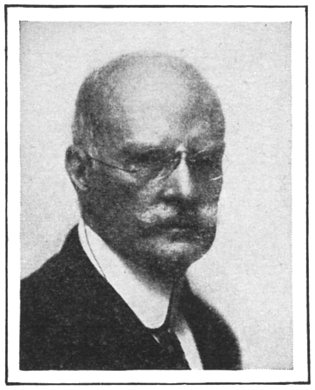
JAMES LANE ALLEN
From photograph, copyright by Paul Thompson, N. Y.
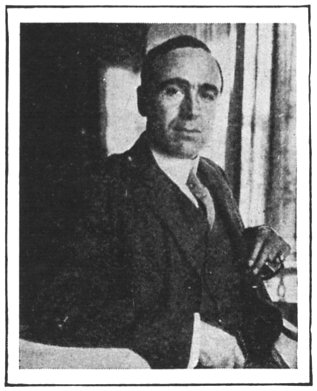
WINSTON CHURCHILL
Press Illustrating Service
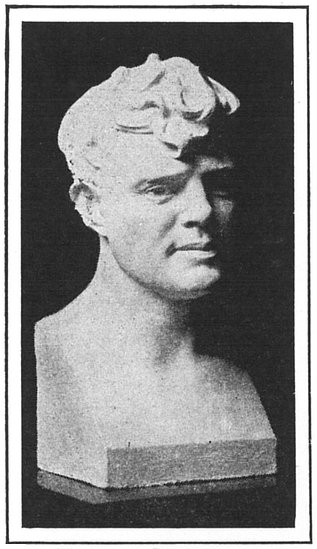
JACK LONDON
Bust, by Finn Haakon Frolich, unveiled in Honolulu, after London had made his cruise in the Snark
Mr. Winston Churchill began with the somewhat trivial “The Celebrity” (1898), regarded when it appeared as a satirical hit at the personality of Richard Harding Davis. Books that followed were, “Richard Carvel,” “The Crisis,” “The Crossing,” “A Far Country,” “Coniston,” “Mr. Crewe’s Career,” “The Inside of the Cup,” “The Dwelling-Place of Light.” It is to a splendid persistence, an inexhaustible patience, a rigid adherence to his own ideals both in style and substance, that Winston Churchill owes the high position among American contemporary writers of fiction that he holds and has held for nearly two decades. Thomas Nelson Page and George W. Cable attained fame long ago as interpreters, in fiction, of Southern life, Mr. Page by his tender and beautiful “Marse Chan,” “Meh Lady” and other stories, Mr. Cable by his romances of “Old Creole Days” and “John March, Southerner.”
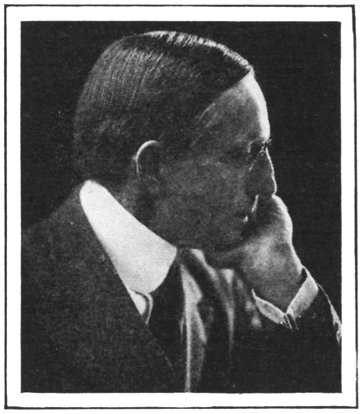
Bradley studios, N. Y.
JOHN FOX, Jr.
Norris’ Realism and McCutcheon’s Romanticism
More than fifteen years have passed since Frank Norris died, yet no one has yet come to take quite his place as an apostle of American realism. Before he fell under the spell of Émile Zola, with “McTeague,” and began his Trilogy of the Wheat, he had been the most ardent of romanticists. His earliest ventures in literature were tales of love and chivalry, written when he was a boy in his teens in Paris. “McTeague” was begun in the undergraduate days at the University of California. It began to assume shape in his year of student work at Harvard; but was elaborated and polished for four years before the public was allowed to see it. In the meantime “Moran of the Lady Letty” had been dashed off in an interval of relaxation, and became Norris’ first published book. Then came to Norris what he considered “the big idea,” that summed up at once American life and American prosperity. He would write the Trilogy of the Wheat. In the first book, “The Octopus,” he told of the fields and elevators of the Far West. “The Pit” showed the wheat as the symbol of mad speculation. With “The Wolf,” to picture the lives of the consumers in the Eastern States and in Europe, the Trilogy was to end. But before the tale was written Frank Norris died, at thirty-two years of age.
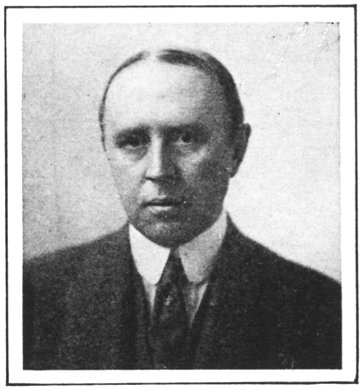
GEORGE BARR McCUTCHEON
A few years ago, Mr. George Barr McCutcheon was asked the question, “Where is Graustark?” Whimsically he attempted to jot down on paper directions for journeying to the imaginary mountain kingdom, starting from a railway station in Indiana. Someone rather ill-naturedly suggested that Mr. McCutcheon had originally discovered this country in Anthony Hope’s “The Prisoner of Zenda.” But then someone else pointed out that Anthony Hope in turn had found his inspiration in Stevenson’s “Prince Otto,” and that R. L. S. himself had certainly owed something to the Gerolstein of M. Eugène Sue’s “The Mysteries of Paris.” So neither the exact whereabouts of Graustark nor its ultimate source is of great importance. What really counts is that hundreds of thousands of readers have found delight in following the adventures of Mr. McCutcheon’s stately heroines and somewhat irreverent heroes.
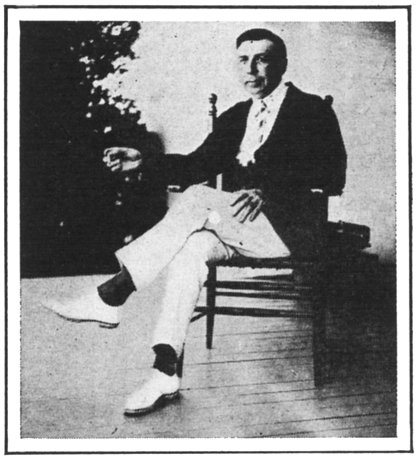
BOOTH TARKINGTON
From a late picture taken at his summer home in Maine
Every one of his romantic tales has met with generous welcome—“Graustark,” “Beverly of Graustark,” “Truxton King” and “The Prince of Graustark.”
But Graustark, if the first string to Mr. McCutcheon’s bow, is far from being the only one. Quite as wide in its popular appeal as any of the Graustark tales was “Brewster’s Millions,” with its curious starting problem. “Nedra” dealt with a desert island. “The Rose in the Ring” was the story of a circus. Other books not to be overlooked are “Jane Cable,” “The Daughter of Anderson Crow,” “The Man from Brodney’s,” and in shorter form, “The Day of the Dog,” “The Purple Parasol,” “Cowardice Court” and “The Alternative.”
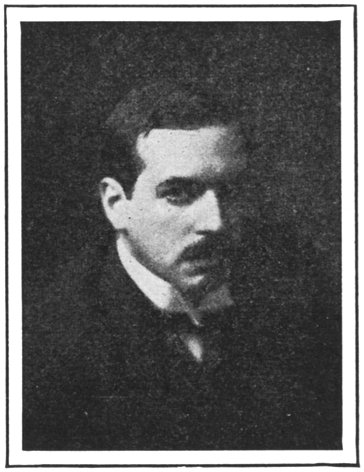
OWEN JOHNSON
John Fox and Harold McGrath
Someone recently spoke of John Fox, Jr., as a writer who never misses fire. Certainly he has staked a definite claim to the Cumberland Range and the primitive people who dwell in its valleys and along its mountainsides. As early as 1894, “A Mountain Europa” appeared. It was followed by “A Cumberland Vendetta,” “Hell-for-Sartain,” “The Kentuckians,” “Crittendon,” and “Blue Grass and Rhododendrons.” But it was not until 1903, with “The Little Shepherd of Kingdom Come,” that Mr. Fox came fully into his own. Incidentally, his fellow-craftsman, Mr. George Barr McCutcheon, considers the title the best title in all American fiction. The high standard established in “The Little Shepherd of Kingdom Come” has been maintained in “The Trail of the Lonesome Pine” and “The Heart of the Hills.” Into that imaginary Central Europe which lies somewhere east of Dresden, west of Warsaw, and north of the Balkans, Harold McGrath went for such early books as “Arms and the Woman” and “The Puppet Crown.” Those tales were in the first rank among the thousands of stories that about that time were being written about the fanciful kingdoms and principalities, and the natural gift for story spinning that the author showed then has been in evidence in his subsequent tales in other fields. From among the twenty odd books that now bear his name, it is not easy to make a selection. Perhaps those most conspicuous on the score of popularity have been “The Man on the Box,” “Half a Rogue,” “The Goose Girl,” “The Carpet of Bagdad,” and “The Voice in the Fog.”
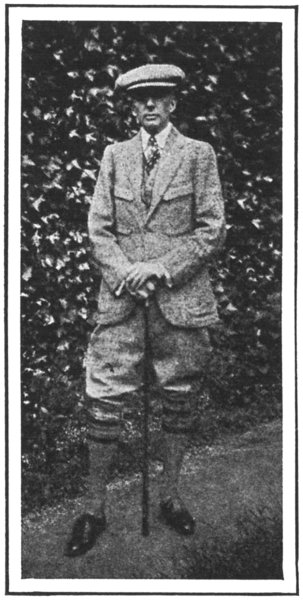
BRAND WHITLOCK
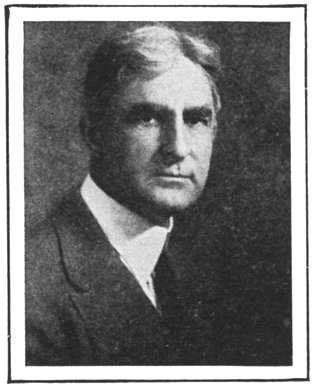
THOMAS DIXON
A Group of Popular Story-Tellers
While still an undergraduate, Mr. Jesse Lynch Williams wrote several of the tales that went to make up his first published volume, “Princeton Stories.” In his second volume, “The Stolen Story and Other Stories,” Mr. Williams struck an entirely new note. Of the tale from which the book drew its title, Richard Harding Davis, himself the author of “Gallegher,” once said that it was “the very best of American yarns of newspaper life.” Two others of the collection of striking ingenuity were “The Great Secretary of State Interview” and “The Cub Reporter and the King of Spain.” Among Jesse Lynch Williams’ later books are “The Day-Dreamer,” “My Lost Duchess,” and “The Married Life of the Frederick Carrolls.”
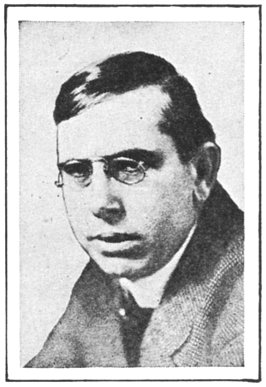
THEODORE DREISER
It was along the road of anonymity that Basil King finally found the way to pronounced success. In “Griselda,” “Let Not Man Put Asunder,” “In the Garden of Charity,” “The Steps of Honor,” and “The Giant’s Strength” he had won recognition as an accomplished story-teller. But still his audience was a comparatively limited one. Then, in 1910, appeared “The Inner Shrine,” a story of Franco-American life. It was read from one end of the land to the other, and greatly piqued curiosity as to the authorship, which, for many months, was carefully concealed. A dozen different names were suggested and accepted before it became an open secret that the story was the work of Basil King. The success of “The Inner Shrine” was perhaps largely responsible for the success of the subsequent “The Wild Olive” and “The Street Called Straight.”
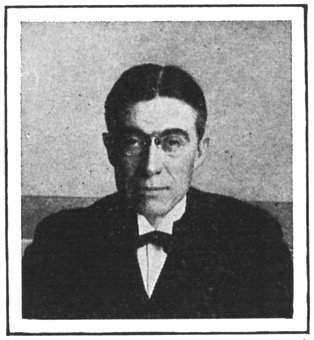
From photograph, copyright by Paul Thompson, N. Y.
JESSE LYNCH WILLIAMS
In by-gone years it was Brand Whitlock, the Mayor of Toledo; in recent times it has been Brand Whitlock, the American Minister to Belgium, that has obscured Brand Whitlock, novelist. Yet despite the height he has attained in the fields of politics and of diplomacy, he is, and is likely always to remain, at heart a man of letters. Some day it may be given to him to “write the book as he sees it, for the God of things as they are.” Meanwhile he claims recognition here on the basis of such works of fiction as “The Thirteenth District,” “The Happy Average,” “The Turn of the Balance,” and “The Gold Brick,” a collection of short stories that appeared in 1910.
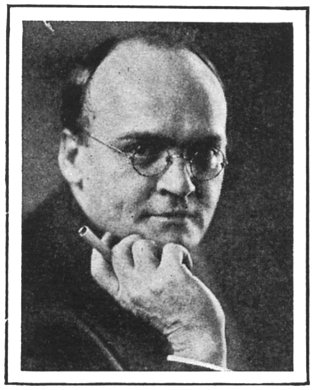
Campbell studios, N. Y.
LOUIS JOSEPH VANCE
Samuel Hopkins Adams’ first essay in the field of sustained fiction was “The Mystery,” written in 1905, in collaboration with Stewart Edward White. The following year appeared “The Flying Death,” a tale of Montauk Point. Subsequent novels by Mr. Adams have been “Average Jones,” “The Secret of Lonesome Cave,” “Little Miss Grouch,” and “The Clarion,” the last named being a story involving newspaper life and the sinister influence of the tainted money of patent medicine advertisers on the liberty of the press.
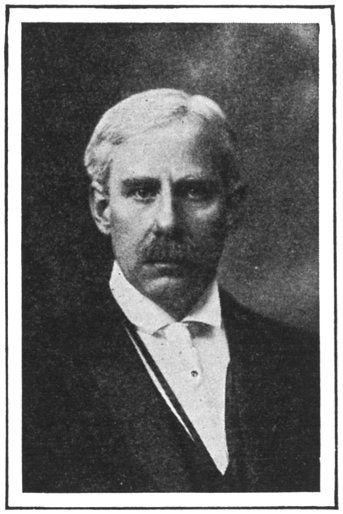
From photograph, copyright by Pach Brothers, N. Y.
IRVING BACHELLER
Despite a career of literary activity that goes back twenty years, it is almost entirely to the books of the past four or five years that Rupert Hughes owes his present position as a popular novelist. In this later work, in such books as “What Will People Say?” “Empty Pockets” and “We Can’t Have Everything,” he has found his theme in modern Gotham: New York in the grip of the latest follies, the insensate, all-day and all-night pursuit of pleasure, the dance, the eating and drinking, and the squandering. Mr. Hughes’ novels reveal a range of knowledge of even the remote corners of the great city that has been painstakingly acquired, and that is used with the sense of selection of the accomplished story-teller. Only a few months beyond undergraduate life Owen Johnson published “Arrows of the Almighty” and “In the Name of Liberty.” They were read by a limited audience, mildly applauded, and then forgotten. Later, showing the Balzacian influence, came “Max Fargus,” dealing with the seamy side of New York law offices. In the point of material success, it could hardly be considered an improvement on the earlier books. Then, one day, in a whimsical mood, the author turned back to memories of his schoolboy years in Lawrenceville. The road that led to success and recognition had been found. From one end of the land to the other, growing boys, and boys that had grown up, and boys with gray beards laughed over every fresh exploit of “The Prodigious Hickey,” and “Dink Stover,” and “Doc McNooder,” and “The Tennessee Shad,” and “The Triumphant Egghead,” and “Brian de Boru Finnegan.” Motor parties traveling between New York and Philadelphia acquired the habit of breaking the journey at Lawrenceville for the purpose of visiting “The Jigger Shop,” where Hungry Smeed established the Great Pancake record. Then Mr. Johnson took one of his heroes from the school to the university, and “Stover of Yale” was the most talked-of book of a month. Turning to a broader field, the author found, in the turbulent life of twentieth-century New York, the background for “The Sixty-first Second,” “The Salamander,” “Making Money,” “The Woman Gives,” and “Virtuous Wives.”
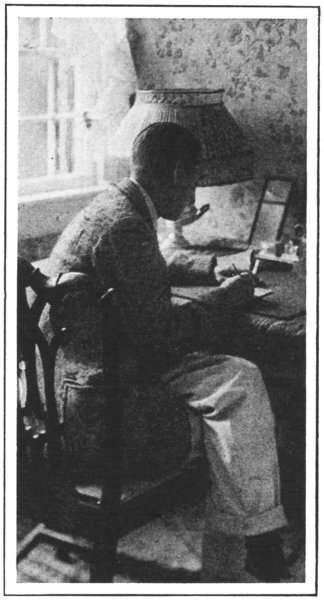
Courtesy Charles Scribner’s Sons
GOUVERNEUR MORRIS
It is no disparagement of Edwin Lefevre as a workman to say that one short story, written at a single sitting before breakfast, is of more permanent importance than all the rest of his production combined. For that story is “The Woman and Her Bonds,” which, without any hesitation, is to be ranked among the really big short tales of American fiction. It is the first of the collection known as “Wall Street Stories,” a book which brought to Mr. Lefevre quick recognition. Wall Street is the author’s particular field, and many of his characters are easily recognized by those in intimate touch with the money mart of the Western world. Besides “Wall Street Stories,” Mr. Lefevre has written “Samson Rock of Wall Street,” “The Golden Flood,” and “To the Last Penny.”
Dreiser and Dixon
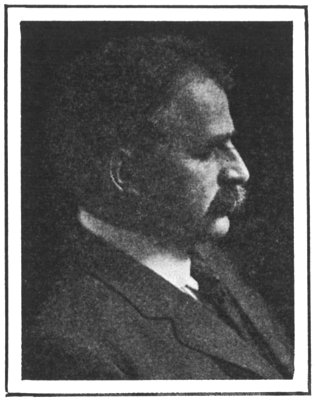
From photograph by Florence M. Hendershot, Chicago
HAMLIN GARLAND
A vigorous, if undeniably crude, figure in contemporary American fiction, is Theodore Dreiser. Lacking style and literary distinction, frequently bordering on the ridiculous, he nevertheless, by a rigid devotion to a certain kind of realism that omits no details, has built up a following that chooses to regard him as something of a great man. His first book, written a dozen years or more ago, was “Sister Carrie.” It introduced a soiled, unsentimental, rather sordid, but pathetic and very human heroine. After a career in Chicago, Sister Carrie made her way to New York, and eventually climbed to comfortable heights of worldly success. “Jennie Gerhardt” (1911) was in much the same vein and manner. “The Financier” (1912) gave a picture of American business life as it was or as Mr. Dreiser conceived it to be during the Civil War and the Reconstruction Period. Whatever its merits or demerits may be, “The Genius,” his latest novel, owes its chief prominence to its much debated morality.
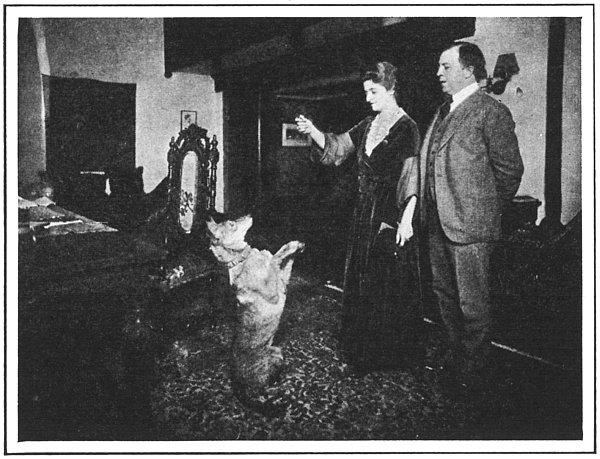
Press Illustrating Service
RUPERT HUGHES AND MRS. HUGHES IN THEIR LONG ISLAND HOME
After a life of activity in many fields, Thomas Dixon entered the writing lists with “The Leopard’s Spots” (1902), in which, powerfully if somewhat unevenly, he depicted conditions in certain states of the South under the carpet-bag and negro domination of the late sixties. Following up the same phase of history, he introduced, in “The Clansman,” the Kluklux Klan, and showed the work accomplished by that mysterious organization in bringing about the redemption of the afflicted district. Among Mr. Dixon’s later books are “The Traitor,” “The One Woman,” and “The Sins of the Father.”
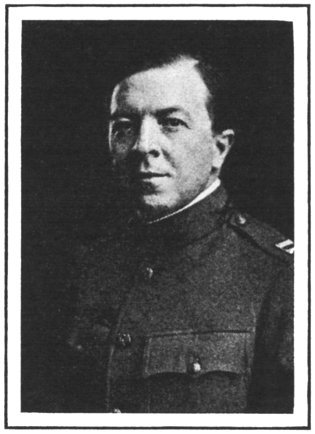
CAPT. RUPERT HUGHES
Harrison and Bacheller
Henry Sydnor Harrison’s first novel, “Captivating Mary Carstairs,” was published anonymously, but in 1911 “Queed” appeared under the author’s own name, and at once took a place in the front rank of the year’s successful novels. There was a reminiscence of Dickens in the tale. Queed, “the little doctor,” as he is known to his associates in the story, is redeemed from over-acute egotism through the agency of two young women. At two years’ intervals following “Queed,” came “V. V.’s Eyes” and “Angela’s Business.”
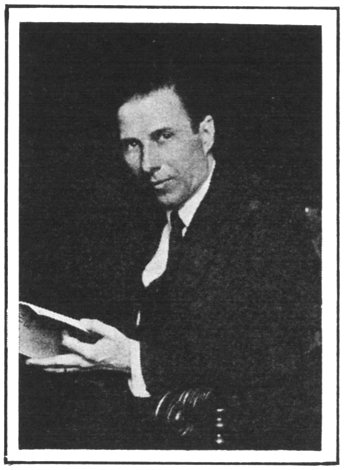
ERNEST POOLE
Back in the nineties of the last century there was a corner of New York City known as Monkey Hill. It was in the shadow of the Brooklyn Bridge, and crowning it, standing far back from the street, was a kind of chalet that served as a club for certain writing men. Among these men was Irving Bacheller, and to pleasant evenings in the club may be traced “Eben Holden” (1900), the most popular of Mr. Bacheller’s many popular books. As early as 1893, he had written “The Master of Silence;” “The Still House of Darrow” appeared in 1894. But it was “Eben Holden” that made the author’s name for a time a household word. That book was followed by “D’ri and I,” “Darrel of the Blessed Isles,” and “Vergilius,” a tale of ancient Rome. In his later books, such as “Keeping Up With Lizzie” and “Charge It,” Mr. Bacheller plays whimsically with the problems of modern extravagance. His latest novel is “The Light in the Clearing.”
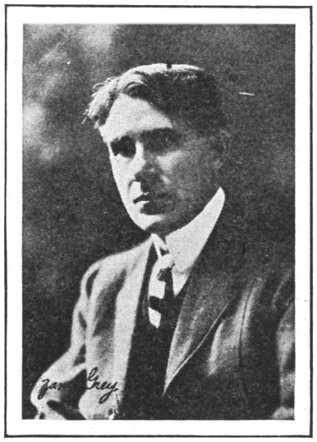
ZANE GREY
Fiction Notes in Varied Keys
If one novel can make a novelist, Ernest Poole earned the right to be considered one of the makers of modern American fiction when he wrote “The Harbor” (1915). Although the end of the story was somewhat marred by over-insistence on sociological problems, in the first part of the book the author struck a reminiscent note as charming as that struck by Du Maurier in “Peter Ibbetson.” No one had paid much attention to Mr. Poole’s earlier novel, “A Man’s Friends,” but in the general recognition of “The Harbor,” as a work of far more than ephemeral significance, there was hardly a dissenting voice. Not so widely popular, but marked by the same high quality of workmanship, is Mr. Poole’s later book, “His Family.”
Of the same generation at Princeton as Ernest Poole was Stephen French Whitman, and as mention of Mr. Poole’s name inevitably suggests “The Harbor,” so the name of Mr. Whitman calls up at once memories of “Predestined.” Unlike “The Harbor,” “Predestined” was not, speaking materially, a success. It was too grim, its ending was too pitiless. But very few who read the story of the degeneration of Felix Piers were able soon to forget it. In such later stories as “The Isle of Life” and “Children of Hope,” Mr. Whitman has forsaken New York for Italy and Sicily.
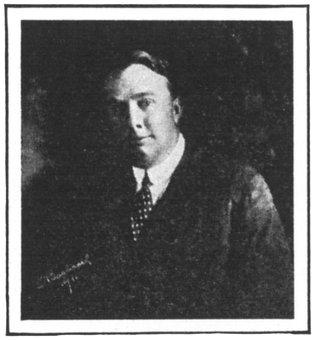
JOSEPH C. LINCOLN
It is now almost twenty years since Henry Kitchell Webster and Samuel Merwin began their writing careers in collaboration. Together they wrote “The Short Line War” (1899), “Calumet K” and “Comrade John.” All these were well-told tales, and the later years, when each man has been working alone, have shown that neither one carried an undue share of the burden. Mr. Webster’s books include “The Whispering Man,” “A King in Khaki,” “The Ghost Girl,” “The Butterfly” and “The Real Adventure.” Mr. Merwin’s work has been unusual in the variety of its themes. Washington and the Constitution of the United States were ingredients of “The Citadel.” The adventures of an American girl in China were narrated in “The Charmed Life of Miss Austen.” Musical theories, the segregated district of Yokohama, and incidents in Chinese hotels went to the making of “Anthony the Absolute.” “The Honey Bee” is the story of a woman whose life has been in an American department store, who makes a trip to Paris, and there falls in love with one Blink Moran, of the prize-ring.
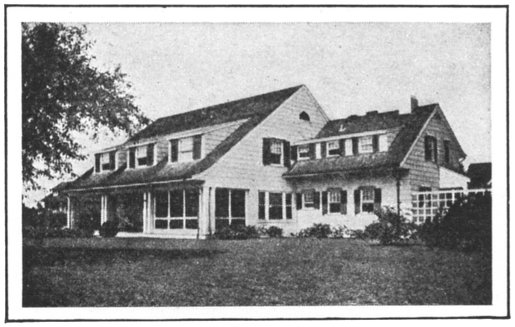
JOSEPH LINCOLN’S HOME
Summit Avenue, Hackensack, N. J.
Fiction of Adventure
There is no questioning the force that Hamlin Garland has been in the literature of our time. He has told his story of his own life and literary activities in “A Son of the Middle Border” (1917), a volume that was at once accepted as one of the foremost of American literary autobiographies. In no way detracting from the quality of Mr. Garland’s later work is the ventured opinion that he has never surpassed some of his earlier stories. His writing career began about 1890, when the first of the tales of “Main-Traveled Roads” struck a fresh note in fiction. Between 1895 and 1898 he wrote “Rose of Dutcher’s Cooley,” and, in 1902, “The Captain of the Gray Horse Troop.” These, with “Main-Traveled Roads” are still probably his most popular books. In 1900 “The Eagle’s Heart” appeared, and later “Hesper,” “The Tyranny of the Dark,” “The Long Trail,” “The Shadow World” and “Cavanagh, Forest Ranger.”
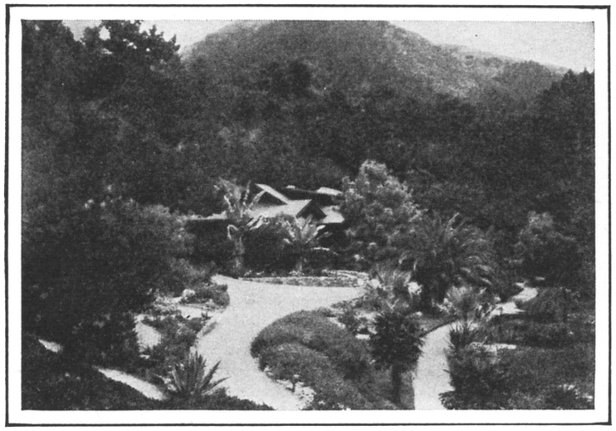
HARRY LEON WILSON’S BUNGALOW IN THE OZARK MOUNTAINS, MO.
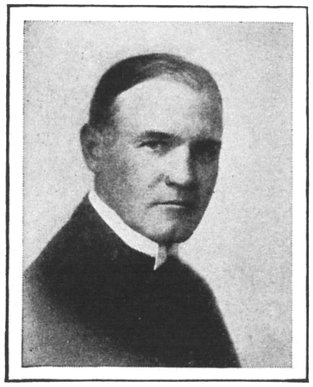
HARRY LEON WILSON
Writing men of our generation have begun under the magic spell of Stevenson. To Lloyd Osbourne it was given to serve his apprenticeship to R. L. S., as Maupassant served his apprenticeship to Flaubert, and, while yet an apprentice, to be accepted as a collaborator. Together the stepfather and the stepson worked out “The Wrong Box” (1889), “The Wrecker” (1892), and “The Ebb Tide” (1894). Then Stevenson passed on into Shadow Land, and some years later Osbourne began alone with “The Queen Versus Billy” and “Love the Fiddler.” In the first decade of the present century the motor-car was still something of a novelty, and as such almost a virgin field for fiction. It was of its then baffling problems and incomprehensible moods that Lloyd Osbourne told in “The Motor-maniacs,” “Three Speeds Forward,” and “Baby Bullet.” Later books are “Wild Justice,” “The Adventurer,” and “A Person of Some Importance.”
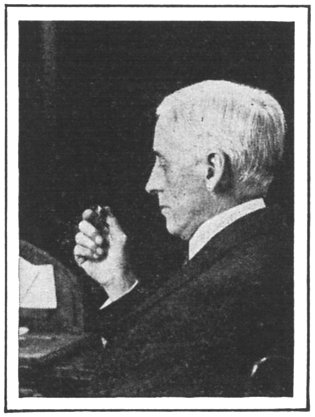
WILL PAYNE
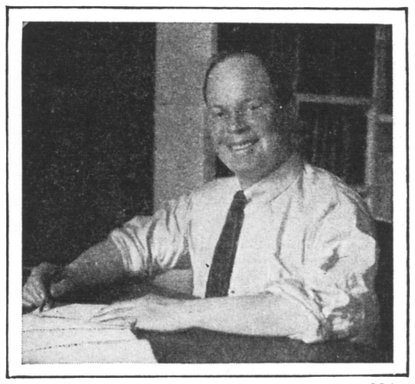
From photograph, copyright by Paul Thompson, N.Y.
SAMUEL MERWIN
A certain letter of the alphabet for a time seemed to exert a cabalistic influence on Louis Joseph Vance. “The Brass Bowl” appeared in 1907. The book of the next year was “The Black Bag.” In 1909 it was “The Bronze Bell.” There ended the use of the double B, but in 1912, Mr. Vance wrote “The Bandbox.” In the meantime had appeared “The Pool of Flame,” “The Fortune Hunter,” “No Man’s Land,” and “Cynthia-of-the-Minute.” Among the books that have followed “The Bandbox” are “The Day of Days,” “Joan Thursday,” showing Mr. Vance at his best, “The Lone Wolf,” and very recently, “The False Faces,” in which the Lone Wolf returns to play a great part in the World War.
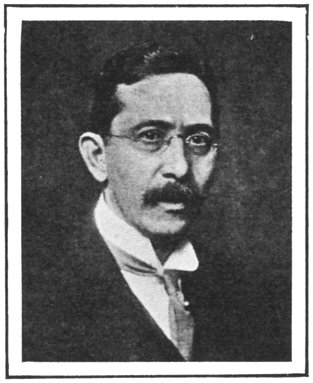
EDWIN LEFEVRE
Each Holds a Place of His Own
The Law has ever had countless stories to tell. There is hardly a tale by Arthur Train that does not, in some way, lead back to one of the offices that cluster about the Criminal Courts Building facing Centre Street, on the lower end of Manhattan Island. In that neighborhood swung the shingle of the law firm of Gottlieb & Quibble, as related in “The Confessions of Artemas Quibble.” Mr. Train’s first book, “McAllister and His Double” (1905), began in a Fifth Avenue club, but before a dozen pages had been finished, fate had carried McAllister to the Tombs Prison. The thrice-told tales of Pontin’s Restaurant in Franklin Street, where the lawyers gather at the noon hour, went to make “The Prisoner at the Bar,” “True Stories of Crime” and “Courts, Criminals and the Camorra.” Like Mr. Train, William Hamilton Osborne has also achieved a place in Literature as well as Law.
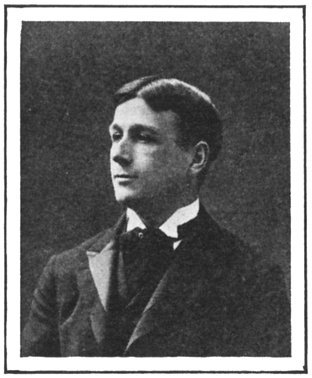
ARTHUR TRAIN
There are readers who regard the very facility of Gouverneur Morris as a curse, believing that if writing to him had been harder work, his present achievement would be considerably greater. His first book, “A Bunch of Grapes,” dates back to his undergraduate days at Yale. Four years later, in 1901, “Tom Beauling” appeared, to be followed the next year by “Aladdin O’Brien.” “Yellow Men and White” showed what he could do in the vein of “Treasure Island.” Of more enduring quality was “The Voice in the Rice.” It is not surprising that many of our novelists have begun with tales of undergraduate life. “Princeton Stories” was the first book of Jesse Lynch Williams. “Harvard Episodes” of Charles M. Flandrau. Will Irwin’s first fling at the game of writing was “Stanford Stories” (1910). That book was done in collaboration. Also in collaboration, this time with Gelett Burgess, the creator of “The Purple Cow,” the editor of The Lark, and a humorist of rare whim, were written Mr. Irwin’s next two books. It was a short sketch of the old San Francisco before the earthquake, called “The City That Was,” that first made Will Irwin’s name widely known. Of more substantial proportions were “The House of Mystery,” “The Readjustment” and “Beating Back.”
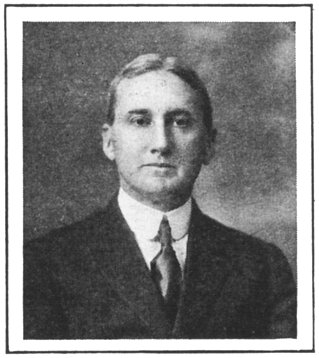
ROBERT HERRICK
Of a certain genuine importance has been the work of Robert Herrick. The author, like his heroes, has been finding the threads of life’s web in a rather sorry tangle, and groping for a solution of the world’s real meaning. It was of problems big and vital in our American civilization that Mr. Herrick wrote in “The Memoirs of an American Citizen,” “The Common Lot,” “The Web of Life,” “The Real World,” “The Gospel of Freedom,” and “Together.” In “The Master of the Inn” he has achieved an exceptional short story. Also deserving of high attention is Meredith Nicholson, who began in 1903 with “The Main Chance,” and achieved unusual popular success somewhat later with “The House of a Thousand Candles” and “The Port of Missing Men.” Among Mr. Nicholson’s more recent books are “The Lords of High Decision,” “Hoosier Chronicle,” “Otherwise Phyllis” and “The Siege of the Seven Suitors.” For tales breathing the spirit of the West and intricate mystery stories, Zane Grey and Burton Egbert Stevenson are known respectively. Mr. Grey’s best known books are “The Heritage of the Desert,” “The Light of Western Stars,” “The Lone Star Ranger,” “The Heart of the Desert” and “The U. P. Trail.” Wherever a well-told yarn of intricate mystery is appreciated, such books as Mr. Stevenson’s “The Marathon Mystery,” “The Destroyer” and “The Boule Cabinet” have found generous welcome. Will Payne is the author of “Jerry the Dreamer,” the striking “Story of Eva,” “Mr. Salt” and “The Losing Game”; Edward W. Townsend in writing of Chimmie Fadden did not forfeit the place as a novelist to which he is entitled by reason of such books as “A Daughter of the Tenements,” “Days Like These” and “Lees and Leaven”; and Harry Leon Wilson, who years ago made a definite impression with “The Seeker” and “The Spenders,” and who of late has been moving a continent to laughter by the dexterity with which he confronted the very British Ruggles with the complicated problems of social life in the town of Red Gap—somewhere in America.
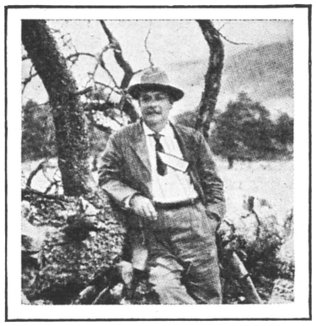
CYRUS TOWNSEND BRADY
Moffett studios, Chicago
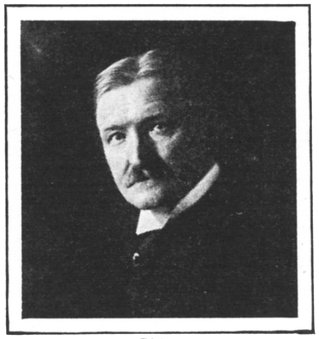
EMERSON HOUGH
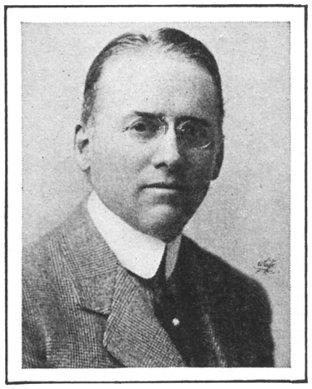
MAXIMILLIAN FOSTER
Besides all these there are Joseph C. Lincoln and Cyrus Townsend Brady, the first one in high favor for his breezy stories of Cape Cod life and character, redolent of the salt sea air, the latter for his many entertaining tales of plain and desert; and Sewell Ford, who created the slangy but very human “Shorty McCabe” and “Torchy”; and those two pungent writers of Western episodes, Peter Kyne and Charles E. Van Loan. Emerson Hough has given us rousing tales of the Middle and Far West, of the Kentucky mountains and Alaska. Holman Day’s excellent stories breathe of the Maine woods, and Roy Norton has rendered tribute to the sea. Harris Dickson, a son of Mississippi, has woven into story form some throbbing incidents of Southern history, and has depicted numerous sunny corners of every-day existence below the Mason and Dixon line. James Branch Cabell is a spinner of charming romances; some of the best have a medieval French flavor. Harold Bell Wright is well known as the author of “Barbara Worth” and several other books whose sales have climbed into the hundreds of thousands. Richard Washburn Child is a young American who wields a vigorous pen in the portrayal of national character, and James Oppenheim, not to be confused with the Englishman, E. Phillips Oppenheim, represents vital phases of present-day city life. Joseph Hergesheimer has won a place among writers by reason of his picturesque style and original invention. A comprehensive list of American-born novelists must also include the names of Leroy Scott, Henry B. Fuller, Frank H. Spearman, Earl Derr Biggers and Arthur Reeve, all of whom have within late years produced popular successes.
The roll of the makers of modern American fiction is a long one, yet none can gainsay that the average of achievement is high.
SUPPLEMENTARY READING
THE MEN WHO MAKE OUR NOVELS.
By Burton Rascoe, Literary Editor, Chicago Tribune.
SOME AMERICAN STORY-TELLERS.
By F. T. Cooper.