HENRY JAMES
Reading edition
When Mr. James began writing a generation ago there had been no American fiction of a high order for twenty years or more, and the country had grown rapidly in experience and knowledge. Mr. James showed this more cosmopolitan attitude toward the world, and his style had a quality which was new in our fiction. It was clear in those days; it had great flexibility and capacity for conveying fine distinctions and delicate shadings of thought; it had a tone of maturity which was lacking in the earlier writers, and it was the medium of expression of a thoroughly trained man to whom writing was a fine art. The early short stories, of which “The Passionate Pilgrim” may serve as an example, arrested attention by reason of their insight into character and their fine workmanship. There was an air of romance about them; but it was the romance of human temperament, not of incident. The early novels were not popular in the sense of running into large editions; but “The American” found many readers who were quick to appreciate its penetrating and searching analysis of character, its sharp contrasts of American and European traits, and the refinement of a style which is both rich and restrained.
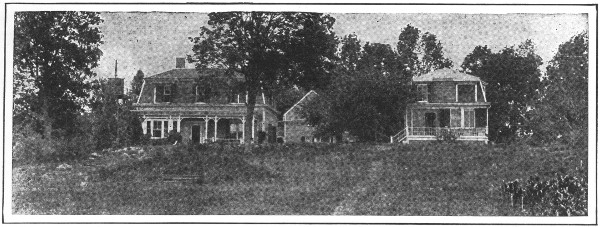
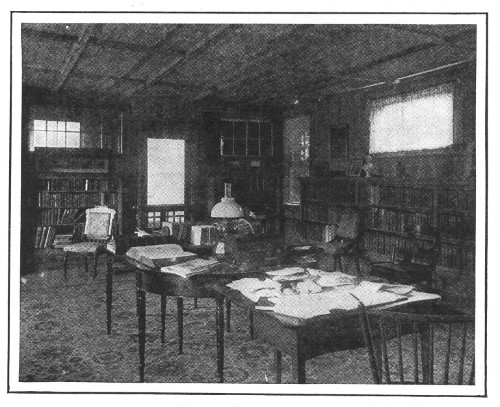
W. D. HOWELLS’ SUMMER HOME AT KITTERY, MAINE; ALSO INTERIOR OF LIBRARY
All novelists reveal character; but those in whom the dramatic instinct is strong show it chiefly in action. Mr. James brings out character largely by means of analysis and description, and for this reason he is often classed among the psychological novelists. In his later years the habit of analysis grew on him to such an extent that the movement of his stories was impeded and his style became complex and at times obscure. In a time when social relations between America and Europe were becoming more intimate, Mr. James found a rare opportunity of studying American character against a European background, and in the whole range of fiction there have been few writers of more acute penetration, of greater delicacy of stroke and line in painting character, than he. He was one of the small group of American authors to whom the word “distinction” may be applied.