CONCERNING
Reading edition
THE LOVING BALLAD OF LORD BATEMAN.
In some collection of old English Ballads there is an ancient ditty which I am told bears some remote and distant resemblance to the following Epic Poem. I beg to quote the emphatic language of my estimable friend (if he will allow me to call him so), the Black Bear in Piccadilly, and to assure all to whom these presents may come, that "I am the original." This affecting legend is given in the following pages precisely as I have frequently heard it sung on Saturday nights, outside a house of general refreshment (familiarly termed a wine vaults) at Battle-bridge. The singer is a young gentleman who can scarcely have numbered nineteen summers, and who before his last visit to the treadmill, where he was erroneously incarcerated for six months as a vagrant (being unfortunately mistaken for another gentleman), had a very melodious and plaintive tone of voice, which, though it is now somewhat impaired by gruel and such a getting up stairs for so long a period, I hope shortly to find restored. I have taken down the words from his own mouth at different periods, and have been careful to preserve his pronunciation, together with the air to which he does so much justice. Of his execution of it, however, and the intense melancholy which he communicates to such passages of the song as are most susceptible of such an expression, I am unfortunately unable to convey to the reader an adequate idea, though I may hint that the effect seems to me to be in part produced by the long and mournful drawl on the last two or three words of each verse.
I had intended to have dedicated my imperfect illustrations of this beautiful Romance to the young gentleman in question. As I cannot find, however, that he is known among his friends by any other name than "The Tripe-skewer," which I cannot but consider as a soubriquet, or nick-name; and as I feel that it would be neither respectful nor proper to address him publicly by that title, I have been compelled to forego the pleasure. If this should meet his eye, will he pardon my humble attempt to embellish with the pencil the sweet ideas to which he gives such feeling utterance? And will he believe me to remain his devoted admirer,
GEORGE CRUIKSHANK?
P.S.—The above is not my writing, nor the notes either, nor am I on familiar terms (but quite the contrary) with the Black Bear. Nevertheless I admit the accuracy of the statement relative to the public singer whose name is unknown, and concur generally in the sentiments above expressed relative to him.
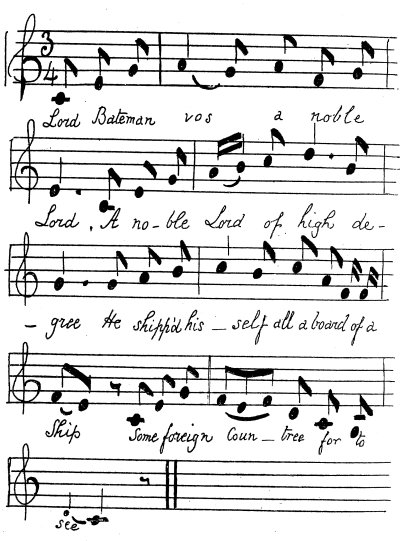
Transcibers note: The music has been digitized with Lilypond. See these versions: Lilypond MIDI Acrobat (PDF) PNG
The Loving Ballad Of Lord Bateman.
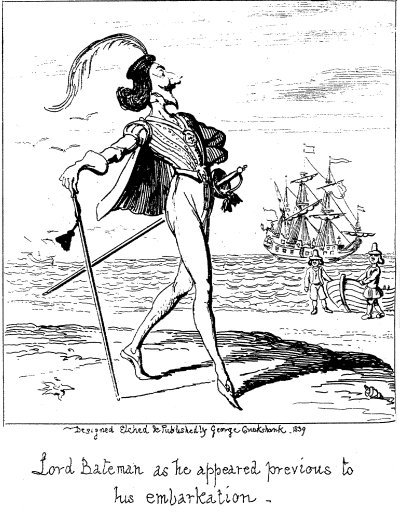
I. Lord Bateman vos a noble Lord, A noble Lord of high degree; He shipped his-self all aboard of a ship, Some foreign country for to see.[1]*
*For the notes to this beautiful Poem, see the end of the work.
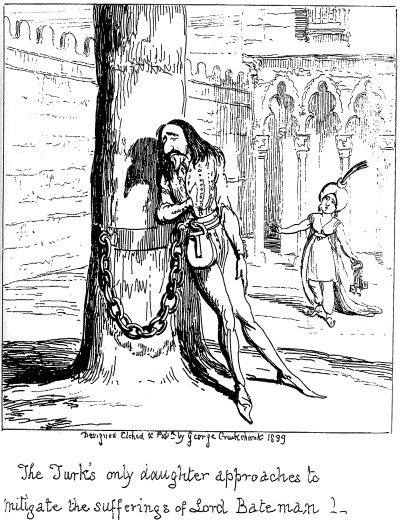
II. He sail-ed east, he sail-ed vest, Until he come to famed Tur-key, Vere he vos taken, and put to prisin, Until his life was quite wea-ry. III. All in this prisin there grew a tree, O! there it grew so stout and strong, Vere he vos chain-ed all by the middle Until his life vos almost gone.
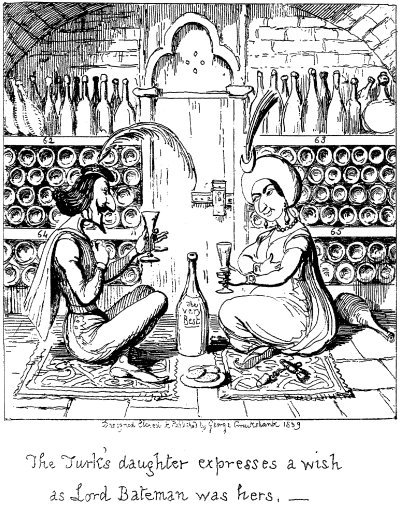
IV. This Turk[2] he had one ounly darter, The fairest my two eyes e'er see, She steele the keys of her father's prisin, And swore Lord Bateman she would let go free. V. O she took him to her father's cellar, And guv to him the best of vine; And ev'ry holth she dronk unto him, Vos, "I vish Lord Bateman as you vos mine!"[3]
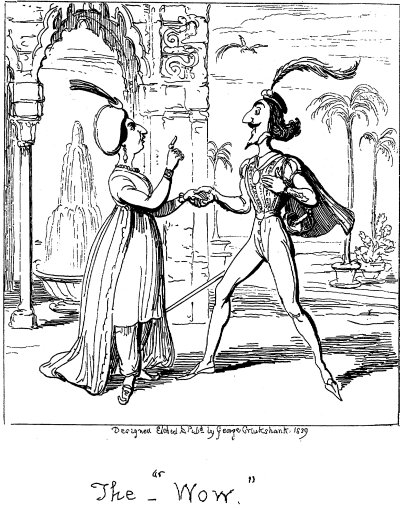
VI. "O have you got houses, have you got land, And does Northumberland belong to thee? And what would you give to the fair young lady As out of prisin would let you go free?" VII. "O I've got houses, and I've got land, And half Northumberland belongs to me; And I vill give it all to the fair young lady As out of prisin vould let me go free."
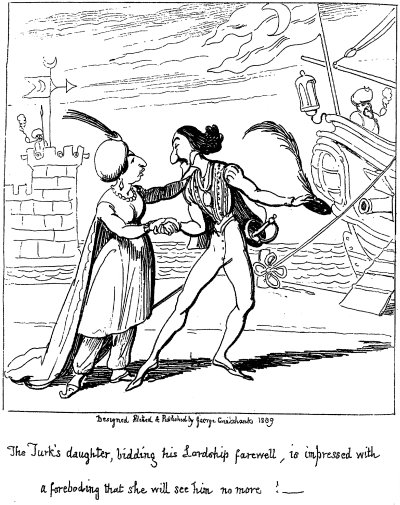
VIII. "O in sevin long years, I'll make a wow For sevin long years, and keep it strong,[4] That if you'll ved no other voman, O I vill v-e-ed no other man." IX. O She took him to her father's harbour, And guv to him a ship of fame, Saying, "Farevell, Farevell to you, Lord Bateman, I fear I ne-e-ever shall see you agen."
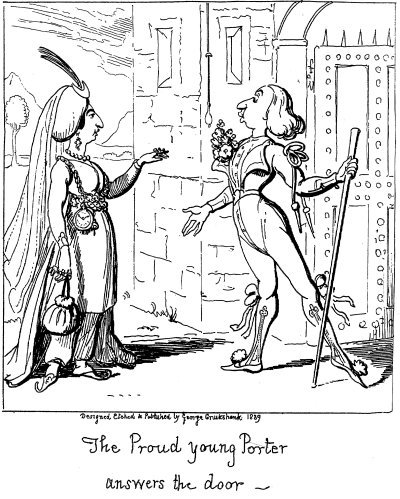
X. Now sevin long years is gone and past, And fourteen days vell known to me;[5] She packed up all her gay clouthing, And swore Lord Bateman she would go see. XI. O ven she arrived at Lord Bateman's castle, How bouldly then she rang the bell, "Who's there! who's there!" cries the proud young porter, "O come, unto me pray quickly tell."
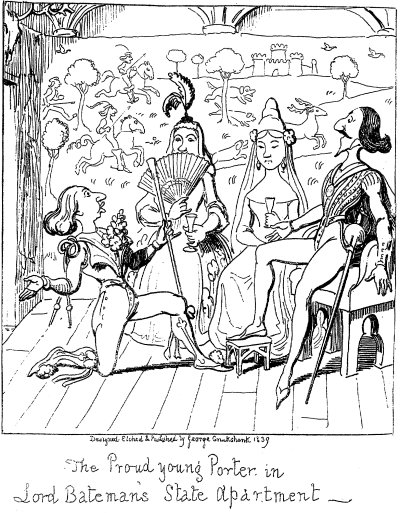
XII. "O! is this here Lord Bateman's castle, And is his lordship here vithin?" "O Yes! O yes!" cries the proud young porter; "He's just now takin' his young bride in." XIII. "O! bid him to send me a slice of bread, And a bottle of the wery best vine, And not forgettin' the fair young lady As did release him ven close confine."
XIV. O! avay and avay vent this proud young porter, O! avay and avay and avay vent he,[6] Until he come to Lord Bateman's charmber, Ven he vent down on his bended knee. XV. "Vot news, vot news, my proud young porter,[7] Vot news, vot news, come tell to me?" "O there is the fairest young lady As ever my two eyes did see.
XVI. "She has got rings on ev'ry finger, And on one finger she has got three: Vith as much gay gould about her middle As would buy half Northumberlee. XVII. "O she bids you to send her a slice of bread And a bottle of the wery best vine, And not forgettin' the fair young lady As did release you ven close confine."
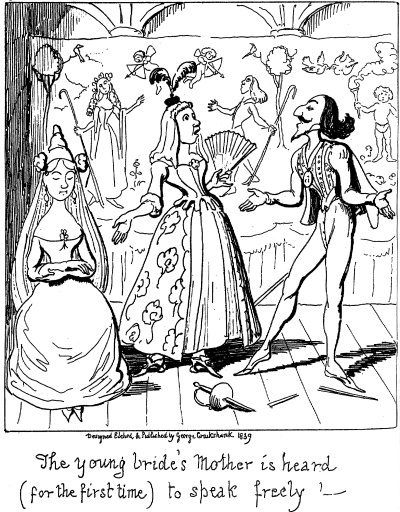
XVIII. Lord Bateman then in passion flew, And broke his sword in splinters three,[8] Saying, "I vill give half my father's land If so be as Sophia[9] has crossed the sea." XIX. Then up and spoke this young bride's mother, Who never vos heerd to speak so free:[10] Sayin, "You'll not forget my ounly darter, If so be as Sophia has crossed the sea."
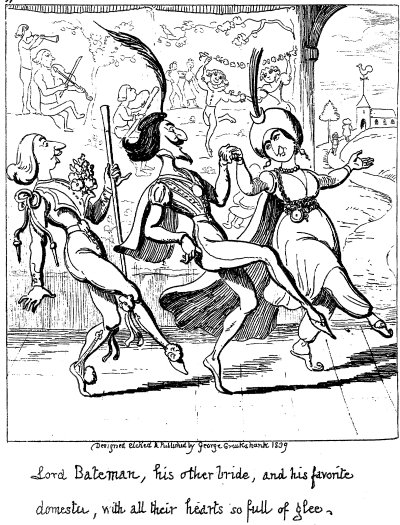
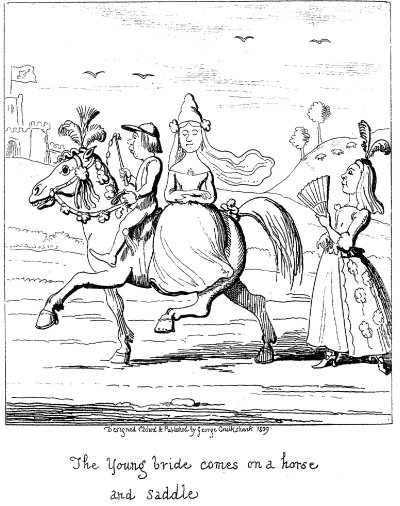
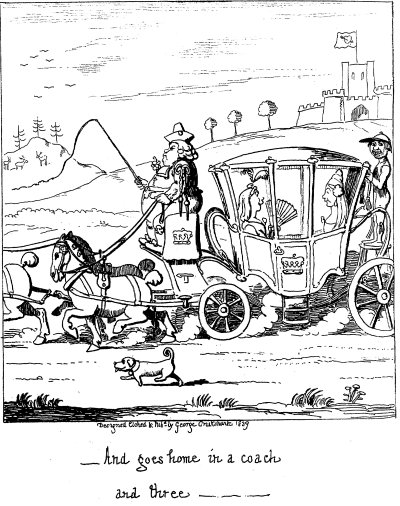
XX. "O it's true I made a bride of your darter, But she's neither the better nor the vorse for me; She came to me with a horse and saddle, But she may go home in a coach and three." XXI. Lord Bateman then prepared another marriage, With both their hearts so full of glee, Saying, "I vill roam no more to foreign countries Now that Sophia has crossed the sea."[11]