Front matter
Reading edition
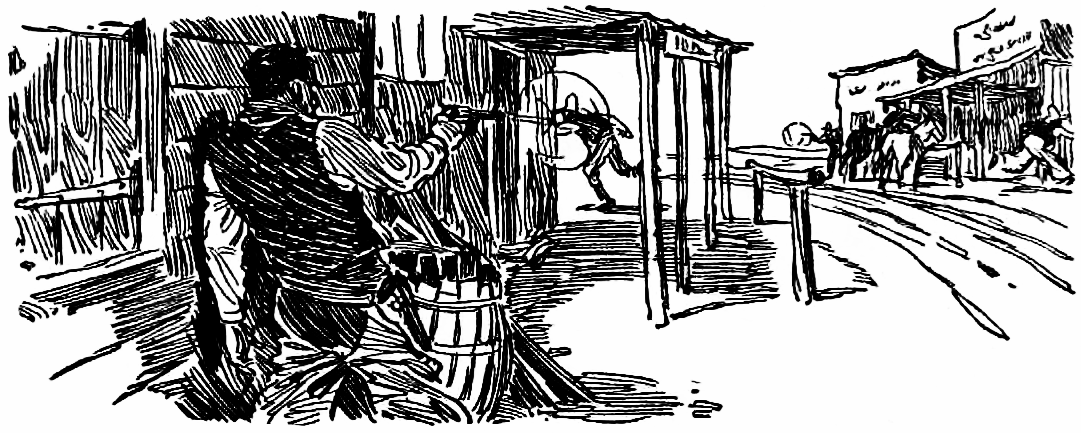
THE LOOT OF THE LAZY A
By W. C. Tuttle
Author of “Romance,” “Straight Shooting,” etc.
CULTUS COLLINS ONCE MORE STARTS OUT TO INVESTIGATE FOR THE CATTLE ASSOCIATION, AND FALLS INTO MORE ACTION THAN HE THOUGHT COULD BE FOUND IN THE WHOLE SOUTHWEST. AND THE END OF IT ALL WAS HIS OWN DISCOVERY THAT IT NEEDS MORE STRENGTH TO BE BEST MAN AT A WEDDING THAN TO BE BEST MAN IN A GUN-FIGHT—WITH WHICH ROLE CULTUS WAS ONLY TOO FAMILIAR
It was one of those foggy, raining, dismal nights, when all the world seemed one vast drip, drip of water; cold gusts of wind from the bay, where the fog warnings boomed dismally, boat whistles shrilled; while on the streets of San Francisco, little less wet than the bay itself, cable-car motormen danced jigs upon their gongs, seeking to clear the tracks, which they could hardly see in the dim glow of their own headlights.
Standing in the protection of a half lighted doorway, just outside the borders of Chinatown, was a girl. She was dressed in a black suit, black hat. Close inspection would have shown that both the suit and hat were slightly more than well worn, and were also very wet. She carried no umbrella. She was not beautiful, but perhaps it was because of the abject misery in her big, dark eyes, the utter helplessness of her expression.
She was of medium height, slender, white-faced. In fact, her face was so white against the gloom of the doorway, which blended with her black garb, that it seemed like a white mask suspended invisibly against a dark curtain. The wind swirled past the doorway, showering her with rain, but she did not draw back—only stared ahead, dumbly.
A policeman emerged out of the fog, peered at her, as he went slowly past, glanced up the street toward the clanging of a street car bell, and went on. Possibly he thought she was waiting for a car.
A man emerged from a doorway farther up the street, and came down past her. He was tall, rather slender, his head surmounted by a huge Stetson sombrero, which made him look gigantic in the dim light. His heels hit hard on the sidewalk, because of the fact that he was wearing high-heeled boots, and in one hand he carried a suitcase.
The street car clanged past before he could reach the corner; so he placed his baggage on the sidewalk, shoved his hands deep in his pockets and leaned against a post, almost directly in front of where the girl stood. He turned and looked directly at her, but turned back and drew his hat farther over his eyes. He shivered a little. He had no overcoat either.
A man came from the opposite direction, swathed in a heavy overcoat, whistling aimlessly. He was a big man, the collar of his coat touching the brim of his derby hat. He did not see the girl until he was almost past her. He stopped and came back to her. It is possible that he did not see the tall man, who leaned against the post.
“Hello, Kid,” he said ingratiatingly. “What are you doing out in the rain, all alone?”
The girl did not reply, but drew back against the wall. The tall man turned his head.
“No coat, no umbrella?” The man in the overcoat laughed. “Say, you must be up against it, Kid. You don’t look so bad. Snap out of it. Gee, you don’t need to shiver on a corner.”
“Will you please go away?” asked the girl. “I’m all right.”
“I’ll say you are, Kid—all right. I like you. Don’t be uppish. Come on, and I’ll show you a good time.”
“Please let me alone.” The girl spoke softly.
“Don’t try to kid me,” laughed the man. “You’re going with me and I’ll show you the best time——”
The tall man had stepped in behind him and a huge hand, which gripped like a vise, had fastened to his shoulder.
“The lady asked yuh to let her alone, yuh know.” The tall man’s voice seemed mild, apologetic.
The man squirmed quickly. “Who in hell are you?” he demanded.
“Names wouldn’t mean anythin’,” the other said mildly.
The man jerked loose. “Then keep your hands off me! This is none of your business! Now, trot along and let us alone.”
“Ma’am,” the tall man spoke softly, ignoring the threatening attitude of the other man, “do yuh want to go with this man?”
“I certainly do not.”
“I reckon that’s final, don’tcha think?” The big man in the overcoat possibly did not agree with this, and he was foolish enough to swing a right-handed blow at the head of the tall man. The overcoat was a serious handicap. His blow had only traveled half of its arc, when a thick, bony fist, seemingly weighted with lead, caught him under the chin, and he went backward into the street, where he went down in a heap.
The girl stifled a scream, but the tall man’s chuckle was reassuring.
“Did yuh know this man, ma’am?” he asked, caressing his right hand.
“No, I did not. I don’t know who he is.”
“Neither does he—right now. Ain’t it cold! I hate this kind of weather. I s’pose it’s because I live so much on the desert.”
“On the desert?” The girl spoke softly. “Where everything is clean and good—and the sunshine——”
“Have you lived there?”
“Ages and ages ago.”
The tall man peered closer at her. “Yuh don’t look old.”
“I’m twenty-two.”
The tall man laughed softly. “Yeah, yo’re sure ancient, ma’am. And yo’re all wet and shiverin’. Will yuh—? Say, that’s funny. I just knocked that feller into the street for askin’ yuh to go with him, and I was about to do the same thing. He’s gettin’ up.
“Yeah, and he’s goin’ the other way. He’s stoppin’ at the sidewalk, prob’ly wonderin’ what to do about it. Mebbe he don’t know what it’s all about.”
The man had staggered to the opposite sidewalk, where he stood, humped slightly in the rain. His derby hat was out in the street, but he did not seem to miss it. A policeman was coming down that side of the street, and they heard the man say something, which caused the officer to stop.
“C’mon,” said the tall man, grasping the girl by the arm. “Yuh never can tell what that jigger will tell the law.”
Shielding her as much as possible from the rain, the tall man picked up his suitcase and escorted the girl around the corner and down the block. She did not hold back. There was too much sincerity in the voice of this big cowboy for her to feel afraid.
“Where are we going?” she ventured to ask.
“I know a place,” he said jerkily. “It ain’t so much to look at, and lotsa ornery folks eat there, but they sure sabe how to cook a steak, and make soup. Do yuh like soup?”
“Soup?” The girl spoke the word queerly, as though it was something she had once known, but had forgotten.
“Yeah, that’s it. Lotsa onions and meat. Here we are.”
He led her up a rickety stairs, where the air was redolent with odors of frying meats, garlic; the hundred-and-one odors that make up the atmosphere of a bohemian chop-house, where no questions are asked.
No head waiter met them. In fact they were almost knocked down by a hurrying waiter, carrying a tray of dishes; a short-haired, broken-nosed individual; a one-time artist in the manly art of scrambling ears.
It was warm up there amid all those smells. The tall man led the girl to a vacant booth, which an anemic-looking waiter was cleaning up, and they sat down opposite each other. The tall man had placed his suitcase beside the entrance, where he could watch it. It was the first time they had had a good look at each other.
The girl’s face was slightly flushed now, and when she removed her dripping hat, she was really pretty. Her hair was a soft brown. The man’s face was long and bony, with a large nose, keen gray eyes and a big mouth. His cheek-bones were prominent, his hair of a neutral shade, neither blonde, brown nor red.
His hands were huge, bony-wristed, flecked with freckles. He was dressed in a cheap brown suit, flannel shirt, and his trousers were tucked in the tops of his high-heeled boots. The girl looked intently at him. There was no denying that he was homely. Then he smiled at her. She caught her breath for a moment—and smiled back at him.
He was not the same man when he smiled. She caught herself staring at him, while the waiter took their order, wondering that a smile should so absolutely change a man. The waiter went away, marveling at the appetites these two must have.
“Ma’am,” said the tall man gravely, “my name’s Collins. My friends call me ‘Cultus’; Cultus Collins, from Cuyamac.”
“And I am just Mary Smith,” she said simply. “They used to call me Mary Elizabeth—when I had friends.”
“When yuh did have, Mary Smith?”
“Yes.”
“Uh-huh. Mary Smith, how long since yuh ate a meal?”
“Why—er—this noon.”
“Yuh don’t need to lie to me, Mary Elizabeth. Callin’ yuh that ought to prove me yore friend—and yuh hadn’t ought to lie to yore friends.”
Mary Smith looked into the gray eyes of Cultus Collins, and decided not to lie, because he seemed to know that she lied.
“It wasn’t a very big meal,” she said slowly.
“It wasn’t any meal at all, Mary Smith.”
“No, I guess it wasn’t.” And then Mary Smith bowed her head on her wet arms and cried, while Cultus Collins upset a bottle of catsup, trying to pat her on the shoulder and tell her to quit crying. Several diners looked curiously at them, but they were of the breed that mind their own business.
Mary Smith finally stopped crying, dabbled her eyes with a wet handkerchief, and tried to appear brave, while she choked over the first meal she had eaten in two days. Cultus did not question her, nor did she offer any explanation, until the steaks and baked potatoes and soup and salads were but memories, and they were eating huge slices of apple pie and cheese, for which the place was famous.
There were roses in Mary Smith’s cheeks now, even if her body was still wet from the rain. Bit by bit she told her story to Cultus Collins. It was not a new tale of woe. Mary Smith had come from a little town in New England; literally ran away, because she did not want to marry a certain man, greatly desired by her parents, and because she wanted to see some of the world. She had saved enough money to buy a ticket to the Middle West, and by selling a few pieces of jewelry she was able to stretch this ticket to San Francisco, where she had an aunt.
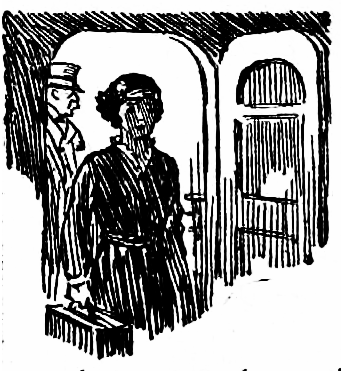
But the aunt was not there. Lack of a business education lost her several fairly good positions. Sickness cost her all her slender savings, and just now she was a week overdue on her room rent, and the room was locked against her. For three days she had haunted the stores, trying to get a position, but they merely looked at her shabby clothes and told her that there was nothing available just now.
Cultus Collins rubbed his chin and wondered what to do. He was not financially able to give her much assistance. He could give her enough money to square up her room rent and enough for a few days of square meals. But that would not remedy the clothes proposition—and without clothes she could not hope to get a paying position.
“Just what was yuh goin’ to do—standin’ there in the rain, Mary Smith?” he asked.
She shook her head, her eyes filling with tears. “I—I don’t know. My body was numb, and I guess my mind was not far from being in the same state. It was all so hopeless, don’t you see?”
“Uh-huh, I see. And yet yuh wouldn’t go with that man.”
She shook her head. “I was going the other way.”
“Toward the bay?”
Mary Smith nodded dumbly. Cultus sighed and shook his head.
“It’s a queer old world, Mary Smith. I’ve been here two days, and I was roomin’ in a little place jist up the street from where we met. I was leavin’, yuh see. I had plenty of time, but I hurried. That’s fate, I reckon.”
“It was fate for me,” sighed the girl. “The bay seems a long way from here, Mr. Collins.”
Cultus smiled widely. “Nothin’ like a steak to make a person change their mind.”
Another couple had entered the restaurant, and came up to the next booth. The man was fairly young, sleek-haired, flashily dressed. The woman was wearing a brown traveling suit, trimmed with expensive furs, and was wearing a small hat. She was young and beautiful, in an artificial way, but just now her face was contorted with indignation, as she faced the young man.
“I suppose you think that was a smart thing to do!” she fairly snapped at him. “Is it any of your business if I want to take a little trip? Explain yourself!”
The man deposited a suitcase beside the one Cultus had placed near the booth entrance and took the girl by the arm.
“Don’t talk so damn’ loud,” he advised. “Get in there and sit down, Janice. I just wanted to be sure you wasn’t doin’ a runout on me. This don’t look right to me. I happen to know that your lawyer friend has been up to see you twice in two days, and I know you haven’t any need of legal advice. Sit down!”
They sat down in the next booth, but their voices were pitched loud enough for Cultus and Mary Smith to hear what was said.
“I’ll explain nothing,” declared the girl. “Let that pocketbook alone!— Well, are you satisfied?”
It was evident that the man had investigated her bag.
“You’re not very well heeled, that’s true. But that don’t mean you won’t meet somebody at the Ferry Building. I heard you tell the taxi driver where to take you. Now, come clean, Janice. You were going to leave me flat. I’ve bought you clothes, diamonds, paid your rent, furnished you a car—and you run out on me.”
Came a few moments of inaudible conversation; the man’s voice was raised in anger.
“What do you care how I make my money? You’re getting rather prudish, it seems. I suppose you think that if the police get me, you’ll go along, because you spent my money, eh? Well, my money is as good as the money of that dirty bum of a lawyer! He’s as crooked as anybody in the district. Sa-a-ay! Are you giving me the gate for that welcher?”
“Your opinions do not interest me,” said the girl. “Call me a taxi. I’m sick of your insinuations.”
“Aw, pull that stuff and get a vaudeville contract! Why, you little bum, anybody would think you was Bernhardt! Snap out of it! Get away from me? Ha, ha, ha, ha! Fine chance. Na-a-aw! Sit still, or I’ll knock you for a loop!”
Cultus was not so interested that he failed to see two men come in. One was the big man he had knocked into the street, while the other was of the same type as the man with the girl. They halted midway of the room, ignoring the gestures of a waiter.
Then Cultus heard the man in the booth say, “There’s that dirty welcher now! Leggo me!”
A dish crashed to the floor, as the man jerked away from the girl and stepped out beyond the curtains of the booth. The two men had turned toward it, and the big man had stepped forward, his hand reaching inside his overcoat, as the woman’s companion emerged.
There were no preliminaries. It seemed to Cultus that both men knew what this meeting would mean. He saw the man at the booth whip out a snub-nosed gun. The other man was just as quick, and both guns spat rapidly, filling the room with short, snappy reports, both men shooting as fast as they could press the trigger. It was all done in the space of a few seconds. The man at the booth entrance dropped his gun, turned around, as though to re-enter the booth, but his grasping hands tore down the hanging curtains, pulling them down on top of him, as he fell.
The other man was on the floor, trying to stay on his hands and knees. A frightened waiter had dropped a filled tray, and was running toward the back of the room.
“My God, they hit that girl, too!” someone yelled.
And then somebody cut off the lights. Cultus and Mary had got to their feet and were at the booth entrance, when the lights went out, plunging the room in darkness. But Cultus had located the exit, and now he grasped his suitcase in one hand, while with the other he clung to Mary Smith, fairly dragging her to the top of the stairs, tearing a way through the frenzied mob.
At the top of the stairs he lifted her up with one arm, fending the strugglers away with his suitcase, and plunged down the rickety stairs and out into the rain, where he let her down. Cultus knew it would only be a minute or two until the police would be there; so he hurried Mary Smith down the street, around a corner, where they found a taxi.
Into this they went, and Cultus told the driver to take them to the Ferry Building. Mary had said nothing, and by the dim light of the cab, Cultus could see that she was very white. He patted her on the shoulder, and she tried to smile.
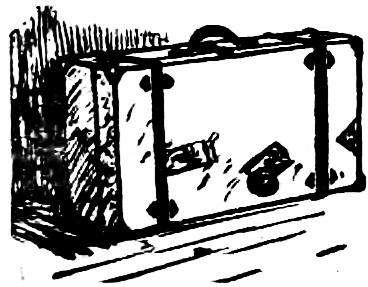
“Hang onto yore nerve,” he whispered, and then his eyes happened to fall upon the suitcase at their feet.
It was not Cultus’ bag at all; it was the other one!
Cultus looked at it closely. Only in the dark could it have been mistaken for the battered suitcase Cultus had owned. This one was of fine finish—an expensive thing—and was filled to capacity. But Cultus did not mention it to Mary Smith.
They got out at the Ferry Building and went inside. Cultus bought tickets to Oakland. It would be ten minutes before ferry time; so he led Mary Smith to a secluded seat, putting the suitcase on his lap. It was not locked. He unfastened the nickel buckles and opened the case, while Mary gasped with astonishment. It was filled with women’s clothes; dainty things which seemed to arise from the depths of the case, as they were released from pressure.
On the top were two envelopes. The first contained a ticket and Pullman accommodations to Oreana, Arizona and a hundred-dollar bill. The other was sealed in a plain envelope. Cultus ran the blade of his knife under the flap and opened the envelope without damaging it. Together he and Mary Smith read:
Dear M:
Introducing Janice Lee, alias anything you want to call her. She knows part of the game, and is a fair actress, if you can keep her sober. Good luck to you.
Yours,
L.
P. S. I only gave her a hundred out of that five you sent; so you only owe me a hundred, if it pans out all right. Better see that she gets hers, because I won’t swear to her playing on the square, unless you do.
Cultus looked sideways at Mary Smith, as he sealed the letter and replaced it in the suitcase. He removed the envelope, containing the tickets and hundred-dollar bill, which he handed to Mary Smith.
“Why give it to me?” she asked, looking queerly at him.
“Does fate scare yuh, Mary Elizabeth?” he asked softly. “I was going to Arizona, when yuh made me miss my car. I wasn’t headin’ for Oreana, but it’s on my way.”
“But I’m not going to Arizona.”
“Listen to me, Mary Elizabeth Smith. Yuh can’t buck fate. If I’m any judge of things as they look, that big feller was the one that was sendin’ that girl, Janice Lee, out to Oreana, Arizona.
“The big feller is plumb full of lead, and I heard somebody say that the girl was hit. She was behind him, yuh remember. A lot of lead was used this night. You was headin’ for the bay, wasn’t yuh? Here’s a suitcase full of clothes, and I’m sure I seen a trunk check stickin’ down in a corner. There’s a hundred-dollar bill. From now on, yo’re Janice Lee, a pretty fair actress, as long as yuh stay sober. And they better pay yuh what’s comin’ to yuh, or you’ll yelp. Sabe what it means?”
“But—but wouldn’t it be wrong?” faltered Mary.
“It started wrong, Mary.”
As Cultus fastened up the shining buckles, the ferry-boat passengers came crowding out. He picked up the suitcase, held out his hand to Mary Smith, and they went out together.
And while they listened to the throb of the engines and the eery wail of the foghorns a police officer reported to a desk sergeant:
“It was all over when we got there, Sarge. Two dead men and a girl they say can’t live. They sure did a good job. Everyone else was out of there, but we got a suitcase, which one of the waiters said ‘Speed’ Evans brought in. Loring, the lawyer, was all shot to pieces.”
Another officer came in, carrying the battered suitcase, and the detective bureau assisted in its examination. They found two pairs of overalls, several socks, a red shirt, a lariat rope and several packages of tobacco.
“If that belonged to Speed Evans, it’s too bad he got killed,” observed a hard-bitten detective, grinning.
“Why?” asked the desk sergeant.
“Why? Because the blamed crook must have been starting out to do something useful in the world.”
“What do you know about Loring, the lawyer?”
“Enough,” said the detective, “to shed very few tears over his demise.”
“And the girl?”
“Speed’s girl, Searg. Maybe Loring tried to get her. She’s badly shot from liquor. Got two automatic bullets through her, besides. No use investigating. They cleaned up everything for themselves. My gosh, that dump is a wreck.”
“Somebody else took a wallop at Loring tonight,” said an officer, who had been at the restaurant. “He was all over mud, and his hat was in the street. He tried to tell me what it was all about, but I told him to go home and wash his face.”
And thus ended the incident, as far as the police were concerned. Cultus Collins’ suitcase was thrown on a shelf, along with a lot more derelict bundles, and the officers went back to their work.
Oreana City was a typical cattle town of the Southwest; an old place, where the original settlers had builded with adobe, and was still half adobe. Most of the houses were one-story, arranged along a single dusty street, and the alignment of the buildings would have driven an engineer frantic. In early days they had builded along a crooked road, and the crooked road was still the main street of Oreana City.
It was located at the end of a branch railroad line, which served thirty miles of cattle and mining country. An irregular freight and passenger train made daily round trips over the line, making little pretense of a schedule. Oreana City, like the majority of cattle towns, was more unmoral than immoral. The honkatonk was the main center of amusement, and gambling was taken as a matter of course.
A stage line ran from Oreana City to the gold mines of Welcome Creek, thirty miles away. Being an outfitting center for both cattlemen and miners made Oreana City somewhat the pivotal center of that little universe. It was also the county seat.
Three miles northwest of Oreana City was the ranch of the Lazy A: three miles southwest of Oreana City was the ranch of the Star X. Between these two outfits was a feud which had lasted so long that no one paid much attention to it any more.
That is, they hadn’t, until the funeral of old Jud Ault, owner of the Lazy A. Over a year previous to the funeral, Jud Ault had been shot from ambush, the bullet injuring his spine and causing partial paralysis. Since then he had never been able to walk. It was generally believed that the bullet was fired by one of Eph Wheeler’s Star X outfit, if not by old Eph himself. But there was no evidence to convict them.
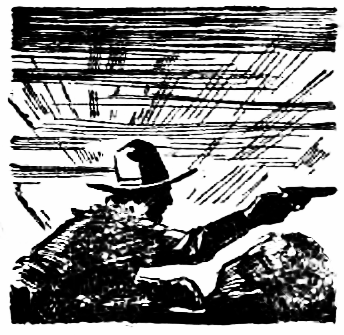
The feud had started so long ago that no one seemed to know just what had caused it. Some said it started over a card game, in which whisky played a prominent part; others said it was over the woman who married Jud Ault and died when their little girl, Faith, was but a tiny slip of a child. At any rate, Jud Ault and Eph Wheeler had been bunkies before this trouble, but had not met, face to face, in over twenty years.
Jud Ault, even before his injury, which finally killed him, was a grim, sour-faced old man, quick of temper. He hated mankind, and did not hesitate to say it. The Lazy A made Ault rich. Mining engineers had urged the old man to lease or sell part of his ranch, which was rich enough to make him a millionaire. But he refused. He hated miners. They dug holes in the ground. He did not want to be rich.
Faith had grown up in awe of her parent, the prettiest girl in the country, but denied suitors. Woe unto the gay cowboy who tried to jingle his spurs across the threshold of the Lazy A ranch-house. And when she was eighteen she married Jack Keene, a gambler; ran away with him, spent a short honeymoon, and came back for the paternal blessing.
But what they found was a door closed against them. Never again did Jud Ault speak to his daughter. He drew back in his shell, like an old turtle, even refusing to go to town. And when it was definitely decided that Jud Ault had made his final decision, Jack Keene, gambler, former lawyer (according to Miles Lane, a local attorney, who had formed a friendship for Keene), disappeared from Oreana City—alone.
Not even then did Jud Ault relent and take back his daughter, who had no means of support. Men went to him and urged him to take care of her, even if he did not want to see her, and he cursed them out. There was no doubt in the minds of everyone that Jack Keene had had an eye on the Lazy A when he married Faith; but had sneaked away like a cur when he found that his marriage did not mean money.
Then came the Keene baby. Men said that old Jud Ault would relent now. But he never saw his grandchild. Faith Keene lived in a little shack of a house, which Jack had partly furnished. She tried to make a living by taking in washing, but the returns were too small compared to the physical labor involved. Also she was obliged to compete with a Chinese laundry—which some of the cowboys offered to put out of business and give her a clear field. But she declined their offer.
Things were breaking very badly for Faith Keene, when Miles Lane came to her with some money, which he told her came from Jack Keene. She did not wonder why he did not send her this money direct, because she was too thankful to get it. Lane would not tell her where Jack Keene was. Every month the Oreana City lawyer would bring her enough for her monthly wants, and she was able to struggle along and take care of her baby.
East of Oreana City, about four miles, were the tumbledown ranch buildings of the Cross Arrow, owned by “Badger” Hill and his son, known as “Shif’less.” They were veritable range derelicts, these two. Badger was a short, squatty, bewhiskered sort of a man, who greatly resembled his namesake. His vocabulary was limited to a few words—mostly profane.
Shif’less was a big hulk of a man, less than thirty years of age. He was not unhandsome, in his big, lumbering way. His features were strong, blocky, and his wistful gray eyes seemed to be continually wondering at the world from beneath a huge mop of blonde hair, which seemed forever to stand on end.
It was hinted that the Cross Arrow existed through the taking of oreanas—calves which had escaped the branding-iron of their original owners. Farther to the north, these animals were designated as mavericks. And it was also hinted that Badger Hill was not averse to forcing an oreana—taking a calf away from its mother, that he might later run it on the Cross Arrow and claim it for his own.
Shif’less Hill had, in a way, grown up with Faith Keene, and always admired her from afar. Jud Ault had detested Badger Hill and his big cowpuncher son—making it mutual, because both Badger and Shif’less hated the hard-faced owner of the Lazy A.
Eph Wheeler was a mild-mannered old man, thin-faced, keen-eyed; one of the old type of cattlemen, who cursed with no trace of emotion, and fanned the hammer of his six-shooter, when the need arose, with the air of a man who had a slightly disagreeable task to do, and wished to do it as quickly as possible.
“Dude” Wheeler, the son, was a tall, straight-backed young man, who walked so straight in his high-heeled boots that it seemed as though a gust of wind would blow him over backward. He was thin of face, with a wide mouth, showing excellent teeth when he smiled. His eyes were deep-set, black as India-ink, beneath heavy brows, while his nose was bony.
His love for gaudy clothes had won him his cognomen, and he was the flashiest cowboy in the Oreana country. But Dude Wheeler was a top-hand cowboy; ready to fight, drink, gamble or race. He had been taught to hate the Lazy A. But now there was no Lazy A, as far as the Ault family was concerned. Faith had been disowned, and no one ever heard Jud Ault speak of having any relatives. So, as long as there was no Ault family to fight, it seemed that the feud would, or had, died. No one considered that Faith Keene was an Ault.
The Lazy A was in the hands of “Idaho” Breen, who had been Ault’s foreman for years. Idaho was small of stature, as gray as a badger and with about the same disposition. Perhaps association with Jud Ault had caused Breen to become cynical, never smiling.
Cleve Sears, the sheriff, had well described Idaho Breen, when he said, “If I was goin’ to pick out a man to do a first-class job of murderin’ somebody, I’d pick Idaho Breen, ’cause he’d be sure that it was a neat job—and I don’t reckon his conscience would ever bother him at all.”
Not that Idaho had ever killed anybody—not in the Oreana country, at least. No one had ever heard him mention the feud between the Lazy A and the Star X, but for years he had ridden with a Winchester rifle in a boot under his saddle fender.
It had been hinted that Dude Wheeler had found Faith Ault rather easy to look upon, but, because she was an Ault, he had rarely seen her. Seldom did the Lazy A and the Star X outfits meet in Oreana City, but when they did both sides were coldly civil. They came to the same dances, thereby causing the sheriff much mental anguish for fear of trouble, as he wanted to play square with both sides.
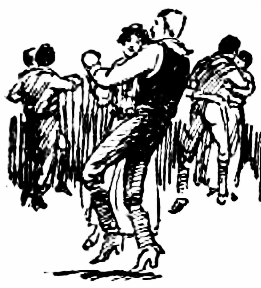
But the Aults were gone now, and there were only Idaho Breen his three punchers, “Omaha” Woods, “Mex” Leone, and “Pie” Ide. But they were enough. In range language, a man had to be salty to work for the Lazy A. Omaha Woods was broad of beam, with the neck and shoulders of a wrestler and the mustache of a Viking.
Mex Leone was small, slender, almost as black as an Indian; possibly the best bronc rider in the country. Pie Ide was rangy built, tall, powerful. Men likened him to Abraham Lincoln in his facial aspect, but the physical likeness was the only way in which he resembled the great Emancipator. Pie Ide was as hard-bitted as a roundup bucker, but with a sense of humor, which neither Omaha nor Mex seemed to possess.
It was about a week after the funeral of Jud Ault. Shif’less Hill was on his monthly peanut spree. While the other cowboys spent their monthly salary, or a great part of it, for liquor and cards, Shif’less Hill consumed large quantities of peanuts and a sprinkling of peppermint candy hearts, chuckling to himself over the inane inscriptions thereon.
Just now he had strolled to the front gate of Faith Keene’s little place, where Faith was sitting on the porch with the little boy. She spoke to Shif’less, who opened the gate and came in, sprawling lazily on the steps.
He offered Faith some peanuts, but she declined, smiling at the boyish actions of the big cowboy, who poked a finger at the boy, who chuckled with delight.
“Hyah makin’ it?” he asked Faith.
“Oh, all right, Shif’less.”
“Uh-huh,” Shif’less crunched a mouthful of peanuts, his big hands hanging limply on his knees. “Tha’s good, Mrs. Keene. Glad to hear it. Say,” he looked up at her quizzically, “I heard that yore dad left a will.”
Faith looked blankly at him. “Why, I—I never heard——”
“Well, he did. I heard Idaho Breen tellin’ about it. Miles Lane helped him make it out. Idaho signed it, so he said. Some of the boys got to talkin’ about the Lazy A, and some of ’em seemed to think that you was agoin’ to git it. But Breen said there was a will. He didn’t tell much about it, except that there was a niece, or somethin’ like that, mixed up in it. I was a wonderin’ if Miles Lane had told yuh anythin’ about it, yuh know.”
“He didn’t, Shif’less,” Faith sighed deeply. “No, I didn’t know anything about it.”
“Uh-huh. I hear lotsa fellers goin’ around, kinda admittin’ that Jud Ault was all right. I suppose that’s the thing to do, after a man’s dead and gone, but they all knowed that——”
“He was my father, Shif’less.”
“That’s all right. Bein’ a father seems to be more or less of a responsibility, Mrs. Keene; but yore dad shucked his. Yeah, he’s dead and gone, and you get tears in yore eyes when folks talk about him. Mebbe yo’re right. I’ve got a dad,” Shif’less smiled slowly, his wistful eyes fixed upon the little boy on Faith’s lap, “and lotsa folks say he ain’t worth nothin’. He’s a mean voiced, hard-fisted old pelican. Yeah, I know him better than anybody else does.
“They say he steals cattle. But they ain’t never caught him at it. Mebbe he’s a thief, and he sure uses bad language. Sometimes he gets drunk and acts pretty rough. But as long as I can remember, Mrs. Keene, he’s never said a mean thing to me, except,” Shif’less smiled and filled his mouth with peanuts, “except the time he said that I shore as hell was a throw-back to my monkey ancestors. Dad hates peanuts.”
Faith laughed, and the boy chuckled, as though he understood.
“Yuh named him Jack, didn’t yuh?” asked Shif’less.
“Yes,” softly. “Jack Keene, Junior.”
“Uh-huh. Well,” Shif’less got to his feet, brushing the peanut shells off his lap, “I’ll be anglin’ along. Say, I was jist a-thinkin’. Out at the ranch I’ve got a little painted bronc. He ain’t bigger’n a minute. Been goin’ to break him to ride, but he’s so small that m’ feet hit the ground. I was jist a-wonderin’ if little Jack wouldn’t like him.”
“Oh, that’s thoughtful of you, Shif’less, but don’t you realize that little Jack won’t be able to ride a horse for a long time?”
“Uh-huh. Well, I—uh—tha’s all right, too. Yore welcome. I’ll give him the bronc, and keep it out at the ranch until yuh need it. Them painted ones shore live a long time. Well, good day, Mrs. Keene. I reckon I’ll git more peanuts, and head for home.”
Shif’less walked back to the main street, and was heading toward the New York General Merchandise Store, when he met Cleve Sears, the sheriff. Sears was short and fat, with a full-moon sort of a face. His idea of a good time was to sit in the shade and whittle.
“Hello, Shif’less,” he said jerkily. Too much fat had made him short of breath.
“’Lo, Cleve,” drawled Shif’less. “Whatcha know?”
“I know that Idaho Breen is sore as hell. Know what he done? This mornin’, so he says, he found fifty-three Lazy A cow hides in a prospect hole, somewhere between the Lazy A and the road to Welcome Creek. Said the damn’ hole was about fifty feet deep, and he didn’t know that them hides was there until he smelled ’em.”
“Smellin’ kinda deep, wasn’t he?” smiled Shif’less.
“Prob’ly the smell come out the mouth of the shaft.”
“Prob’ly. Still that ain’t so bad for him. Hides are worth good money right now.”
The sheriff breathed heavily. “I dunno. Idaho’s mad. Says he’ll show the Star X where to git off at.”
Shif’less cracked his few remaining peanuts, poured them into his mouth and began chewing complacently. “Didja hear that old Jud Ault wrote out a will before he died?”
“Somebody said he did. Left the Lazy A to a niece of his.”
“And left his daughter out in the cold.”
“Yeah, that’s true. I hear her husband is sendin’ her money every month. That’s how she gits along, Shif’less. He can’t be such an awful jigger, if he does that for her.”
“Must be all right,” mumbled Shif’less. “Don’t yuh reckon the feud between the Lazy A and the Star X is ended?”
“It ort to be, Shif’less. Still, yuh never can tell. They tell me that this niece of Jud Ault’s is named Ault—Mary Ault. Ordinarily I’d say that a woman ain’t got no business runnin’ a cow ranch, but if she keeps Idaho Breen there she won’t have to do much of the runnin’. Idaho’s been in charge ever since Jud Ault got shot.”
“Uh-huh. The Lazy A is worth a lot of money, Cleve. I had a talk with one of them minin’ engineers ’bout a year ago. He was pokin’ around the hills out near our place, and he told me that the surface showin’ on the Lazy A was worth a cold million.”
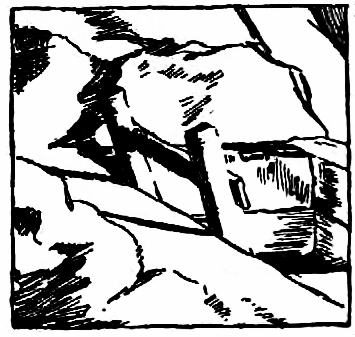
“Yeah, I heard it, too. Old Jud knowed it was there. But the Lazy A made him plenty of money—and he hated holes in the ground. I asked Miles Lane if the old man’s will stated that no minin’ was ever to be done on the Lazy A, but he said it didn’t.”
“I was jist wonderin’ if Faith Keene couldn’t contest that will, Cleve.”
“Miles says she can’t, because the old man left her one whole dollar. He says he disowned her and didn’t want to even leave her the silver dollar, but Miles showed him where she could bust the will, if he didn’t mention her at all.”
“Uh-huh,” Shif’less picked his teeth with a match. “It ’pears to me that them damn’ lawyers jist has to be accurate, even if it wrongs the right folks. Well, I’m all out of peanuts. See yuh later, Cleve.”
“S’-long, Shif’less.”
Shif’less sauntered on up the street. He saw Idaho Breen in front of Miles Lane’s office, talking with Lane. They nodded coldly to him, as he went past and entered the store just beyond.
Miles Lane was above average height, slightly stooped. His sandy hair was thin and wiry; his eyes, close-set, were buried beneath beetling brows, which grew together over the bridge of his thin nose. The hinges of his wide jaws were knobby from incessant gum-chewing. But although the jaw was wide at its hinge, it tapered down to a weak chin, which gave his head the appearance of being top-heavy.
He invariably wore a winged collar and a stringy black tie, which no doubt gave him a judicial air. Lane was a bottle drinker. Perhaps so because of its economy. And as a result he was very often under the influence of liquor.
“You said she’d be here Wednesday, eh?” questioned Idaho Breen, his cold eyes studying the flushed face of the lawyer.
“Yes; Wednesday, Breen.”
“Uh-huh. When is the will to be read?”
“Oh, after she gets here. We’ll have the judge and the sheriff there to hear it. I suppose the best thing to do will be to take her right out to the Lazy A as soon as she comes.”
“That’s what I aim to do, Miles. I was just wonderin’ if Faith Keene will make any move to contest the will. It looks as though she could do that.”
“If she had enough money to make a fight of it, Idaho. I’m goin’ to have a talk with her and see how she feels about it. But she can’t do much. The will gives her one dollar. That’s a legal point. And everybody around here knows that Jud Ault wouldn’t let her in his house. He disowned her.
“No, I don’t think she’s got a chance to contest the will. In fact, I don’t think she ever thought of such a thing. She’s proud.”
“How much do yuh really think the Lazy A is worth, Miles?”
The lawyer smiled thoughtfully. “The mineral rights are easily worth a million. I talked with those engineers when they prospected it and they said it was so rich that they were afraid to estimate. One of ’em got drunk and talked. They were employed by Eastern capital, and I happen to know that Jud Ault was offered more money than he knew existed, just for the mineral rights.”
“I know that,” said Idaho. “I’ve had assays made, too. Oh, it’s there, Miles.”
“You bet it’s there. Now, what about those cow-hides?”
“Just what I told you. That prospect hole is full of Lazy A hides. That damn’ Star X outfit used that deep shaft to get rid of Lazy A hides. They’ve been eatin’ Lazy A meat for years, and I’ve wondered where they threw the hides.”
“Any proof?” asked Lane judicially.
“Proof? No! How can yuh prove who shot a beef? They’ve all been shot.”
“Then drop the subject until you’ve got proof, Idaho. There’s no use starting a battle with the Star X.”
“Just let ’em keep on eatin’ our meat, eh?”
“Have you ever eaten any Star X beef?”
“Yo’re damn’ well right, I have! But not that much.”
“The amount doesn’t matter. What I want you to do is to forget those hides. If you can get the goods on the Star X, I’m for it. But right now we don’t want to stir up any war. Get this girl established out at the Lazy A, Breen. I suppose every cowpuncher in the country will want to marry her.”
Breen laughed coldly. “I suppose. My own outfit have taken to washin’ their necks, ever since they heard she was comin’.”
“She’d be a good catch,” Lane laughed softly. “I might marry her myself.”
“You better quit drinkin’,” advised Idaho coldly.
“I don’t drink enough to hurt me.”
“Well, I don’t want yuh to drink enough to hurt me.”
Miles Lane laughed. “I guess you won’t get hurt much. Just forget those cow-hides, Idaho. We’ll deal with the Star X when we get the goods on ’em. Anyway, rustling is petty larceny beside what we’ll get.”
Something prompted Idaho to step over to the front window, which looked out on the crooked main street. Leaning against the wall, near the window, was Shif’less Hill, still eating peanuts. Idaho motioned to Lane, who came over to the window. Apparently Shif’less was merely engaged in eating more peanuts.
Idaho watched the big Cross Arrow puncher, who finally dusted the peanut shells off his shirt front, shoved the remainder in his chaps pocket and walked away. He did not even glance toward the window. Idaho stepped back, his eyes squinting narrowly.
“Do yuh suppose that big fat-head was listenin’ to what he might hear?”
“I don’t think so, Breen. Anyway, what could he hear?”
“Nothin’, I reckon. I don’t like him.”
“He’s harmless.”
“Yeah, I suppose he is. Except when it comes to stealin’ calves.”
“Anyway, our conversation was none of his business.”
But perhaps Shif’less Hill felt differently about it. He untied his horse at the New York Store hitch-rack, mounted and rode toward home. He had not stopped in front of Miles Lane’s office with the intention of listening. In fact, he had heard only the dull mumble of conversation, until Lane had raised his voice slightly and said:
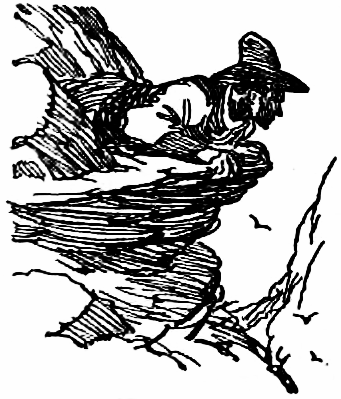
“Just forget those cow-hides. What do we care? Rustling is petty larceny beside what we’ll get.”
“Beside what we’ll get,” muttered Shif’less. “Now, jist why did he say that, I wonder?”
Dear Al:
You heard about me getting shot? It was over a year ago. Since then I’ve been a cripple—paralysis. Bullet lodged against my spine, and the doctors are afraid to take it away. I’ve lost my nerve, Al. I’m as old as hell, and they say I’m as bitter as gall. Maybe I am. I haven’t a kindly feeling towards anyone. You don’t know how it is, Al; to be old, crippled, nothing to look forward to. I can’t get around. The damn’ doctor won’t tell me the truth. If you want honesty, don’t expect it after you’re old and crippled.
Al, I’m not appealing to the Association. I don’t want no cozy detective hanging around me. But I do want a man who can find out things. I’ll pay well. Maybe I’m crazy. I know they are saying I am. But I feel that everything is not right. The old Lazy A is worth a lot of money. I’ve made my will. But something makes me feel like an old bull, dyin’ out in the open, surrounded by coyotes and buzzards, waiting. I suppose they hate me. I don’t blame ’em. I’ve hated a lot in my time. See if you can find the right man, Al. The Lazy A can pay well for what it gets. Hope I’ll see you some day.
Yours truly,
Jud Ault.
Cultus Collins looked up from reading the letter. A gray-haired man, with kindly blue eyes, was seated at a desk beside him, idly drawing circles on a desk blotter with a pencil. On the walls were detail maps of Arizona, a meat packer’s calendar, a framed picture of a longhorn steer. From the adjoining room came the clicking of a typewriter.
“I had a hard time locating you, Collins,” said the gray-haired man. “I got that letter nearly three weeks ago.”
“Yuh say this Lazy A is at Oreana City?”
“Yes. Have you ever been there?”
Cultus smiled grimly, but shook his head.
“No. Do you believe in fate?”
“In fate? Why, I don’t know, Collins. Do you?”
“I’m beginnin’ to,” Cultus smiled softly, as he folded up the letter. “That’s a queer sort of a letter, Al. There’s a lot in it; a lot of the soul of a bitter man. Mebbe I better see if I can help him. I dunno what he wants done, do you?”
“No. Perhaps it’s merely hallucinations, Cultus. I don’t know much about the place. If you take the job, it’ll be up to you to go there and see what you can find out. I’ll give you a note to Ault so he’ll know you’re on the job.”
“All right.”
The secretary of the Cattlemen’s Association penciled a note for Cultus, while the lean-faced cowboy grinned softly over the manufacture of a cigarette; grinned to himself, because he still had an hour to catch the same train that Mary Smith was taking to Oreana City.
Cultus had had no inkling that the Cattle Association was going to send him to Oreana City. He had told Mary Smith good-by, and had promised to join her as soon as possible to help carry out the deception. Neither of them knew what it meant, but there was no question that it was a crooked deal. And now the Association was sending Cultus to the same location.
“What seems so funny to you?” queried the secretary, as he folded the note. Cultus grinned widely, but did not reply. They shook hands and Cultus went back to the busy street of an Arizona metropolis. He headed for the depot, where he found Mary Smith.
Part of the hundred-dollar bill had been invested in a modest gray suit and a small hat. There were roses in her cheeks now, as she sprang up to greet Cultus.
“I’ve got to buy a ticket to Oreana,” he grinned.
“Oh, are you going with me?” she asked.
“Yeah.”
“Oh, I’m so glad, Mr. Collins!”
“Well, that’s nice of yuh, Miss Janice Lee,” Cultus sobered quickly. “Don’t forget that’s who yuh are, little woman. Forget Mary Elizabeth Smith. And my name ain’t Collins. My name’s Jones, and I’m from Oklahoma. All you know about me is that yuh met me on the train, and yuh think I’m buyin’ cattle.”
“But—but what is the idea?”
“Strictly business. Miss Lee. Unless I’m mistaken, there’ll be someone to meet yuh in Oreana City. You don’t know, and I don’t know what the game is. But let ’em do the talkin’, and you’ll soon know. I can’t be with yuh. But don’t be scared. They won’t hurt yuh; that ain’t what they want yuh for. But I won’t be far away. Play the game, Mary Elizabeth.”
“Oh, I’ll do that, Mr. Jones of Oklahoma.”
“Buena muchacho,” smiled Cultus. “I have a feelin’ that yo’re goin’ to be a help in my business this time.”
“What is your business, anyway?”
“Bein’ Jones of Oklahoma—a cattle buyer.”
“Off that shirt! Off that shir-r-r-rt!” Pie Ide’s voice almost lifted the shingles off the Lazy A bunkhouse. Mex Leone stopped putting on a cerise creation, and stared at Ide, who had been shining his boots with Rising Sun stove-polish, which was smelling to high heaven.
“Ain’t this my shirt?” asked Mex softly.
“Yore shirt! Sa-a-a-ay, when did you own a shirt like that? I bought that shirt in Phoenix three years ago, Mex. I’m not dressin’ both of you jiggers. Omaha’s got on a pair of my socks, and if that ain’t my red tie he’s— Hey, Omaha, that’s my collar!
“Yeah, it is, too! You never had none as high as that. My Gawd, if you ever set down hard, you’d slice off yore ears. Now, look at it! Why don’tcha polish yore boots after yuh dress yore neck? Hell, I can’t wear that collar now! And there ain’t— Wear one of yours, Omaha? That’s right neighborly of yuh, cowboy. I’ve got a fifteen and a half neck, and you’ve got a seventeen.”
“I’d rather have a phonygraft, wouldn’t you, Omaha?” asked Mex, searching his war-sack for another shirt. “Yuh can shut off a phonygraft.”
“I don’t pay no attention to the big scorpion,” said Omaha. “He thinks he can claim things by talkin’ louder than anybody else. That was my collar. Provin’ it to him jist ruined it for both of us. And this tie——”
“Give us the hist’ry of it,” begged Pie Ide. “After you’ve done lied yore soul into purgatory, I’ll tell yuh where and how I got that tie. Mex! Didn’t I tell yuh to let that shirt alone? Flimsy? Of course it’s flimsy! But yuh didn’t need to rip it down the bosom thataway, jist showin’ it was flimsy. O-h-h-h-h, why didn’t yore folks wean yuh in yore callow youth?”
“Ain’t you goin’ to shave?” asked Omaha mildly.
“Not with my razor,” said Mex. “Every time Pie shaves with my razor I have to pay a barber a dollar to hone the nicks out of it.”
“Aw, he’s beautiful enough,” grinned Omaha. “When that girl takes a look at him, she’ll——”
“Wonder how I can stand to live with you two misfits,” finished Pie. “Yeah, I’m goin’ to shave—with Mex’s razor. I’m goin’ to wear that flimsy shirt and I’m goin’ to accept one of Omaha’s clean collars, even if I have to punch some new buttonholes to ram my collar-button through.”
“And ruin it for me?” wailed Omaha.
“Prob’ly.”
“Are you aimin’ to make a play for this heiress?” asked Omaha resignedly.
“Jist like a road-runner pickin’ a grasshopper,” said Pie seriously. “Ain’t it legitimate? She’s single. There ain’t nothin’ in the constitution of the State that says I ain’t eligible, is there? I’m a clean, whole-souled young feller, and I’ve got ambitions to be somethin’ in the world.”
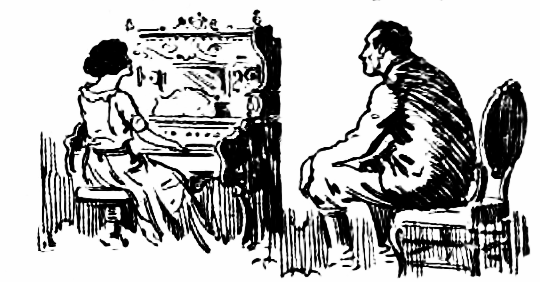
“If you’d ’a’ said you was clean-souled, I’d keep still, ’cause yore soul ain’t visible,” grinned Mex. “You ain’t took a bath since yore bronc bogged down in the Little Muddy last spring. With all the land she’s gettin’ on the old Lazy A, I don’t reckon the lady would want any extra real estate, Pie.”
Mex dodged gracefully through the doorway, just ahead of the shoe-brush, which Pie hurled the length of the room. It was a good throw—as far as velocity was concerned—but the angle was bad and Omaha looked up just in time to get the handle of it across the bridge of his nose. Omaha went backward over a chair, landing on the back of his neck near the door, howling bloody murder. Nothing could ever convince Omaha that Pie Ide had not intended to hit him. He came to his feet, swearing a streak, blood running from his injured nose, eyes half blinded.
His grasping hands came in contact with his belt and gun on a bunk, and he fired one wild shot, as Pie Ide went under a bunk on his hands and knees.
“Gdigyuh!” wailed Omaha. He staggered to the center of the room, one hand held to his streaming nose, as he tried to locate Pie under the bunk.
“What’s goin’ on in here?” Idaho Breen had just heard the commotion, and had come from the stable. “What happened to you, Omaha? Put down that gun!”
“It was an accident, Idaho!” panted Pie, sticking his nose and eyes out between a drapery of blankets, which hung down over the end of the bunk. “I throwed that brush at Mex, and Omaha walked into it. Take the gun away from him, Idaho.”
“I’d wadden’t no dab aggcided,” denied Omaha. “He idtedded to hid be.”
“He throwed it at me,” Mex stuck his head around the corner of the doorway. “But you’ve got my consent to kill him, Omaha.”
“Some of you damn’ fools are goin’ to kill each other one of these days,” declared Idaho. “Why don’tcha ever grow up?”
Omaha tossed the gun to the bunk, and turned to the broken mirror to examine his injury. The nose was swelling, and was tinged with purple across the bridge. Idaho grunted disgustedly and walked out, while Pie crawled from beneath the bunk and advised Omaha to hold his breath and stop the bleeding.
“Will thad stob id?” asked Omaha wearily.
“Sure it will.”
Omaha tried it, but with no results. “How log?” he asked heavily. “How log do you hab to hold id?”
“All depends the the person,” said Pie seriously. “Some die a lot harder than others.”
But this time Pie had secured Omaha’s gun, and walked outside to join Mex. Idaho was hitching up the buggy team, with the intention of going to Oreana City to meet the train. Idaho had not dressed for the reception of the heiress of the Lazy A, but the three cowboys felt differently about it. All they knew was that Mary Ault, old Jud Ault’s niece, was coming to the Lazy A. Idaho had told them that she was a fairly young woman. It was not often that the Lazy A boys dressed up, but when they did they made an event of it.
Pie had suggested that they all go to the depot to meet her, but Idaho vetoed that idea. Idaho drove away. It would be several hours before train time. Omaha came from the bunkhouse, looking queer with his purple nose, which resembled a potato in contour.
“All dressed up and no place to go,” complained Pie. “It’s hours before the train comes in.”
“And nothin’ to drink on the ranch,” wailed Omaha. “I’d sell my soul for a shot of liquor.”
“Got over yore hayfever, eh?” grinned Mex. “Yore nose looks like the handle on a door.”
“Thasall right,” growled Omaha. “Ne’ mind my nose.”
“It strikes me that somethin’ must be done,” said Pie. “We can’t gloom around here for hours, dressed thisaway. Suppose we go to town, keep out of sight of Idaho, and when the train whistles we can head for home.”
“Yore voice is tuned for my heartstrings,” said Mex. “How about you, Omaha?”
“Pshaw, I’m halfway there right now. C’mon.”
And while the three Lazy A cowboys headed for town, four other riders, “Buck” Wing, “Heinie” Moriarity, “Klondike” Evans and Joe Chevrier, of the Star X, foregathered in the Oreana saloon and gambling house, with enough money in their pockets to make the visit worthwhile.
Buck Wing was a long-legged, buck-tooth cowboy, with one eye slightly out of line, and one of his ears, in prize fight parlance, was slightly cauliflowered. Moriarity was short, broad of shoulder, typically Celtic, even to his love of battle.
Klondike Evans was of medium height, bald-headed, sallow complexioned, which accentuated the wispy black mustache on his long upper lip. Joe Chevrier was a little, red-faced, French-Canadian, voluble, excitable, the butt of most of the rough jokes originated by Buck and Heinie.
The Lazy A and the Star X outfits had never met since the funeral of Jud Ault. Personally there had never been any bad blood between the cowboys, but they had been loyal to their own outfits, respecting the ancient enmity.
Idaho Breen saw that the Star X outfit was at the Oreana; so he tied his buggy team in front of the New York Store, and gave the Oreana a wide berth. This was as Pie Ide had expected; so the Lazy A trio tied their horses at the rear of the Oreana and made their entrance through the rear door.
The four Star X boys were at the bar. Omaha, Pie and Mex stopped about midway of the room, looking at the Star X men.
Buck Wing grinned widely. He had imbibed plenty of liquor and his soul was mellow toward everybody.
“’S far as I kin see,” he said slowly, “there ain’t no feud left. Hyah, cowboys!”
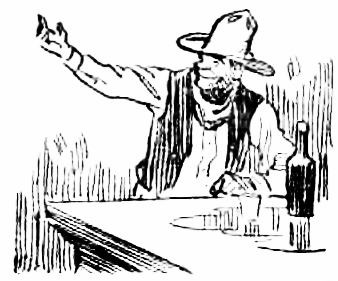
And for the first time since the feud started, the Star X punchers shook hands with those from the Lazy A. After about the sixth drink, Omaha offered this explanation:
“This here Miss Ault, which the old man designates in his will-paper as bein’ the one he chooses to own the Lazy A, is due to hit Oreana City this evenin’. Idaho Breen aims to take her out to the ranch. That’s the reason we’re all duded up this-a-way. When that train toots for Oreana City, we fogs for home and lines up at the front door to welcome her.”
“Perfec’ly proper,” said Klondike owlishly. “My, my, I don’t see how you boys ever got so stylish! I take one look at Pie Ide, and I says to myself, ‘Here’s a ’Piscopal preacher.’ You shee it was that collar that fooled me.”
“’S one of mine,” said Omaha. “Pie punched button-holes in it. Had t’ kinda lap the ends over to fit his neck.”
“My Gawd, he shore is a dude!” applauded Buck Wing. “Yo’re all pretty gaudy, if yuh ask me. Still, it’s perfec’ly proper under the circumstances. Whatcha say, Joe?”
Joe Chevrier hadn’t said anything. Liquor made him just a trifle mournful, it seemed. He looked gloomily upon the three Lazy A punchers.
“I say not’ing,” he replied. “Me, I’m jus’ t’ink w’at somebody say ’bout Star X kill Lazy A beef and t’row hide in de prospec’ hole.”
“Drop it!” growled Heinie. “This is no time to stir up a lot of smelly cow-hides, you frog-eater!”
Frenchy was properly squelched, but continued to glower. He was just drunk enough to hold a grudge, and his remarks brought a decided chill over the festivities.
“I’m for buryin’ any hatchet that might be around,” said Pie Ide. “We might as well all be good little friends together.”
“Sure thing,” agreed Buck Wing. “I’m willin’. But you know yourself, Pie, that Idaho Breen made some remarks that are hard to overlook.”
“You say somet’ng true,” applauded Joe.
“And I’m goin’ to squirsh you, if yuh don’t shut up!” snapped Heinie.
“And I’ll help yuh,” offered Omaha. Heinie glared at Omaha.
“The hell yuh will!”
“If yuh need help,” amended Omaha quickly.
“I’m not scare from de Lazy A, you bet,” declared Joe.
“You shore don’t need to be, Joe,” said Klondike warmly.
“Well, yuh can’t hold us responsible for what Breen said, can yuh?” asked Pie Ide. “I’d crave to know if we’re responsible for what our boss says; that’s what I’d crave to know.”
“You seems to have a cravin’, cowboy,” observed Buck coldly. “Folks that crave hard enough usually gits, yuh know.”
“Aw, you don’t need to git yore tonsils all swelled up,” said Pie. “We came here in a peaceful mood. Yo’re four to our three, but nobody ever seen the Lazy A——”
“Let’s arbitrate,” interrupted Omaha. “I’ll buy a drink. And we don’t care how many Lazy A cows you’ve rustled. We don’t care if you’ve filled every prospect hole from here to Welcome Creek with Lazy A hides. Whatcha drinkin’, gents?”
“Are you admittin’ to yourself that we has done such a thing?” Heinie Moriarity hitched up his belt, his eyes snapping.
“Let’s have the drink first,” suggested Klondike.
Arguments were forgotten for the moment, while seven men drank. Joe Chevrier threw his glass in a cuspidor, smashing it into a hundred pieces.
“I drink no more wit’ Lazy A,” declared Joe, waving his arms. “I’m insult from w’at Breen say about de cow-hide.”
“Why,” said Omaha expansively, “don’t some of you Star X gents kill that damn’ Frenchman? He’s a menace to friendship.”
“’O’s a menace?” demanded Joe belligerently. “Tak’ dat off! By gosh, I no stand for dat!”
“He ain’t no menace,” said Klondike. “You hadn’t ought to call him that.”
“Then why don’t he forget them cowhides?” wailed Omaha.
“He’s so honest it hurts him,” explained Buck Wing thickly.
“Hurts him to be honest,” nodded Mex. “I sabe what yuh mean.”
“You don’t sabe nothin’!” snorted Buck Wing.
“All right, all right,” Pie Ide hitched up his belt. “I can see that you Star X whip-poor-wills are pinin’ for battle. But we ain’t in the market for no wars t’day. We got to remain safe and sane until our new she-boss arrives. After she’s kinda inaugurated, we’re receptful to anythin’ you hedge-hawgs nominate. We meets yuh any old place yuh ain’t afraid to go, and we’ll let yuh choose yore weapons. Yo’re four to three, but after the first two has been choosed, I whip the remainin’ two.”
“You kinda hates yourself, don’tcha?” asked Buck Wing.
“Yeah; but I’ve got enough to cover you four ant-eaters.”
“If you fellers has got any quantity of brawlin’ to do, I wish you’d go some’ers else,” said the bartender mildly.
“Who’s brawlin’?” demanded Klondike. “This here is jist an argument among men—so keep out of it.”
Both sides knew that there was no chance for peace. Omaha hitched up his belt, spat dryly and said, “All right. You Star K’s don’t want no peace, I can see that; so we’ll go away. That cowhide matter don’t mean nothin’ to any of us. All I can say is that if yuh ate all the beef that was inside them hides yo’re shore plenty fat on good meat.”
Then the three Lazy A cowboys filed out through the front door and headed down the street toward the Rawhide saloon, just well enough organized to ignore the fact that Idaho Breen might meet them.
“All six of ’em went, eh?” Joe Chevrier looked owlishly toward the front door.
“There was only three,” said Klondike.
“By gosh, dere was six went out!” exploded Joe. “I tell you w’at, I’m sore. Caus’ now I c’n whip all six—me!”
“You couldn’t whip a canary,” declared Buck Wing. “Shut up.”
“But dey accuse,” wailed Joe.
“They ort to be teached a lesson,” observed Klondike.
“They will be,” nodded Buck. “I’ve got a scheme. That train gets in after dark, and there won’t be nobody there to meet the girl, except Idaho Breen. How’d it be—?” Buck scratched his chin thoughtfully. “How’d it be to swipe that girl and take her out to the Star X?”
“I’ll buy a drink!” exploded Heinie.
“You’ve spoke yore piece.”
When Idaho Breen came to Oreana City he drove his team to the little depot, where he left it to await the arrival of Mary Ault. He went to the depot, where the agent divulged the information that the train would be about three hours late.
“I got a telegram for Jud Ault,” he grinned. “Didn’t just know how to deliver it—do you, Breen?”
“That’s funny, ain’t it?” laughed Idaho. “Mebbe I better take it along with me; it might concern the business, yuh know.”
“Sure. Here she is. Lookin’ for somebody on the train?”
Idaho pocketed the telegram. “Yeah; the new owner of the Lazy A is due in on this train.”
“That so? Oh, I did hear about Jud Ault making out a will.”
Idaho nodded and walked out to his team. He opened the telegram. It was from the secretary of the Cattlemen’s Association, and read:
Sending you best titan for job will identify himself.
Al Traynor.
Idaho leaned against a buggy wheel and pondered over the telegram.
“Sendin’ you best man for job.” he muttered. “What job? A telegram to a dead man! And Al Traynor is secretary of the Association. I wonder jist what job they had in mind.”
He folded up the telegram and went back up the street. The sheriff was sitting in front of the New York Store, whittling, his eyes scanning the front of the Oreana saloon. Idaho spoke to him, and the sheriff moved over to give him a seat.
“Yore gang and the Star X gang are over there in the Oreana,” offered the sheriff, pointing with his pocket-knife. “They’ve been in there for about fifteen minutes, and nobody ain’t been throwed out yet.”
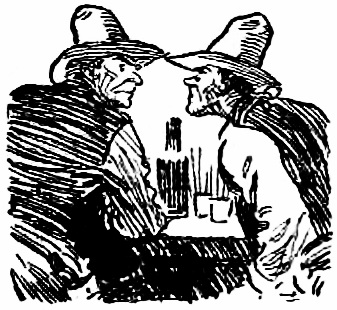
Idaho scowled heavily. “All gettin’ drunk, eh?”
“All got drunk,” corrected the sheriff.
Just at that moment the three Lazy A boys filed out and headed for the Rawhide. None of them were able to follow a chalk-line. They filed into the Rawhide, and the sheriff breathed easier.
“Well, I’m glad that’s over,” he said thankfully.
The sun had gone down, and it would soon be dark. They were lighting one of the hanging lamps in the Oreana, when Joe Chevrier and Klondike Evans came from the place. Both of them were unsteady on their feet. It seemed that Klondike was trying to argue Joe out of doing a certain thing of which Joe was bound and determined to do.
“My gosh, I’m insult!” roared the little cowpuncher angrily, as they came across the street. “He tak’ it off, Klondike!”
“Thasall ri’.” mumbled Klondike. “You ain’t got no shense. I tell you for-f’rgit it, da-aw-gone yuh. Whatsa use——?”
“Ho, ho!” Joe had seen Idaho and the sheriff. He braced his feet, roaring out his war-whoop, “You sonn-of-a-gonn!”
Klondike made an ineffectual grab at Joe, who had dragged out his six-shooter, staggering out of Klondike’s reach.
Wham! Crash! His bullet smashed through the window just over Idaho’s and the sheriff’s heads.
Wham! Wham! Two more bullets practically ruined the rest of the window, while Idaho and the sheriff, running like a team of heavy-bodied fire-horses, headed for the sheriff’s office.
Wham! Another bullet struck the side of the building, as they fell through the doorway. Heinie Moriarity and Buck Wing staggered out of the Oreana, while from the Rawhide, a short block down the street, and almost opposite the sheriff’s office, came the boys from the Lazy A, seeking to find what the shooting was about.
Wham! Joe’s fifth bullet struck the dirt just in front of Omaha Woods, who almost fell over backward, when the spray of gravel blew up in his face. And without any further argument, Pie Ide drew his six-shooter and proceeded to take pot-shots at the Star X gang.
A bullet knocked Klondike’s sombrero off and when he stooped over to get it, another hunk of lead threw gravel in his face: so he forgot the hat and went galloping drunkenly toward the doorway of the Oreana, where he caught his toe on the step and fell halfway through the doorway.
The shooting became general, except Joe Chevrier, who was the cause of the whole thing, and who was trying to stuff more cartridges into his six-shooter, but with little success. Buck Wing had run in close to the side of the Oreana, while Heinie sat down in the street, shooting across one bended knee.
Bang! A note entirely different from that of the six-gun. Joe Chevrier yelped like an injured pup and galloped toward the far corner of the Oreana, grasping at the rear of himself. The enraged sheriff had poked a ten-gauge shotgun through a pane in his office window, and had given the Star X Frenchman something to think about besides loading his gun.
Heinie’s gun was empty; so he crawled on his hands and knees back to the Oreana. The Lazy A outfit had tracked to the door of the Rawhide, only to find it barred against them. The saloon-keeper was taking no chances of them using his place as a fort.
“Is anybody hurt?” panted Pie Ide, as they leaned against the barred door.
“I got my mustache full of gravel!” wailed Omaha. “And some of it hit my sore nose.”
“Didja see what happened to the frog-eater?” chuckled Mex. “The sheriff busted him with a load of duckshot.”
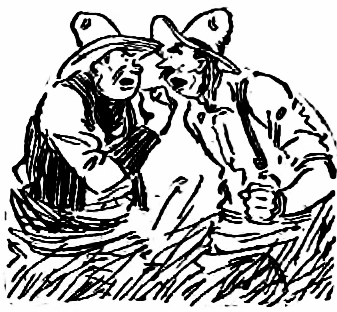
“I wonder what started it?” grinned Pie, as he reloaded his long Colt .45. “Let’s go across the street and set on the sidewalk. Them snakehunters are too drunk to hit a house, and it’ll soon be dark.”
“Yuh didn’t see us hittin’ anything didja?” inquired Omaha, pawing at his mustache. “We’re a fine lot of shooters! We never hit anybody.”
“We fanned ’em out of the street, didn’t we?” fleered Mex. “Didja want to kill ’em, Omaha?”
“Well, I didn’t want to kiss ’em. Let’s sneak around and get in the back door of the sheriff’s office.”
“And git a hideful of duck-shot, eh?” Pie Ide shook his head so hard that his hat fell off. “We’ve got all the war we can handle, without foolin’ with the sheriff and Idaho Breen.”
The Star X boys were of the same opinion as three of them leaned against the Oreana bar. Klondike was bitter. His fairly new Stetson had a jagged hole in the crown.
“Well, what started it, anyway?” demanded Buck Wing.
“Joe Chevrier took a shot at Idaho Breen and the sheriff.”
“Danged fool! Did we kill any of the Lazy A?”
Nobody seemed to know. Joe came through the rear doorway, limping. He had sobered considerably.
“By gar, I’m get stoong by fortee bee!” he exclaimed. “Behin’ me I’m feel like de centipeed walk h’all over me.”
“Yuh got a load of duck-shot in yore back!” snorted Buck Wing disgustedly. “It’s too damn’ bad he didn’t use a cannon. What made yuh start shootin’ out here, you danged Canuck? Yuh shore put us in bad.”
“Well,” Joe grimaced painfully, “I’m see dat Ida-hoo, and I’m so insult about de raw-hide.”
“We might go down and apologize to the Lazy A boys,” suggested Heinie Moriarity. “They’re prob’ly in the Rawhide.”
But that suggestion didn’t go well with Buck Wing. Except for the bartender, they had the Oreana all to themselves. What few other patrons had been in there had sneaked out the back door during the shooting, and had given the main street a wide berth. The bartender, while still sticking to the ship, did not feel any too secure.
“I don’t apologize to nobody,” declared Buck. “If Joe wants to apologize to Idaho and the sheriff——”
“She don’t!” snorted Joe. “I’m ver’ sore jus’ now.”
“I’d suggest that we go home,” said Klondike, mourning over his sombrero.
“And let the Lazy A think they run us out?”
“Let ’em think what they will. What they don’t know won’t hurt ’em.”
The Lazy A bunch, sitting like three buzzards on the sidewalk, saw the Star X boys ride away from the Oreana hitchrack, and chuckled with glee. It was too dark to see them get their horses at the rack. Idaho Breen and the disgruntled sheriff also saw them ride away, and breathed a sigh of relief.
“We whipped ’em!” declared Mex.
“We shore did, by golly!” chuckled Omaha. “Here comes Idaho and the sheriff. I suppose they’re comin’ to congratulate us.”
But Idaho Breen was not in a congratulatory frame of mind.
“Why in hell didn’t you fellers stay at the ranch and behave yourselves?” he demanded angrily. “Comin’ down here and startin’ trouble!”
“Who started any trouble?” grunted Pie Ide. “If we hadn’t been here to turn the tide you and the sheriff would ’a’ had to pull another Alamo. They’d shore made yuh hard to catch.”
“You fellers started it! Yuh mixed with that Star X outfit in the Oreana, and made trouble.”
“Well, whatcha goin’ to do about it?” asked Omaha. “Is this a free country, or are we workin’ for a Czar?” Idaho debated. Good cowhands were not plentiful. He knew he was just on the verge of losing all three of them.
“Well,” he said slowly, “I suppose it’s all right. But I didn’t want you boys drunk when Miss Ault comes. Dang it, that ain’t the right spirit, boys. She prob’ly ain’t used to seein’ a lot of drunken punchers.”
“Who’s drunk?” demanded Omaha.
Idaho shook his head. “Mebbe I was mistaken. I—I was judgin’ from the shootin’ that yuh wasn’t cold sober. Why, some of yore bullets hit the sheriff’s office, and it ain’t noways in the line between where you was and the middle of the street.”
“Oh, we didn’t want to kill ’em,” said Pie Ide. “All we wanted to do was to scare ’em out of town; so they’d let you and the sheriff out of the office.”
“My shotgun settled that,” said the sheriff, panting heavily. “I handed Joe Chevrier an ounce and a quarter of number fives, and he’ll itch for a long time.”
“There ain’t no fun left, anyway,” said Mex mournfully. “I’d jist as soon go home.”
“Same here,” nodded Omaha. “We was jist killin’ time, anyway.”
So the Lazy A boys went behind the Oreana, where they mounted their horses and headed for home. Idaho tried to find Miles Lane, but the lawyer was not in evidence. The town had recovered its composure after the bloodless battle, and there was much speculation as to what would happen next time the two outfits met.
It was almost time for the train arrival, when Idaho went to the depot. He went in the waiting room, where the agent told him the train would be in very soon. Then he went out on the platform and walked around the corner of the depot, with the intention of changing the position of his half broke buggy team, which might get frightened at the train. But as he swung around the corner, three or four men piled upon him, bearing him down by sheer weight of numbers. An old saddle-blanket was flung over his head, and inside of two minutes Idaho Breen was trussed up like a mummy, and dumped unceremoniously behind the depot.
The train ground ponderously up to the station, and when Mary Smith climbed down the steps, assisted by the gray-haired conductor, she was met by Buck Wing and Klondike Evans of the Star X. Behind her came Cultus Collins, apparently paying no attention to her.
“Howdy, Miss,” greeted Buck Wing, a half smile on his face. “Are you Miss Ault?”
“Why, yes,” said Mary, who was prepared to be “alias anything she was called.”
Klondike grasped her suitcase and she walked with Buck, who guided her around to the hitch-rack, where the frightened team was being taken care of by Heinie and Joe. Mary noted a strong smell of liquor about them.
It seemed settled that Klondike was to do the driving. He got in and took the lines, while Heinie and Joe clung to the bridles of the rearing broncos.
“Head for the ranch,” said Buck. “We’ll catch yuh.”
“You’ll go some, if yuh do!” snorted Klondike, surging back on the lines. The team whirled around, almost upsetting the buggy, and went up the main street of Oreana City like a pair of racehorses heading for the wire.
Mary got little view of Oreana City, as she was entirely occupied in clinging to the seat of the open buggy. The road was far from smooth, and they went bouncing off the street into a wide sweep of low hills, gray and blue in the starlight. Klondike clung to the frail lines, content to keep the running team in the road.
The light buggy meant nothing to the broncos; running, wild, cold-jawed. A mile or more reeled out behind them. Klondike knew of a bad spot in the road, where a washout had cut a deep furrow across the highway. To go into this at top speed would mean a smashup. He shortened his lines, braced his feet and pulled steadily. But the cold-jawed broncs did not mind the pull on the straight-bar bits.
Klondike, still half drunk, realized that things were not working out just right. He shot a glance at the girl beside him, who was clinging to the seat with both hands, and surged back on the lines again. He knew the washout was very close now.
Snap! The left line broke and came back, striking Klondike in the chest, and throwing all the pull on the right line. It swerved the team to the right, and a wheel went over a mesquite snag, throwing Klondike off the seat.
Just beyond here an old road turned to the right; an old road, which had not been used for years. The buggy slewed around, skidded dangerously, and then straightened up as the frantic team headed up the old road.
Mary was thrown off the seat and down against the dash, but managed to get back to the seat. Her mind was in a whirl, as she realized that the driver had been thrown off. She wanted to jump, but realized the danger. The buggy was careening over the old road, possibly half a mile from where Klondike had been thrown out, when the team whirled suddenly, throwing Mary off into a patch of brush, and headed back in the general direction of the Star X, cutting across country.
The cause of their sudden turn was a lone horseman, who had appeared suddenly just a few yards ahead of them. The team was almost into him, when it turned, and Mary narrowly missed being thrown against his horse. The horse whirled wildly, but he reined it back, dismounted swiftly and ran over to the girl.
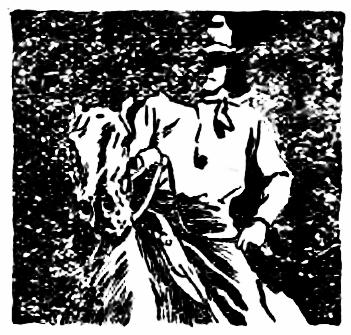
With little difficulty he disentangled her from the bush, which had broken her fall, and placed her on the ground. It was Dude Wheeler, cutting across country toward the Star X, his face a mixture of wonder and astonishment as he scratched a match and looked down into the frightened eyes of Mary Smith.
“Are yuh hurt?” he asked, when he saw her eyes open. She did not say—merely blinked at the match, which burned Dude’s fingers before he dropped it.
“I—I don’t think I’m hurt—much,” she said, as he scratched another match. She managed to sit up and he braced her with one arm. “I guess I’m—I’m badly shaken,” she admitted.
“Yeah, I’ll bet you are. But how did yuh happen to be up here, all alone with a runaway team?”
“Why, I don’t know exactly. The driver fell off, you see.”
“Yeah, I see—that much,” Dude Wheeler was lighting several matches, so he might get a better look at this girl.
“Who was the driver?” he asked. Mary shook her head. “I don’t know. I just came in on the train tonight, you see.”
“In on the train,” echoed Dude. He looked closer at her. “Say, are you Miss Ault?”
“Why—er—yes,” said Mary, turning her eyes away.
The matches burned out, and Dude did not light another.
“I see,” he said slowly. He got to his feet and stood there, gazing across the hills. “Yo’re a long ways from the Lazy A,” he said. “I dunno what—I wonder—that was a Lazy A team. You don’t know who the driver was?”
“No, I have no idea who he was. They just put me in the buggy, and the team ran away.”
“I see. I’m Jack Wheeler, Miss Ault. Folks call me ‘Dude.’”
“Oh, what a queer name!”
“We own the Star X outfit.”
“Isn’t that nice? I—I think I’ve hurt my ankle, Mr. Wheeler.”
“I reckon you got off lucky, if that’s all.”
He helped her to her feet, but she was unable to walk.
“I dunno,” said Dude slowly. “It’s a long ways to the Lazy A. I hadn’t ought to take yuh to the Star X, but it’s the nearest place. Can yuh stand alone until I get my bronc?”
Mary clung to the brush, while he led his horse up to her.
“You can’t straddle no horse in that skirt,” he told her.
“No, I suppose not,” admitted Mary. “What will we do?”
“And if I set yuh sideways on that saddle and got on behind yuh, we’d prob’ly both get throwed off, because that bronc ain’t broke to pack double. I reckon there’s just one thing to do.”
He swung her up in his arms, lifted her to the saddle and got up with her, lifting her in his arms as he got into the saddle.
“But you can’t carry me in your arms,” she protested.
“This is all the evidence in the world against yore idea,” he said, as he rode off through the hills. “If you can stand it, I shore can, Miss. I’ll try and not hurt yore ankle.”
Klondike Evans had landed just off the road, and just hard enough to daze him for a minute or more. When he recovered sufficiently to realize what had happened, the team was far away; too far for him to even hear it. He was walking circles in the road, when Buck Wing, Joe Chevrier and Heinie Moriarity came galloping up the road, leading Klondike’s horse. They drew up and considered Klondike, who was still half-speechless from hitting the ground so hard.
“What in hell happened?” panted Buck. “Where’s the team?”
“Gone,” Klondike puffed heavily and flapped his arms helplessly. “Th-throwed me out! Line busted. I dunno what happened next.”
“My Gawd!” blurted Heinie piously. “She’ll be kilt!”
“Already killed, I’ll betcha!” exploded Buck. “Git on yore bronc, Klondike! We’ve got to head ’em off.”
“Head ’em off?” Klondike lurched to his horse and climbed into the saddle. “Head nothin’! They’re miles away and goin’ strong. I couldn’t even check ’em.”
But no one was listening to him; they were spurring ahead as fast as their horses could run.
“Watch for her along the road!” yelled Buck.
Their horses never slackened their run, until they reached the big gate of the Star X, where they found the buggy, almost wrapped around one of the gate-posts. It was the end of the road. Inside the yard were the two horses. One had lost all its harness except the collar and limped badly. The other seemed to be all right.
The boys dropped off their horses, cold sober now, and searched all around. But there was no sign of the girl. Sadly they mounted and rode back toward town, going slowly, searching both sides of the road carefully, afraid of finding the girl dead.
“They’ll hang us,” wailed Klondike. “I’ll betcha they will.”
“You get ’bout feefty shot in de hin’side, and you not scare from hang,” declared Joe, who rode standing up in his stirrups. “She’s sure kill h’all de joy for you.”
“That was a fool thing to do,” complained Buck.
“This is a nice time to think about it,” retorted Klondike. “It sounded good when we was drunk. Anyway, it was yore idea, Buck.”
“Originally, Klondike. You was the one that suggested ridin’ a circle and comin’ back to the depot, yuh remember. Don’t lay it all onto me.”
“She was a danged pretty girl, too,” said Klondike. “I got a good look at her.”
“Sure; and pulled all on one line.”
“Aw, let up on him, Buck,” said Heinie. “We’re all to blame. Dude will fire all of us for this, anyway; so we might as well go to town, get drunk and take our medicine. If there ever was four bigger fools, I’d like to see what they look like.”
Cultus Collins walked from the depot and engaged a room at the Oreana hotel, after which he went to the Oreana saloon. The sheriff and Miles Lane were at the bar, talking with the bartender, who was explaining the argument between the Lazy A and the Star X. They nodded to Cultus, who sat down at a table and picked up a newspaper.
“I wasn’t here to see the fun,” laughed Lane. “Lucky that no one was hurt, except Joe Cheerier. Those few shot probably won’t hurt him much. Do you know if Miss Ault came in tonight?”
“I think so,” said the sheriff. “Idaho was there to meet her, and I saw his outfit go out of town on the run. Just got a flash of the buggy, and I think the girl was in it. Idaho was drivin’ a half broke team.”
“Joe Chevrier said he had been stung by forty bees,” laughed the bartender. “He didn’t get much sympathy.”
Lane turned to Cultus. “Have a drink with us, stranger?”
Cultus dropped the paper and came up to the bar.
“My name is Jones,” he said. “Jones of Oklahoma.”
“Mine is Lane.” The lawyer introduced Cultus to the rest. “Did you come in on the train tonight?”
“Yeah,” nodded Cultus.
“Was there a lady got off here?” “Yeah. I think her name was Ault. I talked with her a little.”
“A niece of old man Ault, who died a while back,” said the sheriff.
Cultus squinted at his glass. He had a letter of introduction to a dead man, it seemed.
“She inherited the Lazy A ranch,” offered the sheriff.
“She didn’t say anythin’ about it,” said Cultus thoughtfully. “A nice sort of a girl, it seemed to me.”
“She’ll be rich.” The sheriff backed against the bar, holding his glass. “That Lazy A is worth a mint of money.”
“Cattle?” asked Cultus.
“Gold. The old man could have sold out for a million, but he hated holes in the ground. Queer old jigger, Ault was.”
“Have you ever been here before?” asked Lane curiously.
Cultus shook his head, “No, this is my first trip. Kinda lookin’ over the cattle crop for a Chicago packer.”
“Oh, I see. You——”
Lane’s question was interrupted by the entrance of Idaho Breen. He was hatless, a smear of blood across his mouth and a livid scratch across over his right eye. He spat angrily and lurched against the bar.
“Give me a drink!” he snorted, “Here, gimme that bottle!”
Idaho grasped the bottle and took a heavy swig; so heavy that the bartender gasped. It was probably the biggest drink ever taken in the Oreana. Idaho slammed the bottle back on the bar, wiped the back of his hand across his lips and tried to blink the tears out of his eyes.
“That’s what I’d call a snifter,” observed the sheriff.
“Sa-a-ay!” Idaho pounded on the bar with both hands, as though to give force to his statement. “A-a-a-ahem-m-m-m! I was assaulted by several men a while ago. They hog-tied me in a dirty blanket and left me out back of the depot. The agent happened to find me. My team’s gone—the girl’s gone!”
“You was?” exclaimed the sheriff. “Whatcha know—say, I seen yore buggy team go up the street just after the train came in.”
“My buggy team?” choked Idaho. “Are yuh sure?”
“Yeah. It was goin’ kinda fast, but I’m sure I seen a woman in it, Idaho.”
“Yuh did, eh?” Idaho struck the top of the bar with his fist. “It was that damn’ Star X outfit! They laid for me and stole the girl! They never left town!”
“Who was the girl they stole?” asked Cultus. Idaho glared at him. “Who are you?”
“This is Jones of Oklahoma,” said the sheriff. “Mr. Jones, this is Mr. Breen, foreman of the Lazy A.”
“The girl they stole,” said Idaho, not offering Cultus his hand, “was the new owner of the Lazy A outfit.”
“The girl we spoke about,” said the sheriff. “The one that came in on the train with you.”
“Oh, yeah—that one.”
“Was you there?” asked Idaho quickly. “Didja see her git off the train? Who met her, eh? What’d they look like?”
Cultus grinned widely. “I dunno. It was kinda dark, and I didn’t pay much attention.”
“It has been over an hour since the train came in,” said Lane, looking at his watch. “Have you——?”
“I have!” rasped Idaho. “With a dirty blanket over my head, and part of it in my mouth. I thought I was goin’ to have to stay all night.”
“Just why would the Star X steal that girl?” asked Cultus.
“Because they hate the Lazy A!” snorted Idaho. “We had a regular battle in the street tonight. Nobody got killed. I suppose both sides were too drunk to shoot straight. They’d do anythin’—them dirty coyotes. I’m goin’ out to the Star X and get that girl.”
“Think about it a while,” advised the sheriff. “Them boys won’t eat her. In spite of yore opinion of the Star X, they ain’t cannibals. They was all drunk, Idaho; and their idea of a good joke would be to steal the owner of the Lazy A.”
“Dirty cow-thieves!” Idaho was very mad, indeed.
“That’s a killin’ statement,” said the sheriff. “Don’t let Dude Wheeler hear yuh say it.”
“Bad medicine?” asked Cultus.
“Bad enough to resent a statement like that.”
“You shouldn’t say things like that, Idaho,” said Lane.
“Well, by God, I found fifty-three Lazy A cow-hides in——”
“We know that,” interrupted the sheriff.
Idaho reached for the bottle and took another drink, as a cowboy came in. He was from one of the small ranches south of Oreana. He nodded pleasantly to everyone.
“I was wonderin’ if any of the Lazy A gang were in town,” he grinned. “The Star X outfit are down in the Rawhide.”
“Down in the Rawhide?” asked Idaho. “How long have they been down there?”
“Well, I dunno. I heard the bartender tell ’em that the Lazy A thought they’d run ’em out of town, and the Star X boys said they hadn’t never left town.”
Idaho glared thoughtfully. The taste of the blanket was in his mouth, and he spat disgustedly.
“Did the agent see the girl get off the train?” asked Lane.
Idaho shook his head. “He said he didn’t.”
“I reckon that Jones of Oklahoma is the only one that’s sure she ever came,” observed the sheriff.
“I saw a girl get off,” corrected Cultus.
Miles Lane cleared his throat softly. “If I were in your place, Idaho, I’d go home and sleep on it. I don’t think that girl is in any danger of being hurt, and you can’t do a thing tonight.”
“That’s good advice,” nodded the sheriff. “Tomorrow mornin’, if the girl ain’t showed up, I’ll go with yuh to the Star X.”
“Yeah, and I’ll take my whole gang,” flared Idaho. “I’ve got to hire a horse to ride home on.” He stamped out of the saloon, and they heard him going down the rickety sidewalk, heading for the livery stable.
Cultus went back to the hotel, puzzling over what had become of Mary. He could have described the two men who met her at the train, but decided not to. He could identify Buck Wing and Klondike Evans any time, and Cultus wanted to know more of things before he told anybody what he knew.
Dude Wheeler saw the wreck of the Lazy A buggy, when he rode through the gate, with Mary in his arms. In the dim starlight he could see the two horses down near a corral; so he decided that the runaway team had cut back to the road which they had followed to the ranch gate.
He drew up at the porch of the ranchhouse and dismounted, still carrying Mary in his arms.
“Your arms must be paralyzed,” she said.
“Not exactly,” he laughed. “Yo’re not as light as yuh was when I first picked yuh up. How’s the ankle feelin’?”
“Why, it seems numb, but there is little pain.”
“That’s good.” He picked her up and they went in the house.
The Star X living-room was a commodious place, rough finished, with a huge fireplace on one side. The floor was strewn with Navajo rugs, and many of the chair-seats and backs were of cow-hide, untanned. It was a typical man’s abode. At one side of the front door was a gun-rack, filled with rifles. Loose cartridges, a heavy Colt revolver, coil of spot-cord rope, packages of tobacco, and some dog-eared magazines were scattered over the rough table top in the center of the room.
On the floor in front of the fireplace was the skin of a grizzly bear, while over the mantle was a huge elk head, with magnificent antlers. Mary gazed around the room, after Dude had placed her in their easiest chair.