The Reader Critic
Reading edition
The March Issue
Harold Bauer, New York:
The only trouble with the last number of The Little Review is that there is not enough Bauer in it. Why drag in Mary?
Note
H., Cleveland:
I believe you have largely proved your contention that you are producing a magazine which has an understanding of what Art is by the splendid recognition you award Mary Garden. Clarity, in comprehending her, has been too frightfully rare.
To “jh”
Louise Gebhard Cann, Seattle:
I must love any one who can write as you write!
Even, if I were a revengeful soul I should be quite disarmed by your full-skinned satin prose-ecstasy. It is as seductive as the rice-eating women of Nippon. Such beauty brings tears to my eyes and I bend over it insatiate as over a flower whose perfume tortures me with too much delight and eludes the tentacles of my analysis.
I could have written like that once; but the indifference of editors and publishers has taken the bloom off my expression. My enthusiasms have turned cosmic. I love life’s bitterness; I love my critics. I love the grotesqueness that I used to abhor; and nothing is hideous. The sensuous airs of the world I have passed by. They are there but in them I taste aloes and I hear cacophony. My zest is of clangors, the strident battles of the intellect and the spirit, juiceless acrid food whose sweetness comes only after long crushing. The implacable witch-forces of life have put a spell upon me! I live through my own superabundance of being, not through the abundance of others; amid my friends I am a strong hermit. And so your luscious “Mary Garden” is my yesterday. I love it as I love those sunny fruits of my past....
I want to say, too, how much I enjoyed Amy Lowell’s poem in this number and how glad I am that you give us Richard Aldington. The more I read of Amy Lowell the more she conquers me. She does not give me ecstasy; she stabs me with wonder. She transfixes me with her polished swords, gem-hilted, cold, glittering. I stare amazed as at a comet. Aldington lifts me to the torment of too much bliss. I fear the spell he puts upon me; I approach each new piece of his with reluctance, trying to avert a devastating possession of my being. Then bravely I read and my head swims. His aftermood is a long delicious intoxication, a deep rich dream of a Hellas that never was.
Isadora Duncan
New York subscriber:
How we have looked forward to seeing Isadora Duncan dance! I was glad to see you advertise her in that first splendid New York edition of yours. I went to see her, of course. But——! It’s because I wonder if any people felt the way I did the night of March 6 at the Metropolitan that I am writing you....
I was grateful, of course, for the César-Franck—what human movements will express this, I wondered. A dark blue empty stage. I have seen darkness attempted on the stage before,—but the shadow thrown by the orchestra light made this floor a blacker black—and a light lit up a crouching figure. Redemption, a fragment from a César-Franck symphony. This was only the first—I was willing to wait. Then Ave Maria and the figure was standing with a too-brilliant glare accentuating something that was not beautiful. The music goes on; the figure assumes some rather striking statuesque poses: arms uplifted, one arm uplifted, head thrown back—that too-glaring light again. She turns, the line of her thigh and leg heavy—the modern sculptors have taught us to believe it good. Then a Giotto figure she seemed; a minute later Mrs. Flyn coming up from her wash-tub in the basement; a chord from the orchestra and the Statue of Liberty is before us. Encore; and Botticelli’s nymph hastens to Venus: she bows and a wilted Easter Lily bud which never knew full blossom is before us.
Tschaikowsky Pathetique: adagio, to an empty stage; scherzo, and—!! I wonder how many yards of cloth in that drop, are there two, or is it the lights that changed the color? This woman’s thigh is atrocious! Those must be real flowers she is using to scatter about; good pose there as the curtains fall,—nice line from ankle to shoulder; but that costume! Encore, and flowers. She trips in like a soubrette, the one whose place in the chorus is assured forever because she knows the manager. Second encore,—posing for the public with an uplifted white rose—this the great dancer!
But, with the strains of the Marseillaise she appeared from the rear, right, in scarlet. And that part of the audience who claims France by birthright rose, as also did the other part, by the assumed insolence of pretense which says each man has two countries: the states and France! Well, the audience rose and Isadora (we’re feeling chummy by this time) pointed! At the finish of the air—which surmounted all despite the figure on the stage—she disclosed what we suspected was there: an American flag! And the orchestra played Star Spangled Banner and she kissed the flag, and the audience sang; and after “Bravos” she “danced” the Marseillaise again and the audience shrieked; and the orchestra played America off key and swung to Star Spangled Banner again and she unwound the flag from off her and danced the thing they were playing,—in that costume of dark red she had worn when she danced the Call to Battle and the Lamentations Following Triumph of the Pathetique; and trampling on the red which was France, waving the flag which was the U. S. A., in the costume representing Poland—she pointed! And because she had pointed skyward earthward and battleward, all in the course of one evening, we left, saying: “Well, we have seen Isadora Duncan dance!”
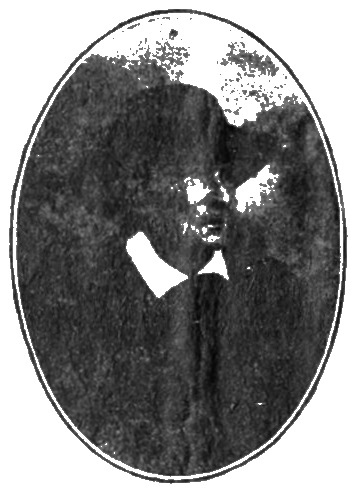
The Novelist of the Insects
J. HENRI FABRE
Author of “The Life of the Fly”, “The Life of the Caterpillar”.
The Latest Translation from Fabre’s Works by Teixeira is now out
THE LIFE OF THE GRASSHOPPER
You may think you care nothing about grasshoppers but Fabre’s story about the grasshopper reads like a romance.
Send for our little illustrated descriptive pamphlet on Fabre’s Life and Work, mentioning the Little Review
Dodd, Mead & Co., 4th Ave. & 30th St., N. Y.
The Greenwich Village Theatre
now in course of construction will open in September. Situated at the junction of Fourth Street and Seventh Avenue—it will have a seating capacity of 450 and a stage complete with modern equipment. The theatre is easily accessible. The new Seventh Avenue Subway near completion, has a station practically at its doors, while the Sixth Avenue L and the Fifth Avenue busses are only two blocks away. Books now open for subscribers. Full particulars from offices, 1 Sheridan Sq., N. Y. C.
ARNOLD GENTHE
PHOTOGRAPHER
STUDIO 1 WEST 46th STREET THORLEY BLDG. Fifth Ave & 46th Street
TELEPHONE, BRYANT 2388
Wanted
Will any one who has a fairly good violin for which he has no further use please give it to us? We want to give it in turn to an old man who is lonely.
LIPPINCOTT BOOKS
1792 1917

FOR SALE AT ALL BOOKSTORES
J. B. Lippincott Company Montreal PHILADELPHIA London
Joseph Pennell’s Pictures of War Work in England
With an Introduction. By H. G. Wells. 51 plates. Lithograph on cover.
$1.50 net.
Mr. Pennell secured permission through Lloyd George to make these remarkable pictures of War Work in England, the making of great guns, of shot and shell, the building of air crafts and war vessels. Mr. Pennell’s drawings leave an impression of a nation’s grandeur more vivid even than the pictures of armies and navies in actual combat.
Some Russian Heroes, Saints and Sinners
By Sonia E. Howe, Author of “A Thousand Years of Russian History.” 44 illustrations.
$2.50 net.
These stories are fascinating studies of Russia and present the intensely human side of a great people. They give one an understanding of Russian national life and character which is far more vivid than any historical work could possibly be.
Leading Books of the Spring Season
THE CHOSEN PEOPLE, by Sidney L. Nyburg. One of the outstanding novels of the season. Selected by H. W. BOYNTON, in N. Y. NATION, March 22nd.
OH, MARY, BE CAREFUL, by George Weston. Establishes a record. Moving picture and dramatic rights sold within a month after publication.
THE MARK OF CAIN, by Carolyn Wells, author of the Fleming Stone detective stories.
THE BOOK OF THE PEONY, by Mrs. Edward Harding. The only work on this flower.
JOSEPH PENNELL’S PICTURES OF WAR WORK IN ENGLAND. 51 plates.
(See Description Below)
Sidney L. Nyburg is marked as a brilliant novelist. He writes with a pen unthwarted by false notions, but alive with sincerity and genuine artistic impulse.
$1.40 net.
The Chosen People
THREE PRINTINGS
NEW YORK TIMES:—“A brilliant piece of work.... A story of distinction.”
NEW YORK TRIBUNE:—“The author has an almost uncanny gift of piercing to the marrow of human motives.”
NEW YORK WORLD:—“Mr. Nyburg has written living, stirring chapters.”
BOSTON TRANSCRIPT:—“Of exceptional quality. It brings to life a little studied aspect of our civilization.”
BALTIMORE EVENING SUN:—“The interest is unflagging from beginning to end.”
SOME IMAGIST POETS 1917
including RICHARD ALDINGTON “H. D.” JOHN GOULD FLETCHER F. S. FLINT D. H. LAWRENCE AMY LOWELL
“Imagist poetry fills us with hope.... Old forms of verse are filled with ghosts.... The Imagist can, with his very form, purge himself from these.... So he can be more interesting than other poets.”—London Times.
Now ready, in binding uniform with the previous Imagist anthologists. 75c net at all bookstores.
OTHER IMAGIST ANTHOLOGIES SOME IMAGIST POETS—3rd Edition—75c net SOME IMAGIST POETS, 1916—2nd Edition—75c net
4 Park Street · Houghton Mifflin · Company Boston
Mason & Hamlin
The Stradivarius of Pianos
Mason & Hamlin Co.
313 5th Avenue New York
I, MARY MacLANE
A DIARY OF HUMAN DAYS
By MARY MacLANE
“So I write this book of Me—my Soul, my Heart, my sentient Body, my magic Mind: their potentialities and contradictions.”
Here is a curtain drawn aside—disclosing a soul essentially rare and unusual, dwelling apart. Its attributes are lyric beauty; chaotic disregard of the conventionalities; passionate humanness; and a sense of humor which is elusive, creative, delicate.
The frankest and most startling personal record of a woman’s life that has come up in generations. This book is an adventure of the spirit cast in heroic dimensions—an epic of struggle and victory, heights and depths, which will hold the reader spellbound.
Gertrude Atherton says:
“Mary MacLane’s book is as great a piece of literature as I felt sure it would be, absorbingly interesting, and so original that no one else in the world could have written it.”
Cloth, 12mo, net $1.40
IN THE WILDERNESS
By ROBERT HICHENS Author of “The Garden of Allah” etc.
“Mr. Hichens’ wonderful descriptive talent which took the world by storm when displayed in “The Garden of Allah” once more works its spell upon the reader.... By far the best-constructed story the author has yet produced, worked out with the consummate skill of a true artist.”—Philadelphia Ledger.
Cloth, 12mo, net $1.50
CHILDREN OF FATE
By MARICE RUTLEDGE
For thinkers on both sides of the peace question—A war novel that is different.
“If races are to evolve into a higher state it must be through finer, cleverer methods than war. War is a stupid return for education.... Internationalism is a remedy.”
Cloth, 12mo, net $1.35
Publishers · FREDERICK A. STOKES COMPANY · New York
GRAPHID PRESS, NEW YORK
Advertisements were collected at the end of the text.
The table of contents on the title page was adjusted in order to reflect correctly the headings in this issue of The Little Review.
The original spelling was mostly preserved. A few obvious typographical errors were silently corrected. All other changes are shown here (before/after):
... am dynamic but devastated, laid waste in spirit. ... ... I am dynamic but devastated, laid waste in spirit. ...
... Isadore Duncan’s Misfortune ... ... Isadora Duncan’s Misfortune ...
... Isadora Duncan ran jumped and skipped and stamped and swooned ... ... Isadora Duncan ran and jumped and skipped and stamped and swooned ...
... peasants.... It would be lovely to to sleep ... ... peasants.... It would be lovely to sleep ...
... Helen Hoylt mentioned the following: ... ... Helen Hoyt mentioned the following: ...