Chapter VI · VACATIONS, ATHLETICS, SCOUTING, CAMPING, PHOTOGRAPHY
Reading edition
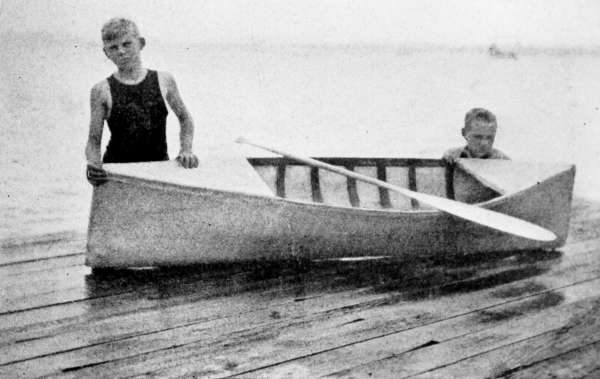
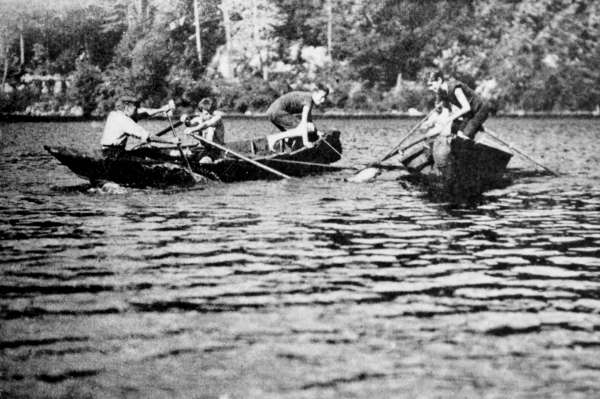
Every Child, and especially the Boy, Needs Active Outdoor Exercise. This kind has much to recommend it
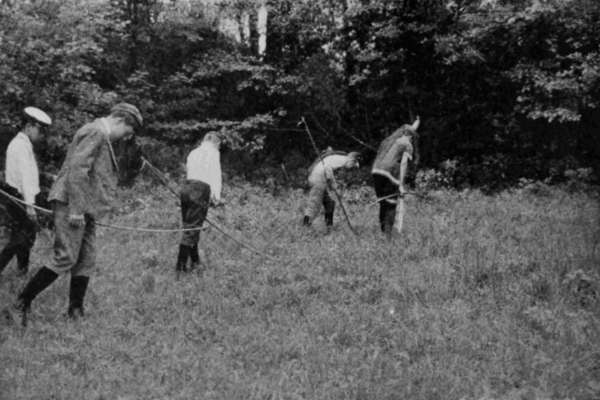
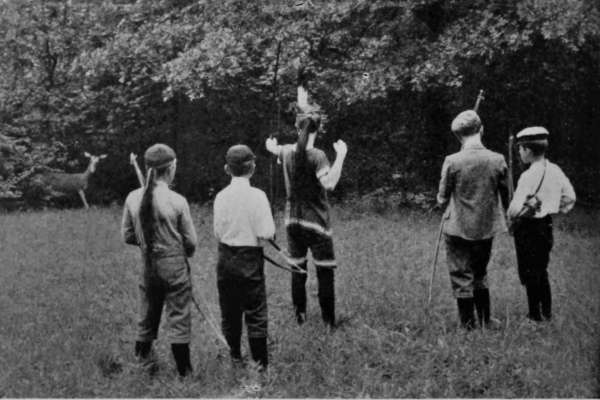
Organized Play (Woodcraft) under Ernest Thompson Seton
The boy of to-day is at a real disadvantage in his struggle for health and happiness. He is always a primitive at heart, surging in the direction of direct physical expression, showing almost on the surface the simplicity of savage instincts, to live close to the earth, be outdoors, perform feats of strength and skill, hunt, fish, camp and play at doing the essential acts of life. Through succeeding generations society has perfected a veneer of convention which glosses over the crudities of childish abandon, and as they (children) grow, the polish becomes thicker and more lasting, even so as to make the individual a "ready-to-wear" being. But at intervals, even in adults, one finds the periodic plunge into camp and field. That vacations do not always supply the benefit which doctors would, but cannot, is rather the fault of brevity than of the outings themselves. Boys can, as a rule, enjoy vacations without responsibilities, they can have ample scope for the close acquaintanceship with the simplicities of outdoor living. One of the first true signs of summer is the tents and crude shelters in backyards of our suburban villages. It is the nearest approach to a normal, sane existence the child can make. No proper child omits to play "Indian" or "hunter" in his early years, and no youth ever quite outgrows the keen pleasure of sleeping in the open, companioned by the sighing of the night. One recent experience of the writer, camping among the giant redwoods of California, where one could before going to sleep have a last look at the stars framed by the wondrous trees, and drift to unconsciousness to water music in the gorge way down below, was a time never to be forgotten. It is such experiences as these in the open which both keep and restore one's mental balance; they breed cheerfulness and optimism, develop friendships. And the boy is not so very particular about the place, provided there is water and woods, some companions, and things to do. He loves to swim and should learn. He wants to be of some account and have a part in the camp, learn how to make camp, protect things, prepare for weather, engineer the routine of camp life. Probably no institution outside formal educational institutions is likely to have more vital influence on boys of the future than the Boy Scouts, already mentioned, a marvelous scheme to organize this play spirit. It takes hold of the most primitive instincts in child life, develops them to the highest pitch of efficiency, and turns the enormous energy generated thereby into useful channels by the simplest of devices—service. But be it noted, service for which the need is perfectly plain. The boy gets the finest of physical training imaginable and readily cultivates moral virtues which have been the despair of teachers and parents.
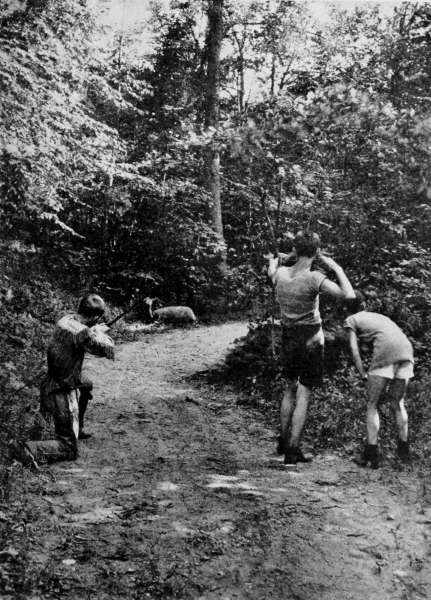
More Woodcraft. Has the Boy had a Chance at this kind of Experience?
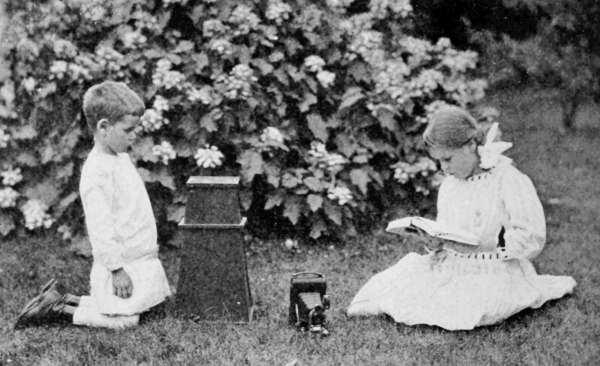
Even the Technical Processes of Photography have been Reduced to Popular Terms
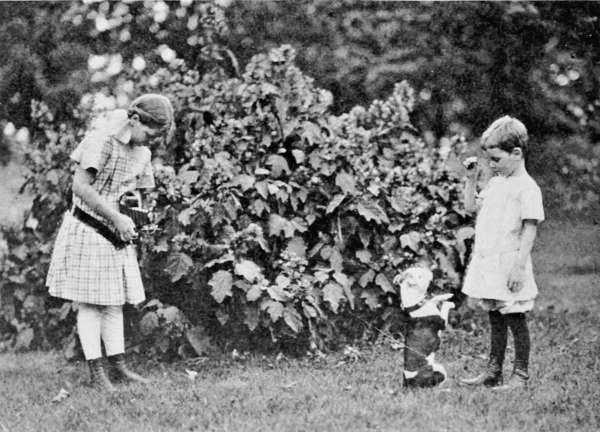
In These Days Photography has become so Simplified that every Child can Use a Camera to Advantage
In general, the vacation cannot be more profitably spent elsewhere than outdoors. If a boy cannot actually go into the woods, away from home and the restrictions which modern living must of necessity impose, then the next best thing is pastime or amusement which requires outdoors for a setting. There is much to be said for each and every one of the sports common at the present time, baseball, tennis, football, golf, boating, riding—they are all good—and every healthy child will take part in one or more. Now a book about sport can never teach a boy or girl how to become skilful; it cannot explain the mystery of the golf stroke or pitched curve, but it can and does awaken the spirit of trial and test. It suggests that there is possibly a right way to do things; to play even, if one would succeed. The book may tell of the necessity for team work and organization, for system and regular living, and observance of rules made by others. In other words, the book acts through suggestion, very seldom directly; and for the same reason that one gives children books on mechanics, sewing, pets and gardening, that they may learn of the dignity and worth of these occupations, so also does one recommend books of sport and games, which surely are the more valuable when taken in all seriousness. It is through their games, involving dependence upon the confidence in others, that children acquire the best traits of character.
Aside from the inherent return in physical well-being derived from amusement in the open air—one can use this kind of medicine twelve months in the year—such pastime possesses a second quality of no mean importance; it brings one, ofttimes unconsciously, into communication or hailing distance at least of that nature which is so charming. It is easy to see the beauties of birds and flowers and skies, in camp; and the dynamic loveliness of crisp fall weather, even in a great city, is evidenced out of doors by the animation of passersby. But one cannot read about the beauties of beneficent nature; one must enjoy them personally, and is led on to do so through those pastimes which take place in the open. Several of these have been mentioned, and there is one other: photography.
Photography has almost ceased to be a science; it is a habit. One goes to the store, invests in a comfortably small parcel and a book of instructions which says "press here," and that is about all. The fine succeeding details are minor matters. Whether one merely "presses the button" or goes the whole road and really makes the picture, photography has come to be a regular accessory to sport and enjoyment. No doubt it is evidence of human vanity, but it takes so mild a form and is the source of so much pleasure that the world needs it, to preserve the thousand and one scenes and incidents which comprise the background of life.