Mignonette.... Your Qualities surpass your Charms.
Reading edition
The Mignonette was introduced into Europe from Egypt, in 1750. It flowers from the beginning of spring until the end of autumn. Linnæus, who gave it the name of Reseda odorata, compares its perfume with that of ambrosia.
No gorgeous flowers the meek Reseda grace, Yet sip, with eager trunk, yon busy race Her simple cup, nor heed the dazzling gem That beams in Fritillaria’s diadem. Evans.
I see her now within my view,— A spirit, yet a woman too!— Her household motions light and free, And steps of virgin liberty; A countenance in which do meet Sweet records, promises as sweet; A creature not too bright or good For human nature’s daily food. Wordsworth.
Time has small power O’er features the mind moulds. Roses where They once have bloomed a fragrance leave behind; And harmony will linger on the wind; And suns continue to light up the air,
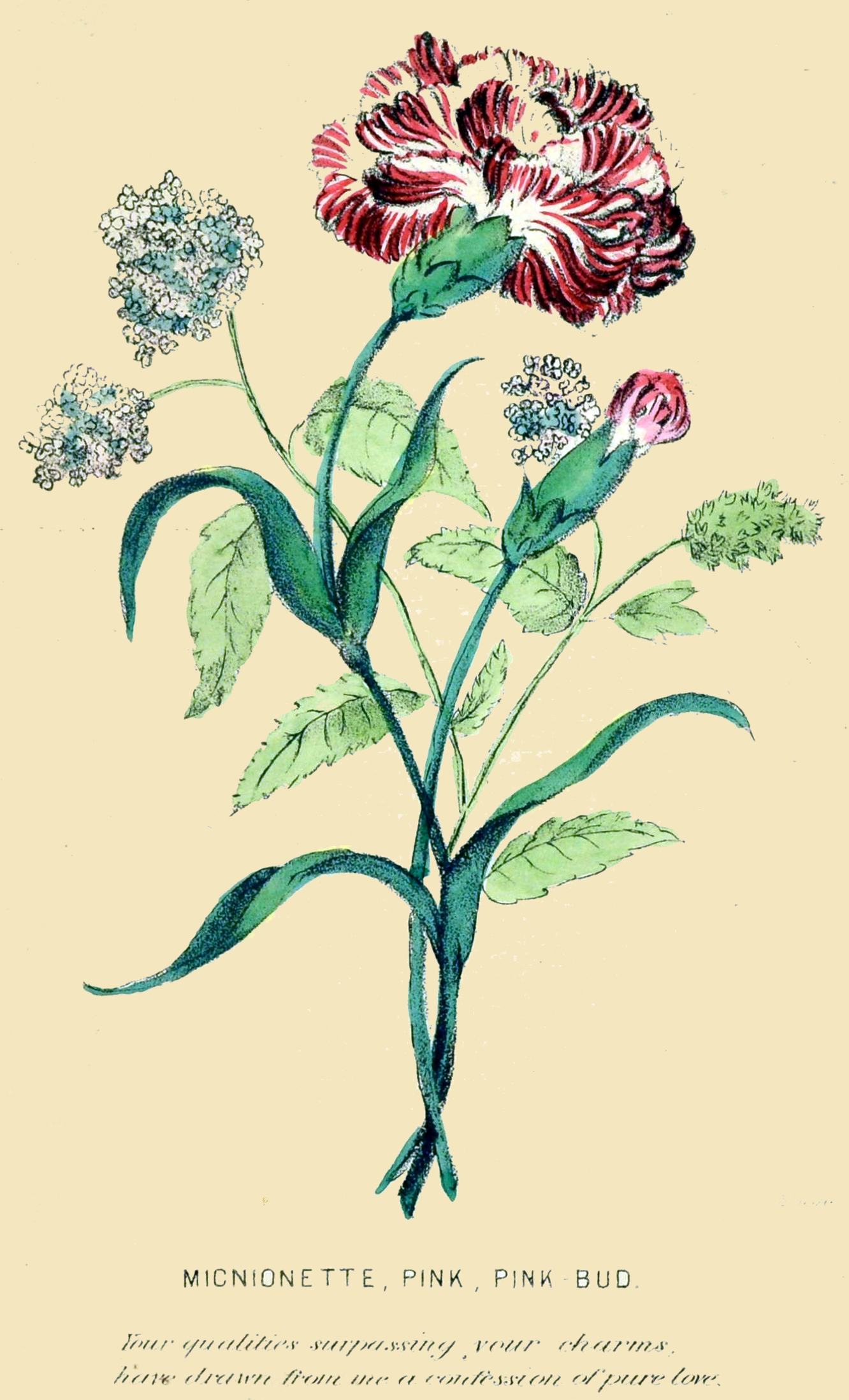
MIGNIONETTE, PINK, PINK BUD. Your qualities surpassing your charms, have drawn from me a confession of pure love.
When set; and music from the broken shrine Breathes, it is said, around whose altar-stone His flower the votary has ceased to twine:—Types of the beauty that, when youth is gone, Breathes from the soul whose brightness mocks decline. George Hill.
Rudely thou wrongest my deare heart’s desire, In finding fault with her too portly pride; The thing which I do most in her admire, Is of the world unworthy most envied. For in those lofty looks is close implied Scorn of base things,—disdain of foul dishonour, Threatening rash eyes which gaze on her so wide That loosely they ne dare to look upon her! Spenser.