ADMIRATION with ASTONISHMENT.
Reading edition
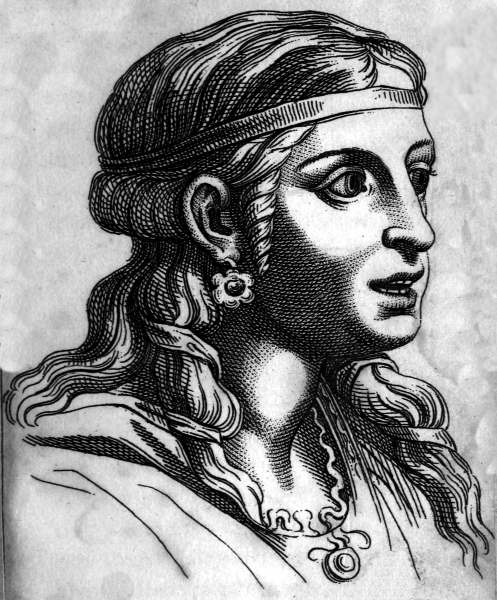
“You may observe, that the motions which accompany this passion are more lively and stronger marked, the eyebrows more elevated, the eyes more open, the eyeball further from the lower eyelid, and more steadily fixed; the mouth is more open; and all the parts in a much stronger emotion; but, lest you should be too much inclined to stare and gape, I will tell you a story of two schoolfellows, which is
The History of Bill Vacant and Henry Hawk’s-eye.
“Bill Vacant and Henry Hawk’s-eye were schoolfellows of much about the same age. Henry Hawk’s-eye was a clever, intelligent boy, who was always seeking after knowledge, and taking great pains to acquire it. When he saw any thing new or curious, he was not contented with wishing that he knew what it was, but he always set to work seriously to find out every thing about it; and if it was a piece of mechanism, how it was made. Bill Vacant, on the other hand, always looked as if he was very deeply engaged in thought, when the truth was, that he was not; all the time, thinking of any thing at all. Bill Vacant was always wondering; he would wonder two or three times a-day what a clock it was?—what he should have for dinner?—whether it would be fine on the morrow?—whether he should go to see his grandmother at Christmas? or something equally uninteresting. If he saw any curious piece of workmanship, he would wonder how it was made, but would be satisfied with wondering; his mouth therefore was always wide open with Astonishment, but was never filled with instruction, which he would not be at the pains to gather: his was not ‘The fond attentive gaze of young Astonishment,’ mentioned by the poet Akenside, who wrote a charming book, which you must read some day, called ‘The Pleasures of the Imagination.’ Bill Vacant was always gazing, it is true, but to very little purpose; he was not only ignorant, but likely to continue so all his life; and so it turned out; for Henry Hawk’s-eye having reflected that his father was not rich, and that he would have to get his own living in the world, bent his thoughts towards a profession, and fixed upon the law. Henry was presently a student in the Temple, and paid so much attention to his studies, that he very soon became much resorted to to draw pleadings; and it was not many years before he made a handsome fortune. Bill Vacant, whose friends also had nothing to give him, was all this time wondering what would be the best line that he could embark in; but as he was ignorant of every thing, he found it so difficult to determine, that day succeeded day in slothful idleness. One instant he would commence merchant; the next he would go to sea; then he would volunteer his services in the army; in either of which lines, if he had had perseverance, he might have in a measure succeeded. The truth was, that poor Bill Vacant was always wondering what would be the best for him, when, in fact, he had better have taken up any thing than have wondered any longer about it. However, unhappily for him, he continued wondering all his life; and when he was old and poor, all that he had to wonder at was, that other people had succeeded in the world so much better than himself.
“Such,” my dear children, “is the difference between Admiration, and that void of thought which occasions us to wonder without a desire of improvement. Never, therefore, lose your time in wondering; but the instant you are at a loss to know any thing, inquire and study till you find it out, and master it. You may sometimes be led wrong, notwithstanding all your care; but do not grieve although you may; for a steady sure friend, called Experience, will step in to make you full amends.”
There was now an interval between the entertainments Mr. Willock had promised his children, for tea and coffee were brought in, with fruit; when, after taking each a cup of tea, and some strawberries, the young people retired to rest, highly gratified with the entertainment of the evening.
The Party to Weymouth.
The next day presented a fine clear sky, and the young people were told to get themselves in readiness to go in the barouche to Weymouth; but Mrs. Willock being rather indisposed, was not of the party. There is not any thing more pleasant than the preparation in these cases; all was bustle and expectation. They were to go on board a ship—what a delightful excursion!
At length the time arrived—they were at Weymouth—they saw the ships at anchor—nay more, they saw the king and royal party going on board the yacht. The ships were manned; the water was as smooth as milk. Mr. Willock had taken care to carry with him, for the amusement of the young people, the Passions of Le Brun, which he took out of his pocket as they were going on board the Rainbow, in the captain’s barge, that had been sent for them.
Henry was delighted—“Only, sir,” said he to his father, “look what a number of men in blue jackets and white trowsers are standing upon the sails!”—“Those people, my dear,” said he,“are our gallant defenders, our brave English tars; they do not stand, as you call it, on the sails, but on the yards, to which the sails are fastened, or bent.”—“Dear sir,” interrupted William, “what beautiful boat is that?”—“That, my dear boy,” said he,“is the barge in which is our dear sovereign, King George the Third. There he is!—do you not see him?—Here (said he, opening the book of Passions), look at this; this expresses the sentiment you ought to feel; it is