Volume 2 — JOURNAL OF ELIZABETH LADY HOLLAND (continued 4)
Reading edition
Ministers, especially Ld. Grenville, are extremely pleased with L.’s conduct, particularly in his note on the subject of passports, after he received the second note from General Clarke. A Council was held immediately, in which it was determined to recall Ld. Yarmouth, and Basilico was sent back in the evening with an order to that effect. The reason for this measure:—1st, d’Oubril’s account and Ld. Yarmouth’s of the conclusion of the Russian Treaty are in flat contradiction. D’Oubril has written to Stroganoff that he signed the article with Ld. Yarmouth’s knowledge and approbation. 2ndly, Ld. Yarmouth seems to have spent some weeks at Talleyrand’s country house last autumn, tho’ he gave Ministry to understand that he was hardly acquainted with him. 3rdly, Ly. Yarmouth is very much connected with Monteron,[231] an agent of Talleyrand’s, and employed in his office.
Favourable accounts of the disposition of the new Russian Governt. towards this country; Stroganoff has received letters to that effect from the new Prime Minister, Budberg,[232] in which he expresses very strongly Alexander’s high opinion as well as his confidence in Mr. Fox. Stroganoff thinks Russia will not ratify d’Oubril’s preliminaries.
Ld. Granville Leveson arrived this day from Petersburg, dined here, and is looking handsomer than ever. I have not seen him these four years.[233]
American Commissioners very amicable; disposed to settle the differences, and to conclude a Treaty of Commerce between the two countries.
20th.—Ld. Howick dissatisfied with Sr. J. Borlase Warren, who lost three days after he got orders to sail, and wasted three more at Madeira, instead of going straight to ye W. Indies, by which Jerome may escape.[234] Alderman Prinsep did not know how to open the Stock Exchange.
Alas! Mr. Fox begins to fill again; they talk of another operation in three weeks.
Lauderdale is abused at Paris, and represented as having deserted Fox. Goldsmid is supposed to be Ld. Yarmouth’s agent in the Stock Exchange, and to have transacted business for him to a great amount. Narbonne was admonished not to visit L. so frequently, Fouché sent for him to that purpose. Emperor gone to hunt, his Ministers rejoice at his absence whilst in so violent a mood; they call him bête féroce.
FOX’S HEALTH
Second operation performed on Sunday. Bore the operation extremely well; less water taken from him than on the former occasion, but he was more completely emptied. Some pints of water which had remained in ye abdomen were drawn off; fell soon after into a state of languor and depression, but the physicians flattered themselves he had gained strength in the interval between the operations, and that he would soon be able to bear the course of medicines which they judged necessary for his recovery, and in this hope they remained until Monday, the 7th September. Water had, in this interval, flowed repeatedly from the wound in the abdomen, and the quantity of urine discharged had augmented. They said there was a greater assemblage of favourable symptoms than had appeared since they had been called in.
Sunday, ye 6th September, Vaughan thought that he felt some hardness in the region of the liver, which made him speak much more doubtingly to Ld. H. about Mr. Fox’s recovery than he had done the day before. On Monday as he was led about the rooms at Chiswick[235] to look at the pictures, a gush of water burst from the wound, which had been closed for some hours; he fell into a state of alarming weakness, and continued so the whole of that and the succeeding day. A catch in his breathing. We were sent for, and reached Chiswick by two, and found him in this deplorable state. He was low, and never spoke willingly, but every now and then got up in consequence of some irritation in his bowels. He swallowed nothing but brandy, usquebaugh, and other strong cordials; his senses and understanding never left him, tho’ he spoke very little till Wednesday, when he reminded Ld. H. of a promise made to him in Stable Yard, of telling him when he was in danger. It was a painful duty, but he fulfilled it, and told him what the physicians thought. He thanked him with his usual tenderness.
On Wednesday, about 4, he began to revive, and during the night, whilst Ld. H. was sitting up with him, carried on a conversation in French, that his servant, who was present, might not understand it, as it regarded Mrs. Fox, &c. He had a few hours rest, and continued to get better. In the course of the morning he was wheeled into an adjoining room, and put on his spectacles to look at a caricature which Ld. L. had sent from Paris. I went into the room, kissed his hand, and he spoke kindly to me. During this amendment, he told Ld. H. he had never been in such danger as the physicians had apprehended. He had said on Tuesday night to Vaughan, ‘I have had a sad struggle for it, do you think it will do?’
FOX’S DEATH
On Friday morning he became languid without any apparent cause, and continued afterwards to sink without any interruption. His senses were good, but he used the wrong word to express his meaning, and seemed hurt that he could not find the right one. On Saturday death was fast approaching; his pulse became every moment feebler, but still regular, his breathing was deep, his strength gradually failing. Mrs. Fox sat upon the bed, holding his hand; he looked upon her with that sweet smile so expressive of all the benevolence and goodness of his heart. He articulated distinctly, ‘I die happy’; his last words were, ‘Bless you, I pity you.’ He died without a struggle or groan at ¼ before 6 o’clock, on Saturday, the 13th September, 1806.
The scene of unaffected grief was awful; every room contained a friend who shed unfeigned bitter tears. Ld. Fitzwilliam was so overcome that, for some time, it was feared he would follow the fate of his beloved friend. Ld. Holland and General Fitzpatrick immediately went to Mrs. Fox. A sad scene ensued. She wished the whole family should remain as long as the body continued at Chiswick; accordingly ourselves and the General continued until — September. His body was examined by Mr. Cline. Ld. Howick was at Chiswick, and sent off a messenger to Windsor. The first account of Mr. Fox’s danger was communicated to Ld. Grenville by Petty, on Monday night, the 8th Sept., and he was very much affected on receiving the intelligence, which was quite unexpected. When informed of his death by Ld. Howick, he inquired what was proposed for his funeral, and when told that Ld. Holland had given orders that he should be buried in the family vault at Foxley,[236] he expressed his disappointment, and asked Ld. Howick what he thought fit. Finding they were of the same opinion, he offered to recommend to the King that a public funeral should be ordered. However, the private and political friends thought it more consistent with the simplicity and dignity of his character that he should be attended to the grave by his friends, public and private, without the interference of Governt., and an application signed by many of the friends was addressed to Lord H., begging that he might be interred in W. Abbey, and attended by his friends.[237]
The answer of the King to Ld. Howick’s notification of Mr. Fox’s death was in the coldest possible style, and did not express even sorrow for the event. When Ld. Grenville told him that he had given the Seals to Ld. Spencer, he approved of it, and added that there was no hurry about disposing of them, and recommended Ld. Grenville to take his time (considered as an intimation to take in the Pitts). He received Ld. Howick very coldly, and made the inquiries about Mrs. Fox from ye other Ministers.
A communication from Ld. Grenville through Ld. Howick to General Fitzpatrick to take Ld. H. into the Cabinet. Ld. Howick acknowledged Ld. Holland was the fittest to succeed in the Foreign Department, but that he could not undertake to lead in the H. of Commons if he remained at the Admiralty, the fatigue being too great. T. Grenville grumbled at the Admiralty, as the public looked to Ld. Spencer if a change were necessary, besides disliking the duties of the office.[238] Ld. Grenville wanted Tom to lead the H. of Commons; and there was a proposal of his being made Secretary for ye Home Department, and Windham kicked upstairs by a peerage, in order that he might, when Ld. Howick goes to the Lords, be considered as the head—impracticable from T. Grenville’s coldness of character, and, I think, want of the right stuff in his head.
CABINET CHANGES
The strongest reason which the Grenvilles have for proposing the Whigs to the Opposition in forming a new Administration, is that they can depend upon them in case of a quarrel with the King, which they could not on such men as Hawkesbury and Castlereagh. They are out of humour with Windham. On ye 19th September they proposed the peerage, and hoped he might bite at it, to escape from the Norfolk election, which will be strongly contested. Peace perhaps might be easier with Whigs, but tho’ Ld. Grenville is strenuous for peace, there seems to be very little hopes of attaining it at present.
Prussia has offered to go to war with France, and, with the concurrence of Russia, to guarantee Hanover to the King of England. Ld. Howick is very warlike. Whitbread has been absurdly extravagant in his views and demands; talks of the Cabinet!
Ld. Holland has agreed to accept the Privy Seal, with a full understanding, however, with Ld. Howick, that his views are directed to the Foreign Office, and that he only accepts this insignificant charge to serve the party, and satisfy that part of his uncle’s party who might suspect the Grenvilles, were he overlooked.[239] All this was subject to the approbation of the Prince of Wales and his uncle’s friends. He stipulated that in case of peace, he might resign in favour of Lauderdale, and go, if he chose, to Paris. Ld. Grenville agreed to his changing Privy Seal for Paris, and that Lauderdale might come in; not otherwise, as retiring from office would be injurious to the Governt.
An affectionate letter to Ld. H. from the Prince, expressing his wish that Ld. H. might be successor to his uncle in the Seals.
20th.—A letter of Murat to the King of Prussia, addressing him by the style of ‘Mon Frère,’ is said to have been the origin of these movements of the Prussians against France.[240] Another is that Lucchesini has discovered, and communicated to his Court, Bonaparte’s scheme of annexing the Prussian States in Westphalia to Murat’s dominions. Some think Lucchesini is capable of having made this communication on the suggestion of Bonaparte, who would be glad of a pretext to reduce the Prussian power. The Prussians and Saxons are 240,000 ready to take the field. The French 220,000 to oppose them. Prince Louis,[241] son of Prince Ferdinand of Prussia, is the person who has the most hostility against France, and who is eager for military renown. Austria is determined to remain neutral.
Windham peremptorily refused the peerage. When he talked to Petty of the proposal, he mentioned it as being whimsical, that, as the great distress was the want of talent in the H. of Commons, they should therefore move their best speaker into the House of Lords.[242] Ld. Howick is now desirous of retaining the Admiralty; he is satisfied of the impolicy of giving up such a mine of patronage, and has, in idea, been long enough in possession of the Foreign Office to be weary of it, but unluckily it is too late. The Foxites have not one office which has patronage annexed to it.
THE NEW CABINET
The plan is finally fixed:—Mr. Grenville, Admiralty; Ld. Howick, F. Department; Ld. H., Privy Seal; Ld. Sidmouth, P. of the Council; Ld. Fitzwm., Seat in Cabinet, without office; Tierney, Board of Control. Ld. Howick had a thousand freaks, for they were too wild to be called plans, the burthen of which was that if he could not do things his own way, he would go out. He assured Ld. Holland through the General, and to himself also, that he considered himself merely as locum tenens during the period of his being in the H. of Commons, and that his being in the office ought not to be considered as an obstacle to Ld. H.’s views, he knowing also what Mr. Fox’s intentions had been upon that subject. In short, as far as professions and assurances can go, we must feel satisfied that he will make the offer when he is removed to the H. of Lords. The General says, ‘I have no doubt he is sincere now, but when the impression of Fox’s loss wears away, perhaps his intentions may change.’
22nd.—Messenger from Lauderdale. He has had a severe bilious attack, caused, D. Stewart thinks, a good deal by the sad tidings from England. Talleyrand full of overstrained civility. England, he said, had a right to dictate her own terms, she being in a most commanding station. France has only to be careful not to concede too much. They want to have back Surinam and Demerara. L. has demanded Cuba in exchange. Capture of Buenos Ayres produced little sensation at Paris.[243] Emperor left Paris. Ld. Morpeth is to go to Berlin immediately.[244]
25th.—In consequence of Ld. M.’s declining to go on acct. of the shortness of notice, Ld. Henry Petty having expressed some desire to go, Ld. Howick gladly caught at it, and it was mentioned to the King. Upon Ld. Holland hearing of it, he did his utmost, both in conversation and by letter, to dissuade Petty, who was so much shook by Ld. H.’s arguments that he was as eager to seek a pretext to avoid going as he had been before to get one to go, and he availed himself of some difficulties about putting the Seals into commission. Ld. Carlisle wished Morpeth to go, and accordingly he has agreed, and very kindly is to take B. Frere[245] with him, whom he will leave, in case he comes away, as Chargé d’Affaires, which will be getting B. F. employment, and perhaps a grade hereafter.
Lds. Grenville and Howick wrote to the Prince after Mr. Fox’s death. His answer to Lord Howick was that he wished for no change but that Ld. Holland should have his uncle’s Seals. But, being in the meantime informed of the arrangements agreed upon, he wrote to Ld. G. that his political interest was buried in the grave with Mr. Fox, but that, as it was probable he might at some future time be again forced to public matters, he thought it proper to say that he was ready to give his support to the present Administration, on acct. of the friends he had in it, and that he should always look to ye friends of Mr. Fox, and particularly to Ld. H., as his own political friends.
LORD HOLLAND’S POST
The Duke of Bedford in writing, and the D. of Norfolk in conversation, have also expressed to Ld. H. that they look upon him as his uncle’s representative in the Whig Party. Ld. H. stipulated, as it was his uncle’s wish, that the first blue ribbon was to be given to the D. of Norfolk. Agreed to.
Ld. Holland strenuously against sending any person to Prussia, but to allow whatever business there may be to be transacted by the Minister, Jacobi,[246] who is at Hambro’ [sic] on the part of Prussia, and by Mr. Thornton on our part, our Minister at Hambro’.
On the 10th October, the funeral of Mr. Fox. He was accompanied to the grave by his old friends, public and private, and by the Ministers. I was present in a gallery erected for me in the Abbey over the grave.
12th December, 1806.[247]—The fragment of the Prussian army may amount altogether to about 50,000 men. Old Kalkreuth, who made his escape after the Battle of Auerstadt, is in Dantzic with 12,000. The King is not at Petersburg, but whenever he is, his councils are directed by Haugwitz more than ever, which makes him perfectly nugatory.
The Russian Proclamation, which declares the necessity of Wallachia and Moldavia being occupied by their troops,[248] has excited alarm and distrust in the Austrian Cabinet. Those Courts are wrangling about punctilios, just as if Bonaparte were not alive. The Austrians want to coalesce with Russia, but they are afraid and undecided; however, Pozzo di Borgo, who is in the Russian Military Service, is despatched to Vienna to see whether he can bring about any co-operation. Little can be expected even if he does, Bonaparte has so completely secured his rear and kept a communication with France by means of menacing and cajoling, that all attempts against him are idle.
KING OF SWEDEN
The King of Sweden, tho’ very wrong-headed, and ill-gifted with that rare commodity common sense, has some notion of honour and high sense of it. Bernadotte, either at Altona or Hamburg, made some overtures to the Swedish Minister, saying that Bonaparte had always considered the King of Sweden as the only high-spirited Monarch; talked of the old alliance between France and Sweden, and threw out hints of Bonaparte’s willingness to give him Norway. The only notice the K. of Sweden bestowed upon this was a severe reproof and recall of his Minister for listening to any proposals from the French, and giving instructions to have the whole proceeding laid before the Danish Government, in order to show them the perfidy of the French, who were soliciting their friendship.[249] Our Government intend to augment his subsidy, and hold out a prospect hereafter of giving him ships to assist in the conquest of an island, Martinique or Guadalupe. The Danes are terrified, and will yield Holstein if the French should be peremptory; not, it is to be hoped, with impunity on our part.
The Opposition are full of jokes against Tierney; they say the dissolution was entirely his scheme, that by its suddenness they might be taken by surprise and unprepared, but that it appeared that he himself was the least prepared, and the most surprised. He lost the Borough.[250]
An abundance of speculators have gone with English goods to Buenos Ayres, enough to make a glut in the market, and merchants have sent over, it is said, to buy English goods, as they will be quite a drug there. Auchmuty[251] is gone with considerable reinforcements thither.
General Craufurd’s[252] expedition is to land at Val Paraiso in the South Sea; it was delayed so long that the passage by Cape Horn would be impracticable, therefore they must go round the Cape, a voyage of eight months. This expedition was delayed on account of the negotiation. Peace was once expected, but even then it was a mistaken policy, in my humble opinion, as Bonaparte is an enemy who will respect you more, if you will not only show your teeth but bite with them too.
The Government of the United States has detected the conspiracy which has long been gathering to break off the Northern from the Southern States, and so to make the Allegany Mountains the boundary. Mr. Burr,[253] who killed General Hamilton, is the head of it, and orders have been given to arrest him. General Wilkinson with the army is in the South and declared for Burr.
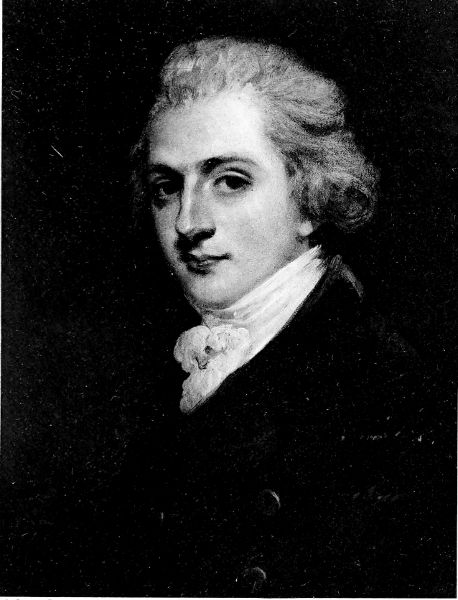
J. Hoppner Pinscit, 1798
Emery Walker Ph.sc.
John, Viscount Boringdon
(afterwards Earl of Morley)
BURR’S CONSPIRACY
Burr laid the whole plot open to our Minister, and asked the assistance of England; Merry transmitted the communication to Ld. Mulgrave,[254] who, as usual, returned no answer.
Ld. Grenville calls the American a Mob Government, and one too weak to carry its own measures into effect.
The Scotch Peers elections have gone well; Ld. Melville was cruelly disappointed, he expected to carry four, and only carried Ld. Aberdeen. Kinnaird behaved imprudently and foolishly; however, Ld. Lauderdale’s dexterity and activity carried him through. Till the very moment before the election, Lord Melville reckoned upon carrying four.
Deliberations in the Cabinet upon an attack on Mexico; Ld. Grenville sent to Ld. H. Sr. Arthur Wellesley’s plan.[255] Sir Arthur Wellesley appears to have obtained all his information with respect to the accessible points for attacking S. America, New Spain, from a Mr. Frazier.
18th December.—Lauderdale entertains no doubt whatever that the note so very offensive in its language to him was written, and also that it was written by the Emperor himself; and, moreover, that the Ministers, to avoid a severe reprimand from him for having ventured to suppress it, have thus impudently ventured to publish it officially. The other speculation is that the order for the publication of the correspondence was sent from Berlin, and the clerks published all, brouillons included. This is the most probable.
The melancholy year of 1806 died with another loss: the D. of Richmond[256] died at Goodwood of suppressed gout and a liver complaint, discovered only after death.
News of the recapture of Buenos Ayres believed by the Government. It rests upon the declaration of a Portuguese Captain, who reached Lisbon in 43 days from Pernambuco; he says a Spanish schooner came in there dismasted, who was the bearer of dispatches to Old Spain, giving an account of the retaking of the town after a severe contest. It must be highly gratifying to Ld. Howick that he should have made his manly exposition of Sr. Home Popham’s improper conduct before this news, when the shabby people will be as ready to cry against the business, as they have been ready to praise it. An instance of the money-getting spirit of Sr. Home came to my knowledge lately. He wrote to the merchants at Manchester advising the exportation of certain goods, but to his own agent he bid him send him, upon speculation, a large quantity of silk stockings, with a hint that this order should not transpire. B. Frere assured me he was acquainted with the silk-stocking merchant who supplied the articles.
LORD ELDON AND THE KING
The business of the Princess,[257] which is now before the Cabinet, is highly perplexing, and from the answer given by the K. to the Minute of the Cabinet, there is good reason to suspect he has some secret advisers. The style is much too business-like, and shows too much knowledge of law to be his own. This suspicion is confirmed by the line of conduct taken in the H. of Lds.; it is quite distinct from Canning’s in the H. of Commons, as they did not move the Address. Ld. Eldon had for many years the management of the D. of Portland’s estates; in consequence of which, he had frequent access to him, and thereby acquired considerable influence over his mind. The King has appointed the D. of Portland his Master of his own private Monies. Thus upon pretence of his private affairs, the K. has a channel of communication with Ld. Eldon, which Ministers can in no way get at or interfere with.
There are avowed schisms amongst the Opposition; Canning is distinct from Perceval, and from Castlereagh. If the great man of all does meddle in the H. of Lds., those in the Commons are not entrusted with the secret of his benign influence.
A curious petition under the Treating Act against Messrs. Windham and Coke, curious because it is not brought by the rejected candidate, who, on the contrary, declares he is not privy to the petition. It is the result of female spleen and revenge, a retaliation upon Mr. Windham for an election trick played by his party against these incensed heroines, Mesdames Atkins and Berney.[258] They had induced some electors to come forward and petition under the Treating Act; the three candidates unwisely consented to treat, not suspecting mischief could ensue from any other quarter. Mrs. Atkins was a celebrated actress, formerly of the name of Walpole. Her coadjutor is as great a virago as herself. ‘La vengeance est douce à l’esprit d’une femme.’ Windham had a double return, so will sit for some rotten borough. Serjeant Lens, who is his counsel, rather despairs of making out a defensible case.
The expedition of General Craufurd, which was not to take Teneriffe on its way to the S. Sea because it would take too much time, is now loitering and beating off the Cape de Verd Islands for want of convoy, which convoy has not at this moment quitted England.
January 4th, 1807.—The American Treaty is at length signed; it must go to the U. States for ratification before it can be made public. The only point gained is the settling the ill-humour, and fixing the continuous voyage;[259] the seamen question is still unsettled.
DEBATE ON THE NEGOTIATION
6th January.—Last night upon the subject of the negotiation, Whitbread took the most hostile line against Government, arguments mingled with invective against their conduct from the beginning to the end of the negotiation. He applauded Ld. Yarmouth’s proceedings, censured the recalling him, as well as the motives assigned for it, and found fault with everything done by Lauderdale; concluding the whole in the most personal manner to Grey, by moving the same amendment that Grey himself had moved on the Address to the King when Ld. Whitworth’s papers were under consideration.[260] Ld. Yarmouth, conceiving himself to be the injured party, spoke with warmth against Ministers; Perceval, with bitterness and scurrility against Fox. This strange conduct of Whitbread’s will be productive of great mischief, and unfortunately Ld. Holland, from an apprehension of being overcome if he risked mentioning his uncle’s name in public, did not speak on the night of the debate in ye House of Lords. His silence and Whitbread’s garrulity will corroborate the French story of the Fox party being discontented with Lauderdale’s conduct. This, however, can and will be justified immediately by his speaking, with or without an opportunity.
During the debate L. sat next to the Prince, who seemed mightily to relish Ld. Yarmouth’s occasional raps at the Grenvilles, and shortly after opened very freely upon his dissatisfaction; told him to sound H. upon the subject of the Pss., in which he spoke as if he suspected he was given up, and to ascertain whether, if so, he, Ld. H., was prepared to go out upon it; deeply deplored the loss of Fox, who was a man, fair, open, and attached. L. collected, which combined with other circumstances that had come to his knowledge, that Ld. Moira is playing a deep game, by trying to draw a line in the Cabinet of Prince’s friends and Grenville’s. He has never recovered the double disappointment, first, of not being made First Lord of the Treasury and Patron of Scotland, and, secondly, of not being acknowledged the successor of Fox in the Whig party. That is to say, the Prince styles himself the head of the Whig party, in imitation of his uncle, the D. of Cumberland, who was so in 1764, forgetting how foolish that was, but how much more foolish it is in an Heir Apparent! However, with this idea thrust upon him by Ld. Moira, he is the more likely to concur with Moira’s views, who would content himself with being styled his assistant upon such an assumption.
Ld. Holland dined at the India House where Ld. Minto had been sworn in;[261] Ld. M.’s spirit excessively depressed. If annoyed at going, why seek the appointment by such means?
WHITBREAD’S SPEECH
7th January, 1807.—A universal groan, a spontaneous, unanimous feeling of disgust in the H. of Commons, when Perceval attacked the character of Fox. The tune of it was that all the kingdoms of Europe had sunk by treachery, bribery of their principal persons; that Talleyrand, the base, corrupt Prime Minister of France, had been the agent; yet this immaculate character was the attached friend of Mr. ——.[262] The House shuddered, and interrupted the pronouncing of the name. He animadverted upon the correspondence carried on between them. Whitbread’s speech made a considerable impression upon some of the most valuable men in the House, but was not conclusively reasoned; he having completely overlooked the necessity of keeping faithful to our allies, the Russians. Some think that the greatest mischief done by his speech was the drawing out some very warlike sentiments from Grey, who answered both injudiciously and inconsistently (with former declarations) with regard to the duration and principle of the war, which he stated with all the exaggerated declamation of a pupil of the Pitt school. This is a most unfortunate error, and is the more to be regretted, as the case upon ye papers was so strong, and might have been defended upon the true principles of Mr. Fox’s pacific policy.
Roscoe[263] spoke yesterday for his maiden speech on the Thetford Petition: Windham says his manner is dull, coarse, and provincial. I do not think his talents are such as will enable him to add to his reputation by his public speaking.
February 8th.—Serjeant Lens called to give me an acct. of the state of Norfolk Committee. Windham is in great agitation, even beyond what such a circumstance ought to excite. His imprudence has been quite incredible; however, nothing decisive has yet appeared against him. There were two of his indiscreet letters afloat; one has been rescued, but the other is still in the hands of the enemy—the one of the most mischievous purport unluckily. Each letter was a threatening to dismiss the persons, to whom they were addressed, from their employments, if they did not vote, and in the one in the field Ld. Grenville’s name is used.
Prince came and stayed a considerable time. He is looking less ill than he did a month ago. Ld. H. advised him to do nothing about the Pss., telling him in as civil terms as he could that his unpopularity in the country was so great, that any publication of proceedings on his part would only confirm the belief in a conspiracy against her. He also advised him to conciliate the Duke of Gloucester,[264] whose ambitious views of alliance with the young Princess were apparent, and tho’ not necessary to encourage, were worthy at least of observation, as he might secure his friendship by civility. He expressed great abhorrence of him, said he was a fool and a Saint: said it had often occurred to him that his brother, the Duke of Cambridge,[265] would be a proper husband for his daughter, that such connections were common amongst Catholics, and that Parliament could grant a dispensation as fully as the Pope. He has promised to take no steps without consulting his legal advisers.
LORD MINTO’S PAPER
Ld. Minto came to take leave, he was to set off for India in half an hour. Prince seized and dragged him into the little room, said, ‘H. you may come too,’ and then asked Ld. Minto to give him the statement which was drawn up by him and Burke on the King’s recovery in 1789, in which they had entered fully into the Queen’s conduct during H.M. illness.[266] Ld. Minto was extremely disturbed, and hardly knew how to reply. He stammered and said it was of no use, such a paper now would be of no service, except historically. However the P. pressed him so hard, that he was compelled to acknowledge that it was in Ly. Minto’s possession.
Prince had been at Windsor the night before. King’s blindness worse: great flightiness upon two topics, upon the name of Sir Sidney Smith being mentioned, and upon the Irish bishops, whom he said were all Catholics and should never preach before him. P. seems to have been greatly struck at the Pss. observation, about four months after their marriage, on Soulavie’s Memoirs of Catherine, whom she said was a great princess, and served for an example ‘à toutes princesses.’ He seriously believes that it has passed in her mind to adopt Catherine as a model, and as a proof he declares that she wore usually men’s clothes, and received many navy officers in that attire at Plymouth.
A Cabinet on the 9th in consequence of letters from ye Duke of Bedford.[267] The Catholics are proceeding with their petition, and some of the eager ones persist in laying it before Parliament this Session. Ministers are urged to determine speedily what is to be done for the Catholics, in order to prevent the petition, if possible, from coming forward. He thinks nothing will satisfy the C. at present short of three concessions:—
1. The insertion of the same clause in their favour in the Mutiny Bill of England, that was inserted some years before the Union in the Mutiny Bill of Ireland.
2ndly. Their admission to be Sheriffs of Counties.
3rdly. Their admission to Corporations.
THE CATHOLIC QUESTION
The Cabinet determined upon granting the first, but object to the second, as a point that involves the whole Catholic Question and is objectionable on the same grounds with their total exemption, without being attended with the same advantages to themselves. The 3rd must depend upon individual Corporations. The Ministry have already declared, and are ready to repeat their wish, that the Catholics should be in full possession of every advantage secured to them by the existing laws. Such the Government of Ireland has shown to be the wish of the Ministry, and it is only by continuing the same system, that the object of procuring the admission of Catholics into the Corporation can be attained. The sketch of a letter to the D. of Bedford was then read, and agreed to be submitted to the King. Besides the topics already mentioned, it referred to an understanding that prevailed in Ireland when the proposed clause of the Mutiny Bill was carried in the Irish Parliament by Lds. Clare and Hobart, that a similar clause would be inserted in the English Mutiny Bill. Very doubtful whether the K. would consent; also doubtful how far many of the members would continue to persevere in pressing it upon him. A proof of his indisposition towards Catholics:—in a private audience with Ld. Howick, he expressed surprise at the conduct of the Elector of Saxony, whom he had hitherto considered an honourable man, ‘tho’ nothing better can be expected of a Catholic, but a man must be greatly degraded to break an oath. I would sooner submit to be trampled upon and killed.’
Determined, if the others would not press the matter, that Lds. Howick, Henry Petty, and Holland should go out. Some think that the trifle required is sufficient to produce the relapse of insanity, and that it would be as well to have the burst upon the great point of all.
Feb. 10th.—Answer from the King. H.M. approves of what his Ministry have said on the subject of the application to have Catholic Sheriffs, but he, ‘Trusts the Parlt. would never under any circumstances agree to the clause in the Mutiny Act. H.M.’s objections do not result from any slight motive. They have never varied, for they arise from principles by which he has been guided thro’ life, and to which he is determined to adhere. He had hoped that the question would never again have been agitated.’ (A copy from the original.)
In consequence of this answer from H.M. there was a meeting of the Cabinet this eve. in which it was determined unanimously to persevere. A respectful answer to H.M. was accordingly prepared, stating at full length the reasons which induced the Cabinet to persist in their opinion and determined them to bring the question before Parlt. It is uncertain whether the K. will yield, dismiss them, or try to divide them. Ld. Sidmouth and Ld. Ellenboro’ have behaved well, and even stoutly. Erskine betrays great backwardness, tho’ he must go with the rest. Whilst the letter for the K. was read, he affected to be asleep, but Ld. Holland roused him and called his attention to this important paper.
The King very cordial and civil to the Ministers at the Levée. In his audience with Ld. Sidmouth he listened to the arguments for the measure, and even dropped a sort of acquiescence. Erskine held a most foolish, and even mischievous conversation with him. He told the K. that had he been in the Irish Parlt., the measures for the Catholics should not have passed without opposition: on which the K. complimented him, and said, ‘I believe indeed, my Lord Chancellor, that you are a good Protestant.’ ‘That, Sir, is my proudest title.’ The King is certainly tractable, but told Ld. Sidmouth that he should take 24 hours to consider of his answer to the Minute of the Cabinet. Ld. Grenville accompanied the Cabinet Minute with a private letter of his own, which pleased the K. mightily.
THE CATHOLIC QUESTION
Feb. 12th.—King’s answer (exactly copied):—‘The King has maturely considered what is stated in Ld. Grenville’s letter of the 10th inst., and the accompanying Minute of the Cabinet. He is disposed upon this, as upon all occasions, to do full justice to the motives which influence any advice which may be submitted to him by Ld. Grenville and his other confidential servants; and however painful His Majesty has found it to reconcile to his feelings the removal of objections to any proposal which may have even the most distant reference to a question which has already been subject of such frequent and distressing reflections, he will not, under the circumstances in which it is so earnestly pressed, and adverting particularly to what took place in 1791, prevent his Ministers from submitting for the consideration of his Parlt. the propriety of inserting the proposed clause in the Mutiny Bill. Whilst, however, the King so far reluctantly concedes, he considers it necessary to declare that he cannot go one step further, and he trusts that this proof of his forbearance will secure him from being at a future period distressed by any further proposal connected with the question. (Signed) G. R.’
Lds. H., Howick, and Hy. Petty had resolved upon going out, if the Cabinet had not brought forward the clause in question, or if they had afterwards given it up and without doing anything for the Catholics opposed their petition in Parlt. But Ld. Howick declared (as however he frequently does when in a passion) that he would retire from public life.
A Cabinet last night upon the subject of Buenos Ayres and S. America; there is much difference of opinion on these questions. Ld. Howick and Mr. Grenville are averse to the diversion of any part of our force to such distant objects, and think every part should be employed in Europe. Ld. Grenville looks to conquest in S. America as useful to our trade in war, and as objects of barter in making peace. He is therefore against the adoption of any system which would prevent us from reducing our conquests at the time of peace. Ld. H. objects to any attack upon S. America, except for the purpose of revolutionising, but is very desirous some such system should be adopted. Windham is eager for the attack anyhow; tho’ he would prefer a systematic plan, yet he will support any measure of that tendency. It was at length agreed that two general officers should be sent out to take command of the difft. bodies of troops re-united before Buenos Ayres, which make an effective force of 9000 men. General Whitelocke[268] is one, with discretionary powers to fortify or defend Maldonado, to take or destroy Monte Video, and to take Buenos Ayres or enter into terms with the inhabitants, as they shall judge best for the King’s service; but to send back to Spain all persons who took an active part against the English in the late transactions. The desire of effacing our recent disgraces there had its effect in determining this measure.
19th Feb.—Went to Brighton to see my children, who are living there for the sake of the good air, or rather to avoid the thick, bad air of London and its neighbourhood. Mr. Allen only went with us. We stayed Friday and Saturday; returned to town on Sunday.
The Norfolk Committee unseated Coke and Windham; Serjeant Lens made an admirable speech.
Petty wrote to me that the Princess had determined to publish, and that on my return I should find the ‘fire burning and cauldron bubbling’ with all the inflammable ingredients I knew of already.
Dined on Monday with Ld. Granville Leveson to meet Lady Stafford,[269] whom I had not seen for many years except in a crowd. Seized at night with a violent headache and cold, and some indications of fever. Confined from that night until this day, the 2nd March, and not yet recovered.
ABOLITION OF SLAVE TRADE
2nd March.—The abolition of Slave Trade was carried in the H. of C. by an immense majority, nearly 18 to 1; the opposition only 16. Mr. Windham came to town to attend, but was prevented by a hoarseness; wrote to Ld. Howick to notify he should oppose it in the Committee. Ld. Castlereagh and Rose[270] absent. The Doctor’s men intended to oppose some part in the Committee.
Catholics becoming more reasonable in Ireland. The Petition is to be sent to Mr. Grattan instead of Ld. Howick, and it is to be brought over by Lord Fingall[271] alone, and not by a Catholic Committee. This will be advantageous to Ministers, as Ld. F. is open to various modes of conciliation. Ld. Ponsonby’s[272] private letters to Ld. Howick throw blame on the Irish Governt. He says, ‘His uncle George, the Chancellor, is stark mad, and as rank an Orangeman as any in Ireland’: that Elliot,[273] who knew of the Petition since July, has been greatly to blame, and has by his cold manner repulsed the Catholics: that Plunket,[274] the Attorney-General, is a secret enemy to the Administration: that the Solicitor-General[275] is not good for much, and Curran is so bad in his office, where he has almost nothing to do, that he ought to be removed. Secret abuses are every day discovered by the investigating accountants, but are kept very secret, especially the two following. Mr. Eden, since his succession to Ld. Thurlow’s Tellership, it appears, has compelled his deputy, whose place is 1000l. pr. ann. and was always considered as one held for life, under a threat of dismissal, to give him 400l. pr. ann. for his brother. The deed was Ld. Auckland’s, so the poor fellow is sconced of his 400l. pr. ann., a scandalous transaction, and one that the honest will suffer by, as Ld. Howick swears the American Commission shall not be paid as he originally designed, thus Mr. Allen will suffer for his colleague’s dirtiness.[276] This proceeding will not be revealed, as Ld. Buckingham was guilty of a similar action in favour of Ld. Grenville’s family.
PUBLIC ACCOUNTS INQUIRY
T. S., one of Pitt’s oldest friends, and a man of a studiously fair character, frank and honest to bluntness and a variety of other such descriptive features peculiar to English worth, coarseness, grossness, rudeness, and all leading to saying he was honest, turns out to be franchement a rogue; having, it appears, appropriated to his own private use balances of Governt. money to the amount of 9000l. He is now refunding principal and interest, imploring secrecy. It is not however determined whether he is to be prosecuted; but until it is decided, the business is kept secret and is not revealed even to the Cabinet. These sturdy, plain characters often prove to be the greatest thieves. These discoveries are owing, I believe, to the Commissioners of Public Accounts. Mr. Biddulph’s Committee of the H. of Commons[277] has struck a general alarm into sinecure placemen and peculators, as it is known to be composed of very active, ardently zealous reformers. Ld. Ellenboro’, who has several lucrative offices of that sort in his gift, complains of its taking from the Chief Justice the only recompense for his services, which consist in having the means to provide for his children, the salary not being sufficiently great. The Commissioners have issued precepts for inquiry into the Colonial Establishments, a measure not very acceptable to Windham, and they are endeavouring to negotiate with the Bank to manage the National Debt on more reasonable terms, from which they expect to save from 60,000l. to 80,000l. pr. ann.
The affair of the Princess is drawing to a public disclosure of the whole proceedings. The Prince has been advised by Romilly and Garrow[278] to make application to the King that the charges against the Princess may be tried in a Court of Common Law; and, on the other hand, the Princess has been advised by her law counsellors to publish her defence, which must lead, of course, to a publication of the charges and evidence against her. It is said that her defence is printing, and will be published on Wednesday.[279]
The Opposition are a disjointed, incoherent body, dissatisfied with their situation, and with one another. Canning has made private overtures to Ld. Grenville to be taken into office when an opportunity presents itself, declaring himself greatly discontented with his present associates. His demands are:—a high appointment for himself, a place for Sturges, and a peerage for Sr. Hy. Mildmay. Ld. G. seems not entirely disinclined to listen to such overtures. He is very much out of humour with Whitbread for his speech on the first day of the session, which, he scrupled not to say to Ld. Howick, betrayed sentiments and views utterly inconsistent with those on which Ministers had conducted the negotiation. But if Whitbread is set aside, and Ld. Grey die, Petty would be left almost alone in the House of Commons, and though his success there during the present session has been greater than the most sanguine of his friends could have hoped for, still he would require an able seconder, especially if Whitbread went eagerly into Opposition. These considerations may weigh with Ld. G., and he may also be desirous of having a speaker of the first rank in the House of Commons, more connected with himself, and less attached to the Whig party than Petty. Mr. Grenville is unwilling to be an every day speaker in the House of Commons. C. Williams has no voice; Ld. Temple is not listened to; but Canning, if brought into office now, would attach himself to Ld. Grenville as he did to Pitt, and become his peculiar organ in the H. of C. Ld. Wellesley has probably been the channel of communication. Whitbread and Ld. Howick are far from being cordial, and unfortunately the conduct of the former tends to widen every day the breach between them, and his pretensions are so high, that independent of the obstacles which he is himself creating, it would be difficult for Ministry to satisfy him: nothing will content him, but to be considered as on a par with Lauderdale for pretensions.
EXPEDITION TO CONSTANTINOPLE
There is every reason to fear that we shall be forced into war with Turkey by the violence of Russia, though the Turks have made every possible concession.[280] It is feared that we have already taken possession of the Turkish fleet, and bombarded Constantinople. Arbuthnot has orders to give the Turks the alternative of dismissing Sebastiani, or having a war with England. Windham and T. Grenville have, between them, given orders without the knowledge of their colleagues, in the event of a war with Turkey, for 5000 men to be taken from the army of Sicily, and employed in taking and garrisoning Alexandria. Craufurd has been overtaken, and stopped from going to Valparaiso.
Monroe has had a conversation with Ld. H. about Spanish America; he wishes nothing to be attempted without a concert with the United States, the country to be declared independent, and free ports to be opened to both the invading powers. His accounts from Armstrong[281] represent that there are great differences among the French generals, and that this alone has prevented Bonaparte’s return to Paris where his presence was also required.
March 8th.—The Princess has not published her defence, but it is said she has got it printed at a private press belonging to Perceval, and she threatens to publish it next Friday, if not previously received at Court on Thursday. It is said that her coarseness of language disgusts even her partisans.
CABINET CHANGES
The overtures of Canning are taken into consideration, and have been the subject of conversation between Lds. Grenville, Howick, and Holland. There is an idea that Lauderdale, Whitbread, and Canning may be introduced into the Cabinet. Canning now requires Charles Long,[282] Huskisson, and old G. Rose[283] to have places. Some of these and Ld. Camden are only named pro forma, and would be sacrificed if he could be taken in. How room can be made does not very readily appear. When the Doctor was told of Canning’s proposals, he said, that in the present stage of the business, he was not called upon to interfere, but that if it was proposed to bring Canning into office, his line was taken.[284] There is no reason whatever for any change at present, except the alleged necessity of dismissing Windham on account of his great mismanagement in his office and his conduct as War Secretary, and the reduction of strength in the H. of Commons, especially should Windham go with Opposition. But the real cause is said to be Lord Grenville’s restlessness of disposition, which makes him dissatisfied at the end of six months with every arrangement he forms. Ld. H. is averse to these changes on the score of unfairness to Addington, who must be made the sacrifice, especially as they conducted themselves (apparently, a cautious saving always necessary, however, for the Doctor’s conduct) well in the late discussions with the King, and because he is naturally averse to the return of so many of the Pitt-ites to power; and also that Canning’s introduction to the Cabinet is the elevation of a rival to Petty. The latter opinion, however, is more my own, and has inspired me with great distrust to the proceedings. Petty, who at my earnest desire has been apprised of the affair, as the injunction was that it was not to transpire, is, of course, against it. Therefore if Ld. Howick (over whom Ld. Grenville has acquired great influence) is of the same mind, there will be little or no difficulty in counteracting it. Whitbread’s impatience for office, and Ld. Howick’s extreme desire to have no political difference with him, makes him lend a readier ear to such a plan than he would otherwise do.
There is an expedition to be undertaken, which on acct. of Erskine’s extraordinary imprudence in talking, is to be kept a secret from the Cabinet, and only known to a few. Bad accounts from Drummond[285] of the Court of Sicily; strong measures are to be resorted to without delay to bring them to a more reasonable line of conduct. All Frenchmen in the service of Sicily to be dismissed; none but Sicilians to be employed in the service of the State; nominations of all officers in the army to be left to the British Commander-in-Chief; grievances to be redressed by the convocation of the Sicilian Parlt. If these terms are not complied with, we are to declare we cannot defend the island, and if refused, force employed to effectuate them. General Fox, Sr. John Moore, and Drummond are to be associated in a joint Commission for this important object.[286] Sr. Sidney Smith, who has been gained over by the Queen and is completely subservient to her, is ordered on a different service. The fury and violence of the Queen’s character have not abated by age, and her other passions have as little diminished. Ld. Ellenboro’ said, in the discussion of this business, that our Sicilian Alliance seemed to him to cost £600,000 pr. ann., for no other purpose than to maintain a —— house at Palermo.
Overtures for negotiations between France and Russia. Our Governt. have expressed through Ld. Douglas[287] our readiness to become parties to a negotiation for peace, and have expressed our wish that if a Congress is to be held for that purpose, it should be appointed at Copenhagen; but it has been distinctly explained to Russia, that the French Colonies shall not be restored in return for the restitution of the conquests made from Prussia.
THE CATHOLIC QUESTION
There are hopes that the Irish Catholics may be induced to postpone their Petition till another session. Ld. Ponsonby’s letters are favourable to this expectation, and Mr. Butler has expressed the same hopes to Ld. Holland.
14th March.—Before it is decided whether Ministers are to go out, or accommodate their present differences with the K., I shall try and collect as well as I can, all the important particulars which have led things to the present vexatious state. It was the intention of Ld. Grenville, not only to extend the provisions of the Irish Act of 1793 to the whole British Army, but also to open Staff appointments to the Catholics, but this dispatch to the King was expressed with some degree of ambiguity, so that it might be construed to mean that he intended only to extend the provisions of the Irish Act to this country. It was so understood by the King, Lds. Sidmouth, and Howick; and when transmitted to Ireland and read by Mr. Elliot to the Catholics, it appeared so ambiguous, that when they demanded an explanation of this point, Mr. E. wrote to Ld. Spencer for instructions how to answer them. This letter was sent to Lord Grenville, and answered by him without any consultation with his colleagues. In his answer he expressed surprise that Mr. Elliot should have had any difficulty upon the subject, and authorised him to inform the Catholics that it was the intention of Governt. to remove all disabilities whatever in the army attaching to members of their Church.
When Ld. Sidmouth understood the misconception under which he had laboured with regard to the meaning of the proposed clause, he appeared to be extremely distressed, and expressed himself very doubtful whether he should not enter into an explanation with the King, in order to explain his own conduct in the whole affair. But at length he determined that, if no communication was made on the subject by the Cabinet, he should take no notice whatever of it; as it was uncertain in what light the dispatch might have been viewed by the King, and whether he had understood by it that the new clauses were to be exactly the same as those of the Irish Act in 1793, or to apply also to the Staff appointments. It was judged proper by the Cabinet to say nothing of this difficulty and contrariety of opinions to the King, but to send to him the proposed clauses, which it was found afterwards more convenient to be made into a separate Bill, and to leave him to object to them if they were different from what he was prepared for.
This having been done, and Ld. Howick having waited upon him on Wednesday, 4th March, he remarked that the clauses went further than the Irish Mutiny Bill, and when Ld. Howick explained to him how far they were to be carried, he started, and exclaimed, ‘I’m sorry for it, I can’t approve of it’; and in the course of their conversation on the subject, in which Ld. Howick urged all the arguments for the measure, he appeared not to be more reconciled, but as Ld. Howick understood, he still gave his consent that the Bill in its present form should be brought into Parlt. On coming out of the closet, Lord Howick communicated his conversation to Ld. Grenville and Ld. Sidmouth, the former of whom remarked, that since Lord Howick had had this conversation with the King, he should not speak on the subject to His Majesty, as he knew it to be so disagreeable to him. Ld. Sidmouth, it appears, did hold some conversation on the subject to the King, in which he repeated Ld. Howick’s conversation in a sense which induced the K. to believe that the additional clauses would not be brought into Parliament till some further communications were held with him. Ld. Howick, having a different impression of his conversation, brought the proposed Bill into the House, which was read the first time, and ordered to be printed.
THE CATHOLIC QUESTION
On Monday, the 9th, or Tuesday, the 10th, Ld. Grenville received a mysterious letter from Ld. Sidmouth regretting that he must differ from his colleagues on so important a point as the Catholic Bill, and requesting to have a conversation with him on the subject. From this conversation it appeared that he was determined to oppose the Bill in the House of Lords, and that his friends should take the same line in the H. of Commons. As it appeared from this and other circumstances that the King and his friends were resolved to oppose the Bill, it became a question what course it was proper for Ministers to pursue. It was proposed by some to bring the Bill through the Commons, so as to pledge that House on the subject, and if any placemen voted against it, to turn them out instantly, or propose doing so to the King; and if this measure should not be assented to by him, not to insist upon it immediately, nor yet quite give it up, but bring the Bill into the H. of Lords, and on its rejection in that House, to resign, and commence an active and vigorous Opposition. But to this course of proceeding it was objected by Ld. Grenville that it would lead to a protracted contest between the King and the Ministry, which, in the present state of affairs, could not but be prejudicial to the country; and the question was therefore proposed whether they should resign, or yield the question in dispute.
This was argued at his house on Wednesday, 11th, in the evening, at a meeting consisting of Ld. Grenville, Mr. Grenville, Lds. Howick, Holland, Henry Petty. Both the Grenvilles said they were ready to go out if their colleagues thought they could not retreat with honour, but they showed themselves very unwilling to that measure. Petty said the same, with the same reluctant offer. The great argument for not breaking with the King on this point was that this case would appear a bad one to the public, as it might be plausibly argued that they had deceived the King and committed his Governt. to more than he had authorised them to grant. Lds. Howick and Holland, who were the most averse to concession, were induced at length to give up, seeing that their colleagues, though they offered to resign upon this point, did it reluctantly and with a grudge; and being also satisfied that the whole transaction with the King might be represented in the light that was argued by the others.
THE CATHOLIC QUESTION
On Thursday, the 12th, Ld. Howick had an audience of the King, in which the K. behaved to him in the most civil manner, paid him compliments to himself and family, lamented that Ld. Howick had so far misunderstood him in their last conversation, as to imagine that he had his consent to propose the Bill to Parlt., but declared himself satisfied that this was a mere misapprehension on his own side, in consequence of his understanding the reverse to be Ld. Howick’s idea of the conversation from Ld. Sidmouth soon after he parted from Ld. Howick. He assured Ld. Howick that he had spoken of the affair to no persons out of the Cabinet, except to persons of his own family; that he had taken no measures to form an Administration, and that if he must separate from his present advisers, he trusted that, as he had behaved and should behave honourably to them, they would not retire from his service till he had made arrangements to supply their place. He expressed himself in the most flattering manner to Ld. Howick personally, and remarked that he had not been aware till lately of his sentiments on the Catholic question. It seems, when Ld. Sidmouth told him the week before what were Ld. Howick’s opinions on that subject, he started with evident surprise, from which it was argued some days ago that in the end he would yield. Ld. Howick endeavoured to extract from him what was the most he would concede in the present question to the Catholics, but found him resolved not to go beyond the Irish Act of 1793. When Ld. Howick mentioned the extending the same to the Navy, he started and expressed disapprobation. When Ld. Howick said, if the clauses were extended to the Catholics in England, they must also be extended to the Protestant Dissenters (who were not included in the Irish Act, because the Test Act was abolished in Ireland in 1774 or 1775), he started again, and exclaimed, ‘But this is attacking the Establishment.’ In a word, he consents to the extension of the Act of ’93 to England, but to nothing more.
Rumours are afloat of the resignation of the Doctor, of the whole Ministry going out, of the Catholic Bill being abandoned, etc.; and Canning—the worthless Canning!—who was eight days ago actually in terms with Ld. Grenville, actually treating with Ld. Grenville and holding with him a private correspondence for the purpose of being taken into office, is now thick with Perceval, and ready, they say, to oppose any Bill brought forward to relieve the Catholics. The behaviour of the Doctor is still problematical. Ld. Grenville is greatly exasperated with him, but Ld. Holland, with more indulgence than justice, is disposed to view his conduct more favourably, and to believe that his misconception of the measure was real, and his sorrow unfeigned when he discovered what was intended to be done. But Ld. Sidmouth certainly misrepresented Ld. Howick’s conversation with him to the King, and it is now said that he has been intriguing for the last ten days with Perceval. The D. of Cumberland was very busy in the H. of Lords communicating to his friends the joyful news of a change of Ministry.
The clauses were sent to Windsor on Tuesday, March 3rd, and returned by the King the same evening, without any animadversion or objection; on which they were instantly despatched by a messenger to Ireland. Very suspicious against the veracity of H.M.
15th March.—(On Friday, the 13th, Ld. Sidmouth did offer to resign, but it was not accepted by Ld. Grenville.)
There was a Cabinet to-day at which neither Ld. Ellenboro’ or Sidmouth assisted. It was then determined to withdraw the Bill which had given His Majesty so much uneasiness, but to reserve to the members of the Cabinet as individuals to express their opinion on the Catholic claims if brought before Parlt. by the Catholics, which measure, however, the members of the Cabinet pledged themselves not to encourage or recommend the Catholics to adopt.
The reasons for giving up the Bill were as follows:—
1st. The K. considered himself as pledged to no more than ye Irish Act of ’93, and was determined to resist any further concession to the Catholics. But the mere extension of the Irish Act of 1793 would not tend in any degree to satisfy the C., nor to allay their discontent, while it would be unjust and unfair to the English Dissenters, whom it would place on a worse footing than the Irish Catholics.
THE CATHOLIC QUESTION
2nd. But if the Bill, modified and reduced as it is by the King, would be useless and objectionable, the prosecution of the original Bill could not be persisted in, without incurring the reproach of having taken advantage of the King; of having deceived him into acquiescence with a measure not properly explained to him; and when the mistake was cleared up, of having made use of the opportunity to commit the House of Commons on a measure so decidedly contrary to his opinion. If the Bill was dropped on acct. of those last considerations, the Ministry must either resign, or go on with the disadvantage of having abandoned a measure of so much importance, and of having been baffled by the K. and a most contemptible colleague. In their voluntary resignation there were many objections. It would preclude them from employing their present strength in the H. of Commons in addressing the King against the change of his confidential advisers, because whatever might be the cause of their resignation, the act, if voluntary, necessarily compelled the King to look for other advisers; and till those advisers were tried, it would appear factious to move addresses against them. Besides this reason for not resigning, the question of the C. was not popular in the kingdom, and a cry could be easily raised against it and its friends. It was therefore resolved to go on for the present, but as the King had now discovered his strength, and as little confidence or cordiality could longer exist between him and his present Ministers, it was determined to take the first popular ground of difference, and to resign upon it; and to take off the impression of having been baffled by Ld. Sidmouth, it was determined that he should be instantly turned out. Besides these reasons for the line taken upon this occasion by the Cabinet, there were several who persistently indulged the hope that the King would not be satisfied with this concession, but that he would demand some further pledge on which they might make a stand on better ground than they occupied at present. The event proved their sagacity.
16th March.—On Monday, 16th, Ld. Grenville went down to Windsor with the Minute which had been agreed to on the day before in the Cabinet. The K. required 24 hours to consider of his answer, and on Tuesday morning he sent the following to Ld. Grenville:—
17th March, Windsor Castle.
‘The King having fully considered what is submitted in the Minute of Cabinet which he received yesterday morning, desires Ld. G. will communicate to those who were present his sentiments and observations upon the contents of that Minute as hereafter explained.
‘His Majesty has learned with satisfaction that they have determined not to press forward any further the discussion of the Bill depending in Parlt., and he is sensible of the deference shown to his sentiments and feelings, but he regrets that while they have felt bound as his Ministers to adopt this line of conduct, they should as individuals consider it necessary to submit to Parlt. opinions which are known to be so decidedly contrary to his principles, at a moment too when it is the declared object of his Governt. not to encourage any disposition on the part of the R. Catholics of Ireland to prefer a Petition to Parliament.
THE CATHOLIC QUESTION
‘From the latter part of the Minute the K. must conclude, that altho’ the Bill which was depending is dropped, they have been unable to make up their minds not to press upon him in future measures connected with a question which has already proved so distressing to him, nor can H.M. conceal from them that this intimation on their part, unless withdrawn, will leave the matter in a state most embarrassing and unsatisfactory to him, and in his opinion not less to them. The K. therefore considers it due to himself and consistent with fair and upright conduct, which it has and ever will be his object to observe towards everyone, to declare at once most unequivocally that upon this subject his sentiments never can change, that he cannot ever agree to any concession which his confidential servants may in future propose to him; and that under these circumstances and after what has passed, his mind cannot be at ease unless he shall receive a positive assurance from them which shall effectually relieve him from all future apprehension.
‘(Signed) George R.’
The preceding note was enclosed in the following:—
March 17th, 1807.
‘The King has lost no time in dictating the answer to the Minute of Cabinet. Ld. Grenville will receive it enclosed, and H.M. desires he will communicate it to his colleagues, trusting at the same time that Ld. Grenville will see the propriety, with a view to the prevention of all future mistakes, that when they shall have duly considered the latter part of His Majesty’s answer, their determination should be stated on paper.
‘(Signed) George R.’
When these notes were received by Ld. Grenville the Ministry were in a very embarrassing situation, in consequence of having received the night before Ld. Spencer’s resignation, which he sent to Ld. Grenville the instant he was informed that the Bill in Parlt. was to be abandoned, thinking himself particularly pledged to it, as being the person through whom it had been communicated to the Irish Governt. and to the Catholics that such a Bill was determined upon. The King’s notes were therefore received with the greatest satisfaction, as it enabled the whole of the Ministry, Ld. Sidmouth and his friends excepted, to retire from office upon good and constitutional grounds, while their offer to abandon the Bill exempted them from any charge of having deceived or attempted to overreach the K. A respectful but firm answer was therefore sent, refusing to give the pledge for their future conduct which the King demanded.
18th.—The answer of the Cabinet was given to the King this morning. He is to take, as before, 24 hours to think of his reply.
He was to-day (Wednesday) very civil to Ld. Howick, hoped that if they did part, they should part with a more favourable impression of each other than they had entertained before they met. Assured him that he had consulted with no one, not even with his own family, about forming a new Administration.
The Prince takes part with his father on this the present question, and he is full of complaints against Ministers for their conduct to him in his difference with the Princess. Lady Hertford has great influence with him at present, and she employs it. It is not many weeks since that he offered to write a letter to Ld. Howick for the purpose of its being shown to the Catholics, in which he would have pledged himself to the Catholics, provided they remained quiet at present. Ld. Holland did not encourage this measure, because as he had once broken his word to the Catholics, it was supposed that a promise from him would have little or no effect upon them. Ld. Moira is also extremely dissatisfied with the greater part of his colleagues; he told Ld. H. two nights ago that if this rupture had not taken place, he would have resigned shortly, and that when they went out he should resign his Staff appointments, and consider himself as no longer connected in party with his present colleagues. He complained that since Mr. Fox’s illness no one, except Ld. Holland, had treated him confidentially.[288]
A NEW ADMINISTRATION
Ld. H. this morning, through Ld. Granville Leveson, proposed a Cabinet place immediately to Canning if they should remain in office, or return to it after a victory over the Court. Ld. G. Leveson received the overtures thus made rather coldly. He seemed to think that Canning would take the opposite side to Ld. Sidmouth, and in the evening he seemed disturbed by a speech of Bragge’s,[289] who had said when asked what part Ld. Sidmouth’s friends meant to take in the present differences, ‘Why, stick by the King, to be sure.’ It is not known that any person has as yet been sent for by the K. to consult with about a new Administration.
19th.—Letters from the D. of Bedford and Ld. Ponsonby. It seems that the Catholics had been induced by the exertions of Ld. Ponsonby and representations from the Castle, aided by the proof given by Ministers of their unabated zeal in their cause by the clauses in the Mutiny Bill, to abandon the intention of petitioning Parliament this session. But when these letters were written, rumours had arrived of the difficulties in carrying through the Mutiny Bill, and that Ministers were suspected of an intention to give way upon that point.
Early to-day Lds. Eldon and Hawkesbury went to Windsor in consequence of a message from the King communicated to them by ye D. of Cumberland. In the course of the morning they called upon ye D. of Portland, with the King’s commands to form a new Administration and to consult on that subject with two of Mr. Pitt’s friends. Reports of the D. of Portland declining to act on acct. of his infirmities; others again that he declined acting if Ld. Melville was to be one of the Ministers, or if it was resolved to dissolve Parlt. Ld. C. Spencer came from Burlington House and reported them as being greatly alarmed. Ld. Hardwicke[290] called in the evening at Ld. Grenville’s, and having inquired into the truth of the pledge said to have been demanded by the King from his Ministers, Ld. G. showed him the King’s note, on which Ld. Hardwicke expressed himself perfectly satisfied with the conduct of Ministers and thought they could not have acted otherwise with honour, and that those who had advised the King to demand such a pledge were impeachable. He concluded by assuring Ld. Grenville of his support and of that of his brother, Mr. Yorke.[291] Wilberforce also called on Ld. Grenville, and expressed much concern for what had happened, as well as approbation of the conduct of Ministers.
It is said that with a view to shake the power of Ministers in order to get rid of Windham, whom he detests, the D. of York had originally some share in awakening his father’s scruples in the Catholic Bill. It is also said that he now heartily repents of what he has done, and would willingly assist to resettle matters. He justly fears a Ministry formed of the friends of the Pss. of Wales. Both he and the Prince, who has, but more strongly, the same fears, have offered to go down to Windsor to endeavour to accommodate matters. The D. of Cumberland has availed himself of the King’s insanity upon the C. Question to effect this change. He read to him Perceval’s speech agst. the Catholics as the sentiments of all good Protestants upon the subject, by which the K. was exceedingly agitated, as he always is when the subject is discussed.
CHANGE OF MINISTRY
When the King returned to Windsor on Wednesday,[292] he was exceedingly agitated, and after retiring for a short time alone, he desired that Col. Taylor might be sent for immediately, and upon his coming he dictated letters to Lds. Eldon and Hawkesbury. When Ld. Howick arrived on Thursday evening, the King told him that it was but fair to acknowledge that he parted with his present Ministers with regret, that he had hesitated long before he resolved upon it, that it was not till after re-perusing their communication and consulting with his family that he had determined upon it. That he had never had the slightest difference with them till now, and that it was only to get rid of a sword constantly suspended over his head that he now resolved to dismiss them from his service. All this was studiously told by the King’s friends, and of course the sentiments are entitled to little or no credit.
20th.—The D. of Portland has consented to waive this objection founded on the bad state of his health, provided any arrangement can be devised which promises to last. They find great difficulties in forming their arrangements. Mr. Yorke has said to Chas. Long that he would take no part in their Administration, and that he disapproved of their intention of forming one. Tierney reckons 220 Members in the H. of Commons steady to the late Ministers, without including Ld. Wellesley’s members, Ld. Carrington’s, Mr. Eden, the Saints, or the Doctor’s.
21st.—Ld. Hardwicke set off this morning to Windsor, and on his return went to Burlington House.
Lds. Grenville, Howick, and Holland had a very long conference. Ld. Grenville, averse to active measures; afraid ‘lest the tail should get the better of the head.’ Ld. Howick is to write to the King, urging the necessity of being prepared to explain the situation of Ministry in the H. of C., if called upon on Monday.
Letters from Ireland yesterday and to-day. It appears that if they had given up the Bill and remained in office, the D. of Bedford, Elliot, (and probably) the Chancellor Ponsonby, would have resigned; and Ld. Ponsonby, who has great influence over the Catholics, would have been incensed and gone into Opposition. Charles Long told Ld. Lauderdale that he had called upon him twice three days ago, to have talked over the state of affairs, but it was now too late. Canning told Ld. Holland that he doubted whether Ld. H. regretted more this break up than he did!!! Ld. Spencer told the King on Wednesday last his determination to resign if the Bill was abandoned.
Windham, in a sudden fit of disgust, told Ld. Grenville that he desired he might no longer be considered as connected with him, as he meant to attach himself to Lds. Howick and Holland solely. This rash declaration was ill-timed, and nothing could be more ill-judged than to do this at a moment when unanimity is so requisite, and when all jealousies should be laid aside.
The event most to be feared at present is that the King should consent to withdraw the pledge he demands of them; and to accept their offer to give up the Bill with the general reservation which accompanied that offer. This would change the public ground on which they stand, and very probably disunite them.
22nd.—The Archbishop of Canterbury[293] is expressing everywhere the most rapturous joy at what has taken place. He says, ‘It is the neatest done thing possible. Ministers have given up enough to forfeit the confidence of the Catholics, and will not therefore have the consolation of dying martyrs in the cause.’ ‘They have drawn their own teeth and cannot bite.’
CHANGE OF MINISTRY
Ld. Hardwicke dined yesterday with Ld. Grenville. His visit yesterday to Windsor was not in consequence of any message from the King, but originating from himself in order to express to His Majesty his opinion of the proposed alteration in his Governt. He arrived at Windsor about the same time as Ld. Eldon, and as the K. was gone out, both had some time to wait before they had an audience. The K. answered Ld. Hardwicke’s arguments by saying it was a matter of conscience, and in urging Ld. Hardwicke to take office he expressed great personal esteem for him, and added, ‘I know the Yorkes are not given to cabals.’ Ld. Westmoreland says this visit might have done some days ago, and served the Ministry, but that now it is too late. The report in town was that he was sent down by Ld. Grenville to accommodate matters.
Ld. Aberdeen says Ld. Melville is too infirm to accept offices; others that he expects to be high in the Administration. Ld. Auckland has written a very good letter to the King;[294] the worst, however, is that he did this upon a former change, and his resignation is not that of any office of emolument. His pension absorbs the salary of any place he holds.
23rd.—King’s answer to Ld. Howick gives him permission to state to the House that he is employed in forming a new Administration. Dickenson, the member for Somersetshire, is to put a question to Ld. Howick this evening in order to lead to the explanation.
Dickenson did the business very ill, and so clumsily that he did no good by his query. His questions were whether Ministers were still in office, and whether the reports were true that they had attempted to surprise the King’s conscience? Ld. Howick answered the 1st question, but declined making any reply to the 2nd. A great attendance in the House, but usual coldness manifested to a falling Ministry. Great diversity of opinion as to the mode of conducting the Opposition. Ld. Grenville, of course, hampered in consequence of the part he took in 1784. All resigned on March the 25th. The Prince acted shabbily; what he called neutral.
The loss of all interest in public affairs was the natural effect of the change of Administration to me. The Dissolution took place in May. The elections turned out full as favourable as had been expected. Bedfordshire was closely run between Fitzpatrick and Osborne, and carried by a moderate majority. Yorkshire very triumphant in favour of Ld. Milton;[295] Wilberforce accused and suspected of coalescing with Lascelles, lost him greatly his popularity, and his shabby desertion of the late Ministry.[296] A petition against Milton was ready, and upon the point of being presented, but he judiciously procured one also against Wilberforce, which, being held in terrorem, inclined Wilberforce to exert and pledge himself on behalf of Ministers, who came forward and promised to drop the petition against Ld. Milton, if he in return would stipulate that the one against Wilberforce should be dropped.
On ye 1st of May we went with all our family, excepting Mary,[297] to Southampton. We lived in the Margravine’s house on the margin of the water. The weather was remarkably fine, the scenery agreeable, and the singularity of the arrangement of the houses and a terrace give it a foreign air, which transported me in imagination to happier localities.
SOUTHAMPTON
The Cowpers[298] made us a visit of a week; the Kinnairds took a house near to us and spent a fortnight. Lauderdale, Marsh, B. Frere, and Mr. Horner made us a visit for a few days. We went over to Portsmouth to take leave of Bartholomew, who was going with Sr. Arthur Paget[299] to Constantinople. He brought with him Mr. Morier,[300] a sensible, agreeable young man, who went in the capacity of interpreter; he is a nephew of Ly. Radstock’s, his mother being a Smyrnese. Made several excursions to Broadlands, the New Forest, and Titchfield Castle, &c. The latter is remarkable for having been the birthplace of the celebrated Ly. Russell; the last place in England where Charles I. took refuge. It is in a ruinous state, but even in its decay retains strong marks of its former splendour; the stables are spacious and grand.
Returned home about 17th June, 1807. Parliament very briskly attended; scandalous retaliation of each party upon the score of jobbing. Unfortunate Scotch business of Adam about Ld. Cullen.[301]
Ld. Granville Leveson set off upon his Embassy to Petersburg. An expedition fitted out to the Baltic. Treaty of Tilsit arrived.
After the delay of a fortnight, in consequence of my having a smart bilious fever, we set off on the 22nd of August for our Scotch tour. Our party consisted of ourselves, Charles, Mr. Allen, Marsh, Mr. Knapp, Amelie, Aleck, Baptiste, Wm., Antonio. Being rather weak, the journeys were to be short. The first night we slept at Dunstable. On Sunday went through Northampton to Welford. The road remarkably good and handsome, raised upon a chaussée, like the public roads in France, Italy, or Spain.
On Monday passed through Leicester and Loughboro’ to Nottingham, where we dined. It is a considerable town, well situated; the site of the ancient castle is very striking, tho’ it is greatly destroyed by the modern mansion which the bad taste of a Duke of Newcastle allowed to be erected within the old walls.[302] The Trent is rather a large river; the bridge we crossed was handsome and well built. Ld. H. called upon the Mayor and Recorder; the Corporation are chiefly Dissenters, and strongly attached to the Opposition. They testified their respect for the memory of Mr. Fox by sending a deputation from the town of Nottingham to walk at his funeral. In the evening we were overtaken by a storm of thunder and lightning just upon the outskirts of Sherwood Forest; I was terrified, and sought shelter in the house of a family of the name of Lowe. We proceeded on to Mansfield, where we slept. On Tuesday we set off at eleven, went about two miles out of the direct road to see Hardwicke, the prison for many years of the unfortunate Mary. The house in which she was confined is falling into ruins; the present house was built by the celebrated Elizabeth, Countess of Shrewsbury, after Mary had been withdrawn from her custody.
The road to Chesterfield is pretty. Sheffield was full as dirty and offensive as before. Slept at Penistone, a small village and bad inn quite out of the high road. Got out and looked at the Castle of Skipton, a valuable estate annexed to which belongs to Thanet. Got late in the evening to Lowood Inn, by the side of Windermere. I was not well in the night.
WORDSWORTH
Wednesday.—Sent an invitation to Wordsworth, one of the Lake poets, to come and dine, or visit us in the evening. He came. He is much superior to his writings, and his conversation is even beyond his abilities. I should almost fear he is disposed to apply his talents more towards making himself a vigorous conversationist in the style of our friend Sharp,[303] than to improve his style of composition. He is preparing a manual to guide travellers in their tour amongst the Lakes. He holds some opinions on picturesque subjects with which I completely differ, especially as to the effects produced by white houses on the sides of the hills; to my taste they produce a cheerful effect. He, on the contrary, would brown, or even black-work them; he maintained his opinion with a considerable degree of ingenuity. His objection was chiefly grounded upon the distances being confounded by the glare of white. He seems well read in his provincial history.
On Thursday, after stopping to see a very feeble cascade at Sr. Daniel Le Fleming’s, we reached Keswick to dinner. We found Southey, who had accepted our invitation. He is full of genius and poetical enthusiasm. His History of Portugal is suspended in order that he may publish, by way of prefatory discourse, a Life of the Cid, which he is translating from an old Chronicle, and unfortunately into the style and language of the Bible. He has already made that experiment in his translation of Amadis de Gaul, and of his History of Portugal; to suit the curiosity of the day, he is going to publish the colonial part first.[304] This may be profitable, and the spirit of it obtained him from Whishaw the name of ‘Voulgar Tradesman.’ In the evening we visited his family; I was curious to see his interior. His house is excellent and beautifully situated. He seems much beloved by a numerous domestic circle of connections and friends; he is surrounded by heaps of old and valuable Spanish books.
On Friday we set off to profit by the hospitality of Ld. Thanet, who offered us the comfort and repose of Appleby. We passed by Ullswater, but only saw the upper part of the Lake, which, from all accounts, is very inferior in beauty to the view a few miles lower. From Pooley Bridge we drove through a very fine country to Appleby. On our road we got out to see Brougham Hall, a very beautiful place belonging to Mr. Brougham’s father. The view from the terrace is quite magnificent; the family have not inhabited the house for many years, and it is falling fast into decay.
APPLEBY CASTLE
Appleby is placed in a commanding situation above the town; a pretty torrent rushes beneath the walls. The old Keep or Citadel was, till within these few years, used as the prison. Ld. Thanet is Hereditary Sheriff of the County. The present mansion is built out of the old Castle, or rather made within its walls. This was done by the celebrated Ann Clifford, the heiress and representative of the Earls of Cumberland; her daughter married a Tufton, and thus brought these immense northern estates into the present family. She wrote the famous letter, in reply to the solicitation of a Minister of Charles II. or James, to allow a Court member to stand for Appleby, ‘I have been threatened by a usurper, neglected by a Court, but will not be bullied by a subject; your man shall not stand.’
Mr. Wyburgh, a lawyer of eminence, was in the Castle; he was employed on an election arbitration between Ld. Lowther and Thanet, upon the number of votes in Appleby.
Visiting Naworth Castle, where ‘Lord Carlisle occasionally comes for a fortnight in the shooting season,’ the party entered Scotland, and passing Longtown, Moffat, and Lanark, reached Hamilton. ‘The Palace is reckoned gloomy. The present Duke has augmented the collection of pictures, but the Rubens and Vandyke still maintain their posts as the first....’
8th.—Got to Dumbarton. Slept at Aroquhar; a good inn, well situated upon a salt loch; it was very beautiful, but we could not admire it after having spent the day by the side of Loch Lomond, so in a storm of hail, rain, wind, and sleet, and snow falling upon the mountains, we reached Inverary. The Duke[305] is in perfect health; the inmates there, the Bedfords, Ld. John[306] and Mr. Hunt, the T. Sheridans, E. Bligh, Lewis, Chester, Cornewall, H. Scott. At difft. times, Ld. Ely, Downshire, Messrs. Reid, Ld. John Campbell, Mr. Campbell, Col. Callander, McDonald, and Clanronald, and others whom I have forgotten. The house has undergone great alterations; the upper floor is entirely new furnished. To enliven the scene the high road is brought close to the windows. Upon the whole it is a most princely domain, and the Duke is a noble Chieftain. The only objection to the mode of life is the extraordinary lateness of the hours, and the consequent inability of doing anything; some wags have called it the Castle of Indolence. As late as half past seven in the morning, I have heard the billiards at work by T. Sheridan and Mr. Chester.[307]
After a tour along Loch Tay to Blair Atholl, they turned south to Perth, visited Brechin Castle and Dundee, and reached Edinburgh on October 6.
During our stay there we saw much of Messrs. Playfair, Jeffrey, Brougham, Murray, Dr. Cameron the Catholic Bishop (late Principal of the Scotch College at Valladolid), a very able man, Thompsons, &c., &c. Lauderdale came over to see us; the Bedfords for a short time.
Slept three nights at Dunbar House, and went from thence to Howick, staying several days. Through York to Castle Howard; stayed three nights. Marsh remained there; and by the way of Newark to Nottingham, where Ld. H. received the Freedom of ye City, and we went by Leicester to meet, at Hinckley, Henry E.,[308] whom Miss Fox brought us from St. Anne’s. We there consulted with Chesher, a famous mechanician for instruments; he measured the limb, and gave us hopes that he could contrive an instrument to assist his walking. From Hinckley we went through Litchfield to Trentham Hall, where we stayed a few days; returned through Hinckley to Woburn Abbey. We there spent upwards of a week most agreeably. Returned home, Nov. 24th, 1807.
HENRY EDWARD FOX
Dec. 12th.—Mr. Allen accompanied Henry E. to Hinckley, where he was to reside with Ld. Robt. Fitzgerald, and under his protection.
On 31st Dec. went without Mr. Allen, who was employed busily at home, for a few days to Brocket. We there heard of the measles having appeared in Ld. Robt.’s family, and set off to Hinckley to remove Henry E., if possible, in time. We slept at Woburn one night on our way in going, two at Ampthill, and one more at Woburn on our return. Henry E. did not escape the measles, but is now recovering.
January 1808, H. House.—Sr. Arthur Paget returned last month from his unsuccessful Embassy. For seven months he only slept one night on land. He never approached nearer the Porte than the small Island of Imbros. B. Frere returned with him. He sent Mr. Morier to Egypt.
The choice of G. Ponsonby for a Leader to the Opposition has been more approved, or, rather, to speak more correctly, less objected to than might have been expected.[309] The public laugh at the having sent to Ireland for a leader; Fox’s friends are indifferent since his death. Petty is reasonable as usual, and Whitbread, goaded by a scribbling gazetteer of the name of Belsham,[310] submits with a thousand reservations each more hostile than the other. Tom Grenville absolutely declined, on the score of health alone; he is in fact far from a robust subject, and quite unfit to undergo the fatigues of a long debate. Sheridan’s talents would entitle him to the first rank, but his profligacy of character, both as to veracity and honesty, besides his habitual debauchery, place him entirely hors de combat.
Ld. Granville Leveson is just returned from Petersburg; another fruitless Mission! He describes the Emperor as being totally subjugated by Bonaparte, and even trembling before his representative, General Savary, who assumes the air of a master in Russia.[311] From the little I have heard, he seems to me to be entirely belonging to the present Governt.
On Monday, the 17th, we took Charles to Eton. He is now launched into the sea of human affairs; the world of a public school he will find very different from that of the world seen from under the paternal roof.
WAR BY COMPULSION
On ye 16th, the chief persons of ye Opposition dined at Ld. Grenville’s; Whitbread was not originally invited, but was so, at the particular request of Ld. Grey. Stahremberg[312] sent the whole of the correspondence between him and the Governt. which ended in the present rupture between them and his Court. Mr. Canning seems to have rejected the mediation of Austria in very unbecoming terms, and in his usual flippant manner; the whole will be made public. S.’s instructions are peremptory as to his quitting England before the meeting of Parlt. Bonaparte offered passports for two plenipos., hoped they would select men of ‘formes simples’ and of a ‘caractère impassible’; a glance against either Lds. Lauderdale or Malmesbury. S., in his private letters to Metternich, complained of Mr. Canning’s impetuosity, and misapprehension of several expressions. Whitbread, with malignity and in the most unprovoked manner, attacked Ld. Grey at dinner; all were disgusted at his rancorous spirit. It was unfortunate that such a wrangle should occur before Ld. Grenville upon the subject of peace, as he had only just been persuaded against seceding himself from the H. of Lords upon the precise subject of the question of peace, and the want of discipline and unanimity amongst the difft. parts of the Opposition.
18th.—Ld. H. dined at Ld. Stafford’s. We went to the Birthday.
19th.—The same party dined here as did at Ld. Grenville’s, with the addition of a few, and Ld. Erskine, nommément to prevent a recurrence of the unpleasant conversation between Whitbread and Grey.
I hear nothing but of Coleridge, which makes me regret not being acquainted with him. After having accepted, by way of recompense for three scurrilous letters against Mr. Fox which appeared in the Morning Post upon his residence at Paris, a Commissaryship at Malta, he is returned to England, where he is supposed to employ himself in writing articles in the Courier.[313] His nature is radically bad; he hates and envies all that are good and celebrated, and to gratify that spleen he has given in to Methodism, not from conviction, but solely to enable him to give vent to his malignity in a garb which is a passe partout. He is fond of maintaining paradoxes; at a dinner lately he began by attacking Sir Isaac Newton’s philosophy, Bonaparte’s military talents, and Virgil as a poet. He is often obscure, a mystical species of platonic philosophy, which he dresses up according to his own metaphysical taste, and calls the mind. A new theory he descants upon at length, and in his exposition of it absorbs the whole conversation. I have heard of him from various persons; Campbell, the poet, furnished me with the latter particulars.