Volume 1 — CHAPTER LXI. THE COMMONWEALTH.
Reading edition
ENLARGE
1653.
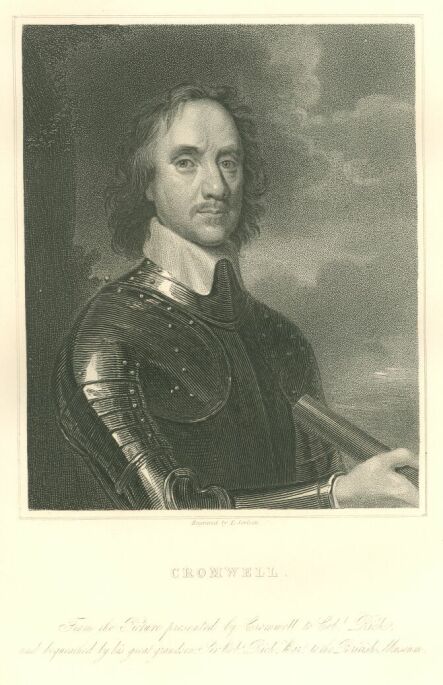
OLIVER CROMWELL, in whose hands the dissolution of the parliament had left the whole power, civil and military, of three kingdoms, was born at Huntingdon, the last year of the former century, of a good family; though he himself, being the son of a second brother, inherited but a small estate from his father. In the course of his education, he had been sent to the university; but his genius was found little fitted for the calm and elegant occupations of learning; and he made small proficiency in his studies. He even threw himself into a dissolute and disorderly course of life; and he consumed, in gaming, drinking, debauchery, and country riots, the more early years of his youth, and dissipated part of his patrimony. All of a sudden, the spirit of reformation seized him; he married, affected a grave and composed behavior entered into all the zeal and rigor of the Puritanical party, and offered to restore to every one whatever sums he had formerly gained by gaming. The same vehemence of temper which had transported him into the extremes of pleasure, now distinguished his religious habits. His house was the resort of all the zealous clergy of the party; and his hospitality, as well as his liberalities to the silenced and deprived ministers, proved as chargeable as his former debaucheries. Though he had acquired a tolerable fortune by a maternal uncle, he found his affairs so injured by his expenses, that he was obliged to take a farm at St. Ives, and apply himself for some years to agriculture as a profession. But this expedient served rather to involve him in further debts and difficulties. The long prayers which he said to his family in the morning, and again in the afternoon, consumed his own time and that of his ploughmen; and he reserved no leisure for the care of his temporal affairs. His active mind, superior to the low occupations to which he was condemned, preyed upon itself; and he indulged his imagination in visions, illuminations, revelations; the great nourishment of that hypochondriacal temper to which he was ever subject. Urged by his wants and his piety, he had made a party with Hambden, his near kinsman, who was pressed only by the latter motive, to transport himself into New England, now become the retreat of the more zealous among the Puritanical party; and it was an order of council which obliged them to disembark and remain in England. The earl of Bedford, who possessed a large estate in the fen country near the Isle of Ely, having undertaken to drain these morasses, was obliged to apply to the king; and by the powers of the prerogative, he got commissioners appointed, who conducted that work, and divided the new-acquired land among the several proprietors. He met with opposition from many, among whom Cromwell distinguished himself; and this was the first public opportunity which he had met with, of discovering the factious zeal and obstinacy of his character.
From accident and intrigue he was chosen by the town of Cambridge member of the long parliament. His domestic affairs were then in greater disorder; and he seemed not to possess any talents which could qualify him to rise in that public sphere into which he was now at last entered. His person was ungraceful, his dress slovenly, his voice untonable, his elocution homely, tedious, obscure, and embarrassed. The fervor of his spirit frequently prompted him to rise in the house; but he was not heard with attention: his name, for above two years, is not to be found oftener than twice in any committee; and those committees into which he was admitted, were chosen for affairs which would more interest the zealots than the men of business. In comparison of the eloquent speakers and fine gentlemen of the house, he was entirely overlooked; and his friend Hambden alone was acquainted with the depth of his genius, and foretold that, if a civil war should ensue, he would soon rise to eminence and distinction.
Cromwell himself seems to have been conscious where his strength lay; and partly from that motive, partly from the uncontrollable fury of his zeal, he always joined that party which pushed every thing to extremities against the king. He was active in promoting the famous remonstrance, which was the signal for all the ensuing commotions; and when, after a long debate, it was carried by a small majority, he told Lord Falkland, that if the question had been lost, he was resolved next day to have converted into ready money the remains of his fortune, and immediately to have left the kingdom. Nor was this resolution, he said, peculiar to himself: many others of his party he knew to be equally determined.
He was no less than forty-three years of age when he first embraced the military profession; and by force of genius, without any master, he soon became an excellent officer; though perhaps he never reached the fame of a consummate commander. He raised a troop of horse; fixed his quarters in Cambridge; exerted great severity towards that university which zealously adhered to the royal party; and showed himself a man who would go all lengths in favor of that cause which he had espoused. He would not allow his soldiers to perplex their heads with those subtleties of fighting by the king’s authority against his person, and of obeying his majesty’s commands signified by both houses of parliament: he plainly told them, that if he met the king in battle, he would fire a pistol in his face as readily as against any other man. His troop of horse he soon augmented to a regiment; and he first instituted that discipline, and inspired that spirit, which rendered the parliamentary armies in the end victorious. “Your troops,” said he to Hambden, according to his own account,[*] “are most of them old, decayed serving men and tapsters, and such kind of fellows; the king’s forces are composed of gentlemen’s younger sons and persons of good quality. And do you think that the mean spirits of such base and low fellows as ours will ever be able to encounter gentlemen, that have honor, and courage, and resolution in them? You must get men of spirit; and take it not ill that I say, of a spirit that is likely to go as far as gentlemen will go, or else I am sure you will still be beaten, as you have hitherto been, in every encounter.”
* Conference held at Whitehall.
He did as he proposed. He enlisted the sons of freeholders and farmers. He carefully invited into his regiment all the zealous fanatics throughout England. When they were collected in a body, their enthusiastic spirit still rose to a higher pitch. Their colonel, from his own natural character, as well as from policy, was sufficiently inclined to increase the flame. He preached, he prayed, he fought, he punished, he rewarded. The wild enthusiasm, together with valor and discipline, still propagated itself; and all men cast their eyes on so pious and so successful a leader. From low commands, he rose with great rapidity to be really the first, though in appearance only the second, in the army. By fraud and violence, he soon rendered himself the first in the state. In proportion to the increase of his authority, his talents always seemed to expand themselves; and he displayed every day new abilities, which had lain dormant till the very emergence by which they were called forth into action. All Europe stood astonished to see a nation, so turbulent and unruly, who, for some doubtful encroachments on their privileges, had dethroned and murdered an excellent prince, descended from a long line of monarchs, now at last subdued and reduced to slavery by one who, a few years before, was no better than a private gentleman, whose name was not known in the nation, and who was little regarded even in that low sphere to which he had always been confined.
The indignation entertained by the people against an authority founded on such manifest usurpation, was not so violent as might naturally be expected. Congratulatory addresses, the first of the kind, were made to Cromwell by the fleet, by the army, even by many of the chief corporations and counties of England; but especially by the several congregations of saints dispersed throughout the kingdom.[*]
* See Milton’s State Papers.
The royalists, though they could not love the man who had imbrued his hands in the blood of their sovereign, expected more lenity from him than from the jealous and imperious republicans, who had hitherto governed. The Presbyterians were pleased to see those men by whom they had been outwitted and expelled, now in their turn expelled and outwitted by their own servant; and they applauded him for this last act of violence upon the parliament. These two parties composed the bulk of the nation, and kept the people in some tolerable temper. All men, likewise, harassed with wars and factions, were glad to see any prospect of settlement. And they deemed it less ignominious to submit to a person of such admirable talents and capacity, than to a few ignoble, enthusiastic hypocrites, who, under the name of a republic, had reduced them to a cruel subjection.
The republicans, being dethroned by Cromwell, were the party whose resentment he had the greatest reason to apprehend. That party, besides the Independents, contained two sets of men who are seemingly of the most opposite principles, but who were then united by a similitude of genius and of character. The first and most numerous were the Millenarians, or Fifth Monarchy men, who insisted that, dominion being founded in grace, all distinction in magistracy must be abolished, except what arose from piety and holiness; who expected suddenly the second coming of Christ upon earth; and who pretended, that the saints in the mean while, that is, themselves, were alone entitled to govern. The second were the Deists, who had no other object than political liberty, who denied entirely the truth of revelation, and insinuated, that all the various sects, so heated against each other, were alike founded in folly and in error. Men of such daring geniuses were not contented with the ancient and legal forms of civil government; but challenged a degree of freedom beyond what they expected ever to enjoy under any monarchy. Martin, Challoner, Harrington, Sidney, Wildman, Nevil, were esteemed the heads of this small division.
The Deists were perfectly hated by Cromwell, because he had no hold of enthusiasm by which he could govern or overreach them; he therefore treated them with great rigor and disdain, and usually denominated them the heathens. As the Millenarians had a great interest in the army, it was much more important for him to gain their confidence; and their size of understanding afforded him great facility in deceiving them. Of late years, it had been so usual a topic of conversation to discourse of parliaments, and councils, and senates, and the soldiers themselves had been so much accustomed to enter into that spirit, that Cromwell thought it requisite to establish something which might bear the face of a commonwealth. He supposed that God, in his providence, had thrown the whole right, as well as power, of government into his hands; and without any more ceremony, by the advice of his council of officers, he sent summons to a hundred and twenty-eight persons of different towns and counties of England, to five of Scotland, to six of Ireland. He pretended by his sole act and deed, to devolve upon these the whole authority of the state. This legislative power they were to exercise during fifteen months; and they were afterwards to choose the same number of persons, who might succeed them in that high and important office.
There were great numbers at that time who made it a principle always to adhere to any power which was uppermost, and to support the established government. This maxim is not peculiar to the people of that age; but what may be esteemed peculiar to them is, that there prevailed a hypocritical phrase for expressing so prudential a conduct: it was called a waiting upon providence. When providence, therefore, was so kind as to bestow on these men, now assembled together, the supreme authority, they must have been very ungrateful, if, in their turn, they had been wanting in complaisance towards it. They immediately voted themselves a parliament; and having their own consent, as well as that of Oliver Cromwell, for their legislative authority, they now proceeded very gravely to the exercise of it.
In this notable assembly were some persons of the rank of gentlemen; but the far greater part were low mechanics; Fifth Monarchy men, Anabaptists, Antinomians, Independents; the very dregs of the fanatics. They began with seeking God by prayer: this office was performed by eight or ten gifted men of the assembly; and with so much success, that, according to the confession of all, they had never before, in any of their devotional exercises, enjoyed so much of the Holy Spirit as was then communicated to them.[*] Their hearts were, no doubt, dilated when they considered the high dignity to which they supposed themselves exalted. They had been told by Cromwell, in his first discourse, that he never looked to see such a day, when Christ should be so owned.[**]
* Parl. Hist. vol. xx. p. 182. * These are his expressions: “Indeed, I have but one word more to say to you, though in that perhaps I shall show my weakness: it is by way of encouragement to you in this work; give me leave to begin thus: I confess I never looked to have seen such a day as this,—it may be nor you neither,— when Jesus Christ should be so owned as he is at this day and in this work. Jesus Christ is owned this day by your call, and you own him by your willingness to appear for him, and you manifest this (as far as poor creatures can do) to be a day of the power of Christ. I know you will remember that scripture, ‘he makes his people willing in the day of his power.’ God manifests it to be the day of the power of Christ, having through so much blood and so much trial as has been upon this nation, he makes this one of the greatest mercies, next to his own Son, to have his people called to the supreme authority. God hath owned his Son, and hath owned you, and hath made you to own him. I confess I never looked to have seen such a day: I did not.” I suppose at this passage he cried; for he was very much given to weeping, and could at any time shed abundance of tears. The rest of the speech may be seen among Milton’s State Papers, p. 106. It is very curious, and full of the same obscurity, confusion, embarrassment, and absurdity, which appear in almost all Oliver’s productions.
They thought it, therefore, their duty to proceed to a thorough reformation, and to pave the way for the reign of the Redeemer, and for that great work which, it was expected, the Lord was to bring forth among them. All fanatics, being consecrated by their own fond imaginations, naturally hear an antipathy to the ecclesiastics, who claim a peculiar sanctity, derived merely from their office and priestly character. This parliament took into consideration the abolition of the clerical function, as savoring of Popery; and the taking away of tithes, which they called a relic of Judaism. Learning also and the universities were deemed heathenish and unnecessary: the common law was denominated a badge of the conquest and of Norman slavery; and they threatened the lawyers with a total abrogation of their profession. Some steps were even taken towards an abolition of the chancery,[*] the highest court of judicature in the kingdom; and the Mosaical law was intended to be established as the sole system of English jurisprudence.[**]
Of all the extraordinary schemes adopted by these legislators, they had not leisure to finish any, except that which established the legal solemnization of marriage by the civil magistrate alone, without the interposition of the clergy. They found themselves exposed to the derision of the public. Among the fanatics of the house, there was an active member much noted for his long prayers, sermons, and harangues. He was a leather-seller in London, his name Praise-God Barebone. This ridiculous name, which seems to have been chosen by some poet or allegorist to suit so ridiculous a personage struck the fancy of the people; and they commonly affixed to this assembly the appellation of Barebone’s parliament.[***]
* Whitlocke, p. 543, 548. * Conference held at Whitehall. * It was usual for the pretended saints at that time to change their names from Henry, Edward, Anthony, William, which they regarded as heathenish, into others more sanctified and godly: even the New Testament names, James, Andrew, John, Peter, were not held in such regard as those which were borrowed from the Old Testament, Hezekiah Habakkuk, Joshua, Zerobabel. Sometimes a whole godly sentence was adopted as a name. Here are the names of a jury said to be enclosed in the county of Sussex about that time:— Accepted, Trevor of Norsham. Redeemed, Compton of Battle. Faint not, Hewit of Heathfield. Make Peace, Heaton of Hare. God Reward, Smart of Fivehurst. Standfast on High, Stringer of Crowhurst. Earth, Adams of Warbleton. Called, Lower of the same. Kill Sin, Pimple of Witham. Return, Spelman of Watling. Be Faithful, Joiner of Britling. Fly Debate, Roberts of the same. Fight the good Fight of Faith, White of Emer. More Fruit, Fowler of East Hadley. Hope for, Bending of the same. Graceful, Harding of Lewes. Weep not, Billing of the same. Meek, Brewer of Okeham. See Brome’s Travels into England, p. 279. “Cromwell,” says Cleveland, “hath beat up his drums clean through the Old Testament. You may learn the genealogy of our Savior by the names of his regiment. The mustermaster has no other list than the first chapter of St. Matthew.” The brother of this Praise-God Barebone had for name, “If Christ had not died for you, you had been damned, Barebone.” But the people, tired of this long name, retained only the last word, and commonly gave him the appellation of Damn’d Barebone.
The Dutch ambassadors endeavored to enter into negotiation with this parliament; but though Protestants, and even Presbyterians, they met with a bad reception from those who pretended to a sanctity so much superior. The Hollanders were regarded as worldly-minded men, intent only on commerce and industry; whom it was fitting the saints should first extirpate, ere they undertook that great work, to which they believed themselves destined by Providence, of subduing Antichrist, the man of sin, and extending to the uttermost bounds of the earth the kingdom of the Redeemer.[*] The ambassadors, finding themselves proscribed, not as enemies of England but of Christ, remained in astonishment, and knew not which was most to be admired, the implacable spirit or egregious folly of these pretended saints.
Cromwell began to be ashamed of his legislature. If he ever had any design in summoning so preposterous an assembly beyond amusing the populace and the army, he had intended to alarm the clergy and lawyers; and he had so far succeeded as to make them desire any other government, which might secure their professions, now brought in danger by these desperate fanatics. Cromwell himself was dissatisfied, that the parliament, though they had derived all their authority from him, began to pretend power from the Lord,[**] and to insist already on their divine commission. He had been careful to summon in his writs several persons entirely devoted to him.
* Thurloe, vol. i. p. 273, 591. Also Stubbe, p. 91, 92. ** Thurloe, vol. i. p 393
By concert, these met early; and it was mentioned by some among them, that the sitting of this parliament any longer would be of no service to the nation. They hastened, therefore, to Cromwell, along with Rouse, their speaker; and, by a formal deed or assignment, restored into his hands that supreme authority which they had so lately received from him. General Harrison and about twenty more remained in the house; and that they might prevent the reign of the saints from coming to an untimely end, they placed one Moyer in the chair, and began to draw up protests. They were soon interrupted by Colonel White, with a party of soldiers. He asked them what they did there. “We are seeking the Lord,” said they. “Then you may go elsewhere,” replied he; “for to my certain knowledge, he has not been here these many years.”
The military being now, in appearance, as well as in reality the sole power which prevailed in the nation, Cromwell though fit to indulge a new fancy; for he seems not to have had any deliberate plan in all these alterations. Lambert, his creature, who, under the appearance of obsequiousness to him, indulged in unbounded ambition, proposed, in a council of officers, to adopt another scheme of government, and to temper the liberty of a commonwealth by the authority of a single person, who should be known by the appellation of protector. Without delay, he prepared what was called “the instrument of government,” containing the plan of this new legislature; and as it was supposed to be agreeable to the general, it was immediately voted by the council of officers. Cromwell was declared protector; and with great solemnity installed in that high office.
So little were these men endowed with the spirit of legislation, that they confessed, or rather boasted, that they had employed only four days in drawing this instrument, by which the whole government of three kingdoms was pretended to be regulated and adjusted to all succeeding generations. There appears no difficulty in believing them, when it is considered how crude and undigested a system of civil polity they endeavored to establish. The chief articles of the instrument are these: A council was appointed, which was not to exceed twenty-one, nor be less than thirteen persons. These were to enjoy their office during life or good behavior; and in case of a vacancy, the remaining members named three, of whom the protector chose one. The protector was appointed supreme magistrate of the commonwealth: in his name was all justice to be administered; from him were all magistracy and honors derived; he had the power of pardoning all crimes, excepting murder and treason; to him the benefit of all forfeitures devolved. The right of peace, war, and alliance, rested in him but in these particulars he was to act by the advice and with the consent of his council. The power of the sword was vested in the protector jointly with the parliament, while it was sitting, or with the council of state in the intervals. He was obliged to summon a parliament every three years, and allow them to sit five months, without adjournment, prorogation, or dissolution. The bills which they passed were to be presented to the protector for his assent; but if within twenty days it were not obtained, they were to become laws by the authority alone of parliament. A standing army for Great Britain and Ireland was established, of twenty thousand foot and ten thousand horse; and funds were assigned for their support. These were not to be diminished without *consent of the protector; and in this article alone he assumed a negative, During the intervals of parliament, the protector and council had the power of enacting laws, which were to be valid till the next meeting of parliament. The chancellor, treasurer, admiral, chief governors of Ireland and Scotland, and the chief justices of both the benches, must be chosen with the approbation of parliament; and in the intervals, with the approbation of the council, to be afterwards ratified by parliament. The protector was to enjoy his office during life; and on his death, the place was immediately to be supplied by the council. This was the instrument of government enacted by the council of officers, and solemnly sworn to by Oliver Cromwell. The council of state named by the instrument, were fifteen; men entirely devoted to the protector, and by reason of the opposition among themselves in party and principles, not likely ever to combine against him.
Cromwell said, that he accepted the dignity of protector, merely that he might exert the duty of a constable, and preserve peace in the nation. Affairs indeed were brought to that pass, by the furious animosities of the several factions, that the extensive authority and even arbitrary power of some first magistrate was become a necessary evil, in order to keep the people from relapsing into blood and confusion. The Independents were too small a party ever to establish a popular government, or intrust the nation, where they had so little interest, with the free choice of its representatives. The Presbyterians had adopted the violent maxims of persecution; incompatible at all times with the peace of society, much more with the wild zeal of those numerous sects which prevailed among the people. The royalists were so much enraged by the injuries which they had suffered, that the other prevailing parties would never submit to them, who, they knew, were enabled, merely by the execution of the ancient laws, to take severe vengeance upon them. Had Cromwell been guilty of no crime but this temporary usurpation, the plea of necessity and public good, which he alleged, might be allowed, in every view, a reasonable excuse for his conduct.
During the variety of ridiculous and distracted scenes which the civil government exhibited in England, the military force was exerted with vigor, conduct, and unanimity; and never did the kingdom appear more formidable to all foreign nations. The English fleet, consisting of a hundred sail, and commanded by Monk and Dean, and under them by Pen and Lauson, met near the coast of Flanders with the Dutch fleet equally numerous, and commanded by Tromp. The two republics were not inflamed by any national antipathy, and their interests very little interfered: yet few battles have been disputed with more fierce and obstinate courage, than were those many naval combats which were fought during this short but violent war. The desire of remaining sole lords of the ocean animated these states to an honorable emulation against each other. After a battle of two days, in the first of which Dean was killed, the Dutch, inferior in the size of their ships, were obliged, with great loss, to retire into their harbors. Blake, towards the end of the fight, joined his countrymen with eighteen sail. The English fleet lay off the coast of Holland, and totally interrupted the commerce of that republic.
ENLARGE
The ambassadors whom the Dutch had sent over to England, gave them hopes of peace. But as they could obtain no cessation of hostilities, the states, unwilling to suffer any longer the loss and dishonor of being blockaded by the enemy, made the utmost efforts to recover their injured honor. Never, on any occasion, did the power and vigor of that republic appear in a more conspicuous light. In a few weeks, they had repaired and manned their fleet; and they equipped some Ships of a larger size than any which they had hitherto sent to sea. Tromp issued out, determined again to fight the victors, and to die rather than to yield the contest. He met with the enemy, commanded by Monk; and both sides immediately rushed into the combat. Tromp, gallantly animating his men, with his sword drawn, was shot through the heart with a musket ball. This event alone decided the battle in favor of the English. Though near thirty ships of the Dutch were sunk and taken, they little regarded this loss compared with that of their brave admiral.
Meanwhile the negotiations of peace were continually advancing. The states, overwhelmed with the expense of the war, terrified by their losses, and mortified by their defeats, were extremely desirous of an accommodation with an enemy whom they found by experience too powerful for them. The king having shown an inclination to serve on board their fleet, though they expressed their sense of the honor intended them, they declined an offer which might inflame the quarrel with the English commonwealth. The great obstacle to the peace was found, not to be any animosity on the part of the English, but, on the contrary, a desire too earnest of union and confederacy. Cromwell had revived the chimerical scheme of a coalition with the United Provinces; a total conjunction of government, privileges, interests, and councils.
1654.
This project appeared so wild to the states, that they wondered any man of sense could ever entertain it; and they refused to enter into conferences with regard to a proposal which could serve only to delay any practicable scheme of accommodation. The peace was at last signed by Cromwell now invested with the dignity of protector, and it proves sufficiently, that the war had been impolitic, since, after the most signal victories, no terms more advantageous could be obtained. A defensive league was made between the two republics. They agreed, each of them, to banish the enemies of the other: those who had been concerned in the massacre of Amboyna were to be punished, if any remained alive; the honor of the flag was yielded to the English: eighty-five thousand pounds were stipulated to be paid by the Dutch East India Company for losses which the English Company had sustained; and the Island of Polerone, in the East Indies was promised to be ceded to the latter.
Cromwell, jealous of the connections between the royal family and that of Orange, insisted on a separate article; that neither the young prince nor any of his family should ever be invested with the dignity of stadtholder. The province of Holland, strongly prejudiced against that office, which they esteemed dangerous to liberty, secretly ratified this article. The protector, knowing that the other provinces would not be induced to make such a concession, was satisfied with this security.
The Dutch war, being successful, and the peace reasonable brought credit to Cromwell’s administration. An act of justice, which he exercised at home, gave likewise satisfaction to the people: though the regularity of it may perhaps appear somewhat doubtful. Don Pantaleon, brother to the Portuguese ambassador, and joined with him in the same commission,[*] fancying himself to be insulted, came upon the exchange, armed and attended by several servants. By mistake, he fell on a gentleman whom he took for the person that had given him the offence; and having butchered him with many wounds, he and all his attendants took shelter in the house of the Portuguese ambassador, who had connived at this base enterprise.[**] The populace surrounded the house, and threatened to set fire to it. Cromwell sent a guard, who seized all the criminals. They were brought to trial; and notwithstanding the opposition of the ambassador, who pleaded the privileges of his office, Don Pantaleon was executed on Tower Hill. The laws of nations were here plainly violated; but the crime committed by the Portuguese gentleman was to the last degree atrocious; and the vigorous chastisement of it, suiting so well the undaunted character of Cromwell, was universally approved of at home, and admired among foreign nations. The situation of Portugal obliged that court to acquiesce; and the ambassador soon after signed, with the protector, a treaty of peace and alliance, which was very advantageous to the English commerce.
* Thurloe, vol. ii. p. 429. ** Thurloe, vol. i. p. 616.
Another act of severity, but necessary in his situation, was, at the very same time, exercised by the protector, in the capital punishment of Gerard and Vowel, two royalists, who were accused of conspiring against his life. He had erected a high court of justice for their trial; an infringement of the ancient laws which at this time was become familiar, but one to which no custom or precedent could reconcile the nation. Juries were found altogether unmanageable. The restless Lilburn, for new offences, had been brought to a new trial; and had been acquitted with new triumph and exultation. If no other method of conviction had been devised during this illegal and unpopular government, all its enemies were assured of entire impunity.
The protector had occasion to observe the prejudices entertained against his government, by the disposition of the parliament, which he summoned on the third of September, that day of the year on which he gained his two great victories of Dunbar and Worcester, and which he always regarded as fortunate for him. It must be confessed that, if we are left to gather Cromwell’s intentions from his instrument of government, it is such a motley piece, that we cannot easily conjecture whether he seriously meant to establish a tyranny or a republic. On one hand, a first magistrate in so extensive a government seemed necessary both for the dignity and tranquillity of the state; and the authority which he assumed as protector was, in some respects, inferior to the prerogatives which the laws intrusted and still intrust to the king. On the other hand, the legislative power which he reserved to himself and council, together with so great an army, independent of the parliament, were bad prognostics of his intention to submit to a civil and legal constitution. But if this were not his intention, the method in which he distributed and conducted the elections, being so favorable to liberty, form an inconsistency which is not easily accounted for. He deprived of their right of election all the small boroughs, places the most exposed to influence and corruption. Of four hundred members which represented England, two hundred and seventy were chosen by the counties. The rest were elected by London, and the more considerable corporations. The lower populace too, so easily guided or deceived, were excluded from the elections: an estate of two hundred pounds’ value was necessary to entitle any one to a vote. The elections of this parliament were conducted with perfect freedom; and, excepting that such of the royalists as had borne arms against the parliament and all their sons were excluded, a more fair representation of the people could not be desired or expected. Thirty members were returned from Scotland; as many from Ireland.
The protector seems to have been disappointed, when he found that all these precautions, which were probably nothing but covers to his ambition, had not procured him the confidence of the public. Though Cromwell’s administration was less odious to every party than that of any other party, yet was it entirely acceptable to none. The royalists had been instructed by the king to remain quiet, and to cover themselves under the appearance of republicans; and they found in this latter faction such inveterate hatred against the protector, that they could not wish for more zealous adversaries to his authority. It was maintained by them, that the pretence of liberty and a popular election was but a new artifice of this great deceiver, in order to lay asleep the deluded nation, and give himself leisure * rivet their chains more securely upon them: that in the instrument of government he openly declared his intention of still retaining the same mercenary army, by whose assistance he had subdued the ancient established government, and who would with less scruple obey him in overturning, whenever he should please to order them, that new system which he himself had been pleased to model: that being sensible of the danger and uncertainty of all military government, he endeavored to intermix some appearance, and but an appearance, of civil administration, and to balance the army by a seeming consent of the people: that the absurd trial which he had made of a parliament, elected by himself, appointed perpetually to elect their successors, plainly proved, that he aimed at nothing but temporary expedients, was totally averse to a free republican government, and possessed not that mature and deliberate reflection which could qualify him to act the part of a legislator: that his imperious character, which had betrayed itself in so many incidents, could never seriously submit to legal limitations; nor would the very image of popular government be longer upheld than while conformable to his arbitrary will and pleasure: and that the best policy was to oblige him to take off the mask at once; and either submit entirely to that parliament which he had summoned, or, by totally rejecting its authority, leave himself no resource but in his seditious and enthusiastic army.
In prosecution of these views, the parliament, having heard the protector’s speech, three hours long,[*] and having chosen Lenthal for their speaker, immediately entered into a discussion of the pretended instrument of government, and of that authority which Cromwell, by the title of protector, had assumed over the nation.
* Thurloe, vol. ii. p. 588.
The greatest liberty was used in arraigning this new dignity; and even the personal character and conduct of Cromwell escaped not without censure. The utmost that could be obtained by the officers and by the court party,—-for so they were called,—was to protract the debate by arguments and long speeches, and prevent the decision of a question which, they were sensible, would be carried against them by a great majority. The protector, surprised and enraged at this refractory spirit in the parliament, which, however, he had so much reason to expect, sent for them to the painted chamber, and with an air of great authority inveighed against their conduct. He told them, that nothing could be more absurd than for them to dispute his title; since the same instrument of government which made them a parliament, had invested him with the protectorship: that some points in the new constitution were supposed to be fundamentals, and were not, on any pretence, to be altered or disputed: that among these were the government of the nation by a single person and a parliament, their joint authority over the army and militia, the succession of new parliaments, and liberty of conscience: and that, with regard to these particulars, there was reserved to him a negative voice; to which, in the other circumstances of government, he confessed himself nowise entitled.
The protector now found the necessity of exacting a security, which, had he foreseen the spirit of the house, he would with better grace have required at their first meeting.[*]
* Thurloe, vol ii. p. 620.
He obliged the members to sign a recognition of his authority, and an engagement not to propose or consent to any alteration in the government, as it was settled in a single person and a parliament; and he placed guards at the door of the house, who allowed none but subscribers to enter. Most of the members, after some hesitation, submitted to this condition; but retained the same refractory spirit which they had discovered in their first debates. The instrument of government was taken in pieces, and examined, article by article, with the most scrupulous accuracy: very free topics were advanced with the general approbation of the house: and during the whole course of their proceedings, they neither sent up one bill to the protector, nor took any notice of him. Being informed that conspiracies were entered into between the members and some malecontent officers, he hastened to the dissolution of so dangerous an assembly. By the instrument of government, to which he had sworn, no parliament could be dissolved till it had sitten five months; but Cromwell pretended, that a month contained only twenty-eight days, according to the method of computation practised in paying the fleet and army. The full time, therefore, according to this reckoning, being elapsed, the parliament was ordered to attend the protector, who made them a tedious, confused, angry harangue, and dismissed them.
1655.
Were we to judge of Cromwell’s capacity by this, and indeed by all his other compositions, we should be apt to entertain no very favorable idea of it. But in the great variety of human geniuses, there are some which, though they see their object clearly and distinctly in general, yet, when they come to unfold its parts by discourse or writing, lose that luminous conception which they had before attained. All accounts agree in ascribing to Cromwell a tiresome, dark, unintelligible elocution, even when he had no intention to disguise his meaning: yet no man’s actions were ever, in such a variety of difficult incidents, more decisive and judicious.
The electing of a discontented parliament is a proof of a discontented nation: the angry and abrupt dissolution of that parliament is always sure to increase the general discontent. The members of this assembly, returning to their counties, propagated that spirit of mutiny which they had exerted in the house. Sir Harry Vane and the old republicans, who maintained the indissoluble authority of the long parliament, encouraged the murmurs against the present usurpation; though they acted so cautiously as to give the protector no handle against them. Wildman and some others of that party carried still further their conspiracies against the protector’s authority. The royalists, observing this general ill will towards the establishment, could no longer be retained in subjection; but fancied that every one who was dissatisfied like them, had also embraced the same views and inclinations. They did not consider, that the old parliamentary party, though many of them were displeased with Cromwell, who had dispossessed them of their power, were still more apprehensive of any success to the royal cause; whence, besides a certain prospect of the same consequence, they had so much reason to dread the severest vengeance for their past transgressions.
In concert with the king, a conspiracy was entered into by the royalists throughout England, and a day of general rising appointed. Information of this design was conveyed to Cromwell. The protector’s administration was extremely vigilant. Thurloe, his secretary, had spies every where. Manning, who had access to the king’s family, kept a regular correspondence with him; and it was not difficult to obtain intelligence of a confederacy so generally diffused, among a party who valued themselves more on zeal and courage, than on secrecy and sobriety Many of the royalists were thrown into prison. Others, on the approach of the day, were terrified with the danger of the undertaking, and remained at home. In one place alone the conspiracy broke into action. Penruddoc, Groves, Jones, and other gentlemen of the west, entered Salisbury with about two hundred horse, at the very time when the sheriff and judges were holding the assizes. These they made prisoners; and they proclaimed the king. Contrary to their expectations, they received no accession of force; so prevalent was the terror of the established government. Having in vain wandered about for some time, they were totally discouraged; and one troop of horse was able at last to suppress them. The leaders of the conspiracy, being taken prisoners, were capitally punished. The rest were sold for slaves, and transported to Barbadoes.
The easy subduing of this insurrection, which, by the boldness of the undertaking, struck at first a great terror into the nation, was a singular felicity to the protector; who could not, without danger, have brought together any considerable body of his mutinous army in order to suppress it. The very insurrection itself he regarded as a fortunate event; since it proved the reality of those conspiracies which his enemies on every occasion represented as mere fictions, invented to color his tyrannical severities. He resolved to keep no longer any terms with the royalists, who, though they were not perhaps the most implacable of his enemies, were those whom he could oppress under the most plausible pretences, and who met with least countenance and protection from his adherents. He issued an edict, with the consent of his council, for exacting the tenth penny from that whole party; in order, as he pretended, to make them pay the expenses to which their mutinous disposition continually exposed the public. Without regard to compositions, articles of capitulation, or acts of indemnity, all the royalists, however harassed with former oppressions, were obliged anew to redeem themselves by great sums of money; and many of them were reduced by these multiplied disasters to extreme poverty. Whoever was known to be disaffected, or even lay under any suspicion, though no guilt could be proved against him, was exposed to the new exaction.
In order to raise this imposition, which commonly passed by the name of decimation, the protector instituted twelve major-generals; and divided the whole kingdom of England into so many military jurisdictions.[*]
* Parl. Hist. vol. xx. p. 433.
These men, assisted by commissioners, had power to subject whom they pleased to decimation, to levy all the taxes imposed by the protector and his council, and to imprison any person who should be exposed to their jealousy or suspicion; nor was there any appeal from them but to the protector himself and his council. Under color of these powers, which were sufficiently exorbitant, the major-generals exercised an authority still more arbitrary, and acted as if absolute masters of the property and person of every subject. All reasonable men now concluded, that the very mask of liberty was thrown aside, and that the nation was forever subjected to military and despotic government, exercised not in the legal manner of European nations, but according to the maxims of Eastern tyranny. Not only the supreme magistrate owed his authority to illegal force and usurpation; he had parcelled out the people into so many subdivisions of slavery, and had delegated to his inferior ministers the same unlimited authority which he himself had so violently assumed.
A government totally military and despotic, is almost sure, after some time, to fall into impotence and languor: but when it immediately succeeds a legal constitution, it may, at first, to foreign nations appear very vigorous and active, and may exert with more unanimity that power, spirit, and riches, which had been acquired under a better form. It seems now proper, after so long an interval, to look abroad to the general state of Europe, and to consider the measures which England at this time embraced in its negotiations with the neighboring princes. The moderate temper and unwarlike genius of the two last princes, the extreme difficulties under which they labored at home, and the great security which they enjoyed from foreign enemies, had rendered them negligent of the transactions on the continent; and England, during their reigns, had been, in a manner, overlooked in the general system of Europe. The bold and restless genius of the protector led him to extend his alliances and enterprises to every part of Christendom; and partly from the ascendant of his magnanimous spirit, partly from the situation of foreign kingdoms, the weight of England, even under its most legal and bravest princes, was never more sensibly felt than during this unjust and violent usurpation.
A war of thirty years, the most signal and most destructive that had appeared in modern annals, was at last finished in Germany,[*] and by the treaty of Westphalia, were composed those fatal quarrels which had been excited by the palatine’s precipitate acceptance of the crown of Bohemia. The young palatine was restored to part of his dignities and of his dominions.[**] The rights, privileges, and authority of the several members of the Germanic body were fixed and ascertained: sovereign princes and free states were in some degree reduced to obedience under laws: and by the valor of the heroic Gustavus, the enterprises of the active Richelieu, the intrigues of the artful Mazarine, was in part effected, after an infinite expense of blood and treasure, which had been fondly expected and loudly demanded from the feeble efforts of the pacific James, seconded by the scanty supplies of his jealous parliaments.
* In 1648. ** This prince, during the civil wars, had much neglected his uncle, and paid court to the parliament; he accepted of a pension of eight thousand pounds a year from them, and took a place in their assembly of divines.
Sweden, which had acquired by conquest large dominions in the north of Germany, was engaged in enterprises which promised her, from her success and valor, still more extensive acquisitions on the side both of Poland and of Denmark. Charles X., who had mounted the throne of that kingdom after the voluntary resignation of Christina, being stimulated by the fame of Gustavus, as well as by his own martial disposition, carried his conquering arms to the south of the Baltic, and gained the celebrated battle of Warsaw, which had been obstinately disputed during the space of three days. The protector, at the time his alliance was courted by every power in Europe, anxiously courted the alliance of Sweden; and he was fond of forming a confederacy with a Protestant power of such renown, even though it threatened the whole north with conquest and subjection.
The transactions of the parliament and protector with France had been various and complicated. The emissaries of Richelieu had furnished fuel to the flame of rebellion, when it first broke out in Scotland; but after the conflagration had diffused itself, the French court, observing the materials to be of themselves sufficiently combustible, found it unnecessary any longer to animate the British malecontents to an opposition of their sovereign. On the contrary, they offered their mediation for composing these intestine disorders; and their ambassadors, from decency, pretended to act in concert with the court of England, and to receive directions from a prince with whom their master was connected by so near an affinity. Meanwhile Richelieu died, and soon after him the French king, Louis XIII., leaving his son, an infant four years old, and his widow, Anne of Austria, regent of the kingdom. Cardinal Mazarine succeeded Richelieu in the ministry; and the same general plan of policy, though by men of such opposite characters, was still continued in the French councils. The establishment of royal authority, the reduction of the Austrian family, were pursued with ardor and success; and every year brought an accession of force and grandeur to the French monarchy. Not only battles were won, towns and fortresses taken; the genius too of the nation seemed gradually to improve, and to compose itself to the spirit of dutiful obedience and of steady enterprise. A Condé, a Turenne were formed; and the troops, animated by their valor, and guided by their discipline, acquired every day a greater ascendant over the Spaniards. All of a sudden, from some intrigues of the court, and some discontents in the courts of judicature, intestine commotions were excited, and every thing relapsed into confusion. But these rebellions of the French, neither ennobled by the spirit of liberty, nor disgraced by the fanatical extravagancies which distinguished the British civil wars, were conducted with little bloodshed, and made but a small impression on the minds of the people. Though seconded by the force of Spain, and conducted by the prince of Condé, the malecontents in a little time were either expelled or subdued; and the French monarchy, having lost a few of its conquests, returned with fresh vigor to the acquisition of new dominion.
The queen of England and her son Charles, during these commotions, passed most of their time at Paris; and notwithstanding their near connection of blood, received but few civilities, and still less support, from the French court. Had the queen regent been ever so much inclined to assist the English prince, the disorders of her own affairs would, for a long time, have rendered such intentions impracticable. The banished queen had a moderate pension assigned her; but it was so ill paid, and her credit ran so low, that, one morning, when the cardinal De Retz waited on her, she informed him that her daughter, the princess Henrietta, was obliged to lie abed for want of a fire to warm her. To such a condition was reduced, in the midst of Paris, a queen of England, and daughter of Henry IV. of France.
The English parliament, however, having assumed the sovereignty of the state, resented the countenance, cold as it was, which the French court gave to the unfortunate monarch. On pretence of injuries of which the English merchants complained, they issued letters of reprisal upon the French; and Blake went so far as to attack and seize a whole squadron of ships which were carrying supplies to Dunkirk, then closely besieged by the Spaniards. That town, disappointed of these supplies, fell into the hands of the enemy. The French ministers soon found it necessary to change their measures. They treated Charles with such affected indifference, that he thought it more decent to withdraw, and prevent the indignity of being desired to leave the kingdom. He went first to Spaw, thence he retired to Cologne; where he lived two years, on a small pension, about six thousand pounds a year, paid him by the court of France, and on some contributions sent him by his friends in England. In the management of his family he discovered a disposition to order and economy; and his temper, cheerful, careless, and sociable, was more than a sufficient compensation for that empire of which his enemies had bereaved him. Sir Edward Hyde, created lord chancellor, and the marquis of Ormond, were his chief friends and confidants.
If the French ministry had thought it prudent to bend under the English parliament, they deemed it still more necessary to pay deference to the protector, when he assumed the reins of government. Cardinal Mazarine, by whom all the counsels of France were directed, was artful and vigilant, supple and patient, false and intriguing; desirous rather to prevail by dexterity than violence, and placing his honor more in the final success of his measures, than in the splendor and magnanimity of the means which he employed. Cromwell, by his imperious character, rather than by the advantage of his situation, acquired an ascendant over this man; and every proposal made by the protector, however unreasonable in itself, and urged with whatever insolence, met with a ready compliance from the politic and timid cardinal. Bourdeaux was sent over to England as minister; and all circumstances of respect were paid to the daring usurper, who had imbrued his hands in the blood of his sovereign, a prince so nearly related to the royal family of France. With indefatigable patience did Bourdeaux conduct this negotiation, which Cromwell seemed entirely to neglect; and though privateers with English commission committed daily depredations on the French commerce, Mazarine was content, in hopes of a fortunate issue, still to submit to these indignities.[*]
* Thurloe, vol. iii. p. 103, 619, 653. In the treaty, which was signed after long negotiation, the protector’s name was inserted before the French king’s in that copy which remained in England. Thurloe vol. vi. p. 116 See further, vol. vii. p. 178.
The court of Spain, less connected with the unfortunate royal family, and reduced to greater distress than the French monarchy, had been still more forward in her advances to the prosperous parliament and protector. Don Alonzo de Cardenas, the Spanish envoy, was the first public minister who recognized the authority of the new republic; and in return for this civility, Ascham was sent envoy into Spain by the parliament. No sooner had this minister arrived in Madrid, than some of the banished royalists, inflamed by that inveterate hatred which animated the English factions, broke into his chamber, and murdered him together with his secretary. Immediately they took sanctuary in the churches; and, assisted by the general favor which every where attended the royal cause, were enabled, most of them, to make their escape. Only one of the criminals suffered death; and the parliament seemed to rest satisfied with this atonement.
Spain, at this time, assailed every where by vigorous enemies from without, and laboring under many internal disorders, retained nothing of her former grandeur, except the haughty pride of her counsels, and the hatred and jealousy of her neighbors. Portugal had rebelled, and established her monarchy in the house of Braganza: Catalonia, complaining of violated privileges, had revolted to France: Naples was shaken with popular convulsions: the Low Countries were invaded with superior forces, and seemed ready to change their master: the Spanish infantry, anciently so formidable, had been annihilated by Condé in the fields of Rocroy: and though the same prince, banished France, sustained by his activity and valor the falling fortunes of Spain, he could only hope to protract, not prevent, the ruin with which that monarchy was visibly threatened.
Had Cromwell understood and regarded the interests of his country, he would have supported the declining condition of Spain against the dangerous ambition of France, and preserved that balance of power on which the greatness and security of England so much depend. Had he studied only his own interests, he would have maintained an exact neutrality between those great monarchies; nor would he have hazarded his ill-acquired and unsettled power by provoking foreign enemies who might lend assistance to domestic faction, and overturn his tottering throne. But his magnanimity undervalued danger; his active disposition and avidity of extensive glory made him incapable of repose: and as the policy of men is continually warped by their temper, no sooner was peace made with Holland, than he began to deliberate what new enemy he should invade with his victorious arms.
The extensive empire and yet extreme weakness of Spain in the West Indies, the vigorous courage and great naval power of England, were circumstances which, when compared, excited the ambition of the enterprising protector, and made him hope that he might, by some gainful conquest, render forever illustrious that dominion which he had assumed over his country. Should he fail of these durable acquisitions, the Indian treasures, which must every year cross the ocean to reach Spain, were, he thought, a sure prey to the English navy, and would support his military force without his laying new burdens on the discontented people. From France a vigorous resistance must be expected: no plunder, no conquests could be hoped for: the progress of his arms, even if attended with success, must there be slow and gradual; and the advantages acquired, however real, would be less striking to the multitude, whom it was his interest to allure. The royal family, so closely connected with the French monarch, might receive great assistance from that neighboring kingdom; and an army of French Protestants landed in England would be able, he dreaded, to unite the most opposite factions against the present usurpation.[*]
These motives of policy were probably seconded by his bigoted prejudices; as no human mind ever contained so strange a mixture of sagacity and absurdity as that of this extraordinary personage. The Swedish alliance, though much contrary to the interests of England, he had contracted merely from his zeal for Protestantism;[**] and Sweden being closely connected with France, he could not hope to maintain that confederacy, in which he so much prided himself, should a rupture ensue between England and this latter kingdom.[***]
* See the account of the negotiations with France and Spain by Thurloe, vol. i. p. 759. ** He proposed to Sweden a general league and confederacy of all the Protestants. Whitlocke, p. 620. Thurloe, vol. vii. p. 1. In order to judge of the maxims by which he conducted his foreign politics see, further, Thurloe, vol. iv. p. 295, 343, 443; vol. vii. p. 174. *** Thurloe, vol. i. p. 759.
The Hugonots, he expected, would meet with better treatment while he engaged in a close union with their sovereign.[*] And as the Spaniards were much more Papists than the French, were much more exposed to the old Puritanical hatred,[**] and had even erected the bloody tribunal of the inquisition, whose rigors they had refused to mitigate on Cromwell’s solicitation,[***] he hoped that a holy and meritorious war with such idolaters could not fail of protection from Heaven.[****] A preacher, likewise, inspired as was supposed by a prophetic spirit, bid him “go and prosper;” calling him “a stone cut out of the mountains without hands, that would break the pride of the Spaniard, crush Antichrist, and make way for the purity of the gospel over the whole world.”[v]
* Thurloe, vol. i. p. 759. ** Thurloe, vol. i. p. 759. *** Thurloe, vol. i. p. 759. Don Alonzo said, that the Indian trade and the inquisition were his master’s two eyes, and the protector insisted upon the putting out both of them at once. **** Carrington, p. 191. v Bates.
Actuated equally by these bigoted, these ambitious, and these interested motives, the protector equipped two considerable squadrons; and while he was making those preparations, the neighboring states, ignorant of his intentions, remained in suspense, and looked with anxious expectation on what side the storm should discharge itself. One of these squadrons, consisting of thirty capital ships, was sent into the Mediterranean under Blake, whose fame was now spread over Europe. No English fleet, except during the crusades, had ever before sailed in those seas; and from one extremity to the other there was no naval force, Christian or Mahometan, able to resist them. The Roman pontiff, whose weakness and whose pride equally provoked attacks, dreaded invasion from a power which professed the most inveterate enmity against him, and which so little regulated its movements by the usual motives of interest and prudence. Blake, casting anchor before Leghorn, demanded and obtained from the duke of Tuscany reparation for some losses which the English commerce had formerly sustained from him. He next sailed to Algiers, and compelled the dey to make peace, and to restrain his piratical subjects from further violences on the English. He presented himself before Tunis; and having there made the same demands, the dey of that republic bade him look to the castles of Porto-Farino and Goletta, and do his utmost. Blake needed not to be roused by such a bravado: he drew his ships close up to the castles, and tore them in pieces with his artillery. He sent a numerous detachment of sailors in their long boats into the harbor, and burned every ship which lay there. This bold action, which its very temerity perhaps rendered safe, was executed with little loss, and filled all that part of the world with the renown of English valor.
The other squadron was not equally successful. It was commanded by Pen, and carried on board four thousand men under the command of Venables. About five thousand more joined them from Barbadoes and St. Christopher’s. Both these officers were inclined to the king’s service;[*] and it is pretended that Cromwell was obliged to hurry the soldiers on board, in order to prevent the execution of a conspiracy which had been formed among them in favor of the exiled family.[**] The ill success of this enterprise may justly be ascribed as much to the injudicious schemes of the protector who planned it, as to the bad execution of the officers by whom it was conducted. The soldiers were the refuse of the whole army: the forces enlisted in the West Indies were the most profligate of mankind: Pen and Venables were of incompatible tempers: the troops were not furnished with arms fit for such an expedition: their provisions were defective both in quantity and quality: all hopes of pillage, the best incentive to valor among such men, were refused the soldiers and seamen: no directions or intelligence were given to conduct the officers in then enterprise: and at the same time they were tied down to follow the advice of commissioners, who disconcerted them in all their projects.[***]
* Clarendon. * Vita de Berwici, p. 124 ** Burchet’s Naval History. See also Carte’s Collection, vol. ii. p. 46, 47. Thurloe, vol. iii. p. 505.
It was agreed by the admiral and general to attempt St. Domingo, the only place of strength in the Island of Hispaniola. On the approach of the English, the Spaniards in a fright deserted their houses, and fled into the woods. Contrary to the opinion of Venables, the soldiers were disembarked without guides ten leagues distant from the town. They wandered four days through the woods without provisions, and was still more intolerable in that sultry climate, without water. The Spaniards recovered spirit, and attacked them. The English, discouraged with the bad conduct of their officers and scarcely alive from hunger, thirst, and fatigue, were unable to resist. An inconsiderable number of the enemy put the whole army to rout, killed six hundred of them, and chased the rest on board their vessels.
The English commanders, in order to atone as much as possible for this unprosperous attempt, bent their course to Jamaica, which was surrendered to them without a blow. Pen and Venables returned to England, and were both of them sent to the Tower by the protector, who, though commonly master of his fiery temper, was thrown into a violent passion at this disappointment. He had made a conquest of greater importance than he was himself at that time aware of; yet was it much inferior to the vast projects which he had formed. He gave orders, however, to support it by men and money; and that island has ever since remained in the hands of the English; the chief acquisition which they owe to the enterprising spirit of Cromwell.
1656.
As soon as the news of this expedition, which was an unwarrantable violation of treaty, arrived in Europe, the Spaniards declared war against England, and seized all the ships and goods of English merchants, of which they could make themselves masters. The commerce with Spain, so profitable to the English, was cut off; and near fifteen hundred vessels, it is computed,[*] fell in a few years into the hands of the enemy. Blake, to whom Montague was now joined in command, after receiving new orders, prepared himself for hostilities against the Spaniards.
Several sea officers, having entertained scruples of conscience with regard to the justice of the Spanish war, threw up their commissions, and retired.[**]
* Thurloe, vol. iv. p. 135. World’s Mistake in Oliver Cromwell in the Harl. Miscel. vol. i. ** Thurloe. vol. iv. p. 670, 688.
No commands, they thought, of their superiors could justify a war which was contrary to the principles of natural equity, and which the civil magistrate had no right to order. Individuals, they maintained, in resigning to the public their natural liberty, could bestow on it only what they themselves were possessed of, a right of performing lawful actions, and could invest it with no authority of commanding what is contrary to the decrees of Heaven. Such maxims, though they seem reasonable, are perhaps too perfect for human nature; and must be regarded as one effect, though of the most innocent and even honorable kind, of that spirit, partly fanatical, partly republican, which predominated in England.
Blake lay some time off Cadiz, in expectation of intercepting the Plate fleet, but was at last obliged, for want of water, to make sail towards Portugal. Captain Stayner, whom he had left on the coast with a squadron of seven vessels, came in sight of the galleons, and immediately set sail to pursue them. The Spanish admiral ran his ship ashore: two others followed his example: the English took two ships, valued at near two millions of pieces of eight. Two galleons were set on fire; and the marquis of Badajox, viceroy of Peru, with his wife, and his daughter, betrothed to the young duke of Medina Celi, were destroyed in them. The marquis himself might have escaped; but seeing these unfortunate women, astonished with the danger, fall in a swoon, and perish in the flames, he rather chose to die with them, than drag out a life imbittered with the remembrance of such dismal scenes.[*] When the treasures gained by this enterprise arrived at Portsmouth, the protector, from a spirit of ostentation, ordered them to be transported by land to London.
* Thurloe, vol. v. p. 433.
The next action against the Spaniards was more honorable, though less profitable, to the nation. Blake, having heard that a Spanish fleet of sixteen ships, much richer than the former, had taken shelter in the Canaries, immediately made sail towards them. He found them in the Bay of Santa Cruz, disposed in a formidable posture. The bay was secured with a strong castle, well provided with cannon, besides seven forts in several parts of it, all united by a line of communication, manned with musketeers. Don Diego Diagues, the Spanish admiral, ordered all his smaller vessels to moor close to the shore, and posted the larger galleons farther off, at anchor, with their broadsides to the sea.
Blake was rather animated than daunted with this appearance. The wind seconded his courage, and blowing full into the bay, in a moment brought him among the thickest of his enemies. After a resistance of four hours, the Spaniards yielded to English valor, and abandoned their ships, which were set on fire, and consumed with all their treasure. The greatest danger still remained to the English. They lay under the fire of the castle and all the forts, which must in a little time have torn them in pieces. But the wind, suddenly shifting, carried them out of the bay; where they left the Spaniards in astonishment at the happy temerity of their audacious victors.
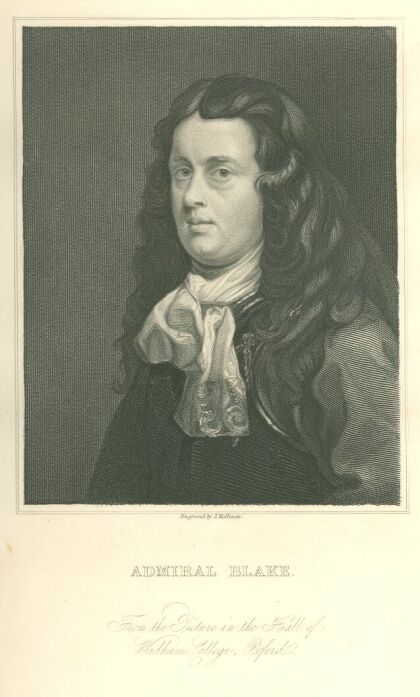
This was the last and greatest action of the gallant Blake. He was consumed with a dropsy and scurvy, and hastened home, that he might yield up his breath in his native country, which he had so much adorned by his valor. As he came within sight of land, he expired.[*]
* 20th of April, 1657.
Never man, so zealous for a faction, was so much respected and esteemed even by the opposite factions. He was by principle an inflexible republican; and the late usurpations, amidst all the trust and caresses which he received from the ruling powers, were thought to be very little grateful to him. “It is still our duty,” he said to the seamen, “to fight for our country, into what hands soever the government may fall.” Disinterested, generous, liberal; ambitious only of true glory, dreadful only to his avowed enemies; he forms one of the most perfect characters of the age, and the least stained with those errors and violences which were then so predominant. The protector ordered him a pompous funeral at the public charge: but the tears of his countrymen were the most honorable panegyric on his memory.
The conduct of the protector in foreign affairs, though imprudent and impolitic, was full of vigor and enterprise, and drew a consideration to his country, which, since the reign of Elizabeth, it seemed to have totally lost. The great mind of this successful usurper was intent on spreading the renown of the English nation; and while he struck mankind with astonishment at his extraordinary fortune, he seemed to ennoble instead of debasing, that people whom he had reduced to subjection. It was his boast, that he would render the name of an Englishman as much feared and revered as ever was that of a Roman; and as his countrymen found some reality in these pretensions, their national vanity, being gratified, made them bear with more patience all the indignities and calamities under which they labored.
It must also be acknowledged, that the protector, in his civil and domestic administration, displayed as great regard both to justice and clemency, as his usurped authority, derived from no law, and founded only on the sword, could possibly permit. All the chief offices in the courts of judicature were filled with men of integrity: amidst the virulence of faction, the decrees of the judges were upright and impartial; and to every man but himself, and to himself, except where necessity required the contrary, the law was the great rule of conduct and behavior. Vane and Lilburn, whose credit with the republicans and levellers he dreaded, were indeed for some time confined to prison: Cony, who refused to pay illegal taxes, was obliged by menaces to depart from his obstinacy: high courts of justice were erected to try those who had engaged in conspiracies and insurrections against the protector’s authority, and whom he could not safely commit to the verdict of juries. But these irregularities were deemed inevitable consequences of his illegal authority. And though often urged by his officers, as is pretended,[*] to attempt a general massacre of the royalists, he always with horror rejected such sanguinary counsels.
* Clarendon, Life of Lord Berwick, etc.
In the army was laid the sole basis of the protector’s power; and in managing it consisted the chief art and delicacy of his government. The soldiers were held in exact discipline; a policy which both accustomed them to obedience, and made them less hateful and burdensome to the people. He augmented their pay; though the public necessities sometimes obliged him to run in arrears to them. Their interests, they were sensible, were closely connected with those of their general and protector. And he entirely commanded their affectionate regard, by his abilities and success in almost every enterprise which he had hitherto undertaken. But all military government is precarious; much more where it stands in opposition to civil establishments; and still more where it encounters religious prejudices. By the wild fanaticism which he had nourished in the soldiers, he had seduced them into measures, for which, if openly proposed to them, they would have entertained the utmost aversion. But this same spirit rendered them more difficult to be governed, and made their caprices terrible even to that hand which directed their movements. So often taught, that the office of king was a usurpation upon Christ, they were apt to suspect a protector not to be altogether compatible with that divine authority. Harrison, though raised to the highest dignity, and possessed of Cromwell’s confidence, became his most inveterate enemy as soon as the authority of a single person was established, against which that usurper had always made such violent protestations. Overton, Rich, Okey, officers of rank in the army, were actuated with like principles, and Cromwell was obliged to deprive them of their commissions. Their influence, which was before thought unbounded among the troops, seemed from that moment to be totally annihilated.
The more effectually to curb the enthusiastic and seditious spirit of the troops, Cromwell established a kind of militia in the several counties. Companies of infantry and cavalry were enlisted under proper officers, regular pay distributed among them, and a resource by that means provided both against the insurrections of the royalists and mutiny of the army.
Religion can never be deemed a point of small consequence in civil government: but during this period, it may be regarded as the great spring of men’s actions and determinations. Though transported himself with the most frantic whimseys, Cromwell had adopted a scheme for regulating this principle in others, which was sagacious and political. Being resolved to maintain a national church, yet determined neither to admit Episcopacy nor Presbytery, he established a number of commissioners, under the name of tryers, partly laymen, partly ecclesiastics, some Presbyterians, some Independents. These presented to all livings which were formerly in the gift of the crown; they examined and admitted such persons as received holy orders; and they inspected the lives, doctrine, and behavior of the clergy. Instead of supporting that union between learning and theology, which has so long been attempted in Europe, these tryers embraced the latter principle in its full purity, and made it the sole object of their examination. The candidates were no more perplexed with questions concerning their progress in Greek and Roman erudition; concerning their talent for profane arts and sciences: the chief object of scrutiny regarded their advances in grace, and fixing the critical moment of their conversion.
With the pretended saints of all denominations Cromwell was familiar and easy. Laying aside the state of protector, which on other occasions he well knew how to maintain, he insinuated to them, that nothing but necessity could ever oblige him to invest himself with it. He talked spiritually to *them; he sighed he wept, he canted, he prayed. He even entered with them into an emulation of ghostly gifts, and these men, instead of grieving to be outdone in their own way, were proud that his highness, by his princely example, had dignified those practices in which they themselves were daily occupied.[*]
* Cromwell followed, though but in part, the advice which he received from General Harrison, at the time when the intimacy and endearment most strongly subsisted betwixt them. “Let the waiting upon Jehovah,” said that military saint, “be the greatest and most considerable business you have every day: reckon it so, more than to eat, sleep, and counsel together. Run aside sometimes from your company, and get a word with the Lord. Why should not you have three or four precious souls always standing at your elbow, with whom you might now and then turn into a corner? I have found refreshment and mercy in such a way.”—Milton’s State Papers, p. 12.
If Cromwell might be said to adhere to any particular form of religion, they were the Independents who could chiefly boast of his favor; and it may be affirmed, that such pastors of that sect as were not passionately addicted to civil liberty, were all of them devoted to him. The Presbyterian clergy, also saved from the ravages of the Anabaptists and Millenarians, and enjoying their establishments and tithes, were not averse to his government; though he still entertained a great jealousy of that ambitious and restless spirit by which they were actuated. He granted an unbounded liberty of conscience to all but Catholics and Prelatists; and by that means he both attached the wild sectaries to his person, and employed them in curbing the domineering spirit of the Presbyterians. “I am the only man,” he was often heard to say, “who has known how to subdue that insolent sect, which can suffer none but itself.”
The Protestant zeal which possessed the Presbyterians and Independents, was highly gratified by the haughty manner in which the protector so successfully supported the persecuted Protestants throughout all Europe. Even the duke of Savoy, so remote a power, and so little exposed to the naval force of England, was obliged, by the authority of France, to comply with his mediation, and to tolerate the Protestants of the valleys, against whom that prince had commenced a furious persecution. France itself was constrained to bear, not only with the religion, but even, in some instances, with the seditious insolence of the Hugonots; and when the French court applied for a reciprocal toleration of the Catholic religion in England, the protector, who arrogated in every thing the superiority, would hearken to no such proposal. He had entertained a project of instituting a college, in imitation of that at Rome, for the propagation of the faith; and his apostles, in zeal, though not in unanimity, had certainly been a full match for the Catholics.
Cromwell retained the church of England in constraint though he permitted its clergy a little more liberty than the Republican parliament had formerly allowed. He was pleased that the superior lenity of his administration should in every thing be remarked. He bridled the royalists, both by the army which he retained, and by those secret spies which he found means to intermix in all their counsels. Manning being detected, and punished with death, he corrupted Sir Richard Willis, who was much trusted by Chancellor Hyde and all the royalists; and by means of this man he was let into every design and conspiracy of the party. He could disconcert any project, by confining the persons who were to be the actors in it; and as he restored them afterwards to liberty, his severity passed only for the result of general jealousy and suspicion, The secret source of his intelligence remained still unknown and unsuspected.
Conspiracies for an assassination he was chiefly afraid of; these being designs which no prudence or vigilance could evade. Colonel Titus, under the name of Allen, had written a spirited discourse, exhorting every one to embrace this method of vengeance; and Cromwell knew, that the inflamed minds of the royal party were sufficiently disposed to put the doctrine in practice against him. He openly told them, that assassinations were base and odious, and he never would commence hostilities by so shameful an expedient; but if the first attempt or provocation came from them, he would retaliate to the uttermost. He had instruments, he said, whom he could employ; and he never would desist till he had totally exterminated the royal family. This menace, more than all his guards, contributed to the security of his person.[*] 26
* See note Z at the end of the volume.
There was no point about which the protector was more solicitous than to procure intelligence. This article alone, it is said, cost him sixty thousand pounds a year. Postmasters, both at home and abroad, were in his pay: carriers were searched or bribed: secretaries and clerks were corrupted the greatest zealots in all parties were often these who conveyed private information to him: and nothing could escape his vigilant inquiry. Such at least is the representation made by historians of Cromwell’s administration: but it must be confessed, that, if we may judge by those volumes of Thurloe’s papers which have been lately published, this affair, like many others, has been greatly magnified. We scarcely find by that collection, that any secret counsels of foreign states, except those of Holland, which are not expected to be concealed, were known to the protector.
The general behavior and deportment of this man, who had been raised from a very private station, who had passed most of his youth in the country, and who was still constrained so much to frequent bad company, was such as might befit the greatest monarch. He maintained a dignity without either affectation or ostentation; and supported with all strangers that high idea with which his great exploits and prodigious fortune had impressed them. Among his ancient friends, he could relax himself; and by trifling and amusement, jesting and making verses, he feared not exposing himself to their most familiar approaches.[*] With others he sometimes pushed matters to the length of rustic buffoonery; and he would amuse himself by putting burning coals into the boots and hose of the officers who attended him.[**] Before the king’s trial, a meeting was agreed on between the chiefs of the republican party and the general officers, in order to concert the model of that free government which they were to substitute in the room of the monarchical constitution now totally subverted. After debates on this subject, the most important that could fall under the discussion of human creatures, Ludlow tells us that Cromwell, by way of frolic, threw a cushion at his head; and when Ludlow took up another cushion, in order to return the compliment, the general ran down stairs, and had almost fallen in the hurry. When the high court of justice was signing the warrant for the execution of the king, a matter, if possible, still more serious, Cromwell, taking the pen in his hand, before he subscribed his name, bedaubed with ink the face of Martin, who sat next him. And the pen being delivered to Martin, he practised the same frolic upon Cromwell.[***]
* Whitlocke, p. 647. ** Bates. *** Trial of the Regicides.
He frequently gave feasts to his inferior officers; and when the meat was set upon the table, a signal was given; the soldiers rushed in upon, them; and with much noise, tumult, and confusion, ran away with all the dishes, and disappointed the guests of their expected meal.[*]
* Bates.
That vein of frolic and pleasantry which made a part, however inconsistent, of Cromwell’s character, was apt sometimes to betray him into other inconsistencies, and to discover itself even where religion might seem to be a little concerned. It is a tradition, that one day, sitting at table, the protector had a bottle of wine brought him, of a kind which he valued so highly, that he must needs open the bottle himself; but in attempting it, the corkscrew dropped from his hand. Immediately his courtiers and generals flung themselves on the floor to recover it. Cromwell burst out a laughing. “Should any fool,” said he, “put in his head at the door, he would fancy, from your posture, that you were seeking the Lord; and you are only seeking a corkscrew.”
Amidst all the unguarded play and buffoonery of this singular personage, he took the opportunity of remarking the characters, designs, and weaknesses of men; and he would sometimes push them, by an indulgence in wine, to open to him the most secret recesses of their bosom. Great regularity, however, and even austerity of manners, were always maintained in his court; and he was careful never by any liberties to give offence to the most rigid of the godly. Some state was upheld; but with little expense, and without any splendor. The nobility, though courted by him, kept at a distance, and disdained to intermix with those mean persons who were the instruments of his government. Without departing from economy, he was generous to those who served him; and he knew how to find out and engage in his interests every man possessed of those talents which any particular employment demanded. His generals, his admirals, his judges, his ambassadors, were persons who contributed, all of them, in their several spheres, to the security of the protector, and to the honor and interest of the nation.
Under pretence of uniting Scotland and Ireland in one commonwealth with England, Cromwell had reduced those kingdoms to a total subjection; and he treated them entirely as conquered provinces. The civil administration of Scotland was placed in a council, consisting mostly of English, of which Lord Broghile was president. Justice was administered by seven judges, four of whom were English. In order to cure the tyrannical nobility, he both abolished all vassalage,[*] and revived the office of justice of peace, which King James had introduced, but was not able to support.[**] A long line of forts and garrisons was maintained throughout the kingdom. An army of ten thousand men[***] kept everything in peace and obedience; and neither the banditti of the mountains nor the bigots of the Low Countries could indulge their inclination to turbulence and disorder. He courted the Presbyterian clergy though he nourished that intestine enmity which prevailed between the resolutioners and protesters; and he found that very little policy was requisite to foment quarrels among theologians. He permitted no church assemblies; being sensible that from thence had proceeded many of the past disorders. And in the main, the Scots were obliged to acknowledge, that never before, while they enjoyed their irregular, factious liberty, had they attained so much happiness as at present, when reduced to subjection under a foreign nation.
* Whitlocke, p. 570. ** Thurloe, vol. iv. p. 57. *** Thurloe, vol. vi. p. 557.
The protector’s administration of Ireland was more severe and violent. The government of that island was first intrusted to Fleetwood, a notorious fanatic, who had married Ireton’s widow; then to Henry Cromwell, second son of the protector, a young man of an amiable, mild disposition, and not destitute of vigor and capacity. Above five millions of acres, forfeited either by the Popish rebels or by the adherents of the king, were divided, partly among the adventurers, who had advanced money to the parliament, partly among the English soldiers, who had arrears due to them. Examples of a more sudden and violent change of property are scarcely to be found in any history. An order was even issued to confine all the native Irish to the province of Connaught, where they would be shut up by rivers, lakes, and mountains, and could not, it was hoped, be any longer dangerous to the English government: but this barbarous and absurd policy, which, from an impatience of attaining immediate security, *must have depopulated all the other provinces, and rendered the English estates of no value, was soon abandoned as impracticable.
Cromwell began to hope that, by his administration, attended with so much lustre and success abroad, so much order and tranquillity at home, he had now acquired such authority as would enable him to meet the representatives of the nation, and would assure him of their dutiful compliance with his government. He summoned a parliament; but not trusting altogether to the good will of the people, he used every art which his new model of representation allowed him to employ, in order to influence the elections, and fill the house with his own creatures. Ireland, being entirely in the hands of the army, chose few but such officers as were most acceptable to him. Scotland showed a like compliance; and as the nobility and gentry of that kingdom regarded their attendance on English parliaments as an ignominious badge of slavery, it was on that account more easy for the officers to prevail in the elections. Notwithstanding all these precautions, the protector still found that the majority would not be favorable to him. He set guards, therefore, on the door, who permitted none to enter but such as produced a warrant from his council; and the council rejected about a hundred, who either refused a recognition of the protector’s government, or were on other accounts obnoxious to him. These protested against so egregious a violence, subversive of all liberty; but every application for redress was neglected both by the council and the parliament.
The majority of the parliament, by means of these arts and violences, was now at last either friendly to the protector, or resolved, by their compliance, to adjust, if possible, this military government to their laws and liberties. They voted a renunciation of all title in Charles Stuart, or any of his family; and this was the first act, dignified with the appearance of national consent, which had ever had that tendency. Colonel Jephson, in order to sound the inclinations of the house, ventured to move, that the parliament should bestow the crown on Cromwell; and no surprise or reluctance was discovered on the occasion. When Cromwell afterwards asked Jephson what induced him to make such a motion, “As long,” said Jephson, “as I have the honor to sit in parliament, I must follow the dictates of my own conscience, whatever offence I may be so unfortunate as to give you.” “Get thee gone,” said Cromwell, giving him a gentle blow on the shoulder; “get thee gone, for a mad fellow as thou art.”
In order to pave the way to this advancement, for which he so ardently longed, Cromwell resolved to sacrifice his major-generals, whom he knew to be extremely odious to the nation That measure was also become necessary for his own security. All government, purely military, fluctuates perpetually between a despotic monarchy and a despotic aristocracy, according as the authority of the chief commander prevails, or that of the officers next him in rank and dignity. The major-generals, being possessed of so much distinct jurisdiction, began to establish a separate title to power, and had rendered themselves formidable to the protector himself; and for this inconvenience, though he had not foreseen it, he well knew, before it was too late, to provide a proper remedy. Claypole, his son-in-law, who possessed his confidence, abandoned them to the pleasure of the house; and though the name was still retained, it was agreed to abridge, or rather entirely annihilate, the power of the major-generals.
At length, a motion in form was made by Alderman Pack, one of the city members, for investing the protector with the dignity of king. This motion at first excited great disorder, and divided the whole house into parties. The chief opposition came from the usual adherents of the protector, the major-generals, and such officers as depended on them. Lambert a man of deep intrigue, and of great interest in the army, had long entertained the ambition of succeeding Cromwell in the protectorship; and he foresaw, that if the monarchy were restored, hereditary right would also be established, and the crown be transmitted to the posterity of the prince first elected. He pleaded, therefore, conscience; and rousing all those civil and religious jealousies against kingly government, which had been so industriously encouraged among the soldiers, and which served them as a pretence for so many violences, he raised a numerous, and still more formidable party, against the motion.
On the other hand, the motion was supported by every one who was more particularly devoted to the protector, and who hoped, by so acceptable a measure, to pay court to the prevailing authority. Many persons also, attached to their country, despaired of ever being able to subvert the present illegal establishment; and were desirous, by fixing it on ancient foundations, to induce the protector, from views of his own safety, to pay a regard to the ancient laws and liberties of the kingdom. Even the royalists imprudently joined in the measure; and hoped that, when the question regarded only persons, not forms of government, no one would any longer balance between the ancient royal family and an ignoble usurper, who, by blood, treason, and perfidy, had made his way to the throne.
1657.
The bill was voted by a considerable majority; and a committee was appointed to reason with the protector, and to overcome those scruples which he pretended against accepting so liberal an offer.
The conference lasted for several days. The committee urged, that all the statutes and customs of England were founded on the supposition of regal authority, and could not, without extreme violence, be adjusted to any other form of government: that a protector, except during the minority of a king, was a name utterly unknown to the laws; and no man was acquainted with the extent or limits of his authority; that if it were attempted to define every part of his jurisdiction, many years, if not ages, would be required for the execution of so complicated a work; if the whole power of the king were at once transferred to him, the question was plainly about a name, and the preference was indisputably due to the ancient title: that the English constitution was more anxious concerning the form of government, than concerning the birthright of the first magistrate; and had provided, by an express law of Henry VII., for the security of those who act in defence of the king in being, by whatever means he might have acquired possession: that it was extremely the interest of all his highness’s friends to seek the shelter of this statute; and even the people in general were desirous of such a settlement, and in all juries were with great difficulty induced to give their verdict in favor of a protector: that the great source of all the late commotions had been the jealousy of liberty: and that a republic, together with a protector, had been established in order to provide further securities for the freedom of the constitution; but that by experience the remedy had been found insufficient, even dangerous and pernicious; since every indeterminate power, such as that of a protector, must be arbitrary; and the more arbitrary, as it was contrary to the genius and inclination of the people.