THE SERMON ON THE MOUNT
Reading edition
"And seeing the multitudes, he went up into the mountain, and when he had sat down, his disciples came unto him, and he opened his mouth and taught them." (Matt. 5:1, 2.)
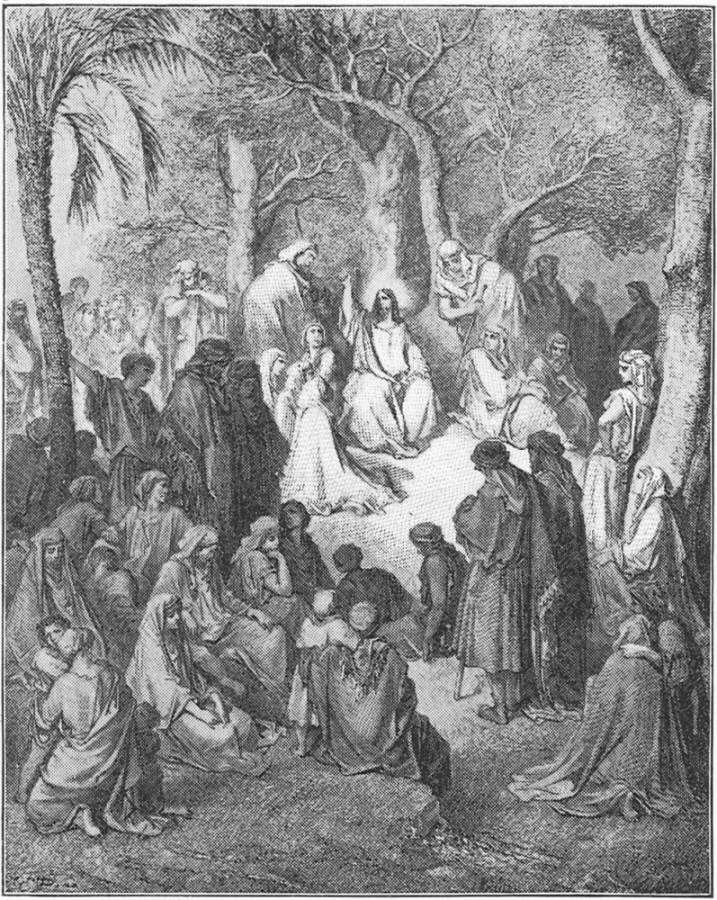
Doré, Plate 65, has represented the scene as a whole. The instant might be almost any in the discourse.
Plate 65. The Sermon on the Mount. Gustave Doré. 1833-1883.
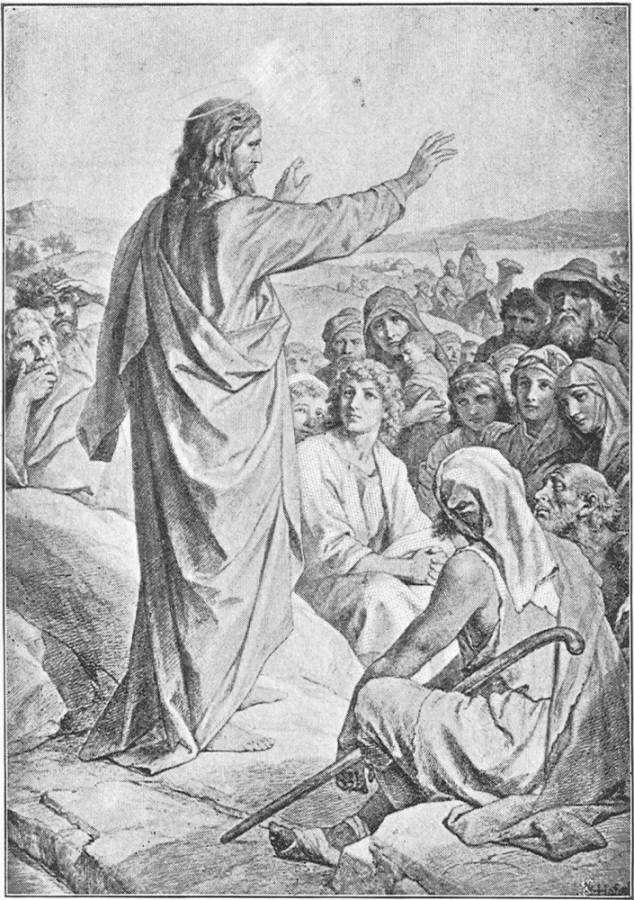
Hofmann, Plate 64, seems to have depicted the giving of the beatitudes. The poor in spirit, the mourner, the meek, those who hunger for righteousness, the pure, and the persecuted, all seem to be represented in the audience.
Plate 64. The Sermon on the Mount. H. Hofmann. 1824-
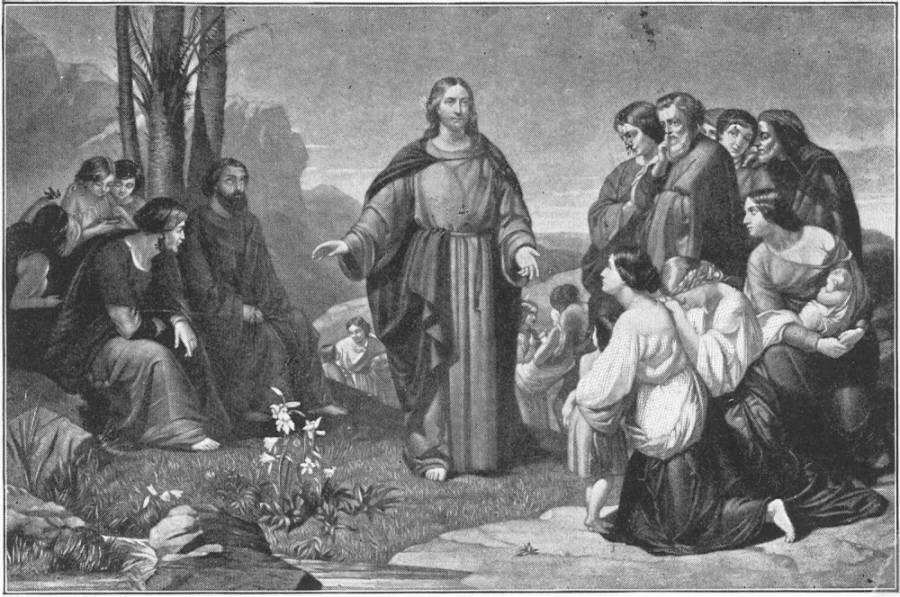
Jeune, Plate 67, has selected the moment when Jesus says, "Consider the lilies how they grow. . . . If God so clothe the grass of the field, shall he not much more clothe you? . . . Seek first his kingdom and his righteousness." (Matt. 6:28-33.)
Plate 67. Consider the Lilies. Henry Le Jeune. 1820.
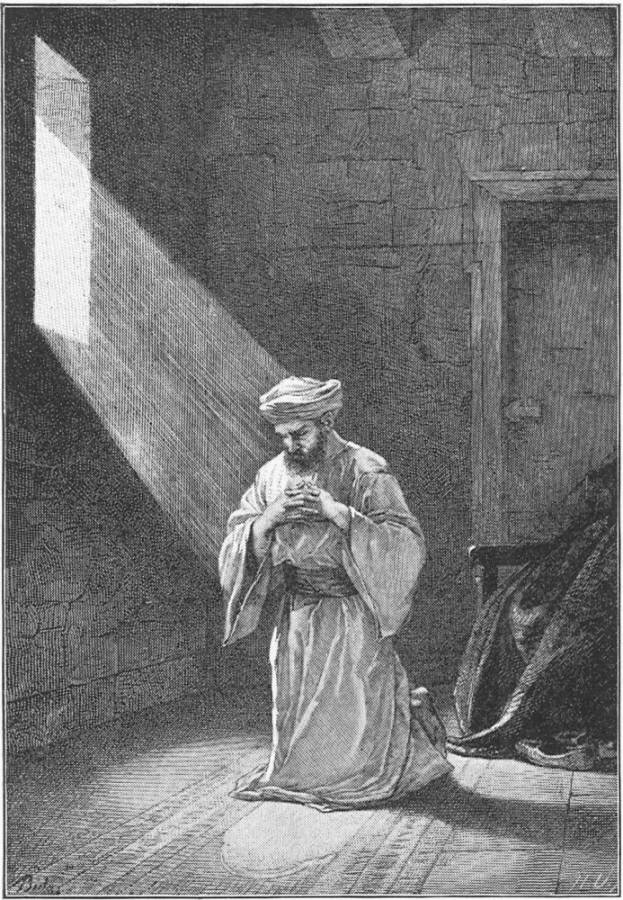
Bida, Plate 66, illustrates one section of the Sermon on the Mount, viz.: Matt. 6:5-15. Here is the man in his inner chamber, having shut his door, praying to his Father who is in secret, and who will reward him.
Plate 66. Prayer in Secret. Alexandra Bida. 1813-1895.