Part 4 — PART IV.
Reading edition
We will now describe a few examples of village architecture in the immediate neighbourhood of London, with illustrations from Pinner and Acton. The first, which is in “Post-and-pan” construction, is a simple but pleasing example of Gothic work, dating from the reign of Henry VIII., sketched at Pinner. The second is a porch to a cottage in the same pretty village; it is one of the most picturesque examples we know of, and the lovely rose bush which shades it adds much to its beauty. When we first saw it great clusters of these exquisite flowers clung around the ancient timbers and spread themselves over the ruddy tiles of the roof. It would be difficult to conceive a more charming bower, but, although some mending has been recently carried out, it will probably not last through many more winters; some cruel wind may wreck it, or some tempest ruin it, but when this catastrophe takes place it will have served its purpose for nearly four centuries, and can a wooden porch be expected to do more? As we heard an archæologist say, “it will have earned a right to tumble down.” Alas, we fear that most of the old village architecture in England has earned this right, and will, before very long, take advantage of it.
In addition to this the wholesale “improving” away of picturesque village architecture in the vicinity of the metropolis will leave little for those who come after us to study or admire.
A few years back how beautiful a place was Willesden, with its mediæval cottages, ancient wooden parsonage, inns and country houses surrounded by gardens, farm-yards, barns, wooden granaries, etc. All but one or two have lately disappeared, and they are threatened.
What a pretty country village Acton was, but now how changed! The old forge still remains to speak to us of village life of the past; it is sweet and charming, its walls mantled with creepers and overshadowed with great elms and poplars. A quaint little garden with brick paths separates it from the road. The building itself is of brick partly framed in timber, though not of “Post-and-pan” construction, as the wood is simply introduced by way of bond, a kind of construction which came in towards the end of the seventeenth century. The chimneys are older than the house, and look quite Elizabethan. It is altogether a lovely village bit and strangely out of gear with the smart suburban villas growing up all around it.
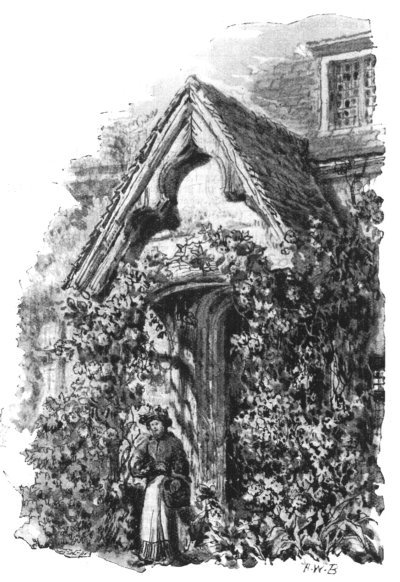
COTTAGE PORCH, PINNER.
It is strange that in times within the memory of the writer the villages closely surrounding London were so countrified. Hampstead, Highgate, Acton, Fulham, Barnes, Kew, Richmond, Bow, Stratford, Bromley were quite separated from the metropolis and surrounded by pleasant fields, approached by lanes shaded by elms and tall hawthorn hedges, full of good old-fashioned houses shut in with lofty red brick walls, over which fruit trees might be seen, laden in autumn, with ruddy apples, golden pears or purple plums, offering a temptation to the passer-by. Fields of cabbages or fragrant beans, (can anything surpass the scent of a bean-field in full bloom with the sun upon it?) market gardens, orchards, and acres of more delicate vegetables, cucumbers, etc., grown under glass; great waggons laden with the produce of the land jolting and jingling along the road or stopping for refreshment for man and beast in front of some well-shaded wayside inn. A four-wheeled cab might be seen occasionally, when folks would look at one another, and say, “What can be the matter? Here's a cab going to the Smiths'. Can it be a lawyer going to draw up the old man's will, or has his son, after so many years, come back again from India?” See the neighbourhoods now with their huge warehouses, manufactories or smart suburban streets and rows of shops, omnibuses, motor cars, etc. How few years, comparatively speaking, it has taken to effect these changes, and one wonders whether any country at all will be left in the days of our grandchildren.
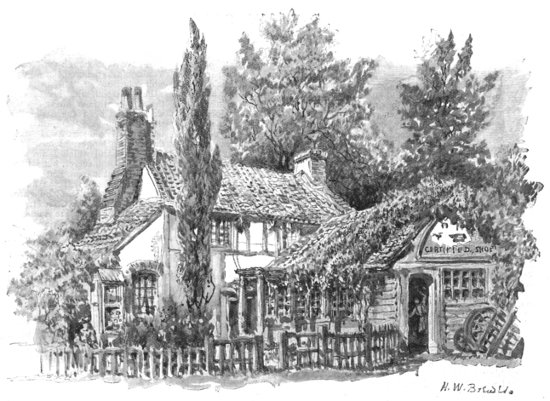
VILLAGE FORGE AT ACTON.
(To be continued.)